
Myanmar’s legislative body held its first meeting Monday since military forces overthrew the civilian government five years ago, marking another step in what critics call a superficial transition back to democratic governance while the armed forces maintain firm authority.
The parliamentary session follows recent elections where the military-supported Union Solidarity and Development Party secured overwhelming victories amid sparse voter participation and an absence of meaningful opposition candidates.
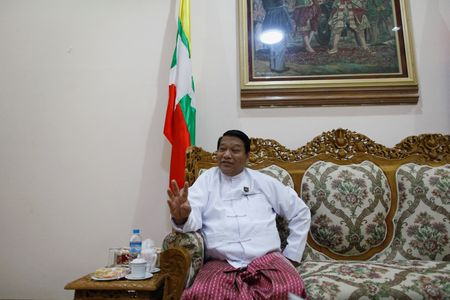
Retired brigadier-general Khin Yi, who chairs the USDP, secured the position of lower house speaker during Monday’s proceedings. Political observers had anticipated his selection for this key role, which analysts view as crucial for military leadership to pursue their political objectives.
The Southeast Asian nation has endured ongoing civil conflict and a widespread humanitarian emergency impacting millions of citizens since military commanders executed their 2021 takeover against Nobel Prize winner Aung San Suu Kyi’s administration, which had been preparing to begin its second term after winning decisive electoral support.
International governments across the West have condemned the recent voting process as fraudulent theater intended to solidify military authority and provide legitimacy to generals who have faced isolation, economic penalties, and exclusion from major global gatherings for half a decade.
The military-established USDP, founded in 2010, captured 81% of contested legislative positions and will share the two-chamber parliament with numerous military personnel directly chosen by the armed forces, which constitutional provisions guarantee one-fourth of all legislative positions.
This substantial military presence combined with their sway over the USDP essentially places the legislature under armed forces direction, providing military leadership the authority to select the president, with junta leader and coup architect Min Aung Hlaing anticipated to claim the position.
“This level of control makes it clear that one can expect nothing substantial from this body; it is evidently a parliament that will operate solely at the whim of the military leader,” said Htin Kyaw Aye, an independent analyst.
“It is merely a manoeuvre by the military leadership to shift power from their left hand to their right hand,” he said.
Additionally, military leadership plans to create a five-person committee called the Union Consultative Council, which experts have labeled a “superbody” designed to allow Min Aung Hlaing to preserve his authority over both military and civilian governance structures.
Military leadership has rejected international criticism of their electoral process, claiming it accurately represented citizen preferences. They have announced plans to establish a new government in April while predicting reduced sanctions and improved international relations and foreign business investment.
Monday’s state-controlled Global New Light of Myanmar published commentary regarding parliament’s formation, stating the nation hopes for optimal political circumstances prioritizing national interests.
“In carrying out political activities, they must act courageously for the good of the nation, free from personal bias, party bias, and feelings of favouritism or hostility,” it said.