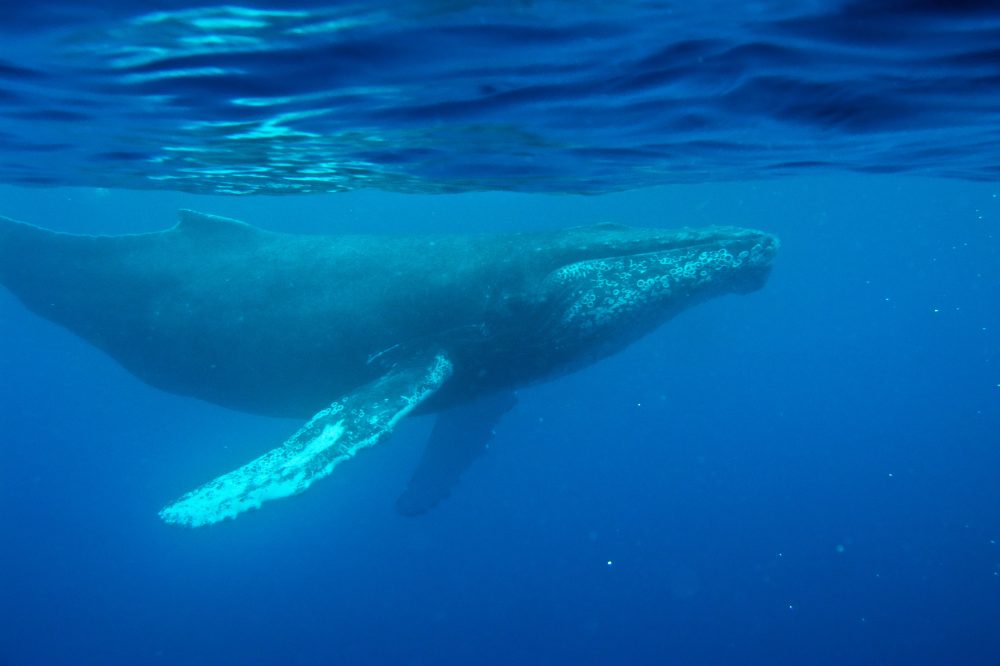

PORTLAND, Maine — Marine researchers believe they’ve uncovered the earliest known recording of whale song, a discovery that may shed new light on how these massive ocean creatures communicate with one another.
Scientists at Woods Hole Oceanographic Institution in Falmouth, Massachusetts, found the ethereal humpback whale vocalizations on vintage audio equipment, with the sounds originally captured in March 1949 near Bermuda waters. These gentle giants, known for their acrobatic breaches and calm demeanor around whale watching boats, left behind what researchers describe as a haunting musical legacy.
What makes this discovery particularly valuable is not just the whale’s voice, but the acoustic environment surrounding it, explained Peter Tyack, a marine bioacoustician and emeritus research scholar at Woods Hole. The ocean soundscape of the late 1940s was significantly quieter than today’s seas, offering scientists a unique baseline for comparison.
“The recovered recordings not only allow us to follow whale sounds, but they also tell us what the ocean soundscape was like in the late 1940s,” Tyack explained. “That’s very difficult to reconstruct otherwise.”
This historical audio could prove crucial for understanding how modern human activities, particularly increased maritime traffic and shipping noise, have altered the way whales communicate. According to National Oceanic and Atmospheric Administration research, these marine mammals adjust their calling patterns based on environmental noise levels.
The recording significantly predates Roger Payne’s groundbreaking whale song research by almost two decades. Woods Hole researchers aboard a vessel were conducting sonar testing and acoustic studies with the U.S. Office of Naval Research when they accidentally captured these sounds, according to Ashley Jester, who directs research data and library services at Woods Hole.
The original scientists had no idea what they were documenting, but their curiosity led them to preserve the mysterious sounds anyway, Jester noted.
“And they were curious. And so they kept this recorder running, and they even made time to make recordings where they weren’t making any noise from their ships on purpose just to hear as much as they could,” Jester said. “And they kept these recordings.”
The whale song came to light during Woods Hole’s digitization project for archived audio materials last year. Jester located the recording on a remarkably well-preserved disc made by a Gray Audograph, a dictation device common in the 1940s era.
Though the underwater recording technology would seem primitive compared to modern equipment, it represented the cutting edge of its time, Jester explained. The plastic disc format proved particularly fortunate, as most recordings from that period used tape that has since degraded beyond use.
Sound production serves as a vital survival tool for whales, enabling them to socialize and maintain contact across vast ocean distances. These vocalizations include clicks, whistles, and calls that help the animals locate food sources, navigate their environment, find companions, and interpret their surroundings, according to NOAA marine scientists.
Multiple whale species create repetitive sound patterns resembling songs. Humpback whales, which can exceed 55,000 pounds in weight, stand out as the ocean’s premier vocalists, producing intricate sounds that can seem otherworldly or deeply melancholic.
Hansen Johnson, a research scientist at the Anderson Cabot Center for Ocean Life at the New England Aquarium, believes this rediscovered recording from a quieter era could serve as a foundation for better understanding contemporary whale communication.
“And, you know, it’s just beautiful to listen to and has really inspired a lot of people to be curious about the ocean, and care about ocean life in general,” said Johnson, who wasn’t part of the research team. “It’s pretty special.”