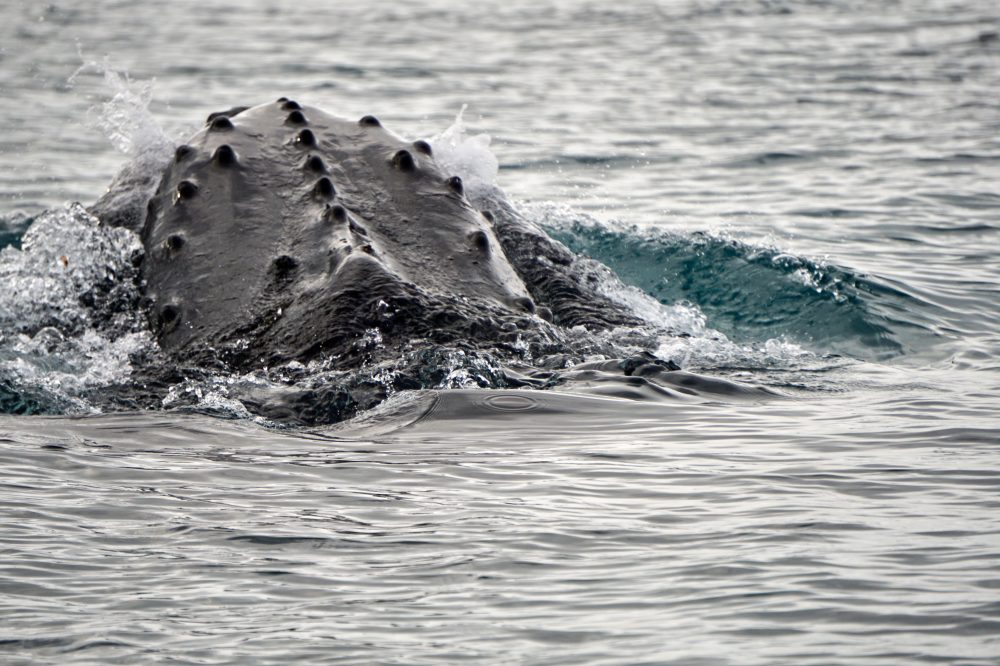

PORTLAND, Maine — Marine biologists working at Cape Cod’s Woods Hole Oceanographic Institution have uncovered what they believe to be the earliest known audio capture of whale vocalizations, a finding that could advance our understanding of marine mammal communication patterns.
The audio features the complex song of a humpback whale, documented in March 1949 during research operations near Bermuda waters. Scientists at the Falmouth, Massachusetts facility say this discovery holds significant value because it preserves whale communication from an era when ocean environments were considerably less noisy.
This remarkable find actually precedes scientist Roger Payne’s formal identification of whale song patterns by almost two decades. The original recording occurred when Woods Hole researchers aboard a research vessel were conducting sonar testing and acoustic studies in partnership with the U.S. Office of Naval Research.
The audio survived decades because researchers used basic recording technology but stored the sounds on a plastic disc rather than magnetic tape, allowing the material to endure through time.
Marine scientists note that over 90 different species of whales, dolphins and porpoises produce various sounds as part of their daily lives. These vocalizations are essential for survival, serving multiple purposes including social interaction and navigation.
The sounds these marine mammals create include clicking noises, whistling calls, and complex vocalizations. Researchers studying whale behavior explain that these audio communications help the animals locate food sources, navigate ocean waters, find other members of their species, and interpret their marine environment.
Ocean noise pollution has become a growing concern, with some marine areas now experiencing sound levels 10 times higher than those recorded in the 1960s. Studies conducted by the Scripps Institution of Oceanography in the mid-2000s revealed that underwater noise pollution off California’s southern coast had increased dramatically compared to 1960s levels.
The newly discovered recordings from Woods Hole capture whale songs from a much quieter ocean period. This baseline audio could help marine biologists better assess how modern human-generated sounds, particularly from commercial shipping, impact whale communication behaviors.
Humpback whales rank among the ocean’s most skilled vocalists, despite their massive size that can exceed 55,000 pounds. Their haunting, melancholic songs have been captured for human audiences over many years, with listeners often describing the sounds as deeply moving.
Roger Payne’s 1970 release “Songs of the Humpback Whale” became a cultural phenomenon, selling over 100,000 copies and earning recognition as the top-selling environmental album in history. The recording emerged during the early days of the environmental movement and played a crucial role in building public support for ending commercial whale hunting practices worldwide.