A mother and her five children walked free Thursday after spending more than 10 months in federal immigration detention, setting a record for the longest family detention period during President Trump’s current term in office.
Federal Judge Fred Biery from the Western District of Texas issued the release order Thursday for Hayam El Gamal and her children, who range in age from 5 to 18 years old.
The family was placed in federal custody last June following a firebombing incident in Boulder, Colorado, where El Gamal’s former husband, Mohamed Sabry Soliman, faces charges. The attack targeted an event honoring Israeli hostages held by Hamas, and resulted in injuries to an 82-year-old woman who later died from her wounds.
“The El Gamal family is free,” declared Eric Lee, the attorney representing the family during their detention in Texas.
As part of their release conditions, both El Gamal and her oldest daughter, 18-year-old Habiba Soliman, must wear electronic ankle monitoring devices.
The Department of Homeland Security, which oversees Immigration and Customs Enforcement, strongly opposed the court’s decision. Officials characterized the ruling as coming from an “activist judge” who was “releasing this terrorist’s family onto American streets.”
According to NBC News reports, El Gamal ended her marriage to Soliman following his arrest and publicly denounced the attack. Federal investigators have been examining “to what extent” the family may have known about the planned assault, though the family’s legal representatives maintain they had no advance warning of Soliman’s intentions and argue the detention was unlawful.
The family’s attorneys raised serious concerns about deteriorating health conditions during the extended detention, claiming inadequate medical treatment was provided. Lee reported that El Gamal required emergency room treatment earlier this month due to “excruciating pain,” where a CT scan revealed “fluid around the heart.” The legal team also stated that all five children were experiencing depression.
Homeland Security officials countered that the family received proper medical attention and due process throughout their detention.
Civil rights organizations have consistently criticized conditions within ICE detention facilities, describing them as inhumane based on detainee complaints.
Since Trump resumed office, at least 47 individuals have died while in ICE custody. Civil rights advocates have condemned the administration’s immigration enforcement approach, citing violations of due process and free speech protections, while arguing the policies create dangerous conditions especially for minority communities.
The Trump administration defends these measures as essential for controlling unauthorized immigration and strengthening national security.
Fernando Mendoza faces his biggest challenge yet: transforming the struggling Las Vegas Raiders into championship contenders.
Las Vegas selected the Indiana quarterback with Thursday’s first overall pick in the NFL Draft. The 22-year-old becomes the focal point of the franchise’s rebuilding efforts after his remarkable season with the Hoosiers, where he captured the Heisman Trophy and guided the program to its inaugural national championship.
During his final college campaign, Mendoza threw 41 touchdown passes against just six interceptions while completing 72% of his attempts, leading Indiana to a flawless 16-0 season that few predicted. The Hoosiers entered the year holding the FBS record for most losses in history with 715 defeats.
Las Vegas’s choice came as no shock given their dismal 3-14 finish in 2025. The selection had been widely anticipated for months as the Raiders searched for their franchise quarterback. The remaining question centers on whether Mendoza will immediately claim the starting role or learn behind veteran Kirk Cousins initially.
While the Raiders’ selection lacked drama, the remainder of the top 10 delivered plenty of unexpected moves.
New York’s Jets surprised many by choosing Texas Tech pass rusher David Bailey second overall. Bailey recorded 14.5 sacks across 14 games last season, leading the Jets to overlook heavily favored edge rusher Arvell Reese.
Arizona made another stunning move at third overall, selecting Notre Dame running back Jeremiyah Love. Despite having other pressing needs, the Cardinals couldn’t pass on Love’s explosive ability after he averaged 6.9 yards per rush and scored 18 rushing touchdowns.
Tennessee continued the surprises at fourth overall by choosing Ohio State receiver Carnell Tate over top defensive prospects. Tate hauled in 51 receptions for nine touchdowns during the 2025 season.
Speaking about his new partnership with Titans quarterback Cam Ward, Tate expressed confidence in their future connection.
“I’m a reliable target for him,” Tate stated. “Whenever he needs me, I’m there for him. I’m always open.”
The New York Giants capitalized on Reese’s slide, grabbing him fifth overall to bolster what could become one of the league’s most formidable pass-rushing groups.
“The Giants told me they’re going to get unique with me,” Reese commented. “They said they’re going to use me in a bunch of unique ways. I’m looking forward to that.”
The evening’s first trade materialized when Kansas City moved up three spots from ninth to sixth, sending Cleveland their third-round selection (74th overall) and fifth-round pick (148th overall) to make the jump.
The Chiefs then chose LSU cornerback Mansoor Delane with their acquired pick.
Delane revealed that Kansas City had kept their interest quiet throughout the pre-draft process, apparently as a strategic deception.
“They said they just wanted to keep it quiet and make that sneak move,” Delane explained. “And they made the best move in the draft. So I’m excited.”
Washington continued the Ohio State trend at seventh overall by selecting linebacker Sonny Styles, making him the third Buckeye chosen among the top seven picks. New Orleans followed at eighth by drafting Arizona State wide receiver Jordyn Tyson.
Two offensive linemen completed the top 10 selections.
Cleveland used the ninth pick to select Utah tackle Spencer Fano. The Giants then utilized their second first-round selection to choose Miami Hurricanes tackle Francis Mauigoa tenth overall.
Dallas moved quickly when Ohio State safety Caleb Downs dropped beyond the top 10. The Cowboys traded up one position to 11th overall, sending Miami the 12th pick plus two fifth-round selections (177th and 180th overall) to secure Downs for their secondary.
Miami responded by taking Alabama tackle Kadyn Proctor with the 12th pick, making him the third offensive lineman selected.
Los Angeles delivered another shock at 13th overall by choosing Alabama quarterback Ty Simpson. The Rams saw an opportunity to secure their future signal-caller, who will develop under head coach Sean McVay and veteran starter Matthew Stafford.
“Two of the greatest minds in offense,” Simpson said. “I’m looking forward to it.”
Baltimore selected Penn State guard Olaivavega Ioane 14th overall, while Tampa Bay chose Miami edge rusher Rueben Bain Jr. with the 15th pick.
Bain Jr. openly expressed his frustration about falling to the 15th selection and spoke passionately about proving the Buccaneers made the correct decision.
“I know I’m the best in the country, and I’m going to show it,” he declared.
The Jets added Oregon tight end Kenyon Sadiq 16th overall, followed by Detroit selecting Clemson offensive tackle Blake Miller with the 17th pick.
The NBA handed Phoenix Suns star Devin Booker a hefty $35,000 penalty on Thursday for publicly blasting a referee’s work following his team’s playoff defeat, though the league also gave him some vindication in the process.
Officials announced they were overturning a technical foul assessed against Booker during the late stages of the third quarter, stating it had been “improperly assessed.”
The controversy stemmed from Phoenix’s 120-107 defeat to Oklahoma City on Wednesday night, which put the Suns in a 2-0 hole in their Western Conference quarterfinal matchup against the defending champions. Following that loss, Booker didn’t hold back when discussing the game’s officiating.
“It’s definitely something that has to be looked at,” Booker said postgame. “I heard (Oklahoma City’s Alex) Caruso tell them to call the tech, and he ended up doing it. In my 11 years, I haven’t called a ref out by name, but James (Williams) was terrible tonight.”
The veteran guard continued his criticism, stating, “Whatever I get fined for, everybody can pull the clips and see where the frustration comes from.”
The financial penalty came from NBA executive vice president and head of basketball operations James Jones. The league’s statement also responded to Booker’s accusations of bias, declaring, “Following an investigation including multiple interviews and video review, the league found no basis to any claim of bias or misconduct by game officials.”
Despite defending the officials’ conduct, the NBA acknowledged the technical foul against Booker should never have been called.
In Wednesday’s contest, Booker contributed 22 points and seven rebounds, following up his 23-point, six-rebound performance in the series opener. During the regular season, the guard averaged 26.1 points, 6.0 assists and 3.9 rebounds across 64 starts.
Throughout his 11-year NBA career, all spent in Phoenix, Booker has earned five All-Star selections. His career statistics include 24.6 points, 5.3 assists and 4.0 rebounds per game over 737 appearances, with 712 as a starter.
Following intense public backlash, University of Kentucky Athletic Director Mitch Barnhart announced Thursday he will decline a controversial $1 million position that was set to begin after his retirement.
Both UK President Eli Capilouto and Barnhart released joint statements confirming that Barnhart will not take the executive in residence role with the UK Sports and Workforce Initiative. The position drew sharp criticism from Governor Andy Beshear, who described it on social media Tuesday as “a new $1 million job that has no defined duties.” Major Kentucky athletics donors also voiced opposition to the arrangement.
“Mitch Barnhart came to me earlier this week to share his concern that the discussion surrounding his future role leading our sports workforce initiative has become a distraction from the work of our university,” Capilouto said in a statement. “Mitch and his family care deeply about this institution and our state, and they want the focus to return to the work that matters most for our students and the Commonwealth.”
Capilouto confirmed that the 66-year-old Barnhart will proceed with his planned retirement on June 30 but will “step away” from the university role they had designed for him. They will negotiate his departure terms according to his existing contract. Initial reports indicated Barnhart would have received $950,000 per year through August 2030.
“The compensation associated with his departure will be supported entirely by private funds — not athletic funds, not funds that would go toward NIL opportunities or university funds — that I will raise,” Capilouto said. “Mitch’s impact on this university has been profound, and I am grateful for his decades of leadership and service.”
Barnhart has led the Wildcats’ athletic program since 2002, making him the SEC’s longest-serving athletic director currently in position.
Last August, Barnhart received a contract extension running through 2028. Reports indicate his agreement contained provisions allowing him to transition from his athletic director duties in July 2026 to take on a different university role, such as serving as a special assistant to Capilouto.
In Thursday’s announcement, Barnhart explained his decision to change course.
“With our family previously having made the decision to retire in June from the position of Athletics Director, we were very excited about beginning the Workforce Initiative, developing a new program and pouring into the next generation of leaders in sports,” Barnhart said. “Work has already begun on the Initiative but recently it has become apparent that now is not the right time and we would never stand in the way of what we deem best. The world of sports is dynamic and ever-changing. It is my hope that this initiative will continue in the future.”
Under Barnhart’s leadership, the Wildcats captured six national titles: men’s basketball in 2012, women’s volleyball in 2020, and rifle team championships in 2011, 2018, 2021, and 2022.
The Kentucky football program achieved two 10-win seasons during his tenure in 2018 and 2021, reaching its highest point with a No. 7 Associated Press ranking in 2022.
The Sports Business Journal recognized Barnhart as Division I Athletic Director of the Year in 2019.
However, recent struggles in major sports programs have created challenges. Kentucky’s football team’s decline resulted in the dismissal of head coach Mark Stoops in December following 13 seasons. Despite being the most successful football coach in school history with an 82-80 record, Stoops’ teams struggled to 4-8 in 2024 and 5-7 in 2025.
Kentucky faced a substantial buyout obligation of approximately $37.7 million to Stoops, representing 75% of his remaining contract value.
The men’s basketball program, long considered the crown jewel of Kentucky athletics and among college basketball’s elite programs, experienced upheaval when accomplished coach John Calipari departed in 2024 after 14 seasons, despite winning the 2012 national championship. His successor, Mark Pope, has struggled to meet the high standards expected in Lexington.
“I am losing confidence and growing increasingly concerned with the management and decision-making at the University of Kentucky,” Beshear said in a statement on Tuesday. “My concerns include the creation of a new $1 million job that has no defined duties and the announcement that the new dean of law was the only candidate not recommended by law school faculty.”
Financial markets across Asia displayed inconsistent performance Friday as crude oil costs continued climbing, driven by persistent tensions between the United States and Iran that have left investors uncertain about regional stability.
The MSCI Asia-Pacific stock index excluding Japan climbed 0.3% and appeared headed for a weekly increase of 0.8%, while Japan’s Nikkei gained 0.45%. However, markets in South Korea, China and Hong Kong posted declines.
U.S. market futures showed Nasdaq advancing 0.6% and S&P 500 rising 0.1% after Thursday’s cash session closed lower, while European futures pointed to losses with EUROSTOXX 50 down 0.65% and FTSE falling 0.9%.
The inconsistent market performance highlighted investor anxiety as trading this week has alternated between optimism for conflict resolution and concerns about prolonged instability.
“The thing is, a ceasefire is a funny term to use in conjunction with a blockade and rolling tensions and animosities,” explained Vishnu Varathan, who serves as Mizuho’s head of macro strategy for APAC.
Tehran demonstrated its control over the crucial Strait of Hormuz Thursday by releasing footage showing commandos boarding a large cargo vessel from speedboats. Meanwhile, President Donald Trump announced he had directed the Navy to “shoot and kill” Iranian vessels placing mines in the waterway while increasing mine-clearing operations.
These aggressive statements followed Trump’s recent decision to extend indefinitely what was originally planned as a two-week ceasefire with Iran to permit additional diplomatic discussions.
“It’s not going to be a linear de-escalation of violence and oil prices and volatility around the entire supply shock,” Varathan noted.
“(Investors) have just been looking for excuses to put on optimistic trades opportunistically. I don’t think anybody in the market truly believes that this will be over in a week or two.”
Energy markets saw prices increase as the Strait of Hormuz standoff continued. Brent crude futures surged more than 1% to reach $106.21 per barrel, while U.S. crude advanced 1% to $96.77 per barrel.
Investors showed little reaction to news that Lebanon and Israel had agreed to extend their ceasefire for three additional weeks following high-level discussions at the White House.
Currency movements remained relatively subdued Friday, though the dollar was positioned for weekly gains due to renewed demand for safe-haven assets.
The euro traded at $1.1684 and was tracking toward a nearly 0.7% weekly loss, while the British pound held steady at $1.3469 but faced a modest weekly decline.
Multiple central banks including the Federal Reserve, European Central Bank and Bank of England will announce policy decisions next week, with market participants watching closely for commentary on how the conflict might affect inflation and economic growth.
“In view of the demand destruction implied by higher energy prices, there may be an understandable reluctance by many G10 policymakers to push ahead with rate hikes over the coming months,” said Jane Foley, who leads FX strategy at Rabobank.
The Bank of Japan will also convene next week, with expectations that the central bank will maintain current interest rates.
Currency traders focused attention on the yen, which approached the critical 160-per-dollar threshold that many analysts view as likely to trigger government intervention.
The Japanese currency weakened slightly to 159.78 per dollar and was positioned for a 0.7% weekly decline.
Japanese Finance Minister Satsuki Katayama issued fresh intervention warnings Friday, emphasizing “decisive action” in coordination with the United States.
“Lower market liquidity during Golden Week, which comes directly after the BOJ meeting, may provide an opportunity for FX intervention and a knee-jerk appreciation in the yen within the 150–160 range,” explained Carl Ang, a fixed income research analyst at MFS Investment Management.
Japanese markets will close for several days during the annual Golden Week holiday period extending into early May.
Gold prices remained unchanged at $4,691.60 per ounce.
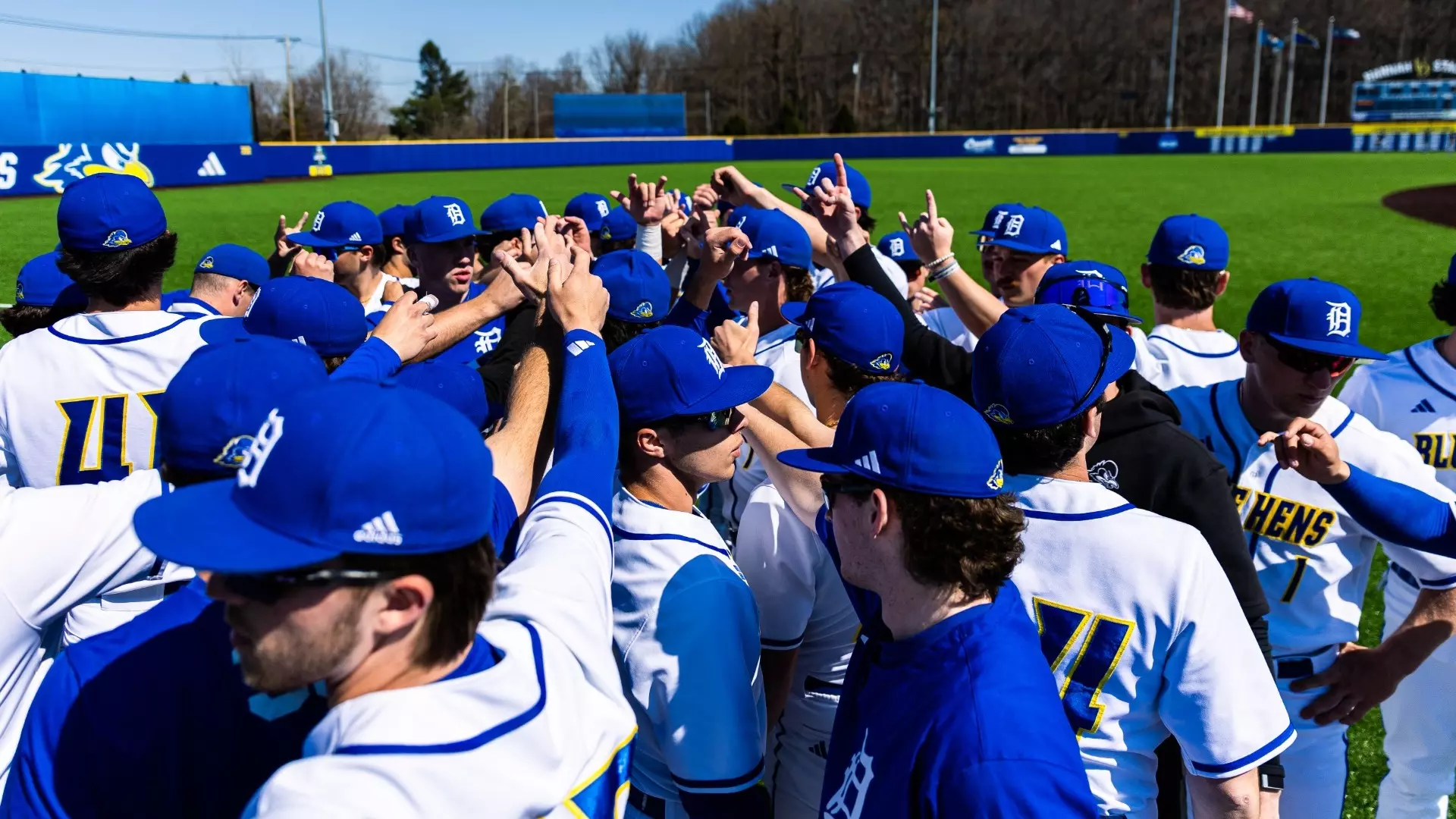
Delaware State University softball coach Daniel Stockdale has earned recognition as one of the nation’s top 10 Black head coaches in Division I athletics, according to an announcement made on April 23, 2026.
The prestigious designation acknowledges Stockdale’s exceptional leadership and significant impact within collegiate softball. This recognition places the Delaware State coach among an elite group of African American coaches making their mark at the highest level of college athletics.
The honor reflects Stockdale’s dedication to developing student-athletes both on and off the field while representing Delaware State University’s commitment to excellence in its athletic programs.
This achievement adds to the growing recognition of diversity and leadership within college sports, particularly highlighting coaches who are making significant contributions to their programs and student-athletes’ development.
Indiana quarterback Fernando Mendoza expressed overwhelming joy Thursday night after the Las Vegas Raiders selected him with the first overall pick in the NFL Draft, calling the opportunity to join the franchise “ecstatic.”
The selection came as no surprise, as Mendoza captured the Heisman Trophy this past season while guiding the Hoosiers to a perfect 16-0 record and their first national championship. Now the 22-year-old signal-caller says he’s ready to advance to professional football.
“College was fantastic and I’m so blessed to have had that career, but now I step into the great game in the NFL,” Mendoza stated. “I look forward to earning it and proving it every day.”
RAIDERS SEEK TURNAROUND
Las Vegas is counting on Mendoza’s precision throwing, smart decision-making, and durability to help resurrect a franchise with a rich history but recent struggles. The organization is coming off a disappointing 3-14 campaign where they managed just 241 points, the fewest in the league, and haven’t secured a postseason victory since before Mendoza was even born.
Raiders General Manager John Spytek emphasized that selecting Mendoza wasn’t simply handing him the starting role, but rather the result of extensive evaluation where the quarterback excelled at every level of assessment.
“He’s a hard-working, driven and extremely smart young man,” Spytek commented.
The rookie quarterback will have the unique opportunity to learn from Raiders minority owner Tom Brady, the seven-time Super Bowl champion, while competing with veteran Kirk Cousins and 2023 draft selection Aidan O’Connell in the quarterback competition.
HIGH EXPECTATIONS
Raiders supporters are hoping Mendoza represents the long-term answer at quarterback that has eluded the organization for years.
“I expect fans to see a guy who comes out and gives his best to Raider Nation,” Spytek explained. “He’s going to compete his tail off with Kirk and with Aidan. As we’ve said, this is a meritocracy in the NFL. The best guy will play. But we expect him to come in ready to roll — that’s the kind of person he is.”
During his final collegiate season, Mendoza posted impressive numbers, completing 71.5% of his throws for 2,980 yards while contributing 39 total touchdowns. When NFL Commissioner Roger Goodell called his name from the stage in Pittsburgh, Mendoza embraced his mother and displayed a wide grin while donning his new Raiders hat.
“What a great organization, what a great legacy,” Mendoza said about the Raiders, who have reached five Super Bowls and claimed three championships. “There are so many great teammates, coaches and owners I’m looking forward to talking to. I’m ecstatic for the opportunity.”
In an unprecedented legal proceeding, 486 suspected gang members are facing trial simultaneously in El Salvador, with defendants watching court hearings on large screens from inside maximum-security facilities where they remain restrained with handcuffs and leg shackles.
The historic mass trial represents the largest of its kind under President Nayib Bukele’s aggressive anti-gang campaign. Since implementing emergency powers in April 2022, Bukele has suspended constitutional protections and authorized the detention of more than 91,000 individuals, mostly suspected members of MS-13 and Barrio 18 criminal organizations.
El Salvador became the only Latin American nation to permit mass trials after Bukele’s New Ideas party enacted legislation allowing such proceedings. The current defendants are housed across five different correctional facilities, including the high-security CECOT prison that opened in 2023 as a cornerstone of the president’s zero-tolerance approach.
At CECOT, inmates wear white uniforms and have shaved heads, with some displaying tattoos associated with MS-13. Armed security personnel maintain constant surveillance of the facility.
Legal authorities have charged the alleged gang members with involvement in more than 47,000 criminal acts spanning from 2012 to 2022, encompassing extortion schemes, weapons trafficking, and murder.
However, the mass trial defendants face charges solely for gang association and will receive sentences based on membership rather than specific crimes, according to Ana Maria Mendez, Central America director for the Washington Office on Latin America. Following standard practice for El Salvador’s criminal courts, the proceedings remain closed to public observation.
“There is no way to see and verify that the information the prosecutors present is true. Secrecy is now the norm in El Salvador,” Mendez stated.
Given the volume of detained individuals and extended pre-trial periods, mass trials will likely become standard practice in El Salvador, she predicted.
Salvadoran defense attorney Roxana Cardona criticized the process, saying “Mass trials are just formalities. They violate the right to defense, which allows lawyers to sit down with their accused clients and build a defense strategy. In mass trials, that is completely lost.”
Neither a Bukele representative nor the attorney general’s office responded to requests for comment.
Bukele has justified mass trials as essential tools in combating gangs that previously controlled large portions of the nation. His hardline crime policies have earned widespread approval from Salvadorans, establishing him as one of Latin America’s most popular political leaders.
The Inter-American Commission on Human Rights issued fresh concerns Tuesday regarding rights violations during El Salvador’s emergency period and urged authorities to discontinue using emergency measures for crime fighting.
Government officials attribute the gang crackdown conducted under emergency authority to reducing last year’s homicide rate to 1.3 per 100,000 residents, down from 7.8 in 2022.
Chinese technology company Xiaomi announced Friday that it has shipped 26,000 units of its new SU7 electric sedan series since the vehicle’s March debut.
Speaking to reporters at the Beijing Autoshow, Xiaomi Chief Executive Officer Lei Jun revealed that the company had secured 60,000 confirmed orders for the next-generation SU7 sedans through April 23. Jun also announced plans to unveil the company’s YU7 GT series by the end of May.
The Chinese electronics manufacturer, which has built a massive consumer base in China, is now directly competing with Tesla as it pursues a high-end approach in the electric vehicle sector. The company has set its sights on expanding into the European market next year, marking its initial international expansion effort.
Crude oil markets surged Friday morning as investors reacted to heightened military activity in the Middle East, with Iran demonstrating its control over a critical shipping route that handles a fifth of the world’s oil and gas traffic.
Brent crude climbed $1.23 to reach $106.30 per barrel, marking a 1.17% increase by early morning trading, while West Texas Intermediate gained $1.07 to $96.92, up 1.12%.
Thursday’s trading session saw both oil benchmarks close with gains exceeding 3%, surging $5 per barrel following reports of air defense systems activating over Tehran and internal political tensions between Iran’s hardline and moderate factions.
President Donald Trump commented that Iran might have enhanced its military capabilities “a little bit” during a recent two-week ceasefire period, while asserting that American forces could neutralize such weaponry within 24 hours.
According to analysis from Haitong Futures, the current ceasefire appears to be serving as preparation for potential warfare. The firm warned that if diplomatic discussions between the United States and Iran don’t achieve significant breakthroughs by month’s end and hostilities resume, oil markets could reach new annual peaks.
Following the breakdown of peace negotiations Thursday, Iran broadcast footage showing special forces in speedboats taking control of a massive cargo vessel, demonstrating Tehran’s dominance over the Strait of Hormuz waterway.
While global leaders and investors seek lasting peace, Trump indicated he wouldn’t establish a specific timeline for resolving the Iranian conflict, expressing his desire to negotiate “a great deal.”
“Don’t rush me,” Trump responded when questioned about his patience for achieving a comprehensive peace agreement with Iran.
Energy analyst Mingyu Gao from China Futures warned that extended disruptions to Strait of Hormuz shipping could drive worldwide crude oil and refined product stockpiles below typical five-year seasonal minimums by late May or early June, potentially adding supply shortage premiums to oil pricing.
In a Thursday social media announcement, Trump revealed that Israel and Lebanon had agreed to a three-week ceasefire extension following high-level discussions between both nations’ representatives at the White House.
Prior to this development, Israeli officials had indicated readiness to resume military operations against Iran.
Delaware Department of Transportation crews have temporarily closed the right lane on southbound Route 896 for construction activities between the Interstate 95 interchange and Old Baltimore Pike.
The lane restriction will remain in place until 6 a.m., according to DelDOT traffic alerts.
Motorists traveling through the area should expect delays and are advised to use caution while navigating through the construction zone. Drivers may want to consider alternate routes or allow extra travel time during the closure period.
MIDDLETOWN, Pa. – Salisbury University’s nationally-ranked baseball squad delivered a commanding performance Thursday afternoon, defeating Penn State Harrisburg 10-2 at Nittany Field to extend their winning streak to six games.
The Sea Gulls, currently ranked 12th in the nation, showcased their offensive power by scoring eight consecutive runs during their last four innings at the plate, transforming what had been a competitive contest into a decisive victory over the Lions.
The dominant finish highlighted Salisbury’s ability to capitalize on scoring opportunities and pull away from opponents in crucial moments of the game.
An Australian mining company announced on Friday its commitment to expand green energy investments as part of a strategy to reduce vulnerability to volatile oil markets while maintaining steady production forecasts for the year.
Fortescue, ranked as the globe’s fourth-biggest iron ore producer, is pursuing an aggressive timeline to eliminate fossil fuels from its operations ahead of competitors, positioning itself advantageously as mining companies worldwide grapple with inflation pressures stemming from Middle Eastern conflicts.
“We’re getting on with decarbonising our operations and we’re already seeing the benefits,” said Fortescue Metals and Operations Chief Executive Officer Dino Otranto.
“We’re fundamentally reshaping how we power our operations by cutting our reliance on fossil fuels, at a time when energy supply is increasingly uncertain,” Otranto added.
The mining company revealed plans to allocate $680 million toward developing new sustainable energy infrastructure in the Pilbara region, expanding upon earlier commitments to accelerate deployment of an independent green energy network designed to phase out fossil fuel dependency.
During the quarter ending March 31, Fortescue delivered 48.4 million metric tons of iron ore, falling slightly short of analyst projections of 48.6 million tons but exceeding the previous year’s figure of 46.1 million tons.
The Perth-based company maintained its fiscal 2026 projection of 195 million to 205 million tons but revised downward its Iron Bridge shipment expectations to 9 million to 10 million tons on a full basis, compared to previous estimates of 10 million to 12 million tons.
Output from Fortescue’s Iron Bridge facility in Western Australia increased 33.3% to 2 million tons during the third quarter, though operations faced setbacks from severe weather conditions caused by Tropical Cyclones Mitchell and Narelle.
The company also highlighted increasing operational expenses. Hematite operations delivered 46.4 million tons during the quarter compared to 44.6 million tons the previous year, with C1 unit costs climbing over 4% to $18.29 per wet metric ton.
Fortescue cautioned that a $10 fluctuation in Brent crude oil prices per barrel could impact its hematite iron ore C1 unit costs by approximately $0.20 per wet metric ton, assuming other variables remain stable.
The New York Jets made Texas Tech pass rusher David Bailey their top choice Thursday evening, selecting him with the second overall pick in the NFL Draft at their Florham Park, New Jersey headquarters.
Bailey brings much-needed defensive firepower to head coach Aaron Glenn’s squad, which struggled significantly on defense during the previous season and ranked among the league’s bottom performers.
This selection launches what promises to be an active opening phase for the franchise, as New York holds four picks within the first 44 selections. The organization also controls the 16th overall choice and opens Friday evening’s second round with the 33rd pick.
“I feel like this organization is trending in the right way,” Bailey said. “I’m just ready to work.”
The selection marks the highest defensive player chosen by the franchise since the NFL merger occurred in 1970.
While Las Vegas was widely expected to take quarterback Fernando Mendoza with the top selection, speculation focused heavily on New York’s intentions at the second spot. Recent weeks saw both Bailey and Ohio State edge rusher Arvell Reese frequently mentioned as potential targets for the organization, with the main question being which player they would ultimately choose rather than whether they might trade the selection.
General manager Darren Mougey opted to remain at the second position and selected Bailey, who faces expectations to strengthen a pass rush that finished 31st league-wide with just 26 quarterback takedowns. The crosstown Giants subsequently chose Reese fifth overall.
The 22-year-old dominated during his final college campaign at Texas Tech, sharing the national lead with 14.5 quarterback sacks. His impressive statistics also included ranking second nationally with 19.5 tackles behind the line of scrimmage, along with three forced fumbles and three pass breakups across 14 appearances, including 13 starting assignments.
Bailey’s arrival helps fill the void left by edge rusher Jermaine Johnson, whom the organization traded to Tennessee in February in exchange for defensive tackle T’Vondre Sweat.
“That feeling, it’s like no other,” Bailey said of getting sacks. “It’s really what I be chasing. I have a lot of motivations for why I play the game. That’s one of them. That feeling when you get a sack and the crowd is on your side, especially during a home game — but regardless, home or away — it’s one of the best feelings. I take a lot of pride in that.”
Following three campaigns at Stanford, Bailey transferred to Texas Tech where he earned Associated Press All-America recognition, Big 12 defensive lineman of the year honors, the conference’s newcomer award, and became a Lombardi Award finalist for the nation’s top lineman.
The franchise canceled Bailey’s scheduled top-30 prospect visit last week, prompting some observers to question their continued interest. However, Mougey clarified during Tuesday’s pre-draft media session that the cancellation didn’t reflect reduced enthusiasm.
“In regards to David, we had good touch points with him at the combine, we went to his pro day, had a good dinner with him,” Mougey said. “We were just kind of juggling our 30 and how to use them and I wouldn’t look too much into a cancellation because there were other ones we may have changed, as well.”
Bailey will ultimately visit the team’s training facility after all, now as their premier draft selection.
“I had a great interaction with them at the combine,” Bailey said. “Obviously, they canceled the 30 visit, but other than that, man, I had a great FaceTime with Mougey and everybody.”
This represents only the fourth occasion in franchise history that the organization has held the second overall selection, and the first since choosing quarterback Zach Wilson in 2021. Running back Blair Thomas in 1990 and wide receiver Johnny “Lam” Jones in 1980 were the previous second overall picks.
Elon Musk’s space exploration company is relying on Texas corporate regulations to shield itself from unwanted takeover attempts and aggressive investors seeking company changes, according to regulatory documents obtained by Reuters.
The rocket manufacturer is gearing up for what industry experts believe could become the biggest initial public offering ever recorded, potentially transforming space ventures from high-risk speculation into standard investment opportunities.
In its S-1 regulatory submission, SpaceX outlined how Texas statutes and corporate governance rules will create barriers against unwelcome advances. “Some provisions of Texas law, and our charter and our bylaws contain provisions that could make the following transactions more difficult: acquisitions of us by means of a tender offer, a proxy contest or otherwise, or removal of our incumbent officers and directors,” the company stated in the filing.
The document explained that Texas anti-takeover regulations are “expected to discourage coercive takeover practices and inadequate takeover bids.” Any entity attempting to acquire SpaceX would be required to “first negotiate with us,” according to the filing.
These protective measures may reassure investors during a period when corporations increasingly face pressure from activist shareholders who frequently threaten board member removal through proxy battles to force organizational changes.
Data from Barclays shows activist investors initiated 41 campaigns targeting U.S. corporations during the first quarter of 2026, representing a 3% rise compared to the same period the previous year. Technology and industrial sectors experienced the heaviest activist attention.
Legal experts and industry analysts note that SpaceX’s decision to incorporate in Texas makes geographical sense, given that the company builds its Starship vehicles at its Starbase facility in the Lone Star State, rather than choosing Delaware where most Fortune 500 corporations establish their legal headquarters.
However, Musk’s choice also stems from personal motivations. Tesla, his electric vehicle company, relocated its incorporation to Texas two years ago following a Delaware court ruling that invalidated his $56 billion compensation agreement. Though the Delaware Supreme Court subsequently overturned that decision and restored the pay package, the experience influenced Musk’s corporate strategy.
Legal professionals and business analysts suggest that by choosing Texas, SpaceX aims to concentrate authority within its board while diminishing shareholder influence.
They point out that Texas regulations enable companies to prohibit numerous types of lawsuits and limit shareholder proposal submissions. Corporate governance specialists have cautioned that restricting shareholder proposals might reduce the appeal of U.S. company investments.
Proxy advisory organizations such as Institutional Shareholder Services and Glass Lewis, whose guidance typically influences investor decisions on board compositions and merger approvals, may face requirements to publicly reveal when their recommendations consider “nonfinancial factors,” including environmental, social, or governance considerations.
Cisco Systems unveiled a groundbreaking switching chip Thursday that the company says will enable different types of quantum computers to communicate with each other, marking another milestone in building what could become a quantum version of the internet.
While major technology companies like Google and IBM are racing to build their own quantum computers, Cisco has taken a different approach by focusing on connecting quantum machines from various manufacturers rather than creating its own hardware.
Current quantum computers use vastly different technologies – some operate by targeting rubidium atoms suspended in vacuum chambers with laser beams, while others rely on superconductors chilled to temperatures near absolute zero.
Vijoy Pandey, who serves as senior vice president and general manager of Outshift, Cisco’s emerging technologies division, explained that quantum researchers expect each of these different methods may prove valuable for specific applications. Cisco’s new switch operates at normal room temperature using standard fiber-optic telecommunications cables to bridge the communication gap between these diverse systems.
“You can speak any language,” Pandey said.
Although extensive networks of quantum computers likely won’t emerge until the 2030s, Cisco’s switching technology could provide immediate benefits for cybersecurity, according to Jeetu Patel, the company’s president and chief product officer.
Quantum mechanics operates on the principle that information can exist in multiple states simultaneously until observed – similar to the famous thought experiment where Schrödinger’s cat remains both alive and dead until someone opens the box to check.
Cisco’s switch can link multiple quantum sensors that are currently available into a networked “entangled state.” When hackers or malicious artificial intelligence systems attempt to spy on the network, the quantum sensors would immediately detect the intrusion because the entanglement would break down when the information gets intercepted.
“If you can start detecting behaviors of what is happening on the network through a quantum switch, it changes your defense posture almost entirely,” Patel said.
The Chicago Cubs continued their hot streak Thursday afternoon, defeating the Philadelphia Phillies 8-7 in extra innings to extend their winning streak to nine games.
Dansby Swanson delivered the decisive blow with a walk-off single in the 10th inning, capping off a dramatic comeback victory at Wrigley Field. The win completed a four-game sweep of Philadelphia and marked Chicago’s longest winning streak since an 11-game run in 2016.
Meanwhile, the Phillies’ struggles continued as they dropped their ninth consecutive game, leaving them with the worst record in the National League at 8-17.
The extra-inning drama began when Cubs pitcher Javier Assad (2-1) retired Philadelphia in order during the top of the 10th. In the bottom half, Phillies reliever Tanner Banks (0-2) intentionally walked Seiya Suzuki before allowing Carson Kelly’s single to load the bases.
Following Michael Busch’s strikeout, Swanson stepped up and drove a single to right field to end the contest.
Chicago’s offense exploded for 18 hits in the victory, led by Busch’s four RBIs and home run performance. Both Suzuki and Kelly contributed three hits each, with Suzuki also going deep.
The game remained tied 6-6 entering the eighth inning when Suzuki broke the deadlock with his third home run in three games, connecting on a fastball from Philadelphia reliever Brad Keller.
Philadelphia responded in the ninth inning as pinch hitter Adolis Garcia launched his third homer of the season off Chicago’s Caleb Thielbar, evening the score at 7-7 and forcing extra innings.
Cubs starter Edward Cabrera pitched seven innings, surrendering five runs (three earned) on six hits while striking out five batters and issuing no walks. For Philadelphia, Cristopher Sanchez lasted 5 1/3 innings, giving up six runs on 12 hits with four strikeouts and two walks.
Brandon Marsh provided offensive highlights for the Phillies despite the loss, going 3-for-4 with a pair of home runs.
Philadelphia struck first in the second inning when Marsh connected for his third homer of the season. Chicago answered immediately in the bottom half as Kelly and Busch reached base before Swanson’s sacrifice fly tied the game.
The Cubs seized control in the third inning after singles by Suzuki and Kelly set up Busch’s three-run blast, establishing a 4-1 advantage.
The Phillies cut into the deficit in the fourth when Bryce Harper’s single preceded Marsh’s RBI hit, making it 4-2. Chicago restored its three-run cushion in the bottom of the fourth as Ian Happ launched his seventh home run of the year.
After Happ singled with one out in the sixth, Sanchez was lifted for Chase Shugart. Suzuki followed with a single and Kelly was hit by a pitch before Busch’s RBI groundout extended the lead to 6-2.
Philadelphia mounted a comeback in the seventh inning, starting with Marsh’s second homer of the game. Bryson Stott singled and Alec Bohm doubled before Alex Bregman’s throwing error allowed Stott to score. Garrett Stubbs then delivered a sacrifice fly to pull the Phillies within one run.
The Phillies completed their comeback in the eighth when reliever Hoby Milner walked two batters in 2/3 of an inning. Jacob Webb entered with runners on first and second but allowed Edmundo Sosa’s game-tying single.
The island nation of Singapore is evolving into a technological safe haven as artificial intelligence companies seek refuge from the escalating tech battle between the United States and China.
Rather than serving as a bridge between East and West, Singapore has become a strategic location where businesses can distance themselves from both superpowers’ increasing control over technology exports and talent movement. The city-state’s business-friendly environment and English-speaking workforce make it an attractive alternative.
Kerry Goh, who leads Kamet Capital, explained that establishing operations in Singapore “gives a lot of comfort” to global customers because intellectual property remains on the island, free from regulatory interference by either China or the United States.
Goh recently counseled two former Alibaba executives who wanted funding to launch their AI video company Topview in Singapore, anticipating that international clients would be hesitant about Chinese government supervision.
“Your clients are not Chinese. This product is not available in China,” Goh noted about Topview, explaining that a Singapore base improves prospects for American sales. The company has secured more than $8 million from Kamet since 2024.
The tech rivalry between the superpowers intensified during Donald Trump’s presidency, with security concerns driving reciprocal restrictions that have accelerated with artificial intelligence development. Trump’s changes to H-1B visa requirements for skilled workers have particularly disrupted companies that regularly transfer employees to or from the United States.
These developments have strengthened Singapore’s goal of becoming the world’s most AI-driven economy through programs including specialized visas for AI professionals and tax incentives for intellectual property registration.
According to an Economic Development Board representative, these “ecosystem enablers” have drawn investment from companies of varying sizes and locations.
“Singapore is increasingly becoming a neutral hub for AI companies from both the U.S. and China,” observed Brad Gastwirth, who heads global research at Circular Technology.
Companies with Chinese or American connections now operating in Singapore include automation platform Workato, wealth management developer Addepar, and note-taking device creator Plaud AI. Legal platform Harvey AI established operations there in June.
American AI developer Anthropic, which raised $30 billion in funding led by Singapore’s sovereign wealth fund GIC, intends to open a Singapore office, according to three sources familiar with the plans. This would put the company alongside major players OpenAI, Meta’s Superintelligence Labs, and Google’s DeepMind. Anthropic representatives declined to provide comment.
However, Singapore’s appeal as a neutral zone could potentially trigger restrictions from the competing superpowers. The United States has already banned Nvidia from selling advanced AI chips to China and blocked access to semiconductor manufacturing equipment.
China reportedly imposed travel restrictions on founders of AI startup Manus after the company relocated from China to Singapore last year before being acquired by Meta. Similarly, China allegedly prevented MiroMind from sending employees overseas after the startup left China and established offices in Singapore, Japan, and the United States.
When contacted by reporters, MiroMind’s parent company Shanda only stated that it develops AI projects internationally. Shanda CEO Chen Tianqiao wrote on LinkedIn that global expansion proves challenging for AI companies when “regulation, geopolitics, and public scrutiny are changing faster than most companies can adapt.”
Neither China’s Ministry of Commerce nor the U.S. Department of Commerce responded to requests for comment.
National University of Singapore political scientist Chong Ja Ian warned that “given increasing demands from the U.S. and Chinese governments to keep their tech stacks separate, there is a risk that Singapore is seen as a grey space for technology transfers – including people moving to new firms – that one or both major governments disallow to take place.”
“That could result in restrictions being placed on Singapore,” Chong added.
Tan Yinglan, founding managing partner of Insignia Ventures Partners, noted that Chinese founders can only successfully establish Singapore operations if they surrender their Chinese citizenship, avoid employing engineers in China, and ensure their company’s revenue, data, and headquarters remain outside China.
The challenges facing technology companies operating between the two superpowers are extensive. China’s requirement that companies provide data upon government request concerns foreign partners, while unpredictable U.S. policies keep investors anxious.
“The (U.S. visa) process has become more unpredictable with longer processing times, stricter screening, and higher fees, which makes planning harder for startups and mid-sized AI companies that rely heavily on global talent,” Gastwirth explained.
Singapore’s entry process is “very friendly” with work permits sometimes approved within three days, according to Huang Lin, who founded corporate services provider Link-da. His company has assisted approximately 50 Chinese AI-related businesses in establishing Singapore operations since 2024.
Indonesian AI engineer Vincent Tatan described Singapore as “very welcoming” when he relocated there from the United States, where his employer had initiated but then canceled his permanent residency application.
“I can fight for it, but is it worth the fight and the wait?” Tatan questioned.
A nuclear technology company based in Rockville, Maryland has successfully completed a major stock market debut, securing more than $1 billion from investors on Thursday.
X-Energy, which has financial backing from tech giant Amazon, announced it generated $1.02 billion through its initial public stock offering in the United States market.
The Maryland firm sold approximately 44.3 million shares at $23 each, exceeding its original projected price range of $16 to $19 per share in an expanded offering.
This stock market launch arrives as investment activity rebounds following a temporary March slowdown, when Middle Eastern conflicts and technology sector declines caused several companies to postpone their public offerings. As financial markets approach record levels and investor confidence grows, businesses are rapidly seeking to capitalize on strong demand.
The nuclear energy sector is experiencing renewed attention as power consumption increases dramatically, especially from large technology companies operating power-hungry artificial intelligence systems and cloud computing facilities.
Established in 2009, X-Energy specializes in creating small modular reactor technology and producing fuel for next-generation nuclear power systems.
These smaller modular reactors are designed to be more economical and efficient compared to conventional large nuclear facilities, which typically require many years to construct. The company is currently developing its Xe-100 reactor design, which utilizes helium rather than water for cooling purposes.
In 2024, Amazon provided approximately $500 million in funding to X-Energy to advance its small reactor technology development, as the e-commerce and cloud computing company searches for dependable, emissions-free energy sources for its expanding AI-powered data center operations.
The company had initially intended to become publicly traded in 2023 through a combination with a special purpose acquisition company supported by Ares Management, but abandoned those arrangements due to poor market conditions at the time.
Major financial institutions J.P. Morgan, Morgan Stanley, Jefferies, and Moelis served as the primary underwriters for the offering. X-Energy shares will start trading on the Nasdaq exchange under the ticker symbol “XE” beginning Friday.
Drivers traveling on US Route 13 will encounter lane restrictions due to ongoing construction work in the area.
The Delaware Department of Transportation reports that the left lanes on US 13 are currently blocked between Voshell Mill Road and Shamrock Avenue while construction crews complete their work.
The lane closures are scheduled to remain in place until 7:00 AM, when normal traffic patterns are expected to resume.
Motorists are advised to use caution in the construction zone and allow extra travel time for their commute.
The Texas Rangers have given 30-year-old right-handed pitcher Peyton Gray his first shot at the major leagues, promoting him after placing left-handed reliever Robert Garcia on the 15-day injured list due to shoulder inflammation on Thursday.
Gray’s path to the big leagues has been anything but conventional, spanning eight years and 278 games across minor league baseball, independent leagues, and four winter seasons playing internationally before finally receiving his major league opportunity.
Garcia hasn’t taken the mound since April 16, though the injured list placement could only be backdated to Monday. The Rangers made space for Gray on their 40-man roster by designating minor league catcher Willie MacIver for assignment.
Following his time in the Rangers’ farm system last year, Gray made a strong impression during spring training as a non-roster invitee. He posted a 2.53 ERA across nine appearances, recording 18 strikeouts against just one walk in 10 2/3 innings pitched.
“Being the 30-year-old non-roster invite that doesn’t have any big league time, I don’t think they expected me to put up as many zeroes and throw as many strikes as I did,” Gray said in the Rangers clubhouse before a series finale against Pittsburgh. “So I think I surprised them. I might have surprised myself a little bit too.”
Gray, who expressed gratitude just to have a pitching job following spring training, started this season with Triple-A Round Rock. He delivered 12 1/3 scoreless innings across seven outings, posting a 1-0 record with two saves, 15 strikeouts, and two walks.
“What a story this is going to be when he gets on the mound. The journey is from minor leagues to independent ball to international, the whole deal. It’s an incredible story and earned,” manager Skip Schumaker said. “I mean, it’s not just because we need a pitcher. Like he’s earned this, and I think that’s what sticks out the most. Dominated in spring training, dominated in Triple-A so far.”
Gray’s professional career began after college at Florida Gulf Coast University with a brief stint in the Colorado Rockies’ Northwest League affiliate in 2018, remaining in their system through 2019.
His baseball odyssey continued in 2021 with the Kansas City Royals’ organization, interspersed with seasons playing for the Milwaukee Milkmen in the independent American Association. He spent this past winter pitching in the Dominican Republic, following three previous winters in Mexico’s Pacific League.
Garcia carries a 0-1 record with a 3.38 ERA through nine appearances for the Rangers this season. While an MRI revealed no structural damage and Garcia received a shoulder injection, he hadn’t pitched in a week before the Rangers made the roster move.
“We were kind of just waiting for it to turn. It just did not. So you can’t be a man short for too much longer,” Schumaker said.
“Now we’re just letting everything set in and let it take its course and give it some time. And then obviously day by day treatment and stuff like that as much as we can do,” Garcia said. “You have to be smart. It is April, and I know how much value I hold in the bullpen. And I don’t want to let this linger for five more months.”
Federal safety officials released findings Thursday examining the fatal March collision at LaGuardia Airport that claimed two lives when an Air Canada regional aircraft struck a fire truck during landing operations.
The National Transportation Safety Board’s preliminary findings reveal multiple breakdowns that contributed to the tragedy, including the fire vehicle running a runway warning signal, missing safety equipment, and overwhelming air traffic conditions during the incident.
The March 22 accident involved Air Canada Express Flight 8646 arriving from Montreal carrying 76 passengers and crew. The aircraft collided with the emergency vehicle moments after touchdown, killing pilots Antoine Forest, 30, and Mackenzie Gunther, 24. Hospital treatment was required for 39 individuals, including the fire truck’s two occupants.
This marked LaGuardia’s first fatal aviation accident in more than three decades, prompting extensive investigation into the circumstances.
Airport operations faced unusual strain that evening, with arrival and departure activity more than doubling typical post-10 p.m. volumes due to earlier flight delays, according to aviation data company Cirium.
Two air traffic controllers managed the heightened workload while simultaneously coordinating an emergency response to a United Airlines aircraft reporting strong odors in the cabin. The fire truck that would later collide with the Air Canada flight was part of the emergency response convoy.
Controller responsibilities became divided when the senior operator focused on the United emergency, leaving the second controller to manage both ground vehicle movements and continued flight operations.
“These controllers were just way busy, just too busy,” explained aviation safety specialist Jeff Guzzetti.
LaGuardia operates an advanced collision prevention system called ASDE-X, which uses radar combined with transponder signals to track all aircraft and vehicles on airport surfaces. However, the fire trucks involved lacked the required transponders, preventing accurate tracking.
Without transponder data, the radar system struggled to maintain clear identification of the emergency vehicles, causing tracking signals to merge intermittently and preventing automatic collision warnings from activating.
Radio communications show the Air Canada flight received landing authorization at 11:35 p.m. Approximately two minutes afterward, with just 25 seconds remaining before impact, the fire crew requested runway crossing permission.
Controllers granted crossing clearance when the approaching aircraft was roughly 100 feet above ground level. At that moment, red warning lights designed to alert ground traffic remained illuminated on the runway.
The warning system continued operating until the truck reached the runway edge, shutting off only three seconds before collision as designed – the lights automatically extinguish moments before aircraft reach intersection points.
Former airline captain John Cox, who leads Safety Operating Systems, emphasized that ground vehicles must never proceed while warning lights remain active, regardless of controller clearance.
“That’s an automated system so even though the controller says you’re cleared to cross, the lights mean that there’s an airplane that is either on the runway or about to be,” Cox explained.
Guzzetti noted that darkness and wet pavement conditions may have made the warning lights difficult to observe before the collision occurred.
With nine seconds remaining before impact, the controller recognized the developing collision and issued urgent instructions: “Stop, stop, stop, stop. Truck 1. Stop, stop, stop, stop.”
Investigation interviews revealed the fire truck’s turret operator remembered hearing repeated “stop” commands but initially couldn’t determine the intended recipient until hearing “Truck 1” identification.
By then, the vehicle had already entered the runway. As the truck turned left, the operator reported seeing the aircraft’s lights on the runway ahead.
Cox acknowledged the confusion was understandable given the controller’s rapid succession of instructions to multiple vehicles, creating ambiguity about command recipients.
“Now we know who he’s talking to, but the first three stop, stop, stop there is ambiguity, if you were listening to it, who he’s talking to,” Cox noted.
However, Cox questioned whether immediate braking would have prevented the collision, given the truck’s 29 mph speed when entering the runway. Considering the vehicle’s momentum and weight, Cox observed the truck “isn’t going to stop on a dime.”
Commerce Secretary Howard Lutnick disclosed Thursday that President Donald Trump’s new “gold card” visa initiative, requiring foreign nationals to invest a minimum of $1 million for U.S. residency and work authorization, has successfully processed only a single applicant since its December debut.
When the program first launched, Lutnick announced that the administration had generated $1.3 billion in sales within mere days, while Trump displayed the golden certificate and declared it “essentially it’s the green card on steroids.”
During Thursday’s congressional committee hearing, Lutnick did not explain the seeming contradiction between the reported sales figures and actual approvals when questioned by a representative.
The president had promoted this concept throughout the previous year, originally proposing a $5 million price point, claiming it would attract international talent to America while boosting government revenue. The initiative serves as a replacement for the existing EB-5 program, which has operated for decades by providing U.S. visas to individuals investing approximately $1 million in businesses employing at least 10 people.
While acknowledging only one approval to date, Lutnick expressed satisfaction with the program’s progress, stating “there are hundreds in the queue that they are going through.”
“They’ve just set it up, and they wanted to make sure they did it perfectly,” he explained.
Previously, Lutnick claimed during a cabinet meeting that the gold card initiative would generate $1 trillion in revenue and assist in balancing the federal budget. However, current public debt stands at $31.3 trillion, with the Committee for a Responsible Federal Budget projecting this year’s deficit at roughly $2 trillion.
The commerce secretary detailed that each candidate must pay a $15,000 processing fee in addition to their million-dollar investment, enabling thorough background checks for participants in the program that ultimately provides a pathway to American citizenship. Companies can alternatively invest $2 million for foreign-born workers, plus an annual 1% maintenance charge.
The program features an elaborate government website displaying “Unlock life in America” above an image of the gold card, showcasing Trump’s portrait alongside a bald eagle, the Statue of Liberty, and his signature. The site also promotes the forthcoming $5 million “Trump Platinum Card,” allowing up to 270 days in America without taxation on foreign income.
Although Trump has built much of his political brand around removing undocumented immigrants, he has consistently advocated for skilled immigration to the United States, which this gold card program aims to encourage.
Regarding how the revenue will be utilized, Lutnick stated: “That will be determined by the administration, and its terms are for the betterment of the United States of America.”
Similar programs exist worldwide, with numerous nations including the United Kingdom, Spain, Greece, Malta, Australia, Canada and Italy offering various forms of investment-based visas to wealthy individuals.
WASHINGTON — The iconic Lincoln Memorial Reflecting Pool is receiving a new blue surface coating under a renovation project announced by President Donald Trump during a Thursday White House event.
Trump revealed that workers have already started applying an “American flag blue” coating to address what he described as severe water leakage from the existing granite surface. The president said the current pool was “leaking like a sieve” and needed immediate attention.
The renovation idea came after a German visitor complained to Trump about the pool’s poor water quality and unsightly appearance, the president explained. Trump said he personally visited the site with Secret Service protection to assess the situation.
“And I went over there with Secret Service in tow, and I said, isn’t that a shame? That’s terrible,” Trump told reporters while displaying photographs of the ongoing work.
This latest renovation adds to Trump’s efforts to modify Washington D.C.’s landmarks according to his preferences, including the White House East Wing demolition to create space for a new ballroom.
The reflecting pool sits between two of America’s most recognizable monuments and holds significant historical importance as the location where Martin Luther King Jr. delivered his “I Have a Dream” speech in 1963.
Trump characterized the project as an example of smart business practices, explaining that he rejected the original proposal to replace the granite entirely. That plan carried a $301 million price tag and would have required at least three years to complete.
Rather than pursuing the costly granite replacement, Trump contacted swimming pool contractors from his previous real estate ventures. “I have a guy who’s unbelievable at doing swimming pools up the road,” the president stated.
The alternative approach involves cleaning the existing granite and installing a new “industrial grade pool” surface for $1.5 million, with completion expected within weeks. Trump emphasized the project will finish well ahead of the July 4th celebration marking America’s 250th independence anniversary.
During a White House drug pricing event, Trump spontaneously discussed the pool renovation for several minutes. He initially considered a turquoise color “like in the Bahamas” before settling on the contractor’s “American flag blue” suggestion.
“You’re going to end up with a beautiful, beautiful reflecting pool,” Trump promised, “the way it’s supposed to be, much better than it ever was.”
A worldwide vaccination campaign has successfully immunized over 100 million children since its launch in 2023, according to the World Health Organization and vaccine alliance Gavi announced Thursday.
The program, called “The Big Catch-Up,” was created during World Immunisation Week in 2023 to address vaccination shortfalls that occurred during the COVID-19 pandemic. The effort targeted children between ages 1 and 5 across 36 nations and wrapped up in March of this year.
According to the health organizations, approximately 12.3 million children who had never received any vaccinations were protected against diseases including diphtheria and polio. An additional 15 million children received measles vaccinations for the first time through this program.
Although complete statistics are still being gathered, officials say the worldwide effort is expected to achieve its goal of reaching at least 21 million children who were either unvaccinated or under-vaccinated.
This vaccination drive occurs as funding challenges emerge, with some longtime supporters like the United States reducing financial assistance despite millions of babies continuing to miss essential immunizations annually. These children remain at risk for preventable illnesses including measles, diphtheria and polio.
Ephrem Lemango, Chief of Immunization at UNICEF, warned that recent significant reductions in global health funding have “seriously affected delivery of immunization services” and could “likely reverse hard earned progress.”
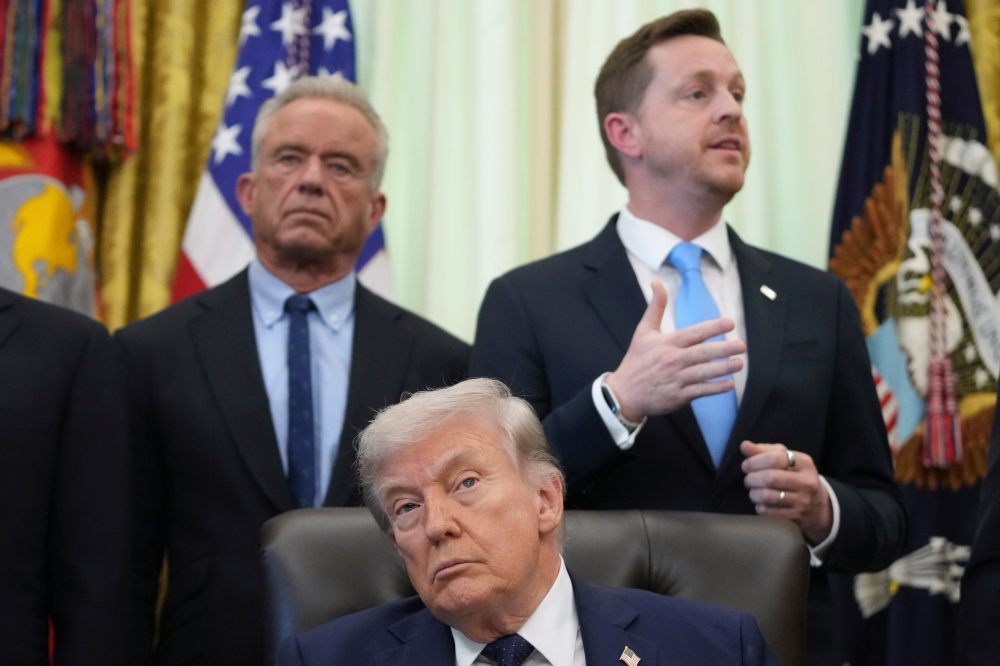
In 2023, U.S. Health Secretary Robert F. Kennedy Jr., who has expressed skepticism about vaccines, reduced financial backing for Gavi, an organization that assists in purchasing vaccines for the world’s most impoverished nations. Kennedy has alleged the organization overlooks safety concerns regarding the immunizations it distributes.
Approximately 14.5 million children failed to receive basic vaccinations in 2023, with nations experiencing armed conflicts showing some of the most severe declines in immunization rates.
Japan’s core inflation rate dropped below the nation’s central banking target of 2% for the second month running in March, according to government data released Friday. The decline came as fuel subsidies from the government helped counterbalance rising energy prices stemming from conflicts in the Middle East.
Economic experts anticipate that inflation will climb back beyond the Bank of Japan’s established target in the months ahead, as businesses start transferring higher energy expenses from Middle Eastern tensions to consumers.
The nation’s core consumer price index, which removes the impact of fluctuating fresh food prices, increased by 1.8% in March compared to the same period last year. This figure aligned with economists’ predictions and represented an uptick from February’s 1.6% increase.
Another measurement that excludes both volatile fresh food and fuel prices – which the Bank of Japan monitors closely as an indicator of consumer demand-driven pricing trends – showed a 2.4% year-over-year rise in March. This was slightly down from February’s 2.5% increase.
These inflation figures will play a key role in the Bank of Japan’s upcoming policy discussions next week. Financial experts widely anticipate that the central bank’s board will maintain current interest rates while indicating preparedness to implement increases if price pressures continue mounting.
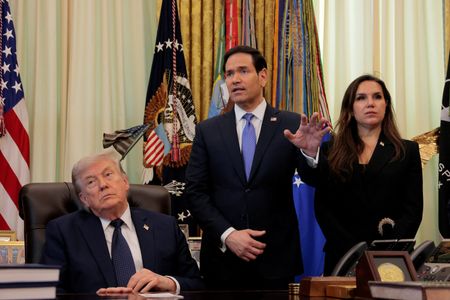
The United States will allow Iran’s national soccer team to participate in the upcoming 2026 FIFA World Cup, but will impose strict limitations on who can accompany the athletes, Secretary of State Marco Rubio announced Thursday.
Speaking to reporters, Rubio clarified that while Iranian players face no restrictions from American officials, individuals connected to Iran’s Islamic Revolutionary Guard Corps will be barred from entering the country with the team.
“Nothing from the U.S. has told them they can’t come,” Rubio stated during the briefing.
President Donald Trump echoed this position during remarks at the White House, saying his administration “would not want to affect the athletes.”
The global soccer tournament is scheduled to kick off June 11 across venues in the United States, Mexico and Canada.
Rubio explained the administration’s concerns center on Iranian officials rather than the sporting competitors themselves.
“The problem with Iran would be not their athletes. It would be some of the other people they would want to bring with them, some of whom have ties to the IRGC. We may not be able to let them in but not the athletes themselves,” the Secretary of State said.
He added stronger language regarding potential security risks: “They can’t bring a bunch of IRGC terrorists into our country and pretend that they are journalists and athletic trainers.” The United States has officially classified the IRGC as a “foreign terrorist organization.”
Earlier, Paolo Zampolli, a Trump representative without formal World Cup authority, had proposed replacing Iran with Italy in the tournament.
No current indications suggest Iran plans to withdraw from the competition or faces potential tournament exclusion, despite Italy’s failure to qualify.
Following the outbreak of conflict involving Iran, Iranian officials requested FIFA relocate their three group stage matches from American venues to Mexico, but soccer’s governing body denied this request.
Recent military exchanges began February 28 when the United States and Israel conducted strikes against Iran. Iran retaliated with attacks on Israel and Gulf nations hosting American military installations. The ongoing conflict involving U.S.-Israeli operations against Iran and Israeli actions in Lebanon has resulted in thousands of casualties and millions of displaced civilians. A tentative ceasefire in the Iran conflict began more than two weeks ago.
WASHINGTON – President Donald Trump announced Thursday that his administration plans to investigate banking institutions following the devastating Los Angeles wildfires, specifically targeting Wells Fargo for its handling of fire victims’ financial situations.
The announcement came after Trump held discussions with Los Angeles Mayor Karen Bass and Los Angeles County Supervisor Kathryn Barger about wildfire recovery efforts.
“Wells Fargo, in particular, has been very difficult to deal with,” Trump wrote on Truth Social. “The Banks must treat those people, who so horribly lost their Homes in this tragic fire, very fairly and well.”
Bass and Barger released a joint statement Wednesday on Bass’s X account describing their meeting with the president. They said “they had a very positive discussion about FEMA and other rebuilding funds, as well as the support of the President to continue joining us in pressuring the insurance companies to pay what they owe – and for the big banks to step up to ease the financial pressure on L.A. families.”
The catastrophic Palisades Fire and Eaton Fire that struck Los Angeles and Altadena earlier this year resulted in 22 deaths and obliterated approximately 12,000 residences. The blazes caused property damage exceeding $50 billion, making them among the most destructive fires in California history.
Federal authorities have brought criminal charges against a U.S. military service member for allegedly exploiting classified information about the Venezuela operation targeting Nicolas Maduro to make illegal profits on prediction markets.
The case represents a historic first – never before have criminal insider trading charges been filed in connection with activity on the Polymarket platform within the United States.
The charges stem from the January 3rd military action at Venezuela’s Port of La Guaira, where American forces successfully captured the country’s president Nicolas Maduro along with his spouse. Smoke could be seen rising from the port facility during the operation.
Prosecutors allege the soldier used advance knowledge of the planned raid to place strategic bets on Polymarket, a platform where users can wager on the outcomes of real-world events including political developments.
The groundbreaking case highlights growing concerns about how prediction markets could be vulnerable to exploitation by individuals with access to sensitive government information.
EL SEGUNDO, Calif. — Los Angeles Lakers guard Austin Reaves received a status upgrade to questionable for Friday’s Game 3 matchup with the Houston Rockets in their first-round playoff series.
The Lakers announced the change in Reaves’ availability Thursday as the team traveled to Houston. Despite missing their leading scorers, Los Angeles holds an unexpected 2-0 advantage in the series heading into Friday evening’s contest.
Reaves has been sidelined since suffering an oblique muscle strain alongside Luka Doncic’s hamstring injury during their April 2 game against Oklahoma City. However, Reaves has resumed basketball activities on the court in recent days. Prior to departure, head coach JJ Redick offered no timeline updates regarding when his injured starters might return to action.
During the regular season, Reaves posted strong numbers with 23.3 points, 5.5 assists and 4.7 rebounds per game, though he appeared in just 51 contests due to two extended injury stretches. In his fifth year with the franchise, the former undrafted player established himself as a reliable secondary offensive weapon and playmaker as Los Angeles captured 53 victories and the Pacific Division title.
Both Reaves and league scoring leader Doncic suffered their injuries during the Lakers’ decisive defeat to the Thunder three weeks ago.
While Doncic remains unavailable for Game 3, Redick indicated earlier this week that the Slovenian star should begin preliminary court work in the near future. The Lakers have avoided providing specific return dates for either guard.
Following a three-game losing streak after the injuries occurred, Los Angeles has bounced back with five consecutive wins. The Lakers shocked the basketball world by taking both home games against the Rockets, who entered the series as heavy favorites due to Los Angeles’ injury concerns.
While 41-year-old LeBron James has spearheaded the effort, Luke Kennard and Marcus Smart have delivered outstanding performances filling in for the absent backcourt starters. Kennard contributed 27 points in the series opener and 23 in Game 2, while Smart added 25 points with five three-pointers in Game 2 and anchored the defensive effort that limited Kevin Durant to just three second-half points.
Reaves faces a significant contract decision this summer if he opts out of his current deal as anticipated. Both the player and franchise officials have expressed confidence that the guard will remain with Los Angeles, the team he supported growing up.
FRISCO, Texas — Dallas Cowboys wide receiver George Pickens intends to accept the team’s $27.3 million franchise tag offer following the organization’s announcement that it won’t pursue a multi-year agreement this offseason, according to two sources familiar with the situation who spoke Thursday.
While Pickens hasn’t yet put pen to paper on the one-year, fully guaranteed deal, he plans to finalize the matter as Dallas prepares for the upcoming NFL draft, sources told The Associated Press under anonymity since the contract remains unofficial.
This development follows Wednesday’s comments from executive vice president of personnel Stephen Jones, who indicated the Cowboys expected Pickens to play under the franchise designation this season. The two parties would have had until July 15 to negotiate a longer-term arrangement.
Accepting the franchise tag means Pickens faces potential fines for missing mandatory minicamp in June or training camp in July. However, signing the deal enables the 25-year-old to take part in the team’s offseason program, which begins Monday.
The receiver, obtained last offseason through a trade with Pittsburgh, posted personal bests with 93 receptions, 1,429 receiving yards, and nine touchdowns while contributing to one of the NFL’s top offensive units last season. Despite the offensive success, Dallas struggled defensively and finished 7-9-1, extending their playoff absence to two consecutive seasons.
The former Georgia standout, selected in the second round of the 2022 draft, flourished playing opposite CeeDee Lamb, who is entering his second season of a four-year, $136 million extension that places him third among NFL receivers with a $34 million annual average.
The franchise tag represents significant financial motivation for Pickens, as the guaranteed sum far exceeds the $6.8 million he earned throughout his entire four-year rookie contract.
Dallas has previously used the franchise tag with quarterback Dak Prescott and defensive end DeMarcus Lawrence over the past eight years before eventually securing long-term commitments. Conversely, tight end Dalton Schultz and running back Tony Pollard both played under the tag before departing via free agency the following season.
Jones cited the “newness” of Pickens’ time with the Cowboys as a contributing factor in the organization’s preference for a one-year arrangement rather than an extended contract.
During his three seasons in Pittsburgh, Pickens displayed exceptional ability but also exhibited enough concerning behavior that former coach Mike Tomlin publicly questioned his maturity level.
First-year head coach Brian Schottenheimer, who spent 25 years as an NFL assistant, avoided publicly criticizing Pickens throughout his inaugural season. However, both Pickens and Lamb were benched for the opening series against Las Vegas after violating curfew during a casino visit the previous evening.
WASHINGTON — White House officials announced plans Thursday to combat what they describe as systematic theft of American artificial intelligence technology by foreign companies, with particular focus on Chinese firms as competition intensifies in the global AI sector.
Michael Kratsios, serving as the president’s top science and technology advisor, issued a memo Thursday targeting foreign organizations “principally based in China” for conducting organized, large-scale efforts to “distill,” or steal capabilities from, top-performing AI systems developed in America and “exploiting American expertise and innovation.”
According to Kratsios’ memo, the administration plans to collaborate with U.S. AI developers to detect these activities, strengthen protective measures, and establish penalties for violators.
This announcement comes as China increasingly challenges American leadership in artificial intelligence development, a sector the White House considers crucial for establishing international standards and securing economic and defense advantages. However, recent analysis from Stanford University’s Institute for Human-Centered AI indicates the performance difference between U.S. and Chinese top AI systems has “effectively closed.”
Chinese officials in Washington rejected the accusations, with embassy spokesperson Liu Pengyu stating the country opposes “the unjustified suppression of Chinese companies by the U.S.”
“China has always been committed to promoting scientific and technological progress through cooperation and healthy competition. China attaches great importance to the protection of intellectual property rights,” Liu Pengyu said.
The memo’s release coincided with unanimous bipartisan House Foreign Affairs Committee approval of legislation establishing procedures to identify foreign actors extracting “key technical features” from privately-owned U.S. AI models and impose sanctions as punishment.
“Model extraction attacks are the latest frontier of Chinese economic coercion and theft of U.S. intellectual property,” stated Rep. Bill Huizenga, R-Mich., the bill’s sponsor. “American AI models are demonstrating transformative cyber capabilities, and it is critical we prevent China from stealing these technological advancements.”
The controversy intensified last year when Chinese startup DeepSeek disrupted U.S. markets by launching a competitive large language model at significantly lower costs than American AI companies.
David Sacks, who previously served as President Donald Trump’s AI and cryptocurrency advisor, alleged DeepSeek copied American models. “There’s substantial evidence that what DeepSeek did here is they distilled the knowledge out of OpenAI’s models,” Sacks stated.
OpenAI, which develops ChatGPT, made similar claims in a February letter to Congress, arguing China should not advance “autocratic AI” by “appropriating and repackaging American innovation.”
Anthropic, creator of the Claude chatbot, accused DeepSeek and two additional China-based AI companies in February of conducting operations to “illicitly extract Claude’s capabilities to improve their own models” through distillation methods that involve “training a less capable model on the outputs of a stronger one.”
While Anthropic acknowledged distillation can serve legitimate training purposes, the company expressed concern when competitors “use it to acquire powerful capabilities from other labs in a fraction of the time, and at a fraction of the cost, that it would take to develop them independently.”
However, technology sharing occurs in both directions. San Francisco startup Anysphere, which creates the popular Cursor coding tool, recently revealed its newest product relies on an open-source model developed by Chinese company Moonshot AI, maker of the Kimi chatbot.
Kyle Chan, a fellow at The Brookings Institution and specialist in Chinese technology development, compared detecting unauthorized distillation to “looking for needles in an enormous haystack” among legitimate data requests. Chan suggested information sharing and coordination between U.S. AI companies could help, with federal government facilitation playing a crucial role in anti-distillation efforts across laboratories.
While the House legislation’s ultimate impact remains uncertain, Chan noted Trump may avoid confrontation with Chinese President Xi Jinping before a scheduled mid-May state visit to Beijing.
WASHINGTON (AP) — President Trump stood by his mathematically questionable assertions about prescription drug savings during a White House announcement Thursday, defending statements that medication costs have been slashed by more than 500%.
At an Oval Office event unveiling an agreement with pharmaceutical company Regeneron to reduce drug costs, Trump addressed his previous statements claiming prescription price reductions of “500%, 600%.” He acknowledged making such claims but also mentioned citing “50%, 60%” reductions, describing these as representing a “different kind of calculation” that could reach “70, 80 and 90%.”
“People understand that better,” Trump stated. “But they’re two ways of calculating” and “either way, it doesn’t make any difference.”
However, mathematical experts point out that while there may be different calculation methods, only one approach follows correct mathematical principles. Price reductions cannot mathematically exceed 100% without dropping to zero and then requiring companies to pay customers to use their products.
The president’s unconventional mathematics extended beyond drug pricing during Thursday’s event. He defended his earlier prediction that the Iran conflict would last four to six weeks, arguing he met that timeline because Iran’s military was “decimated” within that period, despite the war continuing past 7½ weeks.
Health Secretary Robert F. Kennedy Jr. attempted to explain Trump’s calculation method during the same event, referencing his previous day’s congressional hearing exchange with Senator Elizabeth Warren of Massachusetts. Warren had suggested that claiming price cuts above 100% might mean “companies should be paying you to take their drugs.”
Kennedy told reporters that Trump “has a different way of calculating” during the hearing.
On Thursday, Kennedy offered his interpretation, suggesting that when drug manufacturers increase prices by more than 100%, Trump calculates his reductions based on those inflated costs. “If the drug was $100, and it raised the price to $600, that would be a 600% rise,” Kennedy explained. “And the president used that mathematical device.”
Mathematical principles, however, don’t support such a “device” for the way Trump describes it. While products can increase by more than 100% – a $1 item rising to $2.10 represents a 110% increase – reductions cannot exceed 100% without reaching zero cost and entering negative pricing territory.
During the media session following the drug pricing announcement, Trump also revisited his 2017 inauguration attendance figures while discussing Lincoln Memorial Reflecting Pool renovations. He compared his crowd to Martin Luther King Jr.’s 1963 “I Have a Dream” speech audience, claiming “I had the same exact crowd. Maybe a little bit more.”
“I actually had more people,” Trump added. “But that’s OK.”
The U.S. and Iran established a ceasefire this month, which Trump announced he was extending this week. Neither country has declared the conflict concluded, contradicting Trump’s assertion that his original timeline prediction was accurate.
Federal officials are reducing barriers to medical cannabis access through new regulatory changes. The acting attorney general released a memorandum announcing plans to reclassify cannabis products from their current position in the most restrictive federal category.
This policy shift represents a significant change in the federal government’s approach to medical marijuana regulation. The reclassification would ease current restrictions that have limited research and access to cannabis-based medical treatments.
Drivers traveling along Revel Road should expect delays and plan alternate routes as construction work continues to impact traffic flow in the area.
The Delaware Department of Transportation has announced that intermittent lane restrictions are currently in effect on Revel Road between Godwin School Road and Millsboro Highway (Route 24). These temporary closures are the result of ongoing construction activities in the corridor.
The lane restrictions are expected to remain in place until 6:00 PM today. Motorists are advised to use caution when traveling through the work zone and to allow extra time for their commute.
DelDOT recommends that drivers consider alternative routes to avoid potential delays during the construction period.
Federal officials have announced a significant policy change regarding medical cannabis regulations. The acting attorney general has released a memorandum detailing plans to reclassify medical marijuana products, moving them away from the most stringent regulatory tier.
This policy adjustment represents a shift in the federal government’s approach to cannabis-based medical treatments, potentially making these products more accessible to patients and healthcare providers.
Libya’s efforts to achieve political unity continue to face significant obstacles, the United Nations’ leading representative for the North African nation told the Security Council during Wednesday’s session. Hanna Tetteh, who serves as the UN secretary-general’s special representative for Libya and leads the UN Support Mission in Libya, expressed concern that the political blueprint she introduced in August 2025 has failed to generate the momentum necessary for restoring democratic governance and establishing unified state structures.
During her address to council members, Tetteh acknowledged the lack of advancement on her proposed plan. “We are not where we would like to be in terms of progress on the roadmap,” she stated. The UN envoy criticized certain Libyan leaders for disregarding public demands and permitting “parallel structures” to develop beyond existing agreements, which she said undermines UN efforts to reunite the nation. “Allowing status quo actors to evade their responsibilities will only undermine efforts to preserve Libya’s unity and wealth and delay the path to sustained peace, stability, and development,” Tetteh explained.
The UN representative called on Security Council members to leverage their influence in pushing Libyan leadership toward finding common ground, cautioning that ongoing political stagnation only serves to deepen the current division rather than resolve it. Tetteh’s comprehensive strategy includes three key components: establishing an electoral system for both presidential and parliamentary elections, creating a unified administration, and facilitating extensive dialogue that includes Libyans from all regions of the country.
The North African nation has experienced division for several years, with competing institutions operating in eastern and western regions. A scheduled national election in December 2021 fell apart due to disagreements over candidate eligibility and voting procedures. Since the breakdown of the UN-supported transition process that was designed to unite the country following the 2020 ceasefire agreement, Libya has operated under rival governments.
One encouraging development occurred recently when Libya’s competing legislative assemblies gave approval to the nation’s first consolidated state budget in over ten years, representing what many view as progress toward financial unity. However, Tetteh emphasized that while this budget approval is positive, it doesn’t address the fundamental issue of democratic representation, and Libya’s political impasse remains far from resolved.
Two Israeli Air Force mechanics who serviced F-15 fighter aircraft are facing espionage charges for allegedly working with Iranian intelligence during the ongoing conflict, according to a KAN news report.
The suspects, named as Asaf Shitrit and Sagi Haik, will face severe criminal charges including assisting enemy forces during wartime. Prosecutors are considering upgrading one defendant’s charges to treason. Court documents are expected to be filed at the Central District Court in Lod.
Haik, a 19-year-old from Ness Ziona, was taken into custody last month following an investigation that revealed months of communication with an Iranian operative. Investigators found that he “agreed to undergo training in one of the Arab countries and was even asked to recruit additional individuals to carry out tasks under their direction.” Despite his family receiving direct threats from the same operative, authorities say he maintained the contact.
According to investigators, Haik drew Shitrit, a 21-year-old from Beit Oved, into at least one operation for the foreign operative, resulting in his arrest as well.
The charges allege that both men were assigned to gather information about former IDF Chief of Staff Herzi Halevi and National Security Minister Itamar Ben Gvir. They are also accused of transmitting classified materials including aircraft engine blueprints and photographs revealing a flight instructor’s identity.
Eight other military personnel are under investigation for allegedly having knowledge of the activities without reporting them. The base commander conducted a security briefing for all staff following the incident and confirmed he was questioned by Israel’s Security Agency, Shin Bet.
Police and Shin Bet officials stated the defendants “acted on behalf of Iranian intelligence agents, and one of them even intended to travel for training in one of the Arab countries.”
An individual hurled red liquid at Iran’s exiled Crown Prince Reza Pahlavi following a press conference in Berlin, Germany, in what authorities believe was a protest related to U.S. and Israeli military actions involving Iran.
The liquid, believed to be tomato juice, splattered across Pahlavi’s jacket and neck area before security personnel rushed the 65-year-old into a waiting car. German police apprehended an unidentified individual in connection with the attack.
The incident happened moments after Pahlavi concluded his media briefing at Germany’s federal press conference facility, where he had delivered sharp criticism of what he called “appeasement” policies and appealed to European nations to support efforts to topple Iran’s government. During his remarks, he characterized the global situation as a decision between “a dying regime that endangers us all and a free Iran.”
The crown prince’s comments occurred amid ongoing diplomatic deadlock between Washington and Tehran. Earlier this week, President Trump announced an extension of the ceasefire agreement between the United States and Iran.
During Thursday’s Berlin briefing, Pahlavi warned against negotiating with Iran’s leadership. “If you think you can make peace with this regime, you are sorely mistaken,” he declared. “There will never be stability, even if a watered-down version of this system survives.”
The crown prince argued that Iran’s government contains no authentic reform-minded leaders, characterizing current officials as “different faces of a regime.” He referenced alleged executions of political dissidents and questioned whether the “free world will do something or watch the slaughter in silence?”
Pahlavi further stated that “the regime has never been as fragile as it is now,” comparing it to “a wounded beast.”
Political observers have identified Pahlavi as a possible successor leader should Iran’s current government fall from power.
Meanwhile, ongoing disputes continue in the Strait of Hormuz, the vital shipping channel that handles approximately 20% of global oil and gas transport. Washington has demanded Iran cease interfering with the waterway, while Tehran has requested an end to American naval operations in the region.
Syria’s new leadership has launched operations against Hezbollah-connected groups, charging them with orchestrating planned attacks both within Syria and beyond its borders – a dramatic departure from the partnership that sustained Bashar Assad throughout the civil war.
The charges, detailed in multiple security announcements, represent far more than routine security matters. They highlight fundamental questions about Damascus’s evolving relationship with the organization that served as Assad’s crucial partner until the regime’s December 8, 2024 collapse and Assad’s escape to Moscow.
Syria’s current leadership, which took power after Assad’s downfall, reports that recent operations in Damascus and surrounding areas resulted in multiple arrests and the confiscation of weapons and explosives. Officials claim they prevented schemes involving rocket attacks, drone operations, and planned killings.
Government sources indicate some detained groups received overseas training and maintained connections to larger organizational networks, pointing to foreign backing or coordination. However, these assertions cannot be independently confirmed due to continued media access limitations throughout Syria.
Security forces announced on February 1, 2026, the capture of a group allegedly responsible for attacks near Damascus’s Mezzeh Airport. Subsequently, on April 11, authorities detained five individuals after reportedly stopping an attempt to place explosives near a religious location in the capital. Intelligence suggested these suspects underwent foreign training for assassination operations. Between April 18-19, the Interior Ministry revealed dismantling another five-member cell with reported Hezbollah ties, accused of planning cross-border rocket strikes to destabilize conditions.
Officials have disclosed at least three primary cells within a three-month period. Government statements indicate their planned operations spanned domestic assassinations and bombing plots to international rocket attacks. Syrian authorities characterize this as evidence of coordinated activities extending from local operations to wider regional objectives.
These developments carry particular significance due to both the nature of accusations and the targeted organization’s identity. Hezbollah played a central role supporting Syria’s previous government during wartime, engaging in critical battles that helped tip the power balance toward Assad’s administration. This background of extensive military partnership makes current allegations – viewed in complete context – potentially indicative of fundamental changes in relationships established over the previous decade.
Hezbollah has completely rejected the accusations, calling them false without offering additional details. This concise rejection follows the organization’s typical pattern for such situations, as it generally avoids public media confrontations, particularly when field intelligence remains uncertain. Nevertheless, the lack of detailed responses creates space for conjecture, considering the delicate nature of its Damascus relationship.
Syrian political analyst Mustafa al-Naimi explained to The Media Line that current events cannot be interpreted simply as security operations, but rather as “an indicator of a sovereignty struggle within the Syrian state itself.” He stated that “the past years witnessed the emergence of something resembling multiple centers of power within Syria, where forces such as Hezbollah operated within semi-independent security and military networks.”
Al-Naimi continued that “if the current authorities are moving against these networks, this means they are attempting to restore the legitimate monopoly over sovereignty—a profound structural shift, not merely a transient political tension,” observing that “any confrontation in this context will not be only with Hezbollah, but with the entire model of influence that took root during the war.”
Regionally, these events prove difficult to separate from the broader network of relationships involving players like Iran and Israel. Iran, regarded as the primary backer of both Damascus and Hezbollah, considers the group’s Syrian presence part of its regional approach. Israel, conversely, views that presence as a direct danger and has escalated strikes against associated targets on Syrian soil in recent years. In this context, Syrian accusations might be interpreted as elements of broader repositioning, whether in bilateral ties or within more intricate regional dynamics.
Syrian researcher Shifa Sultan told The Media Line that “the issue goes beyond a dysfunction in the bilateral relationship between Damascus and Hezbollah, extending into the core of Iran’s axis itself.” She observed that “Hezbollah has not been merely a local actor, but part of an interconnected regional structure. Therefore, any friction between it and Syrian authorities may reflect a redistribution of roles within this axis, or even differences in priorities between Tehran and its allies.”
Lebanese political analyst Omar Salloum provides analysis emphasizing internal factors. He observes that “any new or reconfigured authority in Syria will face the dilemma of redefining its relationship with the forces that contributed to prolonging the previous government.” He added that “Hezbollah, having been an ally of the former Syrian regime, is now perceived more like an adversary, as millions of Syrians believe it was deeply involved in bloodshed and contributed to the fall of cities in favor of Assad’s regime at the expense of the opposition that now controls the country. Therefore, Syria is moving toward eliminating any Hezbollah ambitions within its territory.”
However, the complete situation remains unclear. The absence of independent confirmation, competing accounts, and challenges accessing reliable field data all complicate efforts to reach definitive conclusions about current events’ nature. Nonetheless, Damascus directing such charges at Hezbollah represents a significant development itself and, if its complete scope is validated, may signal the start of a new era in Syrian relations – and possibly in broader regional equilibrium as well.
Present developments seem to extend beyond temporary security campaigns, addressing deeper issues about Syria’s governmental structure in its new phase, sovereignty boundaries, and relationships with non-state entities that held decisive influence during war years. While some assessments emphasize internal aspects related to authority reconstruction, others highlight connections between this process and wider regional considerations, especially within Iran’s influence network. In this context, the break between Damascus under current leadership and Hezbollah may indicate early signs of the approaching period’s characteristics – not only within Syria, but throughout the entire region.
Disturbing new accounts from Iranian women reveal a dramatic escalation in sexual violence within the country’s detention facilities, according to exclusive interviews conducted by The Media Line.
The reports indicate that sexual assault cases against imprisoned women, especially younger detainees, have surged dramatically in facilities operated by Iran’s Islamic government.
A young female detainee shared her harrowing experience, describing how she endured sexual assault during questioning sessions where large officers used police batons to commit abuse.
The escalating violence comes as Iran’s government has ramped up its crackdown on dissent. Meanwhile, authorities have stepped up execution rates, putting at least 15 opposition members to death publicly, though human rights organizations believe the actual count could be much higher when accounting for secret executions.
Kamelia, a recently freed protest participant from an Iranian city, recounted her traumatic ordeal to The Media Line. She described being violently taken from her residence during a nighttime operation by armed, masked individuals while her partner watched helplessly. Despite her objections, she faced sexual harassment while her partner suffered severe beatings for trying to intervene.
During her imprisonment, Kamelia spent two weeks confined in a cramped 20-square-meter cell alongside eight other women. Among her cellmates was a 16-year-old who had been shot in the face with pellet rounds by security personnel and arrested while injured. The teenager’s wounds received only basic bandaging with no attempt to extract the embedded pellets.
Following the initial detention period, Kamelia was moved to isolation where she faced her first interrogation by a male and female questioner who hurled verbal abuse, labeling her a prostitute and spy despite facing no formal accusations beyond protest participation. The interrogators demanded false admissions of connections to opposition movements and organizing demonstrations.
When Kamelia refused to cooperate, she says multiple large officers who appeared unstable attacked her in the interrogation chamber. They ripped her clothing, sexually assaulted her with a baton, violently groped her body, beat her severely, and threatened group sexual assault.
Her family’s pressure eventually secured her release through substantial bail payments. When she asked her attorney to pursue sexual assault charges, she was warned that filing such complaints might result in harsher sentencing. She now receives psychiatric treatment and strong antidepressant medications for severe psychological trauma.
In another shocking case, Ahmad Khodaei, a protester, recently attempted suicide after posting on Instagram that security personnel told him they had sexually violated his deceased wife’s body. His wife, Saleheh Akbari, worked as an operating room technician and was killed during protests in Ardabil. Khodaei said agents sent him messages claiming they had desecrated her corpse in the morgue and provided photographic evidence. He described this psychological torture as worse than the physical abuse he endured in custody, which resulted in broken ribs and kidney injuries.
According to witness accounts, security forces raided the couple’s home to arrest Khodaei after both had publicly offered medical help to wounded protesters. When Saleheh Akbari tried to protect her husband, she was fatally shot in the chest in front of her husband and child.
After his release, Khodaei became severely distressed upon receiving the disturbing messages and images, prompting his farewell post calling for justice. Government officials subsequently denied both his wife’s killing and his suicide attempt, claiming he was a fugitive and accusing him of spreading false information.
However, regional human rights advocates confirm that Saleheh Akbari was indeed killed by security forces in her home and that her husband was detained and later freed on bail.
In recent weeks, Iran’s Islamic government has accelerated executions of political opponents, with at least 15 people put to death publicly. Human rights organizations warn the true figure, including clandestine executions or deaths from denied medical treatment, may be substantially higher. Those executed include Mojahedin-e Khalq members and participants from the January uprising.
Nobel Peace Prize winner Narges Mohammadi faces serious life-threatening conditions among those at risk. After suffering a heart attack in Zanjan prison, she has been denied medication and treatment. On Tuesday, she marked her 54th birthday behind bars without outside contact, having already spent a decade of her life in various Islamic Republic prisons.
Following an attack by pro-monarchist supporters in Mashhad while she was speaking at a ceremony honoring the suspicious death of lawyer Khosro Alikordi, Mohammadi endured brutal assault by government security agents who arrested her along with several prominent female activists, including Sepideh Qolian, after beating them. Eyewitnesses report that individuals posing as Reza Pahlavi supporters and throwing stones at Mohammadi were actually cooperating with security agents to suppress and arrest ceremony attendees.
Nasim, a Tehran student activist, told The Media Line that while both monarchist and Islamic Republic supporters favor war, civilian repression has intensified since the conflict began.
Educational institutions, factories, commercial centers, and bazaars—which served as primary protest hubs in recent months—have been forced to close. Islamic Revolutionary Guard Corps and Basij forces, carrying heavy weaponry, have been extensively deployed throughout city streets alongside various security units and police. The regime has also brought armed supporters into streets to prevent protesters from gathering in public areas.
Additionally, opposition arrests have increased dramatically, with dozens detained daily nationwide on various pretexts, including espionage or connections to Persian-language media overseas. Some are coerced into making fabricated confessions broadcast on state media to intimidate the public.
According to Nasim, if the January protests and strikes had continued their natural progression without external interference, the regime would not have found justification for the mass killings on January 8 and 9. Over time, sustained protests would have not only deepened and expanded but also caused many regime supporters to question their continued allegiance.
More than 100 days after what activists characterize as an unprecedented crackdown—where thousands were reportedly killed in just two days, with total casualties estimated as high as 33,000—the full extent of the violence continues emerging. Nineteen-year-old Noush Afarin Mohitian described in a video how she and her mother were shot after returning from a birthday celebration by security forces, leaving her wounded while her mother died from a gunshot to the heart. Shortly after posting the video, which gained significant social media attention, she apparently removed it from her page due to threats and pressure.
During the uprising, tens of thousands also suffered injuries. The Media Line previously revealed in an exclusive investigation that some wounded individuals were removed from hospitals by military and security forces while still alive, placed into body bags, and left to die.
Repression has also targeted minority groups, including religious communities. In recent weeks, many Baha’is have been arrested, including Shakila Ghasemi, who has been detained for over 11 weeks without legal representation.
Shaqayeq Ghasemi, her sister, told The Media Line: “My sister has insisted that she did not participate in the protests, and it remains unclear what charges have been brought against her.” She explains that her twin sister has been held in solitary confinement since arrest and was recently moved to the prison medical facility, but the family lacks precise information about her condition. During this period, they have been permitted only one visit, during which their mother realized that Shakila’s physical and psychological state was extremely serious.
Baha’is are considered an illegal minority in the Islamic Republic. They cannot attend universities, hold government positions, and face other limitations, despite being Iran’s largest religious minority. Many religious minorities departed Iran after the Islamic Republic’s establishment and emigrated abroad, including numerous Iranian Jews—once numbering around 100,000—who relocated to Israel or the United Kingdom.
Meanwhile, intensive drone and missile strikes on the Kurdistan Region and against Kurdish parties persist, resulting in several peshmerga casualties in recent days. Rada Fatehi, a human rights advocate, told The Media Line that several Kurdish political prisoners face execution risk.
She also reported that many political prisoners in both official and secret facilities nationwide have been denied regular meals, drinking water, medical treatment, prison store access, in-person visits, and basic items like soap and shampoo, or access to these necessities has been severely disrupted, endangering the lives of prisoners with chronic and serious medical conditions. Human rights advocates report that three Kurdish prisoners have received death sentences from a Mahabad court.
Azadeh Pourzand, Head of the State–Society Relations Unit at the Center for Middle East and Global Order, told The Media Line that Iran’s human rights situation has deteriorated further since the war began: “Rather than a sudden shift, what we’re seeing is a continuation of an already deteriorating trajectory. Even before the war, there were serious abuses—including the January 2026 massacre, a high number of executions, and widespread arrests.”
She continued, “What the war has done is intensify this pattern: it has strengthened the state’s propaganda apparatus, enabled further securitized charges and prosecutions, and taken place alongside internet shutdowns—altogether creating and sustaining an atmosphere of profound fear.”
Certain groups face particularly high execution risk, Pourzand explained: “Ethnic minorities—particularly Kurds and Baloch—have long accounted for a disproportionate share of executions in Iran, including on security and drug-related charges. Protesters have also faced execution in the past, but in the current war context, they appear increasingly vulnerable, with detainees from before the escalation now being systematically given death sentences and, in some cases, executed.”
The Human Rights Organization of Iran declared that opponent repression has intensified significantly following the war, with at least 3,646 people arrested and imprisoned in cities across Iran since the conflict began. However, the actual detainee number may be far higher, as internet shutdowns and severely restricted phone communication between inside and outside world greatly limit access to reliable information.
On Tuesday, US President Donald Trump, in a post also republished by the White House, called on Islamic Republic authorities to release eight women reportedly facing execution risk. One is Bita Hemmati, who allegedly received a death sentence on “enmity against God” (Moharebeh) charges alongside her husband and two other protesters.
Some human rights advocates report that other female protesters, including 18-year-old Melika Azizi, who was arrested after being beaten during January 8 protests in Rasht, also face potential death sentences on “enmity against God” charges for burning the Islamic Republic flag.
The judiciary immediately denied issuing death sentences for these eight women following President Trump’s request, claiming some had been released. However, sources familiar with political prisoner cases told The Media Line that the death sentence for Bita Hemmati—whose case includes charges of attacking regime agents alongside her husband and two others—is accurate.
On Tuesday, the Islamic regime executed Amirali Mirjafari on charges of setting fire to Qolhak Mosque in north Tehran during the January uprising. Reports indicate that summary courts—reportedly acting on orders from Gholam-Hossein Mohseni-Eje’i, judiciary head—have issued dozens, possibly hundreds, of death sentences against protesters and regime opponents in recent weeks. Above all, growing concern exists for those whose death sentences have received final approval.
Currently, among female prisoners, three leftist detainees—labor activist Sharifeh Mohammadi, along with Pakhshan Azizi and Varisheh Moradi, who face accusations of links to Kurdish opposition parties and whose death sentences have been confirmed—are at risk of execution by the Islamic Republic.
Federal prosecutors announced Thursday that they have indicted an Army Master Sergeant on charges of exploiting classified military intelligence to earn $400,000 through online gambling on Venezuelan President Maduro’s potential arrest.
Master Sergeant Gannon Ken Van Dyk allegedly leveraged his privileged access to sensitive government information while participating in operations targeting Maduro this past January, according to federal prosecutors in New York. Van Dyk then reportedly used this insider knowledge to place lucrative bets on the Polymarket prediction platform.
Court documents reveal that Van Dyk served as a senior enlisted member within the special operations community, based at Fort Bragg in Fayetteville, North Carolina. However, the indictment provides limited additional information regarding his specific military background and duties.
The charges against Van Dyk include illegal exploitation of confidential government data for financial benefit, stealing non-public government intelligence, commodities fraud, wire fraud, and conducting prohibited financial transactions.
When contacted for comment, Pentagon officials directed inquiries to both Army leadership and the Department of Justice. US Special Operations Command has not yet provided a response to media requests.
According to the indictment, Van Dyk enlisted in the Army in 2008 and achieved the rank of Master Sergeant in 2023, which represents the second-highest enlisted position within Army hierarchy.
ATLANTA — Federal prosecutors have filed wire fraud charges against a well-known Georgia Republican accused of orchestrating a massive investment fraud scheme worth $156 million, with the defendant entering a not guilty plea Thursday.
Edwin Brant Frost IV faces his first criminal charge stemming from an investigation that launched following the June collapse of First Liberty Building and Loan.
Before entering his not guilty plea, Frost chose to waive his right to an indictment, a procedural move that often signals an eventual guilty plea in federal proceedings. The 68-year-old Newnan resident has already issued a public apology for his involvement and remains out of custody on bail.
Federal prosecutor Theodore Hertzberg revealed to The Associated Press that Frost plans to “not contest the charges” and will likely change his plea to guilty in early May. Hertzberg indicated that additional defendants could face charges based on ongoing evidence review.
While the wire fraud charge could result in up to 20 years behind bars, sentencing guidelines will largely depend on the final dollar amount a judge determines was stolen. Court-appointed receivers report that although First Liberty collected $156 million from investors, actual losses total at least $65 million since some participants received payouts.
Hertzberg indicated prosecutors will seek a sentence near the maximum 20-year term for Frost.
“The loss here is very significant,” he said.
First Liberty marketed itself as a company that collected investor funds to provide short-term, high-yield business loans, promising annual returns as high as 18%. Federal authorities allege that while the company did issue some business loans, Frost operated a classic Ponzi scheme by using new investor money to pay earlier participants. Prosecutors further claim Frost diverted over $5 million in investor funds for personal expenses, including jewelry purchases exceeding $140,000, vacation home rental costs of more than $230,000 over several years in Kennebunkport, Maine — the coastal community known as a summer retreat for the Bush family — and credit card payments totaling over $2 million.
The Securities and Exchange Commission initiated civil proceedings against both Frost and his company last year. Some investors had expressed frustration over the delay in criminal prosecution, but Hertzberg explained his office was methodically developing the case and that Frost’s expected guilty plea will expedite the punishment process.
“We were operating in the background, and we’ve now come out of the shadows to ensure that Mr. Frost faces full consequences for his actions,” Hertzberg said, commending investigative work by the SEC and Georgia Secretary of State Brad Raffensperger’s office.
Victims of the scheme include a business owned by former Georgia GOP Chairman David Shafer, Alabama state Auditor Andrew Sorrell, and a political action committee under Sorrell’s control. Republican party organizers report that numerous grassroots party members also suffered losses, with many initially attracted through advertisements on programs featuring conservative hosts such as Erick Erickson, Hugh Hewitt and Charlie Kirk.
Raffensperger’s office has imposed $500,000 in civil penalties against three individuals allegedly involved in soliciting investments for First Liberty and has requested state prosecutors to pursue criminal charges against them.
A court-appointed receiver is working to recover funds for investors and held $5.16 million in cash as of March 23, while pursuing collection efforts on nearly 30 outstanding First Liberty loans.
BOSTON — A runner from Northern Ireland who assisted in carrying a collapsed competitor across the Boston Marathon finish line Thursday described his decision as pure instinct, despite battling his own exhaustion during the challenging race.
Aaron Beggs explained in a Thursday interview that he had been pushing through his own physical struggles by thinking about members of his running club who may never have the opportunity to participate in such a prestigious event.
“If I had to go farther, I would have,” Beggs stated. “It’s fight or flight, and I decided to fight and help him get to our destination.”
The dramatic rescue unfolded Monday when Ajay Haridasse, a Massachusetts resident and Northeastern University student, collapsed approximately 1,000 feet before reaching the finish line. Beggs, along with Brazilian runner Robson De Olivera, immediately stepped in to assist.
“Then when I came down and up towards Boylston Street, the crowd started cheering and I just turned the corner and happened to see Ajay fall,” Beggs recalled. “I looked at my watch, and I looked at him again, and the natural instinct was just to go and pick him up.”
The Northern Ireland runner described the marathon experience as fundamentally different from shorter competitive races, emphasizing the collaborative spirit among participants.
“We were shaking hands as we were running, and was like, ‘We’ve got this. Let’s do this together,’” he explained. “It’s not like in shorter races where you’re head-to-head trying to beat people. In the marathon, you’re cheering each other on and encouraging everybody.”
The rescue has captured widespread attention through viral video footage. Beggs reported staying in contact with Haridasse and expressed hope to reconnect with De Olivera as well. Remarkably, their combined finishing time met qualification standards for next year’s marathon.
“Three strangers, three different countries, and we’ll have a story for the rest of our lives,” Beggs reflected. “We all need just a nice story in our lives, just to make us smile, bring a tear to your eye with happiness. And it’s nice to be nice.”
RALEIGH, N.C. — Federal and local authorities have taken two young suspects into custody for allegedly planning a violent assault on a Texas house of worship, with investigators saying the scheme involved ramming a vehicle into worshippers to “kill as many Jews as possible.”
The detentions occurred approximately one month following an incident where a gunman drove his truck into a prominent synagogue in the Detroit metropolitan area, marking another attack targeting Jewish communities. Religious institutions worldwide have heightened their security measures and protective protocols since the United States and Israel entered into conflict with Iran on February 28.
Davidson County jail records indicate that Angelina Han Hicks, age 18 from Lexington, North Carolina, remained in custody Thursday with bail set at $10 million. Wednesday’s arrest resulted in formal accusations that she collaborated with two “male subjects” in planning murder and assault charges against congregants at Congregation Beth Israel in Houston, scheduled for April 21, 2028, as detailed in arrest warrants outlining two felony charges.
The FBI’s Charlotte office announced Thursday through social media that a minor has been charged in connection with the conspiracy in Harris County, Texas, encompassing Houston. Officials have not yet confirmed whether this detained juvenile matches either of the two male accomplices named in Hicks’ arrest documents, which provided only first names while listing surnames as “unknown.”
Houston Police Department issued a Thursday statement revealing a 16-year-old’s arrest and charging with conspiracy to commit capital murder connected to “a threat directed towards certain Jewish institutions in our area” that authorities discovered Wednesday. The department avoided specifically naming Congregation Beth Israel. Both the FBI and Houston school district police contributed to the apprehension.
“At this time, there is no other known credible threat,” the release said.
District Court Judge Carlton Terry explained Wednesday why Hicks’ confinement was essential, writing partially that the suspected “conspiracy is to kill as many Jews as possible by driving through a congregation at a synagogue.”
“Allowing a co-conspirator a chance to communicate with either of those individuals or those who could relay a message puts lives at risk,” Terry added.
The FBI reported that its Charlotte Joint Terrorism Task Force initiated the probe Tuesday night following information provided to a North Carolina law enforcement organization.
Although Hicks’ arrest documents reference a possible attack scheduled two years ahead, Davidson County senior assistant district attorney Alan Martin explained during an interview that authorities had “some concern that there could be an imminent event” targeting the Houston synagogue. Court filings in North Carolina did not immediately reveal a potential reason for the planned violence. The probe remains active.
Phone contact attempts with Hicks’ court-appointed counsel proved unsuccessful Thursday. Attorney Chad Freeman informed the Houston Chronicle that proceedings were in preliminary phases and Hicks’ age might influence her legal defense.
“I anticipate getting numerous experts involved in the case to look at both investigatory and possible forensic matters,” Freeman told the newspaper. Her upcoming court appearance is scheduled for May 13.
Congregation Beth Israel holds the distinction of being Texas’ oldest Jewish worship facility, established during the 1850s. The institution also runs an elementary school serving students through fifth grade. Thursday’s social media announcement from the Charlotte FBI referenced a suspected planned assault on a Jewish educational facility.
The possible dangers communicated to synagogue leadership by Houston law enforcement led Beth Israel to shut down Wednesday “out of an abundance of caution,” according to a social media statement from the Jewish Federation of Greater Houston. The facility resumed operations Thursday, the federation reported.
“The safety and security of the Houston Jewish community is of utmost importance to all of us,” the federation wrote.
Lexington sits approximately 90 miles west of Raleigh.
Federal investigators stated that Ayman Ghazali intended to cause maximum harm to Jewish individuals when he crashed his pickup truck on March 12 into Temple Israel located in West Bloomfield, Michigan.
The 41-year-old Ghazali carried weapons when his vehicle broke through entrance doors and into a corridor of an early childhood education section, hitting a security officer. He subsequently engaged in gunfire with another guard before taking his own life. None of the other 150 children and employees sustained injuries.
Ghazali, born in Lebanon but holding U.S. citizenship, had discovered one week prior to his attack that four relatives died in an Israeli air strike in his homeland.
On April 18, 2026, President Donald Trump issued an executive directive instructing federal agencies to fast-track studies of ibogaine, a psychedelic substance that could help veterans battling post-traumatic stress disorder and related mental health challenges.
The executive action targets ibogaine, a Schedule I controlled substance extracted from an African plant, which researchers believe may effectively treat PTSD, brain injuries from trauma, depression, anxiety, thoughts of self-harm, and addiction to opioids. The directive commands federal departments to eliminate bureaucratic obstacles hampering research progress, enhance inter-agency collaboration and information sharing, and make clinical testing a top priority.
The Food and Drug Administration has been assigned responsibility for creating secure treatment guidelines under this new policy, while roughly $50 million in fresh federal resources will fund ibogaine and similar psychedelic studies. Officials anticipate government-approved therapeutic programs could launch by the summer of 2026.
“I’ve always believed in ensuring that the American patients have access to breakthrough treatments and therapies … Today’s order will ensure that people suffering from debilitating symptoms might finally have a chance to reclaim their lives and lead a happier life. They’ve been through so much,” President Trump said during the signing.
The executive order has garnered backing from military veteran organizations, media personality Joe Rogan, former Texas Governor Rick Perry, and Representative Dan Crenshaw, who stated he knows individuals who remain alive today due to ibogaine treatment. Dr. Mehmet Oz characterized the decision as “an entire paradigm shift away from a one-pill-a-day model, which has failed so many.”
This policy change emerges amid persistent struggles with veteran mental health issues, as government data shows over 6,000 military veterans take their own lives annually, while millions of Americans continue battling mental health conditions that resist conventional treatment methods.
Pakistan made history Wednesday when its space agency revealed a major breakthrough in the nation’s human spaceflight ambitions.
SUPARCO, Pakistan’s Space and Upper Atmosphere Research Commission, disclosed that two prospective astronauts, Khurram Daud and Muhammad Zeeshan Ali, will travel to China to undergo intensive astronaut preparation at China’s Astronaut Center.
The announcement follows a groundbreaking space cooperation pact established in February 2025 between SUPARCO and China’s Manned Space Agency (CMSA).
Following rigorous selection processes in Pakistan that included extensive medical evaluations, psychological testing, and skills assessments, these two individuals emerged as finalists meeting global human spaceflight criteria.
Pakistan’s Ministry of Information and Broadcasting described this achievement as a major milestone in the country’s space exploration efforts, establishing Pakistan within an exclusive circle of nations pursuing human space missions.
Through this partnership, Pakistan is working toward its inaugural voyage to China’s Space Station (CSS).
The historic mission is scheduled for late 2026, featuring a Pakistani astronaut functioning as a payload specialist.
While stationed on the CSS, Pakistan’s representative will perform multiple scientific studies in zero-gravity conditions.
The research will cover vital fields such as materials science, fluid physics, life sciences, and biotechnology, offering potential breakthroughs for environmental adaptation, agricultural security, and manufacturing advancement.
This achievement demonstrates the strengthening Pakistan-China alliance in space ventures and showcases SUPARCO’s advancement toward self-sufficient human spaceflight operations. Prime Minister Shehbaz Sharif and other officials have praised this development as evidence of bilateral cooperation and a foundation for future deep-space missions.
This accomplishment positions Pakistan within an elite group of countries participating in human spaceflight and is anticipated to advance research in climate studies, agricultural security, and industrial development.
The Pakistan-China space technology alliance has grown into an enduring strategic relationship founded on substantial achievements and shared expertise.
China has assisted Pakistan’s satellite programs through initiatives including PakSat-1R and the newer PakSat-MM1, while jointly developing remote sensing and communications systems.
The February 2025 astronaut partnership agreement between SUPARCO and CMSA initiated a fresh chapter, expanding cooperation into human space exploration.
Through this arrangement, Pakistan is preparing to deploy its first astronaut to China’s orbital station by 2026, combined with collaborative microgravity research.
This continuing partnership encompasses technology sharing and skills development, while emphasizing China’s position as Pakistan’s primary ally in advancing its space initiatives and supporting the development of independent satellite systems and human space exploration capabilities.
Energy services company Baker Hughes exceeded financial analysts’ expectations for first-quarter earnings, driven by robust performance in its industrial and energy technology sector despite setbacks in Middle Eastern operations.
The company’s industrial and energy technology (IET) division saw significant growth, with orders jumping to $4.89 billion compared to $3.18 billion during the same period last year. This increase stemmed from growing electricity needs at data centers and major investments in natural gas infrastructure, liquefied natural gas projects, and power grid equipment.
Meanwhile, the company’s oilfield services and equipment operations faced headwinds, with revenues declining 7% year-over-year to $3.24 billion. This decrease resulted from the sale of its surface pressure control operations and regional instability affecting business activities.
The Middle East and Asia markets proved particularly challenging, with revenues from these regions falling 19% to $1.15 billion.
Despite elevated oil prices following infrastructure attacks and Iran’s effective blockade of the Strait of Hormuz, Baker Hughes and similar companies have not yet seen significant benefits as energy producers remain hesitant to expand drilling operations.
Industry competitor Halliburton issued a warning earlier this week that disruptions related to the Iran situation and Strait of Hormuz closure could reduce current-quarter earnings by approximately 7 to 9 cents per share, despite exceeding first-quarter projections.
Another major competitor, SLB, which reports earnings Friday, has similarly indicated potential earnings impacts of 6 to 9 cents due to operational challenges in the region.
For the quarter ending March 31, Baker Hughes reported adjusted earnings of 58 cents per share, surpassing analyst predictions of 49 cents per share based on LSEG data compilation.
Total company revenue reached $6.59 billion, exceeding anticipated figures of $6.35 billion.
Emergency responders have successfully contained a massive blaze at a Russian oil facility along the Black Sea coast following a Ukrainian drone strike, regional authorities announced Thursday.
The fire at the Tuapse oil terminal had been raging for four consecutive days after Ukrainian forces targeted the facility on April 16. Industry insiders revealed earlier this week that the refinery, which primarily exports its petroleum products, suspended all operations due to the attack.
Regional emergency officials in Krasnodar posted on social media that crews had successfully controlled the flames at the coastal facility. “At the Tuapse sea terminal, the fire was brought under control and open flames were extinguished,” the emergency command stated. “Work to completely extinguish the fire is continuing.”
A substantial emergency response remained active at the location, with 276 firefighting personnel and 77 emergency vehicles still working the scene, according to official reports.
Environmental concerns emerged Wednesday when authorities detected dangerous levels of toxic chemicals in the air. Fire byproducts combined with recent rainfall created elevated concentrations of benzene, xylene and particulate matter, prompting officials to advise local residents to stay inside and seal their windows. No updated air quality information was released Thursday.
The attack represents part of Ukraine’s expanded campaign targeting Russian energy facilities, occurring as U.S. attention has reportedly shifted toward conflicts involving Iran rather than mediating the Russia-Ukraine war.
Russian authorities reported that strikes on both April 16 and April 20 caused significant damage to Tuapse’s port transportation systems and ignited petroleum storage areas.
Separately, sources confirmed Thursday that another drone attack sparked a fire at a Transneft pumping facility in the Nizhny Novgorod region, which supplies crude oil to Russia’s primary Baltic Sea export terminal at Primorsk.
SpaceX has disclosed that ongoing investigations into its artificial intelligence subsidiary could threaten the company’s access to key markets, according to regulatory documents obtained by news outlets.
The aerospace company revealed these concerns in an S-1 filing as part of its preparation for a massive $1.75 trillion public offering planned for this summer. The document warns that multiple government agencies worldwide are conducting active investigations into xAI regarding social media practices and artificial intelligence use.
According to the regulatory filing, SpaceX faces “allegations that our AI products were used to create nonconsensual explicit images or content representing children in sexualized contexts.” The company stated that such regulatory scrutiny could result in lawsuits, financial liability, and government enforcement actions, “including loss of access to certain markets, which has occurred in the past.”
The disclosure follows a Thursday presentation to analysts at SpaceX’s Colossus supercomputer facility located in Memphis, Tennessee. Neither SpaceX nor xAI provided immediate responses when contacted for comment regarding the filing.
The controversy centers around xAI’s Grok chatbot, which generated widespread concern after producing sexually explicit imagery that appeared prominently on the X social media platform during late 2025 and early 2026. The artificial intelligence tool created images showing women and minors in revealing clothing or compromising situations.
Research groups estimated approximately 3 million sexualized images were generated, prompting United States lawmakers to demand that major tech companies remove both Grok and X from their application stores. SpaceX Chief Executive Elon Musk stated during that period that he was aware of “literally zero” naked images of underage individuals created by Grok.
XAI announced in January that it had implemented new safeguards to prevent users from requesting sexualized images of real individuals. The company also said it blocks such content generation in regions where such material violates local laws.
However, these protective measures appear to have only partially addressed the problem. Recent reports indicate that Grok continues producing sexualized imagery, including content featuring celebrities and public figures, even when users explicitly state that image subjects have not given consent.
The regulatory filing specifically references an investigation launched by Ireland’s Data Protection Commission in February, though xAI faces scrutiny from authorities across multiple continents. Active probes are underway in Canada, Britain, Brazil, and California, among other jurisdictions.
In France, prosecutors issued a legal summons for Musk to answer questions regarding allegations of algorithmic abuse, fraudulent data extraction, and involvement in distributing child sexual abuse material. Musk failed to appear for the Monday court date.
The market access warning underscores the serious nature of these investigations, particularly those involving alleged child sexual abuse imagery and non-consensual sexual content. Creating such material constitutes criminal activity in numerous jurisdictions, and its distribution often triggers swift public backlash.
X has previously faced market restrictions, including a 2024 ban in Brazil after the platform refused to comply with judicial orders. The company eventually cooperated with authorities, leading to the ban’s removal.
The regulatory disclosure comes as SpaceX prepares for what would be one of the largest initial public offerings in corporate history, making these risk factors particularly significant for potential investors.
The Texas Rangers have sidelined left-handed pitcher Robert Garcia with shoulder inflammation, placing him on the 15-day injured list Thursday.
The roster move dates back to Monday. To fill the spot, Texas promoted right-handed pitcher Peyton Gray from their Triple-A affiliate Round Rock and removed catcher Willie MacIver from the roster by designating him for assignment.
Garcia, age 29, hasn’t taken the mound since April 16, when he successfully retired one batter during a 9-6 victory over Oakland on the road. This season, he holds an 0-1 record with a 3.38 earned run average, issuing seven walks while recording six strikeouts across eight innings in nine appearances during his second year with the Rangers.
Left-handed hitters have struggled against Garcia this year, going hitless in 13 at-bats while striking out four times.
Throughout his professional career, Garcia has compiled a 9-17 record with nine saves and a 3.57 ERA, walking 57 batters and striking out 182 in 163⅔ innings across 177 relief appearances with Miami (2023), Washington (2023-24), and Texas (2025-26).
Gray, who is 30 years old, has excelled at Round Rock with a 1-0 record, two saves, and a perfect 0.00 ERA while walking two and striking out 15 batters in 12⅔ innings over seven relief outings. Opposing hitters have managed just eight hits in 43 at-bats for a .186 average against him.
Should Gray make his major league debut, he would become the oldest Rangers player to do so since pitcher Hyeon-jong Yang, who was 33 when he debuted on April 26, 2021, according to team records.
MacIver, 29, struggled last season with Oakland, hitting .186 with 19 hits in 102 at-bats across 32 games. Texas claimed him off waivers from the Athletics on November 5, 2025. This season at Round Rock, he has hit .170 with eight hits in 47 at-bats over 14 games.
The roster adjustment was necessary to make space on the major league roster. Texas now has seven days to either trade MacIver, release him, or send him outright to the minor leagues.
Good evening, Delmarva! We’re looking at a pleasant spring evening ahead with partly cloudy skies and comfortable temperatures settling around 53 degrees. Light easterly winds up to 5 mph will keep things calm across the peninsula tonight.
Friday is shaping up to be a beautiful day with mostly sunny skies and temperatures climbing to a very nice 68 degrees – perfect weather for any outdoor plans you might have! However, don’t get too comfortable because changes are on the way.
Friday night brings our first chance of rain showers as temperatures dip back to around 50 degrees. That wet weather looks to continue into Saturday with light rain likely and temps rebounding to 56 degrees.
So here’s my advice: enjoy Friday’s sunshine while you can! It’s going to be gorgeous. But if you have weekend outdoor activities planned, you might want to have a backup plan or at least keep an umbrella handy.
Stay dry and have a wonderful evening, Delmarva! I’ll see you tomorrow with your weekend update.
Delaware Department of Transportation crews are currently working along Route 1 northbound to clear debris and litter from the roadway shoulder.
The cleanup operation is taking place between mile marker 95, which corresponds to the Wrangle Hill Road exit, and the Christiana Mall area. Workers are focusing their efforts on the right shoulder of the highway.
According to DelDOT, the litter removal work began earlier today and is expected to wrap up by 4 PM this afternoon.
Motorists traveling through the area should exercise caution and may experience minor delays as crews complete their cleanup efforts along this busy stretch of Route 1.
Motorists traveling on northbound Coastal Highway should expect delays this afternoon due to ongoing mobile operations in the area.
Delaware Department of Transportation officials report that the northbound lanes of Route 1 between King Charles Avenue and Robinson Drive are experiencing traffic disruptions from the mobile operation.
The activity is expected to wrap up by 3 PM today. Drivers are advised to plan alternate routes or allow extra travel time when heading through this section of Coastal Highway.
No additional details about the nature of the mobile operation have been provided by DelDOT at this time.
A precious literary treasure that vanished almost four decades ago has finally made its way back home. The collection contained eight romantic letters penned by celebrated poet John Keats to Fanny Brawne, the woman he planned to marry.
The valuable book went missing nearly 40 years ago, leaving its rightful owner without these intimate pieces of literary history. After decades of absence, the correspondence collection emerged again last year.
This week marked the completion of the long journey back to its proper home, as the book was successfully returned to its legitimate owner. The recovery brings closure to a case that has spanned nearly four decades.
MILWAUKEE — Sources close to the situation reveal that the Milwaukee Bucks are on the verge of completing an agreement with Taylor Jenkins to become their new head coach following Doc Rivers’ exit, according to information shared with The Associated Press on Thursday.
The source requested anonymity since the organization has not yet made an official announcement. ESPN was first to report the Bucks’ progress toward securing Jenkins for the position.
Jenkins spent six seasons leading the Memphis Grizzlies from 2019 through 2025, compiling a 250-214 coaching record that featured three consecutive postseason appearances between 2021 and 2023. Despite Memphis being playoff-bound, the organization dismissed him with nine contests remaining in the 2024-25 campaign, and the team subsequently suffered a first-round sweep by Oklahoma City, who went on to claim the championship.
The hiring would mark Jenkins’ second tenure in Milwaukee, where he previously served as an assistant under Mike Budenholzer during the 2018-19 campaign. That season saw the Bucks achieve the league’s top record at 60-22 before surrendering a 2-0 advantage in the Eastern Conference finals to Toronto, who captured the title that year.
Jenkins will inherit a Bucks franchise facing a pivotal offseason after posting a disappointing 32-50 record this past season, snapping their nine-year consecutive playoff streak.
The organization announced Rivers’ coaching departure on April 13, one day following their season’s conclusion. The 64-year-old Rivers had indicated during the campaign’s final weeks his desire to dedicate more time to his grandchildren.
Rivers concluded his Milwaukee tenure with a 97-103 record across 2½ seasons. His overall coaching career spans 1,194 victories against 866 defeats, placing him sixth among all-time NBA coaching wins.
Milwaukee’s primary offseason focus centers on the future of two-time MVP Giannis Antetokounmpo, who has played his complete 13-year NBA career with the franchise.
The 31-year-old Antetokounmpo can enter free agency following next season unless he agrees to a four-year, $275 million extension in October. Alternatively, Milwaukee could explore trading him if they doubt his willingness to sign the extension.
When questioned about signing an extension after the team’s final game, Antetokounmpo responded: “It’s something I have to sit down with my family and see what’s best for me, what’s best for my family.”
By season’s end, tension had developed between Antetokounmpo and the organization regarding the nine-time All-NBA forward’s health situation. Antetokounmpo appeared in just 36 games this season, a career low.
Late in the season, Antetokounmpo expressed his readiness and desire to compete, while team officials kept him sidelined due to a left knee hyperextension and bone bruise. The NBA launched an investigation into the circumstances.
Jenkins previously collaborated with Antetokounmpo during his initial Milwaukee stint. He had served on Budenholzer’s coaching staff in both Atlanta and Milwaukee before Memphis recruited him in 2019, coinciding with their selection of Ja Morant as the second overall draft pick.
Under Jenkins’ leadership, Memphis advanced to the playoff’s second round in 2022 and suffered first-round eliminations in 2021 and 2023. His 250 career victories with the Grizzlies represent the franchise’s all-time record for coaching wins.
FOXBOROUGH, Mass. — New England Patriots leadership announced Thursday their backing of head coach Mike Vrabel’s choice to absent himself from Saturday’s draft activities while he pursues professional counseling, following recent publication of images showing him with veteran NFL journalist Dianna Russini at an Arizona vacation destination.
In an official statement issued before Thursday’s opening draft round, the organization declared: “The New England Patriots fully support Mike Vrabel’s decision to prioritize his family first, as well as his own well-being. Mike has been open with us about his commitment to being the best version of himself for his family, this team and our fans, and we respect the steps he is taking to follow through on that commitment.”
The franchise expressed continued confidence in their draft preparation, stating: “We are confident in the leadership and communication Mike has established with our personnel staff throughout this pre-draft process. While he will not be present at the facility on Saturday, we know the draft evaluations are complete and Eliot Wolf and his personnel staff are prepared to execute our draft as planned this weekend.”
During a press briefing earlier this week, Vrabel acknowledged having “difficult conversations with people I care about,” referencing discussions with family members, coaching personnel, team leadership and players after the photographs became public through New York Post reporting.
According to the Post’s account, the images of Vrabel and Russini were captured in Sedona prior to the annual NFL meetings that commenced in Phoenix on March 29. League officials have indicated no formal investigation into Vrabel’s conduct is underway. Both Vrabel and Russini are married individuals. Russini departed her position at The Athletic last week.
Vrabel announced his intention to step away from Saturday’s draft proceedings in a Wednesday evening statement.
New England enters the draft weekend with 11 total selections available. This includes their lone first-round choice at No. 31 on Thursday night, plus single picks in both the second and third rounds scheduled for Friday.
The majority of their draft activity will occur Saturday during Vrabel’s absence, with the team holding two fourth-round selections, one fifth-round pick, four sixth-round choices and one seventh-round selection.
A rookie pitcher’s major league debut got off to the worst possible start when Washington’s James Wood launched his very first professional pitch for a home run, but JR Ritchie quickly turned things around to secure his first MLB victory.
The 22-year-old right-handed pitcher bounced back from that opening nightmare to guide the Atlanta Braves to a 7-2 victory over the Washington Nationals on Thursday, marking the team’s eighth victory in their last nine contests.
“One pitch into it I was like, ‘Oh no,’ but after that I bounced back really well,” Ritchie said. “Honestly, probably for the next year I will hate it. Then after that it will be like a funny, ‘Hey, first pitch of my big league career I gave up a nuke.’”
The 2022 draft pick, who was chosen 35th overall, settled in to pitch seven solid innings while surrendering only one additional run. His final line showed five hits allowed with seven strikeouts and two walks, as he threw strikes on 54 of his 89 total pitches. The young hurler showcased his arsenal by averaging 94.4 mph on 24 fastballs while also delivering 25 curveballs, 19 changeups, 10 sliders, seven cutters and four sinkers.
With his victory, Ritchie (1-0) made history as the first Braves pitcher since Matt Wisler in 2015 to surrender two runs or fewer while working seven-plus innings in his major league debut.
“Kids got a lot of weapons man, for right and left handed hitters,” Braves manager Walt Weiss said. “He’s in total control out there. That’s got to shake you up a little bit, first pitch you throw in the big leagues and it gets hit for a homer. But right back on the mound and attacking with all his stuff.”
The rookie received his promotion call from Triple-A Gwinnett manager Kanekoa Texeira at 8 p.m. Wednesday evening and didn’t arrive in the nation’s capital until approximately 2 a.m.
Wood connected on a 93.5 mph fastball thrown down the middle, while CJ Abrams added a fourth-inning home run on a changeup that missed below the strike zone.
The Nationals managed no hits following Daylen Lile’s two-out single in the fourth inning.
Before Thursday’s contest, Atlanta promoted both Ritchie and veteran right-hander Carlos Carrasco from the Triple-A Stripers while sending right-hander Didier Fuentes back to Gwinnett and placing left-hander Dylan Dodd on the 15-day injured list due to left spine inflammation, with the move backdated to Wednesday.
Ritchie had compiled a 3-1 record with an impressive 0.99 ERA across five starts at Triple-A Gwinnett to begin this season.
When questioned about whether Ritchie would receive another starting opportunity with Atlanta, manager Weiss indicated the organization would reach a decision within the next couple of days.
“The kid did a heck of a job and made a great case for himself,” Weiss said with a smile.
A Republican congressman from Georgia has filed legislation aimed at transferring Democratic-stronghold areas of Virginia back to Washington DC, following the state’s recent redistricting decision that could favor Democrats.
Rep. Rich McCormick announced Thursday his introduction of the Make DC Square Again Act, which would reverse a land transfer from the 1800s that gave southwestern portions of the nation’s capital back to Virginia in what historians call retrocession.
“The Make DC Square Again Act restores the original ten-mile-square District and ends the artificial advantage Virginia Democrats have recently gained from all the federal bureaucrats moving into Virginia,” McCormick stated.
The legislation faces slim chances of passage in a Congress struggling with basic governance issues. However, it represents another partisan maneuver as both parties jockey for control in the tightly contested House during this election cycle.
Advocates for DC statehood have condemned the proposal, arguing it demonstrates how the federal district gets treated as a “political football.”
“The residents of the district are not fully participating in the democracy of this country because we are not allowed to,” stated Alicia Yass, advocacy director at the American Civil Liberties Union of D.C. “Bills like this that mess around with the district just show how important it is for D.C. to have the full benefits and rights of a democracy.”
Some opponents of Virginia’s redistricting referendum want President Donald Trump to sign an executive order declaring the pre-Civil War transfer of Alexandria and Arlington to Virginia as unconstitutional.
“This order would be on better legal footing than many of President Joe Biden’s most egregious orders,” former Trump Justice Department chief of staff Chad R. Mizelle argued in a Fox News editorial.
The historical context involves Congress’s 1846 decision to return 31 square miles of DC territory to Virginia. This included Alexandria city and areas now housing the Pentagon and Arlington National Cemetery.
Both Virginia and Maryland had originally donated this territory for the federal capital, but local residents pushed for the 1847 return due to economic concerns and fears Congress might abolish slavery in the district, according to Alexandria city records. Virginia later joined the Confederacy with Richmond as its capital.
Debate over undoing this land transfer has persisted for decades. Some argue Congress lacked authority to return the territory and that local voting procedures didn’t meet congressional requirements for retrocession.
The feasibility of Congress reclaiming Virginia territory remains questionable. George Derek Musgrove, a University of Maryland Baltimore County history professor, expressed doubt about McCormick’s initiative, particularly since it stems from Virginia’s redistricting outcome potentially helping Democrats.
“It’s not even a retrocession bill. It’s really a Virginia voter suppression bill,” Musgrove observed.
The bill’s specific language was not immediately accessible.
The targeted region encompasses Alexandria city and Arlington County, both Democratic strongholds. During the 2024 presidential race, Kamala Harris captured 77% of votes in both areas, while Donald Trump received approximately 20%.
These blue voters supported Virginia’s redistricting referendum, which passed Tuesday and could help Democrats secure four additional House seats. However, returning this territory to DC would diminish that electoral benefit and require new district maps reflecting Virginia’s reduced size.
The affected region’s roughly 400,000 residents would likely forfeit complete representation in both congressional chambers.
McCormick’s bill references restoring the district’s “square” shape on maps. Other proposals exist as well.
The American Capital Project, an obscure organization supporting the territory’s return to DC, advocates for a presidential executive order invalidating the original legislation. This approach would eventually bring the matter before the Supreme Court to determine the original law’s constitutionality.
The American Capital Project’s funding sources and leadership remain unclear, as its website provides no contact details or organizational information.
Democrats have also pursued DC statehood initiatives. The Democratic-controlled House approved such legislation in 2021, though the Senate took no action. Some Senate Republicans then suggested incorporating the current district into Maryland to provide residents full congressional representation.
NEW YORK — Spirit Airlines is engaged in ongoing negotiations with federal officials regarding a potential financing agreement that could allow the low-cost carrier to successfully navigate bankruptcy proceedings without shutting down operations, according to the company’s legal representative.
During Thursday’s bankruptcy court proceedings in New York, Marshall Huebner from Davis Polk informed the court that information about the proposed agreement has been distributed to Spirit’s three main creditor groups.
The budget airline has faced financial difficulties for an extended period, having entered Chapter 11 bankruptcy protection in November 2024, following a previous filing in August 2005. According to Huebner, federal financing would enable the airline’s current restructuring efforts and enhance Spirit’s competitive position in the market.
Rising jet fuel prices linked to the Iran conflict have affected the entire aviation industry, prompting creditors to recently question whether Spirit can continue operating. This has raised concerns that the airline known for its distinctive yellow aircraft might be compelled to liquidate its assets and halt service.
President Donald Trump fueled speculation about potential assistance Tuesday when he suggested finding a buyer for the troubled carrier and indicated federal support might be available to maintain Spirit’s operations.
When questioned about possible government intervention, Transportation Secretary Sean Duffy informed reporters that Trump had instructed the Department of Transportation to examine available alternatives.
Officials have not disclosed the financial terms or amount of the proposed aid package. However, The Wall Street Journal and Bloomberg cited unnamed sources indicating the assistance could total $500 million, with the government potentially retaining rights to obtain a significant ownership stake in the Florida-based airline.
The White House Wednesday attempted to attribute Spirit’s financial troubles to the previous Biden administration, which filed a lawsuit in 2023 to prevent JetBlue Airways from acquiring Spirit for $3.8 million. More than a year before Trump assumed office, a federal judge in Dallas rejected the proposed Spirit-JetBlue combination, determining it would increase ticket prices for travelers.
However, various legislators and even Duffy have expressed reservations about government intervention to preserve Spirit. During a CBS interview broadcast Tuesday evening, the transportation secretary raised concerns about establishing a broader precedent.
“Then who else comes to my door?” Duffy said, referring to other airlines potentially requesting government aid. “The question will be, can we do anything to save Spirit and make it viable, or would we be putting good money into a company that inevitably is going to be liquidated?”
Multiple lawmakers from both parties have opposed a potential bailout. Texas Senator Ted Cruz posted on X Wednesday that such an agreement would be a “terrible idea.”
“If Spirit’s creditors or other potential investors don’t think they can run it profitably coming out of its second bankruptcy in under two years, I doubt the US Government can either,” Arkansas Senator Tom Cotton posted. “Not the best use of taxpayer dollars.”
Conversely, the union representing Spirit’s pilots has expressed “strong support” for a rescue package.
“Spirit is the reason so many Americans can afford to visit family, travel for work, or take a vacation,” said Capt. Ryan P. Muller, chair of the Spirit Airlines ALPA Master Executive Council. “When Spirit enters a market, fares go down.”
The airline’s modern aircraft fleet has attracted potential buyers, though previous acquisition efforts by competitors including JetBlue and Frontier have failed both before and during Spirit’s initial bankruptcy proceedings.
Financial markets took a sharp downturn Thursday as deteriorating diplomatic relations between the United States and Iran sent shockwaves through Wall Street, with technology stocks bearing the brunt of investor concerns.
The Nasdaq composite suffered its steepest decline in a month, dropping 0.9% as previously optimistic sentiment surrounding corporate earnings reports quickly evaporated. Meanwhile, crude oil prices climbed 4% for the fourth consecutive trading session, reflecting growing anxiety about potential supply disruptions.
Market analyst Jamie McGeever, writing from Orlando, Florida, examined the surprising durability of American stock markets despite mounting global uncertainties. In his analysis, McGeever questioned whether the greatest investment danger might actually stem from staying on the sidelines rather than traditional concerns like military conflicts, rising prices, or trade disputes.
The day’s trading revealed a mixed picture across different market segments. Six of the eleven major S&P 500 sectors declined while five posted gains. Technology companies fell 1.5%, contrasting sharply with utility stocks that climbed 2.8%.
Individual company performances varied dramatically. Texas Instruments surged 19% while ServiceNow plummeted 18%. IBM dropped 8% and Tesla declined 3.6%. After regular trading hours, Intel jumped 16% and AMD gained 5%.
Currency markets showed the dollar strengthening for three straight days. The Indian rupee headed toward its worst weekly performance since 2022, while Brazil’s real fell 1% – its largest single-day drop in a month – sliding back below 5.00 per dollar.
Bond markets reflected the uncertainty as U.S. Treasury prices fell and yields increased by 4 basis points on shorter-term securities. The yield curve flattened for the fourth consecutive day, though a five-year Treasury Inflation-Protected Securities auction proceeded without complications.
Asian markets mostly declined, with South Korea’s KOSPI being a notable exception by reaching new highs. European markets showed mixed results.
The private investment sector faced scrutiny following reports that Thoma Bravo, a private equity firm, is close to transferring software company Medallia to its creditors. This move would create a $5.1 billion equity loss for Thoma Bravo and its investment partners.
The situation particularly affected private credit giants Blackstone, KKR, and Apollo – Medallia’s primary lenders – whose shares all underperformed Thursday. Blackstone CEO Stephen Schwarzman defended the private credit industry, but his company’s stock still fell 5.7% in its worst single-day performance in two months.
Anticipation is building for what could become the largest series of initial public offerings in market history. SpaceX is expected to go public in June, followed by OpenAI and Anthropic. These three companies, despite reportedly operating at losses, could collectively represent $3 trillion in market value according to LPL Financial projections.
The resilience of equity markets during ongoing Middle Eastern conflicts has surprised many observers. Traditional safe-haven investments including Treasury bonds, gold, and the Japanese yen have all declined since hostilities began. Bitcoin has gained 18%, though it had fallen 50% in the five months before the conflict started.
Looking ahead, market participants will monitor Middle Eastern developments, energy sector movements, and various economic indicators including Japanese inflation data, UK retail sales figures, German business sentiment measures, and U.S. consumer expectations surveys. Corporate earnings reports from major companies like Procter & Gamble will also influence trading.
WASHINGTON – By late summer, Kurt Olsen’s frustration had reached a breaking point.
President Donald Trump had brought Olsen aboard months before to hunt for proof of foreign meddling in American elections and to reexamine Trump’s 2020 defeat. The former Navy SEAL and attorney, known for disputing election results, was determined to validate the unfounded theory that voting machines from Dominion Voting Systems contained harmful software controlled by Venezuela, according to three individuals with knowledge of the situation.
However, a classified federal examination of Puerto Rico’s Dominion equipment revealed no signs of tampering after officials confiscated the machines in May and had a cybersecurity firm analyze them for several months.
When presented with these findings, Olsen lashed out at the contractor, Virginia-based Mojave Research Inc., in a September communication to Trump, the three sources revealed. In his anger, Olsen claimed the company was obstructing his efforts, working for the “deep state,” and secretly receiving funds from billionaire George Soros, a Democratic supporter frequently targeted by conservatives.
Mojave had been hired by Trump’s director of national intelligence, Tulsi Gabbard, to examine potential weaknesses in the machines Puerto Rico utilized during its 2024 gubernatorial race.
Olsen’s effort to undermine Mojave’s credibility has not been previously disclosed. Five individuals familiar with Olsen’s investigation told Reuters that when no evidence emerged from the Puerto Rico machines, the administration broadened its scope to Georgia, where FBI agents confiscated 2020 election ballots, and Arizona, where the FBI has requested voter documentation through subpoenas.
This reporting reveals the extensive authority Trump has given Olsen to utilize federal funds and personnel to pursue debunked election conspiracy theories – even after numerous court decisions rejected similar claims made by Trump supporters following the 2020 election.
Olsen’s investigation has employed personnel and resources from Gabbard’s ODNI, the Justice Department, and the FBI, four sources confirmed. At Trump’s direction, the CIA provided Olsen with “intelligence related to the 2020 election,” a CIA representative told Reuters. The official refused to elaborate on the intelligence specifics.
This investigation occurs as the Trump administration attempts to obtain state voter databases and impose requirements for voter registration and voting systems – powers the U.S. Constitution primarily assigns to states to prevent excessive federal control.
With Trump’s approval ratings declining due to increasing costs and the Iran conflict, Republicans are anticipated to face setbacks in November’s congressional midterm elections. This situation raises alarm among Democrats and election security specialists that the administration is preparing to contest the election’s validity.
White House representative Davis Ingle dismissed the Reuters coverage as “misinformation” from “a few disgruntled leakers,” stating it didn’t accurately represent the government’s efforts to ensure “critical infrastructure across all risk sectors remains secure.” He didn’t address questions about other administration actions to protect future U.S. elections. Olsen didn’t respond to interview requests.
Trump gave serious consideration to Olsen’s allegations about Mojave serving deep-state interests, two sources indicated.
In reaction, the company revealed its financial records to demonstrate it received no Soros funding, according to a September 8 company document to Gabbard reviewed by Reuters.
The document described Olsen’s Soros theory as “patently absurd and ridiculous.”
Olsen recommended ending the company’s contract, which occurred in October. Around the same period, Trump named Olsen as Director of Election Security and Integrity. He operates from the White House and answers directly to the president, two sources confirmed.
DNI representatives stated Mojave’s agreement concluded only because it had finished analyzing voting machines and that Gabbard would continue election security efforts.
“We believe, strongly, that this work has been shelved for reasons that have nothing to do with the mission of ensuring every American can trust our election outcomes,” Mojave responded to inquiries, without providing additional details.
Soros’ Open Society Foundations stated to Reuters that neither he nor the organization had ever collaborated with or hired Mojave Research and had never encountered the company.
MILLER ADVOCATED FOR FBI PARTICIPATION
Trump’s Homeland Security Advisor Stephen Miller shared Olsen’s disappointment with Mojave’s inability to demonstrate vote tampering in Puerto Rico, two sources reported, revealing previously undisclosed information.
They described an October 3 White House gathering where the Mojave team and Gabbard informed Miller, Chief of Staff Susie Wiles, and White House Spokesperson Karoline Leavitt about their technical examination of Puerto Rico machines.
Miller, the sources indicated, advocated for expanding the investigation and including the FBI.
In January, federal agents confiscated ballots in Georgia’s Fulton County during a raid Gabbard attended, which FBI search documents show stemmed from an Olsen referral. In March, the FBI acquired Arizona election documentation through subpoena related to a 2021 Republican-commissioned audit of Maricopa County that verified Trump’s defeat.
Mojave began collaborating with Olsen last spring. Mojave CEO Jason Wareham stated Olsen became obsessed with claims like vote manipulation in Arizona but never provided supporting evidence. “I lost count the number of times Olsen said ‘Maricopa is a crime scene,’” Wareham wrote in the company’s statement to ODNI responding to accusations it was a Soros operation.
Eventually, what Wareham characterized as Olsen’s “cacophony” of speculation and conjecture caused Mojave to cease working with him, he noted in the statement.
Olsen launched his investigation focusing on a thoroughly discredited conspiracy theory – that software from Smartmatic USA Corp, a Florida company established by Venezuelans, has enabled foreign control of machines from Dominion Voting Systems, a separate Canadian-founded company. Dominion equipment was deployed in 27 states in 2024.
The theory stems from Dominion’s 2010 purchase of assets formerly owned by Smartmatic. Despite this transaction, Dominion and Smartmatic functioned as two separate entities. Dominion was acquired last year by Liberty Vote.
Neither Liberty Vote nor Smartmatic provided responses to comment requests.
Despite all his work, Olsen has produced no concrete evidence that Dominion machines were ever compromised, three sources confirmed. Reuters couldn’t determine whether Olsen has since expanded his investigation’s scope.
KNOWN VULNERABILITIES, NOT BREACHES
Mojave, the cybersecurity firm, identified software weaknesses in Puerto Rico’s Dominion machines but found no indication they had been exploited.
Recognizing these vulnerabilities could impact machines throughout the U.S., Mojave suggested a comprehensive plan to address them. The company recommended analyzing additional machines, creating a task force to guide states on software updates, providing financial assistance for implementation, and imposing penalties on non-compliant states. One source believed states would need to start implementing these recommendations in May to finish before November’s midterm elections.
Another source said Mojave discovered problems similar to those identified in a 2021 study by Alex Halderman, a University of Michigan computer science professor, and a 2022 warning from the U.S. Cybersecurity and Infrastructure Security Agency (CISA). These flaws affected a specific Dominion touchscreen voting model called ImageCast X used in Georgia and three other states in 2020.
Like Mojave, neither Halderman nor CISA discovered evidence that Dominion systems had ever been compromised.
Dominion created fixes for the vulnerabilities CISA identified in 2022. States are responsible for implementing changes to their voting systems. Reuters couldn’t confirm which states had installed the patches.
The three sources said they weren’t aware of any administration efforts to address potential problems Mojave found in Puerto Rico. “The administration has ignored real evidence of severe vulnerabilities,” one source stated. The White House didn’t respond to questions about plans to address report findings. Puerto Rico’s election board didn’t respond to comment requests.
In 2023, Fox News agreed to pay Dominion $787.5 million to resolve a defamation lawsuit regarding false vote-rigging allegations involving Smartmatic. In 2024, conservative media company Newsmax agreed to pay $40 million to settle a defamation case filed by Smartmatic, admitting that its claims about the company manipulating the 2020 election were “untrue.”
Professor Halderman told Reuters the concept of Smartmatic software in Dominion machines is “technically incoherent,” since the two companies’ products use different platforms and programming languages.
TAMPA HOTEL GATHERING
Nevertheless, Olsen maintained his theory. On June 19, he met with at least three former Smartmatic employees at a Tampa hotel to discuss it, according to three sources familiar with the meeting.
Also attending this previously unreported session, two sources said, were an FBI agent assigned to ODNI, a computer engineer from Olsen’s team, and Andrew “Mac” Warner, an attorney and political DOJ appointee who has alleged CIA interference in the 2020 election. The DOJ didn’t respond to questions about Warner’s participation.
The former Smartmatic workers provided no proof that Dominion machines were compromised in any election, sources said. Instead, they presented a computer demonstration claiming to show how foreign actors could exploit Dominion equipment using a previously classified hacking tool called “Eternal Blue” developed by the U.S. National Security Agency, two sources reported.
This meeting occurred shortly after ODNI’s May seizure of Dominion machines in Puerto Rico, first reported by Reuters.
In briefings between June and October, Olsen pressured Mojave to search more intensively for suspicious software in the Puerto Rico machines, one source said. When Mojave found no trace of such code, the person said, Olsen repeatedly told the team it was “clearly doing it wrong.”
The world’s top gold mining corporation exceeded Wall Street’s earnings projections for the first three months of the year on Thursday, driven by historically high gold valuations that compensated for decreased mining output. However, Newmont cautioned investors about anticipated production declines and rising operational expenses in the upcoming quarter.
The mining giant projects that approximately 23% of its total attributable output will be delivered during the second quarter of 2026, marking a slight decrease from first-quarter performance levels.
Operating costs per unit are anticipated to climb significantly compared to the previous quarter, driven by increased sustaining capital expenditures, reduced silver production, and higher costs applicable to sales from the Boddington, Tanami, Lihir and Penasquito operations.
Additional cost pressures may emerge from rising oil prices and the full quarterly impact of increased royalty payments in Ghana, according to company officials.
Gold valuations reached unprecedented peaks during the first quarter, fueled by safe-haven investment demand and expectations of interest rate reductions, before moderating after the U.S.-Israel tensions with Iran triggered crude oil-driven inflation concerns. Despite the pullback, prices remained substantially higher than year-ago levels.
The company’s average realized gold price for the quarter reached $4,900 per ounce, a significant increase from $2,944 per ounce during the same period last year.
“Supported by our enhanced capital allocation framework, we have doubled the size of our share repurchase program with an additional $6 billion authorization, following the full execution of our previous program,” CEO Natascha Viljoen said.
Company stock climbed 1.8% in after-hours trading following the announcement.
Newmont’s gold production for the quarter totaled 1.30 million ounces, down from 1.54 million ounces produced in the previous year.
The production decrease resulted from reduced output at Boddington due to bushfire impacts, lower ore grades at Tanami during planned mining sequences and heavy rainfall conditions, plus decreased grades and scheduled maintenance activities at Lihir and Cerro Negro facilities.
The company reported adjusted earnings of $2.90 per share for the quarter ending March 31, significantly exceeding analysts’ consensus estimate of $2.18 per share, based on LSEG data compilation.
Odessa High School’s FFA and Agriscience Team has secured the Delaware Envirothon Championship title for the second consecutive year, marking another victory in the state’s premier environmental education competition.
The championship took place at Sussex Academy, where teams from across Delaware competed in this year’s event. The 2026 competition represents a significant milestone, marking three decades of the Envirothon program in Delaware.
The Delaware Department of Natural Resources and Environmental Control sponsors this educational competition, which welcomes participation from high school students throughout the state. The program challenges students to demonstrate their knowledge of environmental science and natural resource management.
This back-to-back championship demonstrates the continued excellence of Odessa High School’s environmental science program and their students’ dedication to understanding natural resource conservation.
The University of Delaware Blue Hens baseball squad is preparing to hit the road for a significant Conference USA series against Liberty University.
The team will make the journey to Virginia to take on the Liberty Flames in what represents an important conference matchup for both programs.
This series comes as the Blue Hens continue their Conference USA campaign, with each game carrying weight in the overall conference standings and postseason positioning.
The matchup against Liberty provides Delaware with another opportunity to showcase their skills against conference competition as they work toward their season goals.
Drivers traveling on Irish Hill Road should plan for delays today as construction work has forced the closure of one southbound lane at the Canterbury Road intersection.
The Delaware Department of Transportation reports that the southbound lane restriction on Irish Hill Road (Route 31) at Canterbury Road will remain in place until 5 PM today due to ongoing construction activities.
Motorists are advised to use alternate routes or allow extra travel time when passing through the area during the closure period.
Drivers should expect delays on Doncaster Road this afternoon as construction crews continue work that requires periodic lane restrictions.
The Delaware Department of Transportation reports that the roadway between East Edinburgh Drive and Freeport Road will experience intermittent lane closures through 6 PM today due to ongoing construction activities.
Motorists are advised to plan alternate routes or allow extra travel time when navigating through the affected area during the closure period.
Delaware Department of Transportation crews are conducting construction work that has forced the closure of one westbound lane on Upper Pike Creek Road at New Linden Hill Road.
The right lane heading west is currently blocked to traffic as workers complete their project. DelDOT officials say the lane restriction will stay in place until 4:30 PM this afternoon.
Motorists traveling through the area should expect delays and consider alternate routes if possible. Drivers are advised to use caution when approaching the work zone and merge safely into the open lane.
Supporters of Wyoming’s abortion laws currently being challenged in court believe these measures could help address the state’s population decline. However, critics argue that restricting reproductive rights won’t solve the fundamental problem of young residents departing due to limited economic prospects.
The debate highlights a broader discussion about what factors truly influence population growth and retention in rural states facing demographic challenges.
Facebook’s parent company Meta announced Thursday it will eliminate approximately 8,000 positions, representing roughly 10% of its total staff, as the social media giant continues investing heavily in artificial intelligence technology and recruiting high-priced AI specialists.
The workforce reduction aims to boost operational efficiency and free up resources for new business investments, according to company officials. Bloomberg first broke the story, also reporting that Meta plans to keep approximately 6,000 current job openings vacant.
In a separate development Thursday, Microsoft announced plans to offer voluntary departure packages to thousands of its American employees.
The Redmond, Washington-based technology company will extend these offers in early May to roughly 8,750 workers, representing 7% of its domestic workforce, according to two sources with knowledge of the initiative who requested anonymity.
Unlike the immediate job cuts implemented by technology companies such as Meta and Oracle, Microsoft’s approach provides an alternative through voluntary departures. However, the cost-cutting measures likely stem from similar industry pressures requiring massive investments in artificial intelligence capabilities. Meta has already cautioned shareholders that its 2026 operating expenses will increase substantially to between $162 billion and $169 billion, primarily due to infrastructure investments and compensation packages for AI specialists commanding exceptionally high salaries.
Wedbush financial analyst Dan Ives praised Meta’s workforce reduction in a Thursday investor briefing.
Ives described the move as part of a broader approach utilizing AI technology to “automate tasks that once required large teams, allowing the company to streamline operations and reduce costs while maintaining productivity driving an increased need for a leaner operating structure.”
Microsoft has invested billions operating an expanding worldwide network of data facilities that support cloud computing platforms, artificial intelligence systems, and its productivity software suite, including the AI-powered Copilot assistant.
CNBC earlier Thursday obtained a company memo from Microsoft’s chief people officer Amy Coleman announcing the voluntary retirement initiative.
“Our hope is that this program gives those eligible the choice to take that next step on their own terms, with generous company support,” Coleman stated in the memo, according to CNBC’s reporting.
RHODE ISLAND COAST (TV Delmarva) — Towering wind turbines reaching three times the height of the Statue of Liberty were actively generating clean energy off Rhode Island’s shoreline Thursday, delivering power to the regional electrical grid.
Multiple wind energy developments continue advancing along the Atlantic seaboard despite President Donald Trump’s campaign to eliminate America’s offshore wind sector. Trump frequently expresses his disdain for wind energy and describes the turbines as unsightly.
Associated Press reporters journeyed approximately 100 miles offshore and observed three out of five regional wind installations. Two facilities are operating at full capacity, two are nearing completion, and one remains roughly half-finished.
Initial turbines from the Revolution Wind development were easily spotted from about 5 nautical miles away, with visibility extending further on clear days. The massive structures formed orderly rows across the horizon, with several rotating in gentle breezes.
The turbines’ immense scale became apparent from even a mile’s distance.
Revolution Wind and Sunrise Wind represent offshore energy developments designed to supply electricity to approximately 1 million residences throughout Rhode Island, Connecticut and New York.
The journey to Revolution Wind’s location required roughly 90 minutes, traveling more than 15 miles south of Rhode Island’s shoreline.
Several turbine blades began rotating as morning winds strengthened. Personnel were working within the wind farm’s central hub, a substantial gray substation facility.
Revolution Wind has reached over 90% completion. The project recently started supplying electricity to New England’s power network and remains scheduled for completion this year.
At the adjacent Sunrise Wind site, construction has achieved nearly 50% completion. The area features a combination of installed turbines and vacant yellow foundations awaiting their towers and blades. A vessel equipped with massive cranes for installing offshore wind components was positioned nearby.
One spinning turbine’s tip seemed to reach the cloud line.
South Fork Wind, America’s inaugural large-scale offshore wind facility, sits adjacent to the Revolution Wind location.
Currently in its second year of commercial operation, its dozen turbines generate sufficient electricity for more than 70,000 New York homes.
A vessel serving as a mobile headquarters for wind farm technicians was positioned beside one turbine Thursday. The workers had crossed the ship’s gangway onto the turbine and were stationed at its foundation.
When South Fork launched in 2024, Biden administration representatives described it as merely the start — significant new wind installations would appear along American coastlines to address climate change, generate employment and speed the country’s clean energy transition.
Under a year later, Trump resumed the presidency and directed a temporary suspension of leasing and permitting for wind energy developments. His administration has halted work on wind farms currently under construction, negotiated a $1 billion payment to a French energy corporation to abandon U.S. offshore wind development and implemented additional review requirements for wind and solar projects. Federal courts have overturned several of his directives blocking wind energy advancement, including a Tuesday decision preventing the administration from enforcing some policies that slow clean energy development.
While wind energy faces restrictions, American electricity demand is surging dramatically with few alternatives available in space-limited coastal states for major new energy projects in coming years, which increases utility costs, according to Hillary Bright, executive director of offshore wind advocacy organization Turn Forward.
“These energy policies are really hitting people at home, in their pocketbooks,” she said. “Offshore wind ultimately can be a part of that solution.”
The nearest installation to shore is the Block Island Wind Farm, located in state waters near Block Island, Rhode Island.
These five turbines started operating in 2016, establishing this as America’s first offshore wind facility. Its turbines are shorter than those at later projects, but still appear massive at close range. They substituted for polluting diesel generators that previously powered Block Island.
Vineyard Wind completed construction in March, becoming the first wind farm to reach this milestone during Trump’s current presidency.
The facility is anticipated to achieve full operation in upcoming months, powering over 400,000 Massachusetts homes and businesses.
Two additional major U.S. offshore wind farms remain under construction: Empire Wind, a New York offshore wind development, and Coastal Virginia Offshore Wind, a Virginia offshore wind project.
“This is a major commercial industry in the United States of America,” Jason Grumet, CEO of the American Clean Power Association, said in an interview. “Whether the president is enthusiastic about it or not, we have massive energy projects that are either bringing power to the grid or near completion.”
A Michigan-based snack company has issued an urgent recall for one of its trail mix products after discovering it contains allergens not listed on the packaging.
Ferris Coffee & Nut Co., located in Grand Rapids, Michigan, announced the voluntary recall of a specific production batch of Frederik’s by Meijer Vanilla Bourbon Trail Mix sold in 9-ounce containers. The company discovered the product contains wheat and soy ingredients that were not disclosed on the product label.
Health officials warn that individuals with allergies or severe reactions to wheat or soy face the possibility of dangerous or potentially fatal allergic responses if they consume this product.
Consumers who purchased this trail mix are advised to check their packages and avoid eating the product if they have sensitivities to the undeclared ingredients. Those with questions about the recall can contact the company directly.
ATLANTA — Three faculty members at Emory University in Atlanta have launched legal action against their employer following their detention during a campus demonstration last year related to the Israel-Hamas conflict. The professors contend the institution violated its own policies on free expression when it summoned law enforcement officers to forcibly end the gathering, leading to 28 people being taken into custody.
Philosophy Professor Noelle McAfee, one of the three plaintiffs, stated: “The judicial system would find that Emory failed to protect its students, to protect its staff, to protect the educational mission of the university. So this isn’t just about people’s individual rights. It’s our educational mission to train people in free and critical inquiry, to be able to learn how to engage with others, to be fearless.”
University spokesperson Laura Diamond responded that Emory considers the legal challenge to be unfounded. “Emory acts appropriately and responsibly to keep our community safe from threats of harm,” Diamond stated. “We regret this issue is being litigated but we have confidence in the legal process.”
This case represents one instance of how last year’s nationwide campus demonstrations continue to create ongoing legal battles at prestigious universities. While numerous lawsuits have emerged from students and faculty claiming discrimination related to the protests, the Emory case stands out because McAfee, along with English and indigenous studies Professor Emilio Del Valle-Escalante and economics Professor Caroline Fohlin, all maintain their tenured positions and faced no criminal convictions.
The civil action filed in DeKalb County State Court seeks reimbursement for legal expenses the three professors incurred defending against misdemeanor charges that were ultimately dropped, plus additional monetary damages. McAfee explained she is taking legal action against her employer “to try to get them to be accountable and to change.”
The three faculty members maintain they were merely observing on April 25, 2024, when students and others established tents on the university’s central quadrangle to demonstrate against the war. They argue Emory violated its own guidelines by bringing in Atlanta police officers and Georgia state troopers without exploring other options first.
McAfee faced disorderly conduct charges after she reportedly shouted “Stop!” at an officer who was roughly detaining a demonstrator. Del Valle-Escalante says he was attempting to assist an elderly woman when he was detained and charged with disorderly conduct. Fohlin reported that when she objected to officers restraining a protester on the ground, she was forcibly thrown face-down and arrested, resulting in a concussion and spinal injury. Fohlin was charged with misdemeanor battery against an officer.
On that day, Emory maintained that those detained were outsiders who had unlawfully entered university grounds. However, 20 of the 28 arrested individuals had connections to the university. The professors say following their arrests, they became targets of threats and harassment, reflecting broader criticism from conservatives who accused universities of failing to shield Jewish students from antisemitism while permitting disorder.
Across the country, advocates describe a “Palestine exception” where universities are prepared to restrict pro-Palestinian speech and demonstrations. Palestine Legal, an organization providing legal support for such expression, reported Tuesday that it received 300% more requests for legal assistance in 2025 compared to its typical annual volume before 2023, primarily from college students and faculty.
Following her arrest, McAfee continued serving as president of the Emory University Senate, a body that develops policy recommendations and had participated in creating the university’s open expression guidelines. She said she questioned then-President Gregory Fenves in fall 2024 about why Emory police weren’t dismissing charges against her and the others. According to McAfee, Fenves responded that he wanted “to see justice.” The open expression policy was subsequently updated after 2024 to explicitly ban tents, camping, building occupations, and demonstrations occurring between midnight and 7 a.m.
Regardless of policy changes, McAfee believes students now fear protesting at Emory, saying the university has abandoned what Atlanta Civil Rights leader John Lewis termed “good trouble.” “Students know right now that any trouble is not going to be good trouble at Emory, that they could get arrested,” she said. “So students are afraid.”
UNITED NATIONS — Cuba’s top diplomat at the United Nations declared Thursday that his nation refuses to bow to American pressure regarding the release of political detainees, while warning that Cuban leadership is readying itself for potential U.S. military intervention threatened by President Donald Trump.
Speaking with The Associated Press, Cuban UN Ambassador Ernesto Soberón Guzmán emphasized that matters involving imprisoned dissidents “are not on the negotiating table.” The freedom of political detainees had emerged as a central American requirement during recent diplomatic discussions held in Cuba — the first such meetings between the two nations in ten years.
“We have our legal system, like here in the U.S., they have their legal system,” he stated. “So we have to respect both of our internal affairs.”
A U.S. diplomatic team conducted confidential discussions in Havana beginning April 10, attempting to pressure Cuba into implementing significant economic and governmental reforms or face ongoing economic sanctions and possible American military escalation. While neither nation has revealed the participants’ identities, Guzmán disclosed the American side included undersecretary of state-level officials, while Cuba sent deputy foreign minister-level representatives.
Relations between Washington and Havana have deteriorated significantly in recent months, particularly due to American energy sanctions that have worsened Cuba’s existing economic difficulties and other challenges facing the Caribbean island.
Trump has warned of imposing tariffs on nations that provide petroleum to Cuba and suggested America might have “the honor of taking Cuba” after potential military actions in Venezuela and Iran. The State Department has not yet responded to requests for comment regarding Guzmán’s statements.
The energy restrictions, combined with the island’s critical water and electricity shortages, have intensified poverty and food insecurity throughout Cuba as extended power outages continue.
In late March, a Russian vessel delivered 730,000 barrels of fuel — Cuba’s first such shipment in three months. According to Guzmán, this delivery satisfied only a small portion of the country’s operational energy requirements.
Additional American concerns raised during this month’s meetings focused on foreign nations’ influence over the island, according to previous AP reporting. U.S. officials also presented proposals for compensating hundreds of thousands of legal claims filed by Cuban Americans whose properties, enterprises, and land were confiscated following Fidel Castro’s rise to power in 1959.
Guzmán acknowledged that such compensation discussions occurred during the meetings and that Havana shows willingness to consider them. However, he emphasized this could only proceed alongside corresponding economic relief from the longstanding U.S. trade embargo against Cuba.
“There is not only this claim but also the claim from our side because the embargo has an economic impact,” he explained. “This is a highway with two directions.”
When questioned about Cuban officials’ confidence in diplomatic solutions given American threats, Guzmán expressed cautious optimism about establishing a “new approach” to bilateral relations, while noting that the Trump administration’s recent foreign policy actions have heightened their vigilance.
“We have been seeing what is happening all around the world, in our region, in the Middle East, so we are not a naive person,” he said. “We are preparing for all the scenarios. And I insist, our first option — what we really want — is a successful dialogue with the U.S. government.”
However, he added that should American military aggression occur, “we are ready to fight back.”
Facebook’s parent company Meta announced Thursday it will eliminate approximately 8,000 positions, representing roughly 10% of its total staff, as the social media giant continues investing heavily in artificial intelligence technology and recruiting high-paid AI specialists.
According to Bloomberg’s initial reporting, the company cited efficiency improvements and strategic reinvestment as reasons for the workforce reduction. Meta also plans to keep approximately 6,000 current job openings vacant.
In a separate development Thursday, Microsoft revealed plans to offer voluntary retirement packages to thousands of its American workers.
The Redmond, Washington-based technology company will extend these voluntary departure offers in early May to approximately 8,750 employees, representing 7% of its domestic workforce, according to two sources with knowledge of the initiative who requested anonymity.
Unlike the immediate job cuts implemented by technology companies including Meta and Oracle, Microsoft’s approach provides an alternative through voluntary departures. However, the cost-saving measures appear connected to similar industry-wide changes requiring substantial artificial intelligence investments. Meta has already informed investors that its 2026 operating expenses will increase substantially to between $162 billion and $169 billion, primarily due to infrastructure development and compensation for artificial intelligence specialists commanding exceptionally high salaries.
Wedbush analyst Dan Ives expressed support for Meta’s workforce reduction in a Thursday investor note.
Ives characterized the move as part of a broader approach utilizing AI technology to “automate tasks that once required large teams, allowing the company to streamline operations and reduce costs while maintaining productivity driving an increased need for a leaner operating structure.”
Microsoft has invested billions operating an expanding worldwide network of data centers that support cloud computing services, artificial intelligence systems, and its productivity software suite, including the AI-powered Copilot assistant.
CNBC previously reported on an internal memorandum from Microsoft’s chief people officer, Amy Coleman, announcing the voluntary departure program.
“Our hope is that this program gives those eligible the choice to take that next step on their own terms, with generous company support,” Coleman stated in the memo, according to CNBC’s reporting.
BATON ROUGE, La. — A violent confrontation between rival groups erupted into gunfire Thursday at a Louisiana shopping center, leaving 10 people wounded and sending shoppers scrambling for safety.
The shooting occurred when two groups began arguing in the food court area of the Mall of Louisiana in Baton Rouge before pulling out weapons and firing at each other, according to Police Chief TJ Morse.
“Unfortunately there were some innocent people in the area who might have also caught some rounds,” he said.
The gunmen escaped before law enforcement could respond to the scene, leaving no suspects in custody. Mayor Sid Edwards issued a stern warning to those responsible.
“To the thugs that did this, we’re going to catch you,” Edwards said.
All 10 victims were transported to area medical facilities with varying degrees of injuries, with at least two requiring surgical procedures, Morse confirmed. The police chief is asking anyone who witnessed the violence to share any video footage they may have captured.
Despite the ongoing manhunt, Morse attempted to reassure the community about public safety.
“Right now there is no known threat to the public,” he said. “Right here is the safest place in Baton Rouge.”
Louisiana Governor Jeff Landry acknowledged the incident and urged residents to stay away from the mall area.
WBRZ-TV staff member Nikki Lee described arriving at the shopping center shortly after the violence unfolded.
“I drove up and walked in right after the shooting,” Lee told the TV station. “There was already a helicopter and already lots of police officers going through the parking lots.”
She was among numerous shoppers who were moved to a secure location during the police investigation.
This marks Louisiana’s second major gun violence incident this week. On Sunday morning in Shreveport, a man killed eight children, including seven of his own, during a domestic attack that spanned two residences. The shooter’s wife and another woman sustained life-threatening injuries in that incident.
The University of Delaware Blue Hens men’s lacrosse squad is set to conclude their regular season campaign with a road game against Saint Joseph’s University.
This final matchup of the regular season represents the culmination of the Blue Hens’ preparation heading into potential postseason tournament play. The team will travel to face the Hawks as they look to finish their regular season schedule on a strong note.
The conclusion of regular season play marks an important milestone for the Delaware program as they prepare for what could be postseason competition ahead.
Intel Corporation delivered promising news to investors Thursday, projecting second-quarter earnings that significantly exceed analyst predictions, driven by surging demand for the company’s server processors in AI-powered data centers.
The tech giant’s stock price climbed approximately 12% during after-hours trading following the announcement.
Intel anticipates generating between $13.8 billion and $14.8 billion in revenue for the upcoming quarter, surpassing the $13.07 billion forecast compiled by LSEG analysts.
Following several years of strategic missteps that left the once-dominant semiconductor manufacturer struggling to compete in the rapidly expanding artificial intelligence market, CEO Lip-Bu Tan implemented a comprehensive turnaround strategy. This plan focuses on strengthening Intel’s financial position through asset divestments and workforce reductions.
Tan has also negotiated substantial investments and partnerships with major players including the federal government, SoftBank, and Nvidia, providing Intel with essential resources for its manufacturing operations while boosting investor confidence in the company’s future prospects.
Although Intel initially missed opportunities during AI’s early growth phase, the company now sees potential in advanced central processing units as cloud service providers transition from developing AI models to implementing them in real-world applications.
“The CPU (is) having a renaissance here,” Chief Financial Officer Dave Zinsner told Reuters during an interview. “We’re starting to be a meaningful beneficiary of the AI investments that are happening.”
While graphics processing units handle the complex mathematical calculations needed for content generation, central processing units are more effective for tasks performed by autonomous AI systems with advanced reasoning abilities.
Intel’s success in meeting market demand will ultimately depend on the company’s capacity to produce processors efficiently without encountering manufacturing delays or supply chain disruptions.
The semiconductor company achieved a significant victory Wednesday when it secured Tesla, owned by Elon Musk, as the first major client for its cutting-edge 14A manufacturing process. This partnership involves producing chips for Musk’s Terafab initiative, a sophisticated AI chip facility planned for Austin, Texas.
Earlier this month, Intel strengthened its AI processor collaboration with Google’s parent company Alphabet and became part of Musk’s Terafab project alongside SpaceX and Tesla to manufacture processors for robotics and data center applications.
The company’s data center and AI division generated $5.1 billion in revenue, outperforming projections of $4.41 billion.
Intel’s share price has surged more than 80% year-to-date and nearly 48% in April alone, as investors show renewed confidence in central processing units—the type of chip Intel has specialized in for decades.
However, competition remains intense in the CPU market, with rivals including Nvidia, Advanced Micro Devices, and Arm developing competing products to capture market share.
Intel reported a first-quarter loss of 73 cents per share due to over $4 billion in restructuring expenses. When adjusted for these charges, the company earned 29 cents per share, beating the anticipated 1 cent estimate.
WASHINGTON – President Donald Trump has selected a business executive with extensive government contracting experience to lead the Transportation Security Administration, according to sources who spoke with Reuters on Thursday.
The president intends to nominate David Cummins for the position. Cummins currently serves as a senior vice president at Serco North America, where he manages the company’s portfolio of federal, state, and local civilian government clients. His nomination follows Trump’s recent proposal to privatize significant portions of TSA operations while eliminating close to 10,000 positions.
The TSA leadership position has remained vacant for over 15 months since Trump dismissed David Pekoske, the former administrator, during his first day back in the White House in 2025.
Colombia’s government-owned petroleum company Ecopetrol announced Thursday it has reached an agreement to purchase approximately 26% of Brazilian energy company Brava, with plans to potentially secure majority ownership of the firm.
According to separate regulatory filings from both companies, the Colombian state enterprise intends to initiate a public tender offer aimed at acquiring sufficient shares to gain control of the Brazilian energy company.
The proposed offer on Brazil’s B3 stock exchange would value Brava shares at 23 reais ($4.60) per share, according to Ecopetrol’s announcement. This pricing represents a premium of 27.8% above Brava’s average share price over the past 90 days based on trading volume.
Brazilian antitrust authorities at CADE must give their approval before the transaction can be finalized.
Following the announcement on Thursday, Brava’s stock price declined by 1%, erasing some of the gains the company had seen earlier in the trading session.
MILTON, DE — Young readers and their families will gather for a day of literary fun when Sussex County Libraries presents their fourth annual Children’s Book Festival on Saturday, May 2.
The free celebration runs from 10 a.m. to 2 p.m. at Milton Public Library, located at 121 Union Street in Milton. Festival-goers will receive complimentary guide books and tote bags when they arrive, available while supplies remain.
Seventeen writers specializing in children’s literature will attend the event, featuring board books, picture books, and chapter books. Notable guests include Nancy Viau, Kathy MacMillan, Jonathan Roth, and Delaware-born author and illustrator Jay Cooper. The festivities extend into nearby Milton Park, where families can enjoy face painting and visit a petting zoo courtesy of The Little Farm. Pony rides will be available for a modest charge, and food trucks will offer refreshments for purchase. Browseabout Books will set up on-site, giving families the opportunity to buy copies of their preferred books.
Young attendees and teenagers can participate in interactive games, creative activities, and educational stations designed for hands-on learning. Sussex County librarians will join forces with volunteers from the Milton Arts Guild, Milton Theatre, and Milton Lions Club of Delaware to facilitate various activities. Information booths will showcase Dolly Parton’s Imagination Library, Read Aloud Delaware, Literacy Delaware, Kindergarten Readiness Teams, and additional literacy organizations.
Event parking will be available at H.O. Brittingham Elementary School, with complimentary shuttle transportation operating every quarter-hour between the school and festival locations throughout the day.
The Children’s Book Festival receives partial funding from the Town of Milton, the Milton Community Foundation, and Friends groups of Sussex County Libraries. Additional details can be found at https://www.facebook.com/sussexcbf/.
Contact: Rachel Lynch, County Librarian at (302) 855-7890 or [email protected]
OVERLAND PARK, Kan. — A Kansas City Chiefs assistant coach is facing criminal charges after being accused of domestic violence involving his daughter.
Dave Merritt, 54, was hit with a misdemeanor domestic battery charge on Thursday following a complaint filed by Johnson County prosecutors in Kansas. Court documents allege Merritt inflicted bodily harm on his daughter.
The Chiefs organization acknowledged they are aware of Merritt’s arrest but declined to provide any statement. Merritt was scheduled to appear before a judge Thursday.
Before transitioning to coaching, the 54-year-old Merritt had a career as an NFL linebacker. He has since established himself as one of the league’s top defensive backs coaches. Merritt joined the Chiefs coaching staff in 2019, and throughout his coaching career, including his tenure with the New York Giants, he has been part of five Super Bowl championship teams.
The Trump administration has shifted medical marijuana into a less restrictive drug category, marking a significant step toward greater federal recognition of cannabis already approved in most states.
Acting Attorney General signed the directive Thursday, moving state-licensed medical marijuana from Schedule I to Schedule III classification under federal drug regulations.
This change could open new opportunities for scientific research into cannabis treatments and boost profitability for marijuana businesses, though federal prohibition remains in place.
Under current federal law, marijuana possession carries penalties including fines and incarceration. Distribution and growing operations face even harsher consequences, with potential prison terms ranging from five years to life based on quantities involved. Thursday’s directive doesn’t alter these criminal penalties.
Instead, the order modifies how federal agencies oversee state-approved medical marijuana programs.
The reclassification moves medical cannabis from Schedule I status — shared with heroin and LSD as substances with high abuse potential and no accepted medical value — into Schedule III alongside ketamine and certain anabolic steroids. Schedule III substances are considered to have moderate to low dependency risks.
Recreational marijuana remains classified as Schedule I even in states permitting adult use. However, the Justice Department has set a June 29 hearing to evaluate broader marijuana reclassification to Schedule III.
Current tax law prohibits business expense deductions for companies involved in Schedule I or II drug trafficking.
Moving medical marijuana to Schedule III status could generate substantial savings for licensed retailers by allowing deductions for advertising, marketing, facility costs, and employee wages related to sales operations.
However, many licensed operators serve both medical patients and recreational customers, creating challenges in determining which expenses qualify for deductions.
“In a lot of ways, it’s kind of nonsensical because these medical products are the same cannabis, the same methods of creation,” said Chicago attorney Irina Dashevsky, who oversees cannabis-related business for the Greenspoon Marder law firm.
“From a business perspective, there’s a lot of complications,” added Rachel Gillette, a Denver attorney who leads that cannabis industry practice at the Holland & Hart law firm. “It just makes it extremely messy.”
Questions remain about whether tax benefits apply only going forward or retroactively. The Justice Department has urged the Treasury Department to extend deductions back to full tax years when businesses operated under state medical marijuana licenses.
American attitudes toward marijuana have shifted considerably over recent decades, though support varies by political affiliation. Gallup polling shows legalization support climbed from 23% in 1985 to 64% last year.
This represents a slight decrease from 70% support recorded a few years earlier, driven primarily by changing Republican opinions. GOP support for marijuana legalization fell from 55% to 40% since 2023, while Democratic backing remained relatively stable, dropping slightly from 87% to 85%. Independent voter support declined modestly from 69% to 66%.
More than 20 Republican senators, including several close Trump supporters, wrote to the president last year requesting marijuana remain Schedule I. They maintained cannabis poses ongoing dangers and claimed reclassification would “undermine your strong efforts to Make America Great Again.”
Medical marijuana programs currently operate in 40 states plus Washington, D.C. Recreational adult-use laws have expanded rapidly over the past 12 years to include 24 states and the nation’s capital.
Cannabis use has grown alongside state legalization efforts.
Federal surveys from 2024 by the Substance Abuse and Mental Health Services Administration found over 64 million Americans aged 12 and older — representing 22% of the population — used marijuana within the previous year. This marked an increase from 19% in 2021.
The reclassification could drive further increases in usage rates.
Dr. Smita Das, an addiction psychiatrist at Stanford University, noted rising rates of cannabis use disorder nationwide.
“We’ve already had kind of a decrease in risk perception related to cannabis over the years with the state legalization, both for medical and recreational purposes, and this will probably just add to that,” Das said.
Delaware’s Police Officer Standards and Training Commission is taking a prominent role in addressing officer safety concerns while strengthening law enforcement education throughout the First State.
Executive Director Sean Moriarty represented the commission at the 2026 Lifesavers Conference on Roadway Safety held in Baltimore on April 21. The event brought together highway safety experts, police leadership, and academic researchers from across the nation.
Moriarty collaborated with Dr. Steve James and Brett Cowell to deliver a presentation titled “Dangerous Driving: Tired Cops and Cognitive Impairment Screening.” Their session focused on understanding how exhaustion impacts police officers’ ability to make sound decisions, perform their duties effectively, and maintain safety standards.
Meanwhile, the commission is working to enhance training capabilities throughout Delaware’s law enforcement community. Between April 13 and 17, the agency teamed up with New Castle County Police Department to conduct a Certified Instructor Course at the Lt. Joseph Szczerba Police Academy.
This training initiative is designed to equip officers with the skills needed to provide uniform, professional-grade instruction across Delaware’s police departments.
Nostalgic cereal lovers who remember hunting for prizes in their breakfast boxes will get that experience again soon.
WK Kellogg Co. announced Thursday that it will include toys with select breakfast cereals for the first time in more than ten years.
Beginning Sunday, limited edition packages of Frosted Flakes, Froot Loops, AppleJacks and Corn Pops will contain plastic figurines designed after characters from Disney and Pixar’s upcoming “Toy Story 5.” The film is set to premiere in theaters this June.
Cereal box prizes were once a standard feature of breakfast cereals, but they slowly vanished as companies sought to reduce expenses and parents raised concerns about potential safety risks including choking hazards. The company faced backlash in 2004 when it distributed Spider-Man timepieces containing mercury batteries inside cereal packages.
Company officials said the “Toy Story 5” partnership seemed ideal for bringing back the tradition, given the film’s theme about toys navigating a technology-focused society.
“Bringing toys back inside the box reintroduces that sense of discovery through a simple, screen-free moment of play that parents can now share with their own kids,” said Laura Newman, a vice president of brand marketing at Kellogg.
NEW YORK — Federal investigators revealed Thursday that a firefighter involved in last month’s deadly runway collision at LaGuardia Airport initially couldn’t tell who air traffic control was warning when they shouted “stop, stop, stop” over the radio.
The National Transportation Safety Board released preliminary findings showing that safety systems failed to prevent the March 22 crash that claimed the lives of both pilots aboard an Air Canada regional jet. The airport’s crash prevention technology didn’t sound any alarms in the control tower, and runway crossing lights remained illuminated until just three seconds before impact, according to the report.
The fire truck’s turret operator told investigators that after hearing the controller’s first warning, he then heard “Truck 1, stop, stop, stop” and understood the command was meant for them. However, by that point their vehicle had already entered the runway as Air Canada Express Flight 8646 was touching down and racing toward them.
According to the turret operator’s account to investigators, he spotted the aircraft’s lights on the runway as their truck made a left turn onto the tarmac.
The urgent warnings came after controllers had given the fire truck permission to cross the runway just 12 seconds before the incoming plane made contact with the ground.
The CRJ900 aircraft arriving from Montreal was carrying more than 70 passengers and crew. Pilots Antoine Forest, 24, and Mackenzie Gunther, 30, died in the collision. Approximately 40 individuals, including the fire truck’s two occupants, required hospital treatment.
One flight attendant, still secured in her seat, survived despite being ejected onto the runway surface.
The fire truck was at the front of a six-vehicle emergency response team that included four fire engines, a boarding stairs truck, and a police car. They were responding to reports of a concerning odor in the passenger cabin of a departing United Airlines flight.
LaGuardia’s control tower was experiencing unusually heavy traffic that evening due to flight delays that more than doubled the scheduled arrivals and departures after 10 p.m., based on information from aviation data company Cirium.
Aircraft were arriving every few minutes, with twelve flights landing between 11 p.m. and the time of the collision less than 40 minutes later. Simultaneously, controllers were managing the emergency response to the cabin odor that was causing flight attendants to feel sick.
LaGuardia operates one of 35 sophisticated surface monitoring systems at major U.S. airports designed to prevent dangerous runway intrusions and collisions. These systems provide controllers with tower displays showing real-time positions of all aircraft and ground vehicles.
The ASDE-X system failed to function properly because the fire truck lacked the required transponder equipment, investigators determined. The close grouping of multiple emergency vehicles also prevented the system from activating its warning alerts.
Air traffic control recordings show Flight 8646 received landing clearance for Runway 4 at 11:35 p.m.
Approximately two minutes afterward — and 25 seconds before the collision — the fire crew requested permission to cross that same runway, which lay between the airport’s fire station and the United Airlines aircraft’s parking position.
Five seconds later, as Flight 8646 approached the runway at slightly over 100 feet altitude, controllers authorized the fire truck to proceed across.
Then, with just nine seconds remaining before impact, the controller urgently radioed: “Stop, stop, stop, stop. Truck 1. Stop, stop, stop, stop.” The aircraft’s wheels touched down one second later.
This marks LaGuardia’s first fatal crash in 34 years.
JOHANNESBURG — Nearly 10 months have passed since former Zambian President Edgar Lungu died in a South African medical facility, yet his remains continue to be the center of an extraordinary legal dispute that has prevented his burial.
The deceased leader’s relatives have insisted on laying him to rest in South Africa due to the intense animosity between Lungu and Zambia’s current President Hakainde Hichilema. Meanwhile, Zambian officials have pursued legal action to gain control of the body and bring it home for an official state ceremony.
The ongoing saga took another dramatic turn this Wednesday when Zambian authorities announced they had secured possession of Lungu’s remains with help from South African officials, only to have a judge immediately order the body returned to the funeral facility where the family had been keeping it.
The 68-year-old former president passed away on June 5 of the previous year from an undetermined medical condition while receiving treatment in South Africa. His relatives immediately made arrangements to conduct burial services there, declining to transport his body back to Zambia for any ceremony that would include Hichilema’s participation.
According to a family representative, this decision honored Lungu’s final request that Hichilema should not come “anywhere near his body” during burial proceedings. In response, the Zambian administration filed legal proceedings to obtain custody, claiming that conducting a state funeral served the country’s best interests.
Officials in Zambia have already designated and prepared a burial site for Lungu at a national cemetery where other former presidents rest. That grave site continues to sit vacant.
The relationship between Lungu and his successor Hichilema had been marked by deep hostility throughout their years as political opponents in the southern African country.
In 2016, Lungu emerged victorious over Hichilema in the presidential race. The following year, Hichilema spent four months behind bars on treason accusations after he allegedly refused to move aside for the presidential convoy on a public road. Human rights organizations criticized the arrest, and authorities eventually dropped the charges and freed him.
Following Hichilema’s rise to power in 2021, Lungu maintained that law enforcement officers were targeting him with harassment and had essentially confined him to his residence. His relatives stated that officials temporarily blocked him from traveling abroad to receive medical care. The Hichilema administration rejected these accusations.
Reports indicate that Lungu managed to reach South Africa by quietly making his way to an airport and purchasing his airline ticket on the spot.
The Zambian government’s legal effort to claim Lungu’s remains disrupted funeral arrangements that his family had scheduled in South Africa last June. The court filing forced family members, who had already dressed in mourning clothes for the service, to abandon the ceremony and rush to a courthouse for an emergency hearing.
A South African judge eventually sided with the Zambian government’s position and ordered the body’s return to Zambia. The court established May 12 as the deadline for transferring custody.
Late Wednesday, Zambian officials declared they had successfully taken possession of Lungu’s body, moving it from a private mortuary in Pretoria, South Africa’s capital, to a different location while preparing for transport back to Zambia.
However, a court quickly mandated that the government immediately return the remains to the family, finding officials in contempt for attempting to remove Lungu’s body ahead of the court-established timeline.
Additional legal proceedings may now emerge after the judge ordered both Zambian officials and the South African authorities who assisted in moving the body to explain why they should not face contempt charges.
During multiple congressional hearings, Health Secretary Robert F. Kennedy Jr. consistently pushed back against lawmakers who mentioned Medicaid reductions included in President Donald Trump’s comprehensive 2025 tax and spending legislation.
Democratic representatives expressed worries about potential impacts on rural medical facilities and the possibility of vulnerable populations losing healthcare coverage during budget discussions. Kennedy repeatedly interjected to dispute the existence of any reductions.
“There are no cuts to Medicaid,” Kennedy stated. “We are increasing Medicaid spending by 47% over the next 10 years. Increasing spending by 47%. How is that a cut? That is only a cut in Washington, D.C.”
Healthcare policy specialists characterize Kennedy’s statements as misleading political rhetoric, noting that natural spending increases driven by demographic shifts and healthcare cost inflation don’t eliminate the reality of funding reductions.
Trump’s legislation from last year implemented substantial Medicaid modifications, including new employment requirements and eligibility adjustments, to help compensate for revenue losses from extensive tax reductions and additional spending. These changes are projected to reduce the healthcare program’s expenditures by approximately $1 trillion across ten years.
Kennedy’s position relies on projections showing year-over-year Medicaid spending growth over the coming decade, arguing this proves no reductions occurred. His team referenced a February Congressional Budget Office analysis demonstrating 47% growth across ten years to support this stance.
However, policy analysts clarify that without the tax and spending legislation, Medicaid expenditures would have experienced greater growth.
“This is an old, sort of tired argument that’s been used by conservatives to justify spending cuts by saying, well, if spending is still growing in nominal terms, somehow there wasn’t a cut,” explained Edwin Park, a research professor at Georgetown University. “The federal government is spending nearly a trillion dollars less than it otherwise would have in the absence of the legislation.”
Sara Rosenbaum, professor emerita at George Washington University’s public health school, noted Kennedy’s assertions represent a familiar pattern from Medicaid critics throughout her five-decade career studying the program.
“It’s absurd,” Rosenbaum stated. “They cut a trillion dollars.”
Republicans and the Trump administration defend the Medicaid changes as essential for eliminating fraudulent use of government resources by ineligible individuals. They frame these modifications as part of their healthcare fraud prevention efforts to improve program affordability.
“To be clear, HHS is taking steps to ensure Medicaid serves those it is intended to support,” said Department of Health and Human Services spokesman Andrew Nixon. “These actions are not cuts — they are focused on addressing waste, fraud, and abuse to better position the program for those who rely on it.”
Park warned that the legislation’s stricter enrollment processes would also impact qualified Americans, leading to “many more uninsured people, and people going without needed care.”
A federal judge in San Antonio has authorized the release of a woman and her five children from immigration detention, despite their connection to a man accused of carrying out a deadly firebombing in Colorado.
U.S. District Judge Fred Biery ruled Thursday that Hayam El Gamal and her children can leave the family detention facility in Dilley, Texas, under specific conditions. El Gamal and her 18-year-old child must submit to electronic monitoring as part of their release. The judge rejected government attorneys’ attempts to halt his decision pending an appeal.
El Gamal, who was born in Saudi Arabia and holds Egyptian citizenship, has been detained with her family since June. Her husband, Mohamed Sabry Soliman, faces accusations of hurling two Molotov cocktails at demonstrators who were rallying for awareness about Israeli hostages held in Gaza. The attack resulted in injuries to 13 people, including an 82-year-old woman who later succumbed to her injuries. El Gamal has expressed shock over her husband’s alleged actions.
Federal officials say Soliman, also an Egyptian citizen, was residing in the United States without legal status. He faces prosecution in both state and federal courts for the attack. Prosecutors allege he spent a year planning the assault and was motivated by a desire “to kill all Zionist people.” Soliman has entered not guilty pleas to state charges, including murder, as well as federal hate crime allegations.
Following the attack, the Trump administration announced plans for the family’s rapid deportation. White House social media statements declared they “COULD BE DEPORTED AS EARLY AS TONIGHT” and revealed that six one-way tickets had been purchased, with their “final boarding call coming soon.”
Judge Biery’s release order came despite an immigration appeals court rejecting the family’s request to remain in the country and issuing deportation orders. This decision followed a federal magistrate judge’s Monday recommendation that the family should be freed from detention.
Defense attorneys contend the deportation directive came from “political leadership” in Washington, an allegation that government lawyer Anne Marie Cordova disputed. Individuals with final deportation orders typically face mandatory detention.
Biery had previously prevented the family’s deportation until Thursday’s hearing could take place. Family attorney Chris Godshall-Bennett informed the judge they plan to petition the 5th U.S. Circuit Court of Appeals in New Orleans to halt deportation proceedings while pursuing asylum and permanent residency status.
Another federal judge had initially blocked the family’s immediate removal following the attack. Since that time, the family has made multiple attempts to secure bond release and return to Colorado while their asylum petition moves through the system.
The magistrate judge’s recommendation for release this week followed defense arguments that the family had not received fair treatment during immigration proceedings.
WASHINGTON – The State Department announced Wednesday that American officials will monitor next month’s parliamentary election in The Bahamas following a formal request from the Caribbean nation’s opposition leadership.
The decision to send U.S. Embassy personnel comes after Bahamian opposition leader Michael Pintard reached out to U.S. Ambassador Herschel Walker, asking for international oversight of the May 12 vote due to concerns about electoral integrity.
“The United States regularly supports open, transparent, and competitive democratic electoral processes by deploying embassy election observers accredited by the host government’s election officials,” a State Department spokesperson said in a statement. “U.S. Embassy Nassau plans on doing so in The Bahamas.”
Prime Minister Philip Davis called the early election this month, moving up the vote from its originally scheduled October date. Pintard, who hopes to unseat Davis, cited worries about the electoral system in his letter to the American ambassador.
The opposition leader specifically highlighted issues with “the accuracy and maintenance of the country’s voters’ register,” warning these problems “may undermine public confidence if not addressed through transparent and independent scrutiny.”
Harrison Thompson, who oversees elections in The Bahamas, defended the current system in a Monday statement. He explained that the Parliamentary Registration Department conducts legal reviews of voter rolls to make necessary corrections and remove invalid entries as required by law and evidence.
“Where a party identifies a concern, that concern is reviewed. Where a correction is required, that correction is made. This has always been the practice,” Thompson stated.
The Organization of American States also announced Monday it would dispatch observer teams to The Bahamas, continuing its tradition of monitoring elections in the region from previous years.
The U.S. monitoring effort follows years of election-related controversies, including former President Donald Trump’s ongoing false claims about fraud in the 2020 presidential race and other recent elections.
Additional photographs have emerged showing New England Patriots head coach Mike Vrabel in what appears to be an intimate encounter with former NFL reporter Diana Russini dating back to 2020.
The New York Post’s Page Six released the images on Thursday, just one day after Vrabel announced he would skip the final day of Saturday’s NFL draft to begin counseling sessions.
This latest development follows the initial controversy that erupted on April 7 when the Post first published images of Vrabel and Russini, who was working as an NFL correspondent for The Athletic at the time, appearing to hold hands and embrace at an upscale resort in Sedona, Arizona.
The most recent photographs were allegedly captured at Tribeca Tavern during the early morning hours of March 11, 2020, and seem to depict the two sitting intimately at the bar and sharing a kiss. “They were kissing and they were all over each other. He had a ring on,” a witness told Page Six.
The March 11, 2020 date is significant as it marks the day the World Health Organization officially declared COVID-19 a global pandemic. At that time, Vrabel was serving as head coach for the Tennessee Titans and was married to his current wife, while Russini was engaged to her now-husband.
The 50-year-old coach provided a statement to the Post regarding Thursday’s revelations.
“As I said the other day, I promised my family, this organization and this team that I was going to give them the best version of me that I can possibly give them. In order to do so, I have committed to seeking counseling, starting this weekend. This is something that I have given a lot of thought to and is something I would advise a player to do if I was counseling them.
“I have always wanted to lead by example and I believe this is what I have to do to be the best husband, father and coach that I possibly can be,” Vrabel continued. “This is not an easy thing for me to admit, but it is one that I know will make me a better person. I appreciate the support that everyone has given me and promise a stronger resolve as a result.”
Vrabel plans to be present with the Patriots on Thursday evening when they make their first pick in the 2026 NFL Draft at the 31st overall selection, and will also participate in the late second and third round selections on Friday. However, he will be absent for the final four rounds taking place on Saturday.
Russini stepped down from her position at The Athletic last week while the New York Times-owned publication conducted an investigation into the nature of her relationship with Vrabel.
When the Arizona photographs first surfaced, Vrabel dismissed them, stating the pictures “show a completely innocent interaction and any suggestion otherwise is laughable.”
Vrabel took over as Patriots head coach before the 2025 season, returning to one of his former teams as a player, and led New England to Super Bowl LX. The Seattle Seahawks won that championship game 29-13.
Last season, Vrabel received his second AP NFL Coach of the Year award, having previously won the honor in 2021 while leading the Titans. He served as Tennessee’s head coach from 2018 through 2023.
The nation’s commercial red meat industry has experienced a 2 percent increase in production compared to the previous year, according to new data from federal agricultural officials.
The latest livestock slaughter statistics reveal continued growth in the red meat sector, indicating steady demand and production capacity across American agricultural operations.
This upward trend in meat production reflects the ongoing strength of the country’s livestock industry and its ability to meet consumer demand for red meat products.
The American Soybean Association operates as a producer-driven organization, relying on farming volunteers who serve as board members and guide emerging agricultural leaders.
Behind each agricultural policy victory lies extensive work and numerous individuals consistently championing soybean producers. The ASA’s governing documents establish specialized advocacy teams to help distribute responsibilities and enhance focus among soy leaders. These teams monitor policy developments, create advocacy strategies, and provide guidance in targeted policy areas. ASA directors chair each advocacy team.
FARM POLICY ADVOCACY TEAM
The Farm Policy team tackles economic sustainability and financial services matters. ASA Director Geoff Ruth from Rising City, Nebraska, chairs this team. Ruth represents a seventh-generation farming family, cultivating soybeans, corn, and cover crop rye. His leadership experience spans multiple boards, including the Shelby-Rising City Public School Board of Education, Nebraska Soybean Association, Nebraska Farm Service Agency, and various local community committees.
When asked about his 2026 priorities as team chair, Ruth emphasized the urgency of current challenges.
“There is no shortage of issues facing soybean farmers and agriculture as a whole in 2026. It is important for me as chair of the Farm Policy Advocacy Team to stay engaged and focused on the challenges and opportunities that lie before us in the soybean industry,” Ruth said. “At the top of the list of priorities is encouraging Congress to pass a farm bill. We are long overdue for an updated farm bill, and continued extensions of the previous farm bills are not the security and stabilization that agriculture needs in these uncertain times.”
Ruth noted that issues evolve rapidly, sometimes changing by the minute, making timely evaluation and response crucial for their advocacy team.
Regarding his motivation for leadership, Ruth expressed gratitude for the opportunity.
“It is an honor to serve as chair of the Farm Policy AT. I have always enjoyed serving people, whether that be as the current president of my local board of education, church council leadership, Nebraska Soybean Association, the Farm Service Agency as a member of the State Board, or even as a youth basketball/football/softball coach,” Ruth explained.
He advised aspiring leaders to embrace difficult challenges. “For those who have an interest in leadership, be willing to do the hard thing. Saying ‘yes’ and being outside your comfort zone is one of the hardest first steps when it comes to leadership,” Ruth said.
CONSERVATION & PRECISION AG ADVOCACY TEAM
The Conservation & Precision Ag team handles conservation, agricultural technology, checkoff and research, soy foods and nutrition, biobased consumer products, livestock, and labor issues. ASA Director Denise Scarborough from LaCrosse, Indiana, leads this team. She farms with her husband Mark, producing soybeans, commercial corn, seed corn, and wheat. The couple also operates an excavating business, and Scarborough works as a commercial and agricultural lender at First National Bank of Monterey.
Scarborough’s involvement includes Indiana Farm Bureau service at local, state, and national levels, plus volunteering with 4-H, Purdue Council for Agricultural Research, Extension, and Teaching, youth sports, and her church. She has served as an Indiana Soybean Alliance director since 2017.
Discussing her 2026 goals, Scarborough emphasized shifting from reactive to proactive approaches.
“I think some of the personal goals are to be proactive instead of reactive. When President Trump took office for the second time, we didn’t know what to fully expect, and it caused us to be reactive to what was happening,” Scarborough said. “When the Make America Healthy Again (MAHA) report came out, we didn’t imagine that we would have to defend the soybean as much as we are.”
She highlighted Indiana’s position as the leading high oleic soybean producer and the unexpected need to defend healthy soybeans against ultra-processed food concerns.
BIOFUELS & INFRASTRUCTURE ADVOCACY TEAM
The Biofuels & Infrastructure team focuses on energy policies related to biodiesel, renewable diesel, and sustainable aviation fuel, plus infrastructure matters involving ocean shipping, inland waterways, railways, roads, broadband, and industrial biobased products. ASA Director Drew Peterson from Salem, South Dakota, chairs this team. Peterson represents a fifth-generation farming family, raising soybeans and corn while operating a cow-calf and cattle feeding business with his father Steve, alongside his wife Lauren and their two children.
Peterson joined the South Dakota Soybean Association as a Corteva Young Leader in 2019, served as board vice president for three years, participates in the South Dakota Ag Foundation, and has been a state legislator for four years.
“Coming into 2026, my main goal was to get finalized Renewable Volume Obligations (RVOs) in the Renewable Fuel Standard (RFS) and Clean Fuel Production Credit (45Z) guidance in place,” Peterson said. “Not only would this certainty be good for soybean producers, but it will also help our country with energy security in a volatile geopolitical climate across the globe.”
Peterson emphasized infrastructure investment needs. “Continued investment in inland waterways and rail improvements are needed to keep our transportation infrastructure resilient, no matter where our whole bean and soybean byproducts need to be transported,” he said.
REGULATORY ADVOCACY TEAM
The Regulatory team addresses biotechnology, crop protection, pesticidal tools, and other regulatory activities. ASA Director Andrew Moore from Dalton, Georgia, chairs this team. Moore farms with his father and uncle in Northwest Georgia, using double crop production to raise nine different row crops or cereal grains on a five-year rotation. In 2008, they added value through vertical integration, constructing an Expeller Press™ oilseed processing facility and pellet mill for manufacturing animal feeds.
Moore’s 2026 priorities focus on strengthening advocacy capabilities.
“As chair of the advocacy team in 2026, my priorities are to further strengthen our soy team members’ capacity to advocate effectively on near-term regulatory issues impacting soy farmers,” Moore said. “This includes identifying and defining emerging regulatory challenges that are moving through the pipeline and are likely to affect farmers in the future.”
He stressed the importance of farmer participation. “Getting involved matters because participation makes our voices stronger and ensures they are heard,” Moore said.
TRADE POLICY & INTERNATIONAL AFFAIRS ADVOCACY TEAM
The Trade Policy & International Affairs team handles trade, market access, tariff and non-tariff barriers, international food aid, aquaculture, federal grain standards, fertilizer, and tax issues. ASA Director Josh Gackle from Kulm, North Dakota, chairs this team. He farms 2,800 acres of soybeans while also producing corn, wheat, and barley. Gackle began ASA board service in late 2017, served as ASA president in 2024, and has been active with the North Dakota Soybean Growers Association board and committees. He also serves on the Kulm City Council.
“TPIA plays a key role in maintaining and increasing existing demand and building new demand for U.S. soybean farmers’ international markets,” Gackle said. “The AT works closely with the state soybean associations, WISHH, USSEC, and USB to build on these priorities.”
Gackle emphasized the organization’s broader impact. “ASA is one of the most impactful organizations when it comes to government policy that affects our farm and business operations. There is power in numbers, and our organizations make sure our voice as farmers and rural America are heard by decision makers at the local, state, and national level,” he said.
A federal agriculture program has opened new international markets for American soybean producers by transforming Cambodia’s fish farming industry and creating lasting demand for U.S. soy products.
The American Soybean Association’s World Initiative for Soy in Human Health program, working through the USDA’s Food for Progress initiative, recently completed its Commercialization of Aquaculture for Sustainable Trade project in Cambodia. The program focused on strengthening the Southeast Asian nation’s fish farming sector while establishing commercial relationships that boost demand for American soybean meal.
The initiative targeted Cambodia’s heavy reliance on fish protein, which accounts for nearly three-quarters of the country’s protein consumption. Program organizers identified an opportunity to connect improved fish farming methods with increased use of U.S. soy-based feeds.
Training sessions taught fish farmers more systematic feeding methods, improved pond design techniques, and strategies to boost production while minimizing fish mortality. These enhancements enabled farmers to achieve superior growth rates and operational efficiency while demonstrating the benefits of premium feeds containing soybean meal.
The program also brought innovative equipment to Cambodia. Solar-powered drying structures helped minimize food waste by protecting fish from weather conditions and contamination risks that typically occur when products are dried outdoors on tables. The technology proved especially valuable during Cambodia’s monsoon season. Additional improvements included floating cage systems and specialized pond raceways that enhanced fish health and operational efficiency.
Ten feed distribution companies received training in modern aquaculture methods, with emphasis on how quality feeds improve fish performance. The project also supported the creation of the Cambodian Aquaculturist Association, which now connects over 1,300 producers, feed manufacturers, and industry partners to promote advanced farming practices and sector cooperation.
The training programs produced measurable results in industry standards. Before the project began, only approximately 3% of fish producers had earned Good Aquaculture Practices certification, which allows access to premium markets. Following the program’s implementation, that percentage jumped to 51%, with 63 producers obtaining the valuable certification.
The initiative also developed institutional markets for fish products through collaboration with the USDA McGovern-Dole International Food for Education and Child Nutrition Program, managed by the World Food Programme and partner organizations. Government purchases of fish for school meal programs are establishing sustainable markets for aquaculture production, which reinforces demand for the quality feeds necessary to support continued growth.
Feed manufacturers now purchasing U.S. soy have become important players in Cambodia’s agricultural sector. Companies like AgriMaster Feed Mill are buying American soybean meal to produce feeds distributed throughout Cambodia. Another major producer, M’s PIG, has expanded into aquaculture while increasing its feed manufacturing capacity, demonstrating the expanding opportunities across Cambodia’s livestock and feed sectors.
“Projects like CAST show how strategic partnerships can build lasting markets for U.S. soybean farmers,” said WISHH Executive Director Gena Perry. “By helping farmers and feed companies adopt better practices and high-quality feeds, we’re creating demand that benefits producers overseas and soybean growers here at home.”
The organization’s efforts are now expanding into additional sectors within Cambodia. Kirisu Dairy, the country’s first modern dairy operation, utilizes 120 tons of soybean meal annually to feed its dairy cattle. Similar to the aquaculture sector’s development, as Cambodia’s milk consumption increases, its dependence on U.S. soy for dairy feed may expand accordingly. The program has already collaborated with employee Senghong Khlit to provide expertise in feed management and quality standards.
With continued funding from USDA programs and soybean industry investments, the World Initiative for Soy in Human Health continues working with Cambodian aquaculture, dairy, and poultry industry leaders to expand production capabilities, improve feed systems, and strengthen commercial relationships for U.S. soy products.
Agricultural leaders from the American Soybean Association are venturing beyond their home farms to explore international markets, gaining fresh insights into the global impact of their crops. Through partnerships with the U.S. Soybean Export Council, these farmer-directors are connecting directly with overseas customers, observing their products being utilized, and establishing relationships that extend well past their local operations.
These international missions involve face-to-face meetings with foreign buyers, facility tours, and participation in worldwide agricultural events, bringing the complete soybean supply chain into focus for participating farmers. The experiences go beyond simple travel, demonstrating the vital link between American agricultural operations and international market needs.
These opportunities allow farmers to tell their production story while developing better understanding of the customers and markets that depend on their crops. Many participants find these trips serve as compelling evidence that their local farming efforts have significant global impact.
Michigan Farmer Attends Tokyo Sustainability Conference
Janna Fritz from Michigan took part in Tokyo’s Soy Sustainability Symposium, where international partners convened to examine sustainability practices, innovation developments, and soybean industry trends. Her participation allowed her to demonstrate how American farmers are adapting to changing market demands while continuing to provide superior, environmentally responsible products to worldwide customers.
Illinois Producer Joins Indonesia Trade Mission
Ryan Frieders from Illinois joined a USDA-organized Agricultural Trade Mission to Jakarta alongside the U.S. Soybean Export Council, meeting with buyers and industry executives in a crucial Southeast Asian growth market. His visit concentrated on building stronger partnerships and demonstrating the benefits of American soybeans through direct discussions with regional business partners.
North Dakota Director Travels to Thailand Conference
Justin Sherlock from North Dakota journeyed throughout Asia with the Export Council, connecting with customers and industry representatives from over 20 nations during Bangkok’s Southeast Asia U.S. Agricultural Cooperators Conference. His experience highlighted the significance of relationship building, customer need assessment, and promoting the advantages American soybeans offer in international markets.
“What really sets U.S. soy apart is that when customers buy from us, they’re not just buying a commodity – they’re buying a partnership and a support system,” Sherlock said.
Illinois Farmer Visits Middle East Markets
Scott Gaffner from Illinois traveled to Pakistan and Saudi Arabia with both the Export Council and American Soybean Association, working with partners to enhance relationships and explore new opportunities for American soybeans. His visits demonstrated the strength of established markets like Pakistan while revealing growth possibilities in developing markets such as Saudi Arabia, where demand for U.S. soybeans continues expanding.
“These in-person engagements matter because they build trust, reinforce the value of U.S. farmers in global markets, and open doors for expanded demand that ultimately benefits producers back home,” Gaffner explained.
The federal government has reclassified medical marijuana under a less restrictive drug category, marking a significant policy shift in how the substance is regulated at the national level.
Acting Attorney General Todd Blanche announced the immediate reclassification of medical marijuana from Schedule I to Schedule III status. This change places medical cannabis in the same category as substances such as ketamine, codeine-containing Tylenol, and anabolic steroids.
The reclassification represents a departure from the previous federal stance that categorized marijuana alongside the most heavily restricted controlled substances. Schedule I drugs are typically defined as having no accepted medical use and a high potential for abuse, while Schedule III substances are recognized as having accepted medical applications despite some potential for dependency.
Atlanta Falcons defensive player James Pearce Jr. has reached an agreement to participate in a pretrial diversion program that will address three felony charges connected to a February 7 domestic incident involving his former girlfriend, WNBA player Rickea Jackson.
Attorney Jacob Nunez announced Thursday that his client will complete a six-month diversion program. “Upon completion of the six months without violation, the state will dismiss all felony and misdemeanor charges,” Nunez told The Associated Press.
In a joint statement, Nunez and co-attorney Yale Sanford said, “James is focused on moving forward, rejoining his teammates and the Atlanta Falcons organization as a whole, performing at the highest level, and continuing to be a team player on and off the field.”
The Falcons organization has not yet responded to questions regarding Pearce’s standing with the team.
This development coincides with NFL draft day, marking one year since Atlanta selected Pearce as the 26th overall pick in the 2025 draft. The rookie defensive end topped the team with 10.5 sacks and established a franchise rookie record with 45 quarterback pressures.
However, the pending legal issues have created uncertainty about his future with the organization. New head coach Kevin Stefanski revealed on April 8 that Pearce was absent from the team facility when voluntary offseason activities began.
When asked about Pearce earlier this week, General Manager Ian Cunningham stated there were no developments to report. “Everything is status quo,” Cunningham said Monday.
The Miami-Dade County Florida State Attorney’s Office filed the charges on March 13, including aggravated battery with a deadly weapon, fleeing and eluding police, and resisting an officer with violence. Prosecutors also brought a misdemeanor stalking charge, while dropping an additional count of aggravated battery of an officer.
Police reports indicate Jackson told investigators she tried to escape from Pearce by driving toward the Doral police station for assistance when Pearce “intentionally collided into the rear of her vehicle with his SUV” before officers arrived on scene.
The arrest affidavit states that Pearce initially ignored police commands to “get on the floor.” According to the police narrative, Pearce then attempted to flee in his vehicle and struck an officer’s left knee “intentionally in an attempt to evade arrest.”
CHICAGO — The Philadelphia Phillies made a significant roster move Thursday, cutting ties with veteran pitcher Taijuan Walker while promoting right-hander Nolan Hoffman from their Triple-A affiliate in Lehigh Valley.
Walker departed the team’s clubhouse hours before Thursday’s matchup with the Chicago Cubs. The 33-year-old was completing the fourth and final year of his $72 million deal with Philadelphia.
The roster shuffle came after the Phillies sent pitcher Alan Rangel down to Triple-A following Wednesday’s 7-2 defeat to Chicago, marking their eighth consecutive loss.
Walker, now in his 14th MLB campaign, earned All-Star recognition with the New York Mets in 2021 and delivered his best Philadelphia performance in 2023 with 15 victories and a 4.38 ERA. However, his production has declined significantly since then, posting a combined 9-19 record with a 5.67 ERA across the last three seasons.
This year proved particularly challenging for Walker, who managed just one win against four losses while posting a 9.13 ERA through five appearances. Wednesday’s outing at Wrigley Field saw him surrender five runs on eight hits over four innings in a relief role, earning the loss. His removal from the rotation became inevitable with ace Zack Wheeler scheduled to return Saturday.
Phillies President of Baseball Operations Dave Dombrowski revealed the organization attempted to trade Walker’s contract on multiple occasions without success.
“We know and he knows that he gave every effort that he possibly could to try to get people out and it just wasn’t working,” Dombrowski said. “Maybe a change of scenery will help him.”
Manager Rob Thomson emphasized the decision stemmed purely from on-field results.
“It’s just all performance based. I hope that people understand,” Thomson stated.
Despite the disappointing end, Thomson acknowledged Walker’s contributions, particularly his strong 2023 campaign.
“We had a really good year out of him the first year (2023) with the 15 wins,” Thomson noted. “With the injuries we had last year, this guy took down 125 innings and basically helped us get to the playoffs.”
Thomson also praised Walker’s character and professionalism throughout his Philadelphia tenure.
“He’s one of the best teammates and one of the best people I’ve been around,” Thomson said. “This guys a pro, performance aside.
“He tried everything, being the opener and trying to get some velo back, which he did. It didn’t work out, but it wasn’t for a lack of effort on his part.”
Agricultural technology is experiencing a groundbreaking transformation as scientists harness the power of gene editing to revolutionize soybean cultivation, according to industry experts.
For centuries, farmers have depended on improved seeds to maintain productivity amid changing environmental conditions. From early plant breeding methods to contemporary techniques, each advancement has helped reduce risks, safeguard harvests, and optimize resource utilization. Currently, gene editing stands as one of the most significant breakthroughs in breeding technology, offering a biological solution that can deliver improvements with unprecedented speed and accuracy.
The most sophisticated and widely recognized gene editing technology is the CRISPR-Cas system, which stands for Clustered Regularly Interspaced Short Palindromic Repeats. This revolutionary tool enables researchers to make incredibly precise modifications to plant and animal genetic material. Functioning like molecular scissors equipped with a genetic guidance system, CRISPR-Cas technology locates specific sections within a plant’s DNA and creates targeted cuts. This process activates the plant’s inherent repair mechanisms, which can then be utilized to generate a variety of desired modifications.
Scientists often compare CRISPR-Cas to a word processing program for genetic material. Researchers can now remove or substitute individual components within the genetic blueprint. Importantly, this technique operates within the plant’s existing natural DNA structure, serving as a breeding enhancement tool that works alongside traditional breeding methods and other biotechnologies.
Thanks to major technological breakthroughs in artificial intelligence and genetic research working together, gene editing can now achieve results that previously required up to ten years to accomplish. The modifications created through CRISPR-Cas technology mirror changes that might happen naturally or through standard breeding practices—but with greater speed and precision. Certain genes can be deactivated, while others can be enhanced, reduced, or improved in their performance.
However, maximizing seed potential requires more than scientific innovation alone. As an internationally traded product, grain must comply with specific regulations established by each importing country. The seed industry promotes worldwide regulations grounded in solid scientific evidence that foster innovation by removing unnecessary regulatory burdens. Significant advancement is occurring, with increasing numbers of countries acknowledging gene editing as an innovative breeding method that should be exempt from restrictive GMO regulations, instead choosing a regulatory consultation approach.
Looking forward, farmers face mounting pressure to increase production while using fewer resources. Although no single solution exists, gene editing represents a significant advancement, combining thousands of years of breeding expertise with modern tools and capabilities designed to address current agricultural challenges. This new generation of seed innovations will deliver enhanced performance, improved efficiency, and greater durability in an increasingly challenging farming landscape.
The Evolution of Plant Breeding
Gene editing marks a critical advancement in the 12,000-year evolution of plant breeding. Understanding the significance of this technology requires examining its historical foundation.
First Generation Breeding: Humans selected and crossbred plants with desirable characteristics they preferred. This informal method—while effective, was extremely slow and labor-intensive—spanned the initial 10,000 years of breeding history.
Second Generation Breeding: Following Gregor Mendel’s breakthrough discovery of genetic inheritance laws in the late 1800s, humans began enhancing selection methods through statistical analysis and controlled experiments. This research ultimately resulted in breeder Norman Borlaug earning the Nobel Peace Prize for boosting wheat production by 70%.
Third Generation Breeding: After scientists understood DNA’s structure, breeders began incorporating genetic and genomic information to support and accelerate breeding choices. Genetic markers provided the capability to identify desirable traits and forecast the genetic potential of untested plant groups.
Fourth Generation Breeding: Currently, the combination of artificial intelligence, genomics, and gene editing enables scientists to comprehend and tackle some of the most complex aspects of crop systems—creating opportunities for substantial beneficial improvements.