
ATLANTA — Three faculty members at Emory University in Atlanta have launched legal action against their employer following their detention during a campus demonstration last year related to the Israel-Hamas conflict. The professors contend the institution violated its own policies on free expression when it summoned law enforcement officers to forcibly end the gathering, leading to 28 people being taken into custody.
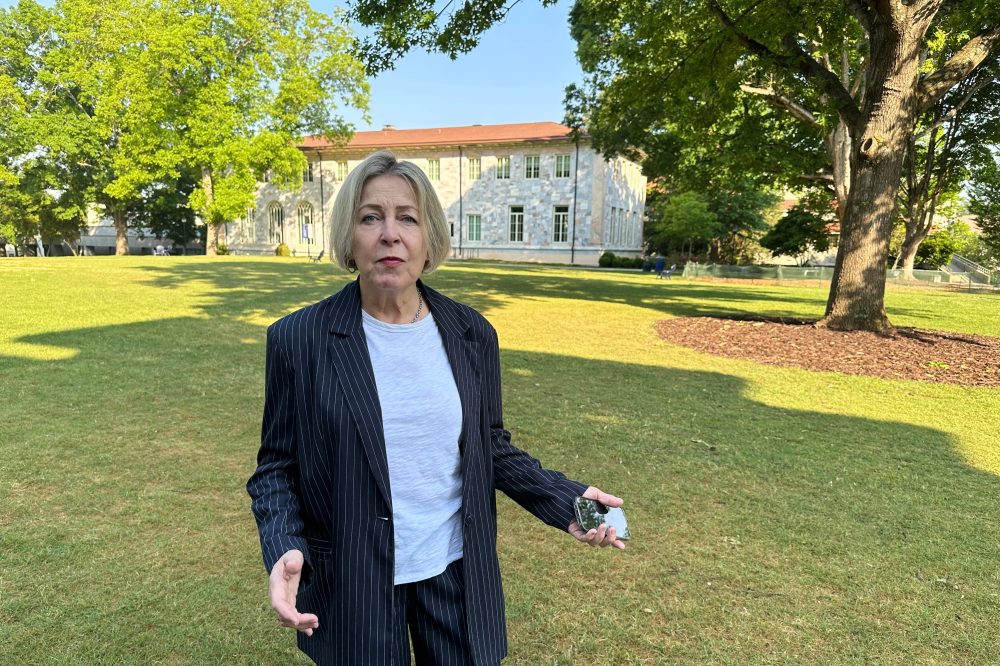
Philosophy Professor Noelle McAfee, one of the three plaintiffs, stated: “The judicial system would find that Emory failed to protect its students, to protect its staff, to protect the educational mission of the university. So this isn’t just about people’s individual rights. It’s our educational mission to train people in free and critical inquiry, to be able to learn how to engage with others, to be fearless.”
University spokesperson Laura Diamond responded that Emory considers the legal challenge to be unfounded. “Emory acts appropriately and responsibly to keep our community safe from threats of harm,” Diamond stated. “We regret this issue is being litigated but we have confidence in the legal process.”
This case represents one instance of how last year’s nationwide campus demonstrations continue to create ongoing legal battles at prestigious universities. While numerous lawsuits have emerged from students and faculty claiming discrimination related to the protests, the Emory case stands out because McAfee, along with English and indigenous studies Professor Emilio Del Valle-Escalante and economics Professor Caroline Fohlin, all maintain their tenured positions and faced no criminal convictions.
The civil action filed in DeKalb County State Court seeks reimbursement for legal expenses the three professors incurred defending against misdemeanor charges that were ultimately dropped, plus additional monetary damages. McAfee explained she is taking legal action against her employer “to try to get them to be accountable and to change.”
The three faculty members maintain they were merely observing on April 25, 2024, when students and others established tents on the university’s central quadrangle to demonstrate against the war. They argue Emory violated its own guidelines by bringing in Atlanta police officers and Georgia state troopers without exploring other options first.
McAfee faced disorderly conduct charges after she reportedly shouted “Stop!” at an officer who was roughly detaining a demonstrator. Del Valle-Escalante says he was attempting to assist an elderly woman when he was detained and charged with disorderly conduct. Fohlin reported that when she objected to officers restraining a protester on the ground, she was forcibly thrown face-down and arrested, resulting in a concussion and spinal injury. Fohlin was charged with misdemeanor battery against an officer.
On that day, Emory maintained that those detained were outsiders who had unlawfully entered university grounds. However, 20 of the 28 arrested individuals had connections to the university. The professors say following their arrests, they became targets of threats and harassment, reflecting broader criticism from conservatives who accused universities of failing to shield Jewish students from antisemitism while permitting disorder.
Across the country, advocates describe a “Palestine exception” where universities are prepared to restrict pro-Palestinian speech and demonstrations. Palestine Legal, an organization providing legal support for such expression, reported Tuesday that it received 300% more requests for legal assistance in 2025 compared to its typical annual volume before 2023, primarily from college students and faculty.
Following her arrest, McAfee continued serving as president of the Emory University Senate, a body that develops policy recommendations and had participated in creating the university’s open expression guidelines. She said she questioned then-President Gregory Fenves in fall 2024 about why Emory police weren’t dismissing charges against her and the others. According to McAfee, Fenves responded that he wanted “to see justice.” The open expression policy was subsequently updated after 2024 to explicitly ban tents, camping, building occupations, and demonstrations occurring between midnight and 7 a.m.
Regardless of policy changes, McAfee believes students now fear protesting at Emory, saying the university has abandoned what Atlanta Civil Rights leader John Lewis termed “good trouble.” “Students know right now that any trouble is not going to be good trouble at Emory, that they could get arrested,” she said. “So students are afraid.”