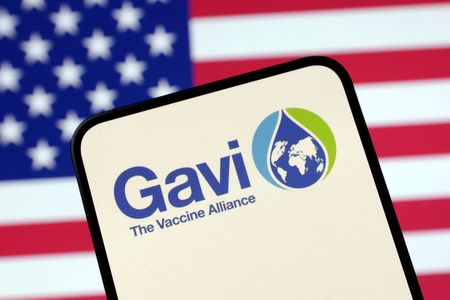

The international vaccine alliance Gavi announced Monday it expects to receive $600 million in restored United States funding that will primarily support malaria vaccination programs and other immunization initiatives.
The funding, originally authorized by Congress for fiscal years 2025 and 2026, had been blocked by U.S. Health Secretary Robert F. Kennedy Jr., who questioned the organization’s safety protocols last June without offering supporting evidence. The United States also has not committed additional resources for Gavi’s future operations.
Last week, U.S. Secretary of State Marco Rubio indicated the government was ready to resume cooperation and confirmed the $600 million allocation would be transferred to Gavi in the near future, though he did not provide a specific timeline. Questions remain about whether the U.S. will provide additional funding beyond this amount.
According to a Gavi representative, obtaining these congressional funds along with commitments from other international donors remains essential. The spokesperson emphasized that insufficient funding would significantly impact the organization’s malaria vaccination work, its capacity to conduct disease prevention campaigns for illnesses such as cholera, and its ability to maintain adequate global vaccine reserves.
“Securing these Congressional appropriations, as well as pledges from other donors, will be critical,” said a Gavi spokesperson, pointing to the impact a lack of funding would have on the group’s malaria work, as well as its ability to support preventive campaigns for diseases like cholera and keep global vaccine stockpiles replenished.
Earlier this year, Gavi reported a significant $1.9 billion budget shortfall for the 2026-2030 period, warning that this gap would limit access to new malaria vaccines for children across sub-Saharan Africa.
The restored funding will also help accelerate Gavi’s transition to two alternative vaccines that do not include thimerosal, a mercury-containing preservative. Kennedy had made eliminating thimerosal a requirement for continued U.S. support.
Anti-vaccination organizations, including one established by Kennedy, have spent decades asserting connections between thimerosal and autism or other developmental conditions, despite extensive scientific research worldwide finding no evidence of such safety concerns.
The vaccine alliance intends to transition toward supporting nations with an updated meningitis vaccine and an expanded immunization that guards against six diseases instead of five, providing enhanced protection. Both newer formulations are manufactured without thimerosal.
Gavi’s chief executive stated last week that the organization had already begun planning this transition prior to Kennedy’s demands, as part of its ongoing commitment to provide countries with the most advanced tools available, though U.S. financial support would facilitate the changeover.