
NEW YORK — An emerging aviation fuel crisis in Europe and Asia, triggered by the ongoing Iran conflict and blockade of the Strait of Hormuz, threatens to severely disrupt international air travel in the coming weeks, potentially causing increased ticket prices and canceled flights just as summer vacation season begins.
During an exclusive interview with the Associated Press on Thursday, Fatih Birol, who leads the International Energy Agency, warned that European nations have “maybe six weeks” of aviation fuel reserves remaining and described the situation as the world’s “largest energy crisis.”
Typically, various European nations maintain jet fuel stockpiles lasting several months, based on a recent IEA analysis.
Aviation fuel — a kerosene-derived petroleum product — represents airlines’ largest expense, accounting for approximately 30% of total operating costs, data from the International Air Transport Association shows. Since the conflict started, aviation fuel costs have approximately doubled, with potential shortages looming.
“Each day the Strait of Hormuz stays closed brings Europe nearer to fuel shortages,” explained Amaar Khan, who oversees European aviation fuel pricing at Argus Media. “This waterway handles roughly 40% of Europe’s jet fuel imports, yet no aviation fuel has transited the strait since hostilities began.”
Aviation industry leaders have responded cautiously, recognizing possible fuel challenges while attempting to calm passenger concerns. However, several carriers have already transferred expenses to travelers through increased baggage charges and other service fees, higher ticket costs, or additional fuel surcharges.
Some airlines have begun reducing flight schedules. Industry analysts predict other aspects of air service — including route flexibility and scheduling options — will likely face impacts.
Aviation fuel originates from crude oil processing at refineries that also produce gasoline and diesel fuel.
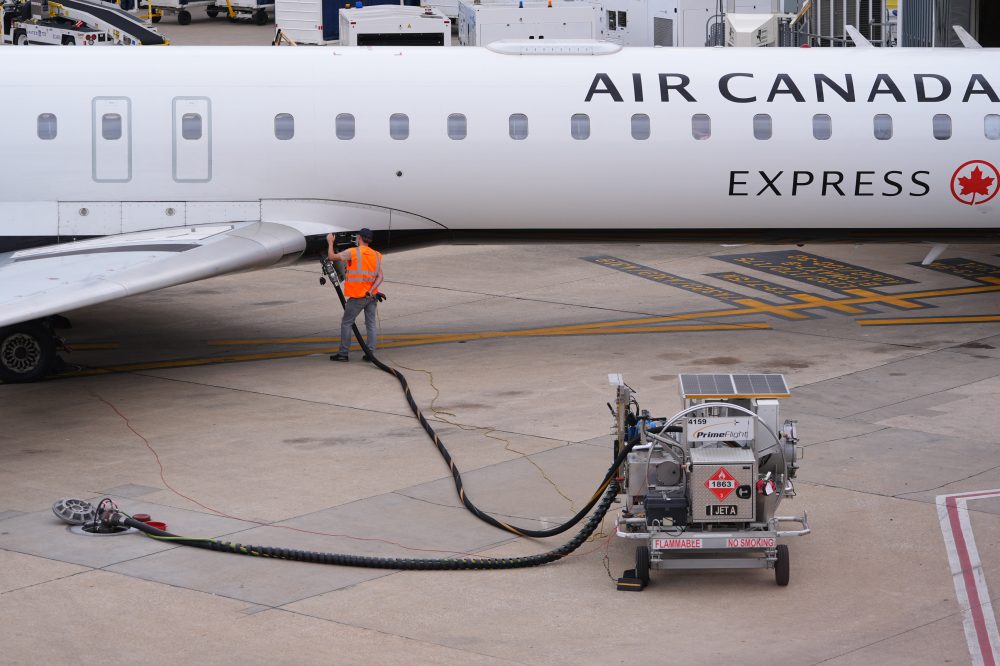
Airlines typically purchase jet fuel from refineries or fuel suppliers, comparable to motorists buying gas at stations, but on a vastly larger commercial scale. The fuel moves via tanker ships and pipeline systems before being stored by airlines at airport facilities.
Individual airlines handle their own fuel procurement. When regional supplies dwindle, this doesn’t automatically mean all flights will cease. Some carriers may maintain larger reserves than competitors.
However, available flights will likely carry premium pricing that reflects elevated fuel expenses.
Major airlines possess advantages during regional shortages due to their financial capacity to manage high costs, noted Jacques Rousseau, managing director at financial consultancy Clearview Energy Partners.
Currently, multiple European countries are operating with fewer than 20 days of fuel coverage, this week’s IEA analysis revealed. Reserve levels haven’t dropped below 29 days since 2020, the assessment noted.
Should supplies fall under 23 days, actual shortages may develop at certain airports, leading to flight cancellations and reduced travel demand, the report cautioned.
Asia-Pacific nations depend most heavily on Middle Eastern oil and jet fuel imports, with Europe ranking second, Rousseau stated.
While European refineries produce most of the continent’s jet fuel, approximately 20-25% of normal supply has vanished due to the war, Rousseau explained.
To address some shortfalls, America has dramatically boosted jet fuel exports to Europe, shipping roughly 150,000 barrels daily in April — six times typical volumes, Rousseau reported.
Jet fuel availability poses less concern in the United States, a significant oil producer, he noted.
“I tell my kids … we’re not so much going to run out of supply,” Rousseau stated. “It’s just going to cost more here, whereas in different parts of the world you could actually get to a point where there’s just no fuel.”
The global market is losing 10 million to 15 million oil barrels daily because of the Strait of Hormuz closure, said Pavel Molchanov, senior investment strategist at Raymond James & Associates.
“There are exactly the same refineries in exactly the same places in Asia and Europe, but if there is not enough oil for those refineries to operate, it’s going to lead to physical supply disruption,” he explained.
Despite the IEA releasing 400 million barrels from member nations’ emergency stockpiles, this won’t provide immediate relief, he added.
“It could take until the end of the year to get all of those barrels onto the market,” he said.
Christopher Anderson, who teaches operations, technology and information management at Cornell University, advised travelers to expect more than simply higher ticket prices.
“This is no longer just a fuel-price story. For airlines, it is now a network-planning story,” he explained. “Higher fuel costs matter, but so do longer routings, reduced scheduling flexibility and greater uncertainty about what demand will look like even a few weeks out.”
Passengers may encounter “a market with later booking patterns, more schedule volatility and fewer low-fare options if this disruption lasts into the core summer season,” he predicted.
Dutch carrier KLM and British budget airline easyJet informed AP they weren’t currently facing fuel shortages, declining further comment on the IEA’s alert.
Nevertheless, both carriers are among those experiencing increased costs impacting their finances.
Thursday, KLM announced plans to eliminate 160 flights next month — roughly 1% of its European route network. The carrier blamed “rising kerosene costs” and stated some flights are “no longer financially viable to operate.”
In Thursday’s financial update, EasyJet projected a pretax loss between 540 million and 560 million pounds (approximately $731 million to $758 million) for the first half of fiscal 2026. However, CEO Kenton Jarvis reported strong overall demand — highlighting that Easter travel marked easyJet’s busiest holiday period ever.
Lufthansa announced Thursday that labor conflicts and elevated fuel prices are compelling it to immediately close feeder airline CityLine ahead of schedule and retire its 27 older, less efficient aircraft. This decision accelerates a closure originally planned for next year.
American carrier Delta Air Lines — which operates frequent European routes — stated Thursday it was “aware of the potential jet fuel supply issue” on the continent and monitoring developments. Delta, which purchased a Philadelphia refinery in 2012 to control its largest expense, said it anticipates no “near-term impact to our operations.”
Additional airlines have raised concerns about climbing fuel costs, with some already transferring new expenses to travelers through ticket prices and additional fees.
American carriers Delta, United, American Airlines, Southwest Airlines and JetBlue have all raised checked baggage charges recently.
United CEO Scott Kirby warned staff in a recent communication that sustained high fuel prices could add $11 billion in yearly expenses. “For perspective,” Kirby noted, “in United’s best year ever, we made less than $5B.”
Meanwhile, Hong Kong’s Cathay Pacific recently increased fuel surcharges by approximately 34% across all destinations, while Air India imposed up to $280 in additional fees on certain flights this month. Emirates, Lufthansa and KLM have similarly modified charges or fares to address price fluctuations.