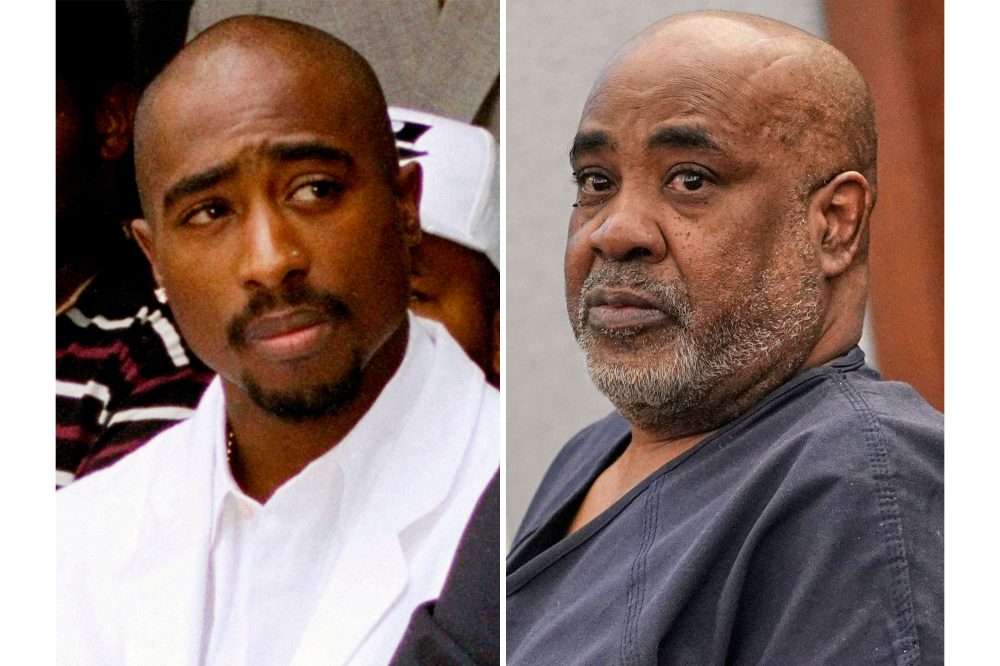

LAS VEGAS — A judge has cleared the way for prosecutors to use a memoir co-authored by the man accused of orchestrating the 1996 murder of rap legend Tupac Shakur as evidence in his upcoming trial.
Judge Carli Kierny issued the ruling Tuesday, rejecting a bid by the defense to block the 2019 book “Compton Street Legend” from being introduced at trial, which is scheduled to kick off August 10. The defense had also sought to exclude statements that Duane “Keffe D” Davis made to law enforcement in 2008 and 2009.
Davis, 63, is charged with murder with a deadly weapon with intent to promote, further, or assist a criminal gang — stemming from the drive-by shooting of Shakur in Las Vegas.
The attack took place on September 7, 1996, when Shakur was riding in a black BMW alongside Death Row Records founder Marion “Suge” Knight. A white Cadillac pulled alongside their vehicle at a red light near the Las Vegas Strip, and shots rang out. Shakur was struck multiple times and passed away six days later. Knight survived the attack with only minor injuries.
For years, Shakur’s death remained one of the most high-profile unsolved murders in the country. The case had gone cold until Davis began making public remarks about the shooting — including in his book, where he claimed to have been inside the Cadillac and said he supplied the gun used in the attack. Those revelations reignited the investigation, and Davis was arrested in September 2023. He has pleaded not guilty.
Much of the prosecution’s case rests on the book Davis co-wrote about his involvement with the gang South Side Compton Crips, along with comments he made in YouTube interviews.
Defense attorney Michael Sanft argued the book was largely fictionalized for commercial purposes and that it was uncertain which portions, if any, Davis personally wrote. Sanft also contended that Davis’s 2008 and 2009 police statements should be off-limits because Davis believed he was protected from prosecution under a proffer agreement that allowed him to speak with detectives freely.
Judge Kierny disagreed, ruling that Davis had embraced the book’s contents as his own by repeatedly describing it as the “real truth,” regardless of who physically wrote each section. While she acknowledged concern that Davis had been told in 2008 he would not face prosecution for what he disclosed, she ultimately found his statements to law enforcement were made voluntarily.
Marc DiGiacomo, chief deputy district attorney in Clark County, argued that the earlier statements lost their protected status once Davis chose to write and publicly discuss the events himself. The state, he said, has the right to use those interviews to corroborate what Davis put in print.
“Had he decided to never write the book, he would not, probably, have ever been prosecuted for the crime,” DiGiacomo said.