CORTINA D’AMPEZZO, Italy – Three seasoned Canadian curlers are pursuing another Olympic gold medal, but they’re competing in a sport that has transformed significantly since their earlier triumphs.
Team Canada secured their spot in Saturday’s championship match after defeating Norway 5-4 in Thursday’s semifinal round. They’ll face world champion Britain for the ultimate prize.
Skip Brad Jacobs hasn’t competed in an Olympic final since 2014, while his teammates Marc Kennedy and Ben Hebert last reached this stage 16 years ago. Despite their experience, all three acknowledge the sport has evolved considerably.
Reflecting on the differences between now and his 2014 Sochi victory, Jacobs explained his changed perspective: “Back in Sochi, I really felt like we were going to win gold. We had worked our way through that event and got stronger and stronger and stronger. We became very dominant throughout the playoffs. This time, curling has changed, curling is a lot more difficult.”
“The game against Britain is a coin flip, 50-50. Either team could win that game. I’m grateful to have secured a medal and played as well as we have all week. Now we just have one opportunity to leave it all out in the ice and see what happens,” Jacobs added.
Hebert, now 42, captured gold on home soil in Vancouver during the 2010 Olympics when he was just 26 years old under skip Kevin Martin’s leadership.
“You go to the Olympics your very first time, you win Olympic gold in your home country undefeated, and you’re just, ‘I can do this every time’,” Hebert recalled.
“That’s not how it went in my career, and that’s not how it goes for anybody … There’s so many good teams and players that want to get here. The game’s changed a lot since 2010. The ice has changed, the way players throw it, how good everybody is …”
“Sometimes it’s tough to teach an old dog new tricks. But I’ve had guys like Brad and Marc come in and push me to new levels to continue to elevate my game, so that I can still be out here at 42,” Hebert said.
Kennedy, 44, stepped away from competitive curling following Canada’s disappointing fourth-place finish at the 2018 Olympics but found his way back to the sport.
“I semi-retired six years ago, so to be back here is pretty incredible, and to be with these guys – really proud of my team,” Kennedy stated.
“We lost the Olympics in 2018, we got fourth place, my hip was a mess, and I was exhausted. I was ready to step away from the game. Then an opportunity came up to play with Brad Jacobs the following year. Working a real job wasn’t as much fun as I thought, so it was time to get back on the ice,” he explained.
Kennedy has also been involved in controversy during these games after responding angrily to accusations of cheating.
Prince Andrew, the younger sibling of King Charles, was taken into police custody this week amid accusations that he provided sensitive British government materials to the late Jeffrey Epstein, the disgraced American financier.
Investigators from Thames Valley Police spent an entire day Thursday interviewing the 66-year-old Andrew Mountbatten-Windsor about claims he transmitted classified documents to Epstein, who was later convicted as a sex offender, during his tenure as a trade representative.
Documents from U.S. files connected to Epstein indicate that Mountbatten-Windsor may have shared reports in 2010 regarding business prospects in locations he had toured while serving as the Special Representative for Trade and Investment.
The former prince, who celebrated his 66th birthday on Thursday, has consistently maintained his innocence regarding any connections to Epstein. Authorities released him from detention Thursday evening as their investigation moves forward.
The potential criminal charge Andrew faces is misconduct in public office, a serious offense rooted in centuries of judicial precedent rather than written statutes. This crime can result in a life sentence upon conviction.
Law enforcement officials have noted that this type of case involves “particular complexities” requiring thorough evaluation, though they declined to provide additional specifics.
Britain’s chief prosecutor Stephen Parkinson stated earlier this month that regulations surrounding misconduct in public office are “quite clear.”
However, legal experts note this charge has typically been applied to lower-level officials such as police officers and correctional staff. Research from the anti-corruption organization Spotlight on Corruption suggests prosecutors may find it challenging to pursue such complex cases against high-ranking individuals.
One notable example involved a former police officer who received a 10-month prison term in 2013 for providing information to The Sun newspaper and attempting to sell another story involving celebrity children to the now-closed News of the World.
The Law Commission proposed in 2020 to replace the current misconduct statute, and legislation to implement this change is currently under parliamentary review, though it would not apply retroactively.
Tom Frost, who teaches law at Loughborough University, explained that misconduct in public office “remains a difficult offence to prove in relation to senior executives or senior political figures.”
Prosecutors must first demonstrate that the accused held a public position and was “acting as, not simply whilst, a public official” when the alleged misconduct occurred.
Since Mountbatten-Windsor’s trade envoy position was voluntary without salary compensation – though he did receive travel expenses and lodging – establishing his status as a public official may prove more complex. However, Crown Prosecution Service guidelines indicate that payment is “not determinative” in such cases.
Additionally, prosecutors must prove the defendant intentionally engaged in misconduct “to such a degree as to amount to an abuse of the public’s trust.”
The Court of Appeal established in 2003 that this standard is demanding, requiring conduct that was “not merely negligent but … an affront to the standing of the public office held.”
The charge also requires proving the conduct lacked reasonable justification or excuse.
Given the intricate nature of misconduct in public office cases, investigators and prosecutors will likely need several weeks or months before deciding whether to file formal charges.
Mountbatten-Windsor, who has maintained his innocence regarding Epstein connections but has remained silent since additional documents became public, may face additional questioning sessions.
Should charges be filed, the former prince would initially appear before a magistrates’ court.
Cases involving misconduct in public office must be heard by a judge and jury, meaning Andrew’s trial would move to Crown Court, which handles the most severe criminal matters. His case would most likely be heard at the renowned Old Bailey courthouse in central London.
While Britain’s criminal court system currently faces significant scheduling delays, with some trials scheduled as late as 2030, a case involving the monarch’s brother would likely receive priority scheduling.
WASHINGTON – A government oversight agency released a report Friday criticizing the Federal Aviation Administration’s ability to effectively monitor United Airlines’ aircraft maintenance operations due to staffing shortages, inadequate training programs, and limited access to airline operational data.
The U.S. Transportation Department Office of Inspector General launched this evaluation in early 2024 after the FAA increased its monitoring of United Airlines following multiple safety-related incidents involving the carrier.
According to the OIG’s findings released Friday, the FAA’s current monitoring approach is “insufficient to oversee safety risks.” The report also revealed that due to inspector shortages, the FAA has sometimes resorted to conducting inspections remotely rather than delaying them until in-person visits could be arranged.
Shares of Blue Owl Capital tumbled more than 5% during Friday morning trading, continuing a steep decline that has seen the investment management firm lose over half its stock value during the past year.
The New York-based alternative asset manager announced Wednesday it would liquidate $1.4 billion worth of assets from three investment funds, with proceeds going back to investors in a nine-year-old investment vehicle.
According to Bloomberg News reporting Friday, the company sold its loan portfolio to three major North American pension funds and its own Chicago-based insurance company, Kuvare.
“A lot of pushback this morning focusing on the fact that one of the four buyers of the loans was Kuvare, Blue Owl’s own insurance asset manager,” Brian Finneran, managing director at Truist Financial, explained.
The debt being sold covers 128 different companies spanning 27 industries, with software and services making up the largest portion at 13 percent, Blue Owl reported.
Company officials said the loans were sold at 99.7 percent of their listed value, matching the firm’s internal valuations, which they pointed to as proof their asset pricing was accurate.
The investment manager also permanently eliminated a feature that allowed investors – primarily wealthy individuals – to withdraw portions of their funds each quarter, raising red flags about private lending standards and the sector’s ties to the struggling software industry.
“We are not halting investor liquidity in non-traded debt fund Blue Owl Capital Corp II,” the company stated Thursday, one day after announcing it would return 30 percent of the fund’s net asset value to investors while ending quarterly withdrawals.
Rather than continuing a tender-offer system that would have let investors reclaim 5 percent of their investment, Blue Owl said its new approach “returns six times as much capital and returns it to all shareholders over the next 45 days.”
“In the coming quarters, we will continue to pursue this plan to return capital to OBDC II investors,” the company added.
The stock decline reflects weeks of mounting anxiety over software company valuations as artificial intelligence developments threaten to disrupt existing business models.
This uncertainty has spread to private credit firms that have become major lenders to the technology sector, an industry that has increasingly relied on private credit since banking regulations tightened traditional lending after the financial crisis.
The turbulence also affected larger competitors Apollo Global and KKR, with sector returns broadly under pressure from valuation concerns.
The private credit industry has faced intense examination following last year’s bankruptcies of auto-parts manufacturer First Brands and subprime lender Tricolor. Investors have expressed strong doubts about the quality of private credit portfolios and their valuations.
“We’re not to the point that we say what’s going on with Blue Owl is necessarily systemic any more than when we see a particular bank have some credit risk,” Steve Wyett, Chief Investment Strategist at BOK Financial, noted.
“This is indicative of a bigger issue in the private alternative world, whether it’s private credit, private equity, or venture capital, this is about this mismatch between the need for liquidity from underlying investors and what the managers can deliver based upon the assets that they’re invested in.”
Adding to Blue Owl’s troubles, Business Insider reported Friday that the company failed to secure financing for a $4 billion data center project it is jointly developing in Pennsylvania with CoreWeave.
Blue Owl did not respond immediately to requests for comment about the financing report.
The financing setback comes several months after Blue Owl secured a $27 billion agreement to fund Meta’s largest data center project.
“And then the hits keep coming, Blue Owl down again this morning on headline that it couldn’t secure financing for a $4 billion CoreWeave data center,” Finneran said.
American business expansion hit its weakest pace in 10 months during February, with factory orders declining and service companies seeing reduced new business growth, according to survey data released Friday.
The S&P Global flash Composite PMI Output Index, which measures activity across manufacturing and service industries, dropped to 52.3 this month from January’s reading of 53.0. This marks the lowest level since April, though any figure above 50 still signals private sector growth. Both industry sectors saw their flash PMI readings decline during the month.
Chris Williamson, chief business economist at S&P Global Market Intelligence, warned of significant economic cooling ahead. “The PMI data so far this year are indicative of GDP rising at an annualized rate of just 1.5%, signalling a marked cooling of the economy in the first quarter compared to the robust growth rates seen in the second half of last year,” Williamson stated.
The Commerce Department also reported Friday that fourth-quarter gross domestic product growth fell short of expectations, hampered by last year’s government shutdown disruptions and weakened consumer spending patterns. The service sector index fell to 52.3 from January’s 52.7, missing economists’ projected 53.0 reading. Manufacturing activity dropped to a seven-month low of 51.2, down from last month’s 52.4 and below the anticipated 52.6. Factory new orders decreased for the second time in three months. Job creation across both sectors nearly stalled, registering just 50.2.
PARIS – American diplomatic officials are keeping a watchful eye on the death of a French far-right activist at the hands of alleged hard-left extremists, raising the possibility that the incident could be classified as terrorism in remarks that may escalate ongoing friction between the United States and France.
The State Department’s counterterrorism division announced Thursday on social media platform X that it was tracking the situation, cautioning that “violent radical leftism was on the rise” and should be considered a threat to public safety. The bureau added: “We … expect to see the perpetrators of violence brought to justice.”
Under Secretary of State Sarah B. Rogers, a public diplomacy leader who has spearheaded multiple criticisms of European administrations, posted on X Friday that she was also closely following developments in the case.
“Democracy rests on a basic bargain: you get to bring any viewpoint to the public square, and nobody gets to kill you for it. This is why we treat political violence – terrorism – so harshly,” Rogers stated.
Neither the U.S. State Department nor France’s Foreign Ministry provided responses to requests for comment.
The counterterrorism bureau at the State Department holds significant responsibility in creating terrorist designations and implementing related sanctions measures.
Tensions between Washington and Paris have persisted for months across issues including trade policies, freedom of expression, and international relations. Rogers has consistently criticized France regarding its stance on technology oversight and speech regulations.
Deranque lost his life last Saturday following brutal confrontations between extreme-left and extreme-right factions in Lyon.
Legal authorities reported that six individuals are being investigated for murder, while a former aide to a France Unbowed (LFI) hard-left party representative is facing charges of complicity through incitement.
The event has caused significant upheaval in French political circles, damaging the LFI party while strengthening the far-right National Rally in advance of upcoming presidential elections next year, according to political observers. The incident also sparked a diplomatic disagreement between Macron and Italian Prime Minister Giorgia Meloni.
The British Royal Family is grappling with what experts are calling their most devastating crisis since the 1930s, following the shocking arrest of Prince Andrew in connection with the Jeffrey Epstein scandal.
King Charles received devastating news Friday morning as images of his younger brother Andrew Mountbatten-Windsor exiting a police station dominated newspaper headlines worldwide, marking an unprecedented moment for the thousand-year-old monarchy.
Andrew faces charges of misconduct in public office related to his controversial relationship with Jeffrey Epstein, the deceased American financier convicted of sex trafficking. The situation has sparked questions about whether this scandal could threaten the future of the entire royal institution.
Graham Smith, who leads the anti-monarchy organization Republic, initiated the police complaints that led to Andrew’s arrest. Smith used the moment to renew his calls for abolishing the monarchy entirely.
“I think it’s incredibly bad for the monarchy,” Smith stated.
Andrew has consistently denied any criminal behavior regarding Epstein while expressing regret about their association.
UNPRECEDENTED ROYAL TURMOIL
While the Windsor family has weathered numerous controversies throughout the decades, this situation represents uncharted territory for the monarchy.
Previous royal scandals included Princess Diana’s divorce and tragic death in 1997, which generated significant public backlash, along with more recent turmoil when Prince Harry and Meghan Markle abandoned their royal responsibilities and later publicly criticized the institution from America.
However, no senior royal has ever faced criminal investigation and arrest before, creating the monarchy’s most serious existential threat since King Edward VIII abdicated in 1936 to marry American divorcee Wallis Simpson.
“It’s certainly the worst crisis since the abdication, and it’s particularly bad because it’s not a crisis over which they can really exercise any control,” explained a former senior royal advisor who maintains close ties to King Charles.
“They have been sort of predominantly on the back foot throughout because they’ve had to react to information emerging, and they still don’t know what else is in the files,” the advisor revealed to Reuters under anonymity conditions.
ROYAL FAMILY CUTS ALL TIES
The central concern for King Charles, Prince William, and their advisors involves determining whether Andrew’s scandal will inflict permanent damage on the monarchy or simply reinforce existing negative public perceptions of the disgraced former prince.
The royal family has already implemented maximum separation from Andrew, removing all his official titles, taking away his residence, and eliminating any public role within the family structure.
King Charles, currently receiving treatment for undisclosed cancer, and Queen Camilla have publicly expressed support for abuse victims. Prince William and Princess Kate have stated they feel “deeply concerned” about revelations contained in the Epstein documents.
Following Andrew’s arrest, King Charles issued an unusually direct public statement: “Let me state clearly: the law must take its course,” demonstrating his commitment to further distancing the monarchy from his brother.
“The institution has taken every step that it can to distance itself from him and his actions,” confirmed Julian Payne, Charles’ former communications director.
“The hope is that by doing so, they can create some clear blue water between the working members of the family and what they exist to do on behalf of the UK and the other countries around the world where he is king, and this person and the actions that they are responsible for answering.”
PUBLIC SUPPORT REMAINS STRONG
Recent polling data from YouGov in January, conducted before the U.S. government released millions of Epstein-related documents that triggered the British investigation, revealed that only 3% of British citizens view Andrew favorably, while 90% hold negative opinions of him.
However, other royal family members maintain significantly higher approval ratings. Prince William enjoys positive support from 77% of the public, while King Charles receives approval from 60% of citizens.
The monarchy as an institution, despite facing challenges with younger demographics, continues receiving majority support from the British population.
“It’s challenging and it doesn’t reflect well on the family as a whole, but I think they’ll survive,” commented Jeremy Paul, a 59-year-old accountant, while heading to work Friday morning.
Republic’s Smith warned the situation would become “game over” for the royals if investigations revealed that King Charles or Prince William possessed knowledge about Andrew’s Epstein connections and failed to take appropriate action.
Currently, no evidence suggests either Charles or William had such knowledge.
INVESTIGATION CENTERS ON TRADE ROLE
While the royal family remains concerned about potential future revelations from Epstein documents, the former advisor believes nothing will likely implicate King Charles or Prince William directly.
Andrew’s arrest stems from allegations that he shared confidential government information with Epstein during his tenure as a trade envoy for Britain.
Notably, King Charles had originally opposed his brother receiving the trade position that now forms the basis of the criminal investigation, while Prince William maintains no relationship with his uncle, according to the former advisor.
“It’s not existential … I don’t think it’ll bring the monarchy down, I know quite a few people are thinking about that,” the advisor explained.
“I think it’ll do significant harm that will be quite lasting. But I think in the king and in the Prince of Wales, the right people are there to maintain and restore sufficient trust and respect.”
A federal court has denied Tesla’s bid to avoid paying a massive $243 million judgment related to a deadly 2019 accident involving one of the company’s self-driving Model S vehicles.
U.S. District Judge Beth Bloom in Miami made her ruling public this past Friday, stating that the trial evidence “more than supported” the jury’s original verdict. The judge noted that Tesla failed to present any fresh arguments that would justify overturning the substantial financial award to the crash victims’ families.
The case centers on a fatal collision in 2019 that involved Tesla’s Autopilot technology, which has faced increasing scrutiny over safety concerns in recent years.
(Editor’s note: John Hall works as a professional commodities analyst.)
Should farmers prioritize maximizing yields or maximizing profits? This fundamental question challenges Delaware agriculture as input costs continue climbing this growing season.
Hall questions whether the agricultural industry has taken the wrong approach. He notes that most farming conferences today concentrate on certification requirements rather than discussing financial returns. While pesticide experts draw large crowds when presenting new chemical products, they rarely mention treatment expenses.
Hall recalls a well-known weed specialist from years past who would chuckle when questioned about costs. With input expenses rising again this season, he believes it’s crucial to shift attention toward profitability.
A former colleague once established a corn competition that awarded high economic returns rather than just bushels per acre. Though it seemed like an excellent concept, the program ended when the organizer retired because he handled most of the financial calculations himself.
While yield competitions remain widespread today, Hall worries that farmers have become too focused on pushing production limits without considering profit margins. He emphasizes that production matters greatly, but fears this yield-first approach has created problems.
Over the next two weeks, Hall plans to examine two critical issues to support his argument. He encourages growers who haven’t prepared crop budgets to review their financial planning.
Using Iowa State University information, Hall calculated machinery expenses and combined them with fixed costs, reaching $733 per acre for 2026 corn production. This figure includes various operational items detailed in his analysis.
To determine projected per-bushel costs, farmers should divide this amount by anticipated yield. With 200 bushels per acre, the example shows $3.67 in variable costs per bushel.
Hall discovers that most producers stop their calculations at this point during discussions. However, he stresses that fixed costs must also be included in the total. His examples combine fixed expenses with cash requirements to determine business cash flow needs, assuming the farm provides the only income source. After reviewing his January 13th article, he realized family living expenses should be added to fixed costs.
The fixed cost items totaled $325,980 for a 1,000-acre operation to simplify calculations. Dividing this by acreage yielded $325 per acre. Like variable costs, he divided this by the expected 200-bushel yield, resulting in $1.63 per bushel. Total costs equal variable costs plus fixed costs: $3.67 + $1.63 = $5.30.
Comparing this to December 2026 corn futures prices reveals concerning numbers. On February 19th, December harvest futures traded at $4.68. Historically, annual price peaks often occur in February or March. Even adding positive basis to futures prices likely won’t reach the $5.30 break-even point, making 2026 prospects look dim.
Hall’s analysis shows total per-bushel costs at different yield levels: 240, 200, and 160 bushels per acre. The differences are significant. Since yield mapping consistently demonstrates soil variability across farms, he poses a challenging question:
Must farmers plant every available acre? He acknowledges this requires a major philosophical shift toward idling some ground, wondering how many operators would consider this approach.
Soybean economics present similar challenges. Hall’s January 20th column examined soybean budgets using Iowa State data. Their 2026 variable cost estimates include seed and chemicals at $230.95, labor at $44.33, and land at $286.00, totaling $561.28 per acre. Adding the same $325 fixed costs used for corn creates a total of $886.28. Using a 70-bushel yield, estimated costs reach $12.66 per bushel.
November soybean harvest futures traded at $11.16 on February 19th. Soybeans typically face negative basis, making $10.75 a realistic selling price.
Applying the same scenario used for corn analysis, an 85-bushel yield would cost $886 divided by 85, or $10.42 per bushel. This appears manageable, but lower yields create problems. A 55-bushel crop would cost $886 divided by 55, or $16.10 per bushel.
Achieving profitability in 2026 will prove difficult. Since higher yields showed the most promise, reducing variable costs may be challenging. However, some fixed costs and cash payment items might be eliminated. Machinery payments deserve first consideration, as most equipment loans require payments exceeding depreciation rates.
Eliminating equipment with high payments will be painful but might restore profitability. Having adequate cash for payments is essential for maintaining cash flow.
Hall concludes his budget discussion with this thought: Why plant marginal soils when yields are so vital for profitability?
Next week, he will examine supply and demand factors, which he expects will be even more concerning.
(Note: Hall researches material from Allendale, DTN, USDA, University Land Grants and other credible sources when compiling articles. This represents expert consensus rather than personal opinion. Those seeking marketing coaching or strategy discussions can contact him at [email protected] or call 410-708-8781.)
Three people lost their lives and four aid workers sustained injuries Thursday when drones targeted a humanitarian convoy transporting essential supplies through Sudan’s conflict-torn Kordofan region, according to medical monitoring groups.
The Sudan Doctors Network reported on social media that the vehicles were delivering food and emergency aid to Kadugli city and Dilling town in South Kordofan when the attack occurred in the Kartala area. The medical group attributed the drone assault to the Rapid Support Forces (RSF), though the specific aid organization operating the convoy remains unknown.
Sudan has been engulfed in civil war since April 2023, with fighting between the RSF and government military forces spreading nationwide. The World Health Organization reports that the conflict has claimed at least 40,000 lives and forced 12 million people from their homes. Aid organizations warn the actual casualty count may be significantly higher due to limited access to remote combat zones.
The Kordofan region has become the latest battleground, where humanitarian groups and security analysts document increasing drone attacks that disrupt relief efforts and harm civilians. This occurs despite military claims of regaining control and lifting sieges in Kadugli and Dilling. February alone saw 77 civilian deaths from drone warfare across Kordofan.
United Nations agencies announced Wednesday that a convoy successfully reached Dilling and Kadugli with assistance for over 130,000 residents – marking the first substantial aid delivery in three months. Nevertheless, relief workers express growing alarm over the intensifying violence.
This marks the second assault on humanitarian convoys within a month, the Sudan Doctors Network noted. Earlier in the month, attackers struck a World Food Program convoy in North Kordofan.
Meanwhile, a UN-supported investigative team released findings Thursday concluding that RSF actions in el-Fasher, North Darfur’s capital, during late October displayed “hallmarks of genocide.” In response to these findings, the U.S. Treasury Department imposed sanctions on three RSF commanders involved in el-Fasher operations and demanded the group agree to an immediate ceasefire.
A prominent British lobbying company has ceased operations and entered bankruptcy proceedings following damaging revelations about its co-founder’s ties to Jeffrey Epstein, the deceased convicted sex offender.
Global Counsel announced Friday it has halted business activities and dismissed approximately 80 employees in the United Kingdom after numerous clients severed relationships with the firm. The exodus occurred after documents exposed the depth of Peter Mandelson’s connection to Epstein, who died while imprisoned in New York during 2019. The company employs roughly 130 people across the globe.
Mandelson, who established Global Counsel in 2010 following the Labour Party’s electoral defeat, stepped down from the company’s board last year and divested his ownership stake this month in what appeared to be an effort to shield the business from the growing controversy.
Interpath, a consulting company, has assigned administrators to explore possibilities for the enterprise and examine its holdings.
“While Global Counsel had grown over the past 15 years to become one of the U.K.’s leading public affairs consultancies, the rapid and sudden loss of clients over recent weeks has had a monumental impact on the business,” said Will Wright, U.K. chief executive of Interpath and joint administrator.
Among the extensive collection of Epstein-related documents released by the U.S. Justice Department, correspondence revealed that Mandelson shared confidential government intelligence with the financier he called his “best pal” during 2009, while serving as a senior Labour government official.
The files also contained evidence of $75,000 in payments during 2003 and 2004 from Epstein to financial accounts connected to Mandelson or his spouse, Reinaldo Avila da Silva. Mandelson has challenged the validity of these banking records. In his resignation letter to Labour, Mandelson stated he had no memory of receiving such funds and pledged to investigate the matter.
After the Epstein documents became public, law enforcement officers conducted searches at Mandelson’s London residence and another property associated with him.
British authorities are investigating Mandelson for possible misconduct while in public service, though he faces no allegations of sexual crimes. On Thursday, Andrew Mountbatten-Windsor was taken into custody on similar suspicions related to his tenure as a UK trade representative.
Mandelson’s selection for the prestigious diplomatic position nearly ended Prime Minister Keir Starmer’s career as critics questioned his decision-making abilities. Mandelson’s extensive political history has been marked by scandal, including two departures from Tony Blair’s administrations around 2000.
Less than a year after the appointment, Starmer dismissed Mandelson in September when earlier email releases demonstrated he maintained his friendship with Epstein following the financier’s 2008 conviction for sexual offenses involving a minor.
The government intends to publish records from the screening process, hoping to clear Starmer’s name and demonstrate that Mandelson was dishonest.
A prominent Belarusian opposition figure who made headlines for rejecting forced exile has been freed from prison following a medical emergency that left him with lasting health complications.
Mikola Statkevich, 69, was released after experiencing a stroke while serving his sentence, according to his wife Maryna Adamovich. Speaking to reporters Friday from Belarus’s capital city, she explained that her husband continues to experience speech difficulties as a result of the medical episode. “Now he’s recovering and gaining strength,” Adamovich stated during a telephone conversation.
The veteran politician’s release came after he made a dramatic stand in September when dictator Alexander Lukashenko granted pardons to 52 political detainees. While other prisoners accepted transport to Lithuania’s border as part of the U.S.-negotiated agreement, Statkevich denounced the arrangement as “forced deportation.” He dramatically exited the transport vehicle and remained in the border zone for hours before Belarusian authorities arrested him and returned him to custody.
Statkevich had been serving a 14-year sentence following his 2020 arrest on accusations of inciting mass disorder, charges that international human rights organizations like Amnesty International have condemned as politically driven.
Government spokesperson Natalia Eismont announced Friday that Lukashenko authorized Statkevich’s freedom due to his medical situation, responding to appeals from his family members.
The authoritarian leader, often called “Europe’s last dictator,” has controlled Belarus for more than 30 years through systematic suppression of opposition voices. After massive demonstrations erupted following disputed 2020 elections, authorities detained over 65,000 individuals, physically assaulted thousands, and shuttered hundreds of independent news organizations and civil society groups.
International sanctions and diplomatic isolation have pressured Belarus for years due to human rights violations and its support for Russia’s 2022 Ukraine invasion. Recently, Lukashenko has attempted to improve Western relations by freeing hundreds of imprisoned dissidents.
Statkevich’s initial release occurred following discussions between Lukashenko and then-President Donald Trump in August, which led to the lifting of restrictions on Belarus’s national carrier, Belavia. An additional 123 political prisoners, including Nobel laureate Ales Bialiatski, gained freedom on December 13 when the U.S. removed certain trade penalties.
However, government persecution of critics continues despite these prisoner exchanges. The Viasna human rights organization reports that 1,146 political prisoners remain in Belarusian custody.
“It’s still unclear what Statkevich’s legal status is and whether the authorities have cleared the accusations against him,” explained Pavel Sapelka from Viasna. “Political repressions in Belarus are continuing, and it means that no government critic can feel secure.”
According to Sapelka, Statkevich required more than a month of intensive medical treatment at a prison hospital following his stroke.
Throughout his lengthy political career, Statkevich, who ran against Lukashenko in the 2010 presidential race, has faced imprisonment three times and spent over 12 years in detention facilities.
Exiled opposition leader Sviatlana Tsikhanouskaya, who fled Belarus in 2020, expressed her emotions about the development. “I feel immense relief that Statkevich is finally free and at home,” she told reporters. “With his courage and bravery, he won a huge moral victory, for which he paid a high price.”
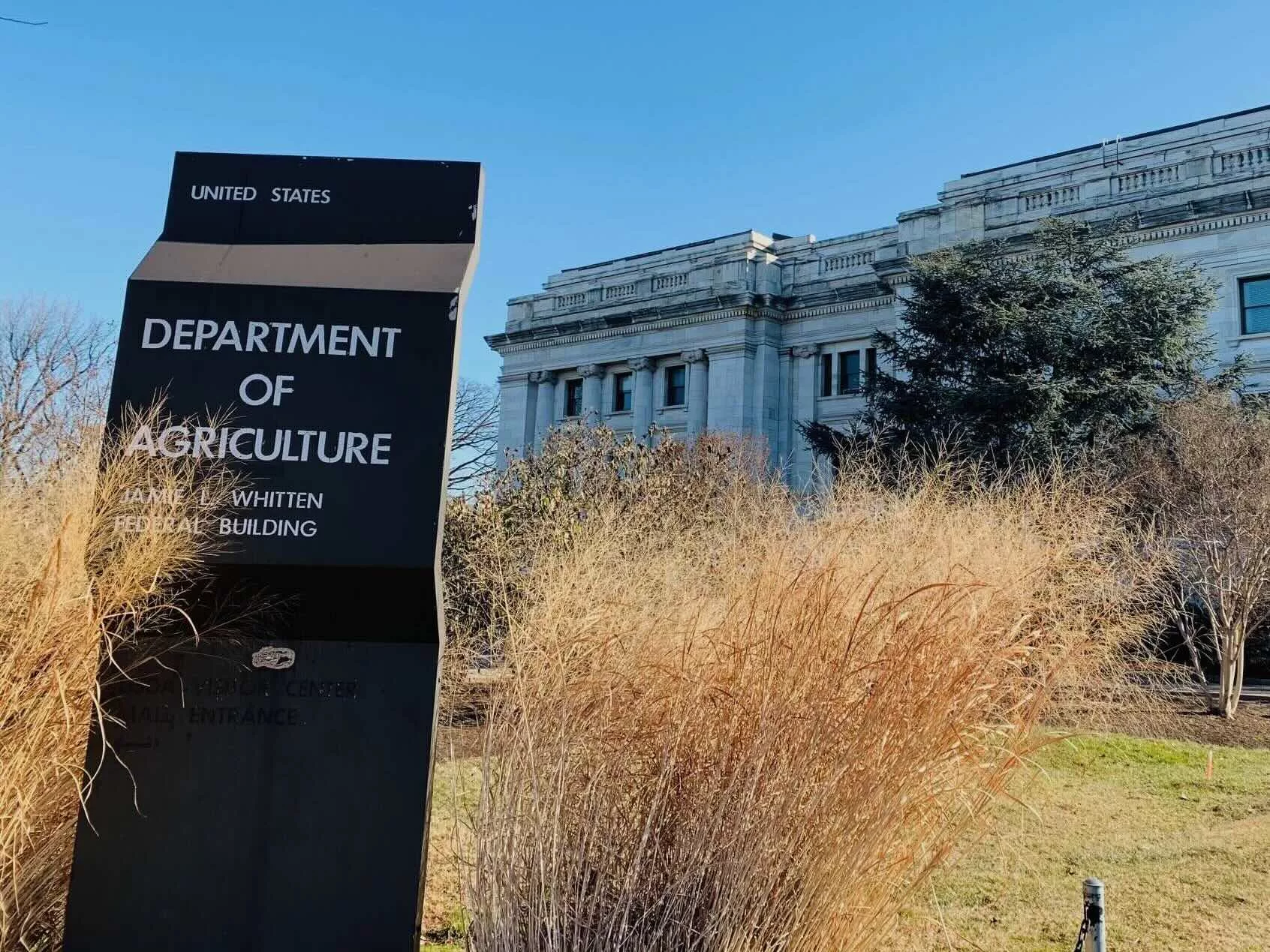
Delaware farmers will have the opportunity to request federal financial assistance starting Monday, as the U.S. Department of Agriculture opens applications for its massive $11 billion Farmer Bridge Assistance Program.
The USDA has officially announced that the registration window is now available for agricultural producers seeking support through this significant aid initiative.
Drivers traveling through New Castle County should prepare for significant traffic delays Monday as state transportation officials implement multiple lane closures along Interstate 95 near the Route 896 interchange.
The Delaware Department of Transportation has scheduled daytime lane restrictions on southbound I-95 to conduct bridge inspections throughout Monday. Transportation crews will also shut down multiple lanes on northbound I-95 during overnight hours for bridge maintenance work.
Additional traffic disruptions are planned for Route 896, where DelDOT will implement rolling roadblocks on the northbound lanes and the northbound on-ramp connecting to northbound I-95. These rolling closures are scheduled for Monday night and may extend into Tuesday evening if work crews require additional time to complete the bridge repairs.
Motorists are advised to seek alternate routes or allow extra travel time when navigating through the Newark area during the construction period.
State transportation officials are warning Delaware drivers about dangerous visibility conditions as dense fog settles across the region.
The Delaware Department of Transportation has activated a fog advisory covering the entire state as thick atmospheric conditions significantly reduce visibility on roadways.
Motorists are being urged to exercise extreme caution while traveling, as the heavy fog creates potentially hazardous driving situations throughout Delaware’s highway system and local roads.
The advisory remains active as weather conditions continue to impact safe travel across the First State.
Delaware Department of Transportation crews are conducting construction work that has forced the temporary closure of eastbound Abbotts Pond Road today.
The affected stretch runs from Shawnee Road to North Union Church Road, with the closure expected to last until 3 PM this afternoon.
Motorists traveling in the area should plan alternate routes and allow extra time for their commutes while the construction work is underway.
Following the catastrophic failure of the Potomac Interceptor on January 19th, environmental and economic consequences are mounting as this massive sewer main continues dumping raw sewage into the Potomac River. The six-foot-wide pipeline has released between 240 million and 300 million gallons of untreated wastewater, creating what some experts call the nation’s most significant sewage disaster.
Although protecting public health from dangerous contaminants and harmful bacteria remains the immediate focus, officials will eventually need to calculate the additional pollution burden now flowing into the river and Chesapeake Bay, and determine who bears responsibility for the damage.
Water testing conducted by the University of Maryland revealed E-coli concentrations that soared to 10,000 times above EPA safety standards during the worst period of the spill. While downstream monitoring by DC Water indicates contamination levels are beginning to decrease, repairs won’t completely halt the leak until mid-March, with full restoration work taking an additional nine months to finish.
Repair efforts faced significant setbacks when workers discovered a 10-foot-wide stone barrier near the rupture site, and pump equipment failed due to a massive accumulation of non-flushable wipes, causing an additional 600,000 gallons to escape into the waterway.
The disaster threatens to shut down local fishing operations and aquaculture businesses, potentially devastating tourism in the region while undermining decades of watershed restoration efforts. The environmental setback could be substantial, as a month’s worth of nitrogen and phosphorus pollution entered the river system within just days, warranting a major response to address the damage.
If agricultural operations had caused even a small portion of this contamination, there would be clear targets for blame and legal action. Instead, elected officials are deflecting responsibility to avoid accountability for the infrastructure neglect that caused this 60-year-old pipe to fail.
This major spill, along with numerous smaller sewage releases throughout the watershed, must not be permitted to undo the environmental improvements funded by taxpayers, agricultural producers, watermen, and municipal governments. Regardless, residents across the region will ultimately bear the financial burden of this disaster.
(Editor’s note: Nicole Cook serves as an environmental and agricultural faculty legal specialist at UMES. This information should not be considered legal or financial guidance for readers.)
As winter’s chill keeps us indoors, many are already dreaming of spring’s arrival: gentle winds, blooming gardens, and for prospective beekeepers, purchasing their first nucleus colony!
Maryland’s farming sector depends heavily on honey bees, and many agricultural producers supplement their earnings by maintaining hives for honey and beeswax production, plus crop pollination services.
However, due to these insects’ critical role in agriculture, Maryland has enacted detailed regulations designed to protect bee colony health – rules the state enforces rigorously.
Breaking Maryland’s beekeeping regulations actually constitutes a misdemeanor offense.
Therefore, before purchasing your first colony, ensure you’re familiar with Maryland’s legal requirements for bee ownership.
Maryland’s Department of Agriculture oversees approval for bringing honey bee colonies into the state.
No individual may bring colonies or previously used beekeeping equipment into Maryland without proper inspection documentation from an authorized apiary inspector in the originating state.
Any bees or equipment entering Maryland without required paperwork will face quarantine in an MDA-designated location and may be eliminated at the owner’s cost if not removed within 24 hours of department notification.
All beekeepers must allow MDA access for colony inspections and complete registration within 30 days of acquiring bees, then annually by January 1st thereafter.
Registration and inspection services are provided at no charge, though certificates cannot be transferred between owners.
Registration forms are available at http://mda.maryland.gov/plants-pests/Pages/apiary_inspection.aspx.
MDA inspections verify that honey processing facilities maintain cleanliness and sanitation standards, proper ventilation, adequate lighting with protective coverings over food areas to prevent contamination.
Inspectors also confirm accessible water supplies for processing areas and ensure honey houses serve exclusively for extraction, processing, packaging, or handling honey during harvest periods. All exterior openings in extraction and packaging areas must have intact screening.
Each colony requires moveable frames that can be extracted without damaging other combs, and honey extraction is limited to capped combs free of bee brood, larvae, wax moths, or small hive beetles.
When transporting bee colonies through Maryland, all hives must remain screened or covered continuously, and vehicle engines must stay running except during fuel stops to prevent bee agitation, unless bees are stored in refrigerated compartments maintained at 45 degrees Fahrenheit.
Vehicles carrying bees cannot travel more than one mile from interstate highways.
Beyond state requirements, beekeepers should research local county and municipal restrictions.
Frederick County’s zoning rules, for instance, mandate apiaries be positioned at least 10 feet from property boundaries, include on-site water sources to prevent bees from seeking water elsewhere, and be situated behind solid barriers at least six feet high that run parallel to property lines and extend 10 feet past the apiary in both directions.
Beekeepers employing workers must submit either a Certificate of Compliance with State Workmen’s Compensation Laws or provide MDA with workers’ compensation policy or binder numbers as proof of coverage.
Additional details about Maryland’s beekeeping laws, including information about how beekeeping qualifies as agricultural use for reduced property tax assessments under Maryland’s Tax-Property Article, can be found at https://www.agrisk.umd.edu by searching “bee.”
COLOMBO, Sri Lanka (AP) — A peaceful demonstration took place Friday in Sri Lanka’s capital as hundreds of Buddhist monks gathered to voice concerns about what they describe as government neglect of their religious traditions and diminished consultation in state matters.
The demonstration concluded without incidents of violence being reported.
Sri Lanka’s constitution designates Buddhism as the official religion for the island nation’s approximately 22 million residents, while simultaneously guaranteeing religious freedom for all citizens. The founding document also establishes government responsibility to safeguard and promote Buddhist practices.
Buddhist adherents comprise over 70% of Sri Lanka’s population, with their religious leaders wielding considerable influence across social, cultural and political spheres. Hindu, Muslim and Christian minorities also call the island home.
During the Colombo demonstration, participating monks presented a formal petition they announced would be delivered to President Anura Kumara Dissanayake.
The petition declared that government leadership on the island should ground its principles in Buddhist teachings, which originated in ancient India during the 5th century B.C., while acknowledging clergy rights to provide guidance on state issues.
Additional demands included barring non-Buddhist individuals from senior government positions, integrating Buddhist teachings throughout educational institutions and curricula, and ensuring protection of all religious archaeological locations.
The formal request appears to represent ongoing efforts by religious leaders to influence government policy and decision-making processes.
Throughout his political career, President Donald Trump has consistently promoted unsubstantiated theories about electoral fraud to justify his 2020 defeat against Democrat Joe Biden.
With his return to the presidency, Trump has filled key positions in his administration with numerous individuals who previously endorsed his disputed claims and, in certain instances, assisted in efforts to challenge his electoral defeat.
Federal authorities took their first major step in Trump’s promised investigation of the 2020 election by confiscating voting materials and electoral documentation from Georgia’s Fulton County in late January. This Democratic-leaning county, which encompasses Atlanta, has frequently been targeted by election conspiracy advocates supporting Trump.
In other developments:
Iranian forces conducted their yearly joint military exercises with Russia while a second U.S. aircraft carrier moved toward the Middle East region.
Washington and Tehran are both indicating their readiness for potential military conflict should negotiations regarding Iran’s nuclear activities collapse. On Thursday, Trump stated his belief that Iran has between 10 to 15 days to secure an agreement.
However, diplomatic discussions concerning Iran’s nuclear capabilities have remained stalled for multiple years, with Iranian officials declining to address broader American and Israeli requests to reduce their missile development and cut connections with militant organizations. Recent indirect negotiations have shown minimal advancement, with either or both nations potentially using this time to prepare for possible military action.
American military assets in the Middle East continue to increase.
WASHINGTON — The American economy experienced a notable deceleration during the last three months of the previous year, with federal data showing growth hampered by a lengthy government shutdown and diminished household spending patterns.
According to Friday’s Commerce Department release, the country’s gross domestic product expanded at an annualized 1.4% clip during the October-December period. This represents a sharp decline from the robust 4.4% expansion recorded in the summer months and the 3.8% growth seen in the spring quarter.
Household expenditures managed only a 2.4% increase, marking a considerable retreat from the stronger 3.5% advancement witnessed during the July-September timeframe.
The data highlights a puzzling characteristic of America’s current economic landscape: steady expansion coupled with minimal job creation. While the economy posted a respectable 2.2% annual growth rate in 2025, recent employment figures revealed that businesses created fewer than 200,000 positions throughout the year — representing the weakest job growth since the pandemic’s onset in 2020.
Economic analysts identify multiple factors contributing to this disconnect. The current administration’s immigration enforcement policies have significantly curtailed population increases, limiting the pool of available workers. This dynamic helps explain why joblessness climbed modestly from 4% to 4.3% despite the virtual absence of new hiring.
Additionally, some enterprises may be postponing workforce expansion while evaluating whether artificial intelligence technologies could boost productivity without additional personnel. Trade barrier costs have also squeezed corporate profits, potentially prompting companies to restrict their recruitment efforts.
The current economic environment presents another contradiction: while growth remains stable, price pressures have eased somewhat, and joblessness stays contained, polling indicates Americans maintain a pessimistic outlook about economic conditions. Consumer confidence measurements dropped to their lowest point since 2014 in January, yet spending continues to drive economic expansion.
This purchasing activity may be concentrated among higher-earning households, creating what experts call a “K-shaped” recovery pattern. However, banking sector information suggests lower-income consumers are also increasing their expenditures, albeit at a more modest pace.
NEW YORK — A historic nursing walkout that has gripped New York City for more than a month appears ready to conclude after over 4,000 healthcare workers at NewYork-Presbyterian secured a preliminary contract agreement with hospital leadership in the early hours of Friday morning.
Union representatives and hospital administrators finalized the provisional accord, marking the end of negotiations at the final major medical center affected by the extended work stoppage, according to the New York State Nurses Association. Specific terms of the agreement were not made public.
The preliminary contract must now receive approval from union membership through a ratification vote. Should nurses approve the deal, they could resume their duties as soon as the coming week.
“We are pleased to have reached a tentative settlement with NYSNA, through the mediator, that reflects our tremendous respect for our nurses — the settlement is still subject to ratification,” stated Angela Karafazli, a spokesperson for NewYork-Presbyterian.
The approximately 4,200 healthcare workers at NewYork-Presbyterian represented the final group continuing their protest amid brutally cold winter conditions in what union officials characterized as the city’s most extensive and prolonged nursing work stoppage on record.
NYSNA president Nancy Hagans emphasized the significance of their persistence, saying, “For a month and a half, through some of the harshest weather this city has seen in years, nurses at NYP showed this city that they won’t make any compromises to patient care. The wins of our private sector nurses will improve care for patients, and their perseverance and endurance have shown people worldwide the power of NYSNA nurses.”
Earlier this month, approximately 10,500 healthcare workers at Mount Sinai and Montefiore medical facilities approved new three-year employment agreements on February 11th. Union officials reported that these contracts at Montefiore and Mount Sinai featured salary increases exceeding 12% across the three-year period.
The approved agreements also preserved existing healthcare benefits without additional employee expenses and established new workplace violence protections, with special focus on transgender and immigrant staff and patients. The contracts additionally created safeguards regarding artificial intelligence implementation in medical settings.
Healthcare workers at NewYork-Presbyterian declined to accept the terms offered in the February 11th agreements.
The work stoppage commenced on January 12th, affecting three of the city’s most prominent and respected private healthcare networks.
Medical facilities brought in numerous temporary nursing staff to address personnel shortages during an intense influenza season, creating anxiety among some of the hospital system’s most at-risk patients and their families.
Throughout the challenging and sometimes heated negotiations, hospital leadership argued that union demands were excessive and unrealistic. Healthcare workers responded that senior hospital executives earn millions annually while burdening nursing staff with overwhelming patient loads.
Earlier this month, an arbitrator granted nearly $400,000 in compensation to certain nurses at NewYork-Presbyterian’s Morgan Stanley Children’s Hospital for working under understaffed conditions during 2023 and 2024, union representatives announced, citing the ruling as validation of the issues that sparked the strike. NewYork-Presbyterian maintained that “safe staffing is always a priority” and noted the hiring of hundreds of nurses over the past three years.
The work stoppage did not impact all facilities within the NewYork-Presbyterian, Mount Sinai and Montefiore networks, and nursing staff at city-operated hospitals remained on duty. Additional private medical centers also secured last-minute agreements with union representatives.
WASHINGTON — Consumer prices accelerated at their swiftest pace in nearly 12 months during December, according to federal data released Friday that highlights how costs continue climbing beyond what most families want to see.
The Commerce Department reported that monthly prices jumped 0.4% in December compared to November’s 0.2% increase, marking the steepest monthly climb since February of last year. The report’s release was postponed due to the recent six-week federal government shutdown. When measured against December of the previous year, consumer costs surged 2.9%, exceeding November’s 2.8% annual rate and representing the largest yearly jump since March 2024.
When examining core pricing data — which strips out unpredictable food and fuel costs — the monthly increase also hit 0.4% in December, doubling November’s 0.2% figure and matching the highest level since last February. Annual core inflation climbed to 3% in December, surpassing the prior month’s 2.8% rate.
These numbers demonstrate that price pressures remain stubbornly high, despite falling from the nearly 7% peak witnessed in 2022. Since many everyday costs continue rising more rapidly than pre-pandemic levels, this data helps explain why numerous Americans feel dissatisfied with economic conditions, even with unemployment staying low and economic expansion remaining steady.
The data reflects the personal consumption expenditures price index, which Federal Reserve officials favor over the more widely recognized consumer price index. Government figures released last week showed the CPI moderated significantly in January.
However, the PCE measurement runs higher than the consumer price index because it assigns less importance to sectors where price growth has dramatically slowed, including apartment rental rates and vehicle costs.
Friday’s data also revealed that consumer spending maintained strong momentum in December, with expenditures rising 0.4% from the previous month, matching November’s pace.
During December, costs increased for home furnishings, apparel, and food items. While gasoline prices declined, electricity expenses grew and natural gas bills skyrocketed 3.7% in just one month.
The Federal Reserve’s rate-setting panel convened in late January and decided to maintain its benchmark interest rate at approximately 3.6%, despite persistent pressure from President Donald Trump to lower borrowing costs. Meeting notes released Wednesday indicated that most policymakers prefer to see inflation move closer to the Fed’s 2% goal before considering additional rate reductions.
Wall Street futures tumbled Friday morning following the release of disappointing economic data that showed the nation’s economy expanded less than anticipated during the final three months of last year, while December inflation figures came in above projections.
According to the Commerce Department’s latest report, the U.S. economy expanded at an annual rate of 1.4% during the October-December period, a significant slowdown from the robust 4.4% growth recorded in the third quarter. Financial analysts surveyed by Reuters had predicted economic expansion would reach 3% for the fourth quarter.
Meanwhile, inflation data released simultaneously painted a concerning picture for consumers. The Personal Consumption Expenditure index, which serves as the Federal Reserve’s primary tool for measuring inflation, climbed 0.4% from November to December, surpassing economist predictions of a 0.3% monthly increase. The core PCE measure, which strips out volatile food and energy costs, also jumped 0.4% month-over-month, exceeding the anticipated 0.3% rise.
Financial markets reacted negatively to the mixed economic signals. As of 8:34 a.m. Eastern Time, S&P 500 E-mini futures had declined 19.25 points, representing a 0.28% drop. Nasdaq 100 E-mini contracts fell more sharply, losing 96.5 points or 0.39%, while Dow E-mini futures decreased by 115 points, down 0.23%.
WASHINGTON – The United States economy hit significant headwinds during the final three months of last year, with growth falling well short of projections as the lengthy government shutdown and weakened consumer activity took their toll on the nation’s financial performance.
According to the Commerce Department’s Bureau of Economic Analysis, the economy expanded at just a 1.4% annual rate during the fourth quarter – a sharp decline from the robust 4.4% growth recorded in the previous quarter. Financial experts had anticipated a much stronger 3.0% growth rate, though their predictions were made before December trade data revealed the deficit had reached a five-month peak.
The nonpartisan Congressional Budget Office determined that the government shutdown reduced fourth-quarter economic output by 1.5 percentage points due to decreased federal worker services, reduced government purchases, and temporary cuts to food assistance benefits. While the CBO projects most of this lost economic activity will eventually return, they estimate between $7 billion and $14 billion in permanent losses.
Before the economic data was released, President Donald Trump took to social media, stating: “Shutdown cost the U.S.A. at least two points in GDP. That’s why they are doing it, in mini form, again. No Shutdowns! Also, LOWER INTEREST RATES.”
The delayed report – held up by the unprecedented 43-day government closure – revealed an economy struggling with what experts describe as a “K-shaped” recovery pattern, where wealthy Americans continue to prosper while working-class families face mounting financial pressures from rising costs due to import duties and stagnant wages.
This economic divide has sparked what analysts and political critics term an affordability emergency. Employment growth remained weak throughout the year, with only 181,000 new positions created – the smallest increase outside of the pandemic era since the 2009 financial crisis and a steep drop from the 1.459 million jobs added in 2024.
Consumer spending, which had surged at a 3.5% rate during the third quarter, showed notable deceleration. Economic researchers indicate that purchasing activity has been concentrated among affluent households, often funded by depleting savings as inflation continues to erode household purchasing power.
Looking ahead, consumer expenditures may receive support from anticipated larger tax refunds resulting from recent tax legislation. Economic analysts estimate that artificial intelligence sectors – including data facilities, computer chips, software development, and research initiatives – contributed roughly one-third of overall economic growth during the first nine months of 2025, helping to offset negative impacts from trade tariffs and reduced immigration levels.
Given the outdated nature of this economic report, financial experts believe it will likely have minimal influence on Federal Reserve policy decisions.
PARIS – French officials have approved the killing of roughly 200 wolves after the animals began expanding into agricultural regions and venturing close to major metropolitan areas, the nation’s Agriculture Minister Annie Genevard announced Friday.
With approximately 1,000 wolves currently living throughout France, government officials raised the permitted killing threshold to 21 percent – totaling just over 200 animals – up from the previous 19 percent limit. Genevard indicated the percentage could climb as high as 23 percent if needed.
“The wolf is causing increasing damage to our livestock farms, plunging farmers into a state of stress and even terrible pain,” Genevard stated during an interview with France Inter radio.
The decision follows a heated dispute last year between agricultural groups and wildlife advocates regarding wolves, whose population and livestock attacks have both increased significantly. The conflict concluded with European Parliament members voting to support farmers’ concerns.
In May, European legislators decided to reduce the wolf’s classification from “strictly protected” to “protected” status. This change permits EU member nations to authorize wolf hunting while still requiring measures to prevent the species from becoming endangered.
The European Commission justified the status change by citing comprehensive research showing wolf numbers are growing throughout the EU, with approximately 20,300 wolves documented in 2023. This population increase has resulted in greater livestock damage across member countries.
Within France, wolf numbers continue climbing as the animals return to territories they abandoned hundreds of years ago, when they retreated to isolated locations like remote Alpine valleys.
Genevard pointed to the Haute-Marne region in central France as an example, located just 60 kilometers from cities including Nancy, Dijon and Troyes, where agricultural producers reported wolves killed 850 sheep during the previous year.
Stock prices for cancer testing company Grail tumbled almost 50% during pre-market hours Friday following disappointing results from a comprehensive three-year clinical study that did not achieve its primary endpoint.
This disappointing outcome arrives shortly after Grail submitted an application to federal regulators seeking approval for its Galleri blood test, using information from both a smaller domestic study and initial data from the extensive three-year research project.
The comprehensive study aimed to demonstrate whether the blood test could decrease diagnoses of advanced-stage cancers while improving early detection rates within England’s National Health Service, potentially informing decisions about implementing a nationwide screening initiative.
Following Thursday’s market close, Grail announced that while the study did not achieve statistically significant reduction in late-stage cancer detection, “a favorable trend was observed over time” throughout the research involving more than 142,000 participants between ages 50 and 77 within the NHS system.
The biotechnology firm had filed its premarket approval request with the U.S. Food and Drug Administration in late January, utilizing results from approximately 25,000 American participants along with first-year findings from the NHS-Galleri study.
Currently, the Galleri multi-cancer detection test is already available for adults at higher cancer risk, particularly those 50 years and older.
Financial analyst Kyle Mikson from Canaccord Genuity noted that while FDA clearance for Galleri doesn’t seem to face significant risk, questions remain about whether the Centers for Medicare and Medicaid Services will factor in the NHS results when establishing coverage guidelines.
President Donald Trump recently enacted legislation this month that will allow Medicare insurance plans to cover multi-cancer detection tests for senior citizens beginning in 2028, with eligibility based on age requirements.
“We believe it is relatively likely that CMS will emphasize U.S.-based studies… rather than the specific endpoints that NHS established,” Mikson stated.
Construction has officially begun on a major new apartment development in Georgetown, with state and local officials gathering yesterday to mark the groundbreaking ceremony.
The Savannah Grove residential project will deliver 106 apartment units to the Sussex County community, with 16 of those homes designated as affordable housing options priced below current market rates.
Governor Matt Meyer joined representatives from the Delaware State Housing Authority and Apennine Development Co. LLC at yesterday’s ceremony to launch construction on the new community.
The development represents a significant addition to Georgetown’s housing inventory as the area continues to experience growth and demand for both market-rate and affordable rental options.
Apennine Development Co. LLC is serving as the primary developer for the Savannah Grove project, working in partnership with state housing officials to bring the mixed-income community to fruition.
A significant staffing transition has taken place in the office of Brooke Rollins, with her chief of staff position changing hands following the departure of Tkacz Buller.
Bennett has been selected to fill the vacant chief of staff role after Tkacz Buller concluded their service as Rollins’ primary administrative aide. The transition marks the end of Tkacz Buller’s period serving in the influential position.
The staffing change represents a notable shift in the leadership structure supporting Rollins’ operations, as the chief of staff role typically involves overseeing daily administrative functions and serving as a key advisor.
Details regarding the timing of the transition and Bennett’s background in the new position were not immediately available. The change comes as part of ongoing administrative adjustments within Rollins’ office structure.
Motorists traveling on Route 13 should expect delays near Port Penn Road following a vehicle accident that has blocked multiple lanes.
According to the Delaware Department of Transportation, the collision has forced the closure of both the left lane and left turn lane at the Route 13 and Port Penn Road intersection.
DelDOT officials are monitoring the situation as crews work to clear the roadway. Drivers are advised to use alternate routes or allow extra travel time when passing through the area.
The department has not yet provided an estimated time for when the lanes will reopen to normal traffic flow.
The emergency dispatch center serving Rehoboth Beach has received international recognition for outstanding performance, earning designation as an Accredited Center of Excellence from The International Academies of Emergency Dispatch®. The local facility now holds ACE status for emergency medical, police, and fire dispatching services, ranking as the 79th Emergency Medical Dispatch ACE facility globally.
The International Academies of Emergency Dispatch serves as the global standard-setting body for emergency dispatch operations worldwide. This accreditation represents the most prestigious honor available to emergency communication facilities, confirming the center operates at or exceeds established industry benchmarks. Facilities achieving ACE designation exemplify superior dispatching practices through demonstrated local supervision, strict quality control measures, and dedication to ongoing improvement based on performance data.
“Re-ACE is not something you accomplish once, it’s something an agency has to earn every day; it is a direct reflection of the professionalism and compassion our 911 team demonstrates day in and day out,” stated Nicholas Priddy, Emergency Communication Manager. “The recognition belongs to the entire team. They consistently perform at a high level while serving people on what is often the worst day of their lives.”
Earning Re-Accredited Center of Excellence designation demands compliance with strict national protocols for emergency call processing and quality oversight. The facility maintains operational procedures that correspond with these standards while collaborating with regional and state public safety officials to ensure call-handling methods address Rehoboth Beach community requirements.
During the reaccreditation evaluation, emergency calls undergo independent assessment by Academy reviewers who examine both dispatcher effectiveness and the facility’s internal quality control program. At the local level, the quality assurance team analyzes more than fifty percent of all emergency calls annually, delivering continuous feedback and guidance that enables dispatchers to surpass national performance standards.
“Accreditation is truly a pinnacle achievement,” commented Christof Chwojka, Accreditation Board Chair at IAED. “We applaud the dedicated calltakers, dispatchers, and leadership team at [Agency] for their commitment to quality, and for meeting that high standard that few achieve. We know their community can count on these first, first responders to do an outstanding job.”
The International Academies of Emergency Dispatch will provide Rehoboth Beach with a commemorative accreditation plaque recognizing their accomplishment. IAED Accreditation concludes an extensive, demanding process involving completion of 20 Accreditation Points, comprehensive performance evaluation by industry specialists, and final assessment and approval by IAED officials.
The accreditation remains effective for three years, during which all performance standards must continue to be maintained. Emergency communication facilities may obtain multiple accreditations, with separate recognition available for each emergency service area they support, including medical, fire, police, and emergency nurse triage operations.
More than 3,500 emergency communication facilities across the globe utilize the medical, fire, police, and emergency nurse triage protocols created and updated by the IAED. This protocol-driven system, called the Priority Dispatch System™, is acknowledged as the standard of care and practice for emergency dispatching operations and is implemented in 46 nations.
For over four decades, the IAED has served as the standard-establishing organization for emergency dispatch and response operations worldwide, functioning as the premier organization of emergency dispatch professionals. The member-driven association works to serve communities through professional training and development of dispatchers, with various boards and councils operating on behalf of membership and in partnership with other public safety organizations to ensure emergency dispatching systems remain safe, efficient, effective, and current.
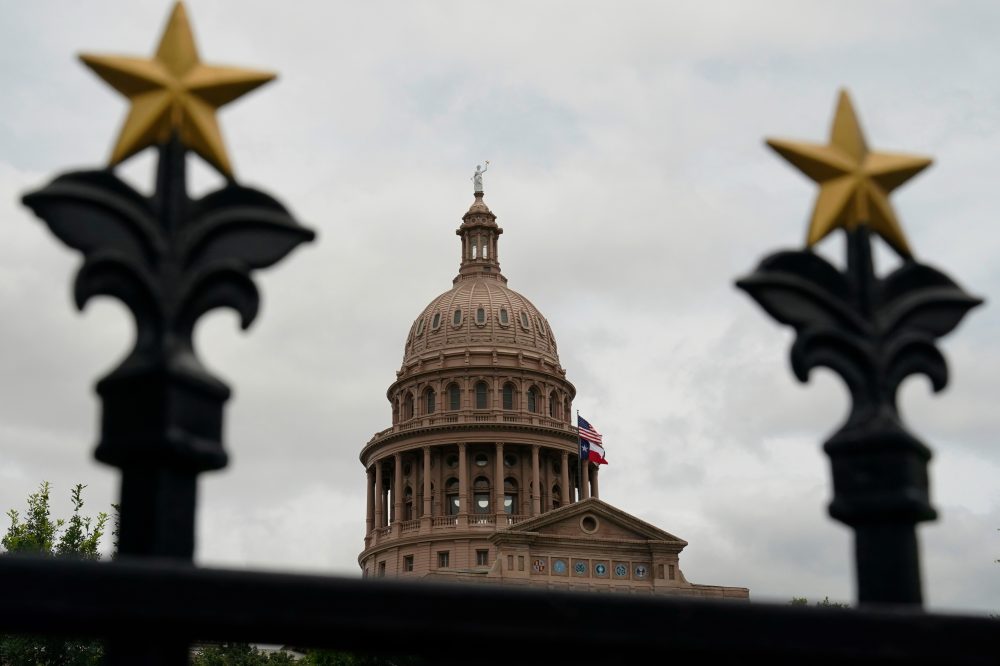
WASHINGTON (AP) — Republican leaders in Texas have crafted a new congressional district map designed to give their party an advantage in upcoming midterm elections. However, the success of this strategy remains uncertain as it depends heavily on whether supporters who backed President Donald Trump in recent elections will continue voting for other GOP candidates when his name isn’t on the ballot.
The redesigned electoral map aims to help Republicans capture five seats currently held by Democrats, a goal originally outlined by Trump. Should this plan succeed, Democratic representation in Texas would shrink dramatically from the current 13 districts to just eight out of the state’s total 38 congressional seats.
To achieve this objective, Republican mapmakers employed a redistricting technique known as “cracking,” which involves distributing Democratic-leaning voters throughout multiple districts where Republican-leaning voters hold numerical advantages. This approach makes it more challenging for Democratic candidates to build winning coalitions in individual congressional contests.
However, the calculations underlying this strategy are far from straightforward. Accurately forecasting voter behavior and turnout patterns presents significant challenges, and miscalculations can lead to unexpected results.
Political analysts typically examine the most recent general election results when making these predictions. This method relies on the premise that recent voting data provides the clearest indication of current voter sentiment and preferences.
The redrawn map would likely deliver those five targeted seats to Republicans if Texas voters maintain the same patterns they displayed during the 2024 presidential contest — meaning Trump supporters continue backing Republican candidates while Kamala Harris voters remain loyal to Democrats. Based on this scenario, districts such as the newly configured 28th and 34th, currently represented by Democrats, would switch to Republican control.
Nevertheless, individual elections are significantly influenced by broader political circumstances at the time. Factors such as incumbent party popularity and economic conditions play crucial roles in voter decision-making.
Regarding 2024, those factors favored Republicans, as the party experienced nationwide success, particularly Trump’s strong performance. Analysis by the Associated Press indicates that if 2026 voters replicate their 2024 presidential voting behavior, most congressional races wouldn’t be particularly competitive. Only four districts would feature margins closer than 15 percentage points.
Conversely, when applying results from a more Democratic-friendly election to these new districts, the outlook becomes considerably less certain. If voters return to their 2020 presidential voting patterns, Republicans would face greater difficulty securing all five targeted seats.
Using 2020 presidential results instead of 2024 data reveals significant shifts in several areas. Border districts with substantial Hispanic populations move from narrow Republican advantages to slight Democratic leads. Meanwhile, Dallas-area districts transition from strongly Republican to more competitive, though still GOP-favoring territory. Under 2020 voting patterns, nine districts would have margins within 15 points.
Some seats remain likely Republican pickups regardless of which election year serves as the model. For example, a Dallas-area district currently represented by Democratic Rep. Marc Veasey has been redrawn to include significantly more Republican-leaning voters, making it difficult for Democrats to retain even under 2020-style voting patterns.
Rather than campaign for reelection in his substantially altered district, Veasey has announced his retirement from Congress.
“The city of Fort Worth has no Democratic representation,” Veasey commented regarding the new district boundaries.
“It’s going to be sad,” Veasey continued. “I feel terrible.”
The critical uncertainty centers on whether voters who supported Trump in 2024 will maintain their Republican loyalty during midterm elections. While the entire country shifted rightward in 2024 compared to 2020, certain demographic groups showed more pronounced movement than others. Hispanic voters, who comprise significant portions of border communities and major Texas cities, supported Trump at notably higher levels than they had previously.
However, there are concerning indicators for this redistricting strategy, especially in areas with large Hispanic populations. Despite Trump’s substantial margin improvements along the southern border, voters in those same areas reelected Democratic incumbent Representatives Henry Cuellar and Vicente Gonzalez to Congress. Both legislators are seeking reelection in their reconfigured districts.
The ultimate success of Texas’ new congressional map depends on resolving a fundamental question: whether 2024 represented a lasting political realignment or simply the peak of Republican gains among crucial voter groups. While upcoming primaries won’t definitively answer this question, they will provide initial indicators of whether the map’s designers made the correct assumptions.
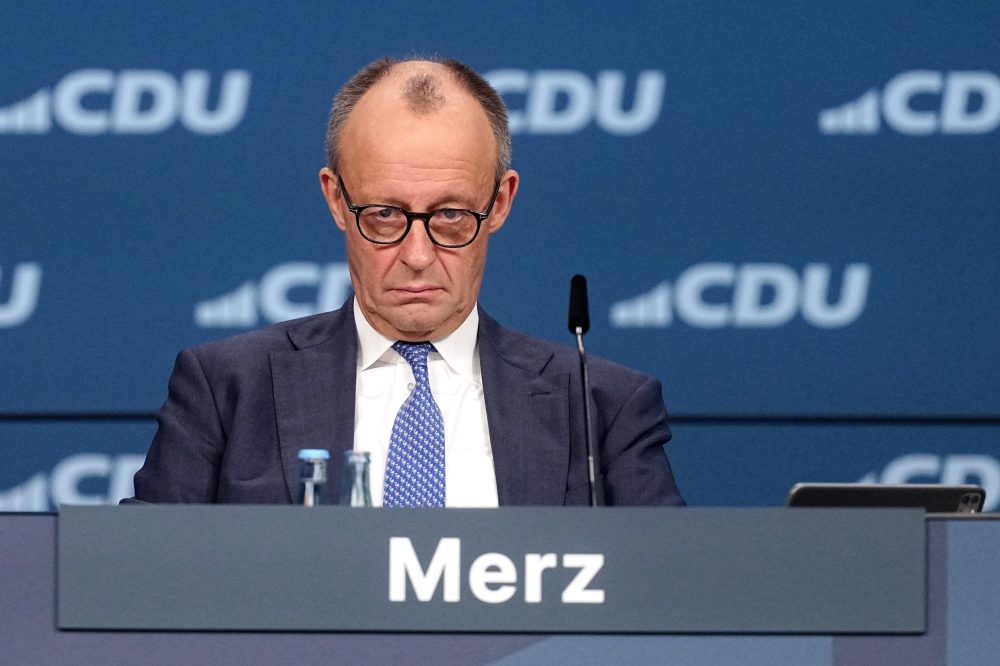
Chancellor Friedrich Merz of Germany is preparing for his inaugural diplomatic journey to China next week, marking his first official visit to the Asian nation since assuming leadership of Europe’s largest economy earlier this year.
According to government spokesperson Sebastian Hille, Merz is scheduled to meet with Chinese Premier Li Qiang and President Xi Jinping in Beijing on Wednesday. The German leader will also travel to Hangzhou in China’s southeastern region during his diplomatic mission.
Hille explained to reporters in Berlin that the central focus of the visit will revolve around “competition” and finding “the right balance of cooperation” with China. “We want cooperation where it is necessary and in our mutual interest,” the spokesperson emphasized.
For several years, Germany has worked to preserve strong diplomatic and economic relationships with China while simultaneously expressing concerns about Beijing’s increasingly aggressive international stance and its reluctance to condemn Russia’s military actions in Ukraine. The European nation has also been working to reduce its economic dependence on China by expanding trade relationships with other countries and diversifying its supply chains for essential goods.
New statistics released Friday by Germany’s Federal Statistical Office reveal that China has once again become the country’s largest individual trading partner in the previous year, with combined imports and exports reaching 251.8 billion euros (approximately $297 billion). China previously held this distinction from 2016 through 2023 before being overtaken by the United States in 2024. While commercial activity with China increased last year, trade volume with America fell to 240.5 billion euros.
Speaking at a Christian Democratic Union party gathering in Stuttgart, Merz, who assumed the chancellorship in May, stated that “we need business ties in the whole world, and that of course also includes a country like China.” He added that “China is an important trading partner for us, so I will go to China next week with a large business delegation.”
Details about the composition of the accompanying business delegation were not disclosed by either Merz or his spokesperson.
However, the chancellor cautioned against having any “illusions” regarding China, describing the nation as one that “asserts the claim to define a new multilateral order according to its own rules.”
During his Stuttgart address, Merz reinforced his belief that the traditional rules-based international system has fundamentally changed, noting that “a new world order, an order of great powers, is taking shape at high speed.” He stressed the importance of Europe strengthening both its economic capabilities and military capacity while actively pursuing additional trade agreements with diverse international partners.
President Donald Trump is expected to make his own visit to China in April.
BARCELONA, Spain — After more than 140 years of construction, Barcelona’s famous Sagrada Familia cathedral has achieved its maximum height with workers installing the final piece of a cross on its tallest spire.
Construction crews used a crane to position the upper portion of the cross on the “Tower of Jesus Christ,” bringing the cathedral’s central spire to a height of 566 feet above the Spanish city, church officials announced.
The milestone brings the world-renowned basilica one step closer to completion, cementing its status as the globe’s tallest religious building.
Construction on the massive project began in 1882 under the vision of renowned Catalan architect Antoni Gaudí. The architect never anticipated seeing the finished product during his lifetime, and only a single tower had been completed when Gaudí died in 1926 at age 73 after being struck by a streetcar.
Construction has accelerated significantly in recent years as the cathedral became a must-see destination for international visitors drawn to Barcelona specifically to witness Gaudí’s unique architectural style, which blends religious imagery with natural, flowing designs.
While workers continue construction on the interior of the central tower, which remains surrounded by cranes and temporary structures, completing the exterior was prioritized for upcoming June celebrations marking 100 years since Gaudí’s death.
Church officials expect to remove the scaffolding around the central spire by June in preparation for the official dedication of the “Tower of Jesus Christ.”
According to the cathedral’s rector, Rev. Josep Turull, the cross features four arms designed to be visible from every angle, just as Gaudí originally envisioned. The architect’s original design also called for light beams to shine from each arm, creating a spiritual beacon effect, though that addition requires city approval, Turull explained.
Annual visits from millions of tourists provide the primary funding source for ongoing construction through admission fees.
The cathedral plans multiple events this year honoring the Catalan Modernist architect’s contributions, which include several other notable structures throughout Barcelona and Spain.
Last October, the Sagrada Familia officially became the world’s tallest church when it surpassed Germany’s Ulmer Münster, a Gothic Lutheran cathedral that reaches 530 feet and took 347 years to complete starting in 1543.
The rector noted that a prayer verse from the Gloria, commonly recited during Catholic mass services, was inscribed at the base of the cross installed on the central tower.
The inscription reads: “You alone are the Holy One, you alone are the Lord, you alone are the Most High.”
LIVIGNO, Italy — After completing a strong qualifying run in Olympic halfpipe competition, American freeskier Hunter Hess made a statement that captured attention worldwide. The 27-year-old athlete positioned himself in front of the camera, formed an ‘L’ shape with his thumb and index finger, placed it against his forehead and gestured toward it with his opposite hand.
“Apparently,” he said afterward, “I’m a loser.”
This bold gesture came after President Donald Trump publicly criticized Hess on social media, calling him a “real Loser” and questioning his place on Team USA. The controversy began during an early Olympic press conference when reporters asked athletes about representing America amid the current administration’s immigration policies.
Hess had responded by saying: “If it aligns with my moral values, I feel like I’m representing it. Just because I’m wearing the flag doesn’t mean I represent everything that’s going on in the U.S.”
Those comments drew Trump’s ire, leading to a post on Truth Social where the president wrote: “Hess, a real Loser, says he doesn’t represent his Country in the current Winter Olympics. If that’s the case, he shouldn’t have tried out for the Team, and it’s too bad he’s on it.”
The backlash was swift and intense. Hess revealed that his family received threats, and he faced unprecedented criticism during what should have been the highlight of his athletic career.
“I worked so hard to be here. I sacrificed my entire life to make this happen,” Hess explained after his qualifying performance. “I’m not going to let controversy like that get in my way. I love the United States of America. I cannot say that enough. My original statement, I felt like I said that, but apparently people didn’t take it that way. I’m so happy to be here, so happy to represent Team USA.”
Following the initial uproar, the freeski team traveled to Switzerland for training, giving Hess time to process the situation away from the spotlight. He acknowledged the difficulty of that period.
“I had a week that was pretty challenging,” the athlete admitted. “Luckily, my family was there to support me and help me get through it. There was a lot of noise and I’ve never been subject to that kind of criticism. Skiing has saved my life time and time again and it seems to have done so again.”
Despite the personal attacks, Hess maintained respect for his critics, stating: “There’s been a lot of hate out there. All those people are super entitled to their opinion, and I respect it.”
Most importantly, the skier emphasized that he stands behind his original comments, viewing them as patriotic rather than divisive.
“I stand with what I said. I love the United States of America. I cannot reiterate that enough. It means the absolute world to me to be able to represent Team USA here. I worked so, so hard to get here. I stick with what I said,” he declared.
Hess successfully advanced to the 12-person final alongside three other American competitors. The U.S. freestyle skiing and snowboarding teams are still seeking their first gold medal of these Olympics at the Livigno Snow Park, nearly two weeks into competition.
As President Donald Trump begins his new term, he has filled key government positions with individuals who previously supported his unfounded claims about the 2020 election being stolen from him. These appointees, who range from top Justice Department officials to government lawyers, had previously helped promote conspiracy theories about voting irregularities that Trump used to explain his defeat to Joe Biden.
Among the most notable appointments is Kurt Olsen, an attorney who previously tried unsuccessfully to convince the Justice Department to support Trump’s disputed election claims in 2020. Olsen now heads a comprehensive investigation into that election, with authority to examine voting records and procedures from four years ago.
The investigation’s most significant move occurred in January when federal agents confiscated voting materials and election documentation from Fulton County, Georgia. This Democratic-leaning county, which encompasses Atlanta, has frequently been targeted by Trump supporters who question election results. Court documents reveal the search was justified using many of the same disputed claims from 2020 that had already undergone extensive investigation.
Election administrators nationwide, particularly in Democratic-controlled states, are preparing for potential disruptions as this year’s congressional elections approach.
“The election denial movement is now embedded across our federal government, which makes it more powerful than ever,” stated Joanna Lydgate, who leads the States United Democracy Center, an organization that monitors election conspiracy promotion. “Trump and his allies are trying to use all of the powers of the federal government to undermine elections, with an eye to the upcoming midterms.”
The president has transformed federal agencies to serve his personal agenda, with Attorney General Pam Bondi—who previously assisted Trump’s efforts to challenge his 2020 defeat—announcing that all Justice Department personnel must fulfill the president’s directives. Despite facing numerous challenges including economic concerns and immigration enforcement, Trump continues asserting he actually won the 2020 presidential race.
Trump’s administration includes various categories of election conspiracy supporters: longtime allies like Bondi who stood by him during his election challenges, individuals who played smaller roles in promoting 2020 election falsehoods, and others who have spread debunked theories that convinced millions of Republicans the election was fraudulent.
Spain’s Constitutional Court has denied a father’s legal challenge to prevent his 25-year-old daughter from proceeding with medically assisted death, according to a court announcement released Friday.
The young woman became paralyzed from the waist down following a suicide attempt in October 2022, when she jumped from a fifth-story window. Court documents reveal she had previously made multiple suicide attempts using drug overdoses while battling psychiatric illness.
Spain legalized medically assisted death and euthanasia in 2021, becoming the fourth nation in the European Union to permit the practice for individuals facing terminal or severely debilitating medical conditions. Government statistics show 426 people utilized assisted dying services in 2024.
A specialized medical panel in Catalonia granted approval for the woman’s euthanasia request in July 2024, with the procedure originally set for August 2nd. However, her father’s ongoing legal battles have prevented the process from moving forward.
Medical documentation indicates the patient experiences severe, ongoing, and disabling pain from her injuries, with medical professionals stating no possibility exists for improvement in her condition.
The father received backing from Abogados Cristianos, an ultra-conservative advocacy organization known as “Christian Lawyers,” who contended that the woman’s psychiatric condition might compromise her capacity to make a rational, well-informed choice regarding ending her life.
Multiple lower courts had previously sided with the woman’s position, and Friday’s ruling by Spain’s highest court determined no fundamental rights violations had occurred.
While Spanish citizens generally support assisted dying rights, the euthanasia legislation passed only after prolonged resistance from conservative political parties and the Catholic Church, which has traditionally influenced Spanish perspectives on end-of-life decisions.
The Christian Lawyers organization announced Friday they plan to escalate the matter to the European Court of Human Rights.
“We will not abandon these parents. We will continue to fight to the end to defend their right to save their daughter’s life,” stated Polonia Castellanos, who leads the advocacy group.
STUTTGART, Germany – German Chancellor Friedrich Merz delivered a forceful message on Friday, reaffirming his commitment to prevent any collaboration between his conservative party and the far-right Alternative for Germany (AfD).
Speaking to members of his Christian Democratic Union (CDU) during their national party gathering in Stuttgart, Merz made his position crystal clear regarding the controversial political group.
“We will not allow these people from the so-called Alternative for Germany to ruin our country,” Merz declared to his fellow conservatives assembled in the southwestern German city.
The chancellor emphasized his unwavering stance, stating: “And that is why I say with full conviction: this party cannot be a partner of the CDU.” He further warned that the AfD should prepare for strong resistance from conservative forces.
The AfD’s growing influence has sparked significant concern among German citizens, with many drawing uncomfortable comparisons to the Nazi Party’s rise to power during the 1930s, when democratic institutions were dismantled through seemingly legitimate political processes.
Germany’s established political parties have maintained a unified front against the AfD, refusing to offer their representatives key parliamentary roles or include them in governing coalitions. The AfD has criticized this coordinated exclusion as a violation of democratic principles.
A major petrochemical corporation announced Friday it will dramatically reduce payments to shareholders, blaming an extended slump in the chemicals sector.
LyondellBasell revealed its first-quarter dividend will drop to 69 cents per share, marking a steep 68-cent decrease from what shareholders received in the previous quarter.
Company CEO Peter Vanacker acknowledged the challenging business environment while defending the company’s recent performance.
“Despite one of the longest downturns in our industry, LYB was able to return approximately $2 billion to our shareholders from existing cash and operations in 2025,” Vanacker stated.
The chief executive explained the reasoning behind the dividend adjustment, pointing to continued market difficulties ahead.
“With markets expected to remain challenged, we have made the decision to recalibrate the dividend to better position the company to thrive once markets recover,” he said.
Wall Street futures showed minimal movement Friday morning as traders held their breath for crucial economic indicators that could shape Federal Reserve policy decisions throughout the year, while also keeping watch on rising Middle East tensions and a possible Supreme Court ruling on Trump administration tariffs.
Friday’s lineup of economic reports includes the initial fourth-quarter GDP estimate, the Personal Consumption Expenditure index that the Fed relies on for inflation tracking, plus February’s business activity and consumer confidence numbers — all designed to reveal how the American economy is performing.
Economic forecasters predict the 8:30 a.m. GDP data will reveal the economy expanded at a 3.0% annual rate during the final three months of last year, down from the robust 4.4% growth seen between July and September, based on a Reuters survey.
Goldman Sachs analysts noted in their research that “Market pricing of growth has been choppier relative to the signal from the data.”
The investment firm added: “We think there is scope for cyclical assets to continue to draw support from ongoing tailwinds from a US economy that is heating up, while protecting against risks and valuation challenges in other areas.”
Tech companies have faced headwinds recently as investors question whether their expensive stock prices are justified and whether massive artificial intelligence spending will generate returns. Multiple industries from software development to property management saw sharp declines last week amid fears that emerging AI technology could disrupt their operations.
Investor confidence remained relatively steady this week, except for Thursday’s session when declining private equity shares along with drops in Apple and Walmart stock created market jitters.
The Supreme Court may also deliver a verdict Friday on whether President Trump’s sweeping emergency tariffs were legal. Should the court overturn them, the government might need to return over $175 billion in collected tariff revenue, according to Penn-Wharton Budget Model researchers.
Energy markets saw oil prices retreat from their six-month peaks as traders evaluated escalating friction between Washington and Tehran. President Trump issued a stark warning to Iran, stating the country must negotiate on its nuclear activities or face consequences where “really bad things” would occur.
Early morning trading showed S&P 500 futures down 3 points or 0.04%, Nasdaq 100 futures up 3.25 points or 0.01%, and Dow futures declining 39 points or 0.08% as of 6:09 a.m.
Cloud computing company Akamai Technologies dropped 10.9% in pre-market activity after projecting first-quarter earnings below analyst expectations.
Digital currency-related stocks gained ground as bitcoin climbed 1.4% to $67,840. Cryptocurrency exchange Coinbase rose 1.5%, while bitcoin investment firm Strategy increased 1.6%.
SRN News presents a daily audio program called “Global Landscape” that offers listeners a brief overview of religious news happening worldwide. The two-minute broadcast focuses on faith-related stories and cultural developments from across the globe.
The compact news segment is designed to give audiences quick updates on important religious events, spiritual movements, and how faith intersects with current world events. Each episode provides a streamlined look at the day’s most significant religion-focused headlines.
The program serves as a resource for those wanting to stay current on how religious matters are influencing global affairs and cultural changes around the world.
Quarries located outside Rome that once supplied building materials for ancient emperors continue operating today, furnishing travertine stone for contemporary religious structures across the globe. This durable material attracts architects due to its strength, abundance, and ability to endure harsh weather conditions and environmental challenges. The longevity of ancient structures built with this stone serves as a 2,000-year testament to its durability for modern buyers. Religious congregations, including churches and some Jewish temples, are increasingly choosing travertine for construction projects, drawn to its range of colors and appearances.
The Catholic diocese in Camden, New Jersey, located near Philadelphia, has reached a $180 million agreement to resolve claims related to clergy sexual abuse, marking another chapter in a scandal that began over twenty years ago. Similar to other dioceses across the nation, Camden declared bankruptcy while facing numerous lawsuits following changes to statute of limitations laws. Previous major settlements by the Catholic Church in America include $880 million in Los Angeles, $230 million in New Orleans, and approximately $80 million each in Boston and Philadelphia. This crisis continues to impact Catholic dioceses globally.
Officials at Texas Tech University have called off a planned campus presentation by a physician who conducts late-term abortion procedures. University administrators determined that hosting the event, originally scheduled for late January, would not serve the institution’s interests. The physician intended to address medical and ethical aspects of late-term procedures, sometimes referred to as partial birth abortions. The campus organization Medical Students for Choice had arranged the speaking engagement. Opposition came from pro-life advocates and a conservative student organization, who contended the event would endorse illegal activities given Texas’s abortion prohibition. The university’s Turning Point USA chapter subsequently released a statement supporting this position.
The upcoming World Cup soccer championship will span multiple venues throughout the United States, Canada, and Mexico, with expectations that it will boost prostitution activity in Mexico. Sex work is not illegal in Mexico, and the capital city involves thousands of women in this industry. Last September, Mexico City Mayor Clara Brugada announced the local administration would support promoting prostitution during the World Cup as part of creating a “just society.” The tournament begins June 11th with opening ceremonies at Aztec Stadium in Mexico City, followed by a match between Mexico and South Africa. Mexico will host a total of 13 games during the competition.
WASHINGTON — North Americans welcomed 2026 with harsh, bone-chilling temperatures that many residents say they haven’t felt in decades.
Chris Ferro, a 58-year-old property owner from Brooklyn, New York, described the unusual severity of this winter’s cold snap. “Pipes that never froze on me for 15 years froze,” Ferro explained, referring to the exceptionally frigid conditions he faced during January and February. The owner of multiple rental properties in Albany said consecutive days of sub-freezing weather made it impossible to complete necessary property maintenance and improvements. Despite being grateful that no pipes actually burst, Ferro noted this winter reminded him of the harsh cold from his childhood — a stark difference from the milder winters he’s grown accustomed to in recent decades.
New polling data from The Associated Press-NORC Center for Public Affairs Research shows that approximately 60% of American adults report being directly impacted by harsh cold weather or major winter storms within the last five years. This represents a notable jump from a similar AP-NORC survey from February 2025, when roughly 50% of adults reported such impacts.
These results highlight the increasing frequency of cold weather experiences, or at least public awareness of them, following a major winter storm that delivered freezing conditions to the Eastern United States and triggered widespread electrical outages throughout Southern states.
Within our warming climate, individual responses to cold weather remain highly personal. Climate scientists note that the opening decades of this century have been remarkably warm compared to historical norms — primarily due to human activities affecting the climate — while severely cold winters have become less common across North America. Since these extreme cold events occur less regularly, researchers suggest Americans now feel their impact more acutely than in previous generations, with extended cold periods being unfamiliar territory for many people, particularly younger generations.
For comparison, an AP-NORC survey from summer 2024 revealed that roughly 70% of American adults had faced extremely hot weather or dangerous heat waves during the previous five years.
The latest polling data indicates that cold weather has disrupted American lives in numerous ways during just the past twelve months.
Approximately 70% of Americans report that their electricity or gas expenses have increased beyond normal levels due to winter storms or extreme cold during the past year. Around 40% have dealt with work or school closures caused by winter storms or extreme cold, roughly one-third have lost power, and about 30% have faced travel disruptions or delays.
Annie Braswell, a 66-year-old resident of Greenville, North Carolina, described January and February as feeling like “it hadn’t been that cold in 40 years,” with her utility costs doubling compared to typical months. She characterized this as a sharp contrast from last summer’s weather, when she endured numerous days reaching or exceeding 100°F (38°C). “I just take life one day at a time, and I realize these are things that I can’t change,” Braswell explained regarding her approach to dealing with temperature extremes.
Both heat waves and severe cold require additional heating and cooling to maintain comfortable indoor temperatures, resulting in elevated utility costs. Electricity rates continue climbing nationwide, and an AP-NORC survey from October 2025 showed that nearly 40% of American adults consider electricity costs a “major source” of financial stress. Climate activist Bill McKibben told The Associated Press in a recent interview that he expects increasing electricity prices to become a significant political issue.
Cold weather impacts have spread across broad regions of the nation. Roughly 60% of Midwest residents, approximately half of Southern residents, and about 40% of Northeastern residents report experiencing work or school cancellations due to winter storms or extreme cold, compared to just 15% of Western residents.
Among Americans who have encountered any type of severe weather event in recent years — including extreme heat, extreme cold, major droughts or water shortages, hurricanes or severe tropical storms, major flooding, wildfires, or tornadoes — approximately two-thirds believe climate change played a role.
“I think climate change is a natural thing that happens … to some extent it’s sped up by some things,” including pollutants from manufacturing facilities and shipping operations, said Joseph Bird, a 21-year-old college student from Provo, Utah, who considers himself politically independent. “I think it increases the frequency of extreme weather is how I’d see it,” Bird added.
Democrats and independents who have experienced severe weather events are significantly more likely than Republicans to attribute these events to climate change.
A particularly wide divide exists between conservative Republicans — with only about 30% of those who experienced extreme weather linking it to climate change — compared to liberal Democrats, where the vast majority connect such events to climate change.
Although increasing global temperatures result from climate change, scientists explain that extreme cold outbreaks throughout North America are actually a characteristic of our changing climate. The Arctic polar vortex, a rotating system of low pressure and frigid air normally contained above the North Pole year-round, can expand southward and affect regions much further from the Arctic. Scientific studies show these polar vortex disruptions are occurring more often due to rapidly rising Arctic temperatures and diminishing Arctic sea ice.
In total, 80% of American adults have encountered some form of severe weather event during the past five years, though they are more likely to report experiencing extremely hot weather, heat waves, and extreme cold than other major weather phenomena, including droughts, water shortages, hurricanes, tropical storms, flooding, wildfires, tornadoes, or additional severe weather disasters.
While Americans across party lines report similar rates of extreme weather experiences, about 80% of Democrats who faced these events attributed them to climate change, compared to only about 40% of Republicans.
The AP-NORC survey included 1,156 adults and was conducted February 5-8 using NORC’s probability-based AmeriSpeak Panel, designed to represent the U.S. population. The margin of sampling error for all adults is plus or minus 3.9 percentage points.
Motorists traveling through Bear today are encountering lane restrictions on a busy stretch of Christiana Road due to ongoing construction work.
Delaware Department of Transportation officials report that the right lane of Route 7 is currently blocked between East Songsmith Drive and Rivers End Drive while crews complete construction activities.
The lane closure is scheduled to remain in effect until 3 PM this afternoon, according to DelDOT traffic alerts.
Drivers are advised to use caution in the area and allow extra travel time to account for potential delays caused by the reduced traffic capacity.
SALISBURY, Md. – A new spotlight series called “Nest to Nest” is showcasing the remarkable distances traveled by Salisbury University student-athletes to join their respective teams, focusing on those who made the longest journeys to reach the Maryland Eastern Shore campus.
This week’s featured athlete is Ben Bennett from the Sea Gulls baseball team, who made one of the most extensive trips possible while remaining within the continental United States – traveling all the way from the Pacific Northwest region.
The ongoing series aims to highlight both the significant distances covered and the compelling personal stories behind each student-athlete’s decision to attend Salisbury University, demonstrating the school’s ability to attract talent from across the nation.
Religious leaders from Nigeria made a joint appeal in Washington D.C. this month, calling on the global community to assist in combating terrorist violence plaguing their homeland. Representatives from both Christian and Muslim communities came together to criticize their government’s insufficient efforts to halt attacks carried out by extremist groups.
The faith leaders pointed to their government’s failure to adequately address the ongoing violence perpetrated by radical Muslim organizations throughout Nigeria. While these terrorist attacks have predominantly focused on Christian populations, Shia Muslim communities have also fallen victim to the violence.
Over the last ten years, various extremist Muslim organizations have been responsible for the deaths of tens of thousands of Christians in Nigeria, according to the religious leaders who spoke in the nation’s capital.
Massive crowds of Muslim worshippers converged on Jerusalem’s Al-Aqsa Mosque compound Friday for the opening Friday prayers of Ramadan, marking the first such gathering since the fragile ceasefire between Israel and Hamas took effect in October.
The historic religious site welcomed tens of thousands of faithful, including Palestinians who traveled from the West Bank under tight security measures. For many, this represented their first chance to worship at the Jerusalem Old City location since Ramadan a year ago.
Israeli authorities implemented strict limitations, permitting only 10,000 Palestinians from the West Bank to enter Israel on Friday. Access was restricted to men aged 55 and older, women over 50, and children under 12 – similar age-based restrictions previously imposed for security reasons.
The compound holds profound significance for both faiths: Jews revere it as the Temple Mount, Judaism’s most sacred location and site of the ancient biblical temples, while Muslims know it as the Noble Sanctuary, housing the Al-Aqsa Mosque, Islam’s third-holiest site.
This religiously significant area has repeatedly become a source of tension in the ongoing Israeli-Palestinian conflict.
More than 3,000 Israeli police officers were stationed throughout Jerusalem, according to authorities who emphasized their deployment was designed for emergency assistance rather than intimidation.
The Jerusalem Islamic Waqf, Jordan’s religious authority overseeing the compound, reported 80,000 attendees. During typical years, Ramadan Friday prayers at Al-Aqsa can attract as many as 200,000 worshippers.
West Bank Palestinian Ezaldeen Mustafah expressed disappointment with the attendance limitations. “We need more people than this,” Mustafah said.
Many Palestinian worshippers described how the month’s usual celebratory atmosphere feels diminished as they cope with sorrow and devastation from the two-year Gaza conflict.
Gaza resident Ramiz Firwana, participating in Friday prayers held in a schoolyard, reflected on the destruction. “Previously, there were mosques, but today all the mosques have been bombed,” Firwana said.
Thursday evening saw families breaking their fast with Iftar meals surrounded by debris and ruins.
Mohammad Kollab from Khan Younis expressed resilience despite the circumstances. “Despite the displacement, the pain, and the destruction, we want to rejoice and live,” he said. “We are a people who want to live, we are not a people destined only for destruction and killing.”
Gaza’s Health Ministry reports Israel’s military campaign has resulted in over 72,000 Palestinian deaths, along with extensive destruction that has displaced most residents. Israel initiated this offensive following the October 7, 2023 Hamas-led attack that killed approximately 1,200 people, primarily civilians, and resulted in 251 hostages.
The U.S.-mediated ceasefire agreement from October 10 sought to end more than two years of warfare between Israel and Hamas. Although major combat operations have decreased, the ceasefire period has witnessed nearly daily Israeli military actions.
A yearly government spending report from Oklahoma’s Republican Senator James Lankford has highlighted questionable uses of federal tax dollars, including costly animal research projects. According to Lankford’s findings, the current administration allocated close to $250 million for laboratory studies involving hormone treatments on various animals including monkeys, mice, and rats. The research aimed to alter the animals’ biological sex characteristics but proved unsuccessful. The senator’s waste report also noted that researchers administered substances commonly used in certain nightlife communities to the test animals during these failed experiments.
The Turkish government has forced dozens of Christian missionaries to leave the country, stating these religious workers pose risks to national security. In response, the European Union’s legislative branch has passed a formal resolution demanding that Turkey safeguard religious liberty and fulfill its duties as a participant in the global community.
While Turkey officially maintains a secular government structure, President Erdogan has increasingly championed Islamic practices in recent years. This shift has coincided with growing harassment and persecution targeting Christian communities within the nation.
Anti-abortion activists across the globe have begun their semi-annual prayer demonstration known as 40 Days for Life, which will continue until March 29th. Participants in this campaign conduct quiet prayer sessions positioned outside abortion facilities in more than 650 communities throughout the United States and internationally, focusing their prayers on both unborn children and expectant mothers.
Campaign coordinators claim significant impact since launching the initiative in 2007. According to their records, over 26,000 women have chosen to continue their pregnancies after encountering the prayer vigils, while close to 300 employees at abortion facilities have left their positions. Additionally, organizers report that approximately 200 abortion clinics have shut down during this timeframe.
The organization conducts these prayer campaigns twice yearly, scheduling them during both spring and autumn seasons.
Financial markets experienced a turbulent week despite shortened trading schedules, with oil prices taking center stage as geopolitical tensions escalated in the Gulf region.
Crude oil costs have climbed 6% this week, reaching their highest point since August, as diplomatic efforts between the U.S. and Iran failed to produce concrete results. Energy market analysts are growing increasingly concerned about potential supply disruptions in the Gulf, while sanctioned Russian oil remains absent from global markets.
The price surge comes despite reports suggesting OPEC+ nations may consider boosting production in April. However, supply concerns aren’t the only factor driving costs higher.
Economic data reveals the global economy gained momentum entering 2026, with U.S. manufacturing posting its strongest monthly increase in nearly a year during January. This industrial growth aligns with robust employment figures and suggests the economic upturn isn’t limited to a single sector.
Weekly unemployment claims dropped again, while the Philadelphia Federal Reserve’s February business survey showed activity levels nearly double what economists had predicted. December trade figures also revealed a significant spike in U.S. imports.
Much of this economic activity stems from massive artificial intelligence investments planned by major technology companies for 2026. As markets prepare for Nvidia’s upcoming quarterly earnings report next week, the world’s most valuable company continues securing major contracts, including a recent deal with Meta.
Meta has already announced plans to nearly double its AI capital expenditure buildout this year. However, investors are expressing growing anxiety about what appears to be circular investing among a small group of leading tech firms, with Nvidia approaching a $30 billion investment in OpenAI, one of its biggest customers.
Market participants are becoming increasingly skeptical about potential AI overspending, while recent AI developments have raised concerns about the future of various industries, from software companies to wealth management firms.
Adding to these worries is mounting global political opposition to social media’s impact on children. The S&P 500, ‘Magnificent Seven’ stock indices, and even Nvidia shares remain negative for the year.
These concerns intensified when Blue Owl Capital’s stock fell 6% Thursday after announcing it would sell $1.4 billion in assets from credit funds to return investor capital and reduce debt, while permanently stopping redemptions at one fund. Other private credit companies also saw their share prices decline.
The oil price increase has sparked inflation worries in bond markets, pushing Treasury yields higher throughout the week. Federal Reserve meeting minutes from January revealed most policymakers weren’t ready to resume interest rate cuts, with divided opinions on whether the AI boom would strain economic capacity before delivering productivity gains.
European Central Bank leadership changes may be on the horizon, with speculation arising after reports suggested President Christine Lagarde might resign early this year, well before her October 2027 term expires. The reported reasoning would allow French President Emmanuel Macron to influence her successor selection before leaving office in May.
The ECB initially pushed back against these reports, stating no decision had been made. Sources indicated Lagarde assured colleagues she wasn’t departing immediately. She later told the Wall Street Journal that her ‘baseline’ remained completing her full term.
Potential successor names have already begun circulating, with Bank for International Settlements chief Pablo Hernadez de Cos appearing as a frontrunner, though former Dutch central bank leader Klaas Knot and Bundesbank head Joachim Nagel are also mentioned as candidates.
Bank of England rate cut speculation increased following softer UK inflation data and private sector wage growth numbers, though persistent core price increases tempered some enthusiasm.
This week concludes Friday with fourth-quarter U.S. GDP data, while some observers watch for a possible Supreme Court decision regarding Donald Trump’s emergency tariff powers. Next week features Trump’s State of the Union address, expected to focus on his election-year ‘affordability’ campaign, alongside Wednesday’s highly anticipated Nvidia earnings report.
Energy markets will continue monitoring Iranian tensions over the weekend, particularly after Trump warned Tehran it has 10 to 15 days to reach a nuclear agreement or face serious consequences.
Britain’s Foreign Minister Yvette Cooper is scheduled to sit down with U.S. Secretary of State Marco Rubio this Friday, as tensions escalate following President Trump’s repeated attacks on London’s decision regarding the Chagos Islands sovereignty deal.
The controversy centers around an agreement reached last year by British Prime Minister Keir Starmer to hand over sovereignty of the Indian Ocean island chain to Mauritius. However, Britain retained control of Diego Garcia through a 99-year lease arrangement that allows continued U.S. military operations at the strategic air base.
While the Washington administration initially supported the arrangement last year, Trump has since flip-flopped on the issue multiple times. The president called the decision an act of “great stupidity” in January, then seemed to soften his stance earlier this month by saying he understood it was the best deal Starmer could negotiate, only to resume his attacks this week.
Cooper’s Washington meeting with Rubio will focus on defense and security matters, coming at a time when Trump is also escalating pressure on Iran, demanding Tehran reach a nuclear agreement within 10 to 15 days or face consequences he described as “really bad things.”
The Diego Garcia facility has played a crucial role in recent Middle East operations, including missions against Yemen’s Houthis and humanitarian assistance efforts to Gaza.
Despite Rubio’s State Department expressing support for the Chagos agreement on Tuesday, Trump reversed course the following day, declaring Britain was making a serious error.
“DO NOT GIVE AWAY DIEGO GARCIA!” Trump posted on Truth Social, emphasizing the base’s importance for potential future military actions to “eradicate a potential attack” from Iran.
The current arrangement requires Britain’s advance approval for any operations launched from Diego Garcia, a condition that may be complicating U.S. military planning.
According to a Thursday report in Britain’s The Times, Trump’s renewed criticism stems from Britain’s reluctance to authorize the base for potential Iranian strikes due to concerns about violating international law.
When questioned about The Times’ reporting, Britain’s Ministry of Defence declined to discuss operational details Thursday, stating only that Britain supports ongoing diplomatic efforts between the United States and Iran.
The Nordic combined events wrapped up at the Winter Olympics with an uncertain future hanging over the century-old sport, as officials consider removing it from upcoming Games while female athletes continue to be shut out of competition.
Norway’s athletes delivered a commanding performance, capturing gold medals in all three Nordic combined competitions held in Predazzo, Italy. Finland and Austria split the remaining podium spots, with the traditional powerhouse nations maintaining their stranglehold on the discipline that combines ski jumping with cross-country skiing.
Despite strong attendance figures, with the first two events selling out completely and the final competition reaching 90% capacity, the International Olympic Committee is weighing whether to eliminate Nordic combined from future Winter Games. The sport has been featured in Olympic competition since 1924.
Lasse Ottesen, who directs Nordic combined for the International Ski and Snowboard Federation, argued that the robust ticket sales prove the sport meets IOC requirements for broader appeal and coverage. The federation is actively campaigning to preserve the sport’s Olympic status before the IOC’s upcoming summer sessions.
The absence of women competitors drew particular attention, with advocates pushing for gender equality in the sport. American athlete Ben Loomis voiced support for female inclusion, stating: “There’s no reason for them to be excluded from 2030, and it’s been awesome to see their progress and how the sport has progressed in the last four or five years.”
Annika Malacinski, whose brother Niklas competes for Team USA in Nordic combined, attended the events carrying a protest sign reading “MAKE OLYMPICS GENDER EQUAL” to highlight the sport’s exclusion of women due to what officials cite as insufficient spectator interest.
Weather conditions created additional challenges during the competition. Two of the three races dealt with problematic snow conditions – the opening event suffered from warm temperatures that created slushy conditions, while a later race took place during a snowstorm that accumulated on the tracks.
“For my first Games, these have been a very interesting experience as far as conditions go,” commented Niklas Malacinski. “You can’t really control it, but I’m glad to have Games like this under my belt.”
Norway’s Jens Luraas Oftebro emerged as the standout performer, demonstrating his superiority across multiple events. He secured victory in the normal hill competition by overtaking early leaders with a strong finishing effort.
Oftebro maintained his winning streak in the large hill event before partnering with Andreas Skoglund to claim team sprint gold in a thrilling finish against Finland that was decided by mere inches in challenging, slushy conditions.
With these victories, Oftebro may have secured his place in Olympic history as potentially the final champion in a sport that could disappear from the Winter Games program after nearly a century of competition.
MILAN – With the Milano Cortina Winter Olympics wrapping up this weekend, Olympic officials are already setting their sights on Los Angeles 2028, hoping the privately-funded Games will rescue a struggling sponsorship system that has powered the Olympics for more than four decades.
The current Winter Games mark the final chapter for a 41-year-old marketing approach that International Olympic Committee leaders acknowledge desperately requires an overhaul, even though it has generated billions for the Olympic movement.
“Few companies can invest hundreds of millions of dollars and consider it worthwhile just to be able to say ‘my company supports the Olympics’ and use the Olympic Five Rings logo,” IOC member Morinari Watanabe told Reuters during the 2026 Games.
“We need to calmly analyse what our customers, or sponsors, want from the Olympics and conduct strategic marketing activities based on that,” said Watanabe, who serves as World Gymnastics president. “Marketing is about getting people who aren’t interested in sports interested in them. This will increase the value of the Olympics and ultimately increase marketing revenue.”
Olympic leadership views the Los Angeles Games as the debut for a revamped marketing framework designed to protect the organization’s financial stability, similar to how the groundbreaking 1984 Games in the same city transformed Olympic economics.
The IOC plans to expand commercial opportunities for sponsors by opening previously restricted areas within the Games. Athletes’ training zones, scoreboards, and venue naming rights represent new territories where officials believe they can provide enhanced visibility while integrating partners more naturally into Olympic events.
LA28 organizers aim to generate $2.5 billion through domestic sponsorship deals and have already secured partnerships with major California technology companies including Google and Uber.
How LA28 sponsors utilize their partnerships will be closely monitored by the IOC and sports marketing professionals worldwide.
“Just as LA84 transformed the model for the Olympic Games, the upcoming LA28 Games will do the same,” Brian McCullough, Associate Professor of Sport Management at the University of Michigan, told Reuters.
“LA28 will not only bring together the best athletes, but also showcase the best sport business has to offer through its event operations, fan experience, and sponsor activations surrounding the Games. This model will serve as a strong foundation for the IOC to build on.”
The Olympic Partners sponsorship program has been highly successful for the IOC since its creation following the 1984 Los Angeles Olympics.
Those Games faced serious financial concerns until chief organizer Peter Ueberroth developed a marketing strategy that, combined with controlled operational expenses, transformed the event from potential financial disaster into a template for commercially viable Olympics.
LA84 featured dozens of commercial sponsors contributing services and funding, record-setting television rights agreements, and concluded with nearly $250 million in surplus – equivalent to approximately $780 million in today’s currency.
The IOC remained haunted by the catastrophic financial failure of the 1976 Montreal Olympics, which created debts requiring nearly three decades for the city to resolve and deterred potential future host cities.
Olympic officials adopted Ueberroth’s exclusive product category concept and began capitalizing on commercial opportunities from multinational corporations seeking Olympic association by launching the TOP Programme in 1985.
“Coming out of LA (in 1984) you entered the golden age of bidding (for the Olympics) and buried the ghosts of Montreal,” said former IOC marketing chief Michael Payne, author of “Fast Tracks and Dark Deals,” examining Olympic business practices.
TOP programme revenues grew from $96 million during the 1985-1988 period to $3.04 billion for 2021-24. It represents the IOC’s second-largest income source behind broadcasting rights, which generated $4.706 billion during the same timeframe.
Warning signs for the TOP programme emerged when Japanese corporate giants Toyota, Bridgestone and Panasonic withdrew following the 2024 Paris Olympics.
The IOC did secure Chinese company TCL in 2025 to replace Panasonic – an Olympic sponsor for 37 years – in the audiovisual equipment and home appliances category.
However, financial documents approved during the IOC session in Milan reveal the TOP programme generated $560 million for 2025, representing the lowest annual revenue since the organization recorded $532 million in 2020 after COVID-19 postponed the Tokyo Olympics.
Additional financial setbacks have affected the IOC recently, including the collapse of a 12-year agreement with Saudi Arabia for Olympic Esports Games after just 14 months.
“The marketing world is now changing rapidly and the TOP programme has to evolve in how it engages with the business community, and it is not about sticking logos on the side of the pitch,” Payne said. “LA may be a catalyst on developing the in-venue fan experience. It will be showcased fully in LA.”
IOC President Kirsty Coventry initiated a comprehensive examination of all Olympic elements after her election last year, including host city selection processes, sports programming, and crucially, marketing operations.
Review findings will be presented during the IOC session in June.
“There needs to be an evolution where the packages the IOC offers become more flexible,” Leah Gillooly, Associate Professor of Marketing at Manchester Metropolitan University, told Reuters. “LA28 would be a good opportunity for the IOC because of the unique setup. It provides a test for opportunities to test innovative (marketing) aspects. You will not get resistance in the U.S. market.”
Norwegian military officials announced Friday they are repositioning several of their approximately 60 troops currently deployed in Middle Eastern countries due to escalating security concerns in the region.
The announcement follows President Donald Trump’s Thursday warning to Iran demanding a nuclear agreement within 10 to 15 days, threatening that “really bad things” would occur otherwise. Iran responded by threatening to strike back at American military installations throughout the region if attacked.
Norwegian defense officials refused to disclose the exact number of personnel being moved or specify which locations are being evacuated.
“These are soldiers who have jobs like training local forces and other missions,” Lieutenant Colonel Vegard Finberg from the Norwegian Joint Headquarters told Reuters.
“The way the situation is now, it’s not possible for them to do their primary tasks, and that’s why we are relocating them,” Finberg explained, noting that several other countries have implemented comparable troop movements in recent days.
Norway maintains military personnel at multiple installations throughout Iraq and surrounding nations in the region.
Delaware Department of Transportation officials have shut down all northbound lanes of U.S. Route 113 at East Robbins Road due to a vehicle fire.
The closure is causing traffic delays for drivers traveling north on the busy highway. DelDOT is advising motorists to find alternative routes while emergency crews work to extinguish the fire and clear the roadway.
No additional details about the incident have been released at this time. Drivers should expect the closure to remain in effect until the scene is cleared and the roadway is deemed safe for travel.
After more than two decades at the helm of Major League Soccer, Commissioner Don Garber says he’s never experienced a moment quite like this one facing the league today.
With MLS launching its 31st campaign this Saturday, the organization stands at a unique crossroads where two powerful forces converge: an approaching World Cup on North American soil and the continued excitement surrounding Lionel Messi’s presence since the soccer icon joined the league in 2023.
“This is a massive year for MLS and a seminal moment for soccer, not just in the United States but throughout North America,” Garber told Reuters.
The upcoming World Cup will force MLS into a seven-week hiatus mid-season while players join their national squads, creating what Garber describes as “the biggest sporting event in the history of this country.”
However, Garber emphasizes the tournament’s value extends far beyond the five-and-a-half weeks of competition itself, focusing instead on creating enduring impact for American soccer.
“While everybody is going to be paying attention to what is going to be the biggest sporting event in the history of this country, we hope that some of that drama, some of that appeal, some of that history, could rub off and create a lasting legacy,” Garber said.
“This is about taking the great game, the beautiful game of soccer, and putting a bunch of energy behind it so that we can continue to do our part in helping to lead the game.”
The league’s position differs significantly from the 1994 World Cup held in America. Garber notes that previously, a successful U.S. men’s national team run would have been crucial for domestic soccer growth. Today, with talent from more than 70 nations and multilingual broadcasts, MLS has moved beyond that reliance.
“There’s going to be millions and millions of people that are supporting the U.S. men’s national team, and there’ll be millions of people that are supporting other countries. And they’re all either coming to our country and will go back and hopefully be fans of the game, or they’re living here supporting their own culture, their own nationality,” Garber said.
“And we believe that we’re a league for a new America.”
Despite the league’s growth to 30 franchises with Forbes reporting an average franchise value of $731 million, Garber recognizes ongoing doubts about MLS quality compared to established international competitions.
“Part of that is when people come into the game, they’re coming into it by following the European leagues, or they’re coming into it following the World Cup and following national teams, and they may not be as exposed to their local MLS club as we need to make them be. That falls on us to do that,” said Garber.
“But obviously, the plan has been working. It has been a slow build. It hasn’t happened overnight. You know, we’re entering our 31st year. That’s not an overnight sensation, but certainly not around the 100 years that the other leagues are around.”
Nevertheless, Garber maintains confidence about the league’s trajectory.
“Our best days, our best years, in my opinion, are still ahead,” said Garber. “And I think we’ll earn the trust and respect of the fans of this sport, like we have earned the trust and respect of great players, the best player in the history of the game.”
That final comment referenced Messi, the eight-time Ballon d’Or champion whose influence on MLS has surpassed even Garber’s ambitious projections.
Following Messi’s arrival at Inter Miami in 2023, the league’s international recognition has dramatically increased almost immediately.
“If you know football, and almost everybody in the world does, you know Leo Messi, and you know now that he plays in MLS for Inter Miami,” Garber said.
As MLS begins what Garber considers its most crucial season to date, the organization that once fought for credibility now has the opportunity to benefit from an ideal combination of worldwide focus. The real test will be whether this attention creates sustainable expansion in the months ahead.
“It’s not just about the summer. It’s about all the lead up, it’s about the activity during the tournament itself,” said Garber. “And then it’s coming out of the tournament … and riding the wave of a lot of soccer energy.”
The Trump administration revealed plans Friday to scale back environmental regulations controlling mercury and other dangerous air pollutants from coal-burning power facilities during an announcement in Kentucky. Officials argue this action will strengthen energy reliability, while public health advocates warn it poses risks to America’s most at-risk communities.
The Environmental Protection Agency under President Trump contends that relaxing these pollution controls will reduce operational expenses for utility companies operating older coal facilities during a period of increasing electricity demands driven by artificial intelligence data center growth.
However, environmental advocates argue that loosening restrictions on mercury—a dangerous neurotoxin capable of damaging infant brain development—along with other harmful air pollutants will ultimately increase healthcare expenses.
The current Mercury and Air Toxics Standard from the Biden administration, which enhanced regulations originally established in 2012 during the Obama presidency, remained active after the Supreme Court refused to halt the requirements following legal challenges from primarily Republican-led states and industry organizations.
According to the Environmental Defense Fund, these existing regulations would cut permitted mercury emissions from coal facilities by 70%, decrease nickel, arsenic, lead and other dangerous metal emissions by two-thirds, and generate $420 million in health-related cost savings by 2037.
In a Wednesday statement, the EPA indicated that the original 2012 MATS regulations offer “an ample margin of safety to protect public health,” while claiming the proposed 2024 enhancements would impose costs exceeding their benefits.
Power companies had been gradually retiring older coal-burning facilities, which represent significant sources of mercury and carbon pollution, but Trump has pledged to eliminate obstacles preventing increased electricity generation needed for artificial intelligence applications and data processing centers.
Trump proclaimed an “energy emergency” last year to support efforts keeping aging coal facilities operational that were scheduled for shutdown and to exclude older coal plants from important air quality regulations.
During spring of last year, he issued an order allowing coal facilities to request email-based exemptions from MATS requirements for two years under his administration’s energy emergency declaration. Sixty-eight facilities received these exemptions.
The EPA announced last week it was eliminating the “endangerment finding,” which provided the agency authority to control greenhouse gas pollution, while the White House instructed the Pentagon to buy electricity from coal facilities for military operations.
Coal-fired generating stations rank among the biggest contributors of dangerous air contamination, including mercury, lead, arsenic, and acidic gases, plus significant sources of benzene, formaldehyde, dioxins and additional organic toxic air pollutants.
According to the Energy Information Administration, coal facilities produce under 20% of America’s electrical power.
MILAN – Women’s ice hockey reached new heights at the Milan Olympics as the United States defeated Canada in a thrilling overtime battle Thursday, showcasing a sport that has transformed dramatically since the last Winter Games.
Megan Keller delivered the game-winning goal in overtime, sending American fans into celebration at Santagiulia arena and marking the seventh time in eight Olympic tournaments that these two hockey powerhouses have met in the final.
The victory caps off what many consider a watershed moment for women’s hockey, arriving just as the sport enjoys unprecedented professional support through the newly established Professional Women’s Hockey League.
A total of 61 Olympic athletes from the PWHL combined to score 65 goals throughout the Milan tournament, demonstrating the elevated level of play that the professional league has fostered since its creation following the 2022 Beijing Olympics.
The Milan Games began with several obstacles, including ice rink dimensions that didn’t meet initial expectations and a venue that organizers rushed to complete before competition began.
Additional challenges emerged when Finland’s team suffered multiple norovirus cases, forcing defending champions Canada to delay their opening match. Canada also faced concerns when star player Marie-Philip Poulin, known as “Captain Clutch,” sustained an injury that threatened to sideline the veteran in what many speculated could be her final Olympic appearance.
Despite these early setbacks, the tournament recovered spectacularly. Poulin returned to action and established a new Olympic scoring record, while Italy successfully completed their arena construction and celebrated their national team’s remarkable achievement.
The host Italian squad, making their first Olympic appearance in two decades, delivered on their promise to “shock the hockey world” by defeating both France and Japan during group play to advance to the quarterfinal round.
Thursday’s medal rounds provided a dramatic conclusion with two consecutive overtime contests. Switzerland captured bronze in their victory over Sweden, setting the stage for the United States to claim their long-awaited revenge against their Canadian rivals.
The tournament’s success in Milan demonstrates how far women’s hockey has progressed, with fans able to continue following their favorite Olympic stars when PWHL play resumes after the Games conclude.
Stringent cybersecurity compliance requirements implemented by the Defense Department are causing smaller suppliers to walk away from military contracts due to overwhelming costs and complexity.
The Pentagon’s Cybersecurity Maturity Model Certification program launched in November after years of delays, designed to safeguard controlled unclassified information within the defense supply chain.
Defense contractors must now complete cybersecurity self-evaluations as the initial step in a three-tier certification system. The more demanding second tier, which includes mandatory audits, is scheduled to roll out by November.
Industry executives, speaking anonymously due to the sensitive nature of the topic, report that lengthy audit waiting periods and unclear guidelines about which information requires protection have complicated compliance efforts.
According to an industry insider, contractors are demanding heightened compliance measures even from suppliers who don’t handle sensitive materials like technical blueprints for fighter jet components.
The financial burden is particularly challenging for smaller companies, with compliance costs reaching hundreds of thousands of dollars per firm, industry sources indicate.
Margaret Boatner, vice president of national security policy at the Aerospace Industries Association, explained the impact: “Some of these firms, particularly those that also compete in commercial markets, report that the accumulation of complex and costly regulatory requirements is forcing them to reconsider—if not exit—the defense marketplace altogether, further challenging the health and resilience of the industrial base.”
Statistics from a 2022 House Small Business Subcommittee show that 88% of aerospace companies qualify as small businesses.
Reuters spoke with three aerospace firms—two American and one Canadian—who each reported having multiple suppliers unwilling to meet the stricter certification requirements, including the audit process.
One U.S. company president revealed that half of their suppliers haven’t committed to compliance. Another company executive, whose firm is the exclusive manufacturer of a component for a U.S. fighter jet program, remains uncertain about supplier participation.
The Defense Department chose not to provide comment on the matter.
Small suppliers play a crucial role in the defense supply chain, with investors closely monitoring their stability following years of production delays. Many serve as the sole manufacturers of essential components needed by larger contractors for weapons and equipment assembly.
Alex Major, a defense contractor attorney at McCarter & English specializing in certification compliance, warned that these requirements might unintentionally limit competition among smaller defense supply chain participants.
The certification program, originally introduced in 2019, faced significant delays due to industry pushback and confusion that required extensive Pentagon consultations.
International suppliers face additional challenges, particularly those already complying with European data privacy regulations and other regional cybersecurity standards, Major noted.
“You’re telling these contractors to hold data a particular way or identify it as controlled information pursuant to the United States government, and (other) data privacy laws might differ,” he explained.
A Canadian company executive estimated needing to spend C$500,000 ($365,176.75) to satisfy both European and American regulatory requirements.
Dave Trader, CEO of nonprofit aerospace supplier Pathfinder Manufacturing, questioned whether compliance costs justify the investment given his company’s limited defense work producing wire harnesses, especially with strong demand from Boeing.
WASHINGTON – Federal officials face the possibility of refunding more than $175 billion in collected tariff revenue if the Supreme Court strikes down President Trump’s emergency trade duties, according to new calculations from University of Pennsylvania researchers released Friday.
The analysis, conducted by the Penn-Wharton Budget Model at Reuters’ request, examined tariff collections made under the International Emergency Economic Powers Act (IEEPA) since Trump began implementing these measures in February 2025.
Senior economist Lysle Boller from the non-partisan fiscal research organization explained that their comprehensive forecasting system analyzes tariff rates across approximately 11,000 product categories from 233 nations. The model estimates roughly $500 million in IEEPA-related revenue is collected each day.
A Supreme Court decision on these emergency tariff powers could come as soon as Friday. Should the justices rule against the administration, importers are expected to quickly seek refunds from U.S. Customs and Border Protection for duties paid throughout the past year.
To put the potential refund amount in perspective, $175 billion surpasses the combined annual spending of the Transportation Department ($127.6 billion) and Justice Department ($44.9 billion) for fiscal 2025.
The administration has highlighted revenue from all tariff programs, with Congressional Budget Office projections showing approximately $300 billion annually over the coming decade. However, this analysis demonstrates that a significant portion could require repayment depending on the court’s ruling.
Boller detailed how the Penn-Wharton system cross-references Census Bureau import information using eight-digit tariff classifications and applies statistical forecasting techniques. As of Thursday, their model calculated $179 billion in total IEEPA collections since the emergency tariffs began.
The research team also examined historical Customs and Border Protection assessment data as a percentage of ongoing Treasury customs collections, producing a comparable estimate between $175 billion and $176 billion.
CBP’s most recent public disclosure of IEEPA-based customs assessments came December 14, showing $133.5 billion at risk since the law’s first implementation. Actual collections typically run slightly below assessments due to adjustments and corrections that generate refunds.
The Penn-Wharton analysis accounts for rapid tariff modifications implemented by the Trump administration, including trade agreements that reduced import duties for specific nations. South Korea, for instance, saw its U.S. tariff rate decrease from 25% to 15% in November.
The model also tracks punitive duty changes under IEEPA, such as the 40% tariff imposed on Brazil last August following the prosecution of Trump associate and former President Jair Bolsonaro, and the subsequent removal of duties on Brazilian coffee, beef and cocoa in November.
Treasury Secretary Scott Bessent expressed confidence to Reuters in January that his department can handle any required tariff refunds, while maintaining optimism that the Supreme Court will support the IEEPA tariffs. Treasury borrowing plans anticipate substantial cash reserves of $850 billion by March’s end and $900 billion by June’s conclusion.
Recent Treasury reports show significant increases in customs revenue, with monthly gains of approximately $20 billion compared to pre-tariff periods. January’s total customs receipts reached $27.7 billion. Administration officials indicate they would pursue alternative tariff authorities to reinstate duties if the court invalidates IEEPA-based tariffs.
A federal panel overseeing architectural decisions for the White House has given the go-ahead to President Trump’s proposed ballroom addition to the executive mansion.
The Commission on Fine Arts, whose membership currently consists primarily of individuals appointed by Trump, cast their votes in favor of moving forward with the ballroom construction project that the president has been championing.
The commission serves as the official advisory body for design matters affecting federal buildings and monuments in the nation’s capital, including any modifications to the White House complex.
ABUJA, Nigeria — Law enforcement officials in Nigeria report that coordinated strikes by Islamic militants have claimed the lives of at least 33 individuals in the country’s northwestern region.
The deadly assault occurred Wednesday in Kebbi state’s Biu community, according to a statement released Thursday evening by police spokesman Bashir Usman.
Usman explained that the attackers traveled from neighboring Sokoto state, where portions of the territory are controlled by the militant organization known as Lakurawa.
“Preliminary investigations confirm that armed Lakurawa militants entered the area to rustle cattle,” Usman stated, noting that law enforcement officers have been sent to the region to reestablish peace and security.
The Lakurawa organization maintains a presence across several areas of northwestern Nigeria, with significant activity concentrated near communities throughout Sokoto state. This militant faction is notorious for livestock theft, village raids, and abducting victims to demand ransom payments.
Nigeria’s northern territories face an ongoing and complicated security emergency involving both extremist religious groups and criminal organizations that capture individuals for financial gain.
The West African country has recently strengthened security partnerships with the United States following earlier diplomatic disagreements. This week, Nigerian military officials confirmed that 100 American soldiers have arrived in the country to provide training assistance in combating armed militant organizations.
A court in Austria has found a 37-year-old man guilty of manslaughter through gross negligence following the death of his girlfriend during a mountain climbing expedition last year.
The Innsbruck state court handed down a five-month suspended prison term along with a 9,600-euro ($11,300) financial penalty following Thursday evening’s single-day trial, according to Austria Press Agency reports. Court officials withheld the defendant’s identity following standard local privacy protocols.
The tragic incident occurred when the couple embarked on an expedition to scale Grossglockner, Austria’s tallest mountain located in the country’s western region, during January 2025. According to prosecution testimony, the 33-year-old woman perished from freezing temperatures approximately 50 meters (164 feet) from the summit of the 3,798-meter (12,460-foot) mountain after her partner abandoned her position. The accused maintained his innocence throughout proceedings.
Presiding Judge Norbert Hofer determined that while the defendant made poor decisions regarding the mountain conditions, he did not intentionally abandon his companion. The judge noted the woman’s mountaineering experience was significantly inferior to her partner’s capabilities. The imposed sentence fell considerably below the potential three-year maximum imprisonment.
“I don’t see you as a murderer, I don’t see you as a cold-hearted man,” the judge stated, referencing online commentary surrounding the case. “I see you as the one who ultimately tried to call help and stand by his girlfriend.”
Nevertheless, Judge Hofer criticized the defendant for failing to fulfill his “leadership responsibility.” The court determined the victim likely would have survived “if the appropriate measures had been taken,” such as placing emergency calls sooner or deciding to retreat from the climb.
During testimony, the defendant expressed being “endlessly sorry,” as reported by APA. He maintained that both climbers participated equally in planning their expeditions, including the fatal Grossglockner attempt.
The man disputed claims about the experience gap, stating he lacked formal Alpine instruction and argued his girlfriend’s mountaineering knowledge wasn’t substantially less than his own. He testified she appeared healthy when a police helicopter passed overhead earlier during their climb and couldn’t account for her sudden decline. He claimed he descended seeking assistance only after discussing the plan with her.
PHNOM PENH, Cambodia (AP) — Two reporters from Cambodia are challenging their treason convictions and 14-year jail sentences after sharing Facebook images connected to last year’s border fighting with Thailand, according to a family member and court representative who spoke Friday.
Battambang Post TV Online’s Phorn Sopheap and TSP 68 TV Online’s Pheap Pheara were taken into custody at different locations on July 31 as they returned from assignment coverage. Officials claim the pair captured images within a forbidden military area, including one that displayed landmines, seemingly contradicting Cambodia’s official statements denying the deployment of such devices.
The Siem Reap Provincial Court found them guilty and imposed sentences in December under accusations of “providing foreign nations with details harmful to national security.” Treason guilty verdicts result in prison terms ranging from seven to 15 years.
According to the Paris-headquartered organization, Cambodia placed 161st among 180 nations and regions in the 2025 Reporters Without Borders World Press Freedom Index, “positioning it within countries where media freedom conditions are deemed ‘extremely grave.’”
“Cambodia’s government must not contest Pheap Phara and Phorn Sopheap’s challenge to these shocking guilty verdicts and should cease employing unclear national security statutes to make legitimate journalism a crime,” stated Shawn Crispin, the Committee to Protect Journalists’ senior Southeast Asia representative from New York, in Friday’s announcement.
The Cambodian rights organization Licadho reported that based on details the Siem Reap court shared in September, the accusations stemmed from social media posts the journalists published during their coverage of Cambodia-Thailand confrontations.
Both men faced arrest on allegations of information collection and photography within a restricted military area close to combat zones, with the court asserting their behavior could compromise national security, the Cambodian Journalists Alliance Association reported.
Thai news organizations widely circulated the photograph, claiming it depicted multiple unused landmines visible in the frame’s background.
Cambodia had formally rejected accusations of landmine deployment during the dispute, stating its compliance with international treaties prohibiting such weapons. Thailand claimed Cambodia planted new mines near the boundary that injured Thai patrol units, while Cambodian officials suggested any mines could be remnants from conflicts spanning decades that concluded in the late 1990s.
Om Sarath, Pheap Pheara’s wife, informed The Associated Press that her spouse never intended to compromise national security in any way.
“This treatment of my husband is unjust, since he only brought supplies to give frontline troops and photographed himself with them as a keepsake without realizing a landmine was visible behind them,” she explained during a telephone conversation from her residence in northwestern Banteay Meanchey province. “Had he understood that his picture with the frontline personnel was taken in a forbidden zone, he probably wouldn’t have shared it publicly.”
She mentioned submitting an appeal through legal counsel on Monday and expressed hope that a superior court would deliver justice for her spouse and clear both him and Phorn Sopheap.
Yin Srang, representing the Siem Reap Provincial Court, verified the 14-year sentences imposed on both journalists and confirmed that both families had submitted appeals.
The July and December border confrontations forced hundreds of thousands to flee their homes in Thailand and Cambodia and resulted in approximately 100 military and civilian deaths. No additional combat has occurred following December’s ceasefire agreement, though regional tensions continue.
MOSCOW – Eight people are missing and presumed dead after a tour bus carrying Chinese visitors broke through ice and sank into Russia’s Lake Baikal on Friday, according to regional officials.
The tragic incident occurred when the vehicle was traveling across the frozen surface of the massive Siberian lake, regional governor Igor Kobzev announced through his Telegram channel. Among those missing are seven Chinese tourists and the bus operator.
A single tourist successfully escaped the freezing waters, Kobzev reported, while rescue teams continue their search efforts for the remaining passengers.
Lake Baikal, situated north of Mongolia, holds the distinction of being the world’s deepest freshwater lake and attracts visitors from around the globe.
The prosecutor’s office in the Irkutsk region has launched a criminal investigation to determine what led to the deadly accident.
Chinese visitor numbers to Russia have dramatically increased in recent years following improved diplomatic relations between the nations and their declared strategic partnership with “no limits” announced last year. The countries have also established visa-free travel arrangements, making tourism more accessible.
Investment funds focused on American stocks experienced their most significant cash influx in over five weeks during the period ending February 18, as market participants showed renewed confidence following encouraging inflation data that raised hopes for Federal Reserve interest rate reductions.
Data from LSEG Lipper reveals that investors channeled a net total of $11.77 billion into domestic stock funds, marking the strongest weekly investment activity since January 14.
Mark Haefele, who serves as chief investment officer at UBS Global Wealth Management, offered his perspective on current market conditions. “We maintain an attractive view on the overall U.S. equity market, but investors should consider diversifying concentrated tech positions,” Haefele stated.
“Within technology, selectivity is key,” he added.
Value-focused stock funds continued their popularity streak for the second consecutive week, drawing $2.65 billion in fresh investments. In contrast, growth-oriented funds experienced withdrawals totaling $2.28 billion during the same period.
Sector-specific investment funds captured $1.82 billion in new money, representing their second straight week of positive cash flow. Industrial and technology sectors led the way, securing $1.3 billion and $1.19 billion in new investments respectively.
Bond funds also proved attractive to investors, collecting $10.27 billion in the seventh consecutive week of net contributions. Short-to-intermediate investment-grade funds drew the most interest with $3.61 billion, followed by general domestic taxable fixed income funds at $2.56 billion, and short-to-intermediate government and treasury funds at $2.26 billion.
Money market funds rounded out the investment activity with $12.79 billion in net contributions, representing their third positive week out of the past four.
International stock markets moved upward Friday, shrugging off rising tensions between the United States and Iran that have driven oil prices to their highest point in more than six months.
Europe’s STOXX 600 index gained 0.5% and was positioned for its fourth straight week of increases. U.S. S&P 500 futures also advanced 0.4%.
The trading session concluded a turbulent week for worldwide investments, as market participants navigated a mix of international conflicts, political uncertainties, and changing economic indicators.
“Clearly, equity investors are getting used to the noisy geopolitical environment,” said Mabrouk Chetouane, head of global market strategy at Natixis Investment Managers.
“They are still focusing on economic fundamentals instead of geopolitical risks. And when you look at metrics such as valuations, earnings and interest rate expectations, things look pretty stable.”
Data from LSEG I/B/E/S showed that among 163 STOXX 600 companies reporting quarterly earnings through Wednesday, 57.1% surpassed analyst projections.
In the S&P 500, approximately 73% of companies that announced earnings through last week beat revenue forecasts, according to the data. Next week’s spotlight will be on Nvidia’s earnings announcement.
Friday’s economic calendar included worldwide business activity reports, fourth-quarter U.S. economic growth numbers, and the Federal Reserve’s favored inflation measure – the core personal consumption expenditures price index.
The U.S. dollar was positioned for its biggest weekly increase in four months, boosted by moderately positive American economic data and Fed meeting notes indicating policymakers aren’t rushing to reduce interest rates.
Weekly dollar performance showed a roughly 1% gain against the euro, driving the shared European currency down to $1.1767.
“The dollar’s safe haven appeal is generally diminished, but is fully restored when geopolitical tensions trigger oil shocks,” said ING FX strategist Francesco Pesole.
In Japan, the yen weakened after inflation data revealed the country’s core price growth at 2% in January – the slowest rate in two years – potentially complicating the central bank’s interest rate increase plans.
The dollar rose 1.8% for the week to 155.4 yen.
U.S. Treasury bonds remained stable with 10-year yields at 4.07%, while disagreement shown in Fed minutes about whether and how quickly to reduce rates pushed two-year yields up five basis points for the week to 3.47%.
Germany’s 10-year government bond yields, the eurozone standard, were set for a 2 basis point weekly decline.
Brent crude oil futures reached 6-1/2-month highs above $72 per barrel after U.S. President Donald Trump established a 10 to 15-day timeframe for Iran to negotiate on its nuclear program or face consequences he described as “really bad things.”
“The political rhetoric has escalated sharply. Even limited disruption or credible threats to shipping lanes could cause an immediate supply shock,” said Capital.com senior market analyst Daniela Hathorn.
The combined developments prompted investors to avoid risky positions, according to Kenji Abe, chief strategist at Daiwa Securities in Tokyo.
“There does not seem to be much point in adding risk ahead of this weekend’s uncertainty surrounding the Middle East,” said Spectra Markets’ President Brent Donnelly.
“Today feels like a good day to stay out of trouble.”
French agriculture officials announced Friday they are removing nearly all restrictions on cattle transportation after containing a lumpy skin disease outbreak that has impacted livestock across the country.
Agriculture Minister Annie Genevard revealed the decision during a radio interview, explaining that authorities have not documented any new infections since January 2nd. The only remaining restrictions apply to a small region near the Spanish border where related cases have been identified.
“This means that we can return to normal life, that we can trade again, that we can move these animals again,” Genevard stated during her appearance on France Inter radio.
The infectious disease, transmitted primarily through biting insects, triggers fever and creates painful bumps on cattle skin while decreasing milk production and weakening the animals. French veterinary authorities have documented 117 separate outbreaks, with most cases concentrated in Alpine regions and southwestern areas of the country.
The outbreak’s impact extends beyond farm operations, affecting one of Europe’s most prominent agricultural exhibitions. For the first time since its establishment, the International Agriculture Show in Paris will proceed without any cattle on display when it opens Saturday.
“The farmers have chosen to be cautious. I understand them, I respect them,” the agriculture minister commented regarding the exhibition decision.
This absence represents a significant change for the annual event, which typically features 500 to 600 cattle that serve as major attractions for the roughly 600,000 attendees, particularly families with children interested in seeing farm animals.
The government’s response to the disease outbreak, including the elimination of entire herds in affected areas, has drawn criticism from some agricultural producers. This controversy contributed to farmer demonstrations in Paris during recent weeks.
Among European nations, France has experienced the most severe impact from lumpy skin disease, though Italy and Spain have also reported cases within their borders.
AMSTERDAM – Rodrigo Duterte, the former leader of the Philippines, will be absent from crucial International Criminal Court proceedings scheduled for next week, officials announced Friday from the Netherlands-based tribunal.
The 80-year-old ex-president’s legal team successfully petitioned to excuse him from the pre-trial sessions, citing concerns about his mental capacity. However, court officials described the reasoning behind his absence as “speculative.”
His defense attorneys argued that Duterte’s deteriorating cognitive condition would prevent him from participating in the proceedings.
Just last month, judges at the international war crimes tribunal in The Hague determined that Duterte was mentally capable of attending the hearings. This decision came after independent medical professionals concluded he possessed sufficient mental faculties to comprehend and engage with his legal case.
Duterte, who led the Philippines between 2016 and 2022, was apprehended and transported to The Hague in March of last year.
International prosecutors allege that Duterte established, financed, and equipped vigilante killing units as part of his anti-narcotics campaign, during which thousands of suspected drug dealers and users lost their lives.
The former president has consistently maintained that he only authorized law enforcement to use lethal force when defending themselves, and continues to justify his aggressive drug enforcement policies.
Next week’s court sessions are designed to formally validate the murder charges related to crimes against humanity that prosecutors want to bring against Duterte.
Within the International Criminal Court’s legal framework, judges must approve these charges before any trial proceedings can begin.
Official police records indicate that 6,200 suspects died during narcotics enforcement operations while Duterte held office. However, human rights advocates contend the actual death toll was significantly higher, with ICC prosecutors suggesting that up to 30,000 individuals may have perished.
Good morning, Delmarva! We’re starting this Friday with steady rain across the peninsula, but the good news is it won’t last all day. Expect rain to continue through this morning and into the early afternoon before tapering off around 2 PM. We’ll see cloudy skies with temperatures reaching a mild 54 degrees, helped along by gentle southeast winds at 5 to 10 mph. You can count on getting wet if you’re out and about – we have a 100% chance of rain with accumulations between a quarter and half inch possible.
Tonight brings much better news as skies begin to clear! We’ll drop to a chilly 37 degrees under partly cloudy conditions – perfect weather to cozy up indoors.
Saturday looks much more pleasant with partly sunny skies and a high near 49 degrees. It’s shaping up to be a nice day for any weekend plans you might have. Saturday night will be mostly cloudy with lows around 33, and we might see some light rain returning late.
Stay dry out there today, Delmarva, and have a wonderful weekend!
A federal panel responsible for reviewing artistic and architectural projects at government facilities has given its blessing to President Trump’s proposed White House ballroom addition.
The U.S. Commission on Fine Arts cast their votes in favor of the ballroom construction project that Trump has been pushing forward. The commission currently consists of members who are considered allies of the president.
The approval moves the White House expansion project one step closer to reality, though additional approvals and planning stages will likely be required before construction can begin.
Victims of California’s catastrophic wildfires report they have become caught in the middle of a political standoff between federal and state leadership that is blocking crucial disaster assistance. The political tensions are creating additional hardships for families already struggling to piece their lives back together after losing everything.
Many fire survivors describe feeling trapped in a bureaucratic battle that has little to do with their immediate needs for housing, financial support, and resources to start over. The dispute between Washington and Sacramento officials is creating delays and complications in the aid distribution process.
For these families, the political maneuvering means extended waits for help while they face mounting bills and the overwhelming task of rebuilding from scratch. The situation highlights how partisan disagreements can directly impact disaster victims who desperately need immediate assistance to move forward with their recovery.
Schools across the nation are increasingly restricting student access to mobile devices during class hours, and one Kentucky educational institution is providing insight into how these policies work in practice.
At the Academy @ Shawnee, a specialized middle and high school program in Louisville, administrators have completely prohibited students from using cell phones throughout the school day. The policy represents a growing trend among educators seeking to minimize digital distractions in the classroom.
Students like Madelyn Whitt and Quani’e Lanier have adapted to the new environment by finding alternative activities during their free time, such as reading in the school’s library facility. The ban has forced young people to discover different ways to occupy themselves between classes and during breaks.
School officials and students are experiencing both benefits and drawbacks from the device restriction. While some report improved concentration and increased face-to-face interaction among peers, others note challenges in emergency communication and the adjustment period required for students accustomed to constant device access.
The Kentucky school’s experience offers valuable lessons for other educational institutions considering similar mobile device policies as they balance student engagement with academic focus.
Peru witnessed another dramatic change in leadership this week when lawmakers removed the nation’s seventh president in fewer than ten years, yet financial markets have remained remarkably stable as investors appear accustomed to the country’s political instability.
Congress unexpectedly voted Tuesday to remove President Jose Jeri from office due to corruption allegations, ending his presidency after just four months and with elections scheduled for April 12th approaching.
On Wednesday, lawmakers selected far-left representative Jose Balcazar as temporary president, who will hold the position until the newly elected leader assumes office on July 28th.
While political chaos typically sends markets into turmoil across Latin America, Peru stands as a notable exception. This week’s governmental upheaval has barely registered with investors, as the nation once again shows its ability to weather crises that would cause significant market drops elsewhere.
“Portfolio investors have become desensitized to Peru’s political drama,” said Eileen Gavin, head of sovereign analysis at Verisk Maplecroft. “The mining-focused economy’s macro and credit risk metrics have remained fairly exemplary throughout a near decade of instability.”
Financial experts continue to regard Peru as among the region’s most secure investment destinations. The country ranks close behind Chile for having the smallest gaps between its government bond yields and U.S. Treasury rates, indicating investors consider Peru a relatively safe bet.
Peru’s long-term government bonds due in 2060 dropped modestly Thursday, trading at approximately 56 cents per dollar, according to emerging market specialists. Meanwhile, the nation’s dollar-based bonds maturing in 2032 remained unchanged, data from Refinitiv indicated.
Following his Wednesday inauguration, Balcazar promised to conduct “unquestionable” elections in the world’s second-largest copper producing nation and committed to avoiding “experimenting” with economic policies — a message of stability directed specifically at the investment community.
Market experts attribute Peru’s economic resilience to its commodity-based economy and faith in its experienced central bank leadership, which have historically protected markets from political disruptions.
“The combination of a copper-dependent economy and a highly credible central bank has cushioned Peru from politics before,” said Jo-Marie Burt, a Peru specialist at George Mason University.
However, the 2026 elections will present another major challenge for Peru’s democratic systems, and experts warn that Balcazar’s surprise rise to power could further complicate an already divided political landscape.
At 83 years old, Balcazar brings a troubled history to the presidency. Prior to joining Congress in 2021, he was removed from his role as an interim Supreme Court justice for professional misconduct and subsequently lost his law license.
Local news outlets have also revisited his 2023 controversial statements that many interpreted as supporting child marriage, creating additional scrutiny around his leadership.
Adding to the complexity, a historic number of candidates are competing in April’s presidential race, while voters will simultaneously choose representatives for a new 60-member Senate as part of the restored two-chamber Congress system.
“I see a lack of time for voters to coalesce around a good candidate,” said Cynthia McClintock of George Washington University.
“There’s already a feeling of, ‘There are so many candidates — how are we supposed to cope?’” she added.
Recent polling by Ipsos revealed that roughly 42% of survey participants remain undecided, plan to invalidate their ballots, or intend to abstain from voting entirely.
McClintock explained that the constant presidential turnover stems from Congress using its removal authority too aggressively, a strategy that has left voters feeling disconnected from the political process.
Jeri had taken over from Dina Boluarte, who served as a placeholder following the impeachment of leftist President Pedro Castillo after his brief and turbulent 17-month administration.
Political tensions between congressional parties may influence the approaching presidential election, where right-wing Lima Mayor Rafael Lopez Aliaga currently leads polling but faces challenges securing broader conservative backing needed for a potential runoff victory.
Trailing in second place is Keiko Fujimori, whose father Alberto Fujimori previously served as Peru’s president.
Despite the ongoing uncertainty, if the upcoming elections maintain their credibility, “the market will likely keep looking past the politics,” Gavin concluded.
British agricultural leaders have launched a groundbreaking program designed to help the country’s poultry industry transition from imported soy to domestically-produced protein sources.
The announcement came during the From Soya to Sustainability conference, where organizers revealed a new approach to converting scientific research into practical solutions for livestock farmers across the UK.
Central to this effort is the introduction of ‘Pioneer Pods’ – compact working groups that bring together crop farmers and livestock producers to collaborate on sustainable protein development. These specialized teams represent a novel strategy for bridging the gap between laboratory discoveries and real-world agricultural applications.
The program reflects growing concerns about the environmental impact and supply chain vulnerabilities associated with imported soy products, while highlighting opportunities for British farmers to develop alternative protein crops that can be grown locally.
The co-founder of the well-known fashion retailer ASOS has died following a tragic fall from a high-rise balcony at a Thai resort, according to local authorities.
Thai police confirmed Friday that Quentin Griffiths, age 58, fell from the 17th story of an apartment building in Pattaya, a popular coastal resort destination, on February 9th.
Authorities discovered the British man’s body on the ground directly beneath the balcony after responding to the scene. Police have identified the victim as Quentin John Griffiths.
Preliminary findings point to suicide, with investigators finding no evidence of criminal activity, according to police statements. Security camera footage revealed no one had entered Griffiths’ residence, where he resided by himself, though officials have ordered an autopsy examination.
Law enforcement officials reported that a Thai acquaintance of Griffiths told them the British businessman had been experiencing stress over legal disputes involving his former spouse, who is Thai.
Police discovered paperwork connected to these legal proceedings inside his apartment.
The incident went largely unnoticed by local media in Pattaya, which hosts a substantial population of international residents, until a British publication covered the story on Thursday.
Griffiths helped establish ASOS in 2000 and continued to hold significant ownership stakes in the company even after his departure.
A top United Nations official disclosed devastating casualty figures from Ukraine’s ongoing war during a press conference in Berlin on Friday.
Sofia Calltorp, who leads UN Women’s operations in Geneva, revealed that the death toll among Ukrainian women and girls has surpassed 5,000 since Russia launched its comprehensive military assault in February 2022. The conflict has also left approximately 14,000 women and girls wounded, according to her statement to journalists.
The sobering statistics highlight the severe human cost of the war that has now stretched across two years, with women and children bearing a significant portion of the casualties from the sustained military campaign.
Environmental researchers are expressing concern about potential long-term ecological consequences following a major sewage pipeline failure that discharged wastewater into the Potomac River in the Washington, D.C. area.
The massive infrastructure failure involved a pipeline that typically handles millions of gallons of sewage, causing untreated wastewater to flow directly into the Potomac River in an area northwest of the nation’s capital.
Water samples collected from the Potomac River in Maryland are being analyzed to assess the full scope of the contamination. Officials have confirmed that drinking water supplies serving the Washington metropolitan area have not been compromised by the sewage discharge.
However, environmental scientists are warning that the ecological impact on the river system could be substantial and potentially persist for an extended period. The Potomac River serves as a critical waterway for the region and supports diverse aquatic ecosystems.
The incident highlights ongoing challenges with aging water infrastructure in major metropolitan areas across the country.
LONDON (AP) — Investigators extended their search Friday at Andrew Mountbatten-Windsor’s previous residence, following his historic detention Thursday on allegations of official misconduct connected to his relationship with deceased sex offender Jeffrey Epstein.
After experiencing one of the most dramatic episodes in recent British royal history, the former Prince Andrew has returned to his current residence at the Sandringham estate, King Charles III’s private property located approximately 115 miles north of London.
Authorities have wrapped up their examination at his current location but continue investigating Royal Lodge, his previous 30-room residence situated within Windsor Castle’s grounds, located west of the capital.
Mountbatten-Windsor, who was photographed appearing dejected in his driver’s vehicle after his Thursday evening release, stays under active investigation by Thames Valley Police, meaning he faces neither formal charges nor clearance at this time.
His detention stems from longstanding accusations regarding his connections to Epstein, who died by suicide in a New York detention facility in 2019. The central allegation involves Mountbatten-Windsor — formerly Prince Andrew before his brother removed his royal titles in October — allegedly providing sensitive trade intelligence to the disgraced financier while serving as Britain’s trade representative.
Recent emails disclosed by the U.S. Department of Justice last month seemingly demonstrate Mountbatten-Windsor transmitting official visit reports from Hong Kong, Vietnam and Singapore.
One November 2010 message appears to show Andrew forwarding information within five minutes of receiving it. Another document from weeks later seemingly shows him providing Epstein with classified briefings about investment prospects in Afghanistan’s Helmand Province reconstruction efforts.
Additional British law enforcement agencies are pursuing separate investigations into Mountbatten-Windsor’s Epstein connections.
While Mountbatten-Windsor has repeatedly rejected wrongdoing claims regarding his Epstein association, he has remained silent about recent accusations emerging from the released “Epstein files.”
Officers arrived at Mountbatten-Windsor’s property for his 8 a.m. Thursday arrest — coinciding with his 66th birthday — before transporting him to a local station for interrogation.
His responses during questioning remain unknown. He potentially remained silent or responded “no comment,” which represents his legal right.
Legal professionals noted that proving misconduct in public office presents significant challenges.
“Initially, authorities must establish whether Andrew Mountbatten-Windsor held a governmental position qualifying as a public officer,” explained Sean Caulfield, a criminal defense attorney at Hodge Jones & Allen. “No standardized definition exists for clear reference.”
The Crown Prosecution Service will determine whether to file formal charges.
Andrew Gilmore, a Grosvenor Law partner, explained that prosecutors will implement the two-part “Code for Crown Prosecutors” evaluation.
“This assessment determines whether evidence suggests a realistic conviction possibility and whether prosecution serves public interest,” he stated. “Meeting both criteria results in formal charges and court proceedings.”
Mountbatten-Windsor represents the first royal arrest since King Charles I nearly four centuries ago. That incident became a pivotal British historical moment, triggering civil conflict, Charles’ execution, and temporary monarchy dissolution.
His arrest undoubtedly constitutes one of the most serious crises facing the House of Windsor since its founding over a century ago. Arguably, only King Edward VIII’s 1936 abdication and Princess Diana’s 1997 death have presented comparable institutional threats to the modern British monarchy.
Despite the ongoing investigation, the king and royal family will maintain their regular responsibilities, though questions about Mountbatten-Windsor will persist throughout the lengthy investigation process.
In Thursday’s statement, the king declared the “law must take its course,” adding that “as this process continues, it would not be right for me to comment further on this matter.”
Thursday’s investigated allegations differ from Virginia Giuffre’s claims, who alleged being trafficked to Britain for sexual encounters with the prince in 2001 at age 17. Giuffre died by suicide last year.
Nevertheless, Giuffre’s sister-in-law Amanda Roberts expressed overwhelming joy receiving a 3 a.m. phone call about the arrest news. However, her celebration became bittersweet realizing she couldn’t share these “vindication” feelings with Giuffre.
“We can’t tell her how much we love her, and that everything that she was doing is not in vain,” Roberts said through tears.
A mysterious benefactor has made an extraordinary contribution to help address a Japanese city’s infrastructure crisis, delivering gold bars worth $3.6 million specifically designated for water system repairs.
The remarkable donation of 46 pounds of gold, valued at 560 million yen, was presented to Osaka’s water department in November by an unidentified individual concerned about the city’s deteriorating pipe network, according to Mayor Hideyuki Yokoyama’s announcement to media on Thursday.
“It’s a staggering amount and I was speechless,” Yokoyama said. “Tackling aging water pipes requires a huge investment, and I cannot thank enough for the donation.”
City officials confirmed they will honor the contributor’s specific request and dedicate the funds toward waterworks infrastructure improvements.
Infrastructure concerns in Osaka intensified following a tragic incident last year when a large sinkhole claimed a truck driver’s life after swallowing his vehicle, an event connected to deteriorated sewer systems in nearby Saitama. The city documented 92 instances of pipe failures beneath roadways during the fiscal period concluding in March 2025, according to waterworks administrator Eiji Kotani.
Osaka, home to 2.8 million residents and Japan’s third-most populous metropolitan area, faces significant infrastructure challenges as a major commercial center in western Japan.
The nation’s essential public works systems were constructed during the post-war economic boom period, but Osaka’s earlier urban expansion means its infrastructure is deteriorating ahead of other municipalities, Kotani explained.
City engineers estimate they must replace 160 miles of water lines throughout the metropolitan area. The cost to renovate just 1.2 miles of piping reaches approximately $3.2 million, according to Kotani’s estimates.
MILAN, Italy – Ukraine’s Paralympic delegation announced Friday they will skip the opening ceremony of the Milano Cortina Paralympics scheduled for March 6 in Verona, protesting the decision to allow Russian and Belarusian athletes to compete under their national flags.
The controversy stems from the International Paralympic Committee’s decision to grant 10 combined competition spots to athletes from Russia and Belarus, sparking significant political tension surrounding the upcoming Games amid the ongoing four-year conflict in Ukraine.
Russian officials have criticized the mixing of sports and politics, arguing that targeting disabled athletes crosses a line. However, Russia has faced widespread exclusion from international sporting events since launching its invasion of Ukraine.
In an official statement, Ukraine’s National Paralympic Committee declared: “The National Paralympic Committee of Ukraine declares that the Ukrainian Paralympic team and the National Paralympic Committee of Ukraine are boycotting the opening ceremony of the 14th Winter Paralympic Games and demand that the Ukrainian flag not be used at the opening ceremony of the Paralympics-2026.”
The boycott decision comes after Ukrainian skeleton athlete Vladyslav Heraskevych was disqualified from the Winter Games for wearing a helmet honoring athletes who died in the war.
Ukrainian Sports Minister Matvii Bidnyi confirmed that while Ukrainian officials will boycott the March 6-15 Paralympics, the country’s athletes will still compete in their events.
Russian competitors received two slots each in Para alpine skiing, cross-country skiing, and snowboarding, while Belarus was granted four positions exclusively in cross-country skiing.
Ukraine’s committee statement emphasized their objection to the selection process: “We draw attention to the fact that neither russia nor belarus went through the qualification process to obtain licences to participate in the Paralympic Games in Milano-Cortina.”
The statement continued: “Moreover, this occurred in accordance with the status of the russian and belarusian Paralympic committees that they received as countries that are carrying out a horrific military aggression on the territory of Ukraine.”
An Indian pharmaceutical company announced Friday it will dramatically expand its workforce next year, adding more than 700 new positions as global demand for drug manufacturing services continues to surge.
Sai Life Sciences revealed plans to grow its employee base by approximately 20% during the upcoming financial year, bringing new jobs to meet increasing international orders. The company currently maintains a workforce of roughly 3,400 people spread across facilities in India, the United States, and the United Kingdom.
The pharmaceutical firm generates the majority of its revenue from clients in America, Europe, and Britain, positioning it well to capitalize on the industry’s current expansion.
This workforce expansion reflects broader trends in India’s pharmaceutical sector, which has experienced rapid growth as international drug companies increasingly relocate high-value operations to the country. Companies are drawn by India’s lower production costs, skilled workforce, and efforts to diversify their supply chains beyond traditional markets.
Industry analysts project significant growth ahead for India’s contract drug research and manufacturing sector, with market research firm Mordor Intelligence forecasting the industry will more than double to reach $57.94 billion between 2025 and 2031.
The new positions at Sai Life Sciences will focus on scientific, technical, and management roles based in Hyderabad, a major southern Indian city. The company operates its primary research and development facility there, supporting drug development projects, data-driven drug discovery efforts, and large-scale commercial manufacturing operations.
Company CEO and Managing Director Krishna Kanumuri described the expansion as part of ongoing “global supply-chain rebalancing” taking place across the pharmaceutical industry.
Over the past six years, Sai Life Sciences has committed more than $219 million toward expanding its manufacturing capabilities to support this growth strategy.
A Texas businessman with close connections to former President Donald Trump’s family has entered into a partnership with Russian energy company Novatek to develop natural gas resources in Alaska, according to a New York Times report published Friday.
Gentry Beach, the financier in question, quietly reached the agreement with the Russian energy giant last fall, even as Western sanctions against Russia remain in place due to the ongoing conflict in Ukraine.
The partnership emerged following discussions that took place in August when Trump and Russian President Vladimir Putin held talks in Alaska focused on finding ways to end the war in Ukraine.
During those negotiations, American and Russian representatives explored various energy partnership opportunities as side discussions. Sources with knowledge of the conversations indicated these business proposals were intended to provide incentives for the Kremlin to pursue a peace agreement in Ukraine while encouraging Washington to reduce sanctions on Russia.
Despite these diplomatic efforts, the conflict in Ukraine continues after four years of warfare.
According to the Times report, which included an interview with the Texas businessman, Beach acknowledged signing the development agreement with Novatek but emphasized the project remains in preliminary phases and confronts substantial challenges. He chose not to reveal financial specifics of the arrangement.
When contacted by the newspaper, Novatek confirmed it was “indeed having negotiations on the potential use” of its technology for liquefying natural gas in Alaska’s remote northern regions, though the company stopped short of confirming Beach as its partner.
Neither Novatek nor Beach responded to Reuters’ requests for additional comment.
Beach serves as chairman and CEO of America First Global, an investment company with holdings in energy, mining and infrastructure sectors. He played a role in fundraising for Trump’s 2016 presidential campaign and helped develop the administration’s “America First” economic and diplomatic policies.
The New York Times also reported that Beach maintains a college friendship with Donald Trump Jr.
The world’s governing body for soccer announced Thursday it has formed a partnership with a board created by President Donald Trump to channel investments toward rebuilding war-torn areas using sports development.
FIFA has teamed up with the Board of Peace, which Trump established and which convened its inaugural session to address funding for Gaza’s rebuilding efforts. The board’s mission centers on reconstructing the region following the disarmament of Hamas forces.
Experts anticipate major obstacles ahead for the board’s success, including ensuring Hamas militants lay down weapons, coordinating Israeli military withdrawal, determining reconstruction funding levels, and managing humanitarian assistance delivery to Gaza’s devastated population.
Under the soccer partnership, FIFA outlined plans to construct 50 smaller playing fields positioned close to schools and neighborhoods throughout Gaza, along with five regulation-sized soccer fields spread across different areas. The initiative also calls for establishing an advanced FIFA training facility and constructing a new stadium capable of seating 20,000 spectators.
Trump announced that FIFA will secure $75 million in funding specifically for soccer-related development projects in the territory.
“Today, FIFA and the Board of Peace have signed a landmark partnership agreement that will foster investment into football for the purpose of helping the recovery process in post conflict areas,” stated FIFA President Gianni Infantino.
“Together with the support of the Board of Peace, FIFA will drive this partnership which is built to deliver impact at every stage,” Infantino added.
According to FIFA, the comprehensive program will prioritize employment opportunities, engaging young people, establishing organized soccer leagues for both male and female players, building community connections, and boosting local business activity.
Female cross-country skiers are about to achieve a historic Olympic milestone as they compete in their inaugural 50-kilometer classic race on Sunday at the Milano Cortina Games, though the landmark event has generated divided reactions among athletes.
This groundbreaking competition will serve as the closing cross-country skiing event of the Games and presents a significant challenge for competitors who have already completed five other races, leaving many athletes physically drained before tackling the demanding distance.
Adding to the difficulty, numerous skiers must immediately rejoin the World Cup circuit once their Italian competition concludes.
Swedish gold medalist Jonna Sundling, who claimed victory in the women’s team sprint, expressed mixed feelings about the extended distance. “If I would choose I would prefer 30k, but if it’s 50k I can do 50k,” Sundling stated. “In some way I would prefer 30k, like for the audience also.”
Athletes will navigate a challenging hillside course at the Tesero Cross-Country Skiing Stadium in Val di Fiemme, with the race expected to exceed two hours in duration.
Norwegian competitor Therese Johaug previously completed a Cross Country World Cup 50k race during the 2024/2025 season, finishing in two hours, 14 minutes and 40 seconds.
However, several female competitors have embraced the extended challenge with enthusiasm.
Norway’s Astrid Oeyre Slind highlighted the strategic differences of the longer race. “I think a 50k is a good distance. It’s quite different than a 30k,” Slind explained. “When a race is more than two hours, you have to be more aware of energy and tactical stuff and everything. It’s quite a different race, so I think it’s a good thing we have a 50k.”
Many athletes view this development as a crucial advancement for gender parity in Olympic competition, especially following recent debates about women’s exclusion from Nordic combined events.
American skier Jessie Diggins expressed her excitement about achieving distance equality. “I am really excited about having equal distance,” Diggins said. “When I got to the World Cup and was like, ‘Wait a minute, the men get to do 50 and the women are capped at 30. Why?’ And I didn’t understand why.”
“Why do we not get to do these big, epic races that are pretty iconic and pretty legendary in our sport?” she continued.
Cross-country skiing made its Olympic debut at the 1924 Chamonix Games with exclusively male competitions, while women’s events were introduced at the 1952 Oslo Olympics. During the 2022 Beijing Olympics, female athletes competed in a 30km freestyle race, where Diggins earned a silver medal.
“Whether or not you’re an athlete who wants to race the 50k, I think you should have the opportunity to race the 50k,” she concluded.
Moldova’s national veterinary agency ANSA has halted all poultry imports from Ukraine following the discovery of metronidazole contamination in a shipment of Ukrainian products, believed to be animal feed.
The import prohibition went into effect on January 26th, with officials citing “deficiencies in the exporting country’s veterinary drug certification and control system” as the primary justification for the trade restriction.
The detection of metronidazole traces in the Ukrainian poultry products prompted immediate action from Moldovan authorities, who moved quickly to protect their domestic food supply chain from potentially unsafe imports.
Motorists should expect delays along a busy stretch of Ogletown Stanton Road as repair crews work to fix malfunctioning traffic signals.
The Delaware Department of Transportation reports that lanes are being temporarily closed on an intermittent basis at the intersection of Ogletown Stanton Road and Hygeia Drive while technicians address signal equipment issues.
Drivers are advised to allow extra travel time when passing through the area and to exercise caution around work zones. The lane restrictions will continue until repairs are completed.
WARSAW, Poland (AP) — Polish officials announced Friday that the nation has formally exited an international agreement that prohibited antipersonnel mines, with plans to manufacture and deploy these weapons along its eastern frontier as protection against potential Russian threats.
The Ottawa Convention of 1997, which forbids member nations from producing or deploying antipersonnel mines, lost Poland as a signatory after the country determined these weapons were essential for border security. These explosive devices have historically caused significant civilian casualties in post-conflict regions across Cambodia, Angola, and Bosnia and Herzegovina, often remaining dangerous long after wars end.
After joining the agreement in 2012 and eliminating its entire stockpile of antipersonnel mines by 2016, Poland reversed course and officially departed the treaty Friday, announcing intentions to restart weapon production.
Deputy Defense Minister Paweł Zalewski explained to The Associated Press that “These mines are one of the most important elements of the defense structure we are constructing on the eastern flank of NATO, in Poland, on the border with Russia in the north and with Belarus in the east.”
Zalewski justified the decision by pointing to Russia’s hostile behavior, describing it as a nation with “very aggressive intentions vis a vis its neighbors” that never agreed to the international mining prohibition.
Following Russia’s comprehensive attack on Ukraine, neighboring nations have reconsidered their commitment to the mining ban. Warsaw joined Finland and the Baltic nations of Estonia, Latvia, and Lithuania, along with Ukraine, in announcing their departure from the treaty last year.
Russia remains among approximately three dozen nations, including the United States, that never joined the Ottawa agreement.
According to Zalewski, Poland will launch domestic manufacturing of both antipersonnel and anti-tank explosive devices, working alongside Polish companies to achieve independence in mine production.
These weapons detonate when individuals or vehicles pass over them, with anti-tank versions specifically engineered to avoid triggering from human weight alone. The Ottawa Convention permits anti-tank mines.
During a Thursday presentation of the Bluszcz, an automated vehicle created by Polish firm Belma S.A. and military researchers to distribute anti-tank mines, Prime Minister Donald Tusk announced Poland would “soon” possess the capability to mine its eastern boundaries within two days if threatened.
Considering the extensive length of Poland’s eastern frontier, Tusk noted that substantial quantities of mines would be required.
The mining initiative forms part of Poland’s Eastern Shield project, a comprehensive fortification system the country began constructing along its Belarus and Russia borders in 2024, Zalewski explained.
However, he emphasized that mine deployment would occur only “when there is a realistic threat of Russian aggression.”
“We very much respect our territory and we don’t want to exclude it from day to day use for the Polish citizens,” Zalewski stated.
Human rights organizations have criticized nations abandoning the Ottawa Convention, warning that antipersonnel mines pose excessive risks to civilian populations.
Zalewski countered that Poland maintains balance by keeping mines in storage unless facing attack.
“We are not an aggressive country,” he declared, “but we have to use all means to deter Russia.”
Spanish Prime Minister Pedro Sanchez is walking a political tightrope, using his opposition to Trump administration policies to boost his standing at home while risking damage to Spain’s relationship with its powerful American ally.
The Socialist leader has openly challenged Washington on multiple fronts – criticizing U.S. involvement in Venezuela, advocating for tighter social media regulations, and refusing to meet NATO’s defense spending requirements. His approach has drawn sharp warnings from political advisers connected to the White House.
Sanchez, representing one of Europe’s few remaining left-wing voices in leadership, has deliberately positioned his policies as alternatives to President Trump’s approach. In a New York Times opinion piece, he accused “MAGA-style leaders” of misleading the public about immigration dangers and described his social media proposals as “making social media great again.”
His supporters argue he’s maintaining popular positions that resonate with voters and allies in the Global South, where Europe seeks stronger partnerships to reduce reliance on both the United States and China.
However, Trump administration advisers warn that Sanchez is taking dangerous risks, particularly regarding defense spending, which has repeatedly drawn Trump’s criticism.
Benjamin Leon, the newly confirmed U.S. ambassador to Madrid and longtime Republican donor, told senators during his confirmation that he would pressure Spain to meet NATO’s 5% GDP spending target – a commitment Sanchez has consistently rejected.
Spain’s decision to ban weapons shipments to Israel from using its ports has triggered a U.S. investigation that could lead to restrictions on Spanish shipping to America.
When asked about relations with Sanchez, a State Department representative emphasized Leon’s appointment and expressed hope for cooperation on “common challenges.”
“I want to get along with Spain,” said Wilson Beaver, a senior defense adviser at the Heritage Foundation, a conservative think tank aligned with Trump. “It’s Prime Minister Sánchez getting in the way.”
Joshua Trevino from the America First Policy Institute said Spain “nearly stands alone in its willingness to be on the wrong side of the U.S. on all these issues.”
While most European nations have chosen to accommodate Trump privately to advance their interests, some have grown frustrated with Sanchez, particularly his refusal to match their defense spending commitments.
“He’s playing to a domestic anti-Trump and anti-American audience to great effect, leaving both transatlantic and European solidarity at the wayside,” said one unnamed European diplomat.
Domestically, Sanchez faces political pressure from scandals and disputes with coalition partners that have blocked his legislative priorities. Foreign policy offers him a chance to demonstrate leadership, according to analysts and pollsters.
His stance taps into historical Spanish resentment toward America, rooted in U.S. support for dictator Francisco Franco after World War II in exchange for military base access.
A recent YouGov survey showed 66% of Spaniards view the U.S. unfavorably, up from 45% before Trump’s second term started.
Sanchez’s other international positions enjoy widespread domestic support. Polling shows most Spaniards consider Israel’s Gaza actions genocidal – which Israel disputes – and oppose U.S. intervention in Venezuela. An Ipsos poll found over 80% backing his proposal to prohibit social media use for children under 14.
Defense spending divides Spanish opinion, but left-leaning voters support his lower spending pledge, surveys indicate.
“These are areas where he can set the agenda, offsetting the image of paralysis and reinforcing his profile as a bulwark against the far right,” said Paula Canas, an analyst at GAD3.
Conservative opposition members blame Sanchez for Spain’s exclusion from a U.S.-led critical minerals trading group and preparatory sessions for December’s G20 summit.
Despite criticism, Sanchez appears undeterred. Someone familiar with his policy-making process said he has strong instincts for international affairs and, while willing to speak boldly, understands diplomatic boundaries.
Three sources close to Sanchez maintain that U.S.-Spain relations remain solid, with diplomatic communication continuing normally.
His allies point to Greenland, where Trump’s annexation threats prompted European leaders to take a firm stance that ultimately forced a retreat.
“The current administration will respect you if you defend your interests, not if you project weakness and pretend to be what you are not,” said Arancha Gonzalez Laya, dean at Paris’s Sciences Po university and Sanchez’s former foreign minister.
“Many European leaders have tried to appease Trump. Spain has no desire to change or hide its policies … That stands out because of the silence of others.”
Spain’s trade deficit with the U.S. also provides protection against punitive tariffs compared to major exporters like France or Germany, said Ignacio Molina, senior fellow at Spain’s Royal Elcano Institute.
“Sanchez has an incentive to continue this path. It’s very difficult for the U.S. to punish Spain,” Molina said. “He has more to gain than to lose.”
American officials are currently working with India on arrangements to sell Venezuelan crude oil to the Asian nation, according to U.S. Envoy Sergio Gor, who spoke to reporters Friday in New Delhi.
The discussions are part of Washington’s broader push to help India reduce its reliance on Russian oil imports, a move that’s connected to recent trade negotiations between the two countries.
“The Department of Energy is speaking to the Ministry of Energy here, and so we’re hoping to have some news of that very soon,” Gor explained during a media briefing on the sidelines of an event where India joined America’s Pax Silica program focused on semiconductor supply chains.
The oil arrangement comes as President Donald Trump recently finalized an interim trade agreement with India this month, reducing tariffs on Indian imports to 18 percent. Trump also eliminated a 25 percent penalty tax after India committed to stopping purchases of Russian crude oil.
According to the agreement, India will increase its oil purchases from American sources and potentially from Venezuela as well.
Trade Minister Piyush Goyal announced Friday that the interim deal will take effect in April, with formal notification of the tariff reduction expected this month. Gor indicated that a comprehensive trade agreement will be completed “sooner than later,” noting only minor details need to be resolved. He also mentioned that Prime Minister Narendra Modi has extended an invitation to Trump to visit India.
The push for oil diversification stems from sanctions imposed by America and its allies on Russia’s energy sector following Moscow’s 2022 military action in Ukraine. Following those sanctions, India became Russia’s largest buyer of seaborne crude oil, purchasing it at significantly discounted prices, which frustrated Western governments.
“On the oil, there’s an agreement… We have seen India diversify on their oil. There is a commitment. This is not about India. The United States doesn’t want anyone buying Russian oil,” Gor stated.
Reuters previously reported last month that American officials had proposed Venezuelan oil sales to India as a replacement for Russian imports. Washington has issued permits to trading companies Vitol and Trafigura to handle the marketing and sale of millions of barrels of Venezuelan crude following recent political changes in Venezuela.
Several major Indian energy companies, including state-owned Indian Oil Corp, Hindustan Petroleum, and Bharat Petroleum, along with private refiners Reliance Industries and HPCL-Mittal Energy, have already placed orders for Venezuelan oil, according to industry reports.
British authorities conducted searches at royal properties Friday as their investigation continues into Andrew Mountbatten-Windsor, the younger brother of King Charles III.
The 66-year-old former royal was taken into custody Thursday on his birthday, facing allegations of misconduct in public office related to claims he transmitted sensitive government materials to convicted financier Jeffrey Epstein while serving as a trade representative.
Following more than 10 hours in police custody, Mountbatten-Windsor was freed pending further investigation. No formal charges have been filed against him, though Reuters captured a striking image of the visibly shaken man sitting in the rear of a Range Rover following his release, appearing exhausted with reddened eyes and a stunned expression.
The dramatic photograph showing the once-prominent naval officer and reported favored child of the late Queen Elizabeth made front-page headlines globally, with publications using words like “Downfall” to describe his situation.
While Mountbatten-Windsor has consistently rejected any allegations of improper conduct regarding Epstein, who died by suicide in 2019 after his conviction as a sex offender, he has expressed regret about their association. However, recently released U.S. government documents revealed he maintained contact with Epstein well beyond the financier’s 2008 conviction for soliciting prostitution from a minor.
These records indicated that Mountbatten-Windsor had shared British government intelligence with Epstein, including reports on investment prospects in Afghanistan and evaluations of Vietnam, Singapore and other nations he visited in his role as the government’s Special Representative for Trade and Investment.
The detention of such a high-ranking royal family member, who stands eighth in succession to the throne, marks an extraordinary moment in modern British history. The last royal arrest in Britain dates back to Charles I, who faced execution in 1649 after his treason conviction.
King Charles, who previously removed his brother’s princely title and evicted him from his Windsor residence last year, responded to Thursday’s arrest with what he called “deepest concern.”
“Let me state clearly: the law must take its course,” the monarch declared. “What now follows is the full, fair and proper process by which this issue is investigated in the appropriate manner and by the appropriate authorities.”
The dramatic events began Thursday morning when six unmarked police vehicles and approximately eight plainclothes investigators arrived at Wood Farm, located on the king’s Sandringham estate in Norfolk, eastern England, where Mountbatten-Windsor currently lives.
Thames Valley Police officers simultaneously conducted searches at the mansion on the king’s Windsor estate west of London, the former residence of Mountbatten-Windsor before his forced departure following the Epstein scandal.
By Thursday evening, authorities announced the royal’s release under investigation. While the Sandringham searches had wrapped up, operations at Windsor continued.
An arrest indicates police have reasonable grounds to suspect criminal activity and believe the individual may be involved in an offense, though it does not establish guilt.
If convicted of misconduct in public office, the penalty could include life imprisonment, with such cases handled by Crown Courts that deal with the most severe criminal matters.
VIENNA – Heavy snowfall forced Vienna Airport officials to extend their flight suspension until noon on Friday, with airport operations severely disrupted by the winter weather conditions.
Airport representatives announced that the original flight halt has been pushed back by three additional hours until 1100 GMT, with operational disruptions anticipated to persist well into the afternoon hours.
According to airport officials, limited departures may resume starting at midday, while incoming aircraft could begin landing operations around 1 p.m. The severe weather conditions have resulted in significant schedule disruptions, with approximately 150 flights canceled out of the 232 that were originally planned for Friday morning operations at the Austrian airport.
Arms control specialists are expressing alarm over a potential nuclear agreement between the United States and Saudi Arabia that could permit uranium enrichment operations within the kingdom, according to congressional documents and nonproliferation organizations.
Both former President Donald Trump and current President Joe Biden have pursued nuclear cooperation agreements with Saudi Arabia to share American atomic technology. However, nonproliferation specialists caution that allowing centrifuge operations in Saudi Arabia might create opportunities for a weapons program, particularly since Crown Prince Mohammed bin Salman has indicated he might pursue nuclear weapons if Iran develops them.
The situation became more complex last year when Saudi Arabia and nuclear-capable Pakistan established a mutual defense agreement following Israel’s strike on Qatar that targeted Hamas leaders. Pakistan’s defense minister subsequently stated his country’s nuclear capabilities “will be made available” to Saudi Arabia if necessary, which many interpreted as a message directed at Israel, widely considered the Middle East’s sole nuclear-armed nation.
Kelsey Davenport, who serves as director for nonproliferation policy at the Washington-based Arms Control Association, emphasized the complexity of such arrangements. “Nuclear cooperation can be a positive mechanism for upholding nonproliferation norms and increasing transparency, but the devil is in the details,” Davenport stated.
She added that the documents raise “concerns that the Trump administration has not carefully considered the proliferation risks posed by its proposed nuclear cooperation agreement with Saudi Arabia or the precedent this agreement may set.”
Saudi Arabia has not yet responded to inquiries from The Associated Press regarding these concerns.
Congressional documentation reviewed by the AP reveals that the Trump administration sought to establish 20 nuclear commerce agreements with countries worldwide, including Saudi Arabia. The potential Saudi agreement could generate billions of dollars in revenue.
The documentation argues that finalizing an agreement with the kingdom “will advance the national security interests of the United States, breaking with the failed policies of inaction and indecision that our competitors have capitalized on to disadvantage American industry and diminish the United States standing globally in this critical sector.” Nations including China, France, Russia and South Korea currently dominate the international nuclear power plant technology market.
The proposed agreement would require both America and Saudi Arabia to establish safeguard arrangements with the International Atomic Energy Agency, the United Nations’ nuclear monitoring organization. This would include supervision of the “most proliferation-sensitive areas of potential nuclear cooperation,” with enrichment, fuel fabrication and reprocessing identified as possible areas of cooperation.
The Vienna-based IAEA has not responded to requests for comment. Saudi Arabia maintains membership in the IAEA, which supports peaceful nuclear development while conducting inspections to prevent secret weapons programs.
Davenport warned that “This suggests that once the bilateral safeguards agreement is in place, it will open the door for Saudi Arabia to acquire uranium enrichment technology or capabilities — possibly even from the United States.” She continued, “Even with restrictions and limits, it seems likely that Saudi Arabia will have a path to some type of uranium enrichment or access to knowledge about enrichment.”
While uranium enrichment doesn’t automatically lead to nuclear weapons development — nations must also master additional technologies including synchronized high explosives — it does create weaponization possibilities, which has driven Western concerns about Iran’s nuclear activities.
The United Arab Emirates, Saudi Arabia’s neighbor, established what’s known as a “123 agreement” with the U.S. to construct its Barakah nuclear facility with South Korean support. However, the UAE proceeded without seeking enrichment capabilities, which nonproliferation experts consider the “gold standard” for countries pursuing atomic energy.
This push for a Saudi-U.S. agreement occurs as Trump has threatened military intervention against Iran unless it negotiates regarding its nuclear program. These military threats follow widespread Iranian protests that resulted in a violent government crackdown killing thousands and reportedly detaining tens of thousands more.
Iran has consistently maintained its nuclear enrichment activities serve peaceful purposes. Nevertheless, Western nations and the IAEA assert Iran operated an organized military nuclear program until 2003. Tehran has also enriched uranium to 60% purity, requiring only a brief technical step to reach weapons-grade levels of 90% — making it the only nation worldwide to achieve this level without an acknowledged weapons program.
Iranian officials have long referenced 86-year-old Supreme Leader Ayatollah Ali Khamenei’s statements as a binding fatwa, or religious ruling, prohibiting Iran from developing nuclear weapons. However, Iranian representatives have increasingly threatened to pursue weapons development as U.S. tensions have escalated.
Saudi Crown Prince Mohammed bin Salman, who manages the kingdom’s daily operations, has stated that if Iran develops nuclear weapons, “we will have to get one.”
Turkish law enforcement officials have taken into custody a seasoned journalist working for Deutsche Welle, Germany’s state-funded international news organization, on charges of spreading false information and insulting the country’s president.
According to a statement released Thursday evening by the Istanbul Chief Public Prosecutor’s Office, authorities arrested Alican Uludag and opened a criminal case against him based on content he posted on social media platforms. Officials plan to bring him before prosecutors on Friday.
The German broadcasting company, known as DW, confirmed that their correspondent, who has worked with the organization for multiple years, was taken into custody in Ankara on Thursday before being transported to Istanbul for questioning.
Barbara Massing, who serves as Director General of Deutsche Welle, dismissed the charges as unfounded and described the detention as “a deliberate act of intimidation and shows how severely the government is suppressing press freedom.”
According to DW officials, the charges against Uludag stem from his public criticism of Turkish government policies that resulted in the release of individuals suspected of having ties to the Islamic State. The journalist made these comments in a post on the social media platform X approximately 18 months ago.
The news organization also reported that authorities conducted a search of Uludag’s residence and seized computer equipment and other technology devices during the investigation.
Delaware’s poultry industry is grappling with increasingly sophisticated challenges when it comes to creating profitable feed formulations for their flocks. What was once a straightforward process has evolved into a complex juggling act that requires precise calculations and strategic decision-making.
Poultry nutritionists across the region are working to navigate an environment filled with unpredictable factors that directly impact their bottom line. Raw material quality varies significantly from shipment to shipment, while market prices continue to experience dramatic swings that can affect profitability overnight.
Industry professionals are discovering that success in today’s market requires more than traditional approaches. The key to maintaining strong financial returns while ensuring birds receive optimal nutrition lies in employing sophisticated analytical tools combined with carefully selected feed enhancement products.
Adding to the complexity, poultry operations must now balance traditional performance metrics with evolving environmental responsibility standards and changing production objectives that reflect consumer demands and regulatory requirements.
For Delaware’s significant poultry sector, which plays a crucial role in the state’s agricultural economy, mastering these feed optimization strategies has become essential for remaining competitive in an increasingly challenging marketplace.
BANGKOK – A Bangkok court has imposed an additional prison term of two years and eight months on activist attorney Arnon Nampa for making statements against Thailand’s monarchy during a November 2020 demonstration, according to a human rights organization that announced the decision Friday. This latest conviction pushes his total prison sentence beyond 30 years.
The 41-year-old Nampa played a key role in the historic youth-driven pro-democracy demonstrations that swept through Bangkok in 2020, which boldly demanded changes to the country’s monarchical system.
Thailand enforces strict lese-majeste legislation that shields the royal family from any criticism, with violators facing potential prison terms of up to 15 years for each instance of perceived disrespect toward the monarchy. International human rights organizations have widely criticized these penalties as excessive.
Nampa has remained imprisoned since September 2023 due to violations of the royal insult statute related to his public addresses at political gatherings and content he posted on social media platforms during 2020 and 2021.
The court ruling announced Friday represents the 11th conviction out of 14 total royal insult charges pending against him.
Data from Thai Lawyers for Human Rights indicates that no fewer than 291 individuals have faced lese majeste charges since 2020.
LUSAKA, Zambia — Eight months have passed since former Zambian President Edgar Lungu died, yet his body remains stored in a South African funeral home, caught in the middle of a bitter feud between his family and his political successor.
The disturbing conflict has created a haunting image: an empty grave the size of a coffin sits unfilled in a Lusaka cemetery, where current President Hakainde Hichilema planned to hold a state funeral. However, Lungu made his final wishes clear to relatives before his death — his longtime political opponent should never be allowed near his remains.
Courts have consistently ruled in favor of Zambian government officials against Lungu’s family’s desires. Despite these legal decisions, the deceased president’s relatives continue fighting for a burial ceremony that would exclude Hichilema entirely.
The corpse remains preserved in South Africa, where Lungu passed away, while Zambia faces a shocking controversy that violates cultural customs and sparks numerous concerns in a nation where failing to bury deceased individuals quickly and respectfully is considered deeply offensive.
This standoff stems from years of animosity between two political enemies. Religious leaders and academics who spoke with The Associated Press describe it as a supernatural conflict between Hichilema, who faces reelection in August, and Lungu, who appears to be continuing his fight beyond death.
“It has shifted from the physical, it has shifted from politics, and it is now a spiritual battle,” said Bishop Anthony Kaluba of Life of Christ congregation in Lusaka.
Those who support Hichilema view Lungu’s final instructions as placing a hex on the current leader, while they argue that allowing Hichilema to attend a state funeral would demonstrate kindness toward Lungu and his relatives.
While the battle over a deceased person’s body may appear strange to outsiders, Lungu’s final command strikes a chord with many Zambians.
Citizens sometimes prevent their adversaries from participating in their funeral services, frequently holding them responsible for their troubles. These conflicts typically remain personal matters, unlike this public spectacle involving a former president who, while dying, struck back at his opponent using the powerful words of ancestral tradition.
Throughout Africa, final statements carry “vital force” that can either promote life or obstruct it, explained Chammah J. Kaunda, a Zambian professor of African Pentecostal theology who leads the Oxford Center for Mission Studies as academic dean.
Elderly people approaching death possess the power to place curses or offer blessings, and Lungu’s situation demonstrates that curses “can acquire a life of their own,” he noted.
Zambia operates as a thriving democracy. The nation’s first president was the cheerful, handkerchief-waving Kenneth Kaunda, who lost power through elections in 1991, despite his reputation as a hero of independence.
Similar to Kaunda, later presidents have been civilians without the military backing of various dictators found elsewhere across Africa, providing Zambia’s presidential candidates the chance to campaign based on their individual qualifications.
Nevertheless, many believe that certain political figures — like numerous fellow citizens — fear they could fall victim to witchcraft. This concern is common in a country where ancestral beliefs flourish alongside Christianity, and verbal curses are feared by many as spiritually binding when triggered by unfairness.
“It is a weapon,” said Herbert Sinyangwe of WayLife Ministries in Lusaka. “We believe in our culture that curses work.”
Regarding three recent presidents — Michael Sata, Lungu and Hichilema — mistrust was widespread. The official presidential residence is now believed by many to be cursed with death because all six former presidents have died. Hichilema conducts business there but spends nights elsewhere.
Sata, who served as president from 2011 to 2014, feared that Hichilema, then in opposition, was targeting him while claiming that protective charms from his own area were more powerful. Zambian officials convicted and imprisoned two men last year for allegedly attempting to assassinate the president through magical means. Lungu’s family remains suspicious of Hichilema.
The burial site in Lusaka intended for Lungu was rapidly excavated and prepared before officials learned of the family’s objections, stated cemetery caretaker Allen Banda. He cautioned that a tomb lacking a body was like digging “your own grave.”
“If nobody goes there, culturally it’s your body that’s going to go there,” he said.
Hichilema’s willingness to risk public backlash by opposing Lungu’s family has strengthened the beliefs of those who perceive a supernatural conflict between him and Lungu.
“On the one hand, nearly everything done by the Lungu family so far seems to have been designed to deny Hichilema access to Lungu’s body,” said Sishuwa Sishuwa, a Zambian historian who is a visiting scholar at Harvard. “On the other, Hichilema’s conduct so far suggests that he will do whatever it takes to secure access to Lungu’s corpse, perhaps because the president sees the issue as a matter of life and death.”
Lungu passed away on June 5, 2025, from complications following surgery. He was 68 years old and had received treatment for esophageal narrowing.
To arrange a state funeral, Zambian officials needed to take possession of Lungu’s body until burial. However, Lungu’s relatives opposed Hichilema’s plans during discussions about funeral arrangements.
They wanted to transport the remains via private aircraft and hoped to keep the body at Lungu’s home overnight. They selected three individuals to oversee it during the state funeral that ultimately never occurred.
After Lungu’s family realized their requests would likely be denied, they chose to hold a private funeral in South Africa. They were proceeding with that ceremony when they discovered Zambian authorities had prevented it.
A South African court decided in August that Zambian officials could bring Lungu’s body back home for burial.
Bertha Lungu, the former president’s sister, became distraught in the courtroom following the decision, crying and cursing at Mulilo Kabesha, Zambia’s attorney general, who stated it was time to bring the body home. She claimed that Hichilema wanted the corpse for ceremonial purposes.
Hichilema denies any ill intentions toward Lungu, and has stated his Christian beliefs prohibit acceptance of traditional religious practices.
Lungu assumed power following Sata’s death in 2014. Sata’s vice president, Guy Scott, was unable to run for president in a 2015 election, and Lungu was chosen to complete Sata’s term.
His primary challenger was Hichilema, a successful businessman. The race was extremely tight — Lungu prevailed by fewer than 28,000 votes.
Following the 2016 election, which Lungu won again, Hichilema faced treason accusations and spent four months in prison for allegedly refusing to give way to the presidential convoy.
Five years later, Lungu was defeated by Hichilema and announced his political retirement. He reversed this decision in 2023, and Zambian authorities revoked Lungu’s retirement benefits.
Lungu faced additional pressure when his wife and daughter were detained in 2024 on fraud charges related to property purchases.
When Lungu became ill, he struggled to leave Zambia. The government limited his travel. He managed to escape to South Africa early in 2025, purchasing a ticket at the airport counter. Local media reported this incident as a security failure that resulted in an airport manager’s dismissal.
Lungu is “still influencing our politics from the grave,” said Emmanuel Mwamba, a Zambian diplomat who represents Lungu’s party. “His issues remain. How he was treated in life and how he was treated in death.”
SEOUL, South Korea — Former South Korean President Yoon Suk Yeol showed no signs of backing down Friday after a Seoul court sentenced him to life in prison for rebellion charges stemming from his failed martial law attempt.
Through a statement issued by his legal team, Yoon continued to defend his controversial December 2024 martial law declaration, claiming it was implemented “solely for the sake of the nation and our people.” He also criticized the Seoul Central District Court, alleging it held prejudice against him.
The former president, who lost his position during the political turmoil that followed his unsuccessful power grab, has consistently fought back against eight separate criminal charges that prosecutors say amount to an attempted coup and other offenses.
Throughout the legal proceedings, Yoon has taken an combative approach — holing up in the presidential compound for weeks, refusing to cooperate with investigators after his detention, failing to show up for court hearings, and confronting witnesses during his rare appearances.
When delivering Thursday’s rebellion conviction, Judge Jee Kui-youn criticized Yoon for displaying “no sign of apology for the staggering social costs incurred by the emergency martial law” and noted he “refused to appear in court without any justifiable reason” on multiple occasions.
Outside the courthouse, hundreds of police officers kept opposing groups of demonstrators apart as Yoon’s conservative backers voiced frustration and anger over the decision, while his critics celebrated the outcome in nearby areas. No significant confrontations occurred between the groups.
Yoon’s Friday statement challenged the legitimacy of the court’s decision.
“In a situation where the independence of the judiciary cannot be guaranteed and a verdict based on law and conscience is difficult to expect, I feel deep skepticism whether it would be meaningful to continue a legal battle through an appeal,” the 65-year-old said from jail, where he has been held since last July.
However, attorney Yoo Jeong-hwa clarified that Yoon was “merely expressing his current state of mind” and wasn’t suggesting he would give up his appeal rights. The former president has one week to challenge Thursday’s ruling.
While expressing regret for military personnel, law enforcement officers and government workers now under investigation or facing charges related to his martial law order, Yoon also told his supporters “our fight is not over.”
The court determined Yoon was guilty of leading a rebellion by deploying military and police units in an unlawful attempt to take control of the liberal-controlled parliament, detain political rivals and create unlimited authority indefinitely. Yoon has justified his authoritarian actions as necessary to combat the opposition-dominated legislature, which he characterized as “anti-state” elements.
The independent counsel team, which had sought the death penalty for Yoon, may also file their own appeal and has the authority to request a higher court modify the punishment. Investigation team member Jang Woo-sung told media following the verdict that prosecutors have “reservations” about the court’s factual conclusions and the punishment’s severity.
The Seoul court additionally found five former military and police leaders guilty for their roles in implementing Yoon’s martial law order. Among them was former Defense Minister Kim Yong Hyun, who received 30 years in prison for his key involvement in developing the plan, deploying troops and directing military intelligence agents to detain prominent politicians, including current liberal President Lee Jae Myung. Kim has filed an appeal.
Conservative People Power Party leader Jang Dong-hyuk argued at Friday’s press briefing that the court didn’t make a compelling argument that Yoon’s martial law constituted rebellion and, alluding to a potential appeal, emphasized that “the right to be presumed innocent applies to everyone without exception.”
Yoon’s martial law announcement, made during late evening hours on December 3, 2024, remained in effect for roughly six hours before lawmakers managed to penetrate military barriers and voted unanimously to reverse it, compelling his administration to rescind the order.
Legislative action suspended Yoon from his duties on December 14, 2024, following his impeachment, and the Constitutional Court officially terminated his presidency in April 2025. He has been defending himself in several criminal proceedings while in custody, with the rebellion charge carrying the harshest potential consequences.
Despite its brief duration, Yoon’s martial law declaration triggered South Korea’s most serious political upheaval in decades, bringing government functions and international relations to a standstill while disrupting financial markets. The leadership crisis ended when Lee secured victory in an emergency election held in June of last year.
NEW DELHI (AP) — In a significant diplomatic development on Friday, India became part of an American-led coalition focused on enhancing technology partnerships among key allies, highlighting the improving relationship between the two nations following recent tensions over New Delhi’s continued acquisition of discounted Russian petroleum.
This partnership brings India into alignment with Washington’s strategy to establish reliable supply networks for computer chips, cutting-edge manufacturing, and vital technologies as global rivalry with China grows more intense. The move also represents a restoration of diplomatic relations after disagreements over energy purchases and trade duties.
Other countries participating in the Pax Silica program include Japan, South Korea, the United Kingdom, and Israel.
“Pax Silica will be a group of nations that believe technology should empower free people and free markets. India’s entry into Pax Silica isn’t just symbolic. Its strategic, its essential,” stated U.S. Ambassador Sergio Gor during remarks made before the agreement was officially signed.
The Pax Silica program focuses on enhancing collaboration between member nations regarding semiconductor development, manufacturing, research initiatives, and supply network stability. The program aims to decrease reliance on Chinese-controlled production centers while fostering dependable manufacturing partnerships among democratic nations and strategic allies.
This announcement at New Delhi’s artificial intelligence conference follows India and America reaching a preliminary trade agreement several weeks ago to lower tariffs and increase market access for both countries, helping to resolve disputes that had threatened to weaken bilateral progress.
President Donald Trump revealed earlier this month that America would reduce mutual import duties on India from 25% to 18% and eliminate an extra 25% charge that was imposed for purchasing Russian oil, following Indian Prime Minister Narendra Modi’s commitment to halt such purchases.
India had increased its Russian petroleum imports following Moscow’s military action in Ukraine in 2022, prompting disapproval from Western allies while New Delhi justified the transactions as essential for controlling domestic price increases and safeguarding consumers.
India’s participation in Pax Silica, along with trade benefits, represents a strategic alignment that goes beyond economic matters to encompass extended technology and security collaboration, strengthening India’s position as an important American ally in the Indo-Pacific region.
“From the trade deal to Pax Silica to defense cooperation, the potential for our two nations to work together is truly limitless,” Gor remarked.