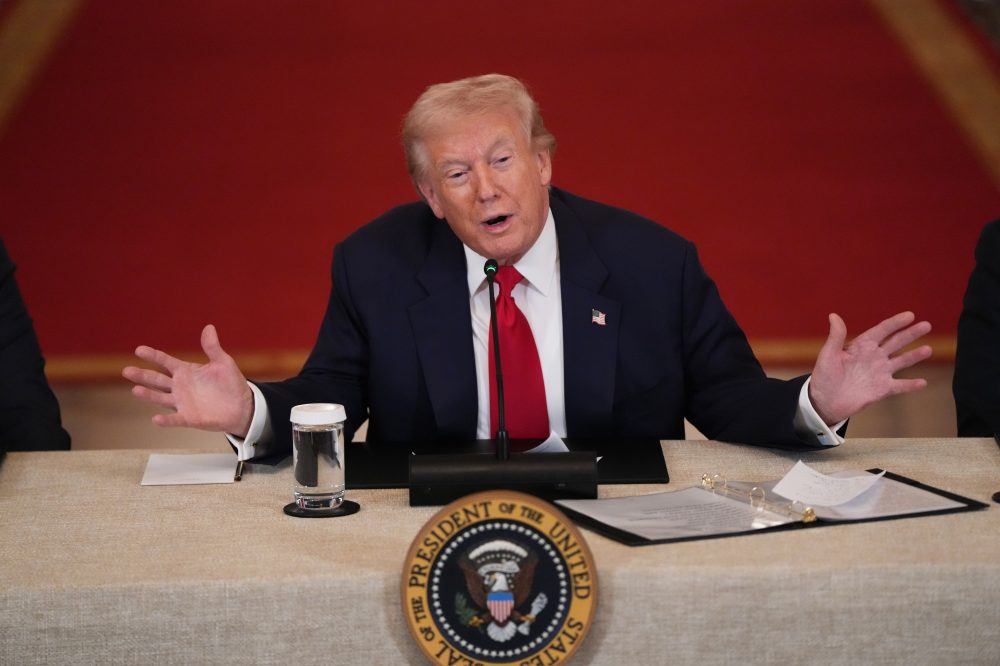

WASHINGTON — During a White House roundtable Friday, President Donald Trump made a startling comparison, telling reporters that handling the Iran conflict was simpler than tackling college sports reform and controlling athlete salaries — a remark he later seemed to reconsider.
The president gathered sports industry leaders including former Alabama head coach Nick Saban, SEC Commissioner Greg Sankey, and Notre Dame Athletic Director Pete Bevacqua for more than an hour of discussion about how lucrative athlete deals and recent NCAA changes like the transfer portal have damaged college athletics.
While presidents typically juggle numerous complex issues simultaneously, the timing of this extended sports discussion was particularly notable, occurring just one week after U.S. and Israeli military operations against Iran. When a journalist began questioning him about Iran, Trump cut them off, stating: “That’s an easy problem compared to what we’re doing here.”
After a follow-up question regarding his Thursday dismissal of Homeland Security Secretary Kristi Noem, the president expressed frustration, saying “Ugh” before asking, “Is it possible to stay on this subject, just for once?”
Trump later showed more contemplation when questioned about his focus on college sports amid global crises.
“I saw what was happening with college sports. And it doesn’t sound very important compared to what’s happening in Iran and other places,” he acknowledged. “But it is very important to me. And if I can get it done, I’ll get it done.”
The president did briefly address Iran, rating U.S. military operations “a 12 to 15” on a scale of one to ten.
College athletics, especially football, enjoys massive popularity and presents ongoing governance challenges. Trump has repeatedly criticized the NCAA’s name, image and likeness policies that allow athletes to earn increasingly substantial payments.
He argues that high-revenue sports like football are undermining smaller programs and women’s athletics, claiming some universities are spending so heavily on athlete compensation that they face financial ruin.
The roundtable followed Trump’s private meetings with senior officials, presumably addressing Iran and other pressing matters. He announced that defense contractors had committed to boosting weapons manufacturing during those discussions.
Nevertheless, it was unexpected that Trump — accompanied by Secretary of State Marco Rubio and Chief of Staff Susie Wiles — dedicated such extensive time to collegiate sports issues.
The president heard Saban quip, “I’m just a football coach.”
House Speaker Mike Johnson, Florida Governor Ron DeSantis, and others shared their passion for college football and concerns about its direction. Former Ohio State coach Urban Meyer contributed his perspective, along with New York Yankees President Randy Levine. No active college athletes joined the discussion.
“I’m here as long as you need me,” Trump promised the group, which included former Secretary of State Condoleezza Rice, a previous College Football Playoff Selection Committee member.
The gathering centered on Trump urging Congress to approve the SCORE Act or similar legislation. This proposed law would establish new college sports regulations, though critics denounce it as favoring the NCAA and major athletic programs.
When informed the legislation likely wouldn’t gain congressional approval, Trump pledged to create his own executive order addressing college sports.
“If this doesn’t work, colleges are going to be destroyed,” he warned.
It remained unclear how this would differ from his July executive order requiring federal agencies to determine whether college athletes qualify as school employees. Trump instead expressed nostalgia for pre-name, image and likeness era policies.
“Is there any way we could go back to the old system, which I thought was fantastic?” Trump wondered aloud, supporting a return to scholarship-based compensation while suggesting athletes could receive “some compensation, more minimal, but a lot.”