
Affluent Gulf nations are confronting their most severe food security crisis since the worldwide food emergency of 2008, as ongoing conflict with Iran jeopardizes ports and interrupts maritime traffic through the Strait of Hormuz.
The current situation is putting to the test approaches implemented following 2008, when skyrocketing food costs led Gulf countries to transition toward import-reliant policies that involved investing heavily in overseas agricultural ventures.
This approach replaced previous costly programs that attempted to boost local production of essential grains but faced obstacles from the area’s harsh climate and water scarcity. Saudi Arabia, for instance, started reducing a domestic wheat cultivation program in 2008 to become nearly entirely dependent on imports.
Currently, with international shipping disrupted and airspace restrictions in place across many nations in a region that depends on food imports for 80%-90% of its supply, experts anticipate price increases and shortages of certain products.
“With over 70% of GCC foodstuffs being imported through the Strait of Hormuz, Gulf states face shortages if the war persists,” said Neil Quilliam, associate fellow at think tank Chatham House.
“While GCC countries have taken steps to diversify suppliers and ensure sufficient stores to withstand disruption, this can only last several months. At this point, price increases and longer lead times will start to hit the markets,” Quilliam added.
Experts caution that even brief blockages in Hormuz requiring ships to reroute from major ports to smaller facilities will generate pressure.
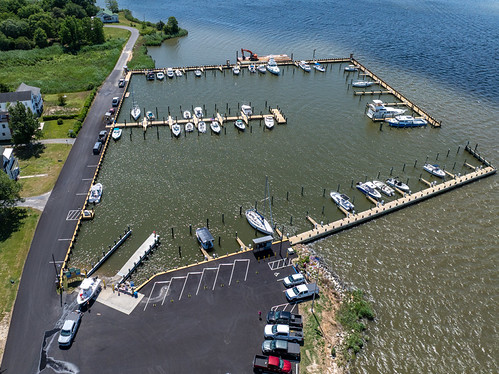
The majority of significant Gulf ports, including Dubai’s Jebel Ali and key ports in Kuwait, Bahrain, Qatar and the Saudi Gulf coastline, are positioned where most arriving traffic must navigate through the Hormuz passage.
Iranian attacks targeted many of these crucial supply lines including Jebel Ali, the region’s biggest container port, this week, halting operations for several hours.
“The biggest immediate effect will be due to the blockade of Jebel Ali, serving about 50 million people,” Ishan Bhanu, lead agricultural commodities analyst at Kpler, said about the Dubai port that also serves as a re-export hub to the region and beyond.
UAE ports located outside the strait possess limited capacity. Khorfakkan can accommodate 5 million twenty-foot equivalent units (TEUs) and Fujairah handles less than 1 million and would struggle to compensate for capacity lost at Jebel Ali or Abu Dhabi’s Khalifa Port.
“Qatar, Kuwait, Bahrain and Iraq effectively become landlocked and will depend on overland routes through Saudi Arabia,” Bhanu added, warning of costly congestion.
These bottlenecks have yet to materialize and the UAE has stated its strategic reserves of essential goods provide coverage for four to six months of requirements. Officials urged residents to report unjustified price increases through a dedicated hotline.
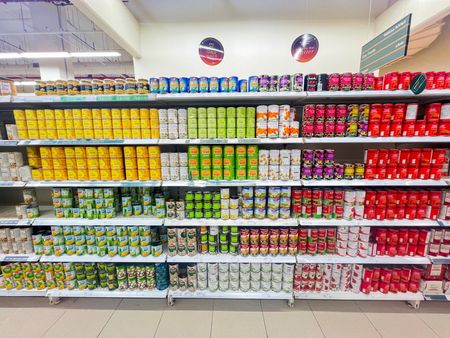
Grocery store employees informed Reuters that shelves remain mostly stocked, although suppliers are requiring more time to restock certain items. Dubai this week temporarily eased truck-movement restrictions to sustain the flow of merchandise.
Iran’s strikes on the Gulf beginning Saturday prompted many to stockpile goods and caused a temporary decline that intensified panic, serving as a preview of potential future scenarios.
“It is worth noting that perception risk matters and even if stocks are sufficient now, public runs on supermarkets can spook the public,” Quilliam said.
Several residents have already observed some price increases.
“Is it just me whose groceries cost three times as of yesterday?” one shopper wrote in a local Facebook group on Tuesday. “Even the bananas cost have gone crazy.”
Items like bananas that deteriorate rapidly are especially susceptible to any shipping rerouting that extends travel times. Airlifting perishable food when airspace reopens to reduce journey time will increase costs.
“If food is flown in or brought in overland, that is going to be more expensive than shipping,” said Justin Alexander, Gulf analyst at GlobalSource Partners and director at Khalij Economics.
“It may be that governments choose to absorb some of that cost through subsidizing the food. And they’ve certainly done that in previous crises,” Alexander noted.
Beyond investing internationally to secure access to major food production centers, Gulf nations have also been building modern silos capable of storing hundreds of thousands of tons of strategic grains over the past two decades. These facilities provide a cushion for staples that can be preserved for months like wheat, rice and cooking oils.
The UAE launched its Fujairah grain silos in 2016 on the Indian Ocean coastline outside the Strait of Hormuz, with approximately 300,000 metric ton capacity. Officials selected this location strategically to circumvent Hormuz since Iran had previously threatened to block the strait during periods of increased tensions with the West.
“Fujairah’s grain silos act as a strategically important pressure valve providing routing flexibility and risk diversification when the Gulf’s maritime environment tightens,” said Sudhakar Tomar, president of India Middle East Agri Alliance Ecosystem.
The project initially envisioned emergency supplies to be distributed throughout the entire Gulf region. However, practical challenges, including vast distances and insufficient road or rail connections between nations, meant it remained domestic. Other Gulf states have subsequently constructed their own storage facilities, including Qatar’s Food Security Terminal at Hamad Port with 51 climate-controlled silos.
Regional collaboration among Gulf Cooperation Council members will be essential to preventing food shortages, but the six-nation alliance has historically faced coordination difficulties.
“It will require close cooperation amongst GCC states to manage complex logistics and ensure that all six states and Iraq are sated,” Quilliam said.