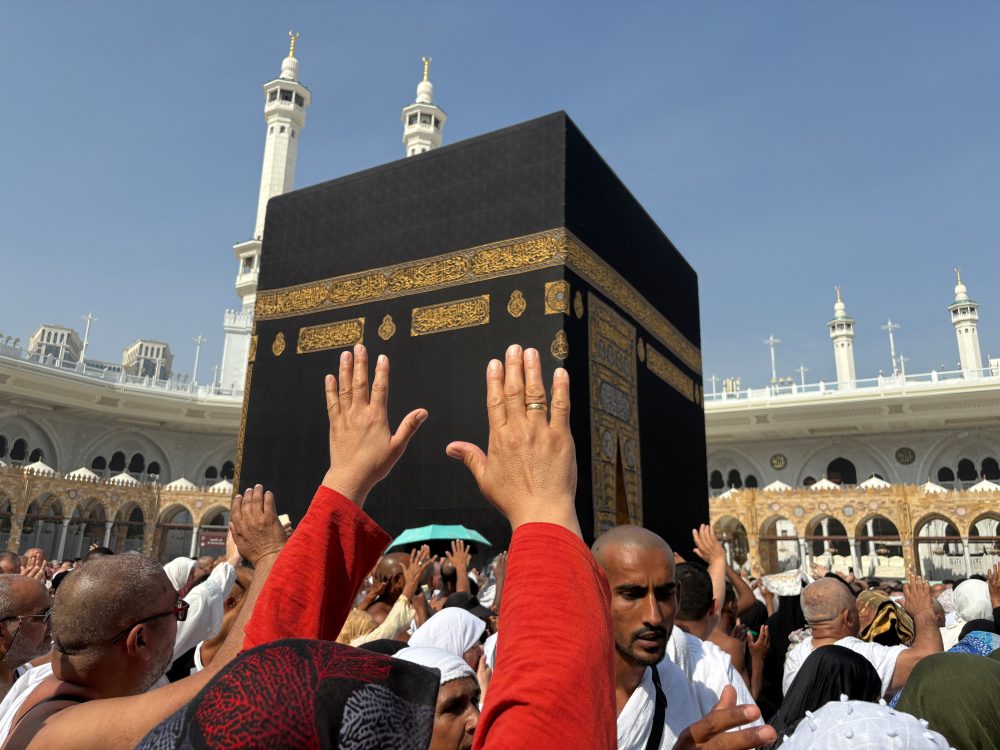

JAKARTA, Indonesia — Ongoing conflict in the Middle East has created massive transportation disruptions for thousands of Muslim pilgrims who traveled to Saudi Arabia for Umrah religious observances, with many now stuck without clear paths home while others have abandoned their spiritual journeys entirely.
The regional warfare has overshadowed what should have been a sacred experience for those who completed the religious ceremonies at Islam’s holiest locations.
Indonesian Vice Minister of Hajj and Umrah Dahnil Anzar Simanjuntak reported Thursday that over 58,860 Indonesian citizens remain trapped in Saudi Arabia due to flight cancellations and airspace restrictions.
Officials are working with Saudi leadership and commercial carriers to reduce accommodation and transportation expenses for displaced pilgrims, Simanjuntak explained. The administration is also recommending that approximately 60,000 additional travelers delay their Umrah plans until April due to security concerns.
Ministry spokesman Ichsan Marsha described the situation as an “urgent humanitarian and logistical issue.”
Stranded pilgrim Zanirah Faris told Indonesia’s iNews television that her original departure was scrapped, with airline officials rebooking her on a March 12 flight instead.
Faris appealed to Indonesian leadership for assistance, particularly for travelers unable to cover unexpected accommodation expenses.
“Not everyone can book additional stays at a hotel,” she explained, noting the psychological impact as well. “I’m disappointed because my children have been waiting for me.”
Indonesia, which has the globe’s largest Muslim community, sends hundreds of thousands of citizens to Saudi Arabia each year for Umrah observances, particularly during Ramadan’s holy period. Unlike Hajj pilgrimage requirements, Umrah can be completed throughout the year.
Malaysian Consul General in Jeddah Mohamad Dzaraif Raja Abdul Kadir confirmed Tuesday that approximately 1,600 Malaysian Umrah participants were also stranded in Saudi Arabia, though he noted via Bernama news service that the pilgrims remained in good health.
His diplomatic office established round-the-clock coordination centers to track developments and provide support to affected nationals.
Malaysia Airlines announced temporary restoration of return flights from Jeddah and Medina through Sunday.
Additionally, Malaysia’s foreign affairs department confirmed coordination with diplomatic posts, regional authorities and aviation companies to retrieve stranded citizens, including the religious travelers.
Gulf region airports function as vital connection points for passengers traveling between Europe, Africa and Asia.
Egyptian resident Maged Kholaif, 44, had planned to return to Kuwait from Saudi Arabia on February 28 — the day hostilities began — when his departure was canceled and postponed several days.
The disruption sharply contrasted with the peaceful spirituality he had experienced during Umrah, creating “a very difficult feeling.”
Stranded alongside his wife and mother-in-law, Kholaif searched desperately for alternative routes to Kuwait, where his children waited. He grew increasingly anxious hearing reports from Kuwait about air raid sirens and explosions.
“Everyone got scared,” Kholaif recalled.
He ultimately chose overland travel and reached Kuwait Tuesday for an emotional family reunion.
Once “you have your children in front of your eyes and in your embrace, whatever happens next doesn’t matter as long as you’re together,” he reflected.
In Michigan, 47-year-old Javed Khizer decided to cancel Umrah travel plans for his family to Saudi Arabia through Turkey and Qatar connections.
“We were looking at the news and everything. We could only understand that the situation is getting worse,” he said. “It was a difficult decision. … Who knows whether I will be there for next Ramadan or not? It’s not guaranteed.”
For devout Muslims, Ramadan represents a period of heightened spiritual focus and daily fasting between sunrise and sunset.
Umrah is commonly called the minor pilgrimage and allows year-round participation, contrasting with the annual Hajj requirement. Hajj, representing one of Islam’s fundamental pillars, must be completed once during a Muslim’s lifetime if financially and physically possible.
American pilgrim Majid Mughal, 52, who is visiting Saudi Arabia with his family, said “we consider coming to the sacred land as a calling from Allah, and during this sacred month of Ramadan, I think, it is highly recommended to come and visit if you can.”
However, he acknowledged he would have postponed the trip had he anticipated the outbreak of warfare. Mughal’s family learned about the military strikes while traveling to Saudi Arabia, and while some passengers on different routes became stuck at airports, their flight continued normally.
“So far, everything is OK, thank God. There (are) no problems here,” he reported during his visit. “There are lots of people during the Ramadan time. I see security as usual,” adding: “We do feel safe.”
The family attempts to concentrate on religious observances, fasting, prayer and family connection, but staying disconnected from news coverage proves challenging while they must constantly reassure relatives at home about their safety, Mughal explained.
Return travel concerns also weigh heavily on their minds.
“We are checking the flight details, the departure details almost daily just to make sure the flights are still operating,” he said, noting his children must return to classes and he needs to resume work responsibilities.