
Energy costs are climbing sharply across Delaware and the nation as military conflict in the Middle East enters its second week, with no clear resolution in sight.
The escalating situation began when U.S. and Israeli forces conducted major strikes against Iran, sparking a broader regional conflict that has now affected nearly every Middle Eastern nation through missile and drone attacks.
Maritime traffic carrying approximately 20 million barrels of daily oil production remains stuck in the Persian Gulf, unable to navigate safely through the Strait of Hormuz – the critical shipping channel that borders Iran’s northern coast.
Damage to essential oil and natural gas infrastructure throughout the region has created significant supply disruptions.
By Friday’s close, crude oil costs had skyrocketed past $90 per barrel, with U.S. crude finishing at $90.90 – representing a 36% weekly increase. International Brent crude jumped 27% during the same period, reaching $92.69.
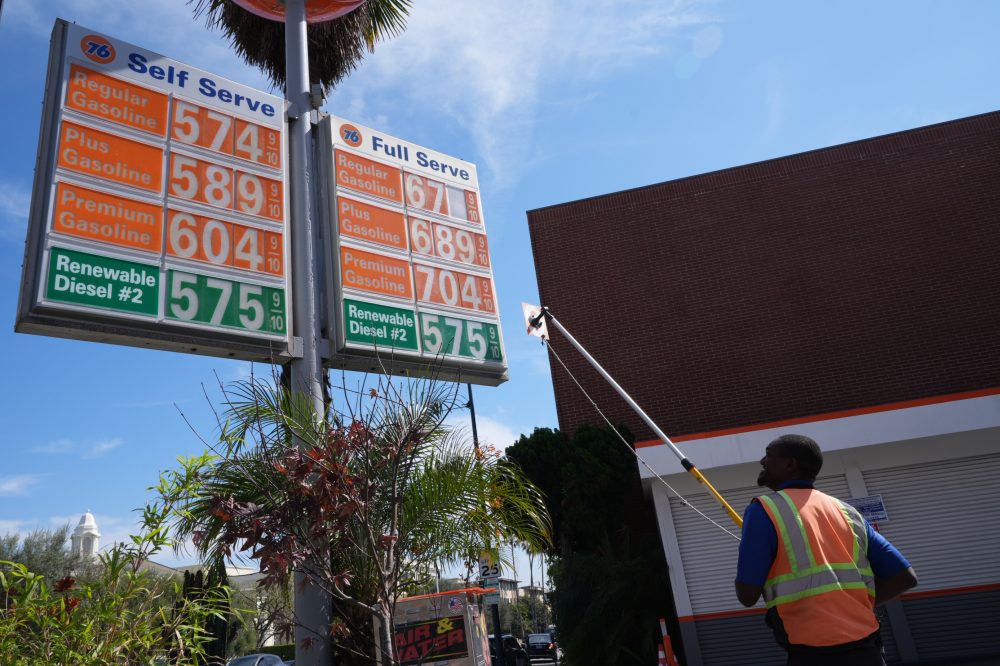
These dramatic price increases are directly impacting what Delaware residents and businesses pay for gasoline, diesel fuel, and aviation fuel, with many motorists already noticing higher costs when they fill up.
“It’s crazy. It’s not needed, especially at a time when people are already struggling, but not unexpected from all this turmoil that’s going on,” commented Mark Doran while refueling in Middlebury, Vermont on Friday. “I don’t think there’s been an end in sight to any Middle East conflict that’s been started by us, so the fact that they say that there’s going to be an end that quickly is not believable, and the Middle East is, you know, a place that the U.S. is not going to solve.”
Earlier this week, President Donald Trump indicated that American military actions against Iran were expected to continue for four to five weeks, though he noted the country has “the capability to go far longer.” By Friday, Trump seemed to dismiss potential negotiations with Iran unless they agreed to “unconditional surrender.”
“The more news we get, the more it seems like this is going to last a really long time,” explained Al Salazar, who leads macro oil and gas research at Enverus.
According to AAA motor club data, regular gasoline nationwide reached $3.32 per gallon Friday, marking an 11% jump from the previous week. Diesel fuel climbed to $4.33 per gallon, up 15% over the same timeframe.
International markets dependent on Middle Eastern energy supplies are experiencing even more severe price increases. European diesel costs have doubled, while Asian jet fuel prices have surged nearly 200%, according to Claudio Galimberti, chief economist at Rystad Energy.
Energy costs continued rising throughout the week as Iran launched multiple retaliatory strikes, including a drone attack on the American Embassy in Saudi Arabia, expanding the conflict’s scope. Iranian forces also targeted a major Saudi Arabian refinery and a liquefied natural gas facility in Qatar, stopping refined product flows and removing approximately 20% of global LNG supply from the market.
“We keep seeing news of vessels being hit or refineries or pipelines, so the list is very long,” Galimberti noted. He estimates that roughly 9 million barrels of daily oil production are currently unavailable due to facility damage or precautionary shutdowns by producers. “Right now, with all of this shut in, we are in a situation of extreme deficit.”
While the United States exports more oil than it imports, this doesn’t shield American consumers from global price increases or guarantee that domestic producers can quickly compensate for lost supply.
Oil trades on international markets, meaning even American-produced crude has increased in value based on Middle Eastern developments. Additionally, for many U.S. oil companies, “if you put more wells in the ground, there’s about a six-month lag before you get that production uplift,” Salazar explained.
The U.S. also cannot simply convert all its crude oil into gasoline. Most American oil production consists of light, sweet crude, while East and West Coast refineries are primarily configured to process heavier, sour crude. Consequently, the U.S. exports some crude oil while importing certain refined products like gasoline.
Jerry Dalpiaz from Covington, Louisiana, said he began filling his vehicles and gas containers “the day that they announced that the United States has started military operations against Iran” because he anticipated rising fuel costs.
“I can weather the storm because I’m in good financial position, but I feel sorry for my fellow citizens who are living paycheck to paycheck because they have to drive to get to work and they have to change their oil and all those things,” Dalpiaz said. “And they need some relief and it doesn’t seem to be coming anytime soon.”
On Friday, Trump announced a plan to provide insurance coverage for losses up to approximately $20 billion in the Gulf region, designed to restore maritime trade confidence, help stabilize international commerce, and support American and allied Middle Eastern business operations.
However, some energy analysts believe additional insurance won’t address the underlying security concerns.
“The problem is that in the oil trading, oil shipping world, people are worried about counterterrorism,” said Amy Jaffe, director of the Energy, Climate Justice and Sustainability Lab at New York University, noting concerns about automated drone speedboats, weapon-carrying flying drones, and mines or other explosive devices. “In order for the United States to create the atmosphere that undoes the current bottleneck at the Strait of Hormuz, there has to be some credible demonstration of solutions to the counter-terrorism problem.”
Salazar questioned what the “new normal” might look like if the Strait of Hormuz could be effectively reopened, and what adequate security measures would entail.
“All it takes is one individual with a RPG (rocket-propelled grenade) to stand on the shore and take out a tanker, right?” Salazar said. “And this is forever, do you know what I mean?”