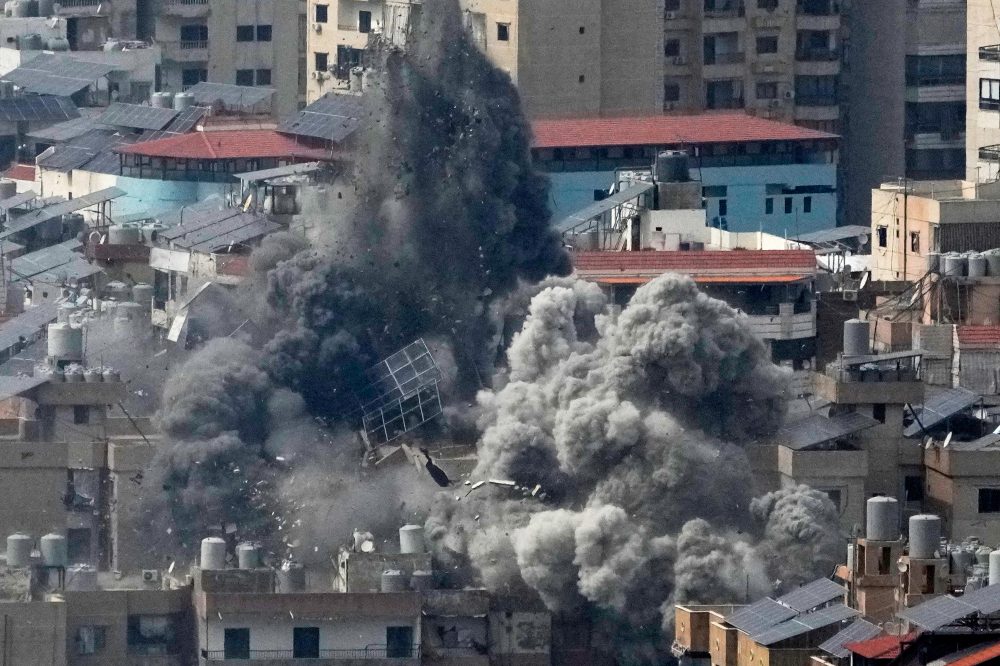
United Airlines has established a new policy that gives flight crews the authority to remove passengers who refuse to wear headphones during flights. The airline created this regulation in response to growing passenger complaints about disruptive audio from fellow travelers’ personal entertainment devices and phone calls.
The new rule addresses a common source of in-flight tension where passengers are forced to listen to other people’s music, television programs, and telephone conversations throughout their journey. Flight attendants can now enforce headphone usage to maintain a quieter cabin environment for all travelers.
Native American communities across the country are responding positively to President Trump’s nomination of Senator Markwayne Mullin to lead the Department of Homeland Security. Mullin, who belongs to the Cherokee Nation, represents what many tribal leaders see as an opportunity for better representation at the federal level.
The appointment comes at a time when Immigration and Customs Enforcement officers have faced allegations of targeting Native Americans through racial profiling practices. Tribal communities hope that having one of their own in this key leadership position could help address these longstanding concerns about discriminatory enforcement tactics.
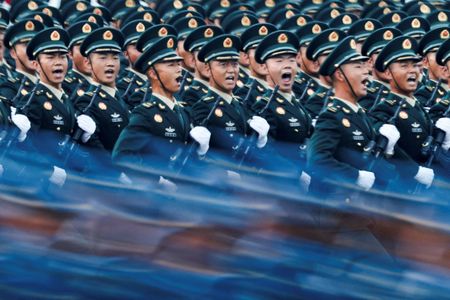
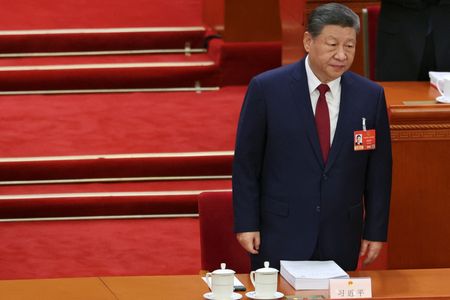
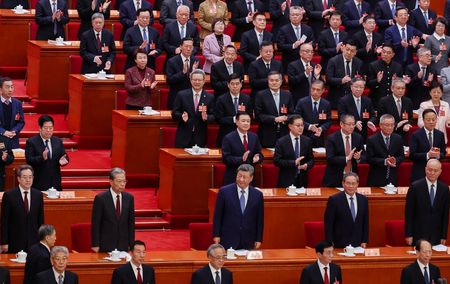
Chinese President Xi Jinping delivered strong statements Saturday demanding absolute military allegiance to the Communist Party while intensifying anti-corruption efforts, as reported by China’s state-run Xinhua news agency.
Speaking during the nation’s significant annual political gatherings, Xi declared that corruption has nowhere to escape. “There is no place for corruption to hide,” Xi stated. “The fight against corruption must move forward.”
Xi’s statements were delivered during the yearly sessions of China’s most important political institutions, where government leaders announced the country’s economic objectives for the coming year.
The anti-corruption message gained additional significance as two high-ranking Chinese leaders were notably missing from Wednesday’s opening ceremonies of the annual political meetings, apparently caught up in ongoing government purges targeting top Communist Party officials.
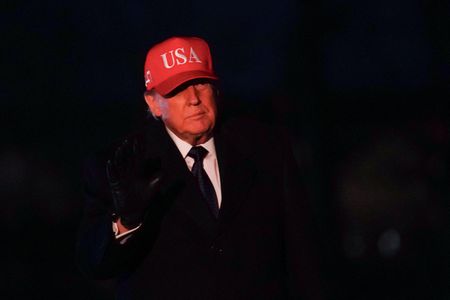
Former President Donald Trump issued a stark warning on March 7th, declaring that Iran would face severe consequences on Saturday while hinting at the possibility of expanding military targets.
Writing on his Truth Social platform, Trump stated: “Today Iran will be hit very hard! Under serious consideration for complete destruction and certain death, because of Iran’s bad behavior, are areas and groups of people that were not considered for targeting up until this moment in time.”
The former president did not elaborate on specific details regarding the threatened actions or provide clarity on what expanded targeting might entail.
Trump additionally pointed to Iran’s apologies to neighboring countries following recent strikes, characterizing these diplomatic gestures as an act of capitulation.
A military conflict involving Iran could result in consumers and businesses around the world enduring elevated fuel costs for an extended period, even if hostilities cease rapidly, according to energy market analysts.
The situation creates broader economic concerns and presents political challenges for President Trump as midterm elections approach, with American voters particularly sensitive to energy costs and skeptical of overseas military involvement.
“The market is shifting from pricing pure geopolitical risk to grappling with tangible operational disruption, as refinery shutdowns and export constraints begin to impair crude processing and regional supply flows,” JP Morgan analysts said in a research note on Friday.
Military actions have already interrupted approximately one-fifth of worldwide crude oil and natural gas production, as Tehran has targeted vessels navigating the critical Strait of Hormuz waterway between Iranian territory and Oman, while simultaneously striking energy facilities throughout the region.
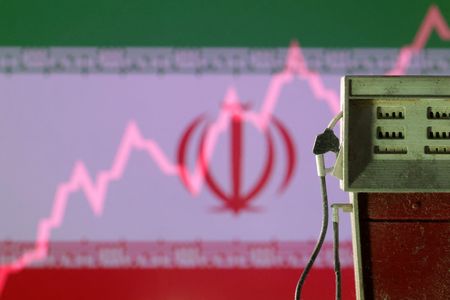
International oil costs have jumped 24% during the current week, reaching above $90 per barrel and heading toward their sharpest weekly increases since the pandemic began, pushing fuel expenses higher for consumers globally.
The near-total closure of the Strait has forced major regional oil exporters including Saudi Arabia, the United Arab Emirates, Iraq and Kuwait to halt deliveries of approximately 140 million barrels of crude oil – equivalent to roughly 1.4 days of worldwide consumption – to international refineries.
Consequently, petroleum and gas storage facilities throughout the Middle East Gulf region are approaching capacity, compelling Iraqi oil fields to reduce production while Kuwait and the UAE will likely follow suit, according to industry analysts, traders and sources.
“At some point soon, everyone will also shut in if vessels do not come,” said a source with a state oil company in the region, who asked not to be named.
Oil production facilities across the Middle East that are forced to cease operations due to shipping interruptions may require considerable time to restore normal output levels, explained Amir Zaman, head of the Americas commercial team at Rystad Energy.
“The conflict could be ended, but it could take days or weeks or months, depending on the types of fields, age of the field, the type of shut in that they’ve had to do before you can get production back up to what it once was,” he said.
Iranian military forces are simultaneously attacking regional energy infrastructure including refineries and terminals, forcing operational shutdowns, with some facilities suffering significant damage from strikes and requiring extensive repairs.
Qatar announced force majeure on its substantial gas export operations Wednesday following Iranian drone strikes, and sources indicate it may require at least one month to restore normal production capacity. Qatar provides 20% of global liquefied natural gas supplies.
Saudi Aramco’s massive Ras Tanura refinery and crude export facility has also suspended operations due to attacks, though damage assessments have not been disclosed.
White House officials have defended military action against Iran, claiming the nation presented an immediate danger to the United States, though specific details have not been provided. Trump has also expressed concerns regarding Iran’s nuclear weapons development efforts.
While a swift conclusion to hostilities would calm markets, returning to pre-conflict supply levels and pricing could require weeks or months depending on infrastructure damage and shipping recovery.
“Considering physical damage due to Iranian strikes, so far we have not seen anything that would be considered structural, although the risk remains as long as the war continues,” said Joel Hancock, energy analyst, Natixis CIB.
The primary concern for energy supplies involves when the Strait of Hormuz will become secure for shipping operations again. Trump has proposed naval protection for oil tankers and pledged U.S. insurance coverage for vessels operating in the region.
However, waterway security may prove difficult to achieve, as Iran possesses the capability to maintain drone attacks on shipping for months, according to intelligence and military sources.
The crisis may also prompt nations to increase their strategic petroleum reserves in coming weeks and months after fighting ends, having exposed the risks of limited inventories. This would boost oil demand and maintain higher prices.
Meanwhile, the interruption of energy shipments is creating ripple effects through supply chains and economies in import-dependent Asia, which obtains 60% of its crude oil from Middle Eastern sources.
In India, state-operated Mangalore Refinery and Petrochemicals announced force majeure on gasoline export shipments, sources reported this week, joining numerous regional refineries unable to meet sales obligations due to supply shortages.
At least two Chinese refineries have reduced operations. China, a major regional supplier, has requested refineries halt fuel exports. Thailand has similarly suspended fuel exports, while Vietnam has stopped crude oil shipments.
The disruption has benefited Russia, with prices for Russian crude increasing as the U.S. granted Indian refiners a 30-day exemption to purchase Russian oil as a substitute for lost Middle Eastern supplies. Washington had previously pressured India to reduce Russian oil purchases under tariff threats.
In Japan, the world’s second-largest LNG importer, baseload power futures for Tokyo beginning in April rose more than one-third this week on the EEX exchange in anticipation of higher fuel costs. In Seoul, motorists formed lines at gas stations expecting rising pump prices.
For European consumers, the gas supply crisis and increased prices represent a double burden. The region suffered most severely from gas supply disruptions caused by sanctions on Russian energy imports following Russia’s 2022 invasion of Ukraine.
Europe shifted to LNG imports to replace Russian pipeline gas. Europe now must purchase 180 additional LNG shipments compared to last year to fill gas storage to required levels before next winter.
Supply risks to the United States are more limited, as the country has become the world’s largest oil and gas producer in recent years. However, U.S. crude and fuel prices move alongside international crude markets, affecting pump prices for gasoline and diesel despite abundant domestic supply.
U.S. average retail gasoline reached $3.32 per gallon nationally on Friday, increasing 34 cents from the previous week, according to AAA. Diesel prices hit $4.33 per gallon, up from $3.76 per gallon one week earlier.
Rising pump prices represent a significant risk for Trump and Republican colleagues heading into November midterm elections.
“Gasoline prices are psychologically powerful,” said Mark Malek, chief investment officer at Siebert Financial. “They are the inflation number that consumers see every single day.”
President Donald Trump welcomed Latin American leaders to Florida on Saturday for a diplomatic summit focused on diminishing China’s expanding presence in the Western Hemisphere, occurring just days following American military strikes against Iran that have opened another battleground in Middle Eastern conflicts.
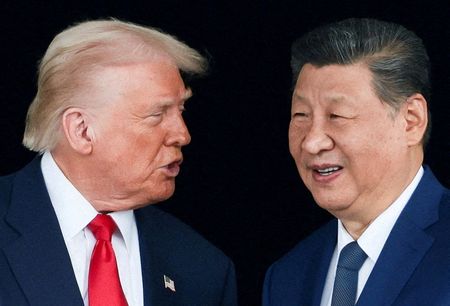
The meeting takes place as Trump gears up for discussions with Chinese President Xi Jinping in Beijing later this month. The current administration aims to strengthen ties with Latin American nations after witnessing years of increased Chinese commercial activity, financial lending, and infrastructure development throughout the region.
The Saturday event, called the “Shield of the Americas,” provides Trump an opportunity to demonstrate leadership domestically while Middle Eastern tensions create unpredictable outcomes, including potential increases in fuel costs.
Trump announced Thursday that Kristi Noem would serve as special representative for the “Shield of the Americas.” Noem previously held the position of Homeland Security secretary before Trump dismissed her from that role this week following growing congressional criticism.
The conference brings together right-leaning leaders who share Trump’s perspectives on security matters, immigration policies, and economic strategies, representing a wider conservative movement gaining ground across portions of Latin America.
Attendees are expected to include Argentina’s President Javier Milei, Chile’s incoming president Jose Antonio Kast, and El Salvador’s President Nayib Bukele, whose aggressive anti-gang policies, despite human rights organizations’ objections, have become a template for Latin America’s political right.
Regional politicians have visited Bukele’s massive “mega-prison” facility, where the United States deported over 200 Venezuelans last year without legal proceedings.
Other anticipated participants include Honduras’ President Nasry Asfura, who secured a narrow victory in a contested election with Trump’s endorsement, and Ecuador’s President Daniel Noboa, who has adopted elements of Trump’s economic platform and recently announced collaborative U.S. military operations targeting drug trafficking networks.
These leaders generally align with Trump’s tough stance on criminal justice and immigration issues, preferring enforcement approaches over comprehensive social reforms and supporting private enterprise over government intervention. Their political ascendance represents a significant rightward shift in parts of Latin America as the region navigates between American and Chinese spheres of influence.
Ryan Berg, who directs the Americas Program at the Center for Strategic and International Studies, noted this week that the summit marks the first occasion during Trump’s second presidency where Washington has assembled Latin American leaders in this format.
Berg indicated the discussions will likely address security concerns, narcotics trafficking, financial crimes, and China’s involvement in port facilities, telecommunications networks, and additional infrastructure projects.
According to Berg, China’s regional trade reached an unprecedented $518 billion in 2024, with Beijing providing over $120 billion in loans to Western Hemisphere governments.
China’s expanded engagement throughout Latin America — including satellite monitoring facilities in Argentina, port operations in Peru, and economic assistance to Venezuela — has frustrated multiple U.S. administrations.
Beijing has broadened its influence through commercial relationships, financial assistance, and infrastructure development, while the Trump administration has urged regional governments to limit China’s participation in port operations, energy initiatives, and other critical assets.
This pressure became evident recently when Panamanian officials took action against a Hong Kong-based company connected to Panama Canal operations, a vital international shipping route.
Washington has also implemented more direct measures in the region.
The United States apprehended Venezuelan President Nicolas Maduro on January 3 and moved to control the nation’s petroleum exports, while strengthening enforcement of the long-standing U.S. trade embargo against Cuba.
Multiple Trump administration representatives have informed Reuters that Trump’s action against Maduro was partly designed to challenge China’s regional goals, and that Beijing’s strategy of using debt arrangements to obtain discounted Venezuelan oil has ended.
WASHINGTON – The Trump administration has launched an unprecedented social media blitz featuring video game footage, cartoon characters, and Hollywood movie clips to promote its ongoing military operations against Iran to the American public.
A White House-produced video opening with scenes from the popular “Call of Duty” video game has garnered more than 58 million views across social platforms. The production seamlessly blends real combat footage of fighter jets, missile launches, and explosive strikes with Childish Gambino’s “Bonfire” soundtrack and a narrator proclaiming “We’re winning this fight.”
The video incorporates gaming elements like “Call of Duty” kill scores that appear following each explosion, creating what critics describe as a troubling merger of entertainment and warfare.
These digital campaigns mark a dramatic shift from traditional military communications. Where previous administrations relied on formal briefings and statistical presentations during conflicts, the current approach emphasizes flashy visuals reminiscent of action movies, complete with stealth aircraft cutting through clouds and cinematic explosions.
The content strategy focuses less on explaining the reasoning behind military action and more on showcasing American firepower with what officials call “an on-brand air of bravado.”
Distributed across X, TikTok, and Instagram, these productions incorporate references from popular culture, energetic soundtracks, and clips from blockbuster films, generating millions of views and widespread sharing among Trump supporters.
“Before it took time and lots of knowledge,” explained Craig Silverman, a researcher and cofounder of Indicator, a publication focused on digital deception. “And now some social media manager at the White House could play around with one of these tools for a half hour and come up with something that looks pretty good.”
Additional videos in the series feature Superman imagery alongside footage from “Braveheart,” “Top Gun,” “Iron Man,” and “Gladiator,” interwoven with scenes of military equipment being destroyed. Critics have condemned this approach as an inappropriate “gamification” of a conflict that has resulted in deaths among both American service members and Iranian civilians.
The administration has faced challenges articulating a coherent justification for the military campaign that commenced with U.S.-Israeli bombing operations on February 28. President Trump and cabinet officials have offered varying and sometimes conflicting explanations for the action.
Former Republican officials and communications specialists view these videos as an inappropriate display of military swagger rather than substantive policy communication.
“If you want to communicate, one of the main things they should be doing is communicating to the Iranian people why you are bombing their country, not how we are blowing stuff up,” stated James Glassman, who served as under secretary of state for public diplomacy and public affairs during the George W. Bush administration.
“This seems to be an effort to sell the war after it started by making it cool, to make it look like a video game.”
White House spokeswoman Anna Kelly defended the approach, telling Reuters that U.S. military forces were achieving or exceeding their objectives in the Iranian conflict.
“The White House will continue showcasing the many examples of Iran’s ballistic missiles, production facilities, and dreams of owning a nuclear weapon being destroyed in real time,” Kelly stated.
Among the most viral content is a video featuring an animated green lizard repeatedly touching a glowing screen, with each tap followed by missile launch footage and a voice repeating “lizard.” The lizard animation comes from Disney Pixar’s 2025 film “Elio” end credits and became a popular internet meme representing repetitive tasks.
Another production titled “OPERATION EPIC FURY” – the administration’s designation for the Iran campaign – features military imagery set to DJ Shlepki’s “Macarena turned.” The 38-second TikTok video shows B-1 and B-2 bombers along with what appears to be an F-35C fighter jet, though Reuters verified that some aircraft footage consists of older stock material unrelated to current operations. This video has accumulated over 18 million views.
The contrast between these productions and official military communications is stark. Joint Chiefs Chairman General Dan Caine recently spoke with “profound sadness and gratitude” while announcing the names of four of six American service members killed in the conflict, telling families “we grieve with you today.”
Meanwhile, a 14-second White House video intersperses military explosions with animated SpongeBob SquarePants repeatedly asking “Wanna see me do it again?” This production has reached over 9 million views on X and TikTok.
Kristopher Purcell, who worked in White House communications during the lead-up to Bush’s 2003 Iraq invasion, believes these videos target young male demographics that strongly supported Trump in the 2024 election.
He noted that the Bush administration spent months building public support before the Iraq invasion, while the current approach involves post-conflict justification through what he termed the “gamification” of warfare.
“It’s an insane way to do things,” Purcell said.
Despite the unconventional approach, experts acknowledge the Trump administration’s proven effectiveness in social media communication, particularly for reaching core supporters, even when methods deviate significantly from presidential traditions.
Harvard University’s John F. Kennedy School of Government professor Matthew Baum suggests the strategy may face limitations given Trump’s campaign promises of American isolationism.
“The problem here is that his base is not exactly entirely on board with the war in Iran. So it’s a difficult audience when it is usually the case that the MAGA base is ready to follow wherever he leads,” Baum observed.
BEIJING, March 5 – Chinese government officials announced Thursday their intention to establish a society that encourages families to have children over the next five years, releasing details in an official government document that outlines responses to concerns about jobs, schooling, healthcare, wellness and earnings.
Government leaders plan to enhance population-related services and take active steps to address the country’s aging demographics, which includes “advancing quality employment opportunities for all, enhancing how income gets distributed, and strengthening social safety net programs.”
This declaration follows China’s fourth straight year of declining population numbers in 2025, with birth rates dropping to unprecedented lows according to January government statistics, while demographic specialists predict continued decreases ahead.
The nation’s population has contracted since 2022 while growing older at an accelerated pace, creating challenges for Beijing’s goals to increase consumer spending domestically and control government debt.
Officials will implement fresh policies to advance “quality growth in the silver economy” focusing on citizens 60 years and older, expanding senior care programs especially in countryside regions, according to the government document.
Leadership will also develop strategies to strengthen support measures for older adults covering retirement funding, health services and caregiving, the report stated.
Projections show that by 2035, citizens over 60 will reach 400 million people – approximately matching the combined populations of America and Italy – indicating that hundreds of millions will exit the labor force while pension funding faces existing pressure.
The country has already extended working ages, requiring men to remain employed until 63 instead of 60, while women must work until 58 rather than 55.
Officials will encourage “supportive views on marriage and having children,” the document stated, noting plans to expand housing assistance for families raising kids.
Programs for expectant mothers in pregnancy’s early phases along with reproductive healthcare will see improvements while officials work to better prevent and address birth complications.
Leadership will also enhance policies providing free early childhood education and expand availability of standard high school positions, with mandated government education funding exceeding 4% of the nation’s economic output, the report indicated.
Energy markets saw significant gains Thursday as escalating tensions between the United States and Iran continue to disrupt global oil and gas supplies through one of the world’s most critical shipping corridors.
Brent crude climbed $1.67 to reach $83.07 per barrel, marking a 2.05% increase by early Thursday trading. Meanwhile, U.S. West Texas Intermediate crude jumped $1.94 to $76.60, representing a 2.60% gain.
The conflict expanded Wednesday following a U.S. military strike on an Iranian naval vessel near Sri Lanka. Senate Republicans also threw their support behind President Trump’s military operations against Iran, voting down a bipartisan measure that would have halted air strikes and required congressional approval for further military action against the country.
The ongoing hostilities have severely impacted regional energy production. Iraq, which ranks as OPEC’s second-largest oil producer, has been forced to reduce daily output by approximately 1.5 million barrels due to storage limitations and blocked export pathways, according to officials who spoke with Reuters.
Qatar, the Persian Gulf’s leading liquefied natural gas supplier, announced force majeure on gas shipments Wednesday. Industry sources indicate it could take a minimum of one month before production levels return to normal.
For five consecutive days, vessel traffic through the Strait of Hormuz has remained virtually paralyzed. This waterway serves as a crucial passage for nearly 20% of the world’s energy supplies.
Britain’s maritime operations center reported a significant blast witnessed by a tanker captain positioned 30 nautical miles southeast of Kuwait’s Mubarak Al Kabeer port. A small vessel was later observed departing the explosion site.
According to a J.P. Morgan analysis shared with clients, Iran has avoided targeting most essential energy infrastructure while maintaining extremely high shipping risks. The investment bank estimates roughly 329 oil tankers remain trapped in Gulf waters.
“Storage capacity in the Gulf Cooperation Council countries and prevailing energy prices are limiting factors on the length of the U.S. campaign,” the firm noted. This alliance includes Saudi Arabia, the United Arab Emirates, Qatar, Kuwait, Oman and Bahrain.
J.P. Morgan projects that most oil production facilities could resume operations within days, with complete capacity restoration typically occurring within two to three weeks.
“While operators must gradually rebuild reservoir pressure, particularly in Iraq, where water injection is critical, the primary constraint today is logistics rather than geology,” the analysis concluded.
The 17th-ranked Kentucky Wildcats delivered a commanding performance in their SEC women’s basketball tournament debut, crushing Arkansas 94-64 on Wednesday in Greenville, South Carolina.
Clara Strack dominated the court with 20 points, 13 rebounds and three blocked shots, while Amelia Hassett connected on six three-point shots en route to 18 points for the ninth-seeded Wildcats (22-9). Despite being placed ninth in the highly competitive SEC, Kentucky overwhelmed the 16th-seeded Razorbacks (12-20) from the opening tip.
The Wildcats established early control, building a commanding 29-10 advantage after the first quarter. Arkansas managed to narrow the gap to 42-33 by halftime, but Kentucky pulled away decisively in the third period and eventually led by as much as 36 points in the final quarter.
Kentucky received balanced scoring contributions throughout their roster. Tonie Morgan recorded 14 points while dishing out 10 assists, and Jordan Obi matched that scoring output with 14 points and grabbed 10 rebounds. Teonni Key chipped in 12 points and Asia Boone contributed 10. The Wildcats dominated the rebounding battle 52-27, converting those extra possessions into 17 second-chance points.
For Arkansas, Taleyah Jones topped all scorers with 21 points in the losing effort. Bonnie Deas provided 10 points and eight rebounds before being disqualified due to fouls.
In other SEC tournament action, 12th-seeded Florida defeated 13th-seeded Mississippi State 86-68 behind 22 points each from Liv McGill and Me’Arah O’Neal. McGill nearly achieved a triple-double with 10 assists and seven rebounds, while O’Neal made four of six three-point attempts for the Gators (18-14). Florida seized control early with a 12-2 run and maintained their advantage throughout.
Mississippi State (18-13) got 12 points and 10 rebounds from Favor Nwaedozi and 12 points from Destiney McPhaul. The Bulldogs struggled defensively, allowing Florida to shoot 50% from the field while the Gators also excelled at the free-throw line, making 22 of 28 attempts.
The day’s most dramatic finish came when 15th-seeded Auburn edged 10th-seeded Texas A&M 50-49 on Khady Leye’s layup with just five seconds remaining. The closely contested game featured six ties and eight lead changes, with the Aggies taking a 49-48 lead on Janae Kent’s free throws with 11 seconds left before Leye’s game-winner. Auburn’s Syriah Daniels sealed the victory by blocking Kent’s three-point attempt at the buzzer.
Kaitlyn Duhon paced the Tigers (15-16) with 14 points, while Leye finished with 11 points and a game-high 15 rebounds, and Harissoum Coulibaly added 11 points. Ny’Ceara Pryor carried the scoring load for Texas A&M (14-12) with a game-high 25 points as the team’s only player to reach double figures.
Drivers across coastal Delmarva should prepare for hazardous conditions tonight as the National Weather Service has issued a Dense Fog Advisory effective from 6 PM this evening through 10 AM Thursday morning.
Visibility is expected to drop to less than one mile throughout the affected areas, creating dangerous driving conditions. The advisory covers Delaware’s beaches and inland Sussex County, along with portions of southern New Jersey including Ocean, Atlantic, and Cape May counties.
The thick fog will begin forming this evening and persist through the overnight hours before gradually lifting Thursday morning. Meteorologists warn that the reduced visibility could make routine travel treacherous, particularly during the evening commute and early Thursday morning.
Drivers are strongly urged to take extra precautions if travel is necessary. The National Weather Service recommends slowing down, using headlights, and maintaining increased following distance. Consider delaying non-essential travel until conditions improve.
The Dense Fog Advisory remains in effect until 10 AM Thursday morning. Motorists should check local traffic reports and allow extra time for travel. Stay with TV Delmarva for continued weather updates throughout the evening.
KATHMANDU, Nepal (AP) — Voters across Nepal headed to polling stations Thursday for the country’s inaugural nationwide election following last year’s deadly youth uprising that drove the ruling government from office.
Armed security personnel monitored streets and stood watch at voting locations throughout the mountainous country of approximately 30 million residents as citizens queued to vote. Vote tallying will commence Thursday evening, with final outcomes anticipated by weekend’s end.
Officials implemented a vehicle ban on roadways and outlawed political demonstrations and public assemblies. Campaign activities of any kind are forbidden on voting day.
The Election Commission reports that close to 19 million citizens qualify to participate in the election.
Citizens will choose 165 representatives directly for the House of Representatives, Parliament’s lower house. The additional 110 positions in the 275-seat legislature will be distributed via proportional representation, where political organizations select lawmakers according to their voting percentage.
Political observers view this as a triangular race, influenced by citizen dissatisfaction with rampant corruption and calls for increased governmental transparency.
The National Independent Party, established in 2022, leads polling predictions and presents a formidable opposition to two historically powerful organizations — the Nepali Congress and the Communist Party of Nepal (Unified Marxist–Leninist).
Balendra Shah, the emerging party’s candidate for prime minister, transitioned from rap music to politics, securing Kathmandu’s mayoral position in 2022 and becoming a prominent voice in the 2025 demonstrations that removed former Prime Minister Khadga Prasad Oli.
The 35-year-old Shah has capitalized on widespread dissatisfaction with established political organizations. During his campaign, he emphasized healthcare and educational improvements for Nepal’s impoverished population.
The student-driven demonstrations against governmental corruption and ineffective leadership began with social media restrictions before escalating into widespread resistance against authorities. Violence erupted when demonstrators stormed government facilities and law enforcement responded with gunfire, resulting in dozens of deaths and hundreds of injuries.
Although Congress and Communist parties maintain dedicated supporter networks, Shah’s organization has attracted significantly larger campaign audiences, demonstrating its increasing popularity among young voters seeking political alternatives.
The incoming government will face substantial obstacles. Leadership must fulfill reform promises from last year’s demonstrations, address deeply rooted corruption, and skillfully navigate relationships with neighboring powers India and China.
SEOUL, South Korea — North Korean dictator Kim Jong Un conducted a two-day examination of his military’s newest destroyer before its official launch and watched cruise missile testing from the vessel, promising to speed up nuclear weapon integration into his naval forces, according to state media reports released Thursday.
North Korea’s state-run Korean Central News Agency reported that Kim made visits to the Nampo shipyard on the western coast Tuesday and Wednesday, where he also reviewed construction progress on a third destroyer matching his 5,000-ton vessel, the Choe Hyon, which debuted in April 2025.
The North Korean leader has praised the Choe Hyon’s development as a major step forward in his plan to extend his nuclear-equipped military’s operational reach and first-strike abilities. According to state media, the vessel can deploy multiple weapon systems, including air defense and anti-ship weapons, plus ballistic and cruise missiles capable of carrying nuclear warheads. Military analysts and South Korean defense officials believe the Choe Hyon was constructed with Russian technical support as the two nations strengthen military cooperation, though some question whether the ship is combat-ready.
The regime revealed a second destroyer of identical design in May of last year, but the vessel suffered damage during a failed launch ceremony at Chongjin port in the northeast, prompting an angry response from Kim, who labeled the incident “criminal.” North Korea announced the repaired destroyer, called Kang Kon, was successfully relaunched in June, but international observers doubt the ship’s full operational status.
Following Tuesday’s observation of the Choe Hyon’s ocean testing, Kim declared the vessel satisfied operational standards and described it as representing his nation’s growing naval strength. He demanded the construction of two warships annually for the coming five years, all matching or exceeding the Choe Hyon’s specifications.
Kim returned Wednesday to witness cruise missile launches from the Choe Hyon. State media released images showing him observing from the coastline as multiple projectiles lifted off from the ship amid clouds of white smoke, describing the weapons as “strategic,” terminology North Korea uses for nuclear-capable systems.
Following years of emphasizing ballistic missile advancement, Kim has redirected attention toward naval development, including ongoing work on a nuclear-powered submarine. KCNA announced the third destroyer being built at Nampo shipyard should be finished by the ruling Workers’ Party’s founding celebration in October.
Naval enhancement was a central theme when Kim presented his five-year military objectives at last month’s Workers’ Party congress, including demands for intercontinental ballistic missiles that can launch from beneath the ocean.
Kim stated Tuesday that his campaign to equip his navy with nuclear arms was “making satisfactory” headway. He claimed these alleged improvements would “constitute a radical change in defending our maritime sovereignty, something that we have not achieved for half a century.”
KCNA provided no additional details about Kim’s statement. Some experts suggest North Korea might be preparing to officially announce a maritime border that could intrude into waters under South Korean control.
With inter-Korean relations deteriorating, Kim has consistently stated he rejects the Northern Limit Line, established by the U.S.-led U.N. Command following the 1950-53 Korean War. This imprecisely defined western maritime boundary has been the location of multiple fatal naval confrontations in recent years.
During the party congress, Kim reinforced plans to grow North Korea’s nuclear weapons stockpile, which currently includes various systems that threaten the United States and American allies across Asia, while confirming his aggressive stance toward South Korea.
However, he maintained openness to discussions with the Trump administration, repeating Pyongyang’s requirement that Washington abandon its demand for denuclearization as a prerequisite for restarting dormant negotiations.
A Dense Fog Advisory is in effect for coastal Delaware and southern New Jersey from 6 PM tonight through 10 AM Thursday morning, according to the National Weather Service.
Visibility will drop to less than one mile across the Delaware beaches, inland Sussex County, and several New Jersey counties including Ocean, Atlantic, Cape May, and parts of Monmouth and Burlington counties.
The dense fog is expected to create hazardous driving conditions during both the evening and morning commutes. Motorists should exercise extreme caution on roadways, especially along coastal routes and bridges.
“Low visibility could make driving conditions hazardous,” warns the National Weather Service. Officials recommend drivers slow down significantly, use headlights even during daylight hours, and maintain extra following distance between vehicles.
The fog advisory takes effect at 6 PM this evening and will remain in place until 10 AM Thursday. Conditions are expected to gradually improve throughout Thursday morning as temperatures rise and winds increase.
Drivers planning to travel along Route 1, Route 404, or any coastal roadways should allow extra time for their commute and consider delaying non-essential travel until visibility improves. Stay tuned to TV Delmarva for continued weather updates.
In the devastated remains of what was once a modest hotel room, virtually nothing survived the destruction. The bed frame lies in pieces, its metal coils now twisted into dangerous fragments. Personal belongings from two destroyed luggage cases are strewn throughout the gray debris.
The walls have been completely obliterated, leaving nothing to shield the space from the harsh wind now flowing freely through the wreckage. Following the Israeli bombardment that rocked the foundation of the Comfort Hotel in Baabda—a Christian community near Beirut—only a small statue of the Virgin Mary stands untouched. Nobody has the courage to disturb it.
The religious icon belonged to the hotel clerk, who lived on the ground floor throughout the workweek. In recent days, she had been hosting approximately 10 refugees from different regions of Lebanon. She is currently receiving medical treatment at a local hospital.
George Dagher, who works at the hotel, expressed his bewilderment to The Media Line, stating: “I still don’t understand what happened.” Speaking mechanically to reporters, he continued to voice his confusion. “This is the first time something like this has happened to us, and we are surprised,” he explained.
The Comfort Hotel had operated as a modest lodging establishment on the periphery of Lebanon’s capital for six decades without incident—until Tuesday morning’s pre-dawn hours, when Israeli aircraft targeted the structure, causing significant damage to its lower two stories. Israeli military operations persisted throughout Lebanon during the night and following day, with the most intense bombardment occurring in southern and eastern regions, as well as Beirut’s southern districts.
Casualty reports indicate at least 72 fatalities and approximately 437 injuries. The assault on the Comfort Hotel garnered special notice because it targeted a location where residents insist no obvious Hezbollah activity existed.
The town of Baabda has a largely Christian population and houses multiple diplomatic missions. The strike site sits just 700 meters away from Lebanon’s Presidential Palace, though the attack caused no deaths.
Joseph, another hotel worker, expressed his concerns to The Media Line, saying: “This will ultimately lead us to a civil war.” He was off duty Tuesday evening. His coworker, who was present during the strike, remains too traumatized to discuss the incident.
Dagher warned: “The spread of attacks throughout Lebanon will lead us to a situation of civil conflict.” Within two days, bombardments have reached areas of Lebanese territory not typically linked to Hezbollah operations. This expansion has intensified fear among citizens, with many expressing that nowhere feels secure.
All 15 individuals staying at the Comfort Hotel have since departed. Dagher noted: “They were all displaced people, children and the elderly.” The majority had already taken shelter there during the ongoing 2024 conflict.
He added: “We are very careful about who stays here, and we check their IDs,” explaining that they refused accommodation to young Shiite males, who might be Hezbollah affiliates and could endanger other residents.
Israeli forces broadened their Lebanese offensive overnight, moving beyond traditional Hezbollah strongholds like Baalbek in the Bekaa Valley, where eight people died including two young girls. Prior to hitting Baabda, Israeli jets struck Aramoun in the Aley region and Saadiyat in Shouf—territories with significant Druze communities.
Lebanon’s Health Ministry confirmed six deaths from these two attacks, with eight additional people injured.
Israeli aerial campaigns have extended across multiple regions of the nation, while southern Lebanon has seen ground operations and official proclamations. Tuesday’s evacuation directive affecting over 50 villages and towns has enabled Israel to create what it calls a security perimeter in southern Lebanon while expanding its protective zone.
Israeli military officials reported two soldiers sustained injuries from an anti-tank weapon fired in southern Lebanon. Hezbollah has taken credit for multiple assaults on Israeli forces within Lebanese borders following the intensification of Wednesday’s ground offensive.
Lebanese news outlets reported that Israeli troops seized the public hospital in Mais al-Jabal, Marjayoun, in southern Lebanon this morning.
Simultaneously, evacuation warnings broadcast by Israeli military spokesman Avichay Adraee have increased uncertainty for civilians determining safe destinations. He announced this afternoon: “Residents of southern Lebanon must immediately move north of the Litani River,” demanding the relocation of tens of thousands of people.
More than 80,000 Lebanese citizens have been forced from their residences and are seeking safety in hundreds of emergency shelters established in educational facilities and community centers. UNICEF reports that 18,000 children are among those internally displaced. Of the numerous casualties over the past three days, at least seven victims are minors.
Marcoluigi Corsi, UNICEF’s Lebanon representative, stated: “No child should be killed or suffer the physical and emotional consequences of violence for the rest of their life.” Israeli military sources estimate approximately 300,000 Lebanese civilians have evacuated southern villages following evacuation orders.
Israeli forces claim to have targeted more than 250 Hezbollah positions in Lebanon over two days, including 100 in the most recent 24-hour period. The Shiite organization acknowledged responsibility for 13 attacks against Israel on Tuesday and maintained rocket and drone strikes on Israeli urban centers including Tel Aviv and Haifa.
At noon, Hezbollah executed coordinated drone attacks against the Tel Hashomer facility 120 kilometers from the border, Haifa’s naval installation, and the Ramat David base using multiple suicide drones.
Israel experienced no casualties and limited property damage, as many projectiles were neutralized before reaching their targets. However, hundreds of Lebanese buildings sustained damage or complete destruction from the strikes, according to regional reports.
Following the Comfort Hotel attack, employees have begun efforts to restore some normalcy. The hotel entrance has been cleared of broken glass. A team of young workers is reinforcing the building’s structural integrity.
Dagher emphasized: “We’re not political people; we’re very far from Hezbollah,” while still attempting to comprehend their misfortune. From neighboring building terraces, residents wearily discard damaged items into the street below.
Across the road, another hotel is installing replacement windows and doors. The Lebanese population continues working without pausing to mourn.
The Comfort Hotel employee made an earnest appeal: “As the people of this country, we are tired of war after war in our land; truly, we want to rest.”
A Dense Fog Advisory remains in effect across southern Delaware and parts of southern New Jersey until 10 AM this morning, creating hazardous driving conditions with visibility dropping to just a quarter mile or less.
The National Weather Service issued the advisory at 4 AM, warning residents in Sussex County and Delaware’s beaches to exercise extreme caution on the roads. The thick fog is also impacting portions of central and southern New Jersey, including Monmouth, Ocean, Atlantic, Burlington, and Cape May counties.
Motorists are experiencing significantly reduced visibility on major roadways throughout the region, making morning commutes particularly dangerous. The fog is expected to persist through the morning hours before gradually lifting.
If you must drive this morning, the National Weather Service strongly recommends slowing down, using your headlights, and maintaining extra distance between vehicles. Even familiar routes can become treacherous in these conditions.
The advisory is scheduled to expire at 10 AM as improving weather conditions should help dissipate the fog. However, drivers should continue monitoring visibility and adjust their driving accordingly.
Stay with TV Delmarva for continued weather updates throughout the morning, and remember – when visibility is poor, it’s always better to arrive late than not at all.
President Donald Trump’s administration has launched an unprecedented campaign to curtail the authority of federal judges through strategic Supreme Court filings, according to a new analysis of court documents.
Since returning to office, Trump and his supporters have labeled federal judges who block his policies with harsh terms including “rogue,” “crooked,” and “lunatic,” characterizing their rulings as not just wrong but fundamentally illegitimate.
The administration’s approach goes beyond public criticism, however. A systematic review reveals Trump’s Justice Department has filed 31 emergency appeals to the Supreme Court since February 2025, with nearly all – 97% – asserting that lower court judges are improperly interfering with presidential constitutional authority.
This marks a dramatic shift from the previous administration. During Joe Biden’s entire four-year presidency, his Justice Department made similar claims in just 26% of its 19 emergency Supreme Court filings.
University of Virginia School of Law expert Payvand Ahdout explained the broader implications: “The administration is attacking the ability of federal judges to question or review the executive actions.”
“As the administration seeks to assert more unilateral power, robust judicial review is a problem for them,” Ahdout added.
Trump has aggressively pushed presidential power boundaries during his second term, prompting hundreds of legal challenges across multiple policy areas. The Supreme Court’s 6-3 conservative majority, which includes three Trump appointees, has generally sided with the administration in these emergency cases.
The high court has allowed Trump to dismiss federal employees, assume control of independent agencies, implement a transgender military ban, and deport migrants to nations with which they have no connection, among other controversial actions.
A Justice Department official, speaking anonymously about the legal strategy, defended the approach as appropriate.
“It should come as no surprise that this department is more forceful in defending Article II prerogatives,” the official said, referencing the constitutional clause that grants executive power to the president.
The administration’s emergency filings challenge judicial authority in multiple ways beyond claiming interference. Analysis shows 68% argue judges lack jurisdiction to review Trump’s actions, compared to just 16% of Biden’s emergency requests making similar arguments.
Additionally, 71% of Trump’s filings contend judges exceeded their authority in granting relief to plaintiffs, such as policy-blocking court orders. Under Biden, 63% made comparable arguments.
The Supreme Court’s emergency decisions typically provide minimal explanation, making it difficult to determine which administration arguments prove persuasive. The court handles these requests rapidly, usually without extensive briefing or oral arguments.
For example, when district judges blocked Trump’s removal of Democratic members from independent federal agencies – including labor boards, a consumer safety watchdog, and the Federal Trade Commission – the Justice Department argued courts cannot review such firings or reinstate officials.
The conservative majority permitted the removals while offering little reasoning, briefly citing previous rulings supporting presidential authority to dismiss agency officers wielding executive power.
The Justice Department’s strategy to limit judicial power comes amid concerns from Trump critics and some judges that administration officials sometimes ignore district court orders while continuing verbal attacks on the judiciary.
Trump has even criticized the Supreme Court, recently calling justices who opposed his global tariffs “lapdogs” influenced by foreign interests.
Barbara Lynn, a former federal judge in Texas who retired last year, connected the legal strategy to public rhetoric: “The administration’s position stated in briefs and argument is for a very narrow view of judicial review and judicial power. And that then manifests itself in the public square as: if judges move out of that more limited role, they’re crooks and corrupt.”
“That is a sad, inappropriate development, and runs the risk of there being, essentially, no checks and balances in this country if that view prevails,” said Lynn, who was appointed by former President Bill Clinton.
The administration’s filings use dramatic language to describe judicial actions, portraying judges as seizing or usurping presidential authority. In one case involving federal employee dismissals, the Justice Department warned of an “ongoing assault on the constitutional structure,” telling the Supreme Court: “Only this court can end the interbranch power grab.”
When a judge blocked Trump’s effort to eliminate teacher-training grants as part of his anti-diversity campaign, the administration asked the Supreme Court to end judges’ “unconstitutional reign as self-appointed managers of executive branch funding.”
Legal scholars offer varying perspectives on the administration’s approach. University of California, Berkeley law professor John Yoo, who served in George W. Bush’s Justice Department, said: “They are trying to accelerate things that the Roberts court itself had already started, which is to narrow judicial involvement in the president’s management of the executive branch.”
However, Georgia State University College of Law professor Eric Segall, who worked in George H.W. Bush’s Justice Department, criticized the tone: “They make it sound like every case is a five-alarm fire that will destroy the presidency of the United States if judges get involved.”
Philip Pro, a retired federal judge from Nevada appointed by Ronald Reagan, suggested the administration views courts as obstacles: “If I don’t agree with you as a member of the judiciary, then you’re an obstruction because I want to do what I want to do, whenever I want to do it, wherever I want to do it, and you can’t tell me otherwise.”
The Supreme Court may have signaled limits to the administration’s judicial power arguments in the case of Federal Reserve Governor Lisa Cook. Trump attempted to fire Cook based on unproven mortgage fraud allegations she denies – an unprecedented move threatening central bank independence.
During rare oral arguments in January, Chief Justice John Roberts challenged Solicitor General D. John Sauer: “If there is any level of cause then you can’t be right about the idea that courts can’t order anybody who’s been removed to be reinstated.”
A decision in the Cook case could establish important precedent regarding presidential power versus judicial oversight.
Abbreviated tennis competitions are capturing audience attention as they provide rapid-fire entertainment that complements conventional tournament play, according to British tennis coach Jamie Delgado.
The mixed doubles opener at the combined ATP and WTA event in California’s desert drew capacity crowds this week, where Taylor Fritz and Elena Rybakina successfully retained their Eisenhower Cup championship and earned the $200,000 top prize.
Since its debut in 2015, the Tie Break Tens format operates on a simple concept: matches consist entirely of tiebreakers where competitors race to reach 10 points while maintaining a two-point advantage. Tennis superstars including Novak Djokovic, Serena Williams, and Rafael Nadal have all participated in these events.
This format’s popularity demonstrates a growing movement throughout tennis, with rapid-play variations like MGM Slam, Ultimate Tennis Showdown league, and Tennis Australia’s Fast4 and One Point Slam attracting increasing fan interest.
“Tie Break Tens was the first one, I think, of the fast-format tennis events and since then we’ve had a few creep in as well, but it’s a good thing,” said Delgado, who previously coached Andy Murray and currently works with Jack Draper.
“It’s not something that’s trying to replace traditional tennis, the long matches and normal scorelines. I love the way the sport works in that sense.
“But it’s a great addition to events.”
Fritz noted that spectators experienced continuous excitement while competitors fed off the growing atmosphere between contests.
“Every point matters,” Fritz explained. “It’s great to see the format growing, because it shows how tennis can keep evolving while staying true to what makes it great.”
The International Tennis Federation announced in September that Tie Break Tens would serve as its official abbreviated format partner, a designation that could potentially lead to Olympic inclusion alongside standard tennis competition.
“Our focus is on putting as many rackets in as many hands as possible,” stated Luca Santilli, who serves as executive director of tennis development at the ITF.
“We want more people to play tennis in more places, more often. We are open to exploring new ways to do that and this partnership with Tie Break Tens is an exciting step for us.”
Delgado emphasized that the format provides valuable benefits for players navigating demanding tournament schedules.
“It was a full stadium (this week). It’s totally like a match situation. So yes, it gets you ready for the big points,” he explained.
“It’s also getting players time on big match courts, because often in these tournaments, it’s difficult to get practice there with so many players. So this is a way of playing competitive tennis and you get practice on the court.”
Nigerian military forces engaged in deadly combat with armed raiders in the northern region of Katsina state, resulting in 45 attacker deaths, state officials announced Saturday.
The confrontation stemmed from cattle theft attempts by armed groups who traveled from the adjacent Zamfara state into Alhazawa village within the Musawa area on March 5, according to the Katsina State Government’s official statement.
The raiders made a second attempt the next day, but this time encountered military personnel deployed at the army’s Forward Operating Base located in Dan Ali, close to Maidabino ward. The resulting battle led to the deaths of 45 attackers, state authorities reported.
The military engagement also claimed the lives of three Nigerian service members, including one captain and two enlisted soldiers, the government statement confirmed.
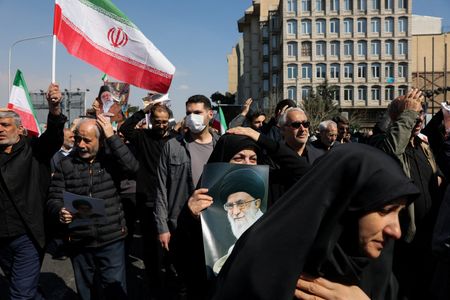
Two prominent hardline religious leaders in Iran are pushing for the rapid appointment of a new supreme leader as the country faces ongoing military strikes from the United States and Israel, according to Iranian media reports from Saturday.
The urgency expressed by these clerics indicates that portions of Iran’s religious establishment are hesitant about allowing a temporary three-person leadership council to remain in control, despite this arrangement being permitted under the nation’s constitution following Supreme Leader Ayatollah Ali Khamenei’s death.
President Donald Trump has stated that America should play a part in selecting Iran’s next leader, but Iranian officials have dismissed this proposal.
Grand Ayatollah Naser Makarem Shirazi, whose religious interpretations carry significant weight among followers, stated that a quick appointment is necessary to “help better organise the country’s affairs,” according to state media coverage.
Earlier this week, two high-ranking Shi’ite religious figures issued fatwas – formal religious rulings – demanding that Muslims worldwide seek retribution for Khamenei’s death. Makarem Shirazi declared it a religious obligation for Muslims “until the evil of these criminals is eradicated from the world.”
Grand Ayatollah Hossein Nouri Hamedani has similarly pressed the Assembly of Experts, the religious council responsible for selecting the supreme leader, to speed up their decision-making process regarding Khamenei’s replacement, state media reported.
Under Iran’s constitutional framework, a temporary leadership group consisting of the president, a high-ranking cleric, and the judiciary chief has assumed the supreme leader’s duties while the Assembly of Experts deliberates.
Iran’s constitution mandates that a new supreme leader must be selected within three months, though ongoing warfare makes it uncertain how quickly the 88-member Assembly of Experts can gather. Sources indicate that some religious officials have been conducting preliminary discussions through online platforms.
Rescue teams recovered bodies from rushing floodwaters throughout Kenya’s capital on Saturday following deadly overnight flooding that claimed at least 10 lives and caused major disruptions at the region’s busiest airport, officials reported.
In Nairobi’s Grogan industrial area, 34-year-old security guard John Lomayan discovered the body of an elderly roadside egg vendor he knew, trapped under a vehicle that had been swept away when the Nairobi River overflowed.
“I saw him being carried by the water from up there,” Lomayan explained, pointing up the street. “We didn’t know where he had gone. It is only now that we see him under the car.”
A news reporter witnessed three victims being pulled from beneath vehicles. Law enforcement confirmed the death toll has reached 10 people.
Climate researchers indicate that rising global temperatures are intensifying both flooding and drought conditions throughout East Africa by concentrating precipitation into briefer, more powerful downpours. Research from the 2024 World Weather Attribution study determined that climate change has doubled the likelihood of catastrophic rainfall events in the area.
Kenya Airways reported that the heavy precipitation had caused flight cancellations and delays at Nairobi’s airport, with some aircraft being rerouted to Mombasa on the coast.
“So many cars, so much stuff, I don’t know. Everything was just (washed away). All of the water (came) … from that river,” said stunned local resident Cedric Mwanza, referring to the Nairobi River.
A prominent Chinese researcher believes brain-computer interface technology could become widely accessible to the general public within the next three to five years as the nation accelerates efforts to compete with American companies like Elon Musk’s Neuralink.
China has designated brain-computer interfaces as a strategic priority industry in its latest five-year development plan, grouping the technology with other cutting-edge sectors including quantum computing, advanced artificial intelligence, next-generation wireless networks, and nuclear fusion.
“New policies will not change things overnight. I think after another three to five years, we will gradually see some (BCI) products moving towards actual practical service for the public,” said Yao Dezhong, Director of the Sichuan Institute of Brain Science, during a weekend interview at China’s parliamentary sessions in Beijing.
The country’s national brain-computer interface roadmap, unveiled last year, targets significant technological advances by 2027 and aims to develop two to three globally competitive companies by 2030.
China has become the second nation to conduct invasive brain-computer interface human testing. The country currently operates more than 10 active trials, equaling the United States, with researchers planning to recruit over 50 patients across the nation this year.
Recent notable studies have allowed paralyzed individuals and amputees to recover some movement capabilities and control robotic limbs or smart wheelchairs.
Several pilot provinces have already incorporated certain brain-computer interface treatments into their national health insurance programs, and industry analysts at CCID Consulting project the domestic market will grow to 5.58 billion yuan ($809 million) by 2027.
“China has many advantages in BCIs, such as its huge population, enormous patient demand, cost-effective industrial chain and abundant pool of STEM (science, technology, engineering and maths) talent,” explained Yao, who also directs a major neuroinformatics research facility under China’s science and technology ministry.
He noted that initiatives like insurance coverage and national standards are designed to bridge the “huge” divide between scientific research, manufacturing, and medical applications.
“The path from experimental to clinical trials is quite long, and this remains a problem,” he explained to Reuters, noting that numerous Chinese medical centers have established brain-computer interface research facilities to accelerate development.
Unlike American startups such as Neuralink that concentrate on invasive chips implanted directly into brain tissue, Chinese scientists are pursuing invasive, semi-invasive, and non-invasive approaches with broader potential medical applications.
Semi-invasive systems, positioned on the brain’s outer surface, may sacrifice some signal clarity but minimize dangers like tissue injury and surgical complications. Neuralink’s robotic surgery system can implant hundreds of electrodes into brain tissue within minutes.
“This is a technical advantage, which I think is remarkable,” Yao said regarding Neuralink.
“(But) China is actually making very fast progress in this area now. In fact, Musk’s direction is basically achievable domestically.”
American diplomats recently confronted Syria’s communications leadership about the nation’s growing dependence on Chinese telecommunications infrastructure, highlighting escalating tensions between global superpowers over digital influence in the recovering Middle Eastern country.
On February 24, State Department representatives met with Syrian Communications Minister Abdul Salam Haykal in San Francisco, expressing alarm over potential national security and data privacy threats posed by Chinese telecom systems. US officials cautioned that acquiring essential infrastructure technology from Chinese corporations could leave sensitive information vulnerable, reinforcing Washington’s ongoing claims that Beijing can force its companies to assist intelligence operations. Chinese officials reject these allegations, characterizing them as competitive tactics.
While the disagreement appears technical in nature, it represents a larger struggle for control over the region’s digital backbone as Syria works to rebuild. Telecommunications purchasing decisions have evolved into indicators of geopolitical loyalty, affecting network design, funding arrangements, technical protocols, and future dependencies for a nation attempting to rejoin regional commerce following years of conflict.
Beijing’s ties with Damascus predate the current political transformation. Throughout Bashar Assad’s presidency, China provided diplomatic support at the UN Security Council, frequently collaborating with Russia while promoting sovereignty principles and opposing forced government changes.
As Syria enters a new political era, its continued engagement with Beijing raises an important question: why maintain relationships with a previous regime supporter? Experts suggest this reflects Chinese diplomatic strategy, which views “the state” as the consistent partner, collaborating with whatever leadership exists while safeguarding its interests.
Dr. Samer Al-Khatib, who teaches international relations at the University of Damascus, described the renewed cooperation as pragmatic rather than ideological. In his interview with The Media Line, he explained Syria’s goal to “diversify its political and economic umbrellas to avoid falling into unilateral dependency,” noting that Beijing benefits from being perceived as an economic ally without imposing direct political requirements.
Syria’s telecommunications landscape makes this debate particularly relevant. Industry analysts estimate that Chinese technology powers a substantial portion of Syria’s two mobile networks—a situation resulting from years of Western sanctions, limited procurement options, and the attractiveness of affordable, rapidly deployable equipment. Modernizing the telecommunications sector is considered crucial for economic recovery: poor coverage beyond major urban areas and sluggish internet connectivity discourage investment, restrict business activity, and hamper overall progress. For officials seeking swift modernization at reasonable costs, Chinese technology offers appealing price points and implementation speed.
However, these decisions carry implications beyond technical considerations. Supplier selection creates multi-year commitments involving financing, maintenance, system upgrades, and technical standards—while signaling how governments plan to navigate major power competition in critical digital sectors.
Reconstruction economics specialist Reem Al-Hassan emphasized to The Media Line that the matter is “governed by numbers before slogans.” She explained that telecommunications modernization demands substantial investment and deployment-ready technologies—areas where Chinese companies typically offer competitive pricing. Nevertheless, she cautioned against “long-term financial dependency,” advocating for diversified investment sources and risk distribution across multiple partners.
This creates an inherent challenge for Syria. American restrictions, including export limitations, have prevented US technology from entering Syrian markets significantly. This produces a contradiction: Washington issues warnings about Chinese dependence while providing few practical alternatives for Syria to adopt Western technologies comprehensively.
Cybersecurity specialist Tarek Nasser explained to The Media Line that Chinese technology concerns “goes beyond the issue of direct espionage, to the nature of control over digital supply chains.” He noted that excessive dependence on single telecommunications suppliers creates both technical and political risks, emphasizing that successful outcomes require effective oversight mechanisms and robust legal frameworks for data protection. This involves independent regulation, procurement reviews, vendor risk assessments, and enforceable privacy legislation.
The implications extend far beyond communication towers or advanced wireless networks. This situation represents a competition for Syria’s position in the region’s future economic structure—and determining who establishes standards for digital infrastructure connected to reconstruction efforts. Beijing has pursued expanded Middle Eastern presence through infrastructure and connectivity initiatives, while Washington has attempted to limit that expansion in sensitive digital areas, particularly those involving data and critical networks.
For Damascus, the challenge is both immediate and practical: securing large-scale investment to rebuild war damage, with telecommunications being fundamental to economic reintegration. The strategic question persists: can Syria benefit from Chinese technology without becoming a battleground in US-China rivalry, or does this competition’s structure make neutrality increasingly impossible?
Syria’s probable objective involves balance rather than alignment—leveraging Chinese engagement for rapid reconstruction and improved Western negotiating position, while keeping other partnerships available. Success will depend on Damascus’ ability to enforce oversight and data protection regulations while diversifying suppliers. It will also require Washington’s commitment to providing viable alternatives that go beyond cautioning against China’s involvement in the region’s digital transformation.
The passing of Iran’s Supreme Leader Ayatollah Ali Khamenei has eliminated the nation’s most influential political figure, leaving a critical leadership void in a government structure designed around concentrated religious authority. This development has immediately raised questions about which faction will assume control of the country.
Within Iran’s governmental framework, the supreme leader maintains authority over elected bodies and exercises final control over major state institutions, particularly security forces. While the nation’s constitution designates the Assembly of Experts to choose the next supreme leader, political observers have questioned how this transition period will unfold.
However, Middle East researcher Beni Sabti from Tel Aviv’s Institute for National Security Studies believes real power now rests with the Islamic Revolutionary Guard Corps (IRGC) and its connected organizations, including the Basij militia.
Sabti, an Iranian native born in 1972 who lived through the Islamic Revolution before fleeing to Israel in 1987, explained that Iran’s current power structure will be shaped by interconnected figures with strong Revolutionary Guard connections. “Most of these figures always come from the IRGC. They have some roots in the IRGC … and also the IRGC as a whole, as an entity, influences a lot,” he stated.
The expert emphasized that today’s Revolutionary Guard holds significantly more influence compared to when Ayatollah Ruhollah Khomeini died in 1989. “It was not like this when Khomeini died, because he kept them limited,” Sabti noted. “But Khamenei was in their alliance, and they were his allies, so they have a kind of symbiotic relationship.”
According to Sabti, the IRGC operates “behind the curtain, for sure.” Although the Assembly of Experts maintains constitutional responsibility for selecting a successor, he contends this process serves more as formal approval rather than genuine decision-making.
“These councils of experts … they are also very symbolic,” he observed. “Eighty-eight very old clerics, that they have to decide who can be the next leader. They waited for someone to tell them what to do.” Sabti argued the Assembly has historically followed the existing leader’s direction and remains structurally dependent on the system it supposedly oversees. “They have been receiving salaries for so many years from the leader, so they are kind of the slaves of the system.”
Sabti anticipates this pattern will continue. “They will wait for someone to tell them what to vote for. Maybe the council, or IRGC, all together.”
Regarding the current presidency, Sabti believes it carries minimal independent authority during this succession phase. “President Pezeshkian is a good puppet for now to do his job, and after that, they can kick him out and give him just a symbolic job, because he’s not a cleric. As you see, he doesn’t have any influence,” he said.
The researcher’s main thesis suggests the outcome depends less on constitutional processes and more on whether the Revolutionary Guard maintains unity. “Yes, there is a chance that there can be some divisions in the IRGC,” he acknowledged. He believes any internal fractures would largely depend on continued external pressure. “It depends on if US and Israel continue to try to destroy as much as possible of this regime,” he explained.
Under such pressure, Sabti suggested some factions might choose survival over ideological commitment. “Some of them can come out and say, OK, we don’t want to lose our heads, we don’t want to lose Iran as a country, so maybe we can have some compromises,” he elaborated.
He also mentioned possibilities of internal coups and confrontations, drawing parallels to Soviet-era instability. “They can make a coup or something, and there can be some clashes inside the IRGC,” he said.
Without Khamenei’s presence, Sabti warned that competing ambitions within the IRGC and other power centers might escalate as various actors reassess their positions. “What is the map of the interests of everyone? It can change now, because the leader is not there,” he said. “They have their new interests. So yes, there can be a huge clash inside IRGC or other systems.”
Beyond political maneuvering, Sabti described a significant divide between the government and portions of the population. “The people … they came out and they were very happy, many of them,” he said. He noted that authorities quickly moved to limit information access. “We see that the regime once again shut down the internet, and we don’t know much what is going on inside.”
He suggested leadership priorities center on maintaining power rather than public welfare. “They don’t care now about the people. The regime doesn’t care about whether there are supplies in the supermarkets, or the roads are open, or anything like that.” He highlighted what he called inadequate civilian protection measures. “You know that there are no sirens in Iran, and no shelters? This is amazing. They don’t care about the people. It’s just like the ’80s.”
Despite public frustration and what he described as celebrations, Sabti doubted spontaneous mass protests would occur without external encouragement and organization. “The people cannot act unless President Trump, again, says something or does something,” he said. He noted the regime maintains organized forces and structural advantages. “There are many Basij forces outside. They [the citizens] don’t have connection. Someone has to guide them.”
Looking forward, Sabti predicted instability will continue. “In the short term, they [the IRGC] will be more dangerous,” he said. He believes the next period will be influenced by additional attacks on command centers and leadership figures. “But again, in a few days, if enough headquarters, and IRGC generals, and other figures are eliminated, there can be something else there,” he added.
He warned that any timeline should be considered in weeks rather than days, given Iran’s scale and complex security structure. “When you talk about Iran, it’s such a huge country, so many divisions, so many units of IRGC and army,” he said.
When asked about potential tipping points, Sabti said rapid collapse seems unlikely. “I think not less than two weeks,” he said. “Even Saddam held for three weeks.”
Other experts note that any successor will still require religious legitimacy, even if security leadership influences the selection. The upcoming period, Sabti suggested, may be determined less by constitutional procedures and more by internal reassessment among security officials—particularly within the IRGC. The critical factor, he argued, is whether the IRGC remains united.
American military forces have eliminated over 20 Iranian naval vessels and damaged Tehran’s primary operational submarine during an ongoing military campaign designed to neutralize Iran’s maritime forces, according to U.S. officials who spoke Wednesday. The operation included a U.S. submarine using torpedoes to sink an Iranian warship in the Indian Ocean waters near Sri Lanka.
The Iranian frigate IRIS Dena was destroyed as U.S. Central Command (CENTCOM) reported that Iranian naval forces have been effectively removed from crucial regional waterways. Admiral Brad Cooper, who leads CENTCOM, announced in a video update shared on X earlier Wednesday that Iranian vessels were absent from the Persian Gulf, Strait of Hormuz, and Gulf of Oman as of Tuesday.
American officials confirmed that U.S. forces have eliminated more than 20 Iranian ships during the campaign and have also damaged Tehran’s most capable submarine, creating a breach in its hull.
According to Cooper, American forces will maintain their focus on Iran’s naval resources through Operation Epic Fury. This military campaign seeks to eliminate Tehran’s capacity to menace commercial vessels and reduce its missile strike capabilities.
“We’re hunting Iran’s last remaining mobile ballistic missile launchers to eliminate, what I would characterize as their lingering launch capability,” Cooper stated.
Tehran operates dual naval forces: the Islamic Republic of Iran navy, which handles traditional maritime duties, and the Islamic Revolutionary Guard Corps navy, which specializes in unconventional warfare tactics.
Defense Secretary Pete Hegseth verified that an American submarine used torpedoes to destroy the IRIS Dena in waters near Sri Lanka during the military operation.
“An American submarine sunk an Iranian warship that thought it was safe in international waters,” Hegseth announced during a Pentagon press conference. “Instead, it was sunk by a torpedo.”
Hegseth characterized the attack as a “quiet death,” noting it marked the first occasion since World War II that American forces had destroyed an enemy vessel using torpedo weapons.
“Their navy, not a factor. Pick your adjective; it is no more.”
Sri Lankan naval authorities reported Wednesday that they had retrieved 87 bodies and saved 32 survivors following their response to an emergency signal from the vessel. According to Sri Lanka’s foreign minister, Vijitha Herath, who addressed Parliament, approximately 180 crew members were aboard the ship when it sank.
Sri Lankan officials initiated search and rescue operations after receiving the distress transmission, according to AP reports. Maritime vessels and aircraft were sent to the location.
Naval spokesperson Buddhika Sampath confirmed that survivors received medical treatment at a hospital in Galle, a southern coastal city, while recovered bodies were being transported to shore.
A Dense Fog Advisory is in effect across southern Delaware and parts of southern New Jersey until 10 AM this morning, creating hazardous driving conditions with visibility reduced to just one quarter mile or less.
The National Weather Service issued the advisory at 4 AM, warning drivers to expect extremely limited visibility that could make travel dangerous during the morning commute. Areas under the advisory include inland Sussex County, Delaware’s beaches, and several counties in central and southern New Jersey including Ocean, Atlantic, and Cape May counties.
“This is thick fog that’s really going to impact your morning drive,” said meteorologists at the Mount Holly office. “You need to take extra precautions if you’re heading out early.”
Drivers are urged to slow down significantly, use headlights, and maintain extra distance between vehicles. If visibility becomes too poor, pull over safely and wait for conditions to improve.
The fog is expected to gradually lift through the morning hours, with the advisory set to expire at 10 AM. However, patchy fog may linger in some low-lying areas even after the official advisory ends.
Stay with TV Delmarva for continued updates on changing weather conditions across the peninsula.
Good morning, Delmarva! We’re starting this Saturday with some patchy fog across the peninsula, but don’t let that fool you – it’s going to be a relatively mild day with temperatures climbing to a comfortable 57 degrees.
Early risers might notice some areas of fog and even a few light rain drops before 11 AM, but chances are pretty slim at just 20%. Once we get past the morning hours, expect mostly cloudy skies with very light winds from the southeast. Perfect weather for those weekend errands or a casual stroll!
Tonight, we’ll see our rain chances increase as temperatures hold steady around 55 degrees – great sleeping weather if you can keep the windows cracked.
Looking ahead to Sunday, get ready for a noticeable warm-up! We’re tracking likely rain showers throughout the day, but temperatures will jump to a spring-like 70 degrees. Sunday night brings more showers before clearing out, with temps dropping to a crisp 43 degrees.
Enjoy your Saturday, Delmarva, and keep that light jacket handy! This is your TV Delmarva weather team keeping you informed.
White House officials announced that Iran’s government has been completely devastated as American and Israeli military forces continue extensive operations against the Middle Eastern nation.
Speaking to the press, White House spokesperson Karoline Leavitt stated that “under President Trump’s leadership, the rogue Iranian terror regime has been utterly crushed. Forty-seven years of tolerance and allowing the world’s leading state sponsor of terrorism to operate freely have come to an end.”
Leavitt continued her remarks by saying, “Iran’s murderous terror leaders are paying for their crimes against America, and they are paying in blood.”
Secretary of State Marco Rubio provided updates on the American military campaign known as Operation Epic Fury, indicating the mission is meeting its intended targets. “We are on track to achieve the goals of the operation, to destroy their missile launchers and factories and also their fleet so they will never be able to hide behind them to develop nuclear weapons,” Rubio explained.
American Central Command forces have destroyed or damaged 20 Iranian naval vessels throughout the ongoing campaign. CENTCOM leader Brad Cooper confirmed that long-range precision missiles were deployed against Iran for the first time during this operation, stating, “I couldn’t be more proud of our people in uniform.”
According to a Washington Post report citing three informed sources, the Pentagon’s stockpile of precision weaponry is being quickly exhausted after less than one week of strikes. The rapid consumption of sophisticated air defense systems may soon require the U.S. military to make strategic decisions about which incoming threats to intercept.
Israeli military leaders have also revealed the magnitude of their involvement, confirming that 5,000 munitions have been deployed in attacks against Iranian positions since operations commenced.
Defense Minister Israel Katz visited the Intelligence Division with Maj. Gen. Shlomi Binder and other high-ranking officials, where he explained that Iranian leadership was surprised by the extensive nature of the military action. Katz noted that Tehran “could not assess the scope, breadth and depth of the intelligence down to the last target, and the operational capability to exploit the intelligence to strike, attack, destroy and demolish their capabilities.”
The State Department confirmed Wednesday that a government-chartered aircraft is transporting American citizens back to the United States from Middle Eastern countries, with plans underway for additional evacuation flights throughout the region.
Officials declined to specify how many passengers were on board the flight or reveal which nations they departed from, nor did they provide scheduling details about departure or arrival times.
According to State Department figures, over 17,500 Americans have successfully returned home from Middle Eastern nations since February 28, when American and Israeli military forces began conducting initial strikes against Iran. On Tuesday alone, approximately 8,500 citizens made it back to U.S. soil.
The department noted that numerous other American nationals have evacuated to European and Asian destinations rather than returning directly to the United States since hostilities began.
Earlier this week, State Department officials issued urgent advisories to Americans in 14 Middle Eastern countries, recommending immediate evacuation using “available commercial transportation.” However, many citizens are encountering difficulties securing flights due to widespread airline disruptions stemming from the regional conflict.
The evacuation efforts have drawn harsh criticism from several members of Congress, who have accused State Department leadership of poor advance planning and delayed warning systems.
In response to the criticism, the department stated it was “facilitating charter flights” from the United Arab Emirates, Saudi Arabia, and Jordan specifically for American citizens requiring evacuation assistance.
Semiconductor manufacturers in South Korea are raising alarms about potential supply chain disruptions stemming from the escalating Iranian conflict, warning that extended Middle Eastern instability could drive up computer chip costs worldwide.
Following discussions with leadership from major companies including Samsung Electronics, the globe’s largest memory chip producer, ruling party legislator Kim Young-bae outlined industry concerns on Thursday about rising energy expenses and material shortages.
The semiconductor sector also expressed worries that the regional turmoil might derail major technology companies’ long-term strategies to establish artificial intelligence computing facilities throughout the Middle East, which could reduce the current high demand for chips, according to Kim’s statements.
“We say the semiconductor supercycle has arrived, but data centre plans are highly likely to be disrupted, potentially creating problems with chip demand,” Kim told journalists during a press conference.
“Officials raised a possibility that semiconductor production could be disrupted if some of these key materials cannot be sourced from the Middle East,” he explained.
Among the most critical concerns is the potential shortage of helium, a vital component used for temperature control during chip manufacturing processes. Currently, no substitute materials can replace helium’s role in semiconductor production, making Middle Eastern supplies particularly important.
Memory chip manufacturer SK Hynix responded to these concerns by announcing adequate helium reserves and expressed confidence that their material procurement would remain unaffected. Samsung Electronics chose not to provide public commentary on the situation.
According to industry representatives, chipmaking companies have been working to diversify their supply sources as Middle Eastern geopolitical instability has continued over recent years, with many securing advance material stockpiles as protective measures.
Both Samsung Electronics and SK Hynix have experienced significant gains from increased memory chip pricing, fueled by worldwide competition among technology firms racing to construct AI computing centers.
The concerns intensified after Amazon reported on Monday that several of its computing facilities in the United Arab Emirates and Bahrain sustained damage from drone attacks during the regional conflict, raising questions about major technology companies’ expansion timeline in the area.
American technology leaders including Microsoft and Nvidia have been establishing the UAE as a central location for artificial intelligence processing capabilities required to operate services like ChatGPT.
The current crisis escalated after Iran launched multiple drones and missiles targeting Gulf nations in response to American and Israeli military actions that resulted in the death of Supreme Leader Ayatollah Ali Khamenei on Saturday.
ICHIKAWA, Japan — A young orphaned macaque named Punch is slowly becoming less reliant on the stuffed orangutan toy that helped him through his difficult early days after being rejected by his mother and the monkey community.
Photos of the tiny Punch carrying around his oversized plush companion captured hearts when they showed how the baby monkey would run to his toy for comfort whenever other primates pushed him away from their group.
Now the situation is changing for the better. Recently, observers have watched Punch climbing onto other monkeys’ backs, spending time with adult members of the troop, and even receiving grooming and embraces from his fellow primates.
“It was good to see him grow, and I’m reassured,” said Sanae Izumi, a 61-year-old Punch fan from Osaka who came to the zoo because she was worried about the baby monkey. “He is adorable!”
After his mother left him following his birth — likely due to exhaustion — zoo staff bottle-fed Punch and provided him with the stuffed toy to help him develop the clinging instincts that baby macaques require for survival.
“Helping Punch learn the rules of monkey society and being accepted as a member is our most important task,” said Kosuke Kano, a 24-year-old zookeeper.
The baby monkey became an internet sensation after photos of him with his toy companion went viral last month, forcing the zoo to implement quiet zones and 10-minute viewing limits to prevent stress among the facility’s 50-plus other monkeys.
Zoo officials view Punch’s decreased reliance on his stuffed companion as positive progress.
“When he grows out of the plush toy that encourages his independence, and that’s what we are hoping for,” zoo director Shigekazu Mizushina said.
While Punch continues to sleep alongside his toy each night, Mizushina explained that staff hope to eventually see him sleeping curled up with other monkeys instead.
A Dense Fog Advisory is in effect across much of the Delmarva Peninsula this morning, with visibility dropping to just a quarter mile or less in some areas.
The National Weather Service issued the advisory at 4:00 AM, affecting inland Sussex County and Delaware’s beaches, along with portions of central and southern New Jersey including Monmouth, Ocean, Atlantic, and Cape May counties.
Drivers are experiencing hazardous conditions on roadways throughout the region as the thick fog significantly reduces visibility. Weather officials are urging extreme caution for anyone who must travel during the morning commute.
If you must drive, the National Weather Service recommends slowing down, using your headlights, and leaving plenty of distance between your vehicle and others on the road. Consider delaying non-essential travel until conditions improve.
The fog is expected to gradually lift as the morning progresses, with the advisory set to expire at 10:00 AM. Temperatures are expected to warm throughout the day, which should help dissipate the dense conditions.
Stay with TV Delmarva for continued updates on weather conditions across the peninsula, and remember to drive safely if you encounter foggy conditions on your commute.
Imagine the workplace culture of the 1960s, where employees regularly consumed multiple cocktails during business lunches. Although such extreme drinking practices have largely disappeared, many professional environments still revolve around alcohol consumption through happy hours, company celebrations, and client entertainment at upscale establishments.
For individuals recovering from alcohol dependency, discussing their sobriety with supervisors and coworkers can feel overwhelming. Many worry about potential judgment or career limitations in industries where social drinking remains deeply embedded in professional networking.
Recovery specialists and professionals who maintain sobriety while advancing their careers emphasize that these concerns are understandable but shouldn’t prevent necessary conversations or actions that support successful recovery.
“If you’re sober and in recovery, nothing’s worth risking putting your sobriety at risk,” said Lisa Smith, a former lawyer who struggled with drug and alcohol addiction as she worked at a prestigious law firm in New York.
Smith emphasizes the importance of establishing workplace boundaries without over-explaining personal decisions.
“We say in recovery a lot that ‘No’ is a complete sentence,” Smith said.
The workplace atmosphere has evolved significantly since Smith began her career. Today’s younger professionals have embraced mocktails and alcohol-free alternatives, helping to normalize abstinence while bringing greater awareness of mental health and addiction issues to their workplaces.
Smith discovered that declining alcoholic drinks generated far less attention from colleagues than she had anticipated. She also noticed more non-drinking coworkers than she had previously recognized, whether due to religious beliefs or personal preferences.
Those who pressured her to drink were typically heavy drinkers themselves who “were looking for a comrade to drink with, to sort of make them feel better about their own drinking,” she said.
During her early recovery period, Smith avoided events she knew would be challenging or departed early, but she made sure to follow up with people she wanted to connect with over coffee the next day.
Smith currently operates her own consulting business, where she shares her journey with organizations and legal practices, helping them develop more supportive environments for employees in recovery.
“We hear from younger lawyers who understand that it is not healthy and don’t like the way they feel on alcohol, just don’t choose to drink for any reason,” she said.
The entertainment sector also promotes widespread drinking culture, according to Ermanno DiFebo, a Los Angeles production designer who battled alcohol addiction for years before achieving sobriety.
DiFebo described how alcohol was promoted with the message that “if you are good, you can handle it. If you cannot handle it, you are weak,” DiFebo said. “The treatment facilities are for people that are weak.”
Initially, he created various explanations for avoiding alcohol, such as claiming medical appointments or early morning commitments. In comfortable settings, he would simply explain, “I partied too much and now I’m not partying anymore.”
DiFebo now suggests viewing alcohol addiction similarly to food allergies – just as someone allergic to gluten would avoid it completely.
“Alcohol makes you sick and manifests itself in compulsion to continue beyond reasoning,” he said.
Creating recovery-supportive workplace cultures also benefits employers, according to Heidi Wallace, vice president of recovery services at the Betty Ford Center in Rancho Mirage, California.
“Individuals in that recovery process that are working a program, they’re actually the most productive workforce,” Wallace said. “They’ve done so much work to get to this place, and their program actually has been sitting in a space of gratitude and a place of being of service.”
Research indicates that people actively participating in recovery programs maintain better attendance and volunteer more readily for additional responsibilities, Wallace noted.
Companies can support this by providing spaces for virtual recovery meetings during work hours or hosting on-site meetings, Wallace suggested.
DiFebo remembered participating in recovery meetings on movie sets at Warner Brothers and Universal Studios.
“I realized that there were a lot of people in recovery around all the drinkers. I just didn’t see them before,” he said.
Smith works to demonstrate that companies can organize enjoyable team-building activities without centering them around alcohol.
“There was always this assumption people made that when planning events that alcohol equals fun, right?” Smith said.
Hiking excursions and wellness activities have gained popularity alongside expanded non-alcoholic beverage selections. Even wine-tasting events can accommodate non-alcoholic alternatives, Smith noted.
Simple changes like ensuring mocktails are readily available on serving trays rather than requiring separate bar orders can make events more inclusive.
“It shouldn’t be incumbent upon the person who chooses not to drink on any given night to make themselves feel comfortable in that setting,” Smith said.
Nearly three decades after their groundbreaking benefit album topped British music charts, War Child UK is returning with a star-studded sequel to support children caught in global conflicts.
The charity’s original ‘Help’ compilation became a chart-topping phenomenon in 1995, climbing to No. 1 in Britain and generating over 1.25 million pounds (approximately $1.938 million) to assist families affected by the Bosnian conflict. The album featured exclusive tracks from legendary Britpop acts like Oasis, Blur, and Radiohead, plus collaborations involving Paul McCartney and Paul Weller.
According to Rich Clarke, War Child UK’s music director, the organization has spent years attempting to replicate that remarkable achievement. This Friday marks the release of ‘Help(2)’ on retail and streaming services, showcasing never-before-heard material from contemporary stars including Arctic Monkeys, Olivia Rodrigo, and Wet Leg. Proceeds will benefit children impacted by ongoing conflicts across Ukraine, Gaza, and Sudan.
‘I think it’s a situation now where musicians feel not that they want to do something, but that they need to do something,’ Clarke said. ‘That’s a powerful driver. And sometimes, things happen when they’re meant to happen.’
Jarvis Cocker’s relationship with the charity dates to 1996, when his group Pulp donated their Mercury Prize earnings to War Child UK. When producer James Ford, who worked on Pulp’s recent comeback album ‘More,’ invited Cocker to participate in the new compilation, the singer eagerly accepted.
‘When the last one happened, it was something like 10% of the world’s kids were living in poor areas, and now it’s more like 20%,’ Cocker told The Associated Press. ‘And it’s a strange thing, you know, childhood sets you up for the rest of your life or it doesn’t.’
Pulp’s track ‘Begging for Change’ represents a 14-year creative journey for Cocker, who struggled to complete the song until finding purpose in the charitable mission. ‘Somehow, with it having the focus of trying to help some people and change their situation, I did manage to finish it,’ he said. ‘And I’m quite pleased with the result.’
The recording experience at London’s Abbey Road Studios proved uniquely meaningful, despite Cocker’s typical reluctance to be filmed while performing. Director Jonathan Glazer documented the sessions with assistance from young filmmakers, creating what Cocker called an appropriate perspective for a children’s charity project.
‘I thought it was a good idea,’ Cocker said. ‘I mean, if you’re going to do a thing for a charity that is supposed to help children in war zones, then it makes sense to capture it from a child’s point of view.’
Children even participated as a choir on Pulp’s contribution, serving as a constant reminder of the project’s humanitarian goals. ‘Charity shouldn’t have to exist if governments did what they were supposed to, if they looked after people and looked after the world,’ Cocker said. ‘But they do need to exist. They need to exist even more now.’
John Nolan from rock bands Taking Back Sunday and Straylight Run views benefit compilations as a longstanding tradition within independent music circles. The format allows artists direct involvement in causes they support, he explained while discussing his own recent ACLU fundraising album ‘Music for Everyone, Vol. 2.’
‘It’s something that we can be a lot more hands-on with,’ said Nolan. ‘I think that’s also why a lot of more underground bands take on compilations for causes too, because it’s something you can be kind of DIY with.’
British group Black Country, New Road contributed their song ‘Strangers’ as an extension of their ongoing advocacy work, including previous fundraising efforts for Palestinian children. Violinist Georgia Ellery emphasized the importance of artistic activism in today’s climate.
‘With what was going on in the world a couple of years ago, I think it became important to us that we became more aware and started questioning things and how we wanted to move as artists,’ said Ellery.
Scottish band Young Fathers found participation in ‘Help(2)’ an obvious choice, according to member Graham Hastings. ‘When you see children in these refugee camps, for me it’s a sign of humanity failing for that to even occur,’ he said. ‘For us, the important thing is for people just to feel a general awareness about what’s happening and why it’s happening, and get active and get involved in the community.’
BEIRUT – Israeli military forces executed an uncommon helicopter assault in eastern Lebanon during overnight hours, according to local residents and Lebanese government media reports Saturday, while intensive Israeli bombardments in the region resulted in over a dozen fatalities.
The Middle Eastern nation found itself drawn further into regional warfare this past Monday after Iran-supported Hezbollah fired rockets and unmanned aircraft toward Israel, prompting Israel to respond with extensive bombing campaigns throughout Lebanon’s southern regions, eastern areas, and zones close to Beirut.
During nighttime operations, Israeli helicopters transported soldiers to an area near Nabi Chit in Lebanon’s eastern Bekaa Valley, according to Lebanese government media and local witnesses. Local residents and Hezbollah militants opened fire on the soldiers as they advanced on foot, according to these accounts.
The Israeli forces retreated and departed via helicopter while Israeli airstrikes hammered Nabi Chit and surrounding communities, government media and witnesses reported. Israel’s military had not provided an immediate response to Reuters’ inquiries about the operation.
Lebanon’s health ministry reported that 16 individuals were killed in Israeli attacks during the previous 24-hour period in Nabi Chit. A ministry representative informed Reuters that this count included casualties from strikes throughout Friday as well as during heavy overnight bombardments, with expectations that the number would continue climbing.
Two security officials confirmed to Reuters that three military personnel were among those killed.
Israeli bombardments have resulted in over 200 deaths throughout Lebanon, while evacuation orders have forced approximately 300,000 people from their homes, with only one-third currently housed in official government shelters.
Shawki al-Masri, a resident of a community neighboring Nabi Chit, characterized the overnight bombing campaign as “a night of hell.”
“We heard the helicopters over our house all night – they were so low we thought they would land on us,” he told Reuters.
“People in the town woke up and started shooting at them, then the warplanes started bombing. It was a very violent night and only calmed down when the sun came up,” he said.
In an overnight statement, Hezbollah reported that it had engaged Israeli soldiers who had been transported near Nabi Chit by four Israeli helicopters. The organization stated that the Israeli forces pulled back.
Although Israeli military units are conducting ground campaigns in southern Lebanon, advancing further into border village areas, helicopter-based operations remain uncommon. During a 2024 conflict between Israel and Hezbollah, Israeli naval personnel abducted an individual from a Lebanese coastal community.
The United Nations issued a warning Saturday that the conflict was poised to become “even worse,” emphasizing that negotiations between Israel and Lebanon “must be pursued with urgency” to halt the fighting.
UN Special Coordinator for Lebanon Jeanine Hennis-Plasschaert stated that it was “clear that ongoing military actions will not deliver a lasting win to anyone.”
“Rather, they will only deepen instability and inflict further suffering,” she said.
KATHMANDU, March 7 – A sophisticated political operation run from the upper floors of a six-story building in western Kathmandu has positioned a 35-year-old former rapper to become Nepal’s next prime minister.
Balendra Shah, known by his stage name “Balen,” represents the Rastriya Swatantra Party, which currently leads vote tallies following Nepal’s first parliamentary election since youth demonstrations in September toppled the previous administration.
Election officials expect final results for 275 total parliamentary seats – 165 direct seats and 110 proportional representation positions – to be announced next week.
Should current voting patterns continue, Shah will have successfully capitalized on momentum from the September uprising through what may be the most advanced campaign operation the small Himalayan country has witnessed.
Reuters spoke with six RSP party leaders to understand Shah’s campaign strategy, which operated primarily from the party’s Balaju neighborhood headquarters and received substantial financial backing from overseas Nepali communities.
“We are overwhelmed by the support and love we received from people on the ground,” stated Bigyan Gautam, who served on RSP’s national campaign team.
Shah’s electoral success contrasts sharply with Bangladesh’s recent election, where a youth-oriented party failed to gain traction despite emerging from similar “Gen-Z” demonstrations that removed that nation’s longtime leader in 2024.
The RSP’s political operation centers around its Research, Strategy and Documentation Department, managed by an 11-person board supervising 300 party workers organized into three national units that support local candidate teams.
These nationwide groups developed electoral strategies, coordinated rallies, produced digital content, and monitored grassroots campaigning efforts throughout Nepal, according to three party officials.
Leading up to Thursday’s election, the party implemented a precisely timed media approach, with Shah delivering major addresses every eight days to allow a 660-person social media team sufficient time to amplify each event’s impact.
RSP also conducted road shows across five to seven districts daily, supported by brief daily appearances in one of Nepal’s seven provinces where Shah would engage directly with voters.
“If you keep giving speeches, people get confused,” explained one party official who requested anonymity. “We let opposition parties raise some issues, and then respond once. This way, our message stays clear.”
The centralized campaign structure and large-scale events received direct party funding through substantial contributions from Nepalis residing overseas, particularly those in the United States, two officials confirmed.
However, individual candidates handled organizing and financing their own local campaign activities, according to RSP Treasurer Lima Adhikari.
Before joining RSP last December prior to the elections, Shah served as Kathmandu’s mayor, a role he secured in 2022 by utilizing his fame as one of Nepal’s most popular rap artists with millions of social media followers.
At a January 19 rally in Nepal’s Madhesh province capital, Shah appeared alongside RSP founder and former television host Rabi Lamichhane, declaring to thousands of supporters: “A Madhesi boy is going to become prime minister.”
Despite the Madhesh region and surrounding Terai plains containing Nepal’s largest population centers, the country’s political leadership has historically come from Kathmandu and the mountainous regions.
Shah’s January address became a social media sensation, highlighting the early effectiveness of RSP’s strategy to make him the first plains-region leader to claim the prime minister’s office, three party officials noted.
“It was very clear to us that the nation was fed up with the old corrupt leaders and they were seeing hope in young leaders like Balen Shah and Rabi Lamichhane,” said Birendra Kumar Mehta, a central committee member. “The party saw this as an opportunity.”
Shah is running for parliament from Jhapa-5, a plains constituency that has traditionally been the political stronghold of K.P. Sharma Oli, who resigned as prime minister following the September protests.
In this rural Nepal district, Shah maintained his unconventional campaign approach, avoiding traditional media interviews while making unscheduled stops to speak with voters and organizing youth volunteer networks throughout the constituency.
His team, supported by the RSP’s Kathmandu operation, has also gathered voter concerns and complaints regarding development initiatives and government services.
“People from every part of Nepal will feel that the government is theirs and most importantly, that it is there for them,” said D.P. Aryal, RSP’s vice chairperson, noting that Shah’s government plans to recruit external experts to strengthen its capabilities. “Youth engagement and the maximum integration of technology will also be among our top priorities.”
The chairman of Swiss pharmaceutical giant Roche indicated Saturday that while the company’s drug products should stay protected from US import duties under a recent government agreement, its diagnostics operations continue facing tariff challenges.
Severin Schwan told the Swiss publication Neue Zuercher Zeitung that Roche was among nine major drug manufacturers that struck a December deal with President Donald Trump, agreeing to reduce medication prices in exchange for three-year tariff protection.
“As far as pharmaceuticals are concerned, we assume our agreement with the government is binding and that we will continue to be exempt from tariffs on the import of medicines,” Schwan stated in the interview.
However, he emphasized ongoing concerns about another major part of the business: “But our diagnostics business continues to be significantly affected.”
According to Schwan, Roche’s diagnostics arm – which brought in nearly 14 billion Swiss francs in revenue during 2025 – ships substantial quantities of testing equipment and instruments from Switzerland and other European locations to American markets.
The company also manufactures diagnostic products within the United States that face import duties from China, creating a complex tariff situation.
“But because China has introduced retaliatory tariffs, we end up, as a U.S. net exporter, paying tariffs twice. That’s absurd,” Schwan explained.
The chairman anticipates Washington will reimpose import duties through alternative legal mechanisms once the current 150-day tariff suspension concludes.
Despite these trade challenges, Schwan dismissed any possibility of separating the diagnostics unit from the main company. “That is not a topic at all. We are sticking with it,” he assured the newspaper.
THIKA, Kenya — Mary Mwangi once believed a cancer diagnosis meant certain death. She never imagined that learning to knit during her recovery would transform the lives of countless breast cancer survivors across Kenya.
Today, Mwangi crafts knitted breast prostheses for women who have undergone mastectomies but cannot access the reconstructive procedures commonly available in wealthier nations.
These budget-friendly alternatives provide hope in a country where breast cancer tops the list of cancers affecting women. Kenya sees approximately 6,000 new breast cancer cases each year, while 40% of its citizens struggle with poverty.
Mwangi’s journey started in 2017 with simple hats and scarves before she encountered another woman creating knitted breast forms.
Operating from her shared tailoring space in Thika, near Nairobi, Mwangi teaches her craft to fellow survivors through a group she calls the New Dawn Cancer Warriors. While some members earn income from their work, others find emotional healing through the creative process.
“Knitting takes you through a process of healing. Once you are not thinking about your disease, you are positive and that positive mind helps you, because healing starts from your mind,” she said.
High school science teacher Nancy Waithera credits meeting Mwangi before her operation with easing her recovery. She purchased a prosthesis and began envisioning her post-surgery life.
Her cancer diagnosis made “everything turned dark,” especially following her husband’s recent death, which deepened her despair.
However, connecting with Mwangi renewed her optimism, and she eagerly awaited her surgical site’s healing so she could wear her knitted prosthesis.
Describing her first day wearing it to church, she shared: “I felt like Nancy had come back. My ego was restored. My dignity was restored.”
Cancer treatment costs create enormous challenges in developing nations like Kenya. Government health officials report that over half of breast cancer patients receive their diagnosis only after reaching advanced disease stages, prompting efforts to improve early screening programs.
At $10 per prosthesis, Mwangi’s creations cost one-sixth the price of Kenya’s silicone alternatives. Her team produces and sells these items to organizations that distribute them to survivors who cannot afford to purchase them directly. Over the past three years, they have completed more than 600 pieces.
The yarn-based prostheses contain pillow-type fiber filling that women describe as comfortable against their skin.
Housewife and mother Hannah Mugo expressed gratitude for upgrading from stuffing her bra with clothing, which created an uneven appearance, to wearing a fiber-filled knitted prosthesis that restored her self-assurance.
“I used to stay indoors because I didn’t want people to label me as the ‘woman with one breast’,” Mugo said. After meeting Mwangi, she learned the knitting technique for personal use and commercial purposes.
Medical professionals emphasize that hobbies and peer support networks are essential for cancer patient recovery. Fellow survivor and knitter Eglah Wambui, who works alongside Mwangi, remembered a woman from her treatment period who took her own life due to depression, according to medical staff.
“Knitting is therapeutic and helps take away my thoughts,” said the mother of two.
Dr. Daniel Ojuka, a surgeon who has observed donated prostheses at Kenyatta National Hospital’s cancer center, believes that post-surgical planning and community support make recovery “significantly easier.”
Ojuka explained that mastectomy represents the most affordable treatment choice for Kenyan breast cancer patients, while breast reconstruction surgery remains financially impossible for most. The national health insurance program does not cover reconstructive procedures.
Despite surgeons preparing patients for post-operative chest changes, the emotional impact remains profound, he noted. He has witnessed patients crying upon awakening from surgery.
Mwangi no longer views cancer as a fatal diagnosis. She remains committed to teaching more women the prosthesis-making technique while maintaining their hope.
“There is life after cancer, and cancer is not a death sentence, because I’m a living testimony,” she said.
WASHINGTON — Black students in a predominantly white Pennsylvania school district faced constant harassment, with classmates calling them derogatory names including “slave” and “monkey” with little consequence, according to parents who filed a federal complaint.
These allegations were part of a 2024 civil rights complaint submitted to federal education officials regarding the Pennridge School District in Pennsylvania. However, the complaint has joined thousands of others sitting unaddressed following significant staffing reductions in the Trump administration.
“There was an expectation that something was going to happen,” explained Adrienne King, a parent of two students in the district who also serves as president of the NAACP Bucks County chapter. When no action occurred, “it’s a very hollow, empty feeling.”
The federal Education Department has traditionally served as the primary watchdog for discrimination in American schools. However, widespread layoffs and changing priorities have significantly reduced this function, leading to calls for state governments to fill the void.
Pennsylvania lawmakers are now considering legislation to create a state-level agency dedicated to investigating educational discrimination and protecting student civil rights — responsibilities that have historically fallen to federal authorities. Similar efforts are underway in other Democratic-controlled states, where advocates are pushing existing agencies to take on expanded roles in fighting discrimination based on race, disability, or gender.
This shift toward state-level enforcement presents potential challenges. Creating a state-by-state approach could result in inconsistent protection levels across the country. Some experts worry this trend might encourage the federal government to further reduce its civil rights enforcement efforts.
Pennsylvania State Senator Lindsey Williams delivered a direct statement last fall when announcing her proposal for a new state civil rights office modeled after the federal system. “If the federal government won’t stand up for our most vulnerable students, I will,” declared Williams, a Democrat.
While her legislation faces an uphill battle in the Republican-controlled state Senate when introduced this spring, Williams believes it could serve as a template for other states. She has already received inquiries from legislators elsewhere, and comparable measures have emerged in Maryland and Illinois.
In the short term, Pennsylvania advocates are pushing for increased funding of the Pennsylvania Human Relations Commission, an existing agency with authority to investigate schools and enforce student rights that is rarely utilized for educational matters. Currently, only 5% of the commission’s cases involve education, with most focusing on workplace discrimination.
Attorney Kristina Moon from the Education Law Center in Pennsylvania has begun directing families to file discrimination complaints with the state commission rather than federal agencies. She views this as the best available alternative for families left waiting amid federal dysfunction.
“It’s incredibly important for students and families to be aware of any other option available to them,” stated Moon, who is representing the families in the Pennridge case.
The commission has indicated willingness to accept cases that have stalled at the federal level, though officials acknowledge their constraints. The agency currently employs approximately 100 staff members, down from over 200 in previous years, raising questions about capacity to handle a significant increase in complaints.
Federal data from January 2025 shows more than 300 active investigations in Pennsylvania alone, each representing a potential case that could be transferred to state jurisdiction.
“It would be tough, I’ll be totally honest,” admitted Desireé Chang, the commission’s education director. “A stark influx would definitely put some weight on our agency. But we would do it because that is what we are charged with doing.”
Even before President Trump’s current term began, the federal Office for Civil Rights was overwhelmed by its caseload. Operations have slowed further following extensive layoffs that shuttered regional offices in Philadelphia, Boston, Chicago, and other cities. Remaining staff members report that comprehensive investigations have become uncommon as they prioritize resolving the most straightforward complaints.
Simultaneously, current Trump administration officials have redirected the office to target schools that provide accommodations for transgender students and athletes, claiming such policies discriminate against girls and women.
Trump administration officials attribute the complaint backlog to the previous administration’s policies. Some previously terminated employees have been rehired to help process pending cases.
The impact is being felt nationwide. Maryland recently introduced legislation granting the state’s Commission on Civil Rights new authority to investigate school discrimination. While the commission has long handled discrimination cases in housing and employment, students currently lack a comparable state-level complaint process.
During a recent hearing, commission officials endorsed the legislation and emphasized they can no longer depend on federal agencies to protect student rights.
“Offices have been closed, people have been fired, cases are piling up or not even moving — that’s why we sought to step in that gap and provide Maryland students an option,” explained Glendora Hughes, the commission’s general counsel.
In Massachusetts, advocates are focusing attention on the state education department’s Problem Resolution System, which investigates family complaints alleging schools violated state or federal law. However, advocates say the office’s case selection criteria and procedures lack transparency. A coalition recently requested clarification from the office.
Legal aid organizations are also stepping in to address gaps. The Southern Poverty Law Center has filed suit against a Louisiana school district on behalf of a 10-year-old student with autism. The lawsuit alleges the St. Tammany Parish School District unlawfully reduced the child’s classroom time to just two hours daily in 2024, down from a full school day. The organization noted this type of case would typically have been handled by federal authorities previously.
The federal Education Department’s most significant enforcement tool is its ability to withdraw federal funding from schools that violate civil rights laws. When faced with this threat, schools have historically agreed to implement changes requested by the agency.
State-level proposals include different enforcement mechanisms. Some would enable states to mediate family-school disputes and issue binding orders. In contrast, California’s newly established Office of Civil Rights focuses primarily on providing anti-discrimination guidance and training to local school districts.
In the Pennridge district, affected families are considering their options. King expressed little confidence in the federal complaint’s prospects, noting the harassment continues. Her daughters still encounter racial slurs at school and face insensitive remarks about their appearance. She worries about the long-term impact on their development.
“I feel as though my girls have normalized a lot of this, but for the sake of survival — middle school is hard,” she reflected. “You just want to be like everybody else.”
A Dense Fog Advisory is now in effect for much of the Delmarva region, with visibility expected to drop to less than one mile starting this evening.
The National Weather Service issued the advisory at 1:08 PM today, warning that dense fog will blanket coastal Delaware and southern New Jersey from 6 PM tonight through 10 AM Thursday morning. Areas under the advisory include inland Sussex County, Delaware beaches, and multiple counties across southern New Jersey including Atlantic, Ocean, Cape May, and parts of Burlington and Monmouth counties.
The thick fog will create hazardous driving conditions during both the evening and morning commutes. Motorists should expect significantly reduced visibility that could make travel dangerous on highways and local roads throughout the affected areas.
If you must drive during the advisory period, officials strongly recommend slowing down, using your headlights, and leaving extra distance between your vehicle and others on the road. The low visibility conditions could lead to accidents if drivers don’t adjust their driving habits accordingly.
The Dense Fog Advisory is set to expire at 10 AM Thursday morning. Drivers should continue monitoring weather conditions and plan for extra travel time during their morning commute.
WASHINGTON — Congressional representatives are scheduled to cast ballots Thursday on legislation designed to constrain President Donald Trump’s military campaign against Iran, reflecting legislative concerns about the expanding conflict that has shifted American priorities both domestically and internationally.
This marks the second consecutive day of voting on such measures, following the Senate’s rejection of comparable legislation along partisan divisions. Members of Congress are now facing the immediate challenge of representing their constituents during wartime circumstances, including casualties, financial costs, and diplomatic relationships strained by a president’s independent decision to engage Iran militarily.
While the House vote is anticipated to be close, the results will offer an initial indication of political backing or resistance to the U.S.-Israel joint military effort and Trump’s justification for circumventing Congress, which holds exclusive constitutional authority to declare war.
“Donald Trump is not a king, and if he believes the war with Iran is in our national interest, then he must come to Congress and make the case,” stated Rep. Gregory Meeks, the leading Democrat on the House Foreign Affairs Committee.
Meeks noted that during his almost thirty-year congressional tenure, his most difficult decisions have involved authorizing American military personnel for combat operations.
These legislative votes represent a defining moment for the president and both political parties just days after the international conflict began, carrying similarities to America’s extended military engagements in Afghanistan and Iraq. Numerous veterans from those conflicts have subsequently sought elected office and now hold congressional seats.
Trump’s Republican Party, maintaining narrow majorities in both chambers, generally views the Iranian conflict not as initiating another war, but as concluding a regime that has threatened Western interests for decades. The military operation resulted in the death of Iran’s Supreme Leader Ayatollah Ali Khamenei, which some perceive as an opportunity for governmental transformation, while others caution about potential instability.
Rep. Brian Mast of Florida, the Republican chairman of the House Foreign Affairs Committee, publicly expressed gratitude to Trump for acting against Iran, stating the president exercised his constitutional powers to protect America from the “imminent threat” posed by that nation.
Mast, an Army veteran with bomb disposal experience in Afghanistan, characterized the war powers resolution as essentially requesting “that the president do nothing.”
Democratic lawmakers view Trump’s Iranian military campaign, influenced by Israeli Prime Minister Benjamin Netanyahu, as an optional conflict that challenges constitutional power distribution.
“The framers weren’t fooling around,” declared Rep. Jamie Raskin, D-Md., maintaining that the Constitution clearly designates Congress as the sole authority for war decisions.
Raskin emphasized that regardless of lawmakers’ positions on the Trump administration’s military operations, congressional debate is necessary. “It’s up to us, we’ve got to vote on it.”
Although congressional opinions largely align with party affiliations, bipartisan coalitions exist. Both House and Senate resolutions attracted cross-party support and opposition. The House is simultaneously voting on separate legislation declaring Iran the primary state sponsor of terrorism.
If enacted, the war powers resolution would immediately terminate Trump’s military authority unless Congress authorized the operations. The president would likely reject such legislation.
As an alternative approach, a small Democratic group has introduced different war powers legislation permitting the president to continue military action for thirty days before requiring congressional authorization. This measure is not expected to receive immediate consideration.
Following Saturday’s surprise Iranian attack, Trump has worked to build support for a conflict that Americans across political spectrums were already reluctant to enter. Trump administration representatives spent extensive time in private Capitol Hill meetings this week attempting to reassure legislators about their control of the situation.
Six American military personnel died during weekend drone attacks in Kuwait, with Trump acknowledging additional American casualties are possible. Thousands of Americans overseas have sought emergency flights, frequently contacting congressional offices for assistance evacuating the Middle East.
Defense Secretary Pete Hegseth indicated the conflict could last eight weeks, double the president’s initial projection. Trump has not ruled out deploying ground troops to what has primarily remained an aerial bombing operation. Regional casualties number in the hundreds.
The administration states its objective involves destroying Iranian ballistic missiles believed to protect nuclear capabilities. Officials also claimed Israel was prepared to act against Iran, and American installations would face retaliation without preemptive strikes. Wednesday brought news of American forces destroying an Iranian naval vessel near Sri Lanka.
“This administration can’t even give us a straight answer of as to why we launched this preemptive war,” commented Rep. Thomas Massie, the Kentucky Republican who frequently breaks from party positions.
Massie and Rep. Ro Khanna, D-Calif., who previously collaborated on releasing Jeffrey Epstein documents, successfully brought the war powers resolution to floor consideration despite House Speaker Mike Johnson’s objections.
Johnson has cautioned that restricting presidential authority during active military operations would be “dangerous.”
Senate Republican leadership successfully, though narrowly, blocked multiple war powers resolutions regarding various conflicts during Trump’s second presidency. This particular measure, however, presented different circumstances.
Highlighting Wednesday’s significance, Democratic senators occupied the chamber and remained at their desks during voting procedures.
“Today every senator — every single one — will pick a side,” Senate Democratic leader Chuck Schumer announced before voting commenced. “Do you stand with the American people who are exhausted with forever wars in the Middle East or stand with Donald Trump and Pete Hegseth as they bumble us headfirst into another war?”
Sen. John Barrasso, holding the second-ranking Senate Republican leadership position, responded that “Democrats would rather obstruct Donald Trump than obliterate Iran’s national nuclear program.”
The Senate legislation failed 47-53, primarily following party lines, with Republican Sen. Rand Paul of Kentucky supporting the measure and Democratic Sen. John Fetterman of Pennsylvania opposing it.
A Dense Fog Advisory is in effect across southern Delaware and portions of South Jersey this morning, creating dangerous driving conditions with visibility reduced to just a quarter mile or less.
The National Weather Service issued the advisory at 4:00 AM and expects the thick fog to persist until 10:00 AM today. Areas under the advisory include inland Sussex County, Delaware’s beaches, and multiple counties throughout central and southern New Jersey including Ocean, Atlantic, and Cape May counties.
Motorists are experiencing significantly reduced visibility on major roadways, making the morning commute particularly treacherous. The fog is expected to gradually lift as temperatures rise throughout the morning hours.
If you must drive this morning, the National Weather Service strongly recommends slowing down, using your headlights, and maintaining extra distance between vehicles. Avoid using high beams, which can actually reduce visibility in fog by reflecting light back toward your vehicle.
The advisory is set to expire at 10:00 AM, though patchy fog may linger in some low-lying areas. Drivers should continue exercising caution even after the official advisory ends, as visibility conditions can change rapidly.
Stay with TV Delmarva for continued weather updates throughout your morning commute.
The Middle Eastern conflict has intensified as Iran fired additional missiles toward Israeli territory and American military installations, marking the sixth consecutive day of warfare. Israeli defense forces reported detecting multiple incoming projectiles early Thursday morning and confirmed they were working to intercept the weapons.
Simultaneously, Israeli forces initiated fresh military operations targeting Hezbollah positions throughout Lebanon, the Iranian-supported militant organization. Lebanese health officials and state media reported that no fewer than eight individuals lost their lives from late Wednesday through early Thursday due to these strikes.
Iranian leadership has issued warnings about potential devastation to military and economic infrastructure across the Middle East, causing significant disruption to global financial markets. Oil prices have become a key indicator for market movements, with crude costs climbing again early Thursday morning.
Israeli defense officials announced Thursday morning that they had initiated a “large-scale wave of strikes against infrastructure” targeting Iran’s capital city of Tehran.
Oman’s foreign minister revealed Thursday that his nation was coordinating with international partners to arrange evacuation flights for foreign nationals unable to leave the region.
In a message posted to X, Badr al-Busaidi stated: “For everyone hoping to fly home from the Gulf, the Omani government is working with your governments and international airlines to organize flights to get you home. We mean everyone, whatever passport you hold. The citizens of all countries have the human right to safety and security. People matter. Let’s stop the war now.”
While Oman, positioned along the Arabian Peninsula’s eastern coastline, has experienced attacks near its shores and ports, Muscat International Airport has remained operational throughout the conflict.
Qatar Airways announced Thursday it would begin operating limited “relief flights” to assist passengers stranded by the ongoing Middle Eastern warfare.
The carrier announced via X that departure cities would include Muscat, with destinations including Amsterdam, Berlin, Copenhagen, London, Madrid and Rome. An additional route connecting Riyadh to Frankfurt, Germany was also planned.
These flights are designed to “support passengers who are stranded due to the current situation across the region.”
Qatari airspace remains shut down due to Iranian missile activity throughout the region. Qatar Airways serves as a major connection point between Eastern and Western destinations.
Bali immigration officials have issued emergency residency extensions and eliminated overstay penalties for foreign visitors unable to depart due to Middle Eastern flight disruptions affecting the Indonesian resort destination.
Airport officials reported that approximately 6,000 travelers bound for Doha, Dubai and Abu Dhabi experienced flight cancellations over a four-day period at Ngurah Rai International Airport.
Iranian and Israeli diplomatic representatives held competing press briefings Thursday in Seoul, South Korea, exchanging harsh criticisms as their nations’ conflict continues escalating.
Iran’s Ambassador to South Korea Saeed Koozechi, speaking with translation assistance, urged Seoul — a major American ally — to more forcefully condemn what he characterized as unlawful aggression by American and Israeli military forces, who launched operations despite ongoing diplomatic talks.
Koozechi warned that “many coffins would return to the United States” should it choose to deploy ground troops, while justifying Iranian attacks on Gulf nations hosting American military facilities as necessary actions.
Israeli Ambassador Raphael Harpaz countered that combined American-Israeli military actions serve dual purposes: eliminating Iran’s nuclear development programs and missile facilities while supporting Iranian citizens against governmental oppression.
South Korea has backed American-led diplomatic initiatives to limit Iran’s nuclear capabilities but has not formally supported the American-Israeli military campaign, instead advocating for renewed negotiations.
Saudi defense officials reported destroying an unmanned aircraft in the kingdom’s al-Jawf province, which shares a border with Jordan.
Israeli forces targeted a structure within the Beddawi Palestinian refugee settlement in Tripoli, a coastal Lebanese city, resulting in two fatalities according to Lebanon’s Health Ministry.
The attack occurred without advance notice and represents the conflict’s northernmost strike to date, injuring one additional person, health officials confirmed.
Israeli military officials have not disclosed the intended target of this operation.
Beddawi, situated roughly 85 kilometers north of Beirut and more than 180 kilometers from the Lebanese-Israeli frontier, was previously targeted during the 2024 Israeli-Hezbollah war.
Even after a November 2024 ceasefire agreement, Israeli forces conducted a July strike against a Hamas operative within the camp.
An Israeli drone attack during nighttime hours targeted a vehicle traveling on a southern Lebanese coastal road, killing three individuals, according to Lebanon’s official news service.
The targeted roadway links Tyre to Naqoura, a border community adjacent to Israel.
Israeli military officials warned residents Wednesday to relocate north of the Litani River, which functions as a crucial buffer zone with communities to its south positioned nearest the Israeli border.
Lebanese Health Ministry data indicates that Israeli strikes have claimed more than 70 lives across four days since the Israeli-Hezbollah conflict resumed, with over 430 individuals sustaining injuries.
The civilian casualty count remains unclear, though health officials confirmed Tuesday that seven children were among the deceased.
The strikes have also eliminated officials from both Hezbollah and Palestinian Islamic Jihad militant organizations.
Officials in South Africa are taking steps to bring manufacturing of a groundbreaking HIV prevention medication to their own shores, working with global health organizations to identify capable local pharmaceutical companies.
The South African government has partnered with Unitaid and the United States Pharmacopoeia to find domestic manufacturers who can safely and affordably produce lenacapavir, Gilead Sciences’ twice-yearly injection that many experts believe could be a game-changer in ending the decades-long HIV pandemic.
Last year, the American pharmaceutical giant Gilead awarded six manufacturing licenses to generic drug producers in India, Egypt and Pakistan, allowing them to supply the medication to 120 developing nations, including South Africa. However, critics pointed out that no South African companies were selected for these agreements.
A seventh license for a South African manufacturer could dramatically improve access to the drug in a region where it’s desperately needed. The medication has the potential to significantly reduce new HIV infections and help end the pandemic that has persisted for 44 years.
Gilead has expressed willingness to consider additional manufacturing partnerships in Sub-Saharan Africa. “Gilead will review the proposals and assess whether required quality standards can be met before any voluntary license is granted,” the company stated in an email response.
The African continent continues to bear the heaviest burden of HIV infections worldwide. South Africa leads all nations with 8 million people living with HIV – approximately one in every five adults. The country already has pharmaceutical companies like Aspen Pharmacare that manufacture HIV treatments and sterile injectable medications.
Paul Mashatile, who chairs the South African National AIDS Council and serves as deputy president, emphasized that domestic production would benefit the entire African region.
Kenyan President William Ruto, who leads African Union efforts on local health commodity manufacturing, stressed the importance of regional self-reliance. “Africa can no longer rely on medicines produced elsewhere for diseases that affect us most,” Ruto said.
Historically, developing countries have waited years to access HIV medications that were readily available in wealthier nations. While lenacapavir is currently available in some African countries through programs supported by The Global Fund to Fight AIDS, Tuberculosis and Malaria and the U.S. government, demand is expected to exceed supply until generic manufacturers begin production.
The existing licensing agreements have also faced criticism for excluding middle-income nations like Brazil. A South African manufacturer could potentially help expand access to these countries as well, according to Unitaid officials.
Robert Matiru, Unitaid’s program director, described the potential South African partnership as a chance to broaden access further, though he emphasized that securing a license for a South African company remains the primary objective.
Chinese President Xi Jinping presented an ambitious roadmap for his nation’s future during Thursday’s parliamentary session in Beijing, as tensions with the United States continue to escalate over technology and global influence.
The National People’s Congress approved the country’s latest Five-Year Plan, which establishes targets for economic expansion, government spending, industrial development, and military capabilities as Xi seeks to advance China’s position as a global technological leader.
Key elements of the parliamentary blueprint include:
ECONOMIC TARGETS AND SPENDING
Chinese leaders are targeting economic expansion between 4.5% and 5% annually, slightly lower than the previous year’s 5% growth rate, creating opportunities for economic restructuring efforts.
The government will maintain stimulus measures to energize an economy still recovering from pandemic impacts, establishing a budget shortfall equal to 4.0% of the nation’s total economic output, matching last year’s level.
TECHNOLOGY FOCUS AMID US TENSIONS
As competition with America intensifies, Beijing is fast-tracking initiatives to reduce dependence on foreign technology. The nation also intends to strengthen its dominance in rare earth minerals, essential components for electric cars, aviation engines, and military equipment.
MILITARY EXPANSION
China will enhance military preparedness and speed up development of “advanced combat capabilities,” Premier Li Qiang announced, increasing defense expenditures by 7% in 2026.
Defense analysts are monitoring Beijing’s push to upgrade its armed forces by 2035 and expand military influence as regional conflicts over Taiwan and other global tensions continue to rise.
BANKING SYSTEM SUPPORT
The government will provide 300 billion yuan ($43.59 billion) to state-controlled banks this year and expand reforms of government-owned financial institutions to strengthen the banking sector during ongoing real estate challenges and deflationary pressures.
DEMOGRAPHIC CHALLENGES
Officials pledged to create a “childbirth-friendly society” within five years, tackling issues related to jobs, schooling, and healthcare as the country faces an aging population and declining birth rates that threaten economic objectives.
AGRICULTURAL SECURITY
Grain production capacity will increase to approximately 725 million metric tons between 2026-2030 to achieve long-term food independence goals, addressing the country’s significant dependence on imported agricultural products like soybeans, with America serving as its second-largest supplier.
ENVIRONMENTAL COMMITMENTS
The administration plans to speed up reductions in carbon intensity during the upcoming five-year period, shifting focus from overall energy efficiency to specifically targeting carbon emissions reduction.
Military activity from China around Taiwan has dropped dramatically in recent weeks, with no aircraft detected in the past seven days, according to new data from Taiwan’s defense ministry.
Taiwan has recorded 460 Chinese military aircraft – including fighter jets and drones – entering its air defense identification zone this year, representing a 46.5% decrease compared to the same period last year, based on information compiled by the Secure Taiwan Associate Corporation research group.
February saw 190 Chinese aircraft detections, marking the lowest monthly count since Taiwan began releasing detailed daily reports in 2022 regarding what officials describe as Beijing’s ongoing pressure campaign.
Two Taiwanese officials suggest Chinese President Xi Jinping may be reducing these visible pressure tactics to improve conditions before his expected meeting with U.S. President Donald Trump later this month.
A senior Taiwan security official, speaking anonymously due to the sensitive nature of the topic, told reporters that Beijing might be attempting to project a peaceful image. “Beijing might be trying to create a false impression: I am peaceful, I am moving toward peace, so you should stop selling weapons to Taiwan,” the official stated.
China’s defense ministry and Taiwan Affairs Office did not respond to requests for comment.
The current six-day pause in Chinese military flights near Taiwan, which began February 27, represents an unusual break in operations that coincided with Iran’s conflict, according to STA researcher Tristan Tang.
Previous interruptions in Chinese military activity were typically brief and connected to weather events like typhoons or Chinese holidays.
Military corruption investigations within China’s forces could provide another explanation for the reduced activity.
Su Tzu-yun, a researcher at Taiwan’s Institute for National Defence and Security Research, indicated the anti-corruption campaign might be the “primary reason” behind the lull, as Chinese military units undergo command structure changes that could be affecting operational readiness.
A Taiwan defense official, also requesting anonymity, suggested Beijing may be using this quiet period to analyze findings from recent large-scale military exercises.
Despite the reduction in air activity, China’s naval and coast guard operations continue at normal levels, Taiwan’s defense ministry reports, indicating Beijing has specifically scaled back the more politically provocative aerial operations.
Another senior Taiwan security official cautioned against reading too much into the temporary change. “Just because they’re not coming now doesn’t mean they won’t come back in the future, and we can’t rule out that they may be preparing for an even larger operation,” the official said.
“We should not project any change in Beijing’s intentions based solely on a few days of activity,” the official added.
A Dense Fog Advisory remains in effect across southern Delaware and parts of New Jersey until 10 AM this morning, creating hazardous driving conditions throughout the region.
The National Weather Service reports visibility has dropped to one quarter mile or less in dense fog, affecting inland Sussex County, Delaware beaches, and several New Jersey counties including Ocean, Atlantic, Cape May, and portions of Monmouth and Burlington counties.
Motorists are experiencing dangerous conditions on major roadways as the thick fog significantly reduces visibility. The advisory, issued at 4 AM, warns that low visibility could make driving extremely hazardous during the morning commute.
If you must travel this morning, the National Weather Service urges drivers to slow down, use headlights, and maintain plenty of distance between vehicles. Avoid using high beams, which can reflect off the fog and further reduce visibility.
The fog is expected to gradually lift as temperatures warm throughout the morning. The Dense Fog Advisory expires at 10 AM, but drivers should remain cautious as visibility may improve slowly in some areas.
Stay with TV Delmarva for continued weather updates and traffic conditions as this fog advisory continues to impact your Friday morning commute.
The National Weather Service office in Mount Holly, New Jersey has issued a dense fog advisory that took effect at 4:00 AM on March 7th and will remain active until 10:00 AM the same day.
Motorists should exercise extreme caution during morning commute hours as visibility may be significantly reduced due to the thick fog conditions.
Drivers are advised to reduce speeds, use low-beam headlights, and maintain extra distance between vehicles when traveling during the advisory period.
A Dense Fog Advisory remains in effect until 10 AM this morning, creating hazardous travel conditions across much of the Delmarva Peninsula and southern New Jersey.
Visibility has dropped to just one quarter mile or less in many areas, making morning commutes particularly dangerous. The National Weather Service advisory affects Delaware beaches, inland Sussex County, and several New Jersey counties including Ocean, Atlantic, Cape May, and parts of Monmouth and Burlington counties.
Drivers are experiencing significantly reduced visibility on major roadways throughout the region. The thick fog developed overnight and is expected to persist through the morning rush hour before gradually lifting.
If you must travel this morning, the National Weather Service strongly recommends slowing down, using your headlights even during daylight hours, and leaving extra distance between your vehicle and others on the road. Consider delaying non-essential travel until conditions improve.
The fog advisory will expire at 10 AM, with visibility expected to improve as temperatures rise and winds increase later this morning. Motorists should remain cautious even as conditions begin to clear, as patchy fog may linger in some low-lying areas.
We’ll continue monitoring conditions and provide updates as the situation changes throughout the morning.
NEW DELHI, March 6 – India’s Foreign Minister Subrahmanyam Jaishankar announced Saturday that his nation permitted an Iranian naval vessel to dock at one of its ports as a humanitarian measure, coinciding with a U.S. submarine attack on another Iranian ship near Sri Lanka.
The Iranian vessel Lavan arrived at Kochi port in southern India on Wednesday, according to an Indian government source who spoke with Reuters. This occurred on the same day American forces struck the Iranian navy frigate Dena, following an emergency docking request from Tehran.
President Donald Trump has stated that eliminating Iran’s naval capabilities represents a key objective in the military campaign he and Israel initiated against the Islamic Republic one week prior.
Speaking at the annual Raisina Dialogue conference, Jaishankar explained that the Lavan – described by the U.S. Naval Institute as an amphibious landing craft – along with two additional vessels had been participating in a naval review when they became trapped by unfolding events.
“I think we really approached it from the point of view of humanity, of other than whatever the legal issues were,” Jaishankar stated. “I think we did the right thing.”
The American assault on the Dena occurred in Sri Lanka’s exclusive economic zone, approximately 19 nautical miles from shore but beyond the country’s territorial waters, resulting in at least 87 fatalities.
According to the government source, who requested anonymity due to the sensitive nature of the information, India received the emergency docking request on February 28 – the same day hostilities with Iran commenced. The source noted that the request carried urgency because the vessel had encountered mechanical problems.
Naval facilities in Kochi are currently housing all 183 crew members from the Lavan, the source confirmed.
The attacked frigate Dena had been returning from naval exercises hosted by India, based on information from the drill’s official website and statements from Sri Lankan officials.
Sri Lankan authorities reported Friday that they are guiding another Iranian naval ship, the Booshehr, toward an eastern coast harbor while relocating most of its personnel to a naval installation near Colombo.
Boston Celtics star Jayson Tatum made an impressive comeback Friday night, contributing 15 points, 12 rebounds and seven assists as his team dominated the Dallas Mavericks 120-100 at home.
The forward started the game and logged 27 minutes of playing time in his first NBA appearance since suffering a torn right Achilles tendon during Game 4 of last season’s Eastern Conference semifinals matchup with the New York Knicks.
Supporting Tatum’s return, Jaylen Brown led Boston’s scoring with 24 points while Derrick White contributed 20. Neemias Queta delivered a double-double performance with 16 points and 15 rebounds. However, the Celtics faced a setback when Nikola Vucevic exited during the opening quarter after fracturing his right ring finger.
For Dallas, Klay Thompson connected on 5 of 11 three-point shots to finish with 19 points, but the Mavericks extended their losing streak to six games.
Lakers 128, Pacers 117
Luka Doncic dominated through three quarters, posting 44 points, nine rebounds and three steals to guide Los Angeles past Indiana at home.
The performance marked Doncic’s 10th 40-point game this season, surpassing Minnesota’s Anthony Edwards for the league lead. This achievement also placed him among elite Lakers company, becoming the fourth player in franchise history to reach double-digit 40-point games in a single season alongside Hall of Famers Kobe Bryant, Elgin Baylor and Jerry West.
Doncic’s explosive scoring proved crucial with the Lakers missing LeBron James due to elbow and foot issues and Deandre Ayton sidelined with a knee injury. Pascal Siakam tallied 26 points for Indiana, which suffered its eighth consecutive defeat.
Knicks 142, Nuggets 103
OG Anunoby exploded for a season-best 34 points while Karl-Anthony Towns recorded 17 points and 13 rebounds as New York delivered Denver its most lopsided loss of the campaign.
Denver played the final two quarters without Jamal Murray, who scored 12 points before injuring his left ankle when he stepped on teammate Nikola Jokic’s foot while defending with 1:05 remaining in the second quarter. Murray required assistance leaving the court and didn’t return.
Jalen Brunson managed just nine points but dished out 15 assists for New York, which seized control with a 40-point second quarter. Jokic paced Denver with 38 points, eight rebounds and five assists.
Spurs 116, Clippers 112
Victor Wembanyama recorded 27 points, 10 rebounds and four blocks while Julian Champagnie chipped in 20 points, including 17 crucial third-quarter points, as San Antonio erased a 25-point deficit to defeat Los Angeles.
The comeback represented San Antonio’s largest rally of the season and extended their hot streak to three straight wins and 14 victories in their last 15 contests. De’Aaron Fox added 19 points and nine assists to the winning effort.
Kawhi Leonard topped all scorers with 30 points and Brook Lopez contributed 26 for Los Angeles, which saw a three-game winning streak come to an end.
Rockets 106, Trail Blazers 99
Amen Thompson erupted for 26 points and sparked a decisive fourth-quarter surge that carried Houston past Portland.
With Alperen Sengun, who led all scorers with 28 points, picking up his fifth foul with 8:29 left and Houston trailing 89-85, Thompson took over by scoring three straight baskets to trigger a 15-0 run. Thompson shot an efficient 11 of 12 from the field while adding seven rebounds and seven assists.
Kevin Durant posted 20 points and eight rebounds for Houston, winners of five of their past seven games. Jerami Grant led Portland with 21 points and Jrue Holiday added 20 points and 10 assists for the Trail Blazers, who dropped three of four.
Heat 128, Hornets 120
Tyler Herro drained eight three-pointers en route to 33 points as Miami outlasted Charlotte on the road.
Bam Adebayo contributed 24 points and 12 rebounds as the Heat captured their fourth straight victory and improved to 7-2 over their last nine games. Jaime Jaquez Jr. provided 21 points coming off the bench.
Charlotte’s six-game winning streak came to an end despite strong performances from Kon Knueppel (27 points), Brandon Miller (22 points, 13 rebounds) and LaMelo Ball (21 points).
Suns 118, Pelicans 116
Devin Booker poured in 32 points and Jalen Green added 25 as Phoenix nearly gave away a 14-point fourth-quarter advantage before surviving against New Orleans.
Oso Ighodaro scored 13 points for the Suns, who connected on 20 three-pointers in a season-high 58 attempts. Phoenix had dropped seven of 11 games prior to completing a four-game season series sweep.
Trey Murphy III scored 22 points with four three-pointers while Zion Williamson and Saddiq Bey each contributed 19 points for New Orleans, which had won five of seven entering the contest.
PERPIGNAN, France – Along the Mediterranean coast near the Spanish border, far-right mayor Louis Aliot is campaigning for another term in this weathered French city with a straightforward promise: enhanced law enforcement, expanded surveillance, and restored public safety.
Since taking control of city hall in 2020, the National Rally (RN) mayor has centered his administration around security initiatives. His party now showcases Perpignan, home to 122,000 residents and the largest municipality under RN control, as a model for governance they want to expand across France during this month’s municipal elections.
Despite facing an embezzlement conviction that could remove him from office pending his appeal, Aliot maintains his lead in polling. He describes Perpignan as an experimental ground for RN leadership and a demonstration of the party’s capabilities ahead of France’s 2027 presidential race.
“When the National Rally is in office, well, we govern, we run cities and we run them well,” he stated during an interview.
Electoral victories in additional municipalities would provide Marine Le Pen’s organization with momentum entering next year’s presidential campaign. Surveys indicate strong RN performance in Toulon, Nice and Marseille, though the two-round electoral system complicates predictions.
The party’s emphasis on law enforcement appeals to numerous Perpignan voters, where impoverished districts rank among France’s most disadvantaged areas just blocks away from the historic Catalan-influenced city center.
With elections scheduled for March 15 and 23, RN leader Jordan Bardella and far-left opponent Jean-Luc Mélenchon – both potential presidential candidates – conducted competing weekend campaigns, transforming the city into a political proving ground.
“Faced with the violence engulfing our country year after year, we intend to make public order an absolute priority,” Bardella declared to his supporters.
Aliot has pledged to add 50 additional officers and install 200 surveillance cameras, focusing on suburban areas where middle-class residents have relocated from inner neighborhoods housing significant North African and Roma communities.
The municipality has already grown its police force from 161 officers in 2020 to 199 currently, achieving 1.6 municipal officers per 1,000 residents – the highest ratio among French cities exceeding 100,000 population and nearly triple Paris’s 0.6 rate, based on Interior Ministry statistics analyzed by Reuters.
Intensified law enforcement has dramatically increased drug trafficking prosecutions, with Perpignan now ranking seventh among more than 50 major French cities, climbing from 18th place in 2020. Police-initiated trafficking cases have more than doubled, while minor possession fines have increased fourfold.
This security emphasis carries financial consequences. Municipal debt reaches 1,600 euros per resident, significantly exceeding the 1,200 euro average for comparable cities, according to Finance Ministry records.
Property tax rates surpass those in 71% of similar municipalities, while 98% of peer cities maintain lower business tax rates.
Nevertheless, business publication Challenges recently ranked Perpignan as France’s third best-managed city, providing Aliot’s supporters with talking points to attract security-focused voters beyond the RN’s traditional base.
An early December Ifop survey shows Aliot leading with 44% support in the first round, benefiting from divided opposition spread among five competitors.
A veteran far-right politician, Aliot has played a key role in Le Pen’s efforts to moderate the anti-immigration party’s image for mainstream appeal. Polling data suggests either Le Pen or her protégé Bardella could win next year’s presidential first round and compete in a close runoff election.
Local resident opinions remain divided. At a downtown market, retiree Marie Nivet praised cleaner streets and visible police presence while seeking stronger anti-drug measures.
She expressed uncertainty about supporting Aliot due to his pending appeal regarding EU fund misuse charges that also threaten Le Pen’s political future.
Aliot indicated he would challenge any adverse ruling in France’s supreme court, noting that team members could assume leadership if necessary.
The legal questions didn’t concern Laure Guérin, a retired private school administrator, who plans to support Aliot based on the RN’s law-and-order approach.
Other residents showed more reservation. Christian Pyguillem, a retired property manager, acknowledged Aliot’s improvements in street cleanliness and security but argued that persistent neighborhood poverty requires comprehensive urban renewal beyond any mayor’s previous attempts.
“We’ll give him another six years, but it’s a vote motivated by the local situation, I don’t agree with their other ideas,” he explained.
Opposition candidates criticized the security strategy as ineffective and blamed deteriorating city finances. Center-right contender Bruno Nougayrède accused Aliot of prioritizing national politics over local responsibilities and emphasizing publicity over tangible results.
“These five years have been marked by complete inaction for the people of Perpignan,” Nougayrède told Reuters. “A lot of resources went into PR, but the city itself has not changed.”
Far-left candidate Mickaël Idrac labeled Aliot’s tenure “catastrophic,” criticizing “frenzied” spending on police equipment and surveillance technology while condemning what he characterized as polarizing language.
Aliot responded that voters would evaluate his performance based on their personal safety experiences. He positions the RN as the party committed to maintaining order following decades of inaction by both left and right-wing predecessors.
“If the left had defended the poor, we wouldn’t be here today. If the right had defended order, we wouldn’t be here today,” Aliot concluded.
Computer chip manufacturer Nvidia has ceased manufacturing its H200 artificial intelligence processors designated for Chinese customers, according to a Thursday report from the Financial Times.
The technology company has redirected production resources at manufacturing partner TSMC from creating H200 processors to focus on its upcoming Vera Rubin technology, the Financial Times reported, referencing two sources familiar with the situation.
Neither Nvidia nor TSMC provided immediate responses when contacted for verification of the report by Reuters.
The development comes just one week after Nvidia announced it had obtained U.S. government approval to deliver “small amounts” of H200 processors to Chinese clients. The production halt indicates the company doesn’t anticipate significant H200 revenue from China in the immediate future.
A representative from the U.S. Commerce Department stated last month that Nvidia had not completed any H200 processor sales to Chinese buyers.
Earlier this year, the Trump administration officially approved Nvidia’s H200 processor exports to China in January, though actual deliveries have been delayed by regulatory safeguards embedded in the approval process.
Financial analysts are questioning whether the ongoing Middle East turmoil will create lasting economic disruption or merely temporary market fluctuations, according to a global markets overview by Rocky Swift.
The debate centers on conflicting assessments from top officials about the conflict’s economic impact and its effects on worldwide commerce.
Taking an optimistic stance, U.S. Energy Secretary Chris Wright described the Iranian conflict situation to Fox News as representing a “small price” worth paying to accomplish America’s strategic military objectives, despite the violence claiming hundreds of lives and disrupting regional oil transport.
International Monetary Fund leader Kristalina Georgieva offered a more cautious perspective, predicting extended market instability as the warfare – initiated by American and Israeli airstrikes that resulted in Iran’s supreme leader’s death – continues to challenge economic systems worldwide.
Diplomatic solutions remain elusive, with no new pathways emerging to end the violence or improve safety for vessels navigating the Strait of Hormuz. The Republican-controlled Senate rejected legislation designed to halt aerial bombardments against Iran, which responded by launching additional missile attacks targeting Israel.
Financial markets displayed mixed reactions to the ongoing tensions. Asian trading sessions showed strong gains, particularly in South Korea’s KOSPI index, while oil values maintained their upward trajectory and gold prices climbed as investors sought secure investments.
China’s National People’s Congress commenced with various policy announcements and economic plans. Chinese markets responded favorably to slightly reduced growth projections, interpreting this as evidence of efforts to restructure the economy toward increased domestic spending.
European and American stock futures initially showed positive movement before shifting downward, suggesting potential declines when those markets begin trading.
Thursday’s market-moving events include eurozone January retail sales data, remarks from European Central Bank President Christine Lagarde, French industrial production figures and government bond auctions, UK debt auction activities, and U.S. employment claims, layoff statistics, productivity measurements, and import pricing information.
Federal Reserve officials Austan Goolsbee from Chicago and supervision vice chair Michelle Bowman are also scheduled to deliver speeches.
Australia’s corporate oversight agency announced Thursday that a federal court has determined two former top-level Star Entertainment officials violated their corporate responsibilities in managing money laundering and criminal activity risks.
The Australian Securities and Investment Commission (ASIC) reported that the court ruled against former CEO and Managing Director Matthias Bekier and former Chief Legal & Risk Officer Paula Martin for breaking the law. However, the court rejected ASIC’s claims against seven former board members who served in non-executive roles.
According to ASIC, the court cleared Bekier of wrongdoing regarding his approval to increase Star’s credit limits with two gambling junket operators, including Suncity, and his oversight of the company’s business relationship with Sixin Qin.
The regulator stated that Martin failed to properly inform the board about potential risks from Star’s agreement with Suncity and participated in providing false information to the casino company’s banking partner, National Australia Bank, concerning customer use of CUP cards.
ASIC announced plans to ask the court to impose monetary fines on both former executives and to ban them from corporate management positions for a designated time period.
The company’s stock price dropped 4.2% to close at A$0.115, marking the lowest closing value since February 17.
An intensifying Middle East conflict is causing major disruptions to global air freight operations, leaving everything from fresh food to aircraft components stranded as shipping capacity drops dramatically worldwide.
The ongoing U.S. and Israeli military operations against Iran have forced the suspension of both passenger and cargo flights throughout the region, including major international shipping centers in Doha and Dubai.
Aviation consulting firm Aevean reports that worldwide air freight capacity fell 22% during the four-day period from February 28 through March 3, compared to a similar timeframe last month prior to Chinese New Year celebrations.
“It is an absolute halt of the supply chain to the Middle East,” stated Abdol Moaberry, chief executive of GA Telesis, a Florida-based company specializing in aircraft components and maintenance services. His company cannot transport parts to the affected region or retrieve components requiring repairs.
According to the International Air Transport Association, air freight handles roughly one-third of international commerce by monetary value. This includes everything from Apple devices to climate-sensitive medications, fresh produce, and automotive components transported in passenger aircraft cargo holds and dedicated freight planes.
Middle Eastern airlines control approximately 13% of global air cargo capacity, according to Aevean data. The disruption particularly affects routes connecting Asia and Europe.
Brian Bourke, chief commercial officer at SEKO Logistics, explained that Europe and Asia-Pacific regions face greater consequences due to their dependence on Middle Eastern shipping hubs.
“Companies in the U.S. should be paying attention,” Bourke noted. “But it’s not as immediate as if you’re in Europe or Asia or Australia.”
Air freight capacity along the Asia-Middle East-Europe corridor has dropped 39% since hostilities began, though direct shipping between China and Europe has grown 26%, Aevean reported.
Joshua Ng from Alton Aviation Consultancy suggests Chinese carriers may gain competitive advantages since they can utilize Russian airspace while many competitors face restrictions, resulting in shorter routes and reduced operational expenses.
Freightos consultancy data shows shipping rates from Southeast Asia to Europe have increased more than 6% to $3.82 per kilogram since Friday, with South Asian rates climbing 3% to Europe and 5% to the United States.
“Whenever operational disruptions increase costs or reduce capacity, air cargo rates tend to experience upward pressure,” Ng explained. “In the near term, shippers may begin to see higher spot rates on the Asia–Europe corridor, particularly if the disruption persists and capacity constraints continue.”
Stefan Paul, chief executive of Swiss logistics company Kuehne+Nagel, warned Tuesday that “certain backlogs arising in Southeast Asia and in China for the European and the U.S. marketplace” could develop by early next week.
Aircraft parts typically require air transport, and extended disruptions may delay Middle Eastern carriers’ attempts to resume normal operations. Kuehne+Nagel data indicates aerospace shipments to and from the region represented 6.7% of global aerospace freight in 2025.
“Even if the aircraft is not flying because of the war, the aircraft still has to be airworthy for when the skies open up,” explained Amyr Qureshi, senior vice president at Aventure Aviation.
Aventure serves approximately 70 airlines, including Etihad Airways, Emirates and Qatar Airways, maintaining essential components like engine valves and avionics at its Atlanta distribution facility.
Qureshi reported urgent calls from numerous carriers seeking parts, as individual components can sometimes determine whether aircraft remain grounded for maintenance. “If the part doesn’t arrive on time the airplane sits in the hangar more,” he said, calling it a “domino effect.”
On a positive note, Qureshi mentioned that components scheduled for shipment from Dubai airport to Atlanta for repairs were collected by a freight forwarder Wednesday.
“There is a gradual improvement,” he observed. “But these things are so unpredictable… tomorrow everything comes to a standstill.”
Drivers across the Delmarva Peninsula and southern New Jersey should prepare for hazardous conditions tonight as the National Weather Service has issued a Dense Fog Advisory affecting our region.
The advisory goes into effect at 6 PM today and remains in place until 10 AM Thursday morning. Visibility is expected to drop to less than one mile in dense fog across coastal Delaware, including our beaches in Sussex County, and extends into several New Jersey counties including Monmouth, Ocean, Atlantic, and Cape May.
Motorists planning to travel this evening or early Thursday morning should exercise extreme caution. The National Weather Service recommends slowing down, using headlights, and maintaining extra distance between vehicles. These conditions could make your commute significantly more dangerous, particularly on coastal highways and beach routes.
The dense fog is expected to be most problematic overnight and during the early morning hours Thursday. Conditions should begin improving by mid-morning as temperatures rise.
TV Delmarva will continue monitoring this weather situation and will provide updates as conditions change. For the latest weather information, stay tuned to TV Delmarva and check our website.
JAKARTA – Indonesia’s communications ministry delivered a sharp rebuke to Meta Platforms Inc on Thursday, citing the company’s inadequate efforts to remove harmful content from its social media platforms.
The formal reprimand followed an unexpected visit by Communications and Digital Affairs Minister Meutya Hafid to Meta’s Jakarta headquarters on Wednesday. During the visit, officials expressed frustration with the company’s poor track record in addressing problematic material.
According to ministry officials, Meta has demonstrated insufficient compliance with Indonesian laws designed to combat harmful online content. The company’s platforms – including Facebook, Instagram, and WhatsApp – have failed to adequately address issues ranging from false information and online gambling to defamatory posts and hate speech.
The statistics paint a concerning picture: Meta took action on merely 28.47% of content that Indonesian authorities had flagged as problematic, particularly material related to gambling and misinformation.
“Disinformation, defamation, and hate content threaten lives in Indonesia, yet Meta has allowed them to persist,” Minister Hafid stated.
Indonesian officials are demanding that Meta enhance its content monitoring capabilities and speed up the process of removing illegal and dangerous material from its platforms.
This latest confrontation follows previous government action from last year, when ministry officials summoned Meta executives along with representatives from other major social media companies, ordering them to improve their content oversight practices.
Meta has not yet provided a response to requests for comment regarding the warning.
The Philadelphia 76ers snapped a two-game losing streak Wednesday night with a hard-fought 106-102 comeback victory against the Utah Jazz at home, powered by Tyrese Maxey’s 25-point performance and crucial late-game free throws from Quentin Grimes.
Despite shooting struggles that saw Maxey connect on just 8 of 22 field goal attempts, the 76ers received strong support throughout their roster. Jabari Walker delivered a double-double with 22 points and 10 rebounds, while Grimes added 16 points to help Philadelphia overcome the absence of several key players.
The 76ers played shorthanded without Joel Embiid due to an oblique injury, Kelly Oubre Jr. battling illness, VJ Edgecombe sidelined with a back issue, and Paul George serving a suspension.
Utah’s seventh consecutive defeat came despite an outstanding 30-point effort from Keyonte George. The Jazz also got solid contributions from Isaiah Collier with 18 points, Ace Bailey adding 12, and Blake Hinson providing 11 points off the bench.
The final quarter remained tight until George connected on consecutive three-pointers, giving Utah a 100-94 advantage with 4:51 left on the clock. Philadelphia responded with determination, eventually knotting the score at 102 when Adem Bona threw down a putback dunk with 1:50 remaining.
The decisive moment came when Grimes drew a foul while driving to the basket with 16.4 seconds left in a 102-102 tie. He calmly sank both free throw attempts to put the home team ahead. After Kyle Filipowski’s three-point attempt missed for Utah, Walker sealed the victory by converting two more free throws.
Philadelphia established early control by outscoring Utah 29-22 in the opening quarter, with Maxey contributing 10 points. The 76ers built their lead to as much as 14 points before Collier and Cody Williams combined for 11 points in the quarter’s final two minutes.
The second quarter saw Philadelphia maintain its double-digit advantage for extended stretches after pushing the lead to 10 points early. However, George’s five-point scoring burst helped Utah cut the halftime deficit to 53-48.
Utah mounted a strong third-quarter comeback, erasing Philadelphia’s seven-point lead with a 10-0 run that featured two three-pointers from George. The Jazz carried an 83-82 advantage into the final period before ultimately falling short.
KYIV, Ukraine — Seven people lost their lives and 10 others sustained injuries, including three children, when a Russian missile struck a five-story apartment building in Kharkiv, Ukraine’s second-largest city, on Saturday, according to Ukrainian officials.
Ukrainian President Volodymyr Zelenskyy denounced the assault and urged the international community to take action. The president reported that Russia launched a massive overnight bombardment using 29 missiles and 480 drones, focusing on power infrastructure in Kyiv and other central areas, with damage documented in at least seven additional locations nationwide.
Initial reports indicate Ukrainian air defense forces successfully intercepted 19 missiles and 453 drones, while 9 missiles and 26 attack drones found their targets across 22 different sites.
Rescue teams in northeastern Kharkiv continued searching through debris for potential survivors.
The Kyiv region experienced damage from falling debris across three districts, local officials reported. In southern Odesa, authorities deployed 80 firefighters to combat extensive blazes at infrastructure sites following multiple drone strikes. Ukraine’s national railway company Ukrzaliznytsia announced that infrastructure damage necessitated route modifications in the country’s center-west region.
“There must be a response from partners to these savage strikes against life,” Zelenskyy wrote on X. “Russia has not abandoned its attempts to destroy Ukraine’s residential and critical infrastructure, and therefore support must continue. We count on active work with the European Union to guarantee greater protection for our people. I am grateful to everyone who helps strengthen our protection.”
Since launching its invasion more than four years ago, Russia has deployed tens of thousands of Iranian-designed Shahed drones against Ukraine. Moscow has established large-scale domestic manufacturing of these weapons and has bombarded Ukraine with hundreds of drones in single attacks — exceeding the total used during some complete months in 2024.
Iran has deployed similar drone technology against Middle Eastern nations following joint U.S.-Israeli military operations.
Zelenskyy revealed that the United States had requested Ukrainian assistance in defending against Iranian drones in the Middle East, and he had authorized the provision of equipment and Ukrainian specialists.
The Middle Eastern conflict has shifted international focus from Europe’s largest war since World War II and caused the delay of new U.S.-mediated negotiations between Russia and Ukraine that were scheduled for this week.
Southbound traffic on Route 13 has come to a complete halt near Paddock Road following a vehicle collision that prompted authorities to close the roadway.
Delaware Department of Transportation officials reported the crash has blocked all southbound lanes just prior to the Paddock Road intersection, forcing a complete closure of that section of the highway.
Emergency responders are currently on scene addressing the situation. DelDOT is advising drivers to find alternative routes to avoid significant delays while crews work to clear the accident and reopen the roadway.
No additional details about the nature of the crash or potential injuries have been released at this time. Motorists should expect continued traffic disruptions in the area until further notice.
The Colorado Avalanche delivered a stunning blow to the Dallas Stars’ remarkable winning streak Friday night, claiming a thrilling 5-4 shootout victory that ended Dallas’ 10-game run at the top of the NHL standings.
Valeri Nichushkin provided the heroics for the visiting Avalanche, equalizing the contest in regulation’s dying moments before finding the net again during the shootout. Martin Necas sealed Colorado’s triumph with the decisive shootout goal against Jake Oettinger, capping off an outstanding performance that included one goal and three assists during regular play.
Nathan MacKinnon continued his dominant season, netting his NHL-best 42nd goal while contributing two assists. Cale Makar also recorded a goal and assist for Colorado. Relief goaltender Scott Wedgewood was outstanding after entering the game, turning aside 10 shots plus two more in the shootout to secure the Avalanche’s fourth consecutive victory. He replaced Mackenzie Blackwood, who struggled early with just seven saves on 11 attempts before exiting less than two minutes into the middle frame.
For Dallas, Miro Heiskanen, Wyatt Johnston, and Justin Hryckowian each contributed a goal and assist. Jamie Benn also found the scoresheet, while Jason Robertson and Mavrik Bourque each recorded two helpers. Oettinger made 25 stops but saw his personal eight-game winning streak come to an end.
Panthers 3, Red Wings 1
Matthew Tkachuk’s sixth career hat trick powered Florida past Detroit, snapping the Panthers’ four-game skid. The three-goal performance marked Tkachuk’s first hat trick since January 9, 2024, against St. Louis. Sergei Bobrovsky, who stayed put despite trade deadline speculation, made 28 saves for the victory.
Alex DeBrincat scored his team-high 33rd goal for Detroit, while John Gibson recorded 20 saves. Red Wings captain Dylan Larkin suffered an apparent leg injury during the third period after losing his balance while entering the Florida zone and did not return.
Canucks 6, Blackhawks 3
Brock Boeser broke a tie with one of his two third-period tallies, helping Vancouver end a seven-game losing skid with a victory in Chicago. Jake DeBrusk contributed a goal and assist, while Drew O’Connor and Teddy Blueger also scored. Max Sasson added an empty-net goal for the Canucks, who rallied after surrendering a 3-1 first-period advantage to win just their third game in 24 outings (3-17-4).
Ilya Mikheyev and Frank Nazar each recorded a goal and assist for Chicago, which remains stuck in a 2-7-3 slump. Vancouver broke the 3-3 deadlock on a power play 2:40 into the final period when Boeser knocked home an awkward rebound off Arvid Soderblom’s save.
Ducks 6, Canadiens 5 (SO)
Chris Kreider’s late regulation equalizer and three assists helped host Anaheim recover from blowing a 4-2 lead with under 12 minutes remaining for a shootout win over Montreal. Cutter Gauthier, Leo Carlsson and Jackson LaCombe each posted a goal and assist, while Alex Killorn scored the deciding goal in the sixth shootout round for the Ducks, who are 7-1-0 in their last eight contests.
Cole Caufield tallied twice with an assist and Lane Hutson had a goal and two helpers for Montreal, which has dropped three of four (1-1-2). Samuel Montembeault stopped 28 shots.
Hurricanes 6, Oilers 3
Jackson Blake’s two third-period goals lifted Carolina to victory in Edmonton. Nikolaj Ehlers scored his fifth goal in three games while adding an assist for the Hurricanes, who have won seven of eight. Jordan Martinook, Jordan Staal and Shayne Gostisbehere also scored, K’Andre Miller recorded three assists, and Frederik Andersen made 13 saves.
Zach Hyman scored twice and Vasily Podkolzin once for Edmonton, which has lost six of eight games. Tristan Jarry made 26 saves.
Blues 3, Sharks 2 (OT)
Robert Thomas netted his second goal of the night in overtime, lifting St. Louis past host San Jose for a third straight win. Jimmy Snuggerud had a goal and assist while Dylan Holloway recorded three helpers for the Blues, who responded after seeing captain Brayden Schenn and defenseman Justin Faulk traded earlier in the day. Jordan Binnington made 23 saves.
Macklin Celebrini and Kiefer Sherwood scored for San Jose, which saw its three-game winning streak end but moved within two points of Seattle for the Western Conference’s second wild-card spot with a game in hand.
Wild 4, Golden Knights 2
Filip Gustavsson stopped 29 shots and Michael McCarron scored a goal with an assist in his Minnesota debut as the Wild won in Las Vegas. Mats Zuccarello, Zach Bogosian and Vladimir Tarasenko also scored for Minnesota, which completed a season series sweep of Vegas. The victory was Minnesota’s second straight and eighth in 10 games.
Pavel Dorofeyev reached 30 goals, becoming the first Vegas player with consecutive 30-goal seasons, and added an assist. Mitch Marner also scored for the Golden Knights, while Akira Schmid finished with 20 saves.
Iranian President Masoud Pezeshkian announced Saturday that the nation’s temporary leadership council has decided to halt military strikes against neighboring countries, with the exception of retaliatory action if Iran faces attacks from those nations first.
The declaration was made while Iran continues conducting military operations throughout the region as a response to strikes carried out by U.S. and Israeli forces against the Islamic Republic.
Officials in Azerbaijan announced Friday they successfully disrupted multiple terrorist operations allegedly orchestrated by Iran’s Islamic Revolutionary Guard Corps, including schemes to strike a critical oil pipeline and Jewish community locations.
According to Azerbaijan’s State Security Service, as reported by the government-run Azertag news agency, the planned attacks targeted the Baku-Tbilisi-Ceyhan oil pipeline, Israel’s embassy in the country, a synagogue serving the Ashkenazi community, and a prominent figure from Azerbaijan’s Mountain Jews, an ancient Jewish population.
Iranian officials have yet to respond to these allegations.
The threatened BTC pipeline carries oil through Georgia and Turkey to European markets and provides approximately one-third of Israel’s petroleum imports. Any successful attack on this infrastructure could significantly increase global energy costs as Middle Eastern conflicts continue into their second week.
This announcement follows Azerbaijan’s Thursday pledge to respond to what it described as an Iranian drone attack on its Nakhchivan territory, which reportedly wounded four individuals and damaged airport facilities. Tehran has categorically rejected claims it launched the drone strike.
Azerbaijani investigators determined that two Iranian nationals and one Azerbaijani citizen worked together to smuggle more than seven kilograms of C-4 explosives into the country under IRGC direction. International arrest warrants have been issued for four suspects.
On Friday, Azerbaijan withdrew its diplomatic personnel from Iran due to security concerns, further straining relations between the nations that have been complicated by Baku’s partnerships with Israel and Turkey.
BEIRUT – As Israeli airstrikes hammered southern Beirut neighborhoods early Monday morning, a pregnant Sudanese refugee named Ridina Muhammad had to make a desperate escape with her family, walking through darkened streets until they reached safety at a local church.
Muhammad, 32 and eight months pregnant, trekked for hours alongside her husband and three children before finding transportation to St. Joseph Tabaris Parish, one of the few places willing to shelter refugees and migrants during the current conflict.
The family joins approximately 300,000 people forced from their homes throughout Lebanon this week due to intense Israeli bombardments, which came as retaliation for rocket and drone attacks launched by Hezbollah into Israeli territory.
While government facilities house only 100,000 of those displaced, with others staying with family or sleeping outdoors, refugees and migrants report being denied access to official shelters – the same treatment they experienced during previous conflicts between Israel and Hezbollah.
Muhammad’s seven-year-old daughter lost the ability to speak following the 2024 war, and now the family faces even greater hardships with their home destroyed and Muhammad’s delivery date approaching at month’s end.
“I don’t know if there’s a doctor or not, but I’m really scared about it because I haven’t prepared any clothes for the baby, nor arranged a hospital, and I don’t know where to go,” Muhammad explained to reporters while her younger child rested against her swollen belly.
Despite registering with the UN refugee agency (UNHCR), Muhammad says she has received no assistance during this crisis.
“Us, as refugees, why did we register with the U.N., if they are not helping us in the most difficult times?” she questioned.
UNHCR Lebanon representative Dalal Harb acknowledged the agency’s mobilization efforts but noted the enormous challenge of reaching everyone given the rapid scale of displacement. She revealed that UNHCR’s Lebanon operations currently receive only 14% of needed funding.
The Jesuit Refugee Service (JRS), which previously assisted the church in hosting displaced individuals in 2024, has resumed its support role.
According to Michael Petro, JRS Emergency Shelter Director, the church reached capacity within 24 hours of the strikes beginning, now housing 140 people from South Sudan, Ethiopia, Bangladesh, and other nations.
“There are many, many more people coming than there were in 2024, and we have fewer and fewer places to put them,” Petro noted.
Petro revealed that weeks before the current escalation, he was assured government shelters would welcome migrants if warfare resumed. However, when strikes commenced and even Lebanese citizens struggled to find refuge, that policy appeared to shift.
“We’re hearing from hotlines up to government officials and ministries that migrants are not welcome,” Petro stated.
Lebanon’s Social Affairs Minister Haneen Sayyed did not respond to requests for comment, though she announced Thursday that Beirut shelters had reached full capacity.
When the bombardment started, 41-year-old Sudanese resident Othman Yahyeh Dawood loaded his two young sons onto his motorcycle and traveled 75 kilometers from the southern town of Nabatieh to St. Joseph’s, where they had previously found shelter in 2024.
“I know the area is safe and there are people who will welcome us,” Dawood said.
“We don’t know where to go; there’s war there (in the south), war here (in Beirut), war in Sudan, and nowhere else to go,” he added.
A Dense Fog Advisory is now in effect for coastal Delaware and southern New Jersey, with visibility expected to drop to less than one mile starting at 6 PM tonight through 10 AM Thursday morning.
The National Weather Service issued the advisory at 1:08 PM today, warning drivers to prepare for hazardous travel conditions across the Delaware beaches, inland Sussex County, and several New Jersey counties including Atlantic, Cape May, and Ocean counties.
Motorists should expect significantly reduced visibility that could make driving dangerous during the evening commute tonight and Thursday morning’s rush hour. The fog is expected to be most dense overnight and into the early morning hours.
If you must drive during this time, weather officials strongly recommend slowing down, using your headlights, and leaving extra distance between your vehicle and others on the road. Avoid using high-beam headlights, as they can reflect off the fog and actually reduce visibility further.
The advisory remains in effect until 10 AM Thursday morning, when conditions are expected to gradually improve. Commuters should plan for extra travel time and consider delaying non-essential trips if possible.
Stay with TV Delmarva for the latest weather updates and traffic conditions throughout the advisory period.
A Dense Fog Advisory is now in effect for much of the Delmarva region, with visibility dropping to less than one mile in some areas. The National Weather Service issued the advisory at 1:08 PM today and it will remain in effect from 6 PM this evening through 10 AM Thursday morning.
The thick fog is expected to impact coastal Delaware, including the Delaware beaches and inland Sussex County. Several New Jersey counties are also affected, including Atlantic, Ocean, Cape May, and parts of Monmouth and Burlington counties.
Drivers should exercise extreme caution during the evening commute and Thursday morning’s rush hour. The dramatically reduced visibility could create hazardous driving conditions on major routes including Routes 1, 9, and 113.
Safety officials recommend slowing down, using headlights even during daylight hours, and leaving extra distance between vehicles. Avoid using high beams, which can reflect off the fog and actually reduce visibility further.
The fog is expected to gradually lift Thursday morning as temperatures rise and winds increase. Drivers should plan for extra travel time and consider delaying non-essential trips until conditions improve.
The advisory expires at 10 AM Thursday, but motorists should continue monitoring conditions as pockets of fog may linger in some areas.
National Public Radio has revealed the outstanding entries that earned recognition in its 2025 College Podcast Challenge, celebrating the most impressive submissions from student podcasters nationwide.
The annual competition draws participation from college students across the United States who demonstrate their skills in audio production, storytelling, and broadcast journalism through original podcast content.
These honored submissions represent the cream of the crop from this year’s challenge, showcasing the next generation of audio content creators and their innovative approaches to podcasting and digital media.
NPR has announced the finalists for its annual College Podcast Challenge, narrowing down hundreds of student submissions from across the nation.
The competition drew participants from 75 universities spanning 35 states, showcasing the creativity and talent of student podcasters nationwide. NPR reviewers evaluated all entries to identify the most outstanding productions for the final round.
The challenge provides college students an opportunity to demonstrate their audio storytelling skills and potentially gain recognition in the competitive podcasting landscape.
Family members of sailors serving aboard the USS Gerald R. Ford and members of Congress are raising questions about the extended overseas mission of the Navy’s newest aircraft carrier.
The massive warship has found itself positioned at the heart of two significant international conflicts during recent months, leading to concerns about the effects of the prolonged deployment on crew members and their families back home.
The extended nature of the Ford’s current assignment has prompted discussions among military families and political leaders about the toll such lengthy overseas operations can take on service members and the broader implications for naval readiness.
The National Weather Service has lifted the dense fog advisory that was previously issued for the region.
Weather officials determined that visibility conditions have improved sufficiently to warrant canceling the advisory. The warning had been put in place to alert drivers and residents about potentially hazardous travel conditions due to reduced visibility.
Motorists should continue to exercise caution during early morning and evening hours when fog conditions can still develop, even though the official advisory is no longer active.
During Thursday’s annual parliamentary session in Beijing, Chinese officials presented their 15th five-year economic strategy, establishing the nation’s priorities across multiple sectors that will receive government backing and financial support.
The comprehensive plan addresses several key areas that could significantly impact global commodity markets:
RARE EARTH MINERALS AND METALS
For the first time in any five-year plan, Beijing specifically highlighted its dominance in rare earth minerals, committing to preserve its global leadership position while modernizing the sector. Officials also indicated they would strengthen their export control mechanisms, which have previously created supply shortages of essential minerals in international markets.
The nation’s commitment to expanding renewable energy infrastructure is expected to drive increased demand for copper and aluminum through extensive electrical grid development projects, many of which have already been announced. Despite China’s heavy dependence on imported materials like copper and iron ore, Beijing pledged to boost domestic mining and exploration efforts, though specific examples were not provided.
INDUSTRIAL OVERCAPACITY CONCERNS
Chinese leadership renewed their commitment to address excess production capacity in heavy industries including steel manufacturing, petrochemicals, and copper processing. While no specific reduction targets or output cuts were announced, the government did establish energy efficiency goals designed to accelerate restructuring within these carbon-heavy sectors.
ENVIRONMENTAL AND ENERGY POLICIES
The plan sets a goal to reduce carbon intensity – measuring carbon emissions relative to economic output – by 17 percent, which represents a slight decrease from last year’s 18 percent target. Over the previous five-year period, carbon intensity actually dropped by only 12 percent. This approach allows total emissions to continue rising alongside economic growth.
Beijing aims to reach peak coal consumption within the next five years but removed previous commitments to phase down coal usage entirely. This change suggests coal consumption may stabilize rather than decline. The government did commit to generating 25 percent of all energy from non-fossil fuel sources by 2030.
OIL AND NATURAL GAS STRATEGY
China plans to maintain consistent domestic oil production at 200 million tons per year while continuing to increase natural gas output and expand strategic petroleum reserves. The plan includes advancing preliminary work on the Power of Siberia 2 gas pipeline project with Russia, which Moscow considers nearly finalized despite ongoing pricing disputes that have caused significant delays.
The country will also continue expanding its coal-to-liquids industry, which converts coal into oil, gas, and petrochemical products.
AGRICULTURAL OBJECTIVES
By 2030, China seeks to boost annual grain production to 725 million metric tons, relying on advanced technology and improved crop yields as available farmland becomes increasingly limited. Officials reiterated their focus on securing reliable overseas food supply chains for the substantial quantities of agricultural products the nation continues to import.
The plan calls for addressing overcapacity issues in the pork industry while providing support for dairy and beef sectors, both of which have recently received tariff protection.
MOSCOW – The Russian government leveled serious accusations against Washington and Tel Aviv on Thursday, claiming both nations are deliberately attempting to involve Arab Gulf countries in an expanded Middle East war through provocative actions against Iran.
According to Moscow’s allegations, Gulf Arab nations – which maintain strong diplomatic ties with the United States and some with Russia as well – have faced Iranian drone and missile bombardments following weekend airstrikes conducted by American and Israeli forces against Iran on Saturday.
Russian leader Vladimir Putin reached out to four Arab Gulf nation leaders by telephone on Monday, proposing that Moscow could leverage its diplomatic relationship with Iran to communicate the region’s concerns about Tehran’s attacks on petroleum facilities throughout the area.
In an official statement released Thursday, Russia’s Foreign Ministry directly blamed America and Israel for intentionally attempting to pull Arab Gulf nations into a larger regional war.
“They deliberately provoked Iran into retaliatory strikes against targets in some Arab countries, which led to human and material losses, which the Russian side deeply regrets,” the ministry said.
“In doing so, they (Washington and Tel Aviv) are trying to drag the Arabs into a war for someone else’s interests,” the statement continued.
Electric vehicle manufacturer Tesla saw a steep decline in UK vehicle registrations last month, with February numbers falling 37% compared to the previous year, according to new data released Thursday by the Society of Motor Manufacturers and Traders (SMMT).
The company’s UK registrations dropped to 2,422 vehicles in February, down from 3,852 units during the same month in 2024. This decline occurred while Chinese electric vehicle manufacturers like BYD continue expanding their market presence.
Despite Tesla’s struggles, the broader UK automotive market showed strength, with total new vehicle registrations climbing 7.2% to reach 90,100 units. Industry data indicates this represents the strongest February performance since 2004, driven largely by improved private retail purchases.
Tesla representatives pushed back against using monthly registration figures as a measure of company performance. “Tesla monthly registration figures are not an accurate reflection of sales or orders taken,” a company spokesperson told UK media outlets, explaining that quarterly data provides a more accurate picture due to how vehicles are shipped from manufacturing facilities to the UK market.
The spokesperson added: “Across January and February the orders and reservations from customers far exceed their respective months in 2025 and 2024, however these orders remain unfulfilled as we have not yet registered and delivered these cars to customers.”
These findings align with separate research published Wednesday by transport analysis firm New Automotive, which recorded Tesla’s February sales at approximately 2,208 vehicles, representing nearly a 50% decline.
Meanwhile, Chinese competitor BYD demonstrated strong growth, with New Automotive reporting a 40% increase in sales, while SMMT data showed an even more dramatic 83% surge. However, BYD’s total volume still remains below Tesla’s numbers in the UK market.
The variation in reported figures stems from different data collection methods and sources used by SMMT and New Automotive in their respective analyses.
Investment banking giant Goldman Sachs warned Thursday that rising Middle East tensions could push oil prices to $100 per barrel, creating significant headwinds for the global economy as conflicts in Iran threaten to disrupt crucial energy supplies from the region.
The financial firm’s analysts project that such an oil price spike would reduce worldwide economic growth by 0.4 percentage points, while simultaneously driving up inflation across the globe.
Goldman’s current projections show oil prices climbing somewhat higher before settling back to an average of $76 per barrel during the first three months of 2026, then dropping further to $65 by year’s end.
However, in a more pessimistic scenario, the investment bank anticipates crude prices could surge to approximately $100 per barrel before returning to normal levels throughout 2026.
According to Goldman’s baseline predictions, the world economy would face a “modest” 0.1 percentage point reduction in GDP growth, coupled with a 0.2 percentage point increase in overall inflation rates.
Should oil reach the $100 threshold, global inflation could jump by 0.7 percentage points, the analysts noted.
The report indicates that central banks typically don’t respond immediately to oil market disruptions, though they often implement modest policy tightening when inflation rises or price shocks become severe.
Under Goldman’s standard forecast, worldwide monetary policy is expected to remain largely unchanged. However, policymakers might adopt a more aggressive stance – potentially delaying interest rate reductions in developing nations – if crude oil hits $100 per barrel or if increased costs affect consumer prices more dramatically than usual.
The analysts expect elevated oil prices to reduce real incomes and consumer spending in most countries, while oil-producing nations like Canada and various Latin American economies could see economic benefits from higher energy revenues.
MOGADISHU – In a significant political development Wednesday, Somalia’s legislative body approved constitutional amendments that will postpone the nation’s upcoming elections and lengthen the terms of both parliamentary members and the country’s president.
The East African nation has struggled with ongoing instability and tribal conflicts since autocratic leader Mohamed Siad Barre was overthrown in 1991, leaving the country without effective central governance for decades.
Despite efforts by African Union peacekeeping forces to combat the terrorist organization al Shabaab, which has ties to al Qaeda, the militant group continues to maintain control over large rural territories and regularly launches attacks against major cities and towns.
Last August, President Hassan Sheikh Mohamud negotiated an agreement with certain opposition figures that would have allowed direct legislative elections in 2026, though the presidential selection would remain in parliament’s hands. Legislation passed in 2024 had restored direct voting rights for citizens prior to the scheduled election.
During Wednesday’s session, 222 members of the combined parliament and senate – representing two-thirds of the total 329 legislators – approved the constitutional modifications through voice vote. The changes extend both legislative and presidential terms to five years, up from the previous four-year limit.
“Today is a historic day for it is the official completion of the constitution which had dragged for a long period,” the president told a press conference on Wednesday.
However, opposition party leadership, including multiple former presidents and past prime ministers, have denounced the constitutional amendment and continue to demand that elections move forward in May according to the original timeline.
A crude oil tanker sustained what appears to be hull damage following an explosion that occurred while the ship was moored near an Iraqi port facility, according to the vessel’s operating company.
The incident involving the Sonangol Namibe, which operates under a Bahamas flag, took place early Thursday morning near Iraq’s Khor al Zubair port when an unidentified small craft came alongside the tanker around 1:20 a.m. local time.
According to a statement from Sonangol Marine Services, the company representing the vessel, the small watercraft moved toward the left side of the oil tanker before the explosion occurred.
“The small boat approached the port side of the tanker and a short time later a loud bang was heard,” Sonangol Marine Services said in a statement.
The company reported that the tanker’s crew has observed water escaping from a ballast tank on the port side, indicating possible damage to the ship’s exterior structure. However, officials emphasized that the vessel continues to maintain stability and remains safely positioned in the water.
“The crew reports that a port ballast tank is losing water which suggests some form of hull breach but the ship remains stable and safely afloat,” the company stated.
MOSCOW, March 7 – Russian President Vladimir Putin offered his sympathies to Iran’s leadership following civilian deaths from what the Kremlin characterized as “armed Israeli-American aggression against Iran” while demanding an immediate end to the fighting.
During a Friday evening telephone conversation with Iranian President Masoud Pezeshkian, Putin conveyed his deep sympathies regarding the deaths of Iranian Supreme Leader Ayatollah Ali Khamenei, Khamenei’s family members, Iranian government and military officials, and “numerous civilians,” according to Kremlin officials.
“Vladimir Putin reaffirmed Russia’s principled stance in favour of an immediate cessation of hostilities, the rejection of force as a method to solve any issues surrounding Iran or arising in the Middle East, and a swift return to the path of diplomatic resolution,” the Kremlin said.
The Russian president indicated he maintains ongoing communication with leaders from Gulf Cooperation Council nations.
“Masoud Pezeshkian expressed gratitude for Russia’s solidarity with the Iranian people as they defend their sovereignty and the independence of their country. He also provided a detailed update on the developments during the latest active phase of the conflict,” the Kremlin said.
NAIROBI, Kenya — Drivers found themselves trapped for hours on Saturday as flooding overwhelmed the streets of Kenya’s capital following intense overnight downpours.
Military personnel were called in to support emergency rescue operations, while the local toll road company eliminated charges for drivers using elevated highways.
The deluge started Friday and persisted through the night, completely submerging cars and forcing drivers in certain locations to walk through waist-deep floodwaters to find safety on higher ground.
Social media platforms filled with footage showing waterlogged residences throughout the city.
Military rescue teams were dispatched during the night to bolster emergency services as Kenya Red Cross response crews faced difficulties reaching stranded individuals.
Kenya Red Cross Secretary-General Ahmed Idris explained that search and rescue operations were working around the clock to help those trapped.
“We are severely limited by the traffic and the situation on what used to be roads. We are doing our best to reach those in need,” he wrote on X.
Local citizens attributed the severe flooding to blocked storm drains, arguing that municipal leaders should have prepared by maintaining proper drainage systems before the current wet season began.
Resident Aisha Bajaber expressed frustration on X, writing, “The whole city is flooded yet again. How long will officials keep ignoring the lack of drainage?”
The country has experienced continuous rainfall since the end of February, marking the beginning of the extended rainy period.
Past wet seasons have brought devastating floods, landslides, and mudslides that have claimed hundreds of lives and forced thousands from their homes.
Regional tensions in the Middle East reached new heights Saturday as Iran unleashed fresh waves of ballistic missiles and drone attacks, with Gulf nations reporting successful interceptions of multiple projectiles.
Saudi Arabian forces neutralized four drones targeting the nation’s significant Shaybah oil facility early Saturday morning, marking the second assault on the location within just hours. Residents of Dubai reported hearing multiple explosions during morning hours, with United Arab Emirates officials confirming “a minor incident resulting from the fall of debris after an interception.”
Israeli fighter aircraft conducted extensive bombing campaigns against targets in both Beirut and Tehran as the conflict continued to escalate. Saturday’s casualty figures showed devastating losses, with officials reporting at least 1,230 fatalities in Iran, over 200 deaths in Lebanon, approximately a dozen killed in Israel, and six American service members confirmed dead.
Intelligence sources revealed Russia’s apparent entry into the conflict, with two U.S. intelligence officials confirming Moscow had shared information with Iran that could assist Tehran in targeting American naval vessels, aircraft, and military installations throughout the region.
The expanding warfare showed no signs of abating as President Trump’s administration greenlit a fresh $151 million weapons package for Israel. This decision followed Trump’s declaration that negotiations with Iran would only occur after its “unconditional surrender.”
The conflict’s economic ripple effects reached Pakistan, where officials announced a substantial fuel price increase of 55 rupees per liter (approximately $0.20) overnight. Petroleum Minister Ali Pervaiz Malik and Foreign Minister Ishaq Dar attributed the hike to surging global oil costs stemming from Middle Eastern hostilities, noting Pakistan’s heavy dependence on petroleum imports from Saudi Arabia and neighboring Gulf states.
Israeli defense forces identified Tehran’s Imam Hussein University as a primary target, stating the facility served as a training center for Revolutionary Guard personnel and housed “multiple military assets” utilized by the Guard. Military officials reported deploying more than 80 combat aircraft in Saturday’s latest assault wave, which struck an underground facility storing ballistic missiles and housing command operations where “senior officials of the Iranian regime” were stationed.
Additional targets encompassed launch facilities across Iran’s central and western regions, according to military statements.
Tehran’s morning hours were punctuated by explosions as fresh airstrikes pounded Iran’s capital city. The bombardment appeared concentrated on downtown Tehran and government facilities in the area.
Dubai International Airport, recognized as the globe’s busiest hub for international flights, experienced disruptions when travelers were evacuated into underground train tunnels following missile alert warnings. Mobile phone emergency notifications alerted Dubai residents Saturday morning about “potential missile threats,” with Emirati officials instructing citizens to find immediate shelter as air defense systems activated.
When questioned about the escalating situation during a White House meeting focused on student-athlete compensation in college athletics, President Trump sharply criticized the reporter’s inquiry. “I have a lot of respect for you, you’ve always been very nice to me,” Trump addressed Fox News correspondent Peter Doocy. “What a stupid question that is to be asking at this time. We’re talking about something else.”
Israeli citizens rushed to protective shelters throughout the country early Saturday after loud explosions signaled incoming Iranian missile attacks on additional targets. Emergency services reported no immediate casualty information was available.
Ukrainian officials confirmed Saturday that a deadly missile attack launched by Russian forces has claimed seven lives in the city of Kharkiv, with two children among the casualties.
Regional Governor Oleh Syniehubov reported through the Telegram platform that the missile impact caused significant damage to a five-story apartment complex located within one of Kharkiv’s residential districts. Emergency response teams have been deployed to the scene and are currently working to remove debris from the damaged structure.
The attack represents the latest in ongoing hostilities affecting civilian areas throughout Ukraine’s second-largest city.
MELBOURNE, March 7 – George Russell claimed the top starting spot for Mercedes at the season-opening Formula One Australian Grand Prix, with his teammate Kimi Antonelli securing second place on the front row. Meanwhile, Red Bull’s four-time world champion Max Verstappen suffered a dramatic crash during the opening qualifying session.
The British driver Russell completed his fastest lap in 1 minute, 18.518 seconds, finishing nearly three-tenths of a second faster than Italian driver Antonelli, who had bounced back from a major accident during Saturday morning’s final practice session.
This marks Mercedes’ first pole position at the Melbourne circuit since Lewis Hamilton achieved the feat in 2019.
“It was a great day, we knew there was a lot of potential in the car,” Russell commented after qualifying. “It really came alive this afternoon. Also really happy that Kimi’s here… All in all a pretty good day.”
Antonelli’s second-place grid position remains under review after his repaired vehicle shed cooling-fan components at the beginning of the final qualifying session. Lando Norris drove over the debris, causing parts to scatter and forcing officials to halt the session with a red flag.
Racing officials are currently examining the incident.
Red Bull’s Isack Hadjar earned the third starting position for Sunday’s race, while Ferrari’s Charles Leclerc will begin fourth.
Australian driver Oscar Piastri and reigning champion Lando Norris claimed fifth and sixth positions respectively for McLaren.
“It’s been a very, very stressful day,” Antonelli reflected on his earlier practice crash that also caused a session stoppage. “But the guys today were the heroes, to put the car back on the track.”
Updated chassis designs and power unit modifications have created significant challenges for drivers this season, requiring greater focus on managing energy deployment and recovery systems.
Verstappen’s qualifying ended abruptly during the opening session when his brakes locked approaching the first corner of his initial fast lap, sending him sliding through gravel before hitting the track barrier.
The Dutch driver expressed his frustration over team radio before climbing out of his damaged car without injury.
“The car just locked on the rear axles. Fantastic,” commented Verstappen, who finished second in last season’s championship standings.
Verstappen’s starting position will be determined by repair requirements, placing him either at the rear of the field or in pit lane.
Aston Martin’s two-time world champion Fernando Alonso was knocked out during the first qualifying round, alongside both Cadillac drivers Sergio Perez and Valtteri Bottas.
Alonso’s teammate Lance Stroll couldn’t participate in the opening qualifying session after Aston Martin ran out of time to complete repairs following morning maintenance work.
Williams driver Carlos Sainz also missed the qualifying sessions entirely.
The Colorado Avalanche delivered a stunning blow to the Dallas Stars’ remarkable 10-game winning streak, claiming a thrilling 5-4 shootout victory on Friday night in what proved to be a showcase between the NHL’s top two teams.
Valeri Nichushkin emerged as the evening’s standout performer, netting the game-tying goal with merely 15 seconds remaining in regulation before contributing to Colorado’s shootout triumph. Martin Necas, who recorded one goal and three assists during regular play, delivered the decisive shootout goal past Jake Oettinger to seal the victory.
Nathan MacKinnon continued his exceptional season, tallying his league-best 42nd goal along with two assists, while Cale Makar contributed a goal and an assist to Colorado’s offensive effort.
The Avalanche received outstanding goaltending from Scott Wedgewood in relief duty, as he turned away 10 shots plus two more in the shootout to preserve Colorado’s fourth consecutive victory. Wedgewood entered the game early in the second period after Mackenzie Blackwood managed just seven saves on 11 attempts before his departure.
Dallas received strong offensive contributions from Miro Heiskanen, Wyatt Johnston, and Justin Hryckowian, each recording a goal and assist combination. Jamie Benn also found the net for the Stars, while Jason Robertson and Mavrik Bourque each registered two assists.
Jake Oettinger stopped 25 shots for Dallas, though his personal eight-game winning streak came to an end with the defeat.
This highly anticipated clash between the league’s premier teams delivered the playoff-intensity atmosphere many expected, culminating in the same 5-4 scoreline as their October 11 meeting in Denver, though with Colorado emerging victorious this time.
Makar opened the scoring just 3:33 into the contest with his 19th goal of the campaign on the power play, but Heiskanen responded with a man-advantage goal of his own less than four minutes later, assisted by Robertson and Johnston.
The same trio combined again with 9:21 remaining in the opening period when Johnston’s 34th goal of the season put Dallas ahead 2-1.
The Stars extended their advantage to 3-1 with 3:53 left in the first period following a communication breakdown between Blackwood and defenseman Devon Toews behind Colorado’s net, leading to a turnover that Bourque capitalized on by setting up Hryckowian’s goal.
MacKinnon narrowed the gap to 3-2 with under two seconds remaining in the period, giving Colorado its second power-play goal of the night.
Dallas restored its two-goal cushion early in the second period when Benn scored at the 18:08 mark, a goal that prompted Colorado to replace Blackwood with Wedgewood.
Necas brought the Avalanche back within one goal with 11:54 left in the middle frame, with Gabriel Landeskog earning an assist for his 600th career point.
Nichushkin nearly scored with just over three minutes remaining when his shot struck both posts, but the Russian forward capitalized on his next opportunity, scoring his 13th goal of the season after Colorado pulled Wedgewood for an extra attacker with 1:45 left on the clock.
The game marked the return of Roope Hintz, who had been sidelined since the Olympic break due to illness, though the Dallas forward was forced to leave with 4:22 remaining in the second period after suffering what appeared to be a lower-body injury.
Luka Doncic delivered a masterful performance Friday night, dropping 44 points along with nine rebounds and three steals in just three quarters of play as the Los Angeles Lakers defeated the Indiana Pacers 128-117.
The superstar guard connected on seven three-pointers and achieved his tenth 40-point performance of the season, surpassing Minnesota’s Anthony Edwards for the league lead. This milestone also placed Doncic among Lakers royalty, making him only the fourth player in franchise history to reach double digits in 40-point games during a single season. He joins Hall of Fame legends Kobe Bryant (who accomplished this feat four times), Elgin Baylor (three times), and Jerry West (three times).
Doncic’s offensive explosion proved crucial with LeBron James sidelined due to injuries to his left elbow and left foot. James sustained the elbow injury during a hard fall in Thursday’s defeat against the Denver Nuggets.
Austin Reaves contributed 19 points for Los Angeles, including 11 crucial fourth-quarter points before fouling out. The Lakers also received solid contributions from Luke Kennard with 15 points and seven rebounds off the bench, while Rui Hachimura chipped in 13 points and Marcus Smart added 11. The victory marked Los Angeles’ fourth win in their last five contests.
For Indiana, Pascal Siakam led the scoring effort with 26 points, but it wasn’t enough to prevent the Pacers’ eighth consecutive loss. The struggling team has now dropped five straight games by an average margin of 19.6 points.
Andrew Nembhard contributed 17 points and eight assists for the Pacers, while Jay Huff scored 16 points. T.J. McConnell provided 10 points coming off the bench for Indiana.
The Lakers dominated offensively, shooting an impressive 52.9% from the field and connecting on 17 of 37 three-point attempts. Los Angeles also played without Deandre Ayton due to a left knee issue.
Indiana struggled from long range, making only 8 of 35 three-point shots despite shooting 46.9% overall from the field.
Doncic set the tone early, going perfect from beyond the arc at 5-of-5 while pouring in 22 first-quarter points to help the Lakers establish a 35-27 lead.
The Dallas native added seven more points in the second period, bringing his halftime total to 29 as Los Angeles extended their advantage to 64-51 at intermission.
Doncic saved his best for the third quarter, scoring 15 points during the Lakers’ explosive 35-point frame before calling it a night. He punctuated the period with a spectacular banked three-pointer with just 5.5 seconds remaining, giving Los Angeles a commanding 99-80 lead entering the final quarter.
Indiana briefly showed signs of life early in the fourth, cutting the deficit to 103-89 following a three-pointer by Jarace Walker. However, Reaves responded with nine points during an 11-2 Lakers run that pushed the lead to 114-91 with 7:34 left on the clock. The margin reached as high as 24 points before the Pacers managed to trim the final score.
BEIJING, March 7 – Leaders from China’s economically vital Jiangsu province unveiled ambitious strategies to boost artificial intelligence development and modernize industrial operations Saturday, responding to President Xi Jinping’s directive for the region to spearhead technological innovation.
As China’s second-largest provincial economy and a critical manufacturing hub for exports, Jiangsu plays a pivotal role in the nation’s economic landscape.
The province produced approximately 14 trillion yuan ($2 trillion) in economic output during 2025, creating an economy comparable to nations like Spain and serving as a cornerstone of Beijing’s efforts to maintain growth and industrial strength while facing mounting geopolitical pressures from Western countries.
Provincial Governor Liu Xiaotao, leading Jiangsu’s delegation at China’s National People’s Congress, announced Saturday that the region hosts over 1,500 companies focused on artificial intelligence and holds the nation’s second-highest computing power ranking, featuring 66 major AI systems and 283 algorithms officially registered with government regulators.
Transportation official Wu Yonghong revealed plans to expand “AI plus” transportation programs, creating approximately 50 demonstration projects that utilize artificial intelligence to enhance infrastructure oversight and shipping operations.
Yangzhou Mayor Zheng Haitao reported that artificial intelligence applications are already transforming local manufacturing, with 186 automated production systems established across industries including auto parts and environmental technology sectors.
Zheng explained that Yangzhou is implementing financial incentives, such as computing cost assistance and specialized talent recruitment programs, designed to draw businesses and establish a comprehensive artificial intelligence network.
President Xi, who serves as a representative in the Jiangsu delegation and frequently participates in their discussions, addressed provincial legislators Thursday, calling on the region to pioneer the nation’s development of “new quality productive forces” – Beijing’s terminology for technology-based economic advancement.
Xi’s remarks gained additional emphasis Thursday through China’s 15th five-year development strategy, which referenced artificial intelligence more than 50 times and featured a comprehensive “AI plus” framework designed to integrate the technology throughout Chinese economic and social systems.
China’s National People’s Congress brings together approximately 3,000 representatives from provincial and regional groups, including government officials, business leaders, scholars, and laborers, who debate and approve laws and policy directions during the yearly legislative gathering in Beijing.
Stock prices for Galderma, a Swiss-based skincare corporation, climbed Thursday morning following the company’s announcement of strong annual revenue performance and optimistic future projections.
The skincare giant reported annual revenue of $5.21 billion, representing a 17.7% increase from the previous year. The company’s Therapeutic Dermatology division led this impressive performance, with sales jumping more than 50% primarily due to its newly introduced Nemluvio treatment. This medication addresses chronic skin disorders including atopic dermatitis and prurigo nodularis.
Looking ahead to 2026, Galderma forecasts revenue growth between 17% and 20%, along with core profit margins reaching approximately 26% when calculated on a constant-currency basis.
By mid-morning trading, the company’s stock had climbed roughly 7%. Financial analysts from Vontobel noted that these projections surpassed market expectations, contributing to investor enthusiasm.
Turkish defense officials announced Thursday they are monitoring the Iranian Kurdish militant organization known as PJAK, expressing concerns about the group’s impact on regional security and stability.
The announcement follows Tuesday reports that Iranian Kurdish organizations have been in discussions with U.S. officials regarding potential operations against Iranian security forces in Iran’s western regions, according to sources who spoke with Reuters.
Turkey, which maintains NATO membership and shares a border with Iran, is currently pursuing peace negotiations with the banned Kurdistan Workers Party (PKK), an Iraq-based militant organization. Turkish leadership also supports incorporating Syrian Kurdish fighters into Syria’s official government structure, making them unlikely to endorse any cooperation between Washington and Iranian Kurdish militants.
“The activities of groups that fuel ethnic separatism, such as the terrorist organization PJAK, negatively affect not only Iran’s security but also the overall peace and stability of the region,” Turkey’s defense ministry stated during their weekly press conference in Ankara.
Turkish officials confirmed that government agencies are maintaining close surveillance of the Kurdistan Free Life Party (PJAK), a banned militant organization with connections to the PKK. Both Turkey and its Western allies, including the United States and European Union nations, have classified the PKK as a terrorist organization.
Leading semiconductor industry executives in China are pressing their government to launch a unified national initiative aimed at developing advanced chip manufacturing equipment during the next five-year planning cycle from 2026 to 2030.
Three prominent industry leaders – Zhao Jinrong of Naura Technology Group, Chen Nanxiang of Yangtze Memory Technologies Corp, and Liu Weiping of Empyrean Technology – collaborated with major semiconductor research institutions on a joint article published Wednesday evening. The piece advocates for Beijing to consolidate national resources and coordinate technological advances across various organizations.
The semiconductor industry has become a central focus of tensions between China and the United States since 2020, with Washington implementing export controls designed to prevent China from advancing its production capabilities for chips smaller than 7-nanometers.
In their published article in Science and Technology Review, a publication connected to China’s association of science and technology professionals, the executives used Dutch company ASML as a model for what China hopes to achieve.
“Taking lithography machines as an example, ASML’s extreme ultraviolet (EUV) equipment has 100,000 components supplied by 5,000 suppliers, with ASML merely serving as the integrator,” the industry leaders explained in their article.
ASML Holding, based in the Netherlands, currently stands as the only global provider of EUV lithography equipment, which is crucial for manufacturing the most sophisticated semiconductor chips that power mobile devices, artificial intelligence systems, and high-performance computing.
“How to establish China’s ASML, so that the ‘integrated’ can jump out of the barrier of ‘fame and fortune’, and uniformly allocate funds and human resources is an urgent issue that relevant departments should immediately formulate implementation plans,” the executives stated.
According to the industry leaders, Chinese research institutions have achieved significant advances in various EUV components including laser light sources, wafer positioning systems, and optical assemblies. However, they emphasized that combining these individual breakthroughs into a functioning complete system represents a critical challenge that must be addressed during China’s upcoming 15th five-year planning period.
The article highlighted additional technological gaps requiring government coordination, including electronic design automation software and essential materials like silicon wafers and specialized gases used in chip production.
China’s latest government work report, released Thursday, officially designated semiconductors as a fundamental component of emerging industries, alongside aerospace, biotechnology, and low-altitude economic activities.
During the report presentation, Chinese Premier Li Qiang emphasized recent progress in domestically-led semiconductor research and development initiatives.
While the five-year strategic plan did not specifically reference lithography equipment, it called for efforts to ‘improve advanced process manufacturing capabilities, accelerate the development of key equipment, materials and components.’
Data published in Science and Technology Review indicates that China’s semiconductor manufacturing capacity for mature 28-nanometer processes and larger accounts for one-third of worldwide capacity, with both production and design activities facing no current restrictions.
The semiconductor executives also recommended establishing public research platforms equipped with cutting-edge processing capabilities to investigate, develop, and test new device architectures, manufacturing equipment, components, materials, and design software.
KYIV, Ukraine — Ukrainian President Volodymyr Zelenskyy announced that upcoming U.S.-facilitated peace negotiations with Russia have been delayed due to ongoing Middle Eastern conflicts.
At the same time, America and Middle Eastern allies are requesting Ukraine’s help in defending against Iranian Shahed drones. According to Zelenskyy, Russia has launched tens of thousands of these same Shahed drones at Ukraine since beginning its invasion more than four years ago. Iran has deployed identical drone technology in response to combined U.S.-Israeli attacks on Iranian facilities.
The Middle Eastern conflict, now entering its sixth day, has shifted global focus from what analysts call Europe’s largest war since World War II. Western officials and experts report the Russia-Ukraine conflict has resulted in hundreds of thousands of casualties, with no indication that year-long American-led peace initiatives will end hostilities soon.
“Right now, because of the situation around Iran, there are not yet the necessary signals for a trilateral meeting,” Zelenskyy stated Wednesday evening. “But as soon as the security situation and the overall political context allow us to resume that trilateral diplomatic work, it will be done.”
Multiple nations, including America, have contacted Ukraine seeking assistance with Iranian drone defense, Zelenskyy revealed. He disclosed recent conversations with leaders from the United Arab Emirates, Qatar, Bahrain, Jordan and Kuwait regarding potential cooperation.
Ukraine will only provide such assistance if it doesn’t compromise its own defensive capabilities and enhances Kyiv’s diplomatic position in ending Russia’s invasion, he explained.
“We help to defend from war those who help us, Ukraine, bring a just end to the war” with Russia, Zelenskyy stated.
Ukrainian forces have recently repelled Russian troops at several locations along the approximately 1,250-kilometer (750-mile) battle line, according to the Institute for the Study of War.
The Washington-based research organization reported this week that targeted Ukrainian counteroffensives reclaimed more territory than Ukrainian forces surrendered during February’s final two weeks, estimating recovered land at roughly 257 square kilometers (100 square miles) since January 1.
Good news for morning commuters across the Delmarva region – the National Weather Service has cancelled the Dense Fog Advisory that was affecting visibility conditions earlier today.
The advisory, which impacted Delaware beaches including Rehoboth and Bethany, inland Sussex County, and several South Jersey counties including Atlantic, Ocean, Cape May, and parts of Monmouth and Burlington counties, was officially lifted at 5:15 AM.
Dense fog had been reducing visibility to less than a quarter mile in many areas, creating hazardous driving conditions during the early morning hours. The fog was particularly thick along coastal areas and inland waterways.
While the advisory has been cancelled, drivers should remain cautious as patchy fog may still linger in some low-lying areas. Meteorologists recommend using low-beam headlights, reducing speed, and maintaining extra distance between vehicles when visibility is reduced.
The improved conditions come as temperatures begin to rise and winds help disperse the remaining fog. Commuters heading out this morning should see much clearer conditions compared to earlier, though isolated patches of fog could still develop near waterways.
Stay with TV Delmarva for continuing weather updates throughout your morning commute.
Good news for morning commuters across the Delmarva Peninsula – the National Weather Service has cancelled the Dense Fog Advisory that was affecting the region earlier today.
The advisory, which was lifted at 5:15 AM, had been impacting visibility across several key areas including Delaware’s beaches, inland Sussex County, and parts of southern New Jersey including Atlantic, Ocean, and Cape May counties.
While the official advisory has been cancelled, drivers should remain cautious as patchy fog may still linger in some areas during the early morning hours. Visibility conditions have improved significantly across the region, allowing for safer travel conditions.
The cancelled advisory had covered a wide swath of the Delmarva Peninsula, including popular coastal destinations and major commuter routes. Areas that were under the advisory included Delaware beaches, inland Sussex County, Western and Eastern Monmouth counties, Ocean County, Atlantic County, Cape May County, and several coastal zones.
Motorists are reminded that even with improved conditions, it’s always wise to drive with headlights on during periods of reduced visibility and maintain extra following distance. The advisory officially expired at 5:30 AM this morning.
Stay with TV Delmarva for continued weather updates throughout your morning commute.
A Hong Kong business subsidiary that lost operational control of two strategic Panama Canal ports announced Friday it will pursue $2 billion in damages from Panama’s government following what it calls an unlawful seizure of the facilities.
The Panama Ports Company, which operates under Hong Kong’s CK Hutchison Holdings, revealed it is pursuing this compensation amount through international arbitration processes already underway.
Last week, Panama’s administration took operational control of the Balboa and Cristobal port facilities located at opposite ends of the Panama Canal, the vital shipping route for global maritime commerce. This action followed a ruling by Panama’s highest court that deemed the operating agreement permitting Panama Ports Company to manage both facilities as unconstitutional.
The Hong Kong firm had managed both port operations since 1997 and recently extended its operating agreement in 2021 for an additional quarter-century. Both Beijing and Hong Kong officials have criticized Panama’s seizure of these strategic facilities.
These port facilities gained international attention when former U.S. President Donald Trump claimed early last year that China was controlling Panama Canal operations.
Following CK Hutchison’s announcement in March of last year regarding a $23 billion transaction to transfer most of its worldwide port holdings, including the Panama facilities, to a group involving U.S. investment giant BlackRock, Beijing strongly objected and the transaction has remained stalled for months.
“CK Hutchison and the Panama Ports Company will not relent and they are not coming for some token relief – they will assert all of their rights and damages they are due because of the radical breaches and anti-investor conduct of the Panamanian State,” Friday’s statement said.
The company also clarified that Panama’s government had incorrectly reported the requested compensation amount in previous public statements. Panama’s Economy Minister Felipe Chapman had previously indicated the firm was pursuing $1.5 billion in damages.
In a second Friday announcement, CK Hutchison accused Panama of occupying both port facilities and seizing Panama Ports Company assets and staff members without proper transparency. The corporation stated it would continue pursuing available domestic and international legal remedies regarding this matter.
KATHMANDU, Nepal (AP) — Initial vote tallies from Saturday reveal that a political movement headed by a former rapper is dominating Nepal’s parliamentary elections, marking the nation’s first vote since a youth-driven uprising last year.
The National Independent Party, known locally as Rastriya Swatantra, has secured 27 out of 165 direct election seats while maintaining the lead in 90 additional districts, according to data from Nepal’s Election Commission.
The party’s candidate for prime minister is Balendra Shah, a politician who previously worked as a rapper before capturing Kathmandu’s mayoral position in 2022 and becoming a prominent voice in the 2025 movement that removed former Prime Minister Khadga Prasad Oli from power.
Shah, age 35, centered his campaign messaging around improving healthcare and educational opportunities for Nepal’s impoverished population, capitalizing on widespread public dissatisfaction with established political organizations.
In a direct matchup against Oli in a southeastern region, Shah currently holds a commanding advantage over the ex-prime minister while vote tabulation proceeds.
The remaining six decided races were captured by the Nepal Congress party alongside two communist political organizations.
Citizens are choosing 165 representatives for direct election to the House of Representatives, Parliament’s lower house. An additional 110 positions in the 275-seat legislature will be distributed using proportional representation, where parties receive seats corresponding to their vote percentages.
Vote tallying continued across most districts Saturday, with complete results anticipated over the coming two days. Election officials are using helicopters to retrieve ballot containers from isolated mountain communities in the country’s northern regions.
Political observers view this election as a three-party competition, driven by citizen anger over extensive corruption and calls for increased governmental transparency.
Though the National Independent Party only formed in 2022, it has attracted massive voter support in this election, establishing itself as the leading contender while mounting a serious challenge to two historically powerful parties: the Nepali Congress and the Communist Party of Nepal (Unified Marxist–Leninist).
The 2025 demonstrations opposing corruption and inadequate leadership began with restrictions on social media usage before expanding into widespread government opposition. The violent clashes resulted in dozens of deaths and hundreds of injuries as demonstrators targeted government facilities and law enforcement responded with gunfire.
DUBAI, United Arab Emirates (AP) — Iranian forces launched heavy attacks against Gulf Arab nations in the early hours of Saturday, while Israel and the United States maintained their ongoing aerial bombardment of the Islamic Republic.
The conflict appears far from over. President Donald Trump’s administration greenlit a fresh $151 million weapons package for Israel following Trump’s declaration that he would refuse negotiations with Iran unless it agrees to “unconditional surrender.” American officials have cautioned that an upcoming bombing offensive will surpass anything seen during this week-long battle.
Iran’s representative to the United Nations declared the nation would “take all necessary measures” for its defense.
Video footage from the Associated Press captured explosions and billowing smoke across western Tehran as Israel announced it had launched a comprehensive strike operation. During the same early morning hours, loud explosions echoed through Jerusalem while Iranian missiles sent Israeli civilians rushing to protective shelters nationwide.
Israeli emergency response teams reported no immediate casualties.
Demonstrating how the conflict continues to spread, warning sirens blared throughout Bahrain as Iranian forces attacked the island nation. Meanwhile, Saudi Arabia reported successfully intercepting drones approaching its massive Shaybah oil facility and destroying a ballistic missile aimed at Prince Sultan Air Base, where American military personnel are stationed.
American and Israeli forces have pounded Iran with continuous strikes, focusing on military infrastructure, government leadership, and nuclear facilities. The conflict’s objectives and timeline have changed multiple times, with the United States occasionally indicating its goal is removing Iran’s current government or supporting new internal leadership.
In an interview with the Financial Times, Qatar’s energy minister Saad al-Kaabi cautioned that the war might “bring down the economies of the world,” forecasting a complete halt to Gulf energy shipments that could drive oil prices to $150 per barrel.
Benchmark U.S. crude oil prices climbed above $90 per barrel on Friday, marking the highest level in over two years.
Intelligence sources indicate Russia has shared information with Iran that could assist Tehran in targeting American naval vessels, aircraft, and other regional military assets, according to two officials with knowledge of U.S. intelligence findings.
These sources, speaking anonymously due to lack of authorization for public comment, emphasized that intelligence has not revealed Russian direction of Iran’s use of this information.
Nevertheless, this represents the first evidence of Moscow’s involvement in the conflict.
Trump posted on social media Friday: “There will be no deal with Iran except UNCONDITIONAL SURRENDER!” Following surrender “and the selection of a GREAT & ACCEPTABLE Leader(s),” he continued, America and its allies would assist in rebuilding Iran, making it “economically bigger, better, and stronger than ever before.”
These statements will likely generate additional questions regarding the war’s ultimate objectives. The fighting has claimed at least 1,230 Iranian lives, over 200 Lebanese deaths, and approximately twelve Israeli casualties, based on official counts from these nations. Six American service members have died.
Iranian President Masoud Pezeshkian posted on social media that “some countries” had initiated mediation attempts, without providing details.
Iranian state broadcasting reported Friday that a leadership council had begun deliberations on convening the nation’s Assembly of Experts, responsible for choosing the next supreme leader.
Treasury Secretary Scott Bessent stated in a Friday television appearance that the war’s “biggest bombing campaign” remains ahead.
Israeli officials report extensively bombing a vast underground bunker complex that Iranian leadership intended to occupy during the hostilities over the past week.
Fresh evidence has emerged indicating that a fatal February 28 explosion at a school in Minab, an Iranian city approximately 1,100 kilometers (680 miles) southeast of Tehran, likely resulted from American airstrikes. This evidence encompasses satellite imagery, expert evaluation, a U.S. official’s account, and public data from American and Israeli military sources.
Iranian state media reported that more than 165 people died in the explosion, with children comprising the majority of victims.
Iran has accused Israel and the United States of responsibility for the blast. Neither nation has acknowledged involvement, though Defense Secretary Pete Hegseth confirmed American investigation into the incident.
The Iranian-supported militant organization Hezbollah reported that its forces engaged with an Israeli unit that landed Friday night in Lebanon’s eastern mountains. Lebanon’s Health Ministry confirmed at least three fatalities.
Israel has not confirmed this engagement, and its military has not responded to requests for comment.
Israeli forces have conducted repeated airstrikes against Beirut’s southern suburbs, areas with significant Hezbollah presence that also house hundreds of thousands of civilians.
Lebanon’s Health Ministry reports at least 217 deaths from Israeli strikes since Monday, with 798 people wounded.
Evacuation traffic clogged roads throughout the Lebanese capital as smoke rose from the city’s southern neighborhoods. Two medical facilities evacuated their patients and personnel.
“What can we do? We prayed here under the tree. During the night, we slept in the car because there is no place to stay,” said Jihan Shehadeh, among tens of thousands of displaced residents.
Body camera footage made public for the first time is challenging official accounts of how a federal immigration officer fatally shot an American citizen during a traffic stop in Texas last year.
The video evidence, released Friday through public records requests, shows the final moments of 23-year-old Ruben Ray Martinez’s life during what began as a routine spring break trip to South Padre Island in March 2025.
Federal officials from the Department of Homeland Security initially claimed Martinez deliberately struck an agent with his vehicle before Homeland Security Investigations Supervisory Special Agent Jack Stevens opened fire. However, the newly available body camera recordings don’t clearly support that version of events.
The shooting marked the first of at least six deadly encounters involving federal agents since President Trump intensified immigration enforcement efforts during his second administration. Multiple cases have seen initial government explanations contradicted by later video evidence.
A Texas grand jury last week chose not to bring criminal charges against Stevens, allowing the Texas Rangers to close their investigation into the March 15 incident, according to state public safety records.
In his official report, Stevens stated he discharged his weapon to safeguard other agents, local police, and civilians from what he perceived as a possible terrorist attack designed to cause mass harm. A DHS representative said previously that the federal agent fired in self-defense after Martinez “intentionally ran over” another officer, leaving that agent “on the hood of the vehicle.”
The body camera recordings, captured from positions behind Martinez’s vehicle, fail to clearly document any agent being struck by the car.
Additional footage captures Joshua Orta, Martinez’s passenger, explaining to investigators that his friend never meant to hurt law enforcement but had “panicked” due to fears of arrest for drunk driving.
“He didn’t know what to do. Like he definitely didn’t want to go to jail,” Orta explained. “But as far as like running over an officer … he wouldn’t do that.”
DHS representatives have not responded to media requests for comment regarding the video footage.
Although local news initially reported the shooting involved a police officer, DHS kept its agents’ involvement secret until media organizations, including the Associated Press, revealed it last month.
Martinez had recently celebrated his 23rd birthday when he and Orta traveled from San Antonio to the popular spring break destination. After drinking with friends and using marijuana, they were returning to town when the incident occurred, Orta told investigators.
Martinez was behind the wheel of his blue Ford sedan when they encountered South Padre police directing traffic around a two-vehicle crash at a busy intersection just after midnight. Three HSI agents from a maritime border security unit, reassigned to immigration enforcement duties, were also present at the scene.
Police body camera footage shows Martinez’s sedan slowly approaching the intersection, apparently continuing straight while other vehicles were being directed to turn left. The car nearly stops completely for pedestrians in the crosswalk, then slowly enters the intersection before halting again as HSI agents approach while shouting stop commands.
Special Agent Hector Sosa, according to official documents, positioned himself in front of the vehicle. Stevens approached the driver’s side and reached toward the door.
“Get him out, get him out,” an officer can be heard yelling.
Martinez’s car began moving slowly forward while turning left, following the path other vehicles had taken. Stevens, staying alongside the driver’s side, appeared to lean toward the open window. As officers continued shouting for Martinez to stop, Stevens drew his weapon and quickly fired three rounds through the window before stepping back.
“Shots fired, shots fired,” a police officer with a body camera radioed.
The entire confrontation lasted approximately 15 seconds.
The blue Ford immediately stopped, and multiple officers pulled Martinez from the vehicle and handcuffed him. Orta was also removed from the passenger seat and restrained.
Martinez remained motionless on the ground in handcuffs for roughly one minute before paramedics, already at the scene for the earlier accident, began providing medical assistance.
Medical examiner findings revealed all three of Stevens’ shots struck Martinez, with bullets passing through his left arm into his torso, damaging his heart, lungs, liver, and other vital organs. The autopsy also found Martinez’s blood alcohol content was 0.12%, exceeding Texas’s 0.08% legal driving limit.
In a three-page statement given to Texas Rangers nearly two months after the shooting, Stevens claimed he fired as Martinez “accelerated forward, striking Special Agent Sosa who wound up on the hood of the vehicle.” He also said he barely avoided being hit himself, struck by the driver’s side “causing the mirror to break off of the vehicle.” Crime scene photos showed the mirror damaged but still attached to the car.
The agent said recent events were “still fresh on his mind” as he fired, including a New Year’s incident weeks earlier when someone drove a truck into crowds in New Orleans.
“The driver’s eyes were open widely, fist clenched to the steering wheel, and he was looking past the officers on scene as he failed to comply with the loud and repeated verbal commands of multiple law enforcement officers,” Stevens wrote. “This is a behavior I have observed in my training and experience as a pre attack indicator and sign of noncompliance as the suspect is looking in the path of their intended movement and is not indicative of compliance. This path of movement, if left unmitigated, would, using the vehicle as a weapon, have resulted in numerous casualties.”
An internal Immigration and Customs Enforcement investigation reported the agent allegedly struck by the car received treatment for an unspecified knee injury at a local hospital and was released. The new video footage shows this same agent arresting Orta after the shooting and walking without any apparent injury or limp.
Orta told investigators Martinez had consumed several alcoholic drinks and a beer earlier that evening, plus marijuana, when they reached the traffic checkpoint where the earlier accident had occurred.
An officer noticed an open alcoholic beverage near Martinez but directed the car to continue moving and turn left. Instead, Martinez drove straight toward the accident scene and additional officers.
“That’s when he panicked and turned the wheel, and he didn’t floor the gas but we kind of went a little bit and I guess they thought he was like trying to run the cop over or something,” Orta said.
Orta described their car coming to a “full stop” initially, then Martinez turning left with the vehicle “barely moving.”
“I saw the officer kind of get on the hood. Like he didn’t hit him, but like he kind of like, you know what I mean, caught his feet,” Orta said. “It was just slowly moving and they started shooting.”
Orta died February 21 in an automobile accident in San Antonio.
Attorneys representing Martinez’s mother, Rachel Reyes, issued a statement saying the newly released videos and evidence demonstrated his car was barely moving when Stevens fired at close range.
“This batch of evidence shows no justification for Ruben’s killing,” lawyers Charles M. Stam and Alex Stamm said. “Still, our pursuit of full transparency will continue until we have all the facts. We, and the public, have yet to see all of the evidence held by the government.”
Good news for morning commuters – the National Weather Service has cancelled the Dense Fog Advisory that was affecting much of the Delmarva region early Wednesday morning.
The advisory, which expired at 5:30 AM, had been in effect for inland Sussex County, Delaware beaches, and multiple counties across South Jersey including Monmouth, Ocean, Atlantic, and Cape May counties, along with parts of Burlington County.
Visibility conditions have improved significantly across the region, allowing for safer travel conditions during the morning rush hour. The dense fog that had reduced visibility to less than a quarter mile in some areas has now lifted.
While the advisory has been cancelled, drivers should still exercise caution on roadways as patchy fog may linger in some low-lying areas. Remember to use low-beam headlights in any remaining foggy conditions, reduce your speed, and maintain extra distance between vehicles.
The improved conditions come as welcome relief for residents across the Delaware beaches and South Jersey shore areas who faced challenging driving conditions earlier this morning. No additional fog advisories are currently in effect for the Delmarva Peninsula.
Stay with TV Delmarva for continued weather updates throughout the day.
PRAGUE — Members of the Czech Parliament’s lower chamber were scheduled to vote Thursday on whether to remove Prime Minister Andrej Babiš’s legal protections from prosecution in a $2 million fraud case connected to European Union funding.
If approved, the decision would enable Prague’s Municipal Court to proceed with the case and render a final judgment. The court had previously cleared Babiš on two occasions, but a higher court overturned those decisions, stating they failed to properly evaluate the evidence and directing the lower court to find him guilty in a new trial.
Babiš has maintained his innocence and declared the case “is clearly politically motivated.” Prosecutors initially sought a suspended sentence and financial penalty for the billionaire populist leader, who started his third term as prime minister in December.
The allegations focus on a property called the Stork’s Nest, which obtained EU funding after being moved from Babiš’s Agrofert business empire to his family members’ control. Subsequently, Agrofert regained control of the property.
The EU funding was designated for smaller businesses, which would have made Agrofert ineligible to receive it. The company eventually repaid the subsidy money.
Jana Nagyová, Babiš’s former business partner who authorized the subsidy application, will also face a new trial. She currently serves in the European Parliament, which has already removed her immunity protections.
Babiš regained leadership after his ANO (YES) party secured a decisive victory in October elections, creating a governing alliance with two smaller parties: the anti-immigration Freedom and Direct Democracy party and the conservative Motorists party.
The new coalition plans to reduce the country’s support for Ukraine and oppose certain European Union initiatives.
Good news for morning commuters across the Delmarva Peninsula – the National Weather Service has cancelled the Dense Fog Advisory that was affecting the region earlier today.
The advisory, which was lifted at 5:15 AM, had been impacting visibility across much of southern Delaware, including Sussex County inland areas and Delaware’s beaches. The fog also affected portions of southern New Jersey, including areas of Monmouth, Ocean, Atlantic, and Cape May counties.
While the official advisory has been cancelled, drivers should remain cautious as patchy fog may still linger in some areas during the morning hours. Weather officials recommend maintaining safe following distances, using low-beam headlights, and reducing speed if visibility remains limited.
The fog developed overnight as warm, moist air moved over cooler surfaces, creating the perfect conditions for dense fog formation. As temperatures rise and winds increase throughout the morning, any remaining fog should continue to dissipate.
Commuters heading out for the morning drive can expect improving conditions, but should still exercise caution, especially in low-lying areas where fog tends to linger longer. The advisory officially expired at 5:30 AM, and no further fog advisories are expected for the immediate future.
Stay with TV Delmarva for continued weather updates throughout the day.
Commercial airline pilots across the globe are confronting unprecedented safety challenges as expanding military conflicts introduce missiles and unmanned aircraft into civilian airspace, creating dangerous conditions that aviation professionals say they weren’t prepared to handle.
The recent escalation of Middle Eastern warfare has launched hundreds of ballistic missiles and attack drones into airspace above some of the planet’s busiest aviation hubs. Iran’s retaliatory strikes against the United States and allied nations have targeted airports, forcing the cancellation of numerous flights from Dubai to Abu Dhabi, while only limited rescue operations have managed to evacuate thousands of stranded travelers.
Aviation industry professionals interviewed by Reuters – including eight pilots and multiple aviation security experts – describe how multiple simultaneous conflicts spanning from Ukraine to Afghanistan and Israel have created mounting pressure on flight crews, who must now navigate increasingly restricted airspace while contending with military drone activity extending well beyond active combat zones. This situation has intensified mental health challenges for pilots committed to protecting themselves and their passengers.
“We are not military pilots. We are not trained to deal with these kinds of threats in the air,” stated Tanja Harter, a pilot with Middle East experience who serves as president of the European Cockpit Association.
Harter explained that the current situation represents the most recent in a series of security challenges facing the aviation sector over recent years, potentially causing “fear and anxiety” among pilots. While airlines have established peer support programs to address these concerns, she noted that as a pilot, she would prefer not to “share airspace with missiles.”
Industry specialists report that airspace security has deteriorated significantly over the past two and a half years as conflicts have expanded, driven by a combination of GPS manipulation – where aircraft positioning systems are deliberately compromised – and increased presence of missiles and drones.
Recent incidents highlight these dangers: An Air France evacuation flight intended to transport stranded French citizens from the United Arab Emirates was forced to return due to missile activity on Thursday, while a Lufthansa pilot diverted from Riyadh to Cairo on Friday citing regional security concerns.
Aviation professionals working in Middle Eastern regions have developed extensive experience managing emergency situations, according to Lebanon’s civil aviation leadership. The current conflict escalation has rapidly tested these abilities, with March 5 video footage showing aircraft departing Beirut’s airport while smoke rose over the Lebanese capital’s buildings.
“Middle East pilots have always faced crises, so from the start we trained how to deal with contingencies, emergencies and everything else,” explained Captain Mohammed Aziz, who directs Lebanon’s civil aviation authority.
“No one can give you a guarantee that they won’t bomb the airport or will bomb the airport,” he added.
A Middle East Airlines pilot with ten years of experience described how Beirut routes have grown increasingly complicated. Previously, shoulder-launched anti-aircraft weapons in Lebanon typically reached 15,000 feet, prompting pilots to fly at higher altitudes for safety, while aircraft frequently carried additional fuel for potential diversions.
However, most missile strikes occur at sufficient distance to avoid direct risk, and pilots often remain too occupied with flight operations to dwell on external threats.
“You’re actually busy enough on the plane trying to make sure you have clearance to land, that everything is in order, so you don’t have time to process your emotions over what’s happening outside the plane,” the pilot explained.
The dangers extend beyond Middle Eastern regions. Following Russia’s 2022 Ukraine invasion, unmanned aircraft have become primary weapons for both sides. European airports from Stockholm to Munich have experienced drone-related disruptions, though suspected connections to the conflict remain unconfirmed.
Captain Christian von D’Ahe, who has piloted commercial aircraft for 15 years and leads Denmark’s Air Line Pilots Association, expressed concern about this developing threat.
“Drones are not easily detected,” von D’Ahe observed. “We can see them in the air, and they’re very small. So sooner or later, something will happen.”
Drone impacts on aircraft engines could result in complete power failure, while wing damage could severely compromise a plane’s maneuverability capabilities.
Most registered aircraft transmit identification signals through transponders that communicate with radar systems, but drones lack this technology, leaving pilots without warning. Standard airport radar systems struggle to detect drones, while specialized detection equipment is typically controlled by law enforcement or military agencies.
Dedrone, a counter-drone technology manufacturer, reported over 1.2 million drone violations occurred in the United States during 2023, with increases expected in future years.
Airports can deploy radar systems, frequency sensors, and jamming equipment to counter drones, with some systems capable of redirecting them off course. However, safety regulations prevent airports from shooting down drones.
Tim Friebe, a German air traffic controller and vice president of the Air Traffic Controllers European Unions Coordination, characterized drones as a “threat that is growing,” while noting airports often have few response options available.
“For now we have reports, pilot reports, or sometimes controllers spot drones. The problem is there’s not much you can do except shutting down the airport,” he stated.
Drone incidents forced closures at major international airports including Munich and London’s Gatwick last year, prompting operators to enhance their foreign object and drone detection capabilities, according to multiple industry officials.
Moritz Burger, a commercial pilot operating from Germany, recalled observing what appeared to be a balloon with attached structure while approaching a European airport for landing.
“I was looking out of the window and suddenly there appeared an object that passed by just below our aircraft. We could see it for maybe one, maximum two seconds,” he described, noting the incident was startling and provided no opportunity for evasive maneuvers.
“When you encounter such a near-miss or some passing object, there is not enough time to react. So it is unrealistic to expect that pilots could fly around such an object. There’s pretty much nothing we can do,” Burger concluded.
MELBOURNE, March 7 – Four-time Formula One world champion Max Verstappen was eliminated from Australian Grand Prix qualifying on Saturday after his Red Bull vehicle slammed into a barrier during the opening session at Albert Park circuit.
The Dutch driver lost control of his car at the first turn of the Melbourne track but emerged from the incident without injury, though he failed to post any qualifying time during the session.
Speaking over his team’s radio system, Verstappen expressed his frustration with the mechanical failure that led to the crash.
“The car just … locked down the rear axles. Fantastic,” Verstappen communicated to his Red Bull team.