
WASHINGTON — A troubling pattern of extreme weather events is accelerating worldwide, according to new research that shows how intense heat waves followed by sudden droughts are becoming increasingly common as global temperatures rise.
Scientists from South Korea and Australia examined these dangerous weather combinations and discovered a dramatic surge in events where scorching temperatures strike first, then trigger rapid-onset droughts. Their findings reveal that in the 1980s, these severe weather patterns affected roughly 2.5% of the planet’s land surface annually. By 2023, that figure had jumped to 16.7%, with a decade-long average reaching 7.9%.
The researchers suggest these percentages have likely climbed even higher following 2024’s record-breaking global temperatures and the near-record warmth experienced in 2025.
Publishing their work in Friday’s Science Advances journal, the scientists emphasized that the accelerating pace of change presents an even greater concern than the raw statistics themselves. While heat-first extreme events gradually increased during the initial two decades after 1980, the rate of expansion over the past 22 years has surged eight times faster than the earlier period.
Although drought-first scenarios followed by extreme heat remain more frequent overall and continue rising, researchers concentrated on the growing instances where heat strikes initially. Co-author Sang-Wook Yeh, who studies climate science at Hanyang University in South Korea, explained that when high temperatures arrive before drought conditions, the resulting dry periods prove more severe than when droughts precede heat waves or occur without extreme temperatures.
These patterns also create what scientists call “flash droughts,” which cause more destruction than typical drought conditions because they develop rapidly, preventing communities and agricultural producers from making adequate preparations, according to lead researcher Yong-Jun Kim, also a climate scientist at Hanyang.
Flash droughts develop when warmer atmospheric conditions increase moisture demand, drawing more water from soil surfaces — a phenomenon that previous research has shown is intensifying in our warming climate.
“The study illustrates a key point about climate change: the most damaging impacts often come from compound extremes. When heat waves, drought, and wildfire risk occur together — as we saw in events like the Russian heat wave of 2010 or the Australian bushfires in 2019-20 — the impacts can escalate quickly,” explained Andrew Weaver, a climate researcher at the University of Victoria in British Columbia, Canada. “What this study shows is that warming doesn’t just make heat waves more likely — it changes how heat and drought interact, amplifying the risks we face.”
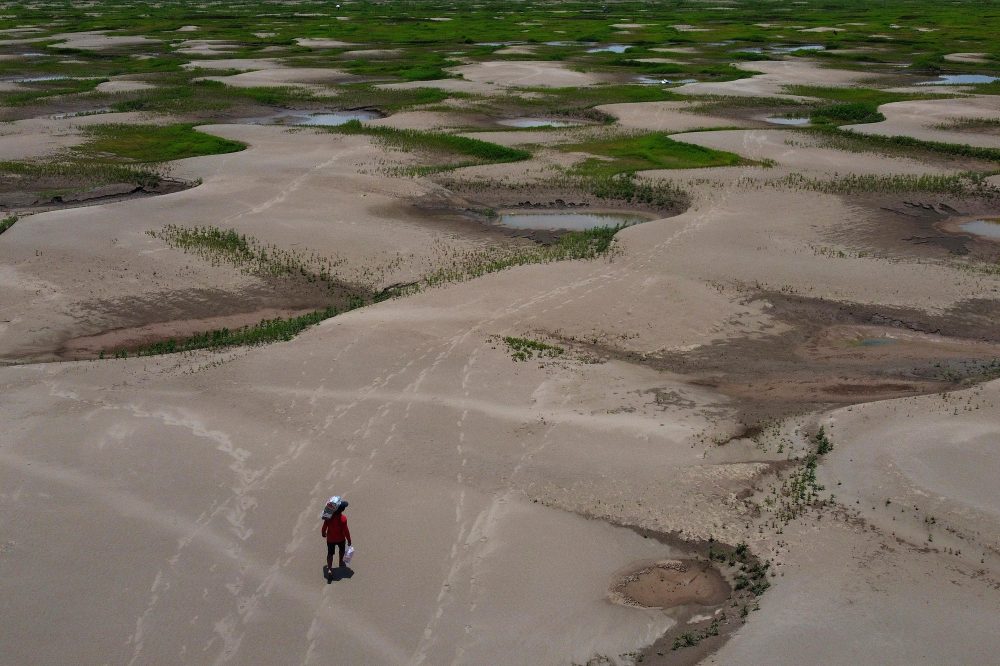
Weaver, who didn’t participate in the study but resides in the Pacific Northwest, noted that his region’s 2021 heat dome and drought exemplified what Kim described as a prime example of these rapidly increasing events. Additional cases include the 2022 heat and drought affecting China’s Yangtze River region and the 2023-24 record temperatures and drought conditions in the Amazon, Kim noted.
“The 2021 Pacific Northwest heat dome illustrates how quickly these compound extremes can escalate — temperatures near 50°C (122 degrees Fahrenheit) in Lytton (British Columbia) were followed by rapid drying and extreme wildfire conditions that destroyed the community,” Weaver, a former Canadian legislator, wrote in an email.
The research identified the most significant increases in heat-triggered droughts across South America, western Canada, Alaska, the western United States, and portions of central and eastern Africa.
Kim and Yeh observed what they termed a “change point” occurring around 2000, when heat-followed-by-drought situations began accelerating dramatically.
Jennifer Francis, a climate researcher at the Woodwell Climate Research Center who wasn’t involved in the study, noted that this turning point was “eerily coincident with the onset of rapid Arctic warming, sea-ice loss, and decline in spring snow cover on Northern Hemisphere continents.”
Beyond long-term warming driving more compound extreme events, Kim reported observing an acceleration in heat exchange patterns between land and atmosphere just before that 2000 turning point. He and Yeh theorized that Earth may have crossed a “tipping point” where these changes become irreversible.
Multiple aspects of Earth’s climate and ecological systems shifted during the late 1990s, possibly triggered by a significant El Niño event in 1997-98, noted Gerald Meehl, a climate scientist at the National Center for Atmospheric Research who wasn’t involved in the research. However, he cautioned that determining whether these represent permanent changes remains difficult.
Computer modeling suggests another major El Niño — a natural Pacific Ocean warming pattern that disrupts global weather systems — may develop later this year.