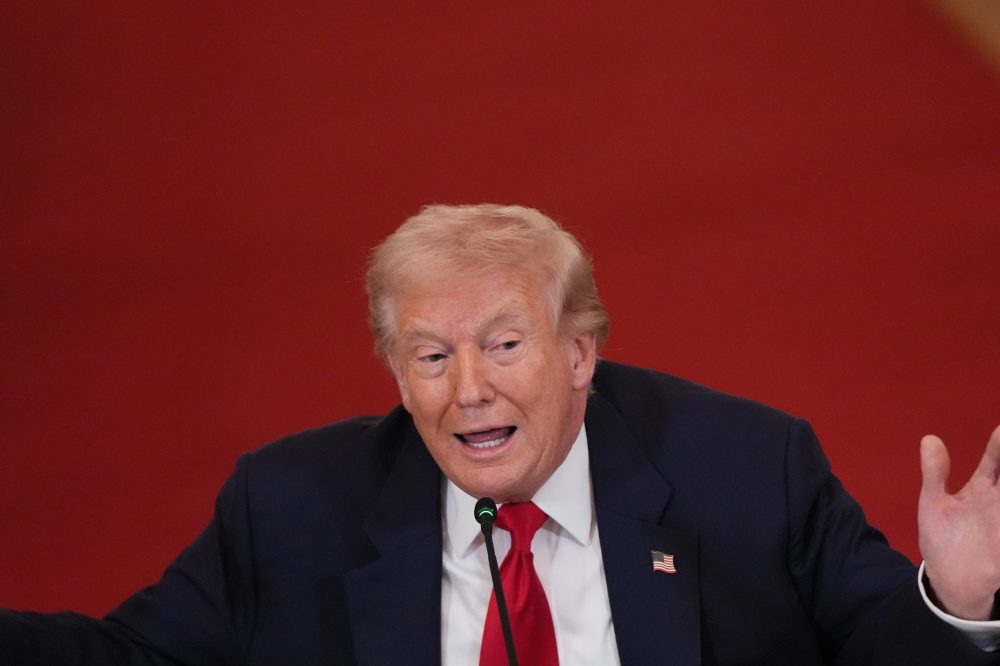

DORAL, Fla. — President Donald Trump plans to meet with leaders from across Latin America on Saturday at his golf resort near Miami, as his administration attempts to show continued dedication to strengthening America’s foreign policy focus on regional neighbors while managing multiple international crises.
The meeting, called the “Shield of the Americas” summit, takes place just two months following Trump’s bold military operation targeting Venezuelan President Nicolás Maduro, bringing him and his spouse to the United States to face charges related to drug conspiracy.
Even more significant is Trump’s recent decision to partner with Israel in launching military action against Iran a week ago, a conflict that has already resulted in hundreds of casualties, disrupted worldwide financial markets, and destabilized the broader Middle East region.
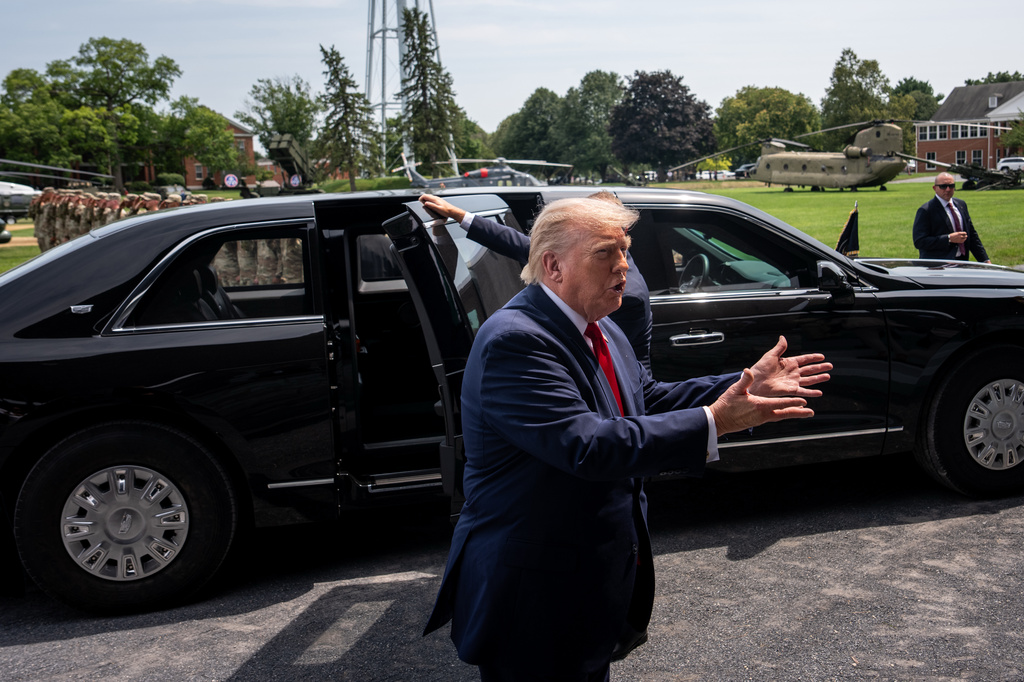
Trump’s availability for the Latin American gathering will be constrained, as he must also travel to Dover Air Force Base in Delaware to attend the dignified transfer ceremony for six American service members who died in a drone attack on a Kuwait command facility, occurring one day after the U.S.-Israel military campaign against Iran began.
However, through this summit, Trump aims to redirect focus toward the Western Hemisphere, even if temporarily. He has promised to reestablish American leadership in the area and counter what he views as decades of Chinese economic expansion in America’s traditional sphere of influence.
“Under previous leaders, we grew obsessed with every other theater and every other border in the world except our own,” Defense Secretary Pete Hegseth told regional leaders and defense ministers who gathered in Florida this week for talks on countering drug cartels. “These elites reduced our power and presence in this hemisphere, opting for a benign neglect that was anything but benign.”
Confirmed participants from Argentina, Bolivia, Chile, Costa Rica, the Dominican Republic, Ecuador, El Salvador, Guyana, Honduras, Panama, Paraguay, and Trinidad and Tobago will attend the event at Trump National Doral Miami, the same golf facility scheduled to host the Group of 20 summit later this year.
This summit concept for conservative-minded leaders throughout the hemisphere developed after the cancellation of what would have been the 10th Summit of the Americas, which was abandoned during last year’s U.S. military buildup near Venezuela’s coast.
The Dominican Republic, serving as host and under White House pressure, had excluded Cuba, Nicaragua and Venezuela from the regional meeting. However, when leftist leaders from Colombia and Mexico threatened to boycott in protest — and without Trump’s confirmed attendance — Dominican President Luis Abinader made a last-minute decision to delay the event, referencing “deep differences” across the region.
The Shield of the Americas title reflects Trump’s vision for an “America First” regional foreign policy approach that utilizes U.S. military and intelligence resources not seen in the area since the Cold War concluded.
Significantly absent will be the region’s two major powers — Brazil and Mexico — along with Colombia, historically central to U.S. anti-drug efforts in the region.
Richard Feinberg, who assisted in planning the original 1994 Summit of Americas while serving on the Clinton administration’s National Security Council, noted the sharp differences between then and now.
“The first Summit of the Americas, with 34 nations and a carefully negotiated comprehensive agenda for regional competitiveness, projected inclusion, consensus and optimism,” said Feinberg, now professor emeritus at the University of California-San Diego. “The hastily convened Shield of the Americas mini-summit conjures a crouched defensiveness, with only a dozen or so attendees huddled around a single dominant figure.”
Following his return to office, Trump has prioritized combating Chinese influence throughout the hemisphere. His national security approach features what he calls the “Trump Corollary” to the 19th century Monroe Doctrine — which originally sought to prevent European interference in the Americas — by focusing on Chinese infrastructure projects, military partnerships and investments in regional resource sectors.
The initial example of this more assertive strategy was Trump’s pressure on Panama to exit China’s Belt and Road Initiative and examine long-term port agreements with a Hong Kong-based company, following U.S. threats to reclaim the Panama Canal.
Most recently, the American capture of Maduro and Trump’s commitment to “run” Venezuela could disrupt oil exports to China — previously Venezuela’s largest crude oil customer before the operation — and bring one of Beijing’s strongest regional partners under Washington’s influence. Trump is set to visit Beijing later this month for discussions with Chinese President Xi Jinping.
Yet even leaders closely supportive of Trump have shown hesitation to cut Chinese connections, according to Evan Ellis, a specialist on Chinese regional involvement at the Center for Strategic and International Studies.
For numerous nations, China’s trade-centered diplomacy addresses crucial financial needs in an area facing substantial development obstacles from poverty alleviation to infrastructure limitations. Meanwhile, Trump has reduced foreign aid to the region while rewarding countries supporting his immigration enforcement policies — an approach that remains unpopular across the hemisphere.
“The U.S. is offering the region tariffs, deportations and militarization whereas China is offering trade and investment,” said Kevin Gallagher, director of Boston University’s Global Development Policy Center, who has written extensively about China’s economic diplomacy in the Americas. “Leaders in the region would do well to remain neutral and hedge, such that they can leverage increased U.S.-China rivalry to their own benefit.”
Before the summit, Trump revealed his appointment of Kristi Noem, recently removed from her role as Department of Homeland Security secretary, as his special envoy for the Shield of the Americas.
Noem indicated Trump will reveal “a big agreement” during the summit focusing on “how we’re going to go after cartels and drug trafficking in the entire Western Hemisphere.”