Drivers in the area will need to find alternate routes as a section of Reybold Road remains completely impassable due to urgent utility repairs.
The Delaware Department of Transportation reports that both eastbound and westbound lanes are blocked between Salem Church Road and Whitewood Court while crews address emergency utility infrastructure issues.
Motorists should plan for delays and seek alternative routes until the emergency repairs are completed and the roadway can safely reopen to traffic.
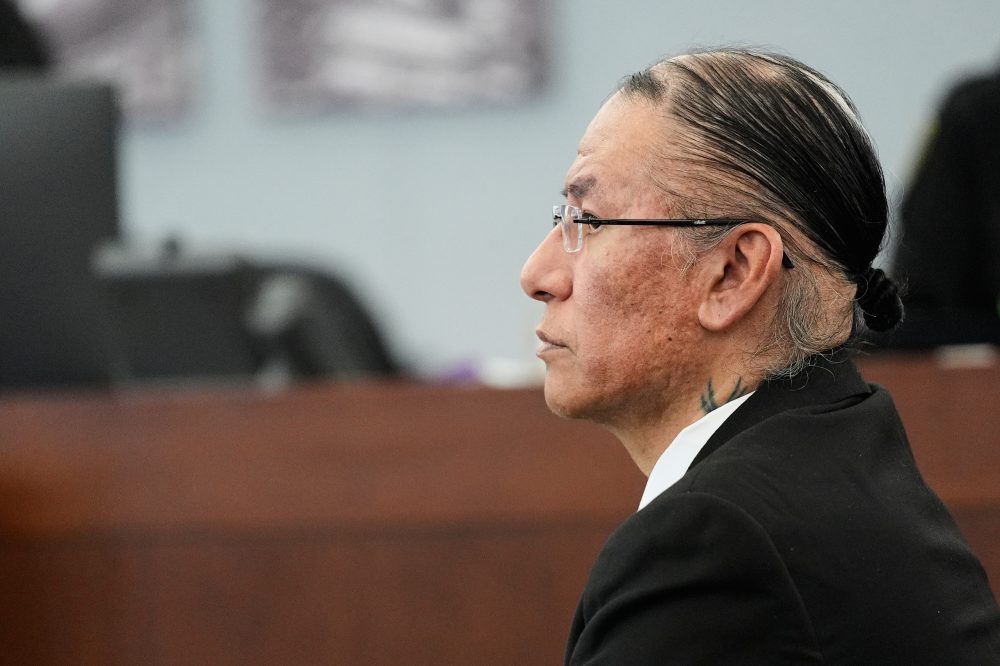
LAS VEGAS — A former actor from the acclaimed movie ‘Dances With Wolves’ was set to receive his prison sentence Wednesday morning following his conviction for sexually assaulting Indigenous women and girls in a case that has deeply impacted Native American communities nationwide.
Nathan Chasing Horse’s sentencing follows his conviction last month on 13 out of 21 criminal charges brought against him. The majority of these charges involved his actions against a victim who was just 14 years old when the abuse began. While convicted on most counts, Chasing Horse was found not guilty on several sexual assault charges.
Throughout the proceedings, Chasing Horse maintained his innocence. His defense lawyer Craig Mueller challenged the primary victim’s reliability, describing her as a “scorned woman.”
The convicted actor is looking at a mandatory minimum sentence of 25 years behind bars.
After the trial concluded, Mueller attempted to secure a new trial by filing a motion that claimed a witness lacked proper qualifications to discuss grooming behavior and that the time limit for prosecution had passed. The court rejected this motion.
Wednesday’s sentencing concludes a multi-year legal battle that began when authorities first took Chasing Horse into custody and formally charged him in 2023. His initial arrest created ripple effects throughout Native American communities, prompting law enforcement agencies in multiple states and Canada to pursue additional criminal cases.
Canadian authorities in British Columbia filed sexual assault charges against Chasing Horse in February 2023, stemming from an alleged incident that occurred in September 2018 near the village of Keremeos, located approximately four hours east of Vancouver. The Canadian case was temporarily suspended in November 2023 due to the ongoing U.S. proceedings but later resumed.
According to Damienne Darby, communications counsel for the British Columbia Prosecution Service, Canadian prosecutors will evaluate their next moves once Chasing Horse has completed all appeals in his U.S. case.
Additionally, the Tsuut’ina Nation Police Service in Alberta confirmed in a statement following the conviction that an active warrant remains against Chasing Horse, and they continue coordinating with the Alberta Crown Prosecutors Office.
During the trial, Nevada prosecutors argued that Chasing Horse exploited his status as a Lakota medicine man to target Indigenous women and girls for abuse.
Deputy District Attorney Bianca Pucci informed jurors that Chasing Horse had “spun a web of abuse” that trapped numerous women over nearly two decades.
Three women testified about their experiences of sexual assault at the hands of Chasing Horse. The jury found him guilty on charges related to all three victims.
After gaining recognition for his role as Smiles a Lot in Kevin Costner’s Academy Award-winning “Dances With Wolves,” Chasing Horse, who was born on South Dakota’s Rosebud Reservation, became a fixture at powwows and healing ceremonies across Native American communities.
Several victims testified about participating in his ceremonies or seeking his help for medical issues.
The primary victim was 14 years old in 2012 when prosecutors say Chasing Horse manipulated her by claiming spirits required her to lose her virginity to heal her cancer-stricken mother. He then assaulted her and threatened that revealing the abuse would result in her mother’s death, according to Pucci. These assaults continued over several years, prosecutors stated.
SANTA FE, N.M. — Several states controlled by Democratic leadership are enacting new legislation aimed at preventing federal immigration enforcement officers from being positioned at voting sites during upcoming elections, citing concerns about potential voter intimidation.
This week, New Mexico became the first state to enact a law prohibiting armed federal agents from being stationed at polling locations, responding to worries about President Donald Trump’s immigration enforcement policies. At least six other states with Democratic leadership are weighing similar legislation.
These legislative efforts reflect significant skepticism among blue states toward the Trump administration, particularly given their experiences with aggressive immigration enforcement, threats of military deployment, and potential reductions in federal funding. State officials’ concerns intensified after the president indicated interest in federalizing U.S. elections, despite constitutional provisions that assign election administration to individual states.
Trump administration officials maintain they have no intentions of positioning immigration agents at polling places. During recent congressional testimony, leaders from Immigration and Customs Enforcement and Border Patrol responded “No, sir” when questioned about plans to station personnel at voting sites. Heather Honey, the Department of Homeland Security’s deputy assistant secretary for election integrity, recently assured state election officials that claims about immigration agents being deployed to polls “is simply not true.”
Despite these assurances, eight state election officials are seeking written guarantees from Trump’s nominee to replace Kristi Noem as Department of Homeland Security secretary. In a Monday letter to the president’s choice for the position, Markwayne Mullin, the group requested formal commitments “that ICE will not have a presence at polling locations during the 2026 election cycle.”
Existing federal statutes already ban the deployment of armed federal personnel to voting locations except when “necessary to repel armed enemies of the United States,” yet Democratic legislators, election administrators, and governors continue expressing alarm.
“The fear is that the Trump administration will attempt to evoke a national emergency or execute some other deployment of federal agents or military troops in order to interfere with elections and intimidate voters,” stated Connecticut Democratic state Rep. Matt Blumenthal, who co-authored legislation establishing a 250-foot buffer zone around polls for federal agents along with other restrictions on federal involvement. “And we’re not going to let that happen.”
Similar proposals to prohibit immigration agents at voting sites are advancing in Democratic-led states of various sizes, spanning from California to Rhode Island.
Virginia legislators are considering a measure that would prevent federal civil immigration officials from conducting arrests within 40 feet of polling places or courthouses. However, the polling site provision remains under discussion, and its inclusion in the final legislation remains uncertain.
New Mexico’s recently enacted law forbids orders that would place any armed individual in the “civil, military or naval service of the United States” at local voting locations and adjacent parking areas, or within 50 feet of monitored ballot collection boxes, beginning with early voting periods.
The New Mexico statute, effective in May and applicable to the state’s June 2 primary election, allows individuals who face intimidation or interference at polls from federal agents or military personnel to pursue civil litigation for relief in state courts. State prosecutors and local and state election administrators may also file lawsuits, with courts authorized to impose penalties up to $50,000 per violation.
The law also blocks modifications to voter qualifications and election procedures that contradict New Mexico statutes, as Trump encourages the U.S. Senate to pass legislation imposing stringent new citizenship verification requirements for elections nationwide.
State measures designed to counter federal election law will likely encounter legal obstacles due to the supremacy clause in the U.S. Constitution, which establishes that federal law takes precedence over state law.
“It could set up a direct clash between state governments and the federal government. We don’t know exactly how that’s going to go,” explained Richard Hasen, director of the Safeguarding Democracy Project at the UCLA School of Law. “Given the supremacy clause, there’s only so much states can do.”
New Mexico Gov. Michelle Lujan Grisham explained that her skepticism toward the Trump administration’s election oversight stems from ongoing Department of Justice attempts to obtain detailed state voter information without providing explanations, plus Trump’s persistent false assertions about widespread fraud in the 2020 presidential election.
“Do I believe the federal government and people in the White House? No,” stated Lujan Grisham, whose term concludes at the end of 2026.
“We are sending a message to everyone: We will hold free and fair elections, and New Mexicans will be safe in every ballot location and that’s our responsibility,” the Democratic governor declared Tuesday at a press conference. “The Constitution says the states run their elections, and that bill makes that painfully re-clear to the federal government.”
Republican legislators in New Mexico, who hold minority status in the state legislature, unanimously opposed the measure.
“I would question strongly why we have to do this other than just to have to poke the president in the eye,” stated GOP state Sen. Bill Sharer of Farmington during legislative floor discussions.
State Sen. Katy Duhigg, an Albuquerque Democrat who co-sponsored the measure, described it as “better safe than sorry with democracy.” She explained her desire to “make sure that there was some sort of tool that our local law enforcement would have at their disposal if something does happen, if the federal government does in some manner try to interfere with our elections.”
Connecticut’s proposed legislation, set for a hearing this week, also addresses federal attempts to confiscate ballots or other election materials. The measure would mandate that state officials receive advance notice of such actions.
Blumenthal acknowledged that state legislators cannot prevent seizures like the January FBI search at an election facility in Fulton County, Georgia, a Democratic stronghold encompassing Atlanta. However, he noted “there might be an opportunity for our state attorney general’s office or the secretary of the state’s office to challenge that.”
LONDON – The United Kingdom’s government made public Wednesday its initial batch of records concerning Peter Mandelson’s appointment as US ambassador, revealing what officials knew about his connections to convicted sex offender Jeffrey Epstein.
Additional documents are anticipated in upcoming weeks, as Prime Minister Keir Starmer’s administration seeks to avoid interfering with an active police inquiry.
The released papers show several significant revelations from the appointment process.
RISK ASSESSMENT WARNINGS
A document marked “Advice to the prime minister” contained a background check that identified Mandelson’s connection to Epstein as presenting a “reputational risk.”
The record, based on investigations completed December 4, 2024, stated: “After Epstein was first convicted of procuring an underage girl in 2008, their relationship continued across 2009-2011, beginning when Lord Mandelson was Business Minister and continuing after the end of the Labour government.”
The assessment also noted: “Mandelson reportedly stayed in Epstein’s house while he was in jail in June 2009.”
Along with the background check, another briefing document indicated that Starmer’s former Chief of Staff Morgan McSweeney had conversations about Mandelson’s Epstein relationship, but Director of Communications Matthew Doyle was satisfied with how Mandelson answered inquiries about the contact.
Additional communications and follow-up inquiries to Mandelson regarding this relationship were not included in Wednesday’s document release.
STAFF WARNINGS
Government staff warned Starmer he would face greater scrutiny if problems arose from choosing a political appointee like Mandelson.
“If anything goes wrong, you could be more exposed as the individual is more connected to you personally,” officials cautioned before the appointment was made.
After allegations surfaced about Mandelson’s Epstein connections, which resulted in his termination last September, Downing Street launched a “fact-finding” investigation to determine what occurred during his selection process.
A summary of a fact-finding conversation between Starmer’s general counsel and National Security Adviser Jonathan Powell in September revealed that Powell characterized the appointment process as “unusual” and “weirdly rushed.”
Powell expressed concerns about Mandelson’s “reputation” during discussions with McSweeney.
The notes also show that Philip Barton, who was the top government official at the Foreign Office at the time, “also had reservations around the appointment.”
TERMINATION PAYMENT
Released records detail negotiations over Mandelson’s termination compensation following his dismissal. Officials reported these discussions started when Mandelson requested payment for the remaining “4-year salary costs of the fixed term appointment,” totaling 547,201 pounds ($733,523).
The government ultimately authorized 34,670 pounds in discretionary payments along with 40,330 pounds he was legally owed, for a combined total of 75,000 pounds.
BEIJING – Chinese lawmakers are poised to approve sweeping legislation Thursday that would establish a “unified” national identity for the nation’s 55 ethnic minority communities, according to a draft of the proposed law. Opponents argue the measure will further diminish the cultural heritage of non-Han Chinese populations and could criminalize anyone who opposes this forced “unity.”
The legislation, titled “Promoting Ethnic Unity and Progress,” seeks to build national cohesion and support the revival of the Chinese nation under Chinese Communist Party leadership, according to the draft document.
The National People’s Congress, China’s legislative body, plans to vote on the measure during the final session of its annual gathering.
China officially recognizes 56 distinct ethnic communities, with Han Chinese representing the overwhelming majority at more than 91% of the nation’s 1.4 billion residents.
The country’s minority populations—which include Tibetans, Mongols, Hui, Manchus, and Uyghurs—live primarily in territories covering approximately half of China’s landmass, areas often abundant in natural resources.
According to the proposed legislation, integration among ethnic communities would be encouraged through educational programs, housing policies, population movement, community activities, cultural initiatives, tourism development, and economic planning.
The law would require Mandarin as the primary instructional language in educational institutions and for governmental and official functions.
In situations where both Mandarin and minority languages appear together in public spaces, Mandarin must receive “prominence in placement, order, and similar respects,” the draft specified.
“The state respects and protects the learning and use of minority languages and scripts,” the document stated.
Religious organizations, faith-based educational institutions, and worship facilities must comply “to the direction of the Sinicization of religion in China,” the draft indicated.
The proposed law would also prohibit interference with marital decisions based on ethnic background, traditions, or religious beliefs, encouraging cross-ethnic marriages.
Allen Carlson, who serves as an associate professor of government at Cornell University and specializes in Chinese foreign policy, described the legislation as emphasizing assimilation.
“The law makes it clearer than ever that in President Xi Jinping’s PRC non-Han peoples must do more to integrate themselves with the Han majority, and above all else be loyal to Beijing,” Carlson explained, using the acronym for China’s official designation.
Minority affairs would become part of China’s broader social control framework, incorporating provisions for anti-separatist measures, frontier security, threat mitigation, and societal stability.
Foreign organizations and individuals who engage in activities against China “that undermine ethnic unity and progress or create ethnic separatism shall be pursued for legal liability in accordance with the law,” according to the draft.
A commentary in the government-controlled China Daily newspaper claimed the legislation underwent thorough legislative review, including multiple examinations and consultations with legislators and minority community representatives.
“The law stresses the protection of cultural traditions and lifestyles of all ethnic groups… it is misleading to claim that ethnic minorities in China must choose between economic development and cultural preservation,” the editorial stated.
Construction has been temporarily suspended on a major immigration detention facility in Maryland after a federal judge sided with state environmental concerns this week.
U.S. District Judge Brendan Hurson issued the restraining order Wednesday, putting work on hold for up to two weeks while the court reviews Maryland’s broader legal challenge to the project.
The facility, situated on 54 acres in Washington County, involves converting an existing warehouse into a detention center with capacity for 1,500 individuals. Federal officials have invested more than $100 million in the project, according to Maryland Attorney General Anthony Brown, who filed the lawsuit in February.
Brown’s legal team contended that the Trump administration bypassed required environmental assessments and failed to seek public comment before moving forward with construction.
In his ruling, Judge Hurson determined the state demonstrated federal officials “likely failed to comply with their obligations under (the National Environmental Policy Act).”
The judge further noted that “Defendants do not appear to have taken a ‘hard look’ at the potential environmental consequences of their plans for the Williamsport Warehouse.”
The Department of Homeland Security, which oversees Immigration and Customs Enforcement, had previously indicated willingness to collaborate with state authorities on expanding detention capacity. However, federal officials have disputed Maryland’s claims that environmental issues are the true basis for the legal action.
The Trump administration’s expanded immigration enforcement efforts have drawn sharp criticism from civil rights organizations, who argue the policies violate constitutional protections and create dangerous conditions for minority communities.
Trump has defended his immigration policies as necessary measures to combat illegal border crossings and enhance national security.
Attorney General Brown celebrated the court decision as a victory for proper legal procedures.
“Though temporary, this ruling stops the construction of this massive immigration detention center while our lawsuit continues to play out in court. We will not let DHS and ICE rush through the proper legal process in their haste to ramp up deportations,” Brown stated.
The chief executive of Samsung Display expressed concerns Thursday about potential cost increases stemming from ongoing Middle East warfare, according to media reports from Seoul.
The company leader told reporters that military conflicts in the region could lead to higher expenses for energy and raw materials that are essential for manufacturing flat panel displays found in smartphones and various electronic devices.
The warning comes as global supply chains continue to face disruptions from geopolitical tensions affecting key resource markets worldwide.
TAIPEI, March 12 – The investment fund sector in Taiwan is preparing for substantial growth, with industry leaders projecting total managed assets to reach T$30 trillion ($968 billion) over the coming three years.
This projection marks a significant 36% jump from today’s T$22 trillion in combined onshore and offshore assets under management, according to Paul You, who leads Taiwan’s Securities Investment Trust & Consulting Association.
The anticipated growth stems from changing investment behaviors among Taiwanese investors, who are moving away from picking individual stocks toward exchange-traded funds that offer diversified market exposure, You explained during a recent interview with Reuters.
The transformation signals a maturing investment landscape in Taiwan as retail investors increasingly embrace professionally managed funds and broader market strategies rather than attempting to select winning individual securities.
A professional basketball player is speaking out about alleged threats from her former boyfriend, an NFL rookie, in court documents filed for protection.
Rickea Jackson, who plays for the Los Angeles Sparks, successfully obtained a temporary restraining order against James Pearce Jr., a first-year player with the Atlanta Falcons, according to reports from ESPN and TMZ released Wednesday.
The protective order came after an incident on February 7 in Doral, Florida, where authorities say Pearce deliberately crashed his car into Jackson’s vehicle multiple times. Police report that Pearce then struck an officer with his car before driving away from the scene.
Law enforcement subsequently took Pearce into custody on multiple serious charges, including two counts of aggravated battery with a deadly weapon, aggravated stalking, fleeing police, and aggravated battery against a law enforcement officer.
In her sworn statement to the court, Jackson detailed a pattern of threatening behavior. “James has threatened to kill me, James has threatened to harm me, James has threatened to injure me, James has threatened to place a bag over my head, and James has verbally and physically abused me on more than one occasion,” she wrote according to the reports.
Jackson also revealed that Pearce attempted to pay her significant sums of money before the February confrontation – offering $75,000 for a single visit or $200,000 “to remain in a relationship with him.” She has indicated her willingness to provide testimony against him in legal proceedings.
The court’s protective order prohibits Pearce from making any contact with Jackson and requires him to stay at least 500 feet away from her residence and workplace, plus 100 feet from her car. A court hearing to determine whether the order should become permanent is scheduled for April 21.
ESPN’s reporting indicates that police received at least seven additional 911 calls in the months leading up to the February incident, with callers reporting that Pearce was stalking or harassing an unidentified girlfriend.
The 22-year-old Pearce was Atlanta’s first-round draft selection in 2025, chosen 26th overall. During his rookie campaign, he posted impressive statistics with 10.5 sacks, one forced fumble, one fumble recovery, five pass deflections and 26 tackles across 17 games with three starts, earning him third place in AP Defensive Rookie of the Year balloting.
Jackson, age 24, was selected fourth overall by Los Angeles in the 2024 WNBA Draft. In her second professional season, she averaged 14.7 points, 3.2 rebounds and 1.7 assists over 38 games with 37 starts, finishing ninth in league MVP voting.
The U.S. dollar climbed to its strongest position this year on Thursday as surging oil costs raised concerns about inflation and prompted expectations that central banks worldwide may need to tighten monetary policies more aggressively.
During early Asian market sessions, the euro weakened by 0.1% against the dollar, trading at $1.1549 and approaching its lowest point since November. The Japanese yen also declined, briefly crossing the 159-per-dollar threshold and falling as much as 0.2% to 159.23, nearing its weakest position since July 2024.
Other major currencies also lost ground, with the Australian dollar declining 0.1% to $0.7148, the New Zealand dollar dropping 0.1% to $0.5907, and the British pound falling 0.2% to $1.3385.
Energy market turbulence intensified after Iran warned that global oil prices could reach $200 per barrel following its military strikes on commercial vessels Wednesday, which caused shipping traffic through the critical Strait of Hormuz to slow dramatically.
Economic experts caution that rising oil prices amid supply concerns will increase energy expenses and hamper worldwide economic growth, with risks mounting as the regional conflict continues.
President Donald Trump stated Wednesday that the United States was in “very good shape” regarding its conflict with Iran and that America would “look very strongly at the Straits.” Despite this, three sources with knowledge of the situation told Reuters that U.S. intelligence suggests Iran’s leadership remains largely stable and unlikely to collapse soon, even after nearly two weeks of continuous bombardment by U.S. and Israeli forces.
“President Trump keeps on saying, even overnight, that the war will end soon — it’s unclear to us that it’s really up to him,” commented Rodrigo Catril, a currency analyst at National Australia Bank in Sydney.
“We should expect ongoing volatility in energy prices,” he noted during a podcast appearance.
“The Strait of Hormuz is not just about oil, it’s about LNG, it’s about fertilizers,” he explained. “The longer that there’s no ability to go through, the pressure on prices will continue.”
Brent crude jumped 6.9% to $98.30 during early Asian trading, despite the International Energy Agency’s Wednesday announcement of a record 400 million barrel release from strategic reserves to counter the global price spike.
The Cboe oil volatility index, which has climbed in seven of the eight trading sessions since the conflict began, soared Wednesday to 121.01, reaching levels not seen since the early pandemic period in 2020.
Market confidence suffered another blow after the Trump administration Wednesday initiated a new trade probe examining industrial overcapacity among 16 major trading partners, an effort to restore tariff leverage after the Supreme Court invalidated a key component of Trump’s tariff strategy last month.
“U.S. breakeven inflation and swap spreads are on the march wider,” ING analysts noted in a client report, adding that eurozone 10-year swap rates are also approaching 3%.
Trading data suggests investors now anticipate central banks will implement tighter monetary policies sooner than previously expected. The European Central Bank may raise rates as early as June, while Australia’s Reserve Bank could potentially hike rates at next week’s meeting and again in May, according to LSEG information.
Federal Reserve futures markets show diminished expectations for policy easing this summer, with a 50.7% probability that the Fed will skip a rate cut at its July meeting, up from 43.4% the previous day, based on CME Group’s FedWatch tool.
In offshore trading, the dollar remained steady against the Chinese yuan at 6.8766. Cryptocurrency markets also declined, with Bitcoin falling 0.6% to $70,231.21 and Ethereum dropping 0.8% to $2,053.31.
Authorities in Australia have discovered two bodies in a vehicle while conducting a search operation for Chinese backpackers who vanished in Queensland’s flood-ravaged areas, according to reports from Thursday.
The Australian Broadcasting Corporation stated that police sources confirmed the bodies found in the car are believed to be the missing tourists.
Emergency responders and police diving teams were dispatched to the Gympie region in Queensland on Thursday to verify the identities of the deceased, ABC News reported.
According to an official police statement, the missing travelers – a man aged 26 and a woman aged 23 – had been journeying toward North Burnett in Queensland, located approximately 380 kilometers (236 miles) northwest of state capital Brisbane.
Gympie’s mayor Glen Hartwig called the situation an “absolute tragedy.”
“These people have come to Australia to see our beautiful country … and tragically they’ve ended up losing their lives,” Hartwig stated to ABC News.
Severe flood alerts continue across sections of Queensland and the Northern Territory following relentless rainfall that caused waterways to overflow, isolating rural communities and prompting the evacuation of hundreds of people.
Television coverage from Wednesday showed a helicopter rescuing two individuals from a vehicle trapped in crocodile-infested waters at a creek crossing close to Katherine in Northern Territory.
Officials have advised residents against attempting to drive through flood zones, noting that multiple crocodiles have been spotted in flooded neighborhoods surrounding Katherine.
OSLO – Authorities in Norway announced Wednesday that three individuals have been taken into custody following the weekend bombing incident at the United States embassy in the capital city.
The explosion occurred during the early morning hours on Sunday when an improvised explosive device detonated near the embassy’s consular entrance, according to Norwegian officials. While the blast caused significant damage to the building’s entrance area, no one was hurt in the incident.
Police Attorney Christian Hatlo addressed the media about the arrests, stating: “They are suspected of a terror bombing.”
Earlier this week, law enforcement officials released surveillance footage showing one person of interest – an individual dressed in dark clothing with their face concealed by a hood, carrying what appeared to be a backpack or bag.
Energy market volatility driven by escalating Middle East conflicts won’t translate into increased American oil drilling, according to the head of a major oilfield services firm.
Andy Hendricks, chief executive of Patterson-UTI, explained Tuesday that companies need market stability to justify ramping up production, despite crude prices reaching $119 per barrel earlier this week – the highest point since August 2022.
The dramatic price swings began in late February when Iran blocked the Strait of Hormuz, a critical shipping channel that forced Middle Eastern oil producers to slash output. During Monday’s trading alone, oil prices fluctuated within a $35.80 range before settling Tuesday at $83.45 per barrel, dropping $11.32 as President Donald Trump forecasted reduced tensions.
“The challenge is in December, when we and the oil and gas companies we work for were all working on our budgets, oil was in the $50s,” Hendricks explained during an interview, noting that bringing new wells into production requires more than six months.
“What is the true price of oil going to be in six to nine months?” he questioned.
American oil output currently sits near historic highs at 13.7 million barrels daily last month, based on Energy Information Administration data. The Permian Basin produced 6.59 million barrels per day, slightly below last year’s peak of 6.74 million barrels daily.
According to Hendricks, future US production levels will largely depend on how quickly Iranian tensions ease and normal shipping resumes through the Strait of Hormuz.
“I think the risk is that Permian oil production starts to slow this year. If it does slow this year that will probably cause prices to move up and then that will cause the industry to start to pick up activity,” he stated.
International oil and gas merger and acquisition activity continued its sluggish pace for a second consecutive year in 2025, reaching just $18 billion, according to a Wednesday report from analytics company Enverus.
The firm attributed the weak deal activity to a shortage of premium resources and depressed oil prices, pushing transaction values far beneath the typical $60 billion annual average.
“International M&A is being shaped less by appetite and more by availability,” said Andrew Dittmar, principal analyst at Enverus.
“Majors have pulled back significantly from the M&A market and focused on organic expansion. Independent and private buyers have stepped in to acquire mature assets and smaller interests these firms are shedding,” Dittmar added.
South American markets dominated announced deal values, representing half of all international transactions. This activity centered around consolidation within Argentina’s Vaca Muerta shale region and strategic repositioning across Brazilian markets.
Argentina experienced its most active merger and acquisition period since 2014, driven by regional specialists expanding operations after international oil companies departed. Vista Energy’s acquisition of Petronas Argentina for approximately $1.45 billion in April marked a significant transaction.
In Brazil, major oil companies and government-owned entities divested mature offshore properties to local operators while simultaneously increasing investments in deepwater exploration projects.
Enverus anticipates continued weakness in international upstream deal activity unless additional development-ready resources enter the marketplace. However, the firm notes that rising crude prices driven by geopolitical tensions could enhance short-term cash flows available for acquisitions.
Market volatility may create challenges by expanding the gap between buyer and seller price expectations, potentially reducing transaction volume until market conditions stabilize.
“If higher prices prove durable it will cause a resurgence of interest in expanding global supply, unlocking more development projects and broadening buyer appetite,” Dittmar said.
Delaware Department of Transportation officials have temporarily closed the eastbound left turn lane on Route 40 at the intersection of Porter Road and Salem Church Road.
The lane closure is necessary to accommodate construction activities in the area. DelDOT reports the restriction will stay in place until 5 a.m.
Motorists traveling eastbound on Route 40 should plan alternate routes or expect delays when attempting to make left turns at this location during the closure period.
Delaware Department of Transportation officials have implemented lane closures on westbound Route 40 that will affect traffic flow at two key intersections through early morning hours.
Both right and left turning lanes are currently blocked at the Porter Road and Salem Church Road intersections along westbound Route 40, according to DelDOT’s traffic incident reporting system.
The lane restrictions stem from ongoing construction work in the area and are expected to remain in place until 5 a.m.
Motorists traveling through the area should plan for potential delays and consider alternate routes if possible during the closure period.
Motorists using Interstate 95 northbound are encountering traffic delays due to ongoing construction work that has shut down one lane of travel.
Delaware Department of Transportation reports that construction crews have closed the right lane on northbound I-95 in the stretch between the toll plaza and the welcome center.
Drivers should plan for potential delays and consider using alternate routes if possible while the construction work continues in this area.
Delaware Department of Transportation officials have temporarily shut down the right shoulder along a section of Ingram Branch Road as construction crews continue their work in the area.
The shoulder closure affects the stretch of roadway running from Whiteleysburg Road to Brownsville Road, creating potential delays for drivers traveling through the zone.
Transportation officials indicate the restriction will remain active until 5 PM today, after which normal traffic patterns should resume.
Motorists are advised to use caution when driving through the construction zone and allow extra travel time to reach their destinations.
Delaware State Police are working to determine what caused a deadly head-on collision that took the life of a Pennsylvania man Tuesday afternoon in Hockessin.
The crash happened around 1:30 p.m. on March 10, 2026, along Lancaster Pike just south of Mc Govern Road. According to investigators, a Hyundai Sonata heading north veered across the center line and slammed directly into an oncoming Chevrolet Silverado traveling south.
The Hyundai’s driver, a 65-year-old Landenberg, Pennsylvania resident, was rushed to a nearby hospital where he died from his injuries. Authorities are not releasing his identity until relatives have been contacted.
The Silverado’s operator, a 79-year-old Hockessin man, was also hospitalized but is expected to recover from injuries that are not considered life-threatening.
Traffic was diverted from the area for roughly three hours as emergency crews responded and investigators documented the scene.
The case remains under active investigation by Delaware State Police Troop 2’s Collision Reconstruction Unit. Authorities are asking anyone who saw the crash happen or has information that could help investigators to reach out to Corporal D. McKenna at (302) 365-8486. Tips can also be shared through private messages to Delaware State Police on Facebook or by calling Delaware Crime Stoppers at 1-800-847-3333.
Those affected by sudden loss or crime-related trauma can access support services around the clock through the Delaware State Police Victim Services Unit and Delaware Victim Center. The free helpline is available at 1-800-VICTIM-1 (1-800-842-8461), and assistance can also be requested via email at [email protected].
The remarkable success of American farming over the last hundred years stems from a powerful combination of innovation and investment, according to the National Association of Wheat Growers. Producers have managed to increase food production while using less land, enhancing environmental practices, and bolstering global food security through partnerships with universities and government researchers.
This collaborative relationship between wheat producers, academic institutions, and federal agencies has proven crucial for developing practical solutions to combat plant diseases, boost crop yields, preserve natural resources, and maintain America’s edge in international agriculture markets.
However, a troubling shift has emerged as the United States reduces its commitment to agricultural research while international rivals dramatically increase their investments. Data from the USDA reveals that China now dedicates double the resources to agricultural research and development compared to America, a concerning development for the future of domestic farming competitiveness.
Several key federal initiatives demonstrate the importance of coordinated research efforts for wheat production. The United States Wheat and Barley Scab Initiative brings together researchers nationwide to fight Fusarium Head Blight, a devastating crop disease. The Wheat Resiliency Initiative targets new threats like stripe rust, bacterial leaf streak, Hessian fly, and wheat stem sawfly that can severely damage harvests. Additionally, the Small Grains Genomic Initiative advances genetic studies to create improved wheat varieties with better yields and disease resistance.
The financial benefits of these research investments are substantial. Economic studies show the U.S. Wheat and Barley Scab Initiative has delivered approximately $71 in economic value for every dollar invested, through prevented crop losses, enhanced varieties, and improved disease control methods.
The National Wheat Improvement Committee will soon visit Washington, D.C., where farmers and university scientists will meet with Congressional representatives to advocate for sustained or increased research funding. These programs represent essential investments in America’s food supply and global food security rather than abstract spending.
Recent successes highlight the value of continued research support. The USDA recently unveiled new spring wheat germplasm that could dramatically reduce losses from Fusarium Head Blight, a problem that has plagued growers for years. Such scientific breakthroughs require time and consistent federal research investment to achieve.
As Congress prepares fiscal year 2027 budget discussions and the Trump Administration works to enhance America’s global competitiveness, renewing commitment to public agricultural research must become a top priority. Both private sector innovation and government-funded research are essential for maintaining agricultural leadership.
For wheat producers and the broader agricultural community, research funding represents more than scientific investment – it secures the future of American farms, rural areas, food security, and national defense.
Delaware State Police have taken a 57-year-old Lewes resident into custody after he allegedly broke into an occupied home and physically assaulted one of the residents during the early morning hours of March 10, 2026.
Law enforcement officers were dispatched to a home in the 19000 block of Plantation Road in Lewes around 2:00 a.m. after receiving reports of an active break-in. Upon arrival, officers encountered residents who were shouting and gesturing toward the direction where the intruder had fled.
Police quickly apprehended the suspect, later identified as Dale Andrews, without any resistance. According to the investigation, Andrews had gained entry to the home by walking through an unlocked door and then physically grabbed a 57-year-old male resident. He fled the scene after being confronted by another person inside the house. The male victim sustained minor injuries during the incident.
Following his arrest, Andrews was transported to Troop 7 for processing. He now faces multiple charges including first-degree burglary of an occupied dwelling causing injury, which is classified as a felony, as well as offensive touching.
After appearing before Justice of the Peace Court 11 for arraignment, Andrews was remanded to Sussex Correctional Institution where he is being held on $20,500 cash bond.
Baltimore successfully secured their coveted pass rusher by signing Trey Hendrickson to a massive four-year, $112 million deal, while Maxx Crosby remains with Las Vegas and Daniel Jones has locked in a new contract with Indianapolis during a hectic opening to the NFL’s new league year.
Wednesday’s most significant transaction occurred when Baltimore finalized their agreement with the four-time Pro Bowl defensive end just one day after withdrawing from a potential trade with the Raiders for Crosby due to medical concerns, according to a source familiar with the negotiations who spoke to The Associated Press.
The Cincinnati standout earned All-Pro honors in 2024 after topping the league with 17 1/2 sacks. Though injuries limited him to just seven contests this past season where he recorded four sacks, Hendrickson has achieved double-digit sack totals four times over his last five campaigns.
Baltimore’s swift change of direction came after Tuesday evening’s unexpected turn of events when the organization withdrew from a trade arrangement that would have sent two first-round selections to Las Vegas.
An individual with inside knowledge of Baltimore’s choice confirmed to the AP that Crosby did not pass his medical examination. The source requested anonymity due to the confidential nature of medical information.
The Raiders defender underwent surgical repair of a torn meniscus in his left knee during January. The injury forced him to miss his team’s final two regular season contests, despite his desire to continue playing through the ailment.
Las Vegas, which has been among the most active spenders during the early free agency period, now faces uncertainty regarding Crosby’s future. The organization maintains sufficient salary cap flexibility to retain the five-time Pro Bowl selection at his $30 million salary if alternative trade options don’t materialize. Sources confirmed Crosby returned to the team’s Nevada headquarters on Wednesday.
Jones and Indianapolis reached agreement on a two-year deal potentially worth $100 million, a knowledgeable source told the AP. The individual requested anonymity as the contract had not received official announcement.
The quarterback will earn $88 million across the next two seasons with $50 million in guaranteed money, avoiding the $37.8 million transition tag. Performance bonuses could add another $12 million to the total value.
Jones guided Indianapolis to an impressive 10-game stretch before the bye week. Following the break, he continued playing despite a hairline fracture in his left leg before sustaining a season-ending torn right Achilles tendon in early December.
The signal-caller established personal bests in passer rating (100.2) and completion percentage (68%) while Indianapolis ranked fifth league-wide in scoring at 28.9 points per contest before his injury.
All sources provided information to The Associated Press under anonymity agreements since organizations have not formally announced these transactions or developments.
Washington finalized terms with edge rusher K’Lavon Chaisson on a one-year, $12 million contract featuring $10.3 million guaranteed, his representation at Athletes First confirmed. Following their last-place defensive ranking, the Commanders also secured agreements with linebacker Leo Chenal and cornerback Amik Robertson after missing out on Hendrickson to Baltimore.
Additionally, Baltimore and Buffalo both modified their star quarterbacks’ contracts to generate additional salary cap flexibility for the new league year.
While Baltimore had hoped to complete a contract extension with Lamar Jackson before Wednesday’s league year commencement, that goal remains unmet. Instead, the Ravens restructured Jackson’s existing deal to create cap room, according to a source with knowledge of the arrangement who spoke anonymously due to the contract’s pending finalization.
Jackson has two remaining years on the five-year, $260 million agreement Baltimore awarded him in 2023.
Buffalo’s adjustment with Josh Allen creates approximately $12 million in crucial salary cap relief as the team enters the NFL’s new year, according to someone familiar with the negotiations who spoke to the AP.
WASHINGTON — While climate change typically disrupts wildlife reproduction cycles with devastating results, scientists have discovered an unusual success story in the animal kingdom: king penguins are actually thriving in our warming world.
New research tracking 19,000 king penguins on sub-Antarctic islands shows these birds now begin their mating season 19 days sooner compared to 2000. This earlier start has boosted their reproductive success by an impressive 40%, researchers reported Wednesday in Science Advances journal.
This timing shift represents a rare victory in what scientists call phenology — the study of seasonal biological events. Climate change has created widespread problems as species struggle to synchronize their life cycles, such as flowers blooming before bees arrive to pollinate them.
“Most birds, especially in North America, aren’t keeping pace with changes in phenology,” explained Casey Youngflesh, a biological sciences professor at Clemson University who wasn’t involved in the research.
Study co-author Celine Le Bohec, a seabird researcher with France’s CNRS science agency, called the king penguin’s adaptation remarkable. “Having a species like the king penguin adapt so well to seasonal shifts and timing changes is unprecedented,” Le Bohec said. “It’s quite striking.”
What sets king penguins apart from their struggling relatives is their extended breeding window, spanning from late October through March. This flexibility allows them to capitalize on changing conditions, unlike other penguin species facing population declines due to mistimed breeding cycles.
The birds are succeeding despite warming ocean waters and shifting food webs, according to Le Bohec and lead researcher Gaël Bardon from Monaco’s Scientific Centre.
“They can adjust really well their foraging behavior,” Bardon explained. “We know that some birds are going directly to the south, to the polar front. Some are going to the north. Some are staying around the colony and so they can adjust their behavior and that’s what makes king penguins cope really well with such changes for the moment.”
However, researchers caution this success story may be short-lived. “So that’s why for the moment the species is able to cope with this change, but till when? This, we don’t know, because it’s going very, very fast,” Le Bohec warned.
King penguins also benefit from dietary flexibility, able to hunt various prey beyond their preferred lanternfish when needed. Their abundant population currently earns them “least concern” conservation status, unlike other penguin species with more restrictive diets facing greater climate threats.
Michelle LaRue, an Antarctic marine science professor at New Zealand’s University of Canterbury, noted the penguins’ apparent advantage but questioned long-term implications. “The king penguin may have a bit of flexibility as a trick up its sleeve, and may be in a good position to adapt as their environment changes,” she said, while wondering about impacts beyond breeding since these birds live over 20 years.
External experts share the research team’s cautious optimism about declaring king penguins a climate change success story.
“Winning for this species might mean losing for another species if they are competing for resources,” Youngflesh noted.
Oxford University biologist Ignacio Juarez Martinez, who has studied breeding changes in other penguin species, added perspective: “This study shows that king penguins might be a winner for now, which is excellent news, but climate change is ongoing and future changes to currents, precipitation or temperatures can undo these gains.”
KANSAS CITY, Mo. — Star tight end Travis Kelce has officially committed to another season with the Kansas City Chiefs, signing a contract that brings him back to catch passes from quarterback Patrick Mahomes once again.
The Chiefs confirmed Wednesday that they’ve secured the four-time All-Pro for his 14th NFL campaign as the new league year began and pending agreements became official. The 36-year-old veteran chose to postpone retirement plans and extend his outstanding career, which features three Super Bowl championships, rather than conclude on last season’s disappointing 6-11 finish.
Kelce’s one-year agreement is valued at $12 million, with performance bonuses potentially increasing the total compensation to $15 million.
“You always need to take a step back, breathe and let the emotions of the season settle down and see where the body is,” Kelce explained during his Tuesday visit to “The Pat McAfee Show.” “Man, I’m still in love with this game. I still love going to work, putting on the pads, grinding it out and just playing the game.”
The veteran pass-catcher had expressed his preference for staying in Kansas City dating back to the NFL scouting combine if he chose to continue playing.
“My best opportunity was playing for the Chiefs yet again and running this thing back,” Kelce explained. “There’s a lot of pieces in Kansas City that I just absolutely love and I can’t wait to get back in the building with them.”
Kelce revealed that his fiancee, global music sensation Taylor Swift, influenced his choice to continue his football career.
“We share the same love for what we do, and fortunately we’ve had this desire since we were kids in our selective professions,” Kelce explained. “It’s amazing to see her keep going to the table, keep finding new things to write about, keep finding new melodies and, on top of that, still seeing her have that love and joy in what she does.
“Of course that’s motivating. That’s motivating for anybody to see, let alone my fiancée, knowing that I’m going through something where I’m trying to figure out exactly what the future holds for me.”
For the Chiefs organization, the opportunity to retain Kelce meant he could continue working under head coach Andy Reid and alongside close friend Mahomes — who aims to be healthy for the season opener following late-season knee surgery for a torn ligament.
The prospect of reuniting with Eric Bieniemy, who has returned as Kansas City’s offensive coordinator following Matt Nagy’s departure, also appealed to Kelce.
Kansas City’s front office was willing to allow Kelce the necessary time for his decision while hoping for resolution by the start of the new league year to establish budget parameters for free agency and roster planning before the NFL draft.
“I think we’ve kind of taken a different approach with Travis in the sense that we’ve prepared for either scenario,” Chiefs general manager Brett Veach stated at last month’s scouting combine. “Coach (Reid) had mentioned he’s had great dialogue with Travis. On our end, myself, (assistant general manager) Chris Shea and Travis’ crew, we’ve had some good dialogue there.
“Travis is the best, he’s an icon and hopefully he comes back and we’ll just let that process play out.”
Retirement thoughts first surfaced for Kelce before the previous season began, but he quickly determined he didn’t want his career ending with a Super Bowl defeat to Philadelphia. He intensified his offseason training regimen and returned in peak physical condition, ultimately recording 76 receptions for 851 yards and five touchdowns last season.
Questions remain about whether Kelce can maintain that production level as he approaches his 37th birthday in October.
“The biggest thing coming back was that we’ve got to be even more hungrier than we’ve been before. Talking to Pat and Coach Reid and the guys, it’s pretty (evident) there’s a lot of ‘dog’ mentality right now to get this thing fixed,” Kelce said. “That mentality itself is already motivating me to get to where I need to be during the season.”
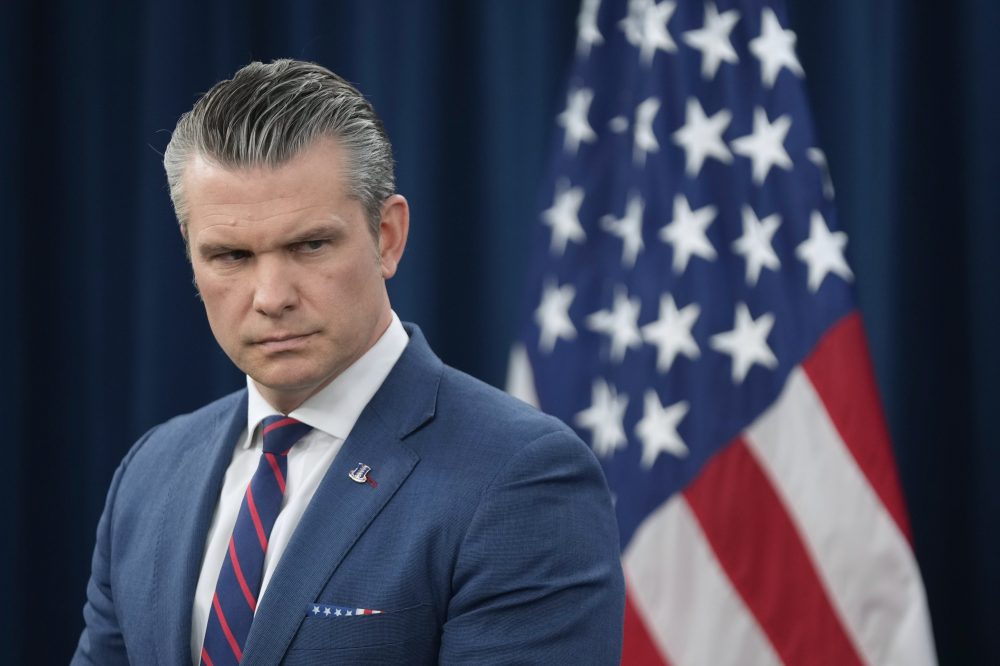
WASHINGTON (TV Delmarva) — Defense Secretary Pete Hegseth has barred photographers from his recent two briefings regarding the Iran conflict, marking a departure from established Pentagon practices without any official explanation.
Pentagon spokesperson Joel Valdez refused to provide comment when asked about the policy change.
Relations between Hegseth’s Defense Department and journalists covering the Pentagon have grown increasingly strained. Many established news organizations have abandoned their Pentagon workstations rather than comply with new Trump administration restrictions that limit their access and control who they may interview.
A reconstituted press pool has taken their place, consisting of reporters who accepted the new guidelines and largely represent media outlets favorable to President Donald Trump.
While the Pentagon continues issuing temporary passes to reporters from organizations that left their posts, allowing them to attend Hegseth’s war briefings, the Defense Secretary rarely acknowledges these legacy media journalists. However, he did recognize Eric Schmitt from The New York Times during Tuesday’s session.
The New York Times has filed a lawsuit challenging Hegseth’s media restrictions, with U.S. District Judge Paul Friedman hearing arguments in the case last week.
“As The Times has long said, there is a clear importance and public service to allowing journalists to report fully on the U.S. military,” stated Charles Stadtlander, the newspaper’s spokesperson. “This includes photojournalists, who deserve access and credentialing to attend Pentagon briefings.”
The Associated Press offered no immediate response regarding the photographer ban. Video recording equipment continues to be permitted at Hegseth’s briefings.
The newspaper’s Iran war reporting has attracted criticism from White House Press Secretary Karoline Leavitt. During Tuesday’s briefing, she stated the administration would not be “harassed” by The Times regarding their investigation into the bombing of an Iranian girls’ school that killed approximately 175 people, many of them students.
Leavitt indicated Trump would accept whatever conclusions emerge from the Defense Department’s investigation into responsibility for the attack. “We’re not going to be harassed by The New York Times, who’ve been putting out a lot of articles on this making claims that have just not been verified by the Department of War, to quickly wrap up this investigation because The New York Times is calling on us to do so,” she declared.
On Wednesday, the newspaper published a report citing anonymous sources indicating that preliminary administration findings have determined U.S. forces were responsible for the bombing. According to the report, military officials believe the Tomahawk missile strike was based on outdated intelligence information.
A former University of Michigan football coach has filed a federal lawsuit challenging his dismissal during the height of a major NCAA investigation into alleged cheating by the program.
Chris Partridge, who coached linebackers for the Wolverines, filed the legal action Wednesday in U.S. District Court in Michigan against the university, its governing board, and athletic director. The suit claims his November 2023 dismissal was unwarranted and violated his constitutional due process rights.
According to the court filing, Partridge’s “termination was wholly unjustified and without legitimate cause.” The lawsuit further alleges that “The University of Michigan unjustly terminated Partridge’s employment and spread false and damaging information regarding his professional conduct, tarnishing Partridge’s hard-earned reputation and inflicting irreparable harm on to his career and personal well-being.”
University officials have not yet responded to requests for comment from The Associated Press. The Big Ten Conference also declined to provide a statement regarding the litigation.
The coaching staff termination occurred while NCAA investigators were examining claims that Connor Stalions, a former Michigan employee, had organized an elaborate scheme to spy on opposing teams. The allegations centered on Stalions buying game tickets and dispatching individuals to record rival teams’ sideline signals, a practice prohibited under NCAA rules. Stalions stepped down from his position earlier in November 2023.
NCAA investigators concluded in 2025 that Stalions had indeed run the scouting operation for multiple years. The investigation also uncovered recruiting rule violations, resulting in substantial financial penalties for the university. However, Partridge was mostly exonerated of any direct involvement in the misconduct.
Following his termination, speculation mounted about the true reasons behind Partridge’s departure. He addressed the situation through social media, stating he had no awareness of any illegal scouting activities and explaining that his firing stemmed from allegedly violating university orders not to discuss the investigation with “anyone associated with the program.”
In his social media statement, he also clarified: “Additionally, at no point did I destroy any evidence related to the ongoing investigation.”
Since leaving Michigan, Partridge joined the Seattle Seahawks as their outside linebackers coach and recently celebrated with the team after their Super Bowl victory last month.
The legal documents reveal that university officials told Partridge his termination resulted from advising a player to “get an attorney,” which allegedly violated instructions against communicating with athletes during the probe.
While Partridge acknowledges making that statement to a player, his lawsuit argues that coaching staff members were never explicitly prohibited from player communication, which would have made normal football operations impossible.
“Partridge was a scapegoat who was wrongly fired simply because he told a player he had the right to have counsel,” the lawsuit states.
The suit also accuses the university of damaging his professional reputation through deliberate misinformation. It claims athletics department staff and at least one board member falsely told media that Partridge was dismissed for “destroying evidence.” This information was subsequently published by multiple news outlets, including reporting that cited Yahoo Sports claiming Partridge “allegedly tried to cover up evidence.”
Partridge’s dismissal came just before Michigan captured the national football championship. The day following his firing, university leaders and Big Ten officials reached an agreement allowing then-head coach Jim Harbaugh to serve his final two-game suspension in exchange for the conference dropping its sign-stealing investigation.
The lawsuit requests monetary damages to be decided during trial proceedings, along with efforts to restore Partridge’s professional standing and reputation.
TOKYO – Gaming giant Nintendo announced Thursday that its latest Pokemon title, “Pokemon Pokopia,” has moved more than 2.2 million units during its first four days on the market, providing a boost to confidence surrounding the company’s upcoming Switch 2 console.
Gaming industry experts had expressed concerns that Nintendo’s next-generation system might struggle without major blockbuster titles to attract consumers, while rising memory chip costs have also raised questions about potential impacts on the company’s profit margins.
The recently launched life simulation title, which branches off from the traditional Pokemon franchise, has earned strong critical acclaim and currently holds an 89 rating on the review compilation site Metacritic.
Jefferies analyst Atul Goyal described the title as a “stealth hit” in his analysis for clients.
“Pokopia serves as a critical software catalyst, accelerating adoption for the … (Switch 2) hardware install base by capturing the lucrative non-gamer demographic,” Goyal explained in his report.
The company has previously found success appealing to broader audiences through titles like “Animal Crossing: New Horizons,” an island-based life simulation that became a popular escape for many players during the COVID-19 lockdown period.
McNeese’s sixth-year veteran Javohn Garcia delivered a spectacular performance, scoring a personal-best 31 points to lead the second-seeded Cowboys to a dominant 76-59 victory over top-seeded Stephen F. Austin in the Southland Conference championship game, securing their third consecutive tournament title and automatic bid to March Madness.
Garcia was nearly unstoppable, connecting on 11 of his 18 field goal attempts and sinking 5 of 8 three-point shots as McNeese (28-5) controlled the game from start to finish, maintaining their lead throughout while pushing their winning streak to 10 games. Supporting Garcia’s stellar effort, Larry Johnson contributed 18 points while Tyshawn Archie delivered a well-rounded performance with 17 points, five assists, and five steals.
For Stephen F. Austin (28-5), Keon Thompson led the scoring with 18 points, while Kam Burton chipped in 10 points. The Lumberjacks struggled offensively, shooting just 37.3% from the field and managing only 5 of 21 three-point attempts (23.8%). The two teams had split their regular-season meetings.
In Patriot League action, second-seeded Lehigh captured their first NCAA Tournament berth in over a decade with a convincing 74-60 triumph over fourth-seeded Boston University. Nasir Whitlock spearheaded a well-distributed offensive effort with 18 points for the Mountain Hawks.
Lehigh (18-16) received strong contributions across the roster, with Joshua Ingram and Edouard Benoit each adding 15 points, while Hank Alvey recorded 14 points alongside a game-leading nine rebounds and five assists. The Mountain Hawks established control early and maintained a double-digit advantage for the final 13 minutes and 20 seconds.
Boston University (17-17) was paced by Ben Defty’s 21 points and eight rebounds, with Michael McNair adding 14 points and Chance Gladden contributing 11. Despite entering the contest ranked fifth nationally in three-point shooting percentage at 40.0%, the Terriers experienced a cold shooting night from beyond the arc, converting just 1 of 16 three-point attempts.
Global oil markets experienced sharp increases Thursday following reports that two fuel tankers were struck by attackers in Iraqi territorial waters, leading both vessels to catch fire.
Brent crude futures jumped $5.69 per barrel, reaching $97.67 – a 6.19% increase as of early Thursday morning. Meanwhile, U.S. West Texas Intermediate crude climbed $5.11 to $92.36 per barrel, marking a 5.86% gain.
According to Farhan al-Fartousi, director general of Iraq’s General Company for Ports, the two international tankers transporting Iraqi fuel oil were targeted by unknown assailants Wednesday. Iraqi security investigators determined that explosive-equipped vessels from Iran were responsible for striking both tankers.
Market analyst Tony Sycamore from IG suggested the attacks represent Iran’s direct retaliation against recent international efforts to stabilize oil markets. “This appears to mark a direct and forceful Iranian response to the IEA’s overnight announcement of a massive strategic reserve release aimed at cooling runaway prices,” Sycamore explained.
The International Energy Agency recently approved releasing an unprecedented 400 million barrels from strategic oil reserves to combat price spikes caused by supply disruptions from the ongoing U.S.-Israeli conflict with Iran. The United States plans to contribute 172 million barrels from its Strategic Petroleum Reserve as part of this coordinated effort.
However, market experts question whether reserve releases can provide lasting relief. “The IEA’s release of oil reserves may be only a temporary solution, as disruptions to oil shipments through the Strait of Hormuz and a major production halt in some Middle Eastern countries could cause a long-term supply crunch,” warned Tina Teng, a market strategist with Moomoo ANZ.
President Donald Trump addressed the situation Wednesday, stating that the United States was in “very good shape” regarding its military operations against Iran. Trump added that America would “look very strongly at the straits,” referencing the critical Strait of Hormuz shipping route.
Despite ongoing military pressure, intelligence sources indicate Iran’s government structure remains stable and faces no immediate threat of collapse.
“Oil prices continued to face upside pressure as there were no signs of war de-escalation in the Middle East,” Teng noted, highlighting concerns about prolonged regional instability affecting global energy markets.
The military conflict between the United States and Iran appears far from over, as both nations indicate the fighting will continue despite mounting casualties and global economic disruption.
Speaking at a Kentucky rally on Wednesday ahead of November’s midterm elections, President Donald Trump declared that America had achieved victory in the nearly two-week conflict but emphasized the importance of completing their mission. “We don’t want to leave early do we?” Trump told the crowd. “We got to finish the job.”
The conflict, which began with coordinated American and Israeli airstrikes, has claimed approximately 2,000 lives, predominantly Iranian and Lebanese casualties, according to reports. The violence has expanded into Lebanon and created widespread disruption to global energy supplies and shipping routes.
UNICEF reported that over 1,100 children have been either killed or wounded in the fighting.
Iran has responded with aggressive moves targeting global oil supplies, including attacks on shipping vessels. Iranian forces using explosive-laden boats struck two fuel tankers in Iraqi territorial waters, igniting massive fires and killing one crew member. Additional projectiles hit three other ships in Gulf waters, according to maritime security firms and port authorities.
The attacks have severely impacted the Strait of Hormuz, a critical waterway that typically handles about one-fifth of global oil transport. An Iranian military official confirmed Wednesday that the strait remains “undoubtedly” under Iranian control, effectively blocking safe passage for commercial vessels.
Energy markets have reacted dramatically to the supply disruptions. Oil prices, which peaked near $120 per barrel earlier this week before dropping to around $90, jumped nearly 5% on Wednesday and continued climbing in Asian markets Thursday. Wall Street’s major indices declined amid the uncertainty.
In response to the crisis, the International Energy Agency announced an unprecedented intervention, recommending the release of 400 million barrels from global strategic reserves to combat what officials called one of the worst oil shocks since the 1970s. Energy Secretary Chris Wright confirmed Trump had authorized releasing 172 million barrels from America’s Strategic Petroleum Reserve beginning next week.
Iran has made clear its intention to use oil prices as a weapon in the conflict. A spokesperson for Iran’s military command issued a stark warning to the United States: “Get ready for oil to be $200 a barrel, because the oil price depends on regional security, which you have destabilised.”
Trump claimed American forces had destroyed 58 Iranian naval vessels and asserted that Iran was “pretty much at the end of the line.” He said the U.S. would focus heavily on the Strait of Hormuz situation, stating: “The straits are in great shape. We’ve knocked out all of their boats. They have some missiles, but not very many.”
However, intelligence sources indicate Iran has placed approximately a dozen mines in the shipping channel, further complicating efforts to restore safe passage.
The G7 nations – including the United States, Canada, Japan, Italy, Britain, Germany, and France – agreed Wednesday to explore providing military escorts for commercial ships attempting to navigate Gulf waters.
Despite intensive Pentagon airstrikes described as the most severe since the conflict began, Iran demonstrated its continued fighting capability by striking targets in Israel and across the Middle East on Wednesday.
American officials have stated their objectives include eliminating Iran’s ability to project military power beyond its borders and dismantling its nuclear program. An Israeli military source revealed an extensive target list remains, including ballistic missile facilities and nuclear-related installations.
The conflict has expanded beyond military targets. After overnight strikes hit banking offices in Tehran, Iran threatened to attack financial institutions conducting business with the U.S. or Israel, warning civilians to stay 1,000 meters away from banks throughout the Middle East.
Security concerns have reached American shores, with ABC News reporting that the FBI has issued warnings about potential Iranian drone strikes on the West Coast. However, Trump dismissed concerns about attacks on U.S. territory.
The State Department has issued alerts regarding possible Iranian militia attacks on American-owned oil and energy infrastructure in Iraq, noting that such groups have previously targeted hotels frequented by Americans.
Analyst Tony Sycamore from IG described the tanker attacks as “a direct and forceful Iranian response to the IEA’s overnight announcement of a massive strategic reserve release aimed at cooling runaway prices.”
As pump prices continue rising nationwide, oil costs have become an increasingly critical factor in military and political decision-making surrounding the conflict.
SALISBURY, Md. – The nationally-ranked Salisbury University women’s lacrosse squad delivered a commanding performance against Ohio Northern University Wednesday evening, defeating the Polar Bears 16-7 at Sea Gull Stadium.
The Sea Gulls, currently sitting at No. 5 in national rankings, dominated the game’s final 30 minutes by outscoring their visitors 8-2 throughout the second half. Most impressively, Salisbury completely blanked Ohio Northern during the final quarter, scoring six unanswered goals to seal the victory.
The midweek matchup showcased the Sea Gulls’ offensive firepower and defensive strength as they pulled away from the Polar Bears after what appeared to be a closer contest at halftime.
Motorists traveling eastbound on Pennsylvania Avenue will encounter a lane restriction near Woodlawn Avenue as construction crews continue their work in the area.
According to DelDOT traffic reports, the right lane remains blocked to traffic due to ongoing construction activities. The closure is expected to last until 2 PM today.
Drivers are advised to use caution when approaching the work zone and allow extra time for their commute. Traffic may experience delays as vehicles merge from the closed right lane into the remaining open lanes.
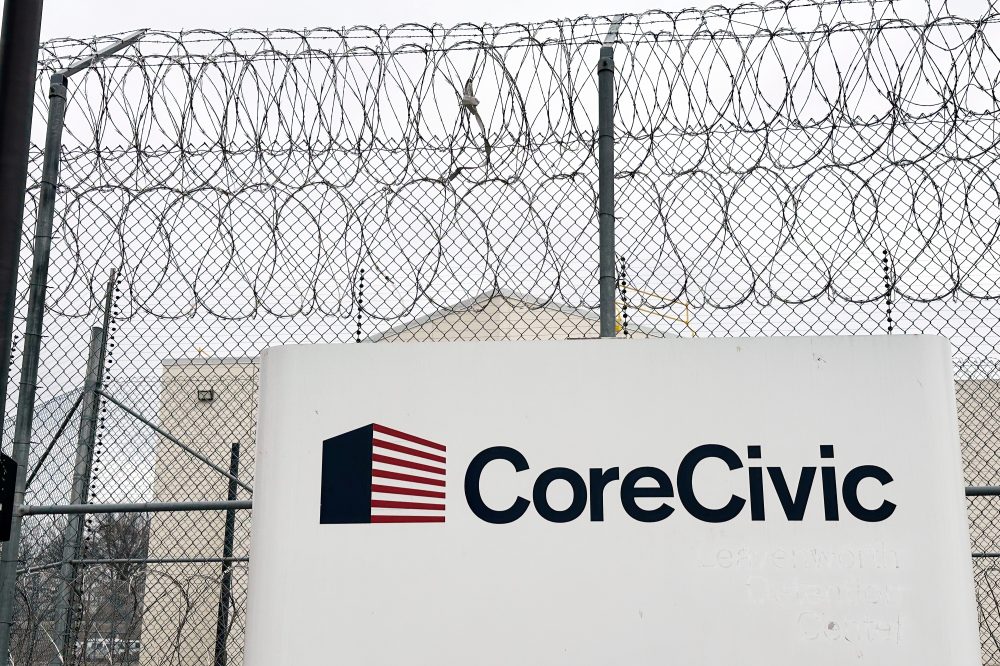
TOPEKA, Kan. — Following an extensive legal battle lasting nearly a year, officials in Leavenworth, Kansas have granted approval for a closed private correctional facility to resume operations housing immigration detainees, coinciding with nationwide efforts to expand detention capacity.
The Leavenworth City Commission granted approval Tuesday for a permit requested by private corrections company CoreCivic. In a 4-1 decision, commissioners authorized a three-year operating permit that includes requirements for minimum staff levels, prohibits housing juvenile detainees, and establishes a municipal monitoring committee.
“If they don’t follow those guidelines, we can pull the permit,” Mayor Nancy Bauder stated prior to the commission vote.
The facility in question, known as the Midwest Regional Reception Center, contains 1,104 beds and sits approximately 10 miles west of Kansas City International Airport. CoreCivic, among the country’s leading private prison companies, projects the facility will produce $60 million in annual revenue when operating at capacity.
The municipality of Leavenworth initiated legal action against CoreCivic when the company attempted to restart operations at the closed facility without obtaining municipal approval.
The litigation unfolded across both state and federal court systems, with the U.S. Department of Justice supporting CoreCivic’s position in court documents. Federal officials characterized the city’s actions as an “aggressive and unlawful effort” designed to “interfere with federal immigration enforcement.”
This legal dispute stands out as the only known case nationwide where a municipality successfully delayed a private detention facility’s opening during President Donald Trump’s mass deportation initiatives. Municipal leaders contended that mandatory permitting would help avoid future complications, while CoreCivic argued no permit was necessary and the approval process would create unacceptable delays.
Leavenworth represented an unexpected opponent given the Republican-leaning community’s strong association with correctional institutions. The city’s name has become synonymous with incarceration, and local prison facilities employ hundreds of residents across two military installations, America’s original federal prison, a state correctional center, and a county detention facility, all located within 6 miles of city hall.
CoreCivic ceased housing federal pretrial detainees at its Leavenworth location in 2021 following then-President Joe Biden’s directive for the Justice Department to reduce reliance on private correctional facilities. The American Civil Liberties Union and federal public defenders documented violations of prisoner rights, including incidents of stabbings, suicides, and one murder.
Municipal court filings detailed instances of detainees being confined in shower areas as disciplinary measures and alleged CoreCivic hindered local law enforcement investigations into sexual assaults and other serious crimes.
Nearly four dozen community members voiced opposition to the permit during public comments before the commission vote. Mayor Bauder repeatedly cautioned the audience about excessive noise levels, and law enforcement ejected one protester who shouted profane remarks.
“We, we the people of Leavenworth, are not fooled and we don’t care about their money,” local resident David Benitez addressed the commissioners.
Several permit supporters highlighted potential economic benefits for the community. Two CoreCivic staff members advocated for approval, including Charles Johnson from Kansas City, Kansas, who described how his employment provided meaning and helped his family achieve financial independence from government assistance.
“The people I work alongside are caring, professional and committed to doing things the right way,” Johnson stated, though his remarks prompted negative reactions from opponents gathered outside the meeting chamber.
City Commissioner Holly Pittman noted that the municipality’s firm stance enabled negotiations for permit conditions. She expressed concern that rejection could trigger costly litigation.
“I will not gamble the financial stability of this city,” Pittman declared before casting her approval vote. “Let me be clear: Approval does not mean endorsement.”
Law enforcement officials in Maryland are preparing for heightened road safety enforcement as St. Patrick’s Day weekend approaches, with state troopers warning drivers to stay alert and avoid dangerous behaviors behind the wheel.
Officers from all 23 Maryland State Police barracks will deploy enhanced patrol operations from Friday, March 13 through Tuesday, March 17, targeting drivers who operate vehicles while impaired, distracted, or aggressively. The specialized State Police Impaired Driving Reduction Effort (SPIDRE) unit will join regular troopers in concentrating on roadways known for frequent alcohol-related accidents. The Maryland Department of Transportation Motor Vehicle Administration’s Highway Safety Office is providing financial support for these enforcement activities.
The comprehensive patrol strategy will span five regions throughout the state:
Eastern Region: Officers stationed at Berlin, Centreville, Easton, Princess Anne and Salisbury will concentrate enforcement activities on primary travel routes, specifically Route 301 and Route 50.
Central Region: Personnel from College Park, Forestville, Golden Ring, Rockville, Waterloo and Westminster stations will maintain highly visible presence on Interstate 495, Interstate 270, and Routes 50, 5 and 301. Westminster officers will coordinate their efforts with both Carroll County Sheriff’s Department and Westminster City Police Department.
Western Region: Troopers based in Cumberland, Frederick, Hagerstown and McHenry will prioritize accident prevention and DUI detection on key highways including Interstate 70, Interstate 81, and Routes 40 and 65.
Northern Region: Law enforcement from Bel Air, JFK Memorial Highway and North East facilities will target locations with documented histories of impairment-related collisions.
Southern Region: Officers from Annapolis, Glen Burnie, La Plata, Leonardtown and Prince Frederick will monitor heavily traveled corridors such as Route 295 and Interstate 695.
For individuals planning to attend St. Patrick’s Day celebrations, police recommend several safety measures: Choose a designated driver before leaving home and hand over vehicle keys to that person. Avoid consuming alcohol if you intend to operate a vehicle. Explore public transit options, taxi services, or ride-sharing applications. Prevent intoxicated friends from getting behind the wheel. Contact emergency services at 911 if you observe suspected impaired driving. Always wear seatbelts and stay focused on driving without texting or using handheld devices.
Those hosting St. Patrick’s Day gatherings should remember their potential legal responsibility if guests they serve alcohol to cause impaired driving incidents. Hosts should provide substantial food options and non-alcoholic drink choices, arrange transportation alternatives in advance for drinking guests, keep local taxi contact information accessible, and confiscate keys from anyone considering impaired driving.
Authorities emphasize the importance of responsible celebration practices and urge all motorists to avoid impaired, aggressive, and distracted driving behaviors during the holiday period.
Rising temperatures are drawing fishing enthusiasts to Maryland’s waterways as spring conditions take hold. Recent trout stockings are delivering excellent fishing opportunities in waters currently open to anglers, while yellow perch are starting their annual spawning migrations and numerous freshwater species are showing increased activity.
Weekly Outlook: March 11-17
Spring indicators are abundant throughout the region – spring peepers are calling, trees are beginning to bud, and crocuses are in bloom. With lengthening days and climbing temperatures, Chesapeake Bay waters continue their gradual warming trend, encouraging gamefish to move toward spawning areas. Monitoring buoy data shows main Bay surface temperatures remaining in the mid-40s, while river temperatures hold steady in the low 50s. Smaller waterways and downwind locations on sunny days will experience faster warming, often reaching temperatures closer to the 50s. These warmer, low-salinity areas will be prime locations for yellow perch as they migrate from their winter refuges in downstream river sections, preparing to spawn in Maryland waters over the coming weeks.
Most Maryland rivers and streams are expected to maintain average flow levels. Water clarity should remain typical for most Maryland sections of the Bay and tributary rivers. Above-average tidal current conditions are anticipated from Sunday through Tuesday due to the new moon arriving March 18.
Upper Chesapeake Bay
The lower Susquehanna River remains stained this week with water temperatures around 44 degrees. Anglers taking advantage of pleasant weather are targeting deeper river sections for yellow perch and blue catfish. Yellow perch fishing involves dropper rigs with small minnows and adequate weight to maintain bottom contact. The ice formation at the North East River entrance has disappeared, allowing anglers to fish shallower areas using lip-hooked minnows near the bottom. Working a lip-hooked minnow slowly across the bottom with appropriate split shot weight proves highly effective for yellow perch, while dropper rigs work best in deeper areas.
Anchoring over deeper holes in the lower Susquehanna provides excellent blue catfish opportunities. The Conowingo Dam pool also attracts blue catfish anglers using surf rods to cast baits into the pool. Effective rigs include sliding sinker setups with 8/0 circle hooks and fresh cut bait or scented attractants. Standard J-hooks with sinkers also produce results. While blue catfish inhabit every upper Bay tidal river, the lower Susquehanna and Chester rivers maintain the highest concentrations.
Yellow perch are now entering upper sections of multiple regional tidal rivers, including the North East, Bush, Sassafras, Chester, and Magothy. In shallow, confined waters, lip-hooked minnows, Beetle-spins, small jigs, and shad darts tipped with grass shrimp or minnow pieces work effectively when fished slowly near bottom. Deeper waters require bottom rigs baited with lip-hooked minnows or grass shrimp.
Middle Bay
Middle Bay anglers are concentrating on tidal rivers this week as yellow perch move into upper spawning areas. With water temperatures in the low 40s, spawning will commence when temperatures reach the upper 40s in spawning zones, likely occurring before the weekend due to warmer air. The Hillsboro section of the Tuckahoe and Greensboro area of the Choptank show excellent potential for yellow perch fishing.
Popular techniques include lip-hooked small minnows with light weights for bottom fishing. Prime locations from kayaks, canoes, or jon boats include deep areas near outside river bends, channels, and submerged treetops. Shore anglers can cast lip-hooked minnows with split shot positioned approximately one foot ahead. Additional effective methods include bottom rigs and Beetle-spin blade jigs or small jigs and shad darts enhanced with scented attractants. Anglers should consider releasing egg-bearing females to support future fishery health. Daily limits for yellow perch are five fish with a 9-inch minimum length requirement.
Warming temperatures will increase blue catfish activity in channel areas. While present in every middle Bay tidal river, the Choptank River system supports the largest population. Areas from the town of Choptank upstream past Denton offer prime blue catfish opportunities. Cut bait remains the top choice, though scented baits and chicken liver also produce results.
Large female striped bass are entering the Choptank River, but anglers must remember that the Choptank and several other Maryland tidal rivers are currently closed to all striped bass fishing, including catch-and-release.
Lower Bay
The lower Bay and main Potomac River offer some of the region’s best striped bass catch-and-release opportunities. Striped bass are traveling along steeper channel edges and moving up the Potomac. Heavy tackle jigging with large soft plastic jigs remains popular this week. The warm water discharge at Calvert Cliffs Nuclear Power Plant continues attracting striped bass and anglers during March.
Yellow perch are advancing up the Patuxent River and should reach the Route 4 area by week’s end. Upper Mattawoman Creek sections are seeing yellow perch activity. On the Eastern Shore, the Nanticoke and Wicomico rivers feature strong yellow perch spawning runs. The western shore Wicomico, a Potomac tributary, has historically produced good spawning runs at “Alan’s Fresh,” though recent reports from this area are limited.
The tidal Potomac River contains abundant blue catfish populations that will become more active as waters warm. Channel areas provide the best targeting opportunities, with deep channels near Fort Washington noted for producing the largest specimens. The Nanticoke River near Sharptown and the Marshyhope offer excellent blue catfish fishing.
Freshwater Fishing
Closure 1 put-and-take trout waters are now closed until 6:30 a.m. on March 28, with stocking crews preparing all waters for opening day. Put-and-take trout anglers can fish Closure 0 waters, many recently stocked. Youth-only trout fishing day is scheduled for March 21 from 6:30 a.m. to 10 p.m. in all Closure 1 waters, with a two-trout limit for anglers under 16.
Delayed harvest trout waters remain open for catch-and-release fishing. All trout in delayed harvest areas must be released until June 1, after which five trout may be kept through September 30. From October 1 through May 31, all trout must be released.
The upper Potomac River maintains strong flows this week, though slightly decreased from previous levels. Properly equipped anglers are enjoying good walleye, smallmouth bass, and muskellunge fishing. Soft plastic jigs, tubes, and swimbaits prove effective for walleye and smallmouth bass. A 15-20-inch slot limit applies to walleye in the upper Potomac mainstream from approximately a half-mile above Chain Bridge to Cumberland spillway through April 15.
Warming temperatures are activating multiple fish species. Crappie are schooling near structure including sunken brush, fallen trees, and marina docks. Small minnows or marabou jigs under slip bobbers effectively target them. Chain pickerel remain active near submerged wood and similar structure. Largemouth bass are actively feeding to rebuild winter energy reserves, typically found in moderate-depth transition areas.
Atlantic Ocean and Coastal Waters
Ocean City area waters remain cold with inshore temperatures barely reaching 40 degrees. Some anglers will cast bucktails and soft plastic jigs around the inlet for striped bass with likely success.
Primary fishing action focuses on tautog at offshore wreck and reef sites. Party boat catches are excellent with quality fish, some reaching double-digit weights. The daily limit through May 15 is four fish with a 16-inch minimum.
Federal investigators are examining fresh allegations that employees from the Department of Government Efficiency inappropriately handled confidential Social Security Administration records, according to a government watchdog agency.
An inspector general has opened an inquiry following whistleblower reports about the “potential misuse” of sensitive Social Security data by DOGE personnel. The investigation represents the latest development in ongoing concerns about how the department’s staff has managed access to protected government information.
The probe comes amid continued scrutiny over DOGE workers’ attempts to obtain access to confidential Social Security records. Questions have mounted about whether proper protocols were followed when department staff sought to review the sensitive data.
WASHINGTON (AP) — Congressional investigators examined Jeffrey Epstein’s extensive financial network Wednesday during a private hearing with his former accountant, seeking to uncover details about his relationships with influential wealthy individuals.
Richard Kahn, who maintained a close working relationship with Epstein over many years and currently oversees his estate as an executor, participated in the behind-closed-doors session with House members. During his testimony, Kahn stated he never witnessed Epstein’s sexual misconduct firsthand, though he offered lawmakers additional insight into how the disgraced financier built his fortune. Over two decades, Epstein accumulated hundreds of millions while cultivating relationships with some of the globe’s most influential figures.
According to Rep. James Comer, the Republican leader of the House Oversight Committee, Kahn “was under the impression that Epstein made his money as a tax advisor and a financial planner.” Committee members believe that gaining a complete understanding of Epstein’s financial operations could shed light on how he managed to continue his trafficking and sexual abuse of minors for such an extended period.
“Jeffrey Epstein’s sex trafficking ring would not have been possible without Richard Kahn, who managed Epstein’s money for years, authorized payments, including payments to victims and survivors,” stated Rep. James Walkinshaw, D-Va., who noted that Kahn claimed he couldn’t remember specific details about certain transactions and communications when questioned.
Kahn has maintained that he had no knowledge of Epstein’s sexual crimes and never encountered any of his victims.
The Kentucky Republican Comer revealed that during the testimony, committee members verified that Epstein obtained substantial sums from several prominent figures: former retail executive Les Wexner, hedge fund leader Glenn Dubin, technology entrepreneur Steven Sinofsky, investor Leon Black, and members of the Rothschild banking dynasty.
While none of these individuals face accusations of misconduct regarding their Epstein connections, committee Democrats maintain that anyone linked to the financier deserves examination. The panel previously questioned Wexner last month, and Comer has requested that Black and others participate in recorded interviews.
Democratic Rep. Suhas Subramanyam disclosed that Kahn informed lawmakers about Epstein’s financial connections to Ehud Barak, Israel’s former prime minister who served from 1999 to 2001. Barak faces no wrongdoing allegations and has expressed regret about his association with Epstein.
Comer announced Wednesday that his committee has examined more than 40,000 documents obtained through subpoenas to JPMorgan Chase and Deutsche Bank. According to Comer’s findings, Epstein maintained connections to no fewer than 64 business organizations.
While President Donald Trump has categorically rejected any improper conduct in his past dealings with Epstein, Comer noted that Kahn reported never observing any financial exchanges between the two men. Comer emphasized that Kahn joins other witnesses who have testified they never observed Trump engaging in inappropriate behavior with Epstein.
“The investigation’s about getting the truth to the American people, trying to figure out how the government failed, answer questions we all have,” Comer explained.
A group of 17 Democratic state attorneys general launched legal action Wednesday against the Trump administration’s new mandate forcing higher education institutions to provide detailed information demonstrating they don’t factor race into their admissions decisions.
The directive came after President Trump expressed concerns in August that universities might be using personal essays and other indirect methods to consider race in admissions, which he considers unlawful discrimination.
The 2023 Supreme Court decision ended affirmative action programs in college admissions, though it permitted schools to consider how racial experiences have influenced students’ lives when applicants discuss such experiences in their application essays.
“This Administration’s unlawful and haphazard actions are threatening the well-being of Massachusetts students and the prosperity of our colleges and universities,” Massachusetts Attorney General Andrea Joy Campbell said in a statement. “There is no way for institutions to reasonably deliver accurate data in the federal government’s rushed and arbitrary time frame, and it is unfair for schools to be threatened with fines, potential losses of funding, and baseless investigations should they not fulfill the Administration’s request.”
The legal challenge was submitted to federal court in Boston.
Education Department spokesperson Ellen Keast stood behind the information gathering effort.
“American taxpayers invest over $100 billion into higher education each year and deserve transparency on how their dollars are being spent,” Keast said in a statement. “The Department’s efforts will expand an existing transparency tool to show how universities are taking race into consideration in admissions. What exactly are State AGs trying to shield universities from?”
The current directive mirrors aspects of recent settlement deals the federal government reached with Brown University and Columbia University, which restored their federal research funding. Both institutions committed to providing government officials with demographic information, academic performance metrics, and test scores for applicants, accepted students, and enrolled students. The schools also consented to government audits and public release of admissions statistics.
The directive instructs Education Secretary Linda McMahon to mandate additional reporting from colleges “to provide adequate transparency into admissions.” The National Center for Education Statistics will gather expanded information, including demographic and gender breakdowns of college applicants, accepted students, and enrolled students. McMahon specified that this information, required by March 18, must be separated by race and gender and provided retroactively for seven years.
Colleges that don’t provide timely, complete, and accurate information could face action under Title IV of the Higher Education Act of 1965, which establishes requirements for institutions receiving federal student financial aid, the memo states.
Campbell contends the survey timeline is unrealistic and “leaves institutions vulnerable to inadvertent errors and unreliable data that could lead to cost penalties and baseless investigations into their practices and that jeopardizes student privacy and could lead to individuals being easily identified.”
The federal government utilizes the Integrated Postsecondary Education Data System, known as IPEDS, to collect information from thousands of colleges and universities receiving federal assistance. The coalition also maintains that the expanded data requirements threaten student privacy.
“Many institutions have data protection obligations to their students, which are placed at risk by the Administration’s new IPEDS demands for in-depth information about individual students,” the plaintiffs wrote in the lawsuit.
DES MOINES, Iowa (AP) — Iowa has implemented new legislation that eliminates local government authority to establish gender identity anti-discrimination measures, following the state’s unprecedented decision to strip such protections from its civil rights laws last year.
The preemptive measure became effective immediately Tuesday when Republican Governor Kim Reynolds signed it into law. The legislation prohibits municipalities and counties from establishing civil rights safeguards that extend beyond those specifically outlined in state statutes.
Numerous municipalities throughout Iowa had established gender identity protections in their local codes, including major population centers like Des Moines and Iowa City, which houses the University of Iowa. Just last month, Ames, home to Iowa State University, approved its own ordinance providing gender identity protections.
Republican lawmakers controlling both legislative chambers argued the new preemption measure creates uniformity regarding protected classifications. Democratic legislators opposed the legislation.
“There could literally be hundreds of situations where we have conflicts with local ordinances,” Republican state Representative Steve Holt explained. “And considering the climate that we’re in today, a patchwork of different civil rights ordinances would be extremely difficult for businesses and schools to navigate.”
Research from the Movement Advancement Project, an LGBTQ+ advocacy organization, indicates that Arkansas and Tennessee have similar laws preventing local anti-discrimination ordinances from exceeding state protections.
Iowa’s original 1965 Civil Rights Act did not include sexual orientation and gender identity provisions. These protections were incorporated in 2007 when Democrats controlled the legislature, with backing from approximately twelve Republican lawmakers.
Reynolds and fellow Iowa Republicans argued last year that these anti-discrimination measures conflicted with newer legislation restricting transgender students’ access to facilities like restrooms and locker rooms, as well as their participation in athletic programs.
Speaking Wednesday, Reynolds maintained that recent laws remained threatened by what she called a “hodgepodge” of varying civil rights protections across different communities.
“We just believe that locals should follow the state law especially when it comes to civil rights, otherwise we have a mismatch of rights out there,” she stated. “We thought that it was important that they be consistent.”
Iowa’s current civil rights legislation provides protection against discrimination involving race, color, creed, sex, sexual orientation, religion, national origin, and disability status.
Laura Bergus, a City Council member and attorney in Iowa City, located approximately 100 miles east of Des Moines, noted that gender identity discrimination protections have existed in local regulations for roughly three decades.
Following last year’s state legislation, the city adopted a resolution “to reinforce the fact that we had that authority and to make sure that our residents knew that discrimination on the basis of gender identity specifically was still prohibited in Iowa City,” Bergus stated Wednesday.
Bergus characterized the new law as “extreme overreach” that restricts local governments from addressing community-specific needs, and indicated Iowa City is exploring potential legal challenges.
“Our local leadership remains committed to protecting all of us,” Bergus declared.
Iowa residents have until April 27 to submit civil rights complaints to the state regarding gender identity discrimination incidents that occurred prior to the civil rights code changes taking effect July 1, 2025. State data through February 13 shows only one complaint has been accepted for investigation since that date.
During the preceding twelve months, 46 gender identity-based complaints were accepted for investigation.
The rollback also eliminated Iowa residents’ ability to modify sex designations on birth certificates.
State health department records provided to The Associated Press show 208 birth certificates had sex designation modifications from January through June 2025. This represents a substantial increase from 2024, when 135 such requests were made throughout the entire year.
According to the state health department, Iowa no longer monitors the number of birth certificate change requests received but continues receiving them. All requests are now denied.
PITTSBURGH — A senior Episcopal clergyman who leads Trinity Episcopal Cathedral in Pittsburgh’s downtown area has been arrested on theft charges following allegations he shoplifted baseball cards worth more than $1,000 from a local Walmart store.
The Very Rev. Aidan Smith, age 42, was taken into custody on February 27 by law enforcement officers as he exited the Walmart location in Economy Borough, near Pittsburgh. According to police documents, Smith had hidden 27 packages of baseball cards beneath his clothes and inside a cardboard container.
Authorities filed charges of retail theft and receiving stolen property against Smith.
Officers responded after Walmart loss prevention personnel contacted them, reporting that Smith had returned to the store despite previous theft incidents on earlier dates. Law enforcement officials stated that surveillance footage from the retailer documented Smith taking baseball cards without payment on four consecutive days before his arrest.
According to police reports, Walmart calculated the total value of the stolen merchandise at $1,099.99.
The Right Rev. Ketlen Solak, who serves as bishop for the Episcopal Diocese of Pittsburgh, addressed cathedral members in a written statement last week, explaining that church officials would conduct their own inquiry and follow established religious protocols for addressing clerical misconduct.
“I have spoken with Aidan and assured him of our prayers for him in this difficult time. Please pray for Aidan, for Melanie and their children, for the entire cathedral congregation as we grieve this news, and for everyone involved in this hard situation,” Solak wrote.
According to Solak’s communication, Smith had already been placed on administrative leave beginning in late January, though the diocese provided no explanation for that earlier action. Smith’s attorney chose not to provide any statement regarding the case.
Jake Sullivan, President Biden’s former national security advisor, recently shared his perspective on current Iran policy during an interview with NPR’s Scott Detrow.
The conversation centered on the Trump administration’s communications strategy regarding Iran relations and potential approaches to resolving ongoing tensions.
Sullivan, who held the top national security role during the Biden presidency, offered insights into how the current situation with Iran might be addressed moving forward.
Netflix has selected veteran broadcaster Matt Vasgersian to serve as the primary voice for the streaming platform’s inaugural Major League Baseball coverage.
The experienced announcer will call the action when the New York Yankees travel to face the San Francisco Giants at Oracle Park on March 25, marking Netflix’s first venture into live regular-season baseball broadcasting. Vasgersian is anticipated to continue as the primary play-by-play voice for Netflix’s complete MLB programming lineup throughout the season.
The streaming service has assembled a broadcast crew featuring established baseball personalities alongside its new in-house talent. Elle Duncan will serve as the main host, joined by former stars Albert Pujols and Anthony Rizzo providing analysis from the studio. In the broadcast booth, Vasgersian will work alongside former pitchers CC Sabathia and Hunter Pence, while Lauren Shehadi handles field reporting duties.
This assignment adds to Vasgersian’s already busy schedule. The announcer will continue his established role with MLB Network while also covering NBC’s Opening Day broadcast on March 26, featuring the Pittsburgh Pirates against the New York Mets at Citi Field. Starting in May, he’ll join Peacock’s “MLB Sunday Leadoff” broadcast team. Meanwhile, NBC’s new “Sunday Night Baseball” programming will feature Jason Benetti as the primary announcer, with rotating local analysts selected based on the teams playing.
Energy markets defied expectations Wednesday as crude oil prices surged 5% despite international authorities announcing the biggest strategic petroleum reserve release on record, sending ripple effects through financial markets nationwide.
The International Energy Agency’s decision to release 400 million barrels from global stockpiles failed to calm energy markets, as oil prices continued climbing amid ongoing supply concerns. This energy surge pushed two-year Treasury bond yields to their highest levels since September, creating headwinds for stock markets.
Wall Street finished the day predominantly in negative territory, with eight of the eleven S&P 500 sectors declining. Consumer staples led the losses, falling 1.3%, while energy stocks bucked the trend with a 2.5% gain. The Nasdaq managed a minimal positive close despite the broader market weakness.
Currency markets saw the dollar strengthen 0.4% against major trading partners, with the dollar-yen exchange rate approaching 159, its strongest position since January. This level has previously prompted intervention discussions between U.S. and Japanese monetary authorities.
Bond markets reflected the inflationary pressures from rising energy costs, with the 10-year Treasury yield climbing above 4.22% for the first time in a month. The two-year yield reached approximately 3.65%, marking its highest point since September.
Concerns about the $2 trillion private credit market continued mounting, with JPMorgan reportedly reducing valuations on loans to certain private credit funds. Major firms in this sector, including KKR, Apollo, and Blackstone, saw their stock prices decline 2-3%.
Individual stock movements included Oracle jumping 9% and Chevron rising 3%, while Visa and Boeing each dropped 1.7%. Precious metals struggled, with silver leading declines at 3%, and copper falling 1%.
Iran’s recent statements suggesting oil could reach $200 per barrel have added to market anxiety, despite the coordinated global response through strategic reserve releases. Energy analysts suggest the market reaction indicates supply concerns run deeper than initially anticipated.
Japan faces particular challenges as the yen weakens, given that the country imports 95% of its energy needs. The combination of safe-haven dollar demand and Japan’s energy dependency creates a complex situation for potential currency intervention.
Looking ahead, market participants will monitor Middle East developments, energy price movements, and upcoming economic data including U.S. jobless claims and trade figures. Federal Reserve officials are also scheduled to speak on banking regulations and capital requirements.
Investment management company Janus Henderson announced Wednesday that its board has rejected Victory Capital’s acquisition bid, determining the proposal does not outweigh an existing agreement with Trian and General Catalyst.
Victory Capital, headquartered in San Antonio, publicly announced its $8.6 billion acquisition offer last month, creating competition for Janus Henderson after the company had already accepted a $7.4 billion purchase agreement from Nelson Peltz’s Trian alongside General Catalyst.
According to Janus Henderson, Victory’s current offer cannot move forward due to “significant closing risk and uncertain value.”
The investment firm highlighted multiple concerns, particularly the challenge of securing the necessary 75% client approval rate required to finalize Victory’s proposed transaction.
“Some of our most important clients told us they would have significant reservations about maintaining their relationships with us if we moved forward with Victory Capital,” stated Janus CEO Ali Dibadj in an internal communication.
Victory Capital responded by claiming Janus Henderson failed to “engage substantively” with their offer.
“The issues cited by the Special Committee to support its decision could be addressed through substantive engagement, and Victory Capital remains fully committed to pursuing this compelling opportunity,” the company stated.
Market performance reflected the decision Wednesday, with Janus Henderson shares declining 0.6% while Victory Capital gained approximately 1.6%. Both stocks remained unchanged in after-hours trading.
Janus Henderson expressed additional concerns about Victory’s efficiency goals, warning that the proposed cost-reduction measures could disrupt operations, cause key personnel departures, and compromise regulatory compliance standards.
“We would not expect another party to enter the discussions, as that too would likely need to drive significant cost savings,” commented TD Cowen analyst Bill Katz.
“Whether VCTR looks to sweeten the offer or alter the funding mix remains to be seen, but given the risks addressed by JHG’s special committee, its advisors and the board, it would seem difficult for such a combination to arise.”
Janus Henderson noted that Trian, which controls 20.7% of company shares, has confirmed its intention to oppose Victory’s proposal and encourage other shareholders to do the same.
The company also pointed out that Victory Capital has not agreed to cover the $297 million penalty fee that would result from terminating the existing Trian-General Catalyst agreement.
Janus Henderson maintained its support for the Trian-led transaction and urged shareholders to approve the deal during the scheduled April meeting.
Baseball fans heading to Arizona’s Cactus League spring training games may want to pack extra sunscreen and water bottles as an extreme heat wave approaches the desert.
Central Arizona is bracing for potentially record-breaking temperatures over the coming 10 days, with the mercury expected to climb into the 90s by week’s end and possibly exceed 105 degrees Fahrenheit next week.
Phoenix National Weather Service meteorologist Katherine Berislavich reported Wednesday that forecasters predict approximately a 55% probability of temperatures surpassing 105 degrees by next Wednesday, March 18. Those odds increase to 70% for March 19 and jump to 85% for March 20.
The Phoenix metropolitan area hosts 15 of Major League Baseball’s 30 franchises for their exhibition season. While MLB doesn’t control spring training schedules, individual teams have the flexibility to shift daytime contests to evening hours if conditions warrant.
Spring training traditionally features afternoon games where spectators enjoy comfortable temperatures typically ranging from the 70s to 80s.
Should temperatures fall short of 105 degrees, triple-digit heat remains highly probable. Phoenix’s earliest 100-degree reading occurred on March 26, 1988 — the sole instance of the city reaching that milestone during March.
The sweltering conditions may challenge even elite professional athletes. Arizona Diamondbacks skipper Torey Lovullo acknowledged awareness of the approaching heat and indicated possible scheduling modifications.
“We know it’s going to be smoking hot next week, but we’ve got to get work done,” Lovullo stated. “There’s nothing that you can do sometimes to replace going out and actually doing it. We’ll find a way to get it done and make sure these athletes are healthy, strong, hydrated and ready for the next day.”
North Korean dictator Kim Jong Un brought his teenage daughter along for a weapons factory tour where both fired newly-manufactured pistols, according to state media reports released Thursday from Seoul, South Korea.
The Korean Central News Agency reported that Kim inspected a facility producing handguns and small arms weapons on Wednesday, where he examined a recently-developed pistol model that has entered manufacturing.
Following his test firing session at the facility’s shooting range, Kim declared the new weapon “excellent,” according to the state news agency. While the official text report didn’t reference his daughter’s participation, accompanying photographs depicted her shooting a pistol alongside high-ranking military personnel.
Kim emphasized the manufacturing plant’s vital role in providing handguns and small arms to military and security personnel, calling for increased production capacity and updated manufacturing equipment, KCNA reported.
The young woman, identified as approximately 13-year-old Kim Ju Ae, made her initial public debut during a long-range missile demonstration in November 2022. Since then, she has joined her father at numerous public events, including military exhibitions, factory visits, and a September journey to Beijing for Kim Jong Un’s first meeting with Chinese President Xi Jinping in six years.
Her growing visibility in public settings has led South Korean intelligence analysts and regional experts to conclude that Kim Jong Un is preparing her for eventual leadership to continue the family’s control into a fourth generation.
State media recently showed the teenager handling a sniper rifle when Kim distributed weapons to high-ranking officials after a ruling party assembly where he outlined his primary political and military objectives for the coming five years.
This weapons facility visit occurred after Tuesday’s inspection where Kim and his daughter observed the test firing of what state media characterized as nuclear-capable cruise missiles launched from a naval vessel, as Kim emphasized accelerating his navy’s nuclear capabilities.
Weather officials from the National Weather Service’s Mount Holly, New Jersey office issued a brief but urgent severe thunderstorm warning on March 11, alerting residents to dangerous weather conditions expected to impact the region.
The warning went into effect at 8:55 PM EDT on Sunday evening and remained active until 9:15 PM EDT, covering a critical 20-minute period when severe weather conditions were anticipated to move through the area.
The alert was part of the National Weather Service’s ongoing efforts to provide timely warnings to communities when potentially hazardous weather systems develop rapidly in the region.
CAPE CANAVERAL, Fla. (AP) — A decommissioned NASA research satellite made an uncontrolled descent from space Wednesday, crashing into the Pacific Ocean.
According to the U.S. Space Force, the Van Allen Probe A satellite fell to Earth in waters located west of the Galapagos Islands.
NASA officials predicted that portions of the 1,323-pound (600-kilogram) satellite would survive atmospheric reentry, though the majority would incinerate during its fall through Earth’s atmosphere. The agency calculated the odds of the debris causing injury to people at 1-in-4,200.
The satellite’s companion spacecraft, Van Allen Probe B, continues to circle Earth but is no longer operational.
Both satellites began their mission in 2012, traveling through Earth’s surrounding Van Allen radiation belts to conduct scientific research for seven years until they stopped working.
After the spacecraft exhausted their fuel supplies in 2019, NASA projected they would continue orbiting until 2034. However, heightened solar activity in recent years accelerated the A probe’s return to Earth, according to the space agency. The B probe is projected to fall back to Earth no earlier than 2030.
According to Dutch scientist Marco Langbroek, predicting satellite reentries is always challenging, but this particular case proved exceptionally difficult due to the spacecraft’s irregular, elliptical orbital path.
Stock markets across Asia tumbled Thursday while crude oil prices soared following fresh reports of Iranian attacks on vessels in critical Gulf shipping lanes, raising concerns about inflation and higher interest rates globally.
Oil futures climbed dramatically, with U.S. crude jumping 7.5% to reach $93.80 per barrel and Brent crude surging 7.7% to $99.03 per barrel, building on overnight gains of more than 4%.
The price spike occurred even as the International Energy Agency announced plans to release 400 million barrels from strategic reserves – the organization’s largest such action ever. The United States committed to releasing 172 million barrels starting next week as part of this coordinated effort.
Iraqi security sources reported early Thursday that Iranian boats carrying explosives had targeted two fuel tankers in Iraqi territorial waters. An Iraqi government official told state media that oil ports “have completely stopped operations.”
IG analyst Tony Sycamore described the escalating situation: “Multiple tankers loaded with Iraqi crude are now reported burning in the Persian Gulf off the coast of Basra, engulfed in flames and leaking burning oil into the water.”
Sycamore added: “This appears to mark a direct and forceful Iranian response to the IEA’s overnight announcement of a massive strategic reserve release aimed at cooling runaway prices.”
Iran had previously intensified its assault on commercial vessels passing through the Strait of Hormuz, warning the international community to prepare for oil prices reaching $200 per barrel. Wednesday saw three ships reportedly damaged in Gulf waters after Iran’s Revolutionary Guards stated their forces had opened fire on vessels that ignored their commands.
Adding to market uncertainty, President Donald Trump declared Wednesday that the conflict with Iran had been won but indicated he would continue military operations to complete the mission.
These developments hammered equity markets across the region. MSCI’s broad Asia-Pacific index excluding Japan declined 0.8%, while Japan’s Nikkei index fell 1.6% as the country relies heavily on energy imports.
U.S. market futures also pointed lower, with both S&P 500 and Nasdaq futures dropping 0.8%. European markets showed similar weakness, with EUROSTOXX 50 futures down 0.6% and DAX futures falling 0.8%.
The crisis has heightened inflation concerns, overshadowing recent U.S. economic data showing consumer prices rose 0.3% in February, matching expectations and exceeding January’s 0.2% increase.
Bond markets reflected growing inflation worries as yields climbed worldwide. Ten-year Treasury yields increased 4 basis points to 4.2472% Thursday, following a 6 basis point jump overnight.
Federal Reserve rate cut expectations continued to diminish as investors worry that rising inflation will limit the central bank’s ability to lower interest rates. Markets now anticipate just one additional rate reduction this year.
The threat of energy-driven price increases has led traders to speculate that the European Central Bank might actually raise rates, potentially as soon as June.
Currency markets saw investors flock to the dollar while avoiding currencies from energy-importing nations like Japan and much of Europe. The euro dropped 0.3% to $1.1536, reaching its weakest level since November. The dollar gained 0.1% against the yen to 159.12, its strongest position since January.
The Australian dollar, sensitive to risk sentiment, fell 0.4% to $0.7127 after hitting a three-year high of $0.7188 Wednesday amid expectations for potential rate increases from Australia’s central bank.
The University of Maryland Eastern Shore women’s basketball team punched their ticket to the MEAC Tournament semifinals following a 55-48 victory over Delaware State University in first-round action.
The Hawks’ win came during the opening round of the MEAC Homecoming Tournament, setting up their advancement to the next stage of the conference championship competition.
With the seven-point margin of victory, UMES demonstrated strong performance against their in-state rivals to keep their tournament hopes alive and move one step closer to a potential conference title.
The Hawks will now prepare for semifinal competition as they continue their pursuit of the MEAC Tournament championship.
The University of Maryland Eastern Shore softball squad experienced a challenging Wednesday afternoon, dropping both games of a doubleheader to Saint Peter’s despite competitive efforts in each contest.
The Hawks demonstrated determination throughout the twin bill, mounting comeback attempts that kept fans engaged but ultimately fell short of securing victories in either matchup.
UMES showed fight and resilience during the games, with players battling to stay competitive against their opponents. The team’s efforts highlighted their persistence even when facing adversity on the diamond.
While the results weren’t what the Hawks hoped for, the doubleheader provided valuable experience as the team continues its season. The competitive nature of both games suggests promise for future matchups as UMES works to build momentum moving forward.
Weather officials have issued a severe thunderstorm watch for the region this evening, warning residents to stay alert for potentially dangerous weather conditions.
The National Weather Service office in Mount Holly, New Jersey, issued the watch at 8:47 PM today, with the advisory remaining in effect until 11:00 PM tonight.
Residents are advised to monitor local weather conditions and be prepared to take shelter if severe thunderstorms develop in their area. The watch indicates that atmospheric conditions are favorable for the formation of severe thunderstorms.
Those in the affected areas should stay tuned to local weather updates and have a plan in place should conditions deteriorate rapidly.
U.S. military forces have eliminated 16 Iranian vessels that were attempting to place naval mines in the strategically vital Strait of Hormuz, according to an announcement Tuesday from the U.S. Central Command (CENTCOM).
The military action came after intelligence reports indicated Tehran was trying to position explosive devices in the critical waterway that handles a major portion of the world’s oil transportation.
CENTCOM confirmed that American forces eliminated multiple Iranian vessels in the region, including the mine-laying ships, following concerns that Iran was preparing to weaponize the passage through which substantial amounts of global petroleum shipments travel.
Before the military strike, President Donald Trump had issued a stern warning to Iran regarding any mining activities in the strait. Through a Truth Social message, he demanded immediate action, stating that if Iran had positioned mines in the waterway, “we want them removed, IMMEDIATELY!”
Trump’s warning continued with explicit consequences: “If for any reason mines were placed, and they are not removed forthwith, the Military consequences to Iran will be at a level never seen before. If, on the other hand, they remove what may have been placed, it will be a giant step in the right direction!”
Following the military operation, Trump posted that 10 non-operational mine-laying vessels had been eliminated, indicating that “more to come.” He later clarified in additional posts that no evidence suggested Iran had successfully positioned explosive devices in the Strait of Hormuz.
However, a Tuesday CNN report indicated that Iranian military units had initiated limited mining operations in the waterway. Network sources reported that only a “few dozen” explosive devices had been positioned in recent days.
Iran responded with threats of retaliation against energy transportation in the area, vowing it would not allow “even a single liter” of oil to reach its adversaries.
Although suffering these naval losses, Iran maintains the majority of its smaller vessels capable of mine deployment. Intelligence reports indicate the nation still controls over 80% of its small watercraft and mine-laying capabilities, potentially allowing deployment of hundreds of explosive devices should tensions escalate further.
The Strait of Hormuz, positioned between Oman and Iran, serves as one of the planet’s most critical petroleum transit passages. Energy consulting company Kpler reports that approximately 13 million barrels of crude oil pass through this waterway daily in 2025, accounting for roughly 31% of all ocean-transported crude oil globally.
Iran’s recently appointed Supreme Leader Mojtaba Khamenei suffered injuries during Israeli airstrikes and has remained out of public view since the attacks, according to a senior Israeli intelligence official speaking to Reuters.
According to three Iranian sources who spoke with the New York Times, high-ranking officials reported that Khamenei received a leg wound on February 28 during the initial day of Israeli military operations. The same sources indicated that during these attacks, his parents – including former Supreme Leader Ali Khamenei – and his wife were killed.
However, Khamenei’s son has stated that the new leader remains “safe and sound.”
The Assembly of Experts, Iran’s religious council tasked with selecting the nation’s highest authority, officially chose Mojtaba Khamenei as Iran’s supreme leader on Sunday following his father Ayatollah Ali Khamenei’s death.
Supporters organized massive rallies throughout Iran on Monday, demonstrating loyalty to their newly appointed leader just one day after his selection was made public. Multiple cities hosted simultaneous ceremonies.
In the capital city of Tehran, demonstrators assembled at Enghelab Square, displaying Iranian flags and holding photographs of both Mojtaba Khamenei and his deceased father, the former Supreme Leader Ali Khamenei. Protesters voiced support for their new leader while denouncing both the United States and Israel.
Following Ayatollah Ali Khamenei’s death last week, Israeli forces issued a warning.
The Israel Defense Forces published a message in Farsi on the social media platform X, cautioning that those participating in the successor selection process could become targets.
“We warn all those who intend to participate in the successor selection meeting that we will not hesitate to target you. This is a warning!” the IDF declared in their post.
This warning came as Iran’s religious leadership body was reportedly preparing to finalize their choice for the country’s next supreme leader.
Syrian military officials are pointing fingers at Hezbollah following an early Tuesday morning artillery bombardment that struck Syrian soil near the town of Serghaya, located west of Damascus. The Syrian Arab Army issued an official statement confirming the projectiles originated from Lebanese territory.
An unnamed military source speaking to The Media Line revealed that Hezbollah militants operating from Lebanon targeted Syrian army positions close to the border. The same source disclosed that Syrian forces have detected Hezbollah reinforcements moving into the border region between the two nations and are keeping close watch on developments.
Speaking under anonymity, the military source indicated that Syrian officials are communicating with Lebanon’s army to explore potential responses to the bombardment, stressing that Syria’s military will not accept any breach of the nation’s territorial integrity.
In recent hours, Syrian President Ahmed Al-Sharaa conducted telephone discussions with multiple high-ranking Lebanese political leaders, including Kataeb Party head MP Samy Gemayel. These conversations extended beyond an hour.
During his discussion with Gemayel, Al-Sharaa dismissed claims suggesting Syrian forces plan to enter Lebanon as “completely false,” explaining that Syrian military positioning along the border serves exclusively to protect Syria’s security and keep the conflict from expanding into Syrian territory.
After their conversation, Gemayel characterized the exchange as reflecting “a desire to open a new chapter in Lebanese-Syrian relations” following years of strained ties under Syria’s former government. He highlighted the need to reassure Lebanese people regarding conditions along their northern and eastern borders.
This phone call represents part of ongoing communications Al-Sharaa has maintained with Lebanese officials and international leaders during regional tensions that erupted in late February between Iran and combined Israeli-US forces. The fighting has expanded into Lebanon and Syria, prompting Damascus to express support for Lebanese and Iraqi initiatives to disarm Hezbollah and contain the violence while minimizing risks of further spread into Syrian and other Arab regions.
Lebanese responses to Syria’s allegations have been varied. The administration under President Nawaf Salam communicated through diplomatic means its dedication to preserving stability and emphasized Lebanon’s non-involvement in the escalation, a stance echoed in official Lebanese statements released Tuesday.
At the same time, Lebanese political factions opposing Hezbollah expressed worries about how this incident might affect internal stability. Some advocated for expanded Lebanese army involvement in border monitoring to prevent armed activities beyond government control, while others cautioned that continued escalation might trigger confrontations extending past both nations’ territorial boundaries.
Within this context, the relationship between Syria’s current administration and Hezbollah contrasts sharply with ties under the former government, which viewed the organization as a partner during earlier conflict phases, especially throughout Syria’s prolonged civil war. The previous Assad regime supported Hezbollah in multiple military operations within Syria and enabled the group’s operational movements.
In contrast, Syria’s present leadership has openly endorsed Lebanese initiatives to disarm Hezbollah and establish complete governmental control over Lebanese territory, characterizing this stance as part of new policies designed to resolve military complications that have complicated Damascus-Beirut relations for decades.
These events unfold against broader regional disputes over Iranian influence and Tehran-supported militia activities. The competition for influence across Lebanon and Syria is commonly interpreted as part of the larger confrontation between Iran and its supporters versus regional and international powers.
In both Beirut and Damascus, the charges against Hezbollah are understood within this framework, as components of efforts to reestablish balance in relationships among neighboring Arab nations and restrict the power of non-governmental armed organizations.
Damascus’ allegation that Hezbollah launched shells near Serghaya, following an extended period of warfare and border tensions, represents a fresh escalation. This development indicates a transformation in the Syrian government’s approach toward non-state armed groups operating along the frontier and demonstrates the new leadership’s determination to maintain sovereignty and prevent incidents that could further intensify regional conflicts during a period of complex, interconnected tensions.
Ultimately, these developments underscore the delicate nature of the Lebanese-Syrian border and demonstrate how regional dynamics shape relations between both countries, particularly concerning non-governmental armed groups’ roles. The incident also shows how a single border event can influence political and strategic arrangements in an increasingly volatile region.
The southern Lebanese city of Sidon is experiencing an overwhelming surge of displaced residents following Israeli military orders for civilians to evacuate areas south of the Litani River, sparking concerns that this historic waterway may once again become a central battleground in the ongoing Israel-Lebanon conflict. The humanitarian crisis is becoming increasingly visible throughout the city’s streets and waterfront areas as thousands seek shelter with limited options.
“It breaks my heart to see all the people sleeping on the Corniche,” Malik, a Sidon native who owns a trucking company, told The Media Line while standing in front of one of the bombed buildings in the city.
The 59-year-old businessman stands beside a structure reduced to a single remaining wall, its twisted metal and scattered staircase debris telling the story of recent shelling. Malik had parked his trucks adjacent to this former Muslim Brotherhood building and managed to leave just three minutes before the initial strike occurred.
“They hit it twice,” he said.
This time, he managed to preserve all his vehicles.
“Each one is worth $100,000, and during the Beirut port explosion [in 2020], I already lost two,” he said.
“This will be the last war; Hezbollah will keep fighting until the end, they won’t give up, but we can’t take it anymore. We’re tired,” says Malik, his hands blackened from removing debris that landed on his vehicles.
However, not all Sidon residents share his optimism about the conflict’s conclusion.
“This won’t be the last war, because Israel can’t achieve its goal,” the 21-year-old Palestinian-Lebanese student from Sidon tells The Media Line.
Sara believes Israel’s mission extends beyond simply disarming Hezbollah to include capturing significant portions of Lebanese land.
“It’s a very, very important geographical position; that’s why Lebanon has suffered so many wars,” she said.
The Litani River has maintained its position as a crucial element in Israel-Lebanon tensions, serving both as a geographical boundary and strategic military position. Historically known as the Leontes and thought to originate from ancient Semitic terminology, this waterway flows approximately 30 kilometers north of the two nations’ border and extends 140 kilometers from its Bekaa Valley origins to where it meets the Mediterranean Sea above Tyre.
The region surrounding the Litani River houses substantial Shia populations, while Sunni communities primarily inhabit coastal areas like Sidon. Christian settlements dot the landscape throughout the nation, especially along northern Beirut’s coastline, and the Druze minority resides in Lebanon’s mountainous regions. This river traverses one of Lebanon’s most population-dense and politically volatile areas.
Israel’s initial significant Lebanese operation in 1978, designed to force Palestinian militants away from border areas during Lebanon’s Civil War, bore the name Operation Litani. Four years later, Israel initiated a second incursion to drive Palestinian forces an additional 40 kilometers northward. During that 1982 campaign, which included the Sabra and Shatila massacre, Israeli military units crossed the Litani River, proceeded to Beirut, and ultimately forced Palestinian fighters to depart Lebanon by sea.
While Israel eventually retreated from Beirut, it continued controlling much territory south of the river through 2000. Following Hezbollah’s capture of three Israeli soldiers in 2006, Israel commenced another 33-day military operation. This conflict concluded with a ceasefire under UN Security Council Resolution 1701, which demanded “the establishment between the Blue Line and the Litani River of a zone free of armed personnel, property and weapons, except those of the Government of Lebanon and the United Nations Interim Force in Lebanon.”
During Israel’s autumn 2024 military campaign, Israeli forces penetrated six kilometers into southern Lebanon. This operation proved less extensive than the 2006 conflict, when Israeli troops again reached the Litani River and displaced tens of thousands of Lebanese northward. Since that time, Hezbollah has maintained its position as the primary armed force in southern Lebanon. The 2024 ceasefire, structured around Resolution 1701’s provisions, demanded armed group withdrawal from the region, though complete compliance remained elusive for both parties.
Following two days of renewed military activity, Israeli forces have now demanded complete population evacuation from all areas south of the Litani River, intensifying concerns about potential deeper Israeli ground operations.
“We could find ourselves maneuvering in that area [south of the Litani River] one way or another, and we don’t want any civilians there,” a senior military officer told the BBC last week, on condition of anonymity.
“We have plans to go as deep as necessary, even to the Litani River and beyond, if ordered,” he stated, adding that forces were on site and ready to move immediately if ordered.
Israeli political figures are also expressing support for expanded buffer zone concepts.
Israeli Opposition Leader Yair Lapid has publicly advocated creating “a barren zone without Lebanese villages,” arguing on a local television channel that Israel “would have no choice.”
“Perhaps it’s unsightly, or unpleasant, to eliminate two or three Lebanese villages, but they brought it on themselves,” he declared.
An Israeli-controlled permanent zone reaching the Litani River would encompass approximately 8% of Lebanon’s total territory.
Beyond its strategic military importance, the Litani River serves as a critical water resource. It provides irrigation for the Bekaa Valley and supplies much of southern Lebanon, particularly Tyre, the nation’s third-largest city. Prior to the 2024 military offensive, this river system irrigated roughly 6,000 hectares of southern Lebanese agricultural land.
Human rights organizations are expressing mounting concerns alongside the military escalation.
“Calling on everyone who lives south of the Litani to evacuate immediately raises serious legal and humanitarian red flags and fears for the safety of civilians,” said Ramzi Kaiss, Lebanon researcher at Human Rights Watch, who is monitoring the situation and alleged violations of human rights and the laws of war.
United Nations reports indicate that over 100 villages across southern and eastern Lebanon received evacuation orders within just two days. This week’s Israeli evacuation directives have impacted 300,000 individuals.
Sara expressed her position directly: “The Litani River belongs to the Lebanese, just as southern Lebanon belongs to us.”
WASHINGTON — America’s diplomatic outpost in Peshawar, Pakistan will be shuttered permanently, the State Department announced this week in a notification to Congress obtained by news outlets.
The facility, which sits closer to the Afghanistan border than any other U.S. diplomatic mission, played a crucial role as an operational hub during America’s 2001 military intervention in Afghanistan and throughout the years that followed.
Congressional leaders received word of the planned shutdown this week, with officials citing annual savings of $7.5 million as a primary factor. The department maintains the closure won’t harm America’s ability to pursue strategic objectives in Pakistan.
The decision stems from broader federal downsizing efforts that began during the Trump presidency more than a year ago, rather than recent tensions over the Iran conflict that have triggered demonstrations in Pakistani cities like Karachi, where U.S. consular operations have been temporarily halted.
According to Tuesday’s official notice, the Peshawar facility currently houses 18 American diplomatic staff and government workers, along with 89 locally hired employees. Shutting down operations will require a $3 million investment, with $1.8 million allocated specifically for relocating armored trailers that currently function as temporary workspace.
The remaining closure costs will cover transferring the consulate’s vehicle fleet, communications technology, and office furnishings to other U.S. facilities including the main embassy in Islamabad and consular offices in Karachi and Lahore.
Due to its strategic location near the Afghan frontier and Kabul, the Peshawar consulate served as a vital departure point for overland journeys into Afghanistan. It also provided essential services to American nationals in northwestern Pakistan and Afghan citizens seeking U.S. support.
Future consular assistance for Americans and other nationals will be transferred to the embassy in Islamabad, located approximately 114 miles from Peshawar.
“The closure would not adversely affect the mission’s ability to advance core U.S. national interests, assist U.S. citizens, or to conduct adequate oversight of foreign assistance programs because all of those functions would continue to be performed by U.S. Embassy Islamabad,” the notification stated.
The current White House is incorrectly characterizing former President Jimmy Carter’s position on mail-in voting by twisting findings from a two-decade-old election study, as officials promote new federal voting legislation requiring stricter citizenship verification and photo identification before the upcoming midterm elections.
During consecutive days this week, President Donald Trump and White House press secretary Karoline Leavitt referenced the 2005 Commission on Federal Election Reform study while supporting the Safeguard American Voter Eligibility Act, known as the SAVE America Act. The bipartisan commission was jointly led by Carter, a Democrat, and former Secretary of State James Baker, who served under three Republican presidents: Gerald Ford, Ronald Reagan, and George H.W. Bush.
Both Trump and Leavitt incorrectly suggested that Carter opposed mail-in and absentee voting due to fraud concerns, which distorts what the commission actually concluded.
During Monday’s Republican Members Issues Conference, Trump stated: “Jimmy Carter, the best thing he ever did, he headed a commission after he was president. It was the single best thing. And he did a thing on mail-in ballots. He said mail-in ballots should not be allowed because they are inherently dishonest.”
At Tuesday’s White House press briefing, Leavitt said: “The bipartisan 2005 report of the Commission on Federal Election Reform, shared by, of all people, former President Jimmy Carter and former Secretary of State James Baker, concluded that, quote, ‘absentee ballots remain the largest source of potential voter fraud.’”
However, evidence shows Carter actually endorsed mail-in voting and absentee ballots throughout his life, based on his own public statements, comments from his grandson Jason Carter, and official positions from The Carter Center. While the 2005 study acknowledged that absentee and mail-in ballots could create fraud opportunities, it also provided recommendations to minimize those risks and called for additional research on the matter. Election security specialists maintain there’s no proof that mail-in and absentee voting generates widespread fraud, either currently or twenty years ago.
Jason Carter, who chairs The Carter Center’s board of trustees, told The Associated Press Wednesday: “My grandfather supported mail-in voting — so much so that he used it himself. Any claim to the contrary unnecessarily sows doubt in election integrity and undermines voter confidence in a consequential election year.”
The late president publicly backed mail-in voting and absentee ballots in 2020, maintaining this position until his death in 2024.
In May 2020, during COVID-19 pandemic concerns about election safety, Carter declared: “I urge political leaders across the country to take immediate steps to expand vote-by-mail and other measures to help protect the core of American democracy — the right of our citizens the vote.”
Four months afterward, responding to media coverage about his absentee ballot opinions, Carter clarified: “I approve the use of absentee ballots and have been using them for more than five years.”
Mail-in voting continues to attract support from voters in both major political parties. In the 2024 election, which Trump won, approximately 30% of voters submitted mailed ballots, according to the U.S. Election Assistance Commission. This exceeded pre-pandemic numbers, when roughly 25% of voters used mailed ballots. Among the four states where mailed ballot usage increased compared to 2020, three are under Republican control: Indiana, South Dakota, and Utah.
Trump has personally voted by mail in Florida, his home state.
The Commission on Federal Election Reform, established by American University’s Center for Democracy and Election Management with funding from various philanthropic organizations, released “Building Confidence in U.S. Elections” in 2005. The study concluded that “absentee ballots remain the largest source of potential voter fraud” and that mail-in voting “is likely to increase the risks of fraud and of contested elections” in some states.
Nevertheless, the report didn’t discourage mail-in and absentee ballot usage. Instead, it provided recommendations for reducing fraud risks.
The commission made three specific suggestions regarding absentee ballots and voter registration fraud: limiting ballot handling to designated individuals while prohibiting candidates or party workers from collecting and delivering absentee ballots; encouraging states to enact laws preventing fraud from payments related to voter registration, absentee ballot collection, or signature gathering; and ensuring states don’t discourage legitimate voter registration or get-out-the-vote activities.
The report also recommended stronger ballot security measures and additional research into mail-in and early voting advantages and disadvantages. Notably, it observed that Oregon, which had implemented vote-by-mail for seven years, showed “little evidence of fraud.”
“The administration’s claims about President Carter’s views on mail-in voting are not true,” The Carter Center stated to The Associated Press this week.
The organization noted the claims ignore “the rest of the report’s findings or President Carter’s acknowledgment of the safeguards that have emerged in the 20+ years since this report came out.”
Election experts confirm that mail-in and absentee voting doesn’t create widespread election fraud, despite increased usage over the past twenty years, growing from approximately 13% of voters in 2004 to nearly one-third of all ballots cast in the most recent election.
Mark Lindeman, policy and strategy director at Verified Voting, a nonpartisan election technology organization, explained: “There’s no evidence that mail-in voting fraud was rampant then, and it’s not rampant now. Mail voting has become more common and more mature. So, over that period of time, states have learned from each other — best practices for not only avoiding fraud, but just generally administering mail balloting well.”
Improvements include better ballot tracking systems, processes for correcting initially rejected ballots, and enhanced capabilities for identifying and resolving duplicate voter registrations.
Trump’s position on mail-in voting has shifted repeatedly over time. He preemptively criticized mail balloting months before the 2020 election began, while simultaneously encouraging Florida voters to use mail-in ballots in a state he ultimately won. Following his 2020 loss, Trump and other Republicans blamed mail-in voting for the results.
Republicans, including Trump at times, promoted mail-in voting to their supporters before the 2024 election when it was viewed as strategically necessary during a competitive race.
When asked about Trump and Leavitt’s statements, White House spokeswoman Abigail Jackson responded: “President Trump and Karoline are completely right — and Karoline read a direct quote from the report during her briefing.”
She added that The Carter Center’s May 2020 press release containing Carter’s mail-in voting endorsement “does not invalidate the findings” of the 2005 commission report.
Delaware Department of Transportation officials have temporarily reduced the speed limit on Interstate 495 to 55 miles per hour due to current weather conditions affecting the roadway.
The speed restriction is now in effect as weather-related conditions have made driving conditions hazardous along the interstate corridor. DelDOT implemented the reduced speed limit as a safety precaution for motorists traveling through the area.
Drivers are urged to exercise additional caution while navigating I-495 and to adjust their driving speeds according to the temporary posted limits. The speed reduction will remain in place until weather conditions improve and normal driving conditions return to the interstate.
Motorists should allow extra travel time and maintain safe following distances while the temporary speed restriction is active.
The National Weather Service office in Mount Holly, New Jersey issued a severe thunderstorm warning on March 11th, alerting residents to dangerous weather conditions expected in the area.
The warning went into effect at 8:28 PM EDT on March 11th and remained active until 9:15 PM EDT the same evening, giving residents nearly an hour of heightened weather awareness.
Weather officials monitor atmospheric conditions closely and issue these alerts when storms are expected to produce damaging winds, large hail, or other hazardous conditions that could threaten public safety.
Weather officials from the National Weather Service Mount Holly New Jersey office issued a severe thunderstorm warning on the evening of March 11th.
The warning went into effect at 8:43 PM Eastern Daylight Time and remained active until 9:15 PM EDT on March 11th.
The alert was distributed through the National Weather Service’s official warning system to notify residents of potentially dangerous weather conditions in the area.
NEW YORK — Professional women’s basketball officials and player representatives continued contract negotiations Wednesday following an exhausting overnight bargaining session that concluded at 5 a.m. without reaching an agreement on a new collective bargaining deal.
The lengthy discussions wrapped up early Wednesday morning after 12 hours of talks, but both parties reconvened that afternoon and were still meeting as evening approached.
Speaking Wednesday morning, union executive director Terri Carmichael Jackson expressed optimism, noting there were “a lot of conversations going in the right direction.”
WNBA Commissioner Cathy Engelbert briefly addressed media outside the Manhattan hotel hosting the negotiations.
“It’s complex, but we’re working towards a win-win deal like we’ve been saying, transformational deal for these players. That balances all the things we’ve been trying to balance with continued investment by our owners,” Engelbert stated. “So, we’re working hard towards that and still have work to do.”
The players’ union brought executive committee members Nneka Ogwumike, Breanna Stewart, Alysha Clark and Brianna Turner to join Jackson and union staff. League representatives included Engelbert, head of league operations Bethany Donaphin and New York Liberty owner Clara Wu Tsai. Connecticut Sun president Jen Rizzotti joined Wednesday’s negotiating team.
During the overnight marathon session, neither party departed the hotel. The following day, both groups stepped outside during breaks to enjoy Manhattan’s unusually mild mid-March weather.
According to a source close to the negotiations who requested anonymity due to the sensitive nature of the talks, both parties have been presenting proposals during the past two days of bargaining.
Major disagreements center on revenue sharing arrangements and housing provisions, along with disputes over franchise player designations and benefits for former players.
League officials previously stated that at minimum, a preliminary agreement would need completion by Tuesday to maintain the planned season schedule.
“We’ve got to get this deal done. We’ve got to get it done soon,” Engelbert told reporters without accepting questions.
Once negotiators reach an agreement in principle, the league indicates several weeks will be required to finalize the collective bargaining agreement. Following completion, expansion drafts for new Portland and Toronto franchises would occur between April 1-6, based on a timeline provided to the Associated Press.
Teams would issue free agent qualifying offers, including franchise tags, on April 7-8. Organizations would then have three days to negotiate with more than 80% of players entering free agency. The signing window would run from April 12-18.
Training camps would begin the following day, allowing the season to commence May 8.
However, reaching that timeline requires resolving the revenue sharing structure. The union’s recent proposal requested an average of 26% of gross revenue throughout the contract period, starting at 25% in year one. League officials called that figure unrealistic.
The WNBA’s latest offers have proposed more than 70% of net revenue, with increases tied to continued league growth.
BEIJING — Chinese lawmakers are preparing to pass comprehensive legislation promoting what officials describe as ethnic unity, though human rights advocates warn the measure will strip away protections for minority communities and accelerate forced cultural integration.
The National People’s Congress is anticipated to ratify the legislation Thursday, with the goal of building “a stronger sense of community among all ethnic groups in the Chinese nation,” according to Lou Qinjian, the congressional delegate who presented the bill to lawmakers.
The legislation requires all levels of government and private businesses to actively promote ethnic cohesion, extending to local administrations and state-connected organizations such as the All-China Women’s Federation.
“The people of each ethnic group, all organizations and groups of the country, armed forces, every Party and social organization, every company, must forge a common consciousness of the Chinese nation according to law and the constitution, and take the responsibility of building this consciousness,” the proposed law states.
Researchers and policy experts view this new legislation as damaging to minority group identities, particularly because it requires Mandarin Chinese instruction throughout mandatory schooling, along with other assimilation measures.
Han Chinese constitute the vast majority of China’s population, with Mandarin serving as the nation’s official language. The remaining 55 ethnic minorities are distributed nationwide and represent 8.9% of the total population.
China’s constitution guarantees that “each ethnicity has the right to use and develop their own language” and “have the right to self-rule,” while the Law on Regional Ethnic Autonomy provides limited self-governance to these communities, including flexibility in economic development strategies.
Policy analysts believe the new legislation will override these existing protections in actual implementation.
“It puts a death nail in the party’s original promise of meaningful autonomy,” stated James Leibold, a professor at Australia’s LaTrobe University specializing in China’s evolving minority policies. Leibold described the law as the culmination of Chinese President Xi Jinping’s “major rethink” of ethnic policies.
China’s United Front, the agency responsible for minority affairs, declined to provide comment when contacted.
The law’s Article 15 requires Mandarin Chinese education for all children from pre-kindergarten through the completion of high school.
While Mandarin already serves as the main instructional language in Inner Mongolia, Tibet and Xinjiang — regions with substantial minority populations — this new law effectively prohibits minority languages from serving as primary educational languages anywhere in the country.
Previously, ethnic minorities maintained some control over educational language choices in their schools.
Students in Inner Mongolia, the autonomous region adjacent to Mongolia, formerly could complete most of their education using Mongolian language materials.
This practice ended in 2020 when incoming students discovered their Mongolian textbooks were banned and replaced with Chinese materials. The policy shift triggered widespread demonstrations and immediate government suppression, followed by re-education programs, according to research co-authored by Leibold and a former Mongolian journalist.
Currently, students in the region can only take Mongolian as a foreign language course, limited to one hour daily.
Academic experts also highlight the law’s emphasis on creating “mutually embedded community environments,” which they believe could lead to the dissolution of minority-concentrated neighborhoods.
“The intention is to encourage Han and other minorities to migrate into each other’s communities,” explained Minglang Zhou, a University of Maryland professor who researches China’s bilingual education policies.
While numerous nations, including the United States, implement comparable assimilation strategies, China frames its approach as bringing development to minority regions. However, Maya Wang, deputy Asia director at Human Rights Watch, argues the law doesn’t genuinely promote equality.
“The question was never so much about ensuring their participation in the economy in an equitable manner, more inclusive manner,” Wang said, noting the policies are imposed on Tibetans. “And a truly inclusive model does not preclude the ability of children to speak two languages.”
The legislation also establishes legal grounds for Chinese authorities to pursue individuals or organizations outside China if their activities are deemed harmful to ethnic unity progress.
These international prosecution provisions mirror language in the National Security Law that China implemented in Hong Kong during 2020, enabling authorities to charge people living abroad for actions Beijing considers seditious or separatist. Hong Kong officials subsequently placed bounties on 34 overseas activists suspected of security law violations.
Rayhan Asat, a legal researcher at Harvard University, said “the law serves as a strategic tool and gives the pretext to government to commit all sorts of human rights violations.”
Asat’s younger brother, Ekpar Asat, is currently serving a 15-year prison term in Xinjiang for allegedly promoting ethnic discrimination and hatred. Asat said her family never received official notification of his arrest or trial proceedings.
Her brother operated as an entrepreneur who developed a social media platform for Uyghurs. She said authorities detained him shortly after his 2016 visit to the United States through the State Department’s International Visitor Leadership Program.
The Uyghur Muslim minority has faced an extensive campaign of detention and imprisonment by Chinese authorities. Although short-term internment facilities were reportedly closed in 2019, thousands were subsequently transferred to prisons, where analysts say they were prosecuted for their ethnic identity rather than actual criminal conduct.
Asat expressed hope that President Donald Trump will discuss her brother’s case during his planned meeting with Xi.
She voiced concerns about how future generations will understand Uyghur identity.
“I think preserving any sort of Uyghur identity would be impossible,” she said.
WASHINGTON — Tensions boiled over in the Senate Wednesday as both Republican and Democratic leaders expressed mounting anger over the ongoing Department of Homeland Security funding crisis, now in its fourth week and causing extensive airport delays across the nation.
The partisan divide has created a legislative stalemate, with Democrats insisting they’ll approve funding for certain DHS operations while refusing to back Immigration and Customs Enforcement and Customs and Border Protection without operational reforms. Republicans firmly rejected key Democratic conditions, leading both sides to block each other’s temporary funding proposals during extended Senate floor discussions.
The shutdown, which started February 14, has created what lawmakers acknowledge is a deep political chasm with no easy resolution in sight.
“We are in a negotiation. However, we are not close,” stated Sen. Brian Schatz, D-Hawaii. “You may think this is some issue that we think we’re going to turn to our political advantage, but I promise you, when we saw Renee Good and Alex Pretti killed, this became an issue that was beyond politics.”
“And there are a lot of us who are not going to provide resources to this agency that is acting in such a ways that makes citizens of the United States so unsafe,” he added.
Republican senators pushed back equally hard against proposed Democratic reforms.
“Let me be clear, we are going to do nothing — nothing — that kneecaps ICE’s ability to enforce our immigrations laws,” declared Sen. Eric Schmitt, R-Mo.
This funding crisis represents the sole remaining piece of the federal budget puzzle, as Congress successfully passed 11 of 12 annual spending measures following last year’s record-breaking government shutdown.
Democratic negotiators are pushing for multiple departmental reforms, including banning ICE operations at sensitive sites such as schools and religious institutions, establishing independent oversight for misconduct allegations, mandating judicial warrants before agents can enter private properties without permission, and requiring officers to display identification while prohibiting face coverings.
Senate Majority Leader John Thune, R-S.D., accused Democrats of avoiding genuine negotiations, noting that the White House submitted its most recent funding proposal nearly two weeks ago without receiving any Democratic response.
“Usually, around here, in order to get a deal, there has to be a negotiation where the two sides sit down together,” Thune explained. “And my understanding is that has been completely rebuffed by the senator from Washington.”
Sen. Patty Murray, the top Democrat on the Senate Appropriations Committee, countered that while she maintains contact with Republican colleagues, these discussions don’t constitute meaningful negotiations without White House participation. She specifically demanded assurance that Stephen Miller, the influential White House deputy chief of staff, wouldn’t sabotage any congressional agreements.
“I am willing to talk to people, but I’m not willing to sit in a room, have coffee, give away a few things and have Stephen Miller override whatever we all agree to,” Murray explained. “We need to know the White House is serious.”
The Department of Homeland Security became a cornerstone of President Donald Trump’s immigration enforcement overhaul, with ICE arrests and detentions rising sharply under his administration. These aggressive enforcement methods have alarmed Democrats and prompted some Republicans to advocate for more targeted strategies.
Earlier bipartisan negotiations had produced a DHS funding agreement that included additional resources for de-escalation training and $20 million for body cameras for immigration agents. However, that compromise collapsed following the Pretti shooting incident in Minneapolis.
“My side was not going to stand down and say, ‘oh well, nothing happened,’” Murray stated.
Murray again proposed funding all DHS operations except ICE and Customs and Border Protection, marking her second such attempt in two weeks, but Republicans rejected the offer.
Meanwhile, Sen. Katie Britt, R-Ala., suggested a two-week funding extension for the entire department to ensure federal workers receive paychecks while negotiations continue, but Democrats blocked this proposal.
The ongoing impasse continues, though the fact that lawmakers are actively communicating may signal modest progress.
More than 260,000 DHS employees continue working without pay, marking their second unpaid period in recent months after enduring last fall’s 43-day shutdown. The most noticeable impact has been severe staffing shortages among Transportation Security Administration workers at airports nationwide.
Houston’s secondary airport experienced the most severe disruptions, with security lines exceeding three hours throughout Sunday and Monday. Other major airports, including those in New Orleans and Atlanta, also reported wait times surpassing one hour.
The Department of Homeland Security used social media Wednesday to blame Democrats for creating a shutdown that “has led to HOURS long security lines at airports across the country, leading Americans to miss their spring break flights.”
Business organizations are expressing concern about the economic consequences of travel disruptions. The U.S. Chamber of Commerce urged Congress to swiftly pass funding legislation and terminate the departmental shutdown.
“Blocking operational funding and paychecks for those who help us travel safely is wrong and strains the air travel system,” said Neil Bradley, the organization’s executive vice president and chief policy officer.
Former President Donald Trump made campaign appearances across Ohio and northern Kentucky during a busy Wednesday on the campaign trail. The day-long tour represented Trump’s efforts to demonstrate economic and political momentum while ongoing tensions with Iran continue to create volatility in financial markets and affect his standing in polls.
The campaign stops came as part of Trump’s broader strategy to focus on economic issues during his appearances in the Midwest region.
This coverage includes a collection of photographs selected by Associated Press photo editors documenting the campaign events.
NEW YORK — A clever red fox managed to pull off quite the international adventure by secretly boarding a cargo vessel bound for America.
The 11-pound male fox somehow made his way onto the ship while it was docked in Southampton, England, and rode along for the entire two-week voyage to New York. Zoo officials announced Wednesday that the animal is now receiving care at the Bronx Zoo.
According to the zoo, the fox appears to be in good health following initial veterinary checkups.
“He seems to be settling in well,” said Keith Lovett, the zoo’s director of animal programs, speaking by telephone. “It’s gone through a lot.”
The mystery remains as to exactly how the fox managed to board the automobile-carrying vessel, which departed Southampton on February 4th. The ship reached the Port of New York and New Jersey on February 18th, and port authorities delivered the unexpected passenger to the zoo the following day. Veterinarians estimate the fox to be approximately 2 years old.
Zoo staff members were unable to provide details about how or when crew members first spotted the fox during the journey. Officials have reached out to various government agencies connected to the port for additional information.
The red fox, scientifically known as Vulpes vulpes, can be found across Europe, Asia, North America and certain regions of Africa. Once the animal completes additional health evaluations, zoo officials will determine a permanent living arrangement.
Currently, the fox is staying at the zoo’s veterinary facility where staff are providing him with a varied diet including fruits, vegetables, protein sources and specialized biscuit treats appropriate for omnivores.
Weather officials from the National Weather Service’s Mount Holly, New Jersey office issued a severe thunderstorm warning on March 11th during the evening hours.
The alert was activated at 8:11 PM Eastern Daylight Time and remained active until 8:30 PM EDT on the same date, covering a brief 19-minute period.
The warning was distributed through the agency’s alert system and assigned the identifier urn:oid:2.49.0.1.840.0.34c678eb29a664670e735caea70bfb0ed88d72f5.001.1.cap in their notification database.
LONDON, March 12 – British regulatory authorities issued stern warnings Thursday to leading social media companies, insisting they strengthen efforts to prevent underage users from accessing their platforms and criticizing current enforcement of age restrictions.
The United Kingdom has been exploring stricter limitations on youth social media access, with officials contemplating a ban on platform use for those under 16 years old, following Australia’s lead on similar restrictions.
Both Ofcom and the Information Commissioner’s Office expressed mounting worries about algorithm-driven content feeds that subject young users to dangerous or dependency-forming material.
“These online services are household names, but they’re failing to put children’s safety at the heart of their products,” stated Melanie Dawes, who serves as Ofcom’s chief executive.
“That must now change quickly, or Ofcom will act.”
As part of implementing Britain’s Online Safety Act, Ofcom issued directives to Meta’s Facebook and Instagram platforms, along with Roblox, Snapchat, ByteDance’s TikTok, and Alphabet’s YouTube, requiring them to demonstrate improved age verification systems by April 30. The companies must also show progress in preventing unknown adults from reaching children, creating safer content feeds, and ending the practice of testing new features on underage users.
The ICO issued its own public statement to these same platforms, urging adoption of “modern, viable” age-verification technology to block users under 13 from accessing inappropriate services.
“There’s now modern technology at your fingertips, so there is no excuse,” declared Paul Arnold, the ICO’s chief executive.
Ofcom holds authority to impose penalties reaching 10% of companies’ worldwide qualifying revenue, while the ICO can levy fines up to 4% of global annual earnings.
Last month, the privacy regulator imposed a nearly 14.5 million pound fine on Reddit for inadequate age verification procedures and improper handling of children’s personal information.
Baltimore Ravens General Manager Eric DeCosta revealed his disappointment after the team’s ambitious plan to create a dominant pass-rushing combination fell apart this week.
The Ravens had envisioned fielding Pro Bowl edge rushers Maxx Crosby from Las Vegas and newly-acquired Trey Hendrickson simultaneously, which could have dramatically enhanced their defensive capabilities.
However, by Tuesday morning, those aspirations crumbled when Baltimore abandoned its agreement to obtain Crosby from the Raiders, just one day prior to finalizing a substantial free-agent deal with Hendrickson.
“Nobody’s more upset about this than me — gutted by it, actually,” DeCosta stated during Wednesday’s press conference at the team’s facility. “And so a regret, a big regret for me, but we will move on as a football team.”
Last Friday, Baltimore had committed to trading two first-round draft selections to Las Vegas in exchange for Crosby, with the transaction scheduled to become official when the NFL’s new league year commenced Wednesday.
On Tuesday, the Ravens conducted Crosby’s mandatory physical examination after he visited their facility. The defensive end had undergone knee surgery in January, and various media outlets reported that Baltimore could not proceed with the agreement following their review of the medical evaluation.
While DeCosta acknowledged Crosby’s visit to the facility, he stated the organization “couldn’t complete the process.” He refused to provide additional details regarding Crosby, who has accumulated 69.5 sacks across 110 career games.
The aftermath proved swift and dramatic as Baltimore quickly shifted focus to Hendrickson, who boasts 81 sacks in 117 regular-season contests. The Ravens secured a four-year, $112 million contract with the former Cincinnati star less than 24 hours after abandoning the Crosby deal.
This rapid sequence of events led many to speculate that Baltimore reconsidered the financial commitment to Crosby and opted for an alternative pass rusher. DeCosta disputed this interpretation, emphasizing that the organization intended to pursue both players.
According to DeCosta, discussions with Hendrickson began Monday after learning that center Tyler Linderbaum was traveling to Las Vegas, and these conversations initially centered on complementing Crosby rather than replacing him.
“We live in that age of skepticism,” DeCosta commented. “I’ve got a responsibility to the Ravens, to this community, to our fans and to (majority owner) Steve Bisciotti to do what we think is best for the club.”
DeCosta minimized concerns about potential lasting consequences from the collapsed trade, noting that his phone continues to ring with opportunities and maintaining that the Ravens’ league-wide relationships remain intact.
Energy Secretary Chris Wright announced Wednesday that America will tap into its emergency oil stockpile, releasing 172 million barrels in an effort to bring down soaring gas prices caused by the ongoing Middle East conflict.
The massive oil release comes as part of a coordinated international response, with the 32-member International Energy Agency agreeing earlier Wednesday to release a total of 400 million barrels globally.
According to Wright, the oil distribution will kick off next week and is expected to take approximately four months to complete.
Gas prices have skyrocketed since the U.S. and Israel launched military operations against Iran starting February 28. Iran has retaliated with strikes targeting Israel and Gulf nations that host American military installations.
The conflict has created significant economic uncertainty worldwide, particularly after Iran’s Islamic Revolutionary Guard Corps threatened to halt oil shipments through the Gulf region unless American and Israeli military actions stop. These threats have sent shockwaves through global financial markets.
When reporters asked President Donald Trump earlier Wednesday about potentially using the nation’s strategic oil reserves, he indicated the administration would “reduce it a little bit.”
Wright assured Americans that the country has plans to rebuild these emergency reserves, stating: “The United States has arranged to more than replace these strategic reserves with approximately 200 million barrels within the next year.”
While the PGA Tour has stepped back from calling this week’s tournament the “fifth major,” most professional golfers would acknowledge that capturing victory at TPC Sawgrass ranks as the second-most prestigious prize in golf after the four major championships.
Defending champion Rory McIlroy’s participation remains uncertain as he deals with back spasms, while two-time winner Scottie Scheffler looks to make history by becoming only the second golfer alongside Jack Nicklaus to claim three Players Championship titles. The tournament consistently attracts golf’s biggest stars, with 47 of the world’s top 50 players competing in this year’s field.
Golf analysts are offering their tournament predictions and wagering recommendations for this week’s competition.
TOURNAMENT DETAILS
Venue: Ponte Vedra Beach, Florida, March 12-15
Golf Course: TPC Sawgrass (Par 72, 7,352 Yards)
Prize Money: $25 million (Champion receives $4.5 million)
Current Title Holder: Rory McIlroy
FedEx Cup Points Leader: Collin Morikawa
BROADCAST INFORMATION
Television Coverage: Thursday-Friday: 1-7 p.m. ET (Golf Channel); Saturday: 2-7 p.m. (NBC); Sunday: 1-6 p.m. (NBC)
Robert MacIntyre over Brooks Koepka (-190 at DraftKings): Koepka’s tournament history shows his strongest result was a tie for 11th place in 2018 across six appearances, indicating poor performance at TPC Sawgrass. MacIntyre currently sits eighth in world rankings and achieved a ninth-place finish at this venue last season, despite recent inconsistent play.
Playoff Finish (+350 at BetMGM): Recent tournament history shows five of the last six championships were determined by single-stroke margins, with TPC Sawgrass’s challenging final holes creating dramatic finishes.
Water Balls on 17th Hole Over 37.5 (-265 at DraftKings): Since 2003, players have hit 1,068 balls into the water hazard on the famous 17th hole. The peak was 93 balls in 2007, while recent years have averaged 39. The reduced field size keeps expectations moderate for this popular betting option.
TOP CONTENDERS
Scottie Scheffler (+450 at BetMGM) captured back-to-back victories in 2023-24 and pursues historic status as only the second three-time champion alongside Jack Nicklaus. Despite recent first-round struggles, Scheffler maintains the tour’s longest active streak with 69 consecutive made cuts. His odds have slightly increased from the opening +400 despite leading in total betting action at 9.7%.
Rory McIlroy (+1600) has won twice at TPC Sawgrass but arrived Wednesday after pulling out of the Arnold Palmer Invitational due to back spasms. His tournament participation will be determined Thursday morning before the opening round.
Collin Morikawa (+1600) tops the FedExCup standings following strong recent performances including a seventh-place tie at the Genesis, fifth place at the Arnold Palmer, and victory at Pebble Beach. Bettors have made him the biggest liability, backing him with 8.2% of total wagers and 12.6% of prize money bets. His odds have dropped significantly from the opening +2200.
Ludvig Aberg (+2000) finished third at Bay Hill and placed eighth here in 2024 before missing the cut last year. The Swedish rising star has seen his odds improve from +2800 and ranks as the second-biggest betting liability with 6.6% of total bets and 7.5% of prize money.
Chris Gotterup (+4500) presents attractive odds as the only golfer with two victories this season. Public support has made him the third-largest liability with 4.4% backing in both betting categories.
Sepp Straka (+4500) offers longshot value despite his ninth-place world ranking. He tied for second at Pebble Beach and finished 13th last week.
TOURNAMENT FACTS
All six recent champions entered the week ranked within the top 10 globally.
This marks the first of five tournaments this season awarding 750 FedExCup points to the winner, with victory earning a five-year PGA Tour exemption.
Players in their twenties have captured seven of the first nine events this season.
Joel Dahmen, Taylor Moore, Seamus Power and Andrew Putnam earned field spots through their FedExCup standings after the Cognizant Classic.
Since 2016, only three golfers have converted 54-hole leads into victories: Jason Day (2016), Webb Simpson (2018) and Scottie Scheffler (2023).
Brooks Koepka joins the field through the Returning Member Program. The field expanded to 123 players with additions of Patton Kizzire and Seamus Power, still marking the smallest tournament field in history.
2021 champion Justin Thomas makes his second appearance since returning from November back surgery.
Fourteen first-time participants include seven tour rookies.
Greg Norman’s 1994 score of 264 remains the tournament record.
Delaware motorists are facing traffic delays on a major highway corridor after a vehicle accident blocked travel lanes during the commute.
The Delaware Department of Transportation reports that a crash has shut down the right lane of southbound Interstate 95 where it meets the southern junction with Interstate 495. The incident is causing backups for drivers traveling through this heavily used interchange.
DelDOT has not released information about injuries or the number of vehicles involved in the collision. The agency is working to clear the scene and restore normal traffic flow.
Drivers are advised to use alternate routes or allow extra travel time when heading through this area of New Castle County.
Motorists traveling through Dover are experiencing intermittent lane restrictions on South State Street today as construction crews continue their work in the area.
According to DelDOT, the lane closures are affecting the stretch of South State Street that runs between Water Street and South DuPont Highway. The construction-related traffic disruptions are expected to remain in place until 4 PM today.
Drivers are advised to plan for potential delays and consider alternate routes when traveling through this section of Dover during the construction hours.
The Goldey-Beacom College Lightning baseball team kicked off their 2026 Central Atlantic Collegiate Conference season with a doubleheader against Jefferson that produced contrasting results on both ends of the spectrum.
The Lightning struggled in the opening contest, falling to Jefferson by a decisive 16-2 margin. However, the team showed resilience in the second game of the day, rallying to defeat their opponents 5-3 and salvage a split from the conference-opening twin bill.
The doubleheader marked the beginning of conference competition for Goldey-Beacom as they enter the heart of their 2026 campaign in the Central Atlantic Collegiate Conference.
Jeffrey Epstein’s former accountant told federal lawmakers Wednesday that he remained unaware of the disgraced financier’s sexual crimes throughout their professional relationship.
Richard Kahn appeared before the House Oversight Committee to answer questions about his role managing Epstein’s financial affairs. During his testimony, Kahn maintained he had no knowledge of the criminal conduct that would later lead to Epstein’s downfall.
When questioned about various payments and financial transfers Epstein made to individuals, Kahn indicated these transactions did not seem concerning at the time. He told committee members that the monetary gifts distributed by his former client failed to trigger any warning signs from his perspective.
The congressional hearing represents part of ongoing efforts by lawmakers to examine the broader network surrounding Epstein’s operations and determine what associates may have known about his illegal activities.
The National Weather Service Mount Holly office activated a severe thunderstorm warning Monday evening, alerting residents to dangerous weather conditions in the region.
Weather officials issued the warning at 7:48 PM on March 11th, with the alert scheduled to remain active until 8:30 PM the same evening.
The 42-minute warning provided residents with advance notice of potentially hazardous thunderstorm activity moving through the area during the evening hours.
The Mount Holly National Weather Service office, which monitors weather conditions across the region, issued the alert as part of their ongoing severe weather monitoring operations.
MIAMI — With Miami holding a commanding 25-point advantage over Washington and under three minutes remaining, the contest appeared decided. However, when Bam Adebayo received an offensive foul call during those final moments, Heat coach Erik Spoelstra immediately challenged the decision with unusual intensity.
The reason became clear: Adebayo had already tallied 77 points, and Miami desperately wanted to help him reach even greater heights.
The Heat center ultimately finished with 83 points Tuesday evening, claiming the second-highest single-game scoring performance in NBA history. His total surpassed Kobe Bryant’s legendary 81-point effort while falling short of Wilt Chamberlain’s untouchable 100-point record.
“The thing you love about it, and why everybody roots for Bam, is because he does all the winning things,” Spoelstra said. “He does the things that aren’t recognized. He puts his body out there, he’s available, he is a rugged competitor.”
While Miami celebrated their 150-129 victory, Adebayo’s historic night drew mixed reactions across the basketball world. Critics immediately questioned the legitimacy of his extraordinary statistics, which included 43 field goal attempts, 22 three-point shots, and NBA records of 36 successful free throws on 43 attempts.
Former Heat guard Jason Williams expressed skepticism on social media, saying: “Look, bruh had 83 points. Bruh shot 43 foul shots. I don’t know if I shot 43 foul shots in one season.” Records show Williams attempted just 41 free throws combined during his final two NBA campaigns.
Multiple instances occurred during the game’s closing minutes where Heat players intentionally fouled Washington to regain possession and continue feeding Adebayo. This strategy mirrored what Philadelphia employed during Chamberlain’s historic 100-point performance against New York on March 2, 1962.
“We had three guys collapsing around him to keep him from getting close to the basket, but he took us with him with his tremendous strength,” Knicks player Darrall Imhoff said following Chamberlain’s record night. “Late in the game, the Warriors fouled us deliberately to regain possession and that guy really tore down the floor to keep his record assault going.”
Washington responded by surrounding Adebayo with multiple defenders in the final period, sometimes assigning four players to guard him. The Wizards also resorted to fouling other Heat players to prevent Adebayo from scoring, though they primarily targeted him directly. He was fouled 26 times — the highest total for any player over the past two decades and 12 more than his previous career high.
“The fourth quarter just turned into not a real basketball game,” Wizards coach Brian Keefe said.
Adebayo’s scoring progression showed remarkable consistency through three quarters: 31 points in the first, 12 in the second, and 19 in the third, giving him 62 points entering the final period. Washington’s defensive adjustments proved futile against his dominant performance.
“The whole first 3 1/2 quarters … I was like, all right, they’re just going to let me go,” Adebayo said. “And then, you turn around and you’ve got four people guarding you.”
Miami’s fourth-quarter strategy centered entirely on maximizing Adebayo’s scoring opportunities, similar to how Los Angeles approached Bryant’s 81-point game on January 22, 2006. The Lakers took 38 second-half shots that night, with Bryant attempting 28. In the fourth quarter alone, he took 13 of their 17 shots and all 13 free throw attempts.
“We left him in,” then-Lakers coach Phil Jackson said following Bryant’s performance, “until he got to 80.”
Not everyone celebrated when news of Adebayo’s achievement spread. Lakers public address announcer Lawrence Tanter delivered what he called “a rather melancholy footnote in NBA history” when informing the Los Angeles crowd that Adebayo had surpassed Bryant’s total, drawing boos from some fans.
Houston’s Kevin Durant acknowledged the physical demands of attempting 43 shots in a single game, noting Adebayo’s visible exhaustion afterward. The Heat star’s red jersey appeared significantly darker than his teammates’ uniforms by game’s end, completely saturated with perspiration despite typically changing at halftime.
“It doesn’t matter how you get there. All that matters is that you got it,” Milwaukee’s Giannis Antetokounmpo said. “Like in 30 years from now, nobody’s going to remember how many free throws he shot. I don’t think I remember how many shots Kobe had or how many free throws he made or 3s. All you remember is 81. Wilt, 100. At the end of the day, he got 83 points.”
Statistical analysis reveals how rare Adebayo’s sustained excellence was throughout the contest. Over the past 30 seasons, players have scored at least 15 first-quarter points 2,873 times during regular season and playoff games combined.
Among those strong starts, players maintain that production by scoring double digits in the second quarter only 9.5% of the time. Just 3.3% manage double-digit scoring in both the second and third quarters, while merely 0.8% achieve double figures in every quarter.
Adebayo’s performance created global social media buzz, with “Bam” and “Kobe” alternating as the top trending topics on X throughout Tuesday evening.
The timing held special significance, as Tuesday marked exactly 15 years since Bryant’s frustrating loss to Miami on March 10, 2011. Following that defeat, Bryant remained on the court for a 90-minute shooting session while his teammates went to dinner, punishing himself for his poor performance.
Despite never meeting Bryant personally, Adebayo wore his signature sneakers for years and treasures a Bryant jersey received at the 2020 All-Star Game, distributed roughly one month after the Lakers legend died in a helicopter accident.
“Someone I idolized,” Adebayo said. “This is crazy to me.”
Golden State Warriors superstar Stephen Curry will remain out of action for at least another 10 days while recovering from persistent right knee problems, the team announced Wednesday.
The veteran guard, who celebrates his 38th birthday this Saturday, has already been absent for 15 straight games due to patellofemoral pain syndrome. Following his latest medical evaluation, team officials report that Curry continues making positive strides in his recovery and has resumed individual basketball workouts on the court, which will gradually increase in intensity.
Medical staff will reassess Curry’s condition in 10 days, after which he would typically need to complete a structured return-to-play protocol involving practice sessions and full-contact scrimmages before receiving clearance for game action.
This timeline means Curry will be unavailable for at least six more contests, including Golden State’s road matchup in Atlanta on March 21, leaving just 11 regular season games remaining after that point.
The Warriors had originally anticipated Curry’s return following the All-Star break, though he opted to skip this year’s All-Star festivities due to his injury.
Curry’s absence has been felt significantly by Golden State, as he leads the team with 27.2 points per game. His last appearance came on January 30 against Detroit, and the Warriors have posted a disappointing 5-10 record during his current injury stint, with an overall mark of 9-17 when he’s unavailable this season.
The team’s struggles continued Tuesday night with a 130-124 overtime loss to the Chicago Bulls at home, marking their third consecutive defeat and fifth loss in their last six outings.
As former President Donald Trump considers which candidate to support in Texas’s upcoming Senate runoff, multiple Republican officials in the Lone Star State are cautioning him against backing the incumbent.
The May 26 runoff pits four-term Senator John Cornyn against state Attorney General Ken Paxton, after neither secured enough votes in the March 3 primary to avoid a second round of voting. Trump announced on March 4 that he planned to endorse one of the candidates and later suggested to Politico that he was favoring Cornyn, though no official endorsement has materialized.
Houston-area legislator Tom Oliverson, who chairs the Republican caucus in the Texas House, warned that supporting Cornyn could backfire with Trump’s most loyal followers. “Some of his hardest and most ardent supporters will see this as a slap in the face,” Oliverson stated.
State Representative Steve Toth from The Woodlands, who recently unseated incumbent Rep. Dan Crenshaw, expressed similar concerns about a potential Cornyn endorsement. “What the president doesn’t understand here in Texas is the amount of frustration that Texas voters have with John Cornyn,” Toth explained.
While acknowledging Trump’s continued popularity in Texas, Toth added: “I don’t think it’s a mistake that’s going to hurt him. But do I think it’s a mistake for him to possibly endorse John Cornyn? Yes, I do.”
However, Cornyn maintains support among some legislative allies. Fort Worth Representative Charlie Geren offered a harsh assessment of the race, stating: “I’m hoping that the president will look at all the facts and support an honorable senator who has represented Texas very well, as opposed to a crook and a liar.”
In an apparent effort to curry favor with Trump, Cornyn shifted his stance on Senate procedures this week regarding the SAVE America Act, legislation requiring citizenship verification for voter registration that Trump has identified as his top priority. Writing in a New York Post opinion piece, Cornyn declared: “I support whatever changes to Senate rules that may prove necessary” to advance the bill “through the Senate and on the president’s desk for his signature.”
Paxton had already attempted to demonstrate his commitment to Trump’s agenda by stating nearly a week earlier that he would consider withdrawing from the race if the Senate approved the citizenship verification measure. The legislation currently lacks sufficient support to overcome a filibuster, and Senate Majority Leader John Thune opposes changing procedural rules.
The campaign has turned increasingly negative, with Cornyn’s team launching a $330,000 television advertisement that references allegations of marital infidelity against Paxton. The ad features religious imagery and a narrator declaring “Thou shalt not commit adultery,” alluding to accusations made by Paxton’s own wife.
Cornyn, who won his seat in 2002 during George W. Bush’s presidential tenure, has had a complicated relationship with Trump. In 2023, he suggested that Trump’s “time has passed,” and previously criticized Trump’s border wall proposal as “naive.” He also supported gun control measures following the 2022 Uvalde school shooting.
Representative Matt Shaheen of Plano argued that Cornyn’s broader appeal makes him more electable against Democratic nominee James Talarico. “John Cornyn is the only person who can beat James Talarico,” Shaheen said. “And I believe the president understands that.”
State Representative Wesley Virdell from Brady, a prominent gun rights advocate, expressed concern about Trump’s potential decision. “I have concern that he may be getting bad advice from certain officials,” Virdell said. “I hope he will take other conservative members’ opinions into consideration, because I think it’s going to look really bad for President Trump if he endorses him.”
Despite his gesture regarding Trump’s legislative priorities, Paxton shows no indication of leaving the race. He is scheduled to address the Conservative Political Action Committee conference when it convenes in Dallas.
Representative Shelley Luther from rural Grayson County predicted disappointment among her constituents if Trump supports Cornyn. “They’d be like, ‘He’s out of touch with what Texans want,’” she explained.
Motorists traveling on southbound Coastal Highway should expect delays as construction crews continue their work through the overnight hours.
The Delaware Department of Transportation reports that the right lane is currently blocked between Sea Air Avenue and Holland Glade Road. The lane closure is scheduled to remain in effect until 4 AM.
Drivers are advised to use caution when traveling through the work zone and allow extra time for their commute during the affected hours.
Despite winter still being officially in effect, Southern California residents are preparing for sweltering conditions more typical of summer, with weather experts forecasting extraordinarily high temperatures that could reach 93 degrees in downtown Los Angeles.
The National Weather Service reports that temperatures will climb approximately 20 degrees higher than typical mid-March weather, creating dangerous conditions that increase the likelihood of heat-related illnesses. Officials are advising residents to limit outdoor exposure during peak daytime hours.
“If you must be outdoors, drink a lot of water,” advised Richard Thompson, a meteorologist with the weather service’s Los Angeles office. “There’s definitely the potential for records being set.”
Thursday is anticipated to bring the most extreme conditions to the Los Angeles area, with thermometers potentially climbing to 95 degrees in the San Fernando Valley. Thompson noted that normal temperatures for this time of year typically hover around 70 degrees.
Construction crews are taking extra precautions to protect outdoor workers, ensuring ample water supplies and electrolyte supplements are readily available while mandating regular rest periods, according to Junior Pineda, who represents a local chapter of the International Union of Bricklayers & Allied Craftworkers.
“And there’s always shade structures, if guys start feeling a little light-headed and need to take a few minutes,” Pineda explained.
City and county authorities in Los Angeles are preparing to activate cooling centers to provide relief for residents who lack air conditioning in their homes.
Zack Marquez, a wheelchair user, was completing his daily tasks Wednesday in LA’s Koreatown district before the heat became too intense.
“Gotta stay hydrated and stay in the shade,” Marquez commented.
While coastal areas may experience some relief from ocean breezes on Friday, interior regions will continue to endure oppressive heat, meteorologists predict.
The timing coincides with Hollywood’s biggest night, as celebrities gather in Los Angeles for this Sunday’s Oscar ceremony, with numerous events scheduled throughout the week capitalizing on the star-studded atmosphere. However, weather conditions should improve before the awards show takes place.
The unusual heat pattern will extend beyond Los Angeles next week, affecting other parts of California. The San Francisco Bay Area and Sacramento region could see temperatures exceeding 90 degrees by Monday.
GENEVA — An international committee of experts has formally condemned the United States for what it describes as serious human rights violations stemming from inflammatory political rhetoric and aggressive immigration enforcement policies.
The Committee on the Elimination of Racial Discrimination, operating under United Nations oversight, released its findings Wednesday from Geneva, specifically calling out President Donald Trump’s language regarding immigrants and minorities as contributing to widespread discrimination.
The 18-member international panel issued recommendations for the U.S. to halt immigration enforcement activities near educational institutions, medical facilities, and houses of worship under what’s known as an early warning protocol.
While the committee’s recommendations carry no legal enforcement power, they represent an attempt to hold the United States accountable to international agreements it has previously signed.
The experts expressed particular alarm over what they characterized as dehumanizing rhetoric directed at migrants, refugees, and asylum seekers. They connected reported increases in racial discrimination to inflammatory language from high-ranking officials, though they did not provide specific statistical evidence.
“Portraying them as criminals or as a burden, by politicians and influential public figures at the highest level, particularly the President,” the committee stated in its official release, “may incite racial discrimination and hate crimes.”
While previous administrations under Joe Biden and Barack Obama have also faced UN criticism regarding systemic racism, this particular assessment specifically highlighted Trump’s public statements as problematic. Neither Biden nor Obama received similar direct criticism for their rhetoric in this report.
The committee also targeted U.S. Immigration and Customs Enforcement and U.S. Customs and Border Protection for what it described as racial profiling practices and seemingly random identity verification procedures targeting people of color.
White House spokesperson Olivia Wales dismissed the international assessment, saying: “This United Nations assessment is just as useless as their broken escalator, and their extreme bias continues to prove why no one takes them seriously.” Wales emphasized Trump’s efforts to reduce crime and strengthen border security.
“No one cares what the biased United Nations’ so-called ‘experts’ think, because Americans are living in a safer, stronger country than ever before,” she continued.
The committee’s report alleges the United States is failing to meet its commitments under the International Convention on the Elimination of All Forms of Racial Discrimination, which was established by the UN in 1965. The document highlighted recent incidents involving what it termed “discriminatory, dangerous and violent methods” that resulted in eight fatalities over the past three months.
Among those deaths were Alex Pretti and Renee Good, both American citizens who were killed during separate shooting incidents involving federal agents during Operation Metro Surge while protesting in Minnesota.
The panel characterized the use of deadly force in these cases as equivalent to “arbitrary deprivation of life and other gross violations of international human rights law.”
The report also addressed conditions for detained migrants, refugees, and asylum seekers, arguing they have been systematically denied fundamental services including medical care, educational opportunities, and social assistance, in violation of international conventions.
The committee’s recommendations include a comprehensive review of U.S. immigration policies to ensure compliance with international human rights standards. Specific suggestions include ending enforcement operations near sensitive locations, eliminating what they term “discriminatory measures” in asylum processes, and establishing protections to prevent immigration agencies from accessing personal information in government databases.
The enforceability of these recommendations remains questionable, as the UN lacks mechanisms to compel compliance.
This marks the third time in recent years the panel has criticized American policies regarding racism and discrimination. Previous condemnations came in 2014 following widespread Black Lives Matter demonstrations after Michael Brown’s shooting death and other incidents, and again in 2020 after George Floyd’s murder.
A separate UN human rights body also heard comparable arguments in 2020 from a special investigator focused on modern racism, discrimination, and xenophobia.
The current Trump administration has prioritized mass deportation efforts as a central component of its second-term policy agenda, implementing extensive immigration restrictions and enhanced enforcement operations across numerous American cities. This intensified approach has resulted in increased immigrant arrests while generating significant criticism regarding detention and enforcement methods.
Administration officials have justified these measures by citing national security and economic considerations.
The Committee on the Elimination of Racial Discrimination consists of 18 independent experts from various countries worldwide who oversee compliance with the Convention on the Elimination of All Forms of Racial Discrimination. The United States officially ratified this convention in 1994.
Drivers traveling northbound on Coastal Highway should expect delays due to ongoing construction work that has shut down the right lane overnight.
According to DelDOT, construction crews are working along the stretch of northbound Coastal Highway between Sea Blossom Boulevard and Holland Glade Road, with the right lane blocked to traffic.
The lane closure is scheduled to remain in effect until 4AM, after which normal traffic patterns should resume.
Motorists are advised to allow extra travel time and use caution when driving through the construction zone.
WASHINGTON — Following the Supreme Court’s February decision that invalidated President Donald Trump’s earlier tariff system, the Trump administration launched a comprehensive trade investigation Wednesday targeting foreign manufacturing practices.
The administration is working to recover hundreds of billions in lost revenue after the high court overturned Trump’s previous import taxes that were imposed during a declared economic emergency. Officials are now pursuing alternative legal pathways to establish new tariffs.
The current investigation operates under Section 301 of the Trade Act of 1974, which provides authority for implementing new import duties. However, U.S. Trade Representative Jamieson Greer cautioned reporters during a Wednesday briefing that he wouldn’t speculate about potential outcomes.
“The policy remains the same — the tools may change depending on, you know, the vagaries of courts and other things,” Greer explained, emphasizing the administration’s commitment to safeguarding American employment.
This renewed tariff effort threatens to revive the economic turbulence that disrupted global markets previously. The overturned tariffs had established new trade arrangements with international partners, and it remains uncertain how fresh import taxes might affect existing agreements. Greer characterized these trade frameworks as independent entities, separate from the current investigation.
The investigation unfolds amid ongoing conflict in Iran and approaching midterm elections where Democratic candidates are challenging Trump’s Republican supporters by arguing citizens deserve tariff refunds after the Supreme Court ruling.
According to Greer, the probe will focus on excessive industrial capacity and government support that may provide foreign manufacturers with unfair competitive advantages over American businesses.
The investigation encompasses 16 nations and territories: China, the European Union, Singapore, Switzerland, Norway, Indonesia, Malaysia, Cambodia, Thailand, South Korea, Vietnam, Taiwan, Bangladesh, Mexico, Japan, and India. Officials are examining what they consider persistent trade surpluses with America and policies including subsidies and wage suppression.
Additionally, the administration is launching another Section 301 investigation aimed at prohibiting imports of products manufactured through forced labor.
Greer suggested future Section 301 investigations might address digital service taxes, pharmaceutical pricing, and ocean pollution. The Commerce Department maintains separate trade probes under Section 232 of the 1962 Trade Expansion Act.
Time constraints pressure the administration to complete these investigations quickly. Current 10% tariffs on foreign goods under section 122 of the 1974 Trade Act will expire July 24 after 150 days. While Trump announced plans to increase that rate to 15%, he hasn’t implemented the change.
Greer indicated the administration is “keying off” the investigation timeline based on the 150-day deadline, aiming to present “potential options” to Trump promptly.
The investigations will operate independently from last year’s trade frameworks that established baseline tariff rates, including 15% charges on European Union, Japanese, and South Korean goods before the Supreme Court’s reversal. However, Greer suggested these frameworks might influence decisions.
“My sense is that these countries continue to want to deal, and President Trump continues to want the deal,” Greer stated, noting that with tariffs under consideration, countries’ commitments and framework implementation would be evaluated as they intersect with Section 301 requirements.
A state investigation reveals that a Connecticut police officer experiencing what was described as a “mild anxiety attack” commandeered the initial ambulance dispatched for a fatally wounded shooting victim, forcing the injured man to wait an additional 10 minutes for emergency medical transport.
The incident involved 39-year-old Dyshan Best, who sustained a gunshot wound to his back while running from Bridgeport police officers last year. According to a report made public Tuesday by the state’s inspector general, investigators determined the shooting was warranted since Best was armed and the pursuing officer had legitimate safety concerns.
However, the investigation highlighted troubling details about the emergency response following the March 31 incident, which left Best, an African American man, with life-threatening internal bleeding.
Emergency medical personnel reached the shooting location at 6:02 p.m., roughly 14 minutes following the gunfire. Instead of transporting Best to medical care, fellow officers convinced paramedics to use that ambulance for Officer Erin Perrotta, a white officer who had participated in the foot pursuit, according to the investigation.
Medical responders noted that Perrotta refused treatment during transport, stating according to the report: “I am fine, I just needed to get out of here.” A colleague described Perrotta as appearing “visibly hysterical (crying and breathing rapidly) and had blood all over her uniform” during the incident.
A second emergency vehicle didn’t reach the scene until approximately 6:12 p.m. Medical facility records indicate Best arrived for treatment at 6:22 p.m. — roughly 14 minutes following Perrotta’s hospital arrival, the investigation noted.
Best succumbed to his injuries at 7:41 p.m. while receiving treatment for the gunshot wound, which caused damage to his liver and right kidney.
Inspector General Eliot Prescott’s report stopped short of determining whether the ambulance delay played a role in Best’s death.
Tatiana Barrett, Best’s niece, shared with The Associated Press that the report’s findings have brought anger and grief to family members and friends. They maintain he might have survived with immediate ambulance transport.
“Honestly it’s heartbreaking hearing all these details,” she expressed. “We were looking for justice. In our community, we don’t know what justice looks like. We want justice for my uncle. We truly believe he was murdered.”
Bridgeport police spokesperson Shawnna White refused to provide comment Wednesday regarding Perrotta’s use of the first ambulance. In an email response, she indicated the department’s Internal Affairs Division would launch its own review.
Perrotta is currently on administrative leave for an unrelated issue, which White did not specify.
Attempts to reach Perrotta, Mayor Joe Ganim’s office, Prescott’s office, the police union, and Darnell Crosland, the family’s attorney, were unsuccessful Wednesday.
The chain of events started when someone contacted 911 about a fight involving approximately 30 individuals, with reports that some were armed. A witness directed officers toward two men in an SUV, claiming they possessed a weapon, the report states.
Perrotta approached the vehicle’s passenger side and opened the door. Police body camera footage shows Best in the passenger seat holding an alcohol bottle, vape pen, and mobile phone. The video captures Perrotta requesting Best exit the SUV for a pat-down search. Best complies but then flees on foot with officers in pursuit.
While running, Best drew a 9mm pistol, investigators found. As he entered a lot containing disabled vehicles, pursuing Officer Yoon Heo discharged his weapon twice, with one bullet striking Best.
The inspector general determined the shooting was legally justified based on video evidence showing Best pointing his weapon backward toward Heo during the chase.
While injured on the ground, Best stated “I got shot,” captured on video. Heo responded “You pulled a gun on me,” which Best denied. Heo insisted “Yeah you did.” Prescott confirmed a pistol was recovered near Best at the scene.
Following the shooting, family attorney Crosland challenged claims that Best carried a gun, arguing he was holding a vape pen instead. Prescott stated police body camera footage definitively shows Best holding a firearm.
Barrett described her uncle as a truck driver who had returned to his Bridgeport hometown to attend a friend’s funeral.
WASHINGTON — More than 45 Democratic senators pressed the Trump administration for explanations Wednesday amid mounting evidence indicating American forces may have been behind a deadly attack on an Iranian elementary school that claimed over 165 lives, with children making up a significant portion of the victims.
The lawmakers directed their letter to Defense Secretary Pete Hegseth, questioning whether the United States bore responsibility for the February 28th strike and demanding details about any prior assessment of the targeted building. The senators also expressed alarm over the administration’s reduction of a Pentagon office specifically created by Congress to minimize civilian deaths.
This school bombing has emerged as a central controversy in the conflict, and if American responsibility is confirmed, it would rank among the most devastating civilian casualty incidents resulting from U.S. military actions over the past twenty years.
President Trump’s response to the incident has evolved over time – first attributing blame to Iran, then expressing uncertainty about responsibility, and finally stating he would accept the Pentagon investigation’s findings. The situation gained additional urgency Wednesday following a New York Times report indicating that preliminary findings pointed to U.S. culpability.
The senators highlighted how administrative budget and staffing reductions have stripped military commands of essential resources needed to prevent and address civilian casualties. Their concerns specifically mentioned cuts affecting U.S. Central Command, which oversees military operations against Iran, and the Civilian Protection Center of Excellence – a facility established through 2022 legislation aimed at reducing strike-related deaths.
Should American responsibility be established, this development could significantly undermine domestic support for the Iran campaign. This comes as Trump, who campaigned against what he termed “stupid” foreign wars, continues facing scrutiny about the conflict’s objectives and potential resolution.
A former Pentagon official noted that the strike on Shajareh Tayyebeh Elementary School, situated adjacent to an Iranian Revolutionary Guard facility, resulted naturally from Trump administration changes that reduced civilian protection personnel while Hegseth emphasized combat effectiveness over legal considerations.
Multiple factors suggest the school attack could have been prevented. The incident occurred on a Saturday morning – the beginning of Iran’s school week – when the facility was filled with young students. Associated Press satellite analysis reveals that the school and other targets struck that day displayed characteristics visible from above that should have identified them as civilian locations.
Last week, the AP reported that satellite imagery, expert analysis, U.S. official statements, and publicly released military information all suggested American involvement. This evidence strengthened Monday when new video footage emerged showing what specialists identified as a U.S.-manufactured Tomahawk cruise missile striking the military compound while smoke was already visible from the school’s location.
Satellite imagery available to the public shows the school building was originally part of the military complex until approximately 2017, when construction of a new barrier separated the two areas. A watchtower on the property was simultaneously removed. During this same period, the imagery reveals that building walls were decorated with bright murals in blue and pink colors so vivid they can be seen from space.
The educational facility was clearly identified as a school on internet mapping services and maintained an easily accessible website containing information about its students, faculty, and administration.
International warfare law prohibits attacks on structures, vehicles, and individuals that are not military targets or combatants. Civilian residences, educational institutions, medical facilities, and cultural sites are typically protected from military strikes. The proximity of a school to a legitimate military target does not alter its classification as a civilian site, explained Elise Baker, a senior staff attorney at the Atlantic Council, a Washington-based nonprofit organization.
Senator Tim Kaine addressed the implications during a Wednesday media briefing, stating: “It’s either we’ve changed our traditional targeting rules or we made a mistake.”
Kaine continued: “If we’ve changed our traditional targeting rules and we no longer provide the same level of protection for civilians, that would be tragic.”
Republican lawmakers are also expressing concerns about the incident.
North Dakota Senator Kevin Cramer told reporters that an investigation must “get to the bottom of it,” and then “admit if you know whose fault it is.”
If American involvement is confirmed, Cramer said, the military must “do everything you can to eliminate those mistakes going forward.”
He concluded: “But you also can’t undo it.”
Congressional legislation in late 2022 mandated Pentagon creation of the Civilian Protection Center of Excellence as part of the comprehensive annual defense authorization bill, which received broad bipartisan approval. The legislation stated the center would “institutionalize and advance knowledge, practices, and tools for preventing, mitigating, and responding to civilian harm.”
This measure formalized an initiative previously launched by Defense Secretary Lloyd Austin earlier that year. Austin described the 36-step action plan as “ambitious and necessary.”
By April 2023, the office employed a full-time Army-hired director and an initial core team of 30 civilian personnel, according to a 2024 Pentagon report indicating expected workforce expansion.
Wes Bryant joined the office in 2024 as Branch Chief of Civil Harm Assessments. Among the office’s priorities was updating the “no strike list” – Pentagon records of civilian targets in foreign countries that should be avoided. During his Pentagon tenure, Bryant said it was widely understood that these lists were outdated. However, under Hegseth’s leadership, the office’s staff was dramatically reduced and work on updating no-strike lists ceased.
“They have no budget. They’re just sitting there trying to maintain any semblance of the mission,” Bryant explained.
Captain Tim Hawkins, spokesman for U.S. Central Command, disputed reports claiming the military command assigned only one person to this mission but declined to provide additional details, citing the ongoing investigation.
Weather officials have issued a severe thunderstorm watch for the region, alerting residents to potentially dangerous storm conditions developing this evening.
The National Weather Service office in Mount Holly, New Jersey issued the watch at 7:03 PM today, with the alert remaining in effect until 11:00 PM tonight.
During a severe thunderstorm watch, conditions are favorable for the development of storms that could produce damaging winds, large hail, and dangerous lightning. Residents are advised to stay alert and monitor local weather conditions throughout the evening.
The weather service recommends having a plan in place and being ready to take shelter if severe weather develops in your area.
SHANGHAI/HONG KONG – Chinese businesses are flocking to financial protection strategies to shield themselves from currency risks as a strengthening yuan has damaged exporter profits for months, with recent Middle Eastern conflicts adding to market instability.
This movement has reached unprecedented levels and sources indicate government officials are actively supporting the shift. Currently, short-term caution is pushing investors and companies toward the dollar, temporarily halting an 11-month yuan surge.
However, long-term hedging activities will strengthen the market, and the rush toward protection indicates a significant transformation as exporters reduce dollar holdings, potentially driving the yuan even higher as export activity flourishes.
Through forward contracts, which allow companies to lock in exchange rates ahead of time, businesses sold a record $39 billion worth of foreign currencies in January.
This came after record dollar sales to Chinese banks totaling $100 billion in December and $80 billion in January.
The pattern will likely persist as China’s exports jumped 22% during January and February, positioning the economy to exceed last year’s record $1.2 trillion trade surplus.
Chinese exporters, who earn dollars from overseas sales, traditionally retained most proceeds as investments, converting only necessary amounts to yuan for domestic expenses.
A climbing yuan creates difficulties: Their dollar reserves lose value. Consequently, they’ve been dumping dollars and increasing protection measures, which further pressures the yuan upward, encouraging additional dollar selling.
“We have seen a stark transformation in market participants’ view on the yuan over the past year,” said Lynn Song, chief economist for Greater China at ING in Hong Kong.
“Where overwhelmingly we had a strong yuan depreciation bias in the markets, (we now have) almost a consensus yuan appreciation bias,” he explained, noting this shift encourages hedging that strengthens yuan performance in immediate trading.
This creates a sensitive scenario for regulators trying to prevent one-sided markets, with two sources confirming authorities have urged both importers and exporters to reduce exposure through hedging.
Recently, trading activity has spiked with short-term options favoring the dollar. However, company interviews and public statements reveal increasing efforts to guard against yuan strength.
During recent months, foreign exchange regulators and the central bank have directed certain Chinese banks to promote hedging instruments and boost corporate hedging percentages, which would become part of regulatory assessments for lenders, according to two informed sources not authorized for public comment.
These unofficial directives, called window guidance, instructed some coastal province banks to raise client hedging ratios to approximately 40%, one source revealed. The national average stands at 30%, increasing eight percentage points since 2020, Li Bin, deputy head of the State Administration of Foreign Exchange (SAFE), announced at a January media briefing.
“We will continue to strengthen exchange-rate risk management services … supporting businesses in better focusing on their core operations and mitigating risks,” he stated.
People’s Bank of China Governor Pan Gongsheng informed reporters at the National People’s Congress last week that combined with 30% yuan usage in cross-border commerce, roughly 60% of trade “is relatively less affected by exchange-rate fluctuations.”
“This ratio is projected to increase further this year,” he noted. The PBOC declined comment when Reuters inquired, and SAFE didn’t immediately respond.
Financial losses provide strong motivation for companies caught holding dollars as the currency surrendered nearly 6% of its yuan value over 11 months.
Huizhou Sanchuang Technology, a Chinese cooling equipment manufacturer, has dramatically altered its approach from a year ago, deputy financial officer Michael Don explained. Previously, the company maintained cash reserves in Hong Kong investment products, earning returns as the dollar strengthened.
“Now, we settle the dollar receipts as soon as we get them,” he said.
Beijing Ultrapower Software blamed yuan strength for contributing to a 28% drop in its 2025 profits, according to company documents.
Suzhou Junchuang Auto Technologies attributed a 31% decline in annual earnings to the rising yuan; other companies reporting foreign exchange losses include robot manufacturer Ninebot, Shenzhen Hello Tech Energy, and Shenzhen Hui Chuang Da Technology.
In response, numerous firms have adopted forwards, options and swaps, explained Liu Wencai, founder of risk-management consultancy D-Union.
D-Union discovered that a record 1,409 publicly traded Chinese companies reported currency-risk hedging activities in 2025, up 13.5% from the previous year. Additionally, roughly 300 companies have already announced forex hedging strategies this year.
Foreign exchange risk hedging “would greatly improve corporate value and is more significant at a time when Chinese companies are ramping up overseas expansion,” Liu stated.
Certainly, Middle Eastern warfare has disrupted many projections. PBOC adjustments to forward reserve requirements have made dollar selling in forward markets slightly costlier, with both factors combining to stop yuan advances.
However, companies have accumulated approximately $1 trillion in domestic dollar deposits plus another $2 trillion in foreign dollar holdings, Soochow Securities estimates suggest. If even a small portion were hedged or brought home due to uncertainty, it would significantly alter China’s forex market flows.
Arizona Cardinals quarterback Kyler Murray has entered free agency for the first time in his career.
The Cardinals parted ways with Murray on Wednesday, concluding his seven-year tenure with the organization and opening the door for him to join a new team.
According to reports, the Minnesota Vikings have identified Murray as a top target. Murray isn’t the sole veteran quarterback to hit the market on Wednesday’s opening day of the league year.
The Atlanta Falcons also parted ways with Kirk Cousins, cutting short his Atlanta career after just two years of a four-year, $180 million contract he inked when departing Minnesota in March 2024.
Arizona’s decision to cut Murray before March 15 allowed the team to limit their 2026 financial commitment to $36.8 million. Had they waited until Saturday, a $19.5 million guarantee would have become active. The team used a post-June 1 designation for Murray, a financial strategy that spreads his remaining contract impact across two seasons for salary cap management.
The two-time Pro Bowl quarterback was sidelined for 12 contests last season due to a foot ailment and has completed a full regular-season schedule only once over the past five seasons.
Murray, who was selected first overall in the 2019 draft after winning the 2018 Heisman Trophy, worked under two different head coaches during his Arizona tenure. The team recently brought in Mike LaFleur as their third coach, replacing Jonathan Gannon.
In Indianapolis, the Colts lifted the transition tag from Daniel Jones after the quarterback agreed to a two-year, $88 million deal.
Jones was experiencing a career resurgence before suffering a leg injury last season. His attempt to continue playing while injured ultimately led to a season-ending Achilles tear in December.
During 13 games in 2025, Jones completed 68.0 percent of his passes for 3,101 yards, 19 touchdowns, and eight interceptions.
Throughout his career, Murray has accumulated 121 touchdown passes against 60 interceptions across 87 regular-season appearances. Should he select Minneapolis as his destination, Murray would potentially team up with running back Aaron Jones, who recently agreed to a restructured one-year contract to remain with Minnesota.
Reports suggest Cousins could be among the veteran options Arizona considers. He has a connection with LaFleur from their Washington days, where Cousins started his NFL journey backing up Robert Griffin III.
In Atlanta, the Falcons signed former Miami quarterback Tua Tagovailoa to a one-year agreement. With Cousins no longer in the picture and Michael Penix Jr. recovering from ACL surgery, Tagovailoa provides new head coach Kevin Stefanski with an experienced starter should Penix not be ready for the season opener.
The New York Jets acquired Geno Smith from Las Vegas before the Raiders could release the 35-year-old signal-caller. NFL Network reported that Smith received a $1 million increase to his $18.5 million salary to facilitate the deal, with Las Vegas covering more than $13 million in 2006.
Baltimore secured a pass rusher just one day after the Maxx Crosby deal collapsed due to a failed physical examination.
The Ravens landed Trey Hendrickson on a four-year contract reportedly valued at $112 million. The 31-year-old Hendrickson appeared in seven games last season before core muscle surgery ended his campaign.
After leading the NFL with 35 total sacks in 2023-24, Hendrickson managed just 4.0 sacks in his injury-shortened 2025 season.
Safety Kevin Byard III rejoined Mike Vrabel in New England, inking a one-year, $9 million contract with the Patriots.
Byard topped the NFL with seven interceptions last season while playing for Chicago. He previously suited up for Vrabel’s Tennessee squad, which selected him in the third round of 2016. Vrabel led the Titans from 2018 through 2023.
New England also brought in wide receiver Romeo Doubs from Green Bay on a four-year deal and guard Alijah Vera-Tucker from the Jets on a three-year contract.
Outside linebacker Bradley Chubb agreed to a three-year, $43.5 million contract with Buffalo, according to multiple reports.
He joins wide receiver DJ Moore, who Buffalo officially obtained from Chicago in exchange for a second-round selection. These signings were enabled by quarterback Josh Allen, who restructured his deal to create over $12 million in salary cap room, per multiple reports.
Miami officially released Chubb on Wednesday with a post-June 1 designation, and he quickly signed with the AFC East rival Bills.
Chubb carried a $31.2 million cap hit for 2026, and Miami made several roster cuts to meet Wednesday’s 4 p.m. ET salary cap deadline.
Chubb paced Miami with 8.5 sacks in 2025. Buffalo’s Joey Bosa remains a free agent and is not anticipated to return.
Tight end Chigoziem Okonkwo joined the Washington Commanders, who had an active day filling roster needs.
Okonkwo posted career-high statistics with Tennessee in 2025, recording 56 catches for 560 yards. He has scored eight touchdowns across 68 games since Tennessee drafted him in the fourth round of 2022.
Additional moves confirmed by teams as official Wednesday transactions:
Cornerback Trent McDuffie was traded from Kansas City to the Los Angeles Rams for a 2026 first-round pick (29th overall), a 2026 fifth-round selection, a 2026 sixth-round choice, and a 2027 third-round pick.
Linebackers Quay Walker and Nakobe Dean both signed three-year deals with Las Vegas.
Kansas City tight end Travis Kelce re-signed on a one-year contract worth a reported $12 million.
The Jets acquired safety Minkah Fitzpatrick from the Miami Dolphins.
Cleveland obtained right tackle Tytus Howard from Houston in exchange for a 2026 fifth-round pick.
Pittsburgh defensive end Cameron Heyward re-signed on a one-year deal worth a reported $18 million.
Center Elgton Jenkins signed a two-year contract worth a reported $24 million with Cleveland.
Five individuals receiving food assistance benefits have filed a federal lawsuit challenging new government restrictions that bar them from purchasing candy, sugary beverages, and energy drinks with their benefits.
The legal action, filed Wednesday in Washington D.C. federal court, targets the U.S. Department of Agriculture over what the Trump administration calls “food restriction” waivers now active in 22 states nationwide.
The five individuals bringing the case – residents of Colorado, Iowa, Nebraska, Tennessee, and West Virginia – argue these new rules “destabilize food access” for those enrolled in the Supplemental Nutrition Assistance Program.
Agriculture Secretary Brooke Rollins and Health and Human Services Secretary Robert F. Kennedy Jr. have backed these restrictions as components of their “Make America Healthy Again” initiative.
According to the lawsuit, the affected families depend on some of the now-restricted items for managing medical issues including diabetes and food allergies, as well as obtaining necessary energy for daily activities.
The restrictions create checkout confusion and force families into impossible financial decisions, the plaintiffs contend, making them choose between using cash for restricted foods or paying for essential expenses like housing and transportation.
Amanda Johnson from Knoxville, Tennessee, shared that her state’s waiver implementation would leave her autistic 19-year-old daughter with access to just three “safe” food and drink options – including only bottled water – due to a severe eating disorder.
Johnson explained that her daughter’s remaining six safe food choices, which include M&M’s and Welch’s fruit punch, would become unavailable under the restrictions.
An Agriculture Department representative declined to comment on the ongoing legal matter.
The legal challenge claims the department overstepped its authority by approving these waivers without proper “reasoned decision-making” and requests the court invalidate them.
Legal representation comes from the National Center for Law and Economic Justice, a nonprofit organization advocating for low-income individuals, working alongside a private legal firm.
The MAHA initiative has pushed for changes to federal dietary recommendations and supports other policies including restrictions on childhood vaccination programs.
The Defense Department has informed senior officials that artificial intelligence technology from Anthropic could remain in use past the previously established six-month elimination timeline under exceptional circumstances related to national security, according to internal documentation obtained by Reuters.
The guidance, dated March 6 and bearing the signature of Pentagon Chief Information Officer Kirsten Davies, specifies that such exceptions may be granted “in rare and extraordinary circumstances” and “will only be considered for mission-critical activities directly supporting national security operations where no viable alternative exists.”
Defense units requesting such exceptions must provide detailed risk reduction strategies for review and approval, the document states. CBS News initially disclosed the memo’s existence.
Pentagon officials acknowledged the memo’s authenticity but refused additional commentary. Anthropic representatives have not yet responded to inquiries.
Government contracting attorney Franklin Turner from McCarter & English suggested the exception provision reflects the practical difficulties of enforcing the prohibition. “I do expect to see a flurry of waiver requests,” Turner stated.
The guidance represents a “recognition of the fact that it’s really hard for most vendors to certify they have removed the company from the entirety of their supply chain,” Turner explained. He noted contractors may struggle to verify their software contains no open-source elements from Anthropic.
This development follows an intense multi-week disagreement regarding technology safeguards for military use of Anthropic’s artificial intelligence systems. The conflict concluded with Defense Secretary Pete Hegseth designating the company as a supply chain threat and prohibiting Pentagon and contractor usage.
On Monday, Anthropic initiated legal action seeking to prevent implementation of the Pentagon’s restriction.
The internal guidance additionally instructs officials to focus on eliminating Anthropic products from systems handling sensitive operations, including nuclear weapons and missile defense programs.
The document reinforces that the prohibition applies to defense contractors as well. Pentagon procurement officials have 30 days to inform contractors, who must then verify complete adherence within the 180-day timeframe.
VILLA RICA, Ga. — Authorities in Georgia are investigating the death of a sixth-grade student who passed away several days after collapsing in the street following a physical confrontation with a classmate near her neighborhood bus stop.
Jada West, 12, died after being hospitalized following the Thursday afternoon incident in Villa Rica, a suburban community located approximately 30 miles west of Atlanta.
Police spokesman Sgt. Spencer Crawford announced Wednesday that investigators are examining evidence, including cellphone footage of the altercation, while waiting for autopsy findings. Authorities plan to consult with prosecutors later this week to determine potential charges.
The altercation involving Jada and a fellow Mason Creek Middle School student occurred at a neighborhood intersection close to the girl’s residence on Thursday afternoon, Crawford reported.
Cellphone footage shared by Jada’s aunt on social media reveals the school bus had already departed more than 90 seconds before any physical contact began. The recording shows both girls exchanging verbal taunts while maintaining distance, surrounded by watching classmates.
An unidentified voice can be heard asking, “Who is going to fight you over some noise?”
The footage captures both students simultaneously dropping their backpacks before approaching each other and exchanging blows. Within moments, they tumbled to the ground while grappling, with Jada falling backward and rolling over her head and neck area.
After both girls got back on their feet, an adult woman stepped in, instructing Jada to return home. The video concludes with Jada retrieving her backpack and seemingly walking away.
What transpired afterward remains unclear, but Jada never reached her residence. Crawford explained that officers responded to an emergency call regarding “a young juvenile who was in cardiac arrest laying in the street.”
“When we actually arrived, paramedics were on the scene, and they were already loading her up and performing CPR,” Crawford stated. “Paramedics told us there was an adult on the scene performing CPR when they arrived.”
Medical personnel transported Jada to a local hospital. Her mother, Rashunda McClendon, posted a Facebook video Sunday requesting prayers, saying “please pray for my baby. She’s fighting for her life.”
Later that same day, Jada’s aunt, De’Quala McClendon, confirmed her niece’s passing through a Facebook announcement.
“Now you got your spiritual crown,” she posted, “it hurts so so bad but I know you are ok.”
Rashunda McClendon chose not to speak with an Associated Press journalist who visited her residence Wednesday.
A handwritten memorial sign placed near the altercation site reads “RIP JADA WEST” with the words “Heaven gain an angel,” accompanied by flowers and a decorative pinwheel.
Douglas County District Attorney Dalia Racine acknowledged her office’s awareness of the police investigation but provided no additional details.
In an official statement, the Douglas County School System characterized Jada as “an upbeat, kind, and vibrant student.” School officials made counseling services available to students and staff members.
“This incident did not occur on school property or during school hours, and there is nothing to indicate that this is related to any on-campus activity,” the district’s statement clarified.
SALISBURY, Md. – Salisbury University’s women’s lacrosse team delivered a dominant performance Wednesday afternoon, crushing the visiting Gettysburg Bullets 15-6 at Sea Gull Stadium.
The Sea Gulls, currently ranked fourth nationally, showcased their offensive power against another highly-ranked opponent. Gettysburg entered the matchup ranked sixth in the country but was unable to match Salisbury’s intensity throughout the contest.
The victory continues Salisbury’s strong season as they face top-tier competition. The Sea Gulls controlled the game from start to finish, outscoring their opponents by nine goals in front of their home crowd.
Wednesday’s win demonstrates Salisbury’s ability to perform against elite competition as they work toward postseason play. The team’s offensive explosion and defensive efforts combined to create a comprehensive victory over the Bullets.
The Trump White House has calculated that military operations against Iran during the conflict’s opening week cost American taxpayers more than $11.3 billion, according to a source with knowledge of congressional discussions.
Administration representatives shared this financial assessment during a private Senate briefing held Tuesday, though the figure represents only partial costs from the war’s initial phase rather than comprehensive expenses, the source revealed Wednesday.
Multiple Capitol Hill staffers anticipate the administration will formally ask Congress for supplemental war funding in the coming days. While some officials suggest the request could reach $50 billion, others believe that amount may prove insufficient.
The White House has yet to release public cost projections for the military campaign or outline expectations for how long operations might continue. During a Kentucky visit Wednesday, Trump declared “we won” while emphasizing American forces would remain engaged to complete their mission.
The New York Times initially disclosed the $11.3 billion spending figure Wednesday.
Military action against Iran commenced February 28 through coordinated American and Israeli air operations, resulting in approximately 2,000 casualties primarily among Iranian and Lebanese forces as fighting expanded into Lebanon. The conflict has disrupted international energy markets and global shipping routes.
Government officials informed legislators that $5.6 billion worth of military munitions were expended during the campaign’s first 48 hours alone.
Congressional members, who face potential votes on additional war appropriations, have voiced concerns that sustained operations could exhaust American military stockpiles while defense manufacturers already struggle to meet existing demand.
Last week, Trump conducted meetings with leadership from seven major defense companies as Pentagon officials worked to restore equipment inventories.
Democratic representatives are demanding public sworn testimony from administration officials regarding the Republican president’s strategic objectives, including projected timeline and post-conflict plans for Iran.
The University of Delaware women’s lacrosse squad delivered a dominant performance on the road Wednesday, defeating Drexel 13-6 at the Vidas Athletic Complex in Philadelphia.
The Blue Hens controlled the contest with an impressive 8-1 scoring surge that extended across more than half an hour of game time, allowing them to pull away from their opponents decisively.
The victory moves Delaware’s record to 2-4 for the season, while Drexel drops to 3-4 following the loss.
The commanding win demonstrates the Blue Hens’ ability to execute sustained offensive pressure while maintaining defensive discipline throughout extended periods of play.
NEWARK, Del. – The University of Delaware football program has added seasoned coaching veteran Jarred Holley to its staff as assistant coach for bandits, according to an announcement made Wednesday by head coach Ryan Carty.
Holley brings a decade of coaching experience to the Blue Hens’ program as they continue building their coaching roster under Carty’s leadership.
The hiring represents another step in the program’s ongoing efforts to strengthen its coaching staff with experienced personnel.
LISBON – Portugal’s national intelligence agency has issued an unusual public alert about an international cyber offensive targeting secure messaging applications used by government personnel and military members worldwide.
The intelligence service (SIS) revealed Wednesday that hackers backed by a foreign government are conducting a widespread digital assault aimed at infiltrating WhatsApp and Signal communications of high-level officials.
According to the SIS warning, these cyber criminals are attempting to deceive platform users “into sharing sensitive data, such as passwords” to compromise both private conversations and group communications, including access to shared documents.
The intelligence agency specified that the cyber offensive is focused on “government officials, diplomats, military personnel, and civil society members with access to privileged information from Portugal and allied countries.”
Portuguese intelligence officials declined to name which nation is orchestrating the hacking operation, noting that the attackers are “exploiting potential careless use by individuals relying on the end-to-end encryption of the two applications,” both of which are commonly utilized by government workers, defense personnel, and business executives.
The agency clarified that these intrusion attempts “do not mean that WhatsApp or Signal have been compromised,” though they did not completely dismiss that possibility.
This Portuguese warning comes just days after Dutch intelligence authorities reported Monday that Russian-supported hackers had similarly launched a worldwide cyber operation targeting the same messaging platforms.
The SIS stated it released this public advisory to assist citizens in defending against potential cyber threats.
A drone manufacturing company with financial backing from President Donald Trump’s eldest sons is positioning itself to compete for lucrative Pentagon contracts.
Powerus, which counts Donald Trump Jr. and Eric Trump among its investors, has experienced rapid growth through acquisitions of competitor companies and is eyeing a share of the $1.1 billion the Pentagon has allocated for building domestic armed drone manufacturing capabilities following the administration’s prohibition on Chinese drone imports.
The Trump family’s business expansion has faced scrutiny for international real estate ventures in countries seeking presidential favor and cryptocurrency investments that benefit from administration policies. Less noticed are their new investments in federal contractors supplying various products from rocket components and rare earth materials to artificial intelligence processors and computing equipment.
Company co-founder Brett Velicovich dismissed concerns about potential conflicts of interest regarding government contracts that could financially benefit the president’s family members.
“There’s no conflict there. Whatever they’re doing, is what they’re doing,” Velicovich stated when asked about the Trump brothers’ involvement. “Our focus at the company has nothing to do with politics.”
When contacted for comment about possible conflicts, the Trump Organization provided a statement from Eric Trump: “I am incredibly proud to invest in companies I believe in. Drones are clearly the wave of the future.”
Established approximately one year ago by former U.S. Army Special Operations personnel, Powerus currently produces drones primarily for civilian applications including agricultural fertilizer distribution and wildfire suppression. However, the company is rapidly scaling operations to provide the Defense Department with military drones similar to those deployed in conflicts involving Ukraine, Russia, and Iran’s recent attacks on U.S.-allied Gulf nations.
The firm has acquired three competing companies within the last six months and intends additional purchases. Powerus recently secured $60 million in investor funding for its acquisition strategy and plans to access further capital through a reverse merger process, where a private entity gains public trading status by purchasing an existing publicly-traded company with minimal operations.
The target public company is Aureus Greenway Holdings, a Florida-based entity partially owned by Eric and Donald Jr. that operates several golf properties and maintains a Nasdaq listing.
Between the two brothers, Donald Jr. maintains the most extensive involvement in federal contracting businesses through his venture capital firm, 1789 Capital.
Following Trump’s reelection, 1789 Capital brought Donald Jr. on as a partner before launching an aggressive investment campaign, backing 25 companies within one year compared to just six investments in the previous two years, according to Pitchbook research data. The majority of these target companies appear to be pursuing federal contracts, taxpayer funding, or have already secured such agreements.
The Trump brothers have also established their own investment company to acquire stakes in American businesses aligned with their father’s goal of revitalizing domestic manufacturing. After The Associated Press inquired about regulatory filing language indicating the firm would target companies seeking federal grants, Trump’s chief business attorney submitted revised documentation removing that language.
Donald Jr. appears well-positioned to support Powerus’s objectives. He has publicly advocated for armed drone development, demonstrates technical knowledge of the industry, and publicly supported Defense Secretary Pete Hegseth during his contentious confirmation process.
When questioned about Powerus’s decision to merge with a Trump-affiliated company rather than the numerous other Nasdaq-listed entities with minimal operations, co-founder Velicovich said he lacked financial expertise to explain the choice.
“Our focus is 100% on getting the right technology in the hands of the warfighter,” he explained, “regardless of who the investors are.”
A federal appeals court delivered a setback to the Trump administration on Wednesday, denying its effort to overturn a judicial order mandating continued funding for New York’s massive Hudson Tunnel project.
The three-member panel from the Second U.S. Circuit Court of Appeals determined that lifting the lower court’s temporary restraining order while an appeal proceeds would allow the Transportation Department to halt future funding payments. The judges warned this could lead to construction work stopping, creating “serious risk of injury and deterioration that the states, at considerable expense, will become responsible to safeguard against.”
The dispute centers on the $16 billion Hudson Tunnel infrastructure project, with the court’s decision ensuring payments to the overseeing authority will continue for now.
NEW YORK — Pierre Omidyar’s charitable foundation, dedicated to broadening participation in the digital economy’s benefits, will welcome new leadership next month.
Michele Jawando will step into the CEO role at Omidyar Network, the progressive organization announced Wednesday. The group combines traditional charitable giving with profit-driven impact investing. Jawando brings experience as both a civil rights attorney and former Google executive who oversaw public policy partnerships at the tech giant. She’ll now guide one of the most well-funded technology organizations working to challenge Silicon Valley’s dominance over how artificial intelligence gets built, implemented and governed.
“Our focus will be making sure that there is a much more diverse set of views and people and coalitions and voices shaping the moments, the opportunities and the rules for the AI era,” Jawando said.
“I just want people to feel agency and power in this moment,” she added. “I hate the fact that most people feel like this technology is happening to them.”
Charitable organizations typically can’t match the financial resources and political influence of AI corporations worth hundreds of billions of dollars that have gained favorable treatment under President Donald Trump’s administration. This week highlighted those concerns as the Trump administration took action against Anthropic after the AI company declined to grant the government unlimited military access to its technology.
The Anthropic situation reinforces Jawando’s belief that a small group of corporations shouldn’t control the boundaries for what she describes as “really powerful super tools.” Omidyar Network has recently narrowed its mission to address what leadership viewed as philanthropy’s insufficient involvement with AI’s rapidly changing environment, assembling a $30 million generative AI investment portfolio over recent years.
Recognizing the “David and Goliath kind of asymmetry” in available resources, Jawando explained her mission involves creating connections throughout the philanthropic sector to amplify workers’ viewpoints.
“The responsible and safe use of AI shouldn’t be just one company’s mantra,” Jawando said. “It’s not that some companies are too responsible and others aren’t. It’s just that we don’t have a public governance framework.”
Departing Omidyar Network CEO Mike Kubzansky acknowledged that charitable organizations will always face funding disadvantages against major technology companies and noted the sector’s reputation for poor collaboration.
However, he emphasized Jawando’s leadership role in a philanthropic alliance dedicating $500 million toward AI development that serves public interests. Kubzansky credited his replacement with recruiting multiple donors who hadn’t previously engaged significantly in AI issues, including the Doris Duke Foundation and Lumina Foundation.
“She rarely jumps to the oppositional card first,” he said. “She finds new partners for us and she brings people along.”
Describing herself as someone who builds connections, Jawando explained that Omidyar Network will intensify efforts to engage underrepresented communities, shape state-level legislation and fund research that applies this “marvelous technology” to benefit ordinary citizens.
This approach includes collaborating with advocacy organizations like the Model Alliance, which successfully promoted recently enacted New York legislation requiring fashion industry workers’ permission before creating digital copies of their appearances. The organization seeks to empower marginalized groups by backing leaders such as Fallon Wilson, co-founder of #BlackTechFutures Research Institute, who partners with historically Black colleges and African American religious institutions on AI education.
Omidyar Network plans to continue backing technology regulation supporters despite Trump’s executive action limiting state AI oversight measures. With growing public criticism of power-intensive data centers that continue expanding in scale and quantity, Jawando said the organization wants to find examples of responsible data center operations that factor in elements like carbon neutrality and community involvement. The group also finances AI researchers focused on advancing healthcare applications rather than corporate services.
“I think we have the people. I think we have the will. I think we have the creativity,” she said. “In a way that, if you only are forced to think about shareholders every three months, you start to lower and really narrow the window of your ambition.”