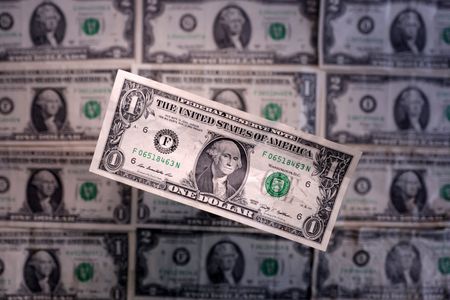

The U.S. dollar climbed to its strongest position this year on Thursday as surging oil costs raised concerns about inflation and prompted expectations that central banks worldwide may need to tighten monetary policies more aggressively.
During early Asian market sessions, the euro weakened by 0.1% against the dollar, trading at $1.1549 and approaching its lowest point since November. The Japanese yen also declined, briefly crossing the 159-per-dollar threshold and falling as much as 0.2% to 159.23, nearing its weakest position since July 2024.
Other major currencies also lost ground, with the Australian dollar declining 0.1% to $0.7148, the New Zealand dollar dropping 0.1% to $0.5907, and the British pound falling 0.2% to $1.3385.
Energy market turbulence intensified after Iran warned that global oil prices could reach $200 per barrel following its military strikes on commercial vessels Wednesday, which caused shipping traffic through the critical Strait of Hormuz to slow dramatically.
Economic experts caution that rising oil prices amid supply concerns will increase energy expenses and hamper worldwide economic growth, with risks mounting as the regional conflict continues.
President Donald Trump stated Wednesday that the United States was in “very good shape” regarding its conflict with Iran and that America would “look very strongly at the Straits.” Despite this, three sources with knowledge of the situation told Reuters that U.S. intelligence suggests Iran’s leadership remains largely stable and unlikely to collapse soon, even after nearly two weeks of continuous bombardment by U.S. and Israeli forces.
“President Trump keeps on saying, even overnight, that the war will end soon — it’s unclear to us that it’s really up to him,” commented Rodrigo Catril, a currency analyst at National Australia Bank in Sydney.
“We should expect ongoing volatility in energy prices,” he noted during a podcast appearance.
“The Strait of Hormuz is not just about oil, it’s about LNG, it’s about fertilizers,” he explained. “The longer that there’s no ability to go through, the pressure on prices will continue.”
Brent crude jumped 6.9% to $98.30 during early Asian trading, despite the International Energy Agency’s Wednesday announcement of a record 400 million barrel release from strategic reserves to counter the global price spike.
The Cboe oil volatility index, which has climbed in seven of the eight trading sessions since the conflict began, soared Wednesday to 121.01, reaching levels not seen since the early pandemic period in 2020.
Market confidence suffered another blow after the Trump administration Wednesday initiated a new trade probe examining industrial overcapacity among 16 major trading partners, an effort to restore tariff leverage after the Supreme Court invalidated a key component of Trump’s tariff strategy last month.
“U.S. breakeven inflation and swap spreads are on the march wider,” ING analysts noted in a client report, adding that eurozone 10-year swap rates are also approaching 3%.
Trading data suggests investors now anticipate central banks will implement tighter monetary policies sooner than previously expected. The European Central Bank may raise rates as early as June, while Australia’s Reserve Bank could potentially hike rates at next week’s meeting and again in May, according to LSEG information.
Federal Reserve futures markets show diminished expectations for policy easing this summer, with a 50.7% probability that the Fed will skip a rate cut at its July meeting, up from 43.4% the previous day, based on CME Group’s FedWatch tool.
In offshore trading, the dollar remained steady against the Chinese yuan at 6.8766. Cryptocurrency markets also declined, with Bitcoin falling 0.6% to $70,231.21 and Ethereum dropping 0.8% to $2,053.31.