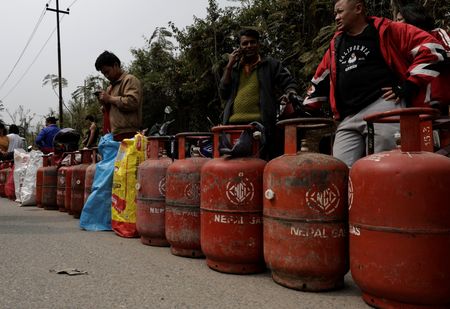
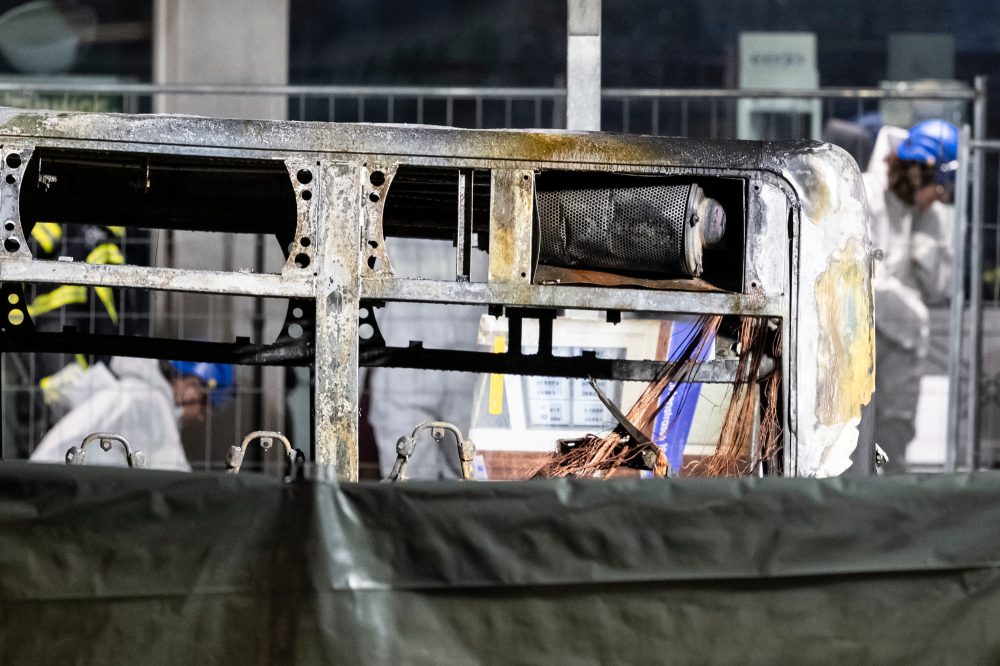
Nepal’s government announced Thursday it will implement cooking gas rationing measures beginning Friday as public anxiety over potential shortages grows amid ongoing Middle East conflicts.
The state-operated Nepal Oil Corporation will limit refills to half-capacity for empty cylinders in an effort to extend current liquefied petroleum gas inventory, according to executive director Chandika Prasad Bhatta.
The rationing decision comes as escalating tensions between the U.S.-Israel alliance and Iran have disrupted maritime traffic through the critical Strait of Hormuz, leading to increased energy costs and reduced production from regional oil and gas suppliers.
Despite government reassurances about adequate LPG availability, citizens have been rushing to refilling stations, creating extensive lines at facilities across the nation.
“The rationing is expected to end the panic and rush for hoarding,” Bhatta explained to reporters.
Nepal relies entirely on India for its fuel imports, including cooking gas supplies. The Himalayan nation consumes approximately 45,000 cylinders monthly, each containing 14.2 kilograms of cooking gas, according to government data.
Maryland officials have given final approval to new recreational striped bass fishing regulations that will reshape when anglers can target the popular species in Chesapeake Bay waters.
The Maryland General Assembly’s Joint Committee on Administrative, Executive, and Legislative Review approved the Department of Natural Resources’ proposed changes on Wednesday. The updated rules will take effect March 30, ten days after publication in the Maryland Register on March 20.
Under the revised regulations, April will reopen for catch-and-release striped bass fishing, while the entire month of August will be off-limits for targeting the fish. Officials say the timing shift protects striped bass during late summer heat when warmer water temperatures increase the likelihood of fish dying even after being released.
The 2026 recreational striped bass season in Chesapeake Bay will operate as follows:
January 1–April 30: Catch and Release
May 1–July 31: Harvest
August 1–31: Closed
September 1–December 5: Harvest
December 6–31: Catch and Release
Kate Charbonneau, DNR’s Assistant Secretary of Aquatic Resources, explained the rationale behind the changes. “The new regulations simplify the recreational and charter boat seasons, making them easier to find and read,” Charbonneau said. “We are allowing for more access to recreational fishing opportunities without increasing mortality or total fish removed.”
The regulatory overhaul follows more than a year of deliberation and extensive public input, including review of thousands of comments from stakeholders. Striped bass fishing ranks among Maryland’s most popular recreational activities, with recreational fishing and boating contributing an estimated $701.5 million in economic value to the state during 2024, according to federal Bureau of Economic Analysis data.
The seasonal adjustment addresses a specific conservation concern. During hot August weather, young resident striped bass become more susceptible to mortality even when caught and released by anglers. Data from the most recent stock assessment shows that recreational dead discards—fish that die after being caught and returned to the water—accounted for 21% of all fishing-related striped bass deaths in the Bay.
Previous regulations prohibited all striped bass targeting from April 1 to May 15 and July 16 to July 31, along with additional closures in specific tributaries. The new approach consolidates the closure period into August while reopening April for catch-and-release activities when cooler water temperatures improve fish survival rates.
When harvest is permitted, anglers may keep one striped bass per person daily, measuring between 19 and 24 inches in length. During catch-and-release periods, officials urge anglers to use techniques that maximize fish survival, including minimal handling and reduced air exposure.
Ocean waters remain open year-round for striped bass fishing with different size limits—fish must measure between 28 and 31 inches, with a one-fish daily limit. Spawning rivers will continue their March 1 to May 31 closure to protect breeding fish.
The regulatory changes come amid ongoing concerns about striped bass population health. Despite increases in large coastal spawning fish in recent years, Maryland’s juvenile striped bass surveys have documented seven consecutive years of poor recruitment in state waters. Scientists continue investigating factors that may be affecting young striped bass survival.
Current adult rockfish populations remain large enough to produce strong juvenile year classes under favorable environmental conditions. However, fisheries experts warn that the impacts of diminished juvenile recruitment will likely become more pronounced as these smaller year classes reach maturity.
The August closure specifically targets protection of resident striped bass during their most vulnerable period. Hot late-summer conditions make younger resident fish particularly susceptible to mortality, and the closure aims to help these fish grow and eventually migrate from the Chesapeake Bay to join the spawning population.
Officials anticipate the seasonal shift will benefit both recreational anglers and related businesses by restoring spring fishing opportunities while moving the closure to August, when other species like red drum remain available for targeting.
During the August striped bass closure, DNR encourages anglers to pursue invasive species including blue catfish and Chesapeake Channa (snakehead). These invasive fish have no bag or size limits, and their removal benefits Bay ecosystem health.
All striped bass fishing requires a valid Maryland fishing license, available online through MD Outdoors, at DNR service centers, or through licensed retailers. License sales, along with tackle, boat, and marine fuel purchases, fund the department’s fish conservation efforts.
Fourth-ranked professional golfer Collin Morikawa was forced to exit The Players Championship in Ponte Vedra Beach, Florida on March 12 after suffering a back injury just one hole into the tournament, according to PGA Tour officials.
The golfer, who entered this week’s premier PGA Tour event as a top contender, successfully completed the opening par-four 10th hole at TPC Sawgrass with a par before his tournament came to an abrupt end at the next tee box.
At the par-five 11th hole, Morikawa took a practice swing and immediately grabbed his back with his right hand. Officials observed him walking to a golf cart, removing his hat, and placing both hands on his head before being driven away from the course.
The golfer had been enjoying strong recent form, capturing victory at last month’s AT&T Pebble Beach Pro-Am for his seventh career PGA Tour win. He maintained that momentum with top-10 performances at both the Genesis Invitational and Arnold Palmer Invitational tournaments.
Iran’s newly appointed Supreme Leader Mojtaba Khamenei issued his inaugural public statement Thursday, declaring his nation will seek revenge for fallen fighters and continue blocking a vital oil shipping channel while targeting American military installations overseas.
The combative message, broadcast on Iranian state television, marked Khamenei’s first public comments after taking over following his father’s death. He demanded the United States shut down all regional military facilities and said Iran would maintain its blockade of the Strait of Hormuz to apply pressure on adversaries.
The waterway, located along Iran’s coastline, handles approximately 20% of global oil shipments, making it one of the world’s most strategically important maritime routes.
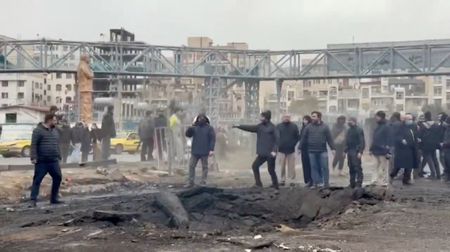
Thursday witnessed intensified maritime violence as two oil tankers caught fire at an Iraqi port following what authorities described as attacks by Iranian explosive boats. The incidents represent an escalation in assaults that have severely disrupted Middle Eastern oil exports, contradicting President Donald Trump’s assertions of victory in the military campaign he initiated two weeks prior.
Reuters confirmed footage captured from Basra port’s shoreline showing vessels consumed by enormous orange flames illuminating the darkness. Iraqi officials attributed the strikes to Iranian naval forces, with at least one crew member losing their life in the attacks.
Earlier that day, three additional ships suffered damage in Gulf waters. Iran’s Revolutionary Guards took credit for striking a Thai cargo vessel that subsequently burned, claiming the ship had ignored their directives. A container ship also reported being hit by an unidentified projectile near the United Arab Emirates.
The military confrontation, which commenced with coordinated U.S.-Israeli bombing operations in late February, has claimed roughly 2,000 lives and created what the International Energy Agency characterizes as history’s most severe global energy supply crisis.
Despite American and Israeli assertions of successfully eliminating much of Iran’s long-distance weaponry, additional drones were spotted Thursday entering airspace over Kuwait, Iraq, the UAE, Bahrain and Oman.
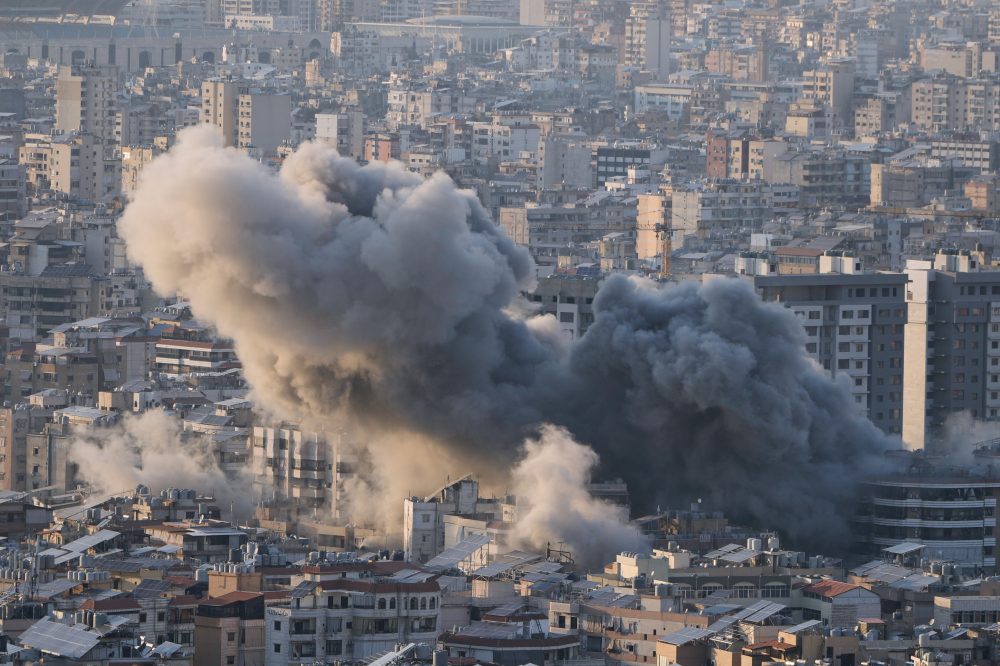
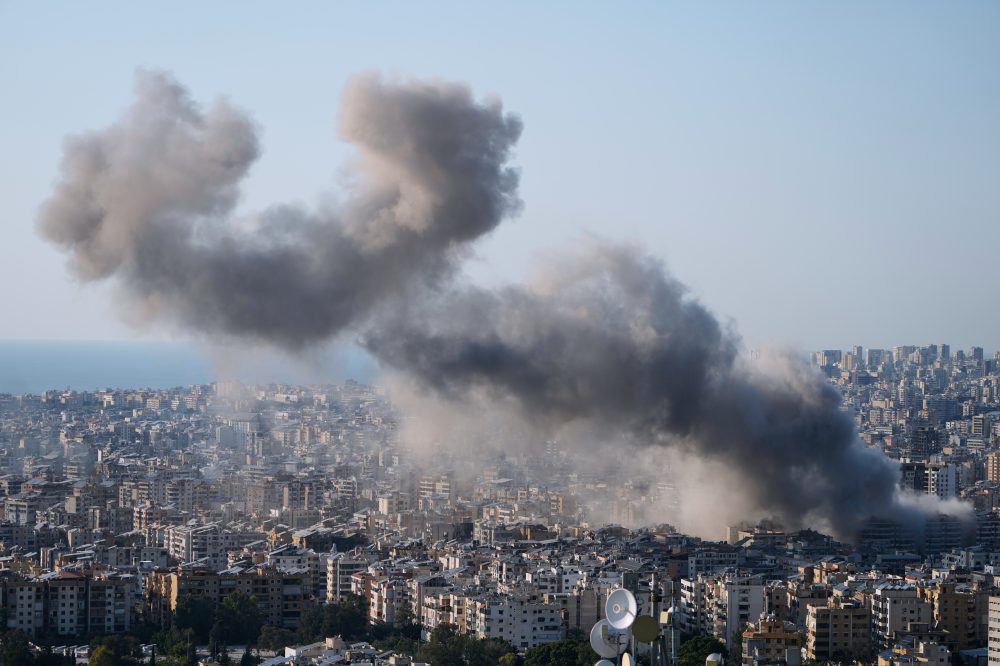
Lebanon’s Iranian-supported Hezbollah organization launched its largest rocket barrage into Israel since hostilities began, triggering retaliatory Israeli airstrikes on Beirut.
Crude oil prices jumped back beyond $100 per barrel after declining earlier in the week when Trump predicted a swift conclusion to the conflict. Iranian officials have stated they will prevent oil transit through the Strait of Hormuz until American and Israeli military operations end.
Trump has made multiple attempts this week to reassure energy markets by suggesting the price spike will be temporary.
However, the president has not outlined how the conflict will conclude or presented strategies for reopening the blocked shipping lane. American and Israeli representatives say their objective involves dismantling Iran’s missile and nuclear capabilities, though Trump has also called for Iran’s “unconditional surrender” and claimed authority to choose its leadership.
“You never like to say too early you won. We won,” Trump declared at a rally-style event in Hebron, Kentucky, Wednesday evening. “In the first hour it was over.”
Trump claimed America had “virtually destroyed Iran” but added: “We don’t want to leave early, do we? We got to finish the job.”
WASHINGTON – America’s trade deficit decreased significantly in January, falling by 25.3% to $54.5 billion as the nation’s exports climbed to unprecedented levels while imports declined, according to new federal data released Thursday.
The Commerce Department’s Bureau of Economic Analysis and Census Bureau reported that exports surged 5.5% to reach an all-time record of $302.1 billion during the month. This marked the strongest export growth since October 2021. Meanwhile, imports dropped 0.7% to $356.6 billion.
The January trade gap came in well below economists’ predictions of $66.6 billion. December’s deficit was also revised upward from the initial estimate of $70.3 billion to $72.9 billion.
The data release was postponed due to last year’s federal government shutdown. Trade figures have experienced significant fluctuations amid ongoing tariff policies implemented by President Donald Trump, who has pursued import duties under emergency powers legislation that was later overturned by the Supreme Court.
Following the court’s decision, Trump implemented a 10% worldwide tariff that he indicated would increase to 15%. His administration announced Wednesday that it was initiating two separate trade probes – one examining industrial overcapacity among 16 key trading partners and another investigating forced labor practices.
Trump has justified these tariff measures as essential for correcting trade imbalances and safeguarding American industries. However, the anticipated manufacturing revival has yet to occur, with 100,000 factory positions eliminated since January 2025.
Goods exports experienced remarkable growth of 8.1% to reach $195.5 billion in January. This increase was primarily driven by a $9.4 billion jump in industrial supplies and materials exports, particularly nonmonetary gold and other precious metals.
Capital goods exports also performed strongly, rising $5.4 billion to establish a new record, supported by increased shipments of computers, civilian aircraft, and computer accessories. Other goods exports climbed $2.9 billion to another all-time high. However, consumer goods exports fell $2.8 billion to their lowest point since October 2022, largely due to a $2.1 billion drop in pharmaceutical preparations.
On the import side, goods imports declined 1.0% to $277.3 billion. Consumer goods imports decreased by $3.3 billion, with pharmaceutical preparations again leading the decline. Automotive imports, including vehicles, parts, and engines, fell $2.8 billion due to reduced imports of trucks, buses, special-purpose vehicles, and passenger cars.
Industrial supplies and materials imports dropped $1.4 billion, with nonmonetary gold falling $1.1 billion. Conversely, capital goods imports increased $3.4 billion to a record high, driven by computers and telecommunications equipment, likely connected to artificial intelligence development and data center construction.
The merchandise trade deficit contracted 17.6% to $81.8 billion in January. Services exports grew $1.2 billion to a record $106.7 billion, reflecting increases in business services, financial services, and intellectual property charges. Travel services exports declined $0.3 billion, possibly indicating reduced tourism activity.
Services imports rose $0.2 billion to an all-time high of $79.3 billion, supported by gains in business services and insurance services.
Trade activity had minimal impact on the economy’s 1.4% annualized growth rate during the fourth quarter of last year.
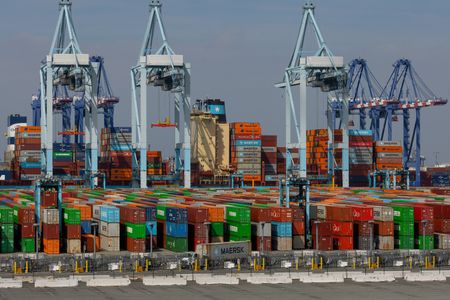
International businesses are facing significant challenges as the escalating conflict involving the United States, Israel and Iran creates ripple effects across global markets, according to a Reuters analysis released March 12. The situation is causing energy costs to climb, creating shortages of essential materials, and raising concerns about the dependability of shipping lanes that handle everything from food products to automotive components.
AVIATION INDUSTRY STRUGGLES
Air travel has been severely impacted with thousands of flights being canceled, rerouted or rescheduled across the globe. Missile and drone threats have forced the closure of significant portions of Middle Eastern airspace, including Qatar’s aviation corridors.
The aviation sector is experiencing its most severe disruption since the COVID-19 pandemic, with Dubai International Airport – the world’s busiest passenger hub – seeing operations significantly hampered. Other regional airports serving as crucial connection points for international flights are also under strain.
Some stranded passengers are turning to private aircraft to escape the Gulf region, while others are taking lengthy overland journeys to Riyadh, Saudi Arabia, hoping to secure flights home from there.
The crisis has also blocked a major oil shipping route, causing jet fuel costs to spike dramatically. This has led to higher airfares on multiple routes and growing concerns about a potential widespread decline in travel bookings.
Time-critical air freight has suffered major setbacks, with shipments including perishable foods and aircraft components stuck in transit as the Middle East situation reduces cargo capacity and increases shipping costs.
AIRLINE SECTOR IMPACTS
The closure of Gulf region airspace has quickly affected airline operations worldwide and caused stock prices in the industry to tumble.
Flight costs between Asian and European destinations have increased substantially, with carriers like Wizz Air and Lufthansa modifying their flight paths. Ryanair has reported increased bookings for shorter domestic routes.
Jet fuel expenses, which represent airlines’ second-highest cost after employee wages, have doubled since the conflict began, creating additional financial pressure on carriers.
Airlines that typically use financial hedging to protect against sudden oil price increases are still implementing fare increases, fuel surcharges and flight reductions as they deal with an unprecedented rise in refining costs.
The conflict is making flying conditions more dangerous for pilots, who face increased risks from drone activity in affected airspace.
Middle Eastern airspace restrictions have particularly hurt Indian airlines, which depend on the region as a vital pathway to Europe and the United States, especially after Pakistan prohibited Indian carriers from using its airspace last year.
DUBAI TOURISM CONCERNS
The conflict threatens the Middle East’s carefully developed reputation as a secure, upscale travel destination, following years of substantial investment from Abu Dhabi to Dubai. The region’s tourism industry generates approximately $367 billion each year.
The situation has highlighted how dependent international air travel has become on a small number of major hubs, with Dubai leading as the world’s busiest international airport.
Many retail establishments in Dubai and other prominent Middle Eastern commercial centers were either closed or operating with minimal staff during the past week.
MILITARY INDUSTRY DEVELOPMENTS
American forces have deployed various weapons systems against Iranian positions, including Tomahawk cruise missiles, stealth aircraft, and – for the first time in actual combat – inexpensive single-use attack drones based on Iranian technology.
The Pentagon also utilized artificial intelligence services from Anthropic, including its Claude systems, during military operations.
However, the Pentagon recently classified the AI company as a “supply-chain risk,” preventing government contractors from using its technology for U.S. military projects. This decision came after extended disagreements over the company’s security requirements, which the Defense Department considered excessive.
President Donald Trump held meetings with leadership from seven defense contractors on March 6, as the Pentagon works to replace equipment and supplies used in U.S. operations against Iran and other recent military actions.
METALS AND MATERIALS SHORTAGES
Qatar’s Qatalum smelting facility started shutting down operations last week, while Aluminium Bahrain announced it had stopped shipments and declared force majeure due to inability to transport materials through the Strait of Hormuz. The Gulf area produces roughly 8% of the world’s aluminum supply.
Aluminum prices on the London Metal Exchange rose dramatically following this news, while physical aluminum costs in Europe and the United States reached their highest levels in several years.
Indonesian nickel producers, who depend on the Middle East for three-quarters of their sulfur supplies, may need to reduce output as Gulf shipping faces increasing disruption from the conflict.
RETAIL AND FOOD SECTOR EFFECTS
Clothing shipments for major retail chains became stranded at airports in Bangladesh and India as the conflict affected flight operations, Reuters reported last week.
South Asia serves as a major garment production center, with fast fashion companies worldwide depending on factories in Bangladesh, India and Pakistan for continuous supplies of new shirts, dresses and pants.
The crisis is adding stress to the luxury goods sector, which was already working to recover from reduced consumer demand. Companies such as Richemont and Zegna are considered particularly vulnerable.
Indian restaurants and hotels have warned of potential disruptions and possible closures as the Iran conflict restricts cooking gas supplies, leading authorities to establish a committee to review industry concerns.
India’s bottled water industry is also seeing some producers increase prices for distributors, as war-related supply disruptions affect everything from plastic containers to caps, labels and packaging materials.
Higher oil prices have increased polymer costs, which are derived from crude oil and essential for plastic bottle manufacturing.
TECHNOLOGY SECTOR CONCERNS
South Korean government officials have cautioned that an extended conflict could interrupt supplies of crucial semiconductor manufacturing materials from the Middle East, including helium, which is vital for chip production and has no suitable alternative.
Drone attacks that damaged some of Amazon’s data centers in the United Arab Emirates and Bahrain have raised questions about technology supply chains and major tech companies’ expansion plans in the region.
BANKING SECTOR RESPONSES
Citigroup and Standard Chartered have instructed Dubai employees to work remotely, Reuters reported citing sources, as financial institutions respond to Iranian threats against Gulf banking operations connected to the U.S. and Israel.
HSBC has temporarily closed all Qatar branches indefinitely, according to a customer announcement, stating the action was taken to protect employee and customer safety.
Virginia anglers—I wanted to share an article with all of you about the fish hatchery systems that support opportunities throughout member jurisdictions of the Northeast Association of Fish and Wildlife Agencies, of which Virginia is a member. Virginia has nine fish hatcheries that stock trout, striped bass, walleye, smallmouth bass, and sunfish. Most of them require significant upgrades to keep producing fish and support sportfisheries—a story that is not unique—and this article details many of the challenges. DWR is actively pursuing funding mechanisms to maintain and upgrade the hatchery system, but without additional financial support, the ability of the system to support fish production will decline significantly. Note that our hatcheries are open to visitors, and we are happy to arrange a tour for interested anglers. Please reach out to us at [email protected] and we will set something up! – DWR Chief of Aquatics Dr. Michael Bednarski
Each year, approximately 50,000 people visit the Salmon River Fish Hatchery located in Altmar, New York. Many come to observe salmon migration from the viewing platform, while others enjoy the facility’s aquarium displays. The facility’s September open house welcomes guests into normally restricted areas, where staff members tend to roughly 3.5 million fish annually while children learn fishing techniques for when these fish are released into waterways across New York.
“It’s a really nice visitor experience,” brags Jim Daley, the superintendent of fish culture for the New York State Department of Environmental Conservation.
However, when Daley visits any of the dozen state hatcheries under his supervision, he encounters a different reality. “I walk around, I see an endless to-do list,” he says.
Deteriorating ponds, failing concrete structures, broken pipes and pumps create what Daley describes as “a tremendous backlog of infrastructure needs,” with “every hatchery is in the same boat.”
These observations align with findings from a recent Northeast Fisheries Administrators Association (NEFAA) study that evaluated 95 fish hatcheries throughout the Northeast, including 10 federal facilities. The assessment revealed over half the facilities were rated as “fair” or “poor,” with some “approaching the point of irreversible repair.”
The implications extend far beyond fish production.
According to Shawn Crouse, New Jersey’s chief of freshwater fisheries, fishing license and equipment sales create “an umbrella of funding for law enforcement, rare species conservation, habitat protections, and education programs.” He adds that “getting outside can open people’s eyes to caring about nature.”
Despite some recent funding successes, hatchery personnel throughout the region are voicing concerns about the critical need for investment in state fish hatchery infrastructure—essential not only for daily operations but for American conservation’s future.
Conservation Heritage
America’s first state fish hatchery opened in Caledonia, New York, in 1864. This preceded Congress’s 1871 authorization of the National Fish Hatchery System, designed to support commercial fishing and feed the growing population. During the early 1900s, hatcheries proliferated nationwide with expanded purposes: restoring ecosystems damaged by development and pollution while replenishing waters depleted by excessive fishing.
Today, state hatchery systems serve even broader functions, offering educational programs, conducting research to maintain aquatic ecosystem health amid climate change, and stocking premier fishing destinations. Since most conservation funding derives from hunting and fishing license sales plus federal taxes on fishing gear and boat fuel, producing fish that attract anglers remains essential to supporting this comprehensive mission.
These facilities also strengthen local economies. The sportfishing industry significantly benefits communities through hotel stays, early morning meals before fishing trips, and post-fishing refreshments. New Hampshire’s 200,000 anglers contribute approximately $150 million annually to state revenues. Pennsylvania’s sportfishing sector supports 14,000 jobs and generates $53 million yearly for the state’s general fund.
In New York, where 20 million angler days create $2.1 billion in economic activity, fisheries chief Steve Hurst emphasizes that monetary value isn’t everything. “Hatcheries put a lot of smiles on a lot of faces,” Hurst says.
Aging Infrastructure, Modern Challenges
Northeast government fish hatcheries average 80 years in age. “These hatcheries were created when labor was cheap and materials were cheap,” says Hurst, “but the world has changed.”
New Hampshire Inland Fisheries Chief Dianne Timmins identifies rising operational costs as a major change. “In the last three years, my costs have tripled,” she says. “We went from $200 thousand in feed to half a million. Water testing has increased from $23 thousand to $64 thousand.”
Timmins manages six facilities; four exceed 100 years old and show poor conditions. The NEFAA report indicates all of them “are on borrowed time and at risk of major catastrophic failure.”
“We try to fix things as they break, but because of the magnitude of what it costs to fix these things, we’re limited,” Timmins said.
Craig Lemon, who runs the Hackettstown Fish Hatchery in New Jersey, explains that cost isn’t the only obstacle in upgrading old infrastructure. “Every time we go for parts, everything is obsolete. It’s a struggle.”
When funding and equipment fall short, staff members bridge the gaps. “Hatchery staff are some of the most out-of-the box thinkers and problem solvers,” says Hurst. “They can fix just about anything and always come up with innovative ways to get the job done.”
“There’s almost nobody that works harder than a hatchery employee,” Lemon echoes.
However, even dedicated workers cannot overcome failures to meet current environmental regulations that many hatcheries cannot satisfy. “There were no water quality rules when these things were created,” says Timmins. “No one had thought of the Clean Water Act. No one had thought of the impacts these hatcheries might have.”
Furthermore, these older operations often depend on outdated heating and cooling equipment that lacks modern energy efficiency standards. Groundwater pumps consume substantial electricity. “We have not kept pace with the environmental movement in this country,” says Hurst. “We need to reduce our carbon footprint.”
Positive Developments
State agency leadership is beginning to recognize hatcheries’ urgent funding requirements.
New York recently approved a bond measure promising up to $75 million for hatchery improvements. “We need more to get our system modernized, but we haven’t had that kind of money in the past, and it’s a great start,” says Hurst.
Maine’s 2022 Jobs and Recovery Plan allocated $20 million for state hatcheries, while New Hampshire received $55 million through the American Rescue Plan Act to modernize one of six facilities. Originally, officials hoped these funds would repair two locations, but increased costs prevented that.
Timmins acknowledges the funding won’t address all New Hampshire hatchery needs but represents a welcomed beginning. Meanwhile, fishing popularity in her state has surged since the pandemic encouraged outdoor activities. In 2022, 150,000 anglers spent 3.5 million days fishing in New Hampshire, contributing $1.4 billion to the economy.
For regional hatchery staff, ensuring growing numbers of anglers have fish to catch represents their original motivation for entering aquaculture—and their reason for persevering despite job challenges.
“We provide 365 days of fishing for $33 in New Jersey,” says Lemon. “You can’t take your kids to McDonalds for 30 bucks.”
Crouse notes that in densely populated New Jersey, hatchery-stocked waters are vital for ensuring universal fishing access.
“We’re a very urbanized state, and so much of what we do overcomes those environmental obstacles of degraded habitat,” he says. “That gives people in an urban environment a chance to enjoy the outdoors.”
In New York, Hurst explains that fish hatcheries serve communities with the greatest needs, from rural tourism-dependent economies to disadvantaged populations with access to only small ponds or streams.
According to Hurst, these facilities’ true value transcends recreation opportunities and economic benefits; they cultivate important attitudes.
“The end result of the work hatcheries is to get people outside, enjoying an environment and pastime they might not otherwise be able to enjoy,” Hurst says. “That’s important because a majority of people in this country have lost their connection to nature—and you can’t have conservation without advocacy for the resource.”
Most state and federal fish hatcheries welcome visitors, with staff eager to educate the public about their work and its importance. Visit a hatchery soon to learn about fish cultivation and discover these facilities’ crucial conservation role. You’ll gain greater appreciation for keeping them operational to ensure fisheries resources continue providing restoration and recreation for the future.
Motorists traveling on Cleveland Avenue should prepare for traffic disruptions as construction activities require periodic lane restrictions at the North Chapel Street intersection.
The ongoing construction work will continue to impact traffic flow with intermittent lane closures scheduled to remain in place until 5:00 AM.
Drivers are advised to plan for potential delays and consider alternate routes when possible during the construction period.
Young fishing enthusiasts will have exclusive access to New Castle County’s trout-stocked streams this spring, with Delaware’s Department of Natural Resources and Environmental Control setting aside April 4 as a youth-only fishing opportunity.
The special day for anglers under 16 years old will begin at 7 a.m. on Saturday, giving young fishermen and women the first chance at the 2026 trout season. Adult anglers will need to wait until the following morning, when the regular season opens for everyone thirty minutes prior to sunrise on Sunday, April 5.
This youth-focused initiative gives Delaware’s youngest outdoor enthusiasts a head start on the popular upstate trout fishing season, which draws anglers to freshwater streams throughout New Castle County each spring.
Delaware Department of Transportation crews are working to clear debris from Interstate 495 southbound, causing lane restrictions for drivers approaching New Castle Avenue.
The right lane remains blocked as crews remove the roadway obstruction, creating potential delays for evening commuters. Motorists traveling southbound on I-495 should expect slower traffic conditions in the area.
DelDOT has not provided an estimated time for when the lane will fully reopen to traffic. Drivers are advised to use caution when passing through the work zone and consider alternate routes if possible.
Drivers using Coastal Highway (Route 1) near Ocean City are experiencing traffic disruptions due to ongoing construction work that has forced the closure of the right shoulder.
The Delaware Department of Transportation reports that the shoulder closure affects the stretch of highway between Inlet Road and South Inlet Road, specifically near Access Road B. The restriction is expected to remain in effect until 1 PM today.
Motorists are advised to allow extra travel time and exercise caution when passing through the construction zone. DelDOT continues to monitor the situation and will provide updates as work progresses.
RICHMOND—Emerging agricultural leaders from across Virginia launched a three-day conference focused on networking and professional development by bringing their concerns directly to state government officials at the Virginia Capitol.
During the 2026 Virginia Farm Bureau Federation Young Farmer’s Winter Expo, which carried the theme “Plowing the Past to Cultivate the Future,” participants from throughout the state gathered at the General Assembly on February 26 to build relationships, gain knowledge, and discuss agriculture’s future with top administration officials.
Katie Frazier, Virginia Secretary of Agriculture and Forestry, praised the young farmers for “helping drive so much of the good work that’s done in the commonwealth to protect our No. 1 and No. 3 industries”—agriculture and forestry.
“We are here to be your voice at the table,” she remarked. “We want to bring your feedback and your issues to Richmond so that we can make great decisions as we move forward.”
Frazier detailed three key focus areas where the administration aims to support the state’s agriculture and forestry sectors: expanding market access and economic development; advancing conservation efforts and safeguarding working lands; and building investment in tomorrow’s workforce.
Conference participants received presentations on collaborative initiatives in these areas from several state officials, including Virginia Secretary of Commerce and Trade Carrie Chenery, Virginia Department of Agriculture and Consumer Services Commissioner Charles Green, State Forester Terry Lasher, Virginia Secretary of Natural and Historic Resources David Bulova and Deputy Secretary of Natural and Historic Resources Adrienne Kotula.
The young farmers also participated in roundtable conversations with Frazier, Bulova and Kotula regarding obstacles confronting emerging agricultural professionals—addressing concerns such as accessing farmland, qualifying for Agricultural Best Management Practices funding, and providing resources for agricultural educators.
Martha Moore, VFBF senior vice president of governmental relations, urged the young farmers to develop creative solutions that could enhance Farm Bureau’s advocacy initiatives in the future.
Conference participants also received information about professional development and rural advancement programs from Kristie Proctor and Chandler Vaughan representing the Virginia Rural Center.
The organization represents a collaboration between the Sen. Frank Ruff Jr. Center for Rural Virginia and the Council for Rural Virginia, working together to partner with policymakers and community stakeholders in developing creative solutions and expanding business opportunities to promote economic growth across all areas of the commonwealth.
Vaughan discussed the Center for Rural Virginia’s work to strengthen rural communities through its Virginia Rural Leadership Institute. The VRLI seeks to “retain, attract and develop rural Virginians into innovative, responsible and civic-minded leaders who build strong communities.”
He also showcased the center’s Rural Virginia Opportunity Dashboard—an interactive digital mapping platform introduced last spring designed to deliver comprehensive data analysis and funding opportunities for rural Virginia communities.
“This is meant to be a time-saving tool to get a deeper understanding about the needs, strengths and opportunities in your city or county, and to quickly identify funding opportunities to address those needs,” he explained.
Vaughan and Proctor asked participants to share their input on the evolving dashboard and assist in identifying additional grant opportunities that may be missing. More information is available at cfrv.org/rvod.
WARSAW – Polish law enforcement officials report that a mining employee discovered an unidentified drone at a western Poland mining facility on Thursday.
According to police authorities, the unmanned aircraft was located by a worker during regular operations. A police representative stated the device “does not look like civilian drone” and confirmed investigators have not yet determined the specific model or type.
The discovery has prompted an ongoing investigation as officials work to identify the origin and purpose of the mysterious aircraft found at the mining location.
WASHINGTON – Construction of new single-family homes declined in January as brutal winter conditions disrupted building activity across the nation, according to new federal data that suggests recovery may be slow.
The Commerce Department’s Census Bureau reported Thursday that single-family home construction starts – which represent most residential building activity – decreased 2.8% to a seasonally adjusted annual pace of 935,000 units during January. December figures were also revised downward, showing construction activity at 962,000 units rather than the previously reported 981,000-unit pace.
The data release was postponed due to last year’s federal government shutdown. Construction activity plummeted dramatically in the Northeast, falling 33.3%, while the South – the nation’s most populated region – saw a 4.6% decline. The Midwest and Western regions posted increases. Severe snowstorms and freezing temperatures battered much of the country throughout January.
Compared to the same month last year, single-family construction starts fell 6.5%. The homebuilding sector continues struggling with multiple challenges including tariffs on imported materials like lumber and bathroom fixtures, workforce shortages linked to immigration restrictions, and elevated borrowing costs.
While mortgage interest rates have dropped this year, encouraging home buyers, the ongoing U.S.-Israeli conflict with Iran is driving up oil costs and increasing U.S. Treasury bond yields. Mortgage rates typically follow the 10-year Treasury benchmark.
Builder confidence remains low, indicating that single-family home construction is unlikely to see substantial improvement soon.
Multi-family housing projects with five or more units – a highly unpredictable market segment – jumped 29.1% to an annual rate of 524,000 units in January. Total housing construction increased 7.2% to 1.487 million units annually, representing a 9.5% year-over-year gain.
Building permits for future single-family construction dropped 0.9% to 873,000 units in January, down 11.6% from the previous year.
Permits for multi-family projects with five or more units plunged 13.4% to 453,000 units annually. Overall construction permits fell 5.4% to 1.376 million units, declining 5.8% compared to January of last year.
Housing investment, which encompasses all homebuilding activity, has now declined for four consecutive quarters.
WASHINGTON – Federal officials have launched legal action against California, challenging the state’s environmental vehicle regulations as violations of federal authority.
The Transportation Department filed the lawsuit Thursday in federal district court, targeting the California Air Resources Board over rules governing zero-emission vehicles and exhaust pollution standards. Officials argue these state-level regulations exceed California’s legal authority and conflict with federal oversight.
The legal challenge focuses on environmental vehicle standards that continue to operate despite President Trump’s recent action to cancel California’s Advanced Clean Cars II program, which aimed to eliminate gas-powered vehicle sales by 2035. While that specific initiative was blocked through federal legislation, California’s existing emission requirements remain active.
The federal lawsuit seeks to invalidate these remaining state regulations, setting up a potential court battle over environmental policy and states’ rights to set their own vehicle emission standards.
Property owners in Accomack County, Virginia now have access to a free monitoring service designed to safeguard them against deed fraud, according to the local Circuit Court Clerk’s Office.
The clerk’s office is actively promoting enrollment in VADeed Alert, a complimentary and optional monitoring program that tracks changes to property deeds and alerts owners to potential fraudulent activity.
Deed fraud has become an increasingly concerning issue for property owners, as scammers attempt to illegally transfer ownership or use properties as collateral without the legitimate owner’s knowledge or consent.
The VADeed Alert system works by monitoring public records for any changes or filings related to a property owner’s deed. When activity is detected, the system automatically sends notifications to enrolled property owners, allowing them to quickly identify and respond to any unauthorized transactions.
Property owners interested in the service can sign up through the county’s official website or contact the Circuit Court Clerk’s Office directly for assistance with enrollment.
The initiative represents part of ongoing efforts by local government offices to help residents protect their most valuable assets from increasingly sophisticated fraud schemes targeting real estate ownership.
WASHINGTON—Farm advocacy groups in Virginia continue to lead the nation in agricultural education efforts, consistently working to teach young people about farming and food production throughout their local communities.
Several Virginia counties have recently received White-Reinhardt grants from the American Farm Bureau Foundation for Agriculture®, including Farm Bureaus in Chesterfield, Charles City-James City-New Kent-York, and Franklin counties.
Virginia agricultural educators now have until June 12 to submit applications for funding opportunities through the White-Reinhardt Fund for Education. Working alongside the American Farm Bureau® Women’s Leadership Committee, this yearly grant initiative supports agricultural literacy programs for students in kindergarten through 12th grade. The funding provides as much as $1,000 for creative educational programs designed to help students learn more about how the country produces food, fiber, and fuel.
“These grants allow communities to develop innovative and engaging methods for teaching people about agriculture,” explained Lynn Black, who serves as education director for Virginia Agriculture in the Classroom. “Farm Bureaus collaborate with schools and community groups to provide materials that help kids discover the various aspects of agriculture and its importance in their daily lives.”
Last year, Chesterfield County Farm Bureau became one of just five county Farm Bureaus nationwide to earn grant funding for expanding educational programs about the area’s poultry industry. The county’s Farm Bureau Women’s Committee joined forces with Virginia Cooperative Extension to buy an adaptable “poultry photo op” display featuring trivia and photo opportunities. This educational tool teaches families about different poultry subjects including chicken growth, egg hatching, poultry byproducts, and additional topics.
The CC-JC-NK-York County Farm Bureau’s grant enhanced agricultural programming during the 2023-2024 academic year. Their Women’s Committee bought multiple agriculture and commodity-focused children’s books from the AFBF Agricultural Literacy collection. These books were given to a local nonprofit food pantry, which includes an appropriately themed book with each food donation box sent to families with school-age children.
During 2023, Franklin County Farm Bureau’s Women’s Committee utilized their grant money to buy a 3D EnviroScape® demonstration model showing how conservation practices help protect watersheds and wetlands. Committee volunteers visit schools throughout the county and use this model to show students how farmers work to safeguard the environment while producing food.
Both county and state Farm Bureaus may apply for these grants, with each organization allowed to submit one application per area they serve. All projects must focus on agricultural education.
Applications for the 2026-27 funding cycle must be submitted by June 12. A national review process will evaluate all applications, and chosen recipients will provide final project summaries in July 2027.
Those interested can submit an application for consideration or visit agfoundation.org for more information.
For media inquiries, contact Black at 804-350-3596.
WASHINGTON – Fewer Americans applied for unemployment benefits last week, providing a glimmer of hope following concerns about job market weakness after February’s surprising employment drop.
New filings for state unemployment assistance decreased by 1,000 to a seasonally adjusted 213,000 during the week ending March 7, according to Thursday’s Labor Department report. Economic forecasters had predicted 215,000 new claims for that period.
Throughout this year, jobless claims have stayed within a 199,000 to 232,000 range due to minimal layoff activity. These figures indicate a labor market that remains steady. Last week’s government data revealed that nonfarm employment fell by 92,000 positions in February, marking the sixth monthly drop since January 2025 and representing the second-largest decline.
Officials attributed February’s job losses to severe winter conditions, a healthcare worker strike, adjustments following January’s unusually strong hiring numbers, and employer reluctance to expand their workforce due to uncertainty surrounding import duties and artificial intelligence integration in various job functions.
After the U.S. Supreme Court overturned President Donald Trump’s broad tariff measures, which were implemented using emergency authority legislation, Trump responded by establishing a 10% worldwide tariff that he indicated would increase to 15%.
On Wednesday, the Trump administration announced it was initiating two trade examinations focusing on excessive industrial production capacity among 16 key trading nations and investigating forced labor practices.
Economic experts warn that the ongoing U.S.-Israeli conflict with Iran, which has driven up oil and gas costs, creates additional risks for employment. Rising fuel expenses and stock market instability could reduce consumer purchases and diminish worker demand.
Slow recruitment has resulted in extended unemployment periods for many job seekers, including recent university graduates. The number of individuals collecting unemployment assistance beyond their first week, which indicates hiring activity, fell by 21,000 to a seasonally adjusted 1.850 million for the week ending February 28, the report indicated.
Recent college graduates from last year don’t appear in the claims statistics because their minimal or nonexistent employment history makes them ineligible for unemployment compensation.
February’s unemployment rate rose to 4.4% from January’s 4.3%.
WASHINGTON — Weekly unemployment benefit filings decreased slightly last week, dropping to 213,000 as job cuts continue at historically manageable levels despite ongoing concerns about labor market weakness.
New jobless claims for the week that concluded March 7 declined by 1,000 from the prior week’s total, according to Thursday’s Labor Department data. Economic experts polled by FactSet had predicted 215,000 fresh applications.
Weekly unemployment filings serve as an immediate gauge of workforce layoffs and provide near real-time insight into employment market conditions.
Although weekly terminations have generally stayed within the historically modest range of 200,000 to 250,000 over recent years, several prominent corporations have recently declared workforce reductions, with Morgan Stanley, Block, UPS, and Amazon among those cutting positions in recent weeks.
The Labor Department revealed last week that employers surprisingly eliminated 92,000 positions in February, indicating continued labor market pressure. Economic forecasters had anticipated 60,000 job additions for February.
Employment data revisions also removed 69,000 positions from December and January totals, pushing the jobless rate to 4.4%.
Recent Labor Department findings showed job vacancies dropped in December to their lowest point in over five years, with January’s report expected next week.
Currently, the employment landscape appears trapped in what analysts describe as a “low-hire, low-fire” condition that maintains historically minimal unemployment rates while making job searches difficult for those seeking work.
Information from the past year has consistently shown an employment market where recruitment has clearly decelerated, hampered by uncertainty from President Donald Trump’s trade policies and continuing impacts from elevated interest rates the Federal Reserve implemented in 2022 and 2023 to control pandemic-related inflation surges.
The conflict in Iran adds further uncertainty, driving oil costs 25% higher within two weeks.
This development occurs while inflation remains elevated domestically. Wednesday’s data revealed consumers faced living costs including food, fuel, and other necessities that were 2.4% higher in February compared to the previous year.
February’s inflation matched the prior month’s rate and performed better than economists’ 2.5% projection, though it exceeds the Federal Reserve’s 2% economic target. These figures don’t reflect recent gasoline price increases due to the war.
The Federal Reserve’s preferred inflation measurement, personal consumption expenditures or PCE, releases Friday, preceding the Fed’s upcoming interest rate decision meeting.
Thursday’s Labor Department data indicated the four-week rolling average of unemployment claims, which smooths weekly fluctuations, decreased by 4,000 to 212,000.
Total Americans receiving unemployment benefits for the week ending February 28 fell by 21,000 to 1.85 million, government statistics showed.
ROME (AP) — Pope Leo XIV has selected a member of his own Augustinian religious order to oversee the Vatican’s charitable operations, continuing the expanded approach to papal charity work that Pope Francis established during his tenure.
The Pope announced Thursday that Archbishop Luis Marín de San Martín, a Spanish cleric who currently serves as an undersecretary in the Vatican’s synod office, will take over as the Vatican’s primary charitable official and head of its charity department.
The new appointment means Polish Cardinal Konrad Krajewski, age 62, will step down from the charity role to become Archbishop of Lodz in Poland, his native archdiocese that has operated without an archbishop for the past year.
Under Pope Francis, the Vatican’s top charity position was transformed from a traditional role into one of direct action and high visibility that became central to Francis’s papal identity.
During his tenure, Krajewski emerged as one of Francis’s most recognizable Vatican officials. His initiatives included establishing shower facilities for people experiencing homelessness near St. Peter’s Square, accompanying Francis during public events, and coordinating Vatican donations ranging from ambulances sent to Ukraine to COVID-19 vaccines distributed to a community of transgender sex workers.
His charitable missions extended internationally, including a trip to the Greek island of Lesbos to escort refugees to Rome and distributing 1,600 prepaid phone cards to newly arrived migrants on Lampedusa island, enabling them to contact family members and confirm their safe passage across the dangerous Mediterranean waters.
The Vatican’s charitable office has deep historical roots, with documentation tracing back to a 13th-century papal decree from Pope Innocent III, while Pope Gregory X formalized it as an official Vatican department for papal charitable works between 1271 and 1276.
Before Krajewski’s tenure, the position typically went to veteran Vatican diplomats nearing retirement at age 75. Francis revolutionized the role, creating a more active operation that deployed off-duty Swiss Guards to distribute food to homeless individuals during winter nights and authorized direct financial assistance to those in need on behalf of the Pope.
The department generates funding through the creation of papal parchments—custom-made certificates featuring the Pope’s photograph that Catholics can purchase for special occasions such as weddings, baptisms, or ordinations, complete with personalized names and handwritten apostolic blessings.
BUDAPEST, Hungary (AP) — Hungarian officials announced Thursday they will make public a classified intelligence document that Prime Minister Viktor Orbán claims contains evidence his primary political rival accepted unlawful financial support from Ukraine.
The embattled leader is confronting the most serious electoral threat of his political tenure in the upcoming April 12 election, with polling data showing him behind center-right challenger Péter Magyar and his Tisza party.
With the voting date drawing near, Orbán — who has cultivated friendly ties with Moscow — has intensified his anti-Ukraine messaging, alleging that Kyiv, the European Union, and the Tisza party are collaborating in a plot to remove his administration and replace it with one more sympathetic to Ukrainian interests.
The Hungarian leader has made repeated assertions that Ukraine has provided financial backing to Tisza, though he has not offered proof to support these claims. During a television appearance on ATV last week, Orbán stated that Ukraine had given “significant” amounts of money to Tisza for developing technology platforms and organizing voter outreach activities.
Magyar has rejected these accusations.
Orbán insisted his statements were “not assumptions, but facts” documented in a national security committee analysis, and urged reporters to push for the document’s public release.
“I don’t think the state would withhold this information from you,” Orbán said.
During Thursday’s press briefing, Orbán’s chief of staff Gergely Gulyás confirmed that “the declassification process is underway,” adding the document would be made available “in the foreseeable future.”
Facing an election just one month away, with citizens frustrated by economic stagnation, deteriorating public services, and persistent corruption scandals, Orbán has framed the election outcome as critical to Hungary’s survival.
Orbán’s campaign strategy centers on warning voters that a new administration would devastate Hungary’s finances through Ukrainian support against Russia’s military offensive, while forcing Hungarian young people into deadly combat roles. This messaging campaign, filled with false information, has extensively utilized artificially generated images and videos.
Hungarian authorities have spent taxpayer money on nationwide billboard displays showing a digitally altered photo of Ukrainian President Volodymyr Zelenskyy with a menacing grin. The text declares: “We won’t let Zelenskyy have the last laugh!”
In contrast, Magyar, a 44-year-old attorney who previously worked within Orbán’s Fidesz party, has raised concerns about potential Russian intelligence interference designed to benefit Orbán in the election.
The Tisza party did not immediately respond to a request for comment.
Orbán’s administration has firmly rejected EU monetary and weapons assistance for Ukraine, and pledged to block any EU efforts to admit Ukraine as a member.
Hungary recently prevented new EU penalties against Russia and stopped a massive 90-billion-euro ($104-billion) loan package for Kyiv in response to disruptions in Russian oil deliveries through Ukraine.
Orbán has also positioned military personnel at critical energy facilities throughout Hungary, claiming Ukraine is planning sabotage operations.
Last week, masked Hungarian Counter Terrorism Center operatives arrested seven Ukrainian state bank workers and seized two armored trucks containing 40 million U.S. dollars, 35 million euros, and 9 kilograms (19.8 pounds) of gold.
The banking officials were sent back to Ukraine after being held for more than 24 hours, but the cash and gold, valued at approximately $82 million, remained in Hungarian custody.
This incident sparked outrage from Ukraine, which explained the shipment was traveling from Austria to Ukraine through Hungary as part of routine inter-bank operations. Ukraine’s foreign minister condemned Hungary for “state terrorism” and “taking hostages.”
COLUMBUS, Ohio — Ohio State University moved quickly Thursday to fill its top leadership position, selecting its current provost as president just days after the previous leader stepped down amid scandal.
The board of trustees selected Executive Vice President and Provost Ravi Ballamkonda to take over the role, skipping the typical national search process that would normally be conducted. This marks the fourth presidential change at the institution since 2020.
The appointment follows growing details about former President Walter “Ted” Carter Jr.’s improper relationship with a woman who hosts a podcast aimed at military veterans.
Ballamkonda brings extensive academic credentials to the position, working as both a bioengineer and neuroscientist. He came to Ohio State in 2021 after serving in leadership and research roles at several prestigious institutions including Emory University, Duke, Georgia Tech and Case Western Reserve University in Cleveland. He holds a Ph.D. in medical science and biomaterials from Brown University.
The leadership change came after university trustees received an external tip and confronted Carter about his conduct less than a week ago. Carter acknowledged in his public statement that he had “made a mistake in allowing inappropriate access to Ohio State leadership” before submitting his resignation. The former Navy vice admiral had served only two years of a five-year agreement that paid him over $1.1 million annually, plus additional compensation and housing at the university’s presidential residence.
Board Chair John Zeiger said he was surprised and disappointed when he accepted Carter’s resignation on Sunday. The university announced it was looking into Carter’s “inappropriate relationship with someone seeking public resources to support her personal business.”
The state’s economic development agency, JobsOhio, confirmed Carter’s departure was “possibly connected” to his association with Krisanthe Vlachos, who hosted a planned four-part veterans’ podcast series called The Callout. The agency paid $15,000 per episode for the full series and is now working to recover the $60,000 payment.
“Ohio State is a trusted partner and Admiral Carter, sharing our passion for military and veterans, recommended The Callout Podcast as an opportunity to build and engage a military and veteran audience in Ohio,” the agency wrote on X, “and connect them to the massive job opportunities coming to Ohio’s super sectors like advanced aerospace/defense and energy.”
University spokesperson Ben Johnson said the investigation centers on Vet Earn USA LLC, a business Vlachos registered in Ohio on December 19.
JobsOhio also provided Vlachos with $10,000 for a veterans’ theater production titled “Last Out” Elegy of a Green Beret.” This funding came through the agency’s Hometown Heroes program, which provides free entertainment for military members, veterans and their families.
Ultragenyx Pharmaceutical announced Thursday that their investigational gene therapy demonstrated promising results in a late-stage clinical trial for patients suffering from a rare inherited liver condition.
The experimental treatment, known as DTX301, showed an 18% improvement in controlling ammonia levels after 36 weeks of treatment in patients diagnosed with ornithine transcarbamylase deficiency, also called OTC deficiency, when compared to those receiving a placebo.
OTC deficiency occurs when patients lack a crucial liver enzyme responsible for eliminating ammonia from the body. Without this enzyme, dangerous levels of ammonia accumulate in the bloodstream, potentially causing mental confusion, seizures, and even coma in severe cases.
According to the pharmaceutical company, patients generally responded well to the gene therapy treatment. The most frequently reported adverse effects involved liver complications, which medical teams successfully managed using steroid medications.
BERLIN, March 12 – Germany’s Foreign Minister Johann Wadephul emphasized Thursday that diplomatic negotiations represent the only viable path forward for addressing security concerns in the vital Strait of Hormuz shipping corridor.
Speaking during his official visit to Turkey, Wadephul stressed the importance of collaborative efforts. “A reliable and sustainable solution can only be achieved through diplomatic channels, and that is why I believe … that we should pool our common interests from the Gulf region, but also here in the neighbourhood,” he stated.
The critical waterway has become increasingly dangerous following Iranian retaliatory attacks against U.S.-Israeli actions, with strikes targeting vessels navigating the strait. These assaults have brought commercial shipping traffic from non-Iranian vessels to virtually a complete halt through what serves as the primary export route for Middle Eastern oil, compelling regional producers to reduce their output levels.
During a joint press briefing with his Turkish counterpart, Wadephul outlined broader regional stability goals. “Together, we must find a way out of this war and, at the same time, develop an initial idea of what a future security architecture for the region might look like,” he declared.
A high-ranking member of an Iranian opposition organization operating from Paris stated Thursday that the current U.S.-Israeli military campaign against Iran will fail to remove the nation’s religious rulers, contending that only widespread domestic revolt combined with internal resistance movements could achieve regime change.
The nearly two-week military operation has resulted in approximately 2,000 Iranian casualties, including Supreme Leader Ayatollah Ali Khamenei, while significantly damaging the country’s military infrastructure and security forces.
Tehran has retaliated with its own strikes, creating turmoil in worldwide energy markets and transportation systems while expanding hostilities throughout the Middle East region. Meanwhile, Iran’s Islamic Revolutionary Guard Corps has strengthened its control and issued warnings about suppressing any domestic unrest.
Mohammad Mohaddesin, who serves as foreign policy chief for the National Council of Resistance of Iran (NCRI), addressed reporters about the military campaign’s limitations.
“The 12-day war in June, and the current war, now in its 12th day, proved that bombings cannot overthrow the regime,” Mohaddesin stated during his press briefing.
“Even if you have 50,000 armed soldiers on the ground, you need the support of Iranian people. You need a popular uprising. The combination of this 50,000 or 20,000 or any other number with a popular uprising, then you have this power to overthrow the regime,” he explained.
Mohaddesin dismissed the possibility of American ground forces being deployed as unrealistic.
The NCRI, which goes by the Farsi designation Mujahideen-e-Khalq, remained on the U.S. terrorist organization list until 2012.
Iranian authorities have prohibited the group’s activities within the country, and its domestic support level remains uncertain. Nevertheless, alongside its main competitor—monarchist supporters of Reza Pahlavi, the deposed shah’s exiled son—it represents one of the few opposition movements capable of mobilizing followers.
While Mohaddesin conceded his organization lacks the capacity to single-handedly topple Iran’s government, he predicted that large-scale demonstrations similar to January’s protests, which authorities violently suppressed, would return after the bombing campaign ends and could ultimately tip the scales.
“I cannot say how many months or a year, but … this is the track of overthrowing the regime,” he stated.
Israeli leadership has indicated that weakening Iran’s security infrastructure to enable the Iranian population to determine their own future represents one of their military goals.
The Pentagon’s Chief Technology Officer Emil Michael declared Thursday that his agency will not pursue future discussions with artificial intelligence company Anthropic, following the military’s decision to classify the tech firm as a supply-chain threat.
During a CNBC interview on March 12, Michael firmly stated his position on potential future talks with the AI company. “There’s no chance. The (Anthropic) leadership has proven, through the leaking and through sort of bad faith negotiation that they don’t want to reach an agreement,” Michael explained.
When contacted by Reuters for a response, Anthropic representatives did not provide immediate comment.
The Defense Department made the decision last week to classify Anthropic as a supply-chain threat, a designation that prohibits military personnel from using the company’s artificial intelligence systems and prevents defense contractors from incorporating the technology into military projects.
In response to the government’s action, Anthropic filed a lawsuit against the Trump administration this Monday, arguing the Pentagon’s decision violates the law and threatens to eliminate hundreds of millions of dollars in potential business revenue.
The conflict stands out particularly because Anthropic had actively pursued partnerships with U.S. national security agencies ahead of many competing artificial intelligence firms.
Anthropic’s Chief Executive Dario Amodei has previously stated he does not fundamentally oppose the development of AI-powered weapons systems, though he maintains that today’s artificial intelligence capabilities lack the precision necessary for such applications.
According to Reuters reporting, Anthropic’s financial backers have been working urgently to minimize the business impact from the Pentagon dispute. Several parties, including rival company OpenAI and various investors, have voiced concerns about the government’s decision.
BLACKSBURG, Va. — Those dreaming of lush outdoor gardens or fresh homegrown vegetables should take a gradual approach to cultivating their green thumb, according to a Virginia gardening specialist.
Ed Olsen, who serves as Virginia Cooperative Extension Master Gardener director and consumer horticulture specialist, advocates for a measured strategy. “Start small, and build on your successes,” Olsen advised.
Newcomers to gardening who only have indoor space can begin by cultivating compact herb containers, which grocery stores stock throughout the year or can be found at nearby nurseries during planting season.
Those interested in growing their own vegetables should look for outdoor locations receiving more than 6-8 hours of daily sunshine.
According to Olsen, container gardening offers an excellent entry point. “If you can grow plants in a container on your deck for the summer, then you probably can succeed in moving them out to the yard the next year,” he explained.
For those wanting to enhance their landscape with decorative plants, choosing a small area for an initial garden bed is recommended. The chosen location will influence which plant varieties will thrive there.
Once you’ve determined where to garden, understanding your soil composition becomes crucial. Local Extension offices provide soil testing kits, and samples can be analyzed by the Virginia Tech Soil Testing Lab.
“Winter is a great time to do a soil test, as long as the ground isn’t frozen,” Olsen mentioned. “That will tell you what your ornamental or vegetable garden will need to make sure you’re starting off with the right nutrients and pH for desired plants.”
Elevated garden beds present another excellent choice for newcomers uncertain about their soil quality who want rapid results. A 4-by-8-foot bed typically provides an ideal starting size.
Following site selection, compile a list of preferred plants that match your location’s lighting and soil conditions.
Olsen warned against mismatching plants with their environment. “If you put a plant that likes high light in a shady garden, it’s not going to thrive,” he cautioned. “And typically, you end up with diseases and pest issues when a plant’s struggling to grow in an environment.”
He suggested that perennial varieties work well for novice ornamental gardeners, providing “immediate gratification” and extended flowering periods. For vegetable beginners, tomatoes and peppers typically grow easily and remain popular choices.
Rather than starting from seeds, Olsen advises first-time gardeners to buy young plants from garden centers for transplanting. Growing from seed requires considerable indoor time and often produces more plants than needed.
Additional important considerations include:
• Planning spacing based on mature plant size rather than current container dimensions
• Creating planting holes no larger than the plant’s container
• Providing adequate water for ornamental plants during their first year for proper root establishment
• Consulting Extension’s 2026 Pest Management Guide available online
More beginner gardening advice can be found in Virginia Farm Bureau’s Cultivate magazine.
Delaware State University basketball has reason to celebrate as two of its players received prestigious conference recognition from the Mid Eastern Athletic Conference.
The MEAC announced its annual basketball awards as the organization launched its 2026 Homecoming Basketball Tournament in Norfolk, Virginia. Among the honorees, DSU players James and St.Clair were selected for multiple team recognitions.
James earned a spot on the MEAC All-Second Team, while St.Clair was named to both the All-Second Team and the All-Rookie Team, highlighting the promising talent within the Hornets’ basketball program.
The awards ceremony coincided with the start of the conference’s marquee basketball tournament, bringing together the league’s top talent for the annual championship competition.
MIAMI — Miami Heat center Bam Adebayo delivered a career-defining performance Tuesday evening that rewrote the franchise record books before halftime even arrived.
During the opening 12 minutes against the Washington Wizards, Adebayo erupted for 31 points, shattering Miami’s previous mark for most points scored in any single quarter. That explosive start also matched the team’s existing record for first-half scoring before the second period had even begun.
By intermission, Adebayo had accumulated 43 points, establishing a new Heat benchmark for any half-game performance. His first-half total surpassed his previous career-high of 41 points — which had been achieved across an entire contest against Brooklyn on January 23, 2021.
The big man’s shooting display was remarkably efficient, connecting on 13 of 24 field goal attempts, 12 of 14 free throw tries, and an impressive 5 of 11 three-point shots during the opening two quarters.
Prior to Tuesday’s contest, Adebayo’s season-high stood at 32 points. He equaled that mark with a free throw attempt with 5:53 remaining in the second quarter, simultaneously breaking Miami’s first-half scoring standard.
Adebayo’s 31-point quarter represented the league’s highest-scoring individual quarter since Karl-Anthony Towns netted 32 for Minnesota during a third quarter at San Antonio on March 14, 2022.
Beyond Towns and Adebayo, only three additional players have reached the 31-point threshold in a single quarter over the past three decades.
Klay Thompson holds the NBA record for any quarter with 37 points for Golden State against Sacramento in the third quarter on January 23, 2015.
Kevin Love tallied 34 for Cleveland against Portland in the first quarter on November 23, 2016.
Carmelo Anthony contributed 33 for Denver against Minnesota in the third quarter on December 10, 2008.
Miami’s previous first-quarter scoring record belonged to LeBron James, who scored 25 points at Cleveland on March 18, 2014. James also held the franchise’s only other 25-point quarter, which came during his team-record 61-point performance against Charlotte on March 3, 2014.
Before Tuesday’s breakout, Adebayo had never exceeded 19 points in any single quarter throughout his career.
Adebayo’s 43-point opening half ranks as the NBA’s second-highest total in at least 30 seasons, dating back to when digital play-by-play tracking began during the 1996-97 campaign.
Towns previously held the modern era’s top mark with 44 points for Minnesota against Charlotte on January 22, 2024.
The all-time NBA record for first-half scoring remains 53 points, a mark shared by Denver’s David Thompson and San Antonio’s George Gervin. Both players achieved the feat on April 9, 1978 — the final day of that regular season — as they competed in separate games to determine the league’s scoring champion.
HENDERSON, Nevada — Baltimore Ravens officials have withdrawn from a previously negotiated trade agreement that would have brought Las Vegas Raiders defensive star Maxx Crosby to the Ravens organization in exchange for two first-round draft selections.
According to Raiders management, the trade arrangement had been finalized last Friday but required completion when the NFL league year officially commenced on Wednesday. On Tuesday night, Las Vegas announced that Baltimore had pulled out of the agreement, with team officials declining to elaborate further.
The 28-year-old defensive end had undergone surgical repair of a torn meniscus in his left knee during January, which would have required him to successfully complete a medical examination before the trade could proceed. The injury forced him to miss his team’s final two regular season contests, though he had initially wanted to continue playing despite the condition.
During a recent guest spot on “The Herd with Colin Cowherd,” Crosby stated he was “ahead of schedule” in his recovery process.
Baltimore had viewed acquiring Crosby as the final component needed to elevate their championship aspirations, while Las Vegas planned to use the draft compensation as part of their organizational rebuilding strategy.
Last season, Crosby recorded 10 quarterback sacks along with a personal-best 28 tackles behind the line of scrimmage, marking his fourth campaign with double-digit sack totals across his seven-year professional career.
The Ravens, now under first-year head coach Jesse Minter, are operating in championship-contending mode with three-time All-Pro quarterback Lamar Jackson leading their offense. Adding Crosby would have provided substantial improvement to a defensive unit that managed just 30 sacks last season, ranking them in a tie for 28th league-wide.
Las Vegas currently holds the top selection in the upcoming draft and is anticipated to choose Indiana quarterback Fernando Mendoza. The Raiders have been particularly active during the opening of free agency, reaching agreements with multiple new players and reportedly arranging to send quarterback Geno Smith to the New York Jets, according to sources familiar with the transactions who requested anonymity since deals cannot be officially completed until Wednesday.
The Raiders’ most significant acquisition was securing three-time Pro Bowl center Tyler Linderbaum with a three-year contract worth $81 million, including $60 million in guaranteed money, luring him away from Baltimore to Las Vegas.
Salisbury University’s Sea Gulls track and field program is making final preparations as they head into the 2026 NCAA Indoor Track and Field Championships.
The university has released a preview of their expectations and preparations for the national indoor competition, showcasing the athletes who will represent the Sea Gulls on the national stage.
The championships represent the culmination of the indoor track season, bringing together the nation’s top collegiate athletes to compete for national titles in their respective events.
Salisbury University continues to build its reputation as a competitive force in NCAA Division III athletics, with the track and field program being a key component of the school’s athletic success.
Delaware Department of Transportation maintenance teams are conducting litter removal operations along a stretch of Interstate 95 southbound this afternoon.
The cleanup crews are working on the right shoulder of the highway between Exit 5 and the Maryland border, with operations expected to wrap up by 4:30 PM today.
Motorists traveling through the area should exercise caution and be aware of the maintenance vehicles and workers present along the roadway during the cleanup effort.
BEIRUT (AP) — Lebanese residents from the country’s southern regions are evacuating their communities to escape Israeli military strikes aimed at Hezbollah positions, finding temporary refuge in public buildings throughout Beirut including sports venues and educational facilities.
The mass displacement illustrates how the broader conflict involving the United States, Israel, and Iran is creating humanitarian consequences throughout the Middle East region.
The Associated Press photo editors have compiled a visual documentation of these events.
Market volatility stemming from Middle Eastern conflicts is expected to push SoftBank’s mobile payment subsidiary PayPay toward a more conservative pricing strategy for its upcoming stock market debut, according to insider sources.
Two individuals with knowledge of the situation indicated that the Japanese digital payment company will likely set its initial public offering price closer to the bottom of its previously announced range due to current market conditions.
Despite the challenging market environment, investor appetite for the offering remains robust, with one source revealing that demand has exceeded the available shares by more than five times. The order collection period has concluded, and final pricing decisions will be made following the close of U.S. trading markets on Wednesday.
According to regulatory documents filed earlier this month, PayPay had planned to sell 55 million American depositary shares at a price point ranging from $17 to $20 per share, which could have resulted in a company valuation reaching as high as $13.4 billion.
The sources requested anonymity since the pricing information has not been made available to the public. PayPay representatives were not immediately available to provide comment on the matter.
The International Energy Agency is weighing an unprecedented release from strategic oil stockpiles to combat surging crude prices driven by escalating conflict between the U.S.-Israel alliance and Iran, according to a Wall Street Journal report published Tuesday.
Sources familiar with the discussions indicate this potential release would surpass the previous record of 182 million barrels that member nations deployed to markets through two separate actions in 2022 following Russia’s comprehensive assault on Ukraine.
An emergency session of IEA member nations took place Tuesday, with a final decision on the reserve release expected Wednesday, the Journal reported. The plan would move forward unless any member country raises objections, though even a single nation’s opposition could stall the initiative.
Oil futures markets reacted immediately to news of the potential release, with both U.S. crude and Brent prices declining following the report.
Neither the International Energy Agency nor White House officials provided immediate responses when contacted for comment.
Global oil prices climbed to nearly four-year peaks Monday before retreating Tuesday after President Donald Trump expressed optimism that Middle Eastern hostilities might conclude in the near future.
Energy ministers from G7 nations fell short of approving strategic reserve releases during Tuesday discussions, instead directing the IEA to evaluate current market conditions before taking action.
Former President Donald Trump announced his support Tuesday for Ed Gallrein, a former Navy SEAL, in the race for Kentucky’s 4th Congressional District currently represented by Thomas Massie.
Trump revealed his backing of Gallrein through a social media post on Tuesday, targeting the seat currently occupied by one of his sharpest Republican detractors in the House.
The relationship between Trump and Massie has deteriorated over recent months, with the Kentucky representative consistently demanding transparency regarding documents connected to the Jeffrey Epstein investigation. Massie has also been vocal in his disapproval of how the Trump administration addressed Epstein-related matters.
In his Tuesday endorsement announcement, Trump continued his pattern of public criticism directed at Massie, reinforcing the ongoing tension between the former president and the Kentucky congressman.
TOKYO, March 11 – Global crude oil markets experienced a decline Wednesday following reports that the International Energy Agency is considering an unprecedented release from strategic oil reserves, according to the Wall Street Journal.
The proposed reserve release would mark the largest in the agency’s history and is designed to counter escalating crude prices that have surged due to ongoing conflicts involving the United States, Israel, and Iran in the Middle East.
Market data showed Brent crude futures declining by 23 cents to $87.57 per barrel, representing a 0.26% decrease as of 0023 GMT. Meanwhile, U.S. West Texas Intermediate crude dropped 37 cents to $83.08 per barrel, marking a 0.44% decline for the trading session.
The Goldey-Beacom Lightning softball squad had an up-and-down fourth day of tournament action in Melbourne, Florida, managing to secure one victory while suffering one defeat.
The Lightning opened the day with a challenging matchup against Bemidji State, ultimately falling to their opponents by a score of 9-5. However, the team demonstrated resilience by rebounding in their second contest of the day.
In their follow-up game, Goldey-Beacom managed to turn things around, defeating Saint Thomas Aquinas in a close 7-5 battle to salvage a split for the day’s competition.
The results leave the Lightning with mixed outcomes as they continue their Florida tournament experience, showing both the challenges and competitive spirit that define tournament play.
The University of Delaware Blue Hens men’s tennis team experienced a setback in their latest competition, losing their match against Columbia University.
The loss represents another challenge for the Delaware squad as they work through their current season schedule. The team continues to compete at the collegiate level while building experience and working to improve their performance.
The Blue Hens will look to regroup and focus on their upcoming matches as the season progresses.
WASHINGTON – An American diplomatic compound in Iraq came under drone attack Tuesday, according to a Washington Post report citing unnamed security officials and internal State Department communications.
The attack targeted a diplomatic support center that serves as a logistics hub for U.S. diplomatic personnel, located close to Baghdad’s airport and Iraqi military installations, the newspaper reported.
According to the Post’s reporting, casualty information was not immediately available. Federal agencies including the White House, State Department, and Pentagon have not yet provided official statements regarding the incident.
The Washington Post indicated that half a dozen drones were directed at the Baghdad compound, with one successfully striking the American facility while air defenses intercepted the remaining five. A security source, speaking anonymously due to the sensitive nature of the situation, told the Post they had no information about potential casualties.
Internal State Department communications referenced in the Post report indicated the drone impacted an area near a guard tower, prompting officials to issue “duck and cover” instructions to personnel at the location.
The newspaper attributed the attack to the Islamic Resistance in Iraq, described as a coalition of Iranian-supported armed groups, based on information from the security official.
The incident occurs during ongoing military operations between the United States, Israel, and Iran that commenced February 28. Iran has conducted counter-strikes against Israeli targets and American military installations in Persian Gulf nations. Iran’s United Nations representative claims the U.S.-Israeli operations have resulted in over 1,300 civilian deaths.
Israeli officials report 11 civilian fatalities from Iranian attacks, while U.S. military sources confirm seven American service members have died. Reuters reported earlier Tuesday that up to 150 U.S. military personnel have sustained injuries during the conflict.
President Trump has defended the military actions as necessary to counter what he described as immediate Iranian threats, pointing to the country’s nuclear and missile development programs, its backing of Hamas and Hezbollah, and other “menacing activities.” Iranian leadership has rejected nuclear weapons development claims and condemned the attacks as violations of national sovereignty.
ATLANTA (AP) — Digital imaging technician Chris Ratledge once earned up to $9,500 weekly working on movie sets in Atlanta. Today, the 48-year-old relies on food stamps to survive.
Ratledge relocated from Indiana to Georgia in 2017 when film studios, attracted by substantial tax incentives, transformed Atlanta into what became known as the “Hollywood of the South.” The city served as the filming location for major productions including “The Hunger Games,” “Stranger Things,” and numerous Marvel superhero films.
The work demanded long hours — typically 70-hour weeks — but Ratledge said the $72 hourly wage was life-changing. “I paid off three years of back taxes in one year, just from the money I made,” says Ratledge, who contributed to Netflix’s “Red Notice” and television series like TBS’ “Miracle Workers” and Starz’s “P-Valley.”
That prosperity has vanished: Since May 2024, Ratledge has managed only four days of film work.
He now works part-time at a tennis facility’s front desk and repairs tennis rackets for additional income, struggling to support his family of four on $15 hourly without health benefits. His wife, a cancer survivor, has begun house cleaning work several days weekly, and the family has moved to a smaller rental home. Their combined $2,000 monthly earnings barely cover rent, creating debt and leaving Ratledge severely discouraged.
“All I want for Christmas is for my film career back,” Ratledge posted on Instagram in December.
Following a record $4.4 billion in production spending during 2022, Georgia’s film and television industry has experienced a sharp decline, falling to only $2.3 billion in the most recent fiscal year. Total productions decreased from 412 in 2022 to 245 last year. The downturn worsened following the 2023 writers and actors strikes that suspended productions for months, further damaging an industry still recovering from COVID-19 shutdowns.
“We saw a lot of productions start looking overseas, knowing that they wouldn’t have another work stoppage,” said Lee Thomas, the deputy commissioner of the Georgia Film Office. “We knew that it would be like a reset to the industry … but it certainly was a bigger, harder fall than we anticipated — and longer.”
Marvel Studios has departed Georgia’s market — with 2025’s “Thunderbolts” being its final local production — relocating its large-scale projects to the United Kingdom where labor and production expenses are lower. Streaming services like Netflix are also increasingly filming internationally while reducing overall show production. Meanwhile, competing states including California and Texas have enhanced their incentive packages to challenge Georgia’s tax credits, which can cover up to 30% of production expenses.
Atlanta costume supervisor Monique Younger noted that local industry Facebook groups are flooded with work shortage complaints, with some members frustrated that experienced veterans are securing the limited available positions. Younger reports her workload has dropped to less than half its previous level, making her “feel a little bit useless.”
Location scout Jen Farris, an Atlanta native with extensive industry experience, previously turned down offers due to excessive work demands. Currently, she faces two- to three-month periods between projects, requiring her to “watch her pennies.”
“You just pray that you have nested away enough to float a little bit,” she said.
Despite challenging conditions, Shadowbox Studios, among metro Atlanta’s largest soundstage facilities, remains optimistic about the region’s prospects and encourages local filmmakers and industry professionals to explore new opportunities.
Shadowbox has marketed its extensive facilities to various clients, from independent filmmakers to content creators and esports organizations. The company also prioritizes maintaining the city’s skilled workforce.
Atlanta has historically functioned as the nation’s “antidote” to Hollywood productions moving abroad, according to Shadowbox COO Mike Mosallam, who highlights the city’s skilled crews, relatively affordable production costs, abundant soundstage facilities, and varied filming locations. Preserving this talent pool is essential to preventing additional productions from relocating, he explained.
In November, Shadowbox welcomed approximately 25 Black college students for Backlot Academy, a program established in 2022 to increase diversity in professions where personal networks often determine hiring decisions.
Experienced crew members instructed participants on reading call sheets, using walkie-talkie communication, and enduring 12-hour workdays. Participants received free enrollment in a multi-week digital production course and mentorship support for securing their first industry position.
Trainee Julian Williams, who grew up watching Atlanta transform into a Hollywood destination, witnessed one of the “Alvin and the Chipmunks” films being shot on his street. The 24-year-old digital media student at Georgia Piedmont Technical College aims to enter the industry as a production assistant, hoping to eventually become an assistant director.
While prepared to pursue his filmmaking aspirations wherever they may lead, Williams currently believes in Atlanta and its supportive film community.
“People are genuinely helpful and willing to share what they know,” Williams said.
Among those mentoring Williams and fellow trainees was Joseph Jones, a Backlot graduate who attributes his successful production assistant career to Shadowbox’s program. “It changed my life,” said Jones, 53, who previously worked in hospitality but always aspired to work in film production.
However, Shadowbox executives acknowledge current realities: The industry is experiencing significant decline, particularly in Atlanta. During the training day, only one of Shadowbox’s nine soundstages was occupied by an active production, noted sales director Jeremiah Cullen.
Cullen explained that Shadowbox has adapted by negotiating flexible pricing to accommodate filmmakers’ budgets while regularly contacting former clients to identify potential opportunities.
“Hey, we miss you on the lot,” he tells them. “You got anything cooking?”
Ratledge also developed his love for cinema early, particularly after seeing his small Indiana town of Milan featured in 1986’s “Hoosiers” when he was nine years old. Despite continuing to contact his professional network, he’s prepared to transition to other work.
Ratledge isn’t seeking extraordinary opportunities — simply one consistent television project that would provide financial stability and planning time. A five- or six-month series, he explained, would restore his health insurance, enable bankruptcy filing, and allow him to “hit the reset button.”
“I don’t think I’m any different than the people who worked in Detroit when the auto industry collapsed in the ’70s and everything went overseas,” he said.
This concern has attracted attention from President Donald Trump, who proposed tariffs last year to retain film production domestically — a plan experts have criticized as unclear and impractical.
Georgia Film Office’s Thomas reported that business has improved considerably compared to the previous fiscal year. She partially attributes the recovery to new state legislation extending Georgia’s tax incentives to additional production types, including short-form vertical videos and free ad-supported streaming platforms like Tubi.
Some Atlanta industry veterans remain hopeful about future prospects, including location scout Farris. She believes too many skilled, creative professionals have established themselves in Atlanta for the industry to simply disappear.
“People moved their families here. They’re raising children here. This wasn’t just about film,” she said. “It changed our landscape — it brought in brilliant new minds. Artists. Creators. And I really believe Georgia will find a way to foster an entirely new wave of artistic possibility.”
Commercial vessels navigating waters near the Strait of Hormuz are broadcasting false Chinese identities in their tracking systems to protect themselves from potential Iranian attacks, according to marine traffic analysis.
Marine tracking data reviewed by news organizations reveals that no fewer than eight ships operating in the Persian Gulf and Gulf of Oman regions have modified their destination broadcasts to include phrases like “CHINA OWNER” and “CHINA OWNER&CREW” since hostilities with Iran escalated.
“The main goal of vessels publicly identifying themselves as ‘Chinese’ while transiting the Gulf or the Strait of Hormuz is primarily to reduce the risk of being attacked rather than to facilitate passage through the strait itself,” explained Ana Subasic, who analyzes trade risks for Kpler, the company that operates MarineTraffic.
The strategy appears designed to exploit Iran’s reluctance to target Chinese-connected shipping, given Beijing’s neutral position in the conflict and substantial economic relationships with Tehran, according to Subasic.
Kun Cao, who works as a client director for consulting company Reddal, described the tactic more bluntly: “The message is more like ‘do not mistake me for the kind of ship you said you would hit.’”
Shipping companies face mounting anxiety over Iranian military actions against commercial vessels throughout the Persian Gulf and surrounding waters. By Thursday, Iranian forces had damaged no fewer than 19 merchant ships since the conflict began.
Most of the eight vessels displaying Chinese messages actually sail under different national flags, including Panama and the Marshall Islands. However, Cao noted that flag registration often bears little relationship to actual ownership in modern commercial shipping operations.
While many cargo ships do maintain genuine Chinese connections through ownership structures, crew composition, or cargo destinations, the actual protective value of claiming Chinese ties remains uncertain, according to Rico Luman, a transportation economist with Dutch bank ING.
Ship crews manually input destination signals into their vessel’s transponder systems, which broadcast the information publicly via GPS tracking, Subasic explained. These messages typically indicate the ship’s next planned port stop and help coordinate navigation safety and harbor operations.
Because these signals lack real-time verification systems, “some vessels occasionally use it to display additional information or signals, such as references to ownership or nationality,” Subasic said.
This protective strategy mirrors earlier behavior during Houthi attacks in Red Sea shipping lanes, where vessels similarly broadcast Chinese connections to deter strikes from the Iranian-supported militant group.
Motorists traveling on southbound Interstate 495 are experiencing significant delays after a vehicle accident forced the closure of two left lanes near Edgemoor Road.
The Delaware Department of Transportation reported the traffic incident, which has reduced the highway to fewer available lanes in the affected area. Drivers are advised to use alternate routes or allow extra travel time when passing through this section of I-495.
Traffic conditions are expected to remain impacted while crews work to clear the scene and investigate the collision. No additional details about the crash or potential injuries have been released at this time.
Chinese government departments and major state-controlled companies, including the nation’s biggest banking institutions, have been issued advisories in recent days instructing them not to install OpenClaw artificial intelligence software on workplace computers due to security concerns, according to a Bloomberg News report published Wednesday that cited sources with knowledge of the situation.
Reuters was unable to independently confirm the Bloomberg report at this time.
A commercial oil tanker sustained damage from an unidentified projectile while conducting fuel transfer operations at an Iraqi port facility late Monday night, according to the vessel’s management company.
The Zefyros, managed by Greece-based Benetech Shipping SA, was struck during fuel transfer operations with another tanker, the Safesea Vishnu, at Iraq’s Umm Qasar port facility. The incident occurred at 11:41 p.m. local time on March 11.
“All 23 crew members are safe and accounted for. They have been evacuated and were brought to shore,” Benetech Shipping said in a statement, adding the vessel’s condition was being assessed.
The shipping company has not released additional details about the nature of the projectile or the extent of damage to the vessel. An assessment of the tanker’s condition is currently underway.
LONDON – Lloyds Banking Group issued an apology Thursday following a technical malfunction that temporarily exposed customers’ private banking information to other users through the bank’s mobile application.
The British financial institution confirmed it is examining what led to the system failure that permitted app users to access transaction details belonging to other account holders during Thursday morning hours.
“We’re sorry that some customers experienced an issue viewing transactions in the app for a short time this morning,” a bank representative stated after news outlets reported the privacy breach affecting the institution’s digital banking platform.
Bank officials confirmed the technical problem has been fixed and stated they are conducting a thorough review to determine the root cause of the malfunction.
This incident adds to mounting concerns about digital banking reliability in the United Kingdom. According to Britain’s cross-party Treasury Committee of lawmakers, nine major UK banks and building societies experienced a combined total of at least 803 hours of unexpected technology failures and system breakdowns from January 2023 through February 2025, preventing millions of customers from accessing their funds.
BRUSSELS, March 12 – European officials are calling on Washington to recognize the European Union as a collaborative partner rather than part of the problem when addressing global manufacturing imbalances, following the Biden administration’s decision to investigate alleged unfair trade practices involving the EU and 15 additional nations.
According to a European Commission representative, Brussels shares Washington’s worries about excessive production capacity worldwide, but maintains that Europe is not contributing to these structural issues.
“The EU is a market-driven economy with open markets and transparent policies. As such, the EU does not consider itself a contributor to structural excess capacity, but rather a partner in addressing global distortions,” the spokesperson said.
The statement comes as tensions between traditional allies continue over international trade policies and economic competition from other global powers.
Defense technology company Anduril Industries announced Wednesday it has reached a final agreement to purchase ExoAnalytic Solutions, a national security firm that specializes in tracking objects in space and missile defense systems.
The acquisition is part of Anduril’s strategy to secure a larger role in President Donald Trump’s Golden Dome missile defense initiative, a program designed to create a space-based protective system that can stop ballistic, cruise and hypersonic missiles.
Numerous companies are competing for contracts in the Golden Dome project. Anduril was among the firms that secured smaller space-based interceptor contracts distributed in late November.
ExoAnalytic began with missile defense computer algorithms and expanded to create a worldwide telescope network that monitors thousands of objects orbiting Earth.
The firm operates and maintains over 400 telescope systems positioned around the globe, providing what Anduril called continuous, detailed monitoring of deep space on an international level.
ExoAnalytic also leads in computer modeling and simulation for secret national security space operations and supplies software and technical knowledge for missile warning and defense systems.
Gokul Subramanian, Anduril’s senior vice president of engineering, described the purchase as a major boost for the company’s goals.
“We expect this acquisition to enable us to tap into those capabilities more and more,” he told reporters, noting that the merged company would enhance Anduril’s work in space detection, tracking, battle management and fire control systems.
This marks Anduril’s first purchase within its space division and its 11th acquisition overall, combining ExoAnalytic’s worldwide sensor network and data analysis with Anduril’s expertise in automated systems and command operations.
Financial details of the transaction were not revealed.
The purchase still requires government regulatory approval.
WASHINGTON, March 11 – Economic forecasters anticipate that consumer prices rose in February as gasoline expenses climbed amid expectations of intensifying Middle East warfare, with the regional conflict pushing oil costs higher and potentially driving inflation even further upward in March.
The expected Consumer Price Index rise last month would also mirror the ongoing, gradual effects from President Donald Trump’s extensive tariff policies, which he implemented using emergency powers legislation that was later overturned by the Supreme Court.
Wednesday’s inflation data from the Labor Department is predicted to demonstrate that fundamental price pressures grew at a measured pace last month, aided by relatively lower costs for pre-owned vehicles and air travel. The report is not anticipated to influence immediate Federal Reserve policy decisions, as the central bank is expected to maintain current interest rates at next week’s meeting.
“The February CPI is likely to show that progress on lowering inflation is stalling out again,” said Sarah House, a senior economist at Wells Fargo.
“Although the conflict in the Middle East started at the end of February, oil and gasoline prices were already rising last month in anticipation of an escalation,” House said.
Economic projections suggest the CPI rose 0.3% last month following January’s 0.2% gain, according to a Reuters economist survey. Forecasts varied from 0.1% to 0.3% growth. Over the twelve-month period ending in February, the CPI was projected to increase 2.4%, matching January’s rate as last year’s elevated figures fall out of yearly comparisons.
The Federal Reserve monitors Personal Consumption Expenditures price measurements to track progress toward its 2% inflation goal.
Analysts estimated gasoline prices increased approximately 0.8% in the CPI data after two consecutive months of decreases.
Fuel costs have surged more than 18% to $3.54 per gallon since the U.S.-Israeli conflict with Iran began in late February, according to AAA data. Crude oil prices jumped above $100 per barrel before retreating Tuesday following Trump’s comments that the war might conclude soon.
“The recent 15% move alone suggests a 0.15-0.30 percentage point lift to headline inflation depending on how the conflict evolves,” said Andy Schneider, a senior U.S. economist at BNP Paribas Securities.
Food costs likely continued rising at a steady rate, though Schneider noted “a sustained oil price shock would raise fertilizer and transportation costs that could push food inflation higher later in the year.”
Removing volatile food and energy sectors, the CPI was projected to gain 0.2% after January’s 0.3% increase. This core CPI inflation was likely restrained by falling used car prices and smaller increases in housing costs and airline tickets.
However, merchandise prices for clothing and home goods likely rose significantly as companies transferred tariff costs to consumers. January’s Producer Price Index showed expanding profit margins, particularly in clothing, footwear and accessories retail.
While companies have absorbed substantial import duties, economists indicated they were unlikely to continue this practice, pointing to persistently elevated input costs in Institute for Supply Management surveys.
Trump responded to the Supreme Court decision by establishing a 10% worldwide tariff, which he indicated would increase to 15%.
“The trouble is that there is evidence that input costs continue to escalate, even as the level of tariffs has mostly stabilized,” said Stephen Stanley, chief U.S. economist at Santander U.S. Capital Markets. “The pass-through dynamic could persist for a while.”
Over the year through February, core CPI inflation was forecast to rise 2.5%, matching January’s pace and benefiting from favorable year-over-year comparisons.
Economists cautioned that moderate core CPI figures were unlikely to produce similarly restrained core PCE inflation increases in February. Friday’s delayed January PCE price data is expected to reveal substantial core inflation growth.
“Weighting differences and unexpected strength in PPI service prices are likely to produce a significantly larger increase in the broader consumption index,” said Lou Crandall, chief economist at Wrightson ICAP. “Similar effects are likely to give the core PCE price index an upward bias in the February data due out on April 9.”
DUBAI/TEL AVIV/WASHINGTON, March 11 – Military forces from the United States and Israel continued exchanging strikes with Iranian forces throughout the Middle East on Wednesday, as Tehran’s embattled leadership cautioned that security personnel stand ready with “fingers on the trigger” to suppress any resurgence of domestic unrest.
After Tuesday witnessed some of the most intense bombardments of the regional conflict to date, both sides launched fresh attacks against enemy positions across Israel, Lebanon, and Gulf nations as the warfare entered its twelfth day.
The ongoing hostilities have effectively shut down critical maritime routes through the Strait of Hormuz, cutting off approximately 20 percent of global fossil fuel exports from the oil-rich Gulf region. Despite crude prices spiking Monday, energy markets have since declined and stock indices recovered as traders anticipate President Trump may pursue a swift resolution to the conflict.
Market confidence received an additional boost from reports that the International Energy Agency plans to authorize the largest strategic petroleum reserve release in its history to help stabilize oil costs, according to Wall Street Journal sources, though Reuters has not independently confirmed this development.
However, Iran’s Islamic Revolutionary Guard Corps threatened to continue blocking Gulf oil exports until American and Israeli military operations cease. Cross-border attacks between the opposing forces showed no signs of diminishing.
Revolutionary Guard officials reported launching missiles Tuesday evening targeting the U.S.-operated Al Udeid facility in Qatar and Iraq’s Al Harir installation in Kurdistan, followed by unmanned aircraft strikes against American personnel at the Al Dhafra air facility in the United Arab Emirates and Bahrain’s Juffair naval station. Iranian media announced Wednesday morning that additional assaults had been carried out against U.S. military positions in Bahrain.
An unmanned aircraft hit a significant American diplomatic compound in Iraq Tuesday, though a U.S. official and internal State Department communication confirmed no casualties occurred and all personnel were safely accounted for.
IRANIAN ROCKET ATTACKS SEND ISRAELIS TO BOMB SHELTERS
Throughout Tuesday night and early Wednesday, millions of Israeli citizens repeatedly sought refuge in protective shelters as military officials announced Iran had fired missiles toward Israeli territory, demonstrating Tehran’s continued ability to target Israel after nearly two weeks of combat.
Explosive sounds from defensive systems intercepting incoming projectiles echoed through the pre-dawn hours as warning sirens wailed and Israelis rushed to secure locations and shelters. Authorities provided no immediate confirmation whether any missiles successfully reached their targets.
Iran’s most recent offensive roughly aligned with fresh Israeli bombardments targeting Beirut, designed to eliminate the Iran-supported organization Hezbollah, which has launched attacks into Israel from Lebanese territory in support of Tehran’s government.
The previous evening, Tehran citizens contacted by Reuters described what they characterized as the conflict’s most devastating night of aerial bombardment.
“It was like hell. They were bombing everywhere, every part of Tehran,” one resident reported by telephone, requesting anonymity for safety concerns. “My children are afraid to sleep now.”
Achieving a rapid conclusion to hostilities would seemingly rule out removing Iran’s current leadership, which organized massive public demonstrations Monday supporting newly appointed supreme leader Mojtaba Khamenei, a hardline figure selected to replace his father, who died during the war’s opening day.
Numerous Iranians desire political transformation, with some publicly celebrating the elder Khamenei’s death, occurring weeks after his security apparatus killed thousands to crush anti-government demonstrations.
TEHRAN ISSUES PROTEST WARNINGS
Yet little protest activity has emerged during the warfare, and Iran has moved to further restrict internal opposition following Trump’s call for Iranian citizens to exploit the opportunity created by U.S. and Israeli attacks to rebel against their rulers.
Anticipating potential anti-government demonstrations, Iranian police commander Ahmadreza Radan cautioned that “anyone taking into streets at the enemy’s request will be confronted as an enemy not protestor.”
“All our security forces have their fingers on the trigger,” Radan stated on government television.
Iran additionally detained numerous individuals, including one foreign citizen, accused of espionage activities for the nation’s “enemies,” the Intelligence Ministry announced Tuesday.
The White House Tuesday repeated Trump’s warning to strike Iran forcefully over Tehran’s efforts to halt energy shipments through the Strait of Hormuz. U.S. Central Command reported that 16 Iranian mine-deploying vessels had been “eliminated” near the waterway Tuesday.
Over 1,300 Iranian civilians have perished since American and Israeli aerial campaigns began February 28, according to Iran’s United Nations representative Amir Saeid Iravani. He reported nearly 8,000 residences destroyed, along with 1,600 “commercial and service centers” and numerous medical, educational, and energy infrastructure facilities.
Dozens have also died in Israeli operations against Lebanon, while Iranian strikes against Israel have claimed at least 11 lives.
Iran has targeted American military installations and diplomatic missions throughout Arab Gulf nations while also hitting hotels, forcing airport closures, and damaging petroleum infrastructure.
Beyond seven U.S. servicemembers killed in the fighting, Pentagon officials Tuesday estimated approximately 140 American military personnel have sustained injuries.
SEOUL – A devastating aviation disaster that claimed 179 lives in December has exposed decades of safety violations and cost-cutting measures by South Korea’s transportation authorities, according to a damning government audit released Tuesday.
The fatal incident occurred when a Jeju Air Boeing 737-800 encountered a bird strike, forcing an emergency belly landing at Muan International Airport. The aircraft slid off the runway and collided with a concrete barrier supporting navigation equipment, killing nearly all passengers and crew. Only two flight attendants seated in the aircraft’s tail section survived the crash.
Investigators from the Board of Audit and Inspection discovered that transportation officials constructed a 7.9-foot-tall concrete wall to hold the airport’s localiser – equipment that guides aircraft during landing – as a way to save money on earthwork expenses. However, authorities failed to properly evaluate safety regulations before installation.
International aviation guidelines require localiser support structures to be frangible, meaning they must crumble easily when hit by aircraft to minimize damage and casualties.
The audit revealed systemic problems spanning multiple airports and decades. Transportation ministry officials improperly authorized 14 non-compliant localiser installations across eight airports, including facilities at Muan, Gimhae and Jeju. For up to 22 years, the ministry granted operating licenses and conducted routine safety inspections that incorrectly concluded breakaway standards were satisfied.
Beyond the structural issues, auditors identified significant deficiencies in bird strike prevention protocols and other critical safety management areas. The investigation documented 30 instances of misconduct or procedural violations by ministry officials.
The Ministry of Land, Infrastructure and Transport responded that it “humbly accepted” the audit conclusions and pledged to implement comprehensive corrective actions, including localiser upgrades and enhanced bird strike prevention measures.
Representatives from Korea Airports Corp and Jeju Air were unavailable for comment regarding the findings.
A separate government-commissioned analysis suggested the tragedy might have been prevented without the concrete embankment at the runway’s end, according to an opposition legislator who referenced crash simulations included in that report during January testimony.
Aviation authorities have yet to release their complete investigative findings to the public, missing their one-year deadline for publishing a preliminary progress report.
Muan International Airport remains shuttered following the December disaster, with no announced timeline for resuming operations.
A Barcelona presidential candidate is demanding that soccer legend Lionel Messi come forward with the real story behind his failed return to the Spanish club.
Victor Font, who is challenging current president Joan Laporta in this weekend’s election, wants Messi to respond publicly to explosive allegations made by former Barcelona coach Xavi Hernandez.
Hernandez recently claimed that Laporta deliberately prevented Messi’s comeback in 2023 due to concerns about a potential power conflict. The accusations have created turbulence ahead of Sunday’s presidential vote, where Barcelona’s member-owners, known as “socis,” will choose their next leader.
“I don’t think Messi will say anything between now and Sunday, but I hope he does,” Font stated on Tuesday. “I hope he tells the truth so that the socis don’t go to the polls misled by Laporta and blinded by the smoke screen of hope generated by Hansi Flick and the young players.”
Barcelona appeared to have reached a deal with Messi after his exit from Paris Saint-Germain in 2023, potentially bringing the Argentine star back to the club where he spent the majority of his career from 2003 to 2021.
However, Messi ultimately chose to join Inter Miami in Major League Soccer instead.
Laporta has maintained that Messi’s decision was motivated by a desire for privacy, influenced by the player’s father, Jorge.
But Hernandez has contradicted this narrative, claiming Laporta was afraid of entering into a “war” with the player and has accused the president of being dishonest.
The conflicting accounts are particularly significant given that Laporta won his current position partly by pledging to retain Messi in 2021, a commitment that ultimately failed when the Argentine superstar departed for PSG instead.
TJ Burch delivered when it mattered most, netting 16 of his total 19 points after halftime as top-seeded Wright State mounted a comeback from a 12-point deficit in the final 10 minutes to edge third-seeded Detroit Mercy 66-63 in Tuesday night’s Horizon League championship game in Indianapolis.
The Raiders (23-11) secured their fifth NCAA Tournament berth and first since 2022. Kellen Pickett contributed 17 points while Michael Imariagbe added 12 points, with both players grabbing seven rebounds apiece for Wright State.
Bench player Logan Woods made his only two field goals count when they mattered most, drilling a pair of three-pointers in the final 2:11 to transform a deadlocked contest into a six-point advantage that Detroit couldn’t overcome. Wright State’s defense clamped down, limiting their opponents to just three successful field goals over the final 9:51.
Detroit Mercy (17-15) was seeking their first NCAA Tournament return since 2012. Orlando Lovejoy led all scorers with 26 points for the Titans, while TJ Nadeau contributed 21 points, including a personal 10-0 scoring streak early in the second half that created a double-digit lead.
Hofstra 75, Monmouth 69
First-year player Preston Edmead exploded for 26 points and connected on a crucial three-pointer late in the second half, propelling the third-seeded Pride over the fourth-seeded Hawks in the CAA championship game in Washington.
Edmead’s long-range shot with 3:26 remaining extended the lead to 64-58, but Hofstra (24-10) wasn’t finished yet after Justin Ray’s three-pointer narrowed the gap to 66-65 with 1:18 left on the clock. German Plotnikov (10 points) answered with his own three-pointer 20 seconds later for Hofstra, which will return to March Madness for the first time since 2001 after their 2020 CAA championship was nullified by the COVID-19 pandemic and subsequent tournament cancellation.
Kavion McClain posted 19 points, six assists and four three-pointers for Monmouth (19-15), with his fourth coming on a four-point play with nine seconds remaining that brought his squad within two before Cruz Davis (12 points) and Plotnikov sealed the victory at the free-throw line.
Long Island 79, Mercyhurst 70
The top-seeded Sharks topped the third-seeded Lakers in the NEC championship game in New York and will advance to their inaugural NCAA Tournament appearance. LIU had already secured the automatic bid since Mercyhurst cannot participate in postseason play due to their transition to Division I status.
Malachi Davis and Greg Gordon both recorded 24 points and four assists for LIU (24-10). Mason Porter-Brown provided 14 points and three steals coming off the bench while Jamal Fuller registered 10 points, 13 rebounds and five assists. The Sharks maintained control throughout without leading by more than nine points, shooting an impressive 55.8% from the field.
Bernie Blunt III dominated with 26 points on 10-of-18 shooting while Qadir Martin posted 20 points and 14 rebounds for Mercyhurst (17-17).
The entire family was inside their Beverly Hills home when gunshots rang out at the property, according to prosecutors handling the case against a woman now facing attempted murder charges.
Rihanna, her partner A$AP Rocky, their three young children, and the pop star’s mother were all present during the alleged shooting incident, a prosecutor revealed in court proceedings. The suspect, whose identity has not been released, is accused of firing shots at the celebrity’s California residence.
The shooting occurred at the family’s Beverly Hills property, where the famous singer and her loved ones were spending time together when the dangerous situation unfolded. Law enforcement officials have filed attempted murder charges against the woman believed to be responsible for the gunfire.
Details about what may have motivated the alleged attack or how the suspect gained access to the area near the heavily secured celebrity residence have not been disclosed by authorities.
BANGKOK – Thailand’s recently elected parliament is scheduled to conduct its inaugural ceremony this Saturday, March 14, according to an official announcement published in the Royal Gazette on Wednesday.
In last month’s general election, Prime Minister Anutin Charnvirakul’s Bhumjaithai Party emerged victorious, securing 191 out of 500 parliamentary seats. The People’s Party came in second place with 120 seats, while Pheu Thai captured 74 seats.
The parliament’s initial session is planned for March 15, when lawmakers will select a speaker and deputy speaker, according to Siripong Angkasakulkiat, who serves as deputy leader of the Bhumjaithai Party and spoke with Reuters earlier in the week.
Siripong indicated that parliament will most likely conduct voting for a prime ministerial candidate on March 19.
The victorious Bhumjaithai Party has announced intentions to establish a coalition government alongside the third-place Pheu Thai party and additional smaller political parties. This alliance would control a total of 290 parliamentary seats.
According to Bhumjaithai’s Siripong, the newly formed government is anticipated to commence operations in April.
BEIRUT (AP) — A Lebanese mother was preparing her family’s pre-dawn meal during Ramadan when Israeli jets began bombing southern Lebanon in response to rocket and drone attacks launched by Hezbollah.
The family quickly gathered their belongings and fled toward Beirut, joining tens of thousands of others escaping another deadly confrontation between Israel and Hezbollah on March 2. Their typical one-hour journey from Nabatiyeh stretched to 15 grueling hours due to the massive exodus.
“I am against giving pretexts to Israel,” said the 45-year-old woman, who requested anonymity due to fears of retaliation from Hezbollah supporters in her community.
“I am totally against Hezbollah’s decision to start with the first strike,” added the woman, who now shares a converted school shelter in the Lebanese capital with her husband, two children ages 17 and 12, and her mother-in-law.
Just 15 months following the end of the previous Israel-Hezbollah conflict that concluded with a U.S.-brokered ceasefire in November 2024, the Iran-backed militant organization and political party finds itself confronting growing grassroots opposition from within its own support base and mounting pressure from Lebanese officials.
The renewed hostilities began on March 2, when Hezbollah launched missiles and drones at Israel for the first time in over a year, coming two days after U.S. and Israeli strikes on Iran sparked broader Middle Eastern warfare.
Massive displacement has followed Israeli warnings to residents of southern Lebanon, the eastern Bekaa valley, and Beirut’s southern suburbs that their areas would face targeting.
This latest round of violence strikes Shiite communities still recovering from the previous war’s devastating impact. That conflict claimed over 4,000 Lebanese lives and inflicted $11 billion in damages, according to World Bank estimates.
Breaking from past patterns where public criticism of Hezbollah was rare due to fear, some Lebanese Shiites are now openly holding the militant group responsible for their current hardships as they endure homelessness, living in public spaces or with others during cold weather while observing Ramadan fasting.
Hussein Ali faces his second forced evacuation from his Haret Hreik home in Beirut’s southern suburbs in under two years. The vegetable vendor lost his apartment during the last Israel-Hezbollah war and now fears history repeating itself.
“No one wanted this war,” said the man, who currently resides in the school shelter and depends on aid for survival. “People haven’t recovered from the previous war.”
Following Lebanon’s civil war conclusion in 1990, militias faced disarmament requirements, but Hezbollah received exemption due to its fight against Israel’s southern Lebanon occupation.
The Lebanese government now seeks to dismantle the group’s military wing and eliminate its status as an independent armed force operating beyond state authority.
This transformation became evident on March 2 when the Lebanese government voted to declare Hezbollah’s military operations illegal, with 22 of 24 Cabinet ministers supporting the measure; only the two Hezbollah ministers opposed it. Even ministers from Hezbollah’s closest ally, Parliament Speaker Nabih Berri’s Amal group, backed the decision.
“The government confirms that the decision of war and peace is only in the hand of the state,” Prime Minister Nawaf Salam declared, adding that the government “orders the immediate ban on all of Hezbollah’s military activities as they are illegal and it should be forced to hand over its weapons to the Lebanese state.”
Lebanese army forces have begun enforcement actions, arresting three Hezbollah members last week for weapons transportation at a checkpoint, though the individuals were released on bail Monday.
Government officials have accused Hezbollah of repeatedly making unilateral military decisions that should fall under state control. On October 8, 2023, the organization began attacking Israel one day after Hamas’s Iranian-backed assault on southern Israel triggered the Gaza war.
Currently, the group has joined the conflict to support Iran following the death of its supreme leader, Ayatollah Ali Khamenei, and in response to what it claims are Israeli violations of the November 2024 ceasefire.
Lebanese journalist Ali al-Amin, a vocal Hezbollah critic, noted that while some people now voice more criticism of the militant group than previously, many remain silent due to safety concerns.
“Criticism could have a high cost and not all people express their opinions,” said al-Amin, a Shiite Muslim from south Lebanon, explaining that many impoverished Shiites depend on aid that Hezbollah or the allied Amal group could terminate.
Previously, individuals who criticized Hezbollah on social media sometimes faced physical intimidation from supporters and were compelled to record retractions claiming they were mistaken.
However, the organization retains significant support. Backers argue that Hezbollah’s decision to attack was warranted because Israel failed to honor the November 2024 ceasefire.
Since the ceasefire implementation, Israel has maintained nearly daily airstrikes against Hezbollah, killing approximately 400 people, including numerous civilians, while preventing reconstruction of damaged areas.
“We cannot tolerate that anymore,” said Ali Saleh, who was forced to leave his southern village near Nabatiyeh. “I pray for God to protect our young men and make them victorious against Israel.”
Even the Shiite woman who condemned Hezbollah’s initial strike acknowledged that inaction might have produced identical results.
“If we attack they will attack us and if we don’t attack they would have attacked us,” she explained.
Sadek Nabulsi, a Lebanese University political science professor whose views align with Hezbollah, dismissed the recent complaints as routine and argued they don’t indicate weakening grassroots support for the Iranian-allied militants. Similar outcries occurred during the 14-month Israel-Hezbollah war ending in 2024 and the monthlong 2006 conflict, he noted.
“Hezbollah’s base of support is known for … tolerating pain,” Nabulsi stated. “If you look at this base of support, despite all the harsh conditions, it is still coherent, patient and waiting for salvation.”
A specialized emergency services training program is scheduled to take place at the Fire Training Center on Tuesday, April 14th, 2026.
The training session, identified as ‘Emergency Services – Jennifer,’ will begin at 8:00 AM and conclude at 4:30 PM, providing participants with an eight-and-a-half-hour comprehensive program.
The event was posted on March 12th, 2026, by training coordinator mowens, giving emergency personnel advance notice to prepare for the educational opportunity.
The Fire Training Center will serve as the venue for this professional development session, which appears to be part of ongoing efforts to enhance emergency response capabilities in the region.
PARIS (AP) — A carefully selected collection of photographs showcasing the most striking moments from Paris Fashion Week has been assembled by Associated Press photo editors.
The visual compilation captures the essence of the renowned fashion event, featuring the latest designer presentations and runway highlights from the fashion capital of the world.
SANTIAGO, Chile — Ultraconservative leader José Antonio Kast officially assumed Chile’s presidency Wednesday, ushering in the South American country’s most dramatic conservative turn since democratic rule was restored three decades ago.
The 60-year-old political veteran, who draws inspiration from Trump-style policies, secured a decisive December victory over communist candidate Jeannette Jara by campaigning on tough crime measures and strict immigration enforcement — themes that mirror approaches taken by his American political model.
Kast’s presidency begins as Chile finds itself positioned between competing global powers: the United States working to rebuild Latin American influence and China, which serves as Chile’s primary trade partner along with much of the region.
“U.S.–China rivalry in Latin America has moved from rhetoric to implementation,” explained Mariano Machado, who analyzes risks for Verisk Maplecroft.
According to Machado, Kast’s swearing-in generates significant expectations, with attention focused on potential closer White House ties and the new government’s ability to manage relationships with other important allies.
Though Kast has stayed quiet on divisive domestic and foreign policy matters, he has reached out to Donald Trump’s team and commended American efforts that led to capturing former Venezuelan leader Nicolás Maduro.
These diplomatic signals became more pronounced when Kast suddenly halted the presidential transition after disagreeing with departing President Gabriel Boric about a proposed undersea cable linking Chile and China. The infrastructure plan faced harsh U.S. opposition and worsened already strained relations between Boric’s government and Washington.
Chilean-American relations have significantly soured during Trump’s second presidency. Boric frequently criticized his American counterpart, once describing the Republican’s governing approach as resembling a “new emperor.”
Trump has clearly favored Kast over Boric, demonstrated by inviting the president-elect to last weekend’s Miami “Shield of the Americas” conference, which gathered regional conservative leaders including El Salvador’s Nayib Bukele and Argentina’s Javier Milei.
“Everything indicates a very significant alignment of Chile with the directives emanating from Washington,” observed Gilberto Aranda, a University of Chile political expert.
Kast barely lost Chile’s 2021 presidential race to Boric in the final round. His previous campaign’s opposition to abortion rights and same-sex marriage — combined with his praise for former dictator Augusto Pinochet — was widely rejected by Chilean voters then.
Four years later, his aggressive positions on crime and immigration attracted approximately 60% of voters in a nation struggling with rising organized crime and disappointed by Boric’s unmet promises.
“The defining theme of José Antonio Kast’s future government is a sense of emergency, particularly in security,” Aranda noted, explaining that “the economy and immigration are also framed within this narrative of social decline” attributed to immigrant arrivals.
Kast has expressed admiration for Bukele’s anti-crime strategies, even visiting El Salvador’s massive 40,000-person prison facility last year. He has promised to make illegal immigration a criminal offense, expand mass deportations, and construct “fences and walls” along Chilean borders.
Political observers believe the new administration’s early effectiveness will determine its trajectory over the next four years, as it must work with a split Parliament to maintain stability and advance key initiatives.
“If there is volume, traction and a clear direction in the first 100 days, the political establishment generally seeks alignment or at least avoids hindering the administration’s priorities,” Machado explained. “If that clarity isn’t seen in the first 100 days … the opposite happens.”
Kast’s decision to suspend the transition process just one week before taking office — unprecedented since democracy returned — could damage his incoming administration’s reputation, suggesting “very polarized and discordant times are coming,” Aranda warned.
“The future ruling party will need the consent of Congress to pass laws, and a very strained relationship from the outset could negatively impact subsequent dialogue in Congress,” he concluded.
ADDIS ABABA, Ethiopia — Devastating mudslides triggered by days of torrential rainfall have claimed at least 50 lives across three districts in southern Ethiopia, with 125 additional people still unaccounted for, local authorities reported Thursday.
The deadly slides struck communities in the Gamo Zone, impacting Gacho Baba District, Kamba District, and Bonke District after a solid week of intense precipitation, according to Mesfin Manuqa, the zone’s disaster response director.
Rescue teams managed to extract one survivor from the debris during ongoing search operations, Manuqa confirmed.
Abebe Agena, who serves as communication chief for Gacho Baba District, reported that the majority of victims were discovered entombed in mud. Officials have not yet determined the total number of families impacted by the disaster.
South Ethiopia Regional State President Tilahun Kebede conveyed his condolences regarding the tragedy and issued urgent warnings for residents to relocate to elevated areas as precipitation persists.
“Given that it is the rainy season and these types of disasters could happen again, I am calling on communities living in the highlands and flood-prone areas to take the necessary precautions,” he said.
Such catastrophic slides and flooding from intense storms occur frequently throughout Ethiopia, particularly when seasonal rains arrive.
This July, another devastating mudslide triggered by severe weather conditions resulted in 229 fatalities in Ethiopia’s southern region.
KYIV, Ukraine — Ukrainian President Volodymyr Zelenskyy announced Thursday that his nation continues to wait for White House approval on a substantial drone manufacturing partnership that Kyiv first put forward last year, as nations rush to upgrade their aerial defense capabilities following recent Middle East conflicts that revealed weaknesses.
According to Zelenskyy’s social media statement, the potential agreement between the United States and Ukraine would encompass multiple drone varieties and defensive systems designed to work together as one comprehensive network, capable of defending against massive swarms containing hundreds or thousands of Iranian-made Shahed drones and missiles.
“We have not yet had the opportunity to sign this document,” Zelenskyy stated.
Since launching its invasion of Ukraine more than four years ago, Russia has deployed tens of thousands of Iranian-manufactured Shahed drones against Ukrainian targets. In one of its largest overnight attacks, Russia unleashed over 800 drones and decoy devices. Iran has also used similar drone technology to strike Middle Eastern targets following joint American-Israeli military operations.
Ukraine has become a leader in creating affordable drone defense systems, with some costing only several thousand dollars, fundamentally changing traditional air defense strategies.
Zelenskyy suggested that ongoing Middle Eastern conflicts might encourage American leadership to approve the drone manufacturing proposal.
Ukraine is eager to secure long-term international backing for its continued resistance against Russian forces, and drone production partnerships could provide Kyiv with additional negotiating power in future discussions with Moscow.
American-facilitated peace negotiations aimed at ending Europe’s largest military conflict since World War II remain suspended due to the Middle Eastern crisis.
On Thursday, Zelenskyy traveled to NATO ally Romania, with plans to meet French President Emmanuel Macron in Paris the following day. This visit comes as new data shows Russian oil revenues supporting its Ukrainian invasion have increased since Middle Eastern hostilities began.
According to the nonprofit Centre for Research on Energy and Clean Air, Russia’s daily oil sales income during the Middle Eastern conflict has averaged 14% higher than February levels, boosted by sharp crude price increases. These oil profits remain essential for Moscow’s military operations.
Macron’s office indicated that discussions with the Ukrainian president will concentrate on combating Russia’s “shadow fleet” of oil tankers that circumvent international sanctions but prove difficult to intercept.
In Bucharest, Zelenskyy planned meetings with Romanian President Nicușor Dan and Prime Minister Ilie Bolojan, plus a visit to a Ukrainian F-16 pilot training facility.
Throughout the conflict, Ukraine has shipped substantial grain quantities through Romania, while Bucharest has supplied energy assistance to Kyiv as Russian forces target Ukraine’s electrical infrastructure.
COPENHAGEN, Denmark — The world-renowned chef behind one of Denmark’s most celebrated restaurants has stepped away from his leadership role amid mounting accusations of workplace misconduct and staff mistreatment.
René Redzepi, who built the three-Michelin-starred Noma into a global culinary destination famous for its groundbreaking “New Nordic” cooking style, announced his departure after facing intensifying scrutiny over his treatment of employees at the Copenhagen establishment.
For years, Redzepi has faced criticism regarding his management practices, including allegations of staff mistreatment and his restaurant’s long-standing practice of utilizing unpaid interns to operate the high-end dining establishment. Noma achieved the top spot on the World’s 50 Best Restaurants List on five separate occasions.
The situation reached a breaking point recently when social media criticism intensified and a New York Times report published detailed accounts from former staff members describing abusive treatment, just before the launch of a Noma pop-up location in Los Angeles.
Financial backers withdrew their support for the California venture, which debuted Wednesday amid a small group of demonstrators protesting outside. The exclusive dining experience carries a price tag of $1,500 per person. Shortly afterward, Redzepi posted his resignation announcement on Instagram.
“I have worked to be a better leader and Noma has taken big steps to transform the culture over many years,” he stated on Thursday. “I recognize these changes do not repair the past. An apology is not enough; I take responsibility for my own actions.”
In 2016, Denmark’s then-Queen Margrethe II honored Redzepi with knighthood in the Order of Dannebrog.
Representatives for Noma, Redzepi, and the Danish royal family’s media office did not respond to requests for comment on Thursday.
DUBAI, United Arab Emirates (AP) — Tensions escalated in the Middle East early Wednesday as Iran continued its assault on regional energy infrastructure, striking vessels in the Strait of Hormuz while Israel and Iran engaged in mutual attacks amid growing fears of a worldwide energy shortage.
Tehran has essentially halted maritime traffic through the critical waterway along its coastline, a narrow passage that carries approximately 20% of global oil shipments from the Persian Gulf to the Indian Ocean. Iranian forces have simultaneously launched strikes against petroleum facilities and refineries across Gulf Arab states, apparently seeking to inflict sufficient economic damage globally to force the United States and Israel to cease their military operations.
During the early morning hours Wednesday, Kuwaiti forces reported shooting down eight Iranian unmanned aircraft over the oil-producing nation, while Saudi Arabia announced intercepting five drones approaching the kingdom’s massive Shaybah petroleum complex. Meanwhile, a projectile struck a cargo vessel near the United Arab Emirates coastline in the Strait of Hormuz.
Israeli forces, who initiated military action alongside the United States on February 28, announced launching a fresh round of strikes against Tehran, following multiple bombardments the previous day that local residents characterized as among the most intense of the conflict. Explosions also echoed through Beirut and southern Lebanon after Israel declared beginning new operations against Iran-backed Hezbollah militia positions.
The bombardment ignited a structure in central Beirut’s crowded Aicha Bakkar neighborhood, with flames consuming the upper floors of the multi-level building. No immediate casualty reports emerged from the unexpected attack.
An earlier Israeli bombardment in southern Lebanon claimed five lives in the Nabatieh area, while two additional deaths occurred in strikes across the Tyre and Bint Jbeil regions, according to Lebanon’s Health Ministry. A Red Cross volunteer also succumbed Wednesday morning to injuries received Monday when Israeli forces hit his rescue team during an evacuation operation.
Close to 500 individuals have perished in Lebanon since Hezbollah initiated the current fighting phase with Israel by launching rockets northward following the beginning of American and Israeli operations against Iran.
Israeli authorities issued warnings about three Iranian strikes across the nation early Wednesday, with alarm systems activating in Tel Aviv and other locations, though no immediate casualties were reported.
Beyond targeting Saudi petroleum installations, the kingdom’s defense officials confirmed destroying six ballistic missiles aimed at Prince Sultan Air Base, a significant American-Saudi military facility in eastern Saudi Arabia. Officials also reported intercepting and eliminating two drones above Hafar al-Batin, a major eastern province city.
Within the Strait of Hormuz, Iranian forces struck a container vessel with a projectile near Ras al-Khaimah, the UAE’s northernmost emirate bordering the strait, according to a British military monitoring service.
The monitoring group stated that the “extent of the damage is currently unknown but under investigation by the crew.”
The United Arab Emirates announced early Wednesday that its defensive systems were actively countering incoming Iranian attacks. The prosperous Gulf state — which hosts the commercial and transportation center of Dubai — reported that Iranian strikes have resulted in six fatalities and 122 injuries within its borders.
Bahrain activated warning sirens early Wednesday, alerting citizens to approaching Iranian attacks. These alerts followed Tuesday’s Iranian strike on a residential structure in the capital city Manama that killed a 29-year-old woman and injured eight others.
Petroleum prices stayed below Monday’s peak levels, but Brent crude, the global benchmark, remained approximately 20% higher Wednesday compared to pre-war levels, with consumers worldwide experiencing increased costs at gas stations.
The oil price surge has destabilized international financial markets due to concerns that the conflict could disrupt global petroleum and natural gas supplies for an extended period.
Amin Nasser, president and CEO of Saudi Arabia’s petroleum corporation Aramco, cautioned Tuesday that continued inability for oil tankers to navigate the strait “that will have a serious impact on the global economy.”
American military officials reported Tuesday eliminating 16 Iranian mine-laying vessels near the Strait of Hormuz, although U.S. President Donald Trump posted on social media that no confirmed reports existed of Iran placing mines in the passage, a scenario experts had anticipated before the conflict began.
Beyond the nearly 500 Lebanese deaths, Iran has reported over 1,300 casualties within its territory, while Israel has confirmed 12 fatalities.
The United States has lost seven military personnel with eight others sustaining serious injuries.
Numerous foreign citizens have evacuated the Persian Gulf region since hostilities commenced, including more than 45,000 British nationals, the British Foreign Office reported. Approximately 40,000 individuals have returned to the United States, the State Department confirmed.
Regional tensions escalated as Iran launched missile and drone strikes targeting Gulf nations’ oil infrastructure and maritime assets, prompting Saudi Arabia and other countries to activate their air defense systems to intercept the attacks.
Meanwhile, Australia’s Home Affairs Minister Tony Burke announced Wednesday that six Iranian women’s soccer players will stay in the country after receiving humanitarian visas, though one team member who initially sought asylum has decided to return to Iran instead.
President Trump posted on social media that no evidence exists of Iran placing explosives in the Strait of Hormuz, the critical waterway that handles one-fifth of global oil shipments. The U.S. military reportedly destroyed over a dozen Iranian mine-laying boats Tuesday to prevent attempts at blocking the strategic passage.
Tehran’s threats to shut down the vital shipping route have triggered oil market instability and supply concerns, particularly affecting Asian nations that rely heavily on petroleum from the region.
Israeli forces targeted a structure in central Beirut as part of ongoing operations against Hezbollah, the Iranian-backed group that has been launching attacks on Israel in solidarity with Tehran.
Qatar’s foreign affairs minister Mohammed bin Abdulaziz al-Khulaifi told Al Jazeera in a Wednesday interview that his nation will no longer mediate between Iran and Western countries while under attack from Iranian forces.
Al-Khulaifi pointed out that both Qatar and Oman have faced attacks despite their efforts to “build bridges between Iran and the West.”
“We will not be able to fulfill that role under attack, and that’s something the Iranians need to understand,” al-Khulaifi stated. “The regional countries are not an enemy of Iran, and the Iranians are not understanding that idea.”
Russian officials reported damage to their consulate in Isfahan from airstrikes that hit the central Iranian city. Foreign Ministry Spokeswoman Maria Zakharova said the Sunday attack on the nearby governor’s building caused “no casualties or serious injuries.”
“Windows were shattered in the office building and residential apartments, and several employees were thrown back by the blast wave. Fortunately, there were no casualties or serious injuries,” Zakharova explained.
Video footage from Beirut shows flames consuming two floors of a multi-story building in the densely populated Aicha Bakkar neighborhood following an unannounced strike. The targeted structure sits several buildings from Dar al-Fatwa, Lebanon’s top Sunni Muslim religious institution.
Saudi defense officials reported early Wednesday that they eliminated five drones approaching the kingdom’s major Shaybah oil facility in the Empty Quarter desert, plus two additional drones in the Eastern Province. Kuwait announced it shot down eight drones over its territory.
The Iranian women’s soccer team situation unfolded amid dramatic scenes at their Sydney hotel and airport, where Iranian-Australian protesters tried to prevent the athletes from returning home due to safety concerns. Burke confirmed that six players accepted asylum offers and received humanitarian visas, while one reversed her decision to stay.
A container vessel was struck by a projectile early Wednesday near the UAE coast in the Strait of Hormuz, according to British maritime authorities. The UK Maritime Trade Operations center said the incident occurred off Ras al-Khaimah, the UAE’s northernmost region bordering the strait.
Officials noted the “extent of the damage is currently unknown but under investigation by the crew.” Ship traffic through the narrow Persian Gulf entrance, which handles twenty percent of global oil and gas trade, has essentially stopped.
FIFA announced Tuesday evening that Iran’s national soccer team is expected to receive permission to enter the United States for World Cup competition, despite current military tensions between the two nations.
The Iranian squad has matches scheduled in Inglewood, California against New Zealand on June 15 and Belgium on June 21, followed by a group stage finale against Egypt in Seattle on June 26. The tournament spans from June 11 through July 19 across the United States, Canada, and Mexico.
Recent statements from Iranian leadership had cast uncertainty over whether the team would participate due to the ongoing conflict.
FIFA’s leader Gianni Infantino revealed he held discussions with President Donald Trump Tuesday evening regarding tournament preparations and received confirmation that Iran would be granted entry to the US.
“We also spoke about the current situation in Iran, and the fact that the Iranian team has qualified to participate in the FIFA World Cup 2026,” Infantino stated. “During the discussions, President Trump reiterated that the Iranian team is, of course, welcome to compete in the tournament in the United States.”
The FIFA president maintains strong ties with Trump, who received FIFA’s first-ever peace award, which critics suggest was designed specifically for the former president.
Iranian supporters were previously prohibited from US entry under the initial travel restrictions implemented by the Trump administration.
“We all need an event like the FIFA World Cup to bring people together now more than ever,” Infantino remarked, expressing gratitude to Trump “for his support.”
FIFA’s World Cup chief operating officer stated earlier this week that the competition is “too big” for postponement due to international instability stemming from the US and Israeli conflict with Iran.
Heimo Schirgi, the CEO, explained that FIFA maintains constant surveillance of the Iranian situation.
“We basically take it day by day and at some stage we will have a resolution,” Schirgi commented. “And the World Cup will go on obviously, right? The World Cup is too big and we hope that everyone can participate that has qualified.”
MOSCOW, March 12 – The Russian government issued a public appeal Thursday urging Israel and the United States to halt their military operations against Iran and pursue diplomatic negotiations instead.
Maria Zakharova, spokesperson for Russia’s Foreign Ministry, addressed reporters saying her country “will continue to take steps to end the escalation in the Middle East as soon as possible and resolve any contradictions by peaceful means.”
The Russian official also made serious allegations about civilian casualties, stating: “The number of victims of the illegal military action of Washington and Tel Aviv among the civilian population of Iran, according to the authorities, is in the thousands.”
WASHINGTON – Federal lawmakers are on the verge of approving comprehensive legislation Thursday that aims to increase affordable housing development across the United States, providing politicians with a key talking point as they seek re-election while addressing rising living expenses.
The bipartisan measure has been championed by an unlikely duo: conservative Republican Tim Scott of South Carolina, who chairs the Senate Banking Committee, and progressive Democrat Elizabeth Warren of Massachusetts, the committee’s ranking member. Should the Senate approve the bill as anticipated, it will move to the House of Representatives for consideration.
Wednesday evening saw senators vote by a wide margin to move the legislation forward for final passage. The collaborative effort stood out in sharp contrast to the day’s heated partisan battles over border security issues and ongoing military actions in Iran that lack congressional authorization.
New Jersey Democratic Representative Andy Kim addressed the Senate Wednesday, stating the legislation “will take meaningful steps to lower the first-time home buyer age significantly by allowing for the construction of substantially more homes at more affordable prices.”
The proposed law would establish various government incentives targeting housing and financial sectors to address an estimated shortage of 4 million homes caused by multiple contributing factors.
These challenges include elevated mortgage rates, home values that have climbed 60% since 2019 according to certain analyses, building material supply issues stemming from the coronavirus pandemic, and ongoing repercussions from the 2008 housing market collapse.
The legislation would streamline or eliminate environmental assessments for building projects while increasing available funding through federal block grants distributed to states.
Additionally, the measure would increase loan caps for government-backed mortgages on multi-unit residential properties.
In a provision drawing criticism, the bill would restrict institutional investors to purchasing no more than 350 single-family homes and mandate they sell newly constructed rental properties within seven years of acquisition. This aims to prevent investment firms from outbidding individual homebuyers.
Several industry organizations voiced opposition to these restrictions this week, contending they might reduce the overall supply of available housing units.
Technology industry leaders are mounting a strong defense against growing concerns that artificial intelligence could eliminate the need for traditional software companies, with Oracle’s top executive becoming the latest to reject such predictions.
During a Tuesday analyst conference call, Oracle’s Mike Sicilia firmly dismissed speculation about AI’s threat to his sector. “You’ve all heard … that new companies coding quickly using AI will spell the death of SaaS (software as a service),” Sicilia stated. “I don’t agree with that at all. I do think that AI tools and their coding capabilities would be a threat if we weren’t adopting them, but we are, and very rapidly.”
These defensive statements come after Wall Street expressed significant anxiety about AI’s potential to handle functions traditionally managed by software companies, including customer data organization and business process guidance.
The concerns triggered a massive sell-off last month, wiping nearly $1 trillion from software company valuations after AI startup Anthropic launched Claude Cowork plugins – digital assistants capable of automating various business tasks. Software executives have since used earnings calls to counter these fears.
Sicilia positioned Oracle as superior to competitor Salesforce, claiming his company leverages AI for creating entirely new products and automating complete business workflows, rather than simply adding AI features to existing offerings.
Salesforce CEO Marc Benioff has taken a different approach to addressing what some call the “SaaS-pocalypse” – referring to last month’s stock market rout affecting software-as-a-service companies. Benioff assured analysts his company would survive any industry upheaval.
During presentations, Benioff featured Salesforce clients who described the company’s evolution into an enterprise platform that creates, implements, and manages AI agents using vast amounts of exclusive customer and sales data.
Even Nvidia CEO Jensen Huang, a prominent AI industry figure, recently called concerns about AI replacing software tools “illogical.”
Oracle’s optimistic AI revenue projections for upcoming quarters sent its stock price up 10% Wednesday. The company maintains extensive enterprise databases covering finance, supply chain, and human resources – information that’s difficult for AI systems to duplicate.
Technology research firm Valoir CEO Rebecca Wettemann highlighted Oracle’s competitive advantages, noting the company provides cost-effective cloud systems and databases compatible with major cloud platforms. “That flexibility gives customers choice – and that’s a powerful position to be in as the AI ecosystem evolves,” Wettemann explained.
Nearly a dozen technology analysts and investors contacted by Reuters agreed that companies possessing years of exclusive financial, legal, design, or technical information have the strongest protection against AI disruption.
“Proprietary data is the deepest moat by far,” said James St. Aubin, chief investment officer at Ocean Park Asset Management.
Despite startup companies challenging Salesforce’s customer-relationship software market leadership, the company’s systems remain deeply integrated into corporate infrastructures. Its real-time data platform handles over 50 trillion records, and the company is repositioning itself as an AI-agent provider through its Agentforce service, though this remains a small revenue stream.
Industry analysts note that Salesforce benefits from businesses having built their daily operations around the company’s products, making switching costs prohibitively expensive.
However, AI advancement is beginning to lower these barriers by simplifying code generation and application development with reduced human involvement and costs.
Salesforce AI executive vice president Madhav Thattai emphasized that while businesses test individual AI tools, his company has developed a comprehensive system that provides competitive differentiation, supported by decades of enterprise expertise.
Oracle declined to provide additional comments for this report.
Despite executive optimism, analyst concerns about traditional software companies persist, with experts noting that data quality varies significantly across companies.
Workday, which specializes in employee data and payroll services, possesses substantial information but faces unique challenges. Analysts point out that HR and payroll data typically follow standardized industry formats, making it easier for AI companies to study or replicate similar tools.
Workday recently reinstated founder Aneel Bhusri as CEO to navigate “the rapidly evolving AI era.” However, the company’s shares have dropped more than one-third this year, reaching five-year lows following disappointing sales forecasts. Bhusri maintains that Workday systems incorporate twenty years of business processes that AI cannot duplicate.
“AI, for all of its incredible capabilities, is probabilistic by nature,” Bhusri told analysts during an earnings call. “It reasons, predicts and recommends based on patterns and likelihoods. Maybe it will eventually become a state machine – a system that follows the same steps and gets the same result, every time – but it is not there today.”
A Workday representative directed inquiries to Bhusri’s previous public statements.
Some analysts believe the enterprise software sector will demonstrate greater resilience than current market valuations suggest, arguing that AI-driven productivity improvements could stimulate hiring and business growth.
“I would not write the obituary for some of these companies just yet because there is an opportunity for them to reinvent themselves with AI,” Ocean Park’s St. Aubin concluded.
SRN News has launched a new daily audio program designed to keep audiences informed about religious developments worldwide. The program, called ‘Global Landscape,’ offers a brief two-minute format that covers the most important faith-related stories each day.
The audio segment focuses on providing audiences with current information about religious developments, changes in various cultures, and important events where faith intersects with international news. The program aims to give listeners a comprehensive overview of how religion influences current events across the globe.
This new offering from SRN News represents the network’s effort to provide specialized coverage of religious topics in an easily digestible format for busy listeners.
Authorities in Belgium are treating Monday’s blast near a synagogue in the eastern city of Liege as an anti-Semitic attack, prompting federal prosecutors to launch an investigation while European nations boost security measures.
The explosion occurred during the early morning hours on Monday, causing no injuries but shattering windows in a building facing the synagogue. Belgian officials released a statement condemning the incident: “The explosion was a despicable act that directly targeted the Jewish community of Belgium. Security around similar sites will continue to be strengthened.” Belgium’s Jewish population numbers approximately 40,000.
Meanwhile, the Congressional Executive Committee on China is calling on Congress and the president to address China’s persecution of Chinese Christians residing in the United States. The committee reports that Beijing employs verbal and digital harassment tactics to intimidate believers in America, sometimes escalating to physical threats from Communist operatives. This effort is part of China’s broader multi-year campaign against religious believers, aimed at ensuring all Chinese citizens pledge primary allegiance to the state.
In California, Pope Leo announced the resignation of a Catholic bishop following his arrest on charges of stealing $270,000 from his parish near San Diego. Bishop Emanuel Shaleta faces felony charges including money laundering after being detained at San Diego International Airport while attempting to depart the country. Shaleta has entered a not guilty plea. Sheriff’s officials report receiving documentation from someone at Shaleta’s church “showing potential embezzlement from the church.” Shaleta serves as a leader in the Chaldean Catholic Church, which ministers to over one million Aramaic-speaking faithful.
International Christian Concern warns of a global assault on Bible access, noting that merely possessing scripture can result in execution in North Korea, Yemen, and Afghanistan. Nations including Somalia and Mauritania prohibit the printing, translation, sale, or importation of Bibles. Iranian officials have banned scripture translation into Farsi, the primary language of Iran’s population. The organization reports that Tehran’s government has “printed a number of counterfeit Bibles with the intention of purposefully misleading individuals seeking to learn more about Christ.”
Will Graham, the grandson of legendary evangelist Billy Graham, is preparing to lead a gospel festival in Mississippi later this month. The two-day event is scheduled for March 21st and 22nd at the Gulf Coast Coliseum in Gulfport.
Graham expressed his motivation for the upcoming ministry, stating, “There is a burden to see the Gospel proclaimed in this pivotal region. I’m going to share what the Bible has to say and point to the Savior — Jesus Christ.”
The festival will feature multiple contemporary Christian music performers alongside Graham’s preaching. A coalition of 145 churches from across the Gulf Coast area has collaborated to bring the event together.
A traffic accident has forced authorities to completely shut down eastbound Kirkwood Highway at Route 72, according to the Delaware Department of Transportation.
DelDOT officials are currently managing the incident and working to clear the roadway. Motorists are being advised to seek alternate routes and expect delays in the area.
The department has not yet released details about the nature of the crash or when the highway is expected to reopen to traffic.
Drivers traveling in the area should plan for extended travel times and consider using alternative routes until the situation is resolved.
Idaho’s House of Representatives has approved a measure asking the U.S. Supreme Court to reverse its landmark 2015 ruling that made same-sex marriage legal across the nation.
The legislative resolution argues that the Supreme Court’s marriage equality decision “is at odds with the Constitution and the principles upon which the United States is established.” The measure also emphasizes that matrimonial law has historically fallen under state jurisdiction rather than federal oversight.
The resolution now moves to the Idaho Senate, where lawmakers will decide whether to advance the measure.
A powerful new documentary and visual album has arrived on Netflix, showcasing the journey of hip-hop performer James Jacobs, who goes by the stage name JJ’88. The project, titled ‘Songs from the Hole,’ chronicles Jacobs’ experiences navigating his formative years while incarcerated in California’s state correctional facilities.
The multimedia production combines music with visual storytelling to paint a portrait of life behind bars and the impact of solitary confinement. One track featured in the work, called ‘ROOT,’ shows actors looking toward the heavens as Jacobs explains how he contemplated his own path to redemption, along with that of fellow inmates, during his time in isolation.
The documentary serves as both an artistic expression and a personal reflection on Jacobs’ transformation from prisoner to recording artist, offering viewers insight into the prison system through his unique perspective.
Democratic legislators in New Hampshire have voted down two anti-abortion measures during their recent session. The first proposal sought to prohibit abortions beyond the 20-week mark of pregnancy, while the second aimed to provide legal protections for pregnancy resource centers that oppose abortion services.
Political observers indicate that while these legislative proposals could potentially resurface in future sessions, their chances of success remain slim. Even if such measures were to gain legislative approval, they would likely encounter a gubernatorial veto from Governor Kelly Ayotte, a Republican who maintains pro-choice positions on reproductive rights.
The outcome reflects New Hampshire’s political landscape, where the state leans predominantly liberal and lawmakers from both major political parties generally support maintaining access to abortion services.
Canadian officials have formed a special committee to examine whether medically-assisted death should be extended to individuals suffering from mental illness. The current law restricts such procedures to patients facing terminal physical conditions.
Opponents of the potential expansion raise concerns about the committee’s composition, claiming it consists primarily of advocates who favor broadening access to assisted dying. These critics predict the panel will recommend moving forward with the controversial proposal.
If no legislative action is taken to block the change, the expanded policy will automatically become law in 2027. The timeline puts pressure on lawmakers to either accept the committee’s eventual recommendations or take steps to halt the implementation.
LONDON, March 12 – The tech giant Google has revealed the official name for its massive new London headquarters, calling it ‘Platform 37’ as a tribute to both the adjacent King’s Cross railway terminal and a historic artificial intelligence milestone from nearly ten years ago.
The name references ‘Move 37,’ a crucial decision made by Google’s DeepMind AI system called AlphaGo during its famous competition against Go world champion Lee Sae Dol, according to company officials.
Google and Google DeepMind staff will start relocating to Platform 37 during the summer months, the company announced.
Demis Hassabis, who co-founded and leads Google DeepMind, explained in a Thursday blog post that Move 37 was so unusual that human Go experts initially believed the AI had made an error. ‘Move 37,’ played by AlphaGo almost 10 years ago to the day, was so unconventional human experts initially thought it was a mistake,’ Hassabis wrote.
However, the strategic move ultimately proved brilliant as AlphaGo secured victory in the match.
‘AlphaGo’s victory heralded the beginning of what is now recognised as the modern era in AI,’ Hassabis stated.
The innovative structure, created by architects Thomas Heatherwick and Bjarke Ingels, extends 330 meters alongside the railway lines connecting to King’s Cross station. The horizontal design, nicknamed a ‘landscraper,’ actually exceeds the height of London’s famous Shard tower, which stands at 310 meters.
This marks Google’s first completely owned and designed facility outside American borders, though the project has experienced a lengthy development process since its initial announcement in 2013, including construction and interior finishing setbacks.
The company plans to launch ‘The AI Exchange’ within the building before year’s end, creating a public space where visitors can explore and understand artificial intelligence technology.
Financial institutions across Wall Street are turning to former military officials and national security experts to help navigate the risks posed by escalating Middle East tensions, according to industry sources.
Before U.S.-Israeli forces conducted airstrikes that resulted in the death of Iran’s Supreme Leader on February 28, several major financial firms had already been alerted to the possibility of military action through specialized consulting services.
WestExec Advisors, a geopolitical risk consulting company, informed their banking clients on Friday evening that there was a 65% chance of weekend military operations, according to managing partner Nitin Chadda.
“It was clear to us that there was an intention to take some meaningful Iran military action,” Chadda explained, noting that his firm had seen increased inquiries from financial clients seeking help with conflict scenario planning.
Chadda, who previously served as a senior Pentagon advisor, established WestExec in 2017 alongside colleagues including current Secretary of State Antony Blinken. The firm’s client roster has included investment bank Lazard, private equity firm Blackstone, and Japan’s Softbank, based on 2021 Senate disclosure documents.
The appetite for geopolitical intelligence has grown significantly since tensions between the U.S. and China intensified during Trump’s initial presidency, followed by pandemic-related supply chain disruptions and the ongoing Ukraine conflict.
The current Middle East crisis, which has created turbulence in equity and bond markets while triggering an oil market emergency, has highlighted the value of such advisory services, particularly given Trump’s unpredictable foreign policy approach.
Financial sector professionals have been actively seeking briefings from former military and national security specialists as investors and corporations seek understanding on topics ranging from Iran’s naval mine capabilities to how the conflict might affect semiconductor production, according to multiple consultants, banking insiders, and investment professionals.
“What you’re really seeing from the financial industry is how national security and economic security have been merging over the last few years, and that is accelerating,” explained Amy Mitchell, founding partner at Kilo Alpha Strategies and former Pentagon senior advisor.
The military strikes came after three weeks of U.S.-Iran diplomatic efforts focused on limiting the Islamic Republic’s nuclear program, during which Trump issued force threats and the U.S. significantly expanded its Gulf military deployment.
Those negotiations concluded on Thursday without apparent progress, though Omani intermediaries indicated some advancement and suggested talks would continue shortly.
However, some observers remained skeptical. WestExec executives, despite lacking access to official military plans, detected increasing frustration among individuals connected to the negotiations, while additional indicators suggested an imminent attack, Chadda reported.
He cited what he described as a “last ditch” Washington visit by Oman’s foreign minister that Friday as one such signal.
Chad Sweet, former CIA officer and CEO of The Chertoff Group advisory firm, identified the USS Gerald R. Ford aircraft carrier’s arrival in Israel early Friday as another significant indicator.
Additional observers noted reports of U.S. embassy personnel being permitted to depart the region.
“That was one of the final major trip wires,” stated Jay Truesdale, CEO of TDI global geopolitical strategy advisors.
TDI had already briefed clients, including hedge funds, traders, shipping companies, and industrial firms, to watch for government action indicators reflecting military planning, Truesdale said, emphasizing that such intelligence comes from publicly available sources.
“We knew that once the trip wires were triggered that the likelihood of military action within 24-72 hours dramatically increased.”
Unusual U.S. Treasury market activity that Friday suggested some investors were responding to these warning signs.
Despite inflation data that would typically cause investors to sell long-term Treasuries, trading moved in the opposite direction, pushing 10-year Treasury yields below 4%. Such significant movement toward safe-haven assets typically occurs when adverse economic events happen or are strongly anticipated.
Tom di Galoma, managing director of global rates trading at boutique broker-dealer Mischler Financial, said market discussions suggested the movements might have resulted from briefings by former military officials.
White House press secretary Karoline Leavitt stated in an email that Iran represented an immediate threat and the strike demonstrated courageous leadership.
Responding to increasing investor interest, major financial institutions including JPMorgan, Bank of America, Lazard, Goldman Sachs, and Deutsche Bank have established their own geopolitical advisory divisions in recent years, while others have invested in military and national security expertise.
Deutsche Bank announced in November 2022 that it had hired late former Secretary of State Henry Kissinger. Santander brought on former British Army head General Sir Patrick Sanders last year to support its defense lending initiatives.
Representatives from Deutsche Bank, JPMorgan, and Santander declined comment, while Goldman Sachs did not respond to inquiries. A Bank of America spokesperson confirmed their geopolitical department employs experienced national security and intelligence analysts.
As the conflict expands, investors are requesting regular updates, shipping route intelligence, oil price forecasts, and analysis of crisis impacts on energy-dependent industries, according to industry sources.
“It’s been 24/7, fielding very specific questions from clients across the spectrum, including investors and energy folks,” said Teddy Bunzel, who leads Lazard’s geopolitical advisory division launched in 2022, which employs several former military advisors including retired four-star Admiral William McRaven.
MOSCOW — Nineteen individuals received lengthy prison sentences Thursday after a Moscow court found them guilty of participating in a horrific terror attack that claimed 149 lives and injured more than 600 people at a concert venue last year.
The devastating assault occurred on March 22, 2024, at the Crocus City Hall, where four armed attackers opened fire on audience members who had gathered to watch a popular rock band perform. After the shooting, the perpetrators ignited the building, creating additional chaos and casualties in what became one of Moscow’s most deadly attacks in recent memory.
An affiliate of the Islamic State organization took credit for the brutal incident.
The court imposed harsh penalties on all defendants: fifteen received life imprisonment, while one was sentenced to 22 and a half years behind bars. The remaining three individuals each received sentences of 19 years and 11 months.
Proceedings commenced in August 2025 within a military tribunal, which is standard procedure for terrorism-related cases. Authorities conducted the trial without public access, citing safety and security reasons.
Russian President Vladimir Putin, along with other government officials, has alleged Ukrainian involvement in the attack, though they have not provided supporting evidence. Ukrainian leadership has categorically rejected these accusations.
Russia’s Investigative Committee, the nation’s primary criminal investigation body, stated that the assault was “planned and carried out in the interests of the current leadership of Ukraine in order to destabilize the political situation in our country.” The agency also pointed out that the four main suspects attempted to escape toward Ukraine following the attack.
Law enforcement apprehended the four primary suspects, all citizens of Tajikistan, within hours of the incident. When they later appeared before a Moscow court, they showed visible signs of having been severely beaten during their detention.
Among the other defendants were three individuals who provided a vehicle to the suspected gunmen, a landlord who rented them an apartment, and ten additional people facing terrorism-related charges, according to the independent Russian news outlet Mediazona.
WASHINGTON — The National Museum of African American History and Culture will undergo changes to its slavery exhibition next month as a significant artifact returns to its country of origin following the conclusion of a lending arrangement.
A 33-pound wooden fragment from the São José-Paquete de Africa, one of the earliest slave ship wrecks ever discovered, will be removed from the museum’s “Slavery and Freedom” display and sent back to South Africa. The timber piece has been a centerpiece of the exhibit since the museum’s opening in 2016.
The lending arrangement with the Iziko Museums of South Africa was originally set for five years, then extended for an additional five years in 2021. That agreement concludes on July 1, according to documents reviewed by The Associated Press.
Museum visitors will have until March 22 to view the timber fragment, which has been dramatically presented suspended above a dark space alongside ship ballast. Due to the artifact’s fragile condition, museum staff must construct a specialized shipping container for its journey back to South Africa.
Additional artifacts from the vessel, including ballast stones that served as counterweights for human cargo, will remain on display for two more years before their return. A ship’s manifest detailing the cargo will take the place of the timber piece.
The São José was a Portuguese ship carrying more than 400 enslaved people from Mozambique to Brazil when it crashed into rocks and sank near Cape Town in December 1794. About half of those aboard died in the wreck, while survivors were sold back into bondage in the Western Cape region, according to museum records.
The wreckage was discovered in 2015 and identified through the Slave Wrecks Project, an international collaboration of institutions that verified its connection to the transatlantic slave trade. It represents one of the first confirmed slave ship wrecks where enslaved Africans perished that has been recovered and studied.
Located on the museum’s lowest public floor, the artifact is part of the comprehensive “Slavery and Freedom” exhibition that examines the slave trade, transportation methods, conditions aboard ships, and displays items like shackles.
The display focuses on the Middle Passage, the treacherous Atlantic crossing where countless captives died. Paul Gardullo, assistant director of history at the museum, noted that while precise numbers don’t exist, millions of people died during these voyages.
This exhibition modification occurs during a period of heightened scrutiny over historical presentations at federal museums and public spaces. The Trump administration has emphasized presenting America favorably as the nation approaches the 250th anniversary of the Declaration of Independence’s signing.
An executive order signed by President Trump in March 2025, called “Restoring Truth and Sanity to American History,” has placed several Smithsonian museums under review, including the National Museum of African American History and Culture.
Deputy Director Michelle Commander told the AP that the exhibition change stems entirely from the loan agreement, though she acknowledges the timing may prompt questions.
“That’s why we’re being transparent in this moment, because we are aware that there are those kinds of questions,” Commander stated. “But, as we’ve said, this is really about the conservation needs of that item.”
Gardullo explained that South Africa maintains strict cultural patrimony laws governing how artifacts and historical materials are handled and the duration of international loans.
“The wooden materials are more fragile, and they need a little more close care,” he noted.
Recent museum visitors, unaware of the upcoming change, described the powerful impact of seeing the slave ship timber. Visitors often wait in lines to enter the darkened Middle Passage gallery, where the solemn atmosphere encourages reflection on the historical tragedy.
Krystina Hernandez, who was accompanying her 7-year-old son’s school group, said the physical artifacts make the history tangible rather than just academic.
Anehtra Reynolds from northern Virginia became emotional while viewing the exhibit. She said the presentation, including the artifacts and the gallery’s darkness, provided her with “a piece of what they felt in terms of their misery.”
“I think there was a sign in there that mentioned there were some slaves who starved themselves to death in hopes that they would, when they died, they would be returned to their land,” Reynolds observed.
Jim Carnes, visiting from Birmingham, Alabama, where he works in civil rights education, called the artifacts “extraordinarily powerful.” He expressed feeling both sadness and anger, not only about the enslaved people’s conditions but also about current federal efforts to “deny this ever happened.”
Jorge Carvajal, originally from Colombia but now living in south Florida, said the exhibit helps counter stereotypes, particularly the notion that Black people are unreasonably angry.
“Empathy is what I’m trying to say. This will help people empathize a lot more. I mean, at least you would hope,” he explained.
Commander assured that museum staff will work to maintain the exhibit’s emotional impact using the remaining artifacts and displays.
“The story does not leave the museum because this timber is going to be returned to its owners,” she emphasized.
UNITED NATIONS (AP) — Recent military operations by American and Israeli forces have caused harm to no fewer than four Iranian cultural landmarks, including historic palaces and a centuries-old mosque, sparking widespread concern about how expanding conflicts threaten protected heritage sites crucial to Iranian culture and global history.
The rapid pace and scope of destruction has prompted Iran and Lebanon to urgently petition UNESCO, the United Nations’ cultural organization, this week for expanded protection of additional heritage locations.
UNESCO has confirmed verified harm to Tehran’s ornate Golestan Palace from the Qajar period, along with Isfahan’s 17th-century Chehel Sotoun palace and the Masjed-e Jāme, Iran’s most ancient Friday mosque. Additional confirmed destruction occurred near structures in the Khorramabad Valley, home to five ancient caves and a rock shelter containing evidence of human settlement from 63,000 B.C.
Video footage from March 3 obtained by the Associated Press showed Golestan Palace with broken glass from mirrored ceilings covering floors, alongside damaged archways, destroyed windows and scattered decorative elements beneath glass-mosaic walls.
UNESCO reported it had previously shared exact geographical locations of these heritage locations with all conflict participants “to take all feasible precautions to avoid damage.”
Cultural site destruction has extended beyond Iran throughout the Middle East and other regions, with UNESCO documenting harm to Israel’s White City, Lebanon’s Tyre, and additional locations.
Such collateral destruction of heritage sites has become commonplace in modern warfare for years, including battles between Russia and Ukraine and Israel and Hamas, where numerous locations have suffered damage or complete destruction.
“What is happening is clear to all: In these increasingly modern conflicts, it’s civilians who pay the price, it’s civilian infrastructure that pays the price, and we’ve all seen the destruction of priceless historical heritage,” U.N. spokesperson Stephane Dujarric said this week.
Human rights organizations share similar concerns, cautioning that Iran’s conflict has not only claimed over 1,000 lives but disrupted institutions and historic locations that communities depend upon.
“It causes harm to civilians because it damages or destroys a piece of their history that can be significant both to the world and also to a specific region or community,” said Bonnie Docherty, senior researcher in the arms division at Human Rights Watch. “It undermines the sort of shared identity of a local community, which can often be important for bringing people together.”
Arash Azizi, who spent his childhood in Iran before relocating to America as an adult, explained that his family’s limited travel budget meant exploring domestic historical locations. This experience, he says, shaped his understanding of cultural identity and heritage.
“At times where school kids are killed, when human life is at stake, when the stakes are very high, people might think, ‘What are a couple of broken tiles or broken glasses?’” the 38-year-old New York resident said.
“I think this is the wrong attitude,” he added. “We need a cultural context. We need to know who we are, and where we come from, and what does it all mean?”
For Shabnam Emdadi, a 35-year-old Iranian American also in New York, the destruction at Isfahan’s Safavid-era Chehel Sotoun Palace holds deep personal significance. She visited there with her father several years before his death.
“Those Iran trips with him were my most fond memories of him at his happiest, where he felt most at home and alive, and I’ll never forget them,” Emdadi said. “Which is why every day when I see the damage of these sites that are the core of my memories, I feel like I am also losing a piece of him.”
Responsibility for the destruction remains uncertain between U.S. or Israeli military actions. Pentagon officials declined to comment. Israeli Defense Forces stated they were “unfamiliar” with allegations of UNESCO site damage.
One advocacy organization highlighted U.S. Defense Secretary Pete Hegseth’s recent statement that America’s military approach would avoid “stupid rules of engagement.”
“That’s an extremely important statement because it’s those rules of engagement that embody international humanitarian law, which is not just the protection of cultural heritage, but the protection of all civilian populations and structures, including your hospitals, your schools, etc.,” said Patty Gerstenblith, president of the U.S. Committee of the Blue Shield, an international organization dedicated to protecting heritage in conflict, disaster and crisis.
The damaged locations represent part of nearly 30 Iranian sites receiving special protection through UNESCO’s World Heritage designation.
Additional famous landmarks receiving similar protection include China’s Great Wall, Egypt’s pyramids, India’s Taj Mahal and America’s Statue of Liberty.
UNESCO’s World Heritage Committee makes annual designations for sites deemed “of outstanding value to humanity” and intervenes when locations face destruction or damage threats. The program offers countries technical support and professional training for site preservation.
The Trump administration announced last July its intention to withdraw from UNESCO again as it reduces American participation in certain international organizations.
The White House referenced similar reasoning from 2018, claiming U.S. participation doesn’t serve national interests and accusing the organization of supporting anti-Israel rhetoric. The withdrawal becomes effective in December.
TOKYO, March 12 – Japanese Prime Minister Sanae Takaichi has suspended her scheduled government activities and withdrawn to her official residence after developing what appear to be cold-like symptoms, according to a Thursday report from Japan’s Jiji news agency.
The Prime Minister’s decision to halt her official engagements comes as a precautionary measure following the onset of the illness symptoms.
Spanish pharmaceutical company Almirall is actively pursuing licensing agreements with numerous Chinese companies as it seeks to expand its medicine portfolio, according to CEO Carlos Gallardo.
Speaking from Shanghai on Thursday, Gallardo revealed that his company is currently engaged in discussions with multiple Chinese firms to secure rights for various medical treatments that could be marketed in other regions.
“I’m sure my team is talking to dozens of companies at this point in time,” Gallardo stated during the interview.
The pharmaceutical executive explained that Almirall is concentrating its efforts on medical dermatology products within the Chinese market. The company’s particular areas of interest encompass treatments for rare diseases, non-melanoma skin cancer, atopic dermatitis, and psoriasis.
According to Gallardo, dermatology and immunodermatology treatments often have broader therapeutic applications, making them particularly attractive to pharmaceutical companies seeking versatile assets.
While the CEO described the framework for potential agreements with Chinese companies as “very standard,” he noted that increased competition among Western firms is driving up initial payment requirements.
“More and more Western companies are looking into collaborations in China,” Gallardo explained. “And therefore, the more companies looking for collaboration, then that increases demand, and that is inflationary to deal terms. So yes, we’ve seen an increase in the amount of the upfronts, in particular, in licensing deals.”
This trend is reflected in recent market data. In 2022, Almirall entered into an agreement with China’s Simcere Pharmaceutical Group, paying $15 million upfront to obtain development and commercialization rights for an experimental autoimmune disease treatment outside the Greater China region, which encompasses Hong Kong, Macau, and Taiwan.
Industry data from Pharmcube shows that average upfront payments for licensing experimental medicines from Greater China companies have surged to $77.7 million this year, representing a doubling from last year’s $38.8 million and approximately triple the 2021 levels.
These upfront payments typically represent just one component of licensing agreements, which also include milestone payments and ongoing royalties based on product performance.
When asked about projections for future licensing deals with Chinese companies over the next one to two years, Gallardo remained cautious about making specific predictions.
“With deal-making, it’s very difficult to predict whether you’re going to sign one deal in one year or you’re going to sign three,” he acknowledged.
The ongoing Middle East conflict has triggered the most severe oil supply crisis in global history, according to the International Energy Agency’s announcement Thursday. This declaration came just one day after the agency authorized an unprecedented release from emergency oil reserves to counter shortages and surging fuel costs.
March has seen worldwide oil production plummet by 8 million barrels daily, the IEA reported in its monthly market analysis. The dramatic reduction stems from the closure of the Strait of Hormuz, a critical waterway near Iran’s coastline, following the commencement of U.S. and Israeli aerial bombardments against Iran on February 28.
Oil-producing nations throughout the Persian Gulf region, including Iraq, Qatar, Kuwait, the United Arab Emirates, and Saudi Arabia, have slashed their combined output by no less than 10 million barrels per day. This reduction represents nearly 10 percent of global oil consumption, the IEA noted.
The organization warned that these production losses could escalate further without swift restoration of maritime shipping routes.
“Shut-in upstream production will take weeks and, in some cases, months to return to pre-crisis levels depending on the degree of field complexity and the timing for workers, equipment and resources to return to the region,” the agency said.
On Wednesday, the IEA, which provides guidance to developed nations, authorized the release of an unprecedented 400 million barrels from member countries’ strategic petroleum reserves. This action aims to counter the dramatic increase in worldwide crude oil prices that began with the U.S.-Israeli military operations against Iran, with American stockpiles providing the majority of the released supply.
Thursday saw continued upward pressure on oil prices as Iran intensified its strikes against energy infrastructure and transportation networks throughout the Middle East. These escalating attacks have heightened concerns about an extended conflict and ongoing disruptions to oil shipments through the Strait of Hormuz.
Brent crude oil, which reached $119.50 per barrel on Monday marking its peak since mid-2022, climbed more than 6 percent on Thursday to approach $98 per barrel.
BEIJING, March 12 – Railway service connecting China and North Korea’s capital cities resumed Thursday for the first time since the COVID-19 pandemic forced a suspension six years ago, marking China’s push to strengthen border infrastructure and diplomatic relations with its neighbor.
The K27 train departed Beijing Railway Station Thursday morning and is scheduled to reach Pyongyang at 6:07 p.m. Friday after traveling 24 hours and 41 minutes along a route that curves around the northern edge of the Bohai Sea, including a stop in the Chinese border town of Dandong, according to China’s railway officials.
A Chinese foreign ministry representative described the two nations as “friendly neighbours” during Thursday’s press briefing, explaining that cross-border rail service promotes people-to-people exchanges. The spokesperson emphasized China’s support for enhanced communication between the countries to encourage such interactions.
The pandemic outbreak in 2020 led to the service interruption.
North Korea maintains strict limits on foreign visitors, with tourism largely restricted to Russian groups operating under special arrangements, according to travel companies that organize visits to the isolated nation.
The capital-to-capital rail service will run four times weekly in each direction – on Mondays, Wednesdays, Thursdays and Saturdays – China’s railway authority announced. Ticket sales are limited to business visa holders, and Thursday’s inaugural journey sold out completely, though seats remained available for the March 18 departure, a Beijing travel company reported.
A shorter rail route connecting Dandong to Pyongyang will provide daily service in both directions. The first train departed the northeastern Chinese city of Dandong at 10 a.m. Thursday, arriving in North Korea’s capital at 6:07 p.m., state news agency Xinhua reported.
Air travel between the countries also ceased during the pandemic. North Korea’s national airline Air Koryo reestablished flights to China in 2023 and currently provides twice-weekly service between the capitals on Tuesdays and Saturdays, according to the carrier’s online booking system.
BRUSSELS, March 12 – A leading European Union trade official warned Thursday that any new American tariffs must align with the trade agreement negotiated between the two economic powers at a Scottish resort last year.
Bernd Lange, who leads the European Parliament’s trade committee, stated that while Washington’s decision to launch fresh ‘Section 301’ trade practice investigations was anticipated, the move lacks clear assurance that the U.S. will honor the previously negotiated terms.
“We will see where the investigations lead to, but anything that departs in substance from the Turnberry Deal will not be acceptable,” Lange posted on social media platform X. The agreement was reached at President Donald Trump’s Turnberry golf course.
The European Parliament continues to debate whether to approve the trade deal through an official vote.
DAKAR, Senegal — Senegalese authorities are investigating serious abuse allegations at the American Dara Academy, a boarding school that promoted itself to U.S. families as an economical option for combining Quran studies with American-style education. The institution attracted parents, particularly those with West African heritage, who sought quality religious schooling for their children at reasonable costs.
However, the academy now faces scrutiny over claims of severe physical mistreatment, leading to mass student withdrawals and the shutdown of one facility where most alleged incidents occurred, sources close to the investigation report.
Students who spoke with The Associated Press described disturbing treatment by school supervisors, including repeated beatings of rule-breaking students in what was termed a “magic room.” According to these accounts, children were forced to remove clothing down to underwear or completely, then made to crouch while holding heavy stones with outstretched arms. When stones dropped, the beatings intensified.
Senegalese officials have confirmed an active investigation involving the national police force (gendarmerie), child welfare services, and the Justice Ministry, according to sources familiar with the case.
In late January, law enforcement detained the school’s director along with three staff members, parents and knowledgeable sources reported. The director was subsequently released to home confinement.
AEMO, Senegal’s child protection agency, has not responded to media inquiries. Gendarmerie spokesman Ibrahima Ndiaye acknowledged receiving abuse reports but stated the Justice Ministry now handles the case.
School officials who were detained declined to comment, citing the ongoing legal proceedings. Specific criminal charges remain undisclosed.
“Authorities are caring for the children, and anyone found culpable will face charges,” stated Aminata Diagne, Justice Ministry spokesperson, regarding the abuse investigations.
The academy served 311 students across two locations in Senegal, with 120 holding U.S. citizenship. The student body primarily consisted of American-born children of West African descent, along with some from European nations including France, Britain, and Belgium. Few students originated from West Africa itself.
A January 12 formal complaint from the U.S. Embassy in Dakar to Senegalese officials detailed severe physical punishment reports from multiple American students. The document named the school director, who holds dual American-Guinean citizenship, plus three administrators as perpetrators.
The Associated Press confirmed the complaint’s legitimacy through interviews with numerous parents and case officials. These sources requested anonymity to safeguard their children and due to authorization restrictions.
Student testimonies described staff members striking them with wooden implements on legs, backs, and private areas while forcing them into painful positions.
Some reported metal rods being used on body areas that wouldn’t show visible damage. Occasionally, blows targeted their heads, students said.
While hospitalization requirements remain unclear, some students sustained scarring across multiple body parts.
According to the embassy complaint and informed sources, administrators threatened students against speaking with U.S. officials or police, claiming their American parents could face immigration arrest and deportation.
Government agencies have disclosed minimal case details or potential charges.
Parents told the AP they selected the American Dara Academy for its religious-academic combination at approximately $300 monthly, covering tuition, housing, and food.
Operations included two sites: one in Dakar, the capital, and another in Toubab Dialaw, a coastal community 34 miles away.
The now-closed Toubab Dialaw high school campus, where most alleged abuse occurred, resembled an active construction zone with temporary trailers, no plumbing, irregular electricity, and improvised metal latrines. Despite conditions, classes continued there, investigation sources confirmed.
Following embassy family notifications, approximately two-thirds of students—roughly 250 children including about 100 Americans—left the school and returned home, parents and investigation sources reported. Remaining students relocated to the better-equipped Dakar campus.
The AP interviewed dozens of parents, many contacted by the U.S. embassy regarding alleged mistreatment. None reported their children disclosing abuse.
One anonymous parent protecting their child’s identity said they withdrew their children and await their U.S. return. Their children weren’t among those allegedly abused.
“During my week-long initial school visit, I genuinely believed I was placing them somewhere secure,” the parent said.
Senegalese family law permits home corporal punishment through “correction rights” for parental figures, though criminal law prohibits violence causing serious harm.
While banned in schools for children under 14, the law doesn’t explicitly cover older students, private institutions, or religious schools, where “correction rights” may still apply.
UN and children’s advocacy reports indicate continued corporal punishment practices.
Prosecution decisions and additional actions remain uncertain.
The investigation proceeds while former dormitory residents are dispersed—some returned home, others remaining at school awaiting resolution.
Police maintain tight security around the Dakar school building.
A major U.S. private equity firm has completed the sale of a significant Colombian oil production company to a Philippine infrastructure investment group, according to an announcement made Wednesday.
Carlyle Group has finalized a deal to transfer ownership of SierraCol to Prime Infrastructure Capital, which is controlled by prominent Filipino business leader Enrique K. Razon Jr. The financial terms of the transaction were not revealed.
SierraCol was established by Carlyle in 2020 following the acquisition of petroleum assets from Occidental Petroleum. Industry sources previously indicated that Carlyle had been seeking approximately $1.5 billion for the Colombian operation in 2025.
The sale comes as Carlyle continues expanding its energy portfolio through other major deals. In January, the company reached a preliminary agreement to acquire most international holdings from Russian energy giant Lukoil, which faces sanctions, while also planning to combine its European refining operation Moeve with the downstream operations of Portugal’s Galp energy company.
“This is where our track record is strong and I expect to continue that. We have a clear playbook for executing complex carve-outs and strengthening these businesses,” said Bob Maguire, co-head of Carlyle International Energy Partners (CIEP).
Maguire noted that CIEP maintains flexibility regarding investment allocation between downstream and upstream energy acquisitions.
CIEP managing director Parminder Singh explained to Reuters that acquiring assets from major energy companies has become increasingly challenging in today’s market conditions, as large corporations focus on expanding their own oil and gas holdings while scaling back low-carbon initiatives.
Since establishing SierraCol in 2020, Carlyle has poured approximately $1 billion into the operation, primarily upgrading existing facilities to maintain steady net production at roughly 45,000 barrels of oil equivalent daily while cutting operational emissions.
The Colombian company’s total daily output reaches 77,000 barrels of oil equivalent, representing approximately 10% of Colombia’s national oil production capacity.
Financial data from SierraCol’s website shows the company generated $205 million in free cash flow over the 12 months ending in October 2025, while carrying net debt of $618 million.
Prime Infrastructure Capital operates various energy, waste management, and water infrastructure projects throughout its portfolio.
Authorities in London have taken the rare step of prohibiting a pro-Iranian demonstration planned for this Sunday, marking the first time British police have used such powers in over a decade.
Law enforcement officials announced the decision to block the Al Quds march, an annual event organized by the Islamic Human Rights Commission in central London. Police described the group as supportive of Iran’s government.
The decision represents an extraordinary measure, as British authorities maintain a high threshold for blocking demonstrations. Officials stated the potential for public disorder was severe enough to warrant the unprecedented action, which also extends to any opposing rallies.
According to the Islamic Human Rights Commission’s previous social media posts, the demonstration was intended to show solidarity with Palestinian liberation efforts.
Law enforcement noted that past Al Quds events have led to criminal charges for supporting terrorist organizations and committing anti-Semitic hate crimes. Despite the prohibition, officials warned they anticipate a “challenging, potentially violent weekend.”
“We have taken into consideration the likely impact on protests of the volatile situation in the Middle East, with the Iranian regime attacking British allies and military bases overseas,” authorities stated in their Tuesday announcement.
“We must also consider that the security services have been publicly clear about the threats we are facing on UK soil from the Iranian regime,” the statement continued.
London police have faced intense scrutiny regarding their management of recurring large-scale pro-Palestinian demonstrations since Hamas attacked Israel on October 7, 2023. Critics and supporters remain divided over free speech rights, support for banned organizations, and effects on Jewish communities.
Just last week, British authorities detained four individuals suspected of assisting Iranian intelligence operations, including surveillance activities targeting Jewish community members and locations in London.
While officials cannot legally prevent a stationary gathering, they indicated any such assembly by the Islamic Human Rights Commission would face stringent restrictions.
AJ Dybantsa delivered a dominant 40-point performance Tuesday night, leading BYU to a commanding 105-91 win over Kansas State in the opening round of the Big 12 tournament in Kansas City, Missouri.
The standout player also grabbed nine rebounds and recorded six assists in the impressive victory. Kennard Davis Jr. contributed significantly with 15 points, primarily in the second half, while Robert Wright III chipped in 14 points during the first half alone. The 10th-seeded Cougars improved to 22-10 and will take on seventh-seeded West Virginia in Wednesday night’s second round.
Kansas State, entering as the 15th seed with a 12-20 record, received strong efforts from P.J. Haggerty who tallied 27 points. Nate Johnson contributed 19 points with 14 coming in the opening half, and Khamari McGriff added 13 points to the losing effort.
BYU finished the first half strong with a 7-0 scoring run, featuring back-to-back fast-break dunks from Dybantsa, giving them a narrow 50-49 halftime advantage. The Cougars seized control early in the second half when Aleksej Kostic and Davis connected on consecutive three-pointers, stretching their lead to 56-49 and maintaining the advantage throughout the remainder of the contest.
In other tournament action, 12th-seeded Arizona State defeated 13th-seeded Baylor 83-79, with Anthony “Pig” Johnson contributing 19 points off the bench. The Sun Devils (17-15) will face fifth-ranked Iowa State on Wednesday afternoon.
Andrija Grbovic scored 14 points for Arizona State, while Santiago Trouet recorded 13 points and nine rebounds. Baylor (16-16) was paced by Cameron Carr’s 25 points and seven rebounds, with Isaac Williams IV adding 15 points and Tounde Yessoufou contributing 14.
Cincinnati kept their NCAA Tournament hopes alive with a 73-66 victory over Utah. Ninth-seeded Cincinnati (18-14) got 19 points from Jalen Celestine and a strong all-around effort from Baba Miller, who posted 11 points, 14 rebounds, and six assists. The Bearcats will face eighth-seeded UCF in Wednesday’s second round.
Moustapha Thiam recorded a double-double with 14 points and 10 rebounds for Cincinnati, which has won seven of its last nine games. Utah (10-22) concluded their season on a six-game losing streak, with Terrence Brown leading all scorers with 22 points and Keanu Dawes adding 15 points and 12 rebounds.
Oklahoma State advanced with a 92-83 win over Colorado behind Anthony Roy’s 24 points and Christian Coleman’s 17 points and 14 rebounds. The 14th-seeded Cowboys (19-13) controlled the boards 44-34 and outscored the 11th-seeded Buffaloes 40-30 in the paint, earning a matchup with sixth-seeded TCU on Wednesday night.
Jaylen Curry added 15 points and five rebounds for Oklahoma State. Colorado (17-15) received 22 points and eight rebounds from Bangot Dak, while Barrington Hargress finished with 18 points and nine assists.
Good morning, Delmarva! We’re tracking a significant weather shift today that’ll have you reaching for both your umbrella and winter coat.
This Thursday starts wet with steady rain through the early afternoon. But here’s where it gets interesting – as temperatures take a dramatic dive from 55°F down to 35°F, that rain will transition to a rain-snow mix around 5 PM. We’re looking at blustery conditions too, with northwest winds gusting up to 40 mph! While snow accumulation will be minimal – less than half an inch – it’s quite a reminder that March can still pack a winter punch.
Tonight, any lingering precipitation wraps up as skies clear and temperatures drop to a chilly 30°F. Bundle up!
The good news? Friday brings a complete turnaround with mostly sunny skies and a pleasant high of 51°F. Friday night stays comfortable in the low 40s under clear skies – perfect for any weekend prep.
Stay warm out there, and don’t forget that jacket this afternoon! I’m your TV Delmarva meteorologist, and I’ll see you tonight for your weekend outlook.
Republic of Congo’s longtime President Denis Sassou Nguesso will face six opposition challengers when voters head to the polls on March 15, as the 82-year-old leader seeks to extend his grip on power for another five years in the oil-rich Central African nation.
The former paratrooper first took control in 1979 and has ruled for more than 40 years with only a brief interruption during the 1990s. Political analysts expect Sassou Nguesso to easily win reelection, as the opposition remains divided and several major parties are boycotting the contest while key potential rivals are either imprisoned or living in exile.
Here’s a look at the six candidates challenging the incumbent president:
JOSEPH KIGNOUMBI KIA MBOUNGOU
The 73-year-old veteran legislator from the Lekoumou department in southwestern Congo leads the political organization La Chaîne and is mounting his fifth presidential campaign since 2002. Kignoumbi Kia Mboungou received just 0.62% of votes in the previous 2021 contest. His current campaign emphasizes the importance of political transformation and economic diversification, with particular focus on decreasing the country’s dependence on oil revenues while addressing widespread poverty.
UPHREM DAVE MAFOULA
At 43 years old, economist Mafoula is attempting his second straight presidential run after competing in 2021 as the youngest candidate in that race, earning 0.52% of the vote. His policy agenda prioritizes governmental reform initiatives, employment opportunities, and addressing regional disparities across the country.
MELAINE DESTIN GAVET ELENGO
The youngest presidential hopeful at 35, Elengo works as an engineer in the petroleum industry and is running for the first time. He positions himself as representing a younger generation ready to bring political transformation to Congo. His campaign highlights government transparency, judicial independence, and development that benefits all citizens.
MABIO MAVOUNGOU ZINGA
The 69-year-old former customs official and ex-parliamentarian is running his first presidential race representing the Alliance party, which brings together multiple opposition organizations. Zinga has promised to combat government corruption and secure the release of imprisoned opposition figures Jean-Marie Michel Mokoko and André Okombi Salissa, who were detained following the controversial 2016 election and subsequently received 20-year sentences for allegedly threatening state security.
VIVIEN ROMAIN MANANGOU
University professor Manangou, 43, teaches public law and is making his inaugural presidential attempt as an independent candidate. His policy platform emphasizes reforming government institutions, strengthening public financial management, and fostering national cohesion.
ANGUIOS NGANGUIA ENGAMBE
Approximately 60 years old, Engambe leads the Party for Action of the Republic and is pursuing the presidency for the fourth time after previous attempts in 2009, 2016, and 2021, when he captured only 0.18% of votes. His campaign messaging focuses on healing political rifts and encouraging broader citizen engagement in the democratic process.
SEOUL, March 11 – A senior aide to South Korea’s president indicated Wednesday that the nation’s artificial intelligence partnership with the United Arab Emirates could expand significantly once Middle Eastern tensions diminish, as the UAE seeks to bolster its military defense systems.
Ha Jung-woo, who serves as the senior presidential secretary for AI, told reporters that enhanced collaboration appears likely. “We expect that cooperation (with the UAE) could accelerate further. Through this process, we believe there will be many opportunities for us to create together,” Ha stated during a media briefing.
The official noted that ongoing regional instability has created additional security concerns for the UAE. “Given the very complex situation currently unfolding in the Middle East, there is also a growing need for the UAE to significantly strengthen its defence capabilities,” Ha explained, while emphasizing that discussions with UAE officials have persisted despite the “very difficult environment.”
The foundation for this partnership was established last year when South Korea committed to participating in the United States-supported Stargate initiative, which aims to construct an enormous artificial intelligence data facility in the Gulf nation.
Following a high-level meeting between South Korean President Lee Jae Myung and UAE President Mohammed bin Zayed Al Nahyan, South Korea pledged assistance in developing computational infrastructure and energy systems for what would become the globe’s most extensive AI data center complex outside American borders.
The Korean commitment encompasses building an electrical grid for the UAE’s Stargate facility utilizing nuclear energy, natural gas, and sustainable power sources, while simultaneously expanding AI sector collaboration across investment, infrastructure development, supply networks, and scientific research.
As the headquarters for major semiconductor manufacturers Samsung Electronics and SK Hynix, South Korea is positioning itself as a regional artificial intelligence center, with President Lee making AI investment a priority to stimulate economic growth amid concerns over potential U.S. trade restrictions affecting the broader economic landscape.
Federal officials have discretely resumed a program that had been inactive for decades, one designed to restore firearm ownership privileges to individuals with felony convictions. The initiative has already processed cases for several people, including someone accused of serving as a fraudulent elector during the 2020 presidential election.
The Department of Justice’s decision to reactivate this restoration process marks a significant shift in policy regarding gun rights for those with criminal backgrounds. The program had remained largely unused for years before being brought back into operation.
Details about the specific cases being processed and the criteria used for approval have not been made publicly available by federal authorities. The revival of this program represents a notable change in how the current administration approaches the intersection of criminal justice and Second Amendment rights.
Student loan borrowers across the nation may face increased risks due to gaps in federal monitoring, according to a new report from the U.S. Government Accountability Office.
The watchdog agency revealed that the Department of Education has ceased certain oversight activities that previously helped protect borrowers from servicing errors and problems.
According to the GAO’s findings, the absence of this federal supervision means student loan recipients could face serious consequences, including being “placed in the wrong loan repayment status, billed for incorrect amounts” and other harmful mistakes.
The oversight mechanisms were designed to ensure loan servicing companies properly handled borrower accounts and followed federal regulations. With these protections no longer in place, millions of Americans with student debt may be more vulnerable to administrative errors that could impact their financial standing.
The Government Accountability Office’s report highlights concerns about borrower protection at a time when student loan debt remains a significant financial burden for many Americans.
Swiss authorities are examining whether an intentional act sparked a deadly bus fire that claimed at least six lives in a town near the country’s capital.
Frédéric Papaux, a police spokesperson for the Fribourg region, confirmed that investigators are looking into whether a “voluntary act” triggered Tuesday evening’s blaze in Kerzers, located approximately 15 miles west of Bern.
The incident also left five people wounded and brought back memories for residents of a devastating New Year’s Eve fire at the Swiss ski destination of Crans-Montana that claimed 41 young lives.
Christa Bielmann, a Fribourg police representative, explained to Swiss broadcaster SRF: “There is information circulating that a person poured flammable liquid over themselves on the bus and that this caused the fire. But this is part of the ongoing investigation and is being clarified.”
Swiss President Guy Parmelin expressed his grief on X Tuesday evening, writing: “It shocks and saddens me that once again people have lost their lives in a serious fire in Switzerland. The circumstances are being investigated. I offer my condolences to the families of those who died in Kerzers. And my thoughts are with the injured and the rescue workers.”
Martial Pugin, communications chief for Fribourg cantonal police, ruled out terrorism as a motive when speaking to broadcaster RTS Wednesday morning.
The transit vehicle belongs to PostBus, which operates under the national postal service. Swiss media footage captured flames consuming the entire bus.
PostBus released a statement expressing their sorrow: “We are deeply moved by this tragic news. Our thoughts are with the victims, the injured, and all their families.”
Regional officials reported that emergency responders discovered the vehicle completely consumed by fire upon arrival at the scene.
Medical teams transported three critically injured individuals to area hospitals via ambulance and helicopter, while two others received treatment at the location, according to police reports.
Papaux confirmed the death toll of at least six people, noting that victim identification may require several days to complete.
Crews removed the destroyed bus overnight, and normal traffic flow resumed by Wednesday morning.
Vehicle purchases in China experienced a dramatic downturn last month, with domestic passenger car sales plummeting 34.2% compared to the same period last year, industry data revealed Wednesday.
The China Association of Automobile Manufacturers reported that just 950,000 passenger vehicles were purchased domestically in February, a sharp drop from the nearly 1.4 million units sold during January.
When including international shipments, total passenger vehicle sales still declined 15.4% year-over-year, despite overseas deliveries surging 58% to reach 586,000 units. This data underscores the difficulties Chinese auto manufacturers face as they attempt to compensate for sluggish home market performance through international expansion.
The automotive industry confronts mounting pressure from diminished consumer interest as Beijing continues eliminating trade-in incentive programs designed to boost electric vehicle adoption. Additionally, Chinese buyers have become increasingly cautious about major expenditures amid economic uncertainty and an ongoing real estate market downturn.
February’s sales figures were also likely impacted by the timing of Lunar New Year celebrations, China’s most significant holiday period, which traditionally affects commercial activity during the month.
BUCHAREST – Romania’s President Nicusor Dan has scheduled a meeting of the nation’s highest defense council for Wednesday to evaluate an American request for military base access related to operations involving Iran, according to political sources.
The defense council will convene for its first session of the year to examine security consequences stemming from Middle Eastern conflicts, effects on Romania’s energy sector, and “the temporary deployment of military capability on Romanian territory.”
Political sources indicated that this deployment reference relates to an American request for access to the Mihail Kogalniceanu air base, though they provided no additional details.
Several European Union nations have responded differently to regional tensions – countries like France, Greece and Italy have deployed naval vessels to Cyprus following attacks by Iranian-manufactured drones on a British installation there, while other nations permit military base usage.
Approximately 1,000 American service members continue to be stationed in Romania. Last year, the United States pulled roughly 1,000 troops from Romania’s Mihail Kogalniceanu air base as America shifted focus toward its domestic borders and Indo-Pacific operations.
NATO maintains a permanent allied force of about 3,500 troops in Romania, which includes American soldiers.
Most European Union leadership has denounced Iranian attacks throughout the region and called for cessation of hostilities along with diplomatic resolution to the ongoing conflict.
Romania maintains a 650-kilometer border with Ukraine, and Russian drones have crossed this boundary while targeting Kyiv. Additionally, naval mines from the conflict in the Black Sea continue to disrupt crucial commercial and energy shipping lanes.
Buffalo’s Jack Quinn delivered a three-goal performance and added an assist as the Sabres dominated the San Jose Sharks 6-3 on Tuesday night, stretching their league-leading winning streak to eight consecutive games.
Jason Zucker contributed one goal and one assist, while defenseman Rasmus Dahlin dished out three assists in the victory. Additional scoring came from Alex Tuch and Beck Malenstyn as Buffalo improved to an impressive 29-6-2 record since December 9th. The win also pushed the Sabres four points ahead of Tampa Bay for the Atlantic Division lead.
San Jose received offensive contributions from Alexander Wennberg, who tallied one goal and one assist, along with goals from Keifer Sherwood and rising star Macklin Celebrini, whose 33rd goal leads the team. The loss marked the Sharks’ eighth defeat in their last 11 contests, posting a 3-5-3 record during that stretch.
Buffalo has been explosive offensively throughout their winning streak, averaging 4.5 goals per contest, and they maintained that pace early against the Sharks.
Bruins 2, Kings 1 (OT)
Charlie McAvoy netted the overtime winner just 39 seconds into the extra period, scoring on a backhand shot to give Boston victory over Los Angeles at home. Mark Kastelic delivered a long pass to David Pastrnak, who set up McAvoy’s slot drive for the decisive goal. The triumph extended Boston’s home winning streak to 13 games and kept them in the second Eastern Conference wild-card position. Mason Lohrei also found the net while Jeremy Swayman turned away 14 shots. Drew Doughty’s goal with six minutes remaining in regulation sent the game to overtime, and Darcy Kuemper made 21 saves for Los Angeles.
Hurricanes 5, Penguins 4 (SO)
Jackson Blake converted the decisive shootout attempt as Carolina overcame a late two-goal collapse to defeat Pittsburgh in Raleigh. The Metropolitan Division-leading Hurricanes got regulation goals from Logan Stankoven, Mark Jankowski, Seth Jarvis, and Alexander Nikishin, with Frederik Anderson making 24 saves. Carolina has captured eight victories in their past 10 outings. Pittsburgh’s Bryan Rust scored twice, with Anthony Mantha and Noel Acciari adding goals. Erik Karlsson recorded two assists while Stuart Skinner stopped 39 shots.
Islanders 4, Blues 3 (OT)
Mathew Barzal scored 2:11 into overtime to cap a remarkable New York comeback victory in St. Louis. The Islanders remain perfect in overtime this season at 10-0-0. Trailing 3-0 at the midway point, New York rallied with three goals to force extra time, with Barzal assisting on two of those scores. Calum Ritchie recorded one goal and one assist, while Bo Horvat and Jean-Gabriel Pageau each scored. Ilya Sorokin made 20 saves. St. Louis saw their four-game winning streak end despite Jimmy Snuggerud’s goal and two assists. Robert Thomas added two assists, Philip Broberg and Dylan Holloway scored, and Joel Hofer made a career-best 46 saves.
Canadiens 3, Maple Leafs 1
Rookie Oliver Kapanen and Philip Danault scored first-period goals to lift Montreal over struggling Toronto at home. Jake Evans sealed the victory with an empty-net goal in the final 28 seconds. Jakub Dobe made 17 saves and improved to 11-1-2 over his last 14 appearances. William Nylander scored for Toronto in the second period, and Joseph Woll stopped 30 shots. The Maple Leafs have now lost eight straight games since the Olympic break.
Panthers 4, Red Wings 3
Carter Verhaeghe scored the tying and winning goals just 1:15 apart in the final moments as Florida rallied for a home victory over Detroit. With goaltender Daniil Tarasov pulled for an extra attacker, Verhaeghe fired a shot through traffic to tie the game with 1:30 remaining. Matthew Tkachuk, who assisted on the tying goal, then found Verhaeghe again for the winner in the closing seconds. The Panthers have now beaten Detroit twice in five days after losing four consecutive meetings.
Additional Results:
Alexis Lafreniere recorded a hat trick and Jonathan Quick earned his 65th career shutout as the Rangers blanked Calgary 4-0. Dallas extended their point streak to 13 games with a 2-1 victory over Vegas behind Jake Oettinger’s 26 saves. Nashville rallied for a 4-2 win at Seattle, with rookie Ryan Ufko scoring his first NHL goal and Juuse Saros making a season-high 43 saves.
Columbus swept their season series against Tampa Bay with a 5-2 victory, led by Conor Garland’s second consecutive two-goal performance. Connor McDavid scored the go-ahead goal and added an assist as Edmonton defeated Colorado 4-3. Minnesota cruised to a 5-0 shutout win over Utah, with Filip Gustavsson stopping all 25 shots. Anaheim scored three times in 1:44 during the second period to defeat Winnipeg 4-1.