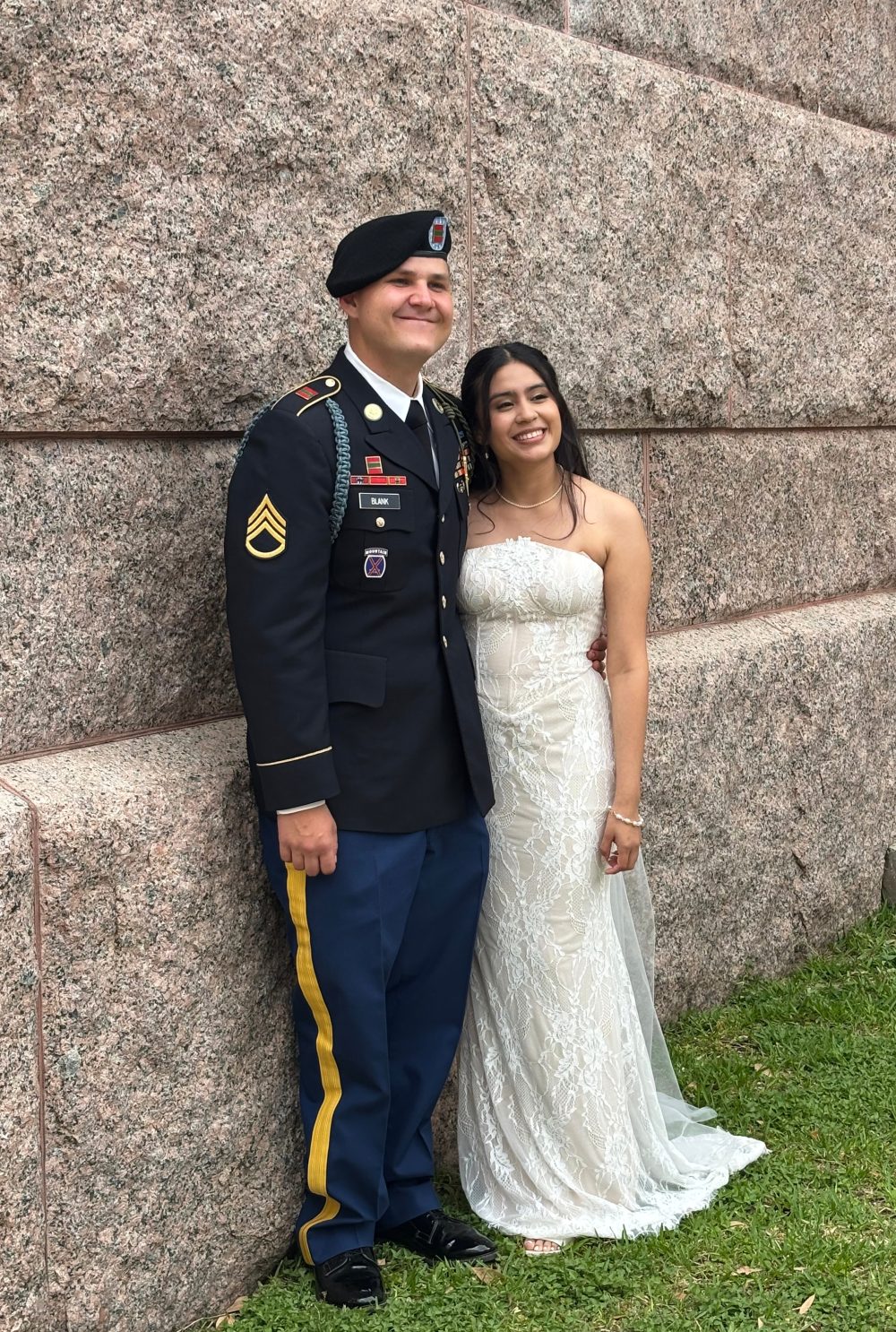

An Army staff sergeant is fighting to prevent his newlywed wife from being deported after federal immigration officials arrested her at a Louisiana military installation where the couple planned to start their new life together.
The detention of the soldier’s spouse, who was born in Honduras and remains held at a federal immigration facility as of Monday, has sparked criticism from military family advocacy groups. They argue such actions hurt morale during wartime and could damage military recruitment efforts by targeting service members’ families.
Staff Sgt. Matthew Blank explained that he brought his wife, Annie Ramos, age 22, to Fort Polk, Louisiana last Thursday to help her begin obtaining military family benefits and start the green card application process. The pair wed in March.
Immigration enforcement officers took Ramos into custody as part of the current administration’s expanded deportation efforts, which immigration law specialists say has ended the Department of Homeland Security’s previous practice of showing leniency toward military families.
“I never imagined that trying to do the right thing would lead to her being taken away from me,” Blank, 23, told The Associated Press. “What was supposed to be the happiest week of our lives has turned into one of the hardest.”
According to DHS records, Ramos arrived in the United States in 2005 when she was not yet 2 years old. Her family missed a required immigration court appearance that year, prompting a judge to issue a final removal order.
“She has no legal status to be in this country,” DHS stated in an email response. “This administration is not going to ignore the rule of law.”
Ramos submitted an application for Deferred Action for Childhood Arrivals (DACA) in 2020, but her husband reports the application has been stuck “in limbo” due to ongoing legal challenges to the Obama-era immigration program.
Last April, DHS scrapped a 2022 directive that treated military service by immediate family members as a “significant mitigating factor” when determining whether to pursue immigration enforcement actions. The current policy declares that “military service alone does not exempt aliens from the consequences of violating U.S. immigration laws.”
Before the current administration’s intensified deportation campaign, DHS typically permitted spouses of active military personnel to obtain legal status through programs like parole in place and deferred action that military recruiters actively promoted, according to Margaret Stock, an expert in military immigration law.
Stock noted that Ramos’ situation would have been easily resolved previously, but DHS now appears focused on arresting military family members whenever possible — even when they’re attempting to follow proper legal procedures for obtaining status.
“It doesn’t make any sense — they’re going to get arrested for following the law? That’s stupid,” Stock commented. “It’s bad for morale, it disrupts the soldiers’ readiness.”
Last September, more than 60 Congressional representatives sent a letter to DHS and the Department of Defense expressing concern that arrests of military personnel and veterans’ family members was “betraying its promises to service members who play a key role in protecting U.S. national security.”
Pentagon officials declined to provide comment on the matter.
Lydiah Owiti-Otienoh, who leads the Foreign-Born Military Spouse Network advocacy organization, reports observing more cases where military families face disruption due to stricter immigration enforcement. She contends the federal government is working against its own interests by pursuing deportation of military spouses.
“It just sends a really bad message — we don’t care about you, about your spouses, anything you are doing,” Owiti-Otienoh explained. “If military families are not stable, national security is not stable.”
Blank’s mother, Jen Rickling, described her daughter-in-law to the AP as a Sunday school teacher and biochemistry student who had exceeded all expectations — someone who “loves my son with her whole heart.”
“We absolutely adore her,” Rickling stated. “I believe in this country. And I believe we can do better than this — for Annie, for other military families, and for the values we hold dear.”
Blank said he had looked forward to beginning their life together on the military base while serving his country.
“I want my wife home,” Blank declared. “And I will not stop fighting until she is back where she belongs, by my side.”