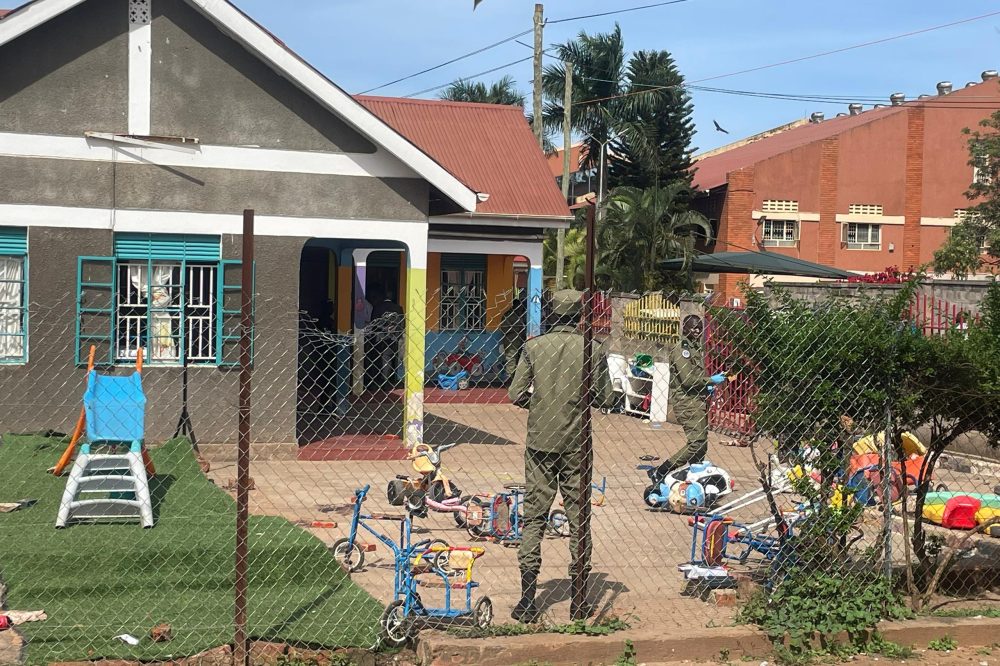

KAMPALA, Uganda — In an unprecedented legal proceeding, Uganda launched its first mobile court session Monday as Christopher Okello Onyum faced charges for allegedly murdering four children at a nursery school.
The historic trial took place inside a large tent erected on church property, located near the scene where the horrific crime occurred on April 2. President Yoweri Museveni had specifically ordered this public court format to allow community members direct access to the proceedings.
Onyum entered a not guilty plea to all four murder charges during Monday’s session. Prosecutors allege he carried out a machete attack at the Gaba Early Childhood Development Program in a Kampala suburb, though authorities have not determined his motivation for the shocking assault.
According to witness accounts, the defendant posed as a parent to gain entry to the school facility. After speaking briefly with staff members, he reportedly secured the entrance gate before launching his attack on the children.
Following the incident, an enraged mob attempted to kill Onyum before police intervened to take him into protective custody. If found guilty, he faces potential execution under Uganda’s laws.
The mobile court concept has sparked significant debate since President Museveni ordered the expedited public trial. Critics argue this approach risks turning a tragic case into a spectacle while compromising the defendant’s legal rights.
The Uganda Law Society issued a sharp rebuke of the president’s directive, calling it governmental overreach that jeopardizes fair trial protections. “This is not justice,” the organization stated. “It’s a judicial lynching rally.”
Hundreds of spectators gathered to observe the proceedings, marking the inaugural use of mobile courts after formal operational guidelines were established in March.
Court officials have defended the innovative approach, describing it as demonstrating their “commitment to taking justice closer to the people through innovative approaches.”