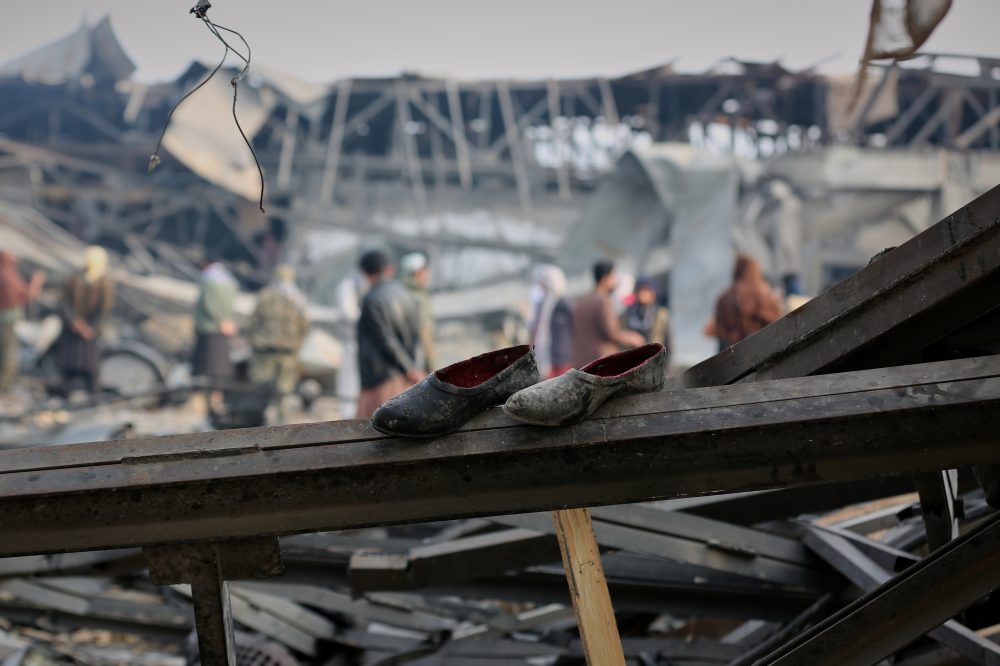

KABUL, Afghanistan — Human rights organization Amnesty International is calling for a war crimes investigation into a Pakistani airstrike that destroyed a drug rehabilitation facility in the Afghan capital of Kabul back in March, killing hundreds of civilians.
In a Wednesday social media post, Amnesty International stated it had found absolutely no evidence to back up Pakistan’s assertion that the Omid drug rehabilitation center was being used for military operations or as a storage site for weapons and ammunition.
Afghan authorities reported that the March 16 strike killed approximately 400 civilians inside the facility. Pakistan has challenged that death toll and maintained that it was hitting a military target, not a civilian one.
The United Nations mission in Afghanistan, known as UNAMA, announced in May that it had independently confirmed at least 269 civilian deaths and 122 injuries from the strike, while noting that the actual number of casualties could be considerably higher. Afghan officials held at least two mass funerals for victims in the weeks following the attack.
The Omid center was a 2,000-bed facility that had been treating drug addiction patients for roughly a decade. It was situated near Kabul’s international airport, on land that was once part of a NATO military base.
Amnesty International released a detailed investigation into the strike on Tuesday. The group said it examined and verified more than 60 photos and videos — including footage released by Pakistan’s own military — reviewed over 30 satellite images of the site, and conducted interviews with witnesses.
According to the organization, none of the videos reviewed allowed for the identification of weapons, ammunition, or explosive materials stored at the location. The footage also showed no secondary explosions following the strikes, which would have been a telltale sign of an ammunition storage site being hit.
The attack on the drug treatment center took place amid a prolonged period of cross-border hostilities between Pakistan and Afghanistan that began last year and intensified in February, when Pakistan declared it was engaged in what it called “open war” with Afghanistan.
UNAMA documented a total of 372 civilians killed and nearly 400 more wounded in Afghanistan between January 1 and the end of March due to cross-border violence. Multiple rounds of internationally brokered peace negotiations have failed to bring about a lasting ceasefire.
In late June, a cross-border attack by Pakistan killed more than two dozen civilians across three provinces in eastern Afghanistan. UNAMA confirmed at least 28 civilian deaths from that incident.
Pakistan accuses Afghanistan of sheltering militant groups that carry out deadly attacks on Pakistani soil, particularly the Pakistani Taliban — formally known as Tehrik-e-Taliban Pakistan, or TTP. That group is distinct from, but allied with, the Afghan Taliban, which has governed Afghanistan since seizing control of the country in 2021 during the chaotic withdrawal of U.S.-led forces. Afghan authorities deny harboring the militants.
In its report, Amnesty International concluded that Pakistan’s strike on the Omid treatment center violated international humanitarian law protections for healthcare facilities, as well as core principles designed to safeguard civilians, including the principles of distinction, precaution, and proportionality.
Isabelle Lassee, Amnesty International’s Acting Regional Director for South Asia, said the attack “constitutes a serious violation of international humanitarian law – possibly amounting to a war crime. Given the widely available information that the site had been used as a medical facility for more than a decade, this reflects a major failure in military planning by Pakistan that led to a significant loss of civilian life.”
In the immediate aftermath of the March strike, Pakistan’s Information Minister Attaullah Tarar posted on X that the Pakistani military had “carried out precision airstrikes” against military installations, claiming that “technical support infrastructure and ammunition storage facilities” at two Kabul locations had been destroyed.
Amnesty International said it reached out to Pakistan’s foreign ministry on July 9, asking whether any investigation into the strike had been launched and requesting evidence to support the claim that the target was a weapons storage site. The organization said it had received no response before publishing its report.