
DETROIT — When Winter Storm Uri brought a devastating multi-day deep freeze to Texas in February 2021 and crippled the state’s power grid, it left a lasting impression on Kenneth Kovar. The New Braunfels resident, located northeast of San Antonio, managed to keep his lights on — but his septic system, which runs independently from local utilities, went down. He ended up hauling water from his backyard swimming pool just to flush his toilets.
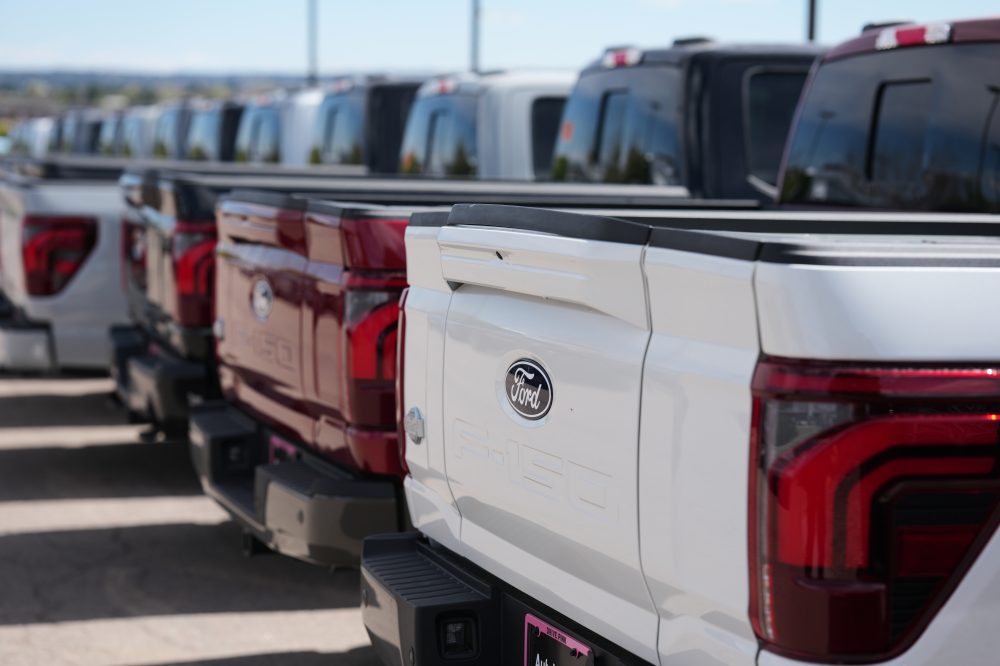
That experience stuck with Kovar, now 64, when he purchased a Ford F-150 last fall. His main motivation? Being ready for whatever comes next.
“I was interested in trying to find some sort of power backup situation,” he said.
Today, Kovar uses a Ford system that lets certain F-150 owners plug their truck directly into their home’s electric meter, supplying power to selected parts of the house when the grid goes down.
His story reflects a broader shift happening across the auto industry. Car manufacturers are increasingly adapting their electric vehicle technology for use in home energy management — a move driven in part by rising grid demand and slowing EV sales. Automakers are looking to get more value out of their massive investments in electrification by entering the home and grid energy market.
“They’re trying to look for other businesses that they might sell into,” said Parth Vaishnav, an assistant professor of sustainable systems at the University of Michigan.
Owners of the F-150 PowerBoost hybrid and the F-150 Lightning electric pickup can plug a one-foot adapter into a 240-volt outlet built into the truck. Ford developed that adapter with a company called Global Power Products. The adapter connects to a longer cable, which links to a transfer switch mounted directly on the home’s electric meter. Through this chain of connections, the vehicle essentially ties into the home’s breaker box, letting the homeowner choose which circuits — and therefore which appliances — receive power.
“The way we think about it, especially for customers who already have a compatible vehicle is, you already own the power source, it’s in your driveway,” said Amanda Roraff, Ford’s grid and energy services business acceleration lead.
Depending on what’s being powered, the Lightning could keep a home running for two to three days, while the PowerBoost Hybrid could last up to five days on a full tank of gas.
Ford positions the system as a more affordable backup power option. Traditional diesel-powered generators and whole-home standby systems can cost several thousand dollars to purchase and install. Ford’s solution, which still requires professional installation at the meter, starts at around $1,100.
Currently, the setup is available for roughly 200,000 vehicles and is designed strictly for use during outages. Ford also separately offers its Home Integration System, which provides two-way power flow — from the vehicle to the home and back — and can even send electricity to the grid.
Estimates suggest more than 630,000 U.S. vehicles already have some form of this capability, and automakers are working to expand their offerings with the long-term goal of full vehicle-to-grid support.
South Korean automaker Kia has partnered with EV charging company Wallbox, enabling drivers of compatible vehicles to use their cars as a home power source during outages or high-demand periods, potentially cutting utility costs. Those vehicles can also push power back to the grid.
Tesla offers similar functionality. The Cybertruck is capable of full vehicle-to-home power delivery, while other Tesla models can connect to and run specific devices or appliances using additional Tesla hardware.
General Motors has also entered the home energy space. Through a partnership with WeaveGrid, GM EV owners who have the automaker’s home energy system and a proper grid connection can participate in certain utility reliability programs. When an outage is detected, GM’s technology can automatically disconnect the home from the grid and begin drawing power from the parked EV.
“If you can imagine the future as we go forward, it’s having the ability — now that we have this single platform — that allows our customer to experience our system,” said Wade Sheffer, vice president of GM Energy, “but also can have the full control of the energy.”
Industry experts say this pivot is especially important right now. Pure electric vehicle sales in the U.S. have dropped 23.8% year-over-year, according to a July Cox Automotive report covering the first half of 2026. With EV momentum slowing under current federal policy, automakers need new revenue streams — and the home energy market is looking like a promising one.
The technology does come with hurdles. On the industry side, these systems must pass third-party safety testing, and the vehicle and charger must be programmed to communicate with each other. Utility approval is also required wherever the system is used, and obtaining an interconnect agreement can take years.
For homeowners, there’s a learning curve too. Owners need to understand what their vehicle can do and how to manage the system on their own. Adding a vehicle as a power source also introduces new complexity to a home’s energy setup.
Despite those challenges, experts remain optimistic — particularly given strong interest in EV technology outside the United States.
“We already know during an outage, its impact, providing electricity to the home,” said Scott Samuelsen, an engineering professor emeritus at the University of California, Irvine. “This is going to become very, very popular.”