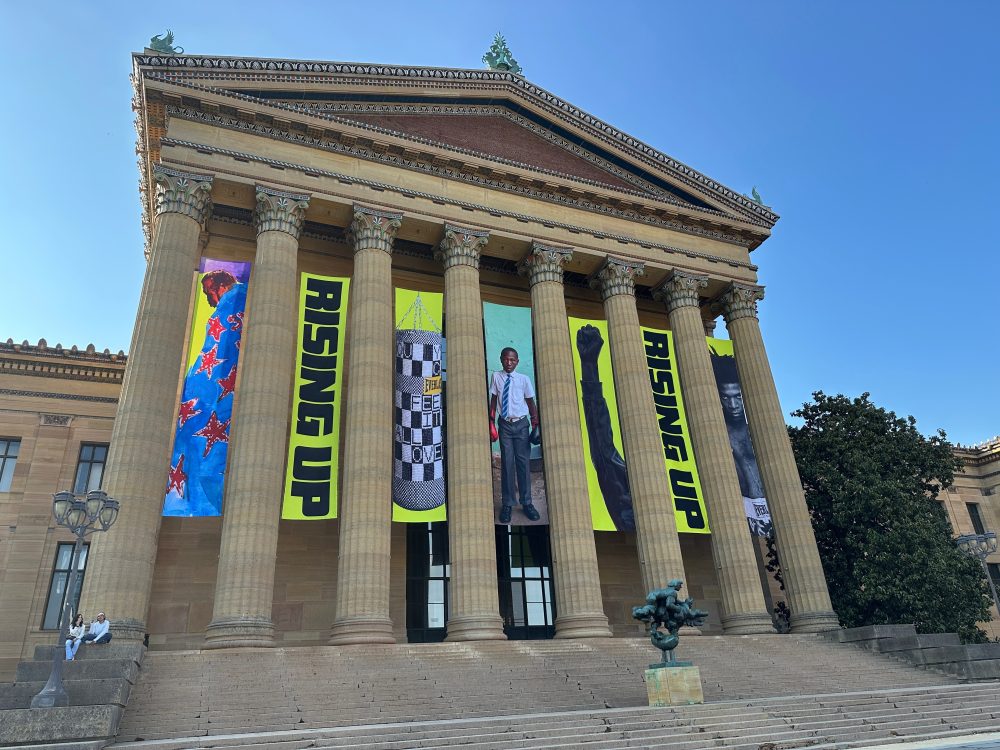

PHILADELPHIA — Daily, tourists from across the globe flock to the Philadelphia Museum of Art’s iconic steps — though many aren’t drawn by the artwork housed within, but rather by a bronze sculpture depicting a beloved fictional fighter from South Philly.
The metal figure of Rocky Balboa — fists triumphantly raised skyward, wearing boxing shorts and boots — has transformed into a worldwide destination for devoted fans.
For years, museum officials maintained an awkward relationship with this type of adoration. Today, they’re changing course — and welcoming Rocky indoors.
Debuting this weekend, “Rising Up: Rocky and the Making of Monuments” explores how a movie character evolved into a genuine cultural icon, positioning the sculpture within art history’s broader context and Philadelphia’s civic identity. Guest curator Paul Farber developed the exhibition concept after years investigating the statue’s significance and public monuments’ meaning — research he shared through his NPR podcast series — before transitioning the discussion into the museum setting.
The display encompasses over two millennia of boxing-related artwork, following themes of human perseverance that Louis Marchesano, the museum’s deputy director of curatorial affairs and conservation, believes explains Rocky’s lasting appeal.
“The common theme that runs throughout 2,000 years of boxing imagery is that people respond to the body under struggle, a conflict in much the same way today as they did 2,500 years ago,” Marchesano said. “It’s not simply about watching two people beat each other up — it’s about endurance, internal fortitude and internal struggle.”
After filming concluded for the “Rocky” films, the bronze sculpture remained on the steps, prompting museum officials to push for its removal. The statue was later moved to South Philadelphia before returning to the steps’ base in 2006. While welcomed back, it never received full institutional acceptance. The city maintains ownership of the statue’s current location — not the museum.
“The museum has had — and I hate to say this, no pun intended — a rocky relationship with the statue,” Marchesano said.
“It took us decades to come to terms with it,” he added. “But I’m glad that we did.”
Philadelphia Visitor Center data shows approximately 4 million people visit the steps annually — matching the nearby Liberty Bell’s yearly visitor numbers.
David Muller, a wrestling instructor from France who recently brought his students to the location, believes Balboa’s challenges and persistence offer “good for the next generation.”
“The movie ‘Rocky’ is important for the mind of sport and the mind of life,” Muller said, after running with them up the steps as they raised their hands at the top, smiling and punching the air like boxers.
Kate Tarchalska traveled from Poland with family and made the statue one of their stops.
“He was my hero when I was younger,” she said. “And now I am so glad I could be in the same spot as him.”
Suraj Kumar, visiting his aunt in Philadelphia from St. Louis, made a point to photograph the statue to share with his father, who first introduced him to the films when he was growing up in Bengaluru, India.
“When I got to know this statue is here, I was like, I really have to come down here,” he said.
One exhibition room positions Rocky within the 1970s global boxing phenomenon, showcasing pieces by Keith Haring, Jean-Michel Basquiat and Andy Warhol — all created during boxing’s peak cultural moment.
“In the 1970s, we knew minute by minute who the heavyweight champion of the world was,” Marchesano said. “The artists in this gallery are responding to that global frenzy. Sylvester Stallone, in ‘Rocky,’ was doing the same — thinking about internal and external struggle.”
Another exhibition space focuses on Philadelphia’s boxing heritage, displaying photographs from the Blue Horizon boxing gym and featuring Joe Frazier, whose real experiences partly influenced Rocky’s character.
“Without Joe Frazier, Rocky doesn’t exist,” Marchesano said.
Following the exhibition’s August conclusion, the indoor statue will relocate to a permanent position atop the museum’s steps — a spot it has never officially occupied. The current outdoor statue remains on loan from Stallone.
Rocky’s traditional location at the steps’ bottom won’t remain vacant — a Joe Frazier statue will take its place.