
Stanley Richards understands the harsh realities of life behind bars at Rikers Island, New York City’s infamous detention facility. The 65-year-old spent two years as an inmate there following a robbery conviction decades ago.
Today, Richards leads the entire facility as the city’s newly appointed Department of Correction commissioner.
Mayor Zohran Mamdani selected Richards in January, making him the first person with a criminal history to head the city’s jail operations. His current workspace, housed in a former chapel, sits directly across from the cell block where he was once confined.
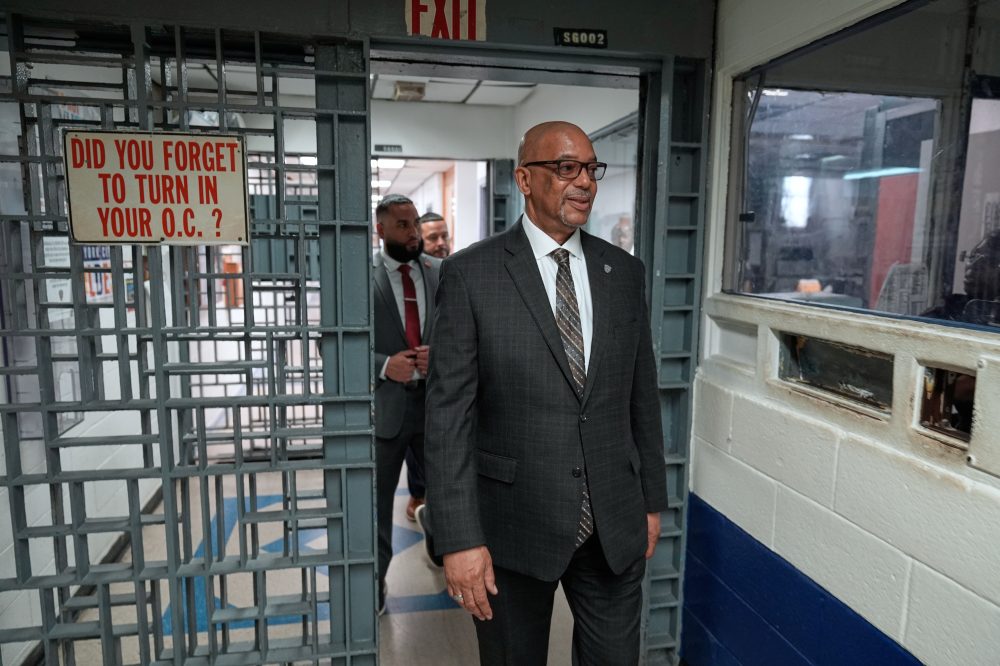
The deteriorating housing unit where Richards served his sentence was cleared of inmates three years ago due to unsafe structural conditions. During a recent tour, he revisited his former 10-by-7-foot living space and pondered how little had actually transformed, aside from his own outlook.
“It doesn’t give me bad feelings, you know,” Richards remarked while examining the graffiti-covered concrete walls, metal sleeping frame, and blocked window of his old quarters. “I offended my community and committed a crime, and I paid my price for it. The truth of my story is a story of redemption.”
Richards assumes leadership during a pivotal moment for the city’s struggling correctional facilities.
A federal court appointed Rikers’ first “remediation manager” in January, creating a court-mandated role with broad powers to restore stability to the chaotic jail after persistent issues with brutality and concerns regarding prisoner medical treatment. During the previous year, 15 individuals died while under Department of Correction supervision, nearly all from health-related complications, data from the Vera Institute of Justice shows.
An approaching deadline to close Rikers and transfer detainees to four smaller facilities throughout the city is also looming. Legislation enacted in 2019 requires the complete shutdown of all detention centers on the 400-acre island, situated just north of LaGuardia Airport, by 2027.
Richards, who began his role in February, feels his background as both a prisoner and reform advocate has distinctly equipped him for the upcoming obstacles.
According to his account, he was raised in a challenging Bronx public housing development, became involved with gangs early on, and eventually began dealing narcotics and engaging in criminal activity. He repeatedly entered and exited correctional facilities for over ten years. His final and most extended incarceration was for robbery during the late 1980s.
Following his release from an upstate correctional facility in 1991, Richards accepted employment as a counselor with the Fortune Society, an organization dedicated to helping former inmates reintegrate into society. During his thirty-year tenure there, he advanced to chief executive officer. Richards additionally held leadership positions within the city’s Department of Correction during former Mayor Bill de Blasio’s administration.
Ben Heller, a program manager with the Vera Institute, described Richards’ selection as sending a “hugely powerful” signal.
“Commissioner Richards understands that treating people with dignity is not at odds with keeping communities safe. They should go hand in hand,” he stated. “It’s clear from his own lived experience and professional expertise that he understands that we cannot incarcerate our way to safety.”
Richards has committed to collaborating closely with Rikers’ new federal supervisor, Nicholas Deml. This represents a shift, Heller noted, from the previous administration under former Mayor Eric Adams, a former police captain who strongly resisted federal oversight of Rikers.
“Our goals are not different,” Richards confirmed. “We all want safe jails. We don’t want our officers attacked. We don’t want people in our care attacked.”
The current administration has also initiated measures toward shuttering Rikers. However, the process lags years behind its original timeline, and Mamdani has acknowledged the 2027 target date is “practically impossible to fulfill.”
This month, the department launched a detention unit inside the city’s Bellevue Hospital in Manhattan designed to accommodate over 100 individuals with severe medical conditions and significant mental health issues currently housed at Rikers.
Richards explained the relocation enables the department to close a Rikers facility constructed in the 1930s by June while guaranteeing inmates receive appropriate medical attention.
He indicated the department is also coordinating with judicial officials and prosecutors to streamline case processing so individuals don’t remain at Rikers indefinitely awaiting trial, and to ensure those qualifying for alternative programs are safely supervised in the community rather than in detention.
“We do those things, we’ll see the population decrease,” Richards stated.
During his tenure as mayor, Adams had resisted closing Rikers, arguing he preferred to renovate the existing facility, and criticized proposals for smaller jails as “flawed.”
Rikers currently holds the majority of approximately 6,700 individuals presently detained in the city’s jail network, according to departmental statistics. This figure represents an increase from roughly 3,900 in 2020, but remains significantly lower than the approximately 20,000 people in custody during the early 1990s.
Federal remediation manager Deml, who previously directed Vermont’s corrections system, and a representative for Adams did not respond to requests for comment.
Richards plans to address jail violence by filling approximately 1,300 staffing gaps, which have resulted in extended work shifts, dangerous conditions, and escalating overtime expenses. The department employs over 7,400 individuals, including more than 5,700 uniformed guards.
Correctional officers’ union president Benny Boscio did not respond to Associated Press inquiries, but has previously stated he hopes Richards “demonstrates a commitment to putting safety and security before any political ideology.”
Richards indicated he’s also developing new institutional programs to better prepare inmates for post-release life, and he’s dedicated to following a city ordinance limiting solitary confinement usage — a reform Adams had criticized and attempted to prevent.
“This has been a system that society has said, ‘Out of sight, out of mind.’ Has not paid attention to, has demonized, has blamed, has ostracized,” Richards reflected. “And for me, those days are over. For me, we are gonna walk in the light. We’re gonna lift this place up. We’re going to lift the people who work here. We’re to lift people who are sent to us for care.”