The National Weather Service out of Mount Holly, New Jersey has put a Flood Watch into effect starting Saturday, July 5 at 12:09 PM Eastern Time, with the watch continuing through Sunday, July 6 at 8:00 PM Eastern Time.
A Flood Watch means that conditions are favorable for flooding to develop in the affected area. Residents are encouraged to monitor local forecasts closely and be ready to take action if flooding begins or a more urgent Flood Warning is issued.
If you live in a low-lying area or near streams and waterways, now is the time to make preparations. Avoid unnecessary travel through areas prone to standing water, and never attempt to drive through flooded roadways.
TV Delmarva will continue to monitor this situation and provide updates as new information becomes available from the National Weather Service.
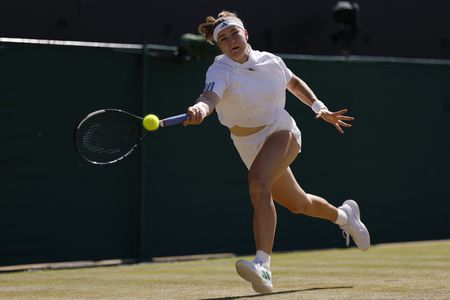
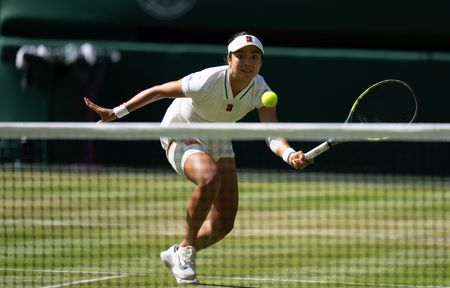
Tenth-seeded Czech tennis star Karolina Muchova eliminated her friend and the reigning Wimbledon champion Barbora Krejcikova on Sunday, claiming a 7-5, 5-7, 6-3 victory in an intense all-Czech showdown that earned her a spot in the quarter-finals.
Muchova, who is 29 years old, relied on a versatile and athletic style of play — featuring well-placed volleys, crafty drop shots, and sharp cross-court winners — to get past Krejcikova, who at 30 is just eight months her senior and currently sits at 38th in the world rankings. The match was played in warm, sunny conditions on Court Two.
Muchova turned up the pressure in the 12th game of the opening set, going after Krejcikova’s serve and closing out the set with a blistering cross-court backhand return. By the end of the match, Muchova had racked up an impressive 50 winners compared to just 24 for Krejcikova.
In the second set, Muchova ground down her fellow Czech in a marathon sixth game that lasted 16 minutes, finally converting on her fourth break point opportunity.
However, Krejcikova — who also holds the 2021 French Open title — refused to go quietly, rallying to win five straight games and force a deciding third set.
Muchova regrouped and secured a crucial break in the fourth game of the final set as Krejcikova, whose career has been repeatedly interrupted by injuries, appeared to run low on energy in the heat. Muchova closed out the match with a lobbed forehand winner and then embraced her opponent warmly at the net.
The National Weather Service office in Mount Holly, New Jersey has issued a Heat Advisory that took effect Saturday, July 5 at 12:08 PM EDT and remains in place until 8:00 PM EDT that same evening.
Residents are encouraged to stay hydrated, seek air-conditioned spaces, and check on elderly neighbors and relatives during the period of elevated heat. Young children and pets should never be left in parked vehicles.
The advisory was issued as heat conditions reached levels considered potentially hazardous to public health. Those who must be outdoors are advised to limit strenuous activity and take frequent breaks in the shade or indoors.
Charles Leclerc delivered a British Grand Prix victory for Ferrari on Sunday at Silverstone, though the race ended in unusual fashion with the safety car guiding the entire field to the checkered flag amid late-race chaos.
The dramatic conclusion was set off when Red Bull’s Max Verstappen crashed out of the race with just four laps left on the circuit. The safety car was deployed and remained on track through the end of the race, even after a message went out suggesting it would return to the pits and allow one final lap of competition.
Mercedes driver George Russell benefited from the turbulent finish, crossing the line in second place. The result significantly tightened the championship standings, with points leader Kimi Antonelli’s advantage over Russell now cut to just 25 points through nine rounds of the season.
Antonelli, the 19-year-old Italian who had started from pole position, appeared to be mounting a challenge for the lead when things fell apart. Running in second place and closing the gap on Leclerc with 11 laps remaining, Antonelli suddenly slowed and radioed his team about a mechanical issue with the car. He ultimately finished 16th, failing to earn any championship points.
Lewis Hamilton completed the podium in third place for Ferrari, though officials placed him under investigation following the race for a possible violation related to yellow flag rules.
Athletics first baseman Nick Kurtz has been tapped to start at first base for the American League in the upcoming All-Star Game, stepping in for Toronto Blue Jays slugger Vladimir Guerrero Jr., who is sitting out to nurse an ailing back.
Guerrero had earned his spot through fan voting but made the decision to skip the midsummer classic in order to let his back recover ahead of the season’s second half. Kurtz, who holds the title of reigning AL Rookie of the Year, had received the highest vote total among AL first basemen on the player ballot, making him the natural replacement for the starting role.
Back problems have been a recurring issue for Guerrero this season. He missed back-to-back games against the New York Yankees in mid-June when the injury flared up, and he also sat out a game against the New York Mets last Tuesday because of the same problem.
Guerrero spoke about the tough call he had to make, saying, “It’s very difficult for me. But I really have to take care of myself and I’ve got to put my team first for the second half.” Those comments were reported by Sportsnet.
The All-Star selection would have been the 27-year-old’s sixth in a row. Offensively, Guerrero has had a quieter year than usual, posting a .265 batting average with just four home runs and 35 RBIs across 82 games. That’s a notable dip from his usual power output — he has hit 23 or more home runs in each of the past five seasons, including a league-leading 48 back in 2021.
Kurtz, 23, has been putting together a strong campaign of his own, hitting .278 with 20 home runs and 66 RBIs in 88 games this season.
The All-Star Game is set to take place on July 14 in Philadelphia.
Westbound travelers on Lighthouse Road (Delaware Route 54) between Coastal Highway (Delaware Route 1) and Mallard Lakes should expect delays of 15 to 20 minutes due to heavy congestion in the area.
Drivers are encouraged to allow extra travel time or consider using an alternate route until conditions improve.
ANAHEIM, Calif. — Getting passed over for the All-Star Game gave Boston Red Sox starting pitcher Sonny Gray some extra fire Saturday evening, and he made the most of it, leading his team to an 8-1 victory against the Los Angeles Angels.
The 36-year-old Gray turned in a strong outing, giving up just one run on four hits across six innings of work. He struck out seven batters and walked two, pushing his record to 10-1 with a 2.61 ERA — the second-lowest mark among American League pitchers. Over his last six starts dating back to May 30, Gray has gone 5-0 with a 1.97 ERA, a stretch that includes six consecutive quality starts.
Despite that impressive run, when All-Star selections were announced Saturday, Gray was not among them. Starter Ranger Suarez and closer Aroldis Chapman were the only two Boston players chosen for the American League squad.
Gray didn’t hide his feelings after the game. “I was disappointed, a little bummed, for sure,” he said. “I’m just being honest, you know? I’m happy for Ranger, and I’m happy for Chappy, for sure. They’re very well-deserving. But a little selfishly, yeah, I was disappointed.”
Gray’s recent performances have been hard to ignore. In his previous outing last Sunday, he carried a no-hitter into the eighth inning against the New York Yankees, ultimately finishing with 7 1/3 innings pitched, one hit allowed, nine strikeouts, and 97 pitches thrown in a 5-4 win.
Interim manager Chad Tracy believes the door may not be completely closed for Gray when it comes to the Midsummer Classic. “When the All-Star Game happens, there’s so much roster fluctuation — it happens every year with pitchers who can’t go, people are hurt, people back out,” Tracy said. “Things happen, so I’m still holding out hope for a couple more guys on the team who I feel are deserving.”
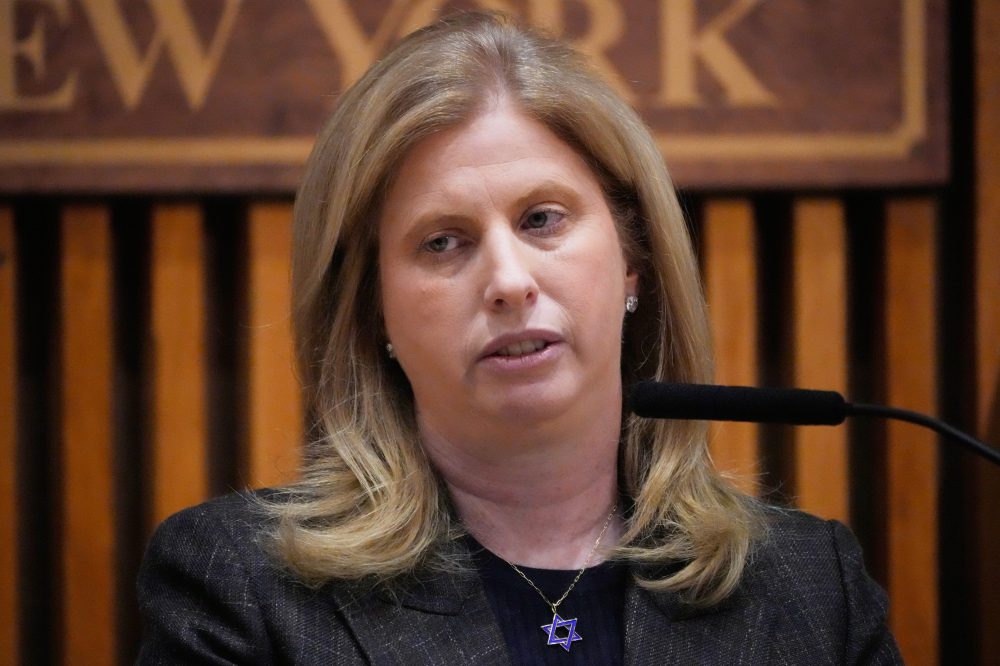
NEW YORK (AP) — Eight people were shot Saturday night at a Fourth of July family cookout near the famous Coney Island beach in New York, including four children, according to police.
Police Commissioner Jessica Tisch said one of those wounded — a 21-year-old woman — was listed in critical condition following the attack. The remaining seven victims were reported to be in stable condition and expected to recover.
The violence erupted in the courtyard of an apartment complex located about a block away from the well-known Coney Island boardwalk. The shooting happened not far from where the Nathan’s Famous hot dog eating contest had taken place earlier that same holiday.
According to Commissioner Tisch, a suspect wearing a black mask opened fire into the courtyard where a family had come together for a cookout celebration. The shooter fled the scene, though investigators were able to recover a firearm.
The four children who were shot ranged in age from 6 to 14 years old — specifically ages 6, 7, 12, and 14, Tisch confirmed. She also noted that there had been no reports of any trouble or disturbances at the gathering before the shooting took place.
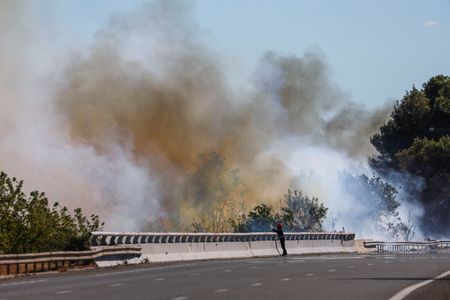
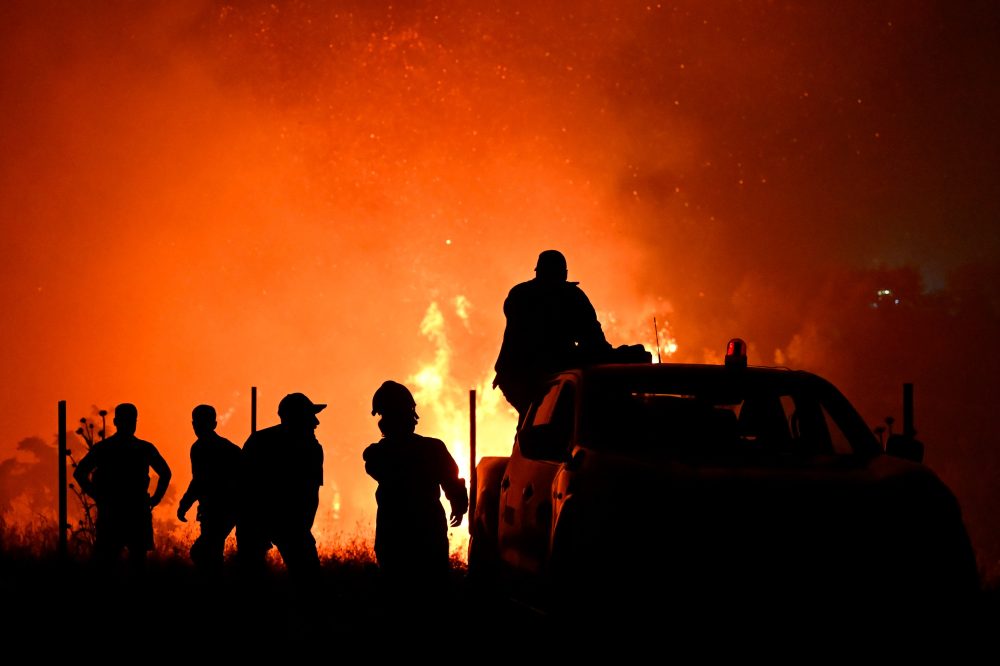
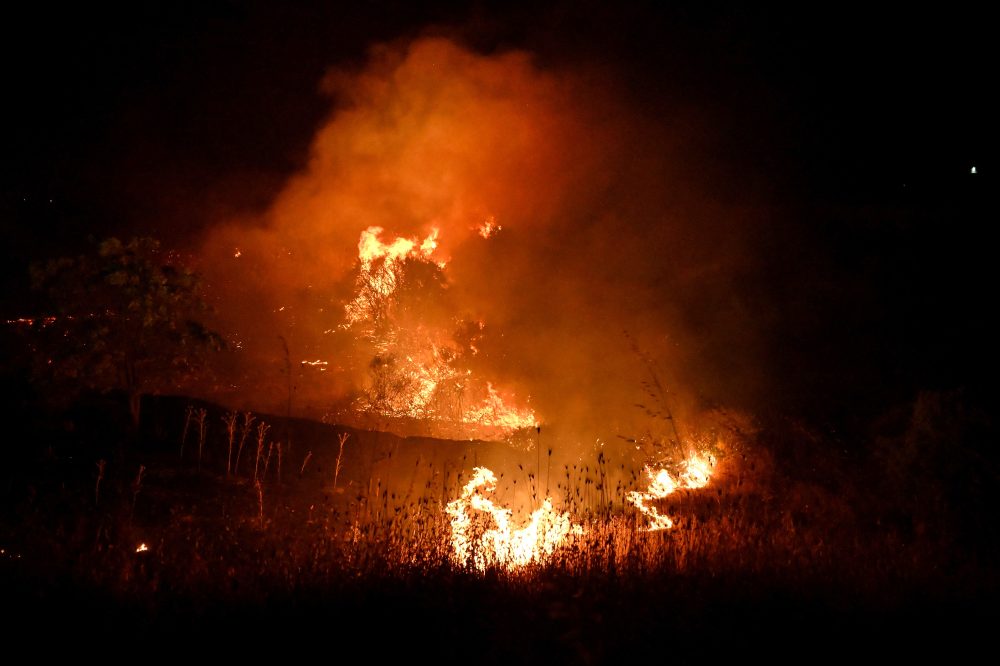
A raging forest fire in southwest France has burned through more than 1,500 hectares — roughly 5.8 square miles — and is now threatening to disrupt the Tour de France’s third stage scheduled for Monday. The planned finish line in Les Angles sits only about 60 kilometers away from the active blaze.
Local officials announced Sunday that a final call on whether to cancel the stage would come “before the end of the day.” Race director Christian Prudhomme had already indicated earlier that organizers could modify the route if conditions required it.
The fire is burning in the Pyrenees-Orientales department, where crews are working to hold back a fire front stretching 18 kilometers — more than 11 miles. The response effort has involved approximately 750 firefighters, 200 vehicles, and nine water-bombing helicopters along with additional aircraft, according to the departmental prefect.
No fatalities have been reported, though two individuals — one firefighter and one local resident — are in critical condition. Emergency crews are focused on keeping the fire from pushing southward toward the Tet river and the Aspres mountain area, a dry and difficult-to-access region.
France’s national weather service, Meteo France, classified seven departments in the country’s south as having a “very high fire risk” on Sunday.
The Tour de France launched in Barcelona, Spain on Saturday, and the first two stages were held in Spain’s Catalonia region, where a separate wildfire also caused concern. That blaze scorched approximately 2,200 hectares of forest in Les Gavarres before being stabilized, officials said Sunday. However, elevated temperatures and lingering smoke could still complicate full containment efforts.
Authorities believe that fire, which ignited Friday along Catalonia’s Costa Brava coastline, was started by a worker operating a circular saw near a roadway, with sparks setting off the blaze. A suspect was taken into custody on Friday.
Extreme heat and wildfire conditions have spread across much of Europe, raising significant safety questions for one of cycling’s most celebrated annual events.
Russia’s Defense Ministry announced Sunday that Ukraine has declined to pause military operations around the eastern town of Kostiantynivka, blocking a proposed exchange of fallen Ukrainian soldiers’ remains.
The ministry said Russia put forward a six-hour ceasefire in and around Kostiantynivka on Monday to allow for the handover of Ukrainian servicemen’s bodies, giving Kyiv a deadline of 9:00 a.m. GMT Sunday to respond to the offer.
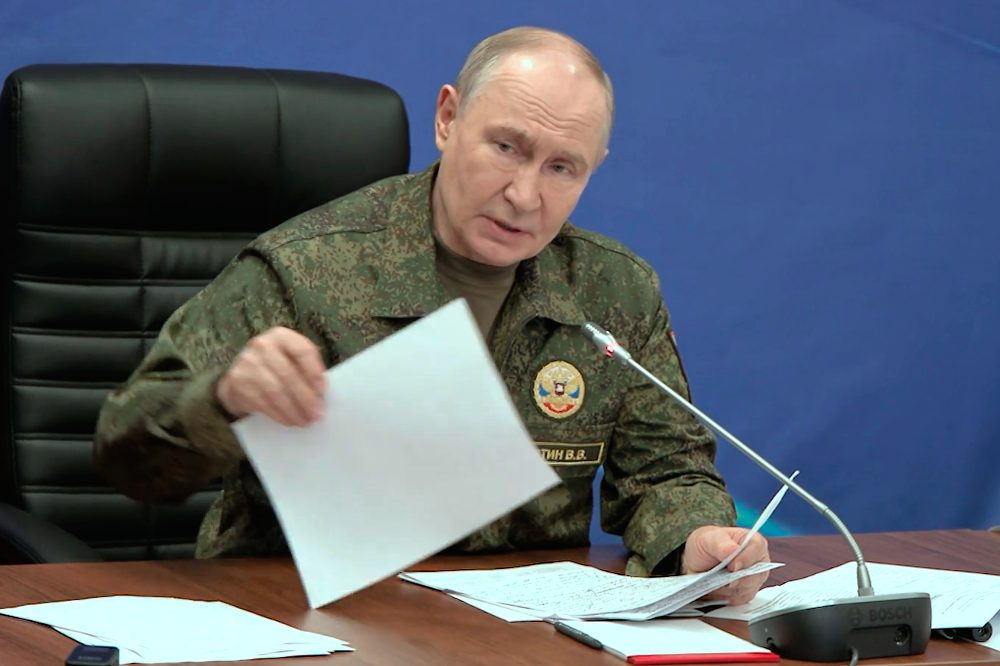
The announcement comes after Russian military commanders briefed President Vladimir Putin on Friday, telling him that Russian forces had seized control of Kostiantynivka. Ukraine pushed back on that claim, insisting its troops remain in control of the town.
Kostiantynivka has been a long-sought target for Russia as part of its ongoing military campaign in the Donetsk region of eastern Ukraine.
Ukraine’s defense ministry and general staff had not responded to requests for comment at the time of this report.
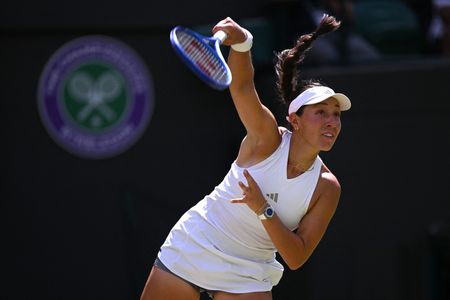
Fourth seed Jessica Pegula used her veteran savvy to outlast rising American teenager Iva Jovic on Sunday at Wimbledon, winning 4-6, 6-3, 6-1 to reach the quarter-finals for the second time — matching the best result of her Wimbledon career.
The match was a messy affair early on, with the opening set featuring seven service breaks. Pegula dropped that first set — her first of the entire tournament — but she regrouped and elevated her game significantly from there against the 18-year-old Jovic.
After dropping the opening game of the second set, Pegula rattled off four consecutive games and never slowed down. Her serve became a weapon again, and she began limiting her unforced errors, putting the match firmly in her control.
By the third set, the 16th-seeded Jovic appeared to lose her fighting spirit as the 32-year-old Pegula closed things out efficiently on a sun-drenched Court One.
“That was really tough,” Pegula said following the victory. “Iva’s a great player and brings lots of energy and intensity and I just couldn’t find my serve in the first set even though I wasn’t playing badly. Luckily I started to serve better.”
Pegula, who has reached at least the quarter-final stage at all four Grand Slam tournaments, was one of five American women to make it to the last 16 at Wimbledon — the most since 2002.
Depending on the outcome of a later Sunday match between Coco Gauff and Switzerland’s Belinda Bencic, Pegula could find herself facing yet another American in the quarter-finals.
LONDON — Wimbledon’s fourth round gets underway Monday, with one of the tournament’s biggest storylines centered on 21-year-old Filipino sensation Alexandra Eala, who will square off against two-time Grand Slam finalist Jasmine Paolini. American Taylor Fritz also has his hands full against Kazakhstan’s Alexander Bublik.
TOP WOMEN’S MATCH: EALA VS. PAOLINI
Eala has been one of the most talked-about players at this year’s tournament, having already knocked out Elena Rybakina and Coco Gauff before stunning defending champion Iga Swiatek on Saturday. Now she turns her attention to world number 17 Paolini, who reached the Wimbledon final in 2024.
Despite beating Paolini in straight sets earlier this year in Dubai, Eala is keeping her expectations measured. “She is a great fighter. It was not an easy match in Dubai for me. It will not be an easy match here either,” Eala told reporters.
Paolini, for her part, spoke highly of her opponent, noting Eala’s semi-final appearance in Berlin last month as evidence of her grass-court ability. “I think that the game of Eala’s fits very well to grass… I think she’s a very dangerous player here,” Paolini said.
“She’s playing great. She has a huge crowd with her. Now on the bridge they were screaming ‘Alex, Alex’. It’s so good for our sport, I think, to involve more people around the world,” Paolini added.
TOP MEN’S MATCH: FRITZ VS. BUBLIK
On the men’s side, Fritz is chasing a third consecutive appearance in the Wimbledon quarterfinals, but he’ll have to get past Bublik, who is known throughout the tennis world for his entertaining, unorthodox approach and frequent use of trick shots. Bublik advanced to the fourth round by defeating Fritz’s fellow American Frances Tiafoe in a five-set battle.
“It’s going to be a great match against Taylor. I hope to be in form. I have to take care of my body and I hope to deliver a great performance,” Bublik said ahead of the contest.
The two players are perfectly matched historically, each holding four wins in their head-to-head series. However, Fritz has claimed victory in both of their previous meetings on grass, including a win over Bublik in the Stuttgart semi-finals last month.
DIMITROV FOCUSED ON THE PRESENT
Bulgarian veteran Grigor Dimitrov, 35, is also back in fourth-round action Monday, taking on British wildcard Arthur Fery — himself a wildcard entry — in what is a matchup between two players who earned their spots through special invitation rather than ranking.
Dimitrov’s return to Wimbledon carries extra emotional weight. Last year, he suffered a pectoral tear while leading eventual champion Jannik Sinner by two sets to none in the round of 16, ending his campaign early.
Speaking after his Saturday win over Matteo Berrettini, Dimitrov reflected on his mindset this time around. “Right now, we’re just living in the moment,” he said. “I think that’s all I have been trying to do every single day when I get out there on the courts, whether I’m playing a match or not… I know it sounds a little bit cliche, but really the outcome for me, it becomes secondary right now.”
“Falling in love again with the game and everything that I have gone through the past 12 months, the magnitude of that, it’s way different for me,” Dimitrov added.
MONDAY ORDER OF PLAY
Centre Court (Play begins at 12:30 p.m. GMT): 13-Jasmine Paolini (Italy) vs. 29-Alexandra Eala (Philippines); Grigor Dimitrov (Bulgaria) vs. Arthur Fery (Britain); 13-Jiri Lehecka (Czech Republic) vs. 2-Alexander Zverev (Germany).
Court Number One (Play begins at 12:00 p.m. GMT): 5-Alex de Minaur (Australia) vs. 9-Flavio Cobolli (Italy); 26-Madison Keys (U.S.) vs. 9-Linda Noskova (Czech Republic); 6-Taylor Fritz (U.S.) vs. 10-Alexander Bublik (Kazakhstan).
Court Number Two (Play begins at 10:00 a.m. GMT): Ashlyn Krueger (U.S.) vs. 12-Marta Kostyuk (Ukraine); 21-Marie Bouzkova (Czech Republic) vs. 25-Elise Mertens (Belgium).
A new California law is taking aim at one of the more confusing aspects of grocery shopping — those often-puzzling date labels printed on food packaging.
The legislation standardizes how ‘use by’ dates are displayed on food products, a move supporters say will help cut down on the enormous amounts of edible food that consumers discard every year simply because they misread or misunderstand the labels.
Nick Lapis of Californians Against Waste discussed the new law, explaining how inconsistent food date labeling has long led shoppers to throw out food that is still perfectly safe to eat. By creating a uniform standard, the law aims to eliminate that confusion at the consumer level.
Food waste is a significant issue both environmentally and economically, and advocates argue that clearer labeling is one of the most straightforward ways to address it. The new California measure is seen as a meaningful step toward reducing the tons of food that end up in landfills each year due to label misunderstanding.
Drivers traveling northbound on Delaware Route 1 should be aware of a current traffic slowdown in the Milford area.
DelDOT is reporting congestion-related delays between the Milford Bypass at Northeast Front Street and Thompsonville Road. Travelers in that corridor can expect to add between 5 and 10 minutes to their commute due to the backup.
Motorists are advised to plan accordingly or consider alternate routes if possible.
Northbound travelers on Coastal Highway, also known as Delaware Route 1, are encountering delays in the Dewey Beach area.
According to traffic reports, congestion between Dewey Beach State Park and Wolfe Neck Road is causing a 5 to 10 minute delay for drivers heading north.
Motorists in the area should expect slower than normal travel times and may want to consider alternate routes if possible.
Motorists in the area should plan for delays as Peterkins Road has been shut down in both directions following a crash.
The closure spans the segment of Peterkins Road between Pie Lane and Springfield Road. Traffic is unable to pass through in either direction while the scene is being managed.
Drivers are advised to seek alternate routes until the road is reopened. No additional details about the crash have been released at this time.
Hundreds of firefighters are working around the clock to battle wildfires in both Portugal and Greece, with neighboring countries stepping in to provide critical support as blazes continue to burn across southern Europe.
In central Portugal’s Vouzela region, more than 1,200 firefighters supported by nearly 400 vehicles and 15 aircraft have been working to extinguish a fire that ignited Thursday. By Sunday, the blaze had scorched roughly 12,000 hectares — equivalent to about 120 square kilometers or 46 square miles — according to data from the European Union’s Copernicus satellite mapping agency.
The EU’s Civil Protection and Humanitarian Aid agency reported that Spain dispatched 120 firefighters and 45 vehicles to assist Portugal on Friday, while firefighting aircraft from both Italy and Spain were also sent to the region to help combat the massive fire.
Meanwhile, in Greece, a fast-moving fire broke out Saturday evening at a recycling plant near the Oraiokastro suburb of Thessaloniki — the country’s second-largest city. The blaze prompted evacuation alerts for three surrounding suburbs and a facility that houses 157 people with special needs.
Strong winds fueled the fire overnight, requiring approximately 160 firefighters to battle the flames until water-dropping aircraft could be deployed at daybreak, according to the fire department.
On Sunday, authorities urged residents in parts of Thessaloniki to stay inside their homes and keep windows and doors closed because of toxic smoke coming from the burning recycling facility, which had been engulfed by the wildfire on the city’s outskirts.
Oraiokastro’s mayor, Pandelis Tsakiris, told Greece’s state broadcaster ERT that a number of homes and businesses sustained damage in the fire, though he noted that a full assessment would be needed before a complete picture of the destruction could be determined.
A 76-year-old man was taken into custody on suspicion of accidentally starting the fire. Authorities allege he caused sparks from his vehicle that ignited roadside vegetation. He was scheduled to appear before a prosecutor on Sunday.
The recycling plant fire came just days after a separate wildfire in a nearby area claimed the lives of a 12-year-old boy and his father.
Fire department spokesman Brigadier Ioannis Artopoios, speaking on ERT television Sunday, noted that the vast majority of wildfires in Greece stem from human carelessness — including sparks from farming equipment, tossed cigarettes, and outdoor grills. “This means most of them could have been avoided,” he said.
Greece has long struggled with devastating wildfires during its hot, dry summer months. A 2018 fire east of Athens killed more than 100 people, and a 2023 wildfire that swept through a remote nature reserve in northeastern Greece became the largest wildfire ever recorded within the European Union.
In response to the growing threat — worsened by climate change — Greece has been expanding its use of technology to detect and fight fires. The country is integrating a network of four satellites, launched into low orbit in May, designed to monitor for wildfire activity.
While much of western Europe has endured intense heatwaves this summer, Greece has so far avoided the worst of them. Still, dozens of fires have broken out across the country, affecting both the mainland and its islands.
Three wildland firefighters who died fighting fires along the Colorado-Utah border are being honored as courageous pioneers who made lasting marks on their profession.
Wildfires have been tearing across the western United States, driven by months of dry conditions and historically low snowfall. The blazes have forced residents from their homes while crews continue working to bring the flames under control.
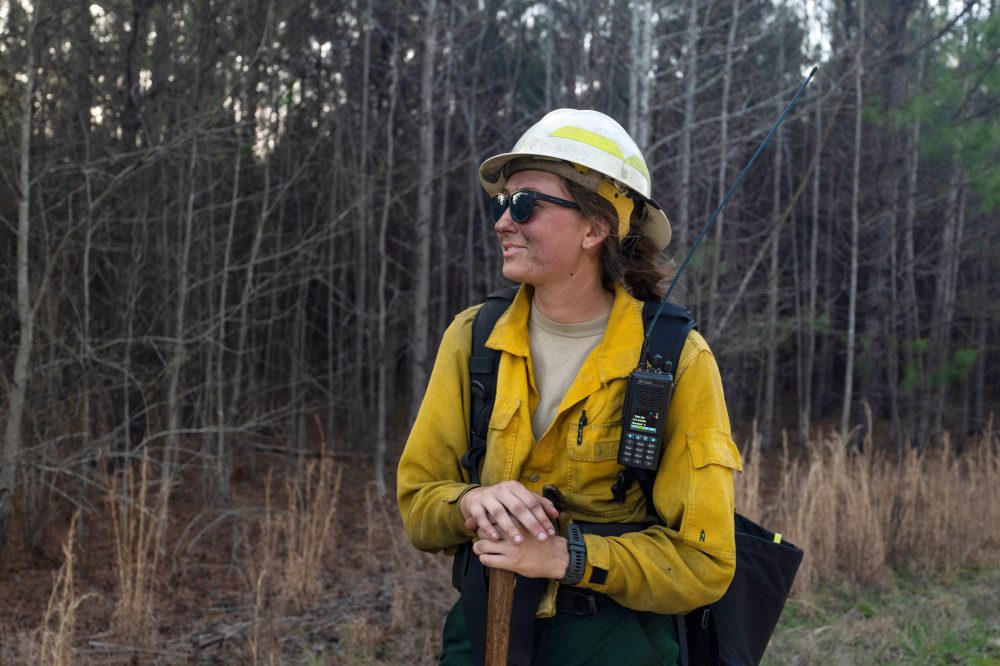
Emily Barker, Nick Hutcherson, and Sydney Watson lost their lives on Saturday, June 27, when fast-moving flames overtook them in Mesa County. Two additional crew members suffered burn injuries. The firefighters deployed emergency protective shelters — devices considered a last resort when firefighters have no other means of escape.
All three were part of a Helitack crew, a specialized team transported by helicopter into remote locations with the goal of stopping new fires before they grow into uncontrollable disasters.
Their deaths occurred nearly 13 years to the day after 19 elite wildland firefighters perished when they were trapped in a steep canyon near Yarnell, Arizona.
A memorial service honoring the three firefighters is scheduled for 11 a.m. Sunday at Las Colonias Park Amphitheater in Grand Junction, Colorado.
Barker, 38, was remembered by friend and former roommate Sarah Brubeck Schnurbusch as someone whose spirit inspired everyone around her to be a better person. Barker was originally from Clinton, Michigan, and had a passion for outdoor activities including hiking, skiing, and dirt biking, as well as playing hockey. She was deeply devoted to her career in firefighting.
“I’ve never seen someone so excited to go to work,” Brubeck Schnurbusch said, adding that Barker was a trailblazer who helped open doors for women in the firefighting industry.
Brubeck Schnurbusch said she hopes Barker’s death brings greater public awareness to the relentless dedication firefighters show every single day. “I just hope that Emily knows the impact that she left on everybody else, and how many people really truly love her,” she said.
Hutcherson, 27, was a U.S. Navy veteran from Glendale, Arizona, who had aspirations of becoming a physical therapy doctor. He was assigned to the Kaibab National Forest in northern Arizona. Beyond firefighting, Hutcherson was an active participant in the Northern Arizona Deaf and American Sign Language community and a committed Muay Thai practitioner who trained at Southside Combat Academy in Flagstaff.
The Kaibab National Forest expressed deep grief over his passing, saying Hutcherson embodied the agency’s dedication to public service and the bravery that wildland firefighters bring to their work each day.
The combat academy where he trained called Hutcherson a warrior and said it would be forever grateful to have known him. “We lost a good one,” a social media post read. “If you met Nick, you loved Nick. He was such a gentle and genuine soul. We are still in disbelief.”
Watson, 27, hailed from Warrior, Alabama, and earned her degree from the University of Tennessee Southern. A former pitcher on the university’s softball team, she was described by the school as “a quiet, composed leader” who was assigned to the U.S. Wildland Fire Service Rifle Helitack crew.
In 2023, Watson took part in a training program in North Carolina run by the Women-in-Fire Prescribed Fire Training Exchanges. In her application for that program, she expressed her desire to see more women working on the fire line and to learn alongside other women in the industry.
“It’s hard for people outside of the firefighting world to understand why we do what we do. We do it because we love it. Sydney loved it,” the organization wrote in a statement.
Plans to construct six data centers in the small town of Archbald, Pennsylvania have sparked an unlikely grassroots movement, drawing together people who had never met before to push back against the proposals.
The opposition has grown beyond Archbald itself, with concerned residents mobilizing in other parts of Pennsylvania as well, all united by their resistance to the data center developments.
TEL AVIV, Israel — The attorney representing a well-known Palestinian physician held by Israeli forces for the past 18 months is raising urgent alarms about his client’s deteriorating health and alleged mistreatment in custody, according to the human rights organization handling his case.
Hussam Abu Safiya, who served as the director of Kamal Adwan Hospital in northern Gaza, became a prominent symbol of healthcare workers struggling to care for patients throughout the ongoing conflict between Israel and Hamas.
Abu Safiya guided the hospital through an 85-day military siege, recording and releasing video messages pleading for international assistance before he was taken into custody in December 2024. He has not faced any formal charges.
The Israeli military has stated that Abu Safiya, who is 53 years old, is under investigation on suspicion of cooperating with or being affiliated with Hamas. Staff members and international aid organizations who worked alongside him have disputed those claims.
The human rights group Physicians for Human Rights Israel and Abu Safiya’s attorney, Nasser Odeh, reported that during a visit on July 2, Abu Safiya appeared severely weakened and was unable to sit up without difficulty. Odeh noted that his client had fresh injuries around his eyes, ears, and neck, and was having trouble breathing.
Both Odeh and Physicians for Human Rights Israel have filed petitions seeking to have Abu Safiya moved to a different detention facility.
Following an appearance before Israel’s Supreme Court last month — where his continued detention without charges was challenged — Odeh stated that Abu Safiya had endured both physical and psychological mistreatment and had been held in solitary confinement for extended stretches of time.
Abu Safiya appeared briefly via video link during that court hearing, visibly pale and thin, with marks resembling welts visible on both of his arms.
Israel’s Prison Service dismissed the claims as “false and entirely without factual basis.” While declining to address the specifics of the case due to privacy concerns, the agency stated that all individuals in its custody are held in compliance with the law and receive medical attention in line with Ministry of Health standards.
“The Israel Prison Service rejects allegations of abuse, torture, starvation, or denial of medical treatment,” the prison service said in a statement.
Israel has faced mounting international criticism over how Palestinian prisoners and detainees have been treated since the conflict with Hamas began in October 2023. Both human rights organizations and the United Nations have alleged that patterns of abuse have been widespread and systematic.
The number of Palestinians held in Israeli detention rose sharply after the war began, with thousands still remaining behind bars. Reporting has previously documented deeply troubling conditions within those facilities.
The conflict began on October 7, 2023, when the Gaza-based militant group carried out an attack on southern Israel, killing approximately 1,200 people and taking 251 individuals hostage. In the Israeli military campaign that followed, more than 73,000 Palestinians have been killed in Gaza, according to figures from the territory’s Health Ministry, which does not differentiate between civilian and combatant deaths.
ROME (AP) — Pope Leo XIV departed Sunday for his summer vacation, wrapping up a whirlwind first half of 2026 in which he established himself as a formidable global voice on topics ranging from artificial intelligence to armed conflict — while also taking firm action on difficult matters within the Catholic Church.
Leo will spend the remainder of July at Castel Gandolfo, the Vatican’s historic hilltop summer residence located south of Rome. The American pope has made the estate a regular weekend destination for tennis and swimming.
Vatican officials announced Leo will stay through July 27, with all scheduled audiences on hold. They also confirmed that he will be housed in the Apostolic Palace overlooking Lake Alban — a more substantial residence than the smaller villa where he had previously spent his days off.
His predecessor, Pope Francis, had avoided Castel Gandolfo throughout his 12-year papacy and had converted the Apostolic Palace on the main piazza into a public museum. With Leo now spending extended time at the estate, Vatican officials appear to have concluded that the larger palace is better suited for security purposes and would allow the necessary staff and infrastructure to operate alongside him.
Leo visited the estate for a few weeks last summer as well, using that time to settle into his new role following his election by fellow cardinals on May 8, 2025.
At that time, the then-reserved former Cardinal Robert Prevost expressed his hope to “restore the body and spirit” during a brief period of rest.
One year on, Leo is departing Rome after a period of papal decision-making that has left close Vatican observers astonished. After acknowledging in the summer of 2025 that he had much to learn about serving as a head of state, recent weeks have revealed a confident governing style in which Leo has set the agenda himself rather than simply following the path laid out by his predecessor.
“Many people last year would have predicted a quiet papacy on the world stage and a focus on internal reform and governance,” said Austen Ivereigh, the biographer of Pope Francis. “But the first half of 2026 has shown the opposite: ironically, the one area where Leo had least confidence, as international statesman, is where his pontificate has really taken off.”
On July 4th — the 250th anniversary of American independence — Leo traveled to the Sicilian island of Lampedusa, where he prayed at a cemetery for migrants to honor the thousands who lost their lives attempting to reach Europe in search of freedom and a better life.
That visit followed a similar gesture at the end of a trip to Spain, when Leo spoke from a dock in the Spanish Canary Islands once referred to as the “dock of shame” because of the terrible conditions migrants experienced during a surge in arrivals.
At both locations, Leo urged Europe to uphold the dignity of migrants. On Saturday, he also reminded the United States that it was built by immigrants and that Christians bear a responsibility to welcome, protect, and help integrate those seeking refuge from hardship.
For the Chicago-born pope, who has been at odds with the Trump administration over its immigration crackdown, choosing to spend Independence Day at the heart of Europe’s migration debate carried deep symbolic weight.
That symbolism was amplified by Leo’s opposition to the U.S.-Israel war in Iran and the very public back-and-forth between President Donald Trump and Leo in April — with Trump posting on Truth Social and Leo responding with in-flight remarks while traveling through Africa — which thrust the American pope into the role of a leading anti-war figure on the global stage.
Ivereigh noted that the Trump administration first took notice of Leo’s peace-oriented message during his January address to the Vatican’s diplomatic corps, when Leo condemned the use of military force by nations to assert dominance worldwide, saying it was “completely undermining” peace and the post-World War II international legal order.
“The January speech to diplomats that alarmed the Trump administration turned out to be the launchpad,” Ivereigh said. “The Iran war and Trump’s reaction to his remarks in Africa propelled Leo overnight to guardian of the global conscience, which was cemented by the encyclical.”
That encyclical — Leo’s first, titled “Magnifica Humanitas” (Magnificent Humanity) — was released to widespread attention in late May. In it, Leo called for strong oversight of artificial intelligence, particularly as the technology industry develops increasingly advanced tools for remote warfare.
The document declared that entrusting irreversible, life-or-death decisions to AI systems was “not permissible” — putting Leo in direct conflict with the Trump administration, which had been pushing aggressively to roll back AI regulations.
But the encyclical went beyond AI policy. Embedded within it was a historic acknowledgment of the Holy See’s own participation in facilitating slavery — a particularly striking moment given that Leo’s own family history includes both enslaved people and slave owners.
While previous popes have apologized for Christians’ involvement in the trans-Atlantic slave trade, no pope had ever publicly admitted — let alone apologized for — the role that 15th-century popes played in granting European rulers explicit authority to subjugate and enslave “infidels.”
Leo described the Vatican’s record as a “wound in Christian memory” and asked “in the name of the church” for forgiveness — an apology that now raises questions about reparations owed to the descendants of enslaved people.
Leo also demonstrated bold leadership in recent days by approving a decision that no pope has made in roughly 50 years. On Thursday, the Vatican formally declared a traditionalist Catholic group to be in schism — meaning in official rupture from the Catholic Church — after the group consecrated four bishops without the pope’s consent.
The Vatican excommunicated the bishops and priests of the Society of St. Pius X, known as the SSPX, which follows the ancient Latin Mass and rejects the modern reforms of the Catholic Church.
Following five decades of attempts to bring the society back into full communion with Rome, the Vatican also warned the group’s lay members — estimated by the SSPX itself at around half a million worldwide — that they too risk excommunication for participating in the schism.
“Pope Leo has demonstrated that his emphasis on dialogue does not come at the expense of decisive governance,” said Andrew Chesnut, a professor of religious studies at Virginia Commonwealth University.
“While the decision undoubtedly deepens the divide with the SSPX, it may ultimately strengthen cohesion among Catholics who accept Vatican authority, even when they disagree about liturgy or pastoral priorities,” he added.
The Rev. Robert Gahl, an ethics scholar at the Catholic University of America, said the SSPX situation highlighted how the pope remains the central figure and symbol of unity within the Church — a role that has come into sharper focus for Leo in recent weeks.
“With this decree he’s shown that he has the clarity and also the courage to inflict clear penalties on those who violate this communion,” Gahl said. “So we not only see Leo who is kind and level-headed, but he’s also an enforcer with clarity.”
High school students from around the country recently took center stage in NPR’s America 250 Student Podcast Challenge, sharing their thoughts on one of the most iconic phrases in American history: “life, liberty and the pursuit of happiness.”
NPR invited students nationwide to reflect on what that foundational phrase means to them, then recorded their responses for the competition. The winning entries captured a wide range of perspectives from today’s young Americans.
Please be aware that the content of this piece includes a mention of self-harm.
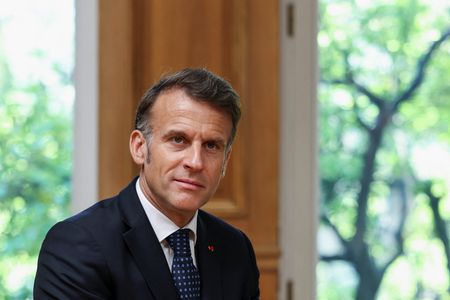
French President Emmanuel Macron is set to travel to Syria in an effort to strengthen bilateral relations and address matters of shared concern, according to Syria’s presidential media directorate, which announced the visit on Sunday.
Macron will be accompanied by a delegation that includes investors and representatives from French companies. While in Syria, he is expected to participate in a roundtable discussion with President Ahmed al-Sharaa alongside Syrian delegations.
Syria’s presidential media directorate did not provide a specific date for when the visit will take place.
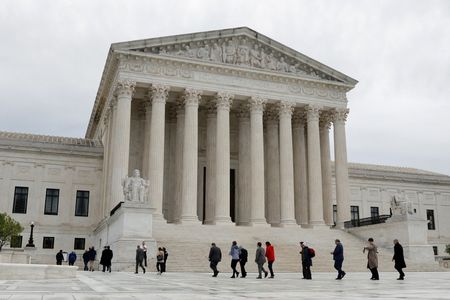
WASHINGTON — The U.S. Supreme Court is gearing up for a consequential new term beginning in October, with a lineup of major cases already taking shape on topics ranging from gun regulations and voting rights to LGBT protections and immigration detention.
The court’s upcoming docket also includes several significant corporate legal battles. Among them: an effort by ExxonMobil and Suncor Energy to derail a climate-related lawsuit filed by officials in Boulder, Colorado; a dispute stemming from an antitrust case brought by the maker of the popular video game “Fortnite,” Epic Games, against Apple; and a trademark dispute involving PepsiCo.
The justices wrapped up their most recent term — one heavily shaped by cases tied to President Donald Trump and his administration — last Monday and Tuesday. Additional Trump-related cases currently working their way through lower courts are expected to reach the high court during the coming term as well.
GUNS AND THE SECOND AMENDMENT
The court, which holds a 6-3 conservative majority, has consistently moved U.S. law in a more conservative direction this decade, including taking a broad interpretation of Second Amendment gun rights. Just last month, the justices handed down two more rulings expanding those rights.
The gun case arriving next term gives the court a chance to strike down state-level bans on assault-style rifles, including the AR-15. The justices agreed to take up two separate appeals after lower courts upheld such bans in Connecticut and in Cook County, Illinois — which encompasses Chicago.
Gun rights advocates argue that Supreme Court precedent protects these weapons because they are in what they call “common use.” On the other side, officials in Connecticut and Cook County have characterized them as weapons of war and the preferred firearms of criminals and terrorists.
In 2022, the court fundamentally changed how gun regulations are evaluated, ruling that modern restrictions must align with what it called “this nation’s historical tradition of firearm regulation” to pass constitutional muster. Since that ruling, four federal appeals courts have upheld state bans on assault-style weapons.
Vanderbilt University law professor Brian Fitzpatrick noted the challenge ahead for the justices. “I think it’s going to be hard for them to kind of sort out what the original understanding is for these kinds of new types of weapons,” he said.
Fitzpatrick added that the court must wrestle not only with whether the bans fit within historical U.S. firearm regulation, but also with a more basic question: whether these weapons even qualify as “arms” under the Second Amendment at all. Some appeals courts have concluded they do not, reasoning that semiautomatic rifles are poorly suited for self-defense and are primarily useful in military settings.
VOTING RIGHTS
A major voting rights case is also on the court’s upcoming agenda. The justices will consider a Republican-backed effort, supported by the Trump administration, to reinstate Arizona voter restrictions that would tighten proof-of-citizenship requirements for people registering to vote and allow the removal of suspected non-U.S. citizens from state voter rolls.
A lower court had blocked portions of Arizona’s law after a lawsuit filed by Mi Familia Vota, a Latino-focused voting advocacy group, arguing the restrictions violated federal voter registration law.
Democrats have accused Republicans of pushing voter suppression measures designed to reduce turnout among groups that traditionally support Democratic candidates. Republicans counter that such measures are necessary to safeguard election integrity.
Hector Sanchez Barba, the head of Mi Familia Vota, released a statement criticizing the administration’s position: “Much like with its mass-deportation agenda, the Department of Justice is asking for something unprecedented: the power to remove voters from the rolls based solely on suspicion that they are not citizens.”
IMMIGRANT DETENTION
While the Supreme Court has sided with Trump on several immigration enforcement matters, it did rule against his administration’s effort to limit birthright citizenship. In the coming term, the justices will take up his administration’s appeal in a case questioning the legality of holding certain convicted immigrants in lengthy detention — without bond hearings — while their deportation cases are pending.
A lower court had ruled that the constitutional guarantee of due process prohibits “unreasonably prolonged” detention without a hearing for non-U.S. citizens facing deportation after criminal convictions.
LGBT RIGHTS
The court will also revisit LGBT rights issues in its next term. In March, the justices struck down a Colorado law that had prohibited psychotherapists from using so-called “conversion” therapy — talk therapy aimed at changing an LGBT minor’s sexual orientation or gender identity — ruling it violated free speech protections.
Now, the Archdiocese of Denver and other Catholic organizations are asking the court to exempt them from a nondiscrimination requirement tied to a Colorado preschool funding program. A lower court found that the program did not infringe on the Catholic plaintiffs’ constitutional religious rights. The case represents the court’s latest confrontation between religious liberty claims and LGBT protections.
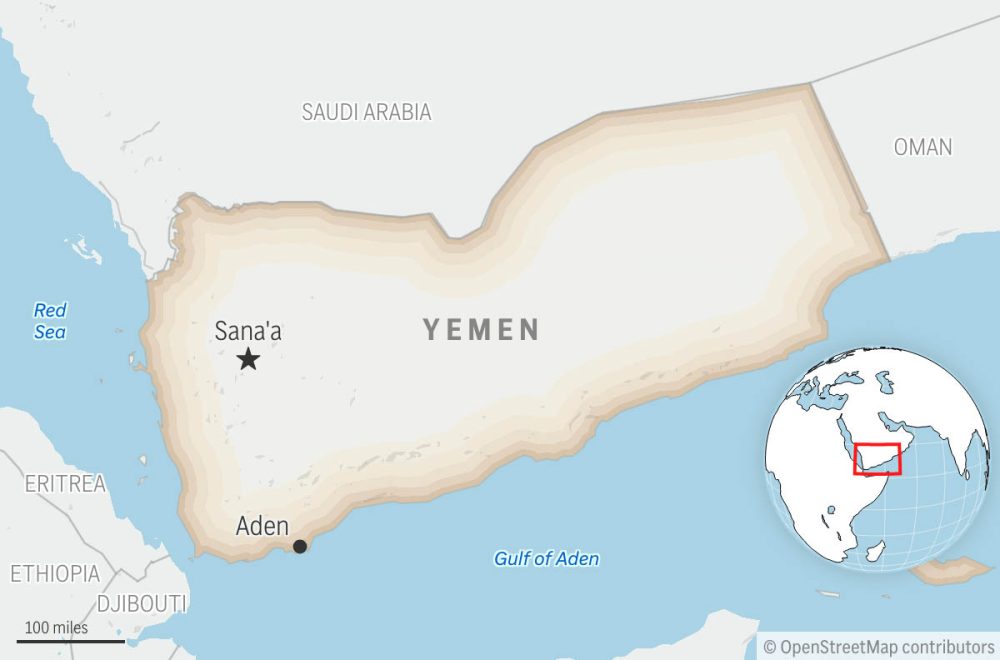
British military officials are reporting that a cargo ship came under attack Sunday in the Red Sea off the coast of Yemen, marking the latest in a series of maritime incidents near the conflict-riddled country.
The United Kingdom Maritime Trade Operations center said the attack occurred near the coastal city of Hodeida, an area currently under the control of Iranian-backed Houthi rebels.
According to the UKMTO, the vessel reported being “under attack by unknown armed assailants” approximately 30 nautical miles — or about 55 kilometers — southwest of Hodeida. Authorities said they are actively investigating the incident.
As of Sunday, no group had stepped forward to claim responsibility for the attack, and a Houthi spokesman did not immediately respond when contacted for comment.
The Houthis have previously threatened to resume attacking ships in the area, though they had not been actively carrying out such attacks in recent weeks. In the past, the rebel group launched drones and missiles at vessels passing near the narrow Bab al-Mandab Strait at the southern end of the Red Sea. Those earlier attacks during the Gaza war compelled many shipping companies to redirect their vessels around the southern tip of Africa rather than using the Suez Canal route at the Red Sea’s northern end.
Meanwhile, Somali pirates have also been increasingly active in the nearby Gulf of Aden. On July 1, suspected pirates struck a vessel 76 nautical miles — roughly 140 kilometers — south of the port town of Balhaf in southeastern Yemen. The UKMTO reported that four armed men aboard a small craft boarded the ship and caused minor damage to the vessel’s bridge.
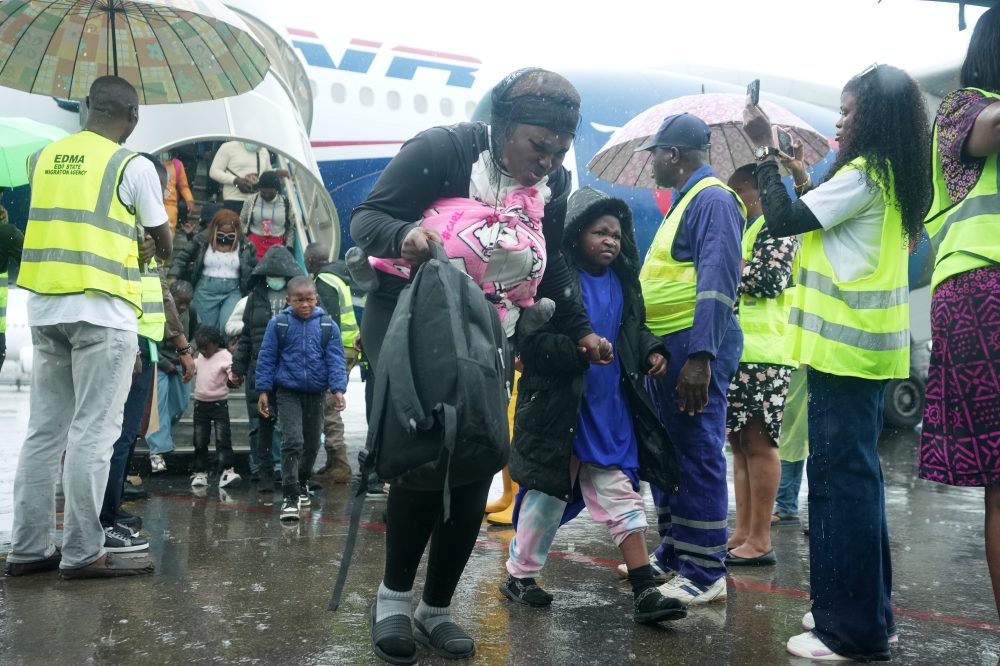
Nigeria’s government announced Sunday that two of its citizens lost their lives last month in South Africa, amid a surge of violent anti-immigrant unrest targeting African workers in the country.
According to Nigeria’s Ministry of Foreign Affairs, the two men were killed on June 28 — just two days before an unofficial deadline that protesters had set, demanding that all foreigners depart the country. Officials say one of the victims was allegedly killed by police officers, while the other was killed by unknown attackers.
South African police had not responded to a request for comment from The Associated Press at the time of reporting.
The unrest traces back to protests that erupted in April and May, when demonstrators blamed foreign nationals for the country’s high unemployment rate, rising crime, and strain on public services. The violence and attacks on African migrants prompted Nigeria, Ghana, and Malawi to bring their citizens home and call in South African diplomats for formal discussions.
Nigerian Foreign Ministry spokesperson Kimiebi Imomotimi Ebienfa issued a pointed statement in response to the deaths: “These two killings come at a time when foreigners are being unduly targeted in South Africa. This raises questions about deliberate attempt by some elements to wrongfully generalise and tag well-meaning, hard-working, and respectable Nigerians as criminals.”
South Africa has a long and troubled history with anti-migrant violence. In 2008, more than 60 people were killed in attacks on foreigners that international human rights organizations described as xenophobic.
State media in China reported Sunday that heavy rainfall has resulted in five deaths in the country’s north, while a tropical storm caused significant destruction across southern China and neighboring Vietnam.
According to the official Xinhua News Agency, two villagers lost their lives Saturday evening when a flash flood struck a mountainous area in the eastern portion of China’s Inner Mongolia region. One person drowned while tending to cattle, and another fell into floodwaters while attempting to move a herd to safety.
That same day, three additional fatalities were recorded roughly 390 kilometers — about 240 miles — to the southeast in Fushun, a city in Liaoning province. Xinhua did not release details on the circumstances of those deaths.
Fushun was hammered by a powerful rainstorm for several hours early Saturday, with rainfall reaching as much as 32.9 centimeters — approximately 13 inches — in at least one location. Video circulating online showed city streets completely submerged. Authorities relocated around 3,600 residents to safer ground.
Meanwhile, in China’s south, Tropical Storm Maysak crossed into the Guangxi region on Sunday after coming ashore the night before in Vietnam’s Quang Ninh province, packing winds of 101 kilometers — or 63 miles — per hour. As the storm pushed inland, it weakened from severe tropical storm status down to a standard tropical storm.
Footage aired on China’s state broadcaster CCTV showed rivers overflowing their banks in Guangxi’s Fangchenggang city, with cars submerged up to their rooftops. Emergency crews deployed inflatable boats to reach people who were stranded. A China News Service report noted that local residents described the flooding as the worst they had seen in roughly 20 years.
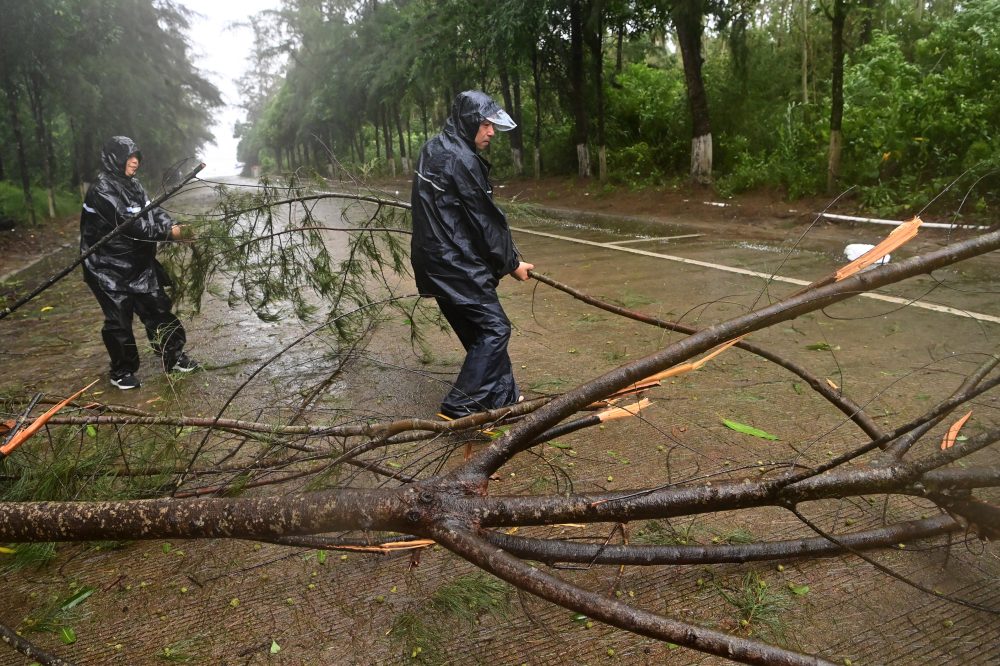
In Vietnam, the storm caused considerable damage Saturday evening in the town of Mong Cai, knocking down trees and tearing metal roofing off buildings, according to Vietnamese state media. After the winds died down, crews brought in chainsaws and heavy equipment to clear debris and restore access to roads.
Maysak also uprooted trees in Dongxing, a Chinese city that sits along the Vietnamese border. The storm had previously dumped heavy rain on China’s Hainan island before crossing open water and making landfall again in Vietnam.
The OPEC+ alliance of oil-producing nations is expected to approve yet another increase in production targets when members meet online this Sunday, according to sources with knowledge of the discussions.
In principle, the group has agreed to raise output quotas by 188,000 barrels per day beginning in August. That increase would follow similar production boosts already put in place for June and July, two sources familiar with OPEC+ thinking confirmed ahead of the Sunday meeting.
Seven of the group’s core members — Saudi Arabia, Russia, Iraq, Kuwait, Algeria, Kazakhstan, and Oman — have collectively raised their output quotas by nearly 800,000 barrels per day between April and July.
However, much of that increase existed only on paper. The U.S.-Israeli war on Iran forced the closure of the Strait of Hormuz to oil tankers, cutting off exports from some of OPEC+’s most significant members, including Saudi Arabia, Kuwait, and Iraq.
As a result, OPEC+ total output dropped sharply — from 42.77 million barrels per day in February to just 33.13 million barrels per day in May, according to OPEC data. Production began to rebound in June, aided by U.S. efforts to help the UAE and other OPEC+ nations resume exports, though output remains below what it was before the conflict began.
Despite ongoing supply disruptions, oil prices have retreated to pre-war levels. Analysts point to weaker Chinese imports, increased output from producers outside the Middle East, and a record release of global strategic reserves coordinated by the International Energy Agency as key factors pushing prices lower. A memorandum of understanding to end the war has also helped reassure traders that supply will eventually return to normal.
Brent crude was trading near $72 per barrel on Friday — down sharply from a recent peak above $120 per barrel and back in line with prices seen just before the U.S. and Israel launched strikes on Iran on February 28.
Beyond setting production targets, OPEC+ is grappling with additional complications. The United Arab Emirates departed the group, and Iraq has signaled it is seeking higher production quotas for itself.
The UAE exited the alliance in late April, citing a desire to align its production more closely with its actual capacity without the output restrictions the group imposed. The seven remaining core producers are currently unwinding a 1.65 million barrel-per-day production cut that was originally agreed upon in 2023, when the UAE was still a member.
Starting in August, those seven nations have approximately 379,000 barrels per day of that original cut left to restore to the market, according to Reuters calculations. At the current pace of increases, the group could fully unwind the remaining cut by the end of September.
LONDON — A spokesperson for British politician Nigel Farage is rejecting claims that the Reform UK leader may have violated parliamentary disclosure rules, following a report that he failed to declare certain benefits he received.
The Sunday Times reported that in the twelve months before his election to parliament, Farage was provided with security services, social media assistance, and a place to stay by George Cottrell, a longtime political ally. Cottrell served prison time in the United States in 2017 after pleading guilty to wire fraud. The newspaper also noted that Cottrell had involvement in cryptocurrency.
Farage’s spokesperson fired back at the report, calling it “baseless and contrived.” The spokesperson added, “Contrary to the story’s tone, no parliamentary rules have been broken.”
This is not the first time Farage’s finances have come under scrutiny. Parliament’s standards watchdog is already looking into whether Farage should have disclosed a £5 million — roughly $6.7 million — donation he received from Christopher Harborne, a Thailand-based cryptocurrency investor, before Farage announced his 2024 parliamentary run.
Farage has maintained that the money from Harborne was an unconditional personal gift, which he says falls outside parliamentary disclosure requirements, and that it was intended to cover his personal security costs. That donation only became public knowledge after a newspaper reported it in April.
Britain’s health minister James Murray weighed in on the matter during a Sunday BBC appearance, saying, “I think quite a lot of questions come up in relation to his finances. He seems to have a bit of a flexible relationship with transparency.”
Under parliamentary rules, newly elected members of parliament are required to disclose financial interests and “registrable benefits” received in the prior twelve months, though personal gifts are excluded from that requirement.
Reform UK currently leads national opinion polls in Britain, a position that has elevated Farage as a potential future prime minister following a possible 2029 election — and has intensified public interest in his financial dealings.
Farage is still awaiting the result of the ongoing parliamentary investigation. Should investigators determine he committed a serious breach of disclosure rules, he could face suspension from the House of Commons. A suspension lasting ten days or longer could trigger a recall petition, which might force a special election in his constituency.
Good morning, Delmarva! If you’re heading out to enjoy the long holiday weekend, make the most of your morning hours. Today will be mostly sunny with a high near 91°F — a hot and humid summer day across the peninsula. A light southeast breeze of up to 10 mph will offer little relief from the heat.
Here’s the heads-up: scattered showers and thunderstorms are possible after 3 PM, with a 30% chance of storms rolling through. Some of those storms could pack heavy rain, so keep an eye on the sky if you have outdoor plans this afternoon. Overall rainfall totals should stay light, under a tenth of an inch.
Tonight, storm chances linger as temperatures settle to a warm 72°F. Heading into Monday, expect more of the same — partly cloudy skies, another chance of showers and thunderstorms, and a more comfortable high of 82°F.
Stay weather-aware this afternoon, Delmarva. I’ll have updates throughout the day. Stay cool and stay safe out there!
A portion of Blackbird Landing Road is closed at this time following a downed tree and downed wires in the area.
The closure is in effect from Union Church Road to Gum Bush Road. Motorists are advised to avoid the area and plan for alternate routes until crews are able to clear the obstruction and make the roadway safe.
No timeline for reopening has been announced at this time. Drivers should use caution in the surrounding area and watch for emergency personnel on scene.
At least eight people — among them four children — were struck by gunfire during the late hours of Independence Day in Brooklyn’s Coney Island neighborhood, according to a report from ABC News citing the New York City Police Department.
The shooting occurred on July 4th, casting a dark shadow over the holiday celebration in the well-known New York City community.
Reuters, which first circulated the report, noted it was unable to immediately verify the information independently.
A Ukrainian strike on Russian-occupied Crimea left one person dead and two others wounded in the early morning hours of Sunday, according to officials installed by Moscow in the region. The attack occurred as both sides in the conflict were separately engaging U.S. President Donald Trump in talks about bringing the war to a close.
The Russia-appointed regional governor, Sergei Aksyonov, reported the casualties on Telegram, noting that one of the injured was in serious condition. He offered no further details about the nature of the attack.
Over recent weeks, Ukraine has intensified its strikes against key infrastructure targets in Crimea as part of a broader military strategy to cut off the Russian-held peninsula. The peninsula was forcibly seized and illegally annexed by Russia in 2014.
Western analysts and officials say Ukraine’s growing use of long-range strikes has demonstrated its capacity to inflict significant damage on Russia, putting increased pressure on Moscow at a time when Russian ground advances have largely stalled.
The overnight violence followed separate phone conversations that both Ukrainian President Volodymyr Zelenskyy and Russian President Vladimir Putin had with Trump on Saturday.
Zelenskyy posted on X that he reached out to Trump to mark the 250th anniversary of American independence, and that the two leaders talked about conditions along the front lines. “There is a real prospect of ending this war, and America’s determination will be crucial. We agreed to continue the conversation in person during the NATO summit in Ankara,” Zelenskyy wrote.
The Kremlin confirmed that Putin and Trump also spoke by phone Saturday in what it described as a “constructive” exchange lasting nearly an hour and a half — their fourth such conversation this year. Kremlin foreign affairs adviser Yuri Ushakov said Putin used the call to congratulate Trump and the American people on the Independence Day milestone.
Ushakov said Trump reaffirmed his willingness to help bring about a swift end to the fighting and pursue peaceful solutions. Trump’s envoys Steve Witkoff and Jared Kushner, he added, will continue their mediation efforts and remain prepared to travel to Moscow.
According to Ushakov, Putin reiterated Russia’s preference for a diplomatic resolution, provided that what he called Russia’s fundamental positions are taken into consideration. Putin also accused Ukraine and its European allies of pushing to extend and even escalate the conflict, claiming that the so-called European “party of war” is operating under a flawed understanding of the situation on the ground.
Putin also told Trump that Russian forces are making steady progress on the battlefield, specifically pointing to the capture of the Ukrainian stronghold of Kostyantynivka as a significant step toward what he described as the “liberation” of the entire Donetsk region. Ukrainian officials have disputed Russia’s claim that Kostyantynivka has fallen.
Qatar announced Sunday that all maritime activities are set to resume right away, according to a statement from the country’s Transport Ministry shared on X.
The announcement reverses a temporary advisory issued on June 29, which had called for the suspension of sailing and fishing vessels until further notice. Commercial shipping had been excluded from that earlier restriction.
In Sunday’s statement, the ministry called on all vessel operators and users to “abide by the maritime regulations and instructions in effect, to ensure the highest levels of safety and security for all trips.”
Qatar offered no explanation for why the original June 29 advisory was issued. However, it came just one day after the country announced that one of its citizens had been killed after suffering shrapnel injuries tied to what officials called “military operations in the region” — a death that followed the disappearance of the individual’s vessel.
Foxconn, the Taiwan-based company that holds the title of the world’s largest contract electronics manufacturer, announced a 39.8% increase in second-quarter revenue compared to the same period last year — a result that exceeded what market analysts had predicted, fueled largely by surging demand for artificial intelligence products.
The company, which serves as Nvidia’s top server manufacturer and Apple’s primary iPhone assembler, reported revenue of T$2.513 trillion, equivalent to approximately $78.71 billion, for the April through June quarter, according to a statement released Sunday.
That figure came in above the T$2.372 trillion estimate calculated by LSEG SmartEstimate, a forecasting tool that places greater emphasis on predictions from analysts with stronger track records of accuracy.
Foxconn credited strong AI-related demand for driving growth in its cloud and networking products division. Its smart consumer electronics segment, which includes iPhones, also saw what the company described as “significant” growth during the quarter.
Looking at June alone, monthly revenue climbed 52.1% year-over-year to T$821.8 billion — a record high for that particular month.
The company expressed optimism about the months ahead, indicating that operations are expected to expand both compared to the previous quarter and to the same period last year in the third quarter, with AI rack products continuing on a growth trajectory.
Despite the upbeat numbers, Foxconn struck a note of caution, stating that “it remains necessary to monitor the impact of the volatile global political and economic situation.” The company did not offer further details on that warning.
Foxconn, whose formal corporate name is Hon Hai Precision Industry, does not release specific numerical forecasts for future performance.
On the stock market, the company’s shares have risen 4.3% so far this year, a gain that falls well short of the broader Taiwan market’s 61.5% increase over the same period. Shares closed up 0.6% on Friday, just before the revenue figures were made public, while the benchmark index finished the day essentially unchanged.
(Note: $1 equals approximately 31.9260 Taiwan dollars)
BEIJING — The naval forces of China and Russia are preparing to conduct joint military exercises in the waters and airspace near the Chinese port city of Qingdao beginning next week, according to announcements from China’s defense ministry and Russian state media on Sunday.
China’s defense ministry noted in an official statement that once the drills conclude, participating forces from both countries will move on to conduct joint maritime patrols in relevant areas of the Pacific Ocean.
The exercises are held on a yearly basis and are described as being “aimed at jointly addressing security challenges and maintaining regional peace and stability,” according to the statement.
Russia’s state-run RIA news agency reported that vessels from Russia’s Pacific Fleet — including a cruiser, a corvette, a diesel-electric submarine, and a rescue ship — had already arrived in Qingdao ahead of the drills, which are scheduled to take place from July 6 through July 13.
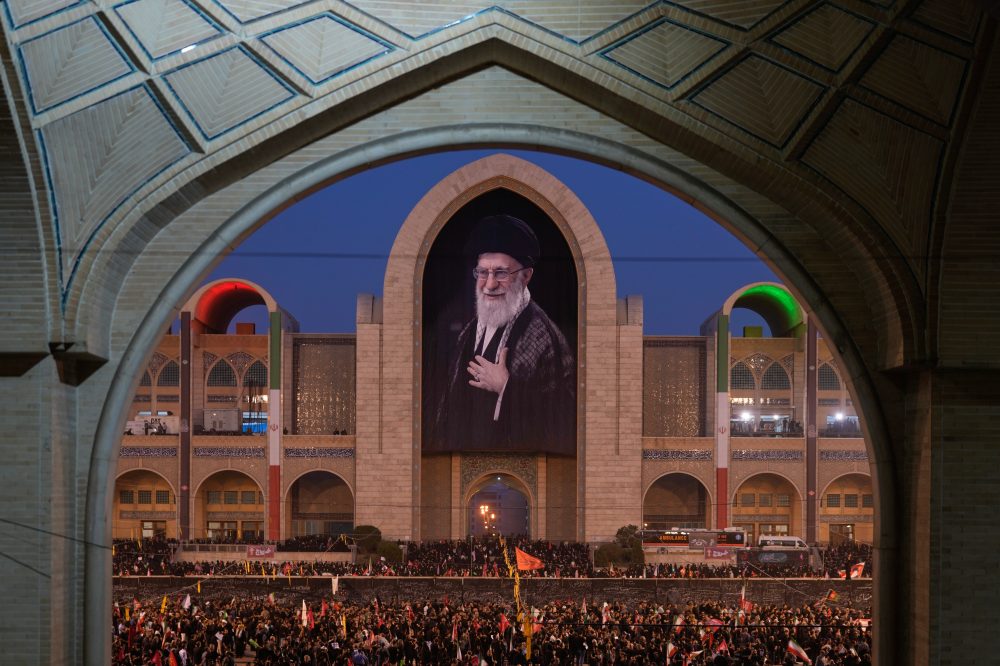
TEHRAN — Three sons of Ayatollah Ali Khamenei, Iran’s slain supreme leader, gathered beside their father’s coffin during funeral ceremonies on Sunday, though his successor — another son — was nowhere to be seen.
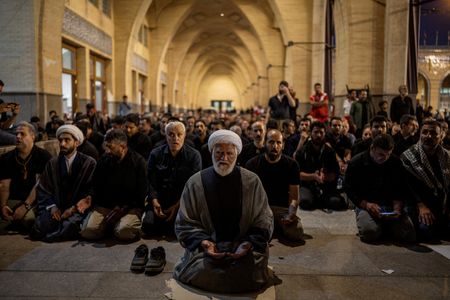
Iranian state television broadcast footage of Mostafa, Meysam, and Masoud Khamenei standing in prayer behind a row of coffins arranged in the open courtyard of Tehran’s Imam Khomeini Grand Mosalla, a large religious complex in the capital.
Notably absent was Mojtaba Khamenei, who has assumed the role of supreme leader following his father’s death. No public images or appearances of Mojtaba have emerged since the February 28 attack in which Israel and the United States bombed Iranian targets at the start of the war, killing his father along with other family members.
Sources close to Mojtaba’s inner circle told Reuters that his face was disfigured in the attack and that he sustained a serious injury to one or both of his legs.
Also attending Sunday’s ceremonies were Iranian President Masoud Pezeshkian and Parliament Speaker Mohammad Baqer Qalibaf, both of whom prayed behind the coffins. Masoud Khamenei was visibly emotional, wiping away tears with a keffiyeh — the chequered scarf that carries symbolic meaning in Iran as a sign of revolutionary commitment and solidarity with Palestinians — while an imam led the funeral prayers.
Khamenei’s coffin was placed on public display outdoors under glass on Saturday, alongside the coffins of his daughter, son-in-law, daughter-in-law, and 14-month-old granddaughter, following a day of indoor viewing for senior Iranian officials and foreign dignitaries.
Massive crowds have gathered at the Mosalla, with many mourners weeping and some beating their chests in a traditional display of grief. The Iranian metro system reported recording 7 million trips from late Saturday through Sunday morning as people made their way to the site.
The Islamic Republic has organized an extensive week of funeral processions to honor Khamenei. Following a large procession planned for central Tehran on Monday, his remains will travel to the seminary city of Qom for ceremonies on Tuesday. From there, the body will be flown to Iraq for observances at the Shi’ite holy shrine cities of Najaf and Kerbala on Wednesday, before returning to Iran on Thursday for a final procession in Mashhad, where he will be buried near the tomb of a medieval Shi’ite imam.
Iranian authorities have pledged to provide transportation, food, and lodging to help bring millions of people out for the upcoming processions.
A ceasefire has halted the four-month conflict under a deal with Washington that Iranian authorities say will deliver significant economic gains — which they characterize as a victory over a superpower. U.S. President Donald Trump told the Axios news website that peace negotiations had been paused for one week in light of the funeral proceedings.
A Heat Advisory is in effect today for a large portion of the Delmarva Peninsula, with dangerously high heat index values expected to reach between 100 and 105 degrees.
The National Weather Service has issued the advisory from 8 this morning through 8 o’clock tonight, covering New Castle, Kent, Delaware Beaches, and Inland Sussex Counties in Delaware, as well as Caroline, Kent, Queen Anne’s, and Talbot Counties on Maryland’s Eastern Shore.
While forecasters say temperatures and heat indices won’t quite reach the record-breaking levels seen earlier this week, the prolonged stretch of heat and humidity remains a serious concern — especially for vulnerable residents.
Health officials urge everyone to drink plenty of fluids, stay in air-conditioned spaces, and avoid direct sunlight during peak afternoon hours. If you must be outside, wear lightweight, loose-fitting clothing and limit strenuous activity to early morning or evening hours.
Please check on elderly relatives, neighbors, and those without access to air conditioning.
Know the warning signs: heat exhaustion symptoms include heavy sweating, weakness, and dizziness. Heat stroke is a life-threatening emergency — call 9-1-1 immediately.
The advisory expires at 8 PM tonight. Stay with TV Delmarva for continuing weather coverage.
The National Weather Service office in Mount Holly, New Jersey has issued a Heat Advisory effective Saturday, July 5, beginning at 2:45 AM Eastern Time and lasting through 8:00 PM that same evening.
Residents in the affected areas should be aware of the potential health risks associated with extreme heat. Officials typically recommend staying hydrated, limiting outdoor activity during peak afternoon hours, and checking on elderly neighbors and those without air conditioning during heat advisory periods.
The advisory was issued in the early morning hours of July 5, giving residents advance notice to prepare for the day’s dangerous heat conditions.
The National Weather Service out of Mount Holly, New Jersey has put a Flood Watch into effect as of 2:33 AM EDT on Saturday, July 5, with the alert lasting through 8:00 PM EDT on Sunday, July 6.
A Flood Watch means that conditions are favorable for flooding to develop in the affected area. Residents are urged to stay alert and monitor local forecasts closely as the situation evolves.
If flooding does occur, people should avoid walking or driving through floodwaters, as even shallow moving water can be dangerous. Just six inches of fast-moving water can knock a person off their feet, and a foot of water can sweep a vehicle away.
Stay tuned to TV Delmarva for the latest updates on this developing weather situation.
Yordan Alvarez put together one of the most memorable nights of the season Saturday, capping a three-hit, six-RBI performance with a walkoff two-run blast that sent the Houston Astros past the visiting Tampa Bay Rays, 10-8, and ended Tampa Bay’s nine-game winning streak.
With no outs in the bottom of the ninth, Alvarez drove in Jose Altuve with his 29th home run of the year — his second of the game — crushing a 1-2 fastball from Rays reliever Casey Legumina (2-2) an estimated 424 feet to dead center field.
The Astros had dug themselves out of a five-run hole, tying the game at 8-8 during a three-run seventh inning. That rally included a sacrifice fly from Alvarez, an RBI single by Isaac Paredes, and a pinch-hit RBI single from Zach Dezenzo. Tampa Bay had built its early advantage in part on a first-inning home run from Junior Caminero — his 11th homer in the last 11 games.
Neither starting pitcher impressed. Houston’s Hunter Brown surrendered seven runs on six hits across four innings, while Tampa Bay’s Drew Rasmussen gave up a season-high-tying five runs on six hits over five frames.
Mariners 11, Blue Jays 0
Logan Gilbert turned in a dominant outing — 7 1/3 innings of one-hit pitching — and Randy Arozarena launched a grand slam as Seattle crushed visiting Toronto. Cal Raleigh added a three-run home run and Dominic Canzone contributed a two-run shot. The win moved Seattle past Texas and into first place in the American League West.
Gilbert (7-5) retired the first 14 Blue Jays batters before Yohendrick Pinango dropped a bloop single into shallow left with two outs in the fifth. He finished with seven strikeouts and no walks over 91 pitches. Toronto starter Shane Bieber (0-1) was roughed up for seven runs on six hits in four-plus innings.
Pirates 7, Nationals 1
Brandon Lowe and Henry Davis each drove in a pair of runs, and Braxton Ashcraft struck out seven in a quality start as Pittsburgh picked up a road victory over Washington. Ashcraft (9-3) gave up one run on six hits across 5 2/3 innings. Bryan Reynolds, Ryan O’Hearn, and Nick Gonzales each recorded two hits for the Pirates, who evened the three-game series heading into Sunday’s finale. James Wood homered for the 23rd time this season for Washington, and Daylen Lile added two hits. Starter Carson Palmquist (0-1) lasted just one-plus inning, allowing four runs on four hits.
Twins 11, Yankees 4
Kody Clemens launched a two-run homer in the first inning and Minnesota went on to slug six home runs total in a convincing win over host New York on a sweltering 95-degree afternoon. Clemens, who has now gone deep five times in eight games, connected off rookie starter Brendan Beck (0-1) following a Trevor Larnach walk and a Byron Buxton RBI double. Luke Keaschall and Alex Jackson hit back-to-back homers in the second, Larnach went deep off Tim Hill in the fourth, and Josh Bell homered in back-to-back at-bats against Ryan Yarbrough and Camilo Doval in the seventh and eighth innings. Minnesota won for the eighth time in its last 11 road games and hit six homers for the first time since September 4, 2023. The Yankees dropped their eighth loss in nine games and gave up six home runs for the first time since August 15, 2019.
Tigers 3, Rangers 0
Riley Greene’s two-run homer and a strong start from Jack Flaherty powered Detroit to a shutout win over Texas in Arlington. All three Detroit runs came in the first two innings, with Greene’s 12th homer of the year and a Ben Malgeri RBI groundout doing the damage. Flaherty (2-8) scattered three hits over 5 2/3 scoreless innings and has now gone 10 2/3 consecutive innings without allowing a run since returning from the injured list. Keider Montero closed out the final three innings for his first career save. Texas starter Cal Quantrill (3-1) allowed three runs and three hits in five innings. Ben Peoples made his major league debut for the Rangers, throwing two scoreless innings.
White Sox 3, Guardians 1
Colson Montgomery hit a go-ahead home run and drove in two of Chicago’s three runs as the White Sox snapped a three-game losing streak with a win at Cleveland. Starter Sean Burke set a new career high with 11 strikeouts, holding the Guardians to one run on seven hits over six innings. Brandon Eisert (2-1) was perfect through the seventh and eighth innings, and Grant Taylor earned the save in the ninth. Cleveland’s only run came on an Austin Hedges solo homer in the fifth. Tim Herrin (1-4) surrendered Montgomery’s decisive blast in the eighth.
Orioles 8, Reds 5
Rookie Samuel Basallo launched a three-run homer in the opening inning and Adley Rutschman delivered a two-run double during a five-run fourth as Baltimore defeated host Cincinnati. Pete Alonso chipped in three hits and an RBI for the Orioles, who have now won three straight. Baltimore starter Brandon Young worked five-plus innings, giving up four runs on eight hits. Jose Trevino had three hits and an RBI for Cincinnati, and Elly De La Cruz contributed two hits and an RBI. The Reds outhit Baltimore 11-10 but stranded nine runners and have now lost six of their last seven.
Phillies 6, Royals 1
J.T. Realmuto, Gabriel Rincones Jr., and Alec Bohm all went deep to back Jesus Luzardo as visiting Philadelphia topped Kansas City. Luzardo (7-4) was sharp, allowing just one run on four hits over six innings with nine strikeouts and no walks. Kyle Schwarber — one of five Phillies named to the All-Star team earlier Saturday — went 3-for-4. Kansas City starter Michael Wacha (5-6) gave up four runs on eight hits and a walk over six innings. Nick Loftin drove in the lone Kansas City run. The Royals have now dropped eight of their last nine.
Braves 14, Mets 3
Eli White homered and matched his career high with four RBIs to lead Atlanta to a blowout win over visiting New York. White went 2-for-2 and was one of five Braves to go deep. Mauricio Dubon, Mike Yastrzemski, Austin Riley — ending a 36-game homerless drought — and Michael Harris II also homered, with Harris connecting off position player Luis Torrens. Chris Sale (9-6) went five-plus innings, allowing three runs on seven hits. The Mets have now lost 12 of their last 14 and sit 17 games behind Atlanta in the National League East. Starter Sean Manaea (1-4) was tagged for six runs on six hits in five innings. Tyrone Taylor and Mark Vientos homered for New York.
Red Sox 8, Angels 1
Sonny Gray limited the Angels to one run on four hits over six innings, and Willson Contreras and Romy Gonzalez each hit home runs as Boston cruised past Los Angeles in Anaheim. Wilyer Abreu drove in two runs and scored twice for the Red Sox, who have won the first two games of the series. A four-run fifth inning — all against Samy Natera Jr. — put the game away. Josh Lowe homered for Los Angeles, which has now dropped five straight. Starter Sam Aldegheri (3-4) allowed three runs and one hit in four innings.
Cardinals 3, Cubs 0
Rookie JJ Wetherholt reached base four times — including a first-inning home run — as St. Louis shut out Chicago, which has managed just one run in two games against the Cardinals after scoring 35 runs in a three-game sweep of San Diego. Wetherholt also walked in the third, doubled in the fifth, and singled in the seventh. Starter Kyle Leahy (7-4) held the Cubs to three hits over five innings. Riley O’Brien earned his 22nd save with a clean ninth. Cubs starter Shota Imanaga (5-7) surrendered four hits and two runs in 4 2/3 innings, walking three and striking out eight over 86 pitches.
Diamondbacks 4, Brewers 3
Adrian Del Castillo’s three-run first-inning homer gave Arizona the lead, and the Diamondbacks held on to beat Milwaukee in Phoenix, leveling the series. Starter Merrill Kelly (6-8) snapped a five-start losing skid by holding the Brewers to two runs on eight hits over five innings. Ildemaro Vargas added a key RBI double in the eighth. Closer Paul Sewald gave up a Jackson Chourio homer in the ninth but still recorded his 20th save. Milwaukee starter Brandon Woodruff (2-2), making just his third start after nearly two months on the injured list, left the mound with a trainer after a sudden drop in velocity with two outs in the fourth. Christian Yelich also homered for the Brewers, and Brice Turang had three hits for the second consecutive night.
Marlins 7, Athletics 2
Otto Lopez celebrated his first career All-Star selection by going 3-for-5 with a homer and three RBIs as Miami beat the host Athletics in West Sacramento, California. Kyle Stowers hit a two-run home run and Joe Mack added a solo shot for the Marlins, who have scored 19 runs in winning the first two games of the series. Liam Hicks had three hits and scored twice. Sandy Alcantara (10-4) was outstanding, allowing just one run on six hits over eight innings to extend his winning streak to seven straight decisions. Carlos Cortes, Henry Bolte, and Joshua Kuroda-Grauer each had two hits for the Athletics, who have lost 10 of their last 13. Aaron Civale (5-6) gave up four runs on six hits in 4 2/3 innings, losing his fifth consecutive start.
Giants 6, Rockies 4
Robbie Ray won his fifth straight decision, Bryce Eldridge homered, and San Francisco evened its three-game series at Colorado in Denver. Luis Arraez collected three hits, while Sam Hentges, Dylan Smith, and Caleb Kilian combined for three innings of one-run relief. Ray (8-6) gave up a three-run homer to Cole Carrigg in the first inning but settled in and allowed nothing further over six frames. Rockies rookie left-hander Sean Sullivan (0-3) — a late replacement for scheduled starter Tomoyuki Sagano — pitched 5 2/3 innings but allowed all six Giants runs on 12 hits.
Dodgers 3, Padres 0
Freddie Freeman homered and Yoshinobu Yamamoto delivered seven shutout innings as Los Angeles blanked visiting San Diego. Yamamoto (9-5) matched his season best with 10 strikeouts, allowing three hits and two walks. Andy Pages opened the scoring with an RBI single, and Freeman tacked on an eighth-inning RBI single to seal the win. Los Angeles improved to 10-2 since June 22 and 7-2 against the Padres this season. San Diego right-hander Griffin Canning (1-6) gave up one run on two hits over four innings. Fernando Tatis Jr. had two of the Padres’ four hits, but San Diego’s losing streak extended to eight games — the franchise’s longest since a 10-game skid in 2013.
TAIPEI — Taiwan’s defense ministry announced Sunday that it has reinstated “anti-communist” patriotic instruction for military academy graduates, ending a roughly 25-year absence of the program and citing an escalating threat posed by China.
During the Cold War era, warnings about the dangers of China’s communist government — which considers Taiwan part of its own territory — were common throughout Taiwanese society. However, formal “anti-communist patriotic education” for military graduates was phased out in 2002, replaced simply by “patriotic education.”
Taiwan’s defense ministry said in an official statement that the classes were being restored because of growing military and infiltration risks from China. “It is necessary for them to clearly understand national security threats and recognise the military mission of ‘why we fight, and for whom we fight,’” the statement read.
Officials from several government bodies will deliver lectures to graduates under the revived program. Those agencies include the Mainland Affairs Council, which shapes Taiwan’s China policy, as well as the National Security Council, the Ministry of Justice, and the top government think tank Academia Sinica.
“The aim is to establish among graduates a clear awareness of friend and foe,” the defense ministry added.
China’s defense ministry did not respond to a request for comment. China has never formally abandoned the possibility of using military force to bring Taiwan under its authority.
The announcement came as Chinese military activity around Taiwan reached new levels. Joseph Wu, secretary-general of Taiwan’s National Security Council, posted on X late Saturday that as of Friday, Taiwan was monitoring a record of more than 110 Chinese military and coast guard ships operating along the first island chain.
“China’s massive maritime mobilization along the 1st Island Chain is a clear sign of its expansionism,” Wu wrote, referring to the stretch of territory running from Japan through Taiwan, the Philippines, and Borneo.
On Saturday, China’s coast guard launched a new patrol off Taiwan’s eastern coastline, drawing a strong rebuke from Taipei. Taiwan’s government maintains that Beijing has no authority over those waters and firmly rejects China’s sovereignty claims over the island.
BUNIA, Congo — People living at the heart of Congo’s deadly Ebola outbreak are holding onto hope as scientists launched a long-awaited clinical trial in early July to test two potential treatments against the still-spreading disease.
At an Ebola treatment center inside Bunia’s Evangelical Medical Center, located in eastern Congo’s Ituri province, the start of the research carried a sense of urgency rather than fanfare last Thursday. While ambulances pulled up with new patients and healthcare workers suited up in layers of protective gear before entering isolation wards, the trial quietly got underway alongside the ongoing fight to keep patients alive.
The strain behind this outbreak — known as Bundibugyo — is rarer than other forms of Ebola, and currently no approved treatments or vaccines exist to combat it. The head of the World Health Organization, Tedros Adhanom Ghebreyesus, confirmed Thursday that more than 1,400 people have been diagnosed and 438 have lost their lives.
The WHO announced that same day that the first patient had been enrolled in the study. Researchers are evaluating whether the antiviral drug remdesivir, an experimental antibody treatment called MBP134, or a combination of the two can help infected patients survive. According to WHO research adviser Dr. Vasee Moorthy, patient survival will be monitored for 28 days following the start of treatment.
The trial is supported by the WHO and is a joint effort involving Congo’s national biomedical research institute INRB, Britain’s Oxford University, Antwerp’s Institute of Tropical Medicine, and several other international health organizations.
Professor Yap Boum, head of emergency response at the Africa Centres for Disease Control and Prevention, explained that the current phase of the trial is focused on confirmed Ebola patients being treated inside specialized facilities. A second phase, he noted, will extend to healthcare workers, close contacts, and others considered at high risk of infection.
Professor Placide Mbala, who is coordinating laboratory work during the outbreak, said the research effort could last anywhere from three to six months, depending on how the outbreak develops.
For many people in Bunia, the launch of the trial brings a rare glimmer of encouragement after weeks of growing fear and loss.
Bunia resident Audrey Tengetenge described the trials as a “light at the end of the tunnel.” She added, “I hope everything moves very quickly so that we can find relief. We want nothing more than an end to this very dangerous disease, which continues to bring us grief.”
Gladys Munguro, who survived Ebola and was released from a treatment center two weeks ago, recalled watching fellow patients die while she was receiving care. Now recovered, she said she hopes the experimental treatments will give future patients a better chance at survival and help bring the outbreak to an end.
“This experimental phase is necessary for us,” Munguro told the Associated Press. “I will volunteer as soon as the next phase of the trials begins for high-risk individuals.”
However, researchers face significant challenges rooted in community skepticism. Nelson Dhebi, a shopkeeper in Bunia, said he supports scientific progress and hopes for good results, but worries the treatments could cause harm. He believes others should go first. “Research should be carried out first and foremost on our elected representatives, as they are the ones who represent us,” he said.
Community mistrust is just one of many obstacles complicating the response to the outbreak. Overcrowded treatment facilities, delays in patients seeking medical attention, and violence that restricts access to conflict zones are all major barriers to containing the disease.
Pierre Akilimali, incident manager at Congo’s National Institute of Public Health, said Friday that nearly three out of every four Ebola deaths during this outbreak are happening outside of health facilities.
For now, the trial is being conducted exclusively at Bunia’s Evangelical Medical Centre in Ituri — a region that has also seen violence directed at healthcare workers battling the virus, which spreads through contact with the bodily fluids of infected individuals. Officials say they plan to expand the trials to additional locations once conditions are safe enough to do so.
ANKARA, Turkey — For nearly two years, NATO Secretary-General Mark Rutte has had one overriding mission: keep the United States from walking away from the world’s most powerful military alliance. His strategy has relied heavily on flattery and carefully staged presentations aimed at keeping U.S. President Donald Trump satisfied — but that task is getting harder as this week’s summit in Turkey approaches.
The challenge has evolved considerably since Rutte took the job. Early on, the main friction point was money. Trump had long complained that NATO member nations were not dedicating enough of their national budgets to defense. That issue appeared to be largely resolved at last year’s summit, when allied nations pledged to match American defense spending as a share of their gross domestic product.
But the alliance’s central problem has shifted. The real challenge now is converting those financial commitments into actual military strength — especially as European nations grow increasingly anxious about a potential Russian attack.
Rutte made another bold attempt to ease tensions during a White House visit last month. He brought along a chart boldly labeled “The Trump Trillion” in gold lettering, illustrating $1.2 trillion in combined defense spending by European allies and Canada since 2017. The presentation was loaded with American imagery and credited Trump as the driving force behind the spending surge.
Trump, however, did not appear impressed. He expressed frustration that some NATO allies had declined to join the United States and Israel in the war against Iran — a conflict launched without consulting alliance members.
“We don’t need their money — we don’t need anything,” Trump said. “I just want loyalty.”
Trump also suggested he might have skipped the upcoming summit altogether if it were not being hosted by Turkish President Recep Tayyip Erdogan — a leader Trump appears to hold in unusually high regard. Even so, both Erdogan and Rutte will face significant pressure to keep the gathering on track.
Traditionally, NATO’s top civilian official — always a European, never an American — works to build consensus among the alliance’s 32 member nations and speak on their collective behalf. But under Trump, both Rutte and his predecessor, Jens Stoltenberg, have had to spend enormous energy simply keeping the United States inside the alliance.
Trump has threatened to withdraw from NATO entirely, floated the idea of pulling American troops out of Europe, and declared his intention to acquire Greenland — a semi-autonomous territory belonging to alliance member Denmark. He has also cast doubt on whether the U.S. would defend allies that fall short on defense spending, shaking confidence across the alliance.
Rutte’s flattery has at times drawn criticism. He was widely mocked for comparing Trump to a father figure. But last month’s Oval Office presentation took things further, featuring props evoking the American flag and charts highlighting tens of thousands of U.S. jobs tied to European military orders — a backlog worth $300 billion. Rutte referred to Trump as “the leader of the free world” throughout the pitch.
He also gently pushed back on Trump’s Iran complaints, pointing out that up to 5,000 American aircraft departed from European bases before an April ceasefire took hold.
The alliance cannot function without American participation. Europe is being pressed to take greater responsibility for its own security at the very moment Russia — the original reason NATO was formed — presents a growing threat.
Last month, the Pentagon caught its NATO partners off guard by announcing it would reduce the troops, warships, aircraft, and drones it would contribute if a member nation came under attack. Trump has also sent contradictory signals about whether U.S. troop levels in Europe would go up or down.
Those cutbacks and mixed messages have weakened alliance unity at a particularly dangerous time. A study released Thursday found that Russia has been testing European defenses with drone flights near military installations across several countries.
Every NATO summit is designed to reaffirm the alliance’s core commitment to collective defense — the principle that an attack on one member is an attack on all, as spelled out in Article 5 of the NATO treaty. That provision has only been triggered once, when allies rallied behind the United States following the September 11, 2001 attacks.
Last year’s summit was held in The Hague, the hometown of Rutte, a former Dutch prime minister. The Dutch royal family hosted a dinner, and Trump spent the night at the king’s palace. Rutte managed to secure a major defense spending commitment from the allies, and Trump departed in good spirits, calling his NATO counterparts a “nice group of people.”
This year’s gathering is in the hands of Erdogan, a NATO member known for his independent approach to foreign policy. His close relationship with Trump may help hold the American president at the table, but analysts doubt it will be enough to heal the deeper divisions within the alliance.
Rutte has been working to persuade Trump that European nations are now spending enough on defense that the United States can shift its focus toward the security threat posed by China, while Europe manages the ongoing war in Ukraine.
But Trump’s latest demand — for loyalty — is not something that can be captured in a chart or a dollar figure, leaving Rutte with a far more difficult sell heading into the summit.
Rutte’s predecessor, Stoltenberg, offered a stark warning in his memoir about a 2018 summit that Trump nearly derailed. “If an American president says he no longer wishes to defend the other allies and leaves a NATO summit in protest, then the NATO treaty and its security guarantee aren’t worth very much,” Stoltenberg wrote.
Uber has put most of its European food delivery expansion plans on hold, just months after they were first unveiled, as the ride-sharing giant continues chasing a deal to acquire Delivery Hero, the Financial Times reported Sunday.
According to the report, Uber has scrapped plans to launch its food delivery service in five of the seven European countries it had originally targeted for growth this year. Among the countries no longer on the expansion list are Austria, Norway, and Greece.
Reuters, which cited the Financial Times report, was unable to independently confirm the details at the time of publication.
ChinaAid, a Christian nonprofit organization, announced Sunday that it is celebrating the release of Pastor Jin Mingri, who had been confined in detention facilities in the southern Chinese city of Beihai since last October.
According to a statement from ChinaAid, Jin has arrived safely in the United States. His daughter, Grace, confirmed that her father has been freed.
The release comes after U.S. President Donald Trump personally appealed to Chinese leader Xi Jinping on the pastor’s behalf during Trump’s visit to Beijing in May.
CHICAGO — A blanket of fog brought Saturday night’s baseball game between the St. Louis Cardinals and Chicago Cubs to a temporary halt at Wrigley Field, with play suspended for 15 minutes after the sixth inning.
When the delay was called, St. Louis held a 2-0 lead. The Cardinals went on to finish the game with a 3-0 victory.
With nearly 38,872 fans in attendance, the crowd turned the unplanned break into an impromptu sing-along, belting out John Denver’s classic “Take Me Home, Country Roads.” The song has gained renewed popularity during the World Cup soccer tournament, where U.S. players and tens of thousands of supporters have been singing it together at the conclusion of matches.
The evening had already gotten off to a rocky start — the rare Saturday night contest at the historic North Side ballpark was pushed back an hour because of rain. Fog then began creeping in from the north as early as the second inning, growing steadily thicker as the game progressed. While outfielders appeared to have difficulty tracking fly balls through the haze, no fielding errors resulted from the conditions.
Before the delay was officially called, the umpiring crew met on the field with Cardinals manager Oliver Marmol and Cubs skipper Craig Counsell. The scoreboard eventually displayed a message citing “weather in the area” as the reason for the stoppage.
DENYSHI, Ukraine — On a sheer granite cliff rising above a river roughly two hours west of Kyiv, hundreds of festival-goers set up camp on a sprawling outdoor grounds. During the day, attendees scaled the rock face, cooled off in a nearby reservoir, or tried their hand at stand-up paddleboarding. When the sun went down, live bands and DJs filled the forest with rock and electronic music.
The Stoned Climbers festival, held last week in Ukraine’s Zhytomyr region, stands as the country’s largest outdoor event combining rock climbing with live music. Like so many public gatherings in a nation at war, the weekend mixed everyday fun with unavoidable reminders of the conflict just beyond the treeline.
Throughout the weekend, attendees received repeated air raid alert notifications on their phones. Soldiers on leave quietly mingled with the crowd, and festival organizers directed all proceeds from this year’s event toward a fundraising effort supporting Ukraine’s Azov Brigade. One notable difference from the previous year: no Russian drones or missiles passed overhead on their way toward Kyiv.
The festival is entirely volunteer-run and was launched in 2023 by a group of roughly 15 friends who had spent more than a year climbing together after becoming captivated by the climbing culture surrounding Yosemite, the American national park long considered one of the birthplaces of modern rock climbing — a place where climbers forged a counterculture built around tent living, van life, and months spent on granite valley walls.
“We realized climbing could be much more than just a sport,” said festival co-founder Dmytro Isaienko, 39. “It’s about a specific way of life — in nature, camping, on the rocks.”
Isaienko and his circle of friends set out to break the idea that climbing was only for elite athletes. Their debut festival drew around 150 visitors. This summer, that number surpassed 500, with the majority being beginners or casual climbers.
Putting together the festival during wartime has given it a deeper meaning, Isaienko said. He believes that creating spaces where people can gather, pick up new skills, and spend time with one another has become an important tool for maintaining mental health through years of conflict.
“You need to get away from the war for a while,” he said. “Leave Kyiv and come spend some time here together, a little longer than usual.”
Down at the base of the cliffs, instructors guide complete newcomers through the basics — securing harnesses, chalking their hands, and locating their next grip on the granite surface. Each time a climber reaches the summit of the 25-meter (82-foot) cliff — often for the very first time — everyone nearby erupts in applause.
Among this year’s first-timers was 21-year-old Liliia Karpach, who made the trip from Ukraine’s western Lviv region for her first Stoned Climbers experience.
“I decided to come because it had been a very long time since I’d climbed on real rocks,” she said. “I also wanted to meet the community in person and get to know new people.”
Karpach described climbing as both a mental and physical challenge, and encouraged others to give it a chance.
“If you’re really nervous about coming on your own, invite some friends,” she said. “Even if neither of you knows how to climb, you’ll have a good time together.”
For 24-year-old instructor Andrii Lamei, watching first-time climbers find their confidence is the most fulfilling part of the festival. While guiding a young woman through her first ascent, he calmly talked her through the toughest stretch of the climb. As she moved higher, her steps grew steadier and more assured. When she reached the top, Lamei called up to her before she descended.
“Look around,” he shouted. “Enjoy the moment. You made it.”
“Climbing helps you work with stress,” Lamei said. “It helps you manage stressful situations in everyday life.”
Lamei dreams of climbing abroad someday, but like most Ukrainian men, wartime travel restrictions prevent him from leaving the country.
“I want to go across the border to visit Yosemite, to visit Norway’s mountains, but I can’t,” he said. “But maybe this is how I’m forced to enjoy what I have here.”
For Isaienko, that sentiment is exactly what makes events like Stoned Climbers so important. While many Ukrainians have pressed pause on parts of their lives since the war began, he hopes the community forming around these cliffs proves that new traditions can still take root.
“This is a festival for everyone,” he said. “Including people who have never tried climbing before.”
And with every first-time climber who reaches the top, the cheers rising from below suggest that community is steadily growing — one handhold at a time.
SALT LAKE CITY (AP) — A 23-year-old man accused of killing conservative commentator Charlie Kirk during an event at Utah Valley University is set to face his most significant court proceeding yet this week — a five-day preliminary hearing where prosecutors will present their evidence against him.
At the conclusion of that hearing, a judge will decide whether the case against Tyler Robinson moves forward to trial. If convicted, Robinson could face the death penalty.
Kirk’s widow, Erika Kirk, and his parents are expected to be present in the Utah courtroom, according to a source familiar with the matter who spoke anonymously because they were not authorized to comment publicly. The hearing will also be available via livestream.
Robinson has not entered a plea in the case.
Kirk was the CEO and co-founder of Turning Point USA, a conservative organization focused on young people. He was also a prominent podcaster and a close ally of President Donald Trump, and he played a major role in reshaping the Republican Party’s voter turnout strategy during the 2024 election.
Below is a detailed account of the events leading up to Kirk’s appearance at Utah Valley University, the shooting itself, and the charges brought against Robinson. All times listed are local time.
Before Kirk’s scheduled appearance, a Change.org petition was created calling on the university to prevent him from speaking. In response, Utah Valley University issued a statement reaffirming its dedication to free speech, open inquiry, and meaningful dialogue.
At approximately 11:51 a.m., university surveillance cameras recorded the suspected shooter walking onto campus, according to charging documents.
At noon, Kirk began his event in the Fountain Courtyard at the university’s Orem Campus.
At approximately 12:20 p.m., while Kirk was fielding a question from an audience member on the topic of gun violence, a single shot was fired. Authorities say the shot originated from a rooftop at a distance from the event.
At 12:23 p.m., a Utah Valley University police officer was heard on a dispatch recording obtained through OpenMHz saying,
SALT LAKE CITY — The widow and parents of conservative activist Charlie Kirk are expected to be present in a Utah courtroom this week as prosecutors begin laying out their case for why the man accused of killing Kirk should face a murder trial.
The preliminary hearing, which runs five days beginning Monday, marks the first time Kirk’s family members will be in the same courtroom as the defendant, Tyler Robinson. The proceedings will be available via livestream.
Robinson surrendered to authorities following the shooting. According to prosecutors, he also sent a text message to his romantic partner confessing to the act and left behind a written note stating he had an opportunity to kill one of the country’s top conservative voices “and I’m going to take it.”
Robinson has not yet entered a plea in the case. His attorneys have declined to comment on whether he is guilty or innocent.
Robinson, 23, faces a charge of aggravated murder in connection with the September 10 killing of Kirk, who was speaking before a crowd of thousands at Utah Valley University. Prosecutors are seeking the death penalty.
In the months leading up to this hearing, legal disputes focused mainly on media access to the proceedings. Now the focus shifts to two key questions: whether sufficient evidence exists to take the case to trial, and whether the death penalty is appropriate. Paul Cassell, a law professor at the University of Utah and former federal judge, said the publicly available evidence already points to a strong prosecution.
“This seems like the proverbial slam dunk at this stage of the case, where the only issue is whether there is a sound basis for moving forward with a trial on the merits,” Cassell said, adding that the evidence made public so far suggests prosecutors have “an overwhelming case.”
Under Utah law, a death sentence is only possible when a crime involves aggravating circumstances. Prosecutors plan to argue that the shooting put other people in the crowd at risk, which would satisfy that requirement.
The hearing is expected to resemble a condensed version of a trial. Prosecutors intend to present DNA evidence connecting Robinson to the suspected murder weapon, testimony from investigators, autopsy results, statements from witnesses, and video footage of the killing. They are not obligated to present their entire body of evidence and may rely on secondhand accounts, known legally as hearsay.
Once the hearing wraps up, state District Judge Tony Graf will decide whether the case moves forward to trial.
Graf previously denied a defense request to limit public and media access, meaning reporters and members of the public will be permitted in the courtroom.
Kirk’s death sparked strong reactions from his Republican allies, including President Donald Trump, who first announced Robinson’s arrest during a September 12 interview on Fox News and stated, “I hope he gets the death penalty.”
During this week’s hearing, prosecutors only need to show there are reasonable grounds to believe Robinson committed the killing — a lower bar than the “beyond a reasonable doubt” standard required at trial.
Investigators say DNA matching Robinson’s profile was found on the trigger of the rifle used in the killing, as well as on the fired cartridge casing, two unfired cartridges, and a towel that had been used to wrap the weapon.
After authorities released a surveillance photo of the suspect along with details about the rifle, Robinson’s parents confronted him. They persuaded him to meet with a family acquaintance — a retired sheriff’s deputy — who reportedly helped arrange his surrender to authorities.
Prosecutors say Robinson left a note for his roommate, who was also his romantic partner, reading, “I had the opportunity to take out Charlie Kirk and I’m going to take it.” He also reportedly sent a text message about Kirk saying, “I had enough of his hatred. Some hate can’t be negotiated out.”
Defense attorneys attempted to block prosecutors from using recorded statements from Robinson’s roommate during the hearing, arguing Robinson should have the right to challenge the witness in person. Judge Graf ruled that the time for challenging witnesses would come at a later stage. The defense effort was unsuccessful.
Before his death, Kirk and the organization he co-founded, Turning Point USA, played a significant role in energizing conservative young voters during the campaign that led to Trump’s second term.
Kirk’s widow, Erika Kirk, took over leadership of the organization following his death. She had previously pushed back against defense efforts to ban cameras from the courtroom, advocating for public access to the proceedings. At her husband’s memorial service, she publicly forgave Robinson.
Erika Kirk is expected to be present in court throughout the week, along with Kirk’s parents, Robert and Kathryn Kirk, according to a source familiar with the situation who requested anonymity because they were not authorized to speak publicly.
TEHRAN, Iran — During Sunday’s funeral ceremony for Iran’s late Supreme Leader Ayatollah Ali Khamenei, a performing poet stood before a crowd of hundreds of thousands in the capital city of Tehran and openly called for the death of U.S. President Donald Trump.
It marked the first time an emcee at the funeral directly made such a call, though the event had already featured posters and graffiti demanding the deaths of both Trump and Israeli Prime Minister Benjamin Netanyahu. These extreme sentiments have persisted even as Tehran continues negotiations with the United States aimed at permanently ending a war that has disrupted energy supplies around the world.
The poet, Mohammad Rasouli, stirred the crowd into chants of “Death to America!” and “Death to Israel!” as he addressed mourners through loudspeakers.
Rasouli directed a pointed question at the crowd about Trump, asking: “Why is the most bastard man in the world still alive?” The crowd responded with loud cheers, and again erupted when Rasouli declared that “the world is no longer a good place for” Trump.
Sunday’s gathering drew significantly more attendees than the previous day’s ceremony. Mourners clad in black made their way to the funeral site, carrying flags and banners honoring Khamenei while also displaying messages calling for Trump’s killing — all while Trump was delivering a speech in Washington to mark the 250th anniversary of the founding of the United States.
During that Washington address, Trump spoke about the American military, saying: “We’ve had tremendous success. You look at Venezuela, you look at Iran. We wiped it out, wiped out their military.”
U.S. federal authorities have been monitoring Iranian threats against Trump and other members of his administration for years. The tension traces back to Trump’s 2020 order to kill Gen. Qassem Soleimani, who commanded the Quds Force, the expeditionary arm of Iran’s paramilitary Revolutionary Guard. While Iran has repeatedly denied any plot to assassinate Trump, hard-line propaganda produced in Iran has long suggested the American president was a target.
Khamenei, who led Iran for decades, was killed at the age of 86 in an airstrike on February 28 at the start of the Iran war. His funeral could serve to strengthen Iran’s theocratic government and bolster the standing of his son, Ayatollah Mojtaba Khamenei, who has taken over as the country’s new supreme leader.
The political stakes are high as Iran attempts to use its strategic position along the Strait of Hormuz as leverage in ongoing peace negotiations with the United States, while also remaining on guard against the possibility of further Israeli military action.
The funeral had been postponed while the war continued, and diplomatic talks between the two nations are currently on hold pending the conclusion of the funeral proceedings.
NEW YORK — The U.S. Coast Guard removed an environmental organization’s ship from a July 4th sailing celebration in New York Harbor on Saturday, citing banners it described as “politically charged” during an event marking the nation’s 250th birthday.
The vessel, belonging to the Hudson River Sloop Clearwater organization, was expelled from the Sail4th 250 parade after it displayed banners reading “Save the Clean Water Act” and “Indigenous Rights, Racial Justice, Climate Solutions.”
According to the Coast Guard, all participants in the event had agreed beforehand not to display political or politically charged messages. The Coast Guard said it enforced that agreement on behalf of Sail4th.
“The owner of the sloop Clearwater was contacted and requested to remove the message being displayed or be removed from the parade of sail,” the Coast Guard said in a statement. “They declined to remove it.”
However, Jen Benson, the director of advocacy and communications at Hudson River Sloop Clearwater, told a different story. She said the Coast Guard never asked the group to take down the banners — instead, officials told the ship to leave the sailing route or face arrest.
“We don’t feel like advocating for clean water is a politically charged message,” Benson said. “People on all sides of the aisle, and no sides at all, have been fighting in the United States for clean water in different ways.”
The Sail4th 250 event was part of a broader series of celebrations organized by Freedom 250, a group established by the Trump administration to coordinate events marking the country’s 250th anniversary. The parade featured more than 40 tall ships from 20 different countries, sailing through New York Harbor from near Sandy Hook, New Jersey, all the way up to the George Washington Bridge.
Hudson River Sloop Clearwater describes its mission on its website as working to “protect the Hudson River by stewarding an intergenerational community of river advocates through education, advocacy, sailing, and music.”
Former college basketball guard Kerr Kriisa is in federal custody after being arrested by the FBI, according to a report from Kentucky Sports Radio published Saturday.
The 25-year-old, who suited up for four different college programs throughout his career — Arizona, West Virginia, Kentucky, and Cincinnati — is linked to a multimillion-dollar fraud scheme that reportedly traces back to his time playing for West Virginia. Authorities are in the process of extraditing him to West Virginia, though the report offered no further specifics about the nature of the allegations.
Kriisa is originally from Estonia and built his basketball resume through stints in Lithuania and Germany before landing at Arizona, where he played three seasons from 2020 to 2023. During his time with the Wildcats, he improved his scoring average each year.
He then moved to West Virginia for the 2023-24 season, where he posted a career-best 11 points per game. That season was also marked by a nine-game suspension he served for receiving improper benefits during his time at Arizona. He went on to play at Kentucky in 2024-25 and most recently at Cincinnati in 2025-26. Across 127 college games — including 106 starts — Kriisa averaged 8.8 points, 2.2 rebounds, 4.4 assists, and 28.1 minutes per contest.
Just prior to his arrest, Kriisa had been listed as a participant for “La Familia,” a Basketball Tournament team affiliated with Kentucky.
Trussum Pond Road is closed at its intersection with Gordy Road as emergency personnel respond to a structure fire in the area.
Motorists traveling through the affected area should expect delays and plan for alternate routes until the road is reopened. No estimated time for reopening has been provided.
Drivers are encouraged to stay alert for emergency vehicles in the area and to follow any instructions from first responders on scene.
Travelers using US Route 113 should be aware of lane shifts affecting both northbound and southbound traffic near the Seashore Highway intersection.
Delaware transportation officials have reported that lanes have been shifted in both directions at this location. Drivers are encouraged to slow down, stay alert, and follow any posted signage while passing through the affected stretch of roadway.
No information was provided regarding how long the lane shifts are expected to remain in place. Motorists should plan accordingly and allow extra travel time if using this route.
North Korean leader Kim Jong Un personally watched a series of weapons tests conducted aboard a 5,000-ton warship called the Kang Kon, the country’s state media reported Sunday, as part of his ongoing effort to build a nuclear-armed naval force.
According to the official Korean Central News Agency, the tests took place on Friday and included the firing of a strategic cruise missile capable of carrying a nuclear warhead, along with the ship’s main gun and automatic cannons. The military also evaluated the destroyer’s electronic warfare systems and tested its ability to detect targets and process battlefield information.
Kim watched the exercises from shore before directing officials to finish all remaining trials and bring the Kang Kon into active service within the next two months, the state news agency reported.
The Kang Kon tests follow North Korea’s commissioning of its first 5,000-ton destroyer, the Choe Hyon, in late June — an event Kim celebrated with a high-profile ceremony where he declared his navy’s nuclear buildup was on track.
The Choe Hyon was first shown publicly in April 2025, with Kim describing it as a significant step toward giving his military a longer operational reach and the ability to strike first. State media has said the warship carries a variety of weapons systems, including anti-aircraft and anti-ship weapons, along with ballistic and cruise missiles capable of delivering nuclear payloads.
South Korean officials and outside analysts believe the vessel was likely constructed with help from Russia, reflecting the growing military relationship between the two countries. However, some experts have raised doubts about how capable the ship would actually be in real combat conditions.
The Kang Kon was introduced to the public one month after the Choe Hyon, in May 2025, but suffered damage during a failed launch ceremony at the northern port city of Chongjin. Kim responded with anger to the mishap. North Korea later announced the ship had been repaired and relaunched in June, though outside observers have questioned whether it is truly combat-ready.
Beyond these two vessels, Kim has set an ambitious shipbuilding agenda, calling for the production of two new 5,000-ton destroyers each year over the next five years, along with the development of a larger 10,000-ton warship. He has also expressed interest in building a nuclear-powered submarine and has called for intercontinental ballistic missiles that can be launched from underwater — goals he outlined at February’s Workers’ Party congress.
NEW YORK — Flames broke out on the Brooklyn Bridge Thursday night as New York City’s Fourth of July fireworks show lit up the sky overhead, sending a thick column of smoke rising from the iconic span before firefighters brought the blaze under control. There were no reported injuries.
According to the city’s fire department, two fire engines were deployed to battle the fire. Crews were spotted actively fighting the flames on the bridge just before 10 p.m. The bridge had already been shut down to vehicle traffic in preparation for the fireworks event.
A fire department spokesperson noted that this type of incident is not out of the ordinary, explaining that it’s precisely the reason authorities keep spectators at a safe distance during fireworks displays.
The fireworks show had been pushed to an earlier start time due to the looming threat of severe weather. Dangerous storm conditions disrupted numerous celebrations up and down the East Coast, including in Washington, where a storm forced crowds to evacuate from the National Mall.
A prominent underground church pastor who was imprisoned in China has been freed and has arrived back in the United States, according to human rights advocates — a development that comes less than two months after President Donald Trump personally raised the issue with Chinese leader Xi Jinping.
Pastor Ezra Jin Mingri, leader of the underground Zion Church, touched down in Los Angeles on Saturday. Frances Hui of the Committee for Freedom in Hong Kong Foundation announced the news on X, writing that the pastor “is finally reunited with his family.”
The Inter-Parliamentary Alliance on China, an organization made up of Western lawmakers, also confirmed his release and posted a photograph showing the pastor alongside his daughter, Grace Jin Drexel, with both of them smiling.
The case drew widespread attention after Trump, at the conclusion of his state visit to Beijing in May, revealed that he had brought up Jin’s situation directly with Xi. Trump said the Chinese leader indicated he would take the matter seriously.
Jin had been among 18 church leaders detained back in October, in what advocates described as one of the most significant crackdowns on a single church in China in decades. The mass arrests sparked deep concern about Beijing’s intensifying efforts to restrict religious freedom.
A prominent underground church pastor who was locked up in China last October has been freed, arriving on American soil just weeks after President Donald Trump brought up his case directly with Chinese President Xi Jinping, according to human rights advocates.
Pastor Ezra Jin Mingri, who leads the underground Zion Church, touched down in Los Angeles on Saturday and is now back with his loved ones. Frances Hui of the Committee for Freedom in Hong Kong Foundation announced the news on X, writing that he “is finally reunited with his family.”
The Inter-Parliamentary Alliance on China, an organization made up of Western lawmakers, also confirmed the pastor’s release and shared a photograph showing Jin alongside his daughter, Grace Jin Drexel, with both of them smiling.
Jin’s situation drew widespread attention after Trump, while concluding his state visit to Beijing in May, publicly stated that he had raised the matter of the pastor’s release with Xi. Trump said the Chinese leader indicated he would give the request serious consideration.
Jin had been taken into custody along with 17 other church leaders in October, in what rights groups described as one of the most sweeping crackdowns on a single church China has seen in decades. The mass detention sparked alarm among advocates who warned it signaled a growing effort by Beijing to restrict religious freedom within its borders.
Patrick Ewing is making his return to the NBA coaching world, with ESPN reporting Saturday that the basketball legend will join the Washington Wizards as an assistant coach under head coach Brian Keefe.
Ewing, 63, had most recently been working as an ambassador for the New York Knicks — the team where he built his legendary playing career from 1985 to 2000. His coaching journey actually began with the Wizards back in 2002-03, after which he went on to serve as an assistant with the Houston Rockets, Orlando Magic, and the Charlotte Bobcats/Hornets organization.
On the court in Washington, Ewing is expected to bring his big-man expertise to veteran players Trae Young and Anthony Davis, while also helping 2026 No. 1 overall draft pick AJ Dybantsa find his footing in the NBA. The assignment carries a personal connection for Ewing — he himself was selected No. 1 overall by the Knicks back in 1985.
According to the report, former NBA head coach Steve Clifford will also be coming aboard the Wizards organization, taking on the role of coaching advisor. Clifford had been filling a similar advisory position with the Phoenix Suns since August 2025.
The pairing of Ewing and Clifford, 64, marks a reunion of sorts. Ewing previously served on Clifford’s coaching staff with the Bobcats/Hornets from 2013 to 2017.
Clifford’s head coaching résumé includes stints with the Bobcats/Hornets — from 2013 to 2018 and again from 2022 to 2024 — as well as the Orlando Magic from 2018 to 2021. Before taking the reins as a head coach, he worked as an assistant with the Knicks, Magic, Houston Rockets, and Los Angeles Lakers.
Ewing’s career has spanned both the professional and college levels. He won an NCAA championship in 1984 at Georgetown before returning to his alma mater as head coach in 2017. During his tenure, he led the Hoyas to the Big East tournament title at Madison Square Garden in 2021, before being relieved of his coaching duties there in 2023.
A Knicks icon, Ewing had his No. 33 jersey retired by the franchise in 2003. He remains the all-time franchise leader in points, rebounds, blocks, steals, and games played, and helped carry New York to the postseason in each of his final 13 seasons.
The Nashville Predators announced Saturday that forward Mavrik Bourque has signed a new six-year contract worth $33 million after joining the team through a trade.
Nashville brought Bourque aboard on July 1 in a deal with the Dallas Stars that also netted the Predators defenseman Ilya Lyubushkin. In return, Dallas received two future draft picks — a second-round selection in 2027 and a third-rounder in 2028.
Bourque, who is 24 years old, was originally drafted by the Stars with the 30th overall pick in the first round of the 2020 NHL Draft. His role in the league has grown steadily over the years. He appeared in just one game during his rookie season in 2023-24, then played in 73 games the following year. Last season, he suited up for all 82 regular-season games and posted career-best numbers: 41 points, 20 goals, and 21 assists.
In last season’s playoffs with Dallas, Bourque contributed one goal. Before making his mark in the NHL, he was named the most valuable player in the American Hockey League, where he led the entire league with 77 points during the 2023-24 season.
A Heat Advisory is in effect for much of the Delmarva Peninsula this Sunday, as dangerously hot and humid conditions are expected to grip the region.
The National Weather Service has issued the advisory from 8 a.m. to 8 p.m. Sunday for New Castle, Kent, and Sussex Counties in Delaware — including the Delaware Beaches — along with Caroline, Kent, Queen Anne’s, and Talbot Counties on Maryland’s Eastern Shore.
Heat index values — the combination of heat and humidity — are expected to reach between 100 and 105 degrees, creating conditions that can quickly lead to heat exhaustion or heat stroke.
Health officials urge residents to drink plenty of fluids and stay in air-conditioned spaces as much as possible. If you must be outside, wear lightweight and loose-fitting clothing, and try to limit strenuous activity to the early morning or evening hours.
Check on elderly relatives, neighbors, and those without access to air conditioning — they are especially vulnerable in this kind of heat.
If someone shows signs of heat stroke, move them to a cool, shaded area immediately and call 9-1-1. Heat stroke is a life-threatening emergency.
The Heat Advisory remains in effect through 8 p.m. Sunday evening. Stay with TV Delmarva for the latest weather updates throughout the holiday weekend.
A Heat Advisory has been issued by the National Weather Service out of Mount Holly, New Jersey, beginning late Friday, July 4th at 10:52 PM Eastern Time and lasting through Saturday, July 5th at 8:00 PM Eastern Time.
Residents are encouraged to take the necessary steps to stay safe during this period of elevated heat. Health officials typically recommend drinking plenty of water, avoiding prolonged exposure to direct sunlight, and checking on elderly neighbors and family members during heat events.
The advisory was issued as dangerously warm conditions are anticipated to impact the region through Saturday evening. Those who must be outdoors should try to limit activity during the hottest parts of the day and seek air-conditioned spaces when possible.
Travelers heading northbound on Route 7 are facing lane restrictions following a crash near the Churchmans Road off-ramp.
According to Delaware Department of Transportation, the two left lanes on northbound Route 7 at the Churchmans Road off-ramp are currently closed as a result of the incident.
Motorists in the area are advised to allow extra travel time and consider using alternate routes until the lanes are reopened. Use caution when approaching the scene.
Drivers traveling on Route 495 should be aware that the posted speed limit has been reduced to 55 miles per hour in response to ongoing weather conditions.
The Delaware Department of Transportation issued the advisory, lowering the normal speed limit along the corridor to help ensure driver safety during the hazardous conditions.
Motorists are encouraged to slow down, increase following distance, and remain alert while traveling the affected stretch of roadway. The speed restriction will remain in place until conditions are deemed safe enough to restore normal limits.
Three of baseball’s biggest names — Pittsburgh’s Paul Skenes, Milwaukee’s Jacob Misiorowski, and Los Angeles’ two-way star Shohei Ohtani — may all be absent from the All-Star mound next month, each facing scheduling or health obstacles. Meanwhile, four members of the reigning World Series champion Dodgers earned starting spots in the National League lineup.
Los Angeles Angels outfielder Mike Trout secured his 12th All-Star selection and first since 2023, based on results from the second round of fan voting announced Saturday by Major League Baseball. Trout, who grew up in Millville, New Jersey, near Philadelphia, was voted by fans to start for the eleventh time. He is hoping to return from a right hamstring strain suffered on June 17 in time for the game.
Toronto Blue Jays first baseman Vladimir Guerrero Jr., one of four All-Stars from the American League champion club, announced he would not appear in the July 14 game at Philadelphia’s Citizens Bank Park, citing a back problem that has nagged him for much of the season.
“Those four days will be great,” Guerrero said through a translator, “to come back strong in the second half.”
New York Yankees outfielder Aaron Judge, chosen for his eighth All-Star start, will also miss the game. He has been sidelined since May with a broken rib.
Skenes, who started the last two All-Star Games for the National League, is currently slated to take the mound for Pittsburgh on Tuesday and again on Sunday. The 24-year-old right-hander has gone 0-6 in his last nine outings, bringing his season record to 6-8 with a 3.62 ERA. He was selected by his fellow players, as was Misiorowski.
“To be honest, probably a little surprised,” Skenes said of being chosen.
Misiorowski has been one of the most dominant pitchers in baseball this season, averaging 100.4 mph on his fastball and leading all of Major League Baseball with a 1.47 ERA. He was an All-Star last season after appearing in just five big league games. He is also scheduled to pitch Sunday, making his All-Star appearance uncertain.
“We’re looking for September, October,” Misiorowski said Friday. “It sucks — obviously I want to throw in a game like that — but so be it.”
Ohtani, a three-time two-way All-Star and six-time selection overall, is unlikely to pitch in the game either. Dodgers manager Dave Roberts said a right biceps issue will push Ohtani’s final start before the break to next weekend.
Freddie Freeman became a 10-time All-Star when he was announced Sunday alongside Dodgers third baseman Max Muncy and outfielder Andy Pages as winners in the second phase of fan voting, which ran from June 29 through Thursday. All three joined Ohtani, who had already claimed the NL designated hitter spot after leading all vote-getters in the first round of fan selection announced June 25.
The tightest race of the voting saw Pages edge Atlanta’s Michael Harris II by fewer than 5,000 votes for the third NL outfield spot.
The Dodgers now have four starters in the All-Star Game — something that hasn’t happened for the franchise since Steve Garvey, Davey Lopes, Bill Russell, and Reggie Smith all started in 1980. World Series MVP Yoshinobu Yamamoto was also added to the NL pitching staff by Major League Baseball through one of its six selections, giving the Dodgers five or more All-Stars for the seventh consecutive year.
Among the 64 players selected, 26 are first-time All-Stars, including four rookies: Cleveland second baseman Travis Bazzana, Detroit shortstop Kevin McGonigle, Cleveland left-hander Parker Messick, and Cincinnati third baseman Sal Stewart. McGonigle, at 21, is the youngest player in the game, while Boston closer Aroldis Chapman, 38, is the oldest.
Atlanta and the host Philadelphia Phillies each claimed five All-Stars. Phillies outfielder Brandon Marsh was voted to start, and he’ll be joined by first baseman Bryce Harper, designated hitter Kyle Schwarber, reliever Jhoan Duran, and left-hander Cristopher Sánchez. Harper was added as a legend pick by Commissioner Rob Manfred.
Atlanta catcher Drake Baldwin and second baseman Ozzie Albies were voted in as starters and will be accompanied by left-hander Chris Sale, a 10-time All-Star, and closer Raisel Iglesias.
Toronto’s four selections include Guerrero, second baseman Ernie Clement — who led AL players in the first round of voting — and pitchers Dylan Cease and Louis Varland.
“Our fan support is unlike any other team, obviously, because of the country backing you,” said Toronto manager John Schneider, who will manage the AL squad. “Not just Canada — I think a lot of baseball people really recognized how those guys play the game.”
Other elected AL starters include Athletics catcher Shea Langeliers, Kansas City shortstop Bobby Witt Jr., Tampa Bay third baseman Junior Caminero, Houston designated hitter Yordan Alvarez, and the Yankees’ Judge and Minnesota’s Byron Buxton in the outfield.
With Guerrero sitting out, the Athletics’ Nick Kurtz will take his place in the starting lineup. Judge will be replaced by Yankees teammate Cody Bellinger, with replacements determined by player, manager, and coach voting.
Bellinger earned his third All-Star selection, and first since 2019. “That’s going to be cool. Last time I had no kids or family or anything,” he said.
NL starters also include New York Mets outfielder Juan Soto and Washington shortstop CJ Abrams.
Other AL pitchers chosen by players include Boston’s Chapman, Tampa Bay’s Drew Rasmussen, Minnesota’s Joe Ryan, the Yankees’ Cam Schlittler, and Cleveland’s Cade Smith. Additional NL pitchers voted in by players include Cincinnati’s Chase Burns and San Diego’s Mason Miller.
New South Wales has become the third Australian state to record a confirmed case of H5N1 bird flu, after a migratory seabird discovered near a coastal town tested positive for the highly pathogenic virus.
Australia made history last month as the last continent to confirm a mainland H5N1 case. The virus had previously been detected in late 2025 on the sub-Antarctic territory of Heard Island, which sits roughly 4,100 kilometers — about 2,600 miles — from the Australian mainland.
The latest confirmation brings the total number of infections across the country to six cases spanning three states. The infected bird, a giant petrel, was found near the seaside community of Hawks Nest in New South Wales, which is Australia’s most populated state.
The H5 strain of bird flu has resulted in the slaughter of hundreds of millions of birds around the world over the past several years, straining food supplies and pushing prices higher. Infections in humans remain uncommon.
State Agriculture Minister Tara Moriarty confirmed the significance of the find, stating, “The positive test is the first confirmed detection of H5 in New South Wales.”
Moriarty also moved to reassure the public, saying there is “no evidence of spread to local wildlife and H5 bird flu has not been detected in commercial poultry flocks, captive birds or any other birds in New South Wales.” She added, “There is no impact on the supply of chicken meat or eggs and I would encourage everyone to purchase these products as they normally would.”
The state government has activated a response plan that includes expanded monitoring efforts and the deployment of additional personnel to assist the agricultural industry, Moriarty said.
Since avian flu reached the Australian mainland, officials nationwide have stepped up surveillance and testing of both wildlife and livestock. Prime Minister Anthony Albanese has pledged that his Labor government will take every available measure to prevent the virus from spreading further.
The National Weather Service out of Mount Holly, New Jersey issued a Severe Thunderstorm Warning on the night of July 4th, putting area residents on alert during the holiday evening.
The warning went into effect at 9:52 PM Eastern Time and was set to expire at 10:30 PM Eastern Time on July 4th.
Residents in the affected area were advised to seek shelter indoors and stay away from windows during the warning period. Severe thunderstorms can bring dangerous lightning, strong winds, and heavy rainfall.
TV Delmarva will continue to monitor any developing weather situations and provide updates as conditions change.
Massey Church Road is currently closed to traffic between Black Diamond Road and Blackbird Station Road, according to a traffic incident alert.
Drivers traveling through the area should plan for alternate routes, as the road is not passable between those two points. No information has been released regarding what caused the closure or when the road is expected to reopen.
Motorists are urged to use caution and allow extra travel time when navigating around the affected stretch of roadway.
TIRANA, Albania — Tens of thousands of demonstrators took to the streets of Albania’s capital for the 35th consecutive night Saturday, keeping up their demand that Prime Minister Edi Rama step down, that his government be temporarily replaced, and that the country undergo constitutional reform and a crackdown on corruption.
Television footage showed enormous crowds moving along Tirana’s main boulevard toward Skanderbeg Square. The exact number of participants has not been independently confirmed.
The nightly protests were originally triggered by a luxury coastal resort development project in a protected natural area — a project connected to U.S. President Donald Trump’s son-in-law, Jared Kushner. Over time, the demonstrations have expanded into a broader movement against the government and corruption. Crowds were heard chanting “New Albania” and “Edi Rama, resign.”
Saturday’s march was rich in symbolic gestures. A large bust of Rama was constructed and then pulled down using a rope — a moment deliberately echoing the February 1991 collapse of a statue of longtime communist ruler Enver Hoxha, an event Albania marks on February 20th each year. Since Saturday also happened to fall on Rama’s 62nd birthday, some in the crowd brought “birthday cakes” fashioned from cement, a pointed jab at the construction projects at the center of the controversy. Protesters also sang a mocking version of “Happy Birthday” directed at the prime minister.
Some participants carried pink flamingo balloons, a nod to the birds said to be endangered by the resort construction. The ongoing protest movement has come to be known as “the pink flamingo revolution.”
After roughly two hours of marching, a large portion of the crowd headed to a nearby police station to demand the freedom of individuals who had been detained during protests near parliament on Thursday.
Some demonstrators smashed the windows of the police station, and officers responded by turning a water cannon on the crowd to push people back.
The National Weather Service office in Mount Holly, New Jersey put out a Severe Thunderstorm Warning on the evening of July 4th, beginning at 9:10 PM Eastern Time and running through 9:45 PM EDT.
Those in the warned area were advised to seek shelter immediately and remain indoors until the warning expired. Severe thunderstorm warnings are typically issued when weather conditions pose a significant threat, including damaging winds or large hail.
Residents are encouraged to monitor their local weather and follow any additional guidance from the National Weather Service as conditions develop.
The 96th MLB All-Star Game is coming to Philadelphia on July 14, and the starting lineups are set — with the defending World Series champion Los Angeles Dodgers sending four hitters to the National League’s starting nine.
Designated hitter Shohei Ohtani, who earned the most votes among National League players to lock up his sixth straight All-Star selection last week, found out Saturday that first baseman Freddie Freeman, third baseman Max Muncy, and center fielder Andy Pages will join him in the starting lineup.
Fans and players also chose Atlanta Braves catcher Drake Baldwin, Braves second baseman Ozzie Albies, Washington Nationals shortstop CJ Abrams, Philadelphia Phillies outfielder Brandon Marsh, and New York Mets outfielder Juan Soto as NL starters. Baldwin, Marsh, and Pages are each appearing in their first All-Star Game.
The American League starting lineup blends longtime All-Stars with some fresh faces. The New York Yankees’ Aaron Judge, Los Angeles Angels’ Mike Trout, and Minnesota Twins’ Byron Buxton make up the AL outfield — though Judge, dealing with a rib stress fracture, likely won’t be able to play, and Trout, nursing a hamstring injury, may not be activated in time either.
Athletics catcher Shea Langeliers and Toronto Blue Jays second baseman Ernie Clement are both making their All-Star debuts, joining Blue Jays first baseman Vladimir Guerrero Jr., Kansas City Royals shortstop Bobby Witt Jr., Tampa Bay Rays third baseman Junior Caminero, and Houston Astros designated hitter Yordan Alvarez in the AL starting lineup.
Alvarez hit his league-leading 28th home run Saturday night, while Caminero launched his 11th homer over the Rays’ last 11 games to push his season total to 26.
Clement, batting .293 with a .746 OPS for the 42-47 Blue Jays, collected the most fan votes of any AL player to become the first in his league to secure a starting spot. Langeliers is the first Athletics catcher to start an All-Star Game since Terry Steinbach did it in back-to-back years in 1988 and 1989.
The AL pitching staff is headlined by 11 pitchers who have either zero or just one All-Star Game under their belts. Boston Red Sox closer Aroldis Chapman, earning his ninth All-Star nod, is the most experienced arm on the roster.
Toronto’s Dylan Cease, Cleveland’s Parker Messick, Tampa Bay’s Drew Rasmussen, Minnesota’s Joe Ryan, New York’s Cam Schlitter, Boston’s Ranger Suarez, and Kansas City’s Michael Wacha round out the AL starting pitchers. Chapman is joined in the bullpen by Tampa Bay’s Bryan Baker, Texas’ Jacob Latz, Cleveland’s Cade Smith, and Toronto’s Louis Varland.
The National League pitching staff carries a bit more experience overall. Atlanta ace Chris Sale, making his 10th All-Star appearance, is the only NL pitcher with more than three trips to the midsummer classic. He’ll be joined on the starting staff by Cincinnati’s Chase Burns, Miami’s Max Meyer, Milwaukee’s Jacob Misiorowski, Arizona’s Eduardo Rodriguez, Philadelphia’s Cristopher Sanchez, Pittsburgh’s Paul Skenes, San Francisco’s Logan Webb, and Los Angeles’ Yoshinobu Yamamoto.
San Diego closer Mason Miller heads up the NL bullpen, which also includes Philadelphia’s Jhoan Duran and Atlanta’s Raisel Iglesias.
Philadelphia fans will have plenty to cheer about beyond Marsh, Sanchez, and Duran. First baseman Bryce Harper and designated hitter Kyle Schwarber were named as reserves. Harper, making his ninth All-Star appearance, received a “legend pick” designation, while Schwarber leads all of Major League Baseball with 30 home runs.
The rest of the NL bench includes catchers William Contreras of Milwaukee and Hunter Goodman of Colorado, first baseman Matt Olson of Atlanta, shortstop Otto Lopez of Miami, utility infielders Luis Arraez of San Francisco and Sal Stewart of Cincinnati, and outfielders Corbin Carroll of Arizona, Pete Crow-Armstrong of the Cubs, Jordan Walker of St. Louis, and James Wood of Washington.
The AL reserve group features catchers Dillon Dingler of Detroit and Adley Rutschman of Baltimore, designated hitter Yandy Diaz of Tampa Bay, first basemen Nick Kurtz of the Athletics and Ben Rice of the Yankees, rookie second baseman Travis Bazzana of Cleveland, rookie shortstop/third baseman Kevin McGonigle of Detroit, third baseman Miguel Vargas of the White Sox, and outfielders Randy Arozarena of Seattle, Cody Bellinger of the Yankees, and Riley Greene of Detroit.
When all is said and done, the Phillies, Dodgers, and Braves each claimed five All-Star spots — the most of any team. In total, 26 players are heading to their first-ever All-Star Game, including 15 of the 32 players on the American League roster.
The National Weather Service out of Mount Holly, New Jersey issued a Severe Thunderstorm Warning on the evening of July 4th, effective from 9:07 PM EDT until 9:45 PM EDT.
The warning was put in place to alert residents in the affected region of dangerous thunderstorm conditions during the Independence Day holiday evening.
Residents were advised to seek shelter indoors, stay away from windows, and avoid outdoor activities until the warning expired at 9:45 PM.
Darryn Peterson, selected second overall in the NBA Draft, wasted no time making his presence known in his Summer League opener, dropping 28 points in 27 minutes as the Utah Jazz edged the Atlanta Hawks 103-102 in overtime on Saturday in Salt Lake City.
The young guard has faced plenty of scrutiny following a challenging college season at Kansas, where he battled recurring cramping issues and other injuries. The Jazz selected Peterson after the Washington Wizards used the top pick on BYU’s AJ Dybantsa.
Peterson shot 11 for 21 from the field, including a 4-of-7 showing from beyond the arc, while adding five rebounds and two blocked shots. However, he did struggle with ball security, committing eight turnovers on the night.
The outing marked Peterson’s first competitive game since Kansas was eliminated in the second round of the NCAA Tournament by St. John’s back in March. He averaged 20.2 points per game last season but sat out 11 of the Jayhawks’ 35 contests due to injury.
Peterson reflected on the experience after the game. “It felt great,” he said. “I hadn’t played since my last game in March. Playing another basketball game, this is what I love to do.”
Utah’s Summer League schedule continues Monday when the Jazz face the Memphis Grizzlies, also on the University of Utah campus.
The National Weather Service office out of Mount Holly, New Jersey issued a Severe Thunderstorm Warning on the evening of July 4th, beginning at 8:59 PM Eastern Time and set to expire at 9:45 PM Eastern Time.
Residents in the areas covered by the warning were advised to seek shelter immediately and remain indoors until the warning had passed. Severe thunderstorms can bring dangerous lightning, damaging winds, and heavy rainfall.
No additional specifics regarding the exact counties or communities included in the warning were available in the original alert. Viewers are encouraged to monitor their local National Weather Service alerts and stay weather-aware, especially during holiday outdoor gatherings.
The National Weather Service out of Mount Holly, New Jersey issued a Severe Thunderstorm Warning on the evening of July 4th, taking effect at 8:48 PM Eastern Time.
The warning remained active until 9:45 PM EDT, giving residents less than an hour’s notice to seek shelter and stay indoors during the holiday celebration.
Authorities encouraged anyone outdoors for Fourth of July festivities to move inside immediately and monitor local weather updates until the warning expired.
The National Weather Service office in Mount Holly, New Jersey issued a Severe Thunderstorm Warning on July 4th at 8:38 PM Eastern Time, with the alert set to remain in effect until 9:30 PM Eastern Time that same evening.
The warning was put out by forecasters as severe thunderstorm conditions were expected in the area covered by the alert. Residents were advised to seek shelter immediately and remain indoors until the warning expired.
Severe thunderstorm warnings are issued when weather conditions pose a significant threat, including the possibility of damaging winds and large hail. People in the affected zone were encouraged to stay away from windows and avoid unnecessary travel during the warning period.
Mbappé Powers France Into World Cup Quarterfinals With 1-0 Win Over Paraguay
PHILADELPHIA (AP) — Kylian Mbappé notched his 19th career World Cup goal, lifting France to a 1-0 victory over Paraguay in brutal heat and sending Les Bleus into the quarterfinals for the fourth consecutive time. Temperatures hovered near 100 degrees Fahrenheit (38 Celsius) throughout the match, with an extreme heat warning in effect. Mbappé converted a penalty kick in the 70th minute to break a scoreless deadlock against a tough, defense-first Paraguay squad. The penalty was awarded after a video review determined Diego Gomez tripped Mbappé. France will next face Morocco on Thursday in Foxborough, Massachusetts.
Mbappé One Goal Behind Messi on All-Time World Cup List
PHILADELPHIA (AP) — Mbappé’s penalty against Paraguay was his seventh goal of this tournament, pulling him even with Argentina’s Lionel Messi in the Golden Boot race for the tournament’s top scorer. The goal came in the 70th minute of his 19th World Cup appearance, when Mbappé used a stutter-step to beat Paraguay goalkeeper Orlando Gill. Messi holds the all-time World Cup scoring record, and Mbappé now trails him by just one goal overall.
Morocco Rolls Past Canada 3-0, Becomes First African Nation to Reach Quarterfinals Twice
HOUSTON (AP) — Azzedine Ounahi scored twice as Morocco dominated Canada 3-0 in the Round of 16 on Saturday, making Morocco the first African country to advance to the World Cup quarterfinals on more than one occasion. The victory builds on Morocco’s landmark run in 2022, when the team became the first African nation to reach the semifinals. For Canada, a co-host of this World Cup, the loss ends a memorable run that included the country’s first-ever knockout stage victory — a 1-0 win over South Africa.
Eala Stuns Swiatek at Wimbledon; Rybakina Also Eliminated
LONDON (AP) — Wimbledon’s title defense by Iga Swiatek came to an abrupt end Saturday in a straight-set third-round defeat to 21-year-old Alexandra Eala of the Philippines. Eala made history as the first Filipino player — man or woman — to advance to the fourth round of a Grand Slam singles event. Swiatek had defeated Amanda Anisimova 6-0, 6-0 in last year’s final. Shortly before Swiatek’s elimination, 2022 Wimbledon champion Elena Rybakina was also knocked out in the third round, falling to Elise Mertens in straight sets. In another notable result, Madison Keys defeated sixth-seeded Anisimova 3-6, 6-2, 6-3 in an all-American matchup on the 250th anniversary of U.S. independence.
Serena Williams’ Coach Cites Nerves and Closed Roof in Wimbledon Defeat
LONDON (AP) — One of Serena Williams’ coaches is opening up about what affected the 44-year-old’s performance in her first singles match in nearly four years. Coach Rennae Stubbs told The Associated Press that nerves played a role in Williams’ loss earlier this week at Wimbledon. Stubbs recalled a moment about an hour into the match: “I noticed her in the middle of the second set take a big sort of deep breath and I actually turned around to Venus and said, ‘Oh I think she just relaxed.’” Stubbs also shared that she resumed coaching Williams in March and immediately saw that the 23-time Grand Slam champion still had the ability to compete. Williams lost 6-3, 6-7 (6), 6-3 to 20-year-old Maya Joint of Australia on Tuesday.
Serena Williams Pulls Out of Wimbledon Doubles Due to Knee Injury
LONDON (AP) — Serena Williams has withdrawn from her scheduled doubles partnership with sister Venus at Wimbledon, citing a right knee injury. The 44-year-old sustained the injury during her singles return earlier in the week, at the end of the first set of a three-set loss. Williams addressed the situation on Instagram, writing: “I’m heartbroken to have to withdraw from doubles. Coming back to compete again has been a gift, and the opportunity to play alongside @venuswilliams once more meant the world to me. I did everything I could but unfortunately my knee just isn’t ready to compete.” Her post included photos of four syringes, which she said showed “the fluid they drained from my knee after my singles match.”
Mexico Hosts England in High-Stakes World Cup Round of 16 at Estadio Azteca
MEXICO CITY (AP) — Mexico’s four-decade quest to return to the World Cup quarterfinals reaches a defining moment Sunday when El Tri takes on England in the Round of 16 at home. The match is being called arguably the most significant game in Mexican football history. Mexico has an extraordinary record at the Estadio Azteca, which opened in 1966 — the national team has lost there just twice, with the most recent defeat coming against Honduras in September 2013. Mexico has not allowed a single goal at the venue during this World Cup.
Egypt Coach Waves Palestinian Flag After World Cup Victory
CAIRO, Egypt (AP) — Egypt head coach Hossam Hassan took to the pitch holding a Palestinian flag following his team’s win over Australia in the World Cup. Hassan dedicated the victory to both Egyptians and Palestinians, saying his heart is with them. Egypt advanced from the elimination round for the first time in its history on Friday, defeating Australia on penalty kicks after a draw. Video of Hassan with the flag spread widely online, with crowds chanting “free Palestine.” The gesture came amid widespread pro-Palestinian demonstrations linked to the ongoing war in Gaza. Whether FIFA will take disciplinary action remains unclear, as the governing body has previously moved to limit political displays on the field.
Messi Scores 20th World Cup Goal, Extends Record Streak and Leads Golden Boot Race
MIAMI GARDENS, Fla. (AP) — Lionel Messi has now scored in eight consecutive World Cup matches, a record-extending streak that grew Friday when Argentina’s captain found the net in the 29th minute against Cape Verde. The goal was the 20th of Messi’s World Cup career, pushing him two ahead of France’s Mbappé on the all-time list. Messi now has seven goals in this tournament — one more than Mbappé — giving him the lead in the Golden Boot race. He has scored 12 times across his last eight World Cup appearances. Argentina held on for a 3-2 win in extra time.
Boston’s Aroldis Chapman Sets MLB Record for Strikeouts as a Reliever
ANAHEIM, Calif. (AP) — Boston Red Sox pitcher Aroldis Chapman has broken a major league record that had gone untouched for more than 50 years. The 38-year-old Cuban left-hander struck out the Angels’ Denzer Guzman for the 1,364th strikeout of his career as a reliever, surpassing a mark set by Hall of Fame knuckleballer Hoyt Wilhelm, whose 21-year career wrapped up in 1972. It was Chapman’s 1,364th career strikeout across 17 seasons with seven teams. The Red Sox honored the milestone in their clubhouse at Angel Stadium, playing a video retrospective of Chapman’s career for his younger teammates.
The National Weather Service out of Mount Holly, New Jersey issued a Severe Thunderstorm Warning on the evening of July 4th, going into effect at 8:17 PM Eastern Time and expiring at 9:00 PM Eastern Time that same night.
The warning was issued as part of an official weather alert, urging anyone in the affected zone to seek shelter immediately and stay away from windows until the threat had passed.
Residents were reminded that severe thunderstorms can bring dangerous lightning, strong winds, and heavy rainfall in a short period of time. Officials always recommend having a plan in place and monitoring local weather updates closely during active warning periods.
A wire service story involving Charlie Kirk has been withdrawn from circulation after being published in error on July 4, 2026.
The Associated Press, which datelined the story out of Provo, Utah, issued a notice asking news outlets to disregard the piece. According to the notice, the story was not meant to go out during the current news cycle.
The AP says the story will be released as intended on Monday, July 6.
WASHINGTON — A massive Fourth of July celebration on the National Mall hit a major snag Saturday when severe storms rolled in near Washington, forcing organizers to clear out the crowd that had gathered to hear President Donald Trump speak in honor of America’s 250th anniversary of independence.
Freedom 250 spokesperson Danielle Alvarez issued a statement directing attendees to take cover inside nearby museums and federal buildings. “Freedom 250 will share updates on programming and doors reopening,” Alvarez said, signaling that the event was not canceled but temporarily halted.
Despite the chaos in Washington, fireworks plans in other cities remained on track. In New York, a fleet of 43 tall ships sailed past the Statue of Liberty and up the Hudson River earlier in the day, drawing comparisons to the grand celebrations that marked America’s 200th birthday in 1976. Chicago also pressed ahead with its own festivities.
The sweltering heat gripping much of the East Coast had already complicated celebrations well before the storms arrived. Temperatures approached or exceeded triple digits in many locations, forcing some events to be scaled back or called off entirely. At the National Mall, signs at the Great American State Fair posted an alert just after 7 p.m. urging people to leave the area.
As evacuation instructions played over loudspeakers, the response from the crowd was mixed — some people remained where they stood, chatting with those nearby, while others made their way toward exits. National Guard troops directed people to leave the exposed park, which is surrounded by museums and other buildings that could offer shelter.
Hours before the storm threat materialized, the National Mall had been buzzing with excitement. Tina Hale, 58, of Cohoes, New York, watched three of her grandchildren splash their hands in a pool of water near one of the museums. When three military jets thundered overhead, she pointed skyward and urged the children to look up. “If that doesn’t make you proud to be an American,” she said.
David Koshko, 42, and his wife Jennifer Koshko of Harrisburg, Pennsylvania, had originally come to Washington for a baseball game — staying to watch the Pittsburgh Pirates defeat the Washington Nationals — but planned to stick around for the city’s fireworks. They ducked into the shade beneath an overpass near the National Mall to cool off and figure out their next move. “Just to be a part of the 250 years (anniversary) is an amazing thing,” said David Koshko, a commercial driver and Marine Corps reserves veteran.
In Philadelphia, the birthplace of the nation, fireworks were already going off as early as midday near the site where the Declaration of Independence was adopted by delegates to the Second Continental Congress. Hundreds of visitors packed Independence Hall despite the brutal heat. The festivities there coincided with a France-Paraguay World Cup knockout match at Philadelphia Stadium, which opened with holiday commemorations. “It’s one big party in here,” said Carlos Alban, who traveled from Chicago to watch the match. He noted that he spotted a fan in the parking lot dressed as one of the Founding Fathers.
In Houston, about 45 minutes before another World Cup match kicked off, a message from astronauts aboard the International Space Station honoring the holiday was broadcast inside the stadium.
New York’s waterways put on a spectacular show as the tall ships — their masts, rigging, and white sails set against a clear blue sky — made their procession. They were followed by a military air display featuring a stealth bomber and the Navy’s Blue Angels. France’s Patrouille de France aerobatic team also flew over New York Harbor, trailing red, white, and blue smoke in a nod to the American flag. “We got up early and just rode our bikes about a mile down here to come see the scene,” said Oona Moore, a Jersey City, New Jersey resident. “We saw the tall ships and we saw the planes, you know, all different manner of military aircraft. I’ve never seen it so close and in the sky at the same time.”
At George Washington’s Mount Vernon in Virginia, the day carried deep personal meaning for some. A U.S. Marine originally from Guinea was among those who took the Oath of Allegiance to become a new American citizen, standing in his dress uniform with a quiet smile. Participants stood with eyes closed and hands over their hearts as the national anthem played.
Across the country, Americans found their own ways to mark the occasion. In Brattleboro, Vermont, a 7-year-old dashed onto a parade route to grab a Tootsie Roll, while in Louisville, Kentucky, people used a Sharpie fitted with a feather to sign their names on a copy of the Declaration of Independence.
Large video screens line Mexico City’s Paseo de Reforma ahead of Sunday’s World Cup round-of-16 showdown between Mexico and England — but they share space with a sobering reminder of the nation’s ongoing crisis: posters representing more than 135,000 people who have gone missing, a number that has climbed sharply since 2006 when then-President Felipe Calderon launched a military campaign against the country’s drug cartels.
The famous thoroughfare has been shut down repeatedly in recent weeks — not only for post-match celebrations, but for protests as well.
Mexico has co-hosted the tournament alongside the United States and Canada, and the national team has impressed, reaching the knockout stage without allowing a single goal. Yet not everyone is caught up in the excitement. Many Mexicans are wrestling with how to feel genuine pride in their team while confronting economic struggles and civil unrest at home.
Podcaster and journalist Carlos Mendoza explained the dynamic to Reuters: “As long as Mexico wins, we all live with that national dopamine rush that allows us to avoid thinking about uncomfortable things, such as the United States’ accusations of alleged collusion between Morena (ruling party) politicians and drug trafficking.”
He added a warning: “But the world doesn’t stop: when the World Cup ends … reality is still there, waiting.”
On the economic front, while inflation showed signs of easing in early June, the country’s core inflation rate remains above the Bank of Mexico’s standing target of 3%. Adding to the frustration, ticket prices for World Cup matches — held across Mexico, the U.S., and Canada — have soared into the thousands of dollars, putting attendance out of reach for many ordinary fans.
“One of the biggest offences of this tournament — and not just in Mexico — is that fans can no longer go to the stadium to see their national team. Before, the limitation was getting tickets; now, the limitation is paying for them,” Mendoza said.
Mexico’s first knockout-stage victory in 40 years, a win over Ecuador in the round of 32, was celebrated widely — but the festivities near Reforma turned tragic when four people were killed during the post-match revelry.
Protests Persist Alongside the Party
Anti-World Cup graffiti still marks walls around the city and near the Azteca Stadium, remnants of demonstrations that broke out in the early days of the tournament. Members of teachers’ union group CNTE set up camp in the city center, their tents blocking major roads.
The union members are pushing the government to honor a campaign promise to repeal a 2007 law that restructured the pension and social security system for public-sector workers, and they are also seeking pay raises.
For many fans, it takes a conscious effort to separate their love of the national team from frustrations with the country’s leadership. Local politician Rodrigo Cordera captured that sentiment on social media: “You can get excited about 90 minutes of football. You can worry about the country, get angry at FIFA, and detest the politics and organisation of the Mexico City government. Life isn’t black and white.”
Mexican President Claudia Sheinbaum continues to enjoy solid public support. A poll released by newspaper El Financiero put her approval rating at 69%, recovering from a slight dip that started in March. Her administration has stated that locating missing persons is a top national priority.
Local resident Alejandra Gonzalez offered a grounded perspective on what the World Cup does — and doesn’t — accomplish for the country: “The tournament does not clear our troubles but places them in a lower priority among society, and the government leverages the euphoria to delay relevant and urgent decisions.”
She also expressed cautious hope, saying: “I hope so (the celebrations inspire a positive national moment), but besides the positive attitude, we also need to think in a critical way to keep pointing out the inequalities and inconsistencies from the government, industries, and ourselves as citizens.”
Win or lose on Sunday, it seems reality remains close at hand for millions of Mexicans watching their team play.
PHILADELPHIA — In brutal summer heat that pushed temperatures past 100 degrees, France ground out a narrow 1-0 victory over a scrappy Paraguay side on Saturday, with Kylian Mbappe’s penalty kick proving the difference and sending the French into a World Cup quarter-final against Morocco.
The win marked Mbappe’s 19th World Cup goal in as many appearances, and it came at just the right time — preventing what could have been another stunning upset after Paraguay had already knocked out four-time champions Germany earlier in the tournament. Cape Verde had also nearly pulled off a miracle against Argentina the day before.
Speaking after the match, Mbappe didn’t mince words about the style of play. “We knew what kind of match we were going to have. If we have to get our hands dirty, we can do that. We can play ugly football. They thought we would turn up in tuxedos, but we were there,” he said.
“Even at that game, we were better than them. That’s their football — there is no right or wrong way to play the game. They tried to get at us that way, but we won,” Mbappe added.
France went into the contest without midfielder Aurelien Tchouameni, who was pulled just before kickoff with a muscle injury. Manu Kone stepped in alongside Adrien Rabiot in midfield, while Paraguay lined up in a defensive 5-4-1 formation, making it clear they had no intention of playing open football.
With the thermometer hitting 39 degrees Celsius — about 102 degrees Fahrenheit — the first half was a grinding, scoreless affair. Neither team managed a single shot on target before the break. Rabiot, Kone, and Ousmane Dembele each had attempts for France, while Julio Enciso was Paraguay’s only real threat going forward.
The second half brought more urgency from France, and the breakthrough finally came when substitute Desire Doue — who had entered the game in place of Bradley Barcola — was tripped inside the penalty area by Diego Gomez. After a review by the video assistant referee, official Ilgiz Tantashev pointed to the spot.
Mbappe stepped up and calmly sent goalkeeper Orlando Gill the wrong way in the 70th minute, notching his seventh goal of the tournament. The strike also moved him level with Lionel Messi on the all-time World Cup scoring list, just one goal behind the Argentine legend.
Paraguay refused to go quietly. Goalkeeper Mike Maignan was finally called upon in the 90th minute — his first save of the entire match — as the South Americans pushed forward and tried to create havoc near France’s penalty area in the closing moments.
France then endured a tense stoppage time after Mbappe was denied twice in rapid succession by Gill, but Les Bleus held on to secure the victory. The win sets up a quarter-final rematch with Morocco, the same opponent France eliminated in the semi-finals four years ago.
For Paraguay, it was a familiar story. They had hoped to settle an old score dating back to their 1998 last-16 loss to France — a match decided by Laurent Blanc’s golden goal — but their defensive approach once again left them without a reward.
Travelers using Delaware Route 7 near Wagon Wheel Lane should be aware of active lane closures caused by utility work in the area.
According to Delaware transportation officials, the southbound right lane is closed at Wagon Wheel Lane. Additionally, the northbound left turn lane at that location is also shut down as crews work on utility infrastructure.
Drivers in the area are encouraged to use caution, watch for workers and equipment near the roadway, and consider alternate routes if possible to avoid delays.
The National Weather Service out of Mount Holly, New Jersey issued a Severe Thunderstorm Warning on the evening of July 4th, effective starting at 7:17 PM Eastern Time.
The warning was scheduled to expire at 8:00 PM Eastern Time on July 4th, giving residents less than an hour to take precautions and seek shelter from dangerous storm conditions.
Residents in areas covered by the warning were advised to move indoors, stay away from windows, and avoid outdoor activities until the warning expired or was cancelled by forecasters.
MOUNT VERNON, Va. — On the very lawn where George Washington once walked, 150 people from 50 different countries took the oath of citizenship on Saturday — exactly 250 years after the Declaration of Independence was signed.
The morning sun blazed down on the well-dressed group as they sat in folding chairs, fanning themselves with small paddle fans decorated with American flags. Their loved ones watched from the shade of nearby trees, and at least one woman had two small American flags tucked into her ponytail.
Anne Neal Petri, the regent of the Mount Vernon Ladies’ Association, opened the ceremony with a warm greeting.
“Well, good morning, everybody,” she said, drawing an enthusiastic “Good morning!” from the crowd before she added, “And Happy Birthday, United States of America!”
Among those seated before the small stage was U.S. Marine Sgt. Diakaria Sangare, originally from Guinea, who arrived in his pressed Dress Blue uniform adorned with three medals on his left chest. Sangare had already completed two military deployments and, like every other person in attendance, had worked through the lengthy citizenship process — including tests, interviews, green cards, and biometrics. Others in the group were said to have come from countries torn apart by violence, with some having fled persecution.
Following a speech about Washington, those gathered were asked to rise for the national anthem. Hats came off, hands went over hearts, and the paddle fans went still. As the singer reached the famous lines — “And the rocket’s red glare, the bombs bursting in air, gave proof through the night that our flag was still there” — Sangare stood at a firm salute, his expression serious and steady.
When the anthem ended, applause filled the air. Then another speaker asked the group to stand and stay standing when their home country was called out.
“Albania.” A woman in the front row rose with a wide smile, a small American flag in her hand. “Bangladesh.” A man in a black shirt stood, and the Albanian woman turned to beam at him.
The roll call continued through all 50 nations — China, El Salvador, Iraq, Mongolia, and more — each person rising in their own way, some with broad grins, others with quiet dignity. When “Morocco” was called, a man in the back thrust both fists into the air, and a young boy nearby looked up and did the same, clutching a tiny flag.
Then, with hands raised together, the group recited the Oath of Allegiance — not unlike the oath Washington himself signed in 1778.
“Congratulations,” they were told. “You just became U.S. citizens.”
Applause and laughter followed, then the Pledge of Allegiance. Sangare placed his hand over his heart and briefly closed his eyes.
Standing nearby was a tulip poplar tree, planted under Washington’s direction 250 years ago, that has witnessed the full sweep of American history.
Historian Douglas Bradburn spoke before the day’s special guest, telling the new citizens: “All the stories that are part of you, now become American stories. When people ask me what are American people like, I now can talk about you, and your stories.”
He continued: “The second side of that is that, now, all America’s stories, and our history, are your stories. The father of your country is George Washington.”
As it turned out, Washington himself was next to speak — in the form of a re-enactor who stood beside a large draped American flag, a sword at his hip. He stepped onto the stage, removed his cap to the audience, and addressed the newest Americans.
“Today the name of ‘American’ belongs to you every bit as much as it does to me,” he said, acknowledging the difficult roads they had traveled to reach this moment.
“So, my fellow Americans, to you, I say simply: ‘Welcome home.’”
After the ceremony, Sangare posed for a photo — hands clasped in front of him, holding the American flag paddle fan, his Marine cap slightly tilted.
“I just became a United States citizen,” he said, a proud smile breaking across his face.
A top Kremlin aide revealed early Sunday that U.S. President Donald Trump reached out to Russian leader Vladimir Putin in a phone call lasting close to an hour and a half, during which Trump expressed his willingness to help bring the Ukraine conflict to an end.
Kremlin aide Yuri Ushakov said Trump made the offer in connection with his upcoming appearance at the NATO summit scheduled to take place in Turkey next week.
“The American president once again confirmed his readiness to work towards a rapid end to the fighting and find solutions to overcome the crisis,” Ushakov stated.
Ushakov added that Russia is seeking “a political-diplomatic resolution of the conflict, with due account of Russia’s fundamental approach.”
The Kremlin aide also leveled accusations at Ukraine and its European partners, claiming they were “counting on extending and even escalating the conflict, and on terrorism against civilians.” He was referring to Ukraine’s long-range strikes on targets inside Russia, most of which have been connected to the oil industry.
Ushakov said Trump indicated that Washington’s envoys, Steve Witkoff and Jared Kushner, would continue their efforts to negotiate a settlement and were ready to make another trip to Moscow.
According to Ushakov, Putin “depicted the real situation on the battlefield where the Russian armed forces are confidently advancing, liberating one locality after another.”
Russian military commanders informed Putin on Friday that troops had seized the strategically significant city of Kostiantynivka in eastern Ukraine. However, Ukrainian President Volodymyr Zelenskiy and Ukraine’s General Staff pushed back on that claim Saturday, insisting that their forces remained in control of the city.
Reigning world champion Melissa Jefferson-Wooden delivered a dramatic victory over Sha’Carri Richardson in the women’s 100 metres at the Prefontaine Classic in Eugene on Saturday, winning by the slimmest of margins in a breathtaking photo finish.
Richardson, widely celebrated for her blazing closing speed, was unable to hold off Jefferson-Wooden in the final stretch. Jefferson-Wooden crossed the tape in 10.78 seconds, edging Richardson by just one hundredth of a second to claim the win.
Twenty-year-old Adaejah Hodge of the British Virgin Islands rounded out the podium with a time of 10.80.
“It was a fight literally to the finish but I wanted it more,” Jefferson-Wooden said after the race.
On the men’s side, Nigeria’s Kayinsola Ajayi pulled off a major upset, overtaking Jamaican world leader Oblique Seville at the 50-metre mark and finishing in 9.84. Seville came in five hundredths of a second behind, while American Christian Coleman took third in 9.95.
“I’ve been consistent,” Ajayi said. “That was part of my goal. Stay on top of it all, stay consistent, come out here and do what I have to do and just execute my race.”
The meet also featured a remarkable performance from 18-year-old American Tate Taylor, who knocked off reigning Olympic champion Letsile Tebogo of Botswana in the men’s 200 metres. Fresh out of high school, Taylor ran into a headwind and still crossed the finish line 0.18 seconds ahead of the field, posting a time of 19.75 — well below his previous personal best of 19.94.
“I just can’t really believe it,” Taylor said. “I wasn’t going to expect to win this race.”
Australia’s Cameron Myers, 20, dominated the men’s mile, winning in 3:46.06 and finishing 0.55 seconds ahead of American 1,500m Olympic bronze medallist Yared Nuguse after pulling away down the final straightaway.
American Nikki Hiltz set a world-leading time of 4:17.49 to take the women’s mile, with Kenya’s Dorcus Ewoi finishing second in 4:17.62. Three-time 1,500m Olympic champion Faith Kipyegon was a surprising third in 4:17.80.
In the 110m hurdles, American Jamal Britt won in 12.86, with Ja’Kobe Tharp — who shattered a 14-year-old U.S. record in the same event at the same track last month — fading after a strong start to finish just 0.05 seconds behind.
U.S. Olympic champion Masai Russell dominated the women’s 100m hurdles, finishing a full tenth of a second ahead of world-record holder Tobi Amusan of Nigeria, crossing in 12.24.
Kenya’s world champion Lilian Odira held off Britain’s Olympic champion Keely Hodgkinson in the final 100 metres to win the women’s 800m in 1:56.19. Hodgkinson, who has publicly spoken about her goal of breaking the 800m world record, finished in 1:56.73. She had withdrawn from the 400m at the U.K. Athletics Championships last month but later indicated she was in good health.
Botswana’s 400m world champion Busang Collen Kebinatshipi won his specialty event in exactly 44 seconds, running down hurdles Olympic gold medallist Rai Benjamin, who finished in 44.11, on the final stretch.
In the field events, Olympic and world champion Tara Davis-Woodhall soared to a winning leap of 7.13 metres in the long jump. Two-time world champion Chase Jackson won the women’s shot put on her very first throw with a distance of 20.56 metres.
China’s Zhang Jiale (77.94 metres) edged Canada’s Olympic champion Camryn Rogers (77.81 metres) in the women’s hammer throw. Lithuania’s Mykolas Alekna took the men’s discus with a throw of 71.06 metres, and Italy’s Leonardo Fabbri won the men’s shot put at 22.74 metres.
A West African militant group affiliated with al Qaeda has claimed responsibility for carrying out multiple attacks against military positions in Mali, according to a statement released Saturday.
The group, known as Jama’at Nusrat al-Islam wal Muslimin, or JNIM, said it had taken over at least three of the targeted military sites following the attacks.
The claim was distributed through JNIM’s official communication channels, though Reuters reported it was unable to independently verify the group’s assertions.
Before Saturday evening’s matchup with the Tampa Bay Rays, the Houston Astros made a series of roster changes, optioning outfielders Jake Meyers and Joey Loperfido to their Triple-A affiliate in Sugar Land.
To fill those roster spots, Houston called up utility player Zach Dezenzo and reinstated first baseman and outfielder LaMonte Wade Jr., who had been sidelined on the injured list.
Meyers, 30, has struggled at the plate this season, posting a .206 batting average with three home runs and 11 RBIs across 52 games. Now in his sixth year with the organization, the veteran outfielder has faced a challenging stretch at the big league level.
Houston skipper Joe Espada addressed the move with reporters, acknowledging Meyers’ contributions over the years. “He’s helped us to win a lot of games, helped us win a lot of postseason games,” Espada said. “He’s part of this organization’s success, but he understood it. We’re going to help him. We’ve pinpointed some things that he’s going to be working on in Triple-A.”
Over his career, Meyers has appeared in 517 games and carries a .240 lifetime batting average, along with 36 home runs, 172 RBIs, and 38 stolen bases.
Loperfido, 27, is also having a difficult season, hitting .216 with one home run and 12 RBIs in 39 games. This marks his second time suiting up for Houston at the major league level.
Dezenzo, 26, appeared in 21 games with the Astros earlier this year, batting .191 with one home run and two RBIs before being sent down.
Wade, 32, signed with Houston in early June and made a strong initial impression, going 4-for-12 with a home run and four RBIs in four games before suffering a right hamstring injury. His last appearance came on June 8.
Earlier in his career, Wade saw regular playing time with the San Francisco Giants from 2021 through 2025. Across 564 games with four major league organizations, he holds a .236 career batting average with 56 home runs and 189 RBIs.
Iranian security officials have prevented Supreme Leader Mojtaba Khamenei from attending the funeral of his father, former Supreme Leader Ali Khamenei, out of concern that a public appearance could make him a target for assassination, according to a report by the New York Times.
The Times, drawing on accounts from two members of the Revolutionary Guards and one person involved in planning the funeral, said Mojtaba Khamenei had wished to attend the services and personally lead the funeral prayer over his father’s body. Security officials denied that request, fearing that Israel could either target him directly or use the event to pinpoint his whereabouts.
Mojtaba Khamenei has not made any public appearance since Ali Khamenei and a number of family members died in an airstrike on February 28.
Iran has launched a series of funeral events for the former supreme leader. Iranian state media reported Friday that Ali Khamenei’s body was moved to the Imam Khomeini complex in Tehran, where his remains and those of several relatives are on public display ahead of ceremonies running from July 4 through July 9.
Officials anticipate the multi-city events will draw millions of mourners from across the country.
Iranian President Masoud Pezeshkian extended invitations to foreign leaders and official delegations to take part in the funeral and burial proceedings. According to the Times of India, invitations were sent to Russia, China, India, and Pakistan.
Iranian officials also put the United States and Israel on notice, warning against any military action during the funeral period. Ali Abdollahi, commander of Khatam al-Anbiya Central Headquarters, issued a statement through state media declaring: “We warn the enemies of Iran, especially the US and the Zionist regime (Israel), to avoid any miscalculation and to think about the harsh retaliation our armed forces would make to any threat and aggression against our country.”
A rapidly spreading wildfire erupted Saturday evening on the outskirts of Thessaloniki, Greece’s second-largest city, according to the country’s Fire Service. Residents in three small communities north of the city were ordered to leave their homes as the blaze grew.
The fire started in a ravine in a mountainous area at approximately 8:30 p.m. local time (1730 GMT) before quickly spreading into surrounding plains, burning through brush and vegetation. While no homes have been reported damaged, several businesses caught fire, officials said.
Evacuation orders were issued via text message to residents of the small communities of Anthoupoli, Filothei, and Galini.
A facility housing 157 individuals with special needs was also evacuated. Approximately 120 residents who were able to walk were moved to a nearby gym for shelter, while the remaining individuals were transferred to a psychiatric hospital, local authorities confirmed.
Shortly before midnight, the Fire Service announced that a 76-year-old man had been taken into custody on suspicion of setting the fire. Authorities noted that he “appeared not to be sober” at the time of his arrest.
From within Thessaloniki, residents could see the flames lighting up the sky and heard explosions caused by flammable materials igniting inside nearby businesses. A thick blanket of smoke settled over multiple suburbs and parts of the city’s western sections.
Roughly 115 firefighters and 38 fire engines were deployed to battle the blaze, along with an undisclosed number of volunteers, the Fire Service reported. Firefighting aircraft were briefly used but had to stand down after dark, as they are not equipped to operate at night.
As of late Saturday, there was no indication the fire was moving toward the city center, though crews remained on high alert and additional firefighters were expected to be called in. Gusty local winds continued to hamper containment efforts.
Greece regularly faces the threat of wildfires during its long, hot, dry, and often windy summer season. The country managed to avoid significant damage throughout June, but the first major wildfire of the season struck Wednesday in central Greece, claiming the lives of a father and his 12-year-old son and triggering evacuations in that region. Greece has also largely avoided the extreme heat wave that has gripped much of the rest of Europe.
Other fires were also burning in the Thessaloniki region Saturday, including one on the Halkidiki Peninsula — a popular tourist destination — and another near the city of Kilkis to the north.
Paul Pelosi, the husband of former House Speaker Nancy Pelosi, was involved in a hit-and-run collision in California on Friday, leaving a parked vehicle with what authorities described as “major” damage. The Napa County Sheriff’s Office says he could face misdemeanor charges as a result.
According to the sheriff’s office, Pelosi was behind the wheel of his brown convertible in Yountville — a community located in the heart of California’s Wine Country — when his vehicle struck a legally parked car along the road. He briefly stopped at the scene before driving away.
A witness observed the crash and dialed 911. Deputies later located Pelosi on a road approximately a quarter mile from the scene, where they observed damage to the front of his vehicle. He reportedly told officers he was aware he had hit something, but said he was uncertain when it happened or what caused the damage.
No injuries were reported in connection with the incident. Testing showed that Pelosi, who is 86 years old, had no alcohol in his system. The sheriff’s office referred him to the Department of Motor Vehicles for a review process to determine whether he is fit to continue driving — a step officials say is routinely taken with older drivers.
Pelosi was not taken into custody. Because no one was hurt, the sheriff’s office recommended a misdemeanor charge for leaving the scene of an accident. A staff member for Nancy Pelosi did not immediately respond to a request for comment.
This is not Pelosi’s first legal trouble involving a vehicle. In 2022, he pleaded guilty to a misdemeanor DUI charge in Napa County and was sentenced to five days in jail along with three years of probation. He ultimately served two days behind bars, received good conduct credit for two additional days, and completed one remaining day through a courthouse work program.
As a condition of his probation, Pelosi was required to complete a three-month class for drinking drivers and to install an ignition interlock device — a system that requires a driver to pass a breath test before the vehicle will start. He was also ordered to pay roughly $5,000 in victim restitution covering medical expenses and lost wages, as well as nearly $2,000 in fines.
Also in 2022, Pelosi was the victim of a violent attack at the couple’s San Francisco home, where he was beaten severely with a hammer.
SEOUL — North Korean leader Kim Jong Un personally watched the test launch of a strategic cruise missile and a series of weapons evaluations aboard the naval destroyer Kang Kon on Friday, according to the country’s state-run media outlet KCNA.
The tests were carried out as part of a formal assessment of the newly constructed warship’s combat readiness. Systems evaluated during the exercise included anti-ship, anti-submarine, and air defense capabilities, along with target-detection technology, information-processing systems, integrated firepower, naval guns, automatic cannons, and electronic warfare equipment, KCNA reported.
Before the live demonstrations, Kim received a briefing on the vessel’s weapons evaluation program, after which he witnessed the strategic cruise missile launch and additional tests firsthand.
According to the report, Kim praised recent progress in weapons development and called on officials to push further efforts to strengthen North Korea’s deterrence and battlefield capabilities.
Kim also issued a directive ordering that trials of the Kang Kon be finished and the destroyer be formally commissioned into the navy within the next two months, KCNA said.
Just last month, North Korea commissioned the 5,000-ton destroyer Choe Hyon and announced intentions to deploy the Kang Kon — a warship of the same class — as part of a wider push to modernize its naval forces.
Kim has previously called for the construction of two warships of that class annually over the next five years, and has also outlined ambitions for larger 10,000-ton vessels.
The Kang Kon itself has a troubled history — the ship underwent repairs last year after it partially capsized during its own launch ceremony.
North Korea has placed growing emphasis on naval expansion in recent years, with Kim describing the navy as the weakest branch of the country’s armed forces and pushing to change that.
Minnesota Twins starting pitcher Zebby Matthews had to exit Saturday’s game at New York against the Yankees after sustaining a laceration to his right foot.
The trouble began in the fifth inning when Matthews appeared to be in pain after delivering a 95 mph fastball that missed the strike zone against batter Ben Rice.
Manager Derek Shelton and a trainer made their way out to the mound to check on the right-hander. Matthews signaled he was okay with a thumbs up and remained in the game after throwing a practice pitch.
However, Matthews continued to struggle with his command, throwing three consecutive balls out of the zone to Rice — issuing his third walk of the inning — before Shelton decided to pull him from the game.
Over his 4 2/3 innings of work, Matthews surrendered four runs on three hits.
Heading into Saturday’s contest, the pitcher carried a 4-5 record with a 4.43 ERA across 11 starts on the season.
The Cincinnati Reds have reinstated right-handed pitcher Hunter Greene from the injured list, setting him up to take the mound for the first time this season Saturday against the Baltimore Orioles.
To make room on the roster, the Reds sent right-hander Chase Petty down to Triple-A Louisville and designated outfielder Will Benson for assignment.
Greene, 26, has been sidelined since late March following a procedure to remove bone chips from his elbow.
When at full strength, Greene has ranked among the top pitchers in the National League over the past two seasons. He compiled a 16-9 record with a 2.76 ERA across 258 innings, striking out 301 batters. That said, injuries limited him to just 45 starts, with a groin strain and elbow troubles costing him significant time.
Before rejoining the Reds, Greene made two tune-up starts with Triple-A Louisville. In his most recent outing, he dominated opposing hitters, tossing 6 1/3 innings in a 3-0 victory while retiring 16 consecutive batters and throwing 82 pitches.
Petty, 23, posted a 1-1 record with a 4.37 ERA across 10 appearances — including two starts — for Cincinnati this season.
Benson, 28, struggled at the plate this year, batting .188 with three home runs and six RBIs in 51 games for the Reds. Over five seasons split between the Cleveland Guardians (2022-23) and Cincinnati, he carries a career batting average of .221 with 40 home runs and 124 RBIs in 405 games.