
MOUNT VERNON, Va. — On the very lawn where George Washington once walked, 150 people from 50 different countries took the oath of citizenship on Saturday — exactly 250 years after the Declaration of Independence was signed.
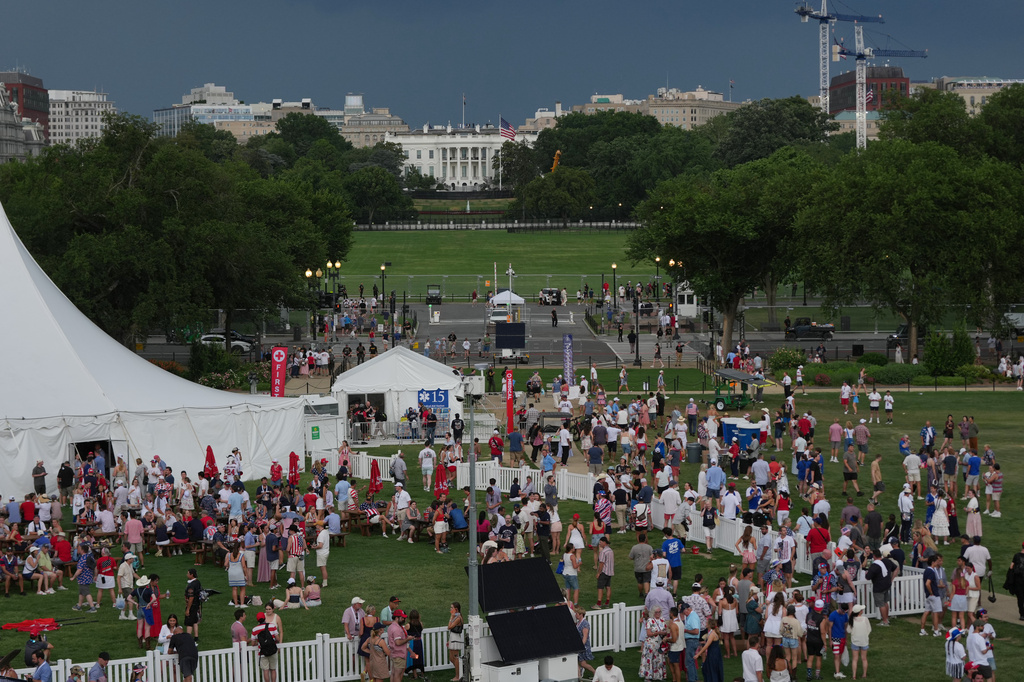
The morning sun blazed down on the well-dressed group as they sat in folding chairs, fanning themselves with small paddle fans decorated with American flags. Their loved ones watched from the shade of nearby trees, and at least one woman had two small American flags tucked into her ponytail.
Anne Neal Petri, the regent of the Mount Vernon Ladies’ Association, opened the ceremony with a warm greeting.
“Well, good morning, everybody,” she said, drawing an enthusiastic “Good morning!” from the crowd before she added, “And Happy Birthday, United States of America!”
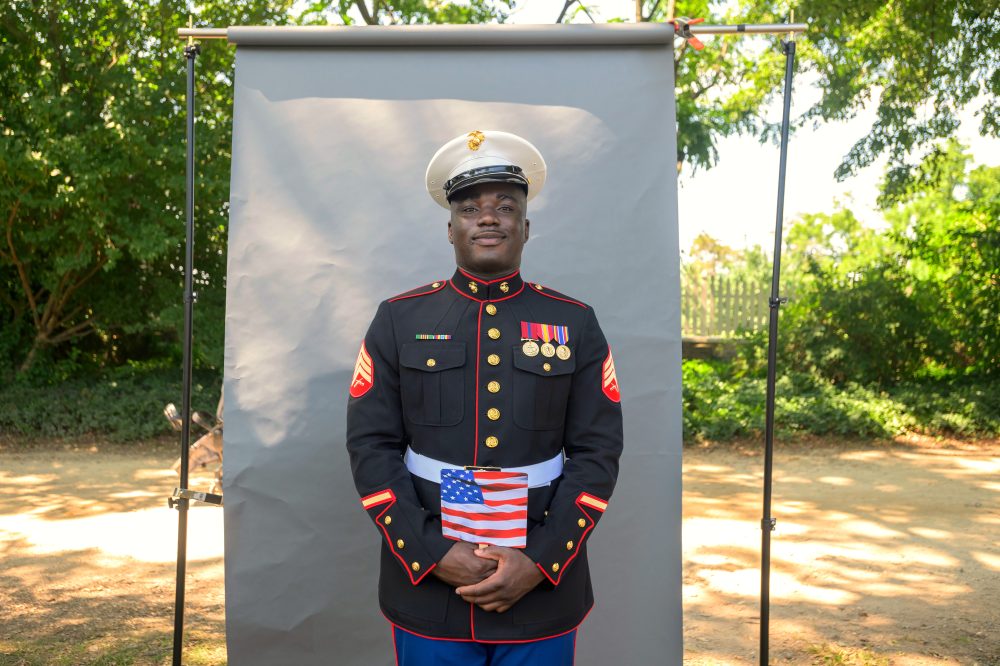
Among those seated before the small stage was U.S. Marine Sgt. Diakaria Sangare, originally from Guinea, who arrived in his pressed Dress Blue uniform adorned with three medals on his left chest. Sangare had already completed two military deployments and, like every other person in attendance, had worked through the lengthy citizenship process — including tests, interviews, green cards, and biometrics. Others in the group were said to have come from countries torn apart by violence, with some having fled persecution.
Following a speech about Washington, those gathered were asked to rise for the national anthem. Hats came off, hands went over hearts, and the paddle fans went still. As the singer reached the famous lines — “And the rocket’s red glare, the bombs bursting in air, gave proof through the night that our flag was still there” — Sangare stood at a firm salute, his expression serious and steady.
When the anthem ended, applause filled the air. Then another speaker asked the group to stand and stay standing when their home country was called out.
“Albania.” A woman in the front row rose with a wide smile, a small American flag in her hand. “Bangladesh.” A man in a black shirt stood, and the Albanian woman turned to beam at him.
The roll call continued through all 50 nations — China, El Salvador, Iraq, Mongolia, and more — each person rising in their own way, some with broad grins, others with quiet dignity. When “Morocco” was called, a man in the back thrust both fists into the air, and a young boy nearby looked up and did the same, clutching a tiny flag.
Then, with hands raised together, the group recited the Oath of Allegiance — not unlike the oath Washington himself signed in 1778.
“Congratulations,” they were told. “You just became U.S. citizens.”
Applause and laughter followed, then the Pledge of Allegiance. Sangare placed his hand over his heart and briefly closed his eyes.
Standing nearby was a tulip poplar tree, planted under Washington’s direction 250 years ago, that has witnessed the full sweep of American history.
Historian Douglas Bradburn spoke before the day’s special guest, telling the new citizens: “All the stories that are part of you, now become American stories. When people ask me what are American people like, I now can talk about you, and your stories.”
He continued: “The second side of that is that, now, all America’s stories, and our history, are your stories. The father of your country is George Washington.”
As it turned out, Washington himself was next to speak — in the form of a re-enactor who stood beside a large draped American flag, a sword at his hip. He stepped onto the stage, removed his cap to the audience, and addressed the newest Americans.
“Today the name of ‘American’ belongs to you every bit as much as it does to me,” he said, acknowledging the difficult roads they had traveled to reach this moment.
“So, my fellow Americans, to you, I say simply: ‘Welcome home.’”
After the ceremony, Sangare posed for a photo — hands clasped in front of him, holding the American flag paddle fan, his Marine cap slightly tilted.
“I just became a United States citizen,” he said, a proud smile breaking across his face.