Texas Tech’s starting quarterback Brendan Sorsby has secured legal representation from high-profile attorney Jeffrey Kessler as he navigates an NCAA investigation into alleged sports gambling violations, according to ESPN reports released Saturday.
The quarterback, who joined the Red Raiders from Cincinnati during the recent transfer period, announced earlier this week that he would be entering a treatment program to address gambling addiction issues and stepping away from team activities for an indefinite period.
Kessler brings significant experience in college athletics litigation, having served as the primary legal counsel in the landmark House vs. NCAA lawsuit. That case, which received approval in June 2025, established the framework for revenue sharing between schools and student-athletes, allowing institutions to distribute $20.5 million annually to players starting this past July, with yearly increases built into the agreement.
The attorney has also built a reputation representing professional athletes, including his work with the NFL Players Association in cases involving high-profile players like Tom Brady, Ezekiel Elliott, Adrian Peterson, and Ray Rice.
Current NCAA regulations strictly prohibit student-athletes from placing wagers on any sporting events – whether college or professional – for which the organization conducts championship competitions. Reports indicate Sorsby placed bets on both college football contests and Major League Baseball games.
The ongoing NCAA investigation could result in Sorsby losing his eligibility for the 2026 season, depending on the findings.
According to reporting from On3, Sorsby’s betting activity was extensive, with more than 10,000 sports wagers placed since 2022. The outlet reported he was making an average of 20 bets daily across various sportsbook platforms in multiple states.
The gambling activity reportedly included wagers on Indiana University games during 2022 when Sorsby was redshirting his freshman season. ESPN’s reporting indicates all those bets favored Indiana to win, and none were placed on the single game in which he appeared – a 45-14 defeat against 16th-ranked Penn State.
Sorsby entered this season as ESPN’s highest-rated transfer quarterback, bringing impressive credentials from his time with Cincinnati. Over his final two seasons with the Bearcats, he compiled 5,613 passing yards with 45 touchdown passes and 12 interceptions across 24 games, while also contributing 1,027 rushing yards and 18 rushing touchdowns.
Taiwan’s President Lai Ching-te has successfully completed a surprise diplomatic mission to the African nation of Eswatini, defying Chinese efforts to prevent the journey and drawing harsh criticism from Beijing officials.
The Taiwanese leader arrived in Eswatini on Saturday to attend the 40th anniversary celebration of King Mswati III’s reign, using an unannounced travel strategy after China had previously interfered with his planned route.
During his meeting with the king, Lai emphasized Taiwan’s sovereignty and international standing. “The Republic of China, Taiwan, is a sovereign nation and a Taiwan that belongs to the world,” he stated, according to Taiwan’s presidential office. “The 23 million people of Taiwan have the right to engage with the world, and no country has the right — nor should any country attempt — to prevent Taiwan from contributing to the world.”
The visit came after China successfully pressured three Indian Ocean nations last month to deny overflight permissions for Lai’s aircraft, forcing the cancellation of his original travel plans to reach the small southern African kingdom.
Beijing, which considers Taiwan part of its territory and opposes any diplomatic recognition of the island, responded with particularly harsh language. China’s Taiwan Affairs Office accused Lai of having “skulked” his way to Eswatini and described his actions as resembling “a rat scurrying across the street,” predicting international ridicule for the Taiwanese president.
Taiwan’s Mainland Affairs Council fired back at the Chinese criticism, stating that Lai required no permission from Beijing for his travels and dismissing the harsh rhetoric as “fishwife’s gutter talk.”
The president traveled aboard an aircraft provided by Eswatini’s government, employing what diplomatic sources call an “arrive then announce” strategy commonly used in sensitive international visits to avoid potential interference.
A senior Taiwan security official, speaking anonymously due to the delicate nature of the situation, explained that this approach helps minimize “uncertain risks of potential interference from external forces.”
Eswatini, formerly known as Swaziland and home to approximately 1.3 million people, represents one of only twelve nations worldwide that maintain formal diplomatic relations with Taiwan rather than China.
The diplomatic tensions surrounding Lai’s original canceled travel plans had previously drawn criticism of China from the United States, along with expressions of concern from the European Union, Britain, France, and Germany.
ST. PETERSBURG, Fla. (AP) — University of South Florida’s St. Petersburg campus experienced an emergency Saturday evening when flames erupted inside a marine science laboratory building, leading officials to order an evacuation.
Thick gray smoke could be seen rising from the research facility as emergency crews responded to the scene. Both campus police and local fire officials confirmed that no one was hurt in the incident.
Investigators have not yet determined what sparked the blaze. Campus police indicated they would provide additional details as their investigation progresses.
The National Hockey League announced Saturday that Boston Bruins defenseman Charlie McAvoy will face a disciplinary hearing with the Department of Player Safety following a stick-swinging incident during Friday’s playoff elimination.
The 28-year-old defenseman was ejected from Boston’s season-ending 4-1 defeat to Buffalo in Game 6 of their Eastern Conference first-round series after receiving a major slashing penalty and game misconduct.
The controversial play unfolded with 1:31 remaining in the final period when Buffalo’s Zach Benson tripped McAvoy while both players pursued a loose puck. After getting back on his feet, McAvoy rushed toward Benson and swung his stick in a baseball bat-like motion at the opposing player.
Following the elimination loss, McAvoy appeared unconcerned about potential league discipline when asked by reporters.
“I don’t play another game until September,” McAvoy said. “Can’t imagine it really matters much.”
The NHL’s decision to offer an in-person hearing indicates McAvoy could face a suspension of six games or longer, as the league typically handles shorter penalties through phone conferences. Players have the option to decline face-to-face meetings and conduct proceedings by phone instead. The specific hearing date has not yet been announced.
Since Boston’s season has concluded, any punishment would carry over to the start of the 2026-27 campaign.
This season marked a career year for McAvoy, who tallied 61 points with 11 goals across 69 regular season games. He contributed two assists during the Buffalo series.
Throughout his nine-year career with Boston, McAvoy has accumulated 71 goals and 361 points in 573 regular season contests. His playoff statistics include six goals and 50 points over 97 postseason games.
McAvoy recently represented Team USA at the Winter Olympics, helping secure the gold medal in what marked the nation’s first men’s Olympic hockey championship since the memorable 1980 triumph at Lake Placid.
MIAMI – Formula One officials have moved up Sunday’s Miami Grand Prix by three hours to a 1 p.m. start time in hopes of avoiding severe weather that’s forecast for the area.
The scheduling change came after organizers and the sport’s governing body FIA held discussions following Saturday night’s qualifying session at Hard Rock Stadium.
“This decision has been taken to ensure the least amount of disruption to the race, and to ensure the maximum possible window to complete the grand prix in the best conditions and to prioritise the safety of drivers, fans, teams and staff,” officials explained in their announcement.
The time adjustment has forced cancellation of a Porsche race along with several other supporting events scheduled for race day.
Mercedes driver Kimi Antonelli, who currently leads the championship standings, secured the top starting position for the fourth race of this season.
Competitors have not yet encountered rainy racing conditions during this new engine era that began with the Australian race in March, and the updated vehicles have already presented challenges even in dry weather.
Race organizers are especially worried about lightning strikes and have established protocols for suspending competition and implementing shelter procedures for racing teams if dangerous conditions develop.
In a groundbreaking moment for horse racing, Golden Tempo crossed the finish line first at the Kentucky Derby, creating history for trainer Cherie DeVaux who became the first woman ever to train a winner of the Triple Crown’s opening event.
The victory came as a major upset, with Golden Tempo entering the race at 23-1 odds before claiming the crown at the 152nd running of the prestigious race at Churchill Downs in Louisville, Kentucky on Saturday, May 2, 2026.
Jockey Jose L. Ortiz guided Golden Tempo to the historic win, helping DeVaux shatter a barrier that had stood since the Derby’s inception. The achievement marks a significant milestone in a sport traditionally dominated by male trainers.
Religious institutions nationwide are confronting significant demographic shifts as marriage rates plummet to unprecedented levels. According to new data, 42 percent of American adults are currently unmarried and not cohabiting—marking the highest percentage in the nation’s recorded history.
This transformation poses particular challenges for faith communities, which have traditionally relied on married couples and families as the foundation of congregational participation. Research shows that couples sharing religious beliefs typically demonstrate stronger observance and are more likely to pass their faith traditions to children. However, current trends suggest this pattern may be shifting permanently, with 25 percent of 40-year-olds having never married and projections indicating one-third of Generation Z may remain single throughout their lives. Birth rates have simultaneously declined consistently over recent decades.
In other religious news, Nassau Presbyterian Church in Princeton, New Jersey, is preparing to launch the Samuel Adams Herr Series—a five-part lecture program commemorating the upcoming 250th anniversary of American independence. Church officials indicate the presentations will examine how Presbyterian communities transformed New Jersey’s stance from neutrality to active support for revolution. Historical records show that King George III labeled the independence movement “the Presbyterian Rebellion,” while British loyalists attributed the uprising’s origins to Presbyterian influence. The Princeton congregation notably counted two Declaration of Independence signers and five Continental Congress members among its membership.
Turning to political developments, voters in Missouri, Nevada, and Virginia will decide abortion-related ballot measures this November. Missouri legislators are seeking to overturn reproductive freedom protections added to the state constitution in 2024. Nevada requires a second voter approval for a constitutional amendment permitting abortion through 24 weeks of pregnancy, having passed the measure once in 2024. Virginia’s proposed ballot language would constitutionally protect reproductive choices, including contraception access and abortion decisions during the first two pregnancy trimesters. Advocacy groups are investing substantial resources in campaigns across all three states.
Finally, the Trump administration has initiated a federal investigation into New York City’s Department of Education following allegations of antisemitic practices. Federal education officials report receiving complaints about teacher and staff seminars titled “Palestine, Zionism, and Resistance” that allegedly encouraged educators to promote pro-Palestinian viewpoints to students as young as five years old. The Department of Education stated, “No child should be taught by his or her teachers to hate their peers. Neither should Jewish children be taught that being Jewish somehow makes them inherently guilty.”
President Donald Trump is working to organize a May 11 summit at the White House bringing together Israeli Prime Minister Benjamin Netanyahu and Lebanese President Joseph Aoun, according to reports from Lebanese media outlet Al-Mayadeen citing diplomatic sources.
The U.S. Embassy in Lebanon released a statement backing the potential summit, stating: “A direct meeting between President Aoun and Prime Minister Netanyahu, facilitated by President Trump, would give Lebanon the chance to secure concrete guarantees on full sovereignty, territorial integrity, secure borders, humanitarian and reconstruction support, and the complete restoration of Lebanese state authority over every inch of its territory—guaranteed by the United States.”
President Aoun has shown mixed signals about participating in direct talks with Netanyahu, sometimes rejecting the idea while at other moments suggesting such discussions might occur later in diplomatic negotiations rather than as an opening move.
In Beirut on Saturday, Lebanese Army Commander Rodolphe Haikal held discussions with U.S. General Joseph Clearfield, who oversees the ceasefire monitoring operations, at a Lebanese Air Force installation. Their conversation centered on Lebanon’s security conditions, regional developments, and methods to “maximize the effectiveness of the existing mechanism and improve its operations,” with emphasis on expanding the Lebanese military’s responsibilities.
At the same time, Israeli Defense Forces announced they conducted extensive military operations targeting Hezbollah positions throughout southern Lebanon on Saturday, reporting the destruction of approximately 70 buildings utilized by the organization and around 50 additional infrastructure locations. Military officials said the targeted sites included operational headquarters, weapons storage compounds, and other facilities linked to Hezbollah.
Israeli forces also reported that Hezbollah launched multiple rockets at Israeli troops stationed in southern Lebanon, though the projectiles struck uninhabited areas.
Brigadier General Avichay Adraee, who serves as the IDF’s Arabic-language spokesman, broadcast evacuation notices for residents in southern Lebanese communities, urging civilians to evacuate the area.
In a separate incident, security alerts were activated at Kibbutz Yiftah in the Upper Galilee region following a drone infiltration, with Israeli military officials stating they are continuing to investigate the circumstances.
The Lightning track and field teams from Goldey-Beacom College wrapped up competition at the Central Atlantic Collegiate Conference Championship this weekend, with strong performances across both squads during the two-day meet held in Lakewood, New Jersey.
The women’s team delivered an impressive showing, accumulating 129 points to secure the runner-up position in the conference standings. Meanwhile, the men’s squad finished in fifth place overall with a total of 88 points.
Georgian Court University dominated both divisions of the championship, claiming the top spot for both their men’s and women’s programs. The Lightning women’s second-place finish represents a solid performance against strong conference competition throughout the weekend meet.
Leon Botstein, who has served as president of Bard College in New York for decades, has revealed plans to step down from his position. His announcement comes several months following public revelations about extensive connections to Jeffrey Epstein that had not been previously disclosed.
The retirement decision follows intense examination of Botstein’s ties to the convicted sex offender, which were found to be far more substantial than what the college community and public had understood before the information became public.
Botstein has led the liberal arts institution in Annandale-on-Hudson for an extended period, but the controversy surrounding his association with Epstein has cast a shadow over his tenure at the prestigious college.
LIMA, May 2 – Election officials in Peru announced Saturday they are requesting a complete technology review of their April 12 presidential election results, according to an official statement from the country’s National Electoral Board.
With nearly 98% of votes tallied, the final outcome of the first round remains uncertain as ballot counting continues. Conservative candidate Keiko Fujimori holds the lead, but no definitive opponent has been determined for a potential runoff election.
President Trump has turned down Iran’s most recent peace offer while an Iranian military leader cautioned that warfare could restart, even though the White House notified Congress on Friday that hostilities with Iran have concluded.
Mohammad Jafar Asadi, a high-ranking official in Iran’s military central command, stated that “a renewed conflict between Iran and the United States is likely,” as reported by the Fars news agency.
Asadi’s comments came after President Trump rejected an offer that would have included reopening the Strait of Hormuz, halting combat operations and the naval blockade, and postponing talks about Iran’s nuclear program for future negotiations.
“They want to make a deal,” President Trump informed reporters, but added, “I’m not satisfied with it.”
While Trump didn’t detail his specific objections, he has consistently stated that any agreement must tackle Iran’s nuclear program and stop the Islamic Republic from creating nuclear weapons.
“They’ve made strides, but I’m not sure if they ever get there,” President Trump commented about Iran’s leadership, which he characterized as having “tremendous discord.”
The White House’s message to Congress declared that combat with Iran has concluded, even as ongoing statements from both sides suggest continued uncertainty about the circumstances.
In Israel, the political-security cabinet is set to meet Monday evening to address several matters, including the U.S.-Iran talks, continuing combat in Lebanon despite a ceasefire agreement, and the Gaza situation with Hamas’s unwillingness to disarm, according to Ynet.
Israeli leaders are also making preparations for the potential immediate restart of combat with Iran should negotiations fail.
Despite the unclear status of negotiations and potential renewed fighting, President Trump sent correspondence to Congress on Friday stating that “The hostilities that began on February 28, 2026, have terminated,” as the War Powers Resolution deadline expired without congressional action.
The 1973 legislation mandates congressional authorization within 60 days of military involvement, or 90 days with an extension. Trump cautioned that the Iranian threat “remains significant.”
Defense Secretary Pete Hegseth stated, “We are in a ceasefire right now, which our understanding means, the 60-day clock pauses or stops.” President Trump added, “Every other president considered it totally unconstitutional, and we agree with that.” Congress took no enforcement measures as lawmakers departed Washington following an unsuccessful Democratic attempt to force an end to the conflict.
The relatives of 2023 Nobel Peace Prize recipient Narges Mohammadi are calling for her urgent freedom from Iranian custody following what they describe as a dramatic worsening of her medical situation.
Mohammadi was recently moved from her prison cell to a medical facility after her family’s organization reported a “catastrophic deterioration in her health condition” following months of imprisonment without proper medical attention.
Her family’s foundation stated the hospital transfer occurred “after 140 days of arbitrary detention and the persistent denial of specialized healthcare.”
The activist, who received the Nobel Peace Prize in 2023 while being held at Evin Prison in Tehran, has experienced serious medical problems over recent months. Her foundation announced in February that she had started refusing food, and by March they declared her situation “critical” following what doctors believed was a cardiac episode.
The foundation reports that Mohammadi was denied medical care throughout this entire period.
Both the Nobel Peace Prize Committee and Mohammadi’s relatives are demanding Iranian officials free her so she can get treatment from her personal physicians, cautioning that “her life remains in danger.”
Speaking to the BBC on Saturday, her brother Hamidreza Mohammadi explained that her current health crisis involves multiple serious conditions: “Her current problems include low blood pressure and a heart attack, but her previous conditions, such as pulmonary embolism (…) and having undergone stenting and angiography, make any treatment by the doctors in Zanjan effectively impossible.”
Throughout her life, Mohammadi has been taken into custody 13 separate times and given prison terms totaling 31 years plus 154 lashes, her foundation reports.
Starting in 2021, she began serving a 13-year prison term for allegedly engaging in “propaganda activity against the state” and “collusion against state security,” accusations she has rejected.
International groups and her family continue to focus attention on her situation, pressing for her release due to growing worries about her medical condition.
President Donald Trump announced plans to impose a 25% tariff on European Union automobiles beginning next week, claiming the EU has failed to honor trade agreement terms. The move has drawn sharp criticism from European officials and could significantly impact global economic markets.
Bernd Lange, who chairs the European Parliament’s trade committee, condemned Trump’s automotive tariff increase as “unacceptable.” Lange accused the Trump administration of “keeps breaking its commitments,” pointing to previous disputes over steel and aluminum import taxes. While Trump claims the EU isn’t following through on a previously negotiated trade agreement, he has not provided specific details about his concerns. The original deal, negotiated between Trump and European Commission President Ursula von der Leyen last July, established a 15% tariff rate on most imported goods.
In separate defense news, the Pentagon announced Friday it has secured agreements with seven technology firms to integrate their artificial intelligence systems into classified military networks. Google, Microsoft, Amazon Web Services, Nvidia, OpenAI, Reflection and SpaceX will provide resources to “augment warfighter decision-making in complex operational environments,” according to defense officials. Anthropic was notably excluded from the partnerships following legal disputes with the Trump administration regarding AI ethics in warfare applications. While the Defense Department continues expanding AI integration, concerns persist about potential privacy violations and autonomous targeting capabilities.
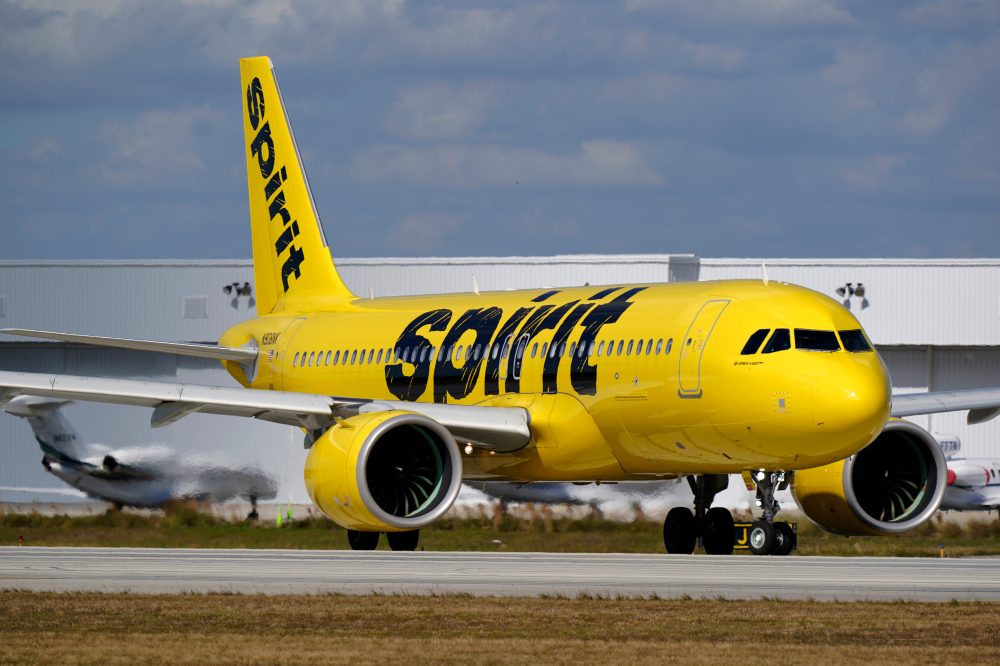
Trump also indicated his administration remains open to a government bailout of struggling Spirit Airlines, though he emphasized any deal must benefit taxpayers. The president suggested an announcement could come as early as Friday or Saturday, though he provided no specifics. Critics from both political parties and within the administration have opposed using public funds to rescue the budget carrier. Spirit Airlines declined to comment, stating only that operations continue normally, while competing airlines have offered to assist stranded passengers if the carrier fails.
Wall Street continued its record-setting streak Friday, with the S&P 500 gaining 0.3% to reach another all-time high and completing its fifth consecutive winning week. Apple drove much of the gains after reporting stronger-than-expected quarterly profits, with CEO Tim Cook calling it the company’s best March quarter ever. The tech giant earned $29.58 billion, or $2.01 per share, representing a 22% increase from the previous year. Revenue climbed approximately 17% to $111.18 billion, surpassing analyst projections. Cook’s upcoming departure and replacement by John Ternus later this year has also captured investor attention.
For travelers affected by Spirit Airlines’ potential collapse, industry experts recommend seeking “rescue fares” from competitors including American, United, Delta, JetBlue, Frontier and Southwest airlines. Passengers should preserve all documentation and request refunds immediately, while Spirit employees are being offered travel assistance and preferential job interviews with other carriers.
At the Federal Reserve, Trump’s nominee Kevin Warsh faces an unusual situation if confirmed as chair, with current chair Jerome Powell remaining on the board – creating a potential dual power structure unprecedented in nearly 50 years. Recent dissenting votes from multiple Fed officials suggest Warsh may encounter resistance to policy changes.
China has expanded its tariff-free trade program to include Africa’s 20 largest economies, including South Africa and Nigeria, for the next two years. This move contrasts sharply with Trump’s protectionist trade policies and builds on China’s existing tariff elimination for 33 smaller African nations. However, analysts note that most African raw materials like oil and minerals already entered China duty-free, and China’s trade surplus with Africa continued growing last year.
LOUISVILLE, Ky. — History was made at Churchill Downs Saturday when Golden Tempo crossed the finish line first in the Kentucky Derby, making trainer Cherie DeVaux the first woman ever to prepare the winner of thoroughbred racing’s most prestigious event.
Jockey Jose Ortiz guided Golden Tempo from dead last in the early stages to a stunning victory in the 1 1/8-mile contest, delivering at longshot odds of 23-1. Renegade finished second under Irad Ortiz Jr., while Ocelli rounded out the top three positions.
“I don’t even have any words right now,” DeVaux said. “I just cant. Just so, so so happy for Golden Tempo. Jose did a wonderful job, a masterful job of getting him there. He was so far out of it.”
DeVaux becomes only the second female trainer to capture any Triple Crown series race, following Jena Antonucci’s victory with Arcangelo in last year’s Belmont Stakes. This Derby triumph comes in DeVaux’s debut attempt at the race, eight years after establishing her own training operation.
“I’m glad I can be a representative of all women everywhere that we can do anything we set our minds do,” DeVaux said.
Throughout Derby week, DeVaux evolved from minimizing the significance of potentially becoming the first female Derby-winning trainer to embracing her position as an inspiration for young girls pursuing similar dreams. She joins an exclusive group as just the 18th woman to enter a horse in the Kentucky Derby.
Jose Ortiz demonstrated the exceptional skill that has brought him success at Churchill Downs recently, finally capturing his first Derby victory after 11 previous attempts. The triumph came less than a day after Ortiz also claimed the Kentucky Oaks, the premier race for three-year-old fillies.
The Derby field was reduced to 18 horses following a late withdrawal of Great White, who was removed after flipping over and unseating his rider. Track veterinarians decided to scratch the longshot, who had only earned a spot in the race Wednesday when Silent Tactic was withdrawn due to a hoof problem.
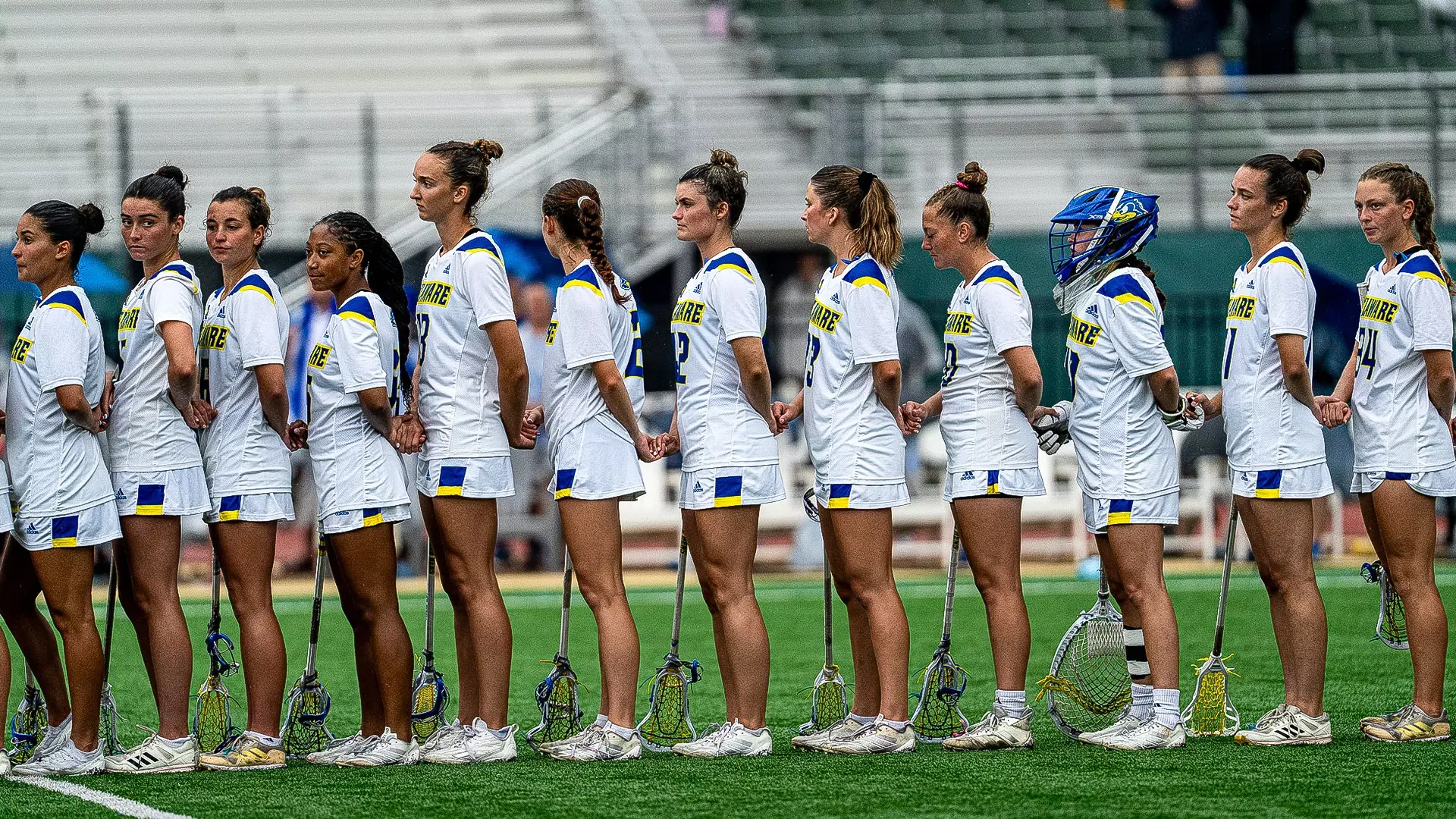
The University of Delaware softball program took time to honor their departing senior players during their recent home contest versus Western Kentucky University.
The annual Senior Day tradition allows the Blue Hens to celebrate the achievements and dedication of players completing their collegiate careers. These student-athletes have contributed significantly to the program throughout their time at the university.
The recognition ceremony took place as part of the team’s final home game of the season, providing an opportunity for fans, families, and teammates to show appreciation for the graduating players’ commitment to Blue Hens softball.
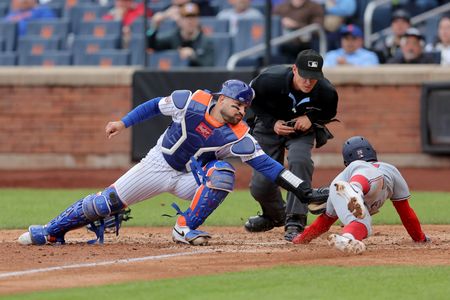
PITTSBURGH — During Saturday’s matchup against the Pittsburgh Pirates, the Cincinnati Reds matched a Major League Baseball record by issuing seven consecutive walks to Pirates hitters in a single inning.
According to the Elias Sports Bureau, this marked only the third occurrence of such a streak in MLB history and the first time it has happened in more than 40 years.
Remarkably, Pittsburgh batters were also on the receiving end when the Atlanta Braves walked seven consecutive Pirates players during the third inning of a 1983 contest. The only other instance occurred in 1909, when the Chicago White Sox gave seven straight free passes to Washington Senators batters.
Cincinnati’s historic walk parade started in the second inning when pitcher Rhett Lowder issued a base on balls to Brandon Lowe with one out and empty bases. Lowder continued by walking Bryan Reynolds and Ryan O’Hearn to fill the bases, prompting Cincinnati to make a pitching substitution and bring in Connor Phillips.
Phillips proceeded to walk Nick Gonzales, Marcell Ozuna, Spencer Horwitz and Konnor Griffin, forcing home four Pittsburgh runs before the Reds called upon Sam Moll from the bullpen. Moll finally ended the inning when Henry Davis grounded into a fielder’s choice at second base, which also scored the fifth and final run of the frame.
A close-knit community of pickleball enthusiasts is grieving the loss of five club members who perished when their small aircraft went down in Texas Hill Country.
Texas Department of Public Safety officials confirmed Saturday that Justin Appling, Hayden Dillard, Brooke Skypala, Stacy Hedrick and Seren Wilson lost their lives when their Cessna 421C crashed Thursday evening. Appling was serving as the pilot for the flight.
The plane had taken off from Amarillo and was bound for New Braunfels National Airport when it went down in Wimberley, located approximately 40 miles southwest of Austin, according to state safety officials.
According to the Amarillo Pickleball Club’s social media announcement, all five victims were club members traveling to compete in a pickleball tournament in New Braunfels.
Both Dillard and Appling, who was known by the nickname Glen, operated a manufactured home dealership in Amarillo. The company announced Friday morning it would remain closed through the weekend.
Sarah Lister, who knew Dillard and Appling through tournament play, remembered them as authentic individuals. She recalled how Appling constantly brought humor to their group, while Dillard excelled as both a businesswoman and mother.
According to Lister, Dillard leaves behind two daughters, including one preparing to enter college. She noted that Dillard and Appling had been longtime mixed doubles partners, while Skypala served as Dillard’s women’s doubles teammate.
“The pickleball world is super, super small, even though it’s huge at the same time,” Lister explained. “And when one of us has a tragedy like this, it’s like it’s the whole community that gets hit.”
Club member Leroy Clifford, who had flown separately to the tournament, viewed all five as family members despite having met Wilson only recently. The group had competed together in Pro Pickleball Association-sanctioned events across the nation, from Dallas to Las Vegas. Their bond formed through high-level competition, though they maintained a lighthearted approach to the sport.
“One thing I can say about this group is this group, you wanted to be around this group. They were fun, carefree, not uptight, just relaxed, loved to joke with each other, make fun of each other,” Clifford shared. “You couldn’t ask for better friends, honestly.”
Clifford played most frequently with Skypala, whom he characterized as sharp-minded and naturally athletic.
“She was very witty, super sweet and very funny,” Clifford remembered.
Skypala, a married mother, had recently achieved a professional goal she’d pursued for ten years. She announced on Facebook last month that she had begun accepting clients as a counselor. With a master’s degree in education from West Texas A&M University, Skypala specialized in helping clients dealing with “anxiety, trauma, relationship challenges, and life transitions,” according to her social media post.
During the previous summer, Skypala had helped organize a pickleball camp for children from the Amarillo Children’s Home nonprofit organization.
Clifford described Hedrick as someone who embraced laughter, maintained an optimistic attitude, and “had a big heart.” Her aggressive playing style earned her the nickname “Rippy” from Appling, which other players adopted.
“She was a very good tennis player. In pickleball, you have to be able to do drop shots,” Clifford explained. “We gave her that nickname because all she did was rip. All she did was smash the ball or forehand it really hard.”
Wilson, the youngest of the group, had distinguished herself as a talented tennis player. She captured the University Interscholastic League team tennis state championship in 2022, according to the tennis booster club at Amarillo High School, her alma mater.
A Wilson family member declined to speak when contacted by phone Saturday.
The pickleball club wrote on Facebook that “Seren loved big and her presence, encouragement, and spirit will be deeply missed by so many.”
Federal investigators are now examining the circumstances that led to the crash.
Audio recordings reveal that another pilot in the vicinity confirmed the aircraft’s emergency locator device had activated, prompting an air traffic controller to contact emergency services.
Weather conditions included mostly cloudy skies in the New Braunfels area before the crash, with thunderstorms developing two hours afterward, the National Weather Service reported.
The Cranky Pickle facility in New Braunfels, located about 30 miles northeast of San Antonio, canceled Friday’s tournament events following the tragedy, according to head professional Martin Robertson.
“We’re very heavy-hearted, heartbroken from this,” Robertson said. “Everybody knows everybody.”
Clifford said the Amarillo club is now concentrating on supporting those closest to the five victims and working to “lift these families up in prayer.”
“It’s going to be a long road ahead. But there’s a lot of love and support from everyone that knew these people,” Clifford concluded.
Salisbury University’s men’s track and field squad secured the Coast-to-Coast Athletic Conference outdoor championship this weekend at the University of Mary Washington in Fredericksburg, Virginia.
The Sea Gulls competed at the Battleground Athletic Complex, where they earned their 18th conference championship in program history. This marks their first conference title since capturing the crown in 2023.
Seven C2C member schools participated in the outdoor championships, with Salisbury’s women’s team finishing in third place among the competing programs.
The championship victory continues Salisbury University’s strong tradition in conference track and field competition, adding another title to their extensive collection of conference honors.
The Minnesota Wild will face the Colorado Avalanche in Sunday night’s playoff opener without defenseman Jonas Brodin, who remained behind instead of making the trip to Denver with his teammates.
Additionally, forward Joel Eriksson Ek’s availability for the first game of the Western Conference second-round matchup remains in doubt.
The 32-year-old Brodin suffered a lower-body injury in the fifth game of Minnesota’s opening playoff round against Dallas. The injury occurred in the second period when he blocked a shot attempt from Dallas player Mikko Rantanen.
After missing Thursday’s series-clinching sixth game, Brodin recorded just one assist throughout the entire Dallas series. During the regular season, he contributed four goals and accumulated 18 points across 62 games.
Eriksson Ek’s injury happened during Game 6 when his right leg collided with the boards. The forward was absent from Saturday’s practice session.
Wild head coach John Hynes acknowledged he’s still weighing his options regarding Eriksson Ek’s roster spot given the uncertainty surrounding his condition.
“I’m kind of going through that a little bit right now,” Hynes said. “So, now you kind of go down that decision-making process of what would we do if he’s not ready.”
The 29-year-old Eriksson Ek contributed three goals and five total points against Dallas. Throughout the regular season, he netted 19 goals and tallied 51 points in 70 games played.
WEST PALM BEACH, Florida – Former President Donald Trump suggested on Saturday that the United States might consider launching military strikes against Iran once again.
The former president made these remarks while addressing members of the media in West Palm Beach, Florida, responding to questions from reporters about potential military action.
Trump’s comments came during a May 2nd press interaction, though he did not elaborate on specific circumstances that might trigger such military intervention.
BOSTON – Legal counsel for the individual charged with attempting to kill President Donald Trump during the White House Correspondents’ Dinner has filed a motion requesting a federal judge lift his client’s suicide watch status at a Washington detention facility.
Cole Tomas Allen is accused of breaching a security perimeter and discharging a shotgun near the high-profile media event on April 25.
Upon his arrival at the detention center on April 27, Allen was placed in what officials term a “safe cell,” which court documents describe as a cushioned room requiring round-the-clock confinement and mandating the wearing of “a vest akin to a strait jacket.”
His conditions were later modified to “suicide precautions,” which continue to prohibit Allen from making telephone calls, receiving visitors other than his attorneys, or leaving his cell except for legal meetings or bathing under supervision, court filings indicate. Although a medical professional recommended Friday that these restrictions be lifted, they remained active during a recent visit from one of his court-appointed attorneys.
The defense filing argues that Allen’s current conditions “amounts to punishment” and prevents him from accessing resources including a facility tablet “which would permit him to communicate with loved ones outside of the jail.”
Federal prosecutors have charged Allen with attempted assassination, firing a weapon during a violent crime, and unlawfully moving firearms and ammunition between states. Allen has yet to formally respond to the charges.
North Korean leader Kim Jong Un addressed representatives at the ruling party’s youth organization conference in Pyongyang, according to state media reports released Sunday. The government continues to position young citizens as essential to domestic initiatives and military operations supporting Russia in Ukraine.
The Socialist Patriotic Youth League’s Eleventh Congress wrapped up last week following several days of mass demonstrations, torch-lit processions, and ceremonial events throughout the capital. This major political assembly occurs every five years and focuses on engaging citizens between approximately 14 and 30 years old.
During his Saturday address to conference participants, Kim described youth as the “vanguard” for achieving national objectives, characterizing the organization as a crucial component for implementing party policies. He called for stronger organizational structure and ideological commitment before taking a commemorative photo with attendees, state media KCNA reported.
A Friday statement from the ruling Workers’ Party directly connected youth dedication to Pyongyang’s participation in the Ukraine conflict, informing congress members that young military personnel deployed internationally had “become bombs and flames” while protecting national dignity.
Intelligence sources from South Korea, Ukraine, and Western nations estimate North Korea deployed approximately 14,000 military personnel to assist Russian operations in the Kursk region. These officials report that over 6,000 North Korean service members have died in the fighting.
Kim recently dedicated a new monument in Pyongyang commemorating soldiers who lost their lives during these overseas missions.
The focus on youth oversight occurs alongside increased crackdowns on foreign cultural materials, with access to South Korean entertainment, movies, and language now considered severe political violations. Kim positions youth policies as fundamental to maintaining social order.
The leader has also begun regularly bringing his young daughter, reportedly named Ju Ae, to significant government ceremonies.
North Korea’s foreign ministry dismissed American allegations of cyber threats on Sunday, labeling the accusations as fabricated claims designed to justify Washington’s hostile policies, according to state media KCNA reports from Seoul.
A ministry representative stated that the United States was distributing misleading information regarding a “non-existent ‘cyber threat’” from North Korea for political motives, characterizing the allegations as “nothing but an absurd slander to tarnish the image of our country.”
The representative cautioned that Pyongyang would proactively implement all required actions to defend state interests and safeguard citizens’ rights in the digital realm, KCNA reported.
American officials have consistently blamed North Korea for government-backed cyber operations, including computer intrusions, digital currency theft, and networks of international IT personnel used to fund weapons programs.
This past March, the U.S. Treasury Department sanctioned six people and two organizations connected to North Korean IT worker schemes, stating they assisted in funneling illegal profits through cryptocurrency. American authorities indicated these operations continue today.
The Treasury and State Department had previously imposed sanctions in July targeting North Korean cyber operatives and international enablers, claiming Pyongyang sends thousands of IT workers overseas and employs cyber theft to finance missile and nuclear programs.
The U.S. Justice Department and FBI have also cautioned that North Korean hacking groups represent an ongoing danger to governments, corporations, and vital infrastructure globally.
BOSTON — Boston Celtics forward Jayson Tatum will not play in tonight’s decisive Game 7 matchup against Philadelphia due to left knee stiffness, the team announced approximately 90 minutes before the elimination contest begins.
The absence comes at a critical moment for the Celtics, who face the Philadelphia 76ers in a winner-take-all first-round playoff battle on Saturday evening.
“He just came in today with knee discomfort. The medical team and myself decided for him not to play,” head coach Joe Mazzulla told reporters during his pregame press conference.
Boston has not yet revealed who will take Tatum’s spot in the starting lineup for the crucial matchup.
During Game 6, Tatum temporarily exited the contest in the third quarter to receive unspecified treatment for his calf. The star player is currently just 22 games into his comeback from a torn right Achilles tendon injury that occurred during last season’s postseason run.
Following Game 6, the Celtics minimized concerns about Tatum’s condition. The forward himself described his leg as feeling “a little stiff” after the game. He explained that following a brief evaluation and some time on an exercise bike, he chose not to return because the game’s outcome was already decided and the main rotation players had been removed from action.
MINNEAPOLIS — Toronto Blue Jays star George Springer was forced to exit Saturday’s 11-4 victory against the Minnesota Twins during the third inning after taking a pitch to his left foot.
The injury scare occurred just four days following Springer’s return from the 10-day injured list, where he had been recovering from a broken left big toe sustained on April 11 when he fouled off a ball during another matchup with Minnesota.
Medical imaging revealed no additional breaks, and the condition hasn’t worsened from its previous state, according to manager John Schneider’s postgame comments. Schneider noted he had already intended to rest Springer during Sunday’s contest.
The veteran outfielder was struck by Connor Prielipp’s 88 mph slider and collapsed in obvious discomfort. Following several minutes of attention from team medical staff, Springer carefully made his way off the field while Jesús Sánchez took his place in the lineup.
Now in his sixth campaign with Toronto, the 36-year-old veteran is batting .212 with two homers and seven RBIs through 66 at-bats over 18 appearances this season.
The former 2017 World Series MVP with Houston is playing out the concluding year of his six-year, $150 million contract with Toronto.
A fatal vehicle collision at a Portland, Oregon athletic facility early Saturday morning has drawn the attention of federal investigators after authorities discovered evidence of an explosive device at the scene.
The deadly incident took place just before 3 a.m. at the Multnomah Athletic Club, according to the Portland Police Bureau. Officials report that one individual perished in the crash, which resulted in a fire at the facility.
The victim was discovered inside the vehicle after firefighters successfully extinguished the blaze, police confirmed.
The Multnomah Athletic Club describes itself as America’s largest private athletic and social facility, established in 1891 with a membership exceeding 21,000 people.
Club representative Adam Linnman released a statement confirming that the collision happened during closed hours, ensuring no members or employees were harmed. He noted that club leadership is cooperating with local and federal investigators for further information.
The Bureau of Alcohol, Tobacco, Firearms and Explosives has deployed special agents to assist with the investigation, the federal agency announced.
Portland police have released limited details about the circumstances surrounding the incident as the investigation continues.
The Goldey-Beacom Lightning softball team’s season came to an end this week after falling in both opening-round games of the Central Atlantic Collegiate Conference Tournament held in Bridgeport, Connecticut.
The Lightning, making their fourth consecutive appearance in the CACC Tournament, suffered defeats by scores of 8-0 and 7-5 to Bridgeport, resulting in their elimination from the competition.
Despite the disappointing finish, the team’s return to the tournament for the fourth year in a row demonstrates the program’s consistent competitive level within the conference.
The Orlando Magic will be without forward Franz Wagner for Sunday’s pivotal Game 7 showdown against the Detroit Pistons, team officials confirmed.
The 24-year-old sustained a calf injury during Game 4 of the series and has been sidelined for the past two games as a result.
Injuries have plagued Wagner throughout this season, limiting his availability to just 34 regular season appearances.
Despite his limited time on the floor, Wagner remains a cornerstone of Orlando’s offensive attack, ranking second on the team with 20.6 points per game while contributing 5.2 rebounds per contest, good for third on the squad.
During this playoff run, Wagner has posted averages of 16.8 points, 5.5 rebounds, 3.5 assists, and 2.8 steals per game.
Orlando, seeded eighth in the playoffs, once held a dominant 3-1 advantage over the top-seeded Pistons but has watched Detroit mount a comeback to even the series and force Sunday’s winner-take-all contest.
MIAMI – Mercedes driver Kimi Antonelli captured his third consecutive pole position Saturday during qualifying for the Miami Grand Prix, with Red Bull’s Max Verstappen earning the second starting spot for Sunday’s race.
The 19-year-old Italian, who currently leads the Formula One championship standings, posted a qualifying time of one minute 27.798 seconds on a sweltering afternoon in Miami. Ferrari’s Charles Leclerc claimed the third position, while defending world champion Lando Norris of McLaren will start fourth after winning Saturday’s earlier sprint race.
Antonelli’s pole position serves as a strong bounce-back performance after dropping to sixth place in the sprint – marking Mercedes’ first race loss of any format this season. The teenager is pursuing his third consecutive grand prix victory following recent wins in China and Japan, which helped make him the youngest driver ever to lead the championship.
“It’s been an amazing day to be on pole again,” Antonelli commented after qualifying. “It was a difficult start with the Sprint where it didn’t go our way but super happy with the recovery. It was a good quali, got a little bit excited in that last lap in Q3 but the first lap was good enough.”
Verstappen managed to close the gap to just 0.166 seconds by the session’s end, though Antonelli’s initial time remained unbeaten despite the Mercedes driver running wide at turn one during his final attempt.
Mercedes teammate George Russell, who trails Antonelli by seven points in the championship battle, qualified fifth. Seven-time world champion Lewis Hamilton, now driving for Ferrari, will start sixth.
Last year’s Miami winner Oscar Piastri of McLaren secured seventh position on the grid at a track where passing opportunities should be plentiful under the current regulations.
Franco Colapinto delivered an impressive eighth-place qualifying performance for Alpine, with Red Bull’s Isack Hadjar and Alpine’s Pierre Gasly rounding out the top ten starting positions.
The qualifying session experienced a brief delay during the second phase when Gabriel Bortoleto’s Audi suffered brake failure and caught fire, forcing the Brazilian driver to stop on the back straight. Bortoleto finished last in the timing sheets.
Sunday’s race faces potential weather disruptions, with forecasters predicting possible rain and thunderstorms throughout the weekend.
Stand-up performer Sheng Wang has mastered the art of turning everyday experiences into comedy gold in his latest Netflix release. The comic transforms ordinary activities – such as selecting dental care products – into hilarious material that resonates with audiences.
During a conversation with NPR’s Emily Feng, Wang shared insights about his approach to discovering humor in life’s simple pleasures and routine experiences. His comedy special showcases how the most ordinary situations can become sources of entertainment when viewed through the right lens.
FREDERICKSBURG, VA. – Salisbury University’s women’s tennis team concluded their season Saturday afternoon following a 4-0 defeat against the nationally-ranked Mary Washington Eagles during the Coast-to-Coast Athletic Conference Tournament semifinals.
The Sea Gulls entered the match as the fourth seed but were unable to overcome the top-seeded Eagles, who hold the No. 25 ranking in the nation. The contest took place at the Hegmann Family Courts on Mary Washington’s campus in Fredericksburg, Virginia.
Despite the loss, the Sea Gulls advanced to the conference tournament semifinals, marking a successful season for the program under the Coast-to-Coast Athletic Conference banner.
The University of Delaware track and field squad wrapped up their regular season competition this past weekend, traveling to Princeton University in New Jersey for the Larry Ellis Invitational.
Delaware’s athletes took part in the two-day event held Friday and Saturday, May 1-2, marking their last chance to compete before the Conference USA Championships begin.
The Blue Hens used the Princeton meet as their final tune-up opportunity ahead of the upcoming CUSA tournament, where they will face off against conference rivals for championship honors.
Listen to the Evening Delmarva Farm Report Update — May 2, 2026
DELMARVA — Winter wheat growers across the country are assessing hail damage as severe weather systems continue to move through major farming regions.
Jason Maschhoff with COUNTRY Financial reported that storm fronts have damaged wheat crops this week. The insurance representative told Brownfield Ag News that while some damage claims have been filed, fortunately nothing has been overly devastating. The hail arrived at a critical growth stage for winter wheat when the crop is particularly vulnerable to weather damage.
Markets
Livestock futures finished Friday’s session lower as corn prices climbed. August live cattle dropped $0.85 to settle at $247.82 per hundredweight. Feeder cattle fell harder with August contracts down $1.35 to $372.17. Analysts say rising corn prices pressured cattle futures by increasing feed costs.
Policy
The EPA on Friday released a draft plan aimed at reducing fungicide impacts on endangered species. The framework is designed to help producers protect at-risk wildlife when applying crop treatments while still meeting farming needs.
Forecast
Overcast skies are expected Saturday with afternoon rain possible and highs around 60°F. Saturday night clears out with lows in the lower 40s. Sunday brings sunshine back with cool temperatures holding near 60°F. Monday will start warming up with clear skies and highs climbing to the lower 70s.
This article is based on the Delmarva Farm Report Update Evening Edition, May 2, 2026. Hosted by Tom Bradley.
In a recent NPR interview, Emily Feng sat down with historian Peter Canellos to examine the Supreme Court’s latest ruling on voting rights matters. The conversation focused particularly on the role Justice Samuel Alito played in shaping the court’s decision.
Canellos provided historical context and analysis of how the ruling may impact voting rights protections across the country. The interview explored Justice Alito’s judicial philosophy and his approach to interpreting voting rights legislation.
Authorities in New Castle County have activated a Gold Alert as they search for a missing 13-year-old girl from Wilmington.
Police are looking for Ayona Bradley, who vanished Friday evening, May 1, 2026, from the Maryland Park Apartments complex. The teenager was last observed near the 600 block of Robinson Lane at approximately 10:00 p.m.
Law enforcement officials say they have conducted thorough search operations but have not been able to find Ayona or establish communication with her. The Gold Alert system is typically used for missing persons who may be in danger or require immediate assistance.
The New Castle County Division of Police is asking anyone with information about Ayona’s whereabouts to contact authorities immediately.
TAMPA, Fla. — After six nail-biting contests decided by a single goal and four games requiring overtime, the Montreal Canadiens and Tampa Bay Lightning will settle their Eastern Conference first-round playoff battle in a winner-take-all Game 7 on Sunday evening.
The dramatic conclusion became necessary when Gage Goncalves scored in overtime Friday evening, keeping Tampa Bay’s playoff hopes alive and sending Montreal back on the road for the decisive matchup.
“We haven’t won anything yet,” Lightning head coach Jon Cooper explained. “All we did was win a game to send us back to Tampa and keep our season alive. You don’t want to rain on the parade… but we haven’t accomplished anything yet.”
The series has showcased remarkable balance between the two clubs. Each squad has captured two victories away from home, while Tampa Bay’s home ice advantage has proven elusive during their recent playoff runs. The Lightning hold just a 2-10 record in their past dozen postseason contests at home, despite consistently drawing capacity crowds through 460 straight sellouts.
The statistical breakdown reveals just how evenly matched these teams are. Both clubs have found the net 14 times, with nine goals coming during even-strength play. The scoreboard has shown either a tie or one-goal difference for all but six minutes of the entire series.
“In 14 years in the league, I’ve been in a number of Game 7s, some where we weren’t as good as the other team and some where I thought we were as good as the other team,” Cooper noted. “And this right here is so even from special teams to the goaltending to everything and that’s how you get Game 7s. To win this, you have to have a special game from your team. I’m assuming the team that wins is going to get one more break than the other one.”
Tampa Bay enters this crucial game carrying recent disappointment. Following their failure to complete a Stanley Cup three-peat in 2022, the Lightning have suffered first-round eliminations in each of the last three postseasons.
Meanwhile, Montreal seeks to end a five-year drought without advancing past the opening round.
“You’ve just got to embrace the situation,” said Canadiens head coach Martin St. Louis, a Hockey Hall of Fame inductee who experienced Game 7 victories as a player in Tampa Bay. “Things are meant to be. Things are meant to be for our growth, things are meant to be that we’re playing a Game 7. I think it’s going to help us pull toward what’s next for us.”
Historical precedent favors Tampa Bay in decisive games, as they hold a 7-3 record in Game 7 situations, including a 4-1 mark on home ice. Their most recent winner-take-all victory came against Toronto in 2022 during a first-round series.
Montreal brings a 15-9 overall Game 7 record into Sunday’s contest, with a 7-6 mark in road Game 7s.
Between the pipes, Tampa Bay’s Andrei Vasilevskiy delivered a stellar 30-save shutout performance in Game 6, marking his eighth career playoff shutout. The former Vezina Trophy finalist and two-time Stanley Cup champion brings extensive big-game experience to the crease.
For Montreal, rookie netminder Jakub Dobes will face his first Game 7 pressure, though he has performed exceptionally throughout the series.
Offensively, Tampa Bay’s Brandon Hagel has been a consistent threat, lighting the lamp six times through the first six contests.
Game 7 is scheduled for Sunday at 6 p.m. Eastern Time, with TNT providing television coverage.
DENVER — When the puck drops Sunday night in Denver, two remarkably similar hockey teams will face off in what promises to be an epic second-round playoff battle.
The Colorado Avalanche and Minnesota Wild possess striking similarities that make this matchup particularly intriguing. Both squads feature dynamic superstars — Nathan MacKinnon leading Colorado’s attack while Kirill Kaprizov anchors Minnesota’s offense.
The parallels extend throughout their lineups: elite defensemen Cale Makar and Quinn Hughes, reliable goaltending from Scott Wedgewood and Jesper Wallstedt, plus seasoned players like Brent Burns and Nick Foligno still chasing their first Stanley Cup championship.
History suggests this series could go the distance. When these Central Division foes have clashed in previous playoffs, two of their last three encounters required all seven games, including a 2014 first-round series where Minnesota defeated Colorado in MacKinnon’s initial NHL postseason appearance.
“It’s going to be another big battle,” said Marcus Foligno, whose Wild eliminated Dallas in six games to reach this round. “We’re mentally ready for it.”
Regular season meetings between these clubs were deadlocked at 2-1-1, with each team claiming one regulation victory and suffering one shootout loss against the other.
Avalanche coach Jared Bednar, whose team swept Los Angeles in the opening round, acknowledged the challenge ahead. “As the coach, I can steer them which way I think … how hard it’s going to go,” Bednar explained. “But they’ve got to go and feel it. They have to go and engage in it.”
The timing favors Colorado, as the Avalanche enjoyed a week of rest while Minnesota battled through a physical series against Dallas. However, Colorado demonstrated versatility against the Kings, capturing two low-scoring 2-1 victories, including an overtime win.
Despite earning the Presidents’ Trophy as the league’s top regular-season team, the Avalanche embrace their role as Cup favorites with measured confidence.
“It doesn’t really mean nothing unless you’re the last team standing,” forward Nazem Kadri stated. “We’re going to have to be ready for everything they throw at us.”
Both teams enter with injury concerns. Colorado defenseman Josh Manson is managing an upper-body ailment, while Minnesota faces uncertainty with forward Joel Eriksson Ek questionable due to a lower-body injury. Defenseman Jonas Brodin didn’t travel with the Wild.
The defensive matchup features the last two Norris Trophy winners. Makar concluded the regular season with 20 goals and 59 assists, then scored in consecutive playoff games. Hughes, acquired from Vancouver on December 12, contributed five goals and 48 assists during Minnesota’s regular season while averaging nearly 28 minutes per game — a number that’s climbed to 31:40 in the playoffs.
“It’s no surprise,” teammate Brock Faber said of Hughes’ performance. “Big-time players step up in big-time games, and that is what he did.”
Several players share Olympic memories from Team USA’s dramatic 2-1 overtime victory over Canada for gold. Brock Nelson, Hughes, Faber, and Matt Boldy helped deliver America’s first Olympic hockey championship in 46 years, while Canada’s roster included Avalanche stars Devon Toews, Makar, and MacKinnon.
“Something we will remember forever,” Nelson reflected. “But now put friendships on pause.”
Minnesota carries the weight of playoff struggles, posting a 5-14 record in postseason series throughout their 25-year existence. Their advancement past the first round marks just the second time since 2003, and their first since 2015 — when current defenseman Faber was nearly 12 years old.
“I don’t remember it,” Faber admitted. “We write our own story. Every team has their own story. Every team has their own ups and downs.”
For Colorado’s Brent Burns, this represents perhaps his final opportunity to capture the Stanley Cup that has eluded him through 22 NHL seasons. The 41-year-old defenseman began his career with Minnesota, who selected him 20th overall in 2003 and where he played until 2011.
“That’s a long time ago,” Makar said with a smile when asked about Burns’ Minnesota connection.
Indiana Fever superstar Caitlin Clark appears ready to take the court Sunday against Nigeria for the team’s final preseason matchup, as her name does not appear on the official injury report following a scary fall during Thursday’s contest in Indianapolis.
The All-Star point guard was forced to exit Thursday’s game against Dallas after taking a hard tumble during the third quarter. Clark was going up for a long-range shot with 7:51 remaining in the period when she made contact with Wings player Alanna Smith, resulting in a painful landing directly on her right knee. Despite the impact, she managed to sink two of her three subsequent free throw attempts before heading to the bench for the remainder of the game.
Speaking to reporters afterward, Clark downplayed the incident, saying “I feel good. I just landed on my kneecap really hard.”
Before her early departure, the two-time All-Star had been having an outstanding performance, racking up 21 points during just 16 minutes of action in what became a 95-80 defeat for Indiana.
Team officials anticipate Clark will suit up for Sunday’s matchup with the Nigerian squad.
The talented guard made a spectacular debut in 2024, posting averages of 19.2 points and 8.4 assists while connecting on 122 shots from beyond the arc during her inaugural WNBA campaign. Her stellar rookie performance earned her both Rookie of the Year recognition and a spot on the All-WNBA First Team. However, her offensive production dipped to 16.5 points per contest in 2025 before a persistent groin problem limited her to just 13 appearances last season.
Meanwhile, Fever teammate Aliyah Boston is slated to make her preseason debut on Sunday. The veteran forward, now in her fourth professional season, has been sidelined while recovering from a leg injury sustained during the conclusion of the Unrivaled season. Throughout her three campaigns with Indiana, Boston has contributed 14.5 points and 8.5 rebounds per game, and the organization has taken a cautious approach with her recovery process.
Military officials from Russia and Ukraine are presenting opposing accounts regarding control of a border village in Ukraine’s Sumy region, with each side claiming different outcomes from recent combat operations.
On Saturday, Russia’s Defence Ministry announced that its forces had successfully seized the village of Myropillia, located in Ukraine’s northern Sumy region. According to a statement posted on the ministry’s Telegram channel, motorized military units supported by drone operations “drove Ukrainian nationalists out of the village. Enemy reserves were destroyed in advance by our artillery.”
Russian officials also released footage purporting to show aerial bombardments conducted in the northern Ukrainian area, which sits close to the Russian border.
However, Ukraine’s Kursk military group quickly countered the Russian claims through a Facebook post, labeling the report as a “complete lie…Our units control the area, there is no enemy advance, nor has there been any assault actions in that area over the past few days.”
Independent confirmation of either military account could not be obtained by Reuters.
Berkshire Hathaway’s Chief Executive Greg Abel warned investors during the company’s annual shareholder meeting that the insurance industry is facing mounting competitive pressures that are making it difficult to price policies appropriately.
Speaking to shareholders gathered in Omaha, Nebraska on Saturday, Abel explained the challenges facing the conglomerate’s insurance operations. “The reality is that … as our insurance business softens, we cannot realize the value we should for the related risk,” he stated.
The Warren Buffett-led company saw its first-quarter revenue climb to $81.1 billion, up from $77.6 billion in the same period last year. Abel attributed this increase to what he described as a “pretty benign period” for insurance claims, noting the absence of major disasters like hurricanes or wildfires.
However, Abel pointed out that fresh capital flowing into the insurance market is creating pricing pressures. In response, Berkshire’s insurance operations “will be much more cautious, specifically across the primary and reinsurance businesses” as they navigate the challenging environment between competitive premiums and underwriting risks.
The company’s auto insurance subsidiary, Geico, exemplifies these market challenges. Abel noted that finding the proper balance has been a key priority for the brand.
“We’ve seen unprecedented shopping activity across the auto space” as drivers search for lower-cost coverage, Abel observed. He added that Geico has “worked hard to segment” its customer base to maintain retention despite rising premium costs.
“It’s not going to be easy to just restart the growth engine,” Abel acknowledged regarding Geico’s future prospects.
Geico previously held the number two position in auto insurance market share behind State Farm, but Progressive moved ahead after making earlier investments in technology for better driver assessment and pricing accuracy, industry analysts note.
Under former CEO Todd Combs’ leadership in recent years, Geico regained traction by strengthening its underwriting practices and reducing operational costs, including cutting nearly one-third of its staff to 29,541 employees by the end of 2025.
Berkshire’s Vice Chairman of Insurance Operations Ajit Jain reported in 2025 that Geico had matched competitors in telematics technology, which uses vehicle-installed devices to track driving behaviors like speed, braking patterns, mileage, and distracted driving. This system rewards safe drivers with lower rates while charging higher premiums to riskier drivers.
During the first quarter, Geico’s pre-tax underwriting profits dropped 35% as the company increased advertising spending while facing higher accident claim costs.
Combs departed Geico in December to join JPMorgan Chase, with Nancy Pierce taking over as his replacement. Pierce, who previously served as the insurer’s chief operating officer, has been with Geico since 1986.
FREDERICKSBURG, Va. – Salisbury University’s men’s tennis squad wrapped up their season on Saturday morning after falling to UC Santa Cruz 4-1 in the Coast-to-Coast Athletic Conference Tournament’s third place contest at Mary Washington’s Hegmann Family Courts.
The Sea Gulls entered the match as the tournament’s third seed, while their opponents from UC Santa Cruz held the fourth seed position. Despite the higher seeding, Salisbury was unable to secure the victory against the Banana Slugs in what became their final match of the season.
The defeat marked the end of the campaign for the Sea Gulls, who had advanced to the third place match after competing in the C2C Tournament bracket. The match took place on the courts at the University of Mary Washington in Fredericksburg, Virginia.
New Castle County Police are renewing their appeal for information in a double homicide that has remained unsolved for over 20 years.
The victims, 32-year-old Hydge Green and 25-year-old Damon Allen, were killed on May 2, 2002, in the Dunleith neighborhood of New Castle.
Police officers were called to the 100 block of Bunche Boulevard around 4:00 p.m. that day to investigate the fatal shooting of both men.
Despite more than two decades passing since the murders, the case remains active and investigators continue working to identify those responsible for the deaths.
Authorities are encouraging anyone with information about this cold case to contact New Castle County Police to help bring closure to the families of both victims.
The Academy of Motion Picture Arts and Sciences has announced comprehensive changes to its regulations in preparation for the 99th Academy Awards ceremony in 2027.
The updated guidelines introduce significant protections for industry professionals against artificial intelligence concerns, specifically targeting safeguards for writers and actors. Additionally, the revised rules expand qualification opportunities for international film submissions.
These modifications represent one of the most substantial regulatory updates the Academy has implemented in recent years, reflecting the organization’s response to evolving industry challenges and technological advances.
The changes come as the entertainment industry continues to grapple with questions surrounding AI technology’s role in creative processes and the need to protect traditional filmmaking roles.
The 99th Academy Awards will take place following these newly established guidelines, marking a pivotal moment for how the prestigious ceremony adapts to modern filmmaking landscapes.
A married investment team has struck a deal to purchase the San Diego Padres baseball franchise for a record-breaking $3.9 billion, the Seidler family announced Saturday.
Kwanza Jones and José E. Feliciano will lead the ownership group taking control of the Major League Baseball team, pending league approval of the transaction.
The Seidler family, who inherited the team following Peter Seidler’s passing two years ago, made the formal announcement of the agreement. The deal represents the highest valuation ever recorded for an MLB franchise purchase, though specific financial terms and investor group details were not disclosed in Saturday’s announcement.
“The Padres are more than a baseball team; they are a unifying force in San Diego, rooted in community, connection and belonging,” Jones and Feliciano said in a joint statement. “As life and business partners, and as a family, we are honored to lead this next chapter together. We have worked hard for everything we have achieved, and we have built it together. We see that same spirit in this team and its fans, and we know what it takes to win. We are committed to showing up, listening and earning the trust of this community while building on the strong foundation established by the Seidler family.”
The couple added: “This is about more than baseball — it’s about boosting the pride, energy, and connection that define the Padres, investing in community, deepening belonging and ensuring this team remains accessible and endures for generations. We are all in — with the goal of bringing a World Series championship to San Diego.”
The Seidler family initiated discussions about selling the franchise last November, following Peter Seidler’s death in 2022. Peter Seidler had taken primary ownership of the team in 2020, with his brother John assuming leadership responsibilities after his passing.
“When I became control person, my goal was to continue building on our recent success in pursuit of a World Series championship for the city of San Diego and our faithful fans,” John Seidler said in a statement. “As I pass the baton to Kwanza and José, I do so with full confidence that they share that vision as well as the Padres’ deep commitment to San Diego. It’s what the team, our fans and the community deserve. Our family loves this team.”
Peter Seidler initially became part of the Padres ownership when John Moores sold the franchise in 2012 for $800 million to Ron Fowler’s investment group. After taking control, Seidler gained fan support through his willingness to invest heavily in the team, supporting general manager A.J. Preller’s efforts to build a competitive roster that has made four playoff appearances in six seasons.
The franchise has become increasingly popular in recent years as San Diego’s sole representative among major North American professional sports leagues, finishing second in MLB attendance rankings last season. Under Preller’s management, the team has started this season strongly with a 19-12 record, placing second in the National League West division ahead of Saturday night’s home game against the Chicago White Sox.
The prospective new owners have already begun engaging with the organization, attending the Padres’ Mexico City series against the Arizona Diamondbacks last month, where they were seen with team CEO Erik Greupner.
When the sale is finalized, Feliciano will become only the second Latino owner in Major League Baseball, joining Los Angeles Angels owner Arte Moreno. Latino and Hispanic athletes represent approximately 30% of current major league players.
Drivers on Interstate 95 northbound are facing traffic delays this evening as authorities have shut down the right lane near the Airport Road off-ramp due to police activity.
The Delaware Department of Transportation is advising motorists to expect slower travel times and to use caution when approaching the area. The lane closure is located on the northbound side of I-95 just prior to reaching the Airport Road exit.
Officials have not released details about the nature of the police activity that prompted the lane restriction. Drivers are encouraged to seek alternate routes if possible or allow extra travel time when passing through this section of the interstate.
DelDOT continues to monitor the situation and will provide updates as the incident develops.
OMAHA, Nebraska – During Saturday’s annual meeting, Berkshire Hathaway investors decisively voted against a shareholder proposal that would have required the investment giant to create a public report detailing how it manages its massive workforce spanning nearly 200 companies and more than 387,000 workers.
The same shareholders gave their blessing to board-supported measures regarding executive compensation, including a non-binding endorsement of how the company pays its top leadership and establishing a three-year cycle for advisory votes on executive pay packages.
Investors also returned all 13 board members to their positions, including Chairman Warren Buffett and CEO Greg Abel.
Shareholder Myra Young, who put forward the workforce oversight proposal, argued that Berkshire’s hands-off management style has created “inconsistent approaches to human capital management” across its various businesses.
Young pointed to specific examples including safety and training complaints from pilots at NetJets, the company’s private aviation subsidiary, and a devastating 2021 blaze at a Lubrizol chemical facility in Illinois that resulted in $380 million in property losses.
Company leadership defended their decentralized approach, stating that this management philosophy reflects Berkshire’s core values and allows individual subsidiary companies to make workforce decisions that best suit their specific operations. They argued this structure makes a comprehensive oversight report both unnecessary and counterproductive.
Toronto Blue Jays designated hitter George Springer was forced to exit Saturday’s matchup with the Minnesota Twins during the third inning after taking a pitch to his left foot from Minnesota’s Connor Prielipp.
The veteran outfielder collapsed in pain when struck by the 88.2 mph slider and was immediately substituted with pinch runner Jesus Sanchez.
The timing of the injury is particularly unfortunate for Springer, who had only recently come back from the injured list this week following a fractured left big toe sustained when fouled a ball off his foot on April 11. He had opened Saturday’s contest with a line drive out to center field.
Through 18 games this season, Springer is hitting .212 with two home runs and seven RBIs. The veteran has compiled a .266 batting average across 1,462 career games, collecting 295 home runs and 803 RBIs during his 13-year tenure split between the Houston Astros from 2014-20 and the Blue Jays.
Boston’s championship hopes may hang in the balance as All-Star forward Jayson Tatum faces uncertainty for Saturday evening’s decisive Game 7 matchup against Philadelphia, with team officials listing him as questionable due to left knee stiffness.
The 28-year-old star was sidelined for the final quarter of Thursday’s 106-93 defeat to the 76ers in their Eastern Conference opening round series, spending time on a stationary bicycle in the hallway while his teammates finished the contest.
Following Thursday’s loss, Tatum minimized concerns about his condition, explaining to the media: “You guys probably saw when I went to the back, saw me on the bike. My leg just was a little stiff when I came out in the third quarter. But just kind of assessing the moment, the game was a little out of reach.”
The knee discomfort is unrelated to the severe right Achilles tendon rupture that sidelined Tatum last May, an injury that occurred during Game 4 of the Eastern Conference semifinals against New York and kept him away from basketball until March 6 of the current season.
“It was my other leg, not the one I injured last year,” Tatum clarified on Thursday. “I mean, I wasn’t like overly concerned. … I came out at four minutes, like I was supposed to. Just kind of assessed the game. (Celtics coach Joe Mazzulla) took the starters out fairly early in the fourth quarter.”
During Friday afternoon’s media conference call, head coach Mazzulla indicated that Tatum would be ready for the elimination game, while the player himself expressed confidence at Thursday’s press conference, stating: “I expect to play.”
Throughout the current series against Philadelphia, Tatum has posted impressive numbers with 23.3 points, 10.7 rebounds, and 6.8 assists per contest.
During Game 3 of this series, Tatum reached a significant milestone by becoming just the fourth Celtic in franchise history to surpass 3,000 career playoff points. With 3,005 postseason points, he now ranks behind only legendary players Kevin McHale (3,182), John Havlicek (3,776), and all-time leader Larry Bird (3,897).
The six-time All-Star and four-time All-NBA first-team honoree, who has also captured two Olympic gold medals representing Team USA, maintains career averages of 23.5 points, 7.4 rebounds, and 3.9 assists across 601 NBA regular season appearances.
On Philadelphia’s injury report, Paul George is listed as probable despite battling an illness on his 36th birthday. Center Joel Embiid, recovering from appendix surgery, also carries a probable designation, while guard Tyrese Maxey has been cleared to play despite a finger injury.
A top Federal Reserve official cautioned Saturday that recent inflation figures represent troubling developments for the central bank, requiring careful consideration before implementing any interest rate reductions.
Chicago Federal Reserve President Austan Goolsbee told Fox News’ “The Journal Editorial Report” that policymakers must receive clear confirmation they’re moving toward their inflation goal. “We have got to get some assurance that we are going back to the 2% inflation target,” Goolsbee stated, referencing last week’s data showing the Personal Consumption Expenditures price index climbed to a 3.5% annual rate in March.
The Fed official expressed particular concern about price increases spreading beyond sectors typically affected by trade policies and energy costs related to the ongoing U.S.-supported conflict with Iran. Goolsbee observed that inflation was accelerating even in service sectors generally protected from such external pressures.
The current makeup of rising prices “doesn’t look good,” Goolsbee remarked. While he doesn’t vote on interest rate decisions this year, he previously opposed a December rate reduction due to concerns about mounting inflation pressures, which have grown more intense recently as oil prices have climbed.
During their most recent gathering, Fed officials maintained the benchmark interest rate within the 3.5% to 3.75% range through an 8-4 vote marking the most significant division since 1992. Three dissenting votes challenged language suggesting the central bank’s next action would likely involve lowering rates.
Goolsbee explained that the divided outcome demonstrated the challenges of providing “forward guidance” regarding future monetary policy directions, particularly when it generates opposition from officials who otherwise supported the actual rate decision.
When questioned about current Fed Chair Jerome Powell’s plan to continue serving as a Fed governor following incoming Chair Kevin Warsh’s expected Senate confirmation, Goolsbee expressed positive sentiments about both leaders. “I like (Powell) quite a lot. I will be happy he is going to switch to a governor’s seat but still be there. He has been judicious and he has insights,” Goolsbee commented. Regarding Warsh, he added he was “excited to see him come in and see what mark he is going to make.”
SALISBURY, Md. – Salisbury University’s women’s lacrosse program continued their championship dominance Saturday afternoon, securing their sixth straight Coast-to-Coast Athletic Conference title with an 11-9 victory over Christopher Newport University at Sea Gull Stadium.
The second-ranked Sea Gulls faced off against the 21st-ranked Captains in what has become an annual championship matchup between the two programs. Saturday’s triumph marks the 24th conference championship in Salisbury University women’s lacrosse history.
The Sea Gulls have now established themselves as the premier program in the C2C, having claimed the conference crown in each of the past six seasons. The victory extends their remarkable streak of championship success and solidifies their position as one of the top women’s lacrosse programs in the nation.
Saturday’s championship game took place at Salisbury’s home venue, where the Sea Gulls were able to celebrate another title victory in front of their supporters. The win caps off another successful season for the program as they captured both the regular season and tournament championships.
A vehicle accident has forced authorities to shut down southbound Philadelphia Pike at Parkway Avenue, according to DelDOT traffic officials.
The crash has completely blocked traffic flow in the southbound direction, prompting transportation officials to close the roadway while emergency crews respond to the scene.
Motorists traveling in the area are being advised to find alternative routes to avoid delays. DelDOT has not yet provided information about when the roadway might reopen or the severity of the collision.
This is a developing situation and drivers should expect continued traffic disruptions until the scene is cleared and normal traffic flow can resume.
A traffic accident has resulted in the closure of southbound lanes on Centerville Road at its intersection with Old Capitol Trail, according to DelDOT officials.
The crash has completely blocked southbound traffic in the area, forcing drivers to find alternative routes while emergency crews and cleanup teams work at the scene.
DelDOT has not yet provided details about the cause of the accident, the number of vehicles involved, or potential injuries. Officials have also not indicated when the roadway might reopen to normal traffic flow.
Drivers traveling in the area are encouraged to use alternate routes and expect delays until the situation is resolved.
A Michigan snack food manufacturer has announced a voluntary product recall due to potential allergen contamination that could pose serious health risks to consumers with specific food sensitivities.
Second Nature Brands, based in Madison Heights, Michigan, is pulling certain 10-ounce containers of their SECOND NATURE KETO CRUNCH SMART MIX from store shelves. The company discovered that these products may contain cashews, pistachios, and cherries that are not properly disclosed on the packaging labels.
This undeclared ingredient issue creates significant health concerns for people who suffer from tree nut allergies or have severe reactions to these specific ingredients. Consumers with such allergies could experience dangerous reactions if they consume the product without knowing about the presence of these allergens.
The recall affects only specific batches of the 10-ounce packaging size of the keto snack mix product. Customers who have purchased this item should check their packages and avoid consumption if they have relevant food allergies.
RIO DE JANEIRO — Colombian music icon Shakira is set to take the stage at Rio de Janeiro’s world-famous Copacabana Beach Saturday evening for a massive free concert that city officials predict will attract roughly 2 million spectators to the legendary shoreline.
The spectacular beach performance continues a tradition established by Madonna in 2024 and Lady Gaga the year before, both of whom drew enormous crowds that celebrated across the expansive sandy coastline. Saturday’s show represents part of Shakira’s global “Las Mujeres Ya No Lloran” (“Women No Longer Cry”) tour, which takes its name from her 2024 album release.
Speaking with Brazil’s TV Globo network, the Latin music sensation revealed her anticipation that the Copacabana performance will mark the largest concert of her entire career.
“For me it’s a dream. I always dreamed of singing on this beach, because I think it’s a magical place,” she shared during the interview conducted in Portuguese, noting that she mastered Portuguese even before learning English.
Shakira first found success in Brazil during the 1990s, building a strong fanbase through her magnetic stage presence and deep connection with Brazilian audiences, explains Felipe Maia, an ethnomusicologist currently working toward his doctorate in popular music and digital technologies at Paris Nanterre University.
According to Maia, her enduring popularity in Brazil stems largely from “the fact that she comes from Colombia, a country whose culture has many similarities with Brazil.” He describes Saturday’s performance as something that “crowns the relationship she has had with Brazil for a very long time.”
Early Saturday morning, eager fans began gathering on the beach to secure prime viewing positions for the evening show. Local vendors set up shop selling refreshments and meals, along with practical items like toilet paper, deodorant, and even bags of sand for concert-goers hoping to gain height for better stage visibility near the Copacabana Palace.
The entertainment schedule begins with DJ performances during the late afternoon hours. Shakira’s main performance is slated to begin at 9:45 p.m. local time and should run approximately two hours. Following her set, another DJ will continue the music — a strategic addition designed to keep audiences engaged while facilitating an organized departure, according to Rio city officials.
These complimentary beach concerts represent a strategic initiative by Rio’s municipal government aimed at stimulating economic activity during the period between Carnival and New Year’s celebrations and the upcoming month-long Saint John’s Day festivities scheduled for June.
“For us, parties are serious business. Because parties generate jobs, income, development, and identity for the city,” declared Rio Mayor Eduardo Cavaliere during Wednesday’s presentation of the city’s operational strategy for the event. “Our investment in this show will give us a financial return 40 times greater,” the mayor stated.
Economic projections suggest Shakira’s concert could generate approximately 777 million reais (roughly $155 million) in revenue, based on research conducted by Rio’s City Hall in partnership with Riotur, the city’s tourism agency. This financial boost comes from increased tourist spending at local restaurants, hotels, and retail establishments.
Tourism data shows increased visitor numbers to Rio during May in years featuring these major concerts — 2024 and 2025 — compared to 2023 figures. The 2024 data revealed a 34.2% increase on May 1, just before the concerts, versus the previous year. In 2025, the growth reached 90.5% compared to 2023 levels.
In preparation for Shakira’s appearance, Airbnb announced in an April 22 statement that booking data showed rising numbers of guests planning to travel from various Brazilian regions, other Latin American countries, and even European cities including Paris and London.
The Big Ten Conference has reached a milestone with its announcement of a historic $1.37 billion revenue distribution among its 18 member universities for the 2024-25 fiscal year, following conference expansion and strong performance in the College Football Playoffs during the 2024 season.
This achievement makes the Big Ten the second collegiate athletic conference to surpass the $1 billion mark. Earlier, the Southeastern Conference revealed it had distributed $1 billion among its 16 member schools in February, marking a $200 million jump from the previous fiscal year.
The Big Ten’s massive $1.37 billion payout reflects a substantial $487 million increase compared to the 2023-24 fiscal year. Two key drivers behind this surge were the conference’s addition of UCLA, Southern California, Oregon and Washington in August 2024, plus the playoff appearances of Indiana, Oregon, Ohio State and Penn State in the expanded 12-team College Football Playoff format during December and January.
Ohio State claimed the 2024 national championship with a 34-23 victory over Notre Dame in Atlanta on January 20, 2025. The Buckeyes’ athletic program received the conference’s largest distribution at $91.57 million, while Penn State, which reached the national semifinals in football, collected $88.29 million.
Established full-time conference members received distributions ranging from $76.01 million to $79.87 million, while newcomers Oregon and Washington collected $48.4 million and $46.7 million respectively. UCLA and USC, classified as fully-vested members, received the higher distribution amounts.
Tampa Bay has brought back left-handed pitcher Garrett Cleavinger from the injured list on Saturday, according to reports from the Tampa Bay Times. To clear roster space, the organization removed right-hander Yoendrys Gomez from the team.
The 32-year-old Cleavinger hasn’t taken the mound since March 30 due to tightness in his right calf muscle. During his limited action this season, he posted a 1-1 record with a 7.71 earned run average across three relief appearances. Earlier this year, he also contributed a clean inning for Team USA during the World Baseball Classic.
Throughout his seven-year major league career, with Tampa Bay being his home for the past five seasons, Cleavinger holds a 14-17 record and 3.25 ERA across 193 games, including one starting assignment.
The departing Gomez, age 26, struggled during his time with Tampa Bay this year, recording a 6.23 ERA over nine relief outings. His overall major league statistics show a 3-3 record with a 5.11 ERA spanning four seasons across four different organizations, having spent his initial three campaigns with the New York Yankees from 2023-25.
Baltimore Orioles manager Craig Albernaz announced Saturday that prospect Trey Gibson will take the mound for his first major league appearance Sunday when the team faces the New York Yankees.
The 23-year-old right-handed pitcher gets his opportunity due to several injuries plaguing Baltimore’s starting rotation. Left-hander Trevor Rogers was placed on the injured list earlier this week due to illness, while right-hander Dean Kremer remains sidelined with a quad injury. Additionally, starter Zach Eflin is done for the year after undergoing Tommy John surgery on his right elbow.
Gibson’s promotion comes after spending four years developing in the minor league system. This season with Triple-A Norfolk, he has compiled a 2-2 record with a 5.84 ERA across six starting assignments.
The young pitcher joined the Orioles organization in 2023 as an undrafted free agent following two collegiate seasons at Liberty University. MLB Pipeline currently ranks Gibson as Baltimore’s third-best prospect in their farm system.
Philadelphia Phillies star catcher J.T. Realmuto returned to active duty Saturday as the team activated him from the 10-day injured list.
The 35-year-old backstop had been sidelined since April 22 when he was placed on the IL due to back spasms that forced him out of action.
This season marks Realmuto’s eighth campaign with Philadelphia, where he’s posted a .259 batting average through 17 games, collecting one home run and driving in four runs. The veteran catcher brings impressive credentials to the lineup as a three-time All-Star selection and two-time Gold Glove award recipient.
To create space on their 26-man active roster for Realmuto’s return, Philadelphia released utility player Dylan Moore through designation for assignment. The 33-year-old Moore struggled in his debut season with the Phillies, failing to record a hit across 15 plate appearances.
A high-ranking Iranian official revealed Saturday that Tehran has put forward a new diplomatic proposal that would restore shipping access through the Strait of Hormuz and halt U.S. blockade measures against Iran, while deferring nuclear program discussions to future negotiations.
President Donald Trump, who has consistently stated that Iran must never acquire nuclear weapons, expressed his displeasure with Iran’s most recent diplomatic overture on Friday. Meanwhile, Iran’s foreign minister indicated Tehran remains open to diplomatic engagement if Washington modifies its current strategy.
Speaking to reporters at the White House, Trump outlined his dilemma when asked about available options: “Do we want to go and just blast the hell out of them and finish them forever? Or do we want to try and make a deal?”
The President also revealed Friday that he does not favor military action against Iran “on a human basis” and informed Congressional leadership that he doesn’t require their authorization to continue military operations beyond legally mandated deadlines since the ceasefire had “terminated” active fighting.
During remarks in Florida later Friday, Trump emphasized that America would not conclude its standoff with Iran prematurely “and then have the problem arise in three more years.”
Despite Trump’s repeated claims that he feels no urgency to act, domestic political pressure continues mounting for him to break Iran’s control over the strategic waterway. This blockade has eliminated 20% of global oil and gas shipments, driving up fuel costs for American consumers. Trump’s Republican Party risks electoral consequences from angry voters facing higher prices during November’s midterm congressional races.
The President spent Saturday at his Florida properties, including Mar-a-Lago resort and Trump National Golf Club in Jupiter, with plans to visit Trump National Doral near Miami for the PGA Cadillac Championship.
Four weeks have passed since the United States and Israel halted their aerial assault campaign against Iran, yet the parties appear no nearer to reaching an agreement that would conclude a conflict causing unprecedented disruption to worldwide energy markets, destabilizing global financial systems, and sparking fears of broader economic recession.
For over two months, Iran has prevented virtually all Gulf shipping except its own vessels from passing through the strait. The U.S. responded last month by implementing its own embargo on ships departing Iranian harbors.
Washington has consistently maintained it will not terminate the military campaign, which has resulted in thousands of casualties, without securing guarantees that Iran can never develop nuclear weapons capability. This objective was Trump’s stated justification for launching February airstrikes during ongoing nuclear negotiations. Iran maintains its nuclear activities serve only peaceful purposes.
The senior Iranian official, speaking anonymously about sensitive diplomatic communications, described Tehran’s decision to separate nuclear discussions from immediate concerns as a major concession designed to facilitate agreement.
Iran’s framework would end hostilities with assurances that Israel and America would not resume attacks. Tehran would restore strait access while Washington would terminate its shipping blockade.
Subsequent negotiations would address restrictions on Iran’s nuclear activities in exchange for sanctions relief, with Iran insisting Washington acknowledge its right to peaceful uranium enrichment, even if Tehran agrees to temporary suspension.
“Under this framework, negotiations over the more complicated nuclear issue have been moved to the final stage to create a more conducive atmosphere,” the official explained.
News outlets reported throughout the previous week that Tehran was considering reopening the strait before resolving nuclear matters. The official confirmed this revised timeline has now been formally presented to the United States through diplomatic intermediaries.
Ferrari driver Charles Leclerc acknowledged he went too far with his angry radio outburst targeting Formula One championship leader Kimi Antonelli during Saturday’s sprint race at the Miami Grand Prix.
The Mercedes driver Antonelli crossed the finish line in fourth place but received a five-second time penalty that dropped him to sixth position due to multiple track limit violations.
During the race, an frustrated Leclerc vented over his team radio about the teenage Italian’s driving style. “Kimi is so bad on wheel-to-wheel (racing). He moved under braking. It’s unbelievable. We are going to crash,” the third-place finisher declared during the heated moment.
However, Leclerc later softened his stance when speaking with media after the race.
“I was being a bit harsh maybe with the adrenaline inside the car,” he explained.
The Monaco driver elaborated on their racing history and the unique situation of competing against Italy’s only current F1 representative while driving for the sport’s most famous Italian team.
“It’s true that we’ve had our moments with Kimi in the past and I hope this calms down a little bit going ahead. Especially as he’s the only Italian on the grid against Ferrari,” Leclerc noted.
“I wish it was with someone else. I really like Kimi as a person,” Leclerc continued. “It’s just sometimes a little bit too close for comfort and not really needed as well. So in this particular case, I was quite angry in the car. But the comments were probably a bit too harsh.”
At just 18 years old, Antonelli holds the distinction of being Formula One’s youngest-ever championship leader. He also became the first Italian driver to capture back-to-back race victories since Alberto Ascari accomplished the feat in 1953, creating enormous excitement in Italy where Ferrari enjoys legendary status.
The young Mercedes driver acknowledged his difficulties during Saturday’s sprint, explaining how a disappointing start affected his entire race performance.
“After that, I was really frustrated and didn’t even drive well. I did a lot of mistakes and got track limits, which is something I need to avoid,” Antonelli admitted.
Looking ahead to the rest of the Miami weekend, the championship leader remained realistic about the challenges facing his team.
“This weekend has been more difficult but it was expected with everyone bringing big upgrades. We just need to maximise the result and now focus on qualifying.”
Budget-conscious travelers across the nation expressed grief Saturday following the sudden shutdown of Spirit Airlines, describing the ultra-low-cost carrier’s closure as a devastating blow to affordable air travel for working families.
The Florida-based airline unexpectedly grounded all flights Saturday morning, leaving passengers and crew members stranded across the United States, Caribbean, and Latin America. The carrier succumbed to mounting financial difficulties, including dramatically increased fuel expenses tied to the ongoing Iran conflict.
Social media users on platforms like Reddit and X shared stories of how the airline had served as a crucial resource for cost-conscious flyers seeking affordable transportation options.
“They truly were one of the last cheap — ‘get me there as fast and cheap as possible’ — options,” one Reddit user named AioliUpset7805 posted in a discussion about the airline’s demise. “I’ll miss them.”
Since beginning commercial operations in the early 1990s, Spirit had built its reputation around offering rock-bottom fares while eliminating traditional airline perks. The carrier famously charged passengers for bottled water and featured non-reclining seats throughout its fleet.
Despite frequently becoming the subject of internet jokes due to its bare-bones service model, numerous passengers credited Spirit with making family vacations and visits to distant relatives financially possible for millions of Americans.
“I can only imagine how many millions of families (there are) out there where vacations are now out of reach,” another Reddit user called BigBubby305 commented, noting that ticket price differences between Spirit and major carriers like Delta and American Airlines sometimes exceeded $1,000 for family travel.
At Orlando International Airport overnight, electronic departure boards displayed rows of red cancellation notices for Spirit flights bound for destinations ranging from Nashville to San Juan, Puerto Rico.
In response to Spirit’s operational halt, several competing airlines including Frontier, JetBlue, and Southwest quickly announced discounted fare offerings and new summer route plans. Major carriers Delta and American Airlines also began providing temporary fare reductions for displaced Spirit customers.
The airline’s collapse occurs amid broader economic inflation throughout the United States, conditions worsened by the ongoing U.S.-Israeli conflict with Iran.
Industry analysts expect Spirit’s shutdown, combined with recent doubling of jet fuel prices, to significantly increase travel costs for American consumers. Aviation data firm Cirium reported that Spirit had over 4,000 domestic flights scheduled through May 15.
“I always took great pride in knowing we were saving people money and allowing those to travel who couldn’t afford to otherwise,” shared a Reddit user identifying as Coryntrevors, who claimed to have piloted Spirit’s distinctive bright yellow Airbus aircraft from Las Vegas for more than ten years.
“To shut down forever tonight has been one of the saddest experiences of my life.”
A pharmaceutical manufacturer has turned to the nation’s highest court for help after losing the ability to ship abortion medication through the mail.
On Saturday, Danco Laboratories submitted an emergency request to the U.S. Supreme Court, asking justices to halt an appeals court decision that suspended postal delivery of mifepristone, a medication used to terminate pregnancies.
The company is seeking to overturn the temporary restriction that prevents patients from receiving the abortion drug via mail order services.
The NFL has removed Miami’s Hard Rock Stadium from its Super Bowl hosting rotation due to facility requirements not being met, according to Dolphins owner Stephen Ross in recent comments.
The South Florida venue has welcomed 11 Super Bowls throughout its history, matching New Orleans for the most hosted championships. However, the stadium hasn’t held the big game since February 2, 2020, when Kansas City’s Patrick Mahomes led the Chiefs to a 31-20 victory over San Francisco in Super Bowl LIV.
Hard Rock Stadium, which opened 38 years ago, previously welcomed Super Bowls in 1989, 1995, 1999, 2007 and 2010. Prior to those games, Miami’s Orange Bowl served as the Super Bowl venue in 1968, 1969, 1971, 1976 and 1979.
Speaking with the South Florida Business Journal, Ross explained the situation: “We normally have one every five years. Miami is not really in line for one. It’s always exciting to have the Super Bowl but that was before we had all the other events. Miami has by far the best weather. It’s in their best interest to have one here but at this point they don’t believe we meet all the requirements and the demands.”
The stadium’s ability to accommodate Super Bowl festivities has been compromised after adding facilities for both the annual Miami Open tennis championship and Formula 1 racing events. These additions have significantly reduced the available space needed for Super Bowl hospitality functions.
Ross indicated efforts are underway to address the shortcomings. “We are looking at how to make improvements,” he stated. “I want to make the stadium always feel like a new stadium (and) we are looking at what the next phase will be and making the fan experience that much better.”
The league has already announced locations for upcoming championships: Los Angeles area’s SoFi Stadium will host in 2027, followed by Atlanta’s Mercedes-Benz Stadium in 2028, and Las Vegas area’s Allegiant Stadium in 2029.
Pittsburgh Pirates have activated infielder Jared Triolo from the 10-day injured list in time for Saturday’s matchup against the Cincinnati Reds at home.
The 28-year-old player had been sidelined since April 3rd with a patellar tendon injury affecting his right knee.
Before his injury, the former Gold Glove recipient posted a .217 batting average, collecting five hits in 23 at-bats with one RBI across six appearances for Pittsburgh. During his recovery period, Triolo showed improvement while playing rehabilitation games, posting a .278 batting average with one home run and three RBIs through five games split between Class A Bradenton and Double-A Altoona.
Pittsburgh cleared roster space for Triolo’s return by sending utility player Nick Yorke to Triple-A Indianapolis following Friday’s decisive 9-1 victory over Cincinnati.
The 24-year-old Yorke recorded a .221 batting average with one home run and six RBIs during his 23-game stint with the major league club.
New York Mets backup catcher Luis Torrens received quite the birthday gift this weekend, securing his future with a lucrative contract extension just as he turned 30 years old on Saturday.
According to reports from The Athletic, Torrens has signed a two-year deal worth $11.5 million that will cover the 2027 and 2028 seasons.
The veteran backstop is currently in his ninth MLB campaign and third year wearing a Mets uniform. This season, he has appeared in 13 contests, posting a .200 batting average along with two doubles and four RBIs. His current contract pays him $2.275 million for the 2026 season.
While Torrens has built his reputation primarily on his defensive skills behind the plate, his offensive numbers throughout his career reflect his role as a backup. Over 421 major league games, he has compiled a .226 batting average with 27 home runs and 127 RBIs during stints with multiple franchises including the San Diego Padres (2017, 2019-20), Seattle Mariners (2020-23), Chicago Cubs (2023), and now the Mets.
Spain’s foreign minister demanded Saturday the immediate freedom of an activist held by Israeli authorities following the interception of a Gaza-bound aid convoy in international waters by Israel’s navy.
Israeli forces detained Saif Abukeshek, who holds both Spanish and Swedish citizenship and is of Palestinian heritage, along with Brazilian national Thiago Ávila on Saturday for interrogation. According to a legal advocacy organization, both individuals have started refusing food.
Greek coast guard officials rescued dozens of additional activists following Israel’s maritime operation and transported them to Crete.
“This is a case of illegal detention in international waters, outside the jurisdiction of Israeli authorities. I have made this clear to my Israeli counterpart,” José Manuel Albares stated during a public radio interview.
The Legal Center for Arab Minority Rights in Israel, known as Adalah, confirmed representatives visited both detained men at a holding facility in Ashkelon, an Israeli coastal city. The organization reported both activists claimed to be refusing meals after allegedly suffering repeated physical abuse during their imprisonment.
“Adalah maintains that the treatment of the two activists, including the use of isolation, prolonged blindfolding and physical beatings, constitutes a grave violation of international law,” the organization stated.
Israel’s Foreign Ministry posted online that authorities were questioning Abukeshek and Ávila regarding potential connections to Hamas, the militant organization. Officials confirmed both men received visits from their respective consular representatives.
The detention of Abukeshek has intensified diplomatic friction between Israel and Spain, a nation that has vocally condemned the Gaza conflict and officially acknowledged Palestinian sovereignty in 2024.
During a Friday campaign rally for upcoming regional elections in southern Spain, Spanish Prime Minister Pedro Sánchez directly addressed Israeli Prime Minister Benjamin Netanyahu.
“Now that Netanyahu has taken foreign citizens, including a Spanish national, and brought them to Israel, I have a few things to say to Prime Minister Netanyahu,” Sánchez told cheering Socialist party supporters.
“First, Spain will always protect its citizens. Second, we will always uphold international law — and this is yet another violation of it,” he declared. “And third, we demand the release of the Spanish citizen who has been illegally detained by the Netanyahu government.”
Baltimore Orioles left-handed pitcher Dietrich Enns returned to active duty Saturday as the team activated him from the 15-day injured list following his recovery from a foot infection.
The Orioles made multiple roster adjustments on Saturday, bringing up left-hander Nick Raquet from their Triple-A Norfolk affiliate while sending right-hander Tyler Wells down to Norfolk. The team also placed right-hander Albert Suarez on waivers.
The 34-year-old Enns was sidelined on April 6 due to an infection in his left foot. Prior to his injury, he appeared in three relief outings without recording a win or loss, posting a 4.15 earned run average.
Raquet, age 30, struggled during his previous stint with Baltimore last month, surrendering three earned runs on three hits over 1 2/3 innings across two bullpen appearances for a 16.20 ERA.
Wells, 31, compiled an 0-1 record with a 3.44 ERA through 14 relief appearances this season. The pitcher recorded 18 strikeouts against four walks in 18 1/3 innings of work.
The 36-year-old Suarez holds a 1-0 record with a 3.45 ERA and one save through six relief outings. However, he has issued seven walks in his most recent 6 2/3 innings, including four free passes during Friday’s 7-2 defeat to the New York Yankees on the road.
Brazilian fighter Carlos Prates delivered a commanding performance against Australian Jack Della Maddalena in Saturday night’s main event at UFC Fight Night in Perth, Australia, overwhelming the local favorite in front of his home crowd.
The Brazilian fighter sent Della Maddalena crashing to the mat with a devastating calf kick in the closing moments of round two, then continued his assault in the third round by scoring three additional knockdowns using a powerful knee strike, head kick, and another leg kick before officials halted the contest.
Following his victory, Prates immediately set his sights on championship gold, challenging whoever emerges victorious from the anticipated welterweight title bout between current champion Islam Makhachev and Ian Machado Garry.
“I can punch, I can knee, I can kick … so I’m better and now I feel like I’m the No. 1 contender,” Prates said after his win. “I can’t wait to see Makhachev and Ian, and then I’m going to fight the winner.”
The victory marked Prates’ third consecutive win, bringing his professional record to 24-7 with 19 knockout victories. The 32-year-old’s dominant showing came at the expense of the 29-year-old Della Maddalena, who suffered his second straight defeat and now holds an 18-4 record with 12 knockout wins.
In the evening’s co-main event, Australian fighter Quillan Salkilld celebrated his own victory, improving his record to 12-1 after stopping lightweight veteran Beneil Dariush with a first-round technical knockout. The 26-year-old Salkilld defeated the 36-year-old Dariush in impressive fashion.
The main card featured several other notable results: flyweight Steve Erceg earned a unanimous decision victory over Tim Elliott, featherweight Marwan Rahiki stopped Ollie Schmid by TKO, heavyweight Brando Pericic knocked out Shamil Gaziev in the second round, and heavyweight Louie Sutherland defeated Tai Tuivasa by unanimous decision.
VIENNA – Law enforcement officials in Austria announced Saturday the capture of a 39-year-old individual linked to a disturbing extortion scheme involving contaminated infant food products.
Authorities successfully recovered five tampered jars of HiPP-brand baby food last month across Austria, the Czech Republic, and Slovakia before any could reach consumers. The products had been laced with rat poison as part of what the German manufacturer described as an extortion attempt. One additional contaminated jar believed to be somewhere in Austria remains missing.
A police representative from Burgenland, the eastern Austrian state where one tainted jar was discovered, confirmed the arrest. The spokesperson stated: “Today we succeeded in arresting a suspect, 39-year-old man,” but refused to share additional information that might compromise the ongoing investigation.
According to the Austrian tabloid Kronen Zeitung, authorities apprehended the suspect in Salzburg, a state that shares a border with Germany.
Details about the extortion demands emerged through Austrian media reports. Die Presse newspaper revealed that HiPP received an electronic message in March demanding 2 million euros (approximately $2.3 million) within six days. However, the company failed to notice the threatening communication until two weeks beyond the specified deadline.
Company representatives later explained that the threatening message had been delivered to a group email address that receives infrequent monitoring.
MIAMI, May 2 – Formula One world champion Lando Norris captured victory in Saturday’s Miami Grand Prix sprint race, delivering McLaren a commanding one-two finish alongside teammate Oscar Piastri as Mercedes experienced their first setback of the season.
Ferrari’s Charles Leclerc claimed the final podium spot in third place after beginning the race from fourth position.
While Mercedes drivers Kimi Antonelli and George Russell initially finished fourth and fifth, the Italian driver was subsequently dropped to sixth after receiving a five-second time penalty for multiple track limits infractions, promoting Russell to fourth place.
The penalty reduced the 19-year-old’s championship advantage over Russell to just seven points, following his victories in the previous two races in China and Japan.
Red Bull’s four-time world champion Max Verstappen benefited from Antonelli’s demotion, moving up to fifth position, while Ferrari’s Lewis Hamilton placed seventh.
Pierre Gasly from Alpine earned the final championship point in the 100-kilometer race conducted under sweltering and humid weather conditions.
Starting from pole position, Norris crossed the finish line with a comfortable 3.7-second margin over Australian teammate Piastri, maintaining control throughout the race.
“Nice to be back on the top step. A good day for us,” Norris commented after his victory.
“I was pushing, trying to find that balance of pushing and staying relaxed to not make mistakes. A good start to the weekend but now I’ve got to do it all over again.”
Sunday’s main grand prix approaches with weather forecasts predicting rain and potential thunderstorms, with qualifying scheduled for later Saturday evening.
This victory marked Norris’s second sprint triumph at Hard Rock Stadium, repeating his 2025 success at the venue where the British driver earned his maiden F1 victory in 2024. Reid Wiseman, commander of the recent Artemis II Lunar flyby mission, presented the winner’s trophy.
Racing Bulls rookie Arvid Lindblad was unable to participate due to technical difficulties, while Nico Hulkenberg’s race ended before it began when his Audi vehicle caught fire en route to the starting grid.
Devastating storms across northeastern Brazil have claimed six lives and forced more than 3,000 residents to evacuate their homes over the past two days, federal officials announced Saturday.
The deadly weather struck hardest in Pernambuco state, where torrential downpours triggered flooding and dangerous landslides around the capital city of Recife. Four fatalities occurred in the metropolitan area – two deaths in Recife itself and two more in the adjacent city of Olinda. Approximately 1,500 residents were forced to abandon their homes or seek emergency shelter.
Neighboring Paraiba state also suffered significant damage, with two confirmed deaths and 1,800 people displaced from their residences. Brazil’s Integration and Regional Development Ministry reported that the hardest-hit areas included Conde, the state capital of Joao Pessoa, and Campina Grande.
“The National Center for Risk and Disaster Management issued 22 alerts during the critical period of rains. Due to the impacts in Pernambuco and Paraiba and the weather forecast for the region, the operational level was raised to maximum alert,” ministry officials stated.
While the intense rainfall has diminished and conditions are stabilizing, authorities emphasized that continued monitoring remains essential throughout Saturday.
Brazilian President Luiz Inacio Lula da Silva confirmed on social media that he had contacted regional leaders to coordinate federal assistance. “The government continues to monitor the situation to provide all necessary assistance,” the president wrote.
Delaware motorists are experiencing traffic delays on northbound Interstate 95 near Exit 8 following a vehicle accident that has blocked the right lane.
The Delaware Department of Transportation reports the lane closure is currently in effect as crews work to clear the scene of the crash. Drivers traveling through the area should anticipate slower traffic conditions and consider alternate routes if possible.
Officials have not yet released information about any injuries or the number of vehicles involved in the incident. The timeline for reopening the affected lane remains unclear at this time.
Economic concerns dominated American households’ attention this past week as families witnessed noticeably higher costs at grocery stores and gas pumps compared to the previous year.
The following economic developments and data releases offer insight into current financial trends affecting consumers nationwide.
March witnessed a significant spike in a critical inflation indicator closely watched by the Federal Reserve, driven primarily by escalating fuel costs linked to the ongoing Iran conflict. This surge signals potential delays in anticipated interest rate reductions.
The Fed’s preferred inflation measurement climbed 0.7% between February and March, representing a sharp acceleration from the prior month, according to Commerce Department data released Thursday. Year-over-year price increases reached 3.5%, marking the steepest rise in nearly three years.
When removing volatile food and energy sectors, core inflation advanced 0.3% monthly in March, with annual growth reaching 3.2% – exceeding February’s 3% rate.
Fuel costs experienced dramatic increases, establishing new multi-year peaks across four straight days beginning Tuesday. Regular gasoline prices recorded their largest single-day jump since the conflict commenced Friday, reaching $4.39 per gallon, with continued increases through Saturday.
Economic growth gained momentum during early 2026, with the nation expanding at a moderate 2% rate throughout the first quarter following recovery from autumn’s 43-day federal government closure. However, the Iranian conflict creates uncertainty for future projections.
Thursday’s Commerce Department report showed gross domestic product – measuring national goods and services output – bounced back from the final quarter of 2025’s weak 0.5% growth. Federal spending and investment surged at a 9.3% annual pace during the first quarter, contributing over half a percentage point to overall growth after reducing fourth-quarter 2025 expansion by 1.16 percentage points.
American consumer sentiment experienced slight improvement in April despite mounting concerns over soaring energy costs resulting from the Iranian war.
Tuesday’s Conference Board report indicated their consumer confidence measurement edged upward to 92.8 in April from March’s 92.2 reading.
While the indicator has shown two consecutive monthly gains, current levels remain near pandemic-era lows experienced during COVID-19.
Survey participant feedback regarding prices, petroleum, gasoline, and warfare intensified during April as national average fuel costs jumped 30 cents within one week to reach $4.43 per gallon.
Home lending rates increased this week, elevating borrowing expenses for potential buyers during peak spring purchasing season.
The standard 30-year fixed mortgage rate climbed to 6.3% from the previous week’s 6.23%, mortgage purchaser Freddie Mac announced Thursday. This remains below last year’s 6.76% average.
The uptick concluded a three-week decline, returning average rates to levels seen two weeks prior.
Weekly unemployment benefit filings plummeted to their lowest point in more than five decades despite various economic challenges including the Iranian conflict.
Jobless assistance applications for the week concluding April 25 decreased by 26,000 to 189,000, down from the preceding week’s 215,000 total, Thursday’s Labor Department data revealed. This significantly undershot the 214,000 new filings predicted by FactSet-surveyed analysts.
Unemployment benefit requests serve as an indicator for American job losses and provide near real-time employment market health assessments.
High Frequency Economics noted this week’s new jobless aid applications represented the smallest figure since September 1969.
Wall Street established additional records to conclude the week following strong Apple performance and other major technology company earnings that drove market gains. Petroleum prices maintained upward momentum despite Friday’s moderation. Numerous global stock exchanges remained closed Friday observing May Day.
The S&P 500, Dow Jones Industrial Average, and Nasdaq composite all finished the week with gains.
The sudden closure of Spirit Airlines has brought an end to one of the nation’s most recognizable budget carriers, leaving countless passengers searching for alternatives and ways to recover their funds.
Travelers caught in the airline’s abrupt shutdown have several options for getting to their destinations, as competing carriers have stepped forward with assistance programs. Major airlines such as American, United, Delta, JetBlue, Frontier, and Southwest have implemented fare caps and price reductions specifically for displaced Spirit passengers.
These emergency booking opportunities come with time restrictions. Southwest’s assistance program requires travelers to visit airport ticket counters in person and expires on Wednesday, May 6, according to Airlines for America and the U.S. Department of Transportation. United’s program extends for two weeks and allows online bookings.
Carriers including American, Allegiant, Frontier, and Delta have announced discounted pricing on routes previously served by the budget airline. Several airlines have published route maps showing where their services overlap with Spirit’s former destinations to help passengers locate suitable alternatives.
“Spirit Airlines played an important role in expanding access to affordable travel and bringing more low fares to more people,” said Bobby Schroeter, Frontier’s chief commercial officer. “We recognize this is a difficult time for their customers and team members.”
Spirit has announced plans for an organized shutdown process and stated that automatic refunds will be issued for tickets purchased with credit or debit cards. Passengers who booked through third-party travel sites must contact those agencies directly for refund assistance.
Those who used vouchers, credits, or loyalty points for their reservations face uncertainty as their cases will be handled through the airline’s bankruptcy proceedings.
For travelers concerned about recovering their money, the Department of Transportation recommends contacting credit card companies to request chargebacks under the Fair Credit Billing Act for services that were not provided.
Travel insurance may offer another avenue for recovery if policies include coverage for airline insolvency or service interruption. Passengers should review their insurance benefits or contact their credit card companies about included travel protections.
Filing a bankruptcy claim represents a final option, though officials caution this process is lengthy, expensive, and typically results in only partial reimbursement.
The National Consumers League advises affected travelers to preserve all documentation related to their Spirit bookings, including receipts, confirmation emails, cancellation notices, and airline communications. The organization emphasizes the importance of immediate action due to strict deadlines imposed by credit card companies and insurers.
“Not all Spirit customers should assume a refund will automatically appear,” said John Breyault, the league’s vice president of public policy, telecommunications, and fraud. “When an airline shuts down this suddenly, it’s up to travelers to take proactive steps to have the best chance of getting their money back.”
American and United airlines are working to expand their capacity to accommodate stranded passengers. American is considering deploying larger aircraft on key routes, while United is exploring the addition of extra flights on paths previously served by Spirit.
“We are reviewing opportunities to add additional capacity, including utilizing larger aircraft on critical routes — to support as many affected passengers as possible,” American stated through Airlines for America.
Southwest has announced it will honor Spirit’s Silver and Gold elite status by matching those passengers to its A-List program.
Spirit employees stranded away from home will receive travel assistance, including access to available jump seats on most major carriers. American has committed to providing transportation for displaced Spirit team members who were traveling for work.
The Department of Transportation reports that other airlines are offering expedited hiring processes for former Spirit pilots, flight attendants, and ground crew members, with American planning dedicated recruitment events for displaced workers.
The budget airline that revolutionized air travel with ultra-low fares and controversial advertising has permanently grounded its fleet after more than three decades of operations.
Spirit Airlines, recognized by its distinctive yellow aircraft, completed its final journey Saturday when a plane departed Detroit and touched down in Dallas, marking the end of an era for the discount carrier that once held a stock market value of approximately $5.5 billion.
“For more than 30 years, Spirit Airlines has played a pioneering role in making travel more accessible and bringing people together while driving affordability across the industry,” CEO Dave Davis said in a statement.
The closure follows two bankruptcy proceedings within two years that enabled Spirit to settle debts with creditors. Recent months saw desperate cost-cutting measures including route eliminations, union contract renegotiations, and pursuit of potential government financing through the Trump administration that ultimately failed to materialize.
Rising jet fuel costs stemming from the Iran conflict ultimately depleted the company’s remaining cash reserves at an unsustainable rate, forcing management to cease operations.
“This is tremendously disappointing and not the outcome any of us wanted,” Davis said.
The carrier originated as Charter One Airlines in the early 1980s, operating vacation charter services before evolving into the no-frills operation that gained prominence in the 2000s with its “unbundled” pricing strategy. This approach allowed travelers to skip standard amenities like checked baggage, advance seat selection, and even printed boarding passes, or pay additional fees for these services.
Former CEO Ben Baldanza, known for his extreme cost-consciousness, exemplified the airline’s philosophy by ordering plain hamburgers to avoid paying for unwanted toppings and flying in the same cramped coach seats as passengers. He defended the company’s fee structure, arguing that customers were simply seeing itemized charges for services that other airlines bundled into higher base fares.
Despite frequent customer complaints, Spirit’s business model proved so successful that established airlines with decades of experience and international networks adopted similar strategies, introducing their own “basic economy” fare categories and reducing amenities.
During its final day of service, Spirit transported over 50,000 passengers safely to their destinations, according to company representatives. The airline also coordinated transportation for more than 1,300 crew members to return home. Approximately 17,000 employees, including some with over 25 years of service, discovered Friday they had lost their positions, with many learning about the shutdown through news coverage.
The Spirit flight attendants union issued a Saturday memo to members recognizing the airline’s closure and its impact on workers.
“While the country has had a blast making Spirit the butt of the joke, we’ve built a strength together that could withstand anything that anyone throws at us,” it said. “And that is no joke.”
Even as operations ended abruptly, Spirit maintained a memorable presence in the aviation industry.
Kendria Talton, who traveled Friday from Dallas to Atlanta with her daughter for a dance event, found herself stranded at the airport Saturday seeking alternative transportation home.
Talton explained she chose Spirit repeatedly due to pricing. “Other than that, I mean nobody even likes Spirit,” she said. “They’ve always talked about Spirit for years.”
Much of the airline’s notoriety stemmed from provocative marketing campaigns that critics condemned as inappropriate and sometimes created public relations problems.
Following the 2010 Deepwater Horizon oil spill, Spirit launched a “Check Out the Oil on Our Beaches” promotion, creating a double meaning between suntan lotion and crude oil.
The company later introduced a “Weiner Sale” during New York Congressman Anthony Weiner’s texting controversy, featuring the tagline “fares just too hard to resist.” Another notorious campaign promoted a “MILF Sale,” ostensibly meaning “Many Islands, Low Fares” while clearly referencing the popular internet acronym.
Paradoxically, Spirit’s downfall came partly from its own influence, as traditional carriers adopted similar low-cost strategies and began attracting Spirit’s price-conscious customers with competitive fares.
While Spirit had experienced financial difficulties for years, the shutdown announcement surprised many industry observers.
Earlier this year, company officials expressed confidence about emerging from their second bankruptcy during late spring or early summer following preliminary agreements with lenders.
However, U.S. and Israeli military actions against Iran four days later drove global oil prices above $100 per barrel. Gasoline costs increased accordingly, and jet fuel prices more than doubled in certain markets.
Spirit faced particular challenges during and following the COVID-19 pandemic, dealing with increased operational expenses and growing debt obligations. By filing for Chapter 11 protection in November 2024, Spirit had accumulated losses exceeding $2.5 billion since early 2020.
University of Houston student Angelina Deruelle, 23, waited at Fort Lauderdale–Hollywood International Airport Friday after her Texas-bound flight was cancelled on Spirit’s final operating day. She expressed concern about losing an affordable travel alternative.
“I feel like Spirit is just affordable, simple, nothing too fancy,” she said. “It’s just like home.”
Senior Republican legislators voiced opposition on Saturday to the Pentagon’s announcement that it would remove 5,000 American military personnel from Germany, a key NATO partner.
Senator Roger Wicker of Mississippi and Representative Mike Rogers of Alabama released a joint statement expressing their displeasure with the military drawdown decision. Both lawmakers serve as chairmen of their respective Armed Services Committees in the Senate and House.
“We are very concerned by the decision to withdraw a U.S. brigade from Germany,” the Republican leaders stated in their joint announcement.
The lawmakers issued their response one day following the Pentagon’s official announcement of the troop reduction, which military officials said would take between six months to one year to fully implement.
The decision follows recent diplomatic friction between President Donald Trump and German Chancellor Friedrich Merz. Earlier this week, Merz criticized American strategy regarding Iran negotiations, stating that Iranians were “humiliating the U.S. in talks to end the two-month-old war” and questioning Washington’s exit strategy approach.
According to Wicker and Rogers, any major adjustments to American military positioning in Europe requires proper consultation with both Congressional oversight committees and allied nations.
“We expect the Department to engage with its oversight committees in the days and weeks ahead on this decision and its implications for U.S. deterrence and transatlantic security,” the legislators declared in their statement.
The lawmakers warned that reducing American forces in Europe too quickly could send problematic messages to Russian President Vladimir Putin and weaken regional security. They noted that even if NATO member countries increase their defense budgets to 5% of their GDP, developing adequate military capabilities to handle conventional deterrence independently will require significant time.
The statement emphasized that premature cuts to U.S. forces in Europe “risks undermining deterrence and sending the wrong signal to Vladimir Putin.”
During Berkshire Hathaway’s annual shareholder gathering in Omaha, Nebraska on Saturday, CEO Greg Abel expressed relief over a recent court ruling that could significantly reduce financial exposure for the company’s PacifiCorp utility division as it battles multiple wildfire-related lawsuits in Oregon and northern California.
Abel told shareholders that an April 8 ruling from Oregon’s state appeals court blocking a major wildfire case from moving forward as a class action has eased the burden on PacifiCorp while the company works to convince state regulators to allow sufficient rate increases to maintain profitable operations.
“We’re back to first base” regarding the legal challenges, Abel explained, indicating that the threat level has been substantially reduced.
The utility company has been fighting numerous lawsuits stemming from a series of devastating wildfires in Oregon and California, with several cases alleging that PacifiCorp failed to deactivate power lines during dangerous wind conditions over Labor Day weekend in 2020.
In the most significant case, an Oregon jury ruled in 2023 that PacifiCorp acted with gross negligence, potentially exposing the Portland-headquartered utility to tens of billions of dollars in damages through follow-up trials.
At one point, PacifiCorp estimated it could face up to $55 billion in total claims.
However, the Oregon appeals court determined that the original trial judge made an error by allowing the jury to presume that PacifiCorp’s alleged misconduct affected all fire victims uniformly.
Prior to this appeals court intervention, 171 plaintiffs had received approximately $1.1 billion through a series of smaller trials that started in January 2024 and were scheduled to continue through 2028.
“They said, back to ground zero, start over again,” Abel remarked.
PacifiCorp has been actively lobbying multiple western states to establish liability caps for wildfire damages and create state-managed compensation funds for victims, provided that utilities develop and follow approved safety protocols aimed at preventing future disasters.
Utility companies like PacifiCorp argue that such arrangements create necessary protection that allows them to make essential investments in system maintenance and grid improvements without worrying that unpredictable legal battles could threaten their financial stability or force bankruptcy.
Abel noted that PacifiCorp seeks a “regulatory compact” that would permit the company to charge customers rates sufficient to justify increased infrastructure spending while avoiding unreasonable risk, though they encounter opposition from regulators and elected officials concerned about rising utility costs.
California represents one state that has addressed utility wildfire liability issues, recently expanding its wildfire compensation fund by $18 billion following devastating fires that struck portions of the Los Angeles region in January 2025.
Abel has praised Utah’s protective measures, which allow major utilities to add surcharges to customer bills and limit liability exposure on certain claims, calling them the “gold standard.”
Oregon has not yet implemented similar protections.
PacifiCorp operates under Berkshire Hathaway Energy, which Berkshire owns completely. The investment giant acquired the utility company for $5.1 billion in 2006.
NEW YORK — The New York Police Department has made public body camera footage showing the fatal shooting of an armed man who attacked three people with a machete at the Grand Central subway station last month.
The footage, uploaded to the police department’s YouTube channel on Friday, captures the confrontation with 44-year-old Anthony Griffin following his random assault on three individuals at the 42nd Street-Grand Central station, which links to Grand Central Terminal.
Detectives Ryan Giuffre and Anthony Manetta, both in uniform, encountered Griffin around 9:40 a.m. on April 11 as he climbed a staircase carrying a large blade.
The officers repeatedly commanded Griffin to drop his weapon, with Giuffre drawing his firearm as Griffin kept the knife raised near his head.
Griffin initially backed down the stairs but then advanced toward the officers while still brandishing the weapon overhead as they followed.
“Nobody wants to hurt you,” Giuffre can be heard saying in the recording. “We can talk about it. Get down. Get down. Dude, I’m not going to ask you again. Please. Please. Please. Get down!”
Griffin continued yelling and moving unpredictably toward the officers while holding the large blade above his head.
“I don’t want to be here. Shoot me,” Griffin stated during the encounter. At another moment, he declared, “I am Lucifer.”
Giuffre subsequently discharged two rounds, causing Griffin to collapse immediately. Medical personnel transported him to a hospital where he was declared deceased.
At the time of the incident, Police Commissioner Jessica Tisch reported that officers instructed Griffin to surrender his weapon no fewer than 20 times, but he failed to cooperate.
“Our officers were confronted with an armed individual who had already injured multiple people and was continuing to pose a threat,” she said. “They gave clear commands. They attempted to de-escalate. And when that threat did not stop, they took decisive action to stop it and to protect New Yorkers on one of the busiest train platforms in the city.”
The three stabbing victims — men aged 84 and 65, plus a 70-year-old woman — suffered injuries including “significant lacerations to the head and face” and a skull fracture, according to Tisch. However, their wounds were not deemed life-threatening.
The leader of Mexico’s Sinaloa state announced he will temporarily step away from his position following explosive drug trafficking charges filed against him by United States authorities.
Governor Rubén Rocha Moya, a prominent figure in Mexico’s ruling Morena party, released a video statement just after midnight Friday rejecting claims that he shielded the notorious Sinaloa cartel and facilitated drug smuggling operations into America for substantial monetary payments.
“My conscience is clear,” he said. “To my people and to my family, I can look you in the eye because I have never betrayed you, and I never will.”
Despite his denial, Rocha announced he would step aside temporarily to fight what he described as baseless and vindictive accusations while working with President Claudia Sheinbaum’s administration during their investigation into potential arrest or extradition proceedings.
President Sheinbaum faces mounting pressure from President Donald Trump to intensify cartel enforcement while balancing her party’s interests. She has declined to transfer Rocha to American custody, stating she has not reviewed convincing evidence but promised Mexican officials would conduct their own probe.
The governor, a close supporter of Sheinbaum’s political mentor and former President Andrés Manuel López Obrador, claims the charges against him and fellow Morena party members represent an assault on their progressive political agenda.
“I will not allow myself to be used to harm the movement to which I belong — one that has improved the lives of millions of Mexican men and women,” he said in the video.
Under Mexican law, Rocha maintains legal protection from criminal charges due to his gubernatorial position. Congressional impeachment proceedings would be required before any prosecution could move forward.
JACKSON, Miss. — Edward Blackmon Jr. was just 16 when police arrested him during a voting rights demonstration in his Mississippi community. Officers packed him and his fellow students into a former chicken transport truck, leaving them in sweltering heat before confining them to an overcrowded jail cell without beds for three days.
That experience shaped Blackmon’s future as a civil rights attorney and among the first Black legislators elected in Mississippi following Reconstruction.
Blackmon belonged to a generation of Black Americans throughout the South who battled in courts and on streets to tear down voting obstacles and secure political representation in an area marked by slavery’s legacy.
This week, the U.S. Supreme Court significantly weakened one of their greatest achievements — the Voting Rights Act. The court’s conservative justices ruled that states cannot use racial demographics as a primary factor in creating congressional districts, potentially reshaping how political influence is allocated and creating additional hurdles for minority candidates.
The majority decision characterized racism as historical. Critics viewed the ruling as evidence of its return — “a defibrillator to the heart of Jim Crow,” according to one Louisiana official.
Bradford Blackmon, Edward’s son and a 37-year-old Mississippi state senator, explained that district boundaries “shapes who has a real chance before anyone ever votes.”
“It’s just sad that we made progress and then they are always trying to roll it back when it shows that minorities are making more progress than I would guess that those in charge think that they’re allowed to make,” he stated.
The elder Blackmon, now 78, expressed acceptance that his generation’s battle continues.
“It’s just another cycle — an ongoing struggle without a foreseeable ending,” he commented.
The Supreme Court case examined Louisiana’s congressional map and established new limits on using the Voting Rights Act to challenge district boundaries that could diminish Black voters’ influence.
Many Black Americans viewed the ruling as devastating to a cornerstone of the Civil Rights Movement. Prior to the 1965 Voting Rights Act, Black voters in the Deep South lacked guaranteed equal ballot access. Within one year of enactment, over 250,000 Black Americans gained voting rights. By 2024, approximately 22 million Black voters were registered across the nation, according to Census Bureau data.
The country now faces the dismantling of nearly 100 years of organizing, peaceful resistance, and personal sacrifice by citizens who elevated Black political influence to levels not seen since Reconstruction. Movement veterans — individuals who suffered alongside John Lewis during the 1965 Selma march known as Bloody Sunday or demonstrated with Rev. Martin Luther King Jr. — are witnessing their hard-earned victories being stripped from future generations.
“I’m the first generation of Americans born with equal rights,” said Jonathan Jackson, a Democratic congressman from Illinois and 60-year-old son of civil rights leader Rev. Jesse Jackson. Jackson described the possibility of his children having fewer protections as “surreal and devastating.”
Charles Mauldin, who endured police beatings as a teenager on Bloody Sunday, believes the ruling reflects an unresolved conflict.
“I’m disappointed but not surprised,” said the 78-year-old Birmingham, Alabama resident. “They’ve been chipping away at the 1965 Voting Rights Act for the last 60 years.”
In Louisiana, younger Black politicians warn the Supreme Court decision could alter not only election winners but whether candidates can compete effectively, especially in local races that typically lead to higher offices.
Davante Lewis, a 34-year-old Democrat serving on the state utility regulatory board, anticipates districts being redrawn to disadvantage candidates like himself.
“They can target my communities … to ensure that I can’t get to an elected office,” said Lewis, who was among the plaintiffs in the original Louisiana redistricting case that reached the Supreme Court.
Jamie Davis, a Black farmer from northeast Louisiana running for U.S. Senate as a Democrat, worries the decision will discourage already skeptical voters.
“I want to be optimistic, but how can you be optimistic when voter turnout in the past election cycles has been really low,” Davis commented.
Tennessee expects new redistricting efforts following the ruling. State Rep. Justin Pearson, who represents Memphis and seeks a congressional seat, said Voting Rights Act supporters are “shocked and devastated that they’re having to relitigate the same fights that they fought 60 years ago.”
However, Pearson predicted attempts to reduce Black representation might “reinvigorate a civil rights movement in the South that demands equal representation, that demands fairness, that demands justice and equality.”
Those supporting the Supreme Court decision argue it promotes race-neutral redistricting, claiming political boundaries should not be drawn primarily on racial considerations.
Mississippi state Rep. Bryant Clark contends this perspective overlooks how race and party affiliation intersect in his state. With most Black voters supporting Democrats and most white voters backing Republicans, he argues the distinctions often blur.
“It’s just a roundabout way to basically legalize racially discriminatory redistricting in the state,” Clark explained.
His father, Robert Clark Jr., became Mississippi’s first Black legislator elected since Reconstruction in 1967.
Given that Black residents comprise roughly 38% of Mississippi’s population, Edward Blackmon Jr. noted current maps enable Black voters to elect representatives in certain districts while preserving Republican control elsewhere in the state.
He argued lawmakers have little motivation to alter this arrangement since redistributing Black voters across more districts would reduce conservative reliability and require candidates to appeal to diverse constituencies.
“Where do you think the population goes? They don’t just disappear,” Blackmon questioned. “What incumbent wants that type of district right now?”
Blackmon grew up in Canton during the height of Jim Crow segregation.
Black students attended segregated schools, and during cotton harvest season, classes ended early when makeshift trucks arrived to transport students to fields for hours of labor.
At home, he witnessed these inequalities in subtler forms.
His father, a World War II veteran who left the sharecropping farm where Blackmon’s grandfather labored, struggled to find stable employment in Mississippi after military service and civil rights involvement. He eventually relocated to New York for work — joining many Black veterans who faced barriers to jobs and opportunities available to white counterparts.
Blackmon recalls sitting nearby as his father and community leaders gathered on their porch, discussing plans for establishing a local NAACP chapter late into the evening.
“It was embedded in my memory and experience that it was worth the struggle,” he reflected.
The Voting Rights Act’s passage did not immediately transform these conditions. In communities like Canton, federal officials established voter registration stations on downtown streets, allowing Black residents to register without facing harassment from local authorities.
Subsequently, Blackmon and fellow attorneys utilized the law to challenge at-large election systems that prevented Black communities from choosing their preferred candidates. Cities and counties faced court orders to create single-member districts.
When these districts continued diluting Black voting power, activists returned to court.
“Without the Voting Rights Act, Mississippi would look so much different than it looks now,” Blackmon concluded.
Germany’s defense chief responded calmly Saturday to Pentagon plans for withdrawing approximately 5,000 American military personnel from German soil, characterizing the reduction as anticipated while highlighting the reciprocal advantages of America’s long-established European military presence.
Defense Minister Boris Pistorius acknowledged that European nations recognize the need to shoulder greater responsibility for their own defense within NATO, where Germany serves as a crucial ally. He noted that America also benefits from maintaining forces on the continent.
“The presence of American soldiers in Europe, and especially in Germany, is in our interest and in the interest of the U.S.,” Pistorius told the German news agency dpa.
The defense minister characterized the withdrawal as “foreseeable,” seemingly referencing President Donald Trump’s earlier warnings about reducing Germany’s troop levels.
However, the planned reductions over the coming six to 12 months signal worsening tensions between the United States and Germany, along with other European partners. Trump has voiced frustration with NATO members’ reluctance to support his Israeli-backed campaign against Iran and has publicly criticized leaders including German Chancellor Friedrich Merz, Spanish Prime Minister Pedro Sánchez, and British Prime Minister Keir Starmer.
Merz recently condemned the Iranian conflict, stating the U.S. faces “humiliation” from Iranian leadership while criticizing Washington’s strategic approach.
Trump has also accused European Union nations of failing to honor trade agreements and announced intentions to raise tariffs on EU-manufactured cars and trucks to 25% next week, a policy that would significantly impact Germany’s automotive industry.
At least one European Union legislator denounced the tariff increase as “unacceptable” and accused Trump of violating another American trade commitment.
The proposed withdrawal would remove roughly one-seventh of the 36,000 American service members currently based in Germany, representing a substantial but not devastating reduction. Pentagon officials provided limited information about which units or missions would be impacted.
Across Europe, between 80,000 and 100,000 U.S. military personnel are typically deployed, with numbers fluctuating based on operations, training exercises, and rotation schedules. American forces in Europe expanded following Russia’s comprehensive invasion of Ukraine in February 2022. NATO allies including Germany have anticipated for more than a year that these additional troops would be among the first to depart.
In his statement to dpa, Pistorius said, “We Europeans must take on more responsibility for our security,” while highlighting Germany’s recent initiatives to strengthen its military capabilities, speed up equipment purchases, and improve infrastructure.
NATO representative Allison Hart posted on X Saturday that the alliance was “working with the U.S. to understand the details of their decision on force posture in Germany.”
“This adjustment underscores the need for Europe to continue to invest more in defense and take on a greater share of the responsibility for our shared security,” she stated, referencing advancement toward NATO’s goal of member nations spending 5% of their economic output on defense.
Pentagon representative Sean Parnell explained in a statement that the “decision follows a thorough review of the Department’s force posture in Europe and is in recognition of theater requirements and conditions on the ground.”
Germany houses multiple American military installations, including headquarters for U.S. European and Africa commands, Ramstein Air Base, and a medical facility in Landstuhl that treated wounded personnel from Afghanistan and Iraq conflicts. The country also hosts U.S. nuclear weapons.
The unpredictable American president has contemplated reducing military presence in Germany for years and has criticized NATO for declining to support Washington in the conflict that commenced February 28 with combined U.S.-Israeli attacks on Iran.
NATO allies have prepared for potential American troop reductions since Trump assumed office, as Washington indicated that Europe must increasingly manage its own security matters, including Ukraine’s defense.
Transportation Secretary Sean Duffy announced Saturday that the federal government will not provide financial assistance to budget airlines requesting $2.5 billion in relief amid soaring jet fuel costs.
Speaking at a Newark airport news conference following Spirit Airlines’ recent collapse, Duffy explained his position on government intervention in the airline industry.
“I would say that at this point, I don’t think it’s necessary. They do have access to cash. If they want to come to the U.S. government, we would be a lender of last resort. If they can find dollars in the private markets — I think that’s better for them,” Duffy stated.
The Transportation Secretary suggested that Spirit’s financial troubles created an opening for other carriers to seek federal funds “not necessarily based on need, but based on opportunity.”
Earlier this week, multiple discount airlines including Frontier and Avelo submitted a proposal through the Association of Value Airlines requesting government assistance. Their plan would exchange warrants convertible to equity stakes for $2.5 billion in federal aid.
The association formally requested the Trump administration establish a $2.5 billion liquidity fund specifically designed to help offset increased fuel expenses “as a necessary and targeted measure to stabilize operations and keep airfares affordable during this period of volatility.”
Additionally, these carriers have petitioned Congress to temporarily eliminate the 7.5% federal tax on airline tickets and the $5.30 per-segment fee. Removing these charges would cover approximately one-third of the additional fuel expenses airlines are facing.
The funding request stems from an unexpected result of the U.S.-Israeli conflict with Iran: dramatically increased jet fuel prices that have roughly doubled operational costs, creating financial pressure that has pushed vulnerable airlines toward potential bankruptcy.
Last week in Washington, chief executives from multiple low-cost airlines met with Duffy and Federal Aviation Administration Administrator Bryan Bedford to present their assistance proposal.
The airlines calculated their $2.5 billion request by estimating how much additional fuel costs they anticipate paying this year compared to their original projections.
Airlines for America, representing major U.S. passenger carriers, voiced strong opposition to any bailout for budget airlines, arguing that “government intervention on behalf of those airlines would punish other airlines that have engaged in self-help in order to deal with increased costs and reward airlines who haven’t made those tough decisions. That’s not a level playing field.”
The organization further contended that long-term support for companies unable to cover their capital costs would ultimately harm both competition and consumers by creating obstacles for other airlines trying to compete and secure private investment.
A traffic accident has resulted in lane restrictions on eastbound Paper Mill Road near the Polly Drummond Hill Road intersection, according to Delaware Department of Transportation officials.
The right travel lane remains blocked as emergency crews respond to the crash scene. Drivers traveling through the area should anticipate slower traffic conditions and may want to seek alternative routes.
DelDOT has not provided details about the severity of the collision or an estimated timeline for when the lane will reopen to normal traffic flow.
SALT LAKE CITY (AP) — The Vegas Golden Knights have punched their ticket to the second round of the playoffs following their decisive victory over the Utah Mammoth.
The Golden Knights secured the series with three consecutive wins, capping off their run with a commanding 5-1 victory in Game 6 on Friday evening, following back-to-back overtime triumphs. Throughout their first three wins in the series, Vegas demonstrated resilience by rallying from third-period deficits.
Since John Tortorella replaced the dismissed Bruce Cassidy as head coach, the Golden Knights have been on a tear, posting an impressive 7-0-1 record to close out the regular season. This transformation took them from a squad fighting for playoff positioning to capturing their fifth division championship in nine years.
The team’s depth, self-assurance, and veteran leadership proved crucial in executing clutch plays during critical moments as the series unfolded.
Forward Mitch Marner and teammate Brett Howden stepped up when it mattered most with clutch performances. Howden found the net four times throughout the series, while Marner contributed two goals along with five assists.
“When you roll four lines, it doesn’t matter too much about where the faceoff is,” Golden Knights captain Mark Stone said. “You can just kind of put whoever out on the ice. But it’s always a new team every year. You always find out who you are in the first round.”
The Mammoth’s quick-strike ability challenged Vegas to adapt their approach, providing valuable experience for their upcoming second-round matchup against the Anaheim Ducks.
“This is a team that came at you with a lot of speed and skill,” Marner said. “They made us work throughout that neutral zone to really try and slow them down and shut down some of their offense.”
The Golden Knights particularly dominated special teams play, effectively neutralizing Utah’s power-play opportunities. The Mammoth managed just one successful conversion in 16 man-advantage situations throughout the series.
Howden contributed two short-handed goals, including the series-clinching overtime winner in Game 5.
“Johnny Stevens, our coach who runs that, had a really good game plan for them,” Tortorella said. “Blocked some shots. Carter (Hart) made some key saves all through this series. (Utah) gained momentum off of it, but we stayed with it.”
BOSTON — When Rasmus Dahlin joined the Buffalo Sabres as the top draft pick in 2018, he dreamed of bringing playoff hockey back to a passionate fanbase that had waited six long years to see postseason action.
Now, eight seasons into his career, the defenseman has not only helped deliver that return to the playoffs but played a crucial role in the franchise’s first playoff series win in nearly 20 years.
The Sabres’ 4-1 triumph over Boston on Friday evening completed a 4-2 series win, sending Buffalo to the second round of the playoffs for the first time since 2007.
As the clock wound down to zero, Dahlin paused to absorb the magnitude of the moment.
“It was unreal,” Dahlin commented after contributing one goal and three assists throughout the series. “I like how we attacked this series as a team. A lot of experienced guys. Playing the way we did all series, it’s pretty cool. We have good things ahead. We can learn a lot from this.”
Buffalo will next face either Montreal or Tampa Bay, depending on the outcome of Game 7 after the Lightning forced a decisive match with their 1-0 overtime victory Friday night.
Following a disappointing overtime defeat in Game 5 at home, head coach Lindy Ruff sensed his players’ nerves. The roster lacked playoff experience, with only 10 players having previously participated in an elimination game scenario.
However, Ruff offered his team reassurance with a bold prediction.
“I told them, ‘We’re going to win the game.’ I told them, ‘We’re going to win the series,’” Ruff explained. “We’ve got to do some things better, but we are going to win the game.”
Friday’s victory represented just the second occasion in team history that Buffalo won their opening three road games of a playoff campaign. The franchise previously accomplished this feat in 1983 with victories at Montreal and Boston.
Veteran forward Alex Tuch emphasized that the team has much bigger aspirations beyond this first-round success.
“For me it’s been five long years of waiting for something special to happen. We’re hoping it’s just the start,” Tuch stated. “We’re one round into the playoffs and in our eyes we haven’t done anything yet. … We’re hoping it’s a long road ahead for us. It’s going to be a grind each and every day and we’re going to have to be ready for it.”
Goalie Alex Lyon appeared in five of the six series games, exceeding his playoff experience from the 2022-23 season when Florida reached the Stanley Cup Final against Las Vegas.
Lyon surrendered only five goals total during his series appearances against Boston, establishing a new franchise record for fewest goals allowed by a Sabres goaltender in any five-game playoff stretch.
The netminder views the team’s inexperience as an emerging strength.
“We’re learning every game. That’s kind of what’s bonded us,” Lyon observed. “I find that we’re just learning how to handle different situations and kind of learning on the fly.”
Ruff’s sole disappointment centered on the inability to celebrate this series victory in front of the home crowd.
“Would have really liked this game to be in Buffalo,” Ruff reflected. “It wasn’t. But it would have been special to have this game there.”
HOUSTON (AP) — Los Angeles Lakers coach JJ Redick thought his team’s season might be over when star players Luka Doncic and Austin Reaves both suffered injuries during their April 2 matchup.
Rather than giving up, the Lakers rallied together and overcame the setbacks to defeat the Houston Rockets in a six-game series, earning them a spot against top-ranked Oklahoma City in the Western Conference semifinals.
This marks the first time Los Angeles has reached the second playoff round since 2023, when they fell to Denver in the Western Conference championship.
LeBron James delivered 28 points during Friday night’s Game 6, while the Lakers’ aggressive defensive play limited Houston to their lowest point total of the season in a dominant 98-78 win.
“It speaks to his greatness,” Redick said. “To me, he’s had the greatest career of any NBA player. You can argue all you want and I really don’t care to postulate on who’s the greatest of all time, but he’s one of, if not the greatest of all time.”
“And for him to do it again and answer the bell again, it’s really — it’s baffling in some ways,” Redick continued.
The Lakers jumped ahead 3-0 in the series before dropping two consecutive games, setting up the decisive sixth game in Houston against a Rockets squad that played without Kevin Durant for five of the six contests.
Los Angeles competed throughout the entire series without Doncic, though Reaves made his comeback for the final two games to help secure their advancement.
Their upcoming Thunder series was originally scheduled to begin Sunday, but Game 1 was delayed until Tuesday night after Toronto defeated Cleveland 112-110 in overtime on RJ Barrett’s clutch three-pointer, forcing a seventh game.
“Thanks to Toronto,” James said. “Thank you, RJ Barrett. Appreciate it. Haven’t seen a shot in Toronto like that since Kawhi (Leonard).”
The 41-year-old James welcomed the additional rest days after playing an average of 38.5 minutes per game for his injury-depleted squad during this series.
“Heck yeah,” he said. “I can go on the golf course now. That’s what I’m thinking about.”
James plans to begin studying Oklahoma City by Sunday.
“It’s the defending champion,” he said. “So, it’s a tall task.”
Oklahoma City will enter well-rested after completing their Phoenix sweep on Monday evening.
Redick praised both James and veteran teammate Marcus Smart for providing leadership that kept the team focused following the injuries to Doncic and Reaves, who together averaged over 56 points during the regular season.
“For us to be written off a few weeks ago and to win a playoff series is a big deal,” Redick said. “And it just speaks to the character of our team and the leaders of our team that they didn’t let go of the rope.”
Smart, playing his first year with Los Angeles, expressed pride in how the Lakers battled through adversity to claim the series victory, believing this unity will benefit them moving forward in the playoffs.
“It means everything,” he said. “It shows our resilience and it shows the belief that we have our next man up… and it just shows that no matter how depleted we are, we’re always going to go out there and compete and give it everything we got.”
A major international human rights conference was abruptly scrapped just days before its scheduled opening after organizers say China influenced the African host nation to ban participants from Taiwan.
The New York-based advocacy organization Access Now announced late Friday it was calling off the RightsCon summit that was set to begin next week in Zambia, following what the Zambian government initially described as a postponement.
According to Access Now, Zambian officials informed them that China had applied pressure regarding the conference “because Taiwanese civil society participants were planning to join us in person.” The organization said it refused any demands to bar Taiwan delegates from participating.
“We believe foreign interference is the reason RightsCon 2026 won’t proceed in Zambia,” Access Now stated.
“What the government wanted from us in order to lift the postponement was conveyed to us informally from multiple sources: … we would have to moderate specific topics and exclude communities at risk, including our Taiwanese participants, from in-person and online participation.”
Zambian authorities had earlier stated they were delaying the conference to review information about discussion themes and topics to verify they matched the nation’s “national values, policy priorities and broader public interest considerations.”
The southern African nation maintains substantial political and economic connections with China, primarily through Chinese mining operations in the resource-rich country.
The annual RightsCon gathering focuses on human rights and technology issues, addressing topics such as internet censorship, digital surveillance and cyber warfare. More than 2,600 people were expected to participate in person in Zambia, with an additional 1,100 joining virtually, representing over 150 nations, Access Now reported.
The previous year’s conference took place in Taiwan.
Taiwan’s Minister of Digital Affairs Lin Yi-jing posted on Facebook Saturday that the summit’s cancellation demonstrated China’s discomfort with “the ideas of freedom, democracy and rule of law that Taiwan and RightsCon represent.”
Human Rights Watch called on Zambian officials to provide explanations for their decisions.
This development occurred just one week after Taiwan accused Beijing of interfering to prevent Taiwanese President Lai Ching-te from visiting Eswatini, another southern African nation, on April 22.
Taiwan claimed that Lai’s trip to Eswatini, Africa’s sole country maintaining official diplomatic ties with Taiwan, was cancelled after China pressured Madagascar, Mauritius and Seychelles to deny overflight permissions for the president’s aircraft.
China’s Foreign Ministry commended the three nations’ actions, stating their “adherence to the one-China principle is in full compliance with international law.”
Beijing considers self-governing Taiwan as a rebellious territory that must be reunified with mainland China, using military force if needed, and prevents nations with which it has diplomatic relationships from maintaining official connections with Taipei. China wields considerable influence throughout Africa.
On Saturday, President Lai surprised observers by announcing his arrival in Eswatini after the original visit was cancelled. This time, Lai had not publicly disclosed his travel plans beforehand.
Taiwan “will never be deterred by external pressures,” Lai posted on X.
In a Minneapolis-St. Paul suburb, Caitlin Deal has experienced a heartwarming annual tradition for the past four years. A mallard duck, affectionately named Martha by the family, returns each spring to build her nest behind a shrub near their front entrance in Eagan, Minnesota. This remarkable relationship has provided Deal’s young son with incredible wildlife viewing opportunities and valuable lessons about living alongside nature.
Each spring season, Martha spends approximately one month incubating her eggs in their tree-filled neighborhood. When the ducklings emerge around Mother’s Day, the entire family waddles away to continue their journey.
“It feels nice that she trusts that area, that she trusts us to be able to come back year after year,” said Deal, whose 4-year-old son Owen’s first word was “Duck.”
Springtime marks the breeding season for numerous wildlife species — from various birds to deer and even alligators — who frequently choose nesting locations that are more convenient for humans than ideal for animals. Wildlife specialists emphasize that with limited exceptions and proper preparation, sharing space with these creatures typically proves straightforward and often quite enjoyable.
“My two biggest things are: Stay away from the nest or the little family as much as possible, and stay curious,” said Brittney Yohannes, a spokesperson for the Wildlife Rehabilitation Center of Minnesota.
When discovering a nest or young animal, wildlife professionals strongly recommend leaving them undisturbed.
Nest removal may violate federal regulations. When birds establish nests in unusual locations, property owners should contact their local wildlife authorities for guidance, according to Oregon Department of Fish and Wildlife spokesperson Beth Quillian.
Beyond avian species, homeowners frequently discover deer fawns resting in yard corners or near air conditioning equipment. Though these young deer may seem abandoned, Quillian explained that mother does typically hide their offspring while searching for food.
“That is to protect the fawn, to leave it there, sometimes hours at a time, but the doe will come back to that fawn, and that is natural and normal,” Quillian said.
Homeowners should avoid disturbing fawns unless obvious signs indicate they require assistance.
While these animals may seem adorable, people must remember that wildlife remains unpredictable and potentially dangerous.
Though ducks remain calm while nesting, Canada geese and swans display aggressive behavior, explained John Coluccy from the conservation organization Ducks Unlimited. Geese possess enough strength to knock people down and strike with bone-breaking force, he warned.
“They’re very, very aggressive. They’re long-lived and they protect their reproductive investment very vigorously,” Coluccy said.
Quillian highlighted that western regions may experience encounters with elk calves, typically in forest and coastal zones, though occasionally near residential areas. Adult elk can exceed 500 pounds, and mother elk demonstrate fierce protectiveness toward their young.
“It’s amazing to see wildlife, to get that opportunity, but we have to give them distance, respect their space, especially when they have young,” she said.
Throughout Florida, alligator breeding and nesting occurs between April and June. Female alligators construct nests resembling leaf piles near ponds, retention areas, and drainage ditches. These mothers fiercely defend their nesting sites, frequently while concealed in nearby water, according to North Florida Wildlife Center Animal Care Manager Darian Dowse.
The essential strategy involves maintaining distance from leaf mounds and keeping dogs on sidewalks, away from water edges.
Property owners with nesting concerns should contact the Florida Fish and Wildlife Conservation Commission, Dowse recommended.
Occasionally, animals including raccoons, squirrels, or foxes establish dens with their offspring in problematic locations, such as covered boats.
One effective solution that avoids live trapping or professional pest services involves installing bright shop lighting to illuminate the area, suggested Tami Vogel, executive director of the Wildlife Rehabilitation Center of Minnesota. Mother animals typically relocate their young within several days.
Property owners can also install metal screening to block access to sheds and deck areas, she noted.
Vogel explained that center staff focus on educating community members about available options.
“We want them to know we’re here as a safety net and what to look for if something goes wrong, and then the good news is, two weeks later, their neighbor may have a similar situation and they can pass along that information,” Vogel said.
Since dogs and cats function as natural predators, keeping them nearby and controlled remains crucial.
For Deal’s family in Minnesota, protecting Martha’s wellbeing primarily involved managing their dog Piper, who enjoys pursuing other animals.
Deal reported that her family consistently kept Piper leashed, and Martha appeared comfortable with this arrangement.
Rabbits reproduce extensively throughout the Midwest and generate numerous calls to the Minnesota rehabilitation center, largely because they nest in residential yards, Yohannes noted.
The facility suggests placing laundry baskets over nests during daylight hours to prevent dog interference, then removing them by evening to allow mothers to care for their babies.
“One of the best pieces of advice I can give is just understanding that that period of coexisting with this nest or this family will be temporary,” Yohannes said.
SUNNYVALE, California — Centuries after Yemen first brought coffee to the world stage, the war-torn nation nestled between Saudi Arabia and Oman is now sharing another export with America: its distinctive coffeehouse traditions.
Establishments specializing in Yemeni-style beverages are expanding rapidly throughout the United States. Major chains operating these cultural cafes saw their locations jump 50% in the past year, reaching 136 outlets, according to restaurant consulting firm Technomic. This figure excludes numerous smaller operations and independent shops featuring imported Yemeni coffees and teas.
Several factors contribute to these coffeehouses’ rising popularity. They operate extended hours — often until after 3 a.m., particularly during Ramadan — creating gathering spaces for America’s increasing number of non-drinkers. Recent Gallup polling revealed only 54% of U.S. adults consume alcohol, marking a 90-year low.
“Generally in the Middle East, our nightlife is coffee, right? People hang out at coffee shops, they play cards, they talk. We wanted to bring that here,” explained Ahmad Badr, who operates an Arwa Yemeni Coffee franchise in Sunnyvale, California.
The cafes also benefit from America’s expanding Arab population. From 2010 to 2024, Arab Americans increased by 43%, far outpacing the overall U.S. population growth of approximately 10%, data from the Arab American Institute shows.
Though most Yemeni establishments cluster in areas with substantial Arab American communities like Michigan, California and Texas, they’re also appearing in unexpected markets including Alpharetta, Georgia; Overland Park, Kansas; and Portland, Maine.
Faris Almatrahi co-founded Texas-based Arwa Yemeni Coffee, which operates 11 locations nationwide with 30 additional sites planned. He explained that Yemen’s ongoing civil conflict, which started in 2014, has blocked Yemeni Americans from homeland visits, inspiring him to recreate Yemen’s atmosphere domestically.
Arwa establishments feature earth-toned desert colors, mosque-inspired archways, and lampshades resembling traditional Yemeni coffee farmer headwear.
“One of the ways to actually visit without traveling there was to bring that experience to the U.S., and that was a huge passion for us when we opened our first location,” Almatrahi stated. “It was extremely emotional for all of us due to the fact that it really transported us to Yemen.”
However, Almatrahi noted that most patrons aren’t Arab American. Market research firm Datassential reports that Americans increasingly seek authentic global flavors and experiences, with food trends spreading rapidly through social platforms.
While menus differ, Yemeni cafes typically feature specialties including Adeni tea, a spiced beverage resembling chai, and qishr, made from dried coffee cherry husks. Standard drinks like lattes incorporate unique spices or honey; Arwa’s lattes display camel designs created with spice stencils.
Display cases often showcase khaliat nahal (Yemeni honeycomb bread), a honey-drizzled cheese pastry, or basboosa, a syrup-soaked cake flavored with lemon or rose water. Many locations also offer conventional American coffeehouse items like matcha lattes or fruit refreshers.
Peter Giuliano, a Specialty Coffee Association researcher from the California-based nonprofit, identified culturally specific cafes as major U.S. coffee industry growth drivers recently. Beyond Yemeni establishments, he highlighted California’s Latin-style Tierra Mia chain and New York’s Nguyen Coffee Supply, which roasts Vietnamese beans.
First-time visitor Cindy Donovan discovered Badr’s Sunnyvale location through online searching on a recent weekday. The coffee enthusiast praised the Yemeni varieties she sampled.
“I think they’re much more refined and mellow, and much more full of flavor than a regular cup of dark roast, for instance,” Donovan observed. “The cardamom in the drinks is fantastic. Very, very flavorful, rich but not heavy.”
Most Yemeni coffee undergoes sun-drying, which intensifies flavor and reveals chocolate and fruit notes, Almatrahi explained. These cafes frequently blend coffee with special spice combinations called hawaij, potentially containing cardamom, ginger, cinnamon, cloves, coriander or nutmeg.
“Our coffee and teas are not just made through a fully automatic machine,” said Mohamed Nasser, operations director for Dearborn, Michigan-based Haraz Coffee House, which runs 50 U.S. locations with 50 more developing. “We have to manually blend and mix our coffee and tea, boil it with water and evaporated milk, make sure that it comes out (with the) perfect taste, perfect color.”
Coffee’s Yemeni roots run deep. Though the plant likely originated in Ethiopia, by the 1400s Yemen was cultivating it, with monks brewing coffee to maintain alertness during prayers, according to the National Coffee Association. Yemen controlled global coffee trade for roughly 200 years until Dutch traders smuggled seeds to Indonesia and established competing plantations.
Almatrahi credited a recent two-decade revival of Yemen’s coffee sector, driven by companies, foundations and young business leaders, with enabling the current American expansion. Coffee represents one of Yemen’s most promising economic development opportunities, particularly important since over 80% of the population lives in poverty, United Nations Food and Agriculture Organization data indicates.
“We are ambassadors for our culture and our people. So when we open these shops, we want to perform the outreach, to show the hospitality, to show what we have to offer,” Almatrahi concluded.
Taiwan’s President Lai Ching-te made an unannounced visit to Eswatini on Saturday, following his administration’s claims that Chinese influence forced the postponement of a diplomatic trip originally scheduled for last month.
Beijing considers the democratically-ruled island of Taiwan to be Chinese territory without the authority to establish nation-to-nation relationships, a stance that Taiwan’s leadership firmly rejects.
Through the years, China has gradually reduced the number of nations that recognize Taiwan diplomatically.
Here are the dozen countries that continue to maintain official diplomatic relationships with Taiwan:
Taiwan’s President Lai Ching-te successfully reached the African kingdom of Eswatini on Saturday, completing a diplomatic mission that faced significant obstacles when multiple nations blocked his aircraft from crossing their airspace under reported Chinese influence.
The Taiwanese leader announced his arrival on social media platform X, stating he had come to Eswatini — Taiwan’s sole remaining diplomatic partner on the African continent — to “affirm our longstanding friendship.” Lai emphasized that Taiwan, which operates as an independent democracy despite Beijing’s territorial claims, “will never be deterred by external pressures.”
The diplomatic journey faced major setbacks when the original April 22 departure date had to be scrapped. Taiwanese government officials revealed that Seychelles, Mauritius and Madagascar had revoked flight clearances following “strong pressure from the Chinese authorities, including economic coercion.”
Writing on Facebook Saturday, Lai credited his diplomatic and national security teams for making alternative arrangements that allowed the visit to proceed. He outlined plans to strengthen bilateral relationships through enhanced economic, agricultural, cultural and educational partnerships.
“Our resolve & commitment are underpinned by the understanding that Taiwan will continue to engage with the world — no matter the challenges faced,” Lai posted on X. Taiwanese authorities kept the rescheduled travel plans confidential until after his safe arrival.
Beijing responded swiftly to news of the visit, with a Chinese Foreign Ministry representative dismissing Lai’s diplomatic efforts as “performing a laughable stunt in front of the world” and claiming he had been “smuggled” out of Taiwan.
The ministry characterized Lai’s “undignified act” and the visit as “a losing cause” that cannot alter “the fact that Taiwan is part of China.” Chinese officials also urged Eswatini and other nations to “see where the arc of history bends and stop serving as the prop of ‘Taiwan independence’ separatists.”
Beijing maintains its position that military action remains an option for gaining control over Taiwan and actively works to prevent other nations from establishing formal diplomatic relationships with Taipei.
The small landlocked kingdom of approximately 1.2 million people last hosted a Taiwanese president in 2023 when Tsai Ing-wen made the journey. Eswatini’s loyalty to Taiwan has come at an economic cost, as it remains the only African nation denied tariff-free market access to China due to its diplomatic ties with Taipei.
Meanwhile, tensions continue to escalate as Taiwan’s government expressed alarm Friday following Chinese Foreign Minister Wang Yi’s phone conversation with U.S. Secretary of State Marco Rubio, during which Wang characterized Taiwan as the “biggest risk” to Beijing-Washington relations.
OMAHA, Neb. — Investment powerhouse Berkshire Hathaway announced first-quarter earnings that more than doubled compared to the same period last year, driven by strong investment performance and improved business operations across most of its holdings.
The Warren Buffett-founded company disclosed earnings of $10.1 billion, equivalent to $7,027 per Class A share, as thousands of investors arrived in Omaha, Nebraska, for Saturday’s annual shareholder meeting. This represents a substantial jump from the previous year’s first-quarter results of $4.6 billion, or $3,200 per Class A share.
Saturday’s gathering marks a historic milestone as the first annual meeting where Buffett will not serve as chief executive from the podium, following Greg Abel’s promotion to CEO in January. Event organizers anticipate slightly lower attendance compared to previous years.
Investment gains significantly boosted the company’s financial performance, with Berkshire recording $5.8 billion in profits from stock sales during the three-month period. However, the overall value of its investment portfolio decreased slightly to approximately $288 billion.
The company’s substantial cash reserves continued their upward trend, reaching $397.4 billion by the end of March.
Operating earnings, which Buffett has consistently highlighted as a more accurate measure of business performance since they exclude investment fluctuations, climbed to $11.3 billion or $7,889.44 per Class A share. This compares favorably to last year’s operating earnings of $9.6 billion, or $6,703.41 per Class A share, and exceeded analyst expectations of $7,611.35 per share according to FactSet Research.
Currency exchange rates provided an additional $249 million benefit to the company’s results, a stark contrast to the $713 million foreign currency loss recorded in the same quarter last year.
Nearly all of Berkshire’s diverse business portfolio delivered improved operating performance. The insurance division, which encompasses Geico and several other carriers, generated underwriting profits of $1.7 billion, surpassing the previous year’s $1.34 billion. The BNSF railroad operation, along with the company’s utility and manufacturing divisions, also contributed modest profit increases.
China’s Commerce Ministry announced Saturday it has issued a counter-injunction to prevent enforcement of US sanctions targeting five Chinese oil refineries that allegedly purchased Iranian crude, according to state media reports from Xinhua.
The affected companies include Hengli Petrochemical (Dalian) Refinery and four smaller ‘teapot’ refineries: Shandong Jincheng Petrochemical Group, Hebei Xinhai Chemical Group, Shouguang Luqing Petrochemical, and Shandong Shengxing Chemical.
Last month, the US Treasury Department sanctioned Hengli Petrochemical for allegedly purchasing billions of dollars worth of Iranian oil, marking an intensification of Washington’s ongoing campaign to restrict Tehran’s petroleum revenues. The remaining four refineries faced similar penalties during the previous administration.
Beijing’s Commerce Ministry condemned the American sanctions as violations of “international law and the basic norms of international relations.”
“The injunction stipulates that the United States cannot recognize, implement, or comply with the sanctions imposed on the aforementioned five Chinese companies,” the ministry declared.
The US penalties have created operational challenges for these refineries, including complications in securing crude oil supplies and forcing them to market their refined products under alternative brand names. These smaller ‘teapot’ refineries represent approximately 25% of China’s total refining capacity but operate on thin profit margins and face additional pressure from weak domestic fuel demand.
LONDON – British Prime Minister Keir Starmer announced his government may seek additional authority to prohibit pro-Palestinian demonstrations under certain conditions, citing what he described as the “cumulative effect” these rallies have had on Jewish residents following Wednesday’s stabbing of two Jewish men in London.
Speaking to the BBC, Starmer emphasized his commitment to protecting freedom of speech and peaceful assembly, but declared that certain protest chants such as “Globalise the Intifada” cross a clear line and warrant criminal charges for those who use them.
Since Hamas launched its October 2023 assault on Israel that sparked the current Gaza conflict, pro-Palestinian rallies have occurred regularly throughout London. Those opposing the demonstrations claim they foster animosity and serve as platforms for antisemitic sentiment.
Demonstration participants maintain they are utilizing their constitutional rights to draw attention to continuing human rights violations and political concerns regarding Gaza.
While acknowledging that “very strong legitimate views about the Middle East, about Gaza” exist, Starmer noted that numerous Jewish community members have expressed worry about the repeated nature of these gatherings.
When questioned whether stricter measures should target specific chants and signage or halt entire protests, Starmer responded: “I think certainly the first, and I think there are instances for the latter.”
“I think it’s time to look across the board at protests and the cumulative effect,” he explained, noting that his administration must examine what additional powers it might pursue.
On Thursday, Britain elevated its terrorism threat assessment to “severe” due to growing security worries that foreign nations are contributing to violence, particularly targeting Jewish communities.
Counter-terrorism police chief Laurence Taylor stated in a release: “We are seeing an elevated threat to Jewish and Israeli individuals and institutions in the UK,” while noting law enforcement efforts “against an unpredictable global situation that has consequences closer to home, including physical threats by state-linked actors.”
Skywatchers hoping to catch a spectacular celestial show this week may face disappointment as a luminous moon threatens to overshadow the annual Eta Aquarid meteor shower created by remnants of Halley’s comet.
The astronomical event reaches its maximum intensity Tuesday evening through early Wednesday morning. Observers in southern regions typically witness up to 50 meteors hourly during peak activity, though this year’s interfering moonlight could reduce that count to 25. Northern viewers may spot fewer than 10 meteors per hour.
“For us in the Northern Hemisphere, it’s not going to be as impressive,” said Teri Gee, manager of the Barlow Planetarium in Wisconsin. “The farther south you are, the better you’ll see it.”
These cosmic light shows occur when Earth travels through debris trails abandoned by comets or asteroids. The particles slam into our planet’s atmosphere at tremendous velocities, creating brilliant streaks commonly called shooting stars.
While random meteors appear nightly under dark conditions, organized showers provide more dramatic spectacles and occur annually at predictable intervals.
The Eta Aquarids originate from one of astronomy’s most famous comets. Halley’s comet completes its solar orbit approximately every 76 years, with its next Earth approach scheduled for 2061.
Optimal viewing requires venturing outdoors before sunrise. Escape urban lighting and tall structures for unobstructed sky views. Finding locations that block the brilliant waning gibbous moon, which will be 84% illuminated, may improve visibility.
Comfort items like blankets and lawn chairs enhance the experience. Resist checking phones and allow eyes to adjust to darkness. Focus eastward near the Aquarius constellation and the bright star Eta Aquarii.
“You’re looking for bright streaks that appear in the corner of your eye for a fraction of a second,” said astrophysicist Nico Adams with SSP International, a nonprofit that promotes STEM education.
Direct observation provides the ultimate viewing experience, according to Gee.
“It almost feels like you’re discovering it yourself,” she said.
A vehicle collision has resulted in the shutdown of multiple traffic lanes on westbound Route 40 where it intersects with southbound Route 7, according to Delaware Department of Transportation officials.
The Delaware Department of Transportation is monitoring the situation and has issued a traffic alert regarding the lane restrictions in the area.
Motorists traveling through this intersection should expect delays and consider alternate routes while crews work to clear the scene.
Additional details about the crash, including the number of vehicles involved or potential injuries, have not been released at this time.
BEIRUT (AP) — At least seven people died and several others sustained injuries in Israeli military strikes across southern Lebanon on Saturday, marking continued violence despite an active ceasefire agreement between Israel and the militant group Hezbollah, according to officials.
The Israeli military issued fresh evacuation orders on Saturday for residents in nine villages throughout southern Lebanon. Both Israel and Hezbollah have continued launching attacks even with the ceasefire that took effect on April 17.
According to Lebanon’s state-operated National News Agency, a vehicle was targeted in Kfar Dajal village, resulting in two deaths, while a residential building strike in Lwaizeh village claimed three lives. An additional two people were killed when the village of Shoukin came under attack.
Israeli military’s Arabic-language spokesperson Lt. Col. Ella Waweya announced on X that Israeli air forces conducted approximately 50 strikes within a 24-hour period, focusing on Hezbollah facilities and personnel.
The militant group Hezbollah reported launching a drone attack on Saturday against Israeli forces who had assembled inside a residence in the coastal community of Bayed.
In recent weeks, Israeli forces have been systematically demolishing residential areas in communities along the Lebanese-Israeli border. Military officials justify these actions by stating they are eliminating structures that served as operational bases for the Iranian-supported organization.
Israeli military forces distributed new footage on Friday purportedly showing the destruction of Hezbollah positions throughout southern Lebanon. The video depicts soldiers displaying an Israeli flag while walking through the ruins of a soccer facility in the Lebanese community of Bint Jbeil. Military officials stated on their website that air forces “destroyed the town’s stadium after it was discovered to be booby-trapped.”
The current conflict between Israel and Hezbollah commenced on March 2, when Hezbollah launched rocket attacks toward northern Israel, occurring two days following the start of U.S. and Israeli military operations against Iran, Hezbollah’s primary supporter. Israel has subsequently conducted hundreds of aerial bombardments and initiated ground operations in southern Lebanon, taking control of numerous border communities.
Following these events, Lebanon and Israel engaged in their first direct negotiations in over thirty years. The two nations have remained officially at war since Israel’s establishment in 1948. A ten-day cessation of hostilities announced in Washington became effective on April 17, with the agreement subsequently extended for an additional three weeks.
LONDON — Following violent attacks targeting Jewish residents in London, British Prime Minister Keir Starmer announced Saturday that authorities need to take stronger measures against individuals using specific inflammatory language during pro-Palestinian demonstrations.
While emphasizing his support for peaceful protest rights, Starmer indicated that certain Gaza-related marches might warrant prohibition due to their collective impact on rising antisemitic violence throughout the United Kingdom.
“When you see, when you hear some of those chants — ‘globalize the intifada’ would be one I would pick out — then clearly there should be tougher action in relation to that,” Starmer told the BBC. The Arabic word intifada is generally translated as “uprising.”
The prime minister’s comments came after authorities charged a 45-year-old suspect with attempted murder in connection with Wednesday’s knife attack against two Jewish victims in London’s Golders Green area, a neighborhood known as a hub for Britain’s Jewish population. Law enforcement officials have classified the incident as terrorism.
This assault represents just one episode in an ongoing pattern of violence that has included recent arson incidents targeting synagogues and additional Jewish facilities throughout London.
Metropolitan Police Commissioner Mark Rowley issued a stark warning Friday, stating that Jewish communities in Britain now face unprecedented levels of danger, with social media platforms amplifying antisemitic sentiment beyond previous levels.
“The ghastly fact is that Jews are on everybody’s list, all of those hateful groups, whether you’re extreme right, whether you’re extreme left, whether you’re Islamist terrorist, whether you’re right-wing terrorist, and some hostile states as well now with some sort of Iranian-related threats,” he told The Times. “There’s a ghastly Venn diagram that they’re at the middle of.”
Following Wednesday’s stabbing incident, British officials elevated the nation’s terrorism alert status from substantial to severe, indicating intelligence services believe another attack is highly probable within six months.
Government officials clarified that this heightened threat assessment stems not only from the Golders Green violence but also reflects growing dangers “from Islamist and extreme right-wing terrorist threat from individuals and small groups based in the U.K.”
Data from the Community Security Trust charity reveals a dramatic surge in reported antisemitic incidents nationwide since Hamas-led militants launched their attack on southern Israel on October 7, 2023, triggering the subsequent Gaza war. The organization documented 3,700 incidents in 2025, representing a significant jump from 1,662 cases recorded in 2022.