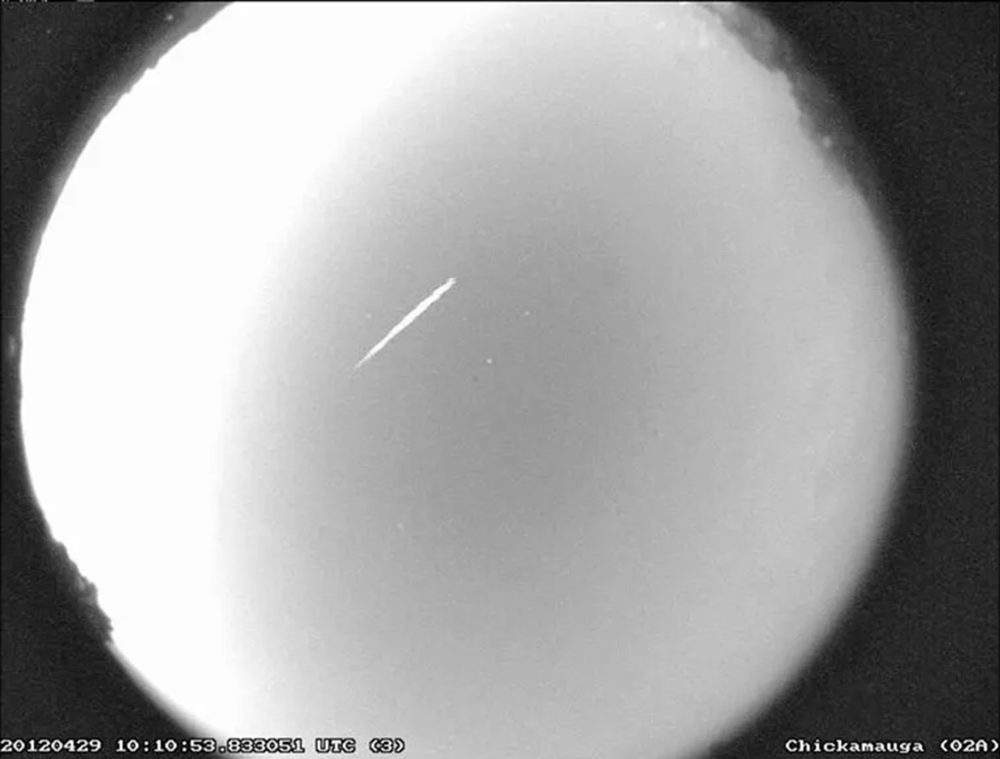

Skywatchers hoping to catch a spectacular celestial show this week may face disappointment as a luminous moon threatens to overshadow the annual Eta Aquarid meteor shower created by remnants of Halley’s comet.
The astronomical event reaches its maximum intensity Tuesday evening through early Wednesday morning. Observers in southern regions typically witness up to 50 meteors hourly during peak activity, though this year’s interfering moonlight could reduce that count to 25. Northern viewers may spot fewer than 10 meteors per hour.
“For us in the Northern Hemisphere, it’s not going to be as impressive,” said Teri Gee, manager of the Barlow Planetarium in Wisconsin. “The farther south you are, the better you’ll see it.”
These cosmic light shows occur when Earth travels through debris trails abandoned by comets or asteroids. The particles slam into our planet’s atmosphere at tremendous velocities, creating brilliant streaks commonly called shooting stars.
While random meteors appear nightly under dark conditions, organized showers provide more dramatic spectacles and occur annually at predictable intervals.
The Eta Aquarids originate from one of astronomy’s most famous comets. Halley’s comet completes its solar orbit approximately every 76 years, with its next Earth approach scheduled for 2061.
Optimal viewing requires venturing outdoors before sunrise. Escape urban lighting and tall structures for unobstructed sky views. Finding locations that block the brilliant waning gibbous moon, which will be 84% illuminated, may improve visibility.
Comfort items like blankets and lawn chairs enhance the experience. Resist checking phones and allow eyes to adjust to darkness. Focus eastward near the Aquarius constellation and the bright star Eta Aquarii.
“You’re looking for bright streaks that appear in the corner of your eye for a fraction of a second,” said astrophysicist Nico Adams with SSP International, a nonprofit that promotes STEM education.
Direct observation provides the ultimate viewing experience, according to Gee.
“It almost feels like you’re discovering it yourself,” she said.