Three passengers have died and multiple others have become seriously ill from what health officials believe is a hantavirus outbreak aboard a cruise ship sailing in the Atlantic Ocean, the World Health Organization announced Sunday.
The WHO confirmed to The Associated Press that investigators are looking into the incident, with laboratory testing verifying at least one hantavirus case. The virus spreads through contact with contaminated urine or droppings from infected rodents, particularly rats and mice.
According to the United Nations health agency, one patient remains in critical condition at a South African medical facility, while officials work to remove two additional symptomatic passengers from the vessel.
“Detailed investigations are ongoing, including further laboratory testing, and epidemiological investigations,” WHO said. “Medical care and support are being provided to passengers and crew. Sequencing of the virus is also ongoing.”
Health officials explain that hantavirus typically transmits through exposure to waste from infected rodents. Though uncommon, the WHO notes the virus can pass between humans and may cause serious respiratory complications.
No targeted therapy exists for hantavirus, though prompt medical intervention can improve survival rates.
While the WHO did not name the ship, South African news outlets reported the outbreak occurred on the MV Hondius during its voyage from Argentina toward Cape Verde near West Africa’s coast.
Maritime tracking systems show the Dutch-registered passenger vessel docked in Praia, Cape Verde’s capital city, Sunday evening.
South African health department representative Foster Mohale told local media that the initial fatality was an elderly male passenger who died aboard the ship. His spouse subsequently passed away at a South African medical center, according to Mohale’s statements.
The virus gained recent attention following the death of Betsy Arakawa, widow of late actor Gene Hackman, from hantavirus infection in New Mexico last year. Hackman died one week after his wife at their residence.
Federal authorities have discovered crucial physical evidence that directly connects a suspect to an attack during the White House Correspondents’ Dinner, according to a top prosecutor.
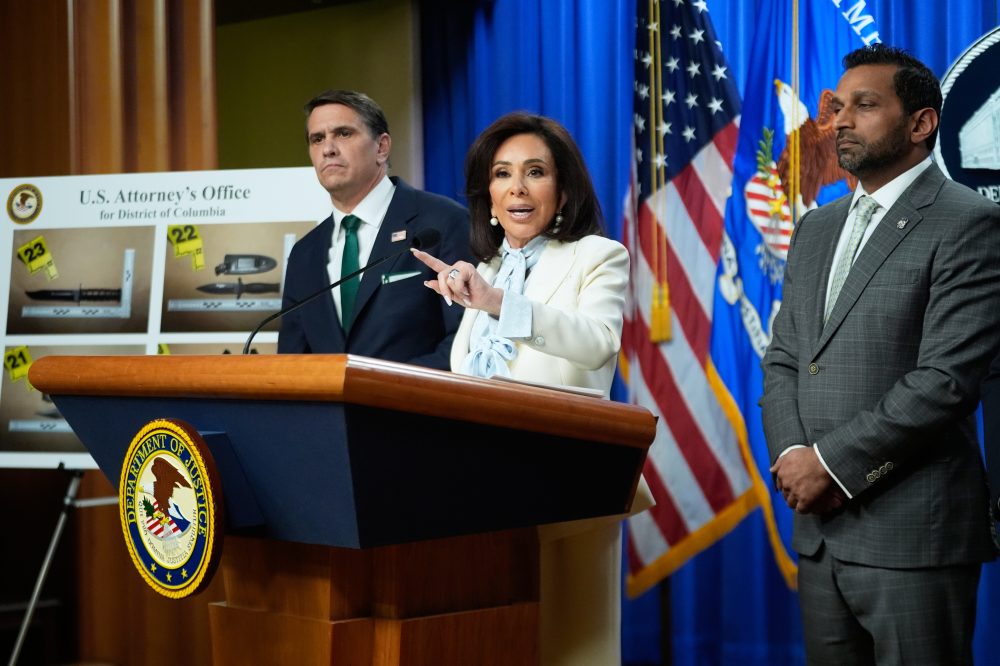
A projectile recovered from a Secret Service agent’s protective vest has provided investigators with concrete proof linking Cole Tomas Allen to the incident, U.S. Attorney for the District of Columbia Jeanine Pirro revealed during a CNN interview on Sunday.
Pirro stated that the recovered projectile “definitively” establishes Allen’s connection to the attack on the federal agent.
The discovery of this physical evidence represents a significant development in the ongoing investigation into the incident that occurred during the high-profile Washington D.C. event.
A New Zealand-based dairy company announced Monday that it is pulling three batches of infant formula from American stores after laboratory testing revealed the presence of a dangerous toxin.
The company, a2 Milk, initiated the voluntary recall of its a2 Platinum baby formula products following the discovery of cereulide, a harmful substance known to trigger vomiting in infants. According to a company statement, the contaminated formula was produced by Synlait Milk, which serves as an associate manufacturing partner for a2 Milk.
Company officials emphasized that no cases of illness have been documented in connection with the affected batches. The firm stated it is working closely with the U.S. Food and Drug Administration as the recall process moves forward.
The recall specifically targets products distributed within the United States market, with parents and caregivers advised to check batch numbers on their formula containers against the company’s recall notice.
WASHINGTON – President Donald Trump announced Sunday evening that the United States will launch an operation Monday morning to assist vessels trapped in the Strait of Hormuz.
The president made the announcement through a post on his Truth Social platform, though he provided limited specifics about the mission, including whether naval forces would participate in the operation. Trump characterized the initiative as a “humanitarian gesture” designed to assist neutral nations uninvolved in the ongoing US-Israeli conflict with Iran.
“For the good of Iran, the Middle East, and the United States, we have told these Countries that we will guide their Ships safely out of these restricted Waterways, so that they can freely and ably get on with their business,” the president stated in his social media post.
Neither the White House nor Pentagon officials provided immediate responses when contacted for further details about the planned operation.
Health authorities announced Sunday that a deadly outbreak of hantavirus aboard an Atlantic Ocean cruise ship has claimed the lives of three passengers, according to the World Health Organization.
Officials confirmed that six passengers were impacted by the health crisis, which resulted in three deaths and left one person hospitalized in intensive care at a South African medical facility.
The WHO verified that laboratory testing confirmed at least one case of hantavirus among those affected during the maritime incident.
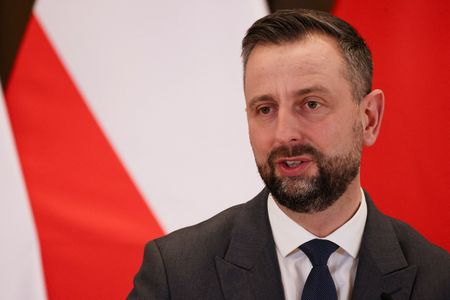
Poland’s Defense Minister Wladyslaw Kosiniak-Kamysz announced Sunday that his government has received no indication that potential delays in American military equipment shipments would impact their Patriot missile defense systems.
The statement comes after the Financial Times reported Friday that the United States had cautioned European partners, including the United Kingdom, Poland, Lithuania and Estonia, to anticipate extended wait times for weapons deliveries as ongoing Middle East conflicts deplete American military inventories.
Last month, Reuters confirmed that American officials had notified certain European allies about probable postponements in previously agreed-upon weapons shipments due to continued warfare consuming weapons reserves.
These Patriot defense systems play a vital role in bolstering anti-missile capabilities.
“Regarding Patriot batteries, we have no indication of any delays,” Kosiniak-Kamysz told the PAP news agency. He acknowledged that postponements might affect other military equipment but emphasized they wouldn’t reach levels that would “cause jitters.”
In early March, the Polish defense chief had cautioned that an extended Middle Eastern conflict might interfere with shipments of American-manufactured defense systems and additional military supplies to European nations, including Ukraine and Poland.
Delaware State Police are still seeking answers in a decades-old murder case involving an Army veteran who disappeared from Philadelphia and was found dead in New Castle County.
Odell White Jr., age 41, served his country for two decades in the United States Army and operated his own business when he vanished. The veteran was last spotted alive in Philadelphia on February 11, 1974.
More than a month later, White’s body was discovered in the 300 block of Naamans Road in the Claymont community. The exact date of his death remains unknown to investigators.
Despite the passage of five decades, law enforcement officials have not closed the case and continue seeking information that could lead to answers about White’s killing.
Anyone with information about this cold case homicide is encouraged to contact Delaware State Police.
NEWPORT NEWS, Va. – In a stunning display of resilience, Salisbury University’s fifth-ranked men’s lacrosse team mounted an incredible comeback from a 9-3 halftime deficit to capture their ninth straight Coastal Lacrosse Conference championship with a thrilling 10-9 overtime victory over third-ranked Christopher Newport on Sunday at Jennings Family Stadium.
Preston Huffman emerged as the hero for the Sea Gulls, first setting up teammate Bret Bergey for the equalizing goal with less than 30 seconds left in regulation, then scoring his first career overtime goal to seal the dramatic conference title win.
The championship marks another milestone for Salisbury’s dominant lacrosse program, extending their conference title streak to nearly a decade. The Sea Gulls showed tremendous character in overcoming the substantial six-goal halftime disadvantage against a highly-ranked Christopher Newport squad.
Sunday’s title game showcased the competitive nature of collegiate lacrosse, with Salisbury proving that no deficit is insurmountable when championship experience meets determination in crucial moments.
A commercial cargo ship reported coming under attack from several small vessels while sailing approximately 11 nautical miles west of Iran’s Sirik region on Sunday, according to the United Kingdom Maritime Trade Operations agency. The maritime authority confirmed that all crew members remained safe and no environmental damage occurred during the incident.
Iranian officials provided a different account of the events later Sunday. The semi-official Fars news agency reported that Iranian naval forces conducted a routine document inspection of the vessel as part of standard oversight operations, and emphasized that the ship was not captured or seized.
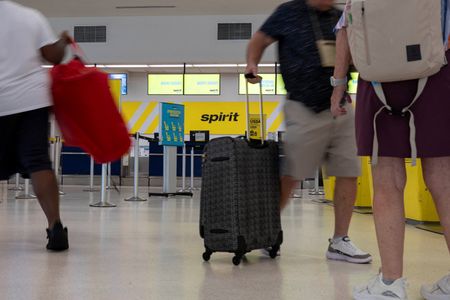
Spirit Airlines announced Sunday that the budget carrier has nearly wrapped up the process of issuing refunds to passengers and moving crew members back to their home locations after the airline halted all flights over the weekend.
The company reported that the vast majority of travelers who purchased tickets using credit or debit cards had received their refunds by Saturday night, though a small number of transactions are still being completed.
Additionally, Spirit successfully relocated approximately 1,500 crew members to their assigned home bases during the weekend period.
Meanwhile, competing airlines have stepped in to help affected passengers by providing discounted emergency fares for those left without transportation options.
MEXICO CITY – The governing Morena party in Mexico has selected Adriana Montiel Reyes to serve as its new party president, following Sunday’s announcement from the organization’s leadership.
The appointment comes after former party chief Luisa Maria Alcalde resigned from her position to take on a role within President Claudia Sheinbaum’s governmental administration.
Before accepting the party leadership role, Montiel Reyes held the position of welfare minister in President Sheinbaum’s cabinet. She previously occupied the same ministerial post during the administration of former President Andres Manuel Lopez Obrador.
Minnesota Wild center Joel Eriksson Ek will be absent from the lineup for at least the opening pair of contests in their Western Conference second-round playoff matchup versus the Colorado Avalanche, head coach John Hynes announced before Sunday’s series opener.
The 29-year-old sustained his injury during the series-deciding sixth game against Dallas when his right leg collided with the boards. He remained behind and did not travel with the squad to Denver.
Coach Hynes expressed optimism about Eriksson Ek’s potential return, stating he was “hopeful” the center could rejoin the lineup for Saturday’s third game back in Minneapolis.
During the Dallas playoff series, Eriksson Ek contributed three goals and tallied five total points. Throughout the regular season, he recorded 19 goals and accumulated 51 points across 70 games played.
The Wild will also be without defenseman Jonas Brodin, who is dealing with a lower-body injury and likewise stayed home from the Denver trip. Team officials confirmed Saturday that the 32-year-old defender has been ruled out for the first two contests of the series.
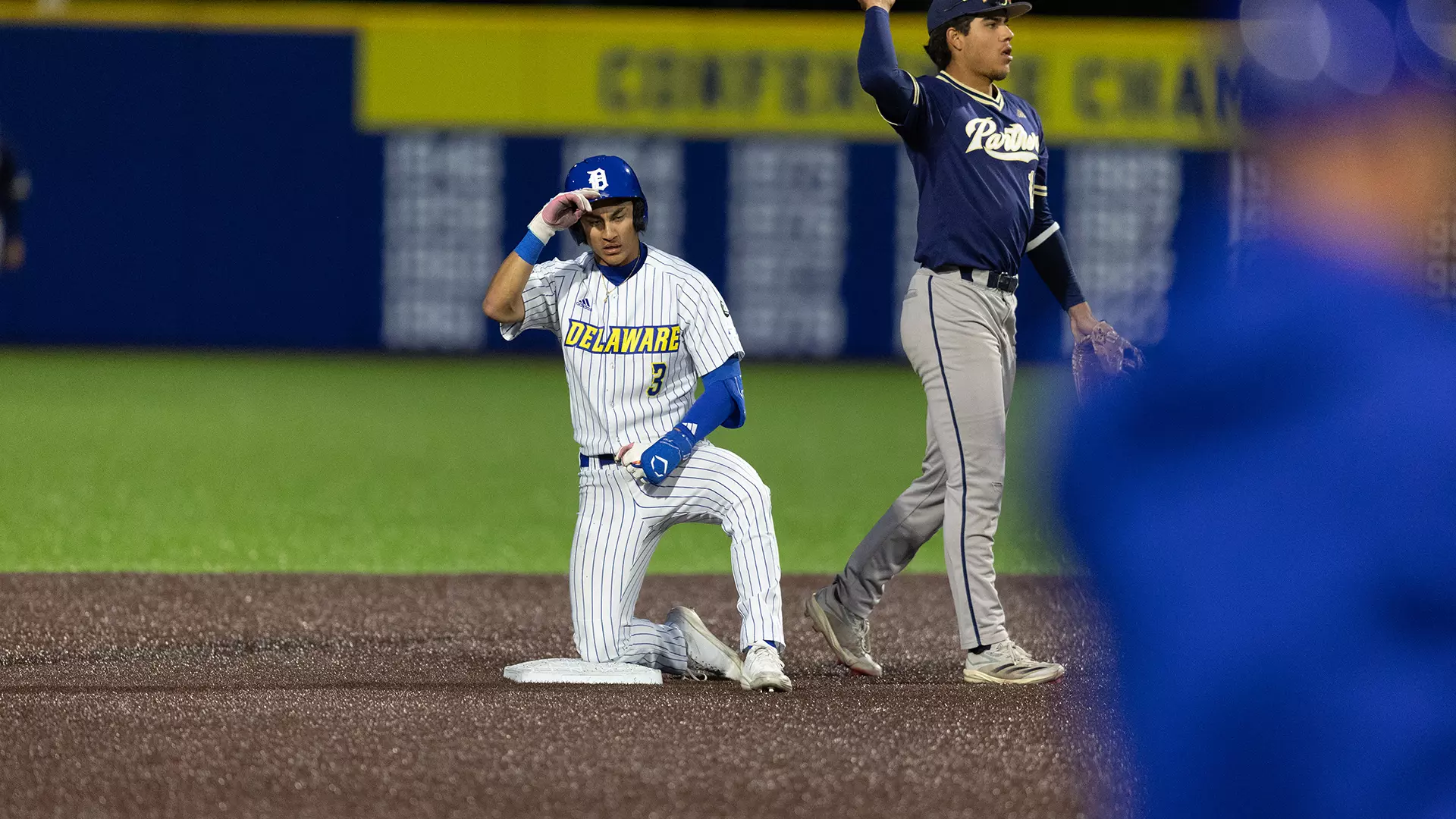
NEWARK, Del. – Matthew Minckler delivered a spectacular offensive showcase Sunday afternoon, collecting five hits to power the University of Delaware baseball team to a 13-9 victory over Florida International University at Bob Hannah Stadium.
The triumph completed a series sweep for the Fightin’ Blue Hens, who dominated FIU throughout the weekend matchup in Newark. Minckler’s exceptional plate performance highlighted Delaware’s offensive explosion in the series finale.
The Blue Hens utilized strong hitting throughout their lineup to secure the convincing win on their home field, capping off a successful weekend series against the visiting Panthers.
MIAMI, May 3 – Italian racing sensation Kimi Antonelli made Formula One history Sunday, capturing his third consecutive victory at the Miami Grand Prix and becoming the first driver ever to win the race while starting from the front row.
The 19-year-old Mercedes driver extended his championship advantage to 20 points through four races this season, having also secured pole position for his third straight race. McLaren’s defending world champion Lando Norris, who had won Saturday’s sprint race, crossed the finish line in second place, while his Australian McLaren teammate Oscar Piastri rounded out the top three.
Race organizers moved the start time up by three hours due to weather forecasts calling for thunderstorms and lightning in the Miami area. Despite the predictions, the race at Hard Rock Stadium proceeded without any weather-related delays or interruptions.
The San Diego Padres have brought Griffin Canning back from the injured list, naming him as Sunday’s starting pitcher against the Chicago White Sox while simultaneously placing right-handed pitcher German Marquez on the 15-day injured list.
This marks Canning’s return to major league baseball following an Achilles tendon rupture he sustained last June while playing for the New York Mets. During his time with New York, he posted a 7-3 record with a 3.77 ERA across 16 starts.
The 30-year-old pitcher, who celebrates his birthday on May 11, completed his rehabilitation with a 1-1 record and 3.60 ERA over five starts at Triple-A El Paso.
To accommodate Canning’s return, San Diego has rescheduled Randy Vasquez’s start from Sunday to Monday’s matchup against the San Francisco Giants.
Padres manager Craig Stammen expressed confidence in the returning pitcher’s readiness. “He’s going to be great,” Stammen said. “He’s excited to get past that Achilles injury. He’s put in a ton of hard work. You guys saw it all through spring training, and now he’s had a bunch of rehab starts.”
Throughout his professional career, Canning holds a 32-37 record with a 4.65 ERA, having spent five seasons with the Los Angeles Angels between 2019-21 and 2023-24, plus one season with the Mets.
Meanwhile, Marquez has been sidelined due to forearm nerve inflammation. In his debut season with San Diego, he currently holds a 3-2 record with a 5.76 ERA through six starts.
The leader of France’s far-left political movement has officially thrown his hat into the ring for the country’s upcoming presidential race. Jean-Luc Melenchon, who heads the France Unbowed party, announced his candidacy during a television appearance on Sunday.
Speaking to TF1 television, the 74-year-old declared: “Yes, I am a candidate.”
Melenchon brings decades of experience in French politics to his fourth presidential campaign. The veteran politician previously served in government ministerial roles during his time as a Socialist Party member and has mounted unsuccessful bids for the presidency in 2012, 2017, and 2022. His strongest showing came in the most recent election, where he secured third place after current President Emmanuel Macron and far-right candidate Marine Le Pen.
The France Unbowed leader expressed confidence in his party’s preparation for the upcoming contest. “We have less than a year to go until the second round of the election. With us, it is all sorted out — there is a team, a manifesto, and a single candidate,” Melenchon stated.
France’s constitutional framework prevents Macron from pursuing a third presidential term, setting the stage for an open race in 2027.
Several other prominent figures are positioning themselves for the election. Edouard Philippe, who served as Macron’s initial prime minister starting in 2017, plans to represent the center-right coalition in the race.
The far-right National Rally party, under the leadership of Le Pen and her ally Jordan Bardella, continues to show strong support in current polling despite failing to capture control of any major municipalities in March’s local elections.
Le Pen faces potential obstacles to her candidacy due to a conviction related to the misappropriation of European Union funding. She is currently appealing this ruling, which would prevent her from running. Political observers expect Bardella to step forward as the party’s nominee if Le Pen’s appeal is unsuccessful.
DENVER (AP) — Minnesota’s hockey team faces a challenging start to their playoff series against Colorado, as they’ll compete without two crucial players during the opening matchups due to injury concerns.
Forward Joel Eriksson Ek and defenseman Jonas Brodin will both miss the initial two contests of the second-round playoff battle against the Avalanche after sustaining lower-body injuries. The pair remained behind instead of traveling with their teammates to Denver.
Wild head coach John Hynes indicated the team continues “making a couple decisions on the lineup” before Sunday night’s opening game.
Colorado also deals with roster challenges, as defenseman Josh Manson remains sidelined with an upper-body injury that kept him out of last Sunday’s series-ending victory over Los Angeles. Avalanche coach Jared Bednar announced that Nick Blankenburg will step into Manson’s role. Colorado obtained Blankenburg through a trade with Nashville on March 4.
“He’s played good in the time he’s been with us,” Bednar commented. “We got him for a reason — like the way he moves, like the way he moves the puck. He plays with a little bite. He’s got to stay within himself. It’s going to be a challenge for him tonight, because the thing we’ll miss with (Manson) is the size, the strength, the physicality.”
Eriksson Ek contributed significantly during Minnesota’s first-round victory over Dallas, recording three goals and two assists while achieving a 56.4% success rate on faceoffs. Potential replacements include Danila Yurov and Hunter Haight.
“Ekky’s a big part of the team,” Hynes explained. “When you lose a guy that plays that many situations, you have to do it collectively as a group, and it’s not all on one guy.”
Brodin was already absent for Game 6 against Dallas due to his injury.
Hynes noted that with the extended break between the second and third games — teams compete Tuesday before a Saturday restart — “both those guys will be reevaluated and see where it goes from there.”
Philadelphia 76ers center Joel Embiid is making a desperate appeal to his team’s supporters: keep those playoff tickets in Philadelphia hands.
The Eastern Conference semifinals between the 76ers and New York Knicks kicks off Monday night at Madison Square Garden, but both franchises are already strategizing for when the action shifts to Philadelphia for Games 3 and 4.
Embiid’s concerns stem from their previous playoff encounter two seasons ago, when Knicks supporters flooded the Philadelphia arena, creating a hostile environment for the home team.
“Last time we played the Knicks it felt like this was Madison Square Garden East. So we’re going to need the support,” Embiid stated. “Don’t sell your tickets. This is bigger than you. We need you guys. The atmosphere we’ve had the last couple games in Philly, especially the last one pushing it to Game 7, I mean, we need all of it.”
The organization is taking proactive measures to prevent another invasion of opposing fans. Their official website now displays a warning that ticket purchases for Xfinity Mobile Arena will be limited to Greater Philadelphia area residents, with verification through credit card billing addresses. Any orders from outside the region face automatic cancellation.
However, these restrictions may prove futile against determined New York supporters willing to pay premium prices on the secondary market.
“Good thing about New Yorkers, man, they’re persistent. They don’t care, bro. They’re going to do it, man,” explained Knicks forward Josh Hart. “And for a lot of people, everything revolves around money. So, you know, if they get a good price for those tickets, they’re going to sell them.”
Hart, a Villanova alumnus familiar with the regional dynamics, pointed out that the journey from New York to Philadelphia takes under two hours by car and even less by train, while road game tickets typically cost significantly less than home venues.
The 76ers’ frustration reached a boiling point during their 2024 playoff series when visiting fans loudly chanted “MVP! MVP!” for Knicks guard Jalen Brunson during his 47-point performance in a Game 4 victory on Philadelphia’s home court.
“I don’t think that should happen. It’s not OK,” Embiid said following that disappointing loss.
Team ownership responded by purchasing and distributing over 2,000 complimentary tickets to Philadelphia community workers for Game 6 against New York.
Now, Embiid is personally offering to purchase tickets from any locals considering selling to visiting fans.
“Knicks fans, they travel,” he acknowledged. “There’s going to be some people that need the money and probably going to sell tickets, but don’t do it. We need you guys. We’ve got a pretty good chance. We’re going to need our support. We’re going to need them to be extremely loud and if you need money, I got you.”
BAMAKO, Mali — Hooded gunmen forcibly took a former government minister and vocal opponent of Mali’s military leadership from his residence, according to family members who spoke with news outlets on Sunday. The incident comes amid growing tensions following recent coordinated strikes against the West African nation’s ruling authorities.
The residence of Mountaga Tall in Mali’s capital city was raided just before midnight Saturday, family member Mahmoud Touré reported. The armed individuals provided no identification and gave no explanation for taking Tall, though Touré indicated they appeared to be military personnel.
“They did not explain why and did not present an arrest warrant,” he said. “The soldiers mistreated Mountaga Tall’s wife and took his phone.”
Tall previously held the position of education and science minister between 2016 and 2017 and currently leads the National Congress for Democratic Initiative, a political organization that opposes the current military administration. In his legal practice, he provides representation for politicians and citizens who face detention for speaking out against the ruling junta.
Mali experienced a major assault on April 26 when coordinated strikes targeted the military in Bamako and multiple other locations, with jihadist fighters and rebel forces capturing various towns and military installations. The attacks resulted in multiple casualties, including defense minister Sadio Camara.
The extremist organization Jama’at Nusrat al-Islam wal-Muslimin (JNIM) joined forces with the Azawad Liberation Front, a separatist movement led by Tuareg groups, to execute the most significant offensive against government forces since 2012.
Military authorities announced Friday that they possessed proof of soldier involvement in collaborating with these groups during the attacks. This revelation has prompted a series of detentions across the country.
Tall’s relatives have submitted formal documentation “regarding kidnapping and disappearance” to security officials. Government representatives have not issued any statements concerning the recent wave of arrests.
ST. PETERSBURG, Fla. — Emergency crews battled flames throughout Saturday night at the University of South Florida’s St. Petersburg campus, where a marine science laboratory building suffered what officials are calling potentially complete destruction.
The Saturday evening blaze forced evacuations as thick smoke clouds rose from the research facility. University President Moez Limayem confirmed in a statement to the campus community that no one was hurt in the incident and that no dangerous substances escaped during the fire.
Investigators have not yet determined what sparked the flames.
According to Limayem, teams are still evaluating the full scope of damage, though early assessments suggest widespread destruction throughout the facility.
“Our recovery teams are working with the College of Marine Science to prioritize key research material and equipment for salvage assessment when the building is cleared,” Limayem wrote.
University officials announced that any classes and testing sessions originally planned for the damaged laboratory will be moved to alternative locations.
The Los Angeles Angels have moved left-handed pitcher Yusei Kikuchi to the 15-day injured list and brought up reliever Tayler Saucedo from their Triple-A affiliate to fill the roster spot.
The injury designation dates back to April 30, as Kikuchi developed inflammation in his left shoulder during his outing against the Chicago White Sox on April 29. The pitcher completed two innings without allowing any runs but was pulled from the game while warming up for the third inning before facing another hitter.
This season, the 34-year-old pitcher has struggled with an 0-3 record and 5.81 ERA across seven starts. Despite striking out 33 batters in 31 innings of work, Kikuchi has given up 35 hits and issued 14 walks, resulting in a concerning 1.581 WHIP.
The Morioka, Japan native brings a career 48-61 record with a 4.50 ERA spanning more than seven MLB seasons.
Saucedo, who is 32 years old, rejoins the major leagues after pitching for Triple-A Salt Lake in the bullpen. During his time with the Bees, he compiled a 4.30 ERA across 12 outings but allowed 12 hits and 11 walks in 14 2/3 innings pitched.
Throughout five major league seasons with Toronto (2021-22) and Seattle (2023-25), Saucedo holds a 5-2 record with a 4.36 ERA. His entire 148-game major league experience has come as a relief pitcher.
The experienced reliever will aim to strengthen the Angels’ struggling bullpen, which currently ranks 29th league-wide with a 5.53 ERA.
The Chicago Cubs welcomed back relief pitcher Daniel Palencia to their active roster on Sunday, removing him from the 15-day injured list ahead of their home matchup with the Arizona Diamondbacks.
Palencia had been sidelined since April 17 after suffering a strain to his left oblique muscle. The powerful right-handed pitcher prepared for his comeback by pitching for the Cubs’ Triple-A affiliate Iowa on Friday, delivering 19 pitches with nine reaching triple-digit speeds, topped by a 102 mph fastball.
Before his injury, the 26-year-old reliever appeared in five games for Chicago, recording one win and one save while maintaining a perfect earned run average. Over five innings of work, he surrendered just three hits and two walks while striking out five batters.
Earlier this year in March, Palencia contributed to Venezuela’s championship run in the World Baseball Classic. He delivered five consecutive scoreless outings and earned three saves during the tournament, including a crucial performance in the gold medal game against Team USA where he struck out Kyle Schwarber and Roman Anthony to secure Venezuela’s 3-2 victory.
The Cubs made roster space for Palencia’s return by removing veteran reliever Yacksel Rios from the 40-man roster. The 32-year-old Rios had made his first major league appearance since 2023 on April 26, pitching 1 2/3 perfect innings against the Los Angeles Dodgers.
Minnesota Twins right-handed pitcher Joe Ryan was forced to exit Sunday’s matchup with the Toronto Blue Jays after delivering only nine pitches when he experienced discomfort in his right elbow.
Ryan struck out the game’s first batter, Yohendrick Pinango, with three consecutive pitches before issuing a walk to Kazuma Okamoto. Following a full-count fastball that sailed high to Okamoto, Ryan signaled for manager Derek Shelton and trainer Nick Paparesta to visit the mound.
Following a quick discussion, Ryan walked off the field toward the dugout.
The pitcher, who started on Opening Day for Minnesota, was making his eighth appearance of the current season. Ryan entered Sunday’s contest with a 2-3 win-loss record and a 3.76 earned run average, along with a 1.043 WHIP and 39 strikeouts across 38 1/3 innings pitched.
During spring training, Ryan experienced problems with his lower back that required an MRI scan, though he hasn’t missed any scheduled starts this year.
The Twins are already dealing with a depleted starting rotation, as three other pitchers remain on the injured list: Pablo Lopez (elbow), David Festa (shoulder) and Mick Abel (elbow). Lopez suffered an ACL tear during spring preparation and required Tommy John surgery that ended his season.
Abel compiled a 1-2 record with a 3.98 ERA across four outings, including three starts, before landing on the injured list in mid-April. However, his return is anticipated in the near future.
Since entering the major leagues in 2021, Ryan has accumulated a 48-39 career record with a 3.79 ERA over 123 total appearances, including 122 starts.
Montreal Canadiens defenseman Noah Dobson’s status for the decisive Game 7 matchup against the Tampa Bay Lightning remains uncertain, with team officials listing him as a game-time decision for the crucial Eastern Conference first-round playoff clash.
The 26-year-old blueliner has been out of action with an upper-body injury sustained while blocking a shot during Montreal’s April 11 contest against the Columbus Blue Jackets.
“He’s been a big player for us this year,” Canadiens coach Martin St. Louis said. “I’m confident that if he plays, he’s going to bring something.”
During the regular season, Dobson contributed significantly to Montreal’s defensive corps, tallying 47 points through 12 goals and 35 assists while logging an average of 22:29 in ice time across 80 games.
Montreal obtained Dobson through a sign-and-trade deal with the New York Islanders on June 27, 2025, securing his services with an eight-year contract worth $76 million.
The transaction sent forward Emil Heineman along with Montreal’s pair of first-round draft selections (16th and 17th overall) in the 2025 NHL Draft to New York. The Islanders utilized those picks to select Swedish right winger Victor Eklund and Barrie OHL defenseman Kashawn Aitcheson.
Throughout his NHL career, Dobson has accumulated 277 points consisting of 62 goals and 215 assists over 348 games since the Islanders selected him 12th overall in the 2018 NHL Draft.
FREDERICKSBURG, Va. – Salisbury University’s women’s tennis squad wrapped up their 2026 campaign on Sunday after suffering a shutout loss to UC Santa Cruz’s Banana Slugs in the Coast-to-Coast Athletic Conference Tournament’s third-place contest.
The Sea Gulls were defeated 4-0 by the Banana Slugs during Sunday morning’s bronze medal match, which took place at the Hegmann Family Courts on the Mary Washington campus.
The loss marked the conclusion of Salisbury’s tennis season, ending their hopes of capturing third place in the C2C Tournament.
GREENBURGH, N.Y. — After wrapping up their series against Boston, the Philadelphia 76ers quickly shifted focus to New York, bringing back vivid recollections from their recent playoff history.
This Eastern Conference semifinals matchup recreates a competitive series between these Atlantic Division neighbors from the Northeast, where New York claimed victory in six games during 2024.
Jalen Brunson and Tyrese Maxey showcased incredible individual efforts. Each team mounted remarkable comeback attempts.
New York supporters created thunderous noise at Madison Square Garden — and even louder at Philadelphia’s home venue. (Joel Embiid certainly remembers this detail).
After the dust settled, New York had edged Philadelphia by a single point, 650-649. They resume competition Monday evening, with both sides anticipating an even more intense battle.
“I expect nothing less. Actually more,” Maxey stated. “That was a first-round matchup. This is a second-round matchup. So I think both teams are going to come out there and be extremely competitive. It’s going to be a dogfight, it’s going to be a chess match and I’m just ready to get started.”
New York enjoyed several days of rest following their dominant 140-89 Game 6 victory over Atlanta on Thursday, establishing an NBA postseason record with a 47-point halftime advantage. Philadelphia has just one complete day to recuperate after achieving the NBA’s 14th successful comeback from a 3-1 series deficit, defeating Boston 109-100 on Saturday.
Philadelphia became the first seventh-seeded team to eliminate a second seed since the opening round adopted the best-of-seven structure. This was the exact seeding matchup when these teams met two seasons ago.
The 76ers nearly forced a tie in that series during Game 2 before New York rallied from a five-point deficit with less than 30 seconds remaining. Brunson established a Knicks playoff scoring record with 47 points in Game 4, and New York appeared ready to close out the series at home in Game 5 before Maxey contributed seven points in regulation’s final 25 seconds, sending Philadelphia to an overtime victory.
“Man, that was a fun series. We were going punch for punch,” Josh Hart commented following Sunday’s practice session. “When you think about that, you always think of the good games, so you guys can guess what games those are. But you know that you’ve got to turn the page. Those are memories. They don’t affect tomorrow but they’re fun memories.”
Embiid rejoined his team during the middle of the Boston series following appendix surgery and was noticeably limping late in Game 7 after another player collided with his knee. His physical condition appeared more concerning during the 2024 series, as he dealt with ongoing issues from a surgically repaired left knee and a recent Bell’s palsy diagnosis, which causes facial paralysis.
“I had a lot going on at that time, so hopefully everything is good this time,” Embiid explained. “We’ve got a much better team than we had at that time, so it’s going to be a fun series.”
New York also looks improved, having added All-Star Karl-Anthony Towns and Mikal Bridges to their roster. They’ve reached the second round for four consecutive seasons, and the third-seeded team surprisingly secured home-court advantage due to Philadelphia’s opening-round comeback.
Now New York must contend with the effective Embiid-Maxey partnership that’s finding its rhythm.
“If we expect to be who we are,” coach Mike Brown noted, “we’ll figure it out.”
Brunson heard roaring “MVP! MVP!” chants during the 2024 Game 4 triumph after Knicks supporters flooded into Philadelphia, prompting Embiid to voice his frustration with 76ers fans following that contest. He’s now urging them to prevent the vocal New Yorkers from dominating again.
“Last time we played the Knicks it felt like this was Madison Square Garden East. So we’re going to need the support,” Embiid declared. “Don’t sell your tickets. This is bigger than you. We need you guys. The atmosphere we’ve had the last couple games in Philly, especially the last one pushing it to Game 7, I mean, we need all of it.
“Knicks fans, they travel. There’s going to be some people that need the money and probably going to sell tickets, but don’t do it. We need you guys. We’ve got a pretty good chance. We’re going to need our support. We’re going to need them to be extremely loud and if you need money, I got you.”
Home-court advantage proved meaningless previously, as visiting teams captured all four regular season meetings. The initial two occurred at Madison Square Garden before New York won both Philadelphia contests, concluding with a 139-89 blowout on February 11.
Both star point guards appear prepared to continue their 2024 performances. Maxey posted 26.9 points per game during the opening round, ranking third league-wide, while Brunson followed closely at 26.3.
New York’s All-Star center represents the most significant addition to this rivalry since their last playoff encounter, displaying his complete offensive skillset during the first round by recording his first two career postseason triple-doubles against Atlanta.
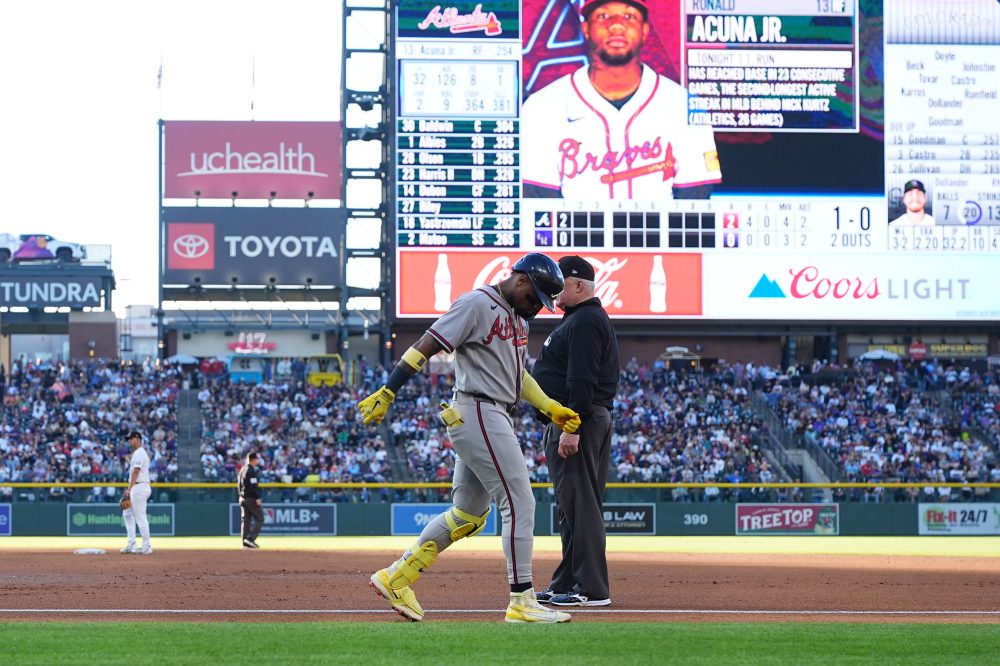
DENVER — Atlanta Braves superstar Ronald Acuña Jr. will miss at least 10 days after the team placed him on the injured list Sunday due to a strained left hamstring.
The injury is a setback for the Braves, who entered Sunday’s matchup against the Colorado Rockies boasting baseball’s top record at 24-10. Now they must continue their strong season without one of their most dynamic players.
The injury occurred during Saturday evening’s contest when Acuña was running to first base on a ground ball. The outfielder suddenly stopped about midway down the baseline and clutched his hamstring muscle.
The 2023 National League MVP and five-time All-Star is currently hitting .252 this season with two homers, nine RBIs, 17 runs scored, and leads the team with seven stolen bases. He had appeared in every game this season after a torn ACL in May 2024 restricted him to just 144 total games across the previous two campaigns.
In related roster moves, Atlanta brought back pitcher Spencer Strider from the injured list before Sunday’s game. The 2023 All-Star was scheduled to make his first appearance of the year after recovering from an oblique strain. To create roster space, the team sent reliever Hunter Stratton down to Triple-A Gwinnett after Saturday’s game and promoted outfielder José Azócar from the minors to replace Acuña.
Federal investigators have confirmed that a Secret Service agent was wounded by pellets fired from the weapon of a man who tried to attack the White House Correspondents’ Association dinner with plans to assassinate President Donald Trump.
District of Columbia U.S. Attorney Jeanine Pirro revealed Sunday that forensic analysis proved the agent was struck by gunfire from Cole Tomas Allen’s shotgun during the April 25 incident at a Washington hotel. Previously, Pirro had only stated there was no indication of friendly fire hitting the officer.
“We now can establish that a pellet that came from the buckshot from the defendant’s Mossberg pump-action shotgun was intertwined with the fiber of the vest of the Secret Service officer,” Pirro explained during an appearance on CNN’s “State of the Union.” “It is definitively his bullet.”
Allen continues to be held in custody awaiting trial, while the wounded agent recovered from injuries. Allen sustained wounds during the confrontation but was not shot.
Earlier this week, Pirro released surveillance footage on social media that captured the moment when Allen allegedly rushed through security carrying firearms and knives, attempting to reach the ballroom filled with media members, government officials and other attendees. Uncertainty had surrounded which weapon fired the shot that injured the officer as Allen charged toward the event.
Defense attorneys for Allen did not respond to requests for comment Sunday.
The 31-year-old California resident from Torrance faces charges of attempted presidential assassination along with two additional weapons violations, including firing a gun during a violent crime. If found guilty on the assassination charge alone, Allen could receive a life sentence.
Court records show Allen worked part-time as a tutor for a test preparation business and developed video games as a hobby.
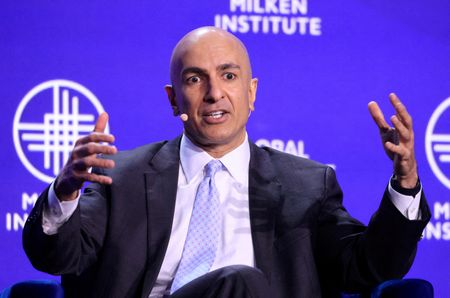
Minneapolis Federal Reserve President Neel Kashkari warned Sunday that the extended conflict with Iran is creating significant economic uncertainty that prevents the central bank from offering clear guidance on future interest rate decisions.
During his appearance on CBS’s “Face the Nation,” Kashkari expressed deep concern about how the war is affecting inflation and economic demand, particularly with the continued blockade of the Strait of Hormuz, which handles one-fifth of the world’s oil and gas shipments.
The conflict started when President Donald Trump and Israel conducted air attacks against Iran on February 28, triggering dramatic increases in energy costs worldwide and worsening America’s already challenging inflation situation.
Due to the unpredictable nature of the war’s economic impact, Kashkari indicated the Fed might need to increase interest rates rather than lower them.
“I don’t feel comfortable signaling that a rate cut is in the cards. You know, we might be in worse scenarios, we might have to go the other direction,” he stated.
Kashkari joined an unusually large group of Fed officials who opposed the central bank’s recent policy statement language at the latest Federal Open Market Committee gathering.
Last Wednesday, the Fed maintained its benchmark interest rate between 3.5% and 3.75% while keeping language suggesting officials still expect the next policy move to be a rate reduction.
Kashkari’s dissent was supported by the heads of the Cleveland and Dallas Fed branches, while Governor Stephen Miran opposed the decision from the opposite direction, favoring an immediate rate cut.
The three regional Fed presidents who dissented supported maintaining current rates, later explaining that interest rates might need adjustment in either direction based on the war’s economic effects.
While the Fed typically overlooks temporary energy price spikes, some officials note the current crisis compounds years of inflation exceeding the central bank’s goals.
This situation could require rate increases to control inflation. However, higher energy costs also reduce consumer spending power, potentially prompting the Fed to maintain steady rates or even cut them to protect employment.
Chicago Fed President Austan Goolsbee described recent U.S. inflation figures as “bad news” during a Saturday television interview. The personal consumption expenditures price index showed headline inflation running at 3.5% annually through March, well above the Fed’s 2% objective.
Leadership changes at the Fed add another layer of uncertainty, with Kevin Warsh expected to replace current Chairman Jerome Powell when his term expires this month. While Warsh suggested support for lower rates during his confirmation process, current events and Fed official sentiment may complicate those plans.
The U.S. and Israel halted their bombing operations against Iran a month ago, but negotiations to end the conflict remain stalled, raising concerns about broader global economic consequences.
Kashkari expressed pessimism about a quick resolution, noting that even the most favorable outcome would mean prolonged disruptions.
“I talked to the CEO of a global company headquartered in Minnesota that has supply chains all around the world just last week, and they have estimated that even if the strait reopened today, it probably takes six months for their supply chains to return to something like normal,” Kashkari explained.
Treasury Secretary Scott Bessent offered a more optimistic perspective on Fox News’ “Sunday Morning Futures,” predicting energy prices would decline once the conflict ends.
Bessent said the war and other oil market developments “gives me a lot of optimism that oil prices on the other side of this conflict are going to be much lower than they were going in, or at the beginning of the year, or at any point in 2020-2025.”
Bessent noted that futures markets anticipate lower energy costs later this year and that Iran has struggled to effectively charge tolls on ships passing through the Strait of Hormuz, largely due to the U.S. naval presence blocking Iranian operations.
He characterized the U.S. as a “big winner” in the energy crisis due to its oil export capabilities, limited only by shipping infrastructure capacity.
Barclays analysts warned Friday that while energy price increases have been relatively moderate so far, this could change rapidly. Additional supply disruptions could push fuel inventories to dangerously low levels, they noted, stating “when such tipping points are reached, prices could jump further.”
Houston Astros first baseman Christian Walker made his return to the starting lineup Sunday, batting fourth in the series finale against Boston just one day after suffering a frightening beaning that destroyed his protective helmet.
The scary incident occurred Saturday when Red Sox rookie pitcher Tyler Samaniego’s 93.3 mph fastball struck Walker above his left eye during a two-strike count. The impact was so severe it shattered Walker’s helmet, with the largest fragment launching 10 feet toward the backstop.
Houston held a 6-3 advantage in the ninth inning when team officials decided to substitute Walker with pinch runner Brandon Shewmake as a safety precaution following the incident.
Speaking to media members following Saturday’s game, Walker expressed optimism about his condition. “I feel OK,” Walker said. “I think the helmet took most of it. And turning away from it hopefully made it more of a glancing blow than straight impact.”
Walker’s presence in Sunday’s cleanup position demonstrates his readiness to continue his remarkable season. The veteran has participated in every contest this year for Houston, earning starts in all but one game, and the 35-year-old is posting the finest statistical performance of his career.
Walker is currently hitting .309 with a .386 on-base percentage and .577 slugging percentage, all personal bests. Through 34 games, he has contributed eight home runs and 26 RBIs, putting him on track for career-high totals of 38 homers and 124 RBIs.
A major pharmaceutical acquisition was announced Sunday as Belgium-based UCB revealed plans to purchase Candid Therapeutics, a privately-owned biotechnology company, in a transaction that could reach $2.2 billion total.
The deal structure includes an immediate payment of $2 billion to acquire the California-headquartered company, with an additional $200 million possible through future milestone achievements. Candid Therapeutics specializes in developing therapeutic treatments for autoimmune conditions.
Both companies confirmed the acquisition agreement in statements released Sunday from Paris.
The distance between New York’s Madison Square Garden and Philadelphia’s Xfinity Mobile Arena spans just over 100 miles — an easy drive or train ride for New York Knicks supporters looking to watch their team face the 76ers in the Eastern Conference semifinals.
However, 76ers superstar Joel Embiid, who earned NBA Most Valuable Player honors and first-team All-Pro recognition during the 2022-23 campaign, is determined to prevent Knicks supporters from taking over Philadelphia’s home court.
Following Saturday evening’s stunning Game 7 victory over the Boston Celtics that sent the Sixers to the next round, Embiid delivered a direct message to Philadelphia’s fanbase during his post-game media session.
He’s asking 76ers supporters to hold onto their playoff tickets — particularly when it comes to keeping them away from Knicks fans.
Two years ago, New York supporters flooded the Philadelphia venue when the second-seeded Knicks knocked out the seventh-seeded Sixers in the first round. Many believe Knicks fans purchased those seats directly from 76ers season ticket holders.
“I just have a message for our fans,” Embiid stated Saturday evening. “Last time we played the Knicks, it felt like [Philadelphia] was Madison Square Garden East. We’re going to need the support.”
“Don’t sell your tickets. This is bigger than you. We need you guys.”
The All-Star center even proposed a potential remedy for fans facing financial pressure.
“Knicks fans travel — they buy tickets,” he explained. “There’s going to be people who will sell the tickets because they need the money. Don’t do it, we need you guys. We need the support, and we need them to be extremely loud. If you need money, I’ve got you.”
The Eastern Conference semifinal matchup kicks off Monday in New York, with the second game scheduled for Wednesday. Philadelphia will host Games 3 and 4 on Friday and Saturday respectively.
New York advanced by defeating the Atlanta Hawks in six games.
The New York Mets suffered another injury blow when shortstop Ronny Mauricio fractured his left thumb during Saturday’s contest, potentially forcing third baseman Bo Bichette to return to his previous shortstop role.
Mauricio sustained the injury during a headfirst dive into first base in the seventh inning of Saturday evening’s 4-3 defeat. This came just one night after the player delivered a crucial go-ahead home run in the seventh frame that helped propel the Mets to a comeback victory over the Los Angeles Angels on Friday.
The team plans to place the 25-year-old on the injured list before Sunday morning’s series finale in Anaheim, California.
Mauricio had been filling in at shortstop while All-Star Francisco Lindor recovers from a severe left calf injury that will keep him out until at least June. The struggling Mets, who currently hold baseball’s worst record despite their high payroll, now face the challenge of finding another replacement.
Manager Carlos Mendoza acknowledged that Bichette is under consideration for the shortstop vacancy. “I am pretty sure Bo is going to be in the conversation,” Mendoza stated regarding the potential position change.
The veteran infielder joined New York on a three-year, $126 million deal in January, accepting a move to third base with Lindor established at shortstop. During his tenure with Toronto from 2019-25, Bichette appeared at shortstop in 716 of his 748 total games.
When asked about potentially switching positions, Bichette expressed his willingness to help the team. “Whatever the team needs,” he told media members.
Through 10 games this season, Mauricio has struggled offensively, posting a .219 batting average on 7 hits in 32 at-bats, with his lone extra-base hit being a home run.
Bichette has also experienced early-season difficulties with his new club, managing just two home runs and 14 RBIs across 32 games while batting .238 – significantly below his career .292 average. Last year in Toronto, he posted a .311 average with 18 homers and 94 RBIs.
The injury adds Mauricio to New York’s expanding disabled list, which already features outfielder Luis Robert Jr., infielder Jorge Polanco, and pitcher Kodai Senga.
Long before Victor Wembanyama became a household name, Rudy Gobert recognized his extraordinary potential.
When Wembanyama was just 13 years old, Gobert first learned about his fellow Frenchman. It didn’t take the veteran center long to recognize the massive talent in his young countryman. During their conversations, Wembanyama would seek guidance while Gobert provided mentorship.
“And the rest is history,” Gobert said.
The basketball community now understands what Gobert discovered years earlier. One French center will advance to the NBA’s Final Four in the coming weeks, with the outcome depending on the Western Conference semifinal battle between Wembanyama’s San Antonio Spurs and Gobert’s Minnesota Timberwolves. The series opens Monday evening in San Antonio.
“I’m very, very proud and I’m very excited to watch him grow every day, to see his work paying off,” Gobert said. “Outside of the talent, he’s someone that has a very unique soul, a very unique mind and nothing is an accident. It’s not an accident that he’s having the success that he’s having.”
While playoff series are never solely determined by individual matchups, it’s understandable why the Wembanyama versus Gobert storyline will capture significant attention during these games.
Many basketball enthusiasts likely first discovered Wembanyama through a viral video from six years ago showing a 2-on-2 game between him and Gobert. The opening moments featured Wembanyama scoring two jump shots over Gobert before breaking free for a slam dunk.
Today, Wembanyama stands as a defensive player of the year and MVP candidate, establishing himself as a genuine superstar. Despite his success, he continues seeking Gobert’s guidance, recently asking about the water filtration system Gobert uses at home. While seemingly minor, this demonstrates Wembanyama’s continued hunger for knowledge.
“He’s meant a lot as a role model,” Wembanyama said. “There’s lots of (ways) that he inspired me and I think he should inspire more people in terms of taking care of your body. He should be a model for all big men. So, I would say that’s the main thing.”
Minnesota aims to reach the Western Conference finals for the third straight year, while San Antonio seeks its first appearance since 2017. The Timberwolves managed to eliminate third-seeded Denver in the opening round, accomplishing this despite Donte DiVincenzo’s Achilles injury and Anthony Edwards’ knee problem.
DiVincenzo will miss the remainder of the playoffs, while Edwards faces a short-term absence with hopes of returning during this series. The Spurs refuse to underestimate Minnesota despite the depleted backcourt.
“They guard. They’re physical. They try to impose that will and impose their will and their competitiveness on you,” Spurs coach Mitch Johnson said. “And they’ve got a lot of individuals that take pride in that.”
During the regular season, Minnesota defeated San Antonio twice in three meetings, with Edwards playing a crucial role by averaging 36.7 points across those games while shooting 58% overall and 52% from three-point territory.
The Spurs managed only seven blocked shots against the Timberwolves, marking their lowest total against any Western Conference team this season. Although Wembanyama participated in just two of those three contests, this suggests Minnesota made smart shot selections.
“It’s going to be decisions that you make in the paint,” Timberwolves coach Chris Finch said. “It’s going to come down to them.”
The French centers have faced each other eight times during regular season play, with both players holding advantages in different areas.
Gobert’s teams have won six of those eight encounters. Wembanyama has reached 20 or more points in five of those meetings.
Oddsmakers heavily favor San Antonio in the series, listing them at minus-2000 odds, meaning a $100 bet would yield only $5 in profit.
Minnesota enters as significant underdogs at +950 odds, where a $100 wager would return $1,050.
This marks the 19th occasion since the current playoff format began in 1984 that a sixth seed has faced a second seed in conference semifinals.
Historical upsets in such scenarios include four instances: Indiana over New York 4-3 in 2024, Houston over Phoenix 4-3 in 1995, Chicago over New York 4-2 in 1989, and Phoenix over Utah 4-2 in 1984.
Beginning Sunday, Minneapolis could host either Timberwolves games or Minnesota Wild Stanley Cup playoff games on 10 of the following 11 days, assuming neither series ends in sweeps. The Wild are competing against Colorado in the Western semifinals.
The Minnesota teams play in separate venues, with the Wild based in St. Paul, but if both series extend to six games, both teams will host Game 6 contests on May 15.
Milwaukee has promoted 24-year-old right-handed pitcher Logan Henderson from their Triple-A Nashville affiliate to take the mound Sunday afternoon when they face the Washington Nationals on the road.
The young hurler will step directly into the starting rotation for Milwaukee, which has been hot lately with victories in five of their last six contests.
According to MLB Pipeline rankings, Henderson stands as the sixth-best prospect in Milwaukee’s farm system and tops their pitching depth chart. Sunday will mark his second major league starting assignment this season.
Henderson’s big league record shows one victory against no defeats, though his ERA sits at 9.00 through limited action. His lone appearance came as an opener against Kansas City on April 4, where he surrendered two earned runs on three hits across two innings in Milwaukee’s 8-2 defeat.
During the 2023 campaign, Henderson made five starts for the Brewers and posted impressive numbers, going 3-0 with a 1.78 earned run average.
This year at Nashville, Henderson has been dominant through five appearances, including three starts, compiling a 2-0 record with a stellar 1.02 ERA. He has recorded 26 strikeouts across 17⅔ innings pitched.
To create roster space for Henderson’s promotion, Milwaukee optioned 28-year-old right-handed reliever Easton McGee back to Nashville. McGee appeared in two relief outings this season, throwing two innings while surrendering only one hit.
Washington will counter with left-handed starter Peter Poulin, who carries a 2-0 record and 4.11 ERA into the series finale.
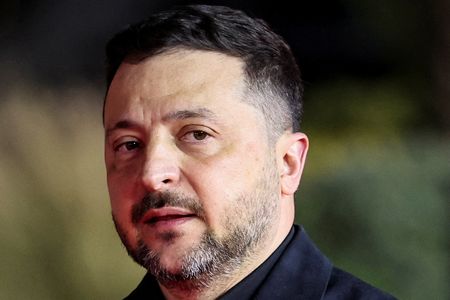
KYIV, May 3 – Ukrainian President Volodymyr Zelenskiy announced he has proposed a drone technology partnership with Finland, offering to share military expertise gained from Ukraine’s ongoing conflict with Russia.
The Ukrainian leader made the announcement following a meeting with Finnish Prime Minister Petteri Orpo in Yerevan, where he outlined plans for enhanced cooperation between the two nations.
“Ukraine is ready to share its expertise and strengthen those who have been strengthening us since the very beginning of the full-scale invasion,” Zelenskiy stated after the diplomatic meeting.
The proposed agreement would involve Ukraine transferring drone technology and battlefield knowledge accumulated during four years of warfare with Russian forces to Finnish defense capabilities.
The Atlanta Braves made significant roster moves Sunday as star outfielder Ronald Acuna Jr. was sidelined with an injury while pitcher Spencer Strider made his highly anticipated return to the mound against the Colorado Rockies in Denver.
The team placed Acuna Jr. on the 10-day injured list after he suffered a strained left hamstring during Sunday’s contest. To fill his roster spot, the Braves called up outfielder Jose Azocar from their Triple-A affiliate in Gwinnett.
The injury occurred during the second inning when Acuna Jr. was running to first base on a ground ball during Atlanta’s dominant 9-1 win over Colorado. He was visibly limping as he made his way down the baseline.
“It didn’t look great, him coming off the field,” Braves manager Walt Weiss said. “I am hoping it’s just some cramping and that type of thing, but he’s getting an MRI. That’s never good when you have to get an MRI.”
The 28-year-old star grabbed his hamstring and slowed down while trying to beat out the ground ball in the second frame. After being evaluated by Atlanta’s medical team, he walked off the field on his own.
The five-time All-Star and 2023 National League MVP has been batting .252 this season with two home runs and nine RBIs across 34 games.
Eli White took over in right field for Acuna Jr., bringing a .196 batting average with two homers and eight RBIs in 20 appearances this season.
In a corresponding move, Strider was activated from his rehabilitation stint and added back to the active roster, replacing right-handed pitcher Hunter Stratton, who was sent down to Gwinnett after Saturday’s game.
Strider made headlines in 2023 by setting a modern MLB record as the fastest pitcher to reach 100 strikeouts in just 61 innings. However, his 2024 campaign was cut short after only two starts when he required UCL surgery that ended his season.
During his injury comeback last season, the pitcher posted a 7-14 record with a 4.45 ERA over 23 starts.
The 27-year-old Strider started this season on the injured list due to an oblique injury but is now ready to rejoin the red-hot Braves. Atlanta has captured both weekend games against Colorado, extending their league-leading 24-10 record.
Strider has historically performed exceptionally well against the Rockies, posting a 2-0 record with a 0.50 ERA in three career matchups, including two starts. He delivered a standout performance on September 1, 2022, striking out 16 batters while allowing just two hits over eight innings in a 3-0 victory over Colorado. Last June 14, he fanned 13 Rockies hitters during a six-inning winning effort.
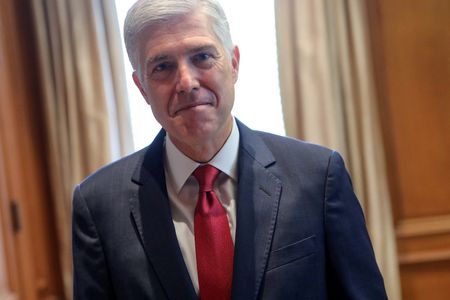
Supreme Court Justice Neil Gorsuch voiced concerns Sunday about ongoing leaks from the nation’s highest court, emphasizing that justices require space for honest deliberations away from public scrutiny.
During an appearance on Fox News Sunday, the conservative justice addressed recent unauthorized disclosures of internal court documents, including memos leaked to The New York Times last month regarding a 2016 decision that blocked former President Barack Obama’s Clean Power Plan.
“We want some transparency, but we also have to leave room for candid conversations and deliberations with one another,” said Gorsuch, who joined the court in 2017 after being nominated by former President Donald Trump.
The justice acknowledged the court provides transparency through publicly available audio recordings of oral arguments, but stressed the importance of private discussions among the nine members.
“But do we need time to actually talk quietly with one another, to find those places where we can reach agreement? Yeah, we do,” Gorsuch explained.
The leaked documents published by The New York Times focused on the court’s emergency docket, sometimes referred to as the “shadow” docket, which has been used frequently to grant quick rulings while cases proceed through lower courts.
The most significant leak in recent memory occurred in 2022 when Politico obtained and published a draft opinion weeks before the court officially released its decision overturning Roe v. Wade, the 1973 ruling that had established nationwide abortion rights.
When asked about how leaks affect public trust in the institution, Gorsuch pointed to the court’s published opinions as the definitive record of justices’ reasoning.
“Everything that I think about a case is there, on the printed page for anybody to read if they so choose,” he stated.
Unlike the court’s regular cases, which include detailed written opinions after months of deliberation, emergency docket decisions often come quickly with minimal explanation.
Gorsuch made these remarks while promoting his upcoming children’s book titled “Heroes of 1776: The Story of the Declaration of Independence,” which will be released Tuesday in conjunction with upcoming celebrations marking 250 years of American independence.
The conservative majority on the court, which includes Gorsuch, continues to shift American jurisprudence rightward. Just last week, the conservative justices weakened a crucial section of the Voting Rights Act, making it more difficult for minority groups to challenge electoral districts they believe are racially discriminatory.
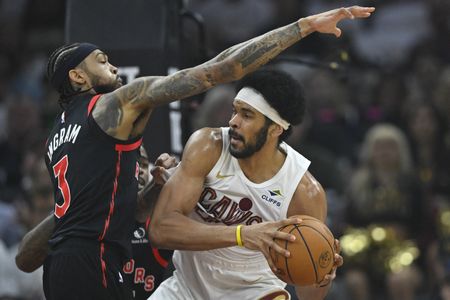
Toronto Raptors star forward Brandon Ingram was spotted wearing a protective walking boot during Sunday morning’s team practice session, just hours before the critical Game 7 showdown against the Cleveland Cavaliers in their Eastern Conference first-round playoff series.
The team has listed Ingram as questionable for tonight’s decisive contest due to inflammation in his right heel.
The two-time All-Star selection has been significantly hampered by the injury in recent games. During Toronto’s 125-120 loss in Game 5 on Wednesday, Ingram managed just 11 minutes of playing time and contributed only one point. He was completely sidelined for Friday’s thrilling 112-110 overtime win in Game 6 that forced tonight’s winner-take-all battle.
The 28-year-old veteran had an outstanding regular season performance, leading the Raptors in scoring with 21.5 points per game across 77 contests. He also contributed 5.6 rebounds and 3.7 assists per game while connecting on 38.2% of his three-point shot attempts.
Two decades following the beloved original film, the follow-up to ‘The Devil Wears Prada’ dominated movie theaters during its opening weekend. Female moviegoers primarily fueled the success of ‘The Devil Wears Prada 2,’ which collected $77 million domestically and $156.6 million worldwide, based on studio projections released Sunday. The sequel claimed the number one position and pushed ‘Michael’ into second place, although the musical biography maintained strong performance in its sophomore weekend with just a 44% decline.
Disney’s 20th Century Studios launched ‘The Devil Wears Prada 2’ across 4,150 theaters throughout North America. Exit polling from PostTrak revealed that approximately 76% of audiences were women, with 74% indicating they would ‘definitely recommend’ the film to others. Movie critics offered mixed reactions to the continuation, which features Anne Hathaway’s Andy Sachs character returning to work under Meryl Streep’s Miranda Priestly at the imaginary ‘Runway’ magazine within today’s struggling media industry.
Production expenses reportedly reached $100 million — a substantial increase from the original film’s $35 million budget. However, director David Frankel recently explained to The Associated Press, ‘As it turns out, you know, by the time you finish paying all the biggest movie stars in the world, you still end up with basically the same budget for making the movie as we did the first one.’
Leading actors Streep, Hathaway, Emily Blunt and Stanley Tucci conducted an elaborate worldwide promotional campaign spanning several weeks, making stylish appearances in Tokyo, London and New York. This time around, even Anna Wintour, who inspired the fashion-obsessed antagonist, participated by joining Hathaway at the Academy Awards ceremony and appearing alongside Streep on ‘Vogue’ magazine’s cover.
The original movie debuted in June 2006 and eventually generated more than $326 million globally, without inflation adjustments. More significantly, it established itself as a cultural phenomenon through memorable quotations including ‘gird your loins,’ ‘groundbreaking,’ and ‘that’s all.’ While follow-up films to beloved classics don’t always succeed, expectations ran high this time: Nielsen data showed that streaming viewership for ‘The Devil Wears Prada’ surged 428% between March 2026 and April 2026.
Lionsgate’s Michael Jackson biographical film ‘Michael’ secured second position, generating $54 million during its second North American weekend across 3,955 theaters. The movie’s global earnings have already reached $423.9 million, with Universal Pictures managing international distribution.
This weekend launches Hollywood’s summer blockbuster period, an essential 18-week timeframe extending through Labor Day that typically represents approximately 40% of yearly box office revenue. Marvel superhero films usually inaugurate the season, but the combined strength of ‘The Devil Wears Prada 2’ and ‘Michael’ provided an effective alternative.
‘This is a really solid weekend,’ commented Paul Dergarabedian, Comscore’s head of marketplace trends. ‘It’s this irresistible combination that more than makes up for the fact that there’s not a Marvel movie to kick off the summer movie season.’
‘Prada’ alone surpassed last year’s summer-opening Marvel film ‘Thunderbolts’ in ticket sales. Additional new releases this weekend included Adam Scott’s horror feature ‘Hokum,’ Andy Serkis’s animated version of ‘Animal Farm,’ and the survival thriller ‘Deep Water’ featuring Aaron Eckhart and Ben Kingsley.
These newcomers all finished behind ‘The Super Mario Galaxy Movie,’ which earned $12.1 million in its fifth weekend, and ‘Project Hail Mary,’ which collected $8.6 million in its seventh weekend.
Examining the top four performers, Dergarabedian identified a pattern: ‘Over the past couple of months, moviegoers have really embraced pure, escapist entertainment,’ he observed.
The federal prosecutor who abandoned a criminal investigation into Federal Reserve Chairman Jerome Powell announced Sunday that the outcome of an internal Fed watchdog review will determine whether the matter continues or closes permanently.
U.S. Attorney Jeanine Pirro, who was appointed during the Trump administration, initiated the criminal probe against Powell in January but abandoned it last month following a federal judge’s decision to block Justice Department subpoenas related to the case.
During an appearance on CNN’s “State of the Union” program Sunday, Pirro discussed the Federal Reserve Office of Inspector General’s review of renovation cost overruns at the central bank’s Washington headquarters, stating: “If there’s something there, great – and if there isn’t, I’ll go home.”
Powell, who frequently faced criticism from Trump, had condemned the criminal probe as an attack on the Federal Reserve’s independence. Judge James Boasberg determined that prosecutors improperly issued subpoenas, ruling that a “mountain of evidence” indicated the investigation was designed to pressure Powell into cutting interest rates quickly or stepping down from his position.
After ending the criminal investigation, Pirro requested that the Inspector General review the cost overruns. The Inspector General had already begun examining the renovation project following Powell’s request for a review last year.
“The only way to find out what happened is through the Inspector General,” Pirro stated.
However, Pirro indicated her office plans to continue legal challenges, saying “we continue to litigate the issue, and we will litigate the issue” and “we’re going to make a motion to vacate the order” issued by Boasberg to establish precedent regarding investigations.
Since returning to office in January 2025, Trump has consistently pressured the Federal Reserve to reduce interest rates more aggressively and extensively than the central bank has implemented, despite ongoing inflation concerns.
The criminal investigation had threatened Senate confirmation of Kevin Warsh, Trump’s choice to succeed Powell when his leadership term concludes on May 15. Republican Senator Thom Tillis, who opposed the probe, had blocked Warsh’s confirmation until the investigation ended.
Pirro’s decision to end the probe and defer to the Inspector General has cleared the path for Warsh’s nomination to advance, with approval by the Republican-majority Senate appearing highly likely.
Also appearing on CNN’s “State of the Union,” Tillis praised Pirro’s statements and said her choice to pause further action while the internal watchdog conducts its review represents “the way this process is supposed to work.”
Should the Inspector General discover evidence of criminal conduct, Tillis said, “then we’ll talk about it. But I think this is a nice way of just ramping it down.”
Tillis also remarked that “at the end of the day, there was no crime committed – and prosecutors that I’ve spoken with all agree.”
During last Wednesday’s Federal Open Market Committee meeting, Powell announced he would remain as a Fed governor following the conclusion of his chairman term.
“I’m encouraged by recent developments, and I’m watching the remaining steps in this process carefully,” Powell commented.
Imprisoned Nobel Peace Prize winner Narges Mohammadi continues fighting for her life in a cardiac intensive care unit at an Iranian hospital, according to her family’s foundation on Sunday.
The women’s rights advocate was rushed to medical facilities in Zanjan, a city in northwestern Iran, this past Friday after experiencing what her foundation described as a “catastrophic deterioration” in her health condition.
According to the Narges Mohammadi Foundation, the activist has experienced dangerous swings in blood pressure, and medical staff have been limited to providing oxygen therapy while working to stabilize her vital signs.
The foundation reported that Mohammadi suffered two instances where she completely lost consciousness, along with experiencing a serious cardiac emergency that prompted her emergency transfer from prison.
The activist, who is in her fifties, received the Nobel Peace Prize while incarcerated for her work advocating for women’s rights and fighting against capital punishment in Iran. Her family previously reported she experienced what appeared to be a heart attack in late March.
“Effective treatment for Narges Mohammadi’s conditions is only possible if she is transferred to her medical team in Tehran,” the foundation stated in their Sunday announcement.
Earlier this year in February, Mohammadi received an additional prison sentence of seven and a half years, according to her foundation. The Nobel committee has previously demanded Iranian authorities release her without delay.
Her most recent arrest occurred in December after she publicly criticized the death of attorney Khosrow Alikordi. Iranian prosecutor Hasan Hematifar told media at the time that Mohammadi had made inflammatory statements during Alikordi’s memorial service.
LONDON – Four individuals were hospitalized after sustaining gunshot injuries during a Saturday shooting incident in south London, according to Sky News reporting on Sunday.
Authorities are examining whether the shooting incident has any connection to a stabbing that took place on the same day, the news outlet reported.
Law enforcement officials had not responded to requests for comment at the time of reporting.
Kenyan authorities confirmed Sunday that severe weather has claimed 18 lives as torrential rains trigger devastating floods and landslides across multiple regions of the East African nation.
The deadly landslides struck three counties – Tharaka Nithi, Elgeyo-Marakwe, and Kiambu – located in Kenya’s central and eastern regions, according to officials with the country’s national police service.
“The National Police Service has confirmed the loss of 18 lives as a result of these incidents, underscoring the grave danger posed by the ongoing weather conditions,” authorities stated in their official announcement.
Kenya is currently experiencing its most intense period of rainfall as the country’s traditional wet season, spanning from March through May, reaches its climax. The severe weather has not only resulted in tragic loss of life but has also caused significant damage to critical infrastructure throughout the affected areas and forced numerous residents to evacuate their homes.
KYIV, Ukraine — Ukrainian forces executed a comprehensive assault on Russian petroleum infrastructure Sunday, targeting the nation’s primary Baltic Sea oil export facility and multiple vessels allegedly circumventing international sanctions.
Overnight drone attacks ignited fires at Primorsk, Russia’s most significant oil shipping terminal on the Baltic coast, regional Governor Alexander Drozdenko confirmed. The facility, managed by state energy company Transneft, processes hundreds of thousands of barrels daily and sits more than 620 miles from Ukrainian territory, positioned between the Finnish border and St. Petersburg.
Governor Drozdenko reported the drone assault did not result in petroleum spills but declined to provide immediate details about potential injuries or infrastructure damage.
Ukrainian President Volodymyr Zelenskyy announced his nation’s military successfully eliminated multiple strategic targets while inflicting substantial harm to oil terminal operations.
“One more Russian carrier of Kalibr missiles is out of action. Major General Yevhen Khmara reported on the successful destruction of targets in the Primorsk port,” Zelenskyy posted on Telegram Sunday.
Zelenskyy detailed that Ukrainian drones successfully engaged a Karakurt missile vessel, patrol craft, and a tanker from Russia’s covert oil transportation network designed to circumvent Western economic restrictions and energy price limitations.
In an earlier Sunday statement, Zelenskyy revealed Ukrainian forces had attacked two additional shadow fleet tankers near Novorossiysk, a major Russian Black Sea shipping hub.
“These tankers were actively used to transport oil. Now they won’t,” he stated, crediting the operation to Ukraine’s general staff chief, Andrii Hnatov.
Russian authorities have not yet responded to Zelenskyy’s assertions regarding either military operation.
Kiev has intensified its campaign against Russian petroleum export systems in recent months. Ukrainian leadership maintains that oil profits directly finance Moscow’s ongoing military invasion, now entering its fifth year.
Meanwhile, Russian drone strikes killed two civilians and injured three others in Ukraine’s southern Odesa region during overnight attacks, the nation’s Emergency Service announced. The bombardment damaged three residential structures and targeted port facilities, sparking fires that emergency crews subsequently controlled.
Russian nighttime assaults also wounded six individuals in the central Dnipropetrovsk region. A passenger vehicle carrying 40 children sustained damage, though no occupants were harmed, officials reported.
Inside Russia, a Ukrainian drone strike west of Moscow claimed the life of a 77-year-old man near Volokolamsk, approximately 75 miles from the capital’s center, local Governor Andrei Vorobyov confirmed via Telegram.
Vorobyov added that six drones were intercepted in the Moscow region, while Mayor Sergei Sobyanin reported at least five additional aircraft were destroyed approaching the capital itself.
In Russia’s western Smolensk region, falling drone debris injured a man, woman, and child after striking an apartment complex, Governor Vasiliy Anokhin stated.
Russia’s Defense Ministry claimed Sunday that 334 Ukrainian unmanned aircraft were eliminated overnight across Russian territory and occupied Crimea.
Ukrainian Air Force officials reported Russia launched 269 drones and ballistic missiles against Ukraine during the same period. Ukrainian defenses successfully intercepted 249 drones, while ballistic missiles and 19 drones struck targets in 15 locations nationwide, the air force announced on Facebook.
A top Federal Reserve official has issued a warning about potential ripple effects from problems in the private credit sector, according to a Bloomberg News report published Sunday.
Federal Reserve Governor Michael Barr cautioned that difficulties in private lending markets could trigger what he called “psychological contagion,” potentially resulting in widespread credit restrictions across the financial system.
Although Barr noted that current connections between traditional banks and private credit firms don’t appear “super worrisome” at this time, he highlighted other concerning areas, particularly where insurance companies intersect with private lending operations.
The Fed governor explained how market psychology could amplify problems beyond their original scope. “People might look at private credit, and instead of saying, ‘This is an idiosyncratic problem, these were high-risk loans, the rest of the corporate sector is different,’ they might say, ‘Wow, there seem to be cracks in our corporate sector. Maybe over here in the corporate bond market, there are also cracks,’” Barr stated during his Bloomberg interview.
He further warned that “then you could have a credit pullback, and that could lead to more financial strain.”
The private credit industry has faced mounting pressure amid recent market turbulence, with some investors pulling back from these investment vehicles due to concerns about asset valuations and lending practices. Several prominent bankruptcies have heightened these worries.
Federal Reserve Chairman Jerome Powell previously addressed the sector in March, indicating that central bank officials are monitoring private credit developments for potential warning signs. However, Powell noted that regulators don’t currently view issues in this area as posing a systemic threat to the broader financial system.
STOCKHOLM – Swedish maritime authorities detained a vessel Sunday that officials believe is operating as part of Russia’s covert tanker network designed to circumvent international sanctions, marking another step in European efforts to crack down on Moscow’s illicit shipping operations.
Maritime officials and police forces boarded the vessel Jin Hui, which flies a Syrian flag, after it entered Swedish waters near Trelleborg. Authorities have launched an investigation into whether the ship meets international safety standards.
“The coast guard suspects that the ship is sailing under a false flag, given there are a number of irregularities concerning its flag status, and therefore does not meet demands for seaworthiness as set out in international regulations and agreements,” Swedish Coast Guard officials stated.
The vessel, traveling without cargo and with an unknown destination, appears on multiple international sanctions lists maintained by both the European Union and Britain, according to maritime authorities.
Swedish Civil Defence Minister Carl-Oskar Bohlin confirmed on social media that officials suspect the tanker belongs to Russia’s covert shipping network.
European authorities have intensified their campaign against Moscow’s fleet of vessels used to generate revenue for its ongoing military campaign in Ukraine, now in its fourth year. Russian officials have criticized these enforcement actions as aggressive moves.
Swedish maritime forces have intercepted five ships this year on various violations, including environmental damage from oil spills and fraudulent flag operations, with some crew members facing criminal charges.
NABLUS, West Bank — A military operation conducted by Israeli forces in the occupied West Bank resulted in the death of one Palestinian and left four others with serious injuries on Sunday, according to Palestinian Red Crescent officials.
Palestinian health authorities identified the deceased as 26-year-old Nayef Firas Ziad Samaro. In a tragic coincidence, officials report that Samaro’s wife was delivering their child at a nearby medical facility when news of his death reached her.
Medical responders indicated that gunfire struck five individuals during the military action. Among the wounded was a 12-year-old child who sustained a shoulder injury, Red Crescent representatives confirmed. Samaro’s remains were transported to the same hospital where his wife was in labor.
Local residents reported the operation occurred during afternoon school dismissal hours in a densely populated civilian area.
Israeli military officials released a statement describing their response to an incident where multiple “terrorists” allegedly hurled stones at their personnel. The statement noted that troops opened fire and “several hits were identified.”
The incident adds to growing concerns from Palestinian officials, human rights organizations, and international monitors about escalating violence in the region. They point to an alarming pattern of young Palestinian deaths occurring alongside increased incidents of property destruction, arson, and forced displacement of agricultural communities near Jewish settlements and outposts throughout the West Bank.
United Nations humanitarian officials report that Palestinian fatalities have reached at least 42 since January began, with armed settlers accounting for no fewer than 11 of those deaths.
Drivers on southbound Interstate 95 are experiencing lane restrictions near Naamans Road due to a vehicle breakdown.
Delaware Department of Transportation officials report that the right travel lane has been blocked to traffic while crews work to clear the disabled vehicle from the roadway.
Motorists should anticipate possible delays and consider using alternate routes if traveling through the area. Drivers are advised to move to the left lane when approaching the incident scene.
The Trump administration has effectively stopped the development of wind energy projects across the United States, invoking national security justifications, according to a Financial Times report published Sunday.
The Pentagon is currently blocking approval for approximately 165 wind energy developments on privately-owned land, the Financial Times stated, referencing information from the American Clean Power Association and sources familiar with the situation.
The stalled developments encompass a range of projects at different stages – some were on the verge of receiving final approval, others were in active negotiations, and some would typically not fall under Pentagon review, the Financial Times noted.
Reuters was unable to immediately confirm these details.
Neither the American Clean Power Association nor the Pentagon provided immediate responses to Reuters’ requests for comment.
Beginning in August 2025, companies developing wind energy have encountered various obstacles, including unexpected silence from Pentagon officials, meeting cancellations without opportunities to reschedule, and notifications that their applications would no longer be reviewed, the Financial Times reported, citing individuals with direct knowledge of the circumstances.
According to the publication, correspondence sent to developers in early April indicated the Pentagon was conducting a comprehensive review of its procedures for assessing how energy projects might affect national security.
The current administration has previously been subject to legal challenges following similar suspensions of wind projects, where officials referenced newly classified national security threats related to radar system interference.
Wind energy companies have experienced ongoing disruptions during Trump’s presidency, as the president has publicly criticized wind turbines as unsightly, costly and ineffective.
Federal prosecutors have obtained physical evidence confirming that a Secret Service agent was wounded during what authorities describe as an assassination attempt targeting President Donald Trump at last weekend’s White House Correspondents’ Association dinner, according to U.S. Attorney Jeanine Pirro.
Speaking on CNN Sunday, Pirro disclosed that investigators discovered concrete proof of the shooting. “We now can establish that a pellet that came from the buckshot from the defendant’s Mossberg pump-action shotgun was intertwined with the fiber of the vest of the Secret Service officer,” Pirro stated during her television appearance.
The revelation provides the first detailed evidence about injuries sustained during the alleged attack on the president at the high-profile media event.
International nuclear safety officials reported Sunday that Ukraine’s Zaporizhzhia nuclear facility was struck by a drone attack that hit its radiation monitoring laboratory.
The facility, currently under Russian control in southeastern Ukraine, notified the International Atomic Energy Agency about the incident involving the external radiation control laboratory, according to the agency’s statement.
No casualties were documented from the strike, and officials have not yet determined whether the laboratory sustained damage, the IAEA confirmed. The targeted facility sits beyond the main nuclear plant’s security boundary.
IAEA Director General Rafael Grossi announced that inspectors stationed at the location have asked for permission to examine the laboratory. Grossi emphasized that strikes occurring near nuclear facilities create potential safety hazards for nuclear operations.
BOSTON — When the Philadelphia 76ers began their playoff series against Boston, uncertainty surrounded Joel Embiid’s availability following his recent appendectomy surgery.
That uncertainty proved manageable as the former MVP delivered exceptional performances when it mattered most.
Making his series debut in the fourth game after recovering from surgery, Embiid showcased some of his finest postseason basketball across the final four contests, propelling Philadelphia to a decisive 109-100 Game 7 triumph over Boston, a squad many considered championship material.
The seventh-seeded Philadelphia team earned a challenging Eastern Conference semifinal series against third-seeded New York, with the opening game scheduled for Monday.
Embiid’s dominant performance helped Philadelphia secure only their second road Game 7 victory in franchise history and their first against Boston since 1982. His 34-point, 12-rebound, six-assist stat line made him the first NBA player ever to reach 100 points in a playoff series after sitting out the opening three games.
“Sometimes I’ve been in those positions where I’ve come up short,” Embiid said. “I’ve always said it, you can’t win alone. You need a team. … The way we’re playing right now, we’re so in sync, offensively, defensively.”
Alongside teammate Tyrese Maxey, who contributed 30 points, 11 rebounds and seven assists, the pair joined exclusive company as only the third duo in NBA history to both record at least 25 points, 10 rebounds and five assists in a Game 7.
Maxey reflected on how the series highlighted his improved understanding of when to take charge versus when to support Embiid’s leadership.
“It’s a growth, because I had to learn when to be aggressive, when not to be aggressive,” Maxey explained. “It got a little bit difficult in the middle of this season. I was basically being first option every single night. Then he comes back and I’ve got to find a way to do both. And he does a really good job of just keeping me engaged and keeping me confident and keep me like, ‘Hey I need you to do what you do.’”
Philadelphia faces an even greater test against New York, a team known for their aggressive, physical style compared to Boston’s approach.
Coach Nick Nurse expressed confidence in Embiid’s readiness for the upcoming challenge, noting how the star center pushed through visible discomfort and received additional treatment during breaks to remain effective late in the game.
Embiid’s fatigue was understandable given Philadelphia’s limited rotation, with only six players logging significant minutes despite nine seeing action. Embiid’s 39-minute performance matched his series maximum.
“He was doing everything he could to stay in the game,” Nurse observed. “Obviously, we ran a lot of things through him and we did just enough.”
The coach emphasized how surviving the intense atmosphere at TD Garden will benefit his squad moving forward.
“It’s really good for us to go through that and respond to it,” Nurse noted. “It’s going to be like that in the playoffs. You’re going to be in tight games and it’s going to be super loud. … And you just have to play through it.”
Nurse credited the victory to forcing Boston into slower halfcourt possessions during the final three minutes, after the Celtics had dominated with fast-break opportunities for roughly 12 consecutive minutes spanning the third and fourth quarters.
This tactical adjustment represents a valuable lesson for the upcoming New York series.
“In the last two (games) and portions of this one, we just guarded really well,” Nurse said.
Despite celebrating the Boston victory, Embiid maintained focus on bigger objectives ahead.
History professor Gregg Frazer often finds himself addressing audiences who don’t want to hear his message about religion’s role in America’s founding.
“Neither side really wants to hear what I say,” explains Frazer, who teaches history and political studies at The Master’s University, a Christian institution in Santa Clarita, California.
According to Frazer, America’s founding fathers didn’t establish a Christian republic. Multiple prominent founders either dismissed fundamental Christian teachings or held beliefs ambiguous enough to spark ongoing scholarly discussion. This perspective frequently disappoints his fellow Christian listeners.
However, Frazer emphasizes that the founders weren’t simply rationalist deists—those who view God as setting the universe in motion like a clockmaker before stepping away—or anti-religious skeptics, as some portray them. This stance disappoints those favoring strict separation between church and state. The majority of founders practiced some form of religious faith.
This enduring discussion about the founders’ religious intentions has intensified as the 250th anniversary of the Declaration of Independence approaches on July 4. During America 250 celebrations, certain Christian activists and writers are strengthening their arguments that the United States had Christian origins.
They find support in the current administration.
President Donald Trump is championing “America Prays,” which will culminate in a May 17 gathering on Washington’s National Mall. Official participants include numerous Christian organizations and individuals, some advocating for the Christian founding concept. Cabinet members are delivering Christian messages in their official roles. Defense Secretary Pete Hegseth declared that “America was founded as a Christian nation … in our DNA.”
Simply put: This longstanding discussion—balancing secular governance with faith—continues to rage and remains significant.
Opposition groups and critics are responding forcefully.
“Most — nearly all — serious historians agree that America was not founded as a Christian nation in any meaningful legal, philosophical, or constitutional sense,” states Americans United for Separation of Church and State. The organization condemns attempts “to redefine America according to the Christian Nationalist disinformation and then reshape our law accordingly.”
According to a 2022 Pew Research Center study, six out of ten American adults believe the founders initially intended America to become a Christian nation.
What makes the founders’ beliefs and intentions significant?
“Everyone’s looking for what we historians call a usable past,” explains John Fea, author of “Was America Founded as a Christian Nation?”
“We go into the past looking for what we want in order to advance a particular political or cultural agenda,” notes Fea, a fellow at the Lumen Center, a Christian research institute and study center in Madison, Wisconsin.
Supporters frequently overlook historical complexities. For instance, public officials and others certainly offered prayers for the new republic during significant historical moments.
“But are those prayers the central part of the story of what happened when we, in the United States, declared independence?” Fea questions. “Last time I checked, it was about taxation and representation and shutting down the port of Boston and all these more economic and political things.”
Historian Mark David Hall maintains that Christianity significantly influenced the founding. While key founders didn’t embrace traditional Christian beliefs, he argues many other founders did, and this shaped their approach to forming the new republic.
“There’s plenty of evidence Christianity had an influence,” states Hall, author of “Did America Have a Christian Founding?”
Hall points out that founders’ focus on human dignity aligns with Biblical teachings about humanity being created in God’s image. The checks and balances system—designed to prevent power concentration—reflects teachings about human sin that would have permeated the largely Protestant culture, he argues.
He also observes that some early presidents and Congresses issued prayer and thanksgiving proclamations, though these sometimes faced opposition and controversy. Some states supported churches for decades after the Constitution’s ratification, suggesting founders didn’t believe religion should be completely removed from public life.
They believed faith was crucial in developing moral, responsible citizens of the new republic. They promoted “toleration without eliminating the importance of real religious commitment on the part of differing adherents,” Frazer wrote in his book, “The Religious Beliefs of America’s Founders.”
The Constitution contains no reference to any specific religion except for the date—”in the year of our Lord” 1787. It prohibits religious tests for officeholders. The First Amendment guarantees religious freedom and forbids establishing a national religion.
Twentieth-century Supreme Court decisions applied the First Amendment to states based on the Fourteenth Amendment, which prevents states from denying citizens’ rights. The court referenced founder Thomas Jefferson’s metaphor of a “wall of separation between church and state.” Courts have since struggled with applying this principle in areas like school prayer, healthcare, labor law and crosses on public property.
Frazer contends that the Bible isn’t cited as a source for governing principles in documented Constitutional Convention proceedings or in the influential Federalist Papers, which supported the Constitution. He says founders drew from influences like Enlightenment thinking on concepts such as human equality, accountable government and religious freedom. Early Constitution critics criticized it for lacking religious content.
The Declaration of Independence does contain religious language, stating that rights come from the “Creator.” It appeals to “divine Providence” and to the “Laws of Nature and of Nature’s God.”
Thomas Jefferson and other founders—skillfully, Frazer notes—used terminology acceptable to Christians as well as followers of other religious and philosophical movements.
Even the seemingly simple question, “Did the founders intend America to be a Christian nation?” raises issues: Who were the founders? When was the actual “founding”?
Some view the founding as the original colonial settlements—a century and a half before 1776. Colonial charters for Massachusetts Bay and Virginia declared Gospel spreading as a fundamental purpose. Puritan Boston sought to be a Christian “city upon a hill.”
In reality, colonies’ religious character varied. They had economic and territorial goals alongside spiritual ones. State religious persecution of religious minorities in Virginia and Massachusetts faced resistance.
The religious values of a colonial system that devastated Native communities and imported enslaved Africans has also faced continuing examination.
Decades before the American Revolution, an evangelical revival called the Great Awakening reached many colonists. Church membership and attendance declined consistently throughout the 18th century, according to studies, even as colonies remained predominantly Protestant.
The Protestant designation also encompassed various beliefs, as some churches moved toward Unitarian views that respected Jesus as a prophet or sage, not divine.
By the Revolution, rationalistic religious approaches strongly influenced many college-educated and wealthy elite men, such as those who created the Declaration of Independence and Constitution, Frazer wrote. Freemasonry also influenced them—a fraternal order based on beliefs in a universal God and morals.
Some founders were devout Christians like John Jay, Samuel Adams and Patrick Henry. Others believed in God but not Jesus’ divinity, including key founders like Jefferson, John Adams and Benjamin Franklin. The mysterious Washington remained active in his Episcopal church but avoided sacraments and was also an active Freemason. He spoke about God in terms most people of that time could accept, such as “Providence” or “Supreme Ruler.”
However, contrary to popular belief, most founders weren’t deists.
Frazer instead describes many founders as “theistic rationalists.” George Washington believed that divine “Providence” saved his life in battle and intervened on America’s behalf. He wasn’t alone in this belief.
“They did believe in an active God,” Frazer says. “Therefore, prayer matters, because there’s someone listening.”
Even skeptics considered religion important in forming virtuous citizens. Franklin contributed toward building projects for various churches and a synagogue in Philadelphia. Many scholars believe the First Amendment created a religious free market in which Christianity and other faiths have thrived to this day.
At speaking events, Frazer distributes a flyer with 12 points explaining why the Christian America view is dangerous for both church and state.
“It’s mostly dangerous for Christianity,” Frazer argues. By claiming people or ideas as Christian when they aren’t, it “muddies the waters in terms of what Christianity is all about.”
American military officials and Moroccan forces are conducting an extensive search operation after two U.S. soldiers disappeared during a large-scale international training exercise in Morocco, authorities announced Sunday.
The service members vanished near Cap Draa, close to the southern Moroccan city of Tan Tan, while participating in the African Lion military exercises, according to statements from U.S. Africa Command and Morocco’s Royal Armed Forces.
Moroccan military officials indicated the personnel went missing in an area near a cliff.
Multiple search teams utilizing ground crews, aircraft, and naval vessels from the United States, Morocco, and allied nations have been deployed to locate the missing Americans. The operation remains active as investigators work to determine what happened.
African Lion represents the largest yearly multinational training exercise organized by U.S. Africa Command, designed to strengthen cooperation between American forces, NATO member countries, and African military partners.
The current exercise began April 27 and continues through May 8, spanning four African nations: Ghana, Morocco, Senegal, and Tunisia.
Morocco hosts the primary portion of the training, which involves roughly 5,000 military personnel representing more than 40 countries, according to AFRICOM officials.
ASHKELON, Israel – Two activists detained after Israeli forces intercepted their Gaza-bound humanitarian vessel will remain in custody for an additional two days, according to their legal representative.
Spanish citizen Saif Abu Keshek and Brazilian national Thiago Avila were taken into custody Wednesday evening and transported to Israel following the maritime interception in international waters off Greece. More than 100 additional pro-Palestinian volunteers aboard the vessels were relocated to the Greek island of Crete.
Court officials confirmed Sunday that the detention period has been prolonged through May 5.
Both Spain and Brazil released a joint declaration Friday denouncing the arrests as unlawful.
The detained individuals participated in the second Global Sumud flotilla mission, which aimed to challenge Israel’s Gaza blockade through humanitarian supply delivery. The vessels departed Barcelona on April 12.
Israeli prosecutors sought a four-day detention extension based on allegations including wartime enemy assistance, foreign agent communication, terrorist organization membership and service provision, and property transfer to terrorist groups, according to rights organization Adalah, which supports the activists’ legal defense.
Defense attorney Hadeel Abu Salih stated her clients reject all accusations. She argued the arrests violated jurisdictional authority and emphasized the mission’s civilian aid purpose rather than any militant support. “The mission was meant to provide aid to civilians in Gaza, not to any militant group,” Abu Salih told reporters following the Ashkelon Magistrate’s Court proceedings.
Abu Salih reported that both men experienced physical mistreatment during transport to Israel and remained restrained and blindfolded until Thursday morning.
Israeli military officials have not yet responded to requests for comment.
Israel’s foreign ministry labeled the flotilla organizers as “professional provocateurs” on Thursday.
“Israel will not allow the breach of the lawful naval blockade on Gaza,” ministry officials declared.
DUBAI, United Arab Emirates — Iranian leadership has submitted a comprehensive peace proposal to Washington through diplomatic channels, establishing a 30-day timeline for resolving bilateral disputes and seeking a permanent end to current hostilities, according to Iranian state-connected media outlets.
On Saturday, President Donald Trump acknowledged examining the new Iranian diplomatic initiative aimed at concluding the conflict, though he voiced skepticism about achieving a successful agreement.
The Iranian government’s 14-point diplomatic framework seeks a complete cessation of warfare rather than merely prolonging the existing truce. This comprehensive response to America’s nine-point strategy demands Washington remove economic sanctions against Tehran, halt maritime blockades, withdraw military personnel from the region, and cease all aggressive actions, including Israeli military activities in Lebanon, as reported by the semi-official Nour News agency, which maintains connections to Iran’s intelligence apparatus.
Tehran transmitted its diplomatic response through Pakistani mediators, the news outlet confirmed. Pakistan has previously facilitated diplomatic discussions between Iranian and American representatives.
Earlier this week, Trump dismissed a prior Iranian diplomatic overture. Nevertheless, diplomatic communications have persisted, and the delicate three-week cessation of hostilities continues to maintain stability.
On Sunday, Iranian Foreign Minister Abbas Araghchi conducted discussions with Oman’s Foreign Minister Badr al Busaidi, who previously supervised diplomatic negotiations between Washington and Tehran before the current military escalation began.
The American president has additionally proposed a new strategy for reopening the Strait of Hormuz at the Persian Gulf’s entrance, through which approximately one-fifth of global oil and natural gas commerce normally flows.
Iran’s deputy parliamentary speaker declared Sunday that Tehran “will not back down from our position on the Strait of Hormuz, and it will not return to its prewar conditions.” Ali Nikzad, who lacks parliamentary decision-making authority, delivered these remarks during an inspection of port infrastructure on Iran’s strategically important Larak Island, positioned near the strait’s narrowest section.
“The Strait of Hormuz belongs to the Islamic Republic of Iran,” he stated, noting that the nation was working to reimburse businesses and property owners for war-related damages, and predicting Trump’s blockade strategy would ultimately prove unsuccessful.
Nikzad restated Iran’s stance that vessels unaffiliated with America or Israel may transit after paying required fees. Washington has cautioned shipping companies they risk facing sanctions for compensating Iran through any payment method, including cryptocurrency, for safe passage.
Iran effectively blocked the waterway by launching attacks and issuing threats against maritime traffic after America and Israel initiated military action on February 28. Tehran subsequently provided certain vessels with protected transit along routes nearer to Iranian coastlines, sometimes imposing charges.
America has implemented a naval embargo of Iranian harbors since April 13, eliminating oil revenues Tehran requires to support its struggling economy.
Sunday, marking the second day of Iran’s business week, saw the rial decline further against the American dollar. On Tehran’s Ferdowsi Street, the capital’s primary currency trading center, the dollar reached 1,840,000 rials. Financial experts indicate strong likelihood the currency will weaken additional in upcoming days.
The rial traded at 1.3 million per dollar in December, establishing a then-record low that sparked widespread demonstrations over economic deterioration. Tehran’s markets remain volatile, with certain commodity prices increasing daily.
Iranian media reports indicate multiple manufacturing facilities have declined to renew employee contracts following Iranian New Year holidays, resulting in substantial job losses.
Yousef Pezeshkian, son and advisor to Iranian President Masoud Pezeshkian, posted on Telegram that both America and the Islamic Republic consider themselves victorious in the conflict and remain unwilling to compromise.
The Norwegian Nobel Committee called on Iran to immediately relocate imprisoned Nobel Peace Prize recipient Narges Mohammadi for medical care in Tehran after her condition severely worsened.
The committee reported maintaining contact with Mohammadi’s family and legal representation, stating the 2023 prize recipient’s life remains endangered without treatment from her specialized medical team in Tehran.
Mohammadi collapsed twice in prison Friday in the northwestern city of Zanjan, her foundation reported, and received treatment at a nearby hospital. Her attorneys believe she experienced a heart attack in late March.
“Narges Mohammadi is imprisoned solely for her peaceful human rights work. Her life is now in the hands of the Iranian authorities,” Nobel committee chair Jørgen Watne Frydnes stated.
Mohammadi, 53, a human rights attorney who received the prize while incarcerated, was detained in December during travel to the eastern Iranian city of Mashhad and received an additional seven-year prison sentence.
Property owners across the nation are pursuing compensation for massive financial losses they say resulted from the federal government’s pandemic-era ban on evictions.
Matthew Haines, a 57-year-old Texas property manager, discovered early in the pandemic that federal rules prohibited him from removing tenants who stopped paying rent. The CDC’s eviction prohibition, which remained in effect for nearly 12 months, resulted in losses exceeding $1 million for Haines and his investment partners.
Haines has joined over 1,500 other property owners in a federal court case challenging the moratorium as a violation of Fifth Amendment protections against government seizure without compensation. The financial damages among plaintiffs vary widely, from thousands of dollars to more than $14.5 million for a single property owner.
Following an initial defeat in the Court of Federal Claims in 2022, the property owners prevailed on appeal and are currently negotiating a settlement with the Justice Department. The landlords seek to recover up to $1.5 billion, though this represents only a small portion of the industry’s total pandemic losses.
“It’s important for us to stand up when a group like the CDC unilaterally, functionally, decides that they have a right to oversee our business,” said Haines, who owns three rental communities with 240 units in Arlington and Irving, Texas.
“What I hope that we will accomplish and, to some extent, we already have, is vindication for ourselves,” he said. “But what’s more important to me is that hopefully my investors will recover some of that money that they should have had coming in over the last six years.”
The nationwide eviction prohibition remained active from September 2020 through July 2021 and became one of the pandemic’s most controversial government responses. The Supreme Court ultimately terminated the ban, ruling that the CDC exceeded its authority without explicit congressional approval.
The Justice Department declined to discuss the ongoing legal proceedings when contacted by the Associated Press.
Beyond the federal restrictions, 43 states and numerous municipalities implemented their own eviction bans, many extending beyond the federal timeline due to broader local regulatory authority compared to federal agencies.
Property owners describe devastating impacts on their operations. Without rental income, many accumulated debt, reduced staff, postponed maintenance work, and in some instances sold properties entirely. They argue these effects persist today through extended eviction procedures, stricter tenant screening processes, and increasing numbers of landlords exiting the rental market.
Housing advocates present a different perspective, arguing the eviction bans provided essential protection. They maintain these policies housed millions of tenants throughout the pandemic while helping contain coronavirus transmission. Advocates also point to tens of billions in federal rental assistance as compensation for property owners.
Haines recognized the crisis immediately when the pandemic began, as numerous tenants lost employment. He initially avoided requiring new lease agreements and showed flexibility with payment-struggling renters.
However, the moratorium represented the most serious challenge in his three-decade real estate career.
“It was terrifying,” Haines said. “We knew almost immediately that we were going to a massive deficit in cash flow that we probably weren’t going to be able to cover.”
Research by the National Rental Home Council conducted shortly after the federal ban ended revealed that half of small-scale landlords experienced missed rent payments, with one-third selling or planning to sell properties. The lawsuit claims the moratorium and resulting eviction case backlog cost property owners $57 billion, affecting more than 10 million delinquent renters during just the first four months.
“Public health measures like this, they may be well intentioned,” said Creighton Magid, a lawyer for the plaintiffs. “But when the government imposes this type of moratorium, the financial burden should be borne by the government, not individual property owners.”
Las Vegas property owner Liz Leone, who manages 52 apartments and joined the lawsuit, said the moratorium nearly destroyed her business. She lost over $250,000 and borrowed $60,000 through the federal Small Business Administration “just to keep my nose above water.” She continues paying off that debt.
“I was definitely questioning whether I would survive,” said Leone, who has operated in the industry for 35 years. “You delay all the expenses you can, but we still had to pay our property taxes. We still have to pay our utilities. … So that’s what you did: I borrowed.”
Housing advocates maintain the policy successfully kept families housed, noting substantial increases in evictions once the moratorium concluded.
Eviction bans “were a powerful intervention to keep people in their homes,” said Kathryn Leifheit, assistant professor at the UCLA Fielding School of Public Health and lead author of a study published in April in the medical journal JAMA Network Open that found homelessness rose 11% in a typical state in 2022, and would have increased 20% without state eviction moratoriums.
Miami resident Dulcee Barnes experienced this protection firsthand. The 28-year-old and her two roommates lost restaurant jobs during the pandemic. Falling two months behind on rent, they faced certain eviction without the moratorium’s protection.
“It gave us breathing room. It took away the fear of having to possibly pack up within 24 hours and live in somebody’s car or couch surfing,” she said.
Eric Dunn, litigation director at the National Housing Law Project, a tenant advocacy organization, disputes claims of significant landlord losses, arguing property owners maintained rent collection abilities and could sell properties during the moratorium.
Property owners also received $46.5 billion in federal emergency rental assistance, which Princeton University’s Eviction Lab determined in April was primarily directed toward areas where landlords historically filed the most evictions before the pandemic.
Landlords argue rental assistance programs failed to fully compensate their losses, describing initiatives plagued by bureaucratic obstacles and poor administration. States delayed spending allocated funds, struggled establishing programs, and in Arkansas and Nebraska’s cases, declined all federal assistance.
Property owners also claim some tenants exploited the moratorium to avoid rent payments. “They were doing things like buying cars,” Leone said. “They didn’t have to pay rent, and here I was driving a car that was 18 years old.”
Despite the moratorium ending five years ago, landlords report ongoing consequences from the policy. They describe more cautious approaches and increased reluctance to rent to applicants with problematic rental histories.
Rick Jones, vice chairman of Management Services Corporation, which operates 4,000 apartment units in Virginia and participates in the lawsuit, attributes this partly to rising fraud. Applicants falsify employment documentation and payroll records, he said, adding: “There are companies that just advertise really creating a whole new identity for you.”
“Most property owners and managers realize that it’s more important to keep that unit vacant than to put a bad resident in. That’s probably what the eviction moratorium reinforced,” said Jones, whose company lost more than $230,000 in unpaid rent during the pandemic.
“When you have somebody that’s bad and you can’t get them out, you’re helpless.”
Haines said he has strengthened tenant screening procedures and now rejects some low-income applicants he might have previously accepted. This stems partly from eviction processes now requiring months longer than pre-pandemic timelines, he explained.
“It’s done more harm,” he said, to low-income people “that we might have considered leasing an apartment to that now we simply can’t take the risk.”
Two American military personnel have vanished in Morocco’s southwestern region while participating in a major international training exercise, according to the United States Africa Command on Sunday.
Search and rescue teams involving the United States, Morocco, and other partner nations have been deployed as part of the African Lion military exercise to locate the missing troops, AFRICOM announced.
“The incident remains under investigation and the search is on-going,” the command stated in its official announcement.
The disappearance occurred on May 2 in the vicinity of the Cap Draa Training Area near Tan Tan, a location situated close to Morocco’s Atlantic coastline. The multinational training operation began in April and spans across four nations, encompassing Tunisia, Ghana and Senegal, with completion expected in early May.
Since its inception in 2004, African Lion represents America’s most extensive annual joint military training operation on the African continent and typically includes senior military leadership from the United States and key African partner nations.
According to U.S. military leadership, this yearly multinational collaboration provides an opportunity to enhance regional security partnerships and improve the preparedness of participating military units for worldwide emergencies.
The White House confirms that President Trump is currently examining a fresh proposal from Iran designed to bring an end to ongoing military conflict between the nations.
In a separate development, the United States Supreme Court has issued a ruling that diminishes the strength of the historic Voting Rights Act of 1965, reducing key protections that have been in place for nearly six decades.
These two significant political developments come as the administration continues to navigate complex foreign policy challenges while domestic voting rights advocates express concern over the court’s latest decision.
American swimmer Gretchen Walsh has once again rewritten the record books, breaking her own 100-meter butterfly world record for the third time within 12 months. The 23-year-old posted an incredible time of 54.33 seconds during competition in Fort Lauderdale, Florida, on May 3rd.
This latest achievement adds to Walsh’s dominance in the event, as she now holds the top 13 fastest times ever recorded in women’s 100-meter butterfly history.
“Must be magic or something out here… let’s make this an annual thing, shall we?,” Walsh wrote on her Instagram account following the record-breaking performance.
The world champion previously made history at this same Florida venue when she became the first female swimmer to complete the distance in under 55 seconds, recording 54.60 seconds in 2024. Despite her dominance in the event, Walsh finished second to fellow American Torri Huske in the 100-meter butterfly at the Paris Olympics.
Walsh’s superiority in the event is evident when compared to other top swimmers – she is more than a full second faster than Sweden’s Sarah Sjostrom, who holds the second-best time of 55.48 seconds from the 2016 Olympics.
VATICAN CITY – During his Sunday address at Saint Peter’s Square, Pope Francis observed World Press Freedom Day by speaking out against continuing attacks on media independence globally and honoring journalists who have been killed while covering wars.
The pontiff delivered his remarks following his weekly Sunday prayer service in the sunlit Vatican square, emphasizing both the vital role of independent journalism and the increasing dangers reporters face worldwide.
“Today we celebrate World Press Freedom Day … unfortunately, this right is often violated, sometimes in blatant ways, sometimes in more hidden forms,” he said.
Francis called on worshippers to keep in their thoughts journalists and media workers who have died in pursuit of truth, especially those reporting from war-torn regions.
“We remember the many journalists and reporters who have been victims of war and violence,” the pope said.
The annual observance on May 3, backed by UNESCO, serves to support news organizations facing pressure or censorship while honoring media professionals who have died while doing their jobs.
The Catholic Church leader has previously characterized journalism as fundamental to society and democratic governance, describing information as a public resource that requires protection from distortion.
Francis has repeatedly expressed gratitude to reporters for their commitment to truth-telling, asserting that journalistic work should never be criminalized and regularly advocating for the freedom of media professionals who have been wrongfully imprisoned or charged.
A camping trip turned into a frightening ordeal for five young people in Austria when an unexploded device from World War II blew up underneath their campfire Saturday night, according to authorities.
The youngsters, ranging in age from 10 to 14 years old, were participating in a youth group excursion from elsewhere in Upper Austria when the blast occurred in St Oswald bei Freistadt, a village location frequently used for organized camping activities, state police officials reported Sunday.
Following the dangerous incident, law enforcement officers examined a second fire pit in the vicinity and discovered yet another explosive remnant from the war era. A specialized bomb squad was immediately summoned to safely remove the hazardous item, authorities confirmed in an official statement.
“Investigations are currently underway to determine how war relics came to be under the campfire area,” the statement added.
Police have not yet released details about how seriously the children were hurt, but confirmed all five were transported to a pediatric medical facility in Linz, a nearby city, for treatment.
Although construction crews and excavation projects across Austria occasionally uncover leftover explosives from the Second World War, incidents like Saturday’s explosion are uncommon occurrences.
BRISTOL, England – A fatal house explosion in the English city of Bristol has resulted in two deaths, with local law enforcement officials treating the blast as suspicious, authorities announced Sunday.
The incident has been classified as a major emergency response situation by police, though officials have ruled out any connection to terrorism.
Law enforcement personnel are conducting investigations at a second Bristol location that appears connected to the deadly explosion, according to official statements.
Investigators indicated their inquiry remains in preliminary phases, but authorities currently do not believe additional suspects are being sought in relation to the blast.
Officials also reported that neighboring properties appear to have escaped substantial harm from the explosion.
WASHINGTON — President Donald Trump announced that the Pentagon will soon disclose previously classified UFO documents his administration has discovered, sparking both excitement and doubt as he teases potential revelations about extraterrestrial life.
The president began generating interest in extraterrestrial matters back in February when he instructed federal agencies to make public their files concerning alien life and UFOs. He has since maintained anticipation with enticing updates, promising the release of government documents never previously shared with the public.
“We’re going to be releasing a lot of things that we haven’t,” Trump stated Wednesday during a White House ceremony honoring NASA astronauts. “I think some of it’s going to be very interesting to people.”
The president has enjoyed positioning himself as the leader who reveals government secrets. During his first week back in office, he authorized the publication of files concerning the killings of President John F. Kennedy, Sen. Robert F. Kennedy and Martin Luther King Jr. Those releases contained little new information beyond what was already public knowledge.
Leading up to that disclosure, Trump declared “the American people deserve transparency and truth.” Now, as he focuses on aerial phenomena, the president has adopted a similar approach, hinting that answers to long-standing questions might be forthcoming. His February social media announcement called for openness regarding “alien and extraterrestrial life, unidentified aerial phenomena (UAP), and unidentified flying objects (UFOs).”
“The first releases will begin very, very soon,” he informed supporters in April during a Turning Point USA gathering in Phoenix. “So you can go out and see if that phenomena is correct. You’ll figure it out.”
Prior to Trump’s order, the Pentagon had already been engaged for years in declassifying and publishing government files about UFOs, now commonly called unexplained anomalous phenomena, or UAP.
Due to national security considerations, Congress established an office in 2022 to examine UAP and declassify as much information as possible. The office’s initial 2024 report documented hundreds of additional UAP incidents but discovered no proof that the U.S. government had ever verified a sighting of extraterrestrial technology. A follow-up report addressing more recent observations is anticipated shortly.
This agency, the All-domain Anomaly Resolution Office, is currently collaborating with the White House to publish “never-before-seen UAP information,” according to a Pentagon announcement.
However, the office’s former director dismissed Trump’s commitments as empty rhetoric, calling them a “shiny object” meant to divert Americans’ attention from the conflict with Iran. Sean Kirkpatrick, a physicist and former intelligence professional who headed the office until 2023, stated he has reviewed the government’s files and believes no shocking discoveries await.
“Readers should not get their hopes up that there’s going to be some document with photos, interviewing the aliens when they came down,” he explained. “Because that just doesn’t exist.”
Videos claiming to display alien technology typically have ordinary explanations, he noted. Contemporary infrared cameras employed by the U.S. military frequently capture jet engines and other heated objects in extended thermal blooms, which, Kirkpatrick explained, accounts for viral footage of fast-moving, capsule-shaped objects.
In Congress, these types of recordings have attracted attention from a small group of Trump-supporting Republicans who maintain the Pentagon is concealing secrets.
The Task Force on the Declassification of Federal Secrets has been pursuing its own inquiry into reports of unexplained aircraft near U.S. military facilities, which the committee claims threaten national security and military personnel.
Last autumn, the task force received testimony from active and former service members who described UAP encounters. In one instance, a senior Navy officer reported that while off California’s coast in 2023, he observed a glowing “Tic Tac” shaped object rise from the ocean and connect with three similar objects. They departed instantly, he testified.
Trump’s focus on this subject has motivated congressional Republicans, including Florida Rep. Anna Paulina Luna, an Air Force veteran who co-leads the task force. Luna has condemned what she terms “less than adequate” openness from the Pentagon.
In a March correspondence to Defense Secretary Pete Hegseth, Luna requested dozens of UAP videos identified by whistleblowers and given titles such as “Spherical UAP in clouds.” Her deadline for Hegseth passed without any videos being provided.
Trump’s involvement in the UFO discussion earned praise from Luna, who told podcaster Joe Rogan last year that she has witnessed evidence of “interdimensional beings.” The Pentagon “can’t hide from our docs request anymore!” Luna posted on social media following Trump’s directive.
Trump seems doubtful about extraterrestrial life’s existence. Speaking to the Turning Point USA audience in Phoenix, he remarked, “I figured this was a good crowd because I know you people, you’re really into that. I don’t know if I am.”
His reasoning for making this announcement at that particular event, held at a megachurch, remains unclear. The previous day, Trump had appeared in Las Vegas, near Area 51, a classified Cold War testing facility that has inspired UFO conspiracy theories.
Vice President JD Vance has characterized himself as “obsessed” with UFO documents. In March, he mentioned trying to find time to examine Area 51 since assuming office.
“I’ve still got three more years as vice president,” Vance told conservative podcaster Benny Johnson. “I will get to the bottom of the UFO files.” Referencing his Christian beliefs, Vance suggested that sightings attributed to aliens are actually manifestations of spiritual demons.
Even before Trump addressed this topic, extraterrestrial interest was already growing.
Hollywood has renewed its focus with an upcoming Steven Spielberg film, “Disclosure Day.” Former President Barack Obama created excitement in February when he stated on a podcast that aliens exist. He subsequently clarified that while he had seen no proof, “the odds are good there’s life out there.”
Trump isn’t the first president attracted to UFO mysteries. President Bill Clinton has mentioned ordering an examination of the Roswell Incident — something crashed in 1947 at a New Mexico ranch and authorities later claimed the debris came from a high-altitude weather balloon — around its 50th anniversary in 1997. Presidents Jimmy Carter and Ronald Reagan both claimed UFO sightings before entering the White House.
The U.S. government has been examining UFO reports since the 1940s, partly to assess whether they represent advanced technology from rival nations or “evidence of off-world technology,” according to the Defense Department’s 2024 report.
In online UFO communities, some view Trump’s commitment as progress; others expect it will lead nowhere. For dedicated followers of the subject, promises of major revelations have consistently failed to meet expectations, said Greg Eghigian, a Pennsylvania State University professor who authored a book about UFO sighting history.
“There is almost no satisfaction that is possible for many of the really die-hard folks,” he observed. “So in a sense, I think disappointment can almost be guaranteed to be expected no matter what comes out of this.”
The Lebanese militant organization Hezbollah has suffered devastating losses since it launched attacks against Israel on March 2, according to internal casualty estimates from the group itself.
Israeli forces have seized portions of southern Lebanon, forcing hundreds of thousands of Shiite Muslims to flee their homes, while killing what sources describe as several thousand Hezbollah fighters – far more than previously known.
The renewed fighting has also created serious political problems for the Iran-backed organization. Lebanese opposition groups have grown more critical of Hezbollah’s armed status, arguing it repeatedly drags the country into wars with Israel.
For the first time in decades, Lebanon’s government engaged in direct negotiations with Israel last April – a move Hezbollah strongly opposed.
Despite these setbacks, more than a dozen Hezbollah officials told Reuters they believe joining Tehran’s broader conflict with Israel and the United States could ultimately benefit them. The organization, established by Iran’s Revolutionary Guard in 1982, began attacking Israel just two days after the conflict started with American and Israeli strikes on Iran on February 28.
Hezbollah leaders calculate that their involvement will ensure Lebanon becomes part of any future U.S.-Iranian peace talks, potentially securing a stronger ceasefire agreement than the one implemented in November 2024 after the Gaza-related fighting.
The group was severely damaged in the previous war, which resulted in the death of leader Hassan Nasrallah and approximately 5,000 fighters, significantly weakening its control over Lebanon’s government.
With Iranian assistance, Hezbollah has rearmed and adopted new strategies, including drone warfare, demonstrating surprising capabilities after maintaining a fragile 15-month truce during which Israel continued targeting its members.
Hezbollah legislator Ibrahim al-Moussawi rejected claims that the group was following Iran’s orders when it resumed hostilities. He explained to Reuters that Hezbollah saw an opportunity to “break this vicious cycle … where the Israelis can target, assassinate, bombard, kill, without any revenge.”
Al-Moussawi admitted to losses and destruction in southern Lebanon but stated that “you don’t go into making calculations of how many are going to be killed” when “pride and sovereignty and independence” are threatened.
Although a U.S.-brokered ceasefire that began April 16 has reduced fighting significantly, Israel and Hezbollah continue exchanging attacks in the south, where Israeli forces maintain what they call a “buffer zone.”
Yezid Sayigh, a senior fellow at the Carnegie Middle East Center in Beirut, noted that Hezbollah had “shown more resilience than many thought possible, but that was not a strategic gain in itself.”
“The only thing that will contain Israel is a comprehensive U.S.-Iran deal,” Sayigh said. “Without a deal, there’s going to be a lot of pain for everyone. At best, a hurting stalemate.”
Heavy Casualties Mount
Lebanon’s health ministry reports that over 2,600 people have died since March 2, with approximately one-fifth being women, children, and medical workers. The ministry’s count does not separate civilians from combatants.
Three sources, including two Hezbollah officials, revealed that the ministry’s numbers exclude many of the group’s casualties. They confirmed several thousand Hezbollah fighters have been killed, though the organization lacks complete casualty figures.
Hezbollah’s media office disputed the several-thousand figure as inaccurate while acknowledging they don’t have final totals. The group directed Reuters to the health ministry’s statistics.
A Hezbollah commander described how dozens of fighters went to frontline towns like Bint Jbeil and Khiyam prepared to fight to the death. Their remains have not been recovered.
In Hezbollah-controlled southern Beirut neighborhoods, more than two dozen newly excavated graves were rapidly filled with fighters’ bodies in the days following the ceasefire. Simple marble headstones mark some as commanders, others as regular fighters.
The village of Yater alone recorded 34 Hezbollah fighter deaths, according to local council records.
Lebanon’s Shiite Muslim population has suffered the most from Israeli attacks, fleeing to Christian, Druze, and other areas where many residents blame Hezbollah for initiating the war.
Israel has been consolidating control over a security zone extending up to 10 kilometers into Lebanon and destroying villages, claiming the goal is protecting northern Israel from Hezbollah militants operating in civilian areas.
An Israeli government official stated that Hezbollah violated the November 2024 ceasefire by attacking Israeli civilians on March 2. The official said the threat to northern Israel would be eliminated, adding that thousands of Hezbollah militants had been killed and Israel was systematically destroying the group’s infrastructure.
Israeli military reports indicate Hezbollah has launched hundreds of rockets and drones at Israel since March 2. Israel has announced 17 soldier deaths in southern Lebanon and two civilian deaths in northern Israel.
Citing continued Israeli strikes, Hezbollah has dismissed the April ceasefire as meaningless and maintained its attacks.
High-Stakes Gamble
A diplomat with Hezbollah contacts described the group’s war decision as both a major gamble and survival strategy, explaining that it needed to become part of the problem to be included in any eventual regional solution.
Whether this gamble succeeds remains unclear.
Tehran has insisted that Israel’s campaign against Hezbollah be included in any broader war agreement. However, President Trump stated last month that any Washington-Tehran deal “is in no way subject to Lebanon.”
Pakistani Foreign Ministry spokesperson Tahir Andrabi referenced an April 16 statement emphasizing that Lebanese peace was essential to the U.S.-Iran talks Pakistan is mediating.
A Western official suggested the possibility that the U.S. and Iran might eventually reach an agreement that excludes the Lebanese conflict.
The U.S. State Department, Iran’s U.N. mission in Geneva, and Lebanon’s government did not immediately respond to requests for comment.
Hezbollah’s al-Moussawi said a Lebanese ceasefire remains Iran’s top priority, noting that Tehran shares Lebanon’s goals, including stopping Israeli attacks and securing Israeli withdrawal. Hezbollah has “full trust in Iran – that the Iranians will not sell their own friends,” he stated.
The State Department referenced an April 27 Fox News interview where Secretary of State Marco Rubio said Israel had the right to defend itself against Hezbollah attacks and that he didn’t believe Israel wanted to maintain its Lebanese buffer zone permanently.
The United States has urged Israel “to make sure their responses are proportional and targeted,” Rubio said.
When the April 16 ceasefire was announced, Israeli Prime Minister Benjamin Netanyahu declared that Hezbollah’s disarmament would be a fundamental requirement in Lebanese peace negotiations.
Hezbollah has rejected disarmament, stating that its weapons are a matter for national dialogue. Any Lebanese attempt to forcibly disarm the group could spark conflict in a country devastated by civil war from 1975 to 1990.
Lebanese President Joseph Aoun and Prime Minister Nawaf Salam have pursued Hezbollah’s peaceful disarmament since last year. On March 2, the government prohibited the group’s military operations.
Hezbollah has demanded the government reverse that decision and end direct Israeli talks.
Lebanese officials told Reuters they believe direct Israeli negotiations under U.S. supervision offer the best path to securing a lasting ceasefire and Israeli troop withdrawal, as only Washington has sufficient influence with Israel to achieve these objectives.
Electronics manufacturing giant Foxconn announced Sunday that it successfully deployed two advanced satellites into space aboard a SpaceX Falcon 9 rocket that lifted off from California, representing the Taiwan-based company’s continued expansion into aerospace technology.
The satellites, designated PEARL-1A and PEARL-1B, have successfully reached their planned low-Earth orbits and are scheduled to carry out operational missions spanning five years, according to the company.
Foxconn explained that these next-generation satellites are mainly intended to test and validate advanced payload systems focused on telecommunications and space research applications.
MOSCOW, May 3 – Russian state television announced Sunday that Slovakia’s Prime Minister Robert Fico will be among a small group of international leaders attending Russia’s Victory Day parade in Moscow later this month.
With Viktor Orban’s recent electoral defeat in Hungary, Fico has emerged as the European Union’s most Russia-friendly leader. Slovakia and Hungary have continued receiving Russian natural gas despite the EU’s push to eliminate dependence on Russian energy sources.
Fico has repeatedly defied EU consensus by traveling to Moscow in 2024, coming two years after Russia launched its full-scale military operation in Ukraine. He held meetings with Russian President Vladimir Putin at the Kremlin after attending last year’s Red Square parade, prompting criticism from Slovakian opposition parties and European Union officials in Brussels.
Belarusian leader Alexander Lukashenko is also expected to participate in the May 9 celebrations in Moscow.
The annual parade represents one of Russia’s most significant ceremonial events, honoring the Soviet Union’s triumph over Nazi Germany in World War Two. The Soviet Union, which included both present-day Russia and Ukraine, suffered approximately 27 million casualties during the conflict.
Russian officials announced Wednesday that this year’s parade will feature a reduced format compared to previous years, eliminating the traditional extensive weapons displays due to heightened concerns about potential Ukrainian military strikes.
Supreme Court Justice Clarence Thomas will achieve a historic milestone this week, securing his position as the second longest-serving justice in the nation’s history. The 77-year-old conservative has wielded considerable influence in steering the high court toward more conservative positions throughout his decades-long tenure.
Thomas joined the Supreme Court in October 1991 after President George H.W. Bush appointed him at just 43 years old to fill the seat left by liberal icon Thurgood Marshall. Marshall had broken barriers as the court’s first Black justice, while Thomas became the second following a heated Senate confirmation process.
According to the Supreme Court Historical Society, Thomas will surpass Justice Stephen J. Field’s tenure record on Monday, who served from 1863 to 1897. By Thursday, he’ll move ahead of his former colleague Justice John Paul Stevens, who sat on the bench from 1975 to 2010.
Should Thomas continue serving until May 20, 2028, he would break the all-time record currently held by Justice William O. Douglas, who served from 1939 to 1975.
Thomas has made an indelible mark on American jurisprudence, though his role has transformed significantly over the years.
“He began his time on the court often in dissent, and he stood his ground,” explained Haley Proctor, a Notre Dame law professor who previously clerked for Thomas.
“The justice’s influence on the law has been profound,” Proctor noted. “And that is a consequence, not only of his many years on the court, but also of his persistence.”
Thomas has been instrumental in helping the court’s current 6-3 conservative majority, established in 2020, take bold action. In June 2022, he authored a groundbreaking decision that expanded Second Amendment gun rights and joined his conservative colleagues in dismantling Roe v. Wade, the 1973 ruling that had protected abortion access nationwide.
His judicial philosophy has consistently favored broad religious freedom protections, opposed same-sex marriage, challenged affirmative action programs in education and employment, supported capital punishment and expansive executive authority, and reduced campaign finance regulations.
“Justice Thomas is the most radically conservative justice to serve on the Supreme Court in modern times,” stated Erwin Chemerinsky, dean of UC Berkeley School of Law. “I say this because in addition to being conservative he has taken positions that would dramatically change the law that the court never has accepted.”
Chemerinsky highlighted Thomas’s desire to overturn precedents protecting access to contraceptives and striking down laws criminalizing gay relationships. He also noted the justice’s opposition to press freedom protections and his criticism of requirements that states provide public defenders for indigent criminal defendants.
“In some areas, he succeeded in changing the law, such as the Second Amendment, overruling Roe v. Wade and ending affirmative action,” Chemerinsky observed. “But in most places his calls for a radical change in a conservative direction have not gained support from a majority of the court.”
Thomas has consistently supported former President Donald Trump’s policies when lower courts have blocked them. When the Supreme Court dealt Trump a rare defeat in February by rejecting his comprehensive tariff program, Thomas joined two other conservative justices in dissent, earning praise from the former president.
Ken Masugi, a scholar at the conservative Claremont Institute, noted that Thomas inspires deep loyalty among those who work with him, particularly former law clerks who have gone on to become federal judges. Masugi worked under Thomas at the Equal Employment Opportunity Commission before his Supreme Court appointment.
“One notices that his clerks are incredibly loyal to him, even the ones who disagree with him,” Masugi said. “That’s proof of the influence he has on the people within the court.”
Thomas was serving as a federal appeals court judge when Bush nominated him for the lifetime Supreme Court position. The Senate narrowly confirmed him 52-48 after a contentious battle that included sexual harassment allegations from law professor Anita Hill, a former EEOC colleague. Thomas denied the accusations.
Future President Joe Biden, then a Democratic senator, chaired the Senate Judiciary Committee during those hearings, which Thomas condemned as “a high-tech lynching for uppity Blacks.” He told senators: “It is a message that unless you kowtow to an old order … you will be lynched, destroyed, caricatured by a committee of the U.S. Senate rather than hung from a tree.”
Thomas continues to speak forcefully in public appearances. During an April 15 event at the University of Texas, he characterized progressivism as a political movement that threatens America’s foundational principles.
Thomas argued that progressivism “seeks to replace the basic premises of the Declaration of Independence, and hence our form of government. It holds that our rights and our dignities come not from God, but from government. It requires of the people a subservience and weakness incompatible with a Constitution premised on the transcendent origin of our rights.”
American University law professor Stephen Wermiel observed, “I understand that he’s a very gregarious guy and that people at the court like him, but he does often come across as sort of an angry, bitter justice. There are times when you feel like he’s still not over the Anita Hill episode, and still has a kind of simmering anger about that.”
While Bush’s other Supreme Court nominee, Justice David Souter, disappointed conservatives by moving leftward, Thomas became a conservative favorite, though sometimes overshadowed by his contemporary Justice Antonin Scalia, who died in 2016.
During his first complete term in 1992, Thomas joined a dissenting opinion arguing that states should decide abortion policy and that Roe v. Wade should be overturned. This marked the beginning of his willingness to challenge established precedents.
In 1995, Thomas authored a concurring opinion criticizing affirmative action initiatives, arguing they perpetuate beliefs that racial minorities need assistance to compete successfully.
These once-minority positions have now become Supreme Court law.
“If Thomas believes there were bad precedents set in the past, he doesn’t feel any fidelity to them,” explained Ralph Rossum, a Claremont McKenna College professor who authored a book about Thomas.
Thomas has also modified one notable habit. For nearly three decades, he rarely asked questions during oral arguments. This changed when the court shifted to telephone hearings during the 2020 COVID pandemic, and he has remained an active questioner since then.
At 77, with his 78th birthday approaching on June 23, Thomas has shown no signs of retirement plans. Trump, who could make a fourth Supreme Court appointment if any vacancy occurs, has expressed hope that Thomas and fellow conservative Justice Samuel Alito, 76, will continue serving.
“It’s hard for me to imagine that becoming the longest-serving justice is not of some importance to him,” Wermiel suggested.
Thomas has previously hinted at a lengthy tenure. During a 2019 appearance at Pepperdine University in California, when asked about potential retirement remarks in 20 years, Thomas responded simply.
“But I’m not retiring,” Thomas told the interviewer, who followed up: “Not in 20 years?”
A recent Supreme Court decision has opened the door for more aggressive political map-drawing that could further reduce the already historically low number of competitive congressional races this fall.
The court’s Wednesday ruling comes during an unprecedented national battle over congressional redistricting and may herald a new phase of blatant partisan gerrymandering that creates even fewer contested elections, diminishing voter influence, according to political experts.
The scarcity of contested races means House control will probably be decided in November’s midterm elections by less than 10% of Americans, with winners in most districts virtually guaranteed before any votes are counted, a Reuters analysis revealed.
According to the analysis, just 32 of the House’s 435 seats are presently viewed as competitive. These districts received ratings as toss-ups or leaning Democratic or Republican from three prominent independent forecasters: Cook Political Report, the University of Virginia’s Crystal Ball and Inside Elections.
The remaining districts are essentially unwinnable for the opposing party. Cook rates 375 seats—over 85% of the House—as either “Solid Republican” or “Solid Democrat,” indicating analysts don’t anticipate serious challenges. Cook labels another 28 races as “likely” Republican or Democratic, meaning they’re currently non-competitive but could shift under different circumstances.
This election cycle features the smallest number of competitive House contests at this point since at least 2008, based on archived Cook ratings.
Democrats require only three additional seats to secure a House majority, granting them authority to obstruct President Donald Trump’s legislative priorities and launch investigations into his administration.
The diminishing House battleground stems from multiple causes, including heightened political polarization. However, the strategic use of congressional redistricting, or gerrymandering—which intensified after Trump began urging Republicans to create new maps last year—represents a crucial factor that will only accelerate following the Supreme Court’s decision, experts indicate.
“We are now in a cycle of gerrymandering wars,” stated Justin Levitt, a Loyola Law School professor who operates the All About Redistricting website. “What used to be a cold war has gotten very hot.”
The court weakened a federal Voting Rights Act provision that previously prevented state legislatures from eliminating districts with predominantly racial minority populations. Political analysts anticipate Republican-controlled states will target a dozen or more Democratic-held majority-Black and majority-Latino seats that formerly had stronger protections.
“I think it gets worse before it gets better,” Levitt commented. “And I think there’s plenty of room for it to get worse.”
The shortage of competitive districts can impact Congress significantly, explained Matthew Klein, a House analyst with Cook. When House candidates only need to attract their base supporters to win rather than moderates or opposing party members, they’re more inclined to embrace extreme positions instead of seeking middle ground.
“If you look at Congress and how it acted 20 years ago, 30 years ago, even farther back, you see a Congress that is both less acrimonious and also more productive,” he noted. “There used to be bills that passed with huge majorities on major issues. We just don’t really see that anymore.”
While gerrymandering has existed throughout American democracy, the practice has intensified recently as both legal and institutional safeguards have disappeared. In 2019, the Supreme Court determined that although partisan gerrymandering might be undemocratic, federal courts couldn’t regulate it.
Last year, Trump successfully convinced Texas Republicans to abandon their existing map and create a new one targeting five Democratic incumbents, sparking a nationwide competition that expanded to nearly a dozen additional states. This action destroyed the traditional practice of limiting most redistricting to each decade’s beginning, following completion of the U.S. Census population count.
Wednesday’s Supreme Court ruling has provided lawmakers even greater freedom to draw districts favoring their party. These developments have occurred alongside technological improvements, enabling mapmakers to identify Democratic and Republican voters down to individual census blocks.
“If there are no guardrails, there are no guardrails,” Levitt observed. “I think the constraint is now realpolitik and imagination, not, ‘We just don’t do that.’”
Gerrymandering isn’t solely responsible for the lack of competitive districts. Voters have become more geographically separated, with rural areas becoming more conservative while suburban regions shifted left.
Just as House members have grown more polarized, voters have followed suit. Split-ticket voting, where voters select candidates from different parties for various offices, was once relatively common but has largely disappeared.
In 2000, 86 House members were elected from districts that voted for the opposing party’s presidential candidate, according to research by Kyle Kondik, Crystal Ball’s managing editor. In 2024, that figure dropped to 16.
NEW YORK — An invisible economic factor is steadily increasing expenses for Delaware families, from vacation costs to weekly shopping trips: the declining value of the U.S. dollar.
Since the beginning of 2025, the dollar has decreased roughly 10% compared to other major global currencies, creating a potential contributor to Americans’ growing worries about the cost of living.
“It’s kind of a hidden tax,” says economist Thomas Savidge of the conservative-leaning American Institute for Economic Research. “What your dollar is going to be able to buy is going to shrink.”
The U.S. Dollar Index, which tracks the greenback’s performance against other significant currencies, experienced its most dramatic six-month decline in over five decades during the first half of 2025. While the drop has stabilized, the index remains approximately 10% below where it stood at the beginning of President Trump’s current term.
When the dollar is strong, foreign goods become less expensive and inflation can be controlled more effectively. However, a weakened dollar tends to raise prices on international products while making American exports more competitive globally.
American presidents have traditionally expressed support for a robust dollar, even while implementing policies that sometimes weakened the currency. Trump has indicated that a strong dollar disadvantages the United States and that a weaker currency benefits American manufacturing. Consistent with his communication style, Trump has been direct about this position.
“You make a hell of a lot more money with a weaker dollar,” he said last year, one of a number of public statements showing his preference for seeing the dollar decline.
Trump’s perspective on a weaker dollar’s advantages is shared by others in the business community.
Corporate earnings discussions in recent months have frequently highlighted how currency weakness has benefited companies ranging from Philip Morris to Coca-Cola, with executives using terms like “favorable currency impact” to describe how the decline provided international advantages that improved their financial results.
“In many cases, we’ve got a weaker dollar, which is not unhelpful,” Elie Maalouf, the CEO of InterContinental Hotels, said on a February call as the company announced higher profits and revenues.
Large international corporations conducting overseas business can benefit from a weaker dollar as their products become more affordable in foreign markets. However, most American businesses operate domestically. For companies serving local customers, the situation differs significantly, especially when they depend on imported materials.
Travis Madeira, a fourth-generation lobsterman who founded the lobster-shipping business LobsterBoys with his brother, generates approximately 80% of his revenue from American customers, unlike competitors who focus primarily on exports.
“The exporters are gonna have the advantage when it comes to the dollar weakening,” says Madeira, who is paying more to import bait and buy Canadian lobsters. “These guys are gonna have a little bit of a lever on us.”
Even companies with international operations feel the currency’s impact. While large corporations often use currency hedging strategies for protection or increase overseas sales, smaller enterprises typically face greater vulnerability to these fluctuations.
David Navazio, CEO of Pennsylvania-based Gentell, which manufactures bandages and other medical supplies, runs facilities in Brazil, Paraguay, Canada, New Zealand and the United Kingdom. The dollar’s decline in each location has increased Gentell’s operational expenses.
Gentell has been forced to increase certain prices to account for currency changes, adding to other difficulties including tariffs and war-related fuel cost increases.
“A year ago, none of these were concerns,” he says. “And it always hurts the consumer.”
American consumers most directly experience the dollar’s weakness when traveling internationally or purchasing items directly from foreign vendors.
Traveling to Mexico, Americans’ preferred international destination, means your dollar has lost about 16% of its value against the peso since early 2025. Similar decreases of roughly 10% to 17% have occurred against the Swiss franc, South African rand, Danish krone, Swedish krona and the Euro.
Regarding products imported into the United States, there is an effect, though it’s more difficult to measure precisely. Economic experts estimate that in developed nations like the U.S., only approximately 5% to 10% of currency depreciation affects consumer prices directly.
However, these currency effects add pressure when prices are already influenced by other economic factors.
Consider coffee, among the grocery products experiencing the largest price increases over the past year. Brazil supplies the majority of America’s coffee, and the dollar has weakened around 13% against the Brazilian real. Currency shifts can have greater impact in developing economies, and while only a portion of this change may contribute to coffee’s rising costs, every factor accumulates. Government statistics show coffee prices have increased nearly 19% in the United States over the past year.
Currency valuations fluctuate continuously, and although the dollar’s recent decline is significant, it has reached lower points during the presidencies of each of Trump’s predecessors, dating back to the Dollar Index’s creation in 1973 during Richard Nixon’s administration.
Kenneth Rogoff, a Harvard University economist and former chief economist at the International Monetary Fund, says while “a lot of policies that Trump is doing are something of a cancer for the dollar,” he believes that it was destined to fall no matter who was in charge.
“The dollar had been on a 15-year bull run,” he said. “I would argue the dollar is still wildly overvalued, and over the next maybe five or six years, it might fall 15%.”
What does this mean for American families? Rogoff predicts commodity prices will likely increase, particularly considering the impact of Middle Eastern conflicts on fuel costs.
“They’re just going to go up,” he says, “no matter what the dollar’s at.”
OMAHA, Nebraska – Greg Abel received strong approval from investors for his leadership capabilities at Berkshire Hathaway, though the magnetic appeal that his predecessor Warren Buffett brought to the company appears to be diminishing.
Vacant chairs and smaller crowds were evident during Berkshire’s annual investor gathering in Omaha this past weekend – the first meeting since Abel took over as CEO from Buffett in January.
Abel led the company’s yearly meeting at a downtown venue without Buffett sharing the stage, although the 95-year-old billionaire observed from the crowd and made brief remarks.
Investors left feeling confident about Abel’s understanding of Berkshire’s vast business empire, which spans insurance, railways, energy, manufacturing and retail sectors.
However, he doesn’t possess the same magnetic appeal as the Oracle of Omaha or the late Vice Chairman Charlie Munger, who passed away in 2023. Both men saw themselves as educators during their decades of previous shareholder gatherings.
“I was a little bit disappointed,” said Xiao Zhang, a private investor from Boston. “In previous years, Warren Buffett and Charlie Munger sat on the stage, sharing their investing experiences and also life experiences and philosophies. This year, I didn’t hear something like that.”
Other attendees noted that Buffett and Munger established a foundation for Abel, teaching him to value the company’s established culture. These investors believe Berkshire will thrive under new leadership.
“They built something to outlast them,” said John Wichita, a utility systems analyst from Omaha, speaking about Buffett and Munger. “And I think it will. And the ideas they presented are much more powerful than their physical presence, in a way.”
REDUCED DEMAND
“Picture with the Gecko! There’s no line!” called out a worker on Friday afternoon at the Geico booth during Berkshire’s annual investor shopping experience featuring company-owned businesses, referencing the insurance company’s mascot.
Queues were noticeably shorter and less frequent. When sales ended on Saturday, See’s Candies had hundreds of unsold commemorative chocolate boxes. Dairy Queen had remaining ice cream bars. Fechheimer Brothers still had numerous Andy Warhol-style shirts featuring Buffett and Abel.
Previously, these items typically sold much better or completely sold out.
The main meeting also drew fewer people. While Buffett historically attracted full capacity, reporters estimated approximately 12,000 of the arena’s 18,000 seats were filled when Abel began this year’s gathering.
Berkshire has not yet responded to inquiries about attendance figures and merchandise sales.
Entry lines before the 7 a.m. opening were also shorter, though some investors still arrived early.
“I’ve watched it online, but flying here and communicating with people face to face is a better way to learn the meaning of value investing,” said Chandler Thien, a freelance writer from Beijing. “It was worth it to pay money for this trip.”
Many attendees who remained for the complete meeting left impressed.
“Greg did a good job,” said Alexandra Cook, an accounting and finance professor at Palm Beach Atlantic University in Florida, who brought four students. “He had a job to do to reassure shareholders, and he did that. It was clear he knew the operations intimately, and it wasn’t just Warren’s opinion that that was the case.”
Others had different reactions.
“Most people are here for investing knowledge and life philosophies. It was one of the reasons I was drawn to Berkshire,” said Sophia Deng, who runs an artificial intelligence startup in San Francisco. “With Greg Abel, the emphasis was very, very different. It (became) more of an operational excellence conference, and it’s not what I’m interested in as much.”
Deng intends to maintain her Berkshire holdings but won’t purchase additional shares.
OPTIMISM AND FORWARD FOCUS
Some suggested that travel expenses or reluctance to visit the United States from abroad may have reduced attendance.
Others view Berkshire – both as an investment and for its corporate culture – as a refuge from global uncertainties, and appreciated how Abel and fellow executives emphasized the company’s future direction.
“In light of everything that’s going on in the world, there doesn’t seem to be a lot of hope and positivity,” said Julie Vargas, a healthcare logistics manager from Omaha. “Having someone tell us what’s going to possibly happen and where we can look forward is a positive step in the right direction.”
Cindy Chin, CEO and chief space officer of Planetary Systems AI, said maintaining consistency is part of Berkshire’s attraction.
“We have a lot of volatility in geopolitics, but Berkshire’s investing philosophy has always been staying true to value investors and shareholders, and I don’t think that’s going to change,” she said. “This is Warren and Charlie’s legacy, and being here is still someplace special.”
Abel is 63 years old and has indicated his desire to lead Berkshire for an extended period, potentially for decades.
He has earned investor confidence. He may require additional qualities to ensure shareholders continue viewing Berkshire and the annual weekend as extraordinary.
“The throngs of shareholders may abandon the meeting with the lack of the unique homespun feel of Warren’s wit,” said Richard Callahan, a retail banker at BMO in Omaha. “Abel may grow into it. But he’s no Warren Buffett.”
PARIS – A tragic maritime accident near Calais claimed the lives of two women Sunday when their vessel overturned during an attempted crossing from France to Britain, according to French regional authorities.
The boat was transporting roughly 80 migrants when it capsized in waters off the French coast. Christophe Marx, a spokesperson for the Pas-de-Calais regional government, confirmed the fatalities.
“We regret to say that we found two people, two women, who had died,” Marx stated, noting that rescue teams successfully saved the remaining passengers.
This fatal incident underscores the ongoing challenges both British and French governments face in addressing unauthorized maritime migration across the English Channel. Rising immigration concerns have contributed to increased political support for parties like Britain’s Reform UK and France’s National Rally.
Just last month, British officials announced a significant financial commitment to address the crisis, agreeing to provide France with up to 660 million pounds (approximately $895.8 million) through a three-year border security agreement aimed at reducing illegal Channel crossings. A portion of this funding depends on measurable results in stemming the flow of unauthorized crossings.
Formula 1 is set to abandon its current hybrid engine technology in favor of returning to the thunderous V8 engines that once defined the sport, according to the president of motorsport’s governing organization.
Mohammed Ben Sulayem, who leads the International Automobile Federation (FIA), announced during the Miami Grand Prix that the racing series will transition away from its existing V6 hybrid power units to V8 engines no later than 2031, with the possibility of implementing the change a year sooner.
Speaking from his office with a view of the Hard Rock Stadium circuit, the Emirati official expressed confidence about the timeline. “It’s coming. At the end of the day, it’s a matter of time,” Ben Sulayem stated.
He explained the regulatory framework that makes this transition inevitable: “In 2031, the V8, the FIA will have the power to do it, without any votes from the PUMs (Power Unit Manufacturers). That’s the regulations. But we want to bring it one year earlier, which everyone now is asking for.”
The sport recently entered a new engine phase this season, featuring power units that derive approximately half their energy from electric sources and half from traditional combustion, while utilizing completely sustainable fuel.
Current drivers have expressed frustration with the need to employ ‘lift and coast’ techniques when approaching high-speed turns, allowing the combustion engine to replenish the battery system. They have also raised safety issues related to starting procedures and varying speeds throughout races.
The existing regulations, which received modifications before the Miami event, have grown increasingly complex, requiring fans to understand technical concepts like ‘superclipping’ and megajoule limitations for battery charging.
This isn’t Ben Sulayem’s first push for V8 or V10 engines powered by sustainable fuel, but he appears to be encountering reduced opposition this time. The current engine regulations are scheduled to remain in effect for the next five years.
“The mission will be less complication, not like now,” he emphasized.
The FIA president outlined two potential paths for the 2030 implementation: either four of the six engine manufacturers, including General Motors as Cadillac’s partner, must approve the change through a super-majority vote, or the FIA will mandate the switch for 2031.
Currently, Mercedes provides engines to four racing teams, Ferrari supplies three, Red Bull partners with Ford for two teams, while Honda and Audi each support one team. General Motors plans to develop its own engine for Cadillac, which presently uses Ferrari power units.
Ben Sulayem dismissed V10 engines as impractical, noting that V8s have gained the most support and remain common in consumer vehicles.
The sport last utilized the distinctive V8 engines between 2006 and 2013, before transitioning to the much quieter 1.6-liter V6 turbocharged hybrid systems. The legendary Cosworth V8 DFV engine was a staple from the 1960s through the early 1980s.
Describing the benefits of V8 engines, Ben Sulayem said: “You get the sound, less complexity, lightweight. You will hear about it very soon and it will be with a very, very minor electrification.”
He expressed optimism about manufacturer support while acknowledging the backup plan: “I’m positive, they want it to happen. But let’s say the manufacturers don’t approve it (for 2030). The next year, it will happen. In 2031 its done anyway. It will be done. V8 is coming.”
Good morning, Delmarva! We’re starting off this beautiful Sunday with plenty of sunshine and pleasantly mild temperatures reaching 64 degrees. It’s a perfect day to get outside and enjoy some fresh air, though you’ll want to secure any loose items as we’re dealing with breezy northwest winds at 10 to 15 mph, with gusts potentially reaching 30 mph throughout the afternoon.
Tonight, we’ll see some clouds rolling in as temperatures drop to a comfortable 46 degrees – perfect sleeping weather! You might want to crack those windows open.
Looking ahead to Monday, get ready for an even warmer start to the work week! Sunshine returns with temperatures climbing to a lovely 74 degrees. Monday night stays pleasant with mostly clear skies and lows around 58.
Overall, it’s shaping up to be a fantastic couple of days across the peninsula. Whether you’re planning outdoor activities today or gearing up for the week ahead, Mother Nature is certainly cooperating. Stay safe in those gusty winds today, and I’ll see you tomorrow morning with your updated forecast!
VIENNA — Authorities in eastern Austria have taken a 39-year-old individual into custody following the discovery of rat poison inside baby food containers sold at grocery stores throughout central Europe.
Baby food manufacturer HiPP issued a statement Saturday expressing they were “greatly relieved” about the arrest and promised to share additional updates once confirmed information becomes available. The company had previously pulled certain baby food products from store shelves in Austria, Slovakia, and the Czech Republic after the contamination was discovered last month.
According to the Burgenland State Criminal Police Office, working alongside prosecutors, the investigation began when poison was discovered in a baby food container bought at a grocery store in Eisenstadt on April 18.
Officials stated the suspect is currently being interviewed, though they declined to release additional information at this time. The Burgenland prosecutor’s office has opened an investigation for suspected “intentional endangerment of the public.”
The Austrian Press Agency noted that toxicology experts are still analyzing the poison. According to APA, authorities recovered five contaminated baby food containers before anyone could eat the contents.
Law enforcement previously determined the contamination affected 190-gram containers of carrot and potato baby food designed for 5-month-old infants, which were distributed through SPAR grocery chains in Austria.
As a safety measure, HiPP pulled all its baby food products from SPAR retailers — including SPAR, EUROSPAR, INTERSPAR and Maximarkt locations — throughout Austria. Retailers in Slovakia and the Czech Republic also voluntarily removed all HiPP baby food from their stores.
The manufacturer emphasized the recall resulted from external tampering rather than any manufacturing or quality control issues, stating the containers left their facilities in “perfect condition.”
According to police, a shopper initially noticed signs of tampering on a container and alerted authorities, though fortunately no one had eaten any of the contaminated food.
The Germany-based company, headquartered in Pfaffenhofen, revealed they became a “victim of extortion” when an unknown individual sent threatening messages to a company email address, which prompted them to immediately contact law enforcement.
Workers paid by the hour in multiple sectors are facing increasingly unpredictable work schedules and reduced income as companies deploy automated systems designed to minimize labor expenses and boost operational efficiency.
The scheduling technology has become a source of frustration for employees who say the computer-driven approach to workforce management has made their financial situations more precarious.
Among those affected are interpreters at LanguageLine, where workers have seen significant reductions in available hours. The company attributes the cuts to decreased client demand and the implementation of new scheduling technology.
At a press conference held outside New York City Hall in April, interpreter Yves Valerus joined colleagues in speaking out about the impact of these changes. Some LanguageLine employees are now exploring union organization as a potential solution to their workplace concerns.
The trend reflects a broader shift in how companies manage their workforce, with many businesses turning to algorithmic solutions to optimize staffing levels and control labor costs, often at the expense of worker stability and earnings.
Diplomatic tensions between China and the Philippines intensified this weekend as both nations leveled accusations against each other regarding activities in contested South China Sea waters.
Beijing alleged that five Filipino personnel illegally set foot on Sandy Cay, a disputed reef, while Philippine officials announced plans to send vessels to remove Chinese ships they claim are conducting unauthorized research operations.
The confrontation represents the latest escalation in ongoing disputes between the two countries over Sandy Cay, an uninhabited sandbar that has become a flashpoint for territorial claims.
China’s Coast Guard reported identifying the Philippine personnel on Sandy Cay and labeled their presence as “illegal,” according to the state-controlled Global Times publication. The report did not detail any additional measures taken by Chinese authorities.
The Philippine response came after Manila deployed its coast guard forces to the area following media coverage that showed Chinese coast guard members on Sandy Cay displaying a Chinese flag, according to officials.
Relations between Beijing and Manila remain tense due to ongoing territorial disagreements throughout the South China Sea, where China asserts control over nearly the entire maritime region.
Additionally, a Philippine Coast Guard representative stated that Manila had spotted four Chinese vessels performing what they characterized as unauthorized research activities in Philippine territorial waters. Officials threatened to send both aircraft and naval vessels to compel the Chinese ships to leave the area.
Neither China’s foreign ministry nor the Philippine embassy in Beijing provided immediate responses when contacted for official statements.
Ukraine conducted widespread drone operations across Russian territory on Sunday, targeting the significant Baltic Sea oil facility at Primorsk and sparking brief fires at the installation, according to regional administrator Alexander Drozdenko’s social media announcement.
Drozdenko reported that Russian forces intercepted more than 60 unmanned aircraft during overnight operations in the northwestern Leningrad region. The regional leader confirmed that the Primorsk attack did not result in petroleum spillage and emergency crews successfully contained the blaze.
The targeted Primorsk facility represents a crucial component of Russia’s energy export infrastructure, with daily processing capabilities reaching 1 million barrels of crude oil. Recent months have seen repeated Ukrainian operations against this location as Kyiv intensifies campaigns against Russian energy facilities and strategic assets amid stalled diplomatic efforts mediated by the United States.
Ukrainian President Volodymyr Zelenskiy announced on Sunday that his forces also engaged two vessels from Russia’s shadow tanker fleet operating near the Black Sea port of Novorossiysk.
“These tankers had been actively used to transport oil – not anymore,” Zelenskiy said on Telegram. “Ukraine’s long-range capabilities will continue to be developed comprehensively – at sea, in the air, and on land.”
Multiple Russian administrative regions experienced drone incidents over the weekend period.
Moscow region administrator Andrei Vorobyov confirmed Saturday evening that a 77-year-old civilian perished in a rural area following an unmanned aircraft impact. Moscow city mayor Sergei Sobyanin reported that defensive systems neutralized four drones approaching the Russian capital.
In the western Smolensk region, governor Vasily Anokhin stated that three individuals, including one minor, sustained injuries Sunday when a drone struck a residential building complex.
Simultaneously, Russian military forces continued advancing toward the Ukrainian city of Kostiantynivka in the eastern Donetsk region, according to Ukraine’s senior military leadership on Saturday.
Oil-producing nations within the OPEC+ alliance are preparing to approve another modest increase in production quotas on Sunday, according to industry sources, though the boost will have little real-world impact while the U.S.-Iran conflict continues to block Gulf shipping lanes.
Industry insiders report that seven OPEC+ nations have reached preliminary agreement to boost their collective oil production targets by approximately 188,000 barrels daily starting in June. This marks the third straight month of planned increases.
The decision signals the coalition’s readiness to expand supply once hostilities end, sources indicate. The group is also moving forward with production plans despite the United Arab Emirates’ exit from OPEC+ earlier this week.
Sunday’s meeting includes representatives from Saudi Arabia, Iraq, Kuwait, Algeria, Kazakhstan, Russia, and Oman. While OPEC+ now consists of 21 member nations including Iran following the UAE’s departure, only these seven countries plus the UAE have historically participated in monthly production planning.
The conflict that erupted February 28 and subsequent blockade of the Hormuz shipping channel have severely limited exports from key OPEC+ producers including Saudi Arabia, Iraq, Kuwait, and the UAE. These nations were previously the only group members with capacity to meaningfully increase output.
Industry executives and global oil traders say any production increase will remain mostly symbolic until Hormuz shipping resumes, with several weeks or months needed afterward for supply chains to normalize.
The supply disruption has driven oil prices to four-year peaks above $125 per barrel this week, with analysts warning of potential jet fuel shortages within one to two months and rising global inflation pressures.
OPEC data from last month shows combined crude output from all member nations averaged 35.06 million barrels daily in March, representing a decline of 7.70 million barrels from February levels. Iraq and Saudi Arabia experienced the steepest production drops due to export constraints.
Secretary of State Marco Rubio is planning a diplomatic visit to the Vatican and Italy this week, according to reports from two major Italian newspapers, as tensions simmer between President Donald Trump and Pope Leo following recent social media clashes.
Italian publications La Repubblica and Corriere della Sera reported Sunday that while it remains unclear if Rubio will have a direct audience with the pontiff, the Catholic Secretary of State is expected to sit down with Cardinal Pietro Parolin, who serves as the Vatican’s top diplomatic representative.
This upcoming visit follows Rubio’s previous encounter with Pope Leo in May 2025, when he and Vice President JD Vance attended the first American pope’s inaugural Mass at St. Peter’s Square and participated in a private audience with the religious leader the following day.
Pope Leo, who initially kept a relatively quiet presence on the world stage during his early papal months, has recently become more vocal in condemning the U.S.-Israeli military campaign against Iran and has strongly opposed the Trump administration’s strict immigration stance.
In April, Trump took to social media multiple times to criticize the pope, at one point describing Leo as “terrible.”
Neither the State Department, Vatican communications office, nor Italian government representatives immediately provided comments when asked about these travel reports.
According to the newspaper accounts, Rubio’s itinerary will also include discussions with Italy’s foreign and defense ministers, with the diplomatic mission focused on reducing friction between the two nations after Trump’s harsh public criticism of Italian Prime Minister Giorgia Meloni last month, despite her being among his strongest European supporters.
La Repubblica noted that while the visit’s agenda remains fluid, a potential meeting with Meloni has not been ruled out, and Corriere reported that scheduling details are still being finalized.
This diplomatic outreach occurs just days after the Pentagon’s Friday announcement of a 5,000-troop reduction from Germany, America’s largest European military installation, as disagreements over the Iran conflict and trade disputes continue to strain U.S.-European relationships.
Italy hosts one of Europe’s largest American military contingents, with nearly 13,000 active-duty personnel stationed across six bases as of late 2025.
JERUSALEM – The Israeli defense ministry announced Sunday that the government has granted final authorization for a major military aircraft acquisition involving two new combat squadrons.
The substantial defense contract will see Israel purchasing F-35 and F-15Ia fighter jets from American aerospace giants Lockheed Martin and Boeing. Officials described the transaction as worth tens of billions of shekels.
The ministry’s announcement on May 3 confirmed the completion of the approval process for what represents a significant expansion of Israel’s air combat capabilities through advanced American-manufactured aircraft.
SEOUL, May 3 – South Korea successfully deployed its second next-generation Earth observation satellite into orbit using a SpaceX Falcon 9 rocket that lifted off from Florida’s Kennedy Space Center, according to Yonhap News Agency reports on Sunday.
Korea Aerospace Industries spearheaded the development of the 500-kilogram satellite, which is designed to enhance land management capabilities and improve disaster response operations while promoting advancement in private sector space technology, Yonhap reported.
Iranian authorities have carried out the death sentence of a man found guilty of participating in the killing of a security officer during the widespread demonstrations that swept the nation in 2022, according to reports from the country’s judicial news service Mizan on Sunday.
Officials identified the executed individual as Mehrab Abdollahzadeh, whom they characterized as a primary figure in the death of security officer Abbas Fatemiyeh. The officer was killed during the nationwide uprising that began after Mahsa Amini, a young woman, died while being held by police.
According to Mizan’s reporting, Abdollahzadeh had admitted to attacking the security officer. However, the rights organization HRANA cited a knowledgeable source claiming that Abdollahzadeh endured torture designed to force him into making confessions. The country’s highest court had confirmed his death sentence in late 2025.
Sussex County motorists are being advised to find alternate routes as East Trap Pond Road remains shut down following a vehicle crash.
Delaware Department of Transportation officials report the roadway is completely impassable between Big Mill Road and West Piney Grove Road due to the collision.
No details have been released regarding the severity of the crash, number of vehicles involved, or potential injuries. The duration of the road closure has not been announced.
Drivers traveling in the area should seek alternative routes until the roadway reopens.
The Carolina Hurricanes dominated the Philadelphia Flyers 3-0 in Saturday’s Eastern Conference semifinal opener at Raleigh, N.C., powered by Logan Stankoven’s two-goal performance and Frederik Andersen’s stellar goaltending.
Stankoven found the back of the net twice while Jackson Blake contributed one goal and one assist for Carolina, who swept Ottawa in the first round before delivering this commanding playoff victory in the best-of-seven series opener.
Between the pipes, Andersen turned away 19 shots to record his seventh career postseason shutout and second of these playoffs. Mike Reilly contributed two assists to the winning effort.
Philadelphia’s Dan Vladar made 20 saves in the losing effort. The Flyers will look to bounce back when Game 2 takes place Monday in Raleigh.
Carolina, who topped the Eastern Conference during regular season play, has yet to fall behind at any point during this Stanley Cup playoff run, maintaining that streak behind their most productive scorer.
The 23-year-old Stankoven extended his goal-scoring streak to five straight games when he opened the scoring just 91 seconds after puck drop. Reilly launched a shot from the point that Stankoven redirected past Vladar. The young forward has made history as the youngest player ever to find the net in five consecutive games to begin the playoffs.
In four of Carolina’s five postseason contests, Stankoven has provided the opening goal.
“I felt since the Olympic break, things were starting to turn and pucks started going in the net,” Stankoven said postgame.
Blake extended Carolina’s advantage to 2-0 six minutes later with a spectacular individual effort. The forward maneuvered past multiple defenders before sliding the puck home for his second goal of this postseason.
“We had a good start. That’s what won the game,” Hurricanes coach Rod Brind’Amour said. “There wasn’t much happening (after) but the first period was good.”
At that juncture, Philadelphia had managed just one shot attempt on Andersen.
“I don’t know if we were mentally prepared to play tonight. Winning our playoff series, (almost) not making the playoffs,” Flyers coach Rick Tocchet said. ” … There was a lot of excitement. I don’t think we got down to earth quick enough for this game.”
Stankoven completed his two-goal night during the second period’s closing minutes. Following a Philadelphia turnover, Seth Jarvis delivered a pass to Stankoven in the scoring area, and he immediately converted the opportunity with 3:44 left in the middle period.
Carolina controlled the remainder of the contest despite a series of aggressive penalties by Philadelphia and responding actions from the Hurricanes’ players.
Following multiple players receiving game misconduct penalties midway through the third period, the intensity subsided and Carolina secured the victory.
The Philadelphia 76ers completed one of basketball’s most challenging feats Saturday night, overturning a 3-1 series deficit to eliminate the Boston Celtics 109-100 in a decisive Game 7 of their Eastern Conference first-round matchup.
Joel Embiid dominated with 34 points, 12 rebounds and six assists, while Tyrese Maxey contributed 30 points and 11 rebounds in the crucial victory. The triumph marks just the 14th time in NBA history that any franchise has rallied from being down 3-1 in a playoff series.
“We handled playing (in a hostile environment) just enough, but I think it was really good for us to experience it,” said 76ers head coach Nick Nurse.
The seventh-seeded 76ers now advance to face the third-seeded New York Knicks, with Game 1 of their second-round series scheduled for Monday night.
Boston coach Joe Mazzulla pointed to Embiid’s return as the turning point in the series. “What changed in the series is Joel Embiid came back, and they’re a completely different team,” Mazzulla explained.
The star center had been sidelined since April 6 following emergency appendix surgery during a team road trip in Texas, but returned to play the final three contests of the series.
Despite trailing 99-98 after Neemias Queta’s pair of free throws, Philadelphia seized control when Maxey erupted for eight consecutive points, extending the lead to 107-98 with just 15 seconds remaining.
Rookie VJ Edgecombe provided valuable support with 23 points, while Paul George chipped in 13. The 76ers received minimal bench production, with only three points coming from reserves, all scored by Quentin Grimes.
Boston played without star forward Jayson Tatum, who was scratched due to left knee stiffness. Tatum had exited Game 6 early in the third quarter with a leg injury and was averaging 23.3 points and 10.7 rebounds through six playoff appearances this season.
The six-time All-Star had been working back from a devastating right Achilles rupture suffered in last May’s playoffs, returning to action March 6 and averaging 21.8 points and 10.0 rebounds across 16 regular-season games.
Jaylen Brown paced the Celtics with 33 points and nine rebounds, while Derrick White contributed 26 points. Queta provided 17 points and a team-leading 12 rebounds off the bench. Boston starters Baylor Scheierman, Luka Garza and Ron Harper Jr. were held scoreless, though reserves Payton Pritchard (13 points) and Sam Hauser (11 points) offered some offensive spark.
The Celtics struggled from beyond the arc, connecting on just 26.5% of their three-point attempts (13 of 49) and shooting 39.8% overall (37 of 93). Philadelphia was more efficient, making 39.3% from long distance (11 of 28) and 47.6% from the field (39 of 82).
“We’re always going to play to the strength of our team,” Mazzulla said.
“In the last two games and portions of this one, we guarded the ball very well,” Nurse noted. “We weren’t giving them great looks. That probably for the whole series was the big key.”
Philadelphia burst out of the gate with nine unanswered points and extended their advantage to 30-15 on an Embiid jumper with 1:55 left in the opening period. The visitors held a 32-19 edge after the first quarter.
The Celtics responded with 18 of the first 22 second-quarter points, briefly taking their only lead of the night at 37-36 following a Pritchard three-pointer with 6:52 remaining in the half. However, Philadelphia regrouped to carry a 55-50 advantage into the locker room.
An 8-0 surge gave the 76ers a 63-52 cushion in the third quarter, and they appeared to take command when Edgecombe’s three-pointer pushed the margin to 84-66 with 2:24 left in the period. Philadelphia led 88-75 entering the final frame.
Boston mounted one last charge, opening the fourth quarter with a 16-4 run that trimmed the deficit to a single point at 92-91 with 7:59 to play. The contest remained tight at 95-94 with 5:52 on the clock.
“(The Celtics) just played in transition for about 12 straight minutes, and then we finally got them stopped to get in their sets,” Nurse explained. “Defensively, that was the difference for us in the last three minutes. We had them in halfcourt until maybe the final 90 seconds when they were just coming up and firing.”
Despite the disappointing outcome, Mazzulla remained positive about his team’s approach. “Loved the looks that we got, loved the process that we had, but hate the result,” he said.
Southbound traffic on Coastal Highway has been completely shut down at New Orleans Street following a pedestrian accident.
According to DelDOT traffic reports, a person was hit by a vehicle in the area, forcing officials to close the roadway to allow emergency responders to work at the scene.
Motorists are advised to seek alternate routes and expect significant delays in the area until the investigation is complete and the roadway can be safely reopened.
No additional details about the condition of the pedestrian or circumstances surrounding the incident have been released at this time.
St. Louis continued their impressive run with a 3-2 victory over Los Angeles on Saturday, marking their sixth consecutive win while extending the Dodgers’ losing streak to four games.
Jordan Walker provided the offensive spark for the Cardinals, connecting for a two-run home run as part of a two-hit performance. Starting pitcher Michael McGreevy delivered six shutout innings to earn his second victory of the season against two losses, surrendering just three hits while walking three and striking out three batters.
The Cardinals maintained their lead through eight innings as relievers Ryne Stanek and JoJo Romero each contributed scoreless frames. However, the Dodgers mounted a late rally in the ninth inning against closer Riley O’Brien, who allowed four consecutive hits after recording two quick outs.
Kyle Tucker and Teoscar Hernandez reached base with back-to-back infield singles before Max Muncy and Andy Pages delivered RBI hits. O’Brien managed to escape further damage by striking out pinch hitter Dalton Rushing to secure his ninth save of the campaign.
Los Angeles starter Rori Sasaki took the loss, falling to 1-3 after allowing three runs on five hits over six innings. Despite the rough start, Sasaki finished strong by retiring the final 10 batters he faced while throwing a career-high 104 pitches. The Dodgers’ offensive struggles continued as they have managed three runs or fewer in seven of their past 11 contests.
In other Saturday action, Pittsburgh made history by drawing seven consecutive walks during a 17-7 demolition of Cincinnati. The Pirates became just the third major league team ever to accomplish this feat and scored five runs in the second inning without recording a hit.
Konnor Griffin led Pittsburgh’s 19-hit attack with four hits, including a double and triple, while Ryan O’Hearn contributed three RBIs. Starting pitcher Carmen Mlodzinski struck out a career-best 10 batters over 5 2/3 innings to improve to 2-2.
Atlanta remained the only undefeated team in series play this season with a dominant 9-1 victory over Colorado. Chris Sale pitched seven outstanding innings, allowing one run while striking out 11 batters to improve to 6-1. Drake Baldwin homered and drove in four runs to lead the Braves’ offensive assault.
The Yankees strengthened their hold on first place in the AL East with a 9-4 win over Baltimore behind Cody Bellinger’s perfect 4-for-4 performance that included two solo home runs and four RBIs. New York has now won 12 of their last 14 games.
Chicago’s White Sox extended their winning streak to five games with a 5-0 shutout victory over San Diego. Sean Burke tossed six scoreless innings, allowing just four hits and one walk while fanning eight batters, including Xander Bogaerts three times.
Toronto erupted for eight runs in the eighth inning to defeat Minnesota 11-4, with Brandon Valenzuela’s three-run homer capping the decisive rally. The Blue Jays took a 2-1 lead in their four-game series with the Twins.
Other winners included the Cubs over Arizona 2-0, Cleveland over Oakland 14-6, Milwaukee over Washington 4-1, Tampa Bay over San Francisco 4-1, Houston over Boston 6-3, Miami over Philadelphia 4-0, Detroit over Texas 5-1, Kansas City over Seattle 3-2 in 10 innings, and the Angels over the Mets 4-3 in 10 innings.
PLANDISTE, Serbia (AP) — Cheerful bird songs ring out among tall trees in a small forest located in Serbia’s northeastern region. Below, footprints from various animals can be spotted pressed into the damp earth and moss covering.
This 5-acre tract of land, known as the Nightingale’s Forest, represents an unusual pocket of dense vegetation within Serbia’s predominantly flat agricultural landscape. Serbia’s Bird Protection and Study Society purchased this property in the previous year using online fundraising efforts to safeguard the woodland and demonstrate environmental stewardship.
“This woodland was privately owned, and we saw it was put up for sale,” society representative Uros Stojiljkovic told The Associated Press, noting that the trees likely would have been harvested if different buyers had acquired the property.
“The value of timber was higher than its (land) price,” Stojiljkovic said. “We protected it this way.”
The crowdfunding campaign’s success reflects increasing public concern for environmental conservation in Serbia, as the nation grapples with challenges including contaminated air and waterways, waste disposal issues, and development projects that endanger natural spaces, especially in urban centers.
Government officials have promised enhanced environmental oversight as part of Serbia’s bid to join the European Union, though conservation organizations caution that meaningful progress remains limited.
The Nightingale’s Forest supports diverse wildlife and bird populations that depend on its humid ecosystem, Stojiljkovic noted. The organization now intends to catalog the flora and fauna while maintaining the forest in its natural state.
The 8,000 euro ($9,500) purchase amount was raised in under 30 days, and hundreds of contributors continue providing donations for research activities and potential future land acquisitions, according to Natasa Jancic, who participated in the fundraising effort.
“Individually, we can’t do much, but as an active and stable community, we can achieve a lot,” Jancic said.
Originally established three decades ago as a specialized group for experts only, the Bird Protection and Study Society has expanded into a broader community of environmental enthusiasts, further evidence of rising ecological awareness, Jancic explained.
“We have many families who are members, many nature lovers who may not be that active in the field but they want to contribute somehow,” Jancic added.
While protecting just 5 acres won’t create significant large-scale impact, it represents an important beginning, Stojiljkovic noted.
“Every village or town should have a Nightingale’s Forest of its own for a cumulative effect,” he said. “It is important to start somewhere.”
HAVANA — Store worker José Luis Amate López hasn’t seen a customer in nearly two weeks at his government-operated food store in central Havana, aside from a thin brown cat that wanders through the empty aisles.
The shelves that were packed with merchandise during his youth now stand virtually bare, offering little to the 5,000 customers who rely on this state-operated store for affordable groceries.
The government’s food allocation system that previously ensured adequate nutrition and kept families well-fed throughout the month continues to deteriorate.
With Cuba’s economy in freefall and costs skyrocketing, increasing numbers of residents cannot afford to shop elsewhere and must survive on minimal wages in this socialist nation of almost 10 million people, where essential items are increasingly priced in American dollars.
“No Cuban can truly survive on the products from the ration book anymore,” Amate López said.
Former leader Fidel Castro created the food allocation system — known as “la libreta” — during the early 1960s. The program provided deeply discounted items from dairy products to seafood and tobacco. Residents could count on their designated store being fully stocked with necessities by each month’s beginning.
The allocation system diminished during Cuba’s “Special Period” in the 1990s when Soviet assistance disappeared and widespread hardship struck the island. Research published in medical journals showed Cubans lost between 5% and 25% of their body weight during that era, as staples like bread, dairy, eggs and poultry became extremely limited.
However, many Cubans who experienced that difficult time say today’s circumstances are more severe.
Amate López remembered when his designated store was so crowded with goods “you could barely walk.”
Today it’s a vacant space with faded advertisements listing prices for nearly two dozen unavailable products, including yogurt, noodles and soap bars. Two large freezers that once held meat and poultry now only chill Amate López’s water bottle. During April, his only available merchandise was rice, sugar and split peas.
Cuban teenagers celebrating their 15th birthday, a significant milestone in Latin American culture, previously received cake and multiple cases of beer. Currently they receive only 3 kilograms of ground beef. The government recently began marking 65th birthdays with gifts of sardines, soap and toilet paper. However, Amate López said those items aren’t available either.
Havana resident Ana Enamorado, 68, said she could only purchase split peas and 1 kilogram of sugar from her assigned store during April.
She struggles to buy remaining essentials at small private shops called “mipymes” with her combined salary and pension totaling approximately 8,000 Cuban pesos ($16) monthly.
Thirty eggs cost about 3,000 pesos ($125), 2 pounds of ground meat costs nearly 900 pesos ($37) and 1 pound of cornmeal runs roughly 200 pesos ($8).
“There’s hardly anything in the ration book,” she said. “We’re practically living off air.”
Her meals consist of rice, seasoned ground meat and cornmeal, or sometimes nothing. She remembers when she could enjoy pork, lamb, stew, fried plantains and beans with rice.
“Now we have to cut back, have one meal a day and live on memories,” Enamorado said.
The island imports approximately 80% of its food supply, including items sold at government stores that are increasingly unavailable due to insufficient state resources.
“They just don’t have the money to do it anymore,” said William LeoGrande, an American University professor who has studied Cuba extensively, regarding the government’s funding shortfall. “Things come in an ad hoc way.”
LeoGrande said officials “bungled” the 2021 consolidation of Cuba’s dual currency system, and the resulting inflation continues because the state spends far more than it collects.
The government must stop printing currency and balance its budget without severely reducing social programs, which is challenging since most state funds support healthcare, education, welfare and food imports, he explained.
“Any major cuts in state spending are going to have a profound social impact, which is why they haven’t done it,” LeoGrande said, noting that government tourism investment is “way higher” than actual tourism demand, which has dropped significantly.
Recently, Cuban officials have discussed subsidizing needy individuals rather than products. This approach would free funds for importing fuel, medicine and other necessities, LeoGrande explained.
However, many Cubans still depend on their allocation books while the island’s problems worsen amid severe electrical outages, fuel shortages and ongoing U.S. trade restrictions.
Cuban comedians have mocked the ration system, creating a character called “Pánfilo” who sings in a recent online video: “Place the notebook in a cemetery, because it’s ready to be buried.”
On a recent afternoon, Lázaro Cuesta, 56, waited in line for his daily allowance of two small bread rolls for himself and his wife.
“Before it was 80 grams and cost 5 (Cuban) cents. Now it’s 40 grams and costs 75 cents,” he said. “And the quality is worse.”
Cuesta works in food service earning 6,000 Cuban pesos ($250) monthly. His wife, a retired nurse, receives 4,800 pesos in pension. They also get $200 monthly from her brother and daughter living overseas.
The money from abroad allows them to eat avocados, eggs and beans with rice, Cuesta said.
“If not for the remittances,” he said while gesturing to his throat, “hang yourself.”
About 60% of Cubans receive money from relatives abroad, but Havana’s Rosa Rodríguez, 54, is not among them.
“Everything is scarce here — everything — even that wretched bread they give us,” Rodríguez said. She earns 4,000 Cuban pesos ($8) monthly, which she considers decent for Cuba, but “no matter how hard you work, it’s simply not enough.”
Rodríguez said the only item she obtained from her assigned store in April was a charitable donation of 1.8 kilograms of rice, while she struggles to purchase other basics.
“If you buy beans, then you can’t buy sugar,” she said, explaining that most of her salary goes toward a large carton of eggs. “If I retire, I die.”
Israeli defense forces on Sunday issued emergency evacuation orders for residents living in 11 communities throughout southern Lebanon, directing them to leave their homes immediately and relocate to open areas at least 1,000 meters (3,300 feet) away from their current locations.
Military officials stated they are actively conducting operations targeting Hezbollah forces after what they characterized as breaches of the existing ceasefire arrangement. Authorities warned that civilians remaining near Hezbollah operatives or installations face significant danger.
Israeli forces have maintained their military campaign throughout southern Lebanon’s region, with troops currently controlling portions of the country’s southern territory. The military has been systematically demolishing residential structures they claim serve as operational infrastructure for Hezbollah activities.
Meanwhile, the Iranian-supported militant organization has maintained its campaign of drone strikes and rocket launches targeting Israeli military personnel stationed in Lebanon as well as communities in northern Israel.
San Diego’s Major League Baseball franchise has reached a historic ownership deal, with the Padres announcing Saturday they will be sold to a partnership led by married investors Kwanza Jones and Jose E. Feliciano for an unprecedented $3.9 billion.
The groundwork for this transaction was established in April according to various news outlets, though the deal must still receive approval from three-quarters of MLB’s ownership group to become official. That crucial vote is expected to take place during the league’s next quarterly ownership gathering in June.
Should the sale receive the green light, it would demolish the existing record for a baseball franchise purchase, surpassing Steve Cohen’s $2.42 billion acquisition of the New York Mets in 2020.
“The Padres are more than a baseball team; they are a unifying force in San Diego, rooted in community, connection, and belonging,” the married couple expressed in a joint statement distributed by the organization. “As life and business partners, and as a family, we are honored to lead this next chapter together.”
“We have worked hard for everything we have achieved, and we have built it together. We see that same spirit in this team and its fans, and we know what it takes to win,” they added.
Feliciano, who founded Clearlake Capital and serves as a billionaire private equity executive, also holds partial ownership in Chelsea FC of England’s Premier League. Both he and Jones participated in the bidding process organized by the Seidler Family for the team’s purchase.
The franchise’s long-standing owner Peter Seidler passed away in 2023, leaving the family divided regarding team control. His brother John Seidler, who currently serves as the Padres’ chairman, announced in November that the organization would be put up for sale. Forbes valued the Padres at $3.1 billion heading into the 2026 season.
Through Clearlake Capital, Feliciano controls more than 60% of Chelsea’s ownership.
“We are committed to showing up, listening, and earning the trust of this community, while building on the strong foundation established by the Seidler family,” Jones and Feliciano stated.
“This is about more than baseball — it’s about boosting the pride, energy, and connection that define the Padres, investing in community, deepening belonging, and ensuring this team remains accessible and endures for generations. We are all in — with the goal of bringing a World Series championship to San Diego.”
The organization has not disclosed specific purchase terms or detailed information about the investment group. ESPN and The Athletic have reported that Feliciano and Jones will hold up to 40% ownership stake in the franchise, while certain Seidler family members and associates will retain some equity.
According to The Athletic’s reporting, the incoming ownership will purchase approximately 60% of the team, with additional investors anticipated to include San Diego’s Jacobs family, led by Qualcomm co-founder Irwin Jacobs, and the Sycuan Band of the Kumeyaay Nation. The publication also indicates that a group featuring Hall of Fame quarterback Drew Brees and Vuori investor Michael Persall may join as investors.
Feliciano is projected to assume the role of control person, taking over from John Seidler, who is Peter Seidler’s older brother.
“I’m thrilled that after a highly competitive process, Kwanza Jones and Jose E. Feliciano will become the next majority owners of the Padres,” John Seidler commented. “When I became control person, my goal was to continue building on our recent success in pursuit of a World Series championship for the city of San Diego and our faithful fans. Now, as I pass the baton to Kwanza and Jose, I do so with full confidence that they share that vision, as well as the Padres deep commitment to San Diego. It’s what the team, our fans, and the community deserve.”
“Our family loves this team,” he added. “This is a bittersweet moment for us as we reflect on what the Padres have accomplished since my brother Peter became the steward of the franchise. I congratulate Kwanza, Jose, and the Padres, and wish them nothing but success. We look forward to a smooth transition.”
Seattle Mariners infielder Will Wilson has been sidelined with a broken left thumb, leading the team to place him on the 10-day injured list this Saturday.
The roster move was made effective Thursday. To fill the gap, Seattle brought up catcher Jhonny Pereda from their Triple-A Tacoma affiliate.
Wilson, age 27, appeared in just two contests this season, posting a .200 batting average with one hit in five at-bats. His lone hit was a home run in his debut at-bat during Seattle’s 11-9 victory over St. Louis on April 25. The thumb injury likely occurred during his second appearance Wednesday, when he went hitless in three at-bats with one walk and one strikeout in a 5-3 win against Minnesota.
The Angels drafted Wilson 15th overall in 2019 from North Carolina State University.
Playing second and third base, Wilson entered the majors in 2025 with Cleveland, where he hit .192 across 34 games with 15 hits in 78 at-bats, driving in two runs and recording four doubles. He joined Seattle as a free agent this past January.
The 30-year-old Pereda brings major league experience from stints with Miami in 2024 and both Oakland and Minnesota in 2025, compiling a .241 career average with eight RBIs over 48 games.
Seattle also made additional roster changes Saturday, sending left-handed pitcher Josh Simpson, 28, down to Tacoma while promoting right-hander Nick Davila, 27, from Double-A Arkansas.
BOULDER, CO – The a2 Milk Company announced on May 2, 2026, that it is voluntarily pulling three specific batches of its a2 Platinum Premium infant formula from American store shelves after discovering the presence of cereulide in the products.
The recalled formula is specifically the a2 Platinum Premium USA label version designed for infants aged 0-12 months. This particular product line is distributed exclusively within the United States market.
Cereulide is a heat-resistant toxin that poses potential health risks to infants who consume contaminated formula. The company initiated the recall as a precautionary measure after detecting this substance during quality testing.
Parents and caregivers who have purchased a2 Platinum Premium infant formula should check their product batch numbers against the recalled lots. The company advises consumers to stop using any formula from the affected batches immediately.
This recall affects only the specific batches identified by the company and does not extend to other a2 Milk Company products or different lot numbers of the same formula.
Authorities in Australia’s Northern Territory announced Sunday that they have arrested a man in connection with the murder of a young Indigenous child, following days of violent unrest in a remote outback community.
Jefferson Lewis, age 47, faces murder charges in the death of 5-year-old Kumanjayi Little Baby, whose name follows traditional Indigenous naming practices, according to territorial police officials.
“This is an horrific event and an horrific set of circumstances, and our thoughts remain strongly with the family,” stated Northern Territory Police Commissioner Martin Dole during a press conference broadcast from Alice Springs.
Authorities say Lewis voluntarily approached one of the camps located on the town’s outskirts before being taken into custody Saturday night. He is scheduled to make his first court appearance Tuesday in Darwin, the territory’s capital city. Records show Lewis has previous convictions for violent crimes and was recently released from incarceration.
The young girl’s murder, combined with the suspect’s capture after locals found and severely beat him, triggered massive demonstrations involving approximately 400 Indigenous residents near Alice Springs on Thursday evening.
During the unrest, protesters hurled objects and set fires, resulting in injuries to several law enforcement officers and emergency medical personnel. The violence also caused significant damage to police cruisers, ambulances and fire department vehicles. Television coverage captured crowd members demanding traditional Aboriginal justice, known as payback.
Law enforcement deployed tear gas to break up the demonstrations, while Prime Minister Anthony Albanese, regional leaders and representatives speaking for the victim’s relatives urged community members to remain peaceful.
The ongoing tensions highlight Australia’s decades-long struggle to address injustices against its Indigenous population, who have called the continent home for approximately 50,000 years but faced systematic oppression under British colonial control. Indigenous Australians represent 3.8% of the nation’s population and continue experiencing significant challenges including prejudice, substandard healthcare and educational opportunities, and disproportionately high imprisonment rates.
Many Indigenous families, including the murdered child’s relatives, reside in temporary camp settlements where basic housing and essential services remain severely lacking. One-fifth of Alice Springs’ population identifies as Indigenous.
Search teams discovered the victim’s remains Thursday after hundreds of volunteers combed through thick wilderness surrounding the town, which serves as a major tourist hub but has previously experienced problems with alcohol-related violence.
Tournament organizers have pushed up the final round of the Cadillac Championship to begin at 7:30 a.m. ET on Sunday morning, with players starting from both the first and tenth tees, as forecasters predict severe thunderstorms and heavy rainfall in the Miami area.
The Formula 1 Miami Grand Prix has also adjusted its schedule, moving the race start time from 4 p.m. to 1 p.m. to avoid the expected severe weather.
Cameron Young commands a commanding six-stroke advantage going into Sunday’s finale at the Blue Monster Course at Trump National Doral after carding a 2-under 70 in Saturday’s third round, bringing his tournament total to 15-under-par. This elevated PGA Tour event offers a substantial $20 million prize pool.
Young is scheduled to begin play in the championship group at 9:42 a.m. alongside top-ranked golfer Scottie Scheffler and South Korea’s Si Wo Kim, who share second place with Norway’s Kristoffer Reitan at 9-under-par.
“I think I tend to play well at difficult golf courses, difficult setups, difficult conditions,” Young commented following Saturday’s third round, which featured much windier conditions than the opening two days. “This is all of those things. I think it plays into my hands a little bit.”
The final round represents Young’s opportunity to capture his second win this season and third career PGA Tour victory.
“I’m sure it will not be as easy as I want it to be,” Young acknowledged. “Sounds like the weather is not going to be great. It will be a fight from the beginning and just looking to execute the way that I did for the most part today.”
Scheffler posted a third-round 69 to secure his position in the runner-up spot by day’s end.
“The tournament’s in (Young’s) hands right now,” Scheffler observed. “I can go out and have a really good round, and if he has another really good round he’s going to be a tough guy to catch.”
NEWARK, Del. – The University of Delaware baseball team honored the memory of former head coach Bob Hannah during a special tribute game on Saturday, securing an 8-3 victory over Conference USA opponent Florida International University.
The memorial event drew more than 60 former Blue Hens players back to campus, creating a meaningful reunion at Hannah Stadium as the current team celebrated the lasting impact of their late coach.
Delaware’s Fightin’ Blue Hens dominated the contest against FIU, using the emotional backdrop of the tribute day to fuel their performance on the field where Hannah once led the program.
The game served as both a competitive matchup and a heartfelt remembrance of Hannah’s contributions to University of Delaware baseball, bringing together past and present members of the program for a day of celebration and remembrance.
Atlanta Braves star outfielder Ronald Acuna Jr. was forced to exit Saturday’s matchup against the Colorado Rockies after experiencing tightness in his left hamstring.
The incident occurred during the second inning in Denver when Acuna clutched his hamstring and slowed down while attempting to reach first base on a ground ball. Following an evaluation by Atlanta’s medical team, the player walked off the field on his own, though with a noticeable limp.
The reigning National League MVP from 2023 has been batting .248 this season with two home runs and nine RBIs across 33 games. Earlier in Saturday’s contest, Acuna started the game strong by reaching base safely on a single and later came around to score when teammate Drake Baldwin connected for a home run.
Eli White stepped in to take over right field duties for the remainder of the game. White has posted a .186 batting average with two homers and seven RBIs through 19 games this season.
Cleveland Browns offensive lineman Dawand Jones has accepted a modified contract for the 2026 season, according to a Saturday report from NFL Network.
The restructured agreement reduces Jones’ base salary to $1.5 million, with $1.145 million guaranteed. The 24-year-old appeared in only three contests this past season before suffering an LCL injury in his right knee that ended his campaign.
Originally, Jones was set to earn $3.674 million in 2026 after triggering an NFL salary escalator by participating in more than 35% of his team’s offensive plays during two of his initial three seasons. The former Buckeye qualified through the Proven Performance Escalator, which applies to fourth-year compensation for non-first-round draft picks on rookie deals.
Following his selection in the fourth round of the 2023 draft from Ohio State, Jones signed an initial four-year contract worth $4.63 million.
However, injuries have plagued each of his three professional campaigns, limiting him to 24 total appearances with 20 starts.
During his first year, he started nine contests before an MCL tear in his right knee cut short his rookie season. The following year in 2024, he participated in 10 games before a broken left fibula concluded his second campaign.