
In a Minneapolis-St. Paul suburb, Caitlin Deal has experienced a heartwarming annual tradition for the past four years. A mallard duck, affectionately named Martha by the family, returns each spring to build her nest behind a shrub near their front entrance in Eagan, Minnesota. This remarkable relationship has provided Deal’s young son with incredible wildlife viewing opportunities and valuable lessons about living alongside nature.
Each spring season, Martha spends approximately one month incubating her eggs in their tree-filled neighborhood. When the ducklings emerge around Mother’s Day, the entire family waddles away to continue their journey.
“It feels nice that she trusts that area, that she trusts us to be able to come back year after year,” said Deal, whose 4-year-old son Owen’s first word was “Duck.”
Springtime marks the breeding season for numerous wildlife species — from various birds to deer and even alligators — who frequently choose nesting locations that are more convenient for humans than ideal for animals. Wildlife specialists emphasize that with limited exceptions and proper preparation, sharing space with these creatures typically proves straightforward and often quite enjoyable.
“My two biggest things are: Stay away from the nest or the little family as much as possible, and stay curious,” said Brittney Yohannes, a spokesperson for the Wildlife Rehabilitation Center of Minnesota.
When discovering a nest or young animal, wildlife professionals strongly recommend leaving them undisturbed.
Nest removal may violate federal regulations. When birds establish nests in unusual locations, property owners should contact their local wildlife authorities for guidance, according to Oregon Department of Fish and Wildlife spokesperson Beth Quillian.
Beyond avian species, homeowners frequently discover deer fawns resting in yard corners or near air conditioning equipment. Though these young deer may seem abandoned, Quillian explained that mother does typically hide their offspring while searching for food.
“That is to protect the fawn, to leave it there, sometimes hours at a time, but the doe will come back to that fawn, and that is natural and normal,” Quillian said.
Homeowners should avoid disturbing fawns unless obvious signs indicate they require assistance.
While these animals may seem adorable, people must remember that wildlife remains unpredictable and potentially dangerous.
Though ducks remain calm while nesting, Canada geese and swans display aggressive behavior, explained John Coluccy from the conservation organization Ducks Unlimited. Geese possess enough strength to knock people down and strike with bone-breaking force, he warned.
“They’re very, very aggressive. They’re long-lived and they protect their reproductive investment very vigorously,” Coluccy said.
Quillian highlighted that western regions may experience encounters with elk calves, typically in forest and coastal zones, though occasionally near residential areas. Adult elk can exceed 500 pounds, and mother elk demonstrate fierce protectiveness toward their young.
“It’s amazing to see wildlife, to get that opportunity, but we have to give them distance, respect their space, especially when they have young,” she said.
Throughout Florida, alligator breeding and nesting occurs between April and June. Female alligators construct nests resembling leaf piles near ponds, retention areas, and drainage ditches. These mothers fiercely defend their nesting sites, frequently while concealed in nearby water, according to North Florida Wildlife Center Animal Care Manager Darian Dowse.
The essential strategy involves maintaining distance from leaf mounds and keeping dogs on sidewalks, away from water edges.
Property owners with nesting concerns should contact the Florida Fish and Wildlife Conservation Commission, Dowse recommended.
Occasionally, animals including raccoons, squirrels, or foxes establish dens with their offspring in problematic locations, such as covered boats.
One effective solution that avoids live trapping or professional pest services involves installing bright shop lighting to illuminate the area, suggested Tami Vogel, executive director of the Wildlife Rehabilitation Center of Minnesota. Mother animals typically relocate their young within several days.
Property owners can also install metal screening to block access to sheds and deck areas, she noted.
Vogel explained that center staff focus on educating community members about available options.
“We want them to know we’re here as a safety net and what to look for if something goes wrong, and then the good news is, two weeks later, their neighbor may have a similar situation and they can pass along that information,” Vogel said.
Since dogs and cats function as natural predators, keeping them nearby and controlled remains crucial.
For Deal’s family in Minnesota, protecting Martha’s wellbeing primarily involved managing their dog Piper, who enjoys pursuing other animals.
Deal reported that her family consistently kept Piper leashed, and Martha appeared comfortable with this arrangement.
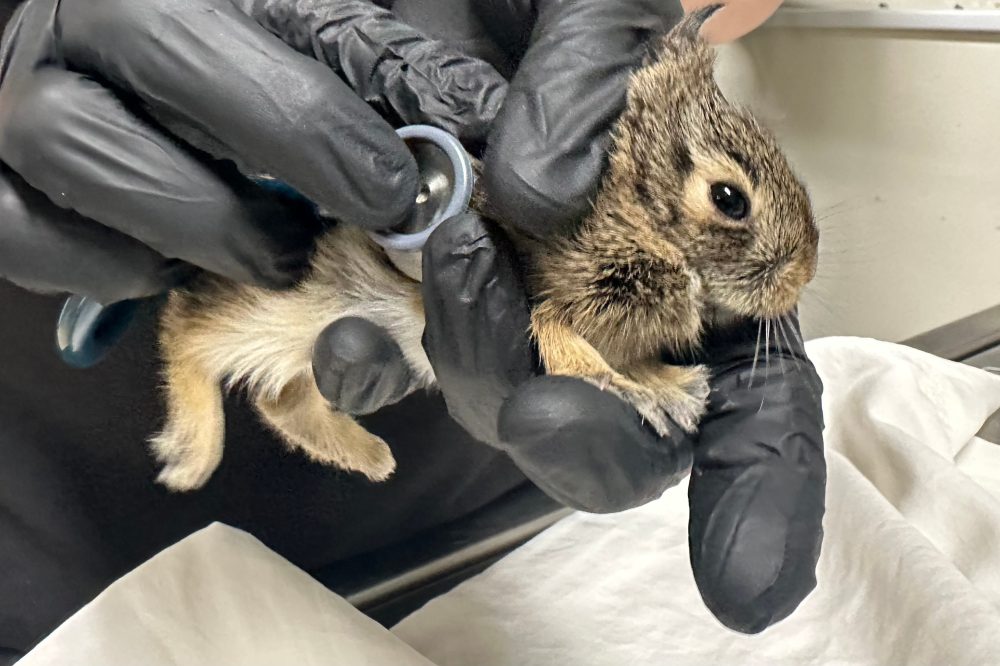
Rabbits reproduce extensively throughout the Midwest and generate numerous calls to the Minnesota rehabilitation center, largely because they nest in residential yards, Yohannes noted.
The facility suggests placing laundry baskets over nests during daylight hours to prevent dog interference, then removing them by evening to allow mothers to care for their babies.
“One of the best pieces of advice I can give is just understanding that that period of coexisting with this nest or this family will be temporary,” Yohannes said.