
On the edge of Rome, a major redevelopment effort funded by the European Union is working to improve daily life for approximately 4,500 residents of a 1970s housing complex — and the driving force behind the project is climate change.
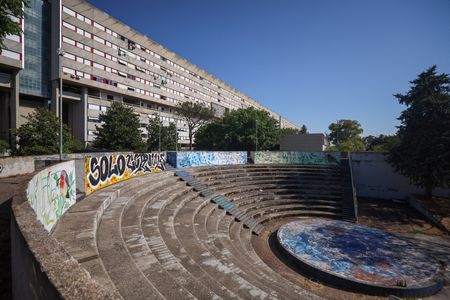
The site, known as Corviale and nicknamed ‘Il Serpentone,’ or ‘The Big Snake,’ because of its long, winding Brutalist architectural design, has for decades been associated with neglect and deterioration. Now, as part of Italy’s post-pandemic recovery plan nearing its finish line, the district is being used as a model for how cities can adapt to a warming climate in their most vulnerable neighborhoods.
Giuseppe Battaglia, Rome’s councillor for the peripheries and the city’s recovery programme, explained the urgency behind the effort. “We are working to combat climate change, which is transforming a city with a Mediterranean climate into one with an objectively tropical climate,” he said.
Rome’s most recent Climate Monitoring Report underscores his point. In 2025, the city recorded more than 40 days with temperatures exceeding 35 degrees Celsius (95 degrees Fahrenheit) and 101 so-called tropical nights — evenings when the temperature never dropped below 20 degrees Celsius. The year ranked as Rome’s third hottest since 1991, trailing only 2024 and 2022.
The €58 million investment in Corviale covers a wide range of improvements, including the renovation of public squares, an open-air theatre, and public buildings upgraded for better energy efficiency — all designed to remain comfortable even during the most intense summer heat.
One standout example is the neighborhood library, which has been converted into what municipality architect Alessia Peghini describes as a “bioclimatic shelter.” The building uses recyclable materials engineered to block heat from entering. During a visit in mid-July, reporters found the indoor temperature was more than 10 degrees Celsius cooler than the air outside.
“A bench placed in the shade, or a new tree that will provide more shade make all the difference in an area where there used to be nothing,” Peghini said.
Green space has also been a priority. A reclaimed West Park, previously marred by illegal dumping, is being replanted with up to 9,500 trees and shrubs to reconnect the neighborhood with the surrounding countryside. An East Park is being developed as a space for recreation and sports. The overall focus of the work is on shared, communal spaces rather than individual apartments.
The bulk of the Corviale renovation was completed ahead of Italy’s June 30 deadline for spending from its €195 billion pandemic recovery package. Some outdoor amenities and green infrastructure are expected to be finished by the end of August.
For Alessandro Fornaci, a master craftsman who has lived in the area for many years, the changes can’t come soon enough. His printmaking studio, which also runs programs for local youth, is set to relocate to new space near the restored amphitheatre. “It was a shame to see facilities intended for public use in a state of total neglect,” he said. “Creating a mechanism that can encourage interaction and citizen participation is essential.”
Still, not all residents share his enthusiasm. Some fear the neighborhood, located southwest of Rome’s city center, will eventually slip back into disrepair as other ambitious plans have before. Massimo Vallati, a resident who founded Calciosociale — an educational initiative that combines soccer with social inclusion — acknowledged the widespread doubt. “There is a great deal of scepticism, but that is only right, because for so many years nothing was done,” he said.
Even so, Vallati believes the mistrust can be overcome. “The right way to overcome that scepticism, that fear and that resignation is through commitment and concrete actions,” he said.