
NEW YORK — A privately-funded organization believes that simple, accessible community activities are the solution to getting more young Americans involved in civic life.
The organization C&S, formerly called the Institute for Citizens & Scholars, is working with schools, businesses and community partners to motivate youth to participate in activities like contacting their representatives, volunteering in their neighborhoods, or organizing discussions with people from different backgrounds. Their ambitious plan, revealed on Wednesday, aims to inspire 20 million individuals aged 14 to 24 to participate in community-minded activities within the next three years.
C&S President Rajiv Vinnakota compared the approach to fitness training. “You’re not going to immediately go to a gym and try to bench press 325 pounds. You’re gonna start easy, simple, something you can do — both to affirm and start to build your muscle,” Vinnakota explained. “That’s what these civic actions are all about.”
This initiative challenges common assumptions that Generation Z members, typically born from 1997 to 2012, lack interest in civic participation. The program joins other efforts connected to America’s upcoming 250th Independence Day celebration designed to bring citizens together around common goals.
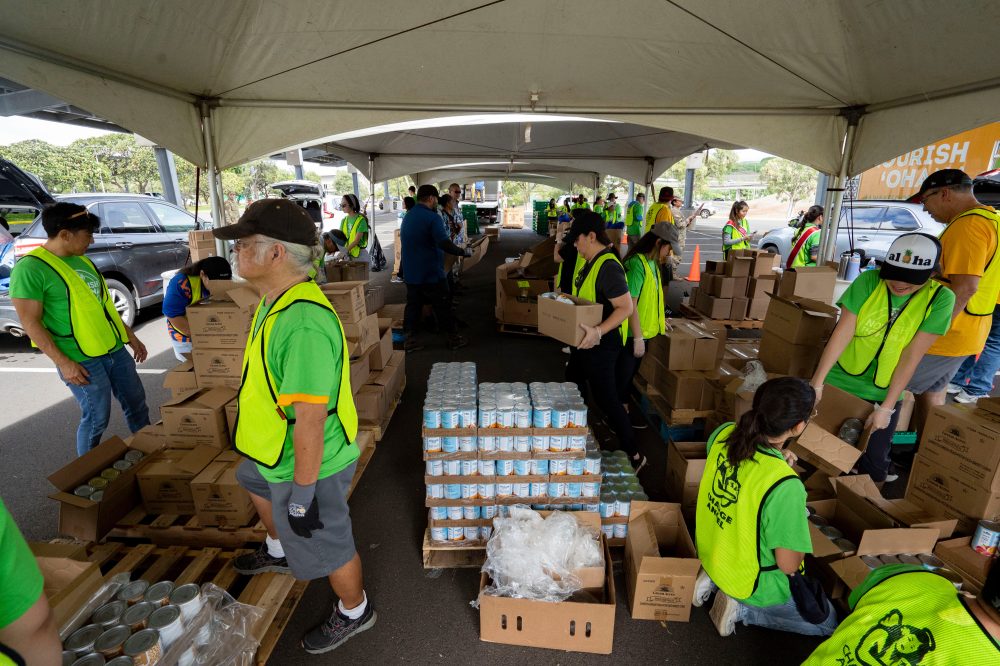
Organizations focused on community service have also been promoting casual volunteer work among younger generations. Jennifer Sirangelo, who leads Points of Light, a group working to double American volunteer participation by 2035, observes that today’s youth prefer service activities outside traditional organizational structures. According to her, they’re more likely to assist neighbors directly or request charitable donations at personal celebrations.
“Gen Z wants to do it fast, they want to do it authentic, they want to do it right now,” Sirangelo explained to The Associated Press recently. “They don’t have time — no patience for institutions or signing up.”
C&S based their strategy on internal studies showing young people will participate when they believe their involvement matters and when they can help create solutions.
According to C&S research, the main obstacles preventing youth civic participation are uncertainty about how to start and doubt about their ability to create change.
“This is a generation that actually sees the problems and actually wants to try to solve them,” Vinnakota stated. “And we need to create the means, the tools and provide the capacity for them to do it.”
A major component of their strategy involves a digital platform set to debut this summer as part of their semiquincentennial commemoration. Drawing inspiration from movements like GivingTuesday, Vinnakota hopes to connect with 15 million young people through an online initiative demonstrating how individual small efforts can create nationwide change.
Existing collaborators including YPulse, which researches young consumer behavior, and DoSomething, a platform for youth social activism, will share these civic opportunities with their networks.
However, Vinnakota stressed that these initiatives must emerge organically rather than being imposed by authority figures, allowing younger participants’ concepts to develop naturally.
“Some of them will work. Some of them won’t. That’s fine,” he noted. “By bringing all those ideas into the common arena, seeing what happens, I think we’re actually going to be a richer society. We’re probably gonna have a greater chance of binding our democracy together.”
Certain young leaders receive additional specialized assistance through an established program supported by the Carnegie Corporation of New York. C&S recently distributed funding and mentorship to 500 young activists working on diverse projects from cleaning environmental pollutants from waterways to expanding voting access for hospitalized patients.
The organization is also utilizing its university connections. A group of 135 colleges is working to teach students three fundamental democratic capabilities: engaging in constructive dialogue, identifying reliable information sources, and collaborating to address problems despite disagreements.
Additionally, they’re launching a workplace-focused program with the U.S. Chamber of Commerce Foundation. Currently, they’re recruiting 25 businesses for a test program that will train young employees in teamwork and citizenship skills.
The organization’s goal, whether in educational or professional settings, is to bring motivated young people together face-to-face rather than virtually, demonstrating that their peers share similar desires to strengthen community involvement.
“Civic actions that don’t take a lot of effort initially but start to build something that we call agency,” Vinnakota concluded, “and start to get the flywheel moving. That’s what this is about. How can you create the spark?”