
Diplomatic efforts between Washington and Tehran appear to be crumbling as both nations move toward potential military confrontation over Iran’s nuclear activities, according to government sources and international diplomats.
Officials from neighboring Gulf states and Israel now believe armed conflict has become more probable than a negotiated settlement, with the Biden administration assembling one of its largest military presences in the region since the 2003 Iraq invasion.
Sources with knowledge of Israeli planning indicate that Jerusalem views the situation between Iran and America as deadlocked and is preparing for potential joint military operations with the United States, though no final decisions have been reached about executing such plans.
This development would mark the second instance of coordinated US-Israeli military action against Iran within twelve months, following joint airstrikes on Iranian military and nuclear installations last June.
Gulf nation officials report that oil-producing countries in the region are bracing for possible military action that could spiral beyond control and create widespread Middle Eastern instability.
Two Israeli government sources informed Reuters that they view the divide between Washington and Tehran as impossible to bridge, with the likelihood of immediate military escalation being substantial.
Certain regional authorities suggest Iran is making a dangerous error by continuing to demand concessions, while President Trump finds himself constrained by his own military positioning – unable to reduce forces without appearing weak unless Iran provides concrete commitments to end its nuclear weapons pursuits.
Former US diplomat and Iran expert Alan Eyre observed that “Both sides are sticking to their guns,” noting that meaningful progress cannot occur “unless the U.S. and Iran walk back from their red lines – which I don’t think they will.”
Eyre added, “What Trump can’t do is assemble all this military, and then come back with a ‘so-so’ deal and pull out the military. I think he thinks he’ll lose face. If he attacks, it’s going to get ugly quickly.”
Negotiations between the two nations have reached an impasse across fundamental issues including uranium enrichment, missile programs, and sanctions relief.
During mediation efforts by Oman, Iranian Foreign Minister Abbas Araqchi declined to even examine an envelope containing US missile-related proposals, immediately returning it unopened, according to sources familiar with the discussions.
Following Tuesday’s Geneva meetings, Araqchi stated that both sides had established “guiding principles,” while the White House maintained significant gaps remained between the parties.
Iran is anticipated to present a written response soon, a US official confirmed, with Araqchi announcing Friday that he expected to have a draft counterproposal prepared within days.
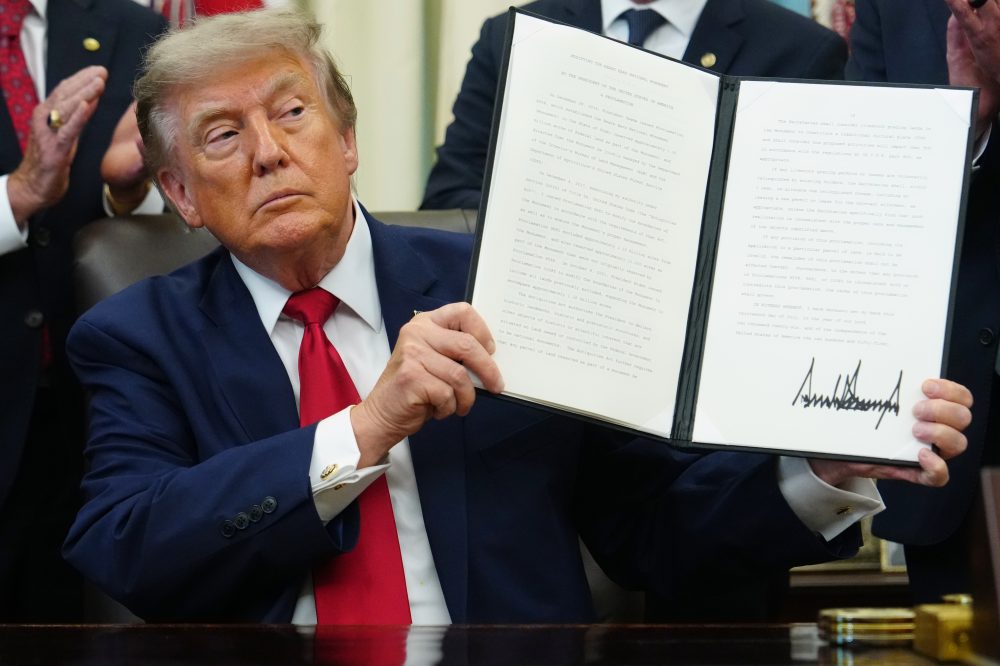
However, Trump, who has deployed aircraft carriers, naval vessels, and fighter jets to the Middle East, cautioned Iran Thursday that it must reach an agreement on its nuclear program or “really bad things” will happen.
The president seemed to establish a 10 to 15-day timeline, prompting Tehran to threaten retaliation against US regional bases if attacked. These escalating tensions have driven oil prices higher.
US officials indicate Trump has not yet decided on military action, though he acknowledged Friday that he might order limited strikes to pressure Iran into negotiations.
“I guess I can say I am considering that,” he told reporters.
The potential timing for any attack remains uncertain. US Secretary of State Marco Rubio is scheduled to meet Israeli Prime Minister Benjamin Netanyahu on February 28 regarding Iran. A senior US official noted that all American forces would not be positioned until mid-March.
European and regional authorities believe the magnitude of US military deployment would allow Washington to strike Iran while simultaneously protecting its bases, allies, and Israel.
America’s primary requirement remains constant: complete cessation of uranium enrichment on Iranian territory. Iran maintains it must preserve its nuclear capabilities and refuses to negotiate regarding its ballistic missile program, while denying intentions to develop nuclear weapons.
Should negotiations collapse, defense expert David Des Roches explained that current US Gulf activities already indicate how strikes would commence: disabling Iran’s air defenses before targeting the Revolutionary Guards Navy, the force responsible for years of tanker attacks and threats to block the Strait of Hormuz, through which one-fifth of global oil passes.
However, some Arab and European officials express uncertainty about Trump’s ultimate objectives, with European governments wanting America to clarify what military strikes would accomplish – whether to weaken Iran’s nuclear and missile capabilities, prevent escalation, or pursue more ambitious goals like “regime change.”
Various regional and European officials question whether military action could alter Iran’s governing structure, led by Supreme Leader Ayatollah Ali Khamenei and defended by the powerful Islamic Revolutionary Guards Corps.
Some argue that without clear alternative political forces in Iran and with the leadership’s resilience largely unchanged, assuming strikes could trigger “regime change” would be dangerous.
Military operations may prove easier to initiate than control, and much more difficult to convert into strategic success, they warn.
Compromise indicators have been minimal. Ali Larijani, a key Khamenei adviser, told Al Jazeera TV that Iran was prepared to accept comprehensive International Atomic Energy Agency monitoring to demonstrate it is not pursuing nuclear weapons. Tehran has subsequently notified IAEA director Rafael Grossi of this decision.
A source knowledgeable about the talks revealed that Iran’s support for regional militias had not been formally discussed, but Tehran had no fundamental opposition to addressing US concerns about proxy forces.
Three regional officials reported that Iranian negotiators had clarified that any meaningful concessions require Khamenei’s approval, as he considers enrichment and missile development sovereign rights.
Washington Institute analyst David Makovsky noted that each side is testing the other’s boundaries.
Washington believes overwhelming force will force Tehran to surrender, while Tehran believes Trump lacks commitment for prolonged conflict and Israel considers the differences too substantial to resolve, making confrontation nearly unavoidable, he explained.