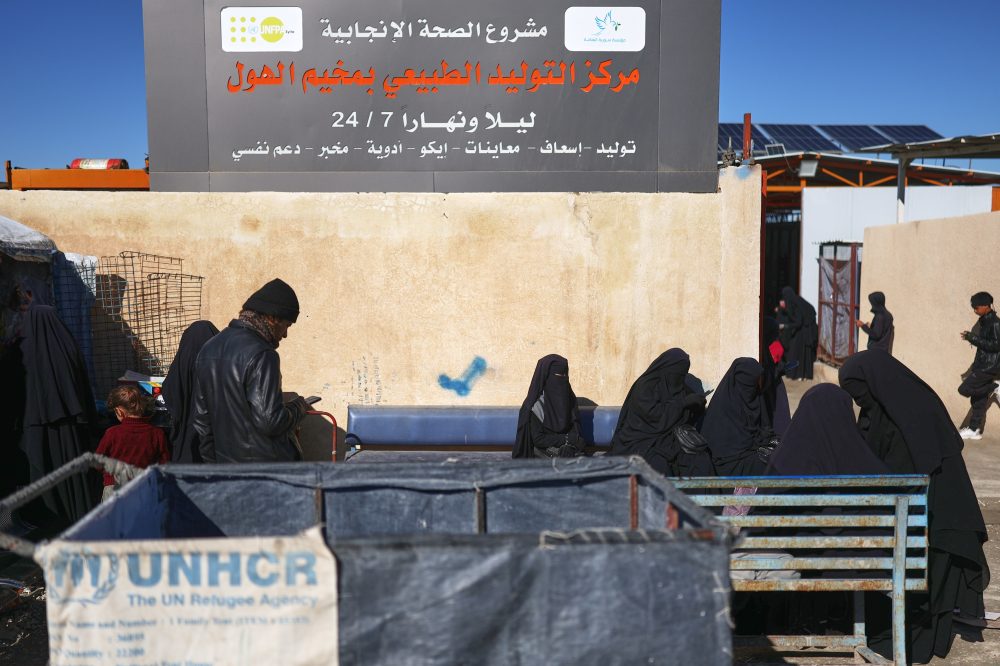

Syrian authorities announced Sunday that a sprawling detention facility once holding tens of thousands of women and children connected to the Islamic State has been completely evacuated.
The last group of residents departed the al-Hol camp Sunday morning, according to Fadi al-Qassem, who represents Syria’s Foreign Ministry in overseeing the facility’s operations.
Over recent weeks, hundreds of people from the isolated northeastern Syrian facility have been relocated to the Akhtarin detention center in Aleppo province, while others have been sent back to Iraq.
Authorities explained their decision to close al-Hol stemmed from its isolated desert position, which placed it far from essential services and dangerously close to regions where government control remains incomplete.
The United Nations refugee agency confirmed it facilitated the return of 191 Iraqi nationals from al-Hol to Iraq this past Thursday.
The Syrian Observatory for Human Rights, a monitoring organization based in the United Kingdom, also documented that some residents “left the camp individually, without waiting for the organized convoys.”
Following ISIS’s collapse in 2019, approximately 73,000 people resided at al-Hol, primarily Syrian and Iraqi nationals, though thousands came from other nations. The population consisted mainly of women, including current and former wives of ISIS fighters, along with their children.
The population gradually decreased as various nations retrieved their citizens, dropping to roughly 24,000 people by last month.
While residents weren’t officially classified as inmates and most faced no criminal charges, they remained in effective imprisonment at the heavily secured compound for years.
Syrian government troops seized control of al-Hol last month during a weeks-long military campaign against the Kurdish-led Syrian Democratic Forces, which had operated the border facility for ten years. The conflict ended with a ceasefire agreement.
Many families reportedly fled the camp during and after the military operations.
Questions remain about the future of the smaller Roj camp in northeastern Syria, which stays under SDF administration. That facility primarily houses foreign nationals whose home countries have generally declined repatriation requests.
Syrian officials rejected a group of 34 Australian women and children on February 16 after they departed Roj camp and traveled toward Damascus to catch a flight to Australia. Australian officials subsequently stated they would not accept the families’ return.
A Syrian government representative, speaking anonymously due to lack of authorization for public statements, explained Sunday that the situation resulted from “the lack of prior coordination with the Syrian government” by the SDF and the families before attempting their Damascus journey.
The official noted that “whether they will be allowed (to return) will depend on the Australian government.”