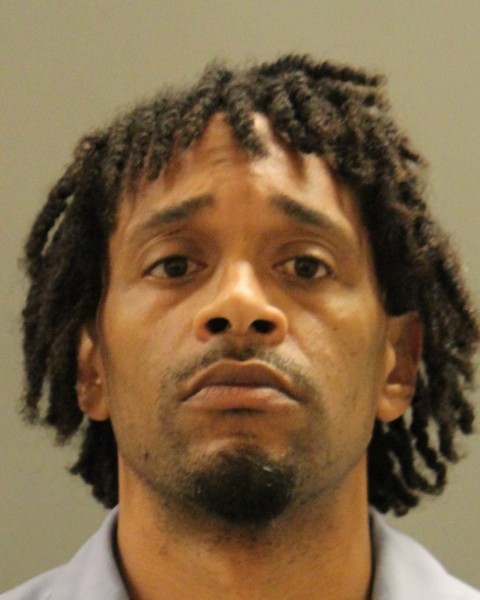
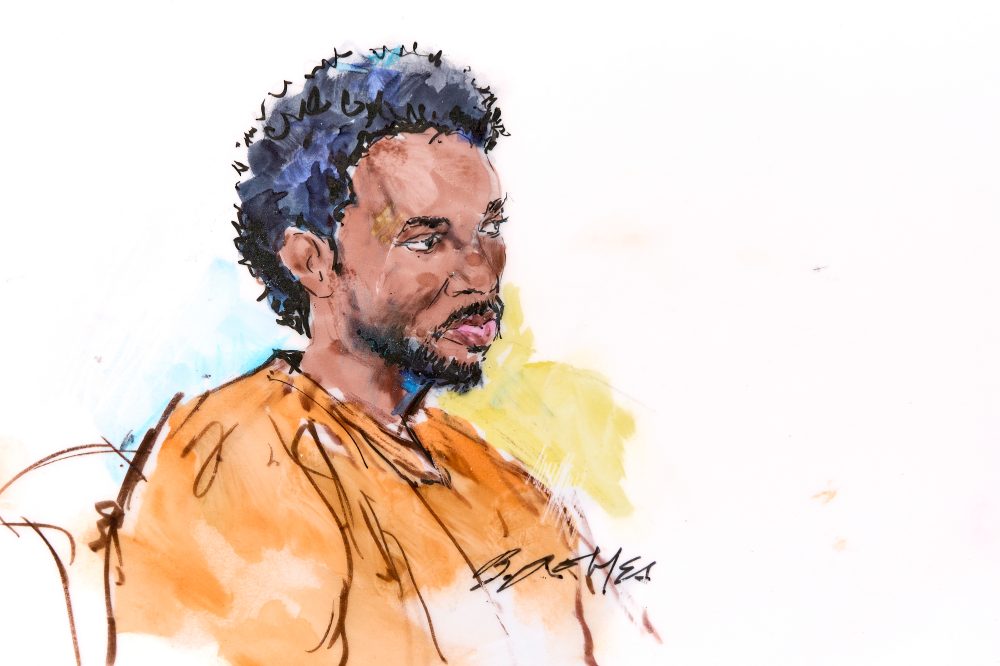
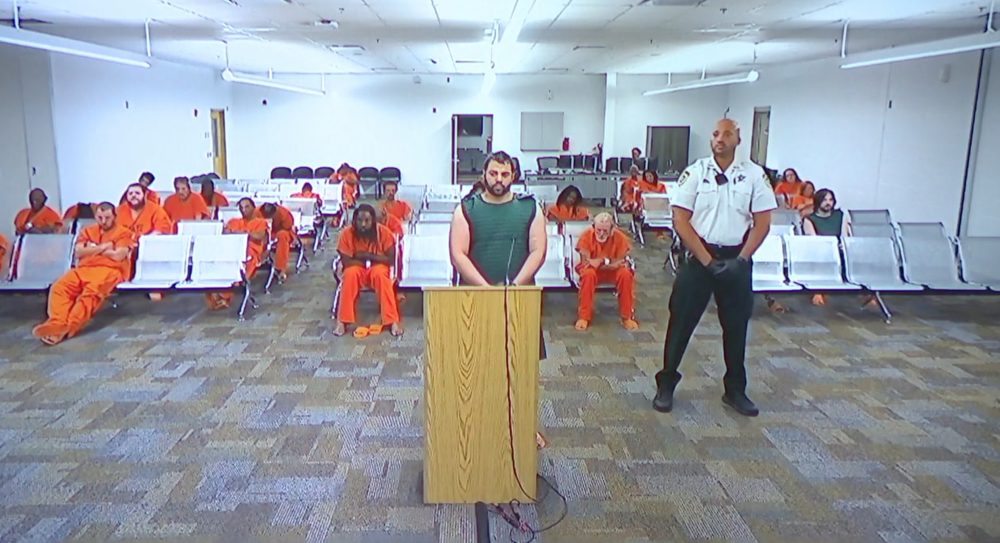
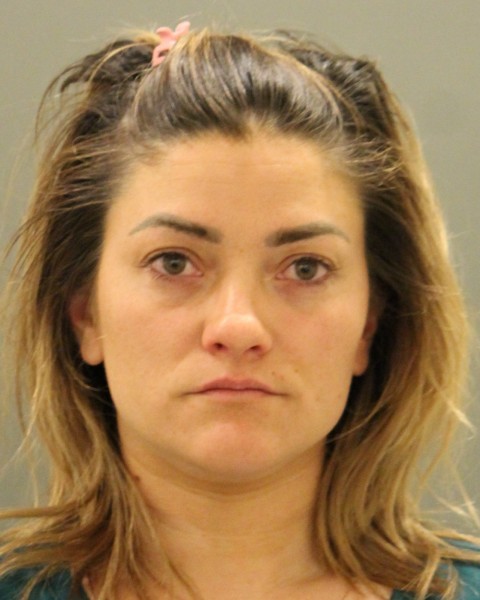
New Castle County police investigators launched a probe into Newark resident Cleveland Quarles, age 37, following reports of multiple alleged sexual assaults received in December 2023.
According to authorities, the investigation revealed that Quarles employed false identities, including going by the name ‘Tim,’ during inappropriate sexual encounters with a 14-year-old girl.
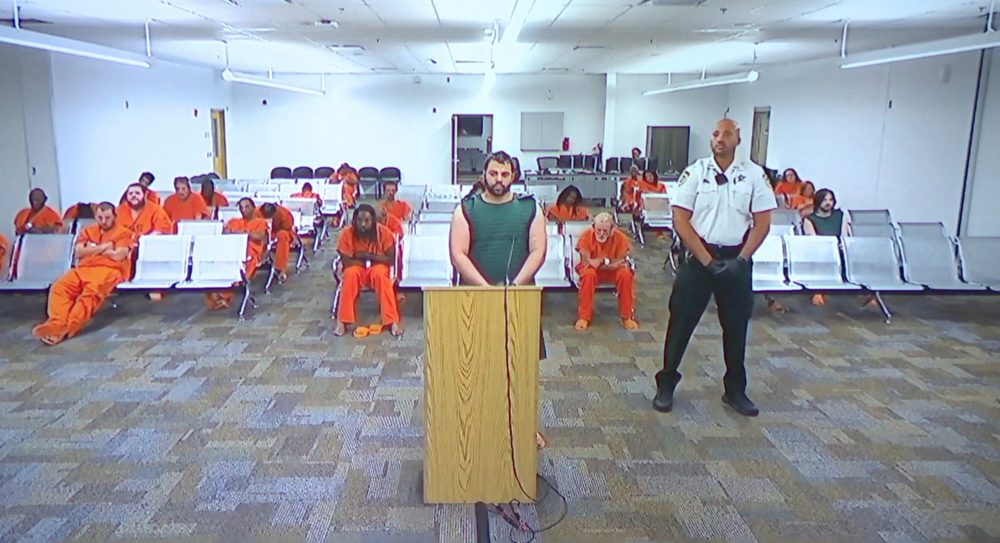
The case remains under investigation as authorities work to locate Quarles, who was reportedly found in Florida following the initial investigation into the unlawful sexual contact allegations.
Salisbury, MD — City crews will shut down a portion of North Division Street this Thursday, April 30, to remove a water connection as part of ongoing maintenance to Salisbury’s water infrastructure.
The Waterworks Utilities Division plans to eliminate a water service line in the 300 block of North Division Street, requiring a full street closure between East William Street and Walnut Street. City officials expect the work to start at 9 a.m. and wrap up by approximately 3:30 p.m., unless unexpected issues arise.
Utility locating services and the Central Alarm system have been given advance notice of the scheduled work.
City officials are asking residents for their understanding during the temporary road closure. Anyone with questions can reach the Utilities Division at 410-548-3103.
Motorists traveling on Broadkill Road should expect delays this afternoon as construction crews have reduced traffic to a single lane in both directions.
The Delaware Department of Transportation reports that flaggers are controlling traffic flow on Route 16 in the area between Jefferson Road and Grant Drive. The lane restriction is scheduled to remain in effect until 5 PM today.
Drivers are advised to allow extra travel time when using this route and to exercise caution when approaching the work zone. Alternative routes may help avoid potential delays during the afternoon rush hour.
Young Americans are dramatically changing how they consume news, with teenagers increasingly turning to social media platforms and online content creators instead of traditional journalism outlets, according to new research.
The Media Insight Project’s latest study reveals that 57% of teenagers between ages 13 and 17 check social media for news at least once daily, significantly higher than the 36% of all U.S. adults who do the same.
The research also shows that 57% of teens obtain information about national issues and events from influencers or independent content creators at least occasionally, compared to 43% of adults. The study represents a partnership between The Associated Press-NORC Center for Public Affairs Research, the American Press Institute and journalism programs at Northwestern University and the University of Maryland.
The findings highlight how deeply social media has become embedded in teenage life and demonstrate that young people are increasingly consuming news through these platforms rather than going directly to established news organizations.
Although Americans haven’t completely turned away from traditional news sources, they are reassessing which outlets they consider trustworthy, according to Robyn Tomlin, executive director of the American Press Institute.
“Traditional national and local outlets continue to stand out as a trusted source, but people, especially younger audiences, are also building relationships with younger creators they believe are transparent and authentic,” Tomlin said. “That reality has enormous implications for the future of news.”
Beyond social media platforms, teenagers also show greater willingness to use search engines and artificial intelligence chatbots when looking for news information.
The research indicates that roughly 40% of teens access news daily through search engines, while approximately 20% report using AI chatbots for the same purpose.
However, age groups show similar patterns when it comes to digital news websites, apps, television and streaming services. About 40% of both U.S. adults and teenagers watch television news at least once daily, with comparable numbers visiting digital news sites.
“The idea that television is going away is a misapprehension,” said Tom Rosenstiel, journalism professor at the University of Maryland who participated in the survey. “Watching news through video is not going away. It’s changing. The way you see it on YouTube is different than on the ‘CBS Evening News.’”
Even though many teenagers receive news from influencers and AI sources, they maintain considerable skepticism about these information sources.
While teens express more confidence than adults in AI chatbot information, relatively few show high trust levels. Only 11% of teenagers demonstrate strong confidence in AI-generated information, compared with just 4% of adults.
Teenagers also believe they’re better equipped to identify whether content comes from humans or artificial intelligence. Approximately one-third of teens feel highly confident in their ability to distinguish between AI-created and human-created content, while only about 20% of adults share that confidence.
Similar doubt exists regarding influencers. Just 12% of teenagers express strong confidence in information from independent creators or influencers across television, social media or other platforms. While this exceeds the 6% of U.S. adults who feel similarly, it remains quite low overall.
As expected, the survey found teenagers show greater interest in celebrity news, music, movies, sports and entertainment content. Adults demonstrate more concern for political developments, business matters and economic issues.
Both teenagers and adults experience significant news fatigue, particularly concerning political coverage, Rosenstiel noted. Most Americans in both age groups report they frequently or occasionally try to avoid stories about national government and politics, with about 60% saying they actively avoid news related to President Donald Trump.
“People are tired of the feeling that things are spinning out of control that they’re very judicious in what they’re spending their time on,” Rosenstiel said.
Rosenstiel explained that many teens approach news gathering differently than older generations. They’re much less inclined than adults to avoid celebrity coverage or news delivered through social media channels. He suggested that the most valuable journalism for some people might be content that helps them navigate daily life, even if it comes from unconventional sources.
“Part of the problem for traditional journalism,” Rosenstiel said, “is the traditional journalism definition of what is real news.”
The Media Insight Project survey represents a collaborative effort between the American Press Institute, Northwestern University Medill School of Journalism, Local News Network at the University of Maryland’s Philip Merrill College of Journalism and The Associated Press-NORC Center for Public Affairs Research. The poll surveyed 2,101 Americans, including 1,092 adults aged 18 and older and 1,009 teenagers aged 13 to 17. Adult polling occurred February 5-8, while teen polling took place February 2-16 using NORC’s probability-based AmeriSpeak Panel, designed to represent the U.S. population. The margin of error is plus or minus 4.1 percentage points for adults and plus or minus 4.3 percentage points for teenagers.
STARKE, Fla. — A 70-year-old Florida man faces execution Thursday evening for the brutal murder of his 13-year-old step-niece nearly five decades ago.
James Ernest Hitchcock is scheduled to die by lethal injection at 6 p.m. at Florida State Prison near Starke. He was originally condemned to death in 1977 following his conviction for first-degree murder in the July 31, 1976, slaying of Cynthia Driggers. After multiple appeals, courts repeatedly upheld his death sentence in 1988, 1993, and 1996.
The execution would mark the state’s sixth this year, continuing a dramatic surge that followed a record-setting 19 executions in 2025. Under Republican Governor Ron DeSantis, Florida carried out more death sentences in 2025 than any governor since capital punishment resumed in 1976, shattering the previous high of eight executions set in 2014.
Court documents reveal that Hitchcock had been living with his brother’s family in Orlando for several weeks before the tragic incident. On the night of July 31, 1976, the then-20-year-old returned home after drinking beer and using marijuana with friends. Investigators say he then sexually assaulted Cynthia Driggers, his brother’s stepdaughter.
When the teenager told Hitchcock she was hurt and intended to inform her mother, he prevented her from leaving her bedroom and began strangling her, authorities stated. He then dragged the girl outside, where he continued beating and choking her until she died, before hiding her body in nearby bushes. Hitchcock subsequently showered and went to sleep.
During his trial, Hitchcock changed his story, claiming his brother discovered him and the girl after what he described as consensual sex. He testified that his brother flew into a rage and killed the girl outside, and that he had only confessed initially to shield his sibling.
Hitchcock maintained “he had initially taken the blame to protect his brother.”
Last week, the Florida Supreme Court rejected an appeal to stop the execution. Defense lawyers contended their client was innocent and argued the state unlawfully denied access to public records concerning capital punishment cases.
A final appeal remains under consideration by the U.S. Supreme Court.
Nationwide, 47 individuals were executed in 2025, with Florida leading due to numerous death warrants issued by DeSantis. Alabama, South Carolina, and Texas each carried out five executions, tying for second place.
Florida has another execution planned for May 21, when Richard Knight, 47, is set to receive a lethal injection for fatally stabbing his cousin’s girlfriend and her 4-year-old daughter.
The state’s execution protocol involves a three-drug combination consisting of a sedative, a paralytic agent, and a heart-stopping medication, according to the Department of Corrections.
ALBANY, N.Y. — A towering canine figure that has become synonymous with Albany’s identity faces an uncertain destiny.
For nearly seventy years, the massive 28-foot white terrier known as Nipper has perched atop a warehouse building, his black ears and tilted head recreating the iconic RCA advertisement showing a dog listening to a phonograph. The composite statue, built over a steel framework, has evolved into much more than corporate advertising.
Local residents have embraced the statue as a cherished landmark along the Hudson River. Families driving past regularly show their children the distinctive figure, and Nipper’s likeness decorates everything from keychains to sweatshirts throughout the area.
“When I think of Nipper, I think of Albany. When I think of Albany, I think of Nipper,” said Cody Hitt, who was out with friends recently at a bar right by the statue.
However, that community affection now mixes with growing worry about the statue’s fate. Following extended legal battles, the empty four-story structure supporting Nipper recently received a red warning sign with white markings — an official alert advising emergency personnel to exercise extreme caution before entering.
“It’s definitely not a good thing for Nipper. He is attached to that building, so if something happens to it, it’s going to be kind of hard to take him off,” said Cara Macri, director of preservation services for the Historic Albany Foundation.
The original Nipper was a real dog from late 1800s England who got his moniker from his habit of nipping at people’s legs. After the pet’s death, Francis Barraud, the brother of Nipper’s owner, created the famous painting “His Master’s Voice,” depicting the curious dog listening to sounds from a phonograph.
The Gramophone Company purchased rights to the artwork in 1899, and it was later registered for American use. RCA obtained the “His Master’s Voice” trademark in 1929.
Albany’s version of Nipper was installed by crane in the late 1950s to mark the site of an RCA appliance distribution center.
While other Nipper replicas were created during the brand’s peak years — including a 14-foot version from 1958 now housed at Baltimore’s Maryland Center for History and Culture alongside an oversized phonograph — Albany’s version stands tallest.
The statue commands attention in a skyline otherwise dominated by the modernist state government buildings near the Capitol, including a 44-story tower and an egg-shaped theater.
At downtown’s Fort Orange General Store, merchandise featuring the famous dog consistently ranks among top sellers, appearing on everything from socks to shot glasses.
“He is kind of like our unofficial mascot here at Fort Orange, as well as the city of Albany,” said Cubello, who was wearing a Nipper hoodie.
While Nipper himself remains in excellent condition after decades of weather exposure, the structure beneath him tells a different story. The building has remained vacant for more than ten years, with peeling paint visible across its front facade.
Development plans announced a decade ago to convert the purchased building into residential units and commercial space never materialized. Foreclosure proceedings have continued for years, with city records showing an attorney serving as receiver for the property.
Legal representatives involved in the ongoing litigation did not return requests for comment.
The Historic Albany Foundation added the building to its endangered properties list in 2024. The city posted the red warning placard at the entrance in March, prompting Times-Union columnist Chris Churchill to write an urgent piece titled: “Nipper has our love, but needs more protection.”
Mayor Dorcey Applyrs’ administration reports efforts are underway to designate Nipper as an official city historic landmark, which would provide protection for both the statue and building against harmful modifications. Additionally, a state panel recently nominated the warehouse district containing Nipper’s building for inclusion on state and national historic registries, potentially making the property eligible for preservation tax incentives.
Relocating Nipper from his longtime perch is not under serious consideration, given the logistical complexity and high costs involved.
After all, finding a new location for a roughly four-ton statue presents significant challenges.
“There’s a whole redevelopment downtown. You could put him there. You could put him on the riverfront,” Macri said. “But he’s a big dog.”
Extended naval missions to the Middle East and Caribbean regions are placing growing pressure on military families stationed in Navy communities such as Norfolk, Virginia.
The lengthy separations caused by these overseas deployments are creating mounting challenges for spouses and children left behind in these naval hub cities.
Following the conclusion of King Charles and Queen Camilla’s recent American tour, NPR host Steve Inskeep interviewed former U.S. Ambassador to Britain Matthew Barzun to explore why British royal visits continue to capture American attention.
The discussion focused on understanding the cultural and diplomatic significance of these high-profile visits and what draws Americans to royal ceremonies and appearances, even centuries after the country’s independence from British rule.
Barzun, who served as the United States’ diplomatic representative to the United Kingdom, provided perspective on the lasting appeal of royal pageantry and protocol among American audiences during these official state visits.
The ongoing conflict with Iran is creating unexpected financial strain on wildfire response efforts across the United States, as aviation fuel costs have skyrocketed to nearly double their previous levels.
This dramatic increase in jet fuel expenses means that aerial firefighting operations will face budget pressures reaching tens of millions of additional dollars during the upcoming fire season. The higher costs directly impact the aircraft used to drop fire retardant and conduct other aerial suppression activities that are critical to containing large wildfires.
Firefighting agencies rely heavily on aircraft to reach remote areas and provide rapid response to emerging fire threats. The substantial rise in fuel costs comes at a time when wildfire seasons have been extending longer and burning more intensely in recent years.
The financial impact extends beyond just fuel expenses, as agencies may need to reassess their operational strategies and resource allocation to manage the increased costs while maintaining effective fire suppression capabilities.
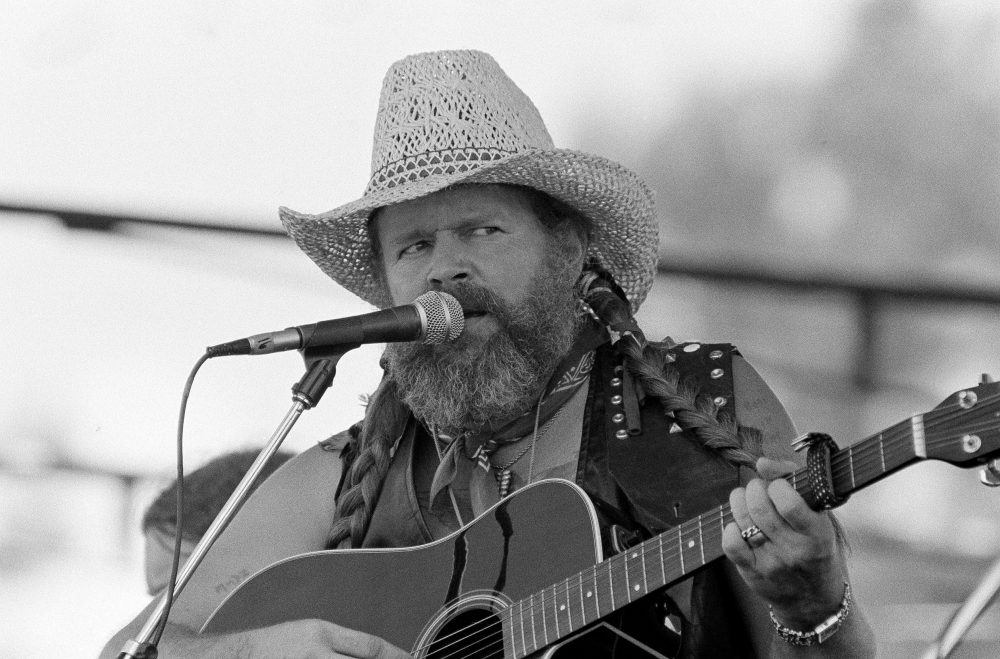
Country music has lost one of its most rebellious voices with the passing of David Allan Coe, the songwriter behind the iconic workplace rebellion anthem ‘Take This Job and Shove It’ and numerous other hits. The 86-year-old musician died Wednesday evening.
His spouse, Kimberly Hastings Coe, shared news of his passing with Rolling Stone magazine on Wednesday, calling him among the finest singers and songwriters of his generation.
‘My husband, my friend, my confidant and my life for many years. I’ll never forget him and I don’t want anyone else to ever forget him either,’ she expressed to the magazine.
According to a representative speaking to People magazine, Coe passed away around 5 p.m. on Wednesday. No cause of death was revealed.
Throughout his career, Coe remained an outsider figure within Nashville’s mainstream music industry, despite achieving success both as a performer and songwriter. He built a devoted fanbase drawn to his unpolished, frequently explicit material and his enigmatic background filled with controversy.
Health issues had kept him largely out of the public eye since September 2021, when his wife announced on social media that he had been hospitalized due to COVID-19.
Coe’s songwriting credits include some of country music’s most memorable tracks. Johnny Paycheck scored a major hit with his composition ‘Take This Job and Shove It’ in 1977, while Tanya Tucker found success with his ‘Would You Lay With Me (in a Field of Stone)’ in 1974. He also became the first country artist to record ‘Tennessee Whiskey,’ written by Dean Dillon and Linda Hargrove, which later became a signature song for both George Jones and Chris Stapleton.
As a recording artist, Coe achieved success with tracks like ‘You Never Even Call Me by My Name,’ penned by Steve Goodman and an uncredited John Prine, along with ‘The Ride’ and ‘Mona Lisa Lost Her Smile.’ His career extended into film, with appearances in movies including ‘Stagecoach’ and ‘Take this Job and Shove It,’ which borrowed its title from his famous composition.
Born in Akron, Ohio, Coe’s early years were marked by trouble with the law. He spent time in youth facilities and served a prison sentence from 1963 to 1967 for possessing burglary tools. He also claimed connections to the Outlaws motorcycle organization, though many details about his past have been embellished over time.
‘I’d have never made it through prison without my music,’ Coe shared in a 1983 Associated Press interview. ‘No one could take it (music) away from me. They could put me in the hole with nothing to do but I could still make up a song in my head.’
His debut recording was a blues collection titled ‘Penitentiary Blues,’ featuring compositions he created while incarcerated. Coe later explained to journalists that he avoided overusing prison themes in his music to distinguish himself from Merle Haggard’s similar background, though he felt his criminal past overshadowed his musical achievements in media coverage.
Moving to Columbia Records, Coe released ‘The Mysterious Rhinestone Cowboy,’ which became his stage persona after he began performing in a sparkling suit while wearing a mask.
During the peak of country music’s outlaw era, Coe positioned himself as a central figure in the movement. His song ‘Longhaired Redneck’ painted vivid pictures of performing in rough establishments, ‘Where bikers stare at cowboys who are laughing at the hippies who are praying they’ll get out of here alive.’
He gained additional recognition through his appearance in ‘Heartworn Highways,’ a celebrated documentary about the outlaw country scene, which showed him performing at a Tennessee correctional facility.
With his extensive tattoos and long hair, Coe attracted fans from various backgrounds, including motorcycle enthusiasts, medical professionals, attorneys, and financial workers. His final recording project in 2006 was an unexpected partnership with Dimebag Darrell and other former members of the metal band Pantera.
Coe also released two adult-oriented albums, 1978’s ‘Nothing Sacred’ and 1982’s ‘Underground Album,’ which he distributed through motorcycle publications. These recordings faced criticism for containing racist, homophobic, and sexually graphic content. In a 2001 Billboard magazine interview, he revealed that author and songwriter Shel Silverstein had encouraged him to record these controversial songs, a decision he later regretted.
‘Those were meant to be sung around the campfire for bikers, and I still don’t sing those songs in concert,’ he explained.
Legal troubles continued into his later years when, in 2016, Coe was required to pay the IRS over $980,000 in restitution for tax obstruction and received three years of probation. Court records indicated he earned money from approximately 100 annual concerts between 2008 and 2013 while failing to file proper tax returns or pay required taxes.
A New Jersey father and daughter have admitted their guilt in operating an elaborate art forgery operation that successfully deceived prominent galleries and auction houses throughout New York City.
The pair entered guilty pleas for their involvement in a sophisticated counterfeiting scheme that spanned multiple years, during which they created and sold fraudulent artworks falsely attributed to renowned artists including Andy Warhol and Banksy.
The operation targeted Manhattan’s prestigious art market, where the duo managed to convince established galleries and auction houses to purchase their forged pieces as authentic works by famous artists.
Details of how the father-daughter team executed their deception and the total value of fraudulent artwork they sold have not been fully disclosed as the case continues through the legal system.
The guilty pleas mark a significant development in what authorities describe as one of the more elaborate art fraud cases to emerge from the region in recent years.
A missing Wilmington teenager has been safely located, prompting authorities to cancel the Gold Alert that had been issued to help find him.
Aiden Carter, the juvenile who had been reported missing, has now been found, according to officials. The Gold Alert system, which is used to help locate missing persons who may be in danger, was immediately canceled once Carter was located.
No additional details about the circumstances of Carter’s disappearance or recovery have been released at this time.
LOS ANGELES – Disturbing new details have emerged in the murder case against indie pop artist D4vd, as Los Angeles County prosecutors filed court documents Wednesday describing the gruesome methods they claim the musician used to kill and dismember his teenage girlfriend.
The court filing reveals that David Burke, the 21-year-old singer known professionally as D4vd (pronounced “David”), allegedly used an inflatable blue pool to contain blood while dismembering 14-year-old Celeste Rivas Hernandez with chainsaws and other implements after fatally stabbing her in April.
Prosecutors say Burke ordered the pool, two chainsaws, a shovel, body bag and additional supplies online using a false identity, having them shipped to his Hollywood Hills residence following the murder.
The victim’s severely decomposed remains were found in September inside a body bag in the trunk of Burke’s Tesla, authorities report. Police discovered the torso and head in the bag, with the limbs stored separately in a plastic garbage bag beneath. Two fingers from the girl’s left hand, including one bearing a tattoo of Burke’s name, had been severed and were never located.
The vehicle had been abandoned near Burke’s home on July 29, 2025, before he left for a concert tour. Workers at an impound lot later detected the smell of decomposition and contacted police after the car was towed there weeks later.
The prosecution’s filing, which CBS News published online, marks the first time authorities have outlined a possible motive for the killing. They allege Burke murdered the teenager to prevent her from damaging his rising music career with threats to expose details about their relationship.
Burke was preparing to release his debut studio album and had secured lucrative endorsement deals when the crime occurred, according to the district attorney’s office.
Court documents indicate the pair engaged in a sexual relationship beginning when the victim was just 11 years old. Investigators recovered text message exchanges discussing sex, pregnancy, abortion and emergency contraception, along with explicit photographs.
The fatal attack occurred on April 23, 2025, one day after the two argued about her threats to expose him, prosecutors state. Burke allegedly summoned her to his home via Uber before stabbing her to death upon her arrival.
Evidence of the dismemberment was later found during a September search of Burke’s garage, including blood samples and pieces of the inflatable pool showing “multiple linear cuts,” according to the court brief.
The musician rose to prominence in 2022 when songs he recorded on his phone for gaming videos became viral hits on TikTok. His track “Romantic Homicide” led to a recording contract with Interscope Records, and he performed at the 2025 Coachella festival.
Burke entered a not guilty plea to first-degree murder and additional charges during his April 20 arraignment. “We believe the actual evidence will show David Burke did not murder Celeste Rivas Hernandez, nor was he the cause of her death,” stated his defense attorney Blair Berk.
When Richard Miles walked out of a Texas prison in 2009 after being cleared of a wrongful murder conviction, he carried newspaper articles about his case as proof of his innocence. Despite this evidence, employers at warehouses and fast-food chains refused to hire him.
Miles’ experience highlights a widespread problem facing the thousands of Americans who have been wrongfully convicted. Their struggles have gained renewed attention through the case of Calvin Duncan in New Orleans, who won an election for parish clerk but may never serve after Louisiana legislators voted to eliminate his position.
“We’re still kind of like looked at as an inmate that did a particular crime. It further deteriorates our ability to believe that the system can heal itself,” Miles explained. He eventually secured employment through connections at his church. “When cases like in Louisiana occur, it just shows us that the system is not healing itself.”
Duncan’s situation has struck a chord with exonerees nationwide who recognize the discrimination and suspicion they face while trying to start over. Duncan spent almost three decades behind bars before his murder conviction was overturned in 2021 when evidence showed police officers had provided false testimony. Voters elected him to oversee the Orleans Parish criminal court clerk’s office last November, with Duncan promising to reform the system that had wronged him. He was scheduled to begin his duties May 4.
Republican legislators who pushed to eliminate Duncan’s office claim their decision stems from efficiency concerns rather than his criminal justice history.
“Even if they are seen as somebody who is exonerated, there is still a stigma as somebody who has been in prison,” said Jon Eldan, who leads After Innocence, a California nonprofit organization.
Data from the National Registry of Exonerations shows more than 3,800 Americans have had their convictions overturned since 1989.
However, unlike individuals on parole or probation, those who are exonerated cannot access government programs that provide job placement help, housing support, and mental health care.
“I was turned down by many prisoner reentry organizations because they said, ‘Look, you’re not on parole, you’re not on probation,’” explained Jeffrey Deskovic, who served 16 years for rape and murder charges in Peekskill, New York, before his 2006 exoneration.
While 38 states have established compensation programs for the wrongfully convicted, recipients often wait years before receiving payments.
Eldan’s After Innocence organization connects exonerees with groups offering job preparation, housing assistance, and medical care. The group also works to correct criminal records to accurately reflect case outcomes.
Miles, who was imprisoned for more than 14 years, now operates Miles of Freedom, a Dallas nonprofit that assists formerly incarcerated people, including exonerees, in rebuilding their lives.
The obstacles Miles encountered while job hunting — including gaps in employment history and lack of current job skills — are common among exonerees. However, evidence suggests some employers simply refuse to hire anyone with a prison background.
No federal agencies track employment rates specifically for exonerees. Research on formerly incarcerated individuals shows unemployment rates far exceeding national averages. A 2018 Prison Policy Initiative study found unemployment above 27% for people with prison records. Separate 2021 federal data revealed 33% of federal inmates released in 2010 remained jobless four years later. The national unemployment rate stood at 4.3% in March.
Deskovic used compensation money received five years after his release to establish the Deskovic Foundation, a New York nonprofit focused on freeing wrongfully convicted individuals. He later earned a law degree to represent them in court.
Exonerees tell Deskovic that employment challenges persist much as they did when he sought work as a donut shop employee and newspaper reporter but couldn’t maintain steady employment.
Advocates point to Duncan as an example of someone who successfully rebuilt his life and achieved elected office, yet still faces questions about his innocence and post-release achievements.
“If he wasn’t an exoneree, would they be doing this to him? I’m sure that they would not,” Deskovic said.
Eldan’s organization collaborated with a Delaware state senator to create legislation providing compensation for wrongful imprisonment, along with monthly payments and assistance with housing, food benefits, and health insurance. The law also grants exonerees official certificates declaring their innocence and wrongful incarceration.
Eldan reports his group is partnering with officials in California, New Mexico, and other states to pass similar legislation providing innocence certificates and criminal record corrections.
Both Eldan and Miles advocate for increased state funding of post-release programs for exonerees.
“But it’s hard to write into a statute, something that actually translates into real benefit for these people,” Eldan noted. “It’s not because the state is bad, but because the state just is not particularly good at delivering those services.”
Ben Spencer endured 34 years in prison for a Dallas murder he didn’t commit before his 2021 exoneration and release. His applications for positions at an Amazon warehouse and as an airport baggage handler were unsuccessful.
Eventually, someone familiar with his case helped Spencer obtain work as a facilities engineer performing repairs for a company. He has held that position for five years.
“I think I’m kind of settling in a little more now. I’m still trying to figure out the cellphone and computers,” Spencer said. “When I walked out of the jail, it was like waking up out of a coma or a bad dream. And of course, I still had to try to get some financial stability. I guess I won’t say I’m there now, but I’m closer to where I wanna be now than I was.”
SALT LAKE CITY — Legal representatives for reality television personality Taylor Frankie Paul from ‘The Secret Lives of Mormon Wives’ and her former boyfriend will appear before a Utah judge Thursday, each seeking long-term protective orders against the other in a dispute that will impact custody of their toddler.
Paul and Dakota Mortensen, who share a 2-year-old son, are both requesting that a court convert temporary restraining orders into permanent protections, with each accusing the other of domestic abuse.
During an April 7 court session, Third District Court Commissioner Russell Minas stated he had ‘concerns going both ways’ regarding the mutual allegations. The commissioner currently prohibits Paul from having unsupervised visits with her child due to what he described as a pattern of aggressive conduct toward Mortensen when children were nearby.
The former couple, whose troubled relationship was prominently featured on their reality show, must maintain a distance of at least 100 feet from each other until Thursday’s afternoon proceeding. Court officials expect both parties to attend in person after participating virtually in the previous hearing.
Court documents reveal that attorneys are examining eleven separate incidents of conflict between the former partners. A recently surfaced video from one 2023 altercation led ABC to take the unusual step of canceling an already-completed season of ‘The Bachelorette’ featuring Paul. Hulu temporarily halted production on ‘The Secret Lives of Mormon Wives’ before resuming filming last week.
The leaked footage shows Paul appearing to strike, kick and hurl furniture at Mortensen while her daughter observed and became distressed. Authorities charged Paul with aggravated assault and additional violations, including domestic violence committed in a child’s presence. Police body camera video from her arrest was included in the Hulu series’ debut season.
Paul entered a guilty plea to the assault charge, which will be downgraded from a felony to a misdemeanor if she avoids legal issues during a three-year probation period ending in August. Prosecutors dropped the remaining charges.
The Salt Lake County District Attorney’s Office recently decided against filing additional charges against Paul for more recent confrontations with Mortensen. New criminal charges would have constituted a violation of her probation from the 2023 assault case.
The decision not to pursue prosecution may strengthen Paul’s position as she works to restore custody rights for her son.
Utah’s protective order system can limit or completely eliminate parental visitation rights. When one parent obtains such an order against the other, court officials may determine that parent should receive custody. In cases where both parents have orders against each other, judges rely heavily on recommendations from court-appointed advocates investigating the child’s welfare.
The couple’s son, Ever, will have a court-appointed legal representative present during Thursday’s hearing to assist the commissioner in establishing the most secure living situation for the child.
Attorney Michael McDonald, representing the boy’s interests, expressed concerns during the April 7 session about Paul’s pattern of engaging in conflicts with Mortensen while their son was present.
Eric Swinyard, Paul’s legal counsel, contends that Mortensen initiates the violence in their relationship. He presented court evidence including photographs of Paul’s injuries following an incident in a vehicle where she claims Mortensen forced her head against the dashboard.
Daniela Diaz, representing Mortensen, detailed additional confrontations between the pair and claimed that Paul manipulates their son ‘as a pawn to start fights.’
If you or someone you know needs help with domestic violence, please contact the national domestic violence hotline at 1-800-799-7233.
A Texas death row inmate was set to face lethal injection Thursday evening despite new claims from his relative that he was the actual gunman in a deadly 2008 robbery.
James Broadnax, 37, received a death sentence for the murders of Stephen Swan and Matthew Butler, who were shot and killed outside Butler’s recording studio in Garland, a Dallas suburb. His relative, Demarius Cummings, received life imprisonment without the possibility of parole for his role in the crime.
According to prosecutors, Broadnax admitted his guilt in the shootings, telling news media while incarcerated that “I pulled the trigger” and expressing no regret for his actions.
The execution was set to take place after 6 p.m. Central Time at the Huntsville state prison facility, located approximately 70 miles north of Houston.
Defense attorneys filed emergency petitions with the U.S. Supreme Court seeking to halt the execution after lower courts refused to intervene.
The legal team’s final attempts center on two main arguments: Cummings has now admitted to being the actual shooter, and Broadnax’s rights were violated when prosecutors removed potential jurors based on their race.
“I’m really gonna tell it like it’s supposed to be told, that it was me, that I was the killer. I shot Matthew Bullard, Steve Swann,” Cummings stated in a recent prison video recording made to support efforts to stop the execution.
Defense lawyers argue in Supreme Court documents that Cummings’ admission is “corroborated by the fact that his DNA, and not Mr. Broadnax’s, was found on the murder weapon and in the pocket of one of the victims.”
In the same video, Broadnax claimed his earlier confession was untrue, saying he didn’t value his life at the time. His legal team contends he was under the influence of narcotics during his media interviews.
Broadnax also expressed regret to the victims’ families for his involvement in the robbery.
“I wish I could show them my soul, so they could see just how sorry I am. I am very much remorseful for everything that happened,” Broadnax stated.
Defense attorneys further claim prosecutors removed all seven potential Black jurors due to race, “utilizing a spreadsheet during jury selection that bolded only the names of every Black juror,” court filings indicate. One Black juror was subsequently added back to the panel. Broadnax is African American.
The 1986 Supreme Court decision in Batson v. Kentucky established that removing jurors based on race violates the Equal Protection Clause of the 14th Amendment.
In previous appeals, Broadnax’s legal team argued prosecutors violated his constitutional protections by using his rap lyrics to depict him as violent and dangerous to justify a death sentence. Several prominent rap artists, including Travis Scott, T.I. and Killer Mike, submitted court briefs supporting Broadnax’s case.
However, the Supreme Court rejected that appeal along with another challenging how forensic evidence was presented during trial.
The Texas Board of Pardons and Paroles rejected Broadnax’s petition Tuesday for either a 180-day delay or sentence commutation.
The Texas Attorney General’s Office has characterized Cummings’ shooter confession as “questionable new evidence.” State lawyers also argued in court papers that Broadnax’s allegations about racial targeting of Black jurors are “entirely meritless,” claiming these individuals were dismissed based on their responses during questioning, including opposition to capital punishment.
Theresa Butler, the mother of victim Matthew Butler, has requested the execution move forward.
“This so called confession from cummings is just a stall tactic by broadnax’s desperate defense team. Its all a lie,” Butler posted on social media.
Should the execution proceed, Broadnax would become the third person executed in Texas this year. The state has historically conducted more executions than any other.
Approximately one hour before Broadnax’s scheduled execution Thursday, Florida planned to execute James Ernest Hitchcock, 70, for the beating and strangulation death of his 13-year-old step-niece.
A Louisiana sheriff and her top financial officer are facing serious criminal charges connected to one of the most significant prison escapes in recent American history.
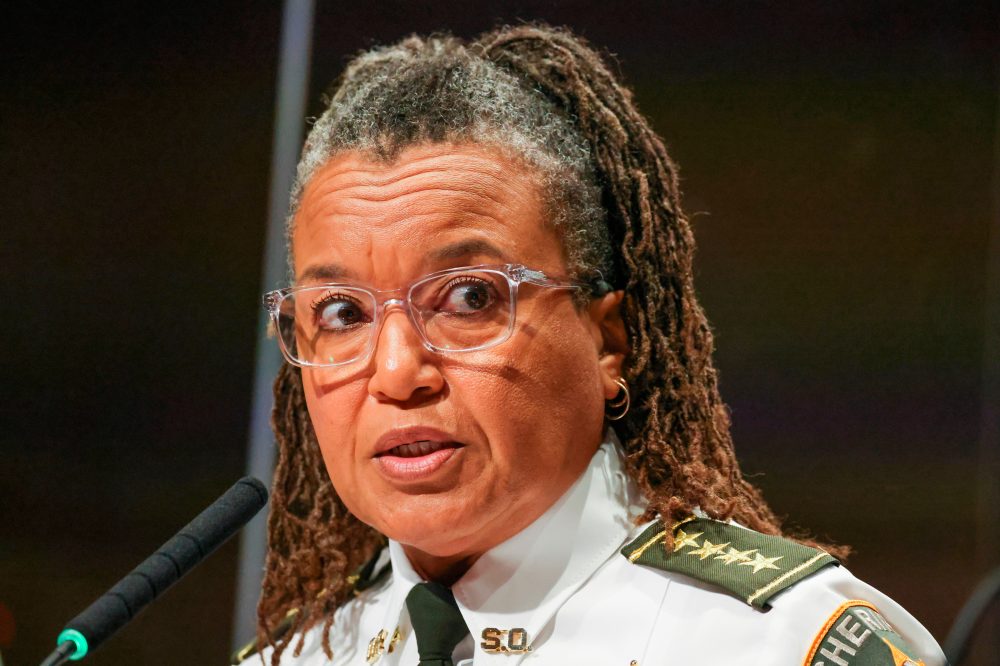
Susan Hutson, who serves as sheriff in New Orleans, along with Chief Financial Officer Bianka Brown, received indictments Wednesday following a special grand jury investigation into the May 2025 incident where 10 detainees fled from the Orleans Parish Justice Center.
Louisiana Attorney General Liz Murrill announced that Hutson faces 30 felony charges while Brown was hit with 20 counts. The charges include criminal malfeasance, obstruction of justice, and conspiracy offenses.
A judge established bail amounts of $300,000 for Hutson and $200,000 for Brown. Both officials must give up their passports and cannot travel outside Louisiana’s borders.
“While Sheriff Hutson did not personally open the doors of the jail for the escapees, her refusal to comply with basic legal requirements and to take even minimal precautions in the discharge of her duties directly contributed to and enabled the escape,” Murrill said in a statement.
Neither the Orleans Parish Sheriff’s Office nor attorneys for the accused officials provided immediate comments following the indictment announcement. It remains uncertain whether Hutson and Brown will step down from their positions.
Michelle Woodfork, who won the sheriff’s election, is set to take the oath of office in early May, replacing Hutson.
The dramatic escape occurred on May 16 when inmates at the Orleans Parish Justice Center, a facility primarily housing individuals awaiting trial or sentencing, managed to break free by dismantling a sink and toilet from their cell wall and crawling through the opening they created.
Staff discovered the missing prisoners during regular morning roll call. The escapees included individuals facing murder charges, though authorities eventually captured all 10 fugitives.
Prior to Wednesday’s charges against the top officials, more than a dozen people had already faced prosecution as accomplices in the breakout, including detention facility staff members and family members of the escaped inmates. Among those charged was a maintenance employee who shut off water to the compromised cell when the inmates requested it.
The indictment details that Hutson faces 14 counts of malfeasance in office, along with multiple conspiracy charges, accusations of maintaining fraudulent public records, and obstruction of justice violations. Brown received similar charges.
Hutson, originally from Philadelphia, won the Orleans Parish sheriff’s race in December 2021 and began serving in May 2022. Her election marked historic firsts as Louisiana’s first African-American female sheriff and New Orleans’ first woman to hold the position.
Her career background includes work as both a defense lawyer and prosecutor before moving to Los Angeles, where she monitored the police department and oversaw detention facilities from 2007 to 2010. She returned to New Orleans in 2010 as an independent police monitor, spending a decade implementing reforms including specialized teams for officer-involved shooting investigations and mandatory body camera programs.
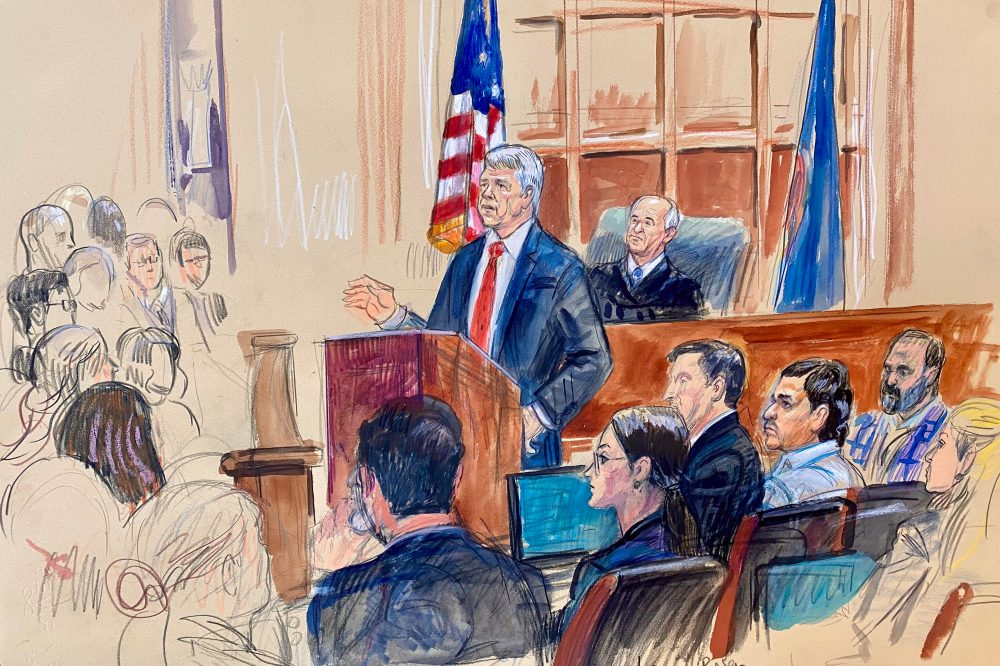
A federal judge in Washington D.C. handed down a four-year prison sentence Wednesday to a Romanian citizen who orchestrated fake emergency calls targeting numerous high-ranking American officials, federal prosecutors announced.
Thomasz Szabo, age 27, coordinated what authorities describe as an extensive campaign of fraudulent threats aimed at congressional members, cabinet officials, federal judges, and top law enforcement administrators.
The defendant had become heavily involved in swatting – a hazardous type of cyber harassment that has grown into a significant threat facing public servants throughout the United States political landscape.
Federal prosecutors had sought nearly five years behind bars for Szabo, who entered guilty pleas in June to conspiracy and threatening charges. U.S. District Judge Amy Berman Jackson also ordered three years of supervised release following his incarceration, according to U.S. Attorney Jeanine Pirro’s office.
“This administration will not tolerate attacks on the institutions and individuals who serve this country,” Pirro said in a statement.
Starting in 2018 while based in Romania, Szabo established online chat platforms where he and similar-minded individuals engaged in internet harassment activities. His digital operations evolved by late 2020 to include swatting schemes, where participants place false emergency reports designed to trigger heavily armed police responses at victims’ residences. Additional conspirators assisted in placing the fraudulent calls.
“Despite (or because of) the fact that they resulted in far greater harm to the victim and society, these activities offered much more entertainment value to the defendant and his followers, since swatting and bomb threats often resulted in an observable real-world impact,” prosecutors wrote.
Authorities also charged Nemanja Radovanovic of Serbia in connection with Szabo’s case, though that matter remains pending.
A separate Florida case involved another Szabo collaborator. Alan Filion received a four-year sentence in February 2025 at age 18 after admitting guilt for approximately 375 swatting incidents between August 2022 and January 2024. Though Filion was underage during his criminal activities, he entered adult guilty pleas.
Court documents reveal that in December 2023, Szabo advised Radovanovic they should select victims from both major political parties because “we are not on any side.” The following day, Radovanovic and Filion launched a swatting campaign against at least 25 congressional members or their family members, plus dozens of additional state and federal government personnel, according to prosecutors.
“Over and over, police departments and other first responders were hijacked by the defendant and deployed to fictitious emergencies,” prosecutors wrote. “As a result, fewer personnel and resources were available to respond to real emergencies.”
Secret Service agents interviewed Szabo on January 19, 2024, after Romanian law enforcement searched his residence. Officials said he was extradited from Romania to the United States in November 2024.
A Louisiana sheriff is facing serious criminal charges after a state investigation revealed her mismanagement led to a dramatic escape of 10 inmates from a New Orleans detention facility.
Orleans Parish Sheriff Susan Hutson was hit with a 30-count indictment Wednesday by a grand jury, facing charges of malfeasance, obstruction of justice, and falsifying public records. While prosecutors say Hutson didn’t directly assist in the escape, Louisiana Attorney General Liz Murrill determined that inadequate jail oversight made the breakout possible.
“While Sheriff Hutson did not personally open the doors of the jail for the escapees, her refusal to comply with basic legal requirements and to take even minimal precautions in the discharge of her duties directly contributed to and enabled the escape,” Murrill said in a statement.
The dramatic escape involved inmates crawling through an opening they created behind a restroom toilet, then climbing over razor wire fencing to freedom. Adding insult to injury, the escapees left behind mocking graffiti reading “To Easy LoL” at the scene. Perhaps most troubling, jail staff failed to discover the missing prisoners for more than seven hours.
Hutson has been ordered to surrender her passport and remain within state boundaries, with bail set at $300,000. The sheriff’s office chief financial officer, Bianka Brown, also faces 20 similar charges in connection with the incident.
Following the breakout, Hutson drew criticism for her delayed notification to law enforcement and for initially suggesting political enemies orchestrated the escape without offering proof. She also pointed to defective door locks and inadequate funding for facility improvements as contributing factors.
The Orleans Parish detention system has struggled with violence, corruption, and operational failures for years, prompting federal supervision beginning in 2013. Despite significant financial investment and a new facility opening in 2015, federal monitors had previously flagged concerns about insufficient staffing, poor oversight, and increasing incidents of “internal escapes” in the years preceding this major breakout.
All escapees were eventually recaptured after an extensive manhunt. Hutson, who lost her bid for reelection, is scheduled to step down from her position Monday.
Neither Hutson nor Brown immediately responded to requests for comment, and court documents did not identify personal attorneys for either defendant.
The massive USS Gerald R. Ford will return to its Virginia home base following an unprecedented deployment lasting more than 300 days, during which the vessel participated in military operations against Iran and the capture of Venezuelan leader Nicolás Maduro, according to two U.S. officials who spoke Wednesday.
The enormous aircraft carrier will depart the Middle East within days and arrive at Naval Station Norfolk in Virginia by mid-May, said the officials, who requested anonymity when discussing classified military operations. The Washington Post first reported this development.
Last week’s arrival of the USS George H.W. Bush created an unusual situation with three American aircraft carriers stationed in the Middle East simultaneously — a concentration not witnessed since 2003 — as a fragile ceasefire continues in the Iran conflict. The USS Abraham Lincoln has also maintained a presence in the area since January amid rising tensions with Tehran.
Earlier this month, the Ford established a new U.S. military record for the longest deployment since the Vietnam War ended, spending nearly 10 months away from Naval Station Norfolk after departing in June.
The vessel’s 295th day at sea exceeded the previous record for aircraft carrier deployments over the past five decades, surpassing the Lincoln’s 294-day mission in 2020 during the COVID-19 pandemic, based on information gathered by U.S. Naval Institute News, a publication of the nonprofit U.S. Naval Institute.
The Ford’s extended mission has sparked concerns about the effects on military personnel spending prolonged periods away from their families, as well as increased wear on the ship and its systems, particularly after the carrier suffered a fire requiring extensive repairs.
During Wednesday’s House Armed Services Committee hearing, Defense Secretary Pete Hegseth addressed questions about the Ford’s lengthy deployment, explaining he had discussed the matter with Navy leadership who acknowledged challenges related to readiness and maintenance.
“Multiple times the operational requirements — whether it was down in Southcom or up to Centcom — demanded additional assets in real time, which through a tough decision-making process led to an extension,” Hegseth stated, referencing U.S. Southern Command’s oversight of Latin America and U.S. Central Command’s Middle East operations.
The Ford initially sailed to the Mediterranean Sea when its deployment began, but was redirected to the Caribbean Sea in October during what became the region’s largest naval presence in decades.
The carrier participated in military actions to apprehend Maduro before encountering additional combat situations as it moved toward the Middle East amid escalating Iranian tensions.
From the Mediterranean Sea, the carrier engaged in initial phases of the Iran conflict before traveling through the Suez Canal and entering the Red Sea in early March.
A fire in the ship’s laundry facilities, however, forced the vessel to reverse course and return to the Mediterranean for repairs, displacing hundreds of sailors from their sleeping quarters.
While the Ford’s 295-day mission sets a post-Vietnam record, it remains shorter than Cold War-era deployments, particularly the decommissioned USS Midway’s 332-day mission spanning 1972 and 1973.
The USS Nimitz crew spent 341 days away from home during 2020 and 2021, though that period included extended quarantine time on U.S. soil designed to limit COVID-19 transmission.
Motorists using Route 72 eastbound should expect delays this afternoon as construction crews have shut down the right lane in a section of Wrangle Hill Road.
The Delaware Department of Transportation reports that the lane closure affects the stretch between Sunnyside Lane and McCoy Road, with work expected to continue until 3 PM today.
Drivers are advised to use caution when traveling through the construction zone and allow extra time for their commute. Traffic is being directed around the work area using the remaining open lanes.
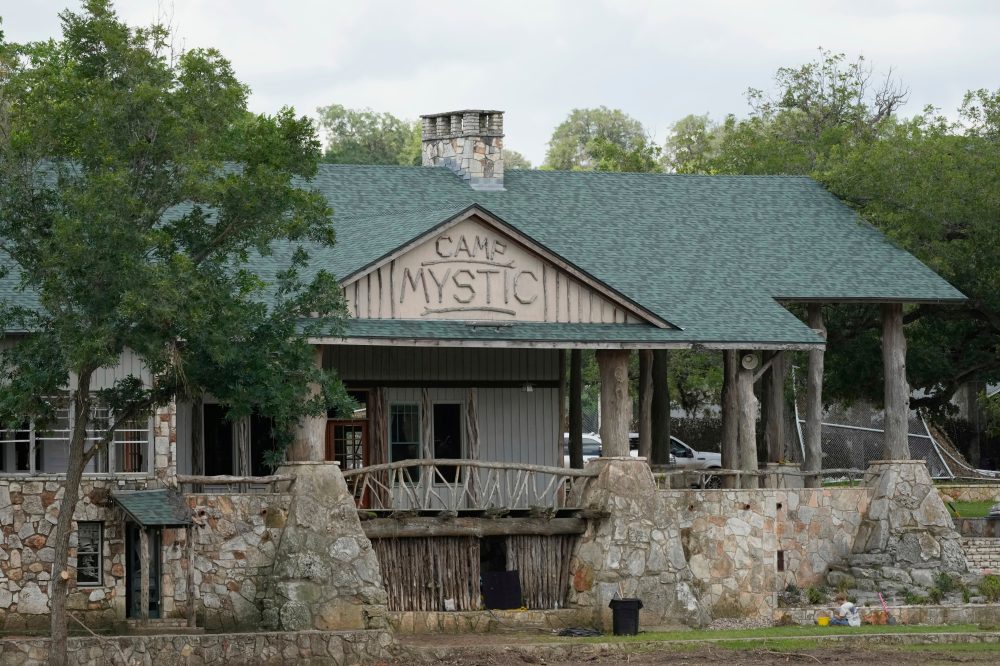
Bereaved families whose relatives perished in last year’s deadly flooding at Camp Mystic urged Texas legislators to prevent the facility from resuming operations during testimony before a state legislative commission.
The all-girls camp’s ownership also appeared before the commission to outline their emergency response protocols and disaster preparedness measures.
The legislative hearing focused on the tragic 2025 flooding incident that claimed multiple lives at the camp facility.
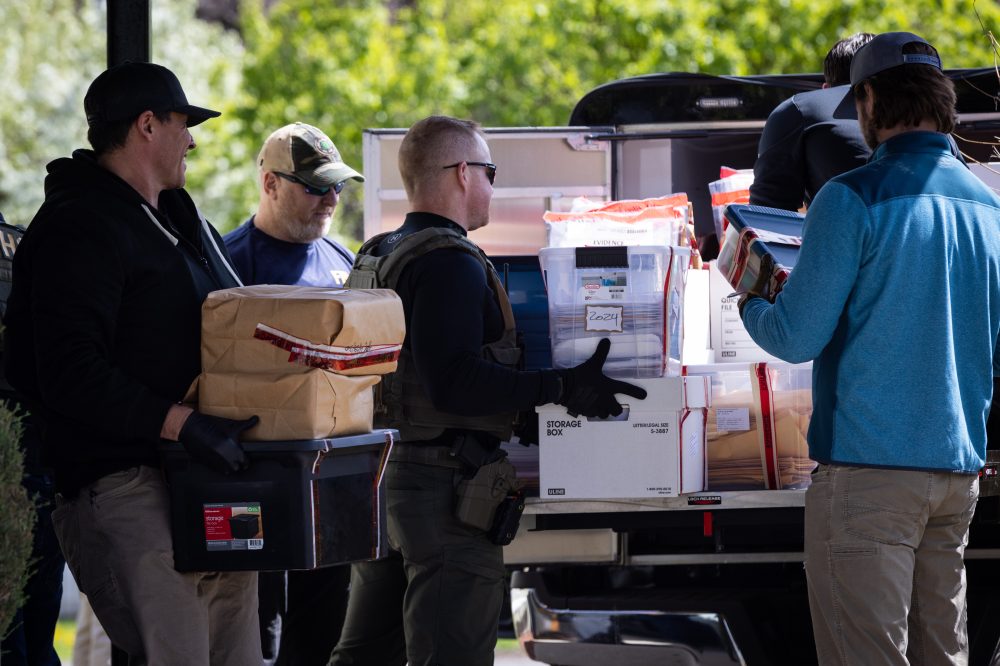
ST. PAUL, Minn. (AP) — Federal investigators carried out extensive searches across Minnesota this week, seizing documents and evidence as part of a continuing probe into fraudulent activities within publicly funded children’s programs.
The Tuesday operations involved 22 search warrants executed by federal agents, with armed officers visible at multiple childcare facilities throughout the state. The searches represent the most recent chapter in Minnesota’s ongoing battle against widespread fraud within social service programs.
Minnesota has faced numerous interconnected fraud investigations spanning multiple years, with federal prosecutors estimating that potentially billions of dollars in government funding may have been misappropriated.
The state’s fraud problems gained national attention through the Feeding Our Future scandal, a pandemic-era school meal program that federal authorities say resulted in $300 million in fraudulent losses. Since initial charges were filed in 2022, nearly 80 individuals have faced prosecution, with at least 65 convictions secured. Defendants allegedly falsely claimed to have provided millions of meals to children.
Federal prosecutors noted that most defendants in the Feeding Our Future case were of Somali heritage and held U.S. citizenship, though the alleged mastermind, Aimee Bock, is white. Bock received convictions on multiple charges including conspiracy, wire fraud, and bribery, with sentencing scheduled for May 21.
This wasn’t Minnesota’s first encounter with social service fraud. State legislative auditors reported in 2019 that suspected fraud in a single childcare program was costing $100 million or more each year.
President Donald Trump has cited these scandals as grounds for implementing extensive immigration enforcement in Minnesota, initially targeting the state’s substantial Somali population. However, the majority of over 4,000 arrests involved Hispanic individuals, most without criminal histories, despite administration claims of targeting “the worst of the worst.”
Trump characterized Minnesota as “a hub of fraudulent money laundering activity” under Gov. Tim Walz, the 2024 Democratic vice presidential candidate, writing on social media around Thanksgiving: “Somali gangs are terrorizing the people of that great State, and BILLIONS of Dollars are missing. Send them back to where they came from. It’s OVER!”
The administration launched Operation Metro Surge in early December, deploying approximately 3,000 federal officers in what officials called the largest immigration enforcement operation in history. The crackdown triggered widespread protests, with residents attempting to shield immigrants from arrest. Demonstrations intensified following fatal shootings of two individuals by federal officers.
In December, federal prosecutors unveiled a new wave of Medicaid fraud charges involving child nutrition services, housing assistance, and autism support programs. Autism rates are notably elevated within the Somali community for unexplained reasons. First Assistant U.S. Attorney Joe Thompson, who spearheaded the Feeding Our Future prosecutions, estimated that half or more of approximately $18 billion in federal funding distributed through 14 Minnesota programs since 2018 may have been stolen.
“The magnitude cannot be overstated,” Thompson stated before later resigning amid an exodus of career officials protesting Trump administration policies. “What we see in Minnesota is not a handful of bad actors committing crimes. It’s staggering, industrial-scale fraud.”
While frequently referenced, Thompson’s dollar figure represents an estimate, with actual losses alleged in filed cases totaling significantly less.
Conservative influencer Nick Shirley posted an extensive video the day after Christmas alleging that Minneapolis Somali community members operated fraudulent childcare centers to collect federal subsidies. The video gained attention from Trump administration officials and conservative activists, though state inspectors dismissed the claims.
Tuesday’s federal searches involved multiple state and federal agencies, including the Department of Homeland Security. Minnesota’s Bureau of Criminal Apprehension officers removed boxes from several locations. Democratic state Attorney General Keith Ellison confirmed his office’s Medicaid Fraud Control Unit participated in searches at five sites alongside federal law enforcement. The state’s child welfare agency provided supporting information.
The timeline for potential criminal charges remains unclear, as fraud investigations typically require extensive time to complete due to their complexity.
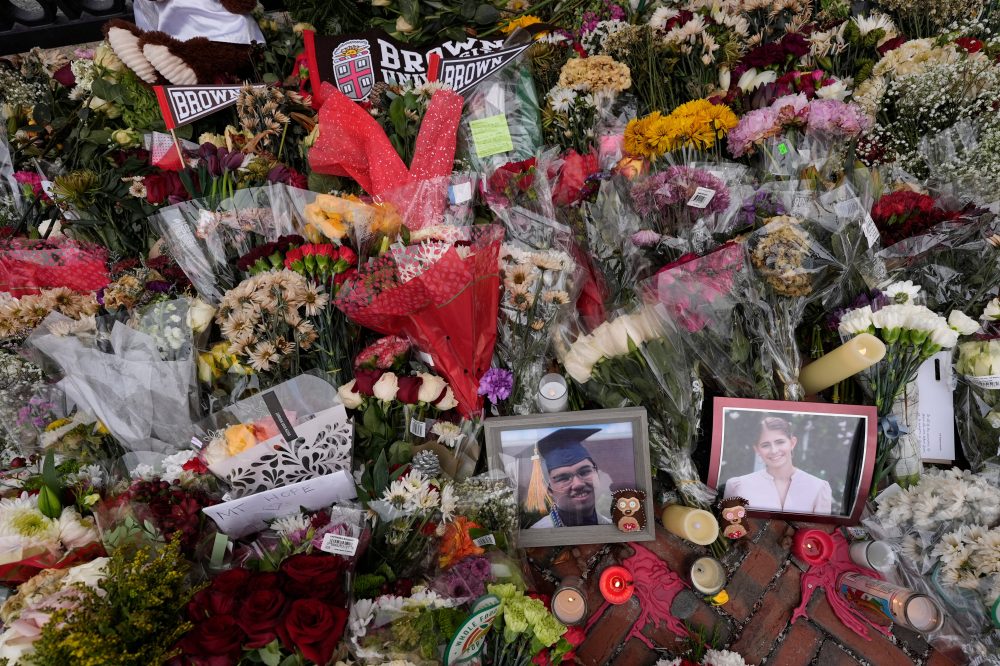
BOSTON — Federal authorities have concluded that the gunman responsible for a deadly shooting at Brown University and the murder of an MIT professor deliberately selected his targets based on deep-seated personal resentments, rather than striking at random.
According to a comprehensive behavioral analysis made public Wednesday, Claudio Neves Valente, a 48-year-old Portuguese citizen and former Brown University student, chose locations and individuals that symbolized what he perceived as personal setbacks, lost chances, and unfair treatment in his life.
The FBI report details how Neves Valente spent years in solitude developing his attack plan before opening fire in an engineering facility on December 13, resulting in two student deaths and nine injuries. He subsequently murdered MIT professor Nuno F.G. Loureiro at the educator’s Brookline, Massachusetts residence two days afterward. Law enforcement discovered Neves Valente’s body at a Salem, New Hampshire storage unit, apparently dead from a self-inflicted gunshot, concluding a manhunt across multiple states.
Federal investigators characterized the perpetrator as someone who lived in extreme isolation for years, frequently changing locations and lacking the typical support networks of family members, friends, or mentors who might have detected concerning behavior and contacted authorities.
Investigators determined that he gradually constructed a worldview centered on personal grievances and feelings of inadequacy, with “little to no opportunity for bystanders to observe and contextualize the significance of his behaviors.”
“He appeared to struggle with how he viewed his life achievements and felt he was considerably marginalized by others,” the FBI wrote in the report. “As his failures outweighed successes, his paranoia increased, compounding his continued inability to thrive and leading to him being mentally unwell and committed to dying.”
Law enforcement officials emphasized that the violence carried symbolic meaning. Both Brown University and Professor Loureiro embodied what the shooter viewed as “his personal failures and injustices he perceived were inflicted by others over time,” according to investigators.
“By attacking them, Neves Valente was likely able to overcome his shame and envy by using violence to punish those communities that he perceived contributed to his downfall,” the FBI said.
However, investigators recognized the limitations of their analysis, acknowledging that only Neves Valente truly understood his complete motivation and that psychological stress factors alone cannot provide a full explanation for the attacks.
Following the shootings, authorities discovered that Neves Valente had created multiple video and audio recordings where he admitted to the crimes, showed no regret, and discussed some of the resentments detailed in the FBI analysis, though he provided no definitive rationale for his actions.
Law enforcement has determined that Neves Valente operated independently and that the incidents had no established links to terrorist activity.
Officials revealed that Neves Valente was enrolled briefly as a doctoral candidate at Brown during the early 2000s but failed to finish his studies, a detail that investigators believe influenced his later perception of the institution. The weapons used in both attacks were purchased legally in Florida several years before the incidents, according to authorities.
These revelations emerge as victims wounded in the shooting initiated legal action this week, claiming the university disregarded previous warnings about the gunman and failed to implement sufficient security measures that might have prevented the tragedy.
LOS ANGELES — Legal authorities in Los Angeles County announced Wednesday that recording artist D4vd fatally attacked 14-year-old Celeste Rivas Hernandez with a knife in what they describe as a calculated murder.
The District Attorney’s Office revealed new details in court documents Wednesday, outlining what prosecutors claim is evidence showing the musician’s attempts to destroy the victim’s remains and eliminate proof of the crime.
According to the filing, D4vd, legally known as David Burke, first encountered Rivas Hernandez when she was just 11 years old, initiated an illegal sexual relationship when she turned 13 while he was 18, and murdered her after she threatened to expose their illicit affair.
“Knowing he had to silence the victim before she ruined his music career as she had threatened, very soon after her arrival at his home, defendant stabbed the victim to death multiple times and stood by while she bled out.”
Authorities discovered her decomposing remains inside a Tesla vehicle that had been towed from the Hollywood Hills area last September.
Investigators recovered text communications between Burke and the victim from April 22, 2025 — the final day before her phone went silent and officials believe she was murdered.
“The messages reveal the victim’s jealousy over defendant’s relationships with other women, as defendant led her to believe they had a future together. She became extremely upset and threatened to disclose damaging information about her relationship with defendant to end his career and destroy his life,” the document says.
Court papers allege Burke purchased two chainsaws through online retailers, which he then used to dismember the teenager’s body inside an inflatable swimming pool. Investigators reportedly discovered the girl’s DNA evidence in Burke’s garage, where they believe the dismemberment took place.
“Defendant took horrifying measures to destroy and discard the victim’s body,” prosecutors said in the brief.
The victim’s remains had deteriorated so severely that medical examiners could not identify basic physical characteristics like eye color. At the time of her death, she wore dental braces and had gotten a tattoo reading “Shhh…” on her finger along with Burke’s name, according to official reports. Two fingers were absent from the body, along with portions of her arms and legs.
Until now, prosecutors had not publicly outlined their theory of how Rivas Hernandez died or provided specifics about her connection to the defendant. Medical examination results indicated she died from stab wounds.
Burke has entered a not guilty plea to first-degree murder charges and additional counts. His legal representatives maintain his innocence and deny he caused Rivas Hernandez’s death.
Defense lawyers requested that Superior Court Judge Charlaine F. Olmedo seal the prosecution’s filing during Wednesday’s hearing, but the judge rejected their motion. The attorneys declined to speak with reporters after court proceedings.
A father-daughter team from New Jersey has admitted to orchestrating an elaborate art forgery scheme that fooled some of New York City’s most prestigious auction houses out of at least $2 million.
The case began unraveling just over a year ago when Karolina Bankowska, 26, walked into art dealer Robert Rogal’s private showroom carrying what appeared to be an authentic Andrew Wyeth watercolor. She claimed it was a family heirloom and hoped to sell it through consignment for an estimated $20,000 to $30,000.
“The provenance was a little fuzzy,” Rogal recalled. “But she seemed credible. It wasn’t an obvious counterfeit.”
Federal prosecutors now say that painting was among more than 200 sophisticated fakes that Bankowska and her father, 50-year-old Erwin Bankowski, attempted to sell to unsuspecting buyers. On Tuesday, both Polish citizens entered guilty pleas to fraud charges.
The counterfeit artworks were created by an unidentified accomplice in Poland and included reproductions of lesser-known pieces by renowned artists such as Banksy and Andy Warhol, according to prosecutors. Their biggest payday came from a fake Richard Mayhew painting that sold through DuMouchelles auction house last October for $160,000.
A DuMouchelles spokesperson confirmed cooperation with federal investigators but declined further comment. Other targeted auction houses, including Bonhams, Phillips, Freeman’s and Antique Arena, either refused to comment or did not respond to requests.
The defendants face wire fraud conspiracy charges and additional counts for misrepresenting Native American-produced artwork after forging pieces attributed to Luiseño artist Fritz Scholder. Federal sentencing guidelines call for more than three years imprisonment, plus $1.9 million in restitution payments and potential deportation to Poland.
During Tuesday’s court hearing, Bankowska acknowledged to the judge that her “conduct was wrong and I am guilty.” Her lawyer, Todd Spodek, noted that his client has already placed over $1 million in an escrow account.
Speaking through a Polish translator, Erwin Bankowski also expressed remorse. His defense attorney, Jeffrey Chabrowe, explained that his client had “regrettably made a terrible decision in an effort to support his family.”
Art world experts say this type of fraud is more common than many industry insiders care to acknowledge.
“The only unusual thing about this case is that the forgers got caught,” said Erin Thompson, who teaches art crime at the City University of New York.
“People think of the art world as a genteel place full of cultured people who just want to share the wonder of beautiful art,” she continued. “You should assume there are a lot more fakes out there.”
According to prosecutors, the scheme launched in 2020 when the pair began hiring a Polish artist to produce the fraudulent works. They used vintage paper and created fake gallery stamps, choosing names of defunct galleries where the supposed artists might have realistically displayed their work.
Red flags began appearing by March 2023, when representatives for artist Raimonds Staprans discovered a forged painting called “Triple Boats” being offered at auction. Despite the artist’s representatives contacting the auction house, the piece still sold for $60,000 just days later, prosecutors stated.
Thompson, the art crime expert, spotted additional warning signs. The gallery stamp on the counterfeit Wyeth listed 1976 as the year but used a zoning address format that had been discontinued in 1962.
Ironically, the fake stamp carried the name and address of M. Knoedler & Co., one of New York’s most prestigious galleries until it shuttered in 2011 following its own forgery scandal involving fake works by Jackson Pollock, Mark Rothko and other masters.
Rogal ultimately decided against listing the Wyeth painting, partly because the stamp appeared “too clean.” When he contacted Bankowska to retrieve the artwork, she never responded.
On Tuesday, while examining the painting again in his Queens warehouse filled with consigned pieces, Rogal reflected on the experience.
“You try to do a service and provide it correctly,” he said. “Can we be fooled? Absolutely.”
AUSTIN, Texas — Satirical news publication The Onion is making a renewed attempt to acquire conspiracy theorist Alex Jones’ Infowars media empire and convert it into a parody platform.
A Texas judge will decide Thursday whether to greenlight the comedy outlet’s latest acquisition proposal, even as Jones has submitted eleventh-hour appeals in both state and federal courts attempting to block the proceedings. This legal battle stems from ongoing disputes over the more than $1 billion Jones must pay to families of Sandy Hook Elementary School shooting victims after he falsely claimed the 2012 Connecticut tragedy was staged.
This isn’t The Onion’s first attempt to secure the Infowars brand, and the publication is preparing for potential success. The comedy site has already begun marketing Infowars products through its own online store, featuring shirts and bags displaying an Infowars logo modified to include The Onion’s signature symbol replacing the letter ‘o.’
Jones has promised to resist any Onion acquisition. Should the takeover proceed, he plans to maintain his broadcasts through personal social media profiles, new websites, and the numerous radio stations that carry his show. He also intends to continue his merchandise operations, including nutritional supplements and apparel that generate millions annually.
Multiple family members of the 20 children and six staff members murdered at Sandy Hook filed lawsuits against Jones and his business in both Connecticut and Texas courts for defamation and emotional harm after he claimed the massacre was performed by ‘crisis actors’ to promote stricter gun legislation.
Family members provided testimony describing how Jones’ followers sent them death and sexual assault threats, confronted them in person, and bombarded them with hostile social media messages.
Jones maintained there was insufficient evidence connecting him to his followers’ behavior, though he acknowledged under oath that the shooting actually occurred.
Connecticut courts awarded victims’ families more than $1.4 billion in damages against Jones, later reduced by approximately $150 million during the appeals process. Texas courts ordered Jones to pay nearly $50 million in damages, with his Texas appeal still ongoing.
Jones declared bankruptcy in late 2022.
Throughout three decades, Jones promoted numerous conspiracy theories, including claims that the U.S. government orchestrated or allowed the 1995 Oklahoma City bombing and the September 11 attacks.
As his false statements became increasingly extreme, his reach expanded across radio networks, the Infowars website, and social media platforms.
Following his dismissal from an Austin radio station in the mid-1990s, he started broadcasting from his residence using his Infowars website. He purchased the domain name for just $9.
In 2004, his operation consisted of two staff members and a small office. By 2010, Jones employed more than 60 people. By 2024, he operated four Austin studios and a warehouse for his product sales.
Jones claims he has prepared a new Austin studio facility in case he loses Infowars.
Jones’ bankruptcy proceedings included a 2024 auction to sell Infowars’ assets to help satisfy the court judgments, with The Onion selected as the successful bidder. However, the bankruptcy judge rejected that arrangement, pointing to issues with The Onion’s offer and the auction procedures.
The bankruptcy judge subsequently permitted the Sandy Hook families to pursue asset liquidation through state court. Jones has challenged that decision.
The Onion’s current proposal involves a six-month licensing agreement with renewal options while a court-designated receiver works toward eventually selling the assets of Free Speech Systems, Infowars’ parent company. Money from the asset sale would go to the Sandy Hook families.
The Onion would contribute $81,000 monthly to cover building rent for the Infowars studios, utilities, and other operational expenses.
The Onion recently revealed it has recruited staff to operate the redesigned Infowars platforms, including Tim Heidecker from the comedy partnership Tim and Eric, recognized for their Cartoon Network ‘Adult Swim’ programming. Beyond parody content, plans include featuring various comedy formats.
Headquartered in Chicago, The Onion launched in the 1980s and has spent decades satirizing politics and popular culture, frequently targeting Jones in mocking articles. The publication uses ‘America’s Finest News Source’ as its tagline.
Following mass shootings in America, The Onion typically republishes modified versions of one of its most famous recurring satirical pieces: “‘No Way to Prevent This,’ Says Only Nation Where This Regularly Happens.”
Delaware transportation officials are alerting drivers about upcoming overnight construction that will impact traffic flow on a busy Claymont roadway.
State highway crews will close lanes on eastbound Naamans Road between Society Drive and the northbound Interstate 95 entrance ramp beginning Wednesday, May 6th through Friday, May 22nd. The construction zone will be active nightly from 7:00 p.m. until 6:00 a.m. while workers replace bridge deck joints.
Transportation department officials are advising drivers to exercise extra caution when traveling through the work zone and to plan for possible delays during the construction period.
ORLANDO, Fla. — A recently released police report reveals troubling details about the mental state of a man now facing murder charges in the deaths of two University of South Florida doctoral students from Bangladesh.
Family members described a dramatic deterioration in Hisham Abugharbieh’s behavior following his marijuana use, according to documents from the Hillsborough County Sheriff’s Office released Wednesday. The report stems from a May 2023 incident where Abugharbieh struck his brother in the face and kicked his mother in the back.
During that arrest three years ago, Abugharbieh displayed signs of severe mental distress, making statements such as “I am son of Mary” and “I created my brother. I am his god.” Authorities placed him under Florida’s Baker Act, which permits emergency mental health evaluations lasting up to 72 hours.
“HIsham used to be a cool guy, a supportive and helpful eldest son, until he started smoking cannabis, especially medical marijuana,” a relative whose name was redacted wrote in a victim impact statement more than a week after Abugharbieh’s May 2023 arrest. “It turned him mentally ill, with hurtful behavior and anger problems which is affecting the family life. We lost Hisham as a normal family member.”
When questioned by law enforcement during the 2023 incident, Abugharbieh claimed he acted defensively because his brother had threatened him. His family chose not to pursue criminal charges but requested substance abuse treatment instead. He subsequently participated in a first-time offender diversion program.
The 26-year-old now faces two first-degree murder charges in connection with the deaths of the USF students. He remains in custody without bail.
Investigators discovered the body of Abugharbieh’s roommate, Zamil Limon, in a trash bag on the Howard Frankland bridge last Friday. Authorities announced Sunday that another body was recovered from waters near the bridge, though the medical examiner has not officially identified it as Limon’s girlfriend, Nahida Bristy.
Both victims vanished on April 16. Limon was last observed at the off-campus housing complex he shared with Abugharbieh, while Bristy was last seen at a university science facility. Limon pursued studies in geography, environmental science and policy, while Bristy focused on chemical engineering.
Jennifer Spradley, a public defender representing Abugharbieh in Tampa, declined to provide comment when contacted earlier this week.
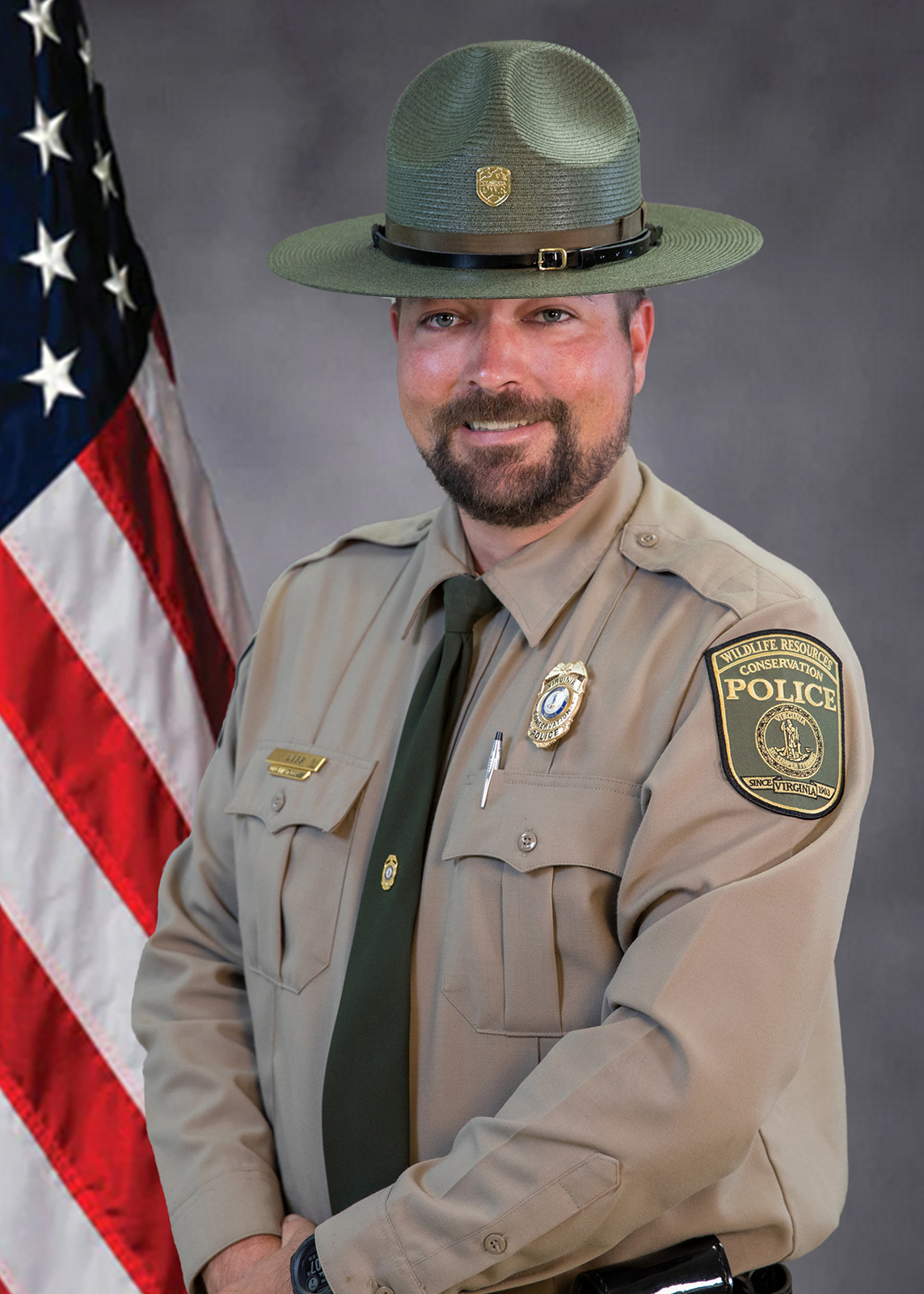
Virginia’s Department of Wildlife Resources honored its finest conservation officers during an awards ceremony held March 18, recognizing outstanding achievements in law enforcement, public safety, and community service throughout 2025.
2025 CONSERVATION POLICE OFFICER OF THE YEAR
Senior Officer Kevin Webb
Senior Officer Webb earned the top honor through remarkable leadership, training expertise, and investigative excellence during 2025. Webb mentored officers as a Field Training Officer, conducted extensive driver training for DWR and academy personnel, and participated in 11 community outreach programs including youth camps and school presentations.
Webb’s investigative prowess shone in complex cases, including volunteering as lead investigator for a late-night predator hunting fatality outside his assigned area. The intricate case required search warrants, crime scene recreations, and comprehensive interviews, ultimately resulting in felony murder and reckless handling charges. His quick response, evidence preservation, and coordination proved crucial for successful prosecution.
Throughout the year, Webb built substantial cases through thorough investigations. His determination in an antler possession case led to convictions on all 12 charges by disproving fake documentation through database research and social media examination. He filed 18 charges in a major baiting and trespassing case, handled four spring turkey tagging violations, and secured felony charges in separate hunting-related shootings. His work resulted in multiple felony convictions and earned high praise from a Commonwealth’s Attorney.
2025 VIRGINIA BOATING OFFICER OF THE YEAR
Officer First Class B. Tyler Dagliano
Officer First Class Dagliano excelled in boating safety enforcement and officer mentorship throughout 2025. As primary Field Training Officer for two trainees, he balanced teaching responsibilities with aggressive enforcement against impaired and unsafe boaters, recording 30 boating violations and making five primary OUI arrests while assisting with four additional arrests.
His mentorship directly built confidence in newer officers, including guiding a trainee through two OUI arrests during one shift. Dagliano strategically targeted peak boating periods and coordinated joint operations with neighboring areas, extending his enforcement reach to major events like the Lake Anna Glow Party.
Beyond enforcement, Dagliano responded to four boaters-in-distress calls and multiple search and rescue incidents, while investigating two boating incidents including one fatality. His exceptional service earned him Region 1 Operation Dry Water Officer of the Year, the 2025 MADD Award for OUI enforcement, and an Excellence in Police Service certificate for his response to the Reagan National Airport aircraft collision.
2025 SPECIAL OPERATIONS CPO OF THE YEAR
Senior Special Agent Zach Howlett
Special Agent Howlett stepped up when the Special Investigations Unit lost both Marine Fraud & Theft positions, recovering three stolen vessels, two trailers, and identifying $58,000 in marine fraud while recovering $1,725 in taxes and penalties. He sacrificed personal time responding to 10 critical incidents statewide, including multiple fatal hunting and boating incidents.
Howlett showcased advanced investigative techniques, utilizing 43 search warrants, digital forensics, surveillance technology, and social media analysis to solve complex cases. His certification as a Cellebrite Operator and Physical Analyst enhanced his effectiveness. Notably, he coordinated a successful bait boat operation using a covert IP camera that allowed real-time viewing of the theft.
Beyond investigations, Howlett significantly impacted training and outreach. He helped develop and instruct DWR’s first-ever IHEA Academy and led regional hunting incident training. He also enhanced agency visibility through community events and media engagement, including the widely viewed “True Wildlife Crime: The Hollywood Buck Case” video episode, which has garnered over 236,000 views.
2025 COMMUNICATIONS OFFICER OF THE YEAR
Renee Brown
Dispatcher Brown demonstrated exceptional skill and composure during 2025, particularly when safeguarding a Conservation Police Officer who suffered a medical emergency while on duty. As the sole dispatcher present, she simultaneously managed emergency coordination, dispatched medical resources, and maintained full radio and phone operations across multiple channels.
Her performance metrics reflect excellence: thousands of calls for service, extensive CJIS transactions, numerous public tips managed, and zero unverified addresses – crucial for officer safety across Virginia’s varied terrain. Brown maintained perfect attendance and volunteered for additional shifts during high-demand periods. She also serves as Dispatch COOP and Sunshine Coordinator, strengthening continuity planning and team morale.
COLONEL’S LEADERSHIP AWARD
First Sergeant Derrick Kekic
First Sergeant Kekic, who began his DWR career in 2000, returned in 2018 and quickly advanced to District 41 Sergeant in 2021 and First Sergeant for Region IV-A in 2022. His leadership was particularly evident during the January 2025 Reagan National Airport aircraft collision response, where he coordinated DWR operations within a Joint FBI-NTSB command post.
Kekic leads the Region IV Hunting Incident Investigation Team and serves as a peer support member and Internal Affairs investigator while contributing to statewide training initiatives.
OFFICE OF PROFESSIONAL STANDARDS PROFESSIONALISM DECREE
K-9 Sergeant Richard Howald
Sergeant Howald, a Marine Corps veteran who joined DWR in 2005, helped establish the Conservation Police K-9 Program in 2011 and was promoted to K-9 Sergeant in 2022. He designed the entire training curriculum and served as lead instructor, with his expertise extending to West Virginia DNR’s K-9 Program training in 2023 and 2024.
MERITORIOUS SERVICE MEDAL
Senior Officer Justin Chambers
On July 19, 2025, Senior Officer Chambers prevented a suicide attempt under extremely dangerous conditions. He encountered a distressed individual on a bridge above the flooded, fast-moving South Fork of the Shenandoah River. Despite a malfunctioning radio, Chambers remained calm and attempted de-escalation. When the individual began climbing over the railing, Chambers physically intervened, risking his own life to prevent the jump until additional officers arrived.
Additional Awards
Excellence in Police Service awards went to Senior Officer Corey Gardner, Senior Officer Derrick Rickels, Sergeant Matthew Meade, Officer First Class Trace Hughes, and Sergeant Matt Arnold.
Regional Officers of the Year included representatives from all four regions, with Officer First Class B. Tyler Dagliano earning both statewide and Region 1 recognition, while other regions honored officers including Tyler Thompson, Matthew Sandy, Ethan Goodman, Andrew Rohrer, Justin Chambers, and David Rogers for their outstanding service in their respective areas.
A beloved community tradition is making its return to Newark this weekend as local law enforcement officers prepare to host their annual fishing event with residents.
The Casting with Cops event will take place this Saturday, May 2, 2026, from 11:00 AM until 2:00 PM at the Glasgow Park Fishing Pond, located at 2275 Pulaski Highway in Newark.
Community members are encouraged to bring their fishing equipment and join officers for an afternoon of angling and relationship-building. The event represents one of the department’s most popular annual community outreach initiatives, designed to foster positive interactions between law enforcement and local families.
Organizers describe the gathering as a favorite yearly tradition that brings together people of all ages for outdoor recreation and community connection at the popular Newark fishing destination.
New Castle County police are actively searching for a missing teenager after issuing a Gold Alert Tuesday evening.
Thirteen-year-old Aiden Carter vanished from the West Newport Pike area, specifically near the 2000 block, according to the New Castle County Division of Police. Authorities report Carter was last observed around 4:30 p.m. on Tuesday, April 28, 2026.
Police describe the missing teen as standing approximately 6 feet 2 inches tall with a weight between 200 and 225 pounds.
The Gold Alert system is activated when a child or vulnerable adult goes missing under circumstances that may indicate they are in danger.
Anyone with information regarding Aiden Carter’s whereabouts is urged to contact the New Castle County Division of Police immediately.
ALEXANDRIA, Va. — A federal jury in Virginia has found a suspected ISIS militant guilty of conspiracy in connection with the devastating 2021 suicide attack at Kabul’s airport that occurred during America’s military exit from Afghanistan.
Mohammad Sharifullah now faces up to two decades behind bars following his conviction on Wednesday for providing support to ISIS-K, the regional branch of the Islamic State. The case gained national attention when former President Donald Trump highlighted it during a congressional address last year. Sharifullah chose not to take the stand during his week-long trial.
The August 26, 2021 bombing claimed the lives of roughly 160 Afghan civilians and 13 American military personnel. The attack happened as U.S. forces were managing evacuation efforts at the airport, when a single bomber set off an explosive device near the facility’s Abbey Gate entrance.
While the Virginia jury found Sharifullah guilty of supporting the terrorist organization, they could not reach a unanimous decision on whether fatalities at the airport directly stemmed from his conspiracy. Had they agreed on that point, Sharifullah could have received a life sentence instead of the current maximum of 20 years.
Sharifullah showed no apparent emotional response when the verdict was read. U.S. District Judge Anthony Trenga has not yet scheduled his sentencing hearing.
Defense lawyer Lauren Rosen contended that government prosecutors lacked concrete evidence connecting her client to the bombing beyond his own statements made during extensive FBI interviews. She suggested Sharifullah may have told agents what he believed they wanted to hear, potentially out of fear of mistreatment while in Pakistani detention before his transfer to the United States.
“The problem was, he didn’t know much about what actually happened that day,” Rosen told jurors during the trial’s closing arguments. “The government has told you nothing about how this attack actually happened.”
Justice Department attorney Ryan White painted Sharifullah as a key figure in orchestrating the Abbey Gate attack and claimed he participated in other ISIS-K operations, including the group’s March 2024 assault on a Moscow concert venue that resulted in approximately 140 deaths.
“The defendant thought nothing of killing,” White said. “For him, it was just another day at the office.”
According to a U.S. Central Command investigation, the Abbey Gate attacker was identified as Abdul Rahman al-Logari, an Islamic State member who had been freed from an Afghan prison by Taliban forces. FBI documents indicate Sharifullah recognized the bomber as someone he had encountered during his own imprisonment.
Congressional testimony from a former Marine revealed that he and colleagues had identified two suspicious individuals on the morning of the attack but were denied authorization to intervene. Despite this, the Central Command investigation determined that the snipers had not actually spotted the real bomber and concluded the attack could not have been prevented.
Last year, a prosecutor working on the Abbey Gate case was dismissed after facing public criticism from a conservative commentator regarding his service during President Joe Biden’s administration. Michael Ben’Ary’s removal was part of a wider effort to replace Justice Department officials considered insufficiently loyal to Trump.
Throughout his recent presidential campaign, Trump frequently criticized Biden’s handling of the Afghanistan withdrawal and held him responsible for the Abbey Gate tragedy.
However, Biden’s administration was implementing a withdrawal agreement and schedule that Trump’s first presidency had negotiated with the Taliban in 2020. A 2022 analysis by a government-appointed investigator found that decisions by both administrations contributed significantly to Afghanistan’s military collapse and the Taliban’s return to power.
Prosecutor White revealed that Sharifullah had told a reporter he wanted to “catch and kill the crusaders” from America for invading his homeland following the September 11, 2001 terrorist attacks.
“This case is not complicated,” White said. “The defendant told you everything you need to know.”
Defense attorney Rosen argued that American officials took ISIS claims of responsibility for the airport bombing at face value without proper scrutiny. She proposed that militants from a Taliban faction who were stationed at Abbey Gate might have been involved in the attack.
“You can’t base your verdict on mere conjecture and speculation,” Rosen said. “That’s what the prosecution is asking you to do.”
The Dover Police Department has made history by selecting Corporal Heather Seibert as its 2025 Officer of the Year, marking the first time a woman has received this distinction in the agency’s 101-year existence.
Additionally, Animal Control Officer Caitlyn Smith earned the 2025 Civilian of the Year award, creating another milestone as both top honors went to women for the first time in department history.
These awards highlight not just a groundbreaking moment, but also recognize the significant contributions both women have made to the Dover community.
Corporal Heather Seibert – Officer of the Year
Throughout the department’s century-plus history, Dover Police has annually honored its most outstanding officer. In 2025, that recognition goes to Corporal Heather Seibert—a law enforcement professional whose dedication, investigative skills, and thorough approach have distinguished her among colleagues.
Joining Dover Police in 2019, Seibert has earned a reputation among fellow officers as “the officer with the answers,” built through her meticulous attention to detail, eagerness to tackle any assignment, and determination to see cases through to completion.
During her dual role as patrol officer and primary shift investigator, Seibert managed an extraordinary caseload in 2025’s second quarter—answering roughly 400 service calls, completing over 80 reports, and investigating more than a dozen vehicle crashes within just three months.
Several cases from that period demonstrate her exceptional impact:
April 7, 2025 – Gunfire Investigation:
Corporal Seibert answered a 911 call about a vehicle hit by gunfire. She located bullet damage on the car and during her investigation, linked it to a second victim with a similar report. Her quick intelligence gathering and coordination with detectives resulted in a suspect’s arrest and the recovery of two weapons.
April 21, 2025 – Hit-and-Run Crash with Injuries:
Corporal Seibert investigated a hit-and-run that injured two pedestrians. Using witness descriptions of the suspect and vehicle, she searched the area for video evidence and identified the fleeing car through surveillance footage, leading to an arrest and felony charges.
May 1, 2025 – Pedestrian Injury Case:
Corporal Seibert responded to another vehicle-pedestrian crash involving serious injuries. Despite challenges obtaining information from those involved, including the victim, she canvassed nearby homes for witnesses and surveillance video. Her persistence uncovered critical evidence that led to the suspect’s arrest.
May 25, 2025 – Child Abuse Case:
On May 25, 2025, Corporal Seibert responded after a child fled to a neighbor’s house to escape abuse. She conducted a thorough yet sensitive investigation, documented the child’s injuries, and identified the mother as the perpetrator. After consulting with investigators and prosecutors, she arrested the suspect on child abuse charges and ensured the child was safely removed from the home.
Corporal Seibert’s exceptional work during the second quarter earned her Officer of the Quarter recognition and ultimately Officer of the Year. She was promoted to Detective in the Criminal Investigations Unit in January 2026.
Reflecting on her career and historic recognition, Corporal Seibert shared her thoughts:
What attracted you to law enforcement and Dover Police specifically? “I’ve been watching crime TV shows and helping my dad catch thieves in his convenience store since a young age. I’ve always loved righting wrongs and standing up for the little guy. Choosing Dover PD was really just luck. I happened to be moving to the area when I was starting my career and it was really the only department I ever looked at and never looked back.
Can you describe a particularly meaningful case you’ve handled? “It wasn’t one moment as much as a reaffirmation of why the work I do is important. In a domestic violence case, I later saw the victim again months later. She told me that our interaction was the push she needed to leave the relationship and that she and her kids were now thriving. We don’t usually get to see the positive outcomes, so it was great to see that my work contributed to helping a family long term.”
What does community service mean to you daily? “Serving the community looks different every day, but for me it means showing up and doing the job the right way regardless of the circumstances.”
Who has most influenced your career? “My husband and mom have been my biggest personal supporters. Professionally, Lt. Jeffrey Gott and Sgt. Nathanial Warren were instrumental early on—they helped shape me as an officer and pushed me to stay motivated and keep working toward my goals, even during difficult times.”
What motivates your thorough approach to casework? “I honestly just love to know the answer to the puzzle and make sure there are no loose ends. Those details can make or break a case and shed a lot of light on the big picture.”
What advice would you offer young women considering law enforcement? “Take the time to fully understand what this career demands. Law enforcement isn’t just a job—it’s a lifestyle that affects every part of your life. If it’s something you truly want, start preparing now—both physically and mentally. Build resilience, discipline, and confidence. And don’t be discouraged by challenges or expectations—there is absolutely a place for you in this field.”
What does being the first female Officer of the Year mean to you? “I’m honored to represent the women in law enforcement who contribute to this profession every day. Our academy motto was ‘exceed the standard, raise the bar,’ and I hope this shows that I’m just the first of many and encourages others to continue raising that bar.”
How do you relax when off duty? “My favorite way to recharge is to travel and see the world. But I can’t do that every weekend, so I usually hit a yoga class and watch tv with a cup of tea and a bowl of ice cream.
Animal Control Officer Caitlyn Smith – Civilian of the Year
In just over one year with Dover Police, Animal Control Officer Caitlyn Smith has proven herself as a highly effective, reliable, and caring team member—earning Civilian of the Year through both her work volume and case impact. Smith has quickly taken on significant responsibilities that demonstrate both departmental confidence and her strong dedication to the position.
In 2025’s fourth quarter alone, ACO Smith handled 114 complaints, serving as lead officer on 103 of those calls. During this period, she issued numerous warnings and enforcement actions, conducted investigations that resulted in an arrest, and obtained a warrant involving seven animal-related charges.
ACO Smith’s fourth-quarter achievements earned her Civilian of the Quarter recognition and ultimately Civilian of the Year.
ACO Smith’s duties frequently place her in challenging and sometimes disturbing situations—but also position her to create immediate, meaningful change.
On November 25, 2025, ACO Smith investigated an animal neglect complaint at a South New Street apartment. She found three dogs and four cats in severely undernourished condition, with visible ribs and hips, living in an apartment covered with urine and feces. While working to secure a search warrant, the owner fled with one dog. Despite this setback, ACO Smith worked largely independently to coordinate with the Office of Animal Welfare and City Code Enforcement to rescue six animals and help condemn the residence, removing them from dangerous conditions.
On December 23, 2025, ACO Smith responded to reports of a dead dog inside a North Kirkwood Street home. Her investigation revealed the animal had starved to death while confined in a waste-filled crate. She filed charges against the responsible person and, in the same case, persuaded the owner to surrender a second dog—personally driving it to Brandywine Valley SPCA to give it a chance at a better life.
Beyond her primary duties, ACO Smith showed initiative by helping the Parking Enforcement Unit during staffing shortages. She voluntarily modified her schedule—often arriving early—to support major community events, including parades and city functions.
Despite the challenging nature of her work, ACO Smith approaches her role with a clear philosophy focused on both enforcement and education:
“I have always had a love for animals, and this is a great position to educate owners and the public on the proper laws on owning animals.”
She stresses a balanced field approach:
“I evaluate each situation on a case-by-case basis and determine if education or law enforcement is appropriate.”
For ACO Smith, satisfaction comes from positive outcomes, even in the most difficult cases:
“I enjoy the variety of work that I do daily, and even the challenging moments can be rewarding when the animal is in a safe place.”
She described the recognition as both humbling and inspiring:
“It’s an honor and a shock to be recognized by my peers in such a high regard, and I hope to maintain the expectations of such an award.”
Her work demonstrates dedication not only to enforcing animal welfare laws, but to improving conditions for both animals and the broader community—often in situations where quick action makes all the difference.
The recognition of Corporal Seibert and ACO Smith represents a pivotal moment in Dover Police Department’s 101-year history. While their roles differ, both have shown unwavering dedication to service, accountability, and performing their duties with integrity and compassion.
Their work embodies the department’s core values and demonstrates the impact committed professionals can have across all aspects of public safety. Together, their service represents the standard Dover Police Department works to deliver daily.
Chief Thomas Johnson, Jr. commended both recipients, saying: “Caitlyn and Heather are highly professional, get-things-done members of our organization. In each situation they address, their empathy and compassion is clearly visible while they hold individuals accountable for their behavior. They serve the interests of justice as they champion the needs of our victims, and society as a whole. We have 150 or so stellar employees in the Dover Police Department. Dozens were nominated for their outstanding performance in 2025. ACO Smith and Corporal Seibert clearly distinguished themselves above all others and earned this annual recognition through quiet excellence. The Dover PD is happy to announce that excellence loudly and proudly. Congratulations to both of them.”
New Castle County police are actively seeking Roland Fleming, who has failed to appear in court on several felony and misdemeanor charges stemming from a fatal traffic accident.
According to authorities, Fleming was behind the wheel of a vehicle that collided with and fatally injured a 72-year-old man who was operating an electric scooter on April 19, 2025. Following the deadly incident, Fleming was taken into custody but has since missed his required court appearance.
The New Castle County Division of Police has issued a capias warrant for Fleming’s arrest due to his failure to appear before the court on the pending charges related to the fatal crash.
Anyone with information regarding Fleming’s whereabouts is encouraged to contact the New Castle County Division of Police.
Salisbury, MD — City crews will replace aging water infrastructure in the 400 block of Pinehurst Avenue on Wednesday, April 29, as part of the municipality’s continuing efforts to upgrade and maintain its water distribution network.
The street will be shut down to all vehicle traffic between Russell and Camden avenues while the work takes place. City officials say the project is set to start at 9 a.m. and should wrap up around 3:30 p.m., unless unexpected issues arise.
City staff will alert utility locating services and Central Alarm ahead of the construction.
Municipal leaders are asking residents for their understanding and patience while this brief disruption takes place.
Questions about the project can be directed to the Utilities Division at 410-548-3103.
Relatives of those killed in a devastating mass shooting in British Columbia have taken legal action against the artificial intelligence company OpenAI and its chief executive Sam Altman, claiming the firm recognized the shooter posed a dangerous threat but chose not to contact law enforcement.
The federal court filings in San Francisco on Wednesday assert that OpenAI discovered the threat eight months prior to the February attack but remained silent to avoid revealing the extent of violent discussions occurring on its ChatGPT platform, which could have damaged the company’s prospects for a massive public stock offering worth nearly $1 trillion.
Nine individuals perished in the February tragedy in Tumbler Ridge, British Columbia, with many of the victims being young children.
A representative for OpenAI described the incident as “a tragedy” and emphasized the company maintains strict policies against using their technology to facilitate violent acts.
“As we shared with Canadian officials, we have already strengthened our safeguards, including improving how ChatGPT responds to signs of distress, connecting people with local support and mental health resources, strengthening how we assess and escalate potential threats of violence, and improving detection of repeat policy violators,” the spokesperson said in a statement.
These legal challenges represent part of an expanding collection of court cases targeting artificial intelligence firms for allegedly failing to stop chatbot conversations that legal representatives claim lead to self-injury, psychological harm and violent behavior. These appear to mark the first instances in America where ChatGPT is accused of helping enable a mass shooting incident.
Attorney Jay Edelson, representing the affected families, indicated plans to bring forward approximately two dozen additional cases against the company in upcoming weeks on behalf of others affected by the shooting.
The perpetrator, 18-year-old Jesse Van Rootselaar, whose ChatGPT communications form the basis of these lawsuits, killed her mother and stepbrother at their residence before taking the lives of an education worker and five students between ages 12 and 13 at her previous school on February 10, law enforcement reported. Van Rootselaar subsequently took her own life.
Those bringing the lawsuits include family members of the school victims and a 12-year-old survivor who was shot three times and continues receiving intensive medical care.
Court documents indicate that OpenAI’s automated monitoring systems identified concerning ChatGPT exchanges in June 2025 where the shooter outlined violent scenarios involving firearms.
Members of the safety team urged contacting law enforcement after determining she represented a genuine and immediate danger, according to the legal filing, which references a Wall Street Journal report from February detailing the company’s internal deliberations.
However, Altman and other OpenAI executives rejected the safety team’s recommendation and authorities were never notified, the lawsuit contends. While the shooter’s account was shut down, she managed to create a new profile and continued using the service to organize her attack, the legal action claims.
After the Wall Street Journal story appeared, the company stated the account triggered systems designed to detect “misuses of our models in furtherance of violent activities” but the circumstances did not satisfy internal standards for law enforcement notification.
A week ago, a Tumbler Ridge local publication printed an open letter where Altman expressed being “deeply sorry” the account wasn’t reported to police.
In a Tuesday blog post, OpenAI explained it develops its systems to reject requests that could “meaningfully enable violence,” and contacts law enforcement when discussions indicate “an imminent and credible risk of harm to others,” with mental health professionals assisting in evaluating uncertain situations. The company noted it continuously improves its systems and detection approaches based on user patterns and expert guidance.
The legal cases demand unspecified monetary compensation and a judicial mandate requiring OpenAI to reform its safety procedures, including required law enforcement notification protocols. One victim initially pursued her case in Canadian courts but withdrew it to seek resolution in California, Edelson explained.
These lawsuits regarding the Tumbler Ridge incident follow numerous other legal actions against OpenAI filed in various American courts in recent months alleging ChatGPT enabled dangerous conduct, suicide attempts, and in one instance, a murder-suicide.
The ongoing litigation, still in preliminary stages, will require courts to determine what responsibility an AI system bears in encouraging violence and whether companies can be held accountable for their operations or user behavior.
OpenAI has rejected the allegations in these cases, maintaining in the murder-suicide lawsuit that the individual involved had an extensive history of mental health issues.
Florida’s Attorney General James Uthmeier revealed earlier this month a criminal inquiry into ChatGPT’s involvement in a 2025 shooting incident at Florida State University.
Delaware transportation officials are warning drivers about upcoming lane restrictions on Interstate 495 north this Thursday as crews tackle necessary drainage repairs.
DelDOT has scheduled the maintenance work for Thursday, May 7th, running from 9:00 am until 3:00 pm. During this six-hour window, the left lane of northbound I-495 will be closed approximately half a mile beyond the Edgemoor on-ramps.
State transportation officials are advising drivers to exercise extra caution while traveling through the construction zone and to plan for possible minor traffic delays during the repair period.
NEW YORK — A Scottish business owner who built his wealth through online tire sales says his career path might have led him to the funeral industry instead, if not for crucial support he received as a teenager from what is now King Charles III’s charitable organization.
Mike Welch, who dealt with dyslexia and came from a blue-collar family, had difficulty with college entrance tests and began working at a tire installation shop after dropping out of school at 15. After losing that position, he visited the Liverpool employment office where job postings included both a funeral director position — which he describes as likely “great” but “pretty grim” — and an opportunity to compete for business funding through a charitable program.
Welch chose the latter option and within a day found himself in a church surrounded by antique furnishings and welcoming elderly volunteers. Though the setting bore no resemblance to “Shark Tank,” he remembers feeling like a contestant on the reality program as he pitched his idea to offer affordable tires to specialized customers like his car enthusiast friends.
This marked Welch’s introduction to what was then called The Prince’s Trust, which was renamed The King’s Trust when Charles assumed the throne in 2023. “It wasn’t a well thought out plan, really,” explained Welch, who now lives in Florida. “But they backed me. And they backed my enthusiasm. And they gave me a chance.”
Countless British citizens share similar experiences with The Prince’s Trust and The King’s Trust, organizations that have assisted young people in building careers since 1976. Charles established the charity using his Royal Navy discharge payment during a period of significant economic hardship in the United Kingdom. Over five decades, the King’s Trust reports helping more than 1.3 million young British people through educational and career programs, producing numerous success stories including actor Idris Elba and fashion designer Ozwald Boateng.
During Charles and Queen Camilla’s inaugural state visit to America since his coronation, their trip includes recognition of The King’s Trust as the organization expands its influence across more than 24 nations, including the United States. The charity will mark its 50th anniversary Wednesday evening with a celebration in New York.
While British Royal Family members typically support existing charities as patrons to increase visibility and donations in their regions, experts note that Charles’s continued commitment to youth employment demonstrates his personal investment in creating his own foundation and maintaining his association with its growing mission even after becoming monarch.
“The harsh reality today is that the need for the work of people like the trust is growing at a rate far faster than we can grow,” stated Jeremy Green, who serves as both a trustee for the King’s Trust Group Company and chairman of the King’s Trust USA.
The organization’s international presence primarily includes nations that were historically under British governance.
The trust connects with young people through educational institutions and established nonprofit partnerships. Programs include Get Hired, which assists youth — many without college degrees — in securing initial employment, and Development Awards, grants that help cover career-advancing purchases like computers or professional attire.
The Enterprise Challenge operates as an after-school initiative where students create businesses addressing local community issues.
“What we see every time is that young people want to be helped. They want to be taken seriously,” Green explained. “And it’s not just giving them money. It’s giving them opportunity.”
LaKenya Sharpe, who leads The Collins Academy High School in Chicago’s North Lawndale area, says her students have been transformed by the serious attention they received from The King’s Trust after winning the Enterprise Challenge for creating C2C: Crops2Customers. Their enterprise cultivates and sells fresh produce to local retailers in an area with limited access to stores offering fresh vegetables.
“A lot of times our babies, especially in this community, feel like no one’s watching, no one is looking, no one is paying attention,” Sharpe explained. “This shows that they can achieve anything. Their belief now is ‘Oh, other people are watching. Other people are seeing this.’ And they ask ‘How far can this go?’ My answer is, ‘It can go as far as you guys take it. Don’t let anything limit you.’”
According to King’s Trust USA CEO Victoria Gore, Wednesday’s celebration aims to highlight “the very best of British-American philanthropy through the individual arts, culture, investments between the two countries.”
The event occurs during a period of diplomatic strain between the longtime allies’ elected leadership. President Donald Trump has expressed frustration with British Prime Minister Keir Starmer’s decision not to back U.S. military action in Iran.
Trust officials stress that anniversary planning began well before recent tensions emerged. However, Charles’s focus on shared philanthropic connections could help emphasize common interests, according to JP Tribe, a University of Liverpool law lecturer who studies royal charitable patronages.
“Hopefully the gala is a kind of event which shows that both countries have and can continue to engage in very positive public benefit activity that helps the most disadvantaged in our society,” Tribe observed.
The King’s Trust US aims to serve 1,000 American youth this year.
Their primary partnership involves City Year, an educational nonprofit that connected The Collins Academy with The King’s Trust and places young adults as teaching assistants in schools nationwide. AmeriCorps volunteers are helping test an American version of the “Get Hired” initiative. The organization also works with nonprofit Per Scholas and Maryland educational districts to pilot additional programs.
Gore notes that participating students typically concentrate on their immediate neighborhoods. The objective is demonstrating how they can create positive change in their own communities.
“Keeping employment in communities and keeping people in communities is actually the key to everyone’s success,” Gore said.
Welch emphasizes that meaningful impact doesn’t require massive financial commitments. He received a 500-pound ($677) grant and, equally valuable, a mentor who offered office space for the startup he would eventually sell to Michelin for 50 million pounds ($68 million).
He believes the framework for The King’s Trust’s successful expansion already exists, requiring only the development of relationships with local partners who can reach those most in need.
“What we see in Chicago, what we see in Orlando, is really no different — with obvious local nuances,” explained Welch, who has since launched the Anglo Atlantic advisory and investment company. “But it’s not very different to what we see in Liverpool, Birmingham, Manchester.”
New Castle County police have filed charges against a teenager accused of operating a stolen vehicle scheme through social media platforms.
Law enforcement officials launched their investigation in September 2025 after receiving reports about someone allegedly marketing stolen Honda and Acura automobiles on various social networking sites.
Through their investigation, officers identified 18-year-old Ailear Braxton as the person behind the alleged operation. According to police, Braxton operated under several different identities across social media platforms while conducting the illegal sales.
The case highlights the growing trend of criminals using online platforms to facilitate illegal activities, particularly in the auto theft sector.
Details about the total number of vehicles involved or the scope of the alleged operation have not been released by authorities at this time.
A Delaware Department of Transportation worker suffered injuries Monday afternoon when a vehicle veered off Route 1 and collided with his grass-cutting equipment near Duck Creek in Smyrna.
The incident occurred on April 26 as the DelDOT employee was performing routine grass maintenance along the highway. According to officials, a vehicle traveling south departed the roadway and crashed into the state tractor.
The collision resulted in significant damage to both the maintenance equipment and the striking vehicle. Fortunately, the DelDOT worker avoided life-threatening injuries despite the severity of the crash.
Delaware State Police responded to the scene and issued a citation to the motorist involved in the collision. The incident highlights ongoing safety concerns for highway maintenance crews working along busy roadways.
Drivers using Foulk Road are facing traffic delays today as construction work has forced the closure of the right lane in the southbound direction at Silverside Road.
According to Delaware Department of Transportation officials, the lane restriction is expected to remain in effect until 3:30 PM this afternoon.
Motorists are advised to plan for extra travel time and use caution when passing through the construction zone. Drivers should merge safely into the left lane before reaching the work area.
More than 15 Newark police officers received recognition for their exceptional service during the past year at the department’s annual awards ceremony held on April 24, 2026.
The recognition event took place at the Courtyard by Marriott Newark-University of Delaware, where law enforcement personnel and civilian staff members gathered to celebrate outstanding contributions to public safety and community service.
The ceremony highlighted the dedication and professional achievements of officers who went above and beyond their regular duties to serve the Newark community throughout the previous year.
RALEIGH, N.C. — Planning to visit the Liberty Bell during America’s upcoming 250th anniversary celebration but can’t make it to Philadelphia? You might be surprised to learn there’s likely a nearly identical replica sitting in your own state.
While it won’t be the authentic bell, these copies are remarkably accurate reproductions.
Back in 1950, the U.S. Treasury Department created replicas of the iconic cracked bell for every state and several territories as part of a savings bond campaign. Apart from unique serial numbers, these reproductions were exact matches — complete with the Pass and Stow maker’s mark and an artificial crack.
A dedicated community of “bell hunters” has emerged, committed to tracking down as many of these replicas as they can find. Leading this movement is Tom Campbell, who has become something of an authority on the subject.
“It was a casual thing that turned into an obsession,” said Campbell, who works as a graphic designer.
Though Campbell now calls Fort Collins, Colorado home, he grew up in Philadelphia and experienced the original Liberty Bell during his childhood visits.
The original bell was commissioned for Pennsylvania’s State House, which we now call Independence Hall. It famously cracked during its initial test in the 1750s, leading officials to melt it down and recast it. Historians have found no proof it actually rang on July 4, 1776. Abolitionists gave it the “Liberty Bell” name during the 1830s, referencing the biblical inscription around its top: “Proclaim Liberty Throughout All the Land Unto All the Inhabitants thereof.”
The exact timing and cause of the bell’s second crack remains a mystery, though the final major repair effort took place during the 1840s.
Campbell remained unaware of the replica program until relocating to Denver in the late 1990s.
“I was wandering around, meeting a friend at a bar for a drink, and cut across the Capitol lawn and saw a full-size Liberty Bell sitting there,” he remembered. After reading about the bond campaign on a small bronze marker, his mission began.
During their travels across the nation, Campbell and his wife Dawn Putney started incorporating bell visits into their trips. She eventually surprised him by creating a website called tomlovesthelibertybell.com.
“It was just a kind of a fun goof,” Campbell explained.
Three decades after discovering that initial bell, Campbell has established himself as the leading authority on these American artifacts.
The French company Paccard Foundry, operated by a family crafting bells since 1796 in southeastern France, created all the replicas.
Each reproduction matches the original’s weight at 2,080 pounds, though they differ significantly in one crucial area: their metal composition.
The National Park Service reports the original contained 70% copper, 25% tin, plus “small amounts of lead, gold, arsenic, silver, and zinc.” Those additional metals represent “impurities” in bell-making, according to Anne Paccard, the foundry’s communications director who oversees “art of sound” projects involving sculptural bells.
“I must say that the original Liberty Bell is a very poor quality bell, metallurgically speaking,” Paccard explained to The Associated Press via email. “The bells we delivered in 1950 are made of a specific alloy of bronze called ‘airain’: 78% copper, 22% tin, nothing else.”
During the campaign, these Treasury bells traveled nationwide on flatbed Ford trucks equipped with loudspeakers and decorated with patriotic banners.
“You could buy a savings bond, ring the Liberty Bell, have a party,” Campbell noted.
When the drive concluded, Treasury donated the bells to all 48 states plus the territories of Alaska, Hawaii, U.S. Virgin Islands, and Puerto Rico. Washington D.C. and the Treasury Department each received one too. Three additional bells went to Tokyo, a church in Paccard’s French hometown, and the Harry S. Truman Presidential Library in Independence, Missouri, giving that state two bells.
The problem was these gifts came without instructions or funding for upkeep.
“A local or state historian described it to me as an ‘unaccessioned artifact,’” Campbell said. “Not every state wanted them necessarily, and not every state knew what to do with them.”
Virginia held a public vote, with citizens choosing to send their bell to Thomas Jefferson’s Monticello. It later ended up in a storage shed before finally being displayed outside a local fire station.
Over half of these bells have spent most of their existence outdoors. Weather, neglect, and environmental exposure have caused significant damage.
Many of the painted cracks have faded away entirely. Other bells sit without their clappers or yokes, or within steel frames that prevent them from being rung.
“At that point, it really transitions to more of a monument than a functional bell,” Campbell observed. “And, to me, that’s kind of sad.”
As America approaches its 250th birthday celebration, several of these forgotten bells are receiving renewed attention.
Kansas’s bell sat disassembled in a Capitol parking garage for years until state Senator Elaine Bowers intervened. This past October, the reassembled bell — now resting on a heated concrete platform with a custom wooden yoke but still missing its clapper — received an honored placement outside the new Docking State Office Building.
“It just belongs here,” said a delighted Bowers standing next to bell number 21. “It’s a fascinating piece of artwork, but also history that we all should be proud of.”
Alabama and Idaho shipped their bells to Charleston, South Carolina’s Bell Foundry Christoph for restoration, with both expected to return by the Fourth of July. Several other bells have also received recent maintenance.
While Campbell doesn’t actively pressure states to repair and showcase their bells, if his website provides some encouragement, “maybe I’ll take a little credit for that.”
His efforts have also inspired a new wave of bell hunters.
Zoe Murphy from Morris County, New Jersey, mastered all state capitals and flags by age 4. At 5, she encountered her first replica in Allentown, Pennsylvania.
Now 14 and a high school freshman, she operates her own website at zlovesamerica.com. Over the years, she’s visited 39 bells, spanning from Alabama to Wyoming and even distant Alaska.
According to Zoe, traveling nationwide has deepened her understanding of America’s “collective mix of people and our culture.”
Campbell’s recent trip to Arizona’s newly restored bell — which was touring the state with a rope for visitors to pull — brought his total to 40 bells. What draws him to the Liberty Bell?
“The fact that a cracked bell is the symbol of the United States is really the perfect symbol of an imperfect union,” he explained.
Despite their dedication, these Liberty Bell enthusiasts face challenges in completing their quest. Campbell believes three replicas remain completely inaccessible to the public during this anniversary year. Ironically, Pennsylvania’s is among them.
For decades, the Treasury bell served as the focal point of a museum in Allentown’s former Zion’s Reformed Church, where the original was once hidden from British soldiers who might have melted it for ammunition. However, the building changed ownership in 2023, making the bell unavailable to visitors during church renovations. Local officials plan to install a lighter, taller replica in front of the church for the anniversary.
Last June, North Carolina removed its bell from its position across from Raleigh’s Legislative Building during a multi-year state history museum renovation. When the AP requested to view it, officials politely declined.
“Our Liberty Bell is in a secure storage facility,” said spokeswoman Mary Huntley.
The only replica that’s genuinely lost is Washington D.C.’s, which disappeared from storage in the early 1980s. Campbell suspects it was likely sold for scrap metal.
“That’s 2,080 pounds of bronze,” he noted. “So, that has a scrap value.”
However, if anyone has leads about the missing capital bell, Campbell welcomes the information.
Federal investigators say a suspect accused of planning an assassination attempt against President Donald Trump at Saturday’s White House Correspondents Association dinner managed to transport a shotgun and semiautomatic pistol aboard an Amtrak train traveling from California to Washington, D.C.
The case began nearly two years ago when a railway employee noticed suspicious behavior from a passenger on a Chicago-bound train and alerted authorities. Police discovered firearms and materials about crowd control in his luggage, along with what appeared to be plans for a mass violence incident.
The arrest has renewed calls from railway worker unions for enhanced security measures on passenger trains, highlighting a significant gap in transportation safety protocols.
Unlike air travel, where the Transportation Security Administration screens all passengers and carry-on items, train travelers face no such security checks whether boarding at small unstaffed stations or major hubs like Washington’s Union Station.
An Amtrak representative would not comment on security procedures or confirm whether the suspect, Cole Tomas Allen, followed proper protocols for firearm transportation. The company stated it is cooperating with federal investigators by providing travel records.
Current Amtrak policies mandate that firearms must be declared, unloaded, stored in hard cases meeting specific dimensions and weight limits, and transported only in checked luggage – similar to airline regulations.
Sean Jeans-Gail, who serves as vice president of government affairs and policy for the Rail Passengers Association, explained that while Amtrak and other ground transportation providers prohibited weapons after September 11th, none implemented passenger screening systems. Congressional legislation in 2010 required Amtrak to permit firearm transport in checked baggage.
Typically, declared weapons are secured in dedicated baggage cars accessible only to staff members. However, trains without baggage cars use zip-tied, labeled bags to indicate firearm presence and detect tampering, according to former Amtrak workers.
“It is a little hard to take a train hostage, to say it is different than the post 9/11 concerns raised regarding an airplane,” Jeans-Gail said. “Amtrak has been safe from gun violence largely. The main incidents have been police shootings or interdictions.”
Railway unions began pressing for improved security during the COVID-19 pandemic when enforcing mask requirements proved challenging. They intensified their efforts after January 6th Capitol riot participants traveled to Washington by train, creating disturbances during return trips.
Jared Cassity, national safety and legislative director for the Sheet Metal, Air, Rail and Transportation Workers union’s Transportation Division, said many Amtrak conductors and crew members avoid discussing incidents publicly due to concerns about company retaliation.
“Operator assaults are the most common conversations we have with our membership, but guns on trains is second or third in terms of concerns for workers,” Cassity said.
The union has successfully advocated for state-level legislation and currently has two federal bills pending. The proposed laws would resolve jurisdictional complications in prosecuting assaults against rail workers and establish criminal penalties for interfering with railway employees similar to those protecting airline staff.
Cassity noted that the conductor who identified the alleged mass shooting suspect in 2024 had recently completed union-sponsored security training. While the employee received recognition, the arrest generated little media coverage.
A 2022 fatal shooting aboard an Amtrak train near Lee’s Summit, Missouri, drew significant attention when the train failed to stop for medical assistance until reaching the next station, delaying emergency care. A federal jury ruled in 2024 that Amtrak must pay 90% of a $158 million settlement to the victim’s family, who alleged negligence including inadequate security measures.
Michael Callanan, a former Amtrak employee now working as a rail safety consultant, said he’s aware of additional security breaches involving drug smuggling and other contraband due to absent screening procedures.
“They never want to spend money on infrastructure or security,” Callanan said. “Maybe this shooter will be a significant enough of an event to push Amtrak to fund things.”
Callanan emphasized that Amtrak police officers differ significantly from TSA agents. Their primary responsibilities include station patrols, track inspections, and occasional train rides, but individual officers cover vast territories.
“There’s one officer who I think patrols from Orlando to Miami,” he said. “Something has to be done to increase security.”
While the Rail Passengers Association supports expanding Amtrak police presence on trains, Jeans-Gail opposes implementing TSA-style screening at approximately 500 stations nationwide.
“The thought of expanding that, even outside of the logistical issues, if you look at the experience of riding the Amtrak network it’s very impractical because it ranges from New York’s Penn Station where it’s very active, many points of access to the station, unlike an airport where all traffic is filtered to specific points,” he said. “Then you have Whitefish, Montana, on the other side of the spectrum — a rustic structure with not a lot of traffic.”
Cassity acknowledged these varying security needs across the network. The union doesn’t expect uniform solutions like airports provide, but wants meaningful discussions to begin.
“We have to change the narrative about safety and realize something has to be done to prevent guns from getting onto the trains freely,” he said. “We sympathize with the challenge this is for Amtrak. … When you start talking about how you secure the most rural places, and those being the majority of stations, it becomes a daunting, daunting task. …But we need to have the conversation.”
Delaware Department of Transportation crews are conducting traffic control operations today along Broadkill Road (Route 16) near the Route 1 northbound interchange.
The flagging operation is taking place at both the entrance and exit ramps connecting Broadkill Road to Coastal Highway (Route 1) northbound. DelDOT officials say the work zone will remain in effect until 5 PM today.
Motorists traveling through the area should expect possible delays and plan for extra travel time. Drivers are advised to use caution when approaching the work zone and follow all posted signs and flagging personnel directions.
Recent research from the Barna Group shows that marriage remains a goal for most young Americans, with 78% of Generation Z and 73% of Millennials expressing a desire to wed eventually. However, these younger generations are increasingly delaying their walk down the aisle, choosing to marry much later in life than their predecessors, if they marry at all.
The study also uncovered shifting perspectives on the relationship between marriage and parenthood among younger Americans. According to the findings, many young adults no longer view marriage as a prerequisite for raising children, with a significant portion seeing no issue with having kids outside of wedlock. Additionally, most respondents don’t automatically assume that getting married should lead to starting a family.
Motorists traveling on Federal School Lane in New Castle County will encounter lane restrictions overnight due to ongoing construction activities.
The Delaware Department of Transportation reports that the right lane on Federal School Lane westbound is currently blocked between Chaddwyck Road and U.S. Route 13.
The lane closure is scheduled to remain in effect until 6 a.m., according to DelDOT’s traffic incident reporting system.
Drivers are advised to allow extra travel time and use caution when navigating through the construction zone during the overnight hours.
HANOVER, Mass. (AP) — In a church basement in Ohio, Nicole Hockley began teaching her first class less than two years after losing her 6-year-old son in the Sandy Hook Elementary School massacre of 2012.
Hockley developed her initiative from the tragedy of one of America’s deadliest mass school shootings. The program educates students on recognizing warning signs in classmates and encourages them to alert authorities through anonymous reporting or by speaking with trusted adults to prevent violence.
From that initial session in a Columbus church, the ‘Say Something’ initiative has reached thousands of students across the country. The program has collected almost 395,000 reports covering everything from school shooting threats and suicide concerns to substance abuse and harassment. Last year, one report resulted in the detention of an Indiana student who had made shooting threats against her school.
‘It’s been very successful,’ said Hockley, whose son Dylan was one of 20 first-grade students and six staff members killed at Sandy Hook in Newtown, Connecticut, on Dec. 14, 2012. ‘Having had direct experience of both of my children being in a school shooting and my youngest one dying, I feel very compelled to honor that legacy by doing all that I can to prevent future acts of violence and school shootings.’
Sandy Hook Promise, a nonprofit organization established in early 2013 by Hockley and other family members of Newtown victims, sends instructors to all 50 states. These trainers teach students to recognize indicators of possible violence or self-harm — including social media threats, weapon fixations, or changes in behavior — and emphasize the critical importance of reporting concerns before tragedy strikes.
Students who have matured during an era of frequent mass violence coverage and regular lockdown exercises find comfort in having actionable steps they can take.
‘School shootings are definitely very scary, and they do run through your head as a high school student,’ said Addison Hunt, a 17-year-old junior at Hanover High School in Hanover, Massachusetts. ‘But I think being able to have these outlets where you can report things definitely makes me feel a lot safer.’
During a recent afternoon session, Hunt and her fellow students participated in the ‘Say Something’ presentation in their school auditorium, located approximately 20 miles south of Boston.
Keely Rogers, a 28-year-old former high school music teacher, informed the students that research demonstrates nearly all school attackers displayed warning signs in advance, particularly through social media platforms.
‘You are going to become the eyes and ears of your school through social media, right?’ she said. ‘Your teachers and staff don’t follow the same people as you. They can’t keep an eye out. They can’t keep everyone safe.’
During her presentation, Rogers displayed an Instagram message from an actual tip submitted to their reporting platform that read, ‘Don’t come 2 school tomorrow if you wanna live.’ Rogers explained that someone reported the message within three minutes, leading to immediate intervention.
Ava Khouri, Hanover’s senior class president, emphasized that one crucial message from the program was overcoming concerns about peer judgment when speaking up.
‘I think that definitely students are wary to bring these issues up to adults and administration in the school, because they’re worried they’re either going to be made fun of for tattling or getting someone else in trouble,’ she said. ‘So I think that this program definitely gave light to the fact that you’re not a tattletale if you’re helping someone and you’re helping others.’
Both Hunt and Khouri mentioned they had previously reported concerning behavior to parents and school officials before participating in the program.
The ‘Say Something’ anonymous reporting platform operates around the clock with trained crisis counselors who forward urgent situations to law enforcement and school administrators. According to Sandy Hook Promise, the most frequent reports involve harassment, substance abuse, intimidation, and self-harm concerns.
Occasionally, the platform receives urgent tips that require immediate law enforcement notification.
In Indiana last year, someone utilized the system to report that a student was planning an attack at Mooresville High School near Indianapolis on Feb. 14. This date marks the anniversary of the 2018 Marjory Stoneman Douglas High School shooting in Parkland, Florida. Authorities arrested the student, 18-year-old Trinity Shockley, on Feb. 12.
The person who reported Shockley, described as her friend, stated that Shockley was fixated on the Parkland gunman and had access to an AR-15 rifle, according to police documentation. Officials said Shockley’s social media activity included a post stating ‘Parkland part two. Of course. I’ve been planning this for a YEAR.’
Shockley entered a guilty plea to conspiracy to commit murder and received a 12-year prison sentence in November, though her attorney maintained that Shockley would not have executed the plan, according to local media reports.
Sandy Hook Promise maintains that their program and reporting platform prevented the Mooresville shooting along with incidents in other locations, and has also prevented suicides.
‘So it’s bittersweet,’ said Hockley, the co-founder, ‘because I wish this had existed before Sandy Hook.’
OAKLAND, Calif. — At-risk young men gather around tables inside an Oakland church, joined by prosecutors, religious leaders and shooting survivors all working to demonstrate there’s hope beyond prison, violence or death.
The approach focuses on unwavering support rather than penalties. The participants begin showing signs of engagement.
“We’re going to talk about keeping you and those you love alive and free,” emeritus pastor Jim Hopkins of Lakeshore Avenue Baptist Church explains to those who meet at his facility. “If you put down the gun, start taking the (city’s) services, we’ll help you find another way.”
The California community has reduced murders to unprecedented levels, with analysts crediting a program that identifies individuals most vulnerable to gang involvement and connects them with life mentors to redirect their paths.
Municipal leaders conduct weekly reviews of recent shootings to pinpoint those involved. The city’s Department of Violence Prevention locates and engages these individuals through individual meetings or group sessions at the church, providing various services including life coaching support.
While no single factor explains declining murder rates, city officials point to the Oakland Ceasefire-Lifeline program as crucial, creating change through individual transformation.
Murder statistics have dropped significantly across major American cities recently, but Oakland’s transformation stands out as especially remarkable.
The community of approximately 400,000 residents hasn’t experienced such low murder rates since 1967, during the era when the Black Panthers held influence and hippies gathered in nearby San Francisco for the Summer of Love.
For almost 25 years, Oakland remained among America’s most dangerous municipalities. Police documented yearly murder rates between 16.2 and 36.4 deaths per 100,000 residents, compared to the national average of roughly five per 100,000.
Oakland embraced the lifeline initiative, originally developed in Boston, following 2011 gun violence that claimed three young lives — children aged 1, 3 and 5 in separate incidents. The community saw a 43% murder reduction between 2012 and 2017.
City leaders later weakened the program until it was virtually eliminated during the pandemic, according to a 2023 audit.
Murder numbers only decreased after officials adopted audit recommendations, dropping from 118 in 2023 to 78 in 2024.
Last year, Oakland reached a historic low of 57 murders.
Law enforcement participates only by identifying individuals likely to seek revenge for shootings that injured or killed friends or family, or those who might become retaliation targets.
“People may underestimate how little the clients believe in themselves, and how little they value their own lives,” explained Holly Joshi, violence prevention department chief.
Once chosen, participants meet individuals whose lives gang violence has permanently altered, including parents who lost children or someone left paralyzed who can only communicate by tongue clicks.
Last year, Bernard, a 27-year-old former gang member, joined 200 people paired with life coaches. He was approached while leaving prison after serving six years for attempted robbery. Today, he maintains steady employment, his own apartment and a transformed perspective.
He’s developed greater awareness of community connections, he explains.
“When I was younger, I didn’t realize I wasn’t only hurting myself. I was hurting everybody around me, everybody who cared for me,” Bernard shared, requesting his surname remain private due to concerns about future opportunities.
Initially, Bernard remained distant from his 35-year-old life coach, LaSasha Long.
However, after the young man who missed his mother’s funeral while incarcerated experienced another tragedy — losing a close childhood friend — he needed someone to talk to.
“As soon as I called Sasha, she was there with advice,” he recalls.
Long understood his pain. She experienced a turbulent childhood, moving between relatives after a stray bullet killed her mother during her toddler years. She shared what she believed would have helped her heal: acknowledging his losses while recognizing what he still had to live for. She reminded him his friend would want him to continue living.
He absorbed her words.
“I can’t take the credit for it because it was all him. He was the pilot,” she explains, noting she provided transportation and appointment reminders. “But he wanted to change. He wanted that.”
Now they speak daily by phone. He makes silly expressions while posing for Associated Press photographs. She jokes about being his best man someday. He protests she’s not a man. She counters that he hasn’t seen how sharp she looks in formal wear.
Long characterizes life coaching as “heart work,” helping someone discover hope in darkness.
Bernard hopes to follow Long’s example someday, becoming a coach who can provide support to others who experienced violent upbringings while struggling financially. His mother showed love but battled addiction. His father cycled in and out of incarceration.
He’s found fulfillment in assisting others.
Recently, while on break from his San Francisco street cleaning job, Bernard witnessed a teenager crash his bicycle. His former self wouldn’t have rushed to help, let alone comfort the embarrassed youth by explaining that everyone falls sometimes.
Instead, Bernard cleaned the gravel from the boy’s scraped face and joked: “Tell your girl you got jumped.”
“All some of us need is to see or know that people care,” he reflected. “Once people realize that, I believe they start to do better, they want to do better. They figure there’s more to life.”
NEW YORK — A historic leadership transition is taking place at one of America’s most influential women’s organizations, as Tracy Sturdivant prepares to become the new president and CEO of the Ms. Foundation.
Sturdivant will replace Teresa Younger in leading the nation’s first major philanthropy created by and for women. The announcement was made Tuesday during the foundation’s annual gala in New York City, where activists including Tarana Burke, who founded the #MeToo movement, received recognition.
The incoming leader noted the unusual nature of her appointment, observing that it’s uncommon for one Black woman to take over a major nonprofit organization from another Black woman. Even more unusual, she added, is inheriting an organization in strong financial condition.
Under Younger’s leadership, the Ms. Foundation built an endowment exceeding $100 million while deliberately focusing resources on women and girls of color. Younger described the organization as prepared for future challenges rather than facing any crisis.
“We need all hands on deck to make sure that we’re supporting women in the midst of what I call this perfect form of instability that they’re experiencing,” Sturdivant shared during an interview.
The Detroit-born executive arrives at the foundation after leading The League, an organization she established to promote civic participation through cultural initiatives. Her previous collaboration with former Ms. Foundation president Marie Wilson, who helped create “Take Our Daughters to Work” day, shaped her understanding of large-scale efforts to change public narratives.
Wilson’s mentorship came through their joint work on the White House Project, which focused on advancing women into leadership roles across various industries and sectors.
Sturdivant believes changing public narratives has become increasingly critical as conservative movements across the country work to eliminate funding for diversity, equity and inclusion programs. She views the Ms. Foundation, established in 1973 and having survived numerous cultural changes, as well-positioned to connect with today’s feminists through contemporary communication methods.
As an example of emerging voices she wants to amplify, Sturdivant highlighted Blair Imani, a historian and content creator recognized at Tuesday’s event. Imani produces “Smarter in Seconds,” a popular online series that provides progressive education on racial and gender topics through brief videos.
“They are leading the culture and being able to take some of our cues from them, I think, is gonna be really helpful,” Sturdivant explained.
The new leader is exploring ways to increase grant funding for initiatives addressing equal pay, family leave policies, and childcare access. These issues were central to her work co-founding the Make it Work Campaign, a three-year effort to improve women’s economic circumstances nationwide.
Recent data from the U.S. Census Bureau shows men’s wages are increasing more rapidly than women’s earnings, with the gender pay gap expanding for two consecutive years. A recent poll by the Associated Press and NORC found that most working women in America feel disadvantaged regarding competitive compensation, though the nation remains split on addressing these inequalities, with many men holding different perspectives.
“We’re really talking about what does it mean for folks to be able to lead a life where they are not just surviving but thriving, they feel safe and they’re secure,” Sturdivant stated. “That’s going to be the work of the foundation under my tenure.”
Sturdivant emphasized her commitment to continuing the foundation’s “unapologetic” support for marginalized communities while simultaneously working to bring new allies into the movement for economic equality and reproductive rights.
SAN DIEGO (AP) — A Mexican national has entered a guilty plea for masquerading as a Border Patrol officer and interfering with federal immigration enforcement operations in Southern California.
Jamie Ernesto Alvarez-Gonzalez confessed to tailing a Border Patrol officer on January 8th while the agent conducted operations in a San Diego neighborhood, the U.S. Attorney’s Office for the Southern District of California announced.
Federal prosecutors revealed that Alvarez-Gonzalez operated a black Ford F-150 pickup truck — the same model commonly used by undercover federal agents — equipped with deceptive government markings. The vehicle featured a license plate frame displaying “federal truck” in small print, though the word “federal” was incorrectly spelled. Additional modifications included a Border Patrol decal on the windshield, non-functional radio antennas mounted on the roof, and handcuffs dangling from the rearview mirror, court documents stated.
The legitimate Border Patrol agent abandoned his assignment after noticing Alvarez-Gonzalez’s surveillance, mistakenly assuming backup agents were responding to assist, federal prosecutors explained.
During a confrontation with authentic agents, Alvarez-Gonzalez “shouted obscenities and demanded agents leave the community of Linda Vista,” according to prosecutors. The situation escalated when three additional vehicles arrived and began intimidating the departing federal officers, pursuing them onto the highway.
Evidence presented by prosecutors included a recording in which Alvarez-Gonzalez stated he was actively searching for federal immigration enforcement personnel and had summoned his “reinforcements.” Authorities also discovered he possessed a counterfeit FBI badge.
The defendant entered guilty pleas to one charge of impersonating a federal agent and three charges of unlawful firearm possession. His federal public defender has not responded to requests for comment.
Court records indicate Alvarez-Gonzalez remained in the United States beyond the expiration of a tourist visa he had used to enter the country decades earlier, the U.S. Attorney’s Office disclosed.
Drivers traveling northbound on Route 896 will need to merge into the left lane due to ongoing construction work affecting traffic flow between Cobble Creek Curve and South Old Baltimore Pike.
The Delaware Department of Transportation has implemented a right lane closure that will remain active until 6 a.m. as crews complete necessary roadwork in the area.
Motorists should expect potential delays and are advised to allow extra travel time when using this corridor during the construction period.
Motorists traveling on northbound Interstate 95 should expect delays as construction crews continue work that has shut down the two right travel lanes between exits 4 and 5.
According to the Delaware Department of Transportation, the lane restrictions will remain in place until 5 a.m. Drivers are advised to use caution in the work zone and allow extra travel time during the closure period.
Traffic is being directed into the remaining open lanes while the construction activity continues overnight.
Delaware Department of Transportation crews are performing maintenance work that will slow traffic on a busy stretch of Interstate 495 through late tonight.
Northbound I-495 between U.S. Route 13 and Philadelphia Pike is experiencing reduced speeds due to sweeping operations currently underway. The maintenance work focuses on cleaning the entrance and exit ramps in this corridor.
DelDOT officials say the sweeping operations will continue until midnight tonight. Motorists traveling through this area should expect slower than normal traffic conditions and plan for additional travel time.
The affected section includes multiple on and off ramps that serve as key access points for commuters and commercial traffic in northern New Castle County.
Drivers traveling on northbound U.S. Route 13 should expect delays due to ongoing construction work that has shut down the right lane in a busy corridor.
The lane closure affects the stretch of highway between Hamburg Road and Federal School Lane, with work scheduled to continue until 6 a.m.
Motorists are advised to allow extra travel time and use caution when driving through the construction zone. Traffic is being funneled into the remaining left lane during the closure period.
TAMPA, Fla. — A disturbing new development has emerged in the murder case of two University of South Florida doctoral students, as court documents reveal the accused killer consulted ChatGPT about disposing of human remains before the victims vanished.
The case centers around 26-year-old Hisham Abugharbieh, who authorities believe killed his roommate Zamil Limon and Limon’s girlfriend Nahida Bristy, both Bangladeshi graduate students who disappeared on April 16. Limon’s remains were discovered Friday beneath a bridge, while a second body found in nearby waters has yet to be officially identified.
Court filings submitted by prosecutors over the weekend reveal that Abugharbieh’s search history with the AI chatbot has become crucial evidence in the case. According to the documents, he posed multiple disturbing questions to the artificial intelligence system about firearms and body disposal methods in the days leading up to the students’ disappearance.
The suspect now faces two counts of first-degree premeditated murder with a weapon and remains in custody without bail following Tuesday’s court hearing.
The prosecution’s pretrial detention filing details a chilling timeline of Abugharbieh’s interactions with ChatGPT both before and after the victims went missing.
Prior to April 16, court records show Abugharbieh inquired about the consequences of placing human remains in trash bags and disposing of them in dumpsters. He also questioned whether his vehicle’s identification number could be altered and asked about keeping firearms at home without proper licensing. The AI system reportedly responded that his inquiries seemed dangerous.
Following the students’ disappearance on April 16, Abugharbieh continued his disturbing queries. Three days later, he asked ChatGPT about surviving gunshot wounds to the head and whether neighbors would hear gunshots. On April 23, he searched for the meaning of “missing endangered adult.”
Law enforcement officials can access AI chatbot conversations just like text messages, emails, and traditional internet search records during criminal investigations.
OpenAI representative Drew Pusateri stated Tuesday that the company is examining the reports regarding Abugharbieh and pledged full cooperation with law enforcement’s investigation.
This cooperation follows another probe launched by Florida Attorney General James Uthmeier, who announced last week that his office opened a criminal investigation into whether ChatGPT provided assistance to a gunman responsible for killing two people and injuring six others at Florida State University.
Uthmeier revealed that prosecutors reviewed chat logs between ChatGPT and the alleged shooter, Phoenix Ikner, to determine if the AI application helped plan or advise the attack. Investigators believe the chatbot provided Ikner with guidance on weapon selection, ammunition types, effective shooting ranges, and optimal timing and locations to maximize casualties.
OpenAI representative Kate Waters acknowledged the FSU shooting as tragic but denied company responsibility. She emphasized that the company voluntarily provided information to authorities and maintains ongoing cooperation with investigators.
“In this case, ChatGPT provided factual responses to questions with information that could be found broadly across public sources on the internet, and it did not encourage or promote illegal or harmful activity,” Waters explained in an email statement last week.
Uthmeier announced Monday that his office would expand the FSU shooting investigation to include Abugharbieh’s case, describing the inquiry as “uncharted territory.”
However, similar criminal cases and civil lawsuits nationwide have already explored questions about AI technology’s role in criminal activity and the potential mental health risks posed by chatbots.
Last month, a father filed a wrongful death lawsuit against Google following his son’s suicide, joining a growing number of legal challenges against AI developers that highlight the mental health dangers of chatbot interactions.
Earlier, in late 2023, OpenAI faced a lawsuit over its alleged involvement in the murder of an 83-year-old Connecticut woman by her son, with plaintiffs claiming the company’s chatbot worsened the son’s “paranoid delusions” before he killed his mother and took his own life.
In another recent criminal case, prosecutors in March presented dozens of messages between former New York Jets linebacker Darron Lee and ChatGPT while building their case in the death of Lee’s girlfriend, Gabriella Perpetuo, who was found dead in their Tennessee residence. Hours before Perpetuo’s body was discovered, prosecutors said Lee asked the chatbot whether certain injuries could appear to result from accidental falls, among other suspicious inquiries.
Motorists traveling on northbound U.S. Route 113 should plan for delays and alternate routes as construction crews close the left turn lane at Kruger Road overnight.
According to DelDOT, the left turn lane restriction will remain in place until 6 a.m. as crews complete necessary roadwork in the area.
Drivers needing to make left turns at this intersection are advised to seek alternative routes or plan extra travel time during the construction period.
Motorists traveling on Kruger Road should expect periodic lane restrictions due to ongoing construction activities. The work zone extends from US Route 113 to Kings Road, where crews are causing intermittent lane closures.
According to DelDOT, the construction-related lane restrictions will remain in effect until 6 AM. Drivers are advised to plan for potential delays and consider alternate routes when possible.
The Delaware Department of Transportation continues to monitor the situation and will provide updates as the construction work progresses.
A Manhattan federal judge made her feelings about New York City’s annual SantaCon celebration crystal clear during the court appearance of the event organizer now facing fraud charges.
Judge Colleen McMahon told the court that every year she feels “assaulted by SantaCon” and has to remain indoors when “drunken kids who are wearing Santa costumes” fill the city’s walkways.
The judge shared these candid remarks during the initial hearing for Stefan Pildes, the man behind the popular holiday bar crawl who was taken into custody last week before being released on bond.
The 50-year-old from Hewitt, New Jersey, remained silent when leaving McMahon’s courtroom in Manhattan.
Defense attorney Noam Biale defended his client in a public statement, declaring that Pildes “did not defraud anyone.”
Biale continued: “Every participant in SantaCon got exactly what they bargained for: mirth, merriment, and drunken debauchery. We look forward to advocating on Stefan’s behalf.”
Federal prosecutors outlined their strategy, saying they will rely on banking records, ticketing platform data, and documentation from dozens of drinking establishments and eateries that committed to donating between 10% and 25% of their SantaCon day revenue to charitable causes.
According to the criminal charges, Pildes donated only a fraction of the $2.7 million collected from 2019 through 2024 to charity. Authorities claim he redirected more than half the collected funds to support personal business ventures while spending hundreds of thousands more on luxury items for himself.
Federal authorities say Pildes misused charity-designated money for major improvements to a New Jersey lakefront home, entertainment tickets, high-end trips, expensive dining, and a luxury car.
The celebration originated from a 1994 San Francisco flash mob called “Santarchy,” designed to critique holiday commercialism. As the concept expanded across the country, it evolved from its anti-establishment roots into a widespread pub crawl tradition.
New York residents remain divided on SantaCon – some condemn the disruption it causes to streets and public transportation, while others enjoy watching thousands of holiday-costumed participants fill Manhattan’s streets as Santa Clauses, Mrs. Clauses, elves, and occasional Grinches.
A federal judge has scheduled a June trial date for a 16-year-old accused of murdering his stepsister during a family cruise vacation last fall.
U.S. District Judge Beth Bloom announced Monday that Timothy Hudson will stand trial beginning June 1 in Miami on charges including first-degree murder and aggravated sexual abuse in connection with the death of 18-year-old Anna Kepner.
Hudson, who was originally charged as a minor before his case moved to adult court, submitted a written not guilty plea last week. Federal prosecution of juveniles is uncommon in the court system.
According to court documents, Kepner was aboard the Carnival Horizon vessel in November with family members, including Hudson, when tragedy struck. Authorities discovered her body hidden beneath a bed in a cabin she shared with Hudson and another teenager before the ship was set to dock back in Florida.
Medical examiners ruled that Kepner died on November 6 from mechanical asphyxia, which occurs when breathing is prevented by an external object or force.
In a public statement, Kepner’s father Christopher expressed the family’s faith in the legal process. “The situation is deeply painful and complex for the entire family,” Christopher Kepner stated, adding that they are placing “trust in the justice system to pursue the truth with care and integrity.”
The victim was a cheerleader at Temple Christian School located in Titusville, Florida, approximately 40 miles east of Orlando. During her November memorial service, relatives asked attendees to dress in vibrant colors rather than traditional black clothing “in honor of Anna’s bright and beautiful soul.”
Authorities are looking into a deadly collision in Somerset County that took the life of a road maintenance worker on Monday afternoon.
The victim has been identified as 70-year-old Dipakkumar Patel from Delmar, Maryland. Somerset County emergency responders declared him dead at the crash site.
Maryland State Police from the Princess Anne station were called to the scene around 12:40 p.m. after reports of an accident on northbound Route 13 near King Miller Road in Princess Anne. According to initial findings, Patel was seated in a stationary Maryland Department of Transportation Ford Fusion while conducting highway maintenance work when the collision occurred.
Investigators say Amanda Correa, a 31-year-old Salisbury resident driving a Dodge Caravan, crashed into the back of Patel’s work vehicle for undetermined reasons. Correa was traveling with one passenger when the impact happened. Emergency crews rushed both individuals to a nearby medical facility for treatment.
Traffic continues to be disrupted on northbound Route 13 at Revels Neck Road as investigators examine the crash scene. Maryland Department of Transportation highway officials are on location helping manage road closures and alternate routes for drivers.
Once the investigation concludes, findings will be forwarded to Somerset County’s State’s Attorney’s Office for examination. The Maryland State Police Crash Team is heading up the ongoing investigation.
OCEAN CITY, MD – Multiple members of the Ocean City Police Department earned statewide honors Tuesday for their exceptional work promoting highway safety throughout the region.
The officers were celebrated at the Maryland Highway Safety Office’s Traffic Safety Specialist Awards Luncheon, which took place April 28, 2026, in Edgemere, Maryland.
The Traffic Safety Specialist Program recognizes law enforcement officers who show exceptional expertise, comprehensive training, and unwavering commitment to making roadways safer for all travelers.
This recognition underscores Ocean City Police Department’s ongoing efforts to enhance public safety through focused traffic enforcement and education initiatives.
NEW YORK — A key witness in Harvey Weinstein’s ongoing rape case delivered emotional testimony Tuesday, marking her third time recounting allegations against the disgraced Hollywood producer before a Manhattan jury.
Jessica Mann, a 40-year-old hairstylist and actor, broke down in tears as she described being trapped and assaulted in a New York hotel room in 2013. “I said ‘no’ over and over, and I tried to leave,” Mann testified through sobs. “He just treated me like he owned me.”
This marks six years since Mann first shared her story with jurors about what she describes as a relationship that started consensually but turned into sexual assault. The former movie mogul, who became synonymous with the #MeToo movement, sat quietly in court, occasionally drinking water as Mann recounted the alleged attack.
The 73-year-old Weinstein, currently serving time in prison, maintains his innocence and continues appealing sexual assault convictions from cases involving other accusers across the country. His legal team, which has not yet cross-examined Mann in this retrial, contends all interactions were consensual.
Weinstein’s legal troubles with Mann’s case have been extensive. A 2020 conviction for raping Mann was later overturned on appeal, and a subsequent retrial ended with a hung jury last year.
Court observers noted the jury’s focused attention as Mann provided her second day of testimony, with several jurors taking notes throughout her emotional account. Despite offers for breaks during particularly difficult moments, Mann chose to continue.
According to Mann’s testimony, she first encountered Weinstein at a Los Angeles party in early 2013 while pursuing acting opportunities. The producer showed interest in advancing her career, leading to meetings that mixed professional guidance with invitations to industry events and unwanted advances that made her uncomfortable.
Despite initial distress, Mann testified she eventually entered into what she believed was a consensual relationship with the married producer. She explained her reasoning Tuesday, saying she had been conditioned to think “this is just normal for men to kind of be that way, and I just thought that maybe by being in a relationship with him, it would make me feel better.”
Mann described Weinstein’s behavior as unpredictable, sometimes charming and validating, other times demeaning through inappropriate sexual discussions. She testified that when challenged or refused, “it was just like this monster side came out” of someone who wielded his Hollywood power aggressively.
The alleged assault occurred when Weinstein unexpectedly appeared before a planned breakfast meeting in New York, where Mann was visiting during a friend’s business trip. Despite Mann’s objections at the hotel front desk, Weinstein secured a room, according to both her testimony and a former hotel worker who testified earlier.
Mann recounted that after Weinstein angrily told her not to embarrass him, she followed him to the room hoping to resolve the situation privately. Instead, she testified, “he wasn’t listening to me; he was just telling me to undress.” She said she pleaded “Please don’t. I don’t want to,” and attempted to leave twice, but the physically larger Weinstein slammed the door, restrained her wrists, and held them crossed over her face.
“That was really scary, so I remember just like kind of like — just shutting down and giving up, because I had been fighting and arguing. So I obeyed,” Mann testified, describing how she undressed and lay on the bed before Weinstein allegedly raped her.
Following the alleged assault, Mann testified she accompanied Weinstein to breakfast with friends, appearing normal despite feeling shocked internally. She told no one about the incident at the time and accepted Weinstein’s invitation to extend her stay, attend a movie screening, and have tea with him and his daughter.
“I just wanted everyone to act like everything was normal,” she explained to the court.
The Associated Press typically does not identify individuals who report sexual assault unless they consent to being named publicly, as Mann has chosen to do.
A new art exhibition celebrating the beauty of natural stone formations opens next week at a Wilmington gallery, featuring the abstract works of artist Kira Krell.
The Delaware Division of the Arts’ Mezzanine Gallery will host “Stone Formations,” a solo showcase of Krell’s latest creations, running from May 1 through May 29, 2026.
Krell’s artwork features rich textures and abstract designs that encourage visitors to pause and contemplate nature’s lasting impact on our world. The exhibition focuses on how natural geological structures can inspire artistic expression and personal reflection.
The gallery, located in Wilmington, regularly features works by local and regional artists as part of the state’s commitment to supporting the arts community.
Authorities in Smyrna are working to determine what caused a deadly accident yesterday that claimed the life of an 8-year-old girl on an electric scooter.
The tragic incident unfolded around 4:54 p.m. on April 27, 2026, when a Chevrolet Silverado pickup truck heading west on Greens Branch Lane near Eagle Way struck the child, who was riding her scooter north on Eagle Way toward the intersection with Greens Branch Lane.
Officials with the Smyrna Police Department say they are still working to piece together exactly how the deadly crash occurred between the young rider and the pickup truck.
The investigation into the circumstances surrounding this fatal accident remains ongoing.
A traffic accident has resulted in the closure of the right merge lane on East Chestnut Hill Road coming from Salem Church Road, according to Delaware Department of Transportation officials.
The crash has blocked access to the merging lane, prompting authorities to shut down that portion of roadway to vehicle traffic. DelDOT is advising motorists to avoid the area if possible and to use alternative routes while emergency crews and transportation workers address the situation.
No details about the severity of the collision or potential injuries have been released at this time. Drivers traveling through the area should anticipate delays and exercise caution around the accident scene.
This is a developing situation and road conditions may change as crews work to clear the wreckage and reopen the affected lane to normal traffic flow.
Law enforcement officials in New Castle County are alerting residents about a sophisticated fraud scheme targeting people seeking government permits.
Detectives with the New Castle County Division of Police are looking into a case where scammers created fake email addresses that mimic official county government communications. The fraudulent scheme specifically targets individuals who have submitted permit applications.
According to investigators, the scam works by sending victims official-looking emails that falsely claim to be from New Castle County offices. These deceptive messages request additional fees supposedly needed to complete the permit application process.
Police say the fake emails are designed to appear authentic, making it difficult for residents to distinguish them from legitimate county correspondence. The criminals behind the scheme are attempting to collect unauthorized payments from unsuspecting permit applicants.
Authorities are urging residents to verify any unexpected payment requests by contacting the appropriate county office directly through official phone numbers rather than responding to email solicitations.
DES MOINES, Iowa — Iowa’s biggest school system announced Tuesday it has updated its ethics guidelines following a state audit that verified the former superintendent inappropriately steered district contracts to a consulting business where he was employed, validating earlier reporting by The Associated Press following his detention by federal immigration authorities.
Ian Roberts, originally from Guyana in South America, spent twenty years as an educator and school administrator in city districts nationwide. His arrest on September 26 stunned the local community and brought nationwide focus to his background of criminal allegations and fake academic credentials. In January, he entered a guilty plea in federal court, acknowledging he falsely declared U.S. citizenship on federal paperwork and unlawfully owned firearms.
Following AP’s reporting, Des Moines Public Schools called for a financial reaudit in October after learning Roberts had planned to seek school board approval for a deal with Lively Paradox, a Kansas City consulting company that promoted Roberts as a consultant and public speaker. Finance department staff advised Roberts against pursuing the contract after identifying the ethical violation. However, several months afterward, the district paid Lively Paradox $6,476 for consulting services and travel costs for individual projects Roberts could authorize without requiring board consent.
Tuesday’s state audit validated these discoveries, stating that the district’s chief financial officer indicated he “did not think Dr. Roberts would propose using Lively Paradox again after being declined the first time,” according to the report. District officials informed investigators the CFO was traveling internationally when a different finance employee approved the agreement, unaware of the ethical conflict.
At that time, the district lacked a formal conflict-of-interest disclosure requirement, mandating only ethics training. Moving forward, administrators must now reveal annually any “actual or potential conflicts,” Kim Martorano, Des Moines School Board chair, said in a statement.
The audit additionally discovered Roberts utilized district money for over $2,000 in charitable contributions. District officials told investigators they sought legal guidance and later updated their procedures following Roberts’ payments of $1,200 for two tables at an Iowa Juneteenth celebration and $600 for eight tables at a Habitat for Humanity fundraising lunch, both occurring in June 2024. He made two additional similar donations to Des Moines and Urbandale business and chamber organizations.
Martorano stressed Tuesday that such expenditures violated policy and the district would strengthen enforcement through enhanced training.
Roberts modified his plea in January through a deal with federal prosecutors from the U.S. Attorney’s Office for the Southern District of Iowa. Prosecutors committed not to file additional charges against Roberts or associates connected to these violations, court documents show. They also agreed to suggest some leniency, though Roberts’ final punishment remains with U.S. District Judge Rebecca Goodgame Ebinger. His sentencing hearing is set for May 29. The combined charges carry a potential maximum penalty of 20 years imprisonment.
Alfredo Parrish, representing Roberts, told media following his client’s guilty plea that Roberts had “wanted to accept responsibility and that’s what he did.”
AUSTIN, Texas — During an emotional legislative hearing on Tuesday, a Camp Mystic director delivered a heartfelt apology to families whose loved ones perished in last year’s catastrophic flood at the Texas Hill Country facility.
Edward Eastland, part of the family that operates the century-old all-girls Christian retreat situated along the Guadalupe River, spoke through tears as he addressed the relatives of 25 young campers and 2 counselors who lost their lives.
“We tried our hardest that night. It wasn’t enough to save your daughters,” Eastland stated. “I’m so sorry.”
His emotional remarks occurred during the second day of special legislative proceedings examining the tragic July 4 flooding incident, with dozens of bereaved family members seated nearby. Officials anticipate releasing a comprehensive findings report before year’s end.
According to Eastland’s testimony, both he and his father Richard were present at the facility when torrential rainfall created dangerous flood conditions that swept through the riverside campgrounds. The elder Eastland perished in the disaster, while Edward managed to survive after floodwaters carried him into a tree.
“These girls (who died) were our youngest campers and their amazing counselors who we watched grow up,” Eastland explained. “The world was a better place with them in it and the anger at us for not being able to keep them safe is completely reasonable.”
Fellow director Britt Eastland announced plans to implement comprehensive emergency preparedness measures, including staff training and practice exercises covering floods, fires, severe weather, and security threats. Legislative investigators had previously identified inadequate emergency protocols as a significant factor contributing to the fatalities.
“All of these things should have been being done in the first place,” remarked Sen. Charles Perry.
Testimony from affected families is scheduled for later today.
The camp’s ownership intends to resume operations in late May, utilizing only areas that remained unaffected by flooding. They anticipate hosting nearly 900 participants this summer. However, these reopening plans have drawn criticism from victims’ relatives, with several state leaders urging regulators to reject or postpone the facility’s license renewal, which remains under evaluation.
The state Legislature won’t reconvene until January 2027, and this investigative committee lacks authority over the camp’s licensing process.
DOVER, Del. — Delaware’s Division of Historical and Cultural Affairs is rolling out a series of special events this May as part of the nation’s 250th birthday celebration.
The agency is encouraging residents to step back in time through various educational programs that highlight Delaware’s role in American history. Participants will have opportunities to explore the First State’s maritime heritage and experience traditional English Country dancing, an art form that dates back centuries.
The programming will also feature encounters with historical interpreters, including a portrayal of an officer from the Loyal American regiment, giving visitors a chance to interact with figures from Delaware’s Revolutionary War past.
These commemorative events are part of the statewide effort to recognize America’s semiquincentennial anniversary, showcasing Delaware’s unique contributions to the nation’s founding story.
Delaware transportation officials are reporting a lane closure on a major roadway following a vehicle accident Tuesday.
The right lane of northbound Route 1 at the Roth Bridge has been shut down due to a traffic crash, according to DelDOT incident reports. The closure is impacting traffic flow in the area as emergency crews respond to the scene.
Drivers traveling northbound on Route 1 should anticipate delays and may want to seek alternative routes until the roadway can be fully reopened. Officials have not yet provided details about the severity of the crash or an estimated timeline for clearing the incident.
This is a developing situation and motorists are advised to exercise caution when traveling through the area.
Salisbury, MD. — Water utility crews in Salisbury will temporarily shut down a portion of Riverside Road next week as they prepare for major water infrastructure improvements.
The Waterworks Utilities Division has scheduled test pitting operations for Tuesday, April 28, 2026, along the 800 block of Riverside Road. This preliminary work will set the stage for installing a new 12-inch insertion valve as part of ongoing enhancements to the city’s water distribution network.
Motorists should plan alternate routes as Riverside Road will be completely blocked to through traffic from South Boulevard to Monticello Avenue. Officials expect the road restrictions to remain in place from 9:00 a.m. until roughly 3:30 p.m., though unexpected complications could extend the timeline.
City officials say they have coordinated with utility location services and Central Alarm ahead of the scheduled work.
Salisbury officials are asking residents for understanding as crews complete this essential infrastructure upgrade.
Questions about the project can be directed to the Utilities Division at 410-548-3103.
Motorists traveling on westbound Route 4 in New Castle County are dealing with traffic delays today due to ongoing construction work.
The Delaware Department of Transportation reports that the right lane of westbound Newport Pike (Route 4) is currently closed between Glen Berne Drive and East Redmont Road.
The lane restriction is scheduled to remain in place until 4 PM today. Drivers are advised to allow extra travel time and use caution when passing through the construction zone.
Drivers traveling on Newport Pike should expect delays this afternoon as construction crews continue work that has shut down the right lane of traffic.
The lane restriction affects westbound Route 4 traffic between Glen Berne Drive and East Redmont Road, according to DelDOT officials. The closure is scheduled to remain in effect until 4 PM today.
Motorists are advised to allow extra travel time and use caution when driving through the construction zone. Traffic is being maintained in the remaining lanes during the work period.
GREENWOOD – Delaware transportation officials are warning drivers about a major road closure coming to Sussex County next week.
The Delaware Department of Transportation will shut down Route 16/Market Street between Route 13 southbound and Queen Street beginning May 4th and lasting through May 12th, depending on weather conditions. The closure is necessary for road reconstruction work in the area.
Officials have established detour routes to help drivers navigate around the construction zone. Motorists traveling southbound on Route 13 should continue south, then turn right onto Governors Avenue, followed by a right turn onto Mill Street to complete the detour.
For drivers heading eastbound on Route 16, the alternate route involves turning right onto Mill Street, then left onto Governors Avenue, followed by a left turn onto Route 13 northbound to reach their destination.
The week-long closure will affect traffic flow in the Greenwood area as crews complete the necessary reconstruction work on this section of roadway.
Motorists traveling on Old Mill Bridge Road northbound should plan for potential delays due to ongoing construction work affecting traffic flow between Waters Run and County Lane.
Delaware Department of Transportation officials report that crews are implementing periodic lane restrictions in the area as part of construction activities. The temporary traffic pattern is expected to remain in effect until 6 PM today.
Drivers are advised to allow extra travel time and exercise caution when navigating through the work zone. The intermittent nature of the lane closures means traffic conditions may vary throughout the day as construction crews complete their scheduled tasks.
Motorists traveling on Old Mill Bridge Road should expect delays and plan alternate routes as construction crews continue work that requires intermittent lane restrictions.
The Delaware Department of Transportation reports that northbound traffic between Waters Run and County Lane is being impacted by the ongoing construction project. Drivers in the area are experiencing periodic lane closures that are expected to continue through 6 PM today.
Officials advise commuters to allow extra travel time when using this route and to exercise caution when approaching the work zone. Traffic may be temporarily stopped or redirected as crews complete their work.
Motorists traveling on Sussex Highway in the northbound direction should plan for potential delays this evening due to ongoing construction work.
Delaware Department of Transportation officials report that the right lane of Route 13 North has been closed to traffic in the area between Boyce Road and the Waller Road/Mount Zion Road intersection, also known as Road 480.
The lane restriction is expected to remain in place until 8 PM today as crews complete their work. Drivers are advised to use caution when traveling through the construction zone and allow extra time for their commute.
Traffic is being maintained in the left lane during the closure period.
Wilmington police are investigating a significant package theft that occurred Friday afternoon at a business on Capitol Trail.
Law enforcement responded to the 3600 block of Capitol Trail around 4:00 p.m. on April 10, 2026, after receiving reports of stolen mail packages valued at roughly $3,700.
Investigators examined evidence from the scene and have identified a Hyundai vehicle connected to the theft. The investigation remains ongoing as officers work to track down the suspect.
The incident highlights ongoing concerns about package theft affecting local businesses in the Wilmington area.
Delaware Department of Transportation officials are reporting a traffic disruption on South Fifth Street at Main Street where the left lane remains blocked following a vehicle accident.
The lane closure is impacting traffic flow in the area as emergency responders and cleanup crews work at the crash site. Drivers traveling through this intersection should anticipate possible delays and consider using alternative routes if possible.
DelDOT has not provided information about when the lane is expected to reopen or details about any injuries from the collision. Motorists are advised to exercise caution when driving through the area and follow any posted detour signs.
Motorists traveling southbound on North Star Road are dealing with traffic restrictions today as DelDOT has temporarily closed the right turning lane and right shoulder.
The closure affects the stretch of roadway between Celestial Way and Papermill Road, with normal traffic patterns expected to resume by 5 PM this evening.
Drivers are advised to allow extra travel time and exercise caution when navigating through the work zone area.
Motorists traveling on northbound Revel Road should plan for delays as Delaware Department of Transportation crews continue work operations in the area.
The ongoing project is affecting Route 410 northbound in the stretch between Godwin School Road and Lakeview Road, where flagging personnel are directing traffic around intermittent lane restrictions.
DelDOT officials indicate the traffic control measures will remain in effect until 6 PM today. Drivers are advised to allow extra travel time and exercise caution when approaching the work zone.
Motorists traveling through the intersection of Doncaster Road and E Edinburgh Road should plan for potential delays as construction crews continue work in the area.
DelDOT reports that intermittent lane restrictions are currently in effect at this location, with the closures expected to remain in place through 6 PM today.
Drivers are advised to use alternate routes when possible or allow extra travel time if passing through the construction zone is necessary.
Motorists are experiencing traffic delays on a busy downtown stretch of Route 36 as construction crews continue their work through the afternoon hours.
The Delaware Department of Transportation reports that Market Street, also known as Route 36, is experiencing periodic lane restrictions between Church Street and Mill Street. These temporary closures are part of ongoing construction activities in the area.
The lane restrictions are expected to remain in effect until 5:00 PM today, with traffic patterns returning to normal after that time.
Drivers are advised to allow extra travel time when passing through this section of the roadway and to use alternate routes when possible to avoid potential delays.
Motorists traveling through a busy section of Route 36 should plan for potential delays this afternoon due to construction activity.
Delaware Department of Transportation officials report that Market Street, also known as Route 36, will experience periodic lane restrictions between Church Street and Mill Street until 5 PM today.
The lane closures are not continuous but will occur intermittently as construction crews work in the area. Drivers are advised to allow extra travel time and consider alternate routes if possible.
DelDOT has not provided details about the specific nature of the construction work or how long the project is expected to continue beyond today’s scheduled closure time.
Delaware Department of Transportation officials are alerting drivers about ongoing construction work that has temporarily shut down one lane of traffic on the Indian River Inlet Bridge.
The right lane for southbound traffic on the bridge is currently blocked off to accommodate construction activities. DelDOT expects the lane restriction to remain in place until 5 p.m. today.
Drivers heading south across the bridge should plan for potential delays and consider using alternate routes if possible during the construction period.
Motorists navigating through a busy intersection in the Milford area should prepare for temporary lane changes due to ongoing construction work.
DelDOT reports that periodic lane shifts are currently affecting traffic at the intersection where Milford Harrington Highway meets Holly Hill Road. The construction-related traffic adjustments began earlier today and are scheduled to continue through 5 PM this evening.
Drivers are advised to allow extra travel time and exercise caution while passing through the work zone. The lane shifts are described as intermittent, meaning traffic patterns may change throughout the day as construction crews complete their work.
Delaware Department of Transportation officials are advising drivers of an ongoing lane restriction on Route 896 southbound that will remain in effect until 6 AM.
The right travel lane is currently blocked along the southbound direction between Welsh Tract Road and the Route 896 interchange, creating potential delays for morning commuters and travelers in the area.
Motorists are encouraged to allow extra travel time and exercise caution when driving through the work zone. Drivers should also consider alternate routes if possible to avoid congestion in the affected area.
A growing movement within the education community is challenging one of the most fundamental aspects of traditional schooling: homework assignments.
According to federal statistics, mathematics homework given to students in fourth and eighth grades has experienced a consistent downward trend over recent years.
However, education specialists are raising concerns about this shift away from take-home assignments. They worry that reducing homework requirements could further harm student performance in mathematics, particularly given that standardized test results across the country have reached concerning lows.
The debate highlights a fundamental question facing schools nationwide as they balance student well-being with academic rigor and achievement expectations.
Federal highway safety officials announced Tuesday they are intensifying their investigation into dangerous steering defects that could affect more than 330,000 Jaguar Land Rover vehicles across the United States.
The National Highway Traffic Safety Administration has elevated its inquiry to an engineering analysis phase, focusing on Range Rover and Range Rover Sport models manufactured between 2014 and 2022.
Safety regulators initially launched their investigation last year after receiving multiple reports describing cracks developing where aluminum steering components connect to suspension parts. The fractures occur at the connection point between the steering knuckle and the upper control arm ball joint.
According to NHTSA officials, when these front suspension components break apart, the upper suspension arm can become detached, leaving drivers unable to maintain control of their vehicles and dramatically increasing the likelihood of serious accidents.
As part of the expanded investigation, federal regulators plan to examine the component’s engineering design, determine the scope of safety risks, and review potential recall solutions.
Jaguar Land Rover operates as a British-based company under the complete ownership of India’s Tata Motors corporation.
Motorists traveling along US Route 13 at South Street should expect intermittent lane restrictions through the early morning hours due to construction activity in the area.
According to DelDOT traffic officials, the periodic lane closures will remain in effect until 7:00 AM as crews continue their work on the roadway.
Drivers are advised to use caution when traveling through the construction zone and allow extra time for their commute during the affected hours.
Drivers on Route 13 should expect delays as construction work has forced the closure of left lanes in both directions along a busy stretch of the highway.
The Delaware Department of Transportation reports that the left lanes are blocked on both the northbound and southbound sides of Route 13 from Willow Grove Road to Shamrock Avenue.
The lane restrictions are scheduled to remain in effect until 7 a.m., when normal traffic patterns are expected to resume.
Motorists are advised to allow extra travel time and use caution when driving through the construction zone.
Morning commuters on US Route 13 will need to plan for delays as construction crews continue work that has shut down left lanes in both directions.
The Delaware Department of Transportation reports that the left lanes on northbound and southbound US-13 are blocked between Willow Grove Road and Shamrock Avenue due to ongoing construction activities.
These lane restrictions are scheduled to remain in place until 7:00 AM, potentially impacting the morning rush hour commute for drivers traveling through the area.
Motorists are advised to allow extra travel time and use caution when driving through the construction zone.
Musician Kid Rock and Defense Secretary Pete Hegseth took rides in Army Apache helicopters at a Virginia military installation on Monday, according to reports.
The helicopter flights occurred just weeks following controversy surrounding military pilots who were criticized for flying aircraft in the vicinity of the rock star’s residence.
Both the entertainer and the Defense Secretary participated in the helicopter experience at the Army base, though specific details about the purpose or duration of the flights were not immediately available.
The timing of Monday’s helicopter rides has drawn attention given the recent scrutiny faced by military aviators over flights that occurred near Kid Rock’s home property.
A member of the U.S. special forces will face a federal judge in New York Tuesday following accusations that he exploited classified military intelligence to earn more than $400,000 through betting on a prediction platform.
Gannon Ken Van Dyke, age 38, faces multiple federal charges including unlawful exploitation of confidential government data for personal profit, theft of classified information, commodities fraud, wire fraud, and conducting illegal financial transactions.
The charges emerge as prediction markets face increased examination from regulators, with lawmakers demanding tighter oversight of these platforms due to growing concerns about insider trading violations.
According to federal prosecutors, Van Dyke participated in both the planning and implementation of an operation targeting the capture of Venezuela’s former leader Nicolás Maduro. Despite having signed confidentiality agreements regarding these military operations, he allegedly made multiple wagers betting that Maduro would lose power before January 31st.
The suspicious betting patterns were detected by Polymarket, a major prediction trading platform, which reported the activity to federal authorities, according to company CEO Shayne Coplan.
Van Dyke, who serves at Fort Bragg located near Fayetteville, North Carolina, received bond following a court appearance in North Carolina last week and will now proceed with his case in New York. Court documents do not indicate he has secured legal representation in New York.
The current Trump administration has shown favor toward expanding the prediction market sector. The president’s oldest son serves as an advisor for both Polymarket and its primary rival Kalshi, while also holding investment stakes in Polymarket. Additionally, Trump’s Truth Social platform is developing its own prediction market service called Truth Predict.
Motorists traveling on Route 896 southbound should expect delays as one lane remains closed between Plymouth Drive and Welsh Tract Road.
According to DelDOT traffic information, the right lane closure will stay in place until 6 AM, potentially impacting early morning commuters in the area.
Drivers are advised to allow extra travel time and exercise caution when passing through the work zone. Traffic may be backed up during peak travel periods.
A New York resident has admitted his role in the deadly shooting of hip-hop icon Jason Mizell, known professionally as Jam Master Jay from the legendary group Run-DMC, federal prosecutors announced Monday.
Jay Bryant, age 52, entered his guilty plea during a Brooklyn court hearing, confessing to facilitating the 2002 murder that stemmed from a cocaine trafficking disagreement. Bryant now faces a potential 20-year prison sentence, according to the United States Attorney’s Office for the Eastern District of New York.
Prosecutors say Bryant unlocked a fire escape door at Mizell’s recording studio, providing entry for two gunmen who carried out the fatal attack on the hip-hop pioneer.
The two shooters, Karl Jordan and Ronald Washington, were convicted in 2024 for Mizell’s murder in connection with drug trafficking activities. However, a federal judge later overturned Jordan’s conviction, determining that prosecutors hadn’t adequately proven their case.
Run-DMC, featuring Mizell alongside his bandmates, revolutionized hip-hop music during the 1980s by bringing the genre to mainstream audiences. Their chart-topping songs included “It’s Tricky” and their collaboration with Aerosmith on “Walk This Way” from their platinum-selling 1986 record “Raising Hell.”
Court evidence revealed that as Mizell’s entertainment career declined in the 1990s, he began trafficking cocaine to support his musical endeavors financially.
According to prosecutors, Mizell purchased cocaine in 2002 for distribution in Maryland through Jordan, who was his godson, and Washington, a close friend, along with additional accomplices. The dispute arose when Mizell excluded Jordan and Washington from a nearly $200,000 drug transaction due to conflicts between Washington and a Baltimore-based co-conspirator.
This disagreement ultimately resulted in the 37-year-old Mizell’s death, with prosecutors alleging that Jordan fired the fatal shot.
Delaware Department of Transportation officials have announced a temporary lane closure affecting traffic flow from Old North Road to northbound US-13.
Construction crews are working in the area, forcing the closure of the left lane along this route. DelDOT indicates the lane restriction will stay in place until 7 AM.
Drivers traveling through this area should expect potential delays and are advised to allow extra time for their commute while the construction work continues.