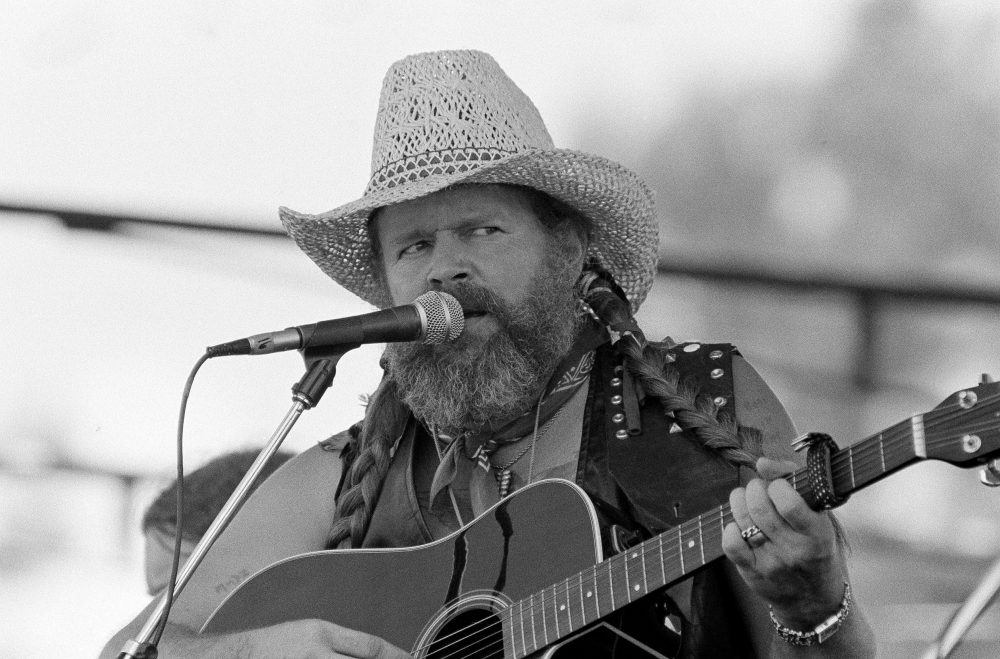

Country music has lost one of its most rebellious voices with the passing of David Allan Coe, the songwriter behind the iconic workplace rebellion anthem ‘Take This Job and Shove It’ and numerous other hits. The 86-year-old musician died Wednesday evening.
His spouse, Kimberly Hastings Coe, shared news of his passing with Rolling Stone magazine on Wednesday, calling him among the finest singers and songwriters of his generation.
‘My husband, my friend, my confidant and my life for many years. I’ll never forget him and I don’t want anyone else to ever forget him either,’ she expressed to the magazine.
According to a representative speaking to People magazine, Coe passed away around 5 p.m. on Wednesday. No cause of death was revealed.
Throughout his career, Coe remained an outsider figure within Nashville’s mainstream music industry, despite achieving success both as a performer and songwriter. He built a devoted fanbase drawn to his unpolished, frequently explicit material and his enigmatic background filled with controversy.
Health issues had kept him largely out of the public eye since September 2021, when his wife announced on social media that he had been hospitalized due to COVID-19.
Coe’s songwriting credits include some of country music’s most memorable tracks. Johnny Paycheck scored a major hit with his composition ‘Take This Job and Shove It’ in 1977, while Tanya Tucker found success with his ‘Would You Lay With Me (in a Field of Stone)’ in 1974. He also became the first country artist to record ‘Tennessee Whiskey,’ written by Dean Dillon and Linda Hargrove, which later became a signature song for both George Jones and Chris Stapleton.
As a recording artist, Coe achieved success with tracks like ‘You Never Even Call Me by My Name,’ penned by Steve Goodman and an uncredited John Prine, along with ‘The Ride’ and ‘Mona Lisa Lost Her Smile.’ His career extended into film, with appearances in movies including ‘Stagecoach’ and ‘Take this Job and Shove It,’ which borrowed its title from his famous composition.
Born in Akron, Ohio, Coe’s early years were marked by trouble with the law. He spent time in youth facilities and served a prison sentence from 1963 to 1967 for possessing burglary tools. He also claimed connections to the Outlaws motorcycle organization, though many details about his past have been embellished over time.
‘I’d have never made it through prison without my music,’ Coe shared in a 1983 Associated Press interview. ‘No one could take it (music) away from me. They could put me in the hole with nothing to do but I could still make up a song in my head.’
His debut recording was a blues collection titled ‘Penitentiary Blues,’ featuring compositions he created while incarcerated. Coe later explained to journalists that he avoided overusing prison themes in his music to distinguish himself from Merle Haggard’s similar background, though he felt his criminal past overshadowed his musical achievements in media coverage.
Moving to Columbia Records, Coe released ‘The Mysterious Rhinestone Cowboy,’ which became his stage persona after he began performing in a sparkling suit while wearing a mask.
During the peak of country music’s outlaw era, Coe positioned himself as a central figure in the movement. His song ‘Longhaired Redneck’ painted vivid pictures of performing in rough establishments, ‘Where bikers stare at cowboys who are laughing at the hippies who are praying they’ll get out of here alive.’
He gained additional recognition through his appearance in ‘Heartworn Highways,’ a celebrated documentary about the outlaw country scene, which showed him performing at a Tennessee correctional facility.
With his extensive tattoos and long hair, Coe attracted fans from various backgrounds, including motorcycle enthusiasts, medical professionals, attorneys, and financial workers. His final recording project in 2006 was an unexpected partnership with Dimebag Darrell and other former members of the metal band Pantera.
Coe also released two adult-oriented albums, 1978’s ‘Nothing Sacred’ and 1982’s ‘Underground Album,’ which he distributed through motorcycle publications. These recordings faced criticism for containing racist, homophobic, and sexually graphic content. In a 2001 Billboard magazine interview, he revealed that author and songwriter Shel Silverstein had encouraged him to record these controversial songs, a decision he later regretted.
‘Those were meant to be sung around the campfire for bikers, and I still don’t sing those songs in concert,’ he explained.
Legal troubles continued into his later years when, in 2016, Coe was required to pay the IRS over $980,000 in restitution for tax obstruction and received three years of probation. Court records indicated he earned money from approximately 100 annual concerts between 2008 and 2013 while failing to file proper tax returns or pay required taxes.