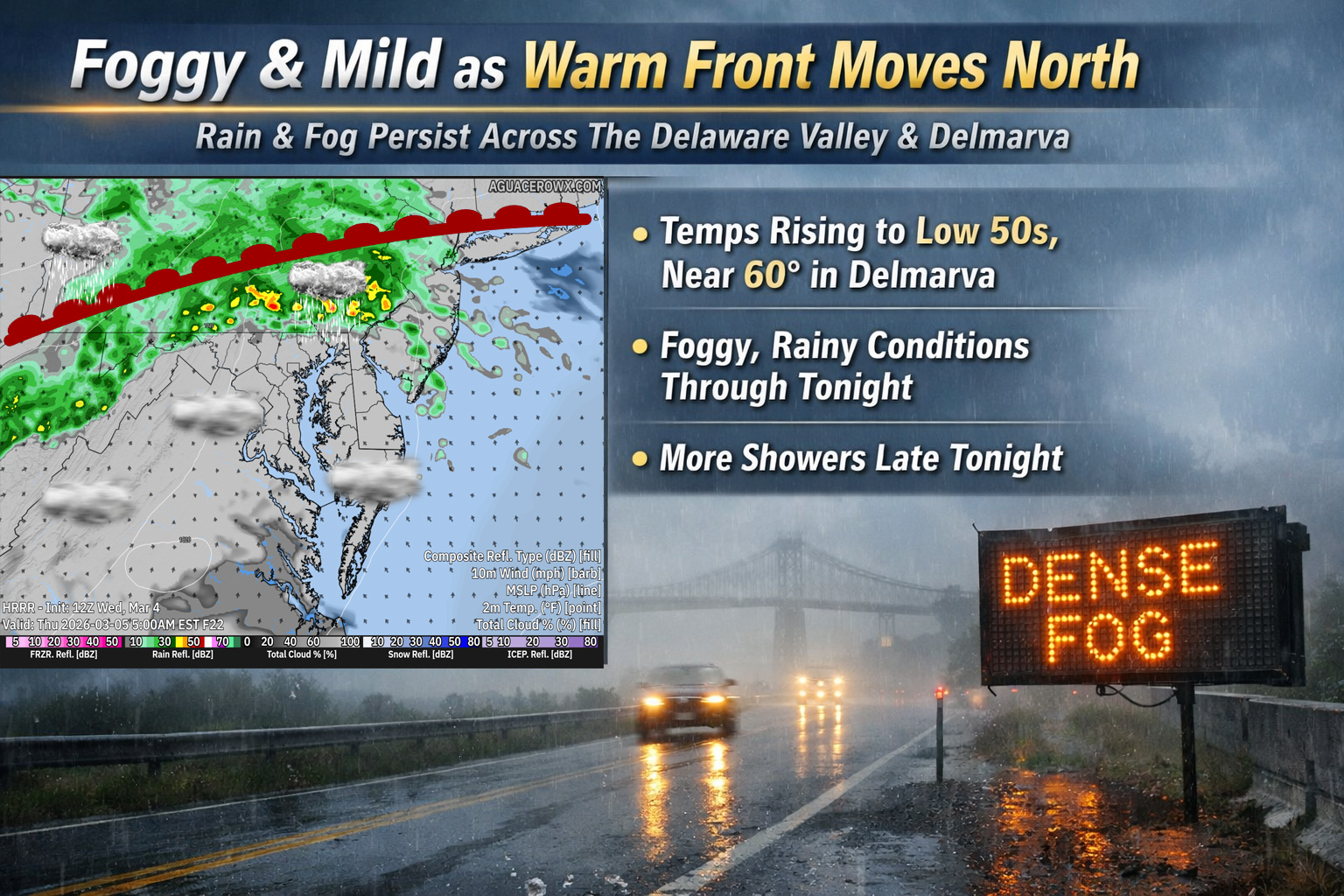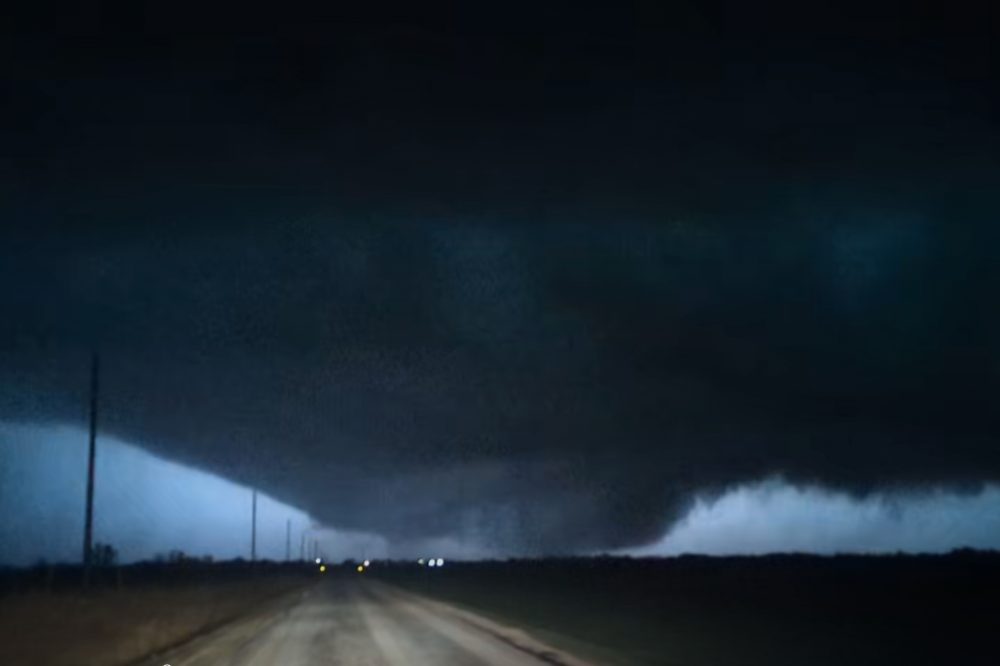
Morning commuters across the Delmarva Peninsula are dealing with significantly reduced visibility today as the National Weather Service has issued a dense fog advisory for the region.
The weather alert, which went into effect at 7:19 AM, is expected to remain in place until 10:00 AM this morning, according to forecasters at the National Weather Service Mount Holly office.
Motorists are being advised to exercise extra caution while traveling during the morning hours, as the thick fog conditions are creating hazardous driving conditions throughout Delaware and the surrounding areas.
The advisory affects visibility on major roadways and local streets, potentially impacting the Tuesday morning commute for thousands of residents across the region.
Agricultural producers in Delaware and surrounding areas are preparing for another challenging year as they finalize their 2026 planting strategies, with most planning to stick with corn despite ongoing financial pressures.
Following a record-breaking corn harvest in 2025 that flooded grain storage facilities and drove down commodity prices, farmers across the region face their fourth consecutive year of minimal profits or potential losses. Despite these challenges, corn remains the preferred choice for many growers.
Nebraska farmer Tim Gregerson explained the difficult economics facing producers today. “Right now, you absolutely cannot make money on beans,” Gregerson stated. “You can probably break even on corn, but you are going to have to have an extraordinary yield, or a price increase,” he added.
The preference for corn over soybeans stems from several market factors. While soybean production costs are lower, corn typically produces more than three times the grain volume per acre compared to soybeans. Additionally, soybeans face increased pressure from Brazil’s expanding production and ongoing trade uncertainties with China, the world’s largest soybean purchaser.
Agricultural economist Dan O’Brien from Kansas State University noted the political complexities affecting crop choices. “The soybean market is more of a political football than the corn market right now,” O’Brien observed.
Industry analysts surveyed by Reuters predict corn plantings will reach 94.9 million acres nationwide in 2026, representing a 4% decrease from 2025’s 89-year record high but still marking the second-largest corn acreage in 13 years. Soybean plantings are projected at 84.9 million acres, up from last year’s six-year low of 81 million acres.
The 2025 growing season produced the largest corn crop in U.S. history, totaling more than 17 billion bushels. However, strong export demand and robust usage by ethanol producers have helped stabilize prices somewhat.
Current December corn futures contracts, reflecting 2026 harvest expectations, are trading near $4.60 per bushel on the Chicago Board of Trade. This price level approaches break-even territory for most producers, even with rising input costs for seeds and fertilizers.
Frayne Olson, an agricultural economist at North Dakota State University, explained the market signals farmers are receiving. “The market is signaling, ‘We don’t want you to cut too many corn acres.’ We don’t need as many as last year, but with today’s demand base, it’s not like we need a huge drop,” Olson said.
The financial strain is forcing producers to make difficult operational decisions. Gregerson has stopped purchasing new equipment and reduced fertilizer applications. He’s also considering cutting herbicide treatments, though this would require constant field monitoring throughout the growing season.
“When you do that, you have live and die in a sprayer. You don’t go on vacation in the spring or the summer. You have got to be so timely on killing your weeds,” Gregerson explained.
In North Dakota, producer Phil Volk reports that area farmers are postponing equipment maintenance, eliminating optional seed treatments for soybeans, and concentrating their input investments on corn, which proved most profitable in 2025. Volk plans to increase his corn acreage by 15% this spring.
“They are going to cut as many expenses on soybeans (as possible) and pour all the juice to corn,” Volk said.
The challenging agricultural climate comes despite increased government assistance payments to farmers. Many producers continue struggling with solvency as they navigate volatile commodity markets and rising production expenses.
Trade relationships remain a critical factor in crop selection decisions. While China has purchased 12 million metric tons of U.S. soybeans since a late-October trade agreement, future export prospects remain uncertain ahead of planned diplomatic meetings between U.S. and Chinese leadership in April.
Meanwhile, Brazil’s record soybean harvest is expected to dominate global soy markets, adding additional competitive pressure for American producers.
These planting decisions, typically finalized during winter months, will ultimately determine grain production levels in the world’s largest corn exporting nation and second-largest soybean supplier.
Good morning, Delmarva! We’re starting this Wednesday with some patchy fog across the peninsula, but don’t worry – it should clear out by 10 AM as we head into the day.
Expect mostly cloudy skies today with temperatures reaching a pleasant 57 degrees. There’s a slight chance of light rain developing later, about 30%, so you might want to keep an umbrella handy just in case. Winds will be gentle from the south at 5 to 10 mph.
Tonight, we’ll see temperatures dropping to around 38 degrees with that slight chance of light rain continuing into the evening hours. Some patchy fog may redevelop overnight, so drive carefully if you’re out late.
Looking ahead to Thursday, pack that rain gear! We’re looking at likely light rain throughout the day with cooler temperatures only reaching 45 degrees. The wet weather continues Thursday night with lows around 39.
This looks like a perfect day for indoor activities or cozying up with a good book. Stay dry and have a wonderful Wednesday, Delmarva!
New Castle County police are issuing an urgent warning to Delaware residents about a troubling rise in phone fraud schemes targeting the local community.
Over the past seven days, authorities have documented a significant spike in scam calls where criminals falsely identify themselves as officers from the New Castle County Division of Police, along with other law enforcement agencies throughout the region.
These deceptive callers are specifically targeting innocent community members in an attempt to steal money or personal information by exploiting the trust and authority associated with police departments.
Law enforcement officials had hoped these types of fraudulent schemes would decline, but instead, the scammers appear to be doubling down on their illegal activities, continuing to prey on unsuspecting Delaware residents.
Police are urging all community members to remain vigilant and remember that legitimate law enforcement agencies will never request money, gift cards, or sensitive personal information over the phone during unsolicited calls.
A Dense Fog Advisory remains in effect across the Delmarva Peninsula this morning, with visibility dropping to just one quarter mile or less in some areas. The National Weather Service issued the advisory at 2:32 AM and expects conditions to persist until 10 AM today.
The thick fog is impacting all three Delaware counties – New Castle, Kent, and Sussex – including the Delaware beaches. On Maryland’s Eastern Shore, Kent, Queen Anne’s, Talbot, Caroline, and Sussex counties are all experiencing hazardous visibility conditions.
“Low visibility could make driving conditions hazardous,” warns the National Weather Service. Morning commuters should expect significant delays and exercise extreme caution on roadways throughout the region.
If you must drive this morning, meteorologists strongly advise slowing down, using your headlights, and maintaining plenty of distance between vehicles. The fog is expected to gradually lift as temperatures rise and winds increase later this morning.
Stay with TV Delmarva for continued updates on weather conditions. We’ll let you know as soon as the advisory is lifted and visibility improves across our viewing area. For the latest conditions, check our weather app before heading out this morning.
Delaware residents are dealing with significantly reduced visibility this morning as thick fog has settled across the region.
Weather officials from the National Weather Service Mount Holly office put a dense fog advisory into effect at 2:32 AM today, with the warning scheduled to remain active through 10:00 AM this morning.
The foggy conditions are creating hazardous driving situations throughout the First State, with visibility dropping to dangerously low levels in many areas.
Motorists are urged to exercise extreme caution while traveling and allow extra time to reach their destinations safely during the morning commute.
Emergency teams fought through harsh winter conditions in the mountains near Lake Tahoe to reach six backcountry skiers who survived an avalanche but became trapped in snow and ice. Nine members of their skiing party are still unaccounted for.
According to Ashley Quadros, a spokesperson for the Nevada County Sheriff’s Office, two of the rescued skiers required hospital care.
Officials corrected earlier reports Tuesday evening, confirming that 15 skiers were part of the expedition, not the previously reported 16.
Emergency responders were called to the Frog Lake area near Castle Peak, located northwest of Lake Tahoe, following a 911 report of an avalanche with people buried beneath the snow. A severe winter storm was battering California during the incident.
The harsh weather conditions in Northern California’s mountains hampered rescue operations. It required several hours for teams to reach the trapped skiers and transport them to safety, where Truckee Fire Department personnel provided medical evaluations.
Sheriff’s officials announced they will share additional information about the ongoing rescue operation during a Wednesday morning press briefing.
The group was completing the final day of a three-day wilderness skiing adventure, according to Steve Reynaud, an avalanche forecaster with the Sierra Avalanche Center at Tahoe National Forest, who maintained communication with personnel in the field. He explained the skiers had stayed two nights in mountain huts during an expedition requiring travel through “rugged mountainous terrain” for distances up to 4 miles while carrying all necessary food and equipment.
Nevada County Sheriff Captain Russell Greene reported that authorities learned of the avalanche through both the tour operator, Blackbird Mountain Guides, and emergency signals from devices carried by the skiers. Rescue teams approached the avalanche site with extreme caution due to the risk of additional slides.
Blackbird Mountain Guides posted a statement on their website confirming their cooperation with officials in the rescue mission.
A powerful winter storm is currently pummeling California, delivering dangerous thunderstorms, strong winds, and heavy mountain snowfall.
“Backcountry conditions are extremely hazardous right now because we’re experiencing the storm’s peak intensity,” stated Brandon Schwartz, the lead avalanche forecaster for Tahoe National Forest at the Sierra Avalanche Center in Truckee.
The center issued avalanche warnings for the Central Sierra Nevada region, including areas around Lake Tahoe, beginning Tuesday at 5 a.m., with expectations of major slides continuing through Wednesday.
Soda Springs, located close to the avalanche site, measured at least 30 inches of snowfall in a 24-hour span, according to data from Soda Springs Mountain Resort.
The hazardous situation resulted from rapidly building snow accumulation on unstable snowpack layers, combined with powerful winds.
The storm caused significant transportation problems from the Sierra Nevada to Sonoma County. Officials temporarily stopped traffic in both directions on Interstate 80 over and around Donner Summit because of vehicle spinouts and accidents.
Multiple Tahoe area ski resorts closed completely or partially due to weather conditions. Resort areas along highways maintain avalanche prevention programs and face lower risk compared to backcountry regions, where the center strongly advised against traveling in, near, or below avalanche-prone areas.
Castle Peak, standing 9,110 feet tall north of Donner Summit, attracts many backcountry skiing enthusiasts. The mountain bears the name of the notorious Donner Party, pioneers who turned to cannibalism after becoming stranded there during the winter of 1846-1847.
Earlier this year in January, an avalanche in the same region buried and killed a snowmobile rider, according to authorities. The National Avalanche Center reports that avalanches claim the lives of 25 to 30 people annually across the United States.
Experts strongly recommend avalanche assessment training, rescue instruction, and proper safety gear for backcountry skiing, also called off-piste skiing, which involves traveling deep into wilderness areas far beyond resort boundaries. Backcountry skis feature wider, heavier designs with specialized components for navigating ungroomed mountain terrain, unlike cross-country skis that are narrower and built for flatter, maintained trails.
More than thirteen years have passed since a young Wilmington man was found fatally wounded in the Ardentown neighborhood, and investigators are still searching for answers in what has become a cold case homicide.
Twenty-five-year-old Dayvon Neal lost his life on February 15, 2013, in an incident that continues to puzzle law enforcement officials. Police were called to a home on Loreley Lane around 9:33 that evening after receiving reports of trouble at the residence.
When officers arrived at 2311 Loreley Lane in the Ardentown community, they discovered Neal on the ground with serious injuries. The location falls within the 19810 zip code area of Wilmington.
Despite years of investigation, the circumstances surrounding Neal’s death remain unclear, and no arrests have been made in connection with the case. The incident has been classified as a cold case homicide by the New Castle County Police Department.
Authorities continue to encourage anyone with information about the February 2013 incident to come forward, as even small details could prove crucial in solving this long-standing case and bringing closure to Neal’s family and friends.
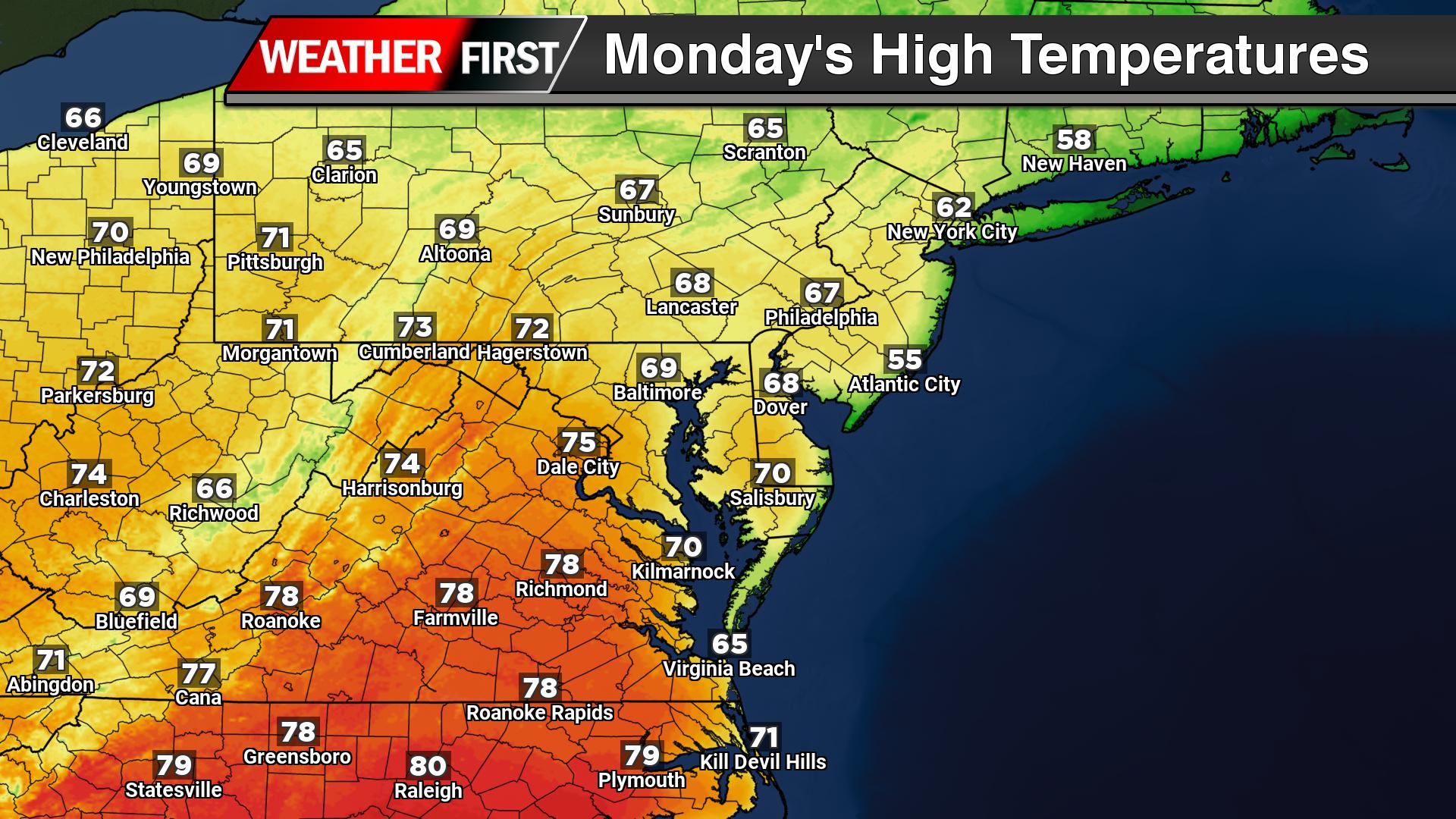
Good morning, Delmarva! Happy Washington’s Birthday! We’re starting this holiday Monday with some patchy fog across the peninsula, but don’t worry – it should clear out by 9am as we transition to mostly cloudy skies.
Temperatures will climb to a comfortable 42 degrees this afternoon with a north wind picking up between 5 to 15 mph. There’s a slight chance of light rain, but any amounts will be minimal – less than a tenth of an inch if we see any at all.
Tonight, we’ll stay mostly cloudy with temperatures dipping down to a chilly 29 degrees, so you’ll definitely want that extra blanket!
Looking ahead to Tuesday, we’ve got some good news – partly sunny skies return with a pleasant high near 50 degrees. That’s a nice warming trend to start the week! Tuesday night will be mostly cloudy again with lows around 38.
Overall, it’s a fairly typical February pattern for our area. Bundle up this morning if you’re heading out early, and enjoy the holiday! I’m your TV Delmarva meteorologist, and I’ll see you tonight for your evening forecast update.
The University of Maryland Eastern Shore Hawks made their debut at a brand-new softball complex memorable, taking down Virginia Union in both contests of a doubleheader to mark the facility’s grand opening.
The twin victories served as the perfect way to inaugurate the Hawks’ new home venue, giving fans and players alike a winning start to what promises to be an exciting chapter for UMES softball.
The doubleheader sweep against Virginia Union provided an ideal backdrop for the ceremonial opening of the state-of-the-art softball complex, showcasing both the team’s competitive spirit and their new playing environment.
With the new facility now officially in use, UMES softball has established a modern home base that should serve the program well for years to come, beginning with this successful opening day performance.
New Castle County law enforcement officials have activated a Gold Alert as they search for a 22-year-old Newark resident who disappeared Sunday evening.
Garrett Humphrey was last observed in the 800 block of Highfield Drive at approximately 11:17 p.m. on February 15, 2026, according to the New Castle County Division of Police.
Investigators believe Humphrey may have traveled toward the Northeast Maryland region, though authorities have not been able to determine his precise whereabouts.
Police report that despite ongoing search efforts, officers have not yet located the missing man.
Anyone with information regarding Humphrey’s location is urged to contact the New Castle County Division of Police immediately.
The digital audio landscape has experienced a seismic shift as streaming services battle for listener attention and market control. Leading this transformation, Spotify’s exclusive content strategy has emerged as a game-changing approach that fundamentally reshapes how audiences discover and consume audio programming. Through securing platform-exclusive agreements with prominent shows and content creators, Spotify has disrupted conventional podcast sharing methods and ignited widespread industry discussions about listener access, monetization strategies, and the future of open podcasting. This movement toward platform-locked content represents more than just a business strategy—it marks a crucial turning point in media consumption that affects content creators, audiences, and competitors throughout the industry. Understanding how these exclusive partnerships are transforming the podcast landscape is essential for anyone invested in digital audio entertainment’s future.
Spotify’s transformation from a music streaming service to a podcast powerhouse began in earnest around 2019, when the company recognized podcasting’s potential to increase user engagement and differentiate itself from rivals. The platform invested billions acquiring podcast companies including Gimlet Media and Anchor, establishing the infrastructure needed for content creation and distribution. This aggressive investment laid the groundwork for what would become a revolutionary approach to podcast acquisition, dramatically changing how the industry functions and how listeners discover their preferred programs.
Spotify’s exclusive content strategy reached unprecedented levels with high-profile agreements that shocked the audio streaming industry. Major signings included the widely reported $200 million agreement with Joe Rogan, strategic partnerships with Michelle Obama, and contracts involving top content producers across various genres. These moves demonstrated Spotify’s willingness to invest substantial resources in programming that would draw subscribers and keep them engaged within the platform’s environment. By placing premium content behind its service walls, Spotify positioned itself as much more than a simple podcast player—it became a destination for must-listen programming unavailable elsewhere.
This strategic shift represented a calculated gamble that exclusive programming could drive subscriber growth and increase listening duration, metrics essential to Spotify’s long-term success. The company recognized that while music streaming profits remained thin due to licensing costs, podcasts offered better profit margins and stronger competitive advantages. Early results validated this direction, with podcast listening hours climbing dramatically and exclusive programs frequently ranking among the platform’s most popular offerings. The strategy prompted similar moves from competitors like Amazon and Apple, sparking an industry-wide competition for original audio content that continues reshaping digital audio today.
Spotify’s aggressive pursuit of exclusive programming began with strategic agreements that revolutionized the podcasting world. The platform’s groundbreaking contract with Joe Rogan in 2020, reportedly valued at over $200 million, signaled a dramatic shift in podcast distribution. This deal showcased Spotify’s willingness to invest heavily in exclusive content that would drive membership growth and distinguish its platform from competitors. The company subsequently secured exclusive partnerships with Michelle Obama, Kim Kardashian, and Prince Harry and Meghan Markle, building a roster of high-profile figures available only through their service.
These strategic investments extended beyond celebrity hosts to include established podcast networks and production houses. Gimlet Media and Parcast joined Spotify’s portfolio through major acquisitions, bringing extensive content catalogs and production expertise. The Ringer, created by sports media figure Bill Simmons, became another pillar of Spotify’s exclusive offerings. Each exclusive partnership represented a strategic investment in content that could attract specific listener demographics and establish the platform as the go-to destination for podcast fans seeking quality, diverse programming unavailable on other services.
The financial impact of these exclusive arrangements has completely transformed podcast economics. Traditional podcast revenue relied primarily on advertising income shared across multiple platforms, but Spotify’s model concentrates both audiences and revenue within a single system. This consolidation enables deeper audience analytics, targeted advertising campaigns, and premium subscription options. Creators benefit from guaranteed compensation and production resources, while Spotify gains content unavailable on competing platforms like Apple Podcasts and Google Podcasts, creating a walled-garden approach similar to streaming video services.
Beyond individual creator agreements, Spotify’s acquisition strategy included purchasing entire podcast networks to secure content pipelines and production capabilities. The acquisition of Gimlet Media for approximately $230 million brought acclaimed programs like “Reply All” and “Homecoming” under Spotify’s umbrella. Anchor, a podcast creation and distribution platform purchased for $140 million, provided technological infrastructure for emerging creators. These investments demonstrate how Spotify’s exclusive content strategy goes beyond simply licensing existing programming—it involves building a comprehensive ecosystem that supports podcast creation, distribution, and monetization entirely within Spotify’s platform, fundamentally changing how podcasts reach audiences globally.
The podcasting industry has traditionally operated on open distribution, allowing creators to publish content across multiple platforms simultaneously. However, Spotify’s exclusive content approach has disrupted this model by restricting access to popular programs to a single service. This change creates ripple effects throughout the ecosystem, influencing how creators develop content, how advertisers allocate budgets, and how listeners navigate their audio choices. The concentration of exclusive programming on specific platforms transforms market dynamics and value propositions within the digital audio space.
These exclusive agreements have accelerated the platform consolidation of podcasting, moving it away from an open medium toward a more fragmented landscape. Independent podcasters face difficult decisions between broader reach and lucrative platform deals, while established programs must balance audience loyalty against financial security. The industry now operates with new gatekeepers who control how content spreads, advertising opportunities, and listener data. This concentration of power has raised concerns about innovation, diverse perspectives, and the long-term viability of independent podcast creation in an increasingly commercialized environment.
Exclusive agreements offer podcasters significant financial advantages, including guaranteed income, production support, and marketing assistance that independent creators rarely access. Major platforms provide upfront funding, technical resources, and audience reach that can transform amateur podcasters into professional media personalities. These partnerships eliminate the uncertainty of advertising-based revenue and allow creators to focus on content quality rather than audience building strategies. Additionally, detailed analytics and audience insights help creators refine their programming strategy and understand listener preferences with unprecedented detail and accuracy.
However, exclusive contracts impose significant limitations on creative freedom and audience accessibility. Creators surrender control over distribution channels, limiting their ability to build direct relationships with listeners across multiple platforms. The agreements often include content ownership clauses, editorial oversight, and restrictive non-compete terms that can stifle creative exploration. Podcasters may find themselves locked into long-term contracts that prevent adaptation to new platforms or technologies. Furthermore, exclusive arrangements can alienate existing audiences who refuse to switch platforms, potentially damaging the creator-listener relationship that forms the foundation of successful podcast programming.
Exclusive content introduces barriers in the listener experience by forcing audiences to navigate multiple platforms and subscription services. Podcast fans who previously consolidated all their content in one application now must download multiple apps, manage various login credentials, and adapt to different user interfaces. This fragmentation increases cognitive load and reduces the seamless experience that contributed to podcasting’s initial appeal. Many users resist platform switching, choosing to abandon preferred content rather than adopt new services, which consequently limits content discovery and reduces overall engagement with the medium.
The accessibility challenges extend beyond simple convenience to address economic barriers and technological limitations. Exclusive platforms may require paid subscriptions, creating costs for budget-conscious users who previously enjoyed free advertising-supported content. Users in areas with limited internet connectivity struggle accessing exclusive content that lacks offline capabilities or requires high data usage. Additionally, listeners with disabilities may encounter platforms that provide inadequate accessibility features, thereby excluding them from premium programming. These barriers contradict podcasting’s democratic origins and potentially create a two-tiered system where premium content remains available only to privileged demographics.
The competition for exclusive podcast content has intensified rivalry among major streaming platforms, driving unprecedented investment in audio entertainment. Companies like Spotify, Apple, Amazon, and YouTube compete aggressively to secure prominent hosts and successful series, viewing podcasts as crucial differentiators in crowded subscription markets. This competitive environment benefits content creators through higher compensation and better production resources while pushing platforms to innovate with improved recommendation algorithms, user engagement features, and enhanced audio quality. The competitive landscape encourages platforms to develop unique offerings beyond content libraries, including social features, production tools, and integrated entertainment experiences.
However, this competition raises questions about market consolidation and the sustainability of aggressive spending strategies. Smaller platforms struggle to compete with tech giants’ financial resources, potentially reducing diversity in digital platforms. The focus on high-profile exclusive content may divert resources from emerging creators and niche programming that serves underrepresented audiences. Additionally, platforms face pressure to demonstrate profitability, which could result in higher subscription costs, more intrusive advertising, or stricter content policies. The long-term success of exclusivity-focused competitive strategies remains uncertain as services balance growth objectives against financial performance requirements and evolving consumer preferences.
The economic landscape of podcasting has been dramatically altered by multi-million dollar exclusive deals that demonstrate the medium’s growing commercial value. When Spotify secures exclusive agreements with major personalities, the upfront investments can reach hundreds of millions of dollars, as seen in deals with figures like Joe Rogan and the Obamas. These substantial expenditures reflect strategic calculations about subscriber acquisition costs, advertising revenue potential, and long-term platform loyalty. For streaming services, exclusive content serves as a powerful differentiator that justifies premium subscription tiers while attracting advertisers seeking engaged, captive audiences. The economics extend beyond initial content costs to include production expenses, marketing investments, and infrastructure development needed to support exclusive programming at scale.
Revenue models for exclusive podcasts differ significantly from traditional wide-distribution approaches, creating complex financial structures that benefit some stakeholders while challenging others. Platforms investing in exclusivity expect returns through increased subscriber retention, reduced cancellation rates, and premium advertising inventory that commands higher prices. Creators signing exclusive contracts often sacrifice broader audience reach and multiple revenue streams in exchange for guaranteed payments and production support that provide income stability. However, the trade-offs include reduced merchandise opportunities, limited audience growth potential, and dependence on a single platform’s success. For the broader audio industry, these economic factors influence pricing standards for content, creator compensation expectations, and competitive behaviors that ultimately determine which revenue models prove sustainable in an increasingly consolidated market environment.
Spotify’s exclusive content strategy has generated mixed reactions across the digital audio industry, with stakeholders expressing both enthusiasm and concern. Traditional podcast platforms and independent creators have voiced worries about market consolidation, while investors and production companies see lucrative opportunities in exclusive deals. Legacy media organizations adapting to digital platforms view Spotify’s approach as both a competitive threat and potential model to follow. Industry analysts debate whether exclusivity strengthens or fragments the podcasting ecosystem, questioning long-term sustainability. The model has prompted competing services to launch their own exclusive content initiatives, accelerating a broader trend toward proprietary audio content that challenges podcasting’s historically open distribution approach.
Podcast networks and content studios have adjusted their business strategies in response to Spotify’s aggressive content acquisition approach. Many producers now structure deals considering platform exclusivity as standard practice, significantly altering contract terms and revenue projections. Independent creators with limited resources worry about being excluded from lucrative partnership opportunities, while established programs leverage exclusivity offers to secure substantial financial backing. This dynamic has created a two-tiered system where well-funded programs flourish under exclusive arrangements while smaller creators compete for discoverability across fragmented platforms.
Technology companies and investment firms have increased their focus on podcast production infrastructure and content following Spotify’s market moves. Investment in podcast analytics, advertising technology, and creation platforms has grown substantially as stakeholders position themselves in the evolving landscape. Open-source podcast advocates continue promoting RSS-based distribution as essential for preserving podcasting’s democratic foundations. Meanwhile, traditional radio broadcasters increasingly view exclusive podcast deals as existential threats, prompting strategic partnerships and acquisitions. The industry remains divided on whether exclusivity represents progress or limitation, with outcomes likely to shape digital audio’s direction for years to come.
The podcast industry stands at a crossroads as platforms reassess the long-term viability of exclusivity-focused strategies. While Spotify’s exclusive content approach initially drove user acquisition and platform differentiation, rising costs and mixed audience reception have prompted a shift toward more flexible approaches. Industry experts predict a hybrid model where platforms balance selective exclusivity with broader distribution access, allowing creators to reach larger audiences while maintaining strategic platform advantages. This evolution reflects lessons learned from early exclusivity experiments and changing listener expectations for content availability across multiple services.
Emerging technologies and evolving consumer behaviors will likely reshape exclusivity agreements in coming years. Artificial intelligence-driven personalization, interactive audio experiences, and blockchain-based content ownership models may provide new ways to create value beyond traditional exclusive contracts. Platforms are exploring tiered exclusivity arrangements, limited-time windows, and revenue-sharing models that benefit both creators and distributors without restricting audience access. As the market matures, success will depend on finding the right balance between platform differentiation and the open ecosystem that originally fueled podcasting’s rapid growth, ultimately creating sustainable frameworks that support creators, platforms, and listeners alike.
NASHVILLE, Tenn. — Gene Copenhaver, a cattle rancher from Virginia, has assumed the presidency of the National Cattlemen’s Beef Association following his election and installation during the CattleCon 2026 conference held in Nashville this February.
The association announced that this year’s CattleCon event set a new attendance milestone, drawing record numbers of cattle producers and industry representatives to what is considered the premier annual gathering for cattle and beef industry professionals seeking business opportunities, educational programming, and networking.
Copenhaver brings extensive experience from his previous leadership positions within Virginia’s cattle community and the broader national industry. The new president views his role as an extension of his family’s longstanding commitment to agricultural service, outlining key objectives that include maintaining successful existing programs, ensuring grassroots voices remain central to decision-making, keeping an open perspective, and emphasizing financial viability.
“Profitability is sustainability,” Copenhaver stated.
His vision encompasses supporting operations of all sizes and types across different industry segments. This approach involves challenging restrictive regulations, advocating for policies that enable reinvestment opportunities, and capitalizing on recent progress regarding tax-related provisions.
“We can’t build the future if every good year gets taxed away before we can shore up our infrastructure,” he explained.
The newly elected president, who previously worked in the banking sector before retirement, considers his NCBA leadership role as a continuation of his family’s farming heritage that began approximately 1850 when the Copenhaver family established themselves in Washington County, Virginia.
Roughly seven and a half decades ago, Gene’s father and uncle officially established Copenhaver Brothers Farms, creating a varied agricultural enterprise that included tobacco cultivation, hog production, sheep raising, cow-calf operations, and stocker cattle management.
“It was a model built on spreading risk and making use of every acre,” Copenhaver noted.
The tobacco buyout program became a transformative period for the Copenhaver family and Southwest Virginia’s agricultural sector overall.
“A lot of buyout money went into cattle genetics,” Copenhaver remembered. “It really changed the type and quality of cattle we have in Southwest Virginia.”

This transition also prompted his family to streamline their operations strategically. Eventually, the business shifted completely toward stocker cattle production, capitalizing on the region’s natural advantage in grass cultivation.
Delaware transportation officials have shut down southbound traffic on US Route 13 at Pine Tree Road following a motor vehicle accident.
The Delaware Department of Transportation issued the traffic alert, advising drivers to find alternative routes while emergency responders and cleanup crews work at the crash site.
No additional details about the collision, including potential injuries or the number of vehicles involved, have been released at this time.
Motorists traveling in the area should expect delays and plan accordingly until the roadway reopens.
ANNAPOLIS, Md. — Maryland lawmakers are pushing for tougher action against property owners who fail to control Palmer amaranth, an aggressive invasive weed that’s becoming increasingly problematic across the Eastern Shore region.
Legislators from Talbot County have introduced legislation that would mandate the Maryland Department of Agriculture to issue elimination orders whenever Palmer amaranth is discovered on any property throughout the state. Property owners would have just 14 days to remove the weed, followed by mandatory reinspections every two weeks until complete removal is achieved. Those who don’t comply would face financial penalties starting at $500 for initial violations, escalating to $1,000 for second offenses, and reaching $2,000 for additional violations.
While Maryland has classified Palmer amaranth as a noxious weed since 2020, requiring property owners to manage or eliminate it, the proposed legislation would dramatically accelerate enforcement procedures once the plant is identified.
Republican State Senator Johnny Mautz from Talbot County explained that current enforcement practices typically involve multiple warnings before any penalties are applied. “By the time you get to a fine, it’s too late,” Mautz stated.
The new legislation would allow immediate fining of property owners who receive elimination orders but take no remedial steps, representing a significant change designed to encourage prompt action and prevent further spread.
Agricultural experts consider Palmer amaranth among the most damaging weeds impacting row crops throughout the Mid-Atlantic region. This rapidly developing pigweed variety can grow beyond 6 feet tall, aggressively competes for essential resources like water, nutrients and sunlight, and is capable of generating hundreds of thousands or even more than one million seeds from a single plant. Multiple herbicide-resistant populations have emerged, making quick identification and immediate control essential.
According to Lauren Moses, a spokesperson for the agriculture department, current enforcement happens on a “case-by-case basis,” with fines rarely imposed on farmers due to the challenging nature of managing this weed. She noted that existing regulations already mandate noxious weed control or elimination, and the department offers technical support and guidance on herbicide application and mowing practices.
Mautz indicated the legislation emerged from issues identified by Talbot County’s weed management program, which documented instances where property owners failed to address infestations. “It’s a super-difficult weed,” he acknowledged.
Although the bill maintains existing penalty amounts under state law, it would establish more definitive enforcement through mandatory elimination orders, specific timeframes, and required follow-up inspections. Local farmers in Talbot County report that Palmer amaranth expanded rapidly in certain areas during the previous year.
John Swaine, who serves as president of the Maryland Association of Soil Conservation Districts and vice president of the Talbot County Farm Bureau, described last year’s situation: “We had last year several locations in the county where (it) has gotten out of control in some farm fields. Some neighbors complained about it.”

Swaine, who cultivates corn and soybeans near Royal Oak, explained that Palmer amaranth spreads rapidly through seeds and can dominate fields without early intervention. He noted that management strategies differ significantly depending on the crop type. Herbicide treatments work most effectively with corn and soybeans containing specific genetic traits, while other crops provide fewer chemical control methods. Vegetable producers particularly face restricted options and may need to rely heavily on manual removal.
Eddie Boyle, president of the Talbot County Farm Bureau, observed increased visibility of the weed throughout the county, including roadside areas and public properties where budget-related reductions in mowing have allowed plants to reach maturity. “If something is not done sooner or later, it’s going to be a really big issue,” Boyle warned.
Moses confirmed that the Maryland Department of Agriculture did not participate in creating the legislation and is unlikely to advocate for or against it. She added that implementing the bill as currently written would necessitate additional department personnel.
Both Mautz and Swaine indicated farmer support for the proposal. However, Mautz suggested that opposition might come from absentee property owners who would prefer not to monitor their land more closely.
The Senate Education, Energy and the Environment Committee has set a hearing for the bill on March 3 at 1 p.m. The companion House version will be heard by the House Environment and Transportation Committee on February 27 at 1 p.m. If approved, the legislation would become effective October 1.
HARRINGTON, Del. — Local corn producers are being advised to step up their field monitoring efforts this season to watch for tar spot disease, according to a University of Delaware agriculture expert.
Although this fungal infection hasn’t led to major harvest losses in the Delmarva region like those experienced across Midwest farming areas, farmers need to be more vigilant than in previous years, according to Alyssa Betts, a plant pathologist with University of Delaware Extension.
“Just because it’s here doesn’t mean this year is going to be awful,” Betts explained to agricultural producers during Delaware Agriculture Week in January. “It does mean you’re going to have to look a little more than we have in the past.”
The disease stems from a fungus called Phyllachora maydis and was initially identified in the United States in 2015. What began as isolated cases in a few Indiana counties had expanded throughout much of America’s Corn Belt by 2018, resulting in significant financial losses for farmers.
The disease reached Pennsylvania’s Lancaster County in 2020, then moved into northern Maryland and continued spreading southward in following years. However, in Maryland and Delaware, the infection has typically appeared when corn plants were approaching or reaching full maturity, resulting in minimal yield damage.
According to Betts, last year’s cooler late-summer temperatures provided better conditions for tar spot development, leading to its appearance in additional fields. The disease was observed near the university’s Carvel Research and Education Center in Georgetown.
Due to the relatively recent arrival and limited impact of tar spot in the local area, regional data on fungicide effectiveness remains scarce. However, Indiana research indicates that fungicide treatments work best when applied between the VT and R3 plant development phases, Betts noted.
“The good news is the fungicides we’re already using are also working against tar spot,” she stated. However, thorough application coverage is crucial for success.
“This one will tell on you if you have a pass that you miss or somewhere where you skip if it does turn into a high disease pressure year,” Betts warned.
When tar spot appears before the R1 stage, farmers might need to consider a second fungicide treatment specifically targeting the disease, she explained. While severe outbreaks at the R4 stage may still benefit from treatment, research suggests applications at R5 and later stages are typically too late to provide meaningful results.
“If this isn’t showing up until we’re in R2, R3, R4, kind of like we saw this year, it shouldn’t, in most years, be too much of a worry. It’s just going to be something else we have to deal with,” Betts said. “On most years I think we’re still going to be OK with that one fungicide pass in irrigated corn.”
Farmers should look for small black specks on plant surfaces, particularly leaves, as the first indication of tar spot. Betts cautioned that several other conditions, including sooty molds and insect waste, can appear similar and cause misidentification.
She suggested testing suspicious spots by scratching the leaf surface – if the marks smear or can be wiped away, it’s likely not tar spot.
Since the fungus spores can travel through the air, Betts recommended that monitoring efforts include examining the upper portions of the crop canopy. The disease-causing organism survives winter in leftover corn plant material, making field history an important consideration when scouting.
Farmers should pay particular attention to irrigated areas, fields that grew corn during the previous season, and any locations where tar spot has been detected before, according to Betts.
COLLEGE PARK, Md. — College students interested in agricultural and environmental careers have a new opportunity to gain hands-on experience this summer through a specialized internship program.
The Harry R. Hughes Center for Agro-Ecology, Inc., working alongside the Agriculture Law Education Initiative, has announced openings for their Russell Brinsfield Agro-Ecology Summer Internship program. The initiative targets both undergraduate and law students pursuing careers in farming, environmental protection, forestry, public policy, or legal fields.
Selected participants will receive $19.91 per hour for full-time work during the eight-week program, which runs from June 1 through July 24. Several positions are available for qualified candidates.
The program launches with an introductory session at the Wye Research Center in Queenstown, followed by regular weekly gatherings either at Wye or other Maryland locations. Interns will split their remaining time between virtual work and in-person meetings across the state.
Participants will tackle challenging environmental issues including Chesapeake Bay cleanup initiatives, sustainable farming methods, and regional food systems. The experience includes networking with various stakeholders while navigating the intersection of agricultural interests and environmental protection efforts.
Interns will also have opportunities to connect with state lawmakers and government agency personnel as they address ongoing environmental challenges.
Students have until February 27 to submit their applications. Those interested can learn more during an informational online session scheduled for 3 p.m. on Thursday, February 19.
Application materials must include a resume, cover letter, and at least one academic and professional recommendation letter. Undergraduate students should forward their materials to Nancy Nunn at [email protected], while law students should contact Megan Todd at [email protected].
(Editor’s note: Dr. Rich Barczewski is a Professor Emeritus with Delaware State University.)
Youth agricultural programs like 4-H and FFA have earned my strong endorsement over the years for giving young people hands-on experience with livestock care and management.
These structured initiatives, along with independent youth farming projects, teach valuable lessons about animal care fundamentals – from daily nutrition requirements to health management and sales strategies. The most comprehensive programs also educate participants about meat processing and product creation.
However, I’ve noticed one significant shortcoming in these educational efforts: they frequently fail to present an accurate picture of the financial realities facing commercial livestock operations.
The issue centers around the dramatic difference between what young participants pay for their project animals versus the actual market prices for livestock in commercial agriculture.
A specialized sector has emerged within the livestock industry specifically to supply animals for youth competitions. As these contests have grown increasingly competitive, producers have responded by developing premium breeding programs with specialized genetics designed for show ring success.
This specialization comes with a hefty price tag, as breeders seek specific bloodlines to produce pigs, sheep, goats and cattle that meet the demanding standards of youth competitions.
Anyone attending county fairs or livestock exhibitions can discover the premium prices families pay for these project animals by simply asking participants about their initial investment.
It’s become routine to hear about purchases where the cost of a young feeder animal equals or even exceeds the market value of a fully grown, market-ready animal of the same species.
These substantial investments are made with hopes that the chosen animal will claim championship honors and command top prices at premium livestock auctions.
While participants still gain valuable experience in animal husbandry during their projects, they miss learning about genuine livestock market values – a gap that can create unrealistic expectations about the economics of livestock farming.
This knowledge gap sometimes results in young people developing distorted perceptions about the profit potential in livestock production.
For this reason, 4-H leaders and FFA instructors should make a point of educating their members about authentic commercial market prices to maintain realistic expectations.
Another often-overlooked aspect is the difference between show animals and commercial livestock. Competition animals represent more extreme genetic selections that differ significantly from the practical animals raised in commercial operations.
I have no objection to entrepreneurs who have successfully developed this specialized market niche. Like other agricultural sectors, these producers have identified a profitable opportunity within an industry they’re passionate about.
However, it’s crucial to recognize that this market exists primarily because community members and agricultural supporters are willing to pay exceptional prices for youth project animals at livestock sales.
An interesting observation is how pricing trends vary significantly between different geographic areas, influenced by local competition levels at shows, though the pattern of increasing prices tends to spread over time.
The essential point is ensuring that regardless of local circumstances, young participants understand the true commercial value of their animals while appreciating the generous community support they receive.
Delaware Department of Transportation crews are performing bridge inspections along Interstate 95 that will result in periodic lane restrictions through the early morning hours.
The inspections are taking place on I-95 overpasses that span both northbound and southbound lanes of Route 1 and Route 7. Both the northbound and southbound directions of I-95 will experience intermittent lane closures as crews conduct their work.
DelDOT officials say the lane restrictions will remain in effect until 6 a.m. as inspection teams examine the bridge structures in the area.
Motorists traveling on I-95 in both directions should expect possible delays and plan for extra travel time during the inspection period.
(Editor’s note: John Hall works as a professional commodities analyst.)
Over the last five weeks, commodities analyst John Hall has been providing farmers with valuable insights to help guide their crop planning for 2026. This week, Hall focuses his attention on worldwide corn supply and demand patterns, drawing from WASDE report data that tracks production figures in million metric tonnes.
Hall’s first analysis examines global corn production locations, incorporating both U.S. planted acreage and domestic production measured in million bushels.
Several key patterns emerge from the data:
• China holds the position as the world’s second-largest corn producer, utilizing the grain primarily to support their massive swine operations.
• While Argentina’s corn output remains relatively stable, Brazil shows signs of increasing production. However, reports indicate Brazil’s expanding ethanol sector may absorb most of these production gains.
• The situation in Russia and Ukraine presents particular challenges. Military conflict that started in 2014 and intensified in February 2022 has severely impacted their export capabilities, with port facilities becoming strategic targets that disrupted global grain trade.
Moving to domestic consumption patterns, Hall notes that USDA maintains reliable statistics for feed and seed usage, ethanol production, and export volumes, though feed and residual data proves more challenging to track accurately. He cautions against overanalyzing feed usage figures for 2017-18 and 2025-26, describing them as the most reliable estimates currently available.
Categories including food, seed, and ethanol remain relatively steady, while export projections show modest growth for 2025-26. Media reports suggest expanded E15 usage could boost ethanol demand moving forward.
The U.S. Treasury Department has issued updates indicating that usage revisions may emerge from legislative action later this year.
Turning to international export competition, Hall observes that total global exports have remained fairly consistent. With world population growth slowing, increased sales must come at the expense of competitors. The data shows notable gains for the United States in 2024-25.
Hall credits these improvements to successful trade negotiations. “Some of our major trading partners had moved to competitors but the trade deals pulled them back in,” he explains. The analysis reveals how the Russian-Ukraine conflict reduced their export capacity, though the main challenge for U.S. exporters remains transportation costs and shipping distances to those markets.
Examining global corn purchasing patterns, Hall notes that most major buyers maintain friendly relationships with the United States. He believes previous sales losses resulted from higher U.S. prices, but trade agreements have helped recover most of that business.
The discussion concludes with an examination of ending stock levels, presented in both metric tonnes and millions of bushels. Hall includes USDA average pricing data to illustrate the typical relationship where declining stocks correlate with higher prices, while increasing inventories generally lead to lower prices.
China’s stockpiles represent nearly two-thirds of global ending stocks. The nation places extreme importance on food security, given the risks of depending on other countries for essential supplies. Their approach has transformed from rigid government control and self-sufficiency policies (1949-1970s) to market-based strategies emphasizing “absolute security of staple foods.”
Under President Xi Jinping’s leadership, China targets 95-percent grain self-sufficiency while implementing strict farmland protections and advancing agricultural technology. The focus has shifted from simple quantity goals to quality improvements and diversification.
Beginning in 2004, China developed a strategy prioritizing “guaranteed supply” through international trade while maintaining tight control over domestic wheat and rice production. This approach involves government storage of a full year’s grain supply, which is distributed to farmers gradually. This system also enables price control for domestic producers.
Hall acknowledges the complexity of this information, noting his intention to reference this material in future discussions aimed at helping farmers make informed planting choices.
(Note: This analysis draws from research conducted through Allendale, DTN, USDA, University Land Grants and other credible sources. It represents a consensus of trade experts rather than individual opinion. Farmers seeking marketing guidance or strategic consultation can reach Hall at [email protected] or 410-708-8781.)
Delaware residents exploring online gaming platforms should be aware of important safety considerations when evaluating casino websites like Winorio. A detailed analysis of this gaming platform reveals both attractive features and concerning issues that local users should understand.
The casino platform operates around the clock, providing continuous entertainment options for registered users. Safety measures include self-exclusion tools and spending limit controls that players can manage through their personal accounts. Customer assistance remains accessible through live chat and email services, typically delivering quick response times.
Financial transactions show varying processing speeds, with deposits completing within one to thirty minutes, while withdrawal requests require between one hour and a full day. The platform operates primarily in Euros, meaning other currencies undergo automatic conversion at current exchange rates. During recent evaluation periods, two major tournaments were running with combined prize pools totaling 1,000,000 EUR/GBP and 15,000 EUR/GBP respectively.
New player incentives include welcome bonuses reaching “125% up to €6,000 and 125 free spins.” However, all promotional offers carry substantial wagering requirements of 40 times the bonus amount for both bonus funds and complimentary spins. The platform maintains a six-tier loyalty system alongside a five-level VIP program for regular users.
The gaming library features partnerships with over 80 software developers, ensuring diverse content options. Popular game selections among users include Fruit Million, Big Bass Splash, Elvis Frog in Vegas, Gates of Olympus, and Buffalo Trail. Categories span slot machines, table games, live dealer experiences, jackpot games, and instant-win options.
Mobile compatibility remains strong, with clear menu navigation and full access to essential functions including payments, bonuses, and customer support on smaller devices. The minimum deposit requirement stands at €$20, though the €$50 minimum withdrawal threshold appears higher than industry standards where many competitors allow cashouts starting at €$10-€$20.
However, significant concerns emerge regarding licensing verification. Investigation attempts to confirm valid licensing information proved unsuccessful, with customer support failing to provide clear documentation. As one reviewer noted: “I couldn’t find any information about a valid license on the website, so I contacted customer support” but received no adequate response.
Safety evaluations reveal troubling patterns, with the platform receiving a low Safety Index rating of 3.7 due to “a very high value of denied payouts in player complaints with respect to its size.” Industry experts have identified questionable terms and conditions that could potentially disadvantage players.
Payment methods include traditional options like VISA/Mastercard, Apple Pay, Google Pay, plus cryptocurrency alternatives including Bitcoin, Dogecoin, Ethereum, Litecoin, and Tether. The platform requires withdrawals through the same method used for deposits before alternative options become available.
Responsible gambling features appear limited compared to modern industry standards. The platform lacks easily accessible tools for setting deposit limits, loss limits, session reminders, or cooling-off periods that many regulated casinos now provide as standard safety measures.
Delaware residents should exercise extreme caution when considering any online gambling platform, ensuring they understand local laws and regulations. The lack of clear licensing information and documented player complaint issues suggest potential risks that users should carefully evaluate before engaging with such platforms.
A new online gambling platform called Winorio Casino is preparing to launch, advertising a substantial 275% welcome bonus to attract players. The casino claims to offer more than 10,000 gaming options from approximately 78 different software developers worldwide.
According to available information, the platform will feature games from companies including Fugaso, KA Gaming, and Mancala Gaming. Players can expect to find slot machines, live dealer games, and lottery-style entertainment options once the site becomes fully operational.
The casino’s loyalty program operates on a points-based system where customers earn one point for every 10 EUR or GBP wagered. Moving between loyalty levels requires accumulating specific point totals – for instance, advancing from level 25 to level 24 needs 20 points. Each tier in the program provides access to different bonus opportunities.
Financial transactions at Winorio are expected to process relatively quickly, with deposits taking between one and 30 minutes to complete. Withdrawal requests may take anywhere from one hour to a full day to process, provided accounts are properly verified. The casino states it won’t impose its own transaction fees, though payment processors may charge up to 16 EUR or GBP.
The platform will offer a VIP Club with five different membership levels, each providing various perks to frequent players. High-roller customers can access a 125% bonus worth up to 6,000 EUR on deposits of 200 EUR or more. Regular promotions include free spin offers and game-of-the-month specials.
However, gambling industry analysts are raising red flags about certain aspects of Winorio’s terms and conditions. Independent casino review site Casino.guru noted some bonus conditions that may be considered unfavorable to players, though specific details weren’t elaborated.
The casino requires extensive documentation for account verification, including identification papers, payment method confirmation, and utility bills. All documents must be submitted in Latin or Cyrillic alphabets, with video verification potentially required for other languages.
Customer accounts become classified as inactive after 12 months without login activity. The platform offers customer support through email, with response times reportedly ranging from 10 to 15 minutes during business hours.
For Delaware residents considering online gambling, experts recommend thoroughly researching any platform’s licensing status and reading all terms carefully before depositing money. The casino industry continues to emphasize responsible gambling practices and encourages anyone experiencing gambling-related problems to seek professional assistance.
Winorio Casino has not yet announced an official launch date for its services.
A recently launched online gaming platform called Winorio Casino is generating mixed reactions from users, with some praising its extensive game selection while others voice concerns about customer service issues.
The casino, which began operations in March 2025 under a Costa Rican gaming license, markets itself as offering more than 10,000 different games including slot machines, card games, and live dealer options. New customers can receive welcome bonuses totaling 275% up to €1,500 plus 250 free spins across various games.
According to promotional materials, first-time depositors can claim “a 100% up to €500 + 150 Spins on Book of the Fallen by Pragmatic with a minimum of €20 deposit.” High-volume players are eligible for bonuses reaching 125% up to €6,000 with a minimum €200 deposit.
However, customer complaints have emerged regarding the platform’s handling of account closure requests and responsible gambling measures. One user reported difficulties getting their account blocked despite multiple requests, stating: “I want to make a complaint against Winorio.com because they didn’t protect there costumers for gambling problems.”
The same customer described poor communication from support staff, saying “They don’t react and if they react they support me to play instant of block my account.”
Another complaint involved a player seeking refunds for deposits made since July 25, 2025. Casino review sites note that this complaint was “closed as unresolved due to their lack of cooperation” from the casino’s management.
Despite these issues, some users have left positive feedback about the gaming experience. One reviewer commented: “I can say that I enjoyed this casino, mainly because of the wide range of Winorio promotions and bonuses.”
The platform features a VIP program with five membership levels offering benefits like cashback rates up to 12.5% for top-tier players. Users can set personal spending limits on deposits and betting amounts through their account dashboard.
Winorio accepts players from the United Kingdom and Netherlands, though demo versions of games are not available for testing before real-money play. The site partners with gaming software providers including BGaming, Yggdrasil, and Tadagaming.
The casino uses what it describes as “certified random number generators and advanced security technologies” to ensure fair gameplay and protect user financial information through encryption.
Customer support quality has been rated as average based on testing by casino review services, with some users reporting occasional login delays but generally functional gameplay and bonus systems.
ANNAPOLIS, MD – Maryland agriculture officials announced Friday that initial test results have identified a suspected outbreak of deadly bird flu at a commercial chicken operation in Wicomico County.
The Maryland Department of Agriculture reported February 14, 2026, that laboratory screenings detected H5 Avian Influenza at the broiler facility, representing the initial confirmed occurrence of highly pathogenic H5 Avian Influenza affecting a commercial poultry operation in the region.
The discovery raises concerns for Delaware’s poultry industry, as Wicomico County borders the First State and the highly contagious virus can spread rapidly between farms.
State veterinarians are conducting additional confirmatory testing to verify the preliminary findings, while implementing immediate containment protocols to prevent the disease from spreading to neighboring facilities.
The highly pathogenic strain of avian influenza poses significant economic threats to poultry producers throughout the Delmarva Peninsula, where chicken farming represents a major agricultural sector.
ANNAPOLIS, MD – Maryland farmers and agricultural organizations now have the opportunity to apply for state funding through a specialized grant program aimed at strengthening the specialty crop sector.
The Maryland Department of Agriculture announced February 13, 2026 that it is currently receiving applications for its Specialty Crop Block Grant Program. This reimbursement-based initiative focuses on boosting the competitive edge of specialty crops grown throughout Maryland.
Those interested in applying for the funding have until March 23, 2026 to submit their proposals to the state agriculture department.
The program represents Maryland’s ongoing commitment to supporting its diverse agricultural community, particularly producers of fruits, vegetables, nuts, and other specialty crops that contribute significantly to the state’s farming economy.
Trustees overseeing Maryland’s agricultural land conservation efforts will convene virtually next month to discuss foundation business.
The Board of Trustees for the Maryland Agricultural Land Preservation Foundation has announced their upcoming meeting will take place on February 24, 2026, beginning at 9:00 a.m. The session will be conducted through teleconference format.
According to the meeting notice, trustees plan to address standard board business during the virtual gathering. The foundation works to protect farmland throughout Maryland from development pressures.
This scheduled meeting represents the board’s ongoing commitment to overseeing the state’s agricultural preservation programs, which help maintain rural landscapes and support farming communities across the region.
The Maryland Horse Industry Board has announced plans to conduct a virtual gathering on Tuesday, March 10th, 2026, beginning at 10:00 AM.
The session will take place through Google Meet’s online platform. Anyone wishing to participate in the virtual meeting can obtain connection details by reaching out to Anne Litz via email at [email protected].
According to the announcement, the agenda will feature updates and conversations regarding various Horse Board programs and Maryland equine industry matters.
Several committees operating under the Maryland Agricultural Commission have announced their upcoming virtual meeting schedule for Wednesday, February 11th.
The day’s agenda includes three separate committee sessions, all conducted online. The Farm Profitability and Sustainability Committee will kick off the proceedings from 10:15 a.m. to 11:15 a.m.
Immediately following, the Committee on Agricultural Literacy and Education, known as CALE, will hold their session from 11:15 a.m. until 12:15 p.m.
The final meeting of the day will feature the Value Added Agriculture Committee, scheduled to run from 2:00 p.m. to 3:00 p.m.
Those interested in participating in any of these virtual sessions can obtain login credentials and additional information by reaching out to Harrison Palmer via email at [email protected].
Maryland Governor Wes Moore has bestowed one of the state’s highest agricultural honors on a Baltimore County farming family during a ceremony celebrating local food production.
The McGinnis Family received induction into the Governor’s Agriculture Hall of Fame during festivities held in Annapolis on February 6, 2026. The recognition came as part of the 56th Annual Taste of Maryland Agriculture, an event that highlights the state’s farming industry and locally-produced food items.
The prestigious hall of fame serves to recognize individuals and families who have made significant contributions to Maryland’s agricultural sector. The ceremony provided an opportunity to showcase various agricultural products from across the state while honoring those who have helped shape the industry.
This year’s event marked more than five decades of celebrating Maryland’s farming heritage and the families who continue to sustain the state’s agricultural traditions.
A key Maryland commission focused on promoting the state’s seafood industry has announced its upcoming monthly gathering for late February.
The Maryland Seafood Marketing Advisory Commission has scheduled its meeting for Thursday, February 26th, beginning at 3 p.m. The session will take place at the Maryland Department of Agriculture’s main offices.
Commission members plan to cover several important topics during their discussion. The agenda includes reviewing current marketing efforts, examining the results of the True Blue program, and exploring ways to assist the wild-caught oyster sector. Additionally, the group will receive updates on international seafood promotion activities and review their long-term strategic planning.
Those wishing to participate in the meeting are asked to reach out to the Maryland Department of Agriculture for additional information.
ANNAPOLIS, MD – Agricultural producers across Maryland are getting additional time to complete their mandatory reporting requirements, according to state officials.
The Maryland Department of Agriculture announced this week that farmers will have until April 1, 2026 to turn in their Annual Implementation Reports covering nutrient applications from 2025. The deadline extension also covers large-scale livestock operations known as Concentrated Animal Feeding Operations.
State agriculture officials cited unexpected problems with printing the required forms as the reason for pushing back the submission deadline. The reporting documents detail how farmers applied nutrients to their crops during the previous growing season.
This development affects agricultural operations throughout the region, including Delaware farmers who may work with Maryland-based facilities or have cross-border agricultural interests.
The Annual Implementation Reports are part of ongoing efforts to monitor and manage nutrient use in farming operations across the Chesapeake Bay watershed.
Maryland’s committee dedicated to addressing invasive plant species will convene for a virtual session next Monday morning, February 17th.
The online meeting is set to begin at 9 AM and continue until 11 AM, providing a two-hour window for committee discussions.
Those seeking additional details about the upcoming session can reach out to David Grow via email at [email protected].
The committee focuses on monitoring and managing non-native plant species that pose threats to local ecosystems and agricultural areas throughout the region.
Officials from Maryland’s Veterinary Technician Committee have announced plans for their upcoming virtual meeting scheduled for February 12th, 2026, beginning at 7:00 p.m.
The committee will convene remotely to discuss several important matters affecting veterinary technicians in the region. Key topics on the agenda include reviewing licensing procedures and processing applications for the Veterinary Technician National Examination (VTNE).
Those seeking additional details about the meeting can contact the Maryland Department of Agriculture’s veterinary board office by calling 410-841-5862. Interested parties may also reach out via email at [email protected] for further information.
Delaware transportation authorities have issued a fog advisory covering the entire state as thick fog reduces visibility and creates hazardous driving conditions.
The advisory, posted by the Delaware Department of Transportation, warns motorists to exercise extreme caution while traveling on state roadways due to significantly impaired visibility caused by dense fog formations.
Drivers are urged to reduce speeds, use low-beam headlights, and maintain increased following distances while the foggy conditions persist. The reduced visibility poses particular risks during morning and evening commute hours when traffic volumes are highest.
Transportation officials recommend that motorists consider delaying non-essential travel until visibility improves. Those who must drive should allow extra time to reach their destinations safely.
The fog advisory remains active as weather conditions continue to produce the thick atmospheric conditions affecting travel throughout Delaware.
Mount Laurel, New Jersey native Tre Powell delivered an outstanding individual performance, setting a new personal record by scoring 33 points during his sophomore campaign. Despite his exceptional offensive showing, the Goldey-Beacom men’s basketball team suffered a disappointing 90-80 defeat against Jefferson in Central Atlantic Collegiate Conference action played in Philadelphia, Pennsylvania.
Powell’s record-breaking scoring effort highlighted what was otherwise a frustrating evening for the Lightning, who were unable to match Jefferson’s offensive output despite their star player’s career performance. The loss came on the road as Goldey-Beacom traveled to face their conference opponents.
While Powell’s 33-point explosion provided a bright spot for the team’s statistics, it ultimately served as little consolation in the 10-point conference loss that dropped the Lightning in the standings.
Motorists traveling on Park Avenue should expect delays this afternoon as construction crews continue work that has closed one lane of traffic.
The lane closure affects the eastbound direction of Park Avenue (Route 431) in the stretch between Wood Branch Road (Route 321) and Nanticoke Avenue, according to Delaware Department of Transportation officials.
The construction-related lane restriction is expected to be lifted by 3 p.m. today, though drivers should allow extra time for their commute and consider alternate routes if possible.
DelDOT advises motorists to use caution when driving through the work zone and to be alert for construction workers and equipment in the area.
Delaware Department of Transportation officials have temporarily shut down northbound traffic on Shipley Road as construction crews work in the area.
The road closure affects the stretch between Drexel Drive and Summerset Road, with DelDOT indicating the lanes will remain blocked until 2:00 PM today.
Motorists traveling through the area should plan alternate routes and expect potential delays during the closure period.
Drivers need to avoid a stretch of North Old Baltimore Pike today as construction crews have completely shut down the roadway between Eagle Run Road and West Main Street.
The Delaware Department of Transportation reports the full closure will remain in effect until 3 PM this afternoon while work continues on the roadway.
Motorists traveling through the area should plan alternate routes and expect delays on surrounding roads as traffic is diverted around the construction zone.
DelDOT has not provided details about the specific nature of the construction work being performed during the closure.
A Delaware family is speaking out about their frightening experience with Alpha-gal syndrome after a tick bite changed their lives forever. The condition, which causes severe allergic reactions to red meat, has turned what should have been a routine medical issue into months of uncertainty and worry.
The ordeal began in October 2024 when the woman’s husband started experiencing what seemed like minor skin irritation. The initial symptoms appeared harmless enough – just some itching that gradually developed into persistent hives that refused to go away.
After enduring a full week of these troublesome symptoms, the husband reached out to his healthcare provider’s nursing staff for guidance. What followed were months filled with medical uncertainty, mounting frustration, and significant emotional strain on the entire family as they searched for answers to his mysterious condition.
The family’s story highlights the serious nature of Alpha-gal syndrome and serves as a warning to Delaware residents about the potential consequences of tick bites. The condition can dramatically alter a person’s diet and lifestyle, making it impossible to consume red meat without risking dangerous allergic reactions.
The Goldey-Beacom Lightning women’s basketball team encountered significant difficulties during their Central Atlantic Collegiate Conference matchup against Jefferson University, resulting in a decisive 82-43 defeat in Philadelphia.
The Lightning faced their biggest challenge during the first half of play, where Jefferson established control of the game early. Goldey-Beacom was unable to mount an effective response against their opponents’ strong performance, setting the tone for the remainder of the contest.
The final score reflected Jefferson’s dominance throughout the game, as the Lightning struggled to find their rhythm on both ends of the court during the conference road game.
NEWARK, Del. – The University of Delaware baseball team celebrated both a season-opening victory and a significant player milestone on Tuesday afternoon at Bob Hannah Stadium.
Blue Hens player Evan Bouldin reached a career achievement by recording his 200th hit during the team’s 6-4 triumph over La Salle, marking Delaware’s inaugural win of the new season.
The milestone hit came as the Blue Hens secured their first victory of the campaign in front of their home crowd in Newark.
DOVER – Delaware Department of Transportation officials are notifying drivers about the next stage of construction work on Kenton Road in Kent County.
Phase 3B of the ongoing road improvement project is set to begin Wednesday, February 25, 2026, assuming favorable weather conditions allow the work to proceed as planned.
Once this construction phase starts, drivers traveling on Kenton Road will encounter reduced traffic flow, with only one lane available for northbound traffic and one lane for southbound traffic.
In addition to the single-lane restrictions, commuters should prepare for shoulder areas to be closed off and expect periodic temporary lane shutdowns throughout the construction zone.
The roadwork is part of DelDOT’s broader effort to upgrade and improve Kenton Road infrastructure in the Dover area.
A vehicle collision has forced authorities to block several travel lanes at the intersection of Delaware Route 72 and US Route 40, creating significant traffic disruptions for drivers in the area.
The crash has impacted multiple lanes at this major roadway junction, prompting officials to restrict vehicle movement through the intersection while emergency responders and cleanup crews work at the scene.
Drivers traveling through the area should anticipate delays and may want to consider using alternative routes until the roadway can be fully reopened to normal traffic flow.
Additional details about the circumstances surrounding the collision or any potential injuries have not yet been released by authorities.
The Delaware State University Hornets endured a tough night on the basketball court, falling decisively to Howard University by a score of 91-59.
The lopsided defeat highlighted the challenges facing the Hornets as they continue their season in conference play. Howard dominated throughout the contest, building a substantial lead that Delaware State was unable to overcome.
The 32-point margin of victory represents a significant setback for the Hornets, who will need to regroup quickly as they prepare for their next matchup. The loss adds to the team’s struggles this season as they work to find consistency on both ends of the court.
Delaware State will look to bounce back from this difficult road performance when they return to action in their upcoming games.
Weather forecasters from the National Weather Service office in Mount Holly, New Jersey have issued a dense fog advisory covering the Delmarva Peninsula beginning Sunday afternoon at 1:15 PM.
The advisory will remain active through Monday morning until 10:00 AM, warning residents of significantly reduced visibility conditions across the region.
Motorists are advised to exercise extreme caution during travel, as the thick fog conditions can create hazardous driving situations with visibility dropping to dangerously low levels.
The weather service typically issues these advisories when fog reduces visibility to one-quarter mile or less, creating potentially dangerous conditions for drivers and pedestrians alike.
Delaware education officials are actively recruiting sponsors and locations to participate in a federal initiative designed to feed children from disadvantaged communities during summer break.
The Summer Food Service Program represents a federally-funded effort managed by the U.S. Department of Agriculture at the national level, with Delaware’s Department of Education overseeing local implementation throughout the First State.
This initiative specifically focuses on reaching youngsters in economically disadvantaged neighborhoods to guarantee they receive proper nutrition during the months when school meal programs are unavailable.
Organizations interested in becoming program sponsors or communities wanting to host meal distribution sites are encouraged to connect with state education officials to learn about participation requirements and application procedures.
DOVER – The Delaware Department of Transportation has revealed the champions of its fifth annual snow plow naming competition, celebrating student creativity across the First State.
Transportation officials report receiving nearly 300 entries this year from Delaware students, who demonstrated impressive creativity, witty wordplay, and snow-themed comedy in their submissions.
The winning names for 2026 have been selected, with “Scoop!” among the victorious entries chosen by DelDOT judges.
This popular annual tradition continues to engage Delaware’s young residents while bringing some lighthearted fun to the state’s winter road maintenance efforts.
Cecil County Executive Adam Streight is scheduled to present his annual State of the County address, delivering his remarks from Schafer’s Canal House located in Chesapeake City, Maryland.
The presentation, focusing on the county’s outlook for 2026, will provide residents with an overview of current initiatives and future planning efforts for the jurisdiction.
Schafer’s Canal House in Chesapeake City serves as the venue for this year’s address, where Streight will discuss county priorities and developments.
The University of Delaware Blue Hens men’s basketball squad is gearing up to welcome Western Kentucky University to their home venue, affectionately known as “The Bob.”
The matchup is scheduled to take place at the Bob Carpenter Center, where the Blue Hens will look to leverage their home court advantage against the visiting Hilltoppers.
Fans can expect an exciting collegiate basketball showdown as both teams prepare to compete at the Newark campus facility.
Salisbury city officials have announced that Mill Street will be temporarily shut down Wednesday, February 18, 2026, as construction crews work on bridge repairs.
The roadway will be closed to through traffic between Route 50 and Lemon Hill Lane from 7 a.m. until 3 p.m. Motorists are urged to find alternative routes and plan for extra travel time during the eight-hour work period.
City officials say residents living in the affected area will still be able to reach their homes when construction conditions permit, and emergency responders will maintain access to the neighborhood.
Salisbury leaders are asking for community understanding and patience while work crews finish the essential infrastructure project.
The National Weather Service has issued a Dense Fog Advisory for the entire Delmarva Peninsula, warning of hazardous driving conditions from 10 PM tonight through 10 AM Wednesday morning.
Visibility will drop dramatically to just one-quarter to one-half mile in dense fog, creating dangerous conditions on roadways across Delaware, the Eastern Shore of Maryland, and southeastern Virginia. The advisory also extends into southern New Jersey and southeastern Pennsylvania.
Locally, all of Delaware is under the advisory, including New Castle, Kent, and Sussex counties, as well as Delaware’s beaches. On Maryland’s Eastern Shore, Kent, Queen Anne’s, Talbot, Caroline, and Sussex counties will experience the dense fog conditions.
“Low visibility could make driving conditions hazardous,” warns the National Weather Service Mount Holly office, which issued the advisory at 1:15 PM today.
Drivers are strongly urged to take extra precautions if travel is necessary. Slow down significantly, use your headlights, and maintain extra distance between vehicles. Consider delaying non-essential travel until conditions improve.
The Dense Fog Advisory remains in effect until 10 AM Wednesday morning. Stay tuned to TV Delmarva for updates on changing conditions throughout the night.
Delaware State University’s women’s tennis team experienced a crushing defeat on their home courts this weekend during an intensely competitive showdown.
The Hornets welcomed Seton Hall University to campus and found themselves in a hard-fought contest against formidable competition in what turned out to be an extremely close encounter.
Emergency responders launched an intensive search operation Tuesday for several backcountry skiers who disappeared following an avalanche in Northern California’s mountainous terrain, as a severe winter storm continues battering the region.
Nevada County Sheriff’s Office received an emergency call around 11:30 a.m. Tuesday reporting the avalanche with individuals trapped beneath the snow, according to department spokesperson Ashley Quadros.
Multiple agencies including the sheriff’s department, their Search & Rescue unit, and California Department of Forestry and Fire Protection teams mobilized to Castle Peak, located northwest of Lake Tahoe, Quadros reported.
“It has been reported that a group of back country skiers was involved in the incident, with several members of the party missing at this time,” the sheriff’s office wrote in a Facebook post.
A fierce winter storm has been pummeling California throughout the week, delivering dangerous thunderstorms, powerful winds, and substantial mountain snowfall.
The Sierra Avalanche Center in Truckee warned that the Central Sierra Nevada region, encompassing the greater Lake Tahoe area, faced elevated avalanche risks in backcountry areas, with major slides anticipated through Wednesday.
Multiple Lake Tahoe area ski facilities shut down completely or partially due to hazardous weather conditions.
The threatening situation resulted from quickly accumulating snow, deteriorating snowpack stability, and hurricane-force winds. Areas with established avalanche control programs, including managed ski slopes and highways, faced reduced risk levels, the center noted.
The 9,110-foot Castle Peak sits in the Donner Summit region of the Sierra Nevada and attracts many backcountry skiing enthusiasts. Nearby Soda Springs recorded at least 30 inches of fresh snowfall within the past day, according to Soda Springs Mountain Resort data.
Weather experts predict the Sierra Nevada’s western slopes in northern Shasta County, including sections of Interstate 5, plus portions of the Pacific Coast Range could accumulate up to 8 feet of snow before the storm system passes late Wednesday.
Transportation chaos spread across roadways from Sonoma County through the Sierra Nevada. California Department of Transportation temporarily stopped all Interstate 80 traffic near the Nevada border due to vehicle spinouts and collisions.
Authorities reported that an avalanche claimed a snowmobiler’s life in the same region this past January. The National Avalanche Center reports that avalanches typically kill 25 to 30 people annually across the United States.
Salisbury’s Field Operations Department has shut down St. Peters Street this week as construction crews tackle concrete enhancement projects in the area.
While West Main Street and West Church Street will stay accessible to traffic, drivers should prepare for heavier congestion and potential delays when traveling through downtown. The construction timeline calls for completion by Friday, February 20.
Mayor Randy Taylor highlighted how crucial these infrastructure upgrades are for the city’s business community.
“Investing in our infrastructure is key to boosting business downtown,” the mayor said. “These improvements will make our streets safer and more accessible, creating a better experience for residents and visitors alike.”
City officials recommend that drivers plan alternative routes and budget additional time for their commutes. Those seeking project updates can check www.salisbury.md or follow the City of Salisbury’s social media accounts.
Salisbury’s Waterworks Utilities Division is conducting emergency repairs on a damaged water main located in the 600 block of Baker Street this Tuesday, February 17. The repair work is part of ongoing citywide efforts to upgrade and maintain the municipal water distribution infrastructure.
City officials anticipate the repairs will be finished by approximately 3:00 p.m., assuming no unexpected complications arise during the process.
The construction zone has forced authorities to completely shut down Baker Street between East Railroad Avenue and Barclay Street, blocking all vehicle traffic from passing through the area.
Local officials have already contacted Wicomico Schools, Central Alarm services, and utility locator companies about the street closure. Residents experiencing water service interruptions or dealing with broken pipes can contact the Salisbury Police Department’s non-emergency number at (410) 548-3165, and utility personnel will be sent to assist.
City representatives are asking for public understanding and patience while crews complete the necessary infrastructure repairs.
A University of Maryland Eastern Shore volleyball standout has captured dual recognition from the Northeast Conference this week.
Chase Valentine has been selected as the NEC men’s volleyball Defensive Player of the Week for the third occasion this season, while also earning Rookie of the Week distinction for the second time.
The double honor highlights Valentine’s exceptional performance on the court for the Hawks volleyball program. His consistent defensive prowess has made him a repeat recipient of the conference’s top defensive recognition throughout the current season.
Valentine’s achievements demonstrate the strong talent emerging from UMES athletics as the team continues its competitive season in Northeast Conference play.
The University of Delaware women’s lacrosse squad is preparing to take on a formidable opponent this Wednesday when they welcome the 11th-ranked Naval Academy team to Delaware Stadium in Newark.
The Blue Hens will face off against the highly-ranked Midshipmen in what is expected to be a challenging home contest. Navy enters the matchup with a strong national ranking that reflects their competitive program.
The game represents an opportunity for Delaware to test themselves against one of the nation’s top lacrosse programs on their home turf. Wednesday’s contest will take place at Delaware Stadium, giving local fans a chance to support the Blue Hens against elite competition.
A Dense Fog Advisory is now in effect for the entire Delmarva Peninsula, with visibility dropping to just one-quarter to one-half mile starting at 10 PM tonight through 10 AM Wednesday morning.
The National Weather Service issued the advisory at 1:15 PM today, warning that hazardous driving conditions are expected across Delaware, the Eastern Shore of Maryland, and southeastern Virginia. The thick fog will also impact parts of New Jersey and southeastern Pennsylvania.
Locally, all Delaware counties are included in the advisory, along with Kent, Queen Anne’s, Talbot, Caroline, and Sussex counties on Maryland’s Eastern Shore. The fog is expected to be most dense during the overnight and early morning hours.
“Low visibility could make driving conditions hazardous,” meteorologists warned. Drivers are urged to slow down, use headlights, and maintain extra distance between vehicles when traveling through foggy areas.
The advisory remains in effect until 10 AM Wednesday, though conditions may improve gradually as morning temperatures rise. Commuters should plan for extra travel time and consider delaying non-essential trips during the peak fog hours.
Stay with TV Delmarva for continuing weather updates throughout the night and Wednesday morning.
The Goldey-Beacom College Lightning baseball program has once again earned national recognition, claiming a tie for 30th place in the latest American Baseball Coaches Association Division II poll released this season.
This marks the fourth occasion in five years that the Lightning have secured a position in the national rankings, demonstrating the program’s consistent excellence and competitive performance at the Division II level.
The ranking represents the first in-season poll from the American Baseball Coaches Association Division II Coaches Poll, positioning Goldey-Beacom among the top programs in collegiate baseball nationwide.
Delaware authorities are continuing their investigation into a fatal propane gas explosion that rocked a Dagsboro residence on September 30th, 2025.
The blast, which investigators have determined was accidental in nature, claimed the life of one person who was inside the home at the time of the incident. A second occupant sustained minor injuries during the explosion.
Officials have confirmed that the explosion involved liquified petroleum gas and have found no evidence suggesting any criminal wrongdoing was involved in the deadly incident.
The investigation into the circumstances surrounding the explosion remains ongoing as authorities work to determine the exact cause of the tragic accident.
Delaware farmers who embrace technology-based agricultural methods are experiencing more reliable crop production, according to new research from a leading agricultural analytics company.
Jon Fridgen, who serves as Chief Science Officer at Advanced Agrilytics, reports that his company’s studies demonstrate how farmers benefit when they use scientific data tools to make decisions about fertilizers, seeds, and other farming inputs. The research indicates these tech-savvy growers achieve more predictable harvest results compared to those using conventional approaches.
“With these growers, we’re seeing that yield distribution shift to the right, so that gives us the yield increase,” Fridgen explained. “In the case of corn, we’re cutting about 30 bushels an acre difference.”
The findings suggest that data analytics are becoming increasingly valuable for agricultural operations throughout the region, helping farmers optimize their production while reducing uncertainty in crop outcomes.
For nearly two decades, staff at Frederick County’s jail in Maryland have routinely posed two questions to every inmate: Which country holds your citizenship? What is your place of birth?
When responses indicated origins outside the United States, local deputies with specialized federal training would begin investigating potential immigration violations. Frederick County Sheriff Charles Jenkins reports that since 2008, his department has transferred 1,884 individuals to U.S. Immigration and Customs Enforcement custody.
This practice ends immediately following legislation enacted Tuesday by Democratic Governor Wes Moore, which bans immigration enforcement partnerships between local agencies and federal authorities.
Maryland’s new statute demonstrates how Democratic-controlled states are resisting President Donald Trump’s immigration enforcement expansion. A total of ten states, all under Democratic leadership, have implemented statewide restrictions preventing law enforcement from participating in key programs Trump uses for mass deportation efforts.
Similar legislation prohibiting ICE cooperation agreements became law this month in New Mexico and took effect in January in Maine. New York Governor Kathy Hochul supports comparable measures that would prevent local officers from receiving ICE deputization. Virginia Governor Abigail Spanberger recently ended state-level ICE partnerships established by her Republican predecessor, though local sheriff agreements remain intact.
Democratic opposition has intensified as the Trump administration faces growing criticism over large-scale enforcement operations in multiple cities and the deadly shootings of Renee Good and Alex Pretti by federal agents in Minnesota.
“There needs to be accountability for this organization, because right now the Trump-Vance ICE operation is not moving with proper accountability measures,” Moore stated to reporters following the signing ceremony.
Frederick County’s longtime Republican sheriff argues that ending the ICE partnership will require releasing individuals who might subsequently commit additional offenses.
“I’m extremely disappointed with the legislation,” Jenkins said, “because really and truly, it’s going to put the public at risk in a lot of ways.”
After assuming office last year, Trump reinstated a decades-old initiative that provides local officers with training to question and detain suspected undocumented immigrants.
The 287(g) initiative — referencing the 1996 legislation that established it — operated under President Joe Biden’s administration solely for immigrants already in custody on criminal charges. Trump broadened its scope to include local task forces authorized to conduct street arrests, reviving an approach that former President Barack Obama had ended due to racial profiling concerns.
Program participation has surged dramatically, growing from 135 agreements across 20 states before Trump’s presidency to over 1,400 current agreements spanning 41 states and territories. Some local departments maintain multiple agreements covering various immigration enforcement functions.
Approximately 800 agencies hold task force agreements, providing the broadest enforcement authority. As incentive, ICE provides local agencies signing task force agreements with $100,000 for new vehicles. For each trained task force officer, ICE covers salary, benefits and $7,500 in equipment costs.
Four Republican-led states — Arkansas, Florida, Georgia and Texas — mandate local jail participation in the program. These states represent half of all 287(g) agreements nationwide.
The expansion of ICE partnerships coincides with increased federal immigration enforcement funding. A major tax reduction law signed by Trump last year allocates $150 billion for immigration enforcement, including over $46 billion to recruit 10,000 ICE agents and $45 billion for expanded immigrant detention facilities.
Nine Maryland counties led by Republican sheriffs maintain cooperative ICE agreements. These partnerships must cease under the new law, which passed with overwhelming support in the Democratic-controlled General Assembly.
Maryland House Speaker Joseline Peña-Melnyk, who arrived from the Dominican Republic at age 8, described the legislation as reflecting Maryland’s commitment to civil rights.
“We value empathy,” she stated. “We value peoples’ contribution. We value the Constitution. We value and support and protect civil rights.”
However, some Republican sheriffs and legislators warn that prohibiting cooperative agreements may prompt ICE to deploy more federal agents within the state.
“I think what you’ll see is more immigrant enforcement, not less,” said Harford County Sheriff Jeffrey Gahler, whose department has transferred approximately 430 inmates to ICE over nine years. “Our program was the safest way and the best way to identify people” in the U.S. illegally.
The Department of Homeland Security claimed the new law “will make Maryland less safe” and increase federal workload in the state.
“When politicians bar local law enforcement from working with DHS, our law enforcement officers have to have a more visible presence so that we can find and apprehend the criminals let out of jails and back into communities,” the department stated.
An AP-NORC poll indicates approximately 60% of U.S. adults believe Trump has “gone too far” in deploying federal immigration agents to American cities, with political independents showing increasing discomfort with his methods.
“The growing public pushback against Trump’s immigration enforcement – especially in more Democratic-leaning states – has created political pressure and a political opening to pass laws like the one in Maryland,” said Nayna Gupta, policy director at the nonprofit American Immigration Council.
Tuesday saw Virginia’s Senate approve legislation along party lines establishing significant restrictions on proposed 287(g) agreements. The measure still requires House approval.
“I’m seeking to give some comfort to thousands of men, women and children in the Commonwealth who are living in fear that federal agents might send them or their family members to a country they fled, or a country they have never been to,” said Democratic state Senator Saddam Azlan Salim, the bill’s sponsor.
New Mexico lawmakers also referenced intensive immigration enforcement activities in Minnesota when justifying limits on ICE cooperation. The New Mexico legislation prohibits state and local government contracts for ICE detention facilities and eliminates agreements allowing local officers to perform federal immigration duties.
Curry County, located roughly 100 miles southwest of Amarillo, Texas, represents New Mexico’s sole jurisdiction with a 287(g) agreement. Sheriff Michael Brockett explained the arrangement provides secure transfer methods to ICE custody, “rather than federal agents searching for released prisoners on the streets and in neighborhoods of our community.”
Delaware’s agricultural community is confronting challenging financial conditions as federal economists project a substantial decline in farming profits nationwide. The United States Department of Agriculture’s most recent economic analysis shows net farm income is expected to fall by $1.2 billion compared to 2025 projections.
According to Nathan Kauffman from the Federal Reserve Bank of Kansas City, crop and livestock prices have maintained relatively stable levels since the beginning of 2024. “They’re still higher than what they were in 2019. But, once again, expenses are much higher than they were in” previous years, Kauffman explained.
The income decline comes despite various federal assistance programs that have helped cushion the financial blow to agricultural producers. Without these government support measures, farming operations across Delaware and the broader Mid-Atlantic region would likely face even more severe economic pressures.
Motorists across the Delmarva Peninsula should prepare for treacherous driving conditions tonight as the National Weather Service has issued a Dense Fog Advisory effective from 10 PM tonight through 10 AM Wednesday morning.
Visibility will drop dramatically to just one-quarter to one-half mile in dense fog, creating hazardous conditions for drivers throughout the region. The advisory covers all of Delaware, including New Castle, Kent, and Sussex counties, as well as the Delaware beaches.
On Maryland’s Eastern Shore, affected areas include Kent, Queen Anne’s, Talbot, Caroline, and Sussex counties. The fog will also impact portions of southeastern Pennsylvania and southern New Jersey.
“Low visibility could make driving conditions hazardous,” warns the National Weather Service Mount Holly office, which issued the advisory at 1:15 PM today.
Drivers are strongly urged to take extra precautions if travel is necessary. Slow down significantly, use your headlights, and maintain extra distance between vehicles. Consider delaying non-essential travel until conditions improve.
The Dense Fog Advisory will remain in effect until 10 AM Wednesday morning. Stay tuned to TV Delmarva for continued weather updates and traffic conditions throughout the night.
A federal judge has blocked Immigration and Customs Enforcement from taking back into custody a Salvadoran man residing in Maryland, determining that the mandatory 90-day detention window has lapsed and federal officials lack a realistic deportation strategy.
Kilmar Abrego Garcia’s situation has emerged as a significant case in ongoing immigration discussions following his erroneous deportation to El Salvador in the previous year. Upon his return to the United States, he has been contesting efforts by Department of Homeland Security personnel to send him to multiple African nations.
U.S. District Judge Paula Xinis of Maryland criticized the government’s approach in her Tuesday ruling, stating they “made one empty threat after another to remove him to countries in Africa with no real chance of success.” She concluded that “there is no ‘good reason to believe’ removal is likely in the reasonably foreseeable future.”
The man maintains family ties in America through his wife and child and has established residence in Maryland over several years, though he originally entered the country without authorization as a minor. A 2019 immigration court decision determined he could not be sent back to El Salvador due to gang-related threats against his family there, yet he was incorrectly deported regardless.
Under mounting public criticism and judicial pressure, the Trump administration facilitated his return in June, though only after obtaining criminal charges against him for alleged human trafficking activities in Tennessee. He has entered a not guilty plea to these charges. Administration officials maintain he cannot remain in the United States permanently and have indicated plans to deport him to Uganda, Eswatini, Ghana, or Liberia according to court documents.
Judge Xinis highlighted in her decision that the government has “purposely—and for no reason—ignored the one country that has consistently offered to accept Abrego Garcia as a refugee, and to which he agrees to go,” referring to Costa Rica.
His legal representative, Simon Sandoval-Moshenberg, contended during proceedings that immigration detention should not function as punishment. He argued that immigrants may only be held to enable their removal and cannot be confined indefinitely without a realistic deportation strategy.
“Since Judge Xinis ordered Mr. Abrego Garcia released in mid-December, the government has tried one trick after another to try to get him re-detained,” Sandoval-Moshenberg stated in a Tuesday email. “In her decision today, she recognized that if the government were truly trying to remove Mr. Abrego Garcia from the United States, they would have sent him to Costa Rica long before today.”
Three student-athletes from Salisbury University have been recognized with Coast-to-Coast Athletic Conference Player of the Week awards, sponsored by Jersey Mike’s A Sub Above program.
Baseball players Jackson Inman and Aidan Brinsfield claimed the season’s inaugural weekly honors from the C2C conference for their performances during the February 9-15 period. The duo’s recognition marks the first weekly awards of the new baseball season.
Women’s lacrosse standout Avery Dunbar also earned recognition, capturing C2C Offensive Player of the Week honors for her scoring performance on the field.
The awards highlight strong early-season performances by Sea Gulls athletes across multiple sports programs at the Salisbury campus.
Delaware’s agricultural community is increasingly embracing leasing arrangements as economic pressures mount across the farming sector. Financial institutions report growing demand from producers seeking alternative ways to acquire necessary equipment and infrastructure without straining their budgets.
Anjie Erbsen, who serves as a senior leasing specialist with Compeer Financial, explains that her work involves helping agricultural clients secure leasing arrangements for various operational needs including structures, grain processing systems, and farming machinery.
“We are in an area in the ag economy currently where cash flow is tight for many clients, so we also want to make sure” farmers have access to flexible financing options, Erbsen noted.
The shift toward leasing reflects broader challenges facing Delaware’s farming community as producers seek ways to maintain operations while managing financial constraints in today’s agricultural marketplace.
Weather forecasters are predicting warmer-than-usual conditions for most of the United States in the coming week and a half, according to the latest national weather outlook.
The extended forecast covering the next 6 to 10 days indicates that temperatures and rainfall amounts are expected to meet or exceed seasonal averages across the majority of the nation. Active weather patterns are anticipated to persist for most regions during this timeframe.
However, some areas will experience different conditions. Temperatures below normal are forecast to remain limited to northern California, the Pacific Northwest region, and communities situated along the Canadian border extending eastward to North Dakota.
Regarding precipitation, below-average rainfall is expected to affect a specific corridor, though the complete details of this drier zone were not fully specified in the initial forecast data.
Drivers in Seaford will need to find alternate routes as the Market Street drawbridge begins a lengthy construction period that will keep it closed for nearly two years.
According to the Delaware Department of Transportation, the bridge closure went into effect and will remain in place through April 9, 2026, with traffic expected to resume at 6 PM on that date.
The extended shutdown affects one of Seaford’s key transportation corridors, requiring motorists to use other crossings during the construction period. DelDOT has not yet released specific details about the nature of the construction work being performed on the drawbridge structure.
Local residents and commuters should plan for additional travel time and consider alternative routes while the infrastructure project is underway.
Maryland’s Agricultural Fair Board has announced plans for a virtual meeting set to take place on February 19th, 2026, beginning at 1:00 pm.
During the online session, board members will review organizational reports, discuss financial matters, and engage in strategic planning discussions focused on operational improvements.
Those seeking additional details about the upcoming meeting can reach out to Harrison Palmer, who serves as Chief of Staff. Palmer can be contacted via email at [email protected] or by phone at (410) 841-5882.
Delaware residents may have received a tsunami warning alert on February 17th, but there was no cause for alarm as it was only a test.
The National Weather Service’s Tsunami Warning Center conducted a routine emergency alert test that began at 12:30 PM Eastern Standard Time and concluded at 1:30 PM on the same day.
These types of testing exercises are conducted periodically to verify that emergency notification systems are working correctly and can effectively reach the public during actual emergencies.
The one-hour test helped ensure that warning protocols and communication channels remain functional for potential future coastal emergencies affecting the Delmarva Peninsula region.
ARLINGTON, Va. — Delaware farmers will soon have access to cutting-edge artificial intelligence technology that can measure the nitrogen benefits from their cover crops, thanks to a major new conservation initiative.
The Nature Conservancy is leading this groundbreaking program that combines farmers, conservation organizations, agricultural businesses, universities, and government agencies to provide AI-powered data about cover crops and their nitrogen contributions to farming operations.
According to The Nature Conservancy, this initiative targets a significant information gap regarding nitrogen management for corn production that follows diverse cover crop plantings.
The organization anticipates the program will eliminate the need for 3 million pounds of nitrogen fertilizer that farmers would typically need to buy and spread on their land.
The technology relies on PlantMap3D, a system created by North Carolina State University. Agricultural service companies Willard Agri-Service and GROWMARK FS will install specialized cameras on spray equipment to capture detailed photographs of cover crops during spring herbicide treatments. Artificial intelligence software trained to recognize different cover crop species will then process these images.
The outcome will be detailed maps showing exactly where nitrogen from cover crops is present across each acre, giving farmers precise information to adjust their fertilizer applications and apply nutrients only where necessary.
“AI-powered camera systems are how we can finally bring precision and sustainable agriculture together,” explained Chris Reberg-Horton, a North Carolina State University professor working on the project. “We hope this program will help farmers reduce their costs while also improving environmental outcomes.”
This four-year conservation effort plans to encompass 150,000 acres throughout the Chesapeake Bay watershed, including 37,500 acres in Delaware, 92,500 acres in Maryland, and 20,000 acres in Pennsylvania. Implementation begins this spring growing season.
The USDA contributed $16 million in federal support through the USDA-NRCS Regional Conservation Partnership Program, while partner organizations provided an additional $11.3 million in funding.
The initiative seeks to help farmers better understand and modify their actual nitrogen requirements while preserving crop yields, preventing greenhouse gas emissions, and enhancing soil and water quality throughout the Chesapeake Bay watershed, according to The Nature Conservancy’s announcement.
“Knowledge is power, and this program arms TNC and our agricultural partners with unparalleled data that will boost biodiversity, water quality and farmers’ bottom lines in the Chesapeake Bay watershed, a globally important conservation landscape,” stated Amy Jacobs, Chesapeake Bay Director at The Nature Conservancy. “We are thrilled to be working with partners that are leaders in their field to deploy this new technology to support farmers with solutions that are both good for the environment and their businesses.”
Delaware farmers interested in joining this program can submit applications through February 28. Requirements and application details include:
• Location: Delaware farmers in all counties are eligible (New Castle, Kent, Sussex); Maryland farmers must be in Baltimore, Caroline, Carroll, Cecil, Dorchester, Harford, Kent, Talbot, Queen Anne’s or Wicomico counties; Pennsylvania farmers must be in Adams, Cumberland or York counties.
• Farms must currently use multi-species cover crops containing legumes, with plans to terminate them this spring (Spring 2026).
• To apply, contact Amanda Bunn, Applied Agricultural Conservationist at The Nature Conservancy, at [email protected].
Part of the project funding will assist Pennsylvania farmers in establishing mixed-species cover crops on their properties, since Pennsylvania lacks a centralized cover crop program similar to those in Maryland and Delaware, where cover crop adoption is more widespread.
“In partnership with the Pennsylvania and Delaware Maryland 4R Alliances, TNC, agribusinesses, and government agencies have been working to ensure that every application of fertilizer is guided by the 4Rs of nutrient management: using the right source, at the right time, in the right place, and applying the right amount,” Jacobs added.
The University of Delaware Blue Hens have announced their athletic lineup for this week, with several teams preparing for competition.
According to the athletic department’s schedule released Tuesday, February 17th, various Blue Hens squads will be taking the field and court in the coming days.
The weekly athletic schedule provides fans and supporters with information about upcoming games and matches featuring Delaware’s collegiate teams.
Specific details about game times, opponents, and venues are available through the university’s athletic department communications.
Morning commuters on northbound Interstate 95 are dealing with reduced lanes today as construction work forces the closure of the right travel lane.
The Delaware Department of Transportation reports that the right lane on I-95 North between U.S. Route 202 and Marsh Road will remain blocked to traffic until 12:15 PM while crews complete construction activities.
Drivers traveling through the area should expect potential delays and are advised to allow extra time for their commute. The lane restriction affects traffic heading north through the Wilmington corridor.
A new research study from Maryland’s Department of Natural Resources has eliminated one potential cause for the recent decline in striped bass spawning success in Chesapeake Bay waters.
Scientists found that baby striped bass had sufficient food sources available during 2023 and 2024, despite both years showing poor reproduction rates for the popular game fish. The research, published in December in Marine and Coastal Fisheries journal, examined what tiny striped bass larvae were eating in the Choptank River.
Researchers had theorized that young striped bass might be missing critical feeding opportunities when zooplankton blooms didn’t coincide with their hatching periods. However, this new study shows that theory doesn’t hold water.
“When we got done, basically a strong year class like the one in the Choptank River in 1989 didn’t really look different from 2023 or 2024 in terms of feeding,” said DNR fisheries biologist Jim Uphoff, who led the research team.
The investigation compared stomach contents of weeks-old striped bass from recent years to historical data from the 1980s, when spawning success varied widely. Scientists discovered that larval fish had adequate amounts of copepods and water fleas – their primary food sources – even during years with disappointing reproduction results.
To gather this data, biologists used large plankton nets at multiple Choptank River locations following known spawning periods. Back in the laboratory, they painstakingly searched through preserved water samples to locate larval striped bass and white perch, each measuring just 5 to 10 millimeters in length. Using microscopes and dissecting tools, they analyzed what the tiny fish had consumed.
The study revealed that successful spawning years from decades past had similar zooplankton availability compared to recent unsuccessful years. This finding suggests that food supply alone doesn’t determine whether striped bass reproduction will succeed or fail.
Researchers also discovered that striped bass populations are essentially determined within their first three weeks of life, when the fish are smaller than rice grains. The number of larvae measuring 8-10 millimeters closely matched the juvenile counts found in later surveys.
Uphoff compared striped bass spawning behavior to gambling, explaining that the fish commit fully when temperatures rise slightly. “In enough cases, the timing is bad, and that doesn’t work,” he explained. “But every once in a while, they have a big year class.”
With this feeding theory ruled out, researchers are focusing on water temperature and flow as the primary factors affecting spawning success. Climate change appears to be shortening the spawning season as early spring water temperatures increase in the Bay.
“The amount of eggs is okay and the feeding larvae are okay, so now you’re looking at something in between,” Uphoff noted. “The big drivers are water flow and temperature. More and more, it’s looking like a temperature issue here, related to climate change.”
Previous DNR studies have shown that striped bass are producing sufficient eggs for good reproduction, but another study found that warming waters are compressing their spawning window. This latest research suggests the shortened breeding period is when striped bass face their greatest challenges.
“This study is another important contribution to striped bass research by our fisheries biologists at the Maryland Department of Natural Resources,” commented DNR Assistant Secretary of Aquatic Resources Kate Charbonneau. “Our scientists have brought us another step closer to understanding the ongoing low juvenile recruitment of striped bass.”
DNR officials continue emphasizing the importance of protecting adult striped bass through regulations to maintain healthy breeding populations. When environmental conditions align properly, a strong stock of spawning fish could produce a successful year class in the Chesapeake Bay.
The research team included DNR biologists Shannon Moorhead, Alexis Park, Carrie Hoover, Marisa Ponte, and Jeffrey Horne alongside lead author Uphoff.
ELKTON, MD – Quick thinking by a Maryland State Police officer turned what could have been a tragedy into a rescue story in Cecil County this past Saturday morning.
Trooper First Class Nicholas Warren was wrapping up a routine traffic enforcement action on Walnut Drive in Elkton around 9:44 a.m. on February 14 when desperate parents drove up seeking immediate assistance. As Warren headed back toward his cruiser after speaking with the motorist he had pulled over, another car approached his location.
“We need help. My baby is choking,” the driver shouted to the seven-year veteran officer, who is stationed at the North East Barrack.
Warren sprang into action, immediately requesting paramedics while pulling the struggling infant from the car to begin emergency care. Using his department training, the trooper delivered a series of back blows that successfully dislodged whatever was blocking the child’s breathing passage. The baby resumed normal breathing within moments.
Paramedics arrived soon afterward to check on the infant’s condition. Officials say Warren’s quick response, proper training application, and calm demeanor under pressure prevented what could have become a devastating situation for the family.
Delaware residents now have the opportunity to gain behind-the-scenes access to the state’s prison system through a new educational initiative launching this spring.
The Delaware Department of Correction is currently accepting applications for its Spring 2026 Citizens Academy, a comprehensive six-week educational program scheduled to commence Tuesday, April 14, in New Castle County.
This evening program will run for six consecutive weeks, providing participants with an in-depth understanding of how Delaware’s correctional facilities operate. The academy represents an effort by state corrections officials to increase transparency and community engagement with the prison system.
Delaware residents interested in learning more about the inner workings of the state’s correctional operations can apply for this unique educational opportunity that promises to provide insider access typically not available to the general public.
WILMINGTON — Delaware’s state flags will fly at half-staff at government buildings and facilities across the state following an order from Governor Matt Meyer to pay tribute to three prominent figures who recently passed away.
The governor’s directive honors two former Delaware state lawmakers, George Bunting and John Viola, who both died within the past week. The flag lowering also recognizes the life and legacy of Rev. Jesse Jackson.
State facilities throughout Delaware will participate in this gesture of remembrance for the former legislators, who served the people of Delaware during their time in the General Assembly.
ARLINGTON, Va. — Delaware farmers now have access to cutting-edge artificial intelligence technology that can measure how much nitrogen their cover crops provide, thanks to a major new conservation initiative.
The Nature Conservancy is leading this groundbreaking program, which brings together farmers, conservation organizations, agricultural businesses, universities, and government agencies to tackle a significant challenge in farming: understanding exactly how much nitrogen cover crops contribute to soil.
The organization anticipates this initiative will help farmers reduce their nitrogen fertilizer purchases by 3 million pounds that would otherwise be applied to agricultural land.
The technology works through a system called PlantMap3D, created by North Carolina State University. Agricultural service companies Willard Agri-Service and GROWMARK FS are installing specialized cameras on spray equipment that capture detailed photographs of cover crops when farmers apply herbicides in spring. Artificial intelligence software then examines these images to identify different cover crop species.
This process creates detailed field maps that show farmers precisely where nitrogen from cover crops is present, enabling them to adjust their fertilizer applications and only add nutrients where actually needed.
“AI-powered camera systems are how we can finally bring precision and sustainable agriculture together,” explained Chris Reberg-Horton, a North Carolina State University professor working on the initiative. “We hope this program will help farmers reduce their costs while also improving environmental outcomes.”
The four-year conservation effort plans to encompass 150,000 acres throughout the Chesapeake Bay watershed, including 37,500 acres in Delaware, 92,500 acres in Maryland, and 20,000 acres in Pennsylvania. Implementation begins this spring growing season.
Federal funding totaling $16 million comes from the USDA through the USDA-NRCS Regional Conservation Partnership Program, while partner organizations contributed an additional $11.3 million.
According to The Nature Conservancy, the program seeks to help agricultural producers better understand their actual nitrogen requirements while maintaining crop yields, reducing greenhouse gas emissions, and enhancing soil and water quality throughout the Chesapeake Bay watershed.
“Knowledge is power, and this program arms TNC and our agricultural partners with unparalleled data that will boost biodiversity, water quality and farmers’ bottom lines in the Chesapeake Bay watershed, a globally important conservation landscape,” stated Amy Jacobs, Chesapeake Bay Director at The Nature Conservancy. “We are thrilled to be working with partners that are leaders in their field to deploy this new technology to support farmers with solutions that are both good for the environment and their businesses.”
Delaware farmers interested in joining this program can submit applications through February 28. Requirements and application details include:
• Geographic eligibility: All Delaware counties qualify (New Castle, Kent, Sussex); Maryland participants must farm in Baltimore, Caroline, Carroll, Cecil, Dorchester, Harford, Kent, Talbot, Queen Anne’s or Wicomico counties; Pennsylvania farmers must operate in Adams, Cumberland or York counties.
• Operations must currently utilize multi-species cover crops containing legumes, with plans for spring termination (Spring 2026).
• Applications should be directed to Amanda Bunn, Applied Agricultural Conservationist at The Nature Conservancy, at [email protected].
Part of the program’s funding will assist Pennsylvania farmers in establishing mixed-species cover crops, since Pennsylvania lacks the centralized cover crop programs that Maryland and Delaware have developed, where cover crop adoption is more widespread.
“In partnership with the Pennsylvania and Delaware Maryland 4R Alliances, TNC, agribusinesses, and government agencies have been working to ensure that every application of fertilizer is guided by the 4Rs of nutrient management: using the right source, at the right time, in the right place, and applying the right amount,” Jacobs added.
HARRINGTON, Del. — Delaware soybean farmers have achieved an unprecedented breakthrough in the state’s agricultural history, with two growers becoming the first to surpass 100 bushels per acre in the Delaware Soybean Board’s annual competition.
The Delaware Soybean Board has revealed the winners of their 2025 yield competition, celebrating farmers throughout the First State who demonstrated outstanding production achievements and farming techniques.
This year’s competition created agricultural history as it witnessed not only the first growers to cross the century mark in bushels per acre, but also established a new state yield record.
“These record-setting yields highlight the skill and dedication of Delaware soybean growers,” said Tim Rogers, chairman of the Delaware Soybean Board. “Breaking the 100-bushel mark twice in one year, while also setting a new statewide record, speaks to the strong management practices being implemented across the state.”
Sussex County farmer Blaine Hitchens claimed the top spot statewide in the Full-Season Irrigated division, establishing a new Delaware Soybean Yield Contest record with an exceptional harvest of 106.68 bushels per acre. Hitchens cultivated Pioneer P37T51PR soybean varieties, which he planted on April 21, resulting in the highest production ever documented in the contest’s history.
Fellow Sussex County grower Billy O’Day also broke the 100-bushel barrier, securing Sussex County Full-Season recognition with a harvest of 105.02 bushels per acre. O’Day grew Pioneer 37A18 soybeans, also planted on April 21, making 2025 the inaugural year that contest participants achieved production levels exceeding 100 bushels per acre.
In the statewide Double-Crop division, New Castle County’s Bob Willoughby Jr. took first place with a harvest of 65.47 bushels per acre from Seed Consultants SC7485E varieties, which he planted on June 29.
Kent County farmer Tyler Shaffer claimed the statewide Non-Irrigated championship, producing 78.57 bushels per acre from Seed Consultants SC7444E soybeans planted on June 23.
Other county-level Full-Season champions included Kent County’s John Comegys, who produced 67.33 bushels per acre with Seed Consultants SC7375E planted on May 3, and New Castle County’s Robbie Emerson, who achieved 76.53 bushels per acre using FS HS41E20 varieties planted on May 6.
For the Double-Crop county division, Dickerson Farms O.G. of Sussex County captured top recognition with 61.65 bushels per acre, cultivating Pioneer P40257E soybeans planted on July 20.
The Delaware Soybean Board launched the Delaware Soybean Yield Contest in 2012, providing farmers with opportunities to identify crop varieties and farming strategies that have demonstrated success in regional growing conditions.
Throughout its 12-year existence, the competition has attracted more than 200 participants, honoring farmers’ achievements in both full season and double-cropped soybean production across irrigated and non-irrigated farmland.
Contest participants can access comprehensive competition details and results at https://desoybeans.org/yield-contest/.
Delaware agriculture includes approximately 150,000 acres of soybean cultivation each year, yielding more than seven million bushels and contributing roughly $60 million in economic value to the state. The Delaware Soybean Board includes nine farmer-directors along with the Secretary of Agriculture.
The organization operates through a checkoff program funded by a half-percent assessment on soybeans’ net market value at initial sale, collaborating with industry partners to identify opportunities that enhance farmer profitability.
An unsettled weather pattern is setting up across the Mid-Atlantic this week, bringing several opportunities for rain to the Delmarva Peninsula through the weekend. While areas to our north may deal with some wintry precipitation at times, the setup locally favors mainly rain events for Delaware and Maryland’s Eastern Shore.
Wednesday: Light Rain, Mainly North
The first system arrives Wednesday into Wednesday night as a warm front lifts northward ahead of low pressure tracking through the Midwest.
For Delmarva, this looks to be a primarily light rain event. Current trends show the steadiest rainfall staying north of our area, with southern Delaware potentially seeing little to no measurable rain. Most locations across Delmarva should see under a tenth of an inch, though a few spots could pick up slightly more if the rain shield trends farther south.
Overall, this is not expected to be a high-impact system. However, any rainfall will be beneficial as parts of the region continue to deal with ongoing drought conditions.
Thursday: Cooler With Spotty Showers Possible
Behind Wednesday’s warm front, a backdoor cold front may slide southward late Wednesday into Thursday. This front will usher in a cooler maritime air mass from the north or northeast.
If the boundary settles close enough to Delmarva, some areas could see patchy drizzle or light showers Thursday. Confidence in exact placement remains moderate, so coverage and amounts look limited at this time.
Friday Into Saturday: Another Round of Rain
Another low pressure system is expected to move in late Friday into Saturday. As of now, this system also appears to favor rain for Delmarva.
While slightly cooler air will be in place compared to midweek, temperatures across the peninsula are expected to remain warm enough to support mostly liquid precipitation. At this time, wintry precipitation concerns remain confined well to our north and do not appear to be a factor locally.
Rainfall amounts will depend on the eventual track and timing of the system, but there is at least some potential for moderate rainfall if the storm strengthens or slows.
Late Weekend: Watching a Potentially Stronger Storm
Attention then turns to another possible system toward the end of the weekend. Of all the upcoming disturbances, this one carries the greatest uncertainty and the widest range of possible outcomes.
Forecast guidance shows everything from a storm tracking well offshore with minimal impact, to a more organized system bringing steadier precipitation to the region. It is still too early to determine specifics, including rainfall amounts or any other impacts.
At this point, the late weekend system remains in the monitoring phase, and forecast details will likely evolve over the coming days. But with the way weather models have been handling the last several storm systems, it’s hard to put faith in one single solution.
WILMINGTON — Delaware Governor Matt Meyer has issued an order directing all state government buildings and facilities to lower their flags to half-staff this week in tribute to two former Delaware lawmakers who died recently.
The flag directive honors George Bunting and John Viola, both former members of the Delaware General Assembly who passed away within the past week. The governor’s order also calls for flags to be lowered in memory of Rev. Jesse Jackson, recognizing his lifetime of service and impact.
State facilities across Delaware will display flags at half-staff as a mark of respect for the three individuals and their contributions to public service and community leadership.
With the 2026 growing season on the horizon, Delaware farmers are being advised to develop comprehensive strategies for controlling weeds in their fields, with particular emphasis on herbicides applied before planting. According to Brad Allen, a Market Development Specialist with Corteva Agriscience, early herbicide treatments create a crucial foundation for season-long weed control.
Allen explained to agricultural news outlets that these early applications of residual herbicides are essential for establishing effective weed management from the start of the growing season.
Motorists traveling north on Route 1 should expect delays today as construction crews have shut down the left lane in a busy stretch near Milton.
The lane restriction affects northbound traffic on the Coastal Highway between Paynter Road and Broadkill Road, also known as Route 16. DelDOT officials say the closure is necessary for ongoing construction work in the area.
The lane will remain blocked until 3 PM today, according to state transportation authorities. Drivers are advised to allow extra travel time and use caution when passing through the work zone.
Drivers traveling through the Rehoboth Beach area should plan for potential delays today as construction crews continue work along a busy stretch of roadway.
Delaware Department of Transportation officials report that one eastbound lane on Broadkill Road is currently blocked off to traffic between Jefferson Drive and Coastal Highway (Route 1) North. The lane restriction is scheduled to remain in effect until 3 PM today.
The construction activity is impacting traffic flow in the popular coastal corridor, and motorists are advised to allow extra travel time or consider alternate routes when possible.
Motorists traveling on Route 9 near New Castle will encounter intermittent lane restrictions this week as railroad maintenance gets underway.
The Delaware Department of Transportation has notified drivers that Norfolk Southern Railroad crews will begin general maintenance work Wednesday, February 18th at 9:00 am at the railroad crossing located just north of New Castle. The maintenance project is scheduled to wrap up by 5:00 pm on Thursday, February 19th.
DelDOT is advising drivers to exercise caution while traveling through the work zone and to allow extra time for potential minor delays during the maintenance period.
Delaware State Police are working to determine what caused a deadly collision in Newark that claimed the life of a Bear woman on Sunday.
Authorities report that around 3:30 p.m. on February 15, 2026, a Jeep Compass was heading east along Pulaski Highway close to David Place when it veered off the road’s right side and struck a telephone pole. Both people inside the vehicle were rescued moments before flames engulfed the Jeep.
Betty Williams, 71, of Bear, Delaware, was riding as a passenger in the front seat without wearing a seatbelt. Medical personnel transported her to a nearby hospital where she was treated for severe injuries. Williams succumbed to her crash-related injuries in the early hours of February 16, 2026.
The 70-year-old male driver, also from Bear, Delaware, was hospitalized with significant injuries following the incident.
The crash remains under review by the Delaware State Police Troop 2 Collision Reconstruction Unit. Authorities are seeking assistance from anyone who saw the accident occur, possesses surveillance or dashboard camera video, or has other pertinent details. Those with information can reach Corporal K. Oakes at (302) 365-8483, send a private message to the Delaware State Police Facebook page, or call Delaware Crime Stoppers at 1-800-847-3333.
Victims of crime, witnesses, or families who have experienced sudden loss can access support through the Delaware State Police Victim Services Unit and Delaware Victim Center. Help is available around the clock by calling the toll-free hotline at 1-800-VICTIM-1 (1-800-842-8461) or emailing [email protected].
Drivers traveling south on Route 1 should expect delays this afternoon as construction crews have shut down the left lane between Janice Road and Cave Neck Road.
The Delaware Department of Transportation reports the lane restriction on Coastal Highway is part of ongoing construction work in the area. Traffic is being directed around the work zone using the remaining lanes.
DelDOT officials say the left lane closure is expected to be lifted by 5:00 PM today, though motorists should plan for possible delays and consider alternate routes if traveling through the area during peak hours.
WILMINGTON — Delaware Governor Matt Meyer has directed that flags at all state properties be lowered to half-staff this week following the recent deaths of two former state lawmakers.
The flag directive honors George Bunting and John Viola, both former Delaware General Assembly members who died last week. The governor’s order also recognizes the life and contributions of Rev. Jesse Jackson.
State facilities throughout Delaware will display flags at half-staff as a mark of respect for the public service these individuals provided to the state and nation.
Drivers traveling westbound on Lighthouse Road should expect delays this afternoon due to a lane closure at the intersection with Dukes Avenue.
The Delaware Department of Transportation reports that one westbound lane on Route 54 is currently blocked at Dukes Avenue, with the closure expected to last until 4 PM today.
Motorists are advised to use alternate routes or allow extra travel time when passing through the area during the afternoon hours.
Drivers traveling on Route 9 northbound should expect delays this afternoon as construction crews have closed one shoulder of the roadway.
The Delaware Department of Transportation reports that the shoulder closure is impacting traffic between Federal School Lane and Hamburg Road on River Road, which is also known as Route 9.
Officials say the construction-related closure will remain active until 5 PM today. Motorists are advised to use caution when traveling through the work zone and allow extra time for their commute.
Delaware Department of Transportation officials report that construction activities are causing a shoulder closure on northbound Route 9 today.
The affected area spans from Federal School Lane to Hamburg Road, where crews are working on the roadway’s shoulder area.
DelDOT indicates the closure will remain in place through 5 p.m. this evening, after which normal traffic patterns are expected to resume.
Drivers using this section of Route 9 northbound should exercise caution while passing through the construction zone and allow extra time for potential delays.
WILMINGTON, Del. — A Delaware man who was once married to First Lady Jill Biden is scheduled to appear before a judge Tuesday to enter a plea on murder charges in his current wife’s death.
William Stevenson, age 77, faces first-degree murder accusations and is expected to formally respond to the charges during his court appearance. Stevenson was wed to Jill Biden between 1970 and 1975, years before she became First Lady.
Earlier this month, a Delaware state grand jury indicted Stevenson in connection with the death of his wife, Linda Stevenson, 64. She was discovered unresponsive inside their residence on December 28. Since being formally charged on February 3, Stevenson has been held in jail, unable to secure his release on the $500,000 bond amount.
Public court documents currently available do not identify any attorney representing Stevenson in the case.
In the early 1970s, William Stevenson established the Stone Balloon, a well-known music establishment located in Newark, Delaware.
Linda Stevenson operated her own bookkeeping company and was remembered in her death notice as a devoted mother and grandmother who cherished her family and supported the Philadelphia Eagles. Her obituary made no reference to her spouse.
“One hug from her and all your worries would disappear,” Christine Mae, her daughter, shared on Facebook. “The pain of losing her is paralyzing and the emptiness in my heart is an abyss.”
Jill Biden wed then-U.S. Senator Joe Biden in 1977. Biden held the presidency from January 2021 through January 2025. A representative for Jill Biden has stated she will not be providing any statements regarding the Stevenson matter.
Motorists traveling through a section of Bayard Avenue should plan for potential delays today due to ongoing construction activities.
According to DelDOT officials, work crews have established periodic lane restrictions along Bayard Avenue in the area spanning from Coastal Highway (Route 1) to Bellevue Street. The construction zone will remain in effect until 5:00 PM today.
Drivers are advised to allow extra travel time when passing through this corridor and to exercise caution around work crews and equipment. Traffic may experience intermittent slowdowns as lanes are temporarily closed to accommodate the construction work.
The Delaware Department of Transportation continues to monitor the situation and will provide updates as work progresses throughout the day.
Drivers in the area should expect traffic delays on Bayard Avenue as construction crews continue their work between Coastal Highway (Route 1) and Bellevue Street.
DelDOT reports that intermittent lane closures are currently affecting traffic flow on this stretch of roadway. The construction-related lane restrictions are scheduled to remain in effect until 5:00 PM today.
Motorists are advised to plan for additional travel time when using this route and consider alternate paths if possible to avoid potential delays.
Drivers using Spring Lake Drive are encountering traffic disruptions today as construction crews work along a busy stretch of the roadway.
The Delaware Department of Transportation reports that the section of Spring Lake Drive running from Old Harmony Road to Greenridge Road is subject to periodic lane restrictions while work is underway.
These construction-related lane closures are scheduled to remain in effect through 6 PM this evening, according to DelDOT officials.
Motorists are advised to plan for potential delays and consider alternate routes if possible while traveling through the affected area.
Drivers traveling on Spring Lake Drive should plan for potential delays today as construction work creates periodic lane restrictions along a section of the roadway.
According to Delaware Department of Transportation officials, the affected area spans Spring Lake Drive from Old Harmony Road to Greenridge Road. Traffic disruptions from the ongoing construction activities are expected to last until 6 p.m. today.
The lane closures are happening on an intermittent basis throughout the day as work crews complete their construction tasks. Motorists are advised to allow extra travel time and exercise caution when driving through the work zone.
Motorists traveling through a section of New Castle County should plan for potential delays this afternoon due to construction activity.
Delaware Department of Transportation officials report that construction crews are working on Fowler Court at its intersection with Dutton Drive, causing periodic lane restrictions.
The temporary lane closures are scheduled to continue intermittently throughout the day, with work expected to wrap up by 6 PM today.
Drivers are advised to allow extra travel time when passing through the area and to use caution around construction workers and equipment.
Drivers in northern Delaware are experiencing traffic disruptions on a busy stretch of Foulk Road today due to an ongoing lane closure.
According to DelDOT, the right lane of Foulk Road is currently blocked between Naamans Road (Route 261) and Grubb Road (Route 92). The lane restriction is expected to continue affecting traffic flow until 3 PM this afternoon.
Commuters using this corridor should plan for potential delays and consider alternate routes if possible. The closure impacts a heavily traveled section of roadway that connects several residential and commercial areas in the region.