Drivers traveling eastbound on Fieldsboro Road should be aware of a right lane closure currently in effect between Case Road and North Odessa Boulevard.
The closure is the result of ongoing construction activity in the area. Motorists are advised to use caution and allow extra travel time when passing through the affected stretch of roadway.
The lane is expected to reopen by 5 PM. Drivers may want to consider alternate routes to avoid potential slowdowns in the area.
Eastbound travelers on West Newport Pike should plan for delays this afternoon as construction crews have closed the right lane between MacArthur Drive and Kentucky Avenue.
The lane restriction is expected to remain in effect until 4 PM. Drivers in the area are encouraged to allow extra travel time or consider an alternate route to avoid potential slowdowns.
A lane shift is currently in place on the southbound South College Road (DE 896) on-ramp to Interstate 95 northbound as construction work continues in the area.
The lane adjustment is expected to remain in effect until 5 p.m. Drivers using this route should slow down and be prepared for changed traffic patterns as they approach the ramp.
Motorists are encouraged to allow extra travel time and stay alert for construction crews and equipment near the roadway.
Eastbound Crest Road is currently closed to traffic between Lakewood Drive and Marsh Road due to construction activity, according to transportation officials.
The closure is expected to remain in effect until 5:00 PM. Drivers in the area should plan ahead and seek an alternate route to avoid delays.
No additional details regarding the nature of the construction work were provided. Motorists are encouraged to allow extra travel time until the road reopens.
Motorists traveling southbound on Interstate 95 should be aware of an active lane restriction currently in place on the bridge over the Christiana River.
Construction activity has prompted a closure of the right shoulder in that area. The restriction is expected to remain in effect until 5 p.m.
Drivers are encouraged to use caution when passing through the work zone and to allow extra travel time if using this stretch of I-95.
Duck Creek Road is closed in both directions at DuPont Parkway, also known as US Route 13, following a crash at that intersection.
Travelers in the area are advised to avoid the roadway and plan for alternate routes until the road is reopened. The closure affects traffic moving through the intersection in both directions.
No further details regarding the crash have been made available at this time. Drivers should use caution and allow for extra travel time in the surrounding area.
A section of Millsboro Highway is currently closed to traffic as crews work to complete emergency repairs on the roadway.
The closure affects the stretch of Millsboro Highway running from Laurel Road to Conaway Road. The road is expected to remain shut down until 3 p.m. on July 8, 2026.
Motorists traveling through that area are advised to allow extra time and seek alternate routes until the repairs are finished.
A crash on U.S. 13 southbound at Route 8 has resulted in the closure of two right lanes, according to traffic officials.
Motorists traveling through that area should be prepared for slowdowns and consider using an alternate route until the scene is cleared. No further details about the incident have been released at this time.
Drivers are urged to use caution in the area and allow extra travel time.
Good morning, Delmarva! We’re starting off Wednesday on a beautiful note. Expect mostly sunny skies today with a pleasant high near 81°F. A light east breeze around 5 mph will keep things comfortable — a great day to spend some time outdoors!
Tonight, clouds will begin to increase as we stay partly cloudy with a mild overnight low of 69°F. Enjoy the comfortable sleeping weather while you can!
Here’s where we need to pay attention: Thursday brings a notable change to our weather pattern. The day starts with a slight chance of rain showers, but by the afternoon and evening, showers and thunderstorms become likely as a frontal system moves through the region. Highs will climb to around 85°F before the storms arrive. Thursday night continues unsettled with thunderstorms likely and a low near 72°F.
If you have outdoor plans Thursday, keep a close eye on the forecast and have a backup plan ready. Stay weather-aware, Delmarva — and enjoy this gorgeous Wednesday! I’ll see you on TV Delmarva with updates throughout the day.
BEIJING (AP) — The Guangxi region of southern China is struggling to recover from devastating floods and destruction brought on by record rainfall tied to the remnants of Tropical Storm Maysak.
By Tuesday evening, officials confirmed that six people had lost their lives and 11 others remained unaccounted for in the region. The dangerous conditions forced approximately 130,000 residents to leave their homes, according to the regional propaganda office.
Some residents were still waiting to be rescued as of Wednesday. Lu Xiaofei, who works in Shenzhen — a technology hub located near Hong Kong — told the Associated Press that her brother’s family was trapped inside their home in Lu village in Qintang district. Stuck in the house were her brother, his wife, their 9-month-old baby, along with the family’s parents and grandfather.
“The water in the house is over one person’s height. They have to all move to the second floor. The power has been out since yesterday morning, and now they don’t have running water, either,” Lu said in a phone interview with the AP.
Lu added that her brother reported the water level rising overnight, with drinkable water nearly exhausted and no contact from local authorities. She noted that many other villagers in the surrounding area were facing the same desperate circumstances.
Elsewhere, residents turned to social media to call for help, sharing videos of their flooded surroundings and describing their lack of basic supplies.
Local outlet Litchi News reported that snakes from breeding facilities had been swept away by floodwaters and were roaming free in Hengzhou city, with some attempting to enter homes. The outlet cited a villager who said more than a dozen people had been bitten.
China’s national meteorological center reported that heavy rain had been pounding the central-eastern and southern portions of Guangxi since last Saturday. Cumulative rainfall totals ranged from 100 mm to 400 mm — roughly 4 to 16 inches — in many areas, while some of the hardest-hit locations recorded more than 900 mm, or about 35 inches. The agency warned that heavy rain would continue to impact the region through Wednesday.
Rail service in parts of the region was also suspended as a safety precaution.
As Guangxi deals with the ongoing flood crisis, Super Typhoon Bavi is forecast to make landfall in parts of southeastern China this weekend.
The severe weather was not limited to China. In southeastern Bangladesh, landslides set off by heavy monsoon rains killed several Rohingya refugees, among them five children. Across the border in neighboring India, relentless monsoon rains claimed the lives of more than a dozen people over the past several days.
A right lane closure is currently in effect for southbound traffic on South Dupont Highway (US 13) between Pulaski Highway (US 40) and Schafer Boulevard.
The lane restriction is the result of active construction in the area and is scheduled to remain in place until 6 AM.
Drivers traveling southbound in that corridor should allow for extra travel time or consider using an alternate route until the closure is lifted.
Drivers heading westbound on Delaware Route 2 should plan for a lane restriction currently in place between Milltown Road and Pike Creek Road.
According to Delaware Department of Transportation, the left lane in that stretch is closed due to ongoing construction activity. The closure is expected to lift at 6 a.m.
Motorists traveling through that corridor are advised to use caution, allow extra travel time, and follow any posted signage in the work zone.
Eastbound travelers on Kirkwood Highway, also known as Delaware Route 2, are facing a right lane closure between South Dillwyn Road and Possum Park Road.
The lane restriction is the result of construction activity in the area. Drivers are advised to plan accordingly and allow for extra travel time while the work is underway.
The closure is expected to remain in place until 6 a.m., at which point the lane should reopen to traffic.
History buffs and curious Delawareans will have a chance to step back in time next month when the Delaware Public Archives hosts its First Saturday Program on July 11, 2026, beginning at 10:30 a.m.
The special event will feature two components: a condensed presentation of Independence or the Bayonet, which takes a close look at the dramatic days that led up to America declaring its independence, followed by a screening of a brand-new documentary that shines a spotlight on Delaware’s significant contribution to the nation’s founding story.
The program offers residents a unique opportunity to learn more about the First State’s place in American Revolutionary history through both live presentation and film.
Motorists in the area should be aware of intermittent lane closures at the intersection of DuPont Boulevard (Delaware Route 113) and Buccaneer Street due to construction activity.
The lane restrictions are expected to remain in place until 6 a.m. Drivers are encouraged to use caution when passing through the area or consider alternate routes if possible.
Motorists traveling eastbound on Kirkwood Highway, also known as Delaware Route 2, are facing a left lane closure due to ongoing construction activity.
The closure affects the stretch of roadway between Pike Creek Road and Milltown Road. Drivers in the area should plan accordingly and allow extra travel time.
The lane restriction is expected to be lifted by 6 a.m. Travelers are encouraged to use caution when passing through the construction zone.
Motorists traveling northbound on Bridgeville Highway in Sussex County should plan for slower travel conditions this afternoon.
A flagging operation is currently underway in the area between Sussex Highway, also known as Route 13, and Concord Road, also known as Route 20. Workers are directing traffic through the area as the operation takes place.
The flagging activity is expected to remain in place until 5 p.m. Drivers are encouraged to allow extra travel time or consider an alternate route if possible.
NEWARK, Del. — A familiar name is back atop the leaderboard in Delaware golf. Roberto Nieves, a 2022 graduate of the University of Delaware and widely regarded as the most decorated men’s golfer in state history, has returned to the region and is picking up right where he left off.
Just four years after walking across the graduation stage with a degree in psychology and a minor in health and wellness, Nieves showed he still has what it takes on the course. In May, he claimed victory in two separate amateur golf tournaments within a two-week period, signaling a strong return to competitive play.
A portion of Route 20, commonly referred to as Concord Road, is currently shut down due to ongoing construction work.
The closure covers the segment of roadway running between Honeysuckle Drive and Church Road. Motorists traveling through the area will need to find an alternate route while construction is underway.
According to transportation officials, the road is expected to remain closed until 6 p.m. on September 21, 2026. Drivers are encouraged to plan ahead and allow extra travel time when navigating around the affected area.
S. DuPont Road at its intersection with Faulkland Road is currently closed following a crash, according to traffic officials.
Motorists traveling through the area are advised to avoid the intersection and plan for alternate routes until the roadway is reopened. No further details regarding the crash have been made available at this time.
Drivers should use caution and allow for extra travel time as crews work to clear the scene.
Delaware Governor Matt Meyer made a significant budget decision Tuesday, using his constitutional line-item veto authority to cut a $35 million appropriation tied to a proposed expansion of Legislative Hall.
The governor removed the funding from House Bill 500, the state’s fiscal year budget bill, pointing to affordability concerns as the driving force behind his decision.
The announcement was made public on July 7, 2026, through a press release from the governor’s office, with media contact listed as Jonah Anderson.
The proposed project would have funded an expansion of Legislative Hall, the historic building in Dover that serves as home to Delaware’s General Assembly. By exercising the line-item veto, Governor Meyer was able to target and remove that specific spending item without rejecting the broader budget legislation.
State health officials and hospital leaders from across Delaware came together in Dover on Monday to unveil a new set of statewide guidelines aimed at improving how emergency departments handle opioid use disorder.
The Delaware Department of Health and Social Services, working through its Division of Substance Abuse and Mental Health, joined hospital representatives at Bayhealth in Dover to formally announce the adoption of the new Emergency Department Opioid Use Disorder Treatment Guidance.
The guidance was developed as part of Delaware’s Overdose System of Care, reflecting a unified, statewide approach to addressing opioid addiction when patients arrive at emergency rooms seeking help.
The announcement signals a significant step toward standardizing how Delaware hospitals respond to one of the state’s most pressing public health challenges.
A lane on South Heald Street southbound has been closed between A Street and B Street due to ongoing construction work.
The closure is expected to remain in effect until 6 p.m., according to traffic officials. Drivers traveling through that stretch should anticipate potential delays and consider using alternate routes until the lane reopens.
Motorists traveling westbound on Oakwood Road should plan for delays as construction crews have closed the left lane between Thomas Road and Bybrook Road.
The lane restriction is expected to remain in effect until 5 PM. Drivers in the area are advised to allow extra travel time or consider an alternate route until the work is completed.
Motorists traveling southbound on S Heald Street should be aware of an active lane closure between A Street and B Street due to ongoing construction work.
The lane restriction is currently in effect and is scheduled to be lifted by 4PM. Drivers in the area are encouraged to allow extra travel time or consider using an alternate route to avoid potential delays.
No further details about the nature of the construction work were provided. Updates on this and other traffic incidents in the area are available through DelDOT.
The Maryland Horse Industry Board has announced it will hold a meeting on Tuesday, July 21, 2026, beginning at 10:00 a.m. ET. The session will take place virtually through Google Meet.
Several topics are on the agenda for discussion, including current Horse Board initiatives, the Maryland Horse Strategic Plan, the issue of unlicensed stables, and legislative reports.
Both board members and stable inspectors are expected to take part in the meeting.
A bill moving through the Delaware General Assembly would completely overhaul the state’s rules governing money transmission services and introduce a brand-new regulatory structure for virtual currency businesses.
The legislation, if passed, would scrap the current Chapter 23 of Title 5 of the Delaware Code and replace it with what would be called the “Delaware Money Transmission and Virtual Currency Modernization Act.”
One of the key changes would allow the State Bank Commissioner to work alongside other states in licensing and overseeing money transmitters through the NMLS system — a shared, multi-state licensing platform. The bill also introduces updated financial safety standards, including a tiered net worth requirement based on total assets, and revises surety bond requirements tied to a licensee’s average daily money transmission activity.
On the consumer protection side, the bill would standardize receipt requirements for both traditional currency and virtual currency transactions, give customers a 10-day window to request refunds on certain transfers, and set clear disclosure rules for businesses that handle payroll processing.
For the first time, Delaware would have a dedicated regulatory framework specifically for virtual currency business activity. The bill defines what qualifies as virtual currency and what counts as virtual currency business activity. It also requires businesses to inform customers about the risks associated with virtual currency. Notably, any virtual currency held by a licensed business would be considered a proportional property interest belonging to customers — meaning it could not be claimed by the business’s creditors.
The State Bank Commissioner would be granted authority to create rules and regulations for carrying out the new law. Businesses would have six months to come into general compliance, while a one-year window would be provided for meeting the new net worth and investment standards.
The law would take effect either one year after it is signed or when the State Banking Commissioner announces that final regulations are in place — whichever comes first.
Because the bill touches on general corporation law, it requires more than a simple majority to pass — specifically, a two-thirds vote of all elected members in each chamber of the General Assembly, as required by the Delaware Constitution.
The Maryland Horse Industry Board has announced an upcoming virtual meeting set for Tuesday, July 21, 2026, beginning at 10:00 a.m. ET. The gathering will be held through Google Meet.
Attendees can expect the latest updates on a range of topics, including ongoing Horse Board initiatives and the Maryland Horse Strategic Plan. The agenda also calls for discussion of unlicensed stables and legislative reports.
Board members and stable inspectors are scheduled to take part in the meeting.
Delaware’s General Assembly is considering updated legislation that would create a comprehensive regulatory framework for digital payment stablecoins — a type of cryptocurrency designed to maintain a stable value.
The measure, known as Senate Substitute No. 2 for Senate Bill No. 19, makes several changes from the original bill. Among the key updates, the legislation reorganizes the proposed “Delaware Payment Stablecoins Act” to fall under Chapter 35 of Title 5 of the Delaware Code, rather than Chapter 40 as the original bill proposed.
The revised bill also introduces new provisions not found in the earlier version. One section would prohibit non-financial public companies from issuing payment stablecoins. Another creates a voluntary registration pathway for digital asset service providers, replacing a licensing process that was part of the original proposal. A third new section lays out procedures to follow if a payment stablecoin issuer becomes insolvent.
Additional changes include a new definition of “control” tailored to fit the bill’s framework, and an expanded definition of “registered public accounting firm” that now includes certified public accounting firms meeting standards set by the Delaware Board of Accountancy.
The legislation draws its definitions from the federal Guiding and Establishing National Innovation for U.S. Stablecoins Act — known as the GENIUS Act — as well as from a proposed rule by the Office of the Comptroller of the Currency, where those definitions don’t overlap with existing Delaware law.
The bill would establish reserve requirements, mandatory redemption timing standards, capital standards, anti-money laundering obligations, data privacy protections, and safeguards related to custody of assets. It also includes procedures for when a company wants to change control and a pathway for converting from a federal to a state charter.
The State Bank Commissioner would be required to issue implementing regulations within set timeframes to keep Delaware’s rules in line with changing federal standards.
Because the bill amends Delaware’s general incorporation law, it requires more than a simple majority to pass — specifically, a two-thirds vote from members of each chamber of the General Assembly, as required by the state constitution.
Delaware’s banking laws could soon get their most significant overhaul in years under legislation known as the “Delaware Banking Modernization Act of 2026,” which aims to update and modernize numerous provisions of the Delaware Banking Code.
The bill, a substitute for an earlier version, differs from the original in two key ways: it requires a greater-than-majority vote for passage, and it sets a timeline for one of its sections to take effect — either one year after the law is enacted or when the State Banking Commissioner announces that final regulations have been published, whichever comes first.
One of the most notable changes in the legislation is its treatment of digital assets. The bill formally defines “Digital Asset” as any digital representation of value recorded on a cryptographically secured distributed ledger or similar technology, including virtual currency. It also defines “Virtual Currency” as a digital representation of value used as a medium of exchange, a unit of account, or a store of value — but not actual money. The definitions exclude loyalty or rewards program credits that cannot be converted to money or bank credit, as well as digital representations issued by publishers for use solely within online games or gaming platforms.
Under the legislation, Delaware-chartered banks with fiduciary powers would be explicitly permitted to hold and manage digital assets on behalf of customers. The same authority would be extended to savings banks.
The bill also expands the powers of the State Bank Commissioner in several ways. The Commissioner would be authorized to hire outside consultants, legal professionals, and technical experts as needed. The Commissioner would also gain new authority to approve the creation of banks and trust companies with limited powers, and could adopt different application requirements depending on the risk level of the proposed activities.
On the corporate governance side, the legislation updates address requirements in bank and savings bank organizational documents, replacing outdated language referencing “residence and post-office address” with “business, post office or mailing address.” It also adds flexibility in how banks and savings banks can set the size of their boards of directors — allowing the articles of association to specify a method for determining the number of directors, rather than requiring a fixed number, while still maintaining a minimum of five directors.
The bill streamlines what happens to fiduciary appointments — such as trustee, executor, administrator, custodian, and guardian positions — when banks merge or when national banks or federal savings associations convert into state banks. Under the new provisions, those appointments would automatically transfer to the resulting institution without requiring a court order, though interested parties could still seek a judicial review.
The legislation also makes it easier for out-of-state banks and trust companies to relocate to Delaware or merge with Delaware institutions. New definitions are established for various types of trust companies, and the State Bank Commissioner would be given authority to approve Delaware state trust companies opening offices in other states as part of interstate merger or conversion transactions.
Additionally, the bill extends fiduciary authority in Delaware to banks and trust companies organized under the laws of other states — but only if those states grant the same reciprocal powers to Delaware-chartered institutions.
A provision removing a restriction on limited purpose trust companies is also included. Previously, such entities were required to operate in a way that would not attract customers from the general public to the substantial detriment of existing Delaware banks or trust companies. The bill eliminates that requirement, with the stated goal of removing what lawmakers describe as a potentially anti-competitive barrier.
Most sections of the bill would take effect immediately upon enactment. Because the legislation touches on Delaware’s general corporation law, it requires the affirmative vote of two-thirds of the members elected to each chamber of the General Assembly under the Delaware Constitution.
A piece of legislation moving through Delaware’s General Assembly would redraw the boundaries of the Town of Cheswold by removing specific parcels of land located within the Nobles Pond development from the town’s official limits.
The bill targets real property currently inside Cheswold’s territorial boundaries and would effectively detach those parcels from the municipality.
Because the legislation involves changing a municipal charter, it faces a higher bar for approval than a typical bill. Under Article IX, Section 1 of the Delaware Constitution, any amendment to a municipal charter — whether it applies directly to a specific town or through a broader general law — must receive the affirmative vote of two-thirds of the elected members in each house of the General Assembly to become law.
LOUISVILLE, Ky. — Three players from the Salisbury University men’s lacrosse team have been named USILA Scholar All-Americans, according to an announcement made by the organization last week.
The recognition highlights the academic excellence of a trio of Sea Gulls athletes who have combined strong performance in the classroom with their contributions on the lacrosse field.
Delaware State Police are continuing their investigation into a deadly two-vehicle crash in Milford that occurred on June 26, 2026 — a collision that has now claimed the lives of three people.
With help from the Delaware Division of Forensic Science, authorities have identified two of the victims as 60-year-old Mark Yancey and 62-year-old Jana Yancey, a married couple from Yorktown, Virginia. Both were occupants of a Nissan Rogue involved in the crash.
The driver of the other vehicle, a Ford Mustang, has also since died. Eric Lynch, 36, of Harrington, Delaware, succumbed to injuries he suffered in the crash on July 1, 2026.
The Delaware State Police Collision Reconstruction Unit is actively working to piece together what happened. Troopers are asking anyone who saw the crash or may have recorded video of it to reach out to Master Corporal J. Lane at (302) 698-8457. Tips can also be submitted through a private Facebook message to the Delaware State Police or by calling Delaware Crime Stoppers at 1-800-847-3333.
Anyone who has been affected by this tragedy or needs support can contact the Delaware State Police Victim Services Unit and the Delaware Victim Center. That resource is available around the clock through a toll-free hotline at 1-800-VICTIM-1 (1-800-842-8461). You can also reach the Victim Services Unit by email at [email protected].
New Castle County police detectives recovered two firearms following a stolen gun investigation that began Monday, July 6, 2026, in the Clearview Manor community.
Officers initially responded to the neighborhood after receiving a report of a stolen firearm. In the course of their investigation, they identified a 17-year-old male from Wilmington as a possible suspect in the case.
Detectives assigned to the Active Crime Trends Team were then called in to assist with the investigation, ultimately leading to the recovery of two firearms.
University of Delaware women’s lacrosse graduate Morgan Gore is still making headlines even after her playing days are over. The organization College Sports Communicators announced Tuesday that Gore has been selected as a 2025-26 CSC Second Team Academic All-American.
The honor places Gore in rare company within the Blue Hens program. She becomes only the third player in the history of Delaware women’s lacrosse to earn academic All-American recognition, joining Karen Emas, who received the distinction in 1984, and Sarah Edwards, who was honored in 2000.
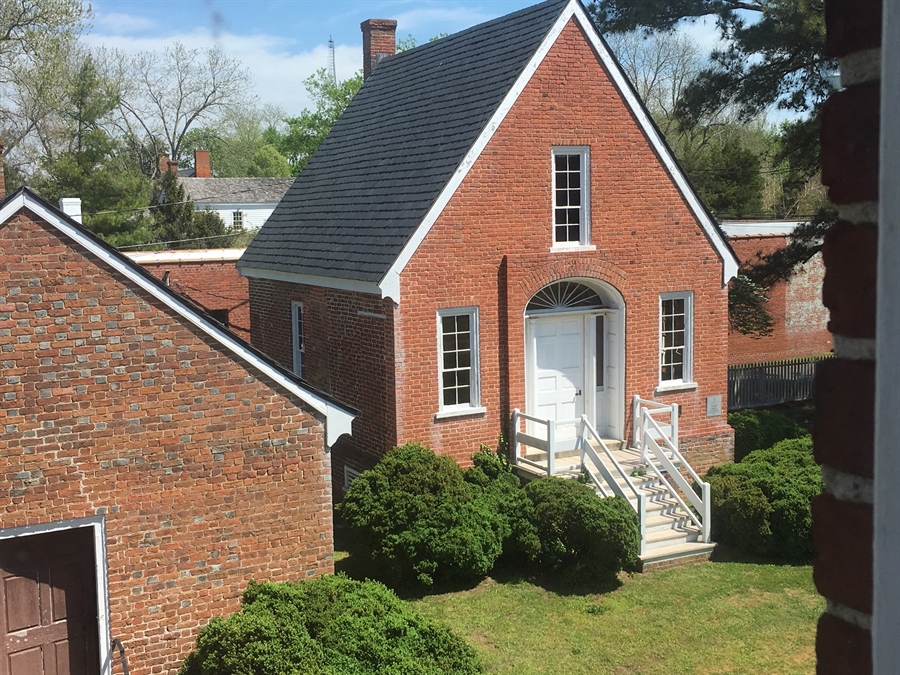
History will come alive on the Eastern Shore of Virginia this summer as organizers prepare to mark a significant moment in American heritage at one of the region’s most storied landmarks.
A commemoration honoring the reading of the Declaration of Independence is planned for the historic Eastville Courthouse Green in Northampton County, Virginia. The event is scheduled for August 15, 2026, and will run from 10:00 in the morning until 2:00 in the afternoon.
The Eastville Courthouse Green is one of the oldest continuously used courthouse sites in the United States, making it a fitting backdrop for a celebration of American independence and history.
Delaware State Police have released the identities of the two people involved in a deadly murder-suicide that took place in Milford on Sunday. The victim has been named as 38-year-old Jessica Bradley, a Milford resident. The suspect, 43-year-old Brooks Bradley, also of Milford, died by suicide during the same incident.
The Delaware State Police Homicide Unit continues to actively investigate the case. Detectives are urging anyone who may have information to reach out to Detective Z. Spudis directly at (302) 752-3795. Tips can also be submitted by sending a private message to the Delaware State Police on Facebook, or by contacting Delaware Crime Stoppers at 1-800-847-3333.
Anyone who has been affected by this incident — whether as a witness, victim, or someone who has lost a loved one to a sudden death — can reach the Delaware State Police Victim Services Unit and the Delaware Victim Center around the clock. Their toll-free hotline is available 24 hours a day at 1-800-VICTIM-1 (1-800-842-8461). The Victim Services Unit can also be contacted by email at [email protected].
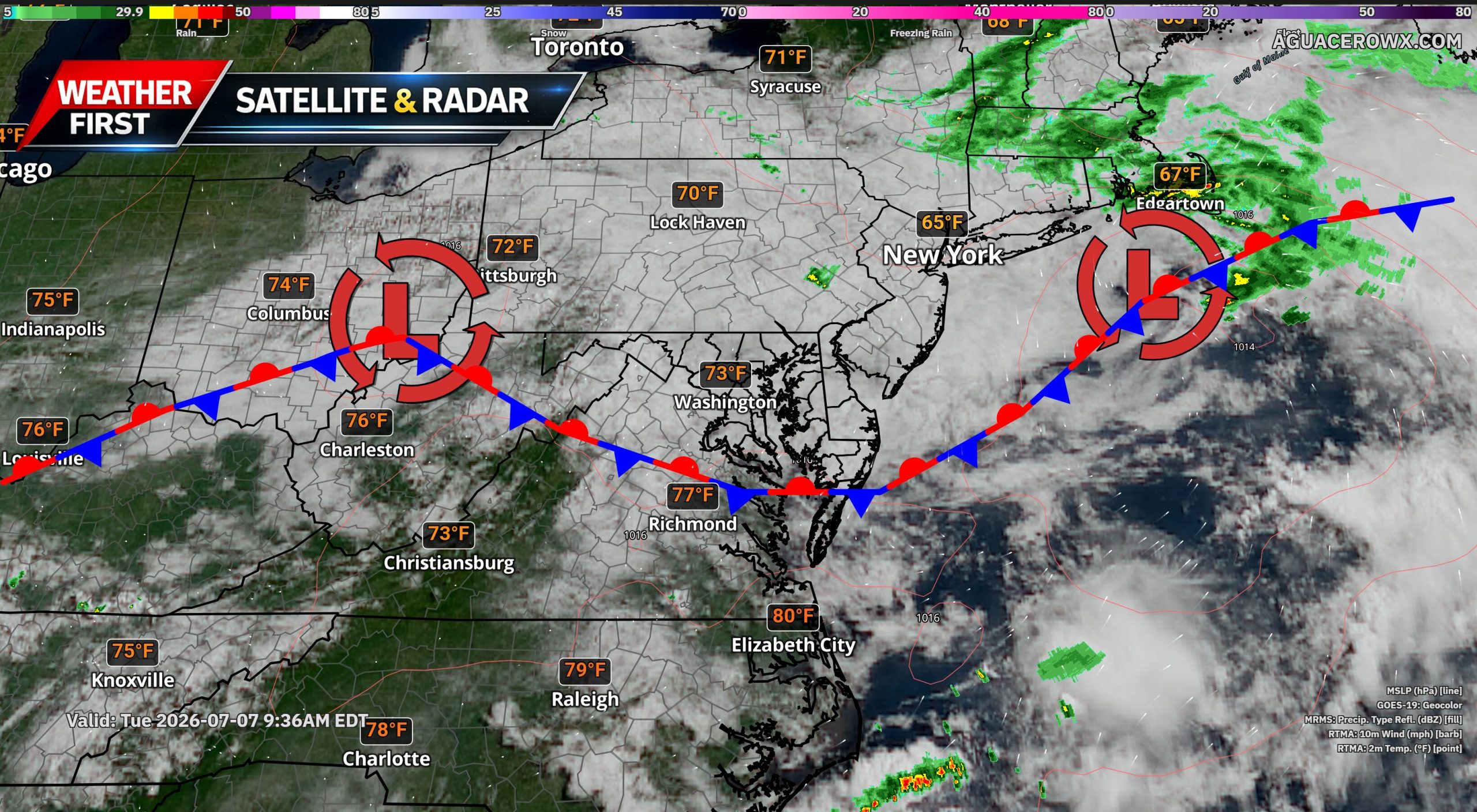
Cool and cloudy conditions will remain locked in across much of Delmarva today as a stubborn marine layer continues to sit over the region. While shower and thunderstorm chances remain in the forecast, most areas are expected to stay mainly dry through the day.
A stationary front remains positioned just south of the region, and that boundary will continue to act as a focus for showers and storms. However, persistent low clouds and an onshore flow have helped reinforce a cooler, more stable marine air mass across the area. That setup will likely limit widespread thunderstorm development for much of Delmarva.
Some drizzle or light rain will be possible at times, especially where the low clouds are deepest. The best chance for more persistent showers will be across southern Delaware, along with Talbot and Caroline counties in Maryland, where the stationary front will remain close enough to support better shower development through the day.
The front is expected to finally begin making more meaningful progress southward tonight into Wednesday, allowing conditions to slowly improve. Temperatures Wednesday and Thursday should climb back into the 80s, but the region will not see a quick return to the extreme heat that impacted the area late last week.
The next more organized chance for showers and thunderstorms will arrive Thursday through Saturday as a cold front approaches and eventually crosses the region. Dewpoints may climb back into the 70s by Thursday, allowing humidity to increase, but the overall setup looks less favorable for widespread severe weather or flooding compared to the active stretch Delmarva just experienced.
Unlike the previous several days, this upcoming pattern appears more progressive. That means weather systems should keep moving rather than stalling over the region. A small disturbance may move through Thursday, followed by a stronger upper-level trough and cold front Friday into Saturday.
While a few stronger storms or pockets of heavy rain cannot be ruled out late this week, the overall risk for severe weather and flash flooding appears lower than what the region dealt with over the past four days.
Drivers traveling through Sussex County this Friday may encounter a sobriety checkpoint as part of a statewide effort to crack down on impaired driving.
The Delaware Office of Highway Safety, working alongside Delaware State Police and local law enforcement agencies from across the state, announced plans to conduct a Driving Under the Influence checkpoint on Friday, July 10, 2026, in Sussex County.
The checkpoint is part of Delaware’s ongoing efforts to reduce impaired driving and improve road safety throughout the state.
Delaware Governor Matt Meyer has put his signature on a trio of banking bills that represent the most sweeping update to the state’s financial regulations in more than 40 years.
The legislation, made up of Senate Bills 16, 18, and 19, is designed to modernize Delaware’s banking laws and strengthen the state’s position as a leader in financial services going forward.
The bills were sponsored by Senator Spiros Mantzavinos and Representative Bill Bush.
State officials say the package is intended to set Delaware up to lead the next generation of financial innovation, building on the state’s long-standing reputation as a hub for the banking and financial services industry.
Motorists traveling on Route 1 between Middletown and Dover should be aware of an ongoing trash operation affecting ramps in both the northbound and southbound directions.
The work is taking place on the ramps along that corridor and is expected to continue until 3 p.m. Drivers are encouraged to plan accordingly and allow extra time if traveling through that area.
Westbound travelers on Churchill Drive are facing a left lane closure between Marsh Road (Route 3) and North Hillside Boulevard as a result of ongoing construction activity.
The lane restriction is expected to remain in effect until 5 PM. Drivers in the area should anticipate potential slowdowns and allow extra travel time.
Authorities recommend that motorists consider alternate routes if possible to avoid delays in the affected stretch of roadway.
Chinese state media reported Tuesday that at least 11 people lost their lives and hundreds more were hurt after tornadoes tore through a central province in China.
The eastern Hubei province bore the brunt of powerful thunderstorms Monday night, with the severe weather impacting an estimated 14,600 people, according to the official state news agency Xinhua. More than 330 individuals were injured and one person remained unaccounted for. The destruction was extensive — over 20 homes completely collapsed and more than 4,800 additional structures sustained damage.
An EF2 tornado, considered rare for the region, cut through Huanggang city, causing significant damage to buildings. Among the hardest-hit locations were a logistics company and a warehouse construction site, where powerful winds hurled multiple trucks as far as 30 meters — roughly 98 feet — from their original positions, Xinhua reported.
Video shared by Shanghai Daily on the social media platform X appeared to capture the terrifying moment when strong winds forced open glass doors on the ground floor of a building, shattering one of them as people inside screamed.
According to China Weather News, which is operated by the China Meteorological Administration, tornadoes in China are typically documented in southern and coastal provinces such as Guangdong and Jiangsu — making Monday night’s event in Hubei highly unusual.
Meteorological expert Wang Xiaoling explained to the Hubei Daily newspaper that several contributing factors led to the tornadoes, including the remnants of Tropical Storm Maysak, which played a role in the unusual weather that swept through the area.
The destruction did not stop there. In southern China, officials confirmed that four people died in Hengzhou city, with eight others still missing, after Maysak brought record-setting rainfall that caused widespread flooding across the Guangxi region, Xinhua reported.
Authorities evacuated more than 53,000 residents from Hengzhou, while an additional 8,000 people were moved out of Binyang county as floodwaters surged. On Tuesday, Guangxi issued a red alert — the highest level of flood warning available — as river levels climbed up to 7.5 meters, or approximately 24 feet, above established warning thresholds, according to Xinhua.
Motorists heading along North Star Road are being advised to plan for delays this afternoon as construction work is causing intermittent lane closures in the area.
The lane restrictions are in place along the section of North Star Road between Alton Wood Drive and Neptune Drive. Drivers should expect periodic interruptions to traffic flow as crews work in the area.
The closures are scheduled to remain in effect until 6:00 PM. Travelers are encouraged to allow extra time or consider alternate routes to avoid potential delays.
A traffic stop involving an electric scooter turned into a significant arrest Monday evening in Wilmington, according to New Castle County Division of Police.
At around 5:50 p.m. on Monday, July 6, 2026, officers on patrol in the area of Governor Printz Boulevard and East Lea Boulevard spotted a person riding an electric scooter and committing a traffic violation.
Police pulled the rider over and, during the course of the stop, the situation led to charges related to both a firearm and illegal drugs. Additional details about the suspect and the specific charges were not included in the initial report.
Motorists heading along Willow Grove Road, also known as Route 10, should plan for possible slowdowns as construction crews work in the area.
An intermittent lane closure is currently in place along the stretch of roadway between Cow Marsh Creek and Ironmine Road. The closure is expected to continue until 6 PM.
Drivers are encouraged to allow extra travel time or consider alternate routes until construction activity wraps up for the day.
Northbound travelers on Interstate 95 should be aware of an ongoing lane restriction near the Salem Church overpass.
According to Delaware Department of Transportation, the right shoulder on northbound I-95 beneath the Salem Church overpass is currently closed. The closure is expected to remain in effect until 3:00 PM.
Drivers are encouraged to stay alert and allow extra time when passing through the area.
The Dover Police Department is working to identify those responsible for a shooting that struck homes and vehicles in the Village of Westover community on Monday afternoon.
Officers were called to the East Broadstairs Place area at around 5:11 p.m. on July 6th, 2026 after residents reported hearing multiple gunshots. When officers arrived on scene, they discovered approximately 40 spent shell casings scattered across the roadway.
The gunfire struck 10 unoccupied vehicles and five residences in the area. Despite the widespread damage, no one was reported injured.
Early investigation results and video surveillance footage revealed that a maroon SUV was driving through East Broadstairs Place when several suspects stepped out of a dark-colored sedan and began shooting at the SUV. After the gunfire, both vehicles left the scene before police arrived. Neither vehicle has been found as of this report.
The investigation remains active and ongoing. Anyone with information about this incident is encouraged to contact the Dover Police Department at (302) 736-7145. Callers can remain anonymous. Tips can also be submitted through Delaware Crime Stoppers by calling 800-TIP-3333 or visiting www.delaware.crimestoppersweb.com. A cash reward may be offered for information that leads to an arrest.
Drivers heading northbound on Newcastle Avenue should be aware of an active lane restriction currently in effect between D Street and C Street.
A left lane closure is in place due to ongoing construction work in the area. The closure is expected to remain until 4 PM.
Motorists traveling through that stretch are encouraged to use caution and allow extra travel time, or consider an alternate route to avoid potential delays.
Drivers heading northbound on Edgemoor Street should be aware of a lane restriction currently in effect due to construction activity in the area.
The right lane is closed along the stretch of Edgemoor Street between Philadelphia Pike Road and Governors Printz Boulevard, also known as Route 13. The closure is expected to remain in place until 5 PM.
Motorists traveling through this corridor are encouraged to allow extra travel time or consider an alternate route to avoid potential delays.
Westbound travelers on W. Newport Pike should be aware of a right lane closure currently in effect between W. Redmont Road and Petro Drive.
The lane restriction is the result of ongoing construction in the area. According to traffic officials, the closure is scheduled to remain in place until 4 p.m.
Drivers are encouraged to allow extra travel time or consider using an alternate route to avoid delays in the area.
Motorists traveling westbound on Harrington Highway, also known as Route 14, in the Milford area should plan for slowdowns today due to an active construction zone.
According to DelDOT, the westbound shoulder is closed and lane shifts are in place along that stretch of roadway between Canterbury Road (Route 15) and Church Hill Road.
The lane restrictions are expected to remain in effect until 5 p.m. Drivers are encouraged to allow extra travel time or consider an alternate route if possible.
Good morning, Delmarva! Start your Tuesday with some caution — patchy fog is lingering across the peninsula early this morning, so give yourself extra time on those morning commutes. Visibility should improve as we head toward mid-morning, but don’t put the umbrella away just yet. A 30% chance of showers and thunderstorms develops through the afternoon, with highs climbing to a warm 83°F under mostly cloudy skies. A light northeast breeze around 5 mph will offer a little relief. Any rainfall should stay minimal — less than a tenth of an inch expected.
Tonight, we’re holding onto that storm chance, so keep an eye on the sky if you have evening plans outdoors. Lows will settle comfortably around 68°F.
Looking ahead to Wednesday, we catch a nice break! Partly sunny skies return with a high near 82°F and partly cloudy conditions overnight. A much more pleasant midweek day is on the way!
Stay weather-aware today, Delmarva, and have a great Tuesday! 🌦️
NEW YORK (AP) — For decades, backing Israel was something both major political parties could agree on. But a new poll from the AP-NORC Center for Public Affairs Research shows that consensus is crumbling, with opposition rising sharply among Democrats and cracks appearing even within the Republican Party.
The survey comes as Israel’s conduct in its ongoing war with Hamas in Gaza — now approaching its third year — has turned what was once a broadly shared foreign policy position into a deeply divisive issue, splitting Americans along both party and generational lines.
Roughly one-third of American adults — including about half of all Democrats — now believe Israel has committed genocide against Palestinians during the Gaza conflict. That accusation has been made by certain human rights organizations but is firmly rejected by both Israel and the U.S. government. About 2 in 10 Americans say genocide has not occurred, while the remaining half say they don’t have enough information to form an opinion.
Among Jewish adults specifically, about 30% believe Israel has committed genocide, while nearly half — 49% — say it has not.
Harold Kalmus, a 69-year-old Democrat from Arden, Delaware, who identifies as Jewish by birth, said his feelings toward Israel have changed dramatically over the years. He remembers feeling pride in the country when he was young — but that’s no longer the case.
“I realize that there is a threat from Hamas. And I realize they’re in a very difficult situation, but what they have done is just an unspeakable horror,” he said, referring to Israel’s military campaign against Palestinians. “They’re trying to wipe out a civilization as far as I’m concerned.”
The poll reflects a steep decline in how Americans view Israel in the nearly three years since Hamas launched its attack on October 7, 2023 — an assault that killed approximately 1,200 people in Israel, mostly civilians, and resulted in 251 people being taken as hostages to Gaza. According to the Hamas-run Gaza Health Ministry, more than 73,000 Palestinians have died in Gaza since then, a figure that does not separate civilian from militant casualties. That total includes more than 1,000 deaths since the most recent ceasefire began. Polling data suggests American sympathies had been gradually shifting toward Palestinians since around 2020, but that trend accelerated dramatically after the latest war began.
Around 4 in 10 Americans say they don’t feel informed enough to judge whether Israel’s military response — either its initial retaliation or its continued operations — was justified. Among those who did weigh in, most said the early military response was appropriate. However, a majority of that same group believes Israel’s current ongoing military actions are not justified.
Among Jewish adults, about three-quarters said Israel’s initial response was justified, but that support dropped to roughly 4 in 10 when asked about its continuing operations.
Only about one-third of Americans consider Israel to be an “extremely” or “very” important personal issue. Still, the U.S.-Israel relationship has become a flashpoint in American politics, with high-stakes midterm elections just four months away — elections that will determine which party controls Congress during the final two years of President Donald Trump’s time in office. Vice President JD Vance recently took aim at Israeli leaders who have voiced frustration with Trump, while candidates who have been vocal critics of Israel recently beat establishment-backed Democrats in primary races in New York and Colorado.
The poll shows a clear and decisive shift happening within the Democratic Party. About 58% of Democrats now say the U.S. is “too supportive” of Israel — up from 45% in a January 2024 AP-NORC poll conducted while former President Joe Biden was still in office. That includes 51% of Jewish Democrats in the current survey.
Around 62% of Democrats say the U.S. is “not supportive enough” of Palestinians, compared to 49% two years ago. While younger Democrats — those 45 and under — remain more likely than their older counterparts to hold that view, the gap is narrowing. About 57% of older Democrats now say the U.S. should do more to support Palestinians, up from just 39% two years ago.
Joy Jennik, a 73-year-old Democrat from Brookfield, Wisconsin, said she didn’t have particularly strong feelings about the U.S.-Israel relationship before Hamas’ October 7 attack. Now, she believes Israel is guilty of genocide.
“The Gaza Strip, there’s not a lot left of it. Those poor people are barely living,” said Jennik, a retired home economics teacher.
On the Republican side, only 13% describe Israel’s actions as genocide, though a generational divide is visible there too. About 2 in 10 Republicans under 45 use that term, compared to roughly 1 in 10 Republicans aged 45 and older.
Overall, 60% of Republicans say U.S. support for Israel is “about right,” and only about 2 in 10 say the country is “too supportive” — though younger Republicans are more likely to hold that view. While the share of Republicans saying the U.S. is “too supportive” hasn’t changed significantly since 2024, the share saying it’s “not supportive enough” has fallen from 39% to just 15%.
Mike Cardona, a 70-year-old Republican from suburban Phoenix, said he supports the current level of U.S. backing for Israel and rejects the genocide characterization.
“I wish they’d gone in harder and better,” said Cardona, a retired industrial supply salesperson, referring to Israel’s military campaign in Gaza. “Unfortunately, some innocents will be hurt, but Hamas and Hezbollah never took that into consideration when they were killing children and women in Israel.”
Several people interviewed for the poll said their criticism was aimed specifically at Israel’s leadership — particularly Prime Minister Benjamin Netanyahu, who is widely seen as closely aligned with Trump following repeated conflicts with Democratic presidents.
Nationally, only 20% of American adults have a favorable view of the Israeli prime minister, while about twice that number — 38% — view him unfavorably. About 41% say they don’t know enough to form an opinion.
Netanyahu’s approval is especially low among Jewish adults: roughly 6 in 10 view him unfavorably, while about one-third see him in a positive light.
Younger Americans across both parties are more likely to say they don’t have an opinion about Netanyahu. Among older Republicans, views of Netanyahu lean positive, but younger Republicans’ opinions tilt in the opposite direction.
New York City Mayor Zohran Mamdani, a 34-year-old democratic socialist who has been an outspoken critic of Israel, is viewed favorably by 27% of U.S. adults. Another 28% view him unfavorably, and 44% say they don’t know enough to have an opinion.
Jewish adults — who identify as Democrats at high rates — actually view Mamdani more positively than Netanyahu, with 44% holding a favorable opinion of the New York City mayor, 39% viewing him negatively, and 17% saying they’re unsure.
About half of Democrats overall view Mamdani favorably, with only about 1 in 10 holding an unfavorable view and roughly 39% saying they don’t have an opinion.
Despite all of this, the U.S.-Israel issue is far from the top concern for many Americans heading into the midterm elections.
Michael Ripka, a 34-year-old stage hand from Casper, Wyoming who typically votes Republican, said the economy is what matters most to him right now.
“Everything is mad expensive,” he said, adding that Middle East conflicts are “100% a very big distraction.”
The AP-NORC poll surveyed 3,040 adults between June 11 and June 17, using a sample drawn from NORC’s probability-based AmeriSpeak Panel, which is designed to reflect the broader U.S. population. The poll also included interviews with 1,022 Jewish adults. The margin of sampling error is plus or minus 2.8 percentage points for the general adult sample, and plus or minus 5.0 percentage points for the Jewish adult sample.
A crash has resulted in the closure of the southbound exit ramp connecting Interstate 495 to Interstate 95 southbound at Exit 5A-B, according to traffic officials.
Motorists traveling in the area are advised to use alternate routes until the ramp is reopened. The closure is in effect while crews respond to the scene.
No further details regarding the crash or an estimated time for reopening have been provided. Drivers should allow extra travel time and stay alert for changed traffic patterns in the area.
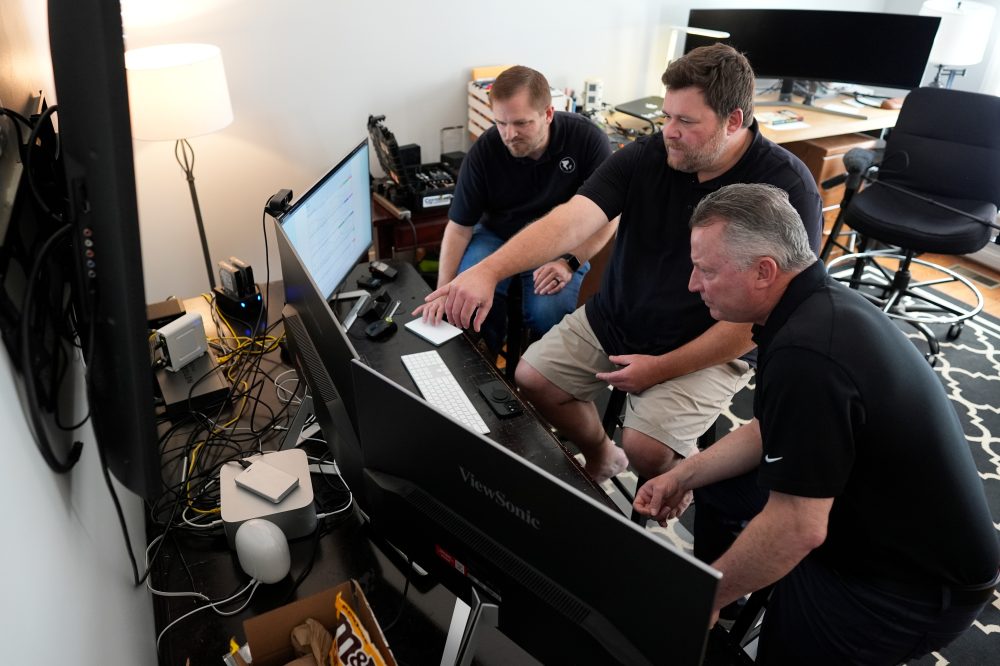
NASHVILLE, Tenn. (AP) — Viewers of the TV show “9-1-1: Nashville” might get the impression that the city is constantly ravaged by tornadoes turning concerts into disaster zones and sending tourists flying through the air. While that’s television drama, dangerous storms do strike Nashville on a regular basis — and when they do, many residents reach for their phones and turn to Nashville Severe Weather.
This volunteer-run operation has carved out a dedicated following on social media by doing something that seems almost out of place in today’s online world: staying calm. Volunteers Will Minkoff, Andrew Leeper, and Tom Johnstone livestream storm coverage that attracts tens of thousands of viewers who follow along in real time, asking questions and sharing what they’re seeing on the ground. It’s the kind of community-driven service that harkens back to the internet’s earliest ideals, long before the era of the influencer.
This is all unfolding at a moment when fewer people are sitting down to watch traditional local news broadcasts. Yet a professor of strategic communication at Belmont University in Nashville says an informal poll of his own students revealed many of them are regularly tuning in to Nashville Severe Weather.
“The millennials and Gen Z — and teaching college students, I know this all too well — their source of information is that handheld device,” he says. “It’s not turning on a TV. And it’s not even looking at a traditional media outlet’s online presence. It’s finding sources that provide them quick information when they need it.”
The growth of Nashville Severe Weather touches on several intersecting trends: a tornado alley that is moving eastward, a shifting climate, the dominance of social media, and the power of immediate, neighborhood-level information to protect lives.
The operation has grown over more than ten years, starting out as a Twitter feed and blog before expanding into regular YouTube livestreams whenever severe weather threatens Nashville or nearby counties. Because Leeper, Minkoff, and Johnstone all live in the area, they face the same dangers as the people watching them.
“There’s something about Nash Severe Weather that’s different from the hobbyist enthusiast,” the Belmont University professor says. “I think that’s why people are following them. That’s why they are trusting them. That’s why they’re tuning in and turning to them. … It is authentic and real.”
Leeper, who serves as a church pastor, speaks with a reassuring voice and keeps a sign on a shelf behind him that reads “prepared not scared.” During one storm, he had to step away from the livestream to wake his family and move them to safety — and he did it without a hint of panic, living out his own motto before returning to the stream once the danger had passed.
Katherine Moffat, who works as the executive director of the Tennessee Academy of Physician Assistants, says local TV weather coverage can sometimes feel “a little over-the-top” when storms approach. Nashville Severe Weather, she says, takes a different approach.
“They’re a little more calm and telling it to you straight,” she says. “They don’t get people overly excited.”
The demand for this kind of coverage is growing. Johnstone, a meteorologist who spent 33 years with the National Weather Service before joining the group last year, says the region traditionally known as Tornado Alley has been drifting away from the Midwest plains and toward states further east.
“The mid-South, especially down through Alabama, Mississippi, and into Tennessee and western Kentucky, has been where tornadoes have been most frequent … and people have been dying in the highest numbers,” he says.
Michelle Stewart gets all of her weather updates through push notifications from Nashville Severe Weather on her phone. She found the service especially valuable during an ice storm that knocked out power and internet access across much of the city for several days.
“They are very informative about, not just what to expect, but how to be prepared, and just giving everybody the lay of the land without it being too science-y. You know, it kind of feels like you’re talking to your neighbor,” says Stewart, a project manager at a healthcare research company. “They are so calming to me during those live events.”
Brett Withers, a former Nashville city councilman who witnessed two deaths in his district during a 2020 tornado that claimed 24 lives across Tennessee, calls Nashville Severe Weather a “godsend.”
“We have so many people moving to Nashville, and they might move from places where tornadoes are rare, if they ever happen,” he says.
The group’s popularity flies in the face of conventional social media wisdom. Their livestreams are not polished productions. There’s no manufactured drama, no storm chasing, no reporters standing outside in dangerous winds. The visual centerpiece is weather radar, with Minkoff, Leeper, and Johnstone — sometimes joined by other volunteers — each appearing from their own homes in small boxes along the edges of the screen. When they use graphics at all, they look like something a young child might have sketched out.
One beloved example is the “Dry Air Monster” — a stick figure with an oversized head and chomping jaws reminiscent of Godzilla. Nashville Severe Weather co-founder David Drobny created the character to illustrate how dry air could “eat” snow that was heading toward the city. In a Southern city where snow on the ground is a rare treat that often feels like a brief holiday, the monster’s catchphrase — “No Snow for You” — has become something of a local institution.
Their neighborhood-level focus allows them to do something even local TV stations struggle with: zeroing in on specific streets, schools, and churches to tell people exactly where a threat is headed.
“One of the things that Nash Severe can do that even the TV stations have trouble doing is really bring it down to intersection level, school level, church level to let people know where the danger and the threat is,” Johnstone says.
Their coverage runs both ways. Audience members contribute photos and video from the field and share observations in the chat. Nashville Severe Weather passes that information along to the National Weather Service and local TV meteorologists, while also fielding questions from viewers during streams.
Leeper recalls one particular day when schools dismissed early due to a tornado threat. When a child commented in the chat that they were home alone, he immediately shifted gears.
“We just stopped what we were saying on the stream, and I said, ‘Hey. It dawns on me that we’ve got a bunch of kiddos at home that are maybe by themselves. Hey. Here’s what you do,’” Leeper recalls. “I love those moments where we can just sort of put everything else aside to talk to the people who are listening, in whatever situation they’re in.”
Those moments keep the work grounded in something deeper than storm tracking. In 2023, a tornado took the lives of a mother and her young child living in a trailer in the area. Leeper didn’t know the family, but he attended the visitation.
“It just creates a whole other emotion when you walk into a funeral visitation for hurting families when it’s a weather event that you covered,” he says. “It’s not all action and adventure. It really affects people’s lives forever.”
Motorists traveling along US-40, also known as Pulaski Highway, are being advised of a lane closure currently in effect due to construction work in the area.
The right lane is shut down between Walther Road and Wellington Drive. The closure is expected to remain in place until 6 a.m.
Drivers are encouraged to use caution when passing through the work zone and should allow for additional travel time if this stretch of road is part of their route.
Eastbound travelers on Pulaski Highway, also known as US Route 40, are facing a right lane restriction between Church Road and Rockwood Road as construction crews work in the area.
The lane closure is expected to remain in place until 6 AM, according to traffic officials. Drivers are encouraged to use caution and allow extra travel time when passing through the affected stretch of roadway.
Northbound travelers on U.S. Route 13, also known as North DuPont Highway, are facing intermittent lane closures as construction crews work in the area.
The affected stretch runs between White Oak Road and Centre Drive, where lanes may be periodically shut down as work continues through the night.
The closures are expected to remain in place until 5 a.m. Drivers are encouraged to allow extra travel time or consider alternate routes if possible.
Motorists traveling on Valley Road should be aware of intermittent lane closures currently in effect between Lancaster Pike (Delaware Route 41) and Evenson Road.
The closures are tied to construction work underway in that stretch of roadway. Drivers should expect possible delays and plan their routes accordingly.
The lane restrictions are expected to remain in place until 6 a.m., at which point normal traffic flow should resume.
Motorists traveling eastbound on Kirkwood Highway, also known as Delaware Route 2, are facing a left lane closure due to construction activity in the area.
The lane restriction runs from Pike Creek Road to Milltown Road. Drivers should plan for possible delays and allow extra travel time through that stretch.
The closure is scheduled to be lifted by 6 a.m. Travelers are encouraged to use caution and follow posted traffic signs in the work zone.
A crash on southbound Route 1 at Scarborough Road has resulted in the closure of the right lane, according to Delaware Department of Transportation officials.
Motorists traveling southbound in that area should anticipate traffic delays and are advised to use caution as crews work at the scene. Drivers may want to consider alternate routes to avoid the affected stretch of roadway.
No additional details regarding the crash have been released at this time. TV Delmarva will provide updates as more information becomes available.
The National Weather Service office out of Mount Holly, New Jersey issued a Flood Watch on Sunday, July 6, taking effect at 7:41 PM Eastern Time and running through 8:00 PM Eastern Time the same evening.
A Flood Watch means that conditions are favorable for flooding to develop in the watch area. Residents are urged to stay aware of changing weather conditions and be prepared to take action if flooding begins or a Flood Warning is issued.
Officials recommend that people avoid low-lying areas, stay away from streams and drainage channels, and never attempt to drive through flooded roadways. Even shallow moving water can be dangerous to vehicles and pedestrians.
Residents should monitor local forecasts and be ready to move to higher ground quickly if necessary. Updates from the National Weather Service should be followed closely as conditions develop.
The Fourth of July looked a little different this year in many American cities, as dangerous heat forced organizers to cancel parades and push back outdoor events across the country.
At the same time, hospital emergency rooms were overwhelmed with patients suffering from heat-related illnesses, highlighting just how serious the conditions had become.
Climate experts say Americans should get used to it. Sweltering heat on Independence Day is no longer an anomaly — it is becoming the expected reality for the holiday and the summer season more broadly.
The scenes played out along the National Mall in Washington, D.C., where crowds gathered despite the oppressive temperatures, with many people struggling to cope with the extreme conditions.
Motorists traveling southbound on Interstate 95 near Churchmans Marsh should be prepared for significant delays following a crash that has closed two right lanes.
According to DelDOT, the lane closures are directly related to the crash at that location. Drivers are advised to use caution and allow extra travel time if passing through the affected stretch of highway.
No additional details about the crash have been released at this time. TV Delmarva will continue to monitor this developing traffic situation and provide updates as they become available.
The National Weather Service office in Mount Holly, New Jersey issued a Severe Thunderstorm Warning on July 6, taking effect at 4:06PM EDT and set to expire at 4:30PM EDT.
Residents in the warned area are urged to seek shelter immediately and stay away from windows. Severe thunderstorms can bring dangerous lightning, damaging winds, and heavy rainfall in a short period of time.
Officials recommend staying indoors until the warning has expired and monitoring local weather updates for any changes to the storm’s path or intensity.
The National Weather Service out of Mount Holly, New Jersey has issued a Flash Flood Warning that went into effect at 4:17 PM EDT on Sunday, July 6, and is set to expire at 8:15 PM EDT the same evening.
Residents in areas covered by the warning are urged to stay off roadways that may be prone to flooding and to avoid any low-lying or flood-prone areas until the warning has been lifted.
Flash floods can develop rapidly and without much notice. Even shallow moving water can be dangerous, and officials always caution that drivers should never attempt to cross flooded roads.
TV Delmarva will continue to monitor this weather situation and provide updates as conditions change. Residents are encouraged to have a way to receive weather alerts and to follow guidance from local emergency management officials.
The National Weather Service office out of Mount Holly, New Jersey has issued a Flash Flood Warning that went into effect at 4:37 PM EDT on July 6 and remains active until 8:15 PM EDT that same evening.
Residents are urged to take this warning seriously and stay alert for rapidly rising water. Flash floods can develop quickly and pose a serious danger to life and property.
Authorities remind the public never to attempt to drive through flooded roads. Even shallow water moving across a roadway can sweep a vehicle off course. The phrase “turn around, don’t drown” remains the standard safety guidance during any flash flood event.
Stay tuned to TV Delmarva and monitor official National Weather Service updates for the latest information as this warning remains in effect through the early evening hours.
The National Weather Service out of Mount Holly, New Jersey issued a Severe Thunderstorm Warning on July 6, taking effect at 3:55 PM EDT and remaining in place until 4:30 PM EDT.
Residents in the warned area are urged to seek shelter indoors, stay away from windows, and avoid any unnecessary travel until the warning has expired.
Severe thunderstorm warnings are issued when weather conditions pose an immediate threat, typically involving winds of 58 miles per hour or greater, hail at least one inch in diameter, or the possibility of a tornado. Residents should monitor local alerts and be prepared for rapidly changing conditions.
The National Weather Service office in Mount Holly, New Jersey issued a Severe Thunderstorm Warning on the afternoon of July 6, effective from 3:41 PM Eastern Time through 4:30 PM Eastern Time.
Residents in the warning area were advised to take precautions as dangerous thunderstorm conditions were expected. Severe thunderstorms can bring damaging winds, large hail, and heavy rainfall in a short period of time.
Officials recommend that people move indoors, stay away from windows, and avoid travel during severe thunderstorm warnings. The warning was set to expire at 4:30 PM Eastern Time on July 6.
Delaware State Police have released the name of the man who lost his life in a deadly single-vehicle crash that occurred Sunday morning on Peterkins Road in Georgetown. The victim has been identified as 32-year-old Breiner Perez-Perez, a resident of Millsboro, Delaware.
The Delaware State Police Collision Reconstruction Unit is actively investigating the circumstances surrounding the crash. Troopers are urging anyone who may have seen the accident or who has video footage of the incident to reach out to Master Corporal J. Smith at (302) 703-3267. Tips can also be submitted through a private Facebook message to the Delaware State Police or by calling Delaware Crime Stoppers at 1-800-847-3333.
Anyone who has been impacted by a crime or has experienced the sudden loss of a loved one can reach the Delaware State Police Victim Services Unit and the Delaware Victim Center around the clock. Their toll-free hotline is available 24 hours a day at 1-800-VICTIM-1 (1-800-842-8461). You may also contact the Victim Services Unit directly by emailing [email protected].
Delaware State Police are looking into a carjacking that took place Saturday evening in Frederica, and investigators are asking the public for help identifying the suspects involved.
At around 6:45 p.m. on July 4, 2026, troopers were called to the first block of East Oak Street in Frederica after a carjacking was reported. According to the preliminary investigation, the victim — a Lyft driver — had picked up three unknown individuals in Dover and transported them to the first block of East Pine Street in Frederica. Once there, one of the suspects pulled out a handgun from the back seat and demanded the driver exit the vehicle. A second suspect then got behind the wheel, and all three fled the scene in the victim’s car, also taking his cell phone. The driver was not physically harmed during the ordeal.
All three suspects had their hoods pulled up and were wearing black masks that covered their faces at the time of the incident.
The Delaware State Police Criminal Investigations Unit is continuing to work the case. Detectives are urging anyone who saw what happened or has any relevant information to reach out to Det. S. Heitzman at (302) 698-8555. Tips can also be submitted by sending a private message to the Delaware State Police Facebook page or by contacting Delaware Crime Stoppers at 1-800-847-3333.
Anyone who has been a victim or witness of a crime, or who has lost a loved one to a sudden death and needs support, can contact the Delaware State Police Victim Services Unit and Delaware Victim Center around the clock through their toll-free hotline at 1-800-VICTIM-1 (1-800-842-8461). The Victim Services Unit can also be reached by email at [email protected].
Westbound travelers on DE-54 between Route 1 and DE-20 should expect significant delays due to heavy congestion along that corridor.
According to Delaware Department of Transportation, the slowdown is causing travel times to stretch anywhere from 20 to 55 minutes beyond normal conditions.
Drivers in the area are encouraged to allow extra time or consider using an alternate route until traffic conditions improve.
The National Weather Service office in Mount Holly, New Jersey has issued a Flood Watch for portions of the local area, effective Sunday, July 6.
The watch went into effect at 2:11 PM EDT and is set to expire at 8:00 PM EDT the same day.
A Flood Watch means that conditions are favorable for flooding to develop. Residents are urged to stay alert, avoid low-lying areas, and never attempt to drive through flooded roadways. Even shallow water on roads can be dangerous.
TV Delmarva will continue to monitor this weather alert and provide updates as conditions develop.
If you are traveling northbound on Route 1 between Dover and Smyrna, be prepared for a significant slowdown.
Congestion along that corridor is causing delays of approximately 15 to 20 minutes for drivers making the trip.
Authorities have not yet indicated when the backup is expected to clear. Drivers are encouraged to allow extra time or seek an alternate route to avoid the tie-up.
The punishing heat wave that locked down New York City and much of the Northeast last week has finally given way — but the relief came with a new set of dangers, as heavy rain and flooding swept through the region.
Flash flood warnings were put in place Monday for portions of New York, Philadelphia, and New Jersey as multiple rounds of storms pushed through the area.
New York City Mayor Zohran Mamdani had spent Sunday warning residents about the dangers of heatstroke and pointing people toward pools and cooling centers. By Monday morning, his message had shifted dramatically — urging anyone living in a basement apartment to get out immediately if they noticed water beginning to rise inside their home.
Across northern New Jersey, floodwaters left cars stranded on highways. In Ocean Township, heavy rainfall caused part of the roof at a BJ’s Wholesale Club to give way. Two people were briefly trapped inside but were able to free themselves. The Monmouth County Sheriff’s Office confirmed no injuries were reported.
“Nothing too serious. They have us running from call to call,” said Capt. Leroy Marshall of the Lakewood Police Department, located nearby.
The storms effectively dismantled the heat dome that had been sitting over the Northeast for days. At its peak, LaGuardia Airport in New York recorded a historic high of 104 degrees Fahrenheit (40 degrees Celsius) on Thursday. Overnight temperatures in many locations barely dipped below 80 degrees F (26.7 C), offering little relief even after dark.
New Jersey health officials are now looking into approximately 25 deaths that may have been caused by the extreme heat. The victims — ranging in age from their 30s to their 80s — were found dead either on the street or inside homes without air conditioning, according to New Jersey Department of Health Commissioner Raynard Washington.
Washington noted that autopsies and further investigations will be required before the heat can officially be listed as the cause of death. No other states have announced potential heat-related fatalities at this time.
As the heat wave broke over the weekend, a line of severe storms tracked from Michigan toward the East Coast. According to poweroutage.com, around 450,000 customers were still without electricity in the aftermath of the storm damage.
Delaware State Police are actively investigating a murder-suicide that unfolded Sunday afternoon in a Milford neighborhood.
At around 4:15 p.m. on July 5, 2026, troopers were dispatched to the 7000 block of Sugar Maple Drive in the Sugar Maple Farms community after a man dialed 911 and told dispatchers he had killed his wife before abruptly ending the call. Both 911 dispatchers and troopers on the scene made repeated attempts to make contact with the man, but those efforts were unsuccessful.
Members of the Delaware State Police Special Operations Response Team eventually entered the home, where they discovered a 38-year-old woman who had suffered gunshot wounds and a 43-year-old man with what appeared to be a self-inflicted gunshot wound. Both individuals were pronounced dead at the scene. Their names are being withheld at this time pending notification of their families.
The Delaware State Police Homicide Unit has taken over the investigation. Detectives are urging anyone who may have information about this case to reach out to Detective Z. Spudis at (302) 752-3795. Tips can also be submitted through a private message on the Delaware State Police Facebook page or by contacting Delaware Crime Stoppers at 1-800-847-3333.
Anyone who has been affected by a violent crime or the sudden loss of a loved one can reach the Delaware State Police Victim Services Unit and the Delaware Victim Center around the clock through their toll-free hotline at 1-800-VICTIM-1 (1-800-842-8461). You may also contact the Victim Services Unit by email at [email protected].
The Newark Police Department has unveiled a new partnership aimed at boosting the mental health and overall well-being of its officers and staff members.
The department announced it has teamed up with The GUIDE App, a platform designed to provide confidential wellness and resilience resources. The collaboration is intended to give the men and women who serve the Newark community every day greater access to support tools they can use on their own terms.
According to the department, the partnership is part of a broader, ongoing commitment to mental health and wellness within the agency. By expanding access to these kinds of resources, the department says it hopes to better support the people who work to keep Newark safe.
Extreme weather conditions left more than 485,000 homes and businesses across the United States without electricity as of late Sunday, according to figures from PowerOutage.us.
Michigan took the biggest hit of any state, with approximately 100,378 customers losing power — about 2% of the state’s 5.1 million total customers. One utility unit under DTE Energy in Michigan accounted for roughly 82,472 of those outages on its own.
DTE Energy posted an update on its website saying, “Our Storm Response Team is working as quickly and safely as possible to restore service and is on track to restore 95% of impacted customers by the end of day today, Monday, July 6.”
Pennsylvania ranked second among all states for outages, with around 95,732 customers left in the dark. A unit of PPL Electric Utilities was responsible for roughly 65,401 of those customers — approximately 3.3% of its Pennsylvania customer base.
PPL Electric Utilities noted on its website that “Crews restored power to more than 196,000 customers since Friday.”
New York-based energy provider Con Edison reported Sunday that it had brought power back to more than 166,800 of the roughly 173,700 customers affected by the severe weather. The company said the Westchester County communities of Yonkers, Mount Vernon, Rye, and New Rochelle — located north of New York City — experienced the highest concentration of storm-related outages. Con Edison expects 95% of its affected Westchester customers to be back online by Monday at 7 p.m. EDT, following storms that struck on July 4.
Maryland also appeared among the eight states with the highest outage counts, with nearly 29,854 customers without power. Here is a breakdown of the eight states with the most outages:
Two University of Delaware swimmers have been honored for combining excellence in the pool with strong academic performance, earning national recognition from the College Swimming & Diving Coaches Association of America, known as the CSCAA.
Matvei Namakonov, a member of the Blue Hens men’s swimming and diving program, was named to the CSCAA First Team Scholar All-American squad for the 2026 spring season. On the women’s side, Alex Pastris earned a spot on the Second Team Scholar All-American roster.
The CSCAA announced both honors this week, recognizing the Delaware student-athletes among the top academic performers in college swimming and diving across the country.
NEW CASTLE — Two major Delaware health agencies have joined forces to roll out a new initiative designed to modernize how healthcare providers handle insurance-related processes across the First State.
The Delaware Department of Health and Social Services and the Delaware Health Care Commission announced the launch of a new effort under the Rural Health Transformation Program, known as RHTP. The initiative is focused on enabling real-time insurance verification and prior authorization services statewide.
To accomplish this, the program will make use of the Delaware Health Information Network, commonly referred to as DHIN, which serves as Delaware’s statewide health information exchange platform. The network is expected to play a central role in connecting providers with the tools needed to streamline these processes.
Officials say the initiative is part of a broader push to strengthen Delaware’s health information technology infrastructure and improve access to timely, efficient care for residents across the state.
MADRID (AP) — A massive wildfire raging in southern France forced Tour de France officials to keep spectators away from the final stretch of the cycling event’s third stage on Monday.
After spending two days racing through Spain, the competition crossed into France for a stage ending in the Pyrenees town of Les Angles — located roughly 60 kilometers (37 miles) from a fire that has already consumed nearly 1,821 hectares (4,500 acres) of land.
Race officials cited the enormous wildfire burning in the Pyrénées-Orientales region as requiring a massive deployment of firefighting crews, security personnel, and various government agencies.
“The top priority remains the protection of people, property, and natural areas, as well as bringing the fire under control,” authorities stated.
Because of the emergency, organizers announced that for the final 40 kilometers (25 miles) of the stage inside France, the traditional publicity caravan — a 10-kilometer (6-mile) convoy of sponsor vehicles that typically rolls ahead of the race — would be suspended. Only cyclists and vehicles directly necessary to the race were permitted on the course, and fans were urged to stay off roadsides and away from the finish area.
The third stage got underway from the Spanish town of Granollers, where the Spanish Meteorological Agency recorded temperatures of around 35 degrees Celsius (95 Fahrenheit), according to race organizers.
Close to 700 firefighters were working to battle the blaze, which prompted authorities on Sunday night to order evacuations from more than two dozen villages in the area.
Europe continues to be the fastest-warming continent on Earth, with temperatures rising at twice the global average rate since the 1980s, according to the European Union’s Copernicus Climate Change Service. Globally, 2025 ranked as the third-hottest year ever recorded, bringing intense heatwaves across the continent.
In Greece, government spokesman Pavlos Marinakis announced Monday that 96 wildfires had ignited across the country within the previous 48 hours. He noted that the overwhelming majority were contained before they could grow larger.
Climate scientists continue to warn that rising global temperatures are making heat and dry conditions more frequent and more severe — particularly in southeastern Europe — increasing the region’s exposure to health risks and wildfire dangers.
The most serious Greek fire broke out Sunday afternoon near the town of Mandra, west of the capital Athens. Authorities rushed 29 aircraft and more than 200 firefighters to the scene to get the fire under control before nightfall, when aerial firefighting operations must cease. By Monday, the fire had largely died down, though it had not been completely put out.
Several areas of Greece remained under high or very high wildfire risk Monday because of strong winds. On the southern island of Crete, a wildfire near the town of Ierapetra triggered evacuation orders for a nearby village. Fanned by strong winds, that blaze was moving primarily through agricultural land, fire officials said.
Across the Iberian Peninsula, Spain and Portugal were also enduring another surge of dangerous heat, with hundreds of firefighters working to hold back wildfires in both countries.
Spain’s weather agency AEMET cautioned that a heatwave which began Sunday would continue at least through Thursday, pushing daytime and nighttime temperatures well above normal. Much of Spain, including the capital Madrid, was expected to see afternoon highs ranging from 37 C to 42 C (99 F to 108 F) on Monday and Tuesday.
Overnight temperatures were also forecast to stay oppressively warm, with readings expected to remain above 20 C (68 F) — a threshold scientists describe as “tropical nights.” Such conditions prevent people from adequately cooling down and recovering from the heat of the day.
In Portugal, temperatures soared at inland locations Monday, while even the coastal capital Lisbon sweltered under readings reaching 33 C (91 F). Forecasters said temperatures should ease later in the week.
Goldey-Beacom College has announced the five individuals who will be honored as part of its ninth Athletics Hall of Fame class, with NovaCare signing on as the title sponsor for the upcoming brunch and induction ceremony.
The newest class of honorees includes Lori Knabb (Dreger), who made her mark in women’s soccer, and Kim Rowley (Matthews), a standout from the women’s basketball program. Representing men’s soccer are brothers Daimen and Jeremy Michaels. Rounding out the class is former Dean of Students Bernadette Wimberley, recognizing her contributions to the college community beyond the playing field.
The announcement marks another milestone for the college’s athletics program as it continues to recognize those who have left a lasting impact on Goldey-Beacom sports.
The University of Delaware men’s soccer team is set to look a little different heading into the 2026 season, with 11 new players joining the program.
Head coach Tommy McMenemy made the announcement Monday, revealing that the incoming group consists of seven freshmen along with four players arriving via transfer.
Motorists traveling along South DuPont Boulevard, also known as US Route 113, are being advised of a lane restriction near the Route 1 off-ramp at Warner Road.
According to Delaware Department of Transportation, the left lane at that intersection is currently closed to accommodate construction work in the area.
The closure is expected to remain in place until noon. Drivers in the area are encouraged to allow extra travel time or consider alternate routes if possible.
A suspect is in custody following a Fourth of July incident in which a person was seen displaying and pointing a handgun at others in a Wilmington apartment complex parking lot.
New Castle County Division of Police officers were called to the 600 block of Robinson Lane in the Maryland Park Apartment community on Saturday, July 4, 2026, at approximately 2:35 p.m. Callers reported that a suspect was showing and directing a handgun toward people in the parking lot area.
When officers arrived on scene, they confirmed the details of the report and located the suspect. An arrest was made following the aggravated menacing investigation.
Motorists traveling through Dover should be aware of a significant road closure currently in effect on Water Street.
According to Delaware’s Department of Transportation, Water Street is shut down in both directions between South State Street and South Governors Avenue. The closure is related to ongoing construction in the area.
The road is expected to remain closed until August 20th, 2026, meaning drivers will need to find alternate routes for an extended period of time.
Travelers in the area are encouraged to plan ahead and allow extra time when navigating through that part of Dover.
Motorists traveling on Oakwood Road should be prepared for intermittent lane closures between Thomas Road and Bybrook Road as construction work continues in the area.
The lane restrictions are expected to remain in place until 5PM. Drivers are encouraged to plan ahead and allow extra travel time or consider alternate routes to avoid delays.
Motorists traveling along Polly Drummond Hill Road should plan for possible delays as construction work has prompted an intermittent lane closure in the area.
The affected stretch runs between New Linen Hill Road and Old Coach Road. The lane restriction is expected to remain in place until 5 PM.
Drivers are encouraged to allow extra travel time or consider alternate routes until the construction work is completed and the roadway is fully reopened.
Drivers traveling along Rogers Road should be aware of a lane shift currently in place between Newcastle Avenue and South Street.
The lane change affects both northbound and southbound traffic and is the result of active construction in the area.
The lane shift is expected to remain in effect until 4 PM. Drivers are encouraged to slow down, stay alert, and allow extra travel time if their route takes them through this stretch of road.
A litter operation is currently active along Route 1 northbound and southbound, with crews working in the median and along ramps between Christiana Mall and Dover.
The work is expected to continue until 3:00 PM. Drivers traveling through the area are encouraged to slow down and remain alert for workers near the roadway.
Crews are conducting a litter cleanup operation along the shoulder of Interstate 495 northbound between Newport and Claymont, according to Delaware transportation officials.
The operation is expected to remain active until 3 p.m. Drivers traveling through that corridor should be aware of workers along the roadside and are encouraged to slow down and move over when possible.