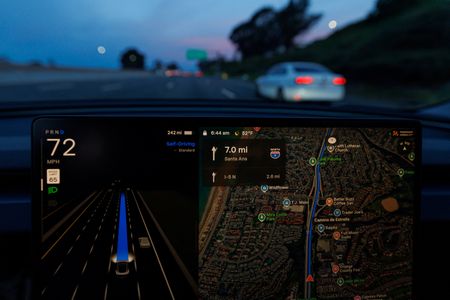

Federal highway safety officials have expanded their investigation into Tesla’s autopilot technology following a series of crashes that resulted in one fatality, according to a March 19 announcement from the National Highway Traffic Safety Administration.
The expanded investigation now encompasses approximately 3.2 million Tesla vehicles across various models, representing virtually every Tesla sold in America.
This escalation represents a major development that could potentially result in a vehicle recall or other regulatory enforcement measures should officials discover safety defects.
The investigation centers on Tesla’s system designed to detect when road visibility becomes compromised and alert drivers to resume manual control of their vehicles.
According to NHTSA officials, available information suggests Tesla’s visibility detection technology has consistently failed to recognize poor driving conditions or provide adequate driver warnings when faced with sun glare and other visual obstructions, both before and after software improvements.
Tesla has not provided an immediate response to requests for comment regarding the investigation.
Safety officials report they have documented nine crashes connected to this technology malfunction, with two incidents resulting in driver or passenger injuries.
According to regulators, Tesla’s internal crash analysis suggested that updated software for the visibility detection system might have prevented three of the nine documented incidents.
In the crashes examined by federal investigators, the autopilot system failed to recognize conditions that blocked camera vision or delayed safety alerts until moments before collision.
Officials also discovered additional crashes in comparable conditions where the technology either missed reduced visibility entirely or failed to give drivers adequate response time.
Tesla’s future plans for fully autonomous vehicles and self-driving taxi services depend heavily on proving the safety and dependability of its Full Self-Driving technology, which continues to face ongoing regulatory review.