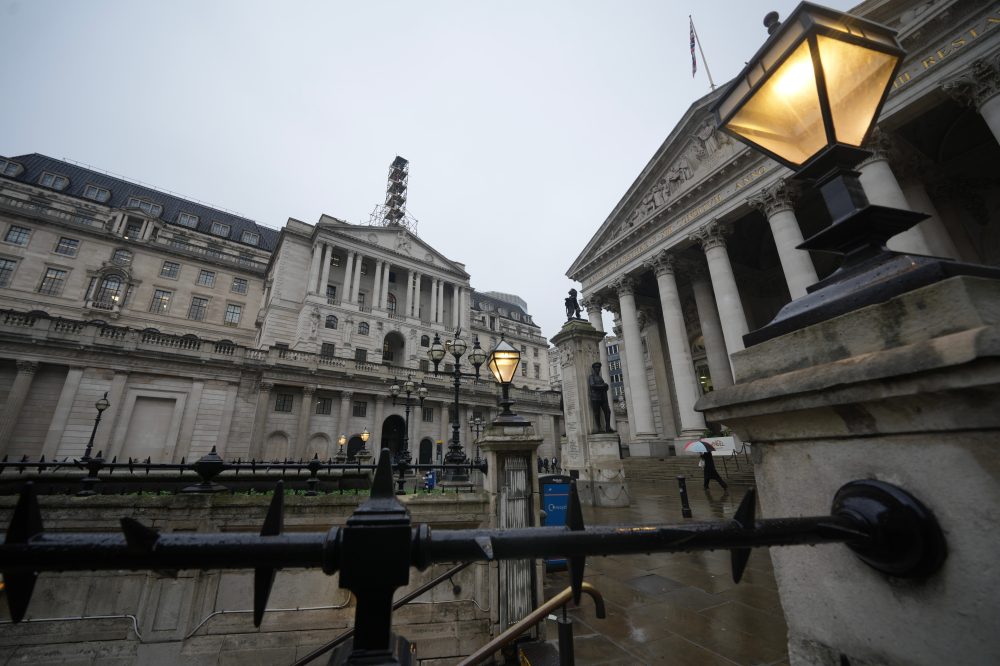

LONDON (AP) — The Bank of England was widely expected to reduce interest rates again this Thursday, but the Iran conflict that erupted less than three weeks ago has dramatically shifted those expectations. Financial analysts now believe the central bank will maintain its benchmark rate at 3.75%.
The conflict beginning February 28 between the United States, Israel, and Iran has triggered a series of economic disruptions that have altered worldwide financial predictions, particularly regarding pricing trends. The ongoing war and resulting blockade of the Strait of Hormuz pose increasing economic risks, given that one-fifth of global crude oil passes through this critical waterway.
Energy markets have experienced the most immediate consequences, with oil and natural gas costs surging significantly since hostilities began. Consumers are already seeing higher fuel costs, and sustained increases could result in elevated household energy expenses.
These emerging inflationary forces are compelling central bank officials worldwide to revise their 2026 economic outlooks for both price growth and economic expansion. The U.S. Federal Reserve maintained its primary interest rate Wednesday evening, meeting expectations.
The Bank of England now faces the likelihood that inflation will take longer to reach its 2% goal, with higher prices expected throughout the remainder of the year — creating an unfavorable environment for additional rate decreases in the near term.
“The bank would be wise to wait and see whether a rise in energy prices triggers a reacceleration of underlying price pressures before acting,” said Andrew Wishart, U.K. economist at Berenberg Bank.
Wishart indicated the central bank’s nine-member Monetary Policy Committee might reduce rates from 3.75% as early as June — assuming the Strait of Hormuz closure proves temporary.
“If energy prices stay high for six months, the bank would probably delay the reduction until 2027,” he added.
Following last month’s policy meeting, markets anticipated at least two to three quarter-point rate decreases this year. Economic forecasts released with the decision to maintain rates showed inflation reaching target levels by spring. However, Bank Governor Andrew Bailey stated that “all going well,” additional cuts should be possible this year.