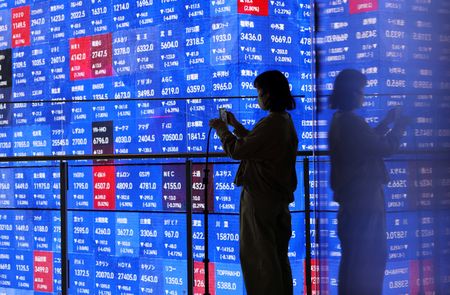

Global financial markets experienced significant turbulence Thursday as escalating tensions in the Middle East conflict sent investors fleeing to safer assets, driving up oil prices and weakening international currencies.
The Bank of Japan maintained its short-term interest rate at 0.75% as expected, mirroring the cautious approach taken by the Federal Reserve and Bank of Canada regarding the inflationary impact of rising energy costs from the ongoing conflict.
Japan’s currency weakened to 159.61 against the dollar, approaching a critical threshold that could trigger government intervention. Finance Minister Satsuki Katayama indicated earlier that officials stand ready to “take necessary action at any time against market volatility.”
Kyle Rodda, a senior financial analyst at Capital.com, explained the strategic timing of these statements: “The comments this morning before the BOJ were made to warm up the market for intervention if markets sell the yen in reaction to the central bank’s decision.”
Rodda added that “160 looks like a critical threshold here. Barring any huge development in the war and energy markets, especially after last night’s Fed decision, the USDJPY looks poised to test it.”
The Japanese currency has weakened more than 2% against the dollar since hostilities began in late February, as investors seek refuge in U.S. assets amid concerns about the conflict’s economic implications.
The situation deteriorated Wednesday when Iran claimed Israel attacked facilities at the massive South Pars gas field. Tehran responded by threatening strikes against oil and gas infrastructure across the Gulf region, launching missiles toward Qatar and Saudi Arabia.
These attacks on energy facilities pushed U.S. crude futures up approximately 1% to $97.07 per barrel, while natural gas prices jumped over 6%. Brent crude climbed 4.5% to reach $112.19 per barrel.
Stock markets across Asia reflected investor anxiety, with Japan’s Nikkei declining 2.5% and South Korean markets falling 1.5%. The MSCI Asia-Pacific index excluding Japan dropped more than 1.5%, while European futures indicated opening losses exceeding 1%.
Charu Chanana, chief investment strategist at Saxo in Singapore, characterized the current escalation as a pivotal moment: “This latest escalation feels like a turning point for markets because the conflict is no longer just about military headlines or Strait of Hormuz closure.”
“It is now hitting the plumbing of the global energy system. What is unsettling markets now is the growing stagflation risk… It means this is no longer just a geopolitical story but a macro one,” Chanana continued.
The dollar gained strength broadly, supported by Federal Reserve projections of only one additional rate cut this year after keeping rates steady Wednesday. Market participants have largely eliminated expectations for any monetary easing in 2026.
The dollar index, tracking the U.S. currency against six major counterparts, has risen 2.5% this month and stood at 100.06, slightly down from Wednesday’s 0.7% gain.
With central bank meetings scheduled throughout the week, investors are closely monitoring official statements regarding the conflict’s economic impact. The European Central Bank and Bank of England are expected to announce rate decisions later Thursday.
Both institutions are anticipated to maintain current interest rates, but market attention will focus on policymakers’ assessments of how the conflict affects inflation and economic growth projections.
Laura Cooper, global investment strategist at Nuveen, highlighted the key challenge facing central bankers: determining whether elevated energy costs risk destabilizing inflation expectations or represent a temporary shock.
“Rate hikes cannot increase oil supply, they can only suppress the demand response to higher prices, compounding the growth drag. Much of the adjustment to the energy shock therefore occurs organically,” Cooper noted.