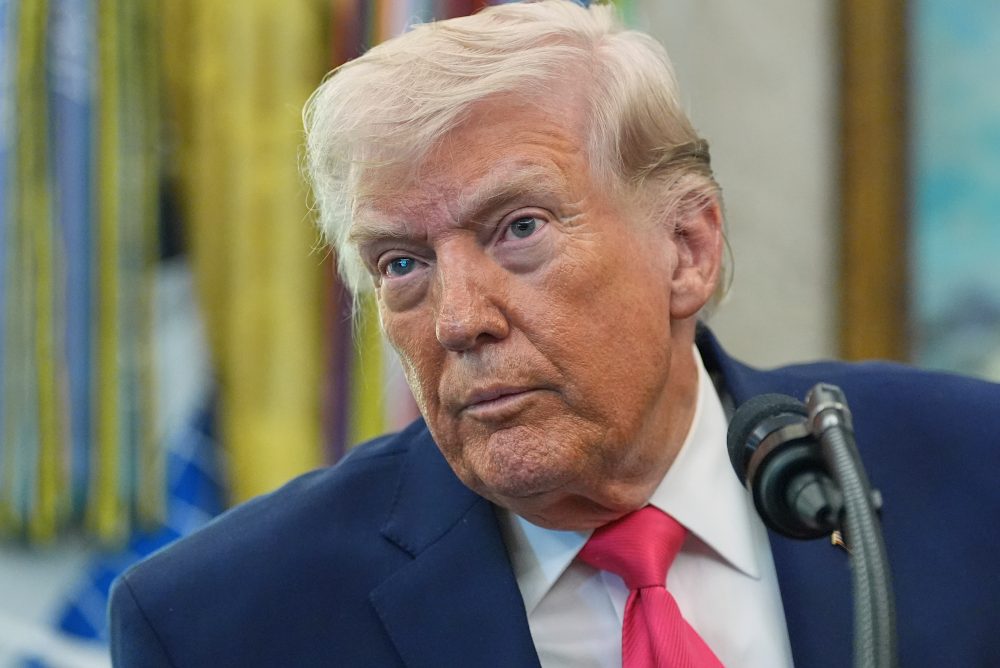
International currency trading remained largely stagnant during Wednesday’s Asian session as financial markets expressed doubt regarding President Donald Trump’s claims of diplomatic advancement with Iran.
Trump informed White House reporters that the United States was achieving meaningful progress in discussions with Iranian leadership, though Tehran has refuted any assertion that face-to-face negotiations are currently underway, leaving global investors uncertain.
European currency gained modest ground, rising 0.1% to reach $1.1619, while most other major currency exchanges held steady. Britain’s pound increased 0.1% to $1.3428, and New Zealand’s dollar remained unchanged at $0.5834.
This muted trading activity stood in sharp contrast to Tuesday’s dramatic movements in stock futures and oil markets following Trump’s statements about potential conflict resolution.
“For those reacting to every breaking headline around dialogue between the U.S. and its allies and Iran, including speculation of high-level talks and temporary ceasefire proposals, an element of fatigue is now firmly setting in,” said Chris Weston, head of research at Pepperstone Group Ltd in Melbourne.
The dollar maintained stability against Japan’s yen at 158.645, following the release of Bank of Japan meeting records from January that revealed board members’ consensus on continuing interest rate increases without establishing a predetermined timeline.
Australia’s currency initially dropped 0.2% to $0.6983 before recovering to neutral territory after February inflation figures showed a 3.7% increase prior to the Middle East conflict’s escalation, falling slightly below analyst predictions.
Financial markets continue to expect unchanged U.S. interest rates throughout the year, though speculation about policy tightening has intensified. Federal Reserve futures data from CME Group’s FedWatch tool indicates a 30.2% probability of a 25-basis-point increase at December’s Federal Reserve meeting, jumping significantly from the previous day’s 8.2%.
Federal Reserve Governor Michael Barr stated Tuesday that interest rates may need to remain steady “for some time” before additional reductions become appropriate, citing persistent inflation above the Fed’s 2% target and Middle Eastern conflict risks.
Government bond markets recovered following recent volatility, with 10-year Treasury yields declining 5 basis points to 4.338%. Westpac analysts noted that “Higher oil prices added to expectations of increasing inflationary pressures and tighter monetary policy.”
The dollar index, measuring American currency strength against six major currencies, fell 0.1% to 99.126.
Digital currencies showed positive movement, with bitcoin advancing 1.2% to $70,910.16 and ethereum gaining 0.8% to reach $2,164.74.
Drivers traveling north on Route 1 should expect delays near the Route 14 overpass as construction crews continue their work through the evening hours.
The Delaware Department of Transportation has blocked off the right lane in the northbound direction at the Route 14 overpass location. Officials say the lane restriction is necessary to accommodate ongoing construction activities in the area.
The lane closure is scheduled to remain active until midnight tonight, after which normal traffic patterns should resume.
Motorists are advised to allow extra travel time and use caution when passing through the construction zone. Drivers should merge safely into the left lane when approaching the work area.
CINCINNATI — Veteran quarterback Joe Flacco has reached an agreement to remain with the Cincinnati Bengals, continuing his role as the backup to starting quarterback Joe Burrow.
The Bengals acquired Flacco through a trade with the Cleveland Browns in October, and he stepped into the starting role for six games while Burrow recovered from a toe injury.
Despite posting a 1-5 record as Cincinnati’s starter, the 41-year-old quarterback delivered solid performances. Flacco surpassed 200 passing yards in four of his six starting appearances, helping the Bengals offense maintain an average of more than 27 points per game during that stretch.
Earlier in the same season, Flacco had started four games for Cleveland, recording two touchdown passes against six interceptions.
The former Super Bowl MVP from Baltimore’s 2012 championship run has had an extensive NFL journey, suiting up for Denver, New York Jets, Philadelphia, Indianapolis, and most recently Cleveland before joining Cincinnati.
Throughout his 19-year professional career, Flacco has accumulated 48,176 passing yards with 272 touchdown passes and 172 interceptions. His postseason resume includes a 10-6 record with 3,530 yards through the air, 26 touchdown passes, and 12 interceptions.
March Madness delivered record-breaking television audiences during its opening week, with an average of 10.1 million viewers tuning in across CBS, TBS, TNT and truTV through the second round of competition.
Nielsen data shows tournament viewership climbed 7% compared to the previous year. The current broadcast format began in 2011 when CBS partnered with TNT to air all tournament games, replacing the previous regional coverage system that CBS used from 1991 to 2010.
Thursday and Friday’s opening round games drew 9.5 million viewers on average, representing a 9% boost from last year. Weekend action during the second round attracted 11 million viewers on Saturday and Sunday combined. The second round numbers mark the highest audience levels since 1993 and reflect a 7% year-over-year increase.
Sunday evening’s prime-time slate proved particularly popular with viewers, as simultaneous games featuring St. John’s against Kansas on CBS, Iowa versus Florida on TBS, and Virginia taking on Tennessee on TNT collectively reached 19.7 million viewers. This three-game window set a new tournament record for first-week viewership.
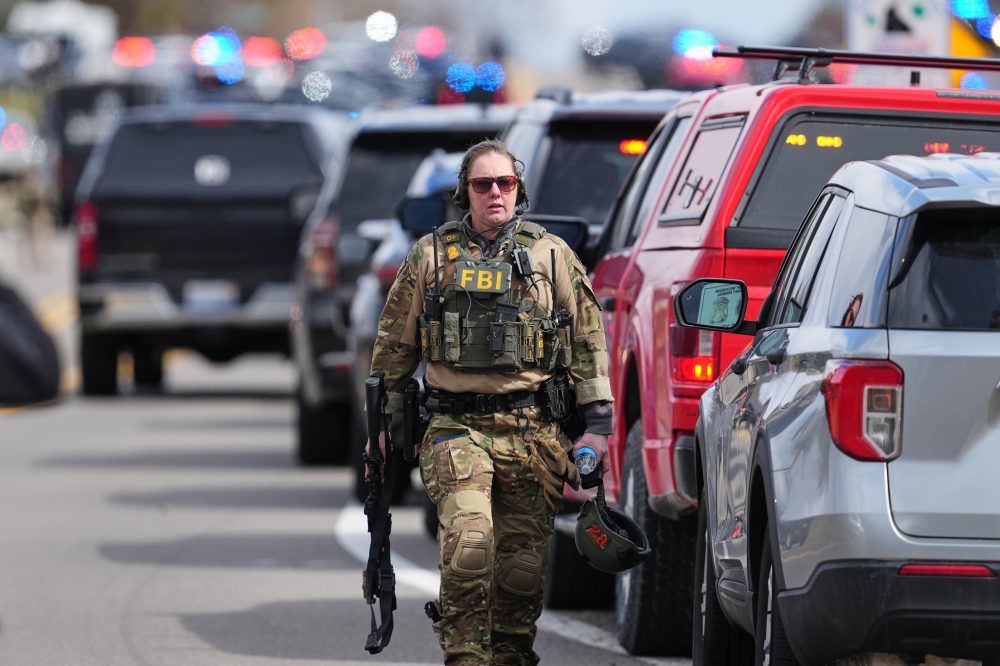
Federal authorities announced Tuesday they are implementing enhanced monitoring and protective measures for Jewish and Muslim communities across the nation following escalating Middle East conflicts, multiple bias crimes, and a suspected terrorist incident that have prompted heightened security protocols at religious facilities.
While the FBI investigates the March 12 incident where someone drove a vehicle into the entrance of Temple Israel in West Bloomfield, Michigan—one of the country’s largest Reform Jewish congregations—officials provided updates on threats facing religious communities and outlined protective strategies for worship centers.
“We understand that our adversaries aim to intimidate us into hiding so we choose not to participate,” stated Michael Masters, national director of the Secure Community Network, during a nationwide security briefing featuring perspectives from federal and local police agencies.
“When robust protection and safety protocols are established, such withdrawal becomes unnecessary,” Masters added.
The organization, which oversees security coordination for Jewish communities throughout North America, organized this national security briefing before Passover observances and during escalating international conflicts. Recent bias incidents targeting Jewish individuals have been recorded in southern California and Toronto, while European authorities are examining vehicle fires in Antwerp and London as potential antisemitic crimes.
Many Jewish Americans view these antisemitic events as validation of persistent concerns regarding increasing antisemitism, reinforcing the necessity to actively oppose extremism while maintaining their religious practices despite intimidation. Simultaneously, the surge in hostile anti-Muslim language from certain Republican officials and Christian nationalist groups recalls the early 2000s period when the September 11 attacks and conflicts in Afghanistan and Iraq fostered Islamophobic attitudes throughout America and globally.
Jewish community leaders have urged elected officials and civic authorities to address these escalating dangers.
“While the Temple Israel incident was disturbing, it has unfortunately become expected rather than surprising for those of us in the Jewish community,” said Gary Torgow, chair of the Jewish Federations of North America, during the briefing about security actions Jewish organizations were implementing nationwide. Torgow, a Michigan business leader, explained that “hatred now travels rapidly through false information on social platforms” and cautioned that allowing its unchecked distribution “inevitably establishes conditions where violence becomes more probable.”
Torgow and fellow Jewish leaders recently met with senior FBI representatives to discuss federal initiatives addressing antisemitic incidents since the Trump administration conducted joint military operations with Israel against Iran, triggering counter-attacks and regional warfare with worldwide implications. Meeting attendees included Andrew Bailey, the FBI’s deputy director, whom Torgow described as understanding and responsive to their issues.
“That meeting demonstrated genuine concern and truly active participation,” Torgow said. “An assault on a synagogue, we emphasized to them, must be recognized for what it represents: an assault on the fundamental right that every American should worship without fear.”
Federal officials are also watching for heightened activity from radicalized persons who might target worship locations or attack during prominent upcoming occasions or religious holidays. Authorities during the security briefing disclosed no specific threats to forthcoming events, and Secure Community Network representatives stated they were unaware of any current threats to Jewish communities.
“While we work to protect against potential malicious individuals, especially those inspired by or sympathetic to Iran, we must remain equally vigilant for all types of threats as America prepares to host both the 2026 FIFA World Cup and the America 250 celebrations later this year,” said Matthew Kozma, the under secretary for intelligence and analysis at the Department of Homeland Security, during the security briefing.
Director of National Intelligence Tulsi Gabbard stated during a March Senate hearing that intelligence agencies had concentrated efforts “on persons either radicalized by Islamist messaging who may never have contacted ISIS or al-Qaida” but were still radicalized online while in America.
The FBI is examining two recent events as terrorist acts, including an attempted bombing at anti-Muslim demonstrations outside the New York mayor’s home and a fatal shooting at Old Dominion University in Norfolk, Virginia.
Jewish Federations president Eric Fingerhut said the terrorist attack on Temple Israel demonstrated that “even our most sophisticated security measures can be overwhelmed by global events and by the carefully planned actions of terrorists,” requiring Jewish communities to “once again, enhance our security level for our community” and collaborate closely with law enforcement to assess dangers, and civic leaders to tackle the underlying sources of prejudice and extremism.
The Jewish Federations of North America will also organize demonstrations in May calling for stronger legislative efforts to fight antisemitism in Washington.
Following the Temple Israel attack, Oakland County, Michigan, Sheriff Michael Bouchard revealed he had received antisemitic death threats personally for responding to the incidents.
“I believe it’s our responsibility to take action, speak out and do whatever possible to safeguard our communities,” Bouchard said.
The reasons behind surges in antisemitic attacks and other hateful behavior are complicated and deep-rooted, according to experts. Increased international tensions, divided domestic politics and emerging digital platforms have all contributed to the growth in prejudiced attitudes.
“We’re witnessing numerous ideas and conspiracy theories that were previously on the margins of public discussion being absorbed into political discourse,” said Seth Levi, chief strategy officer at the Southern Poverty Law Center. Levi identified social media and the increased accessibility for hateful speech to reach mass audiences without filtering as the main factor driving radicalization for many extremists.
Muslim Americans, meanwhile, have voiced concern and worry as anti-Muslim language and state government actions labeling Muslim communities as security risks have increased in recent months.
The Southern Poverty Law Center has documented a significant increase in antisemitic and Islamophobic language over the past year that has only worsened since Middle East warfare began, Levi said.
“We continue observing incidents such as hateful and racist leafleting, particularly in neighborhoods with specific faith communities,” Levi said. “Direct, physical intimidation where you reside produces a different, more intense response than online activity.”
Levi noted that most Americans still strongly reject hateful violence and rhetoric in polling examined by the Southern Poverty Law Center, but that statements from federal legislators, including President Donald Trump, were frequently repeated in the hateful language used by some online figures or in physical threats reviewed by the center.
For many Jewish leaders, this moment emphasizes a need for stronger determination and tighter community bonds.
“The vitality of Jewish life in North America, Jewish life everywhere, only exists through our own actions,” said Wendy Berger, chair of the Secure Community Network. “It rests with us. And we have these remarkable, incredible federal, local, state partners. But security is our responsibility, and the vitality of Jewish lives depends on it.”
Financial markets experienced significant gains Wednesday following reports that the United States has proposed a temporary halt to hostilities and delivered a comprehensive peace proposal to Iran, sparking investor optimism about reduced regional tensions.
Futures for the S&P 500 climbed 0.9% during Asian trading hours, while European market futures advanced 1.2%. Meanwhile, Brent crude oil prices tumbled approximately 6% to $98.30 per barrel as traders anticipated potential resumption of Persian Gulf oil shipments.
Asian equity markets showed strong performance, with exchanges in Australia, South Korea and Japan posting roughly 2% gains during morning sessions. Gold prices also increased 1.6% as investor sentiment shifted.
“The market is trading the headlines at the moment,” explained Kerry Craig, global market strategist at J.P. Morgan Asset Management in Melbourne. “So there’s a positive tone. The difficulty is now…there are still unknowns about where this actually goes from here and whether there’s anything material in terms of a ceasefire.”
President Donald Trump indicated Tuesday that negotiations were advancing toward ending the conflict, mentioning an important concession obtained from Tehran. Sources confirmed Washington had delivered a 15-point settlement framework to Iranian officials.
According to Israel’s Channel 12, citing three sources, American officials are pursuing a month-long cessation of hostilities to facilitate discussions around the 15-point proposal. However, Tehran has disputed claims that direct negotiations have occurred.
Market reactions have been positive yet measured since Monday’s initial reports of American efforts to conclude hostilities, though uncertainty remains about when the Strait of Hormuz might reopen for oil transport.
Currency markets showed the dollar weakening slightly throughout the week, trading at 158.8 yen and $1.1620 per euro Wednesday morning.
Despite the recent decline, Brent crude remains elevated 35% since conflict began, hovering near $100 per barrel – a level already creating economic strain for Asian buyers purchasing jet fuel and diesel.
Interest rate markets continue anticipating aggressive central bank responses, with pricing indicating upcoming rate increases across Europe, Britain, Japan and Australia to combat inflation, while no additional U.S. rate reductions are expected.
Treasury bond yields declined during Tokyo trading, with benchmark 10-year yields dropping approximately five basis points to 4.34% and two-year yields falling similarly to 3.875%.
“For now, it feels like a market that is reacting rather than anticipating, and until there is clearer alignment from both sides, I would expect price action to remain fragile,” stated Marc Velan, head of investments at Lucerne Asset Management in Singapore. “People are reluctant to chase moves that are entirely headline-driven and can reverse quickly.”
Despite diplomatic developments, military operations continue on the ground, with U.S., Israeli and Iranian strikes ongoing. Sources indicate Washington is preparing additional troop deployments to the region.
Two individuals familiar with the situation told Reuters Tuesday that thousands of soldiers from the Army’s elite 82nd Airborne Division are expected to deploy to the Middle East.
The Australian dollar remained steady around 70 U.S. cents following February inflation data that came in slightly below expectations, recorded before the current conflict began.
War concerns have also overshadowed growing credit market anxieties, where private credit stress indicators are emerging. Ares Management became the latest asset manager Tuesday to restrict withdrawals from a private debt fund, unsettling investors.
Ares shares, representing approximately $623 billion in managed assets at the end of 2025, declined 1% Tuesday and are down 36% year-to-date.
LONDON – History was made Wednesday as Sarah Mullally became the first woman to hold the position of Archbishop of Canterbury, taking on the role of spiritual leader for 85 million Anglicans across the globe during a ceremonial installation at Canterbury Cathedral.
The historic service officially launched her public ministry, with Mullally taking her place in the ancient Chair of St Augustine, dating back to the 13th century. Among the 2,000 attendees were Prince William and his wife Kate, Prime Minister Keir Starmer, and numerous religious leaders from around the world.
Bishop Rachel Treweek, who became one of the Church of England’s first female bishops alongside Mullally in 2015, expressed amazement at the milestone. “It’s a huge moment for the Church… I don’t think any of us thought we’d have a female Archbishop this quickly,” Treweek shared with Reuters.
Mullally’s October appointment faced strong opposition from Gafcon, a conservative Anglican alliance primarily composed of churches from African and Asian nations. However, the group recently backed away from their initial plan to establish a competing leadership figure, choosing instead to form a new council structure.
Additionally, a representative body within the worldwide Anglican Communion withdrew an earlier proposal for rotating leadership after concerns arose about potential conflicts with the Archbishop of Canterbury’s authority.
The divisions between progressive and conservative Christians extend beyond Anglicanism, though the Archbishop’s influence operates primarily through persuasion and symbolism, contrasting with the Pope’s direct authority over Catholics globally.
“Anyone who became Archbishop of Canterbury, there would always be issues with some parts of the wide Anglican Communion… This isn’t new,” Treweek noted.
Previous Archbishops have faced challenges in managing the complex role while attempting to unite England’s increasingly progressive church with more traditional provinces worldwide, particularly regarding LGBTQ+ rights and women’s leadership roles.
Gafcon had previously rejected former Archbishop Justin Welby’s leadership following the Church of England’s decision to offer blessings for same-sex unions.
Mullally has consistently promoted unity despite differences, stating to Reuters last October: “We’re a family with a shared root, and with any global church there is great diversity in it.”
During Wednesday’s ceremony, Mullally followed tradition by requesting entry to the cathedral through knocking on its western entrance, dressed in ceremonial vestments including a cope fastened with a clasp designed after the belt she wore during her time as a National Health Service nurse.
She also wore a ring previously given to Archbishop Michael Ramsey by Pope Paul VI in 1966, representing the improved relationship between Anglican and Catholic churches following centuries of separation since King Henry VIII’s break from Rome.
The service showcased Anglicanism’s worldwide presence through prayers and scripture readings in various languages, including Urdu, accompanied by African musical selections.
The ceremony coincided with the Feast of the Annunciation, which commemorates the biblical story of an angel announcing to Mary that she would bear Jesus, serving as the service’s central theme.
Bishop Nicholas Baines praised the new Archbishop, saying: “Archbishop Sarah offers the church an opportunity to create a different and more confident conversation. She brings the right gifts and experience for such a time as this.”
Elon Musk’s space exploration company SpaceX is reportedly preparing to submit documentation for a public stock offering with federal regulators in the coming days, according to a Tuesday report from The Information.
A source familiar with the company’s plans told the publication that SpaceX could submit its initial public offering paperwork as early as this week or by next week.
Financial advisors working on the preparation believe SpaceX could potentially secure more than $75 billion through the stock market debut, according to the report.
The portion of shares available to individual investors may surpass 20%, though that figure remains under discussion and has not been finalized, the source indicated.
Reuters was unable to independently confirm these details, and SpaceX has not yet provided a response to requests for comment on the reported IPO plans.
Motorists traveling on Route 1 will encounter periodic lane restrictions as construction work continues along a stretch of the highway.
The Delaware Department of Transportation reports that drivers should expect intermittent lane closures between Northeast Front Street and Beaver Dam Road. These temporary restrictions will remain in place until 5 AM.
Commuters are advised to allow extra travel time and use caution when driving through the construction zone. Workers will be present in the area during the closure period.
Federal aviation safety officials are expressing worries about air traffic controllers taking on additional duties during overnight hours at one of the nation’s busiest airports following a recent aircraft collision at LaGuardia.
The National Transportation Safety Board has indicated concerns regarding controllers working the late-night shift while simultaneously handling extra responsibilities in an airspace as congested as LaGuardia Airport’s.
The safety board’s comments come as investigators continue examining the circumstances surrounding a collision between an Air Canada Express aircraft and a Port Authority fire truck that occurred Sunday evening at the New York airport.
Maintenance crews were seen Tuesday inspecting the damaged aircraft wreckage located near the runway where the incident took place.
A Democratic candidate has successfully captured a Florida state House district that encompasses President Donald Trump’s Mar-a-Lago resort, marking a significant political shift in what has been considered Republican territory.
Emily Gregory secured the special election victory on Tuesday, defeating her Republican challenger Jon Maples, who had received backing from Trump himself.
The electoral outcome represents a notable reversal for the district, which had been solidly in Republican hands. In the 2024 general election, Republican Mike Caruso had claimed the seat with a commanding 19-point margin before stepping down to take the position of Palm Beach County clerk. Additionally, Trump had carried the same district by approximately 10 percentage points during the 2024 presidential race.
WASHINGTON — Military officials are preparing to send more than 1,000 soldiers from the 82nd Airborne Division to the Middle East in the coming days, three sources with knowledge of the deployment plans revealed.
The deployment will include a battalion from the 1st Brigade Combat Team along with division commander Maj. Gen. Brandon Tegtmeier and his staff, according to sources who requested anonymity due to the sensitive nature of military operations. The 82nd Airborne serves as the Army’s rapid response unit, capable of quick deployment when emergencies arise.
This troop movement represents the newest addition to American forces in the Iran conflict zone, following recent announcements that thousands of Marines aboard Navy vessels are also being sent to the region.
Unlike Marine units that focus on embassy protection, civilian evacuations, and disaster response, the North Carolina-based 82nd Airborne specializes in parachuting into dangerous or disputed areas to capture and hold strategic locations and airstrips.
White House spokeswoman Anna Kelly directed questions about the deployment to Pentagon officials, but emphasized that “President Trump always has all military options at his disposal.”
Pentagon leaders are set to provide a classified briefing to Senate Armed Services Committee members on Wednesday at the Capitol, where the potential troop deployment is expected to be a key discussion point, a U.S. official said.
Earlier military announcements confirmed that the Japan-stationed USS Tripoli and 31st Marine Expeditionary Unit received orders to redirect from Taiwan-area exercises to the Middle East.
Naval forces also expedited the deployment of ships carrying rapid-response Marines from their San Diego base to the Middle Eastern theater.
These two Marine Expeditionary Units will contribute approximately 5,000 Marines and additional thousands of sailors to a region where roughly 50,000 American troops are already stationed.
The military buildup occurs as the Trump administration reports it has initiated diplomatic discussions with Iran to resolve the conflict. Pakistan has offered to facilitate these talks, though Iranian leadership disputes that any negotiations are taking place.
During Tuesday remarks at the White House, Trump confirmed the U.S. is “in negotiations right now” with his envoy Steve Witkoff and son-in-law Jared Kushner participating in discussions alongside Secretary of State Marco Rubio and Vice President JD Vance.
“We have a number of people doing it,” Trump said. “And the other side, I can tell you, they’d like to make a deal.”
Iranian Foreign Minister Abbas Araghchi’s office acknowledged he has conducted war-related discussions with multiple international counterparts this week. However, Mohammad Bagher Qalibaf, Iran’s parliamentary speaker, contradicted Trump’s assertions about direct negotiations, while an Iranian military spokesperson issued a defiant declaration promising to continue fighting “until complete victory.”
WASHINGTON — As President Donald Trump hints at potentially “winding down” military operations against Iran after three and a half weeks of conflict, several of his administration’s stated war goals remain unachieved or unclear.
The president has expanded his list of objectives from three initial aims to five current goals for the extensive aerial campaign that began February 28th. Despite administration claims that their objectives remain consistent and well-defined, the priority list has grown and evolved as the conflict has impacted global markets, strained international relationships, and raised concerns about planning and long-term strategy.
While U.S. and Israeli military strikes have substantially weakened Iran’s armed forces and eliminated numerous high-ranking officials, these battlefield victories don’t necessarily fulfill the president’s broader strategic vision.
Several of Trump’s goals present significant challenges, and if the United States withdraws while leaving objectives incomplete and Iran’s paramilitary Islamic Revolutionary Guard still in control, the president may encounter domestic political consequences and international questions about the operation’s achievements. The conflict has disrupted Middle Eastern stability and affected worldwide economic conditions.
White House spokesperson Anna Kelly defended the military action, stating the operation “has been a resounding success — Iran’s navy is destroyed, their defense industrial base is dismantled, and their dreams of possessing a nuclear weapon shatter more by the day.”
Here’s an examination of Trump’s stated objectives and their current status:
A primary goal outlined by the president involves Iran’s missile capabilities: “destroy their missiles and raze their missile industry to the ground.”
Administration officials report significant damage to this capacity. However, during the fourth week of fighting, Iran continues firing missiles and drones, including multiple strikes against Israel early Tuesday, even as Trump announced ongoing negotiations with Iran.
Defense Secretary Pete Hegseth reported last week that Iran’s missile and drone capabilities are being “overwhelmingly destroyed” with ballistic missile strikes against American forces reduced by “down 90% since the start of the conflict.”
Trump referenced this 90% figure on Monday, stating, “They can’t launch them, and they don’t have very many of them, as most of them have been annihilated.” He added Tuesday that 82% of Iran’s missile launchers were “killed.”
Previously, the administration sometimes treated this as a separate goal, while other times incorporating it into the broader missile destruction objective. The Pentagon typically includes it within the first aim of eliminating Iran’s missile capacity.
U.S. Central Command reports targeting weapons manufacturing and missile production facilities in Iran. Despite this, Iranian attacks on Gulf neighbors and Israel persist.
American and Israeli forces quickly gained air dominance over Iran, flying missions with minimal opposition. U.S. Central Command announced Monday that over 140 Iranian naval vessels have been damaged or destroyed.
Following a U.S. submarine’s torpedoing of an Iranian warship in early March, two additional Iranian ships — the IRIS Bushehr and IRIS Lavan — sought refuge in Sri Lankan and Indian ports. American officials haven’t indicated whether these vessels have been subsequently captured or sunk.
Iran’s Revolutionary Guard operates its own naval force using smaller craft for swarming tactics and mine deployment. The extent of this fleet’s remaining strength and any mine-laying activities remains uncertain. Iranian missiles continue disrupting shipping through the Strait of Hormuz.
Trump’s position on Iran’s nuclear program shifted dramatically over the past year. After claiming in June that the U.S. had “obliterated” Iran’s nuclear capabilities, his advisers later warned that Iran was approaching weapons capability within weeks, justifying current operations.
While the U.S. hasn’t announced new strikes on Iranian nuclear sites, Israel has targeted nuclear-related facilities and eliminated a prominent Iranian nuclear scientist.
A crucial war question involves whether Trump will attempt to secure or destroy approximately 970 pounds of enriched uranium in Tehran’s possession that could potentially serve weapons purposes.
For the first time Monday, Trump indicated the U.S. would recover this uranium, believed stored deep within a mountain facility. However, he suggested this would occur through some agreement with Iran. Without Iranian cooperation, experts warn that seizing the material would require a dangerous mission involving substantial U.S. ground forces.
Trump introduced a fifth objective Friday via social media: “Protecting, at the highest level, our Middle Eastern Allies, including Israel, Saudi Arabia, Qatar, the United Arab Emirates, Bahrain, Kuwait, and others. The Hormuz Strait will have to be guarded and policed, as necessary, by other Nations who use it — The United States does not!”
The U.S. currently stations thousands of troops at regional bases and installations. It remains unclear how much additional protection Trump will provide Middle Eastern allies against threats, particularly since Iran retains attack capabilities against these nations. Trump’s commitment to keeping the Strait of Hormuz open also remains uncertain, as he has wavered on America’s policing role there. Monday, he extended Iran’s deadline to reopen the strait or face power plant attacks.
Since the conflict began, Trump has discussed regime change, urging Iranian citizens to “take over your government” after Israeli strikes, supported by the U.S., killed Iran’s supreme leader and much of the senior leadership.
However, Trump and his administration have never formally declared regime change as an Iranian objective, despite clearly wanting to end the repressive theocracy’s 47-year rule. “The leaders are all very different than the ones that we started off with that created all those problems,” Trump said Tuesday.
He immediately added, “This is regime change, right?”
Currently, the U.S. claims to be negotiating with elements of the same Iranian government while seeking to quickly end the conflict and reopen the Strait of Hormuz to shipping. Hopes for Iranian popular uprising appear likely to remain unfulfilled.
Trump administration officials have provided limited updates on this objective, which the president describes as ensuring “the region’s terrorist proxies can no longer destabilize the region or the world and attack our forces” and “ensuring that the Iranian regime cannot continue to arm, fund, and direct terrorist armies outside of their borders.”
While the U.S. has targeted Iranian-aligned militia groups in Iraq, and Israel appears to be expanding operations against Hezbollah in Lebanon, the administration hasn’t detailed how it will permanently stop Tehran’s militant group support.
The White House stated that preventing Iranian proxy groups from further regional destabilization remains a key goal and that “proxies are hardly putting up a fight because our United States Military is so strong and lethal.”
While the murky waters of the Chesapeake Bay may look empty from the surface, Maryland’s Department of Natural Resources routinely uses specialized techniques to study the aquatic life thriving beneath.
In fall 2025 during Maryland Science Week, DNR scientists joined with Huntingtown High School’s AP environmental science students and researchers from the Smithsonian Environmental Research Center at Reed Education Center to showcase how marine biologists collect information about Bay wildlife through seine net sampling.
The students got hands-on experience with this research technique while learning how human development, especially the building of impermeable surfaces like roadways and parking areas, affects aquatic habitats. Scientists explained that locations with 10% or greater impervious coverage can harm fish environments by decreasing water quality and oxygen levels.
Watching from the research center’s shoreline, the group observed as the team used a 100-foot-long, 4-foot-deep beach seine net in the Rhode River. The crew first walked into the water to stretch the net across a broad area, then slowly moved closer together, concentrating the marine life into an increasingly smaller space before finally gathering the entire net and transferring it to a water-filled container on land.
These sampling methods have proven valuable for marine biologists studying fish populations in shallow coastal areas. The department employs seine net research for numerous yearly and ongoing scientific projects. Using various mesh dimensions and study locations, these surveys can target specific fish types for detailed examination or gather important population data.
Multiple DNR seine studies receive funding from the Sport Fish Restoration Fund. Revenue from fishing licenses, equipment, boats, and marine fuel supports DNR’s fish conservation programs. Anglers can buy fishing licenses online through MD Outdoors or at authorized dealer locations.
Estuarine Fish Community Sampling Study
Every summer, DNR marine biologists from the Fisheries Ecosystem Assessment Division deploy beach seine nets 130 times across various sites in the shallow tributary waters of Chesapeake Bay. Captured fish are sorted by age group, tallied, and select species undergo measurement. Water quality measurements are also recorded.
Scientists analyze this information to evaluate nursery and mature habitats for recreationally significant fish species. The survey examines striped bass, yellow perch, white perch, alewife, blueback herring, American shad, hickory shad, spot, Atlantic menhaden, bay anchovy, spottail shiner, silvery minnow, and gizzard shad. During 2025, the survey’s beach seines collected 50 different species, including freshwater varieties like largemouth bass, chain pickerel, and black crappie, plus saltwater species such as bluefish, black drum, and northern puffer.
Juvenile Striped Bass Survey
Striped bass, known locally as rockfish, serve as Maryland’s official state fish. These fish hold recreational and commercial significance from Maine through North Carolina, with the Chesapeake Bay functioning as the main breeding area for the Atlantic Coast population.
DNR has operated the Maryland Juvenile Striped Bass Survey continuously since 1954, making it among America’s longest-running fish population studies. Throughout its history, researchers have collected over 100 fish species during this survey. The study evaluates striped bass breeding success from the prior year while documenting the relative numbers of other fish species observed in summer seine nets. Tracking young fish populations over time helps scientists forecast future adult fish numbers as these juveniles mature.
DNR researchers use seine nets at 22 sites across Maryland’s Chesapeake Bay waters, repeating the process at each location to improve sample reliability. These locations and techniques stay constant annually, enabling scientists to develop yearly comparisons of young fish populations over time.
Recent survey findings have raised concerns. Researchers have documented persistently low counts of striped bass under one year old when compared to the seven-year survey average. While the adult breeding population of striped bass remains healthy, the data collected from counting hundreds of two-inch juvenile striped bass each summer serves as an early indicator that population numbers could drop in upcoming years.
Shad Restoration
Maryland DNR has pursued American and hickory shad restoration in Chesapeake Bay waters since the late 1990s. To gauge these restoration efforts’ effectiveness, scientists perform haul seine surveys each year from late summer through early fall. The seine nets used in this research are launched from boats because of deep waters and sometimes unreachable shorelines along the Choptank River and Patapsco River sampling areas.
At ten sites, one end of a 200-foot net is brought ashore by a researcher in the water, while the opposite end is pulled in a circular pattern by a colleague in a small vessel. A research team manually pulls in the remaining net until fish become trapped in a net pocket. Scientists tally fish by species and gather shad samples for additional laboratory examination. Survey information helps calculate wild population estimates, larval death rates, and evaluate stocking program success.
DNR’s fish stocking programs have successfully restored hickory shad populations in both the Patuxent and Choptank rivers. Nevertheless, survey data indicates that insufficient spawning adults continue to present a major obstacle to population expansion in other waterways.
Coastal Bays Seine Surveys
Along Maryland’s Eastern Shore ocean coastline, Assawoman, Isle of Wight, Sinepuxent, Newport, and Chincoteague Bays sit protected behind Assateague Island and Ocean City. Approximately 175 square miles of Maryland’s coastal region drains into these bay systems. Below the surface, these environments function as nursery areas for species including summer flounder, black sea bass, weakfish, spot, croaker, menhaden, American eels, and bluefish.
Twice yearly in June and September, the Coastal Fisheries Program performs 38 seine net deployments using a 100-foot-long, 6-foot-deep bag seine with 0.25-inch mesh, floating buoy line, and weighted bottom rope in the coastal bay waters. Researchers identify and measure the first 20 specimens of each fish species and blue crabs encountered.
Plant life and invertebrates, including jellyfish, are also recorded. Submerged Aquatic Vegetation serves as critical habitat that young fish require for shelter and food sources. The department started SAV bed sampling in 2012, with standardized methods beginning in 2015. These surveys measure water temperature and pH levels to create comprehensive data about Maryland’s Coastal Bays conditions.
Information gathered from this survey supports various applications, including fish population assessments, federal reporting requirements, and academic research. This data offers insights into fish community composition and population levels in Maryland’s coastal bays, helping guide management decisions that safeguard these specialized environments where fish live and reproduce. For instance, tautog population data led the department to work toward including the juvenile index in the next Atlantic States Marine Fisheries Commission benchmark population assessment.
Since beginning in 1972, the survey has documented over 130 adult and juvenile fish species, 26 mollusk varieties, and 11 types of macroalgae. The most recent published survey findings showed that coastal bay fishery stability differs among species. Generally, finfish represented the most numerous group captured in both the seine survey and the related trawling component of this research.
LONDON, March 25 – A major British telecommunications infrastructure company announced Wednesday that it has strengthened its collaboration with Google Cloud to harness artificial intelligence for faster fiber internet deployment and reduced environmental impact from its extensive vehicle operations.
Openreach, the network division owned by BT that operates Britain’s largest broadband infrastructure, revealed the enhanced partnership utilizes Google’s advanced data analytics to examine routing patterns, vehicle idle time, and maintenance issues across its massive fleet of 24,000 vans that travel nearly 200 million miles annually.
“By applying Google Cloud’s technologies to real operational challenges, we’re seeing practical, measurable benefits,” said James Tappenden, a managing director at Openreach.
According to the telecommunications company, the intelligent system has already begun eliminating unnecessary vehicle trips, decreasing fuel consumption, and accelerating the transition to electric vehicles – improvements that have eliminated approximately 10,000 tonnes of carbon dioxide equivalent each year.
The network infrastructure firm also disclosed it is employing Google’s artificial intelligence algorithms to create detailed maps of 35 million residential properties and major transportation routes throughout the country, enabling project managers to determine optimal locations for high-speed fiber cable installation.
Openreach has committed 15 billion pounds ($20.1 billion) toward expanding its fiber network infrastructure to reach 25 million properties by late 2026.
Georgetown basketball guard KJ Lewis, who received All-Big East third-team recognition, is set to enter the transfer portal for the second straight year, according to a Tuesday report from On3.
The guard, who spent his initial two collegiate seasons at Arizona before transferring, appeared in 28 games this season with 27 starts. Lewis topped Georgetown’s roster with a 14.9 points per game scoring average, ranking ninth among Big East players. He also finished second in the conference for steals with 2.1 per contest and paced the Hoyas with 5.1 rebounds per game.
The 6-foot-4 player’s season came to an early end when he suffered a left ankle injury during Georgetown’s matchup with Marquette on February 24, sidelining him for the final six regular season contests.
The Hoyas finished the campaign with a 16-18 overall record and went 6-14 in Big East play. Georgetown managed to advance through two rounds of the conference tournament before losing to UConn in the semifinal round.
During his previous season at Arizona, Lewis posted averages of 10.8 points and 4.6 rebounds across 37 appearances, including six as a starter. He received honorable mention recognition for the Pac-12 All-Freshman team in 2023-24. Throughout his two-year tenure with the Wildcats, Lewis compiled career averages of 8.5 points, 3.8 rebounds, 2.4 assists and 1.2 steals over 73 total games.
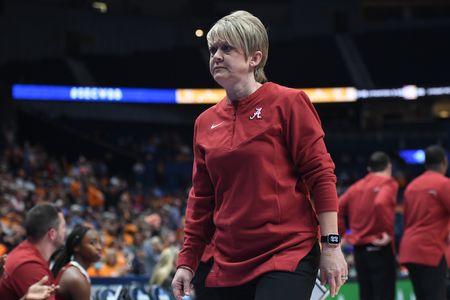
Women’s basketball coach Kristy Curry has concluded her 13-year tenure at Alabama to accept the head coaching position at South Florida, both universities confirmed Tuesday.
South Florida’s Athletics CEO Rob Higgins praised the hiring, describing Curry as “a proven winner at the highest levels.”
“She has guided her teams to the NCAA championship game and built an exceptional resume that includes 16 20-win seasons and 21 postseason appearances over 27 years as a head coach,” Higgins stated. “I’m incredibly excited about the future of South Florida women’s basketball under her leadership.”
The decision marks an unexpected career shift for the 59-year-old Curry, who has exclusively coached at major conference programs throughout her career, including Purdue from 1999-2006, Texas Tech from 2006-13, and most recently Alabama. Her move to the American Conference represents a departure from high-major basketball.
South Florida previously enjoyed consistent NCAA Tournament success under Jose Fernandez during his 25-year leadership before he departed to coach the WNBA’s Dallas Wings in 2025. Michele Woods-Baxter filled the interim role for the 2025-26 season, leading the Bulls to a 20-12 record and 13-5 conference mark, though they failed to secure a tournament berth.
“I would like to thank Rob Higgins for the tremendous opportunity to lead a proud South Florida women’s basketball program,” Curry expressed in her statement. “A strong foundation is in place, and I look forward to building on it as we pursue conference championships and NCAA Tournament success. Rob and the University’s commitment to competing at the highest level—along with the clear vision and alignment at USF—are truly exceptional. I can’t wait to meet Bulls Nation and experience a rocking Yuengling Center.”
Alabama Athletic Director Greg Byrne acknowledged Curry’s departure, stating she performed “a commendable job” during her time with the program.
“We appreciated her contributions and wish her and her family well moving forward,” Byrne commented. “As we begin a national search for our next head coach, Alabama athletics remains committed to the continued growth and investment in women’s basketball.”
Under Curry’s guidance, Alabama secured four consecutive NCAA Tournament appearances and reached the second round in three straight seasons. The Crimson Tide’s most recent campaign concluded Monday with a heartbreaking 69-68 defeat to third-seeded Louisville in the Round of 32, despite entering as a sixth seed.
The program achieved a 24-11 overall record and 7-9 SEC conference mark this season. Alabama also earned AP Top 25 recognition for the second consecutive year, reaching as high as No. 21 in the rankings. Prior to Curry’s arrival, the program hadn’t appeared in the polls since the 1998-99 season.
Curry brings an impressive 554-322 career coaching record to South Florida. Her most notable achievement came at Purdue in 2001, when she guided the Boilermakers to the Final Four and championship game, where they defeated Missouri State before falling 68-66 to Notre Dame for the national title.
SALISBURY, Md. – Salisbury University’s highly-ranked men’s lacrosse squad experienced a disappointing defeat on Tuesday, losing 14-10 to Williams College at Sea Gull Stadium.
The loss brought an end to the Sea Gulls’ impressive four-game winning streak and marked a tough afternoon for the fifth-ranked team on their home turf.
Despite entering the matchup with strong momentum from their recent victories, Salisbury was unable to maintain their winning ways against the visiting Ephs in what proved to be a high-scoring affair.
Golden State Warriors guard Moses Moody’s season has come to an abrupt end following a devastating knee injury that occurred during Monday night’s 137-131 overtime victory.
Team officials announced Tuesday that the 23-year-old player suffered a torn patellar tendon in his left knee and will undergo surgical repair later this week. Medical imaging confirmed the extent of the damage after Moody collapsed during the game’s final moments.
The injury happened with less than a minute remaining in overtime as Moody attempted what appeared to be an easy dunk following a steal from Cooper Flagg. His knee gave way beneath him, sending him crashing to the floor where he remained in visible pain for several minutes before medical staff transported him from the arena on a stretcher. Despite his obvious distress, Moody managed to acknowledge the crowd with a wave as he was wheeled away.
The shocking scene left players from both teams, coaching staff, and spectators stunned into silence for the remainder of the contest.
This season marked a career year for Moody, who was posting personal-best averages of 12.1 points, 3.3 rebounds, 1.6 assists and 1.0 steals across 25.7 minutes per game. Monday’s performance was particularly impressive, as he had just returned from a 10-game absence due to a sprained right wrist and delivered 23 points along with three crucial steals against Flagg.
His defensive pressure proved pivotal in the fourth quarter and overtime, with his first two steals sparking an 11-0 Warriors run that broke a deadlock at the start of the final period.
Head coach Steve Kerr praised his player’s character and contribution following the victory, despite the somber circumstances.
“Mo is such a great human being, great teammate, wonderful guy to coach,” Kerr commented afterward. “Puts in the work every day. And was brilliant, by the way. Played so well defensively, changed the game for us with his ball pressure and knocked down big shots. So great to finally have him back. And then for that to happen, you’re just praying that it’s not too serious, but it sure looked serious.”
The arena atmosphere remained subdued throughout the game’s final minute, with Golden State managing just one point in the closing seconds.
Kerr noted the visible impact the injury had on everyone present, including the opposing team.
“I saw the looks on the Mavericks’ faces,” Kerr observed. “Everybody on the floor was just horrified. Players care about players. They know how fragile this business is and how short their careers are and how injuries can happen and can be catastrophic. We don’t know what it is yet. We’re just hoping for the best.”
The Warriors are currently positioned for the Western Conference play-in tournament while also monitoring the recovery status of star player Stephen Curry, who is dealing with his own right knee injury. The team previously lost Jimmy Butler for the remainder of the season due to a knee injury requiring ACL surgery.
BENGALURU, India — A massive $1.78 billion sale has been finalized for the defending Indian Premier League cricket champions, with Royal Challengers Bengaluru set to change hands to an international group of investors.
The purchasing group includes major players from both India and the United States: the Aditya Birla Group, The Times of India Group, sports investment company Bolt Ventures led by David Blitzer, and American investment giant Blackstone.
This consortium will acquire both the men’s cricket team and the franchise’s Women’s Premier League squad from current owner United Spirits Limited.
Tuesday’s announcement comes just four days ahead of RCB’s first match as they attempt to repeat as IPL champions.
The transaction still requires final authorization from the Board of Control for Cricket in India along with other governing bodies.
As one of the IPL’s founding eight franchises, Royal Challengers Bengaluru features Indian cricket superstar Virat Kohli on its current roster.
Two young Canadian aviators who lost their lives when their passenger jet struck a fire truck during landing at LaGuardia Airport have been identified as ambitious pilots who had pursued their flying dreams since childhood.
The victims were Mackenzie Gunther and Antoine Forrest, who were at the controls of the Air Canada aircraft arriving from Montreal when the fatal collision occurred on Sunday. While authorities have not yet released official identification, family members speaking to The Associated Press and an educational institution confirmed who the men were.
Approximately 40 individuals among the 70 passengers and crew aboard the regional aircraft, plus two fire truck occupants, required hospital treatment following the crash, with several suffering severe injuries. Medical facilities discharged most patients by Monday morning, according to officials.
“These were two young men at the start of their careers,” FAA Administrator Brian Bedford told reporters Monday. “It’s an absolute tragedy that we’re sitting here with their loss.”
Federal authorities are investigating what caused the accident. Officials revealed Tuesday that runway alert systems did not activate before the collision, and they are examining air traffic control procedures and how controllers managed simultaneous operations during a late-night emergency involving a separate aircraft. The incident happened amid widespread airport disruptions caused by a partial federal government shutdown.
Family members have shared details about both aviators.
Jeannette Gagnier, who served as a grandmother figure to Antoine Forest, confirmed his identity to the AP. She said Forest had harbored pilot aspirations from an early age. His professional profile indicated five years of experience with two different airlines.
Forest’s social media indicated he hailed from Coteau-du-Lac, a small community in southwestern Quebec. The town’s mayor, Andrée Brosseau, expressed sympathy for Forest’s family in a Tuesday statement translated from French.
“Antoine was one of our own. In a community like ours, everyone knows someone who knew him. His passing represents an immense loss for our entire community,” Brosseau wrote.
Forest’s brother, Cédric, posted a childhood photograph of the siblings on social media. “Have a safe flight, my brother! Oh yes, we’ve often heard that phrase, but this time will be the last,” he wrote on Facebook. “You were coming and going in the wind, always full of new projects in mind. Gone again in the wind too soon to say goodbye I love you brother you can leave with your head held high.”
A woman identifying herself as Forest’s girlfriend, also a pilot, shared a couple’s photo on her Facebook page Tuesday with the caption “the love of my life.”
Seneca Polytechnic in Toronto announced Tuesday that Mackenzie Gunther completed their Honors Bachelor of Aviation Technology degree program in 2023.
Following graduation, Gunther immediately entered the Jazz Aviation Pathways Program, Air Canada’s pilot training initiative. The aircraft involved in Tuesday’s crash was a Jazz Aviation plane operating under Air Canada’s banner.
“Seneca sends our deepest condolences to Mr. Gunther’s family and friends, and to his former colleagues and professors. He will be deeply missed,” the institution stated.
The college lowered its flags to half-mast Tuesday in Gunther’s memory.
Observers have called it remarkable that casualties weren’t more extensive. Passenger Clément Lelièvre praised Gunther and Forest’s “incredible reflexes” for preserving his life and others aboard. The pilots applied maximum braking power immediately upon touchdown, he reported.
HONOLULU (AP) — Assessment teams started examining flood damage Tuesday following an unexpected deluge that turned streets into rushing rivers in a Honolulu-area neighborhood — marking another chapter in two weeks of devastating storms that have battered Hawaii.
Communities along Oahu’s North Shore, renowned for world-class surfing waves, were still recovering from Hawaii’s most destructive flooding in 20 years when Monday’s storm dumped inches of rainfall on the island’s southern region. Muddy brown waters cascaded down Manoa Valley streets just miles from downtown Honolulu, carrying away vehicles and inundating large sections of the community.
“I was shocked to see how much flash flooding there was in my area,” said resident Andrew Phomsouvanh, who captured footage of roadways transformed into rushing waterways. “The water just keeps coming.”
Natalie Aczon had stepped into a pharmacy Monday to collect her mother’s prescription. Within 15 minutes of leaving the store, water was thundering down the road beside the shopping plaza.
“People came running out from Longs and one of the guys actually said, ‘That’s my white car.’ And it had elevated,” she said.
Monday’s intense rainfall caught even National Weather Service forecasters by surprise. While they anticipated that remaining instability from a strong winter weather system known as a “Kona low” might produce additional precipitation, their computer models struggle to predict moisture levels in such systems, explained forecaster Cole Evans.
“When you think it’s over it’s not quite over,” he said Tuesday.
The storm system produced rainfall rates of 2 to 4 inches per hour in a very concentrated area: A measurement station in the valley’s upper reaches recorded 6 inches of rain, while the nearby airport received barely one-hundredth of an inch.
Evans reported the Kona low was shifting eastward and shouldn’t create additional intense rainfall like Monday’s event. Weather officials issued a flash flood warning for eastern Maui.
No fatalities or major injuries were immediately reported, though officials confirmed hundreds of North Shore homes sustained damage from the previous week’s flooding, which occurred when heavy rains saturated ground already soaked from an earlier winter storm.
Rescue teams saved more than 230 individuals. The floodwaters displaced homes from their foundations, swept vehicles from parking areas, and coated walls, floors, and countertops with thick red volcanic sediment.
Emergency evacuation orders affected 5,500 residents north of Honolulu, with some people escaping on surfboards through waist-deep and chest-high waters.
Agricultural operations statewide reported damage exceeding $9.4 million as of Monday, based on assessments by Agriculture Stewardship Hawaii, the Hawaii Farm Bureau, and partner organizations.
Prior to Monday’s storm, Gov. Josh Green estimated total storm costs could exceed $1 billion, encompassing damage to aviation facilities, educational institutions, transportation infrastructure, residential properties, and a Maui medical facility in Kula. He characterized it as the state’s most severe flooding event since 2004, when Manoa floods submerged homes and a University of Hawaii library.
Green’s administration announced Tuesday that a federal major disaster declaration request had been submitted to the Trump administration.
Molly Pierce, representing the Oahu Emergency Management Agency, noted that alongside volunteers and government workers conducting cleanup operations, a private contractor had begun collecting, organizing, and hauling away massive debris accumulations.
She described the weather pattern as “extremely unusual” while expressing cautious hope Tuesday that the rainfall was finally subsiding.
“Most of us have not seen something that just keeps going like this,” Pierce said. “We feel like we keep getting punched down. But we’ll keep getting back up.”
Climate scientists indicate that intense and frequent heavy rainfall events in Hawaii have become more common due to human-driven climate change.
SALISBURY, Md. – In a dramatic finish at Donnie Williams Sea Gull Baseball Stadium, Salisbury University’s seventh-ranked baseball squad claimed a thrilling 7-6 victory over Gwynedd Mercy on Tuesday afternoon.
The Sea Gulls secured the win in walk-off fashion when Mike Delgaudio stepped up as a pinch-hitter and was struck by a pitch with the bases loaded, forcing home the winning run against the Griffins.
The nail-biting conclusion capped off what proved to be a closely contested matchup between the two teams, with Salisbury managing to edge out their opponents by a single run in front of their home crowd.
The University of Delaware women’s golf squad captured their second tournament championship of the season after securing a commanding five-stroke victory at The National Invitational in Hermitage, Tennessee.
The Blue Hens dominated the competition at Hermitage Golf Course, with three team members earning spots among the top finishers. Kate Roberts finished as the individual runner-up, while teammates Hyunji Kim and Marissa Malosh shared third place honors.
Delaware posted a combined three-round total of 882 strokes, finishing 18-over par on the challenging 6,186-yard, par-72 course. The tournament, which was hosted by Lipscomb University, featured 16 competing teams.
The victory continues a strong season for the Fightin’ Blue Hens women’s golf program, marking their second tournament title this year.
President Donald Trump’s recent statements about ongoing negotiations with Iranian officials have sparked anxiety among many Iranians who fear the Islamic Republic could survive under new leadership rather than face complete overthrow.
Trump referenced discussions with a “senior Iranian official” that multiple news sources have identified as Parliament Speaker Mohammad Bagher Ghalibaf, leading to widespread concern that Washington might settle for modified leadership instead of full regime change.
Iranian government officials have publicly rejected what they call a “deception operation” designed to position Ghalibaf as America’s chosen leader for the country. They’ve also cautioned that any ground invasion or seizure of Persian Gulf islands would trigger serious regional repercussions.
Trump has characterized these developments as equivalent to regime change in Iran, a description that troubles many Islamic Republic opponents who want complete governmental overthrow.
His Monday comments disturbed portions of the opposition, especially those who had supported Israeli and American military intervention as “humanitarian intervention,” following the lead of Reza Pahlavi. However, other opposition members view Trump’s remarks as motivation to strengthen domestic grassroots resistance movements, regardless of whether Israel and the United States choose negotiation or escalation with Tehran.
On Tuesday, Trump repeated that his administration is conducting negotiations with Iran, stating the Islamic Republic desires an agreement and expects to receive a “gift” for such a deal. He emphasized that America has already won this conflict and stressed that Washington is negotiating with “wise” Iranian leaders. Trump again described this situation as equivalent to Iranian “regime change.”
A Tehran-based international relations professor told The Media Line Tuesday evening that Washington clearly wants to avoid lengthy, grinding warfare, with Trump eager to claim political victory quickly. In this context, someone like Ghalibaf—who could maintain internal power structures while moving the system away from collapse caused by Western non-cooperation—might represent a “win-win” solution.
However, the analyst observed that Trump’s “carrot-and-stick” strategy likely won’t end here, since the Islamic Republic’s economic and military strength hasn’t been sufficiently weakened to create decisive political transformation.
Throughout this conflict, Trump has repeatedly indicated he has specific individuals in mind for Iran, drawing parallels to the Venezuela approach. Notably, American officials’ circulated lists of Iranian figures being sought didn’t include Ghalibaf—or more surprisingly, Esmail Qaani, the elusive Quds Force commander—suggesting the intended negotiating partner could be a high-ranking Islamic Revolutionary Guard Corps figure with political credentials, like the parliamentary speaker.
Trump’s description of his contact person, namely Ghalibaf, as “respected” contrasts sharply with his reputation among numerous Iranians. Critics view him as among the political establishment’s most controversial figures, citing widespread corruption allegations and his security service background.
His service as a senior IRGC commander and later police chief occurred during the brutal 1999 student protest suppression, events the article’s author witnessed personally at Tehran University dormitories during the crackdown by paramilitary forces, police, Basij units, IRGC personnel, and special security forces connected to the leadership.
Ghalibaf’s close relationship with Ali Khamenei—both have Mashhad origins—and his strong connections to Mojtaba Khamenei have long strengthened his position within the ruling establishment. Despite this support, financial misconduct allegations, particularly from his Tehran mayoral tenure, combined with his security record, have hurt his electoral success. He came last in the 2005 presidential race, finished second in 2013 with approximately 16.5% of votes, and withdrew in 2017 to support Ebrahim Raisi.
Following multiple presidential losses, he joined parliament, becoming speaker after low-participation elections. In the 2024 parliamentary election, he received only about 447,000 votes from roughly eight million eligible voters in the Greater Tehran district.
Ghalibaf’s career began with his early connection to Khamenei in Mashhad. After the Islamic Republic’s establishment, he rapidly rose within the IRGC, eventually leading Khatam al-Anbiya, the Guards’ influential engineering and economic division, which expanded throughout Iran and into regional and international markets. He later commanded the IRGC Air Force and received Airbus training in France. Named police chief in 2000, he subsequently entered politics, serving as Tehran’s mayor for twelve years before joining parliament.
With key IRGC commanders killed and Ali Larijani’s death—widely considered a pragmatic system strategist—some analysts believe conditions may now support Ghalibaf’s rise. As more “moderate” figures like Masoud Pezeshkian face increasing marginalization and the IRGC strengthens control, he could become a central power mediator.
Nevertheless, his support base remains narrow beyond the IRGC and portions of the clerical establishment. Among regime supporters, he’s often seen as less popular than Saeed Jalili, the Supreme Leader’s representative on the Supreme National Security Council, who conflicts with both Pezeshkian and Ghalibaf.
Claims of direct American contact with Ghalibaf remain unverified, while confirmed diplomatic engagement appears limited to Iran’s Foreign Ministry and indirect channels. Iranian officials, including Ghalibaf, have denied any planned meetings. The IRGC-linked Fars News Agency has characterized the rumors as efforts to increase internal divisions.
Meanwhile, the White House has confirmed that Pakistan’s army chief Asim Munir and Prime Minister Shehbaz Sharif have expressed willingness to facilitate high-level Washington-Tehran discussions. Iranian state media reiterated Tuesday that reports of potential Ghalibaf-US official meetings aim both to harm his reputation and enable his political removal, while serving broader deception strategies before possible escalation.
Simultaneously, the United States reportedly is deploying additional regional forces, including Marine units, and according to some sources, the Pentagon considers sending 82nd Airborne Division elements. Such forces could support operations securing the Strait of Hormuz or even capturing strategic islands like Kharg—scenarios representing dramatic conflict escalation.
The Media Line previously reported, citing sources and an alleged audio recording attributed to a Tehran Basij commander, that regime forces are preparing for possible ground combat extending into the capital.
While many capital homes have sustained damage and hundreds of thousands have been displaced, people increasingly worry about escalating warfare and potential disruption of water, electricity, and gas services. Even so, many residents say they don’t expect the war to conclude with the Islamic Republic surviving in power.
An Isfahan resident told The Media Line Tuesday that if reports of a Ghalibaf deal proved accurate, many Iranians would feel “deceived and abandoned—moving from one dictatorship to another.” He added that after thousands of civilian casualties and extensive infrastructure damage, any outcome short of fundamental political change, beyond leadership reshuffling within the system, would provide little concrete benefit to ordinary citizens.
Multiple missile attacks across Israel on Tuesday resulted in the death of one woman and injuries to several civilians, including young children, as projectiles struck populated areas throughout the country.
Emergency personnel reported that a woman in her 30s lost her life when a Hezbollah rocket hit the Mahanayim Junction area in northern Israel. Medical teams from Magen David Adom declared her deceased at the location while providing care to two additional victims who sustained minor shrapnel wounds.
Following the deadly attack, warning sirens continued to blare throughout northern regions. In Safed, two individuals received minor injuries from flying glass fragments when rockets impacted the vicinity.
Central Israel experienced its own missile attack when a projectile equipped with a fragmenting warhead hit Bnei Brak, evading interception systems according to preliminary assessments. Medical personnel reported that a 23-year-old man suffered moderate shrapnel injuries, while six additional people received treatment for minor wounds, including a baby and a seven-year-old child.
The Bnei Brak strike resulted in significant property damage, including a partially collapsed balcony, while the neighboring community of Rosh HaAyin saw a vehicle flipped over from the blast effects.
In southern Israel, debris from an intercepted Iranian missile near Nevatim injured a physician from Soroka Medical Center in Beersheba when fragments landed close to his residence.
Medical officials at Soroka Medical Center confirmed that Dr. Asra Abu Rafa, a staff doctor in his 30s, remained in moderate condition following the incident. Hospital representatives noted that his spouse and infant daughter were stable, while the facility also provided care for 17 individuals experiencing severe anxiety reactions from the assault.
Response teams remained active throughout northern, central, and southern Israeli territories as projectile attacks continued to target civilian areas.
Lebanon’s foreign ministry announced Tuesday that it has declared Iran’s ambassador persona non grata and demanded his departure by Sunday, accusing Tehran of overstepping diplomatic boundaries through its military involvement with Hezbollah, according to reports from Alsharq al-Awsat.
Ministry officials called in Iran’s charge d’affaires in Beirut to deliver the formal notification regarding Ambassador Mohammad Reza Raouf Sheibani. The ministry stated: “the Lebanese state’s decision to withdraw approval of the accreditation of the appointed Iranian ambassador, Mohammad Reza Raouf Sheibani, and declare him persona non grata, demanding that he leave Lebanese territory no later than next Sunday.”
The diplomatic rift stems from Lebanese government claims that Iran’s Revolutionary Guard Corps (IRGC) has been orchestrating Hezbollah’s military campaign against Israel, which Lebanese officials say violates proper diplomatic conduct between the nations.
Additionally, Lebanon has recalled its own ambassador from Tehran for discussions regarding what the foreign ministry characterized as Iran’s breach of diplomatic protocols and standard international practices.
Lebanese government officials have grown more critical of Hezbollah’s role in intensifying regional tensions, particularly pointing to the group’s rocket attacks on Israel launched March 2nd, which pulled Lebanon further into the broader conflict. These attacks occurred after Iran’s supreme leader Ali Khamenei was killed early in the fighting.
The Lebanese government has also implemented broader measures targeting Iranian citizens, previously directing Iranian nationals to depart the country.
Israeli forces have acknowledged conducting strikes in Lebanon specifically targeting IRGC operatives working alongside Hezbollah forces within Lebanese territory.
Emergency responders confirmed Tuesday that a woman in her thirties lost her life during rocket attacks launched by Hezbollah targeting northern Israel, while multiple other individuals sustained injuries from ongoing missile strikes throughout the nation.
Emergency medical personnel reported that the fatal casualty occurred when rockets struck the Mahanayim Junction area in Israel’s northern region. Magen David Adom emergency teams declared the woman deceased at the location and provided medical care to two other individuals who suffered minor shrapnel wounds.
Following the deadly attack, warning sirens continued to blare throughout northern areas, alerting residents to incoming projectiles. Two additional people received minor injuries from flying glass fragments when rockets hit Safed.
A separate attack in Israel’s southern territory wounded Dr. Asra Abu Rafa, a medical professional at Soroka Medical Center in Beersheba, when debris from intercepted Iranian missiles landed close to his residence in the Bedouin community of Alsira. The physician, who is in his thirties, had recently finished his hospital shift when the incident took place near Nevatim.
Medical officials at Soroka reported that Dr. Abu Rafa remains in moderate condition, while his spouse and baby daughter are both doing well. The medical facility also confirmed it was providing care for 17 additional patients experiencing acute anxiety reactions from the attacks.
These attacks occurred during an ongoing barrage of rockets and missiles aimed at various locations, with emergency personnel actively responding to strike zones and casualties throughout both northern and southern areas.
Medical personnel and emergency teams continued operating in impacted regions, delivering care to wounded individuals and evaluating additional locations hit during the bombardment.
The West African nation of Mauritania has implemented new restrictions on government vehicle usage as officials work to combat rising energy costs connected to ongoing Middle East conflicts.
The country has prohibited the use of all government-owned SUVs and placed limitations on other official vehicles in an effort to reduce fuel consumption and protect domestic energy supplies from global market fluctuations.
Economic Affairs and Development Minister Abdallah Ould Souleymane Ould Cheikh-Sidia clarified that the restrictions exclude military and security vehicles, ambulances, and other emergency medical transportation. He noted that remaining government light vehicles will only be used for critical administrative purposes as part of broader efforts to minimize unnecessary fuel usage during uncertain global market conditions.
During the same news briefing, Energy and Petroleum Minister Mohamed Ould Mohamed Malainine Ould Khaled issued warnings to fuel retailers about price manipulation, stating that gas stations found violating regulations would face consequences. These warnings appear designed to prevent panic-induced price hikes and maintain public trust as officials tighten oversight of fuel distribution systems.
Government spokesperson Houssein Ould Medou revealed that authorities have confiscated approximately 550 metric tons of fuel in recent weeks and temporarily suspended exports to some neighboring nations as a protective measure. He explained that the government has also increased efforts to establish strategic stockpiles of both fuel and food supplies in preparation for potential supply chain disruptions or additional price increases in global markets.
These actions mirror similar responses occurring across multiple regions worldwide. Since early March, when conflicts involving Iran escalated, governments and businesses from Asia to Africa have implemented emergency measures to address supply shortages, shipping interruptions, and inflation concerns. The ongoing conflict has driven energy prices upward globally, compelling many import-dependent nations to reevaluate fuel policies, preserve supplies, and prepare for potentially extended periods of instability.
For Mauritania specifically, these challenges are particularly significant because the country remains susceptible to fluctuations in international commodity prices despite efforts to develop its domestic energy capabilities. While Mauritania has worked to improve its long-term energy independence, it continues to face vulnerability to external market disruptions that can rapidly increase costs for transportation, food, and household expenses.
The government’s recent measures indicate officials are choosing to act preemptively rather than waiting for market conditions to deteriorate further. Through reducing public sector fuel consumption, preventing price speculation, and building reserve supplies, Mauritania aims to protect its domestic market from a crisis primarily caused by events occurring far from its borders.
A jury in New Mexico has delivered a significant verdict against social media giant Meta, determining that the company’s practices have damaged children’s mental health and violated state consumer protection laws.
The jurors concluded that Meta participated in what they called “unconscionable” business practices, deliberately exploiting young users’ vulnerabilities and lack of experience. The ruling found that Meta committed thousands of separate infractions, with each violation contributing to a massive $375 million financial penalty against the company.
During the proceedings, jurors were shown a recorded deposition from Meta’s Founder and CEO Mark Zuckerberg on March 4 in Santa Fe, New Mexico, as part of the evidence presented in the case.
This landmark decision marks a significant legal victory for child safety advocates and represents one of the most substantial financial penalties imposed on a major social media platform for alleged harm to minors. The verdict specifically focused on how Meta’s business model and platform design may have negatively impacted the mental health and overall safety of children using their services.
National Football League officials are developing backup plans for potential referee labor disputes in 2026, introducing proposed rule modifications that would grant New York’s replay center broader authority to fix “clear and obvious” officiating errors during any work stoppage.
League competition committee members announced their recommended rule adjustments on Tuesday, featuring minor modifications to kickoff regulations and expanded replay center powers to remove players for egregious conduct on unpunished plays.
Team owners will review these proposals during next week’s Arizona league meetings, requiring approval from a minimum of 24 out of 32 franchises for implementation.
The most significant recommendation addresses potential labor disputes with officials, as the current collective bargaining agreement between the NFL and NFL Referees Association concludes on May 31.
During 2012’s opening three weeks, the league employed substitute officials who made numerous errors and questionable decisions. The situation reached a breaking point during a Monday night matchup between Green Bay and Seattle in Week 3, when the Seahawks secured victory on a controversial touchdown reception dubbed the “Fail Mary.” League officials later acknowledged the score should have been nullified due to offensive pass interference.
Public criticism escalated to include President Barack Obama, who urged an end to the lockout. The dispute concluded days later, followed by an official fan apology from Commissioner Roger Goodell.
The competition committee’s new framework would empower New York’s replay center to guide field officials on overlooked roughing the passer or intentional grounding violations, plus any conduct warranting ejection had penalties been assessed.
Replay officials could also reverse calls involving illegal contact, face mask violations, roughing the passer, horse-collar tackles and intentional grounding. They would additionally assist in overturning pass interference calls when clear evidence shows “advertent tangling of feet when both players were playing the ball or neither player was playing the ball.”
During the final two minutes of each half or throughout overtime, replay centers would gain authority to reverse or assess flags for unnecessary roughness or unsportsmanlike conduct involving punches, forearms or kicks, along with leaping or leverage violations on special teams plays.
Replay officials could also address incorrect decisions regarding running into or roughing kickers.
Another committee recommendation would permit New York’s officiating center to eject players for flagrant or non-football conduct even without on-field penalty calls. Previous regulations only allowed replay center intervention when field officials had already thrown flags.
This change follows an incident involving Pittsburgh receiver DK Metcalf, who avoided ejection during a Detroit game last season after confronting a heckling fan. Since field officials missed the play when Metcalf struck at the fan, replay officials couldn’t remove him. The league later imposed a two-game suspension, but Metcalf continued playing at the time.
The committee also suggested several adjustments to kickoff rules entering their third season, including permitting teams to declare onside kicks regardless of game situation. The original 2024 rule restricted onside kicks to fourth quarter trailing situations. Last year’s modification allowed trailing teams to declare onside kicks anytime, while the new proposal removes all scoring restrictions.
Additional kickoff changes include minor adjustments to receiving team formations and modifications to touchback rules on kicks from the 50-yard line following personal foul penalties.
Under previous rules, kicking teams were encouraged to kick out of bounds from the 50 to give receiving teams the ball at the 25 rather than the 35 for touchbacks. The new proposal would spot touchbacks from 50-yard line kicks at the 20.
Several off-field bylaw changes were also proposed.
The committee recommended granting the league flexibility to modify roster cutdown dates, currently scheduled for Tuesday following final preseason games, to accommodate international regular season games. The Los Angeles Rams and San Francisco 49ers are scheduled to open the season in Australia, giving the league options to adjust dates based on travel schedules.
Another proposal would designate Labor Day weekend Saturday and Sunday as business days, allowing the 24-hour waiver period for players to take effect on those days instead of waiting until Monday.
The committee also suggested allowing players who began training camp on the physically unable to perform list and remained there after roster cuts to open their 21-day practice window after Week 2 of the regular season. These players still cannot join active rosters until missing four games but could practice earlier.
Owners will also consider two team-submitted proposals from last week, including Cleveland’s request to extend draft pick trading from three to five years in advance, and Pittsburgh’s proposal to make permanent the five video or phone calls with potential free agents during the negotiating window before the league year begins. The communication rule was tested on a trial basis this year.
Amazon has completed its purchase of Fauna Robotics, a startup that recently launched a social humanoid robot called Sprout just weeks ago. The acquisition comes as the tech giant continues expanding its robotics portfolio beyond warehouse automation.
While Amazon already operates more than one million robots in its fulfillment centers for heavy-duty tasks, the Sprout robot represents a shift toward consumer-friendly robotics focused on entertainment and social interaction rather than industrial work. The compact robot stands just 1.5 feet tall and features a distinctive rectangular head design.
Fauna Robotics CEO Rob Cochran announced the news on social media, stating he was “incredibly excited to share that Fauna Robotics has officially joined the Amazon family.” He confirmed the New York-based startup will continue operating under the name “Fauna Robotics, an Amazon company.”
Neither company revealed the purchase price or financial details of the transaction.
According to Amazon, Fauna’s founding team and staff will relocate to Amazon’s New York operations, where they’ll focus on “new ways to make our customers’ lives better and easier.”
Fauna launched its flagship product this past January, positioning it as a development platform for researchers rather than just a consumer robot. The company has been selling the technology to university labs and corporate research facilities studying home robotics applications, with Disney among its early clients.
Priced at $50,000, the Sprout robot lacks heavy lifting capabilities but excels at entertainment functions. It can perform popular dances like the Twist and the Floss, pick up small items such as toy blocks and stuffed animals, and even stand up from furniture to walk around.
This acquisition represents Amazon’s continued push into home robotics, building on its existing Alexa voice assistant technology already present in millions of households. However, the company has faced setbacks in this sector recently.
Amazon abandoned its planned acquisition of Roomba manufacturer iRobot last year after encountering regulatory opposition from both European and American authorities.
WASHINGTON — A federal prosecutor admitted during a closed-door court session that the Justice Department’s probe into a $2.5 billion Federal Reserve renovation project has uncovered no criminal wrongdoing, newly released hearing transcripts reveal.
Assistant U.S. Attorney Andrew Massucco made this acknowledgment during a March 3 hearing that was sealed from public view, court documents show. Just over a week later, Chief Judge James Boasberg struck down government subpoenas targeting the Federal Reserve, delivering a major setback to the ongoing investigation.
In his March 11 decision, Boasberg stated that prosecutors had presented “essentially zero evidence” suggesting Fed Chair Jerome Powell committed any crimes. The Obama-appointed judge also criticized the government’s reasoning for the subpoenas as “thin and unsubstantiated.”
During the sealed proceeding, Judge Boasberg pressed the prosecutor from U.S. Attorney Jeanine Pirro’s office to identify specific evidence of fraudulent activity or criminal behavior connected to Powell’s congressional testimony about the renovation or the construction project itself.
“So what false statements did (Powell) make before Congress?” Boasberg questioned Massucco, the transcript indicates.
“Well, we don’t know is my first answer,” Massucco, who heads the criminal division in Pirro’s Washington office, responded. “However, there are certain areas that he addressed that caused concern.”
“Okay,” the judge pressed further. “And then what evidence is there of fraud or criminal misconduct in relation to the renovations?”
“Again, we do not know at this time. However, there are 1.2 billion reasons for us to look into it,” Massucco answered, alluding to the project’s budget overruns.
The ongoing investigation has stalled Senate confirmation proceedings for Kevin Warsh, President Donald Trump’s nominee to succeed Powell when his chairmanship expires May 15. Powell may continue serving beyond that deadline if no replacement receives approval.
“A mountain of evidence suggests that the Government served these subpoenas on the Board to pressure its Chair into voting for lower interest rates or resigning,” the judge stated in his ruling.
During the closed hearing, Massucco maintained that no evidence exists showing prosecutors’ motivation for the grand jury subpoenas “is anything other than trying to find the truth of the matter.”
“And we have a right to do that,” he stated.
Robert Hur, legal counsel representing the Federal Reserve’s board of governors during the March 3 session, argued the subpoenas constitute a pressure tactic supporting Trump’s campaign for reduced interest rates.
“He clearly has very strong political motives to try to get lower interest rates, but because of the safeguards that have been erected by Congress around the Federal Reserve’s independence when it comes to setting monetary policy, he can’t get it,” Hur explained to the court.
Pirro, the former Fox News personality chosen by Trump to head the country’s largest U.S. Attorney’s office, criticized Boasberg as an “activist judge” and accused him of having “neutered the grand jury’s ability to investigate crime.” She announced plans to challenge his ruling.
“This is wrong and it is without legal authority,” she declared during a press briefing earlier this month.
A Federal Reserve representative declined to provide comment Tuesday.
Pirro’s office focused their investigation on Powell’s brief remarks last June before the Senate Banking Committee, where lawmakers questioned him about budget overruns in the Fed’s comprehensive building renovations. Recent Fed estimates indicate the current projected cost of $2.5 billion exceeds a 2022 projection of $1.9 billion by approximately $600 million.
In his decision, Boasberg noted that the Justice Department declined his proposal allowing the government to present additional evidence against Powell privately to him, avoiding disclosure to the Fed or Powell.
“The Court is thus left with no credible reason to think that the Government is investigating suspicious facts as opposed to targeting a disfavored official,” the judge concluded.
The artificial intelligence company OpenAI announced Tuesday it’s discontinuing its video-making application Sora, which became a sensation last autumn but triggered widespread anxiety about fake content creation.
In a short announcement posted on social media Tuesday, OpenAI revealed it was “saying goodbye to the Sora app” and promised to provide details later about helping users save their existing creations.
“What you made with Sora mattered, and we know this news is disappointing,” the company stated.
The creators of ChatGPT launched Sora in September, hoping to compete for the viewership and advertising revenue that short video platforms like TikTok, YouTube, and Meta’s Instagram and Facebook generate.
However, advocacy organizations, researchers, and technology experts increasingly voiced worries about allowing users to generate AI videos from simple text descriptions, warning this could lead to widespread creation of unauthorized intimate imagery and convincing fake videos mixed with less harmful artificial content.
The company had to take action against AI-generated content featuring celebrities and historical figures like Michael Jackson, Martin Luther King Jr., and Mister Rogers in bizarre scenarios, but only responded after family representatives and performers’ unions complained.
Disney, which partnered with OpenAI in 2023 to incorporate its characters into Sora, released a statement Tuesday saying it acknowledges “OpenAI’s decision to exit the video generation business and to shift its priorities elsewhere.”
“We appreciate the constructive collaboration between our teams and what we learned from it, and we will continue to engage with AI platforms to find new ways to meet fans where they are while responsibly embracing new technologies that respect IP and the rights of creators,” Disney’s statement continued.
TABRIZ, Iran (AP) — New Israeli military strikes targeted Iran during the fourth consecutive week of Middle East conflict, with no indication that hostilities are decreasing. A senior U.S. military official recommended that Iranian citizens continue seeking shelter as a safety precaution.
The strikes represent the latest escalation in the ongoing regional warfare that has persisted for nearly a month. Military tensions remain high across the region as the conflict continues to unfold.
This report includes photographic documentation compiled by Associated Press photo editors showing the impact of the recent attacks.
A major European pharmaceutical company revealed plans Tuesday to construct a massive drug manufacturing facility in the Atlanta metro area with a $2 billion investment.
UCB, the Belgium-based drugmaker experiencing rapid expansion, said the new facility will create approximately 330 positions when operational and serve as a cornerstone for expanding its American market presence.
“This decision reflects our confidence in UCB’s long-term growth and our deep-rooted commitment to the United States,” stated company CEO Jean-Christophe Tellier.
The pharmaceutical giant had previously announced in June its intentions to establish a new American manufacturing site while also expanding partnerships with U.S.-based contract manufacturers for drug production. UCB currently employs roughly 2,000 workers across the United States. The company has experienced impressive financial growth, with revenues climbing 26% to approach $9 billion (7.74 billion euros) in 2025. Company profits surged even more dramatically, jumping 46% to reach $1.81 billion (1.56 billion euros).
“The new biologics facility in Gwinnett County, Georgia, is designed to meet increasing demand and ensure patients receive reliable, timely access to vital treatments,” UCB executive Jacques Marbehant explained in a blog post.
The pharmaceutical company previously created well-known allergy medications Zyrtec and Xyzal. Today, UCB concentrates on developing treatments for neurological conditions and autoimmune disorders. The company’s current major success is Bimzelx, a medication used for treating autoimmune conditions such as psoriasis and inflammatory arthritis.
UCB plans to establish its manufacturing plant within a developing research park located on Gwinnett County’s eastern border, which local officials hope may eventually compete with North Carolina’s renowned Research Triangle Park. The company’s American headquarters operates from Smyrna, another Atlanta-area suburb.
The pharmaceutical manufacturer also highlighted the advantage of being near researchers at Georgia Tech in Atlanta and the University of Georgia in Athens. Officials from both institutions have been working to foster biomedical research and manufacturing development.
Construction and design phases are projected to span six to seven years. Gwinnett County representatives confirmed they have pledged $174 million in incentives, encompassing property tax reductions, waived fees, and infrastructure improvements to support positions expected to average more than $72,000 annually. The company may also receive millions in state income tax credits, equipment purchase sales tax exemptions, and state-funded job training programs.
British Prime Minister Keir Starmer held talks Tuesday evening with Saudi Arabia’s Crown Prince Mohammed bin Salman regarding the continuing Middle East crisis, according to a spokesperson from Downing Street.
During the conversation, Starmer expressed Britain’s backing of Saudi Arabia amid the U.S.-Israeli conflict with Iran and briefed the crown prince about additional UK defensive military equipment being sent to the region, the spokesperson reported.
“Iran’s ongoing attacks, including on critical national infrastructure, were appalling,” Starmer said.
The Prime Minister also addressed maritime security concerns, with Downing Street quoting Starmer as saying: “Following the UK-led joint statement last week, the UK was now working with partners on what a viable plan could look like to ensure the flow of goods through the key maritime route.”
FORT MYERS, Fla. – The University of Delaware men’s tennis squad launched their spring break road trip on a winning note, delivering a shutout victory against Florida Gulf Coast University with a final score of 4-0 on Tuesday.
The Blue Hens dominated the match in Fort Myers, Florida, demonstrating strong performance across all competing positions to secure the comprehensive victory over their hosts.
The shutout result marks a successful beginning to Delaware’s spring break competition schedule as the team continues their season away from home.
The University of Maryland Eastern Shore softball squad demonstrated resilience on the diamond, mounting a dramatic comeback in the final frame to earn a doubleheader split against Hampton University.
Facing the possibility of being swept on the road, the Hawks delivered when the pressure was highest, manufacturing crucial offensive production in the seventh inning of the nightcap to secure the victory.
The late-game heroics prevented what could have been a disappointing road trip, as UME managed to salvage one win from the twin bill despite dropping the opening contest.
The Hawks’ ability to come through with timely hitting in high-leverage situations proved to be the difference maker, allowing the team to return home with momentum intact after the competitive series.
Drivers using Route 16 in the Broadkill Road area should plan for potential delays this afternoon as Delaware Department of Transportation crews continue work operations in the vicinity.
The intermittent flagging activity is taking place along Broadkill Road between Jefferson Road and Coastal Highway (Route 1), with operations scheduled to wrap up by 3PM today.
Motorists are advised to allow extra travel time when using this stretch of roadway and to follow all traffic control devices and flagging personnel instructions for safe passage through the work zone.
UNITED NATIONS (AP) — The UN Security Council is considering a controversial resolution from Bahrain that would permit military intervention to ensure the Strait of Hormuz remains accessible for international shipping, though the measure is encountering resistance from several member nations, three diplomatic sources revealed.
The proposal, which The Associated Press reviewed on Tuesday, emerges as global leaders struggle to address Iran’s grip on the strategic waterway that has caused fuel costs to surge and poses risks to worldwide economic stability.
Under the draft resolution, nations or maritime coalitions would receive authorization to employ force to guarantee safe transit and “to repress, neutralize and deter attempts to close, obstruct or otherwise interfere with international navigation through the Strait of Hormuz.” The measure also calls on Iran to “immediately cease all attacks against merchant and commercial vessels” and halt interference with navigation freedom in the critical passage affecting global trade, energy supplies, and economic conditions.
A diplomatic source indicated the proposal underwent revisions Tuesday following objections from multiple nations about invoking Chapter Seven of the UN Charter, which empowers the Security Council to approve measures from economic sanctions to military force.
Bahrain serves as the Arab nation’s representative on the UN’s premier decision-making body and has joined other regional countries targeted by Iranian drone and missile strikes following US and Israeli attacks on Iran beginning February 28. While unclear whether the United States, currently holding the council’s rotating presidency, endorses the initiative, American envoy Mike Waltz has previously expressed preference for regional nations to lead such efforts.
Both China and Russia, permanent Security Council members with veto authority among the 15-nation body, reportedly oppose the current language, one diplomat confirmed.
A second council source revealed France submitted an alternative resolution Monday that avoids naming Iran specifically and would not invoke Chapter Seven provisions. The French proposal instead encourages all sides to avoid escalation and pursue diplomatic solutions. French UN representatives declined to comment on the matter.
The diplomatic sources requested anonymity to discuss confidential negotiations.
Given the disagreements, neither proposal appears likely to reach a vote this week. A previous Bahrain resolution condemning Iranian attacks on its soil gained overwhelming council backing two weeks earlier, with China and Russia choosing abstention.
Throughout the ongoing conflict, Iran has essentially blocked the Strait of Hormuz, which links the Persian Gulf to international waters, while claiming to permit safe transit for vessels from non-hostile nations. Approximately twenty percent of global oil supplies travel through this passage, but vessel attacks have virtually halted tanker movements.
The United States initially pursued diplomatic solutions to the Strait of Hormuz crisis last week when President Donald Trump proposed forming an international naval coalition to patrol the waterway. However, America’s key allies rejected the plan, prompting Trump to declare the US could proceed independently.
On Friday, Trump suggested other nations would need to assume responsibility as America considers withdrawing from the conflict. Hours afterward, he indicated the waterway would somehow “open itself.”
Good evening, Delmarva! We’re seeing a pleasant spring pattern settling in across our region tonight and into the rest of the week.
Tonight, expect mostly cloudy skies with temperatures dipping to a comfortable 34 degrees. Winds will be light and variable from the south at 0 to 5 mph, making for a calm evening across the peninsula.
Wednesday brings much brighter conditions as we’ll see partly sunny skies with temperatures climbing to a delightful 56 degrees – perfect weather for getting outside and enjoying the spring season! Wednesday night stays mild with mostly cloudy skies and lows around 46 degrees.
Looking ahead to Thursday, we’re in for a real treat with partly sunny skies and temperatures soaring to 70 degrees! It’s shaping up to be a beautiful day to spend time outdoors, whether you’re in Salisbury, Dover, or anywhere in between.
Overall, it’s a fantastic stretch of spring weather with no rain or storms in sight. Enjoy the warming trend, Delmarva – spring is definitely in the air! I’m your meteorologist wishing you a wonderful evening.
The University of Delaware softball program has announced their upcoming schedule featuring matchups against two opponents in the coming days.
The Blue Hens are preparing to welcome Villanova to their home field for what promises to be an exciting in-state rivalry contest. Following the home game, the team will pack their bags for a road trip to face Liberty University.
The dual schedule gives Delaware fans a chance to see their team in action at home before the Blue Hens test themselves in away game conditions. Both contests will be important as the team continues their season campaign.
Federal aviation officials are examining the circumstances behind a fatal runway accident at LaGuardia Airport in New York that claimed two lives and injured dozens more Sunday evening.
The tragedy unfolded at approximately 11:37 p.m. when an Air Canada regional aircraft returning from Montreal crashed into an airport emergency vehicle that was traversing the runway to investigate a reported strange smell from a different aircraft.
Sunday evening proved unusually hectic at LaGuardia due to flight disruptions. The airport processed almost 70 departures and arrivals past 10 p.m. — significantly exceeding the planned 31 operations, based on information from aviation data company Cirium. While no aircraft departed after 11:09 p.m., incoming flights continued landing at regular intervals despite misty and somewhat foggy weather conditions.
National Transportation Safety Board investigator Doug Brazy revealed Tuesday that air traffic controllers initially authorized the emergency vehicle to cross the runway approximately 20 seconds before impact. However, roughly 11 seconds afterward, a controller began urgently instructing the truck to halt. Whether the vehicle’s operator received these warnings remains uncertain.
Tower recordings later documented a controller stating: “I messed up.”
The devastating collision destroyed the aircraft’s front section, completely severing the nose, while overturning the damaged fire truck. Passengers collaborated to force open emergency exits, evacuate via the aircraft’s wings, and assist fellow travelers to safety.
The flight’s captain and first officer were the sole confirmed deaths among approximately 66 individuals aboard the Jazz Aviation flight operating for Air Canada. While authorities have not officially disclosed the victims’ identities, family members have identified one deceased pilot as Antoine Forest.
Medical facilities treated roughly 40 individuals, with several sustaining severe injuries. Two emergency personnel from the fire truck also required medical attention.
While most injured passengers received prompt discharge, some remained under hospital care, including a flight attendant who was ejected from the aircraft and discovered still secured in her seat several yards from the wreckage, her daughter reported.
Federal investigators acknowledge they lack answers regarding the accident’s root cause. Their examination will include analyzing cockpit voice recordings and flight data devices, conducting interviews with air traffic personnel and firefighters, and reviewing factors ranging from control tower staffing levels to the fire truck’s absence of transponder equipment that could have interfaced with LaGuardia’s runway safety alert system, according to NTSB Chair Jennifer Homendy.
“We seldom, if at all, examine a significant accident caused by a single malfunction” rather than multiple contributing factors, she explained during Tuesday’s press briefing.
The Federal Aviation Administration recommended last year that airports equipped with runway monitoring systems like LaGuardia’s install tracking devices in ground vehicles. While some facilities have adopted this technology, LaGuardia’s system relied on radar monitoring for the truck — which failed to generate any warning alerts, the NTSB reported.
Additionally, only two controllers were managing the tower, handling responsibilities typically distributed among four positions, Homendy noted. This arrangement is standard during overnight operations at airports nationwide, though investigators will examine whether such staffing is appropriate for a high-traffic facility like LaGuardia.
The NTSB has previously expressed concerns about controller fatigue during overnight shifts, though Homendy emphasized no evidence currently suggests this contributed to Sunday’s accident.
Canadian authorities have also dispatched investigators to examine the crash.
LaGuardia — ranking among America’s 20 most active airports — suspended operations following Sunday’s collision. A single runway resumed service Monday afternoon and remained the only operational facility Tuesday, resulting in approximately 25% of scheduled flights being cancelled with substantial delays persisting.
This accident and temporary shutdown added to ongoing difficulties facing U.S. airports dealing with extended security checkpoint waits amid disputes over Department of Homeland Security funding. While this doesn’t directly impact air traffic controllers, who report to the FAA under the Transportation Department, they face their own operational challenges. A persistent controller shortage means many regularly work extended hours in a demanding profession.
Transportation Secretary Sean Duffy characterized LaGuardia’s control tower as typically “well-staffed.”
BOGOTA, Colombia — Seven members of the Segunda Marquetalia rebel organization now face arrest warrants in connection with the assassination of Miguel Uribe, a conservative politician seeking Colombia’s presidency who was fatally wounded during a campaign event in the capital last June.
Colombian Attorney General Luz Adriana Camargo announced Tuesday that investigators determined Uribe’s death was “the result of a structured criminal operation that involved an urban criminal gang that was hired” by Segunda Marquetalia to carry out the killing.
According to Camargo, the assassination plot was orchestrated by Kendry Téllez, a Segunda Marquetalia operative who previously served with the Revolutionary Armed Forces of Colombia, commonly called FARC, before that guerrilla organization signed a 2016 peace agreement with the government.
Authorities also charged Luciano Marín, better known as Iván Márquez, with conspiracy in the murder. Marín, a former FARC commander who rejected the peace process and established Segunda Marquetalia in 2018, was last seen publicly in 2024 during peace negotiations with President Gustavo Petro’s administration.
Those peace discussions ended in late 2024 after Segunda Marquetalia experienced internal divisions.
Colombian investigators had previously suggested the rebel organization’s involvement in Uribe’s death.
Officials announced a $1.3 million bounty for information leading to Marín’s arrest on Tuesday, along with smaller rewards for tips about the six other Segunda Marquetalia members facing murder charges.
The attack occurred on June 7, 2025, while Uribe addressed supporters at a Bogota park. A teenage gunman shot the candidate multiple times before attempting to escape, but Uribe’s security team apprehended the shooter immediately.
Uribe succumbed to his wounds two months following the shooting.
The assassination represented a significant setback for Petro’s crime reduction initiatives in Colombia, where narcotics traffickers and armed groups compete for territories left vacant after FARC’s departure under the 2016 peace accord.
Uribe’s murder, targeting a conservative politician who advocated for aggressive action against rebel factions, became Colombia’s first presidential candidate assassination in three decades.
Colombia’s presidential election is scheduled for May, with a potential runoff between the leading candidates set for June if no nominee secures a majority.
DUBAI, United Arab Emirates — President Donald Trump’s unexpected announcement this week regarding diplomatic progress with Iran has created additional uncertainty around a conflict with already ambiguous objectives. The fundamental question remains: Which negotiations is he referencing?
Tehran has refuted claims that any diplomatic discussions are underway, committing to continue fighting “until complete victory.” Meanwhile, Pakistan, Egypt and Gulf Arab countries are working discretely to facilitate dialogue, though these initiatives appear to be in early stages. Israel maintains its commitment to ongoing military operations.
The conflict seems to be intensifying rather than de-escalating. Tuesday witnessed missile exchanges targeting Iran, Israel and multiple Middle Eastern locations, while additional thousands of U.S. Marines were deployed toward the Gulf region.
Here’s an examination of confirmed information and uncertainties regarding potential diplomatic efforts to end the hostilities.
Following the war’s launch with Israel on February 28, Trump has provided inconsistent and frequently unclear objectives, with these contradictory statements evident in recent communications. His stated aims include weakening or eliminating Iran’s missile systems and its capacity to menace neighboring countries — targets offering some flexibility in declaring success. A more challenging objective involves preventing Iran from developing nuclear weapons, which Trump maintains must be included in any agreement.
Reopening the Strait of Hormuz — a crucial shipping lane for petroleum that Iran rendered nearly impassable at the conflict’s start — has become another key priority for both Trump and the international economy.
While Trump discusses engaging Iranian leadership, he has stepped back from advocating the Islamic Republic’s downfall. However, Israeli Prime Minister Benjamin Netanyahu continues asserting the war’s purpose is supporting Iranians in overthrowing their theocratic government.
Trump stated that U.S. representative Steve Witkoff and his son-in-law Jared Kushner conducted discussions Sunday with an Iranian official, without identifying the individual.
Media reports suggested Iranian Parliament Speaker Mohammad Bagher Qalibaf as a potential negotiating partner. However, Qalibaf promptly rejected claims of ongoing talks in a social media post.
According to three Pakistani officials, one Egyptian representative and a Gulf diplomat, the United States has agreed “in principle” to participate in discussions in Pakistan, while mediators continue working to persuade Iran. All sources requested anonymity as they lacked authorization to share these details publicly.
The Egyptian source indicated efforts focus on “trust-building” between America and Iran, seeking to establish a combat pause and a “mechanism” for reopening the Strait of Hormuz.
Iran’s government appears to have maintained relative unity despite weeks of intense bombing and the elimination of its supreme leader along with numerous high-ranking military officials.
However, the current leadership structure remains unclear. The new supreme leader, Ayatollah Mojtaba Khamenei, hasn’t appeared publicly or spoken directly since assuming his father Ali Khamenei’s position following the latter’s death.
The Islamic Republic contains additional power centers, including military forces and the influential paramilitary Revolutionary Guard, plus political figures such as Qalibaf, Foreign Minister Abbas Araghchi and President Masoud Pezeshkian.
It’s uncertain whether anyone participating in U.S. discussions would receive military or Guard support. Throughout the current conflict, Iran’s armed forces have launched attacks based on local commander decisions rather than political leadership directives, according to Araghchi.
Iran’s top military command spokesman, Major General Ali Abdollahi Aliabadi, declared Tuesday that combat “will continue until complete victory.” This message challenged Trump’s assertion that Iran was seeking peace while potentially warning Iranian leadership against compromising in negotiations.
Trump’s unexpected Monday announcement of diplomatic advancement coincided with the approaching deadline of his weekend ultimatum threatening to “obliterate” Iran’s power facilities unless the country ended its control over the Strait of Hormuz. Iran had threatened retaliation against power, water and petroleum infrastructure throughout the Gulf.
On Monday, Trump extended the deadline five days and expressed confidence there’s a “very good chance” for reaching an agreement this week. This development relieved global oil and stock markets.
Trump’s decision might indicate concern about the war’s potential long-term economic impact on America and globally, though his administration maintains that oil price increases will quickly reverse once hostilities end.
“Trump could be actively seeking an offramp,” analyzed the Soufan Center, a New York-based research organization.
Alternatively, the Soufan Center observed, Trump might be creating time for thousands of Marines traveling to the region to arrive.
The Marine deployment could serve as negotiating pressure on Iran. However, it has also sparked speculation about potential U.S. operations to capture Kharg Island in the Persian Gulf, crucial to Iran’s petroleum network, or missions to remove enriched uranium from Iranian territory. Either scenario would represent significant escalation and prolonged warfare.
While Trump stated no plans for deploying ground troops into Iran, he hasn’t eliminated the possibility. Israel has indicated ground forces might join the conflict.
Nuclear discussions were already occurring when the United States and Israel launched their February 28 surprise assault, killing the elder Khamenei during the initial bombing campaign.
This deepened Iranian suspicion of American negotiators, particularly following Trump’s 2018 unilateral exit from a major nuclear agreement established with the United States three years prior. Iran and America conducted early 2025 negotiations, and when Trump’s two-month deadline expired, Israel attacked Iran in a surprise operation that the U.S. joined, creating a 12-day conflict targeting Iranian nuclear sites and military installations.
Trump announced Monday that any war-ending agreement will require the United States removing Iran’s enriched uranium, essential to its controversial nuclear program. Iran has previously refused this demand, maintaining its right to enrich uranium for peaceful applications.
A more modest negotiating goal could involve achieving a ceasefire and reopening the Strait of Hormuz.
However, Araghchi appeared to dismiss any partial agreement during a Wednesday Al Jazeera interview. “We don’t believe in ceasefire. We believe in the end of war … the end of war in all fronts,” Araghchi stated, stressing the need for regional conflict solutions.
Significantly, Israel isn’t participating in negotiation efforts.
Israel has portrayed itself as supporting Trump’s direction, and appears unlikely to continue Iranian strikes if America declared the war’s end. Nevertheless, it has pursued objectives beyond American goals. Its recent bombing of Iran’s offshore South Pars natural gas facility intensified Iranian attacks on Gulf Arab nations, prompting Trump to direct Israel to cease such operations.
In a late Monday statement, Netanyahu recognized Trump’s diplomatic initiatives but indicated Israel would continue striking enemies temporarily.
Additionally, ending the Iran war doesn’t terminate Israel’s Lebanese bombing campaign. There, Israel has identified new opportunities to defeat Hezbollah after the militants launched rockets supporting Iran.
SANTA FE, N.M. — A jury in New Mexico delivered a major blow to Meta on Tuesday, ruling that the social media giant damages children’s mental well-being and breaks state consumer protection regulations.
The groundbreaking verdict follows nearly seven weeks of courtroom proceedings. The jury supported state attorneys who contended that Meta — the parent company of Instagram, Facebook and WhatsApp — put financial gains ahead of user protection. The panel concluded Meta breached sections of New Mexico’s Unfair Practices Act by allegedly concealing its knowledge regarding child sexual exploitation risks on its services and the effects on young people’s mental wellness.
The jury endorsed claims that Meta issued deceptive or false statements and determined the company participated in “unconscionable” business practices that improperly exploited children’s weaknesses and lack of experience.
The panel identified thousands of separate violations, with each infraction contributing to the $375 million financial penalty.
Legal representatives for Meta argued the corporation reveals potential risks and works to eliminate dangerous content and situations, though they admitted some harmful material bypasses their protective measures.
This New Mexico lawsuit represents one of the initial cases to go to trial amid a surge of legal action targeting social media companies and their effects on young users.
PHILADELPHIA — While air travelers at Philadelphia International Airport Monday might have anticipated lengthy security waits, the most impressive queue was actually made up of cheesesteaks.
Event coordinators announced they successfully established a new Guinness World Record for the most cheesesteak sandwiches arranged in a single line, displaying 1,291 sandwiches throughout a departure terminal in honor of National Cheesesteak Day. This achievement more than doubled the existing record of 500 sandwiches.
“We went for the world record for the longest cheesesteak in history,” stated Clarence LeJeune from MarketPlace PHL, which manages airport food services. “Today we accomplished that goal here in Philadelphia.”
The iconic cheesesteak sandwich, which first appeared in Philadelphia during the early 1900s, remains the city’s most recognizable culinary creation. LeJeune described it as being “synonymous” with Philadelphia, along with the city’s athletic teams.
Workers wearing black aprons constructed the sandwiches at tables positioned along the corridor connecting Terminals B and C, loading bread rolls from metal containers while moving past retail locations.
Once officials verified the record, volunteers distributed the sandwiches to passengers, airport employees, and Transportation Security Administration personnel, who had been working without compensation during the federal government shutdown.
LeJeune humorously noted that cheesesteaks have minimal strict guidelines, which contributes to the “beauty of the experience” — with one exception: “You don’t ask for Swiss cheese,” he said, alluding to a 2003 incident when presidential hopeful John Kerry faced backlash in Philadelphia for requesting Swiss on his cheesesteak.
Michael Empric, an official Guinness World Records judge, explained that regulations mandate all food in record attempts must be consumed or given away.
“In this case, they are going to TSA agents who definitely could use some lunch,” Empric noted.
Passengers at airports nationwide are experiencing extended delays at security checkpoints due to insufficient Transportation Security Administration personnel. Keith Jeffries, who previously served as the TSA security director at Los Angeles International Airport, is providing his analysis of the widespread travel disruptions.
The workforce shortage has resulted in security checkpoint wait times stretching for hours at numerous airports across the United States, creating significant inconvenience for travelers trying to reach their flights on time.
Each spring, boating enthusiasts in Annapolis, Maryland participate in an unusual ritual to welcome the return of warmer weather – they ceremonially burn their socks. This quirky annual tradition serves as the unofficial launch of the Chesapeake Bay’s sailing season.
The springtime ceremony brings together the maritime community as they bid farewell to the cold winter months by sacrificing their footwear in a celebratory bonfire, signaling their readiness to return to the waters of the Chesapeake.
A major political shakeup has rocked North Carolina after longtime Republican Senate leader Phil Berger admitted defeat Tuesday in his primary battle, bringing an end to one of the state’s most powerful political careers.
Sheriff Sam Page of Rockingham County emerged victorious over Berger in their March 3rd primary contest. Berger has held the Senate leadership role since 2011, when the GOP gained complete control of the state legislature for the first time in nearly a century and a half.
“While this was a close race, the voters have spoken, and I congratulate Sheriff Page on his victory,” Berger stated in his concession announcement. “Over the past 15 years, Republicans in the General Assembly have fundamentally redefined our state’s outlook and reputation. It has been an honor.”
Former President Donald Trump had backed Berger’s reelection bid, highlighting his policy achievements during the endorsement.
Initial vote tallies from primary night revealed an extremely tight contest, with Page holding just a two-vote advantage over Berger among more than 26,000 ballots cast in the 26th Senate District, which encompasses portions of Greensboro and surrounding communities.
Page’s margin of victory grew as election officials in both counties within the district processed provisional ballots, absentee votes, and overseas military ballots.
Trump’s backing of Berger came after the legislature redrew congressional district boundaries in a bid to capture a Democratic-held seat, supporting the former president’s redistricting efforts to maintain Republican control of the U.S. House.
Financial reports show Berger’s campaign outspent Page by more than 50-to-1 through mid-February. This figure doesn’t account for the millions of additional dollars spent by an independent group supporting Berger through direct mail and advertisements.
The 73-year-old lawyer has wielded enormous influence in state government, helping the legislature advance conservative policies despite resistance from a series of Democratic governors with limited executive authority.
Page, who has served as sheriff since winning his first election in 1998, successfully appealed to voters by arguing that Berger had become too focused on statewide issues while neglecting local concerns.
Berger’s 2023 push for legislation that could have authorized a casino in Rockingham County also created friction with social conservatives, providing Page with additional ammunition for his campaign.
When Trump endorsed Berger on social media in December, he also complimented Page and suggested the sheriff should “come work for us in Washington, D.C.” instead of challenging Berger. Page, who had previously supported Trump’s immigration enforcement initiatives, turned down the suggestion.
Berger began his Senate service in 2001 and served as minority leader until the Republican wave election of 2010 elevated his party to power.
Throughout his tenure as leader, Berger championed numerous conservative initiatives, including tax code reforms and rate cuts, universal private school voucher programs, abortion restrictions, and relaxed firearm regulations.
Working alongside the House speaker, Berger also pushed through measures designed to transfer appointment authority away from Democratic governors Josh Stein and Roy Cooper to legislators and other officials.
The legislature’s main working session for 2026 starts in April, when Berger’s top deputies will likely begin competing in earnest for the leadership position, assuming Republicans retain their majority after the fall elections.
Senate members select their leader every two years. The GOP currently controls 30 of the chamber’s 50 seats — precisely the number needed to override gubernatorial vetoes.
Supporters of Berger argue that his conservative direction has driven economic growth in the state of 11 million residents, expanded educational options for families, and strengthened protections for unborn children.
However, critics contend his policies have primarily benefited wealthy residents, suppressed pay increases for government workers and educators, and inadequately funded public education while directing resources to private institutions. Democratic opponents also claim Republicans have diminished rights for women and transgender individuals.
In recent months, House Republicans under Speaker Destin Hall have questioned the Senate’s delayed efforts to implement additional income tax cuts. Revenue forecasts indicate such reductions could now create budget shortfalls.
Despite frequent disagreements with Cooper, Berger and former Speaker Tim Moore eventually negotiated an agreement with the governor to extend Medicaid coverage to hundreds of thousands of adults.
Berger’s influence extends throughout state government through numerous allies and former staff members in key positions. His family includes a state Supreme Court justice, a Rockingham County commissioner, and a state agency lawyer.
Page will move forward to the November general election in the Republican-favored district. Berger can continue serving as both senator and Senate leader until the end of this year. Senate members will choose new leadership in early 2027.
Iranian President Masoud Pezeshkian named Mohammad Bagher Zolghadr to head the Supreme National Security Council on Tuesday, filling a crucial security position with a former Revolutionary Guard commander as the nation deals with ongoing military tensions involving Israel and the United States. Presidential communications deputy Mehdi Tabatabaei announced that Supreme Leader Mojtaba Khamenei had endorsed the selection.
The new appointment follows the March 17 death of Ali Larijani, a prominent Iranian official who died in an airstrike close to Tehran. Larijani had been a central figure in Iran’s government for years, holding key positions including speaker of parliament, nuclear negotiator, and previously serving as secretary of the same security council. His death eliminated a major political influencer during a time of intense military and political pressure for the regime.
Prior to his new role, Zolghadr held the position of secretary for the Expediency Discernment Council, another important government institution, and previously worked in senior judicial positions. His background as a former Revolutionary Guards commander provides him with extensive connections within Iran’s security apparatus, as the country increasingly relies on military-connected officials during the ongoing crisis.
The Supreme National Security Council serves as Iran’s central hub for making decisions on defense matters, intelligence operations, and significant foreign policy issues. While the president leads this organization, its activities are closely coordinated with the supreme leader’s office. This appointment appears to be Tehran’s effort to strengthen its leadership structure following multiple high-ranking casualties since hostilities began on February 28.
Despite President Trump’s decision to delay his threatened strikes on Iranian energy and military installations over Strait of Hormuz access, tensions with Iran remain high as the country persists in firing missiles at both Israel and Gulf region nations.
Saudi media outlets reported yesterday that defense systems successfully stopped two ballistic missiles fired from Iran toward the capital city of Riyadh, part of a total seven-missile barrage targeting the kingdom. According to a Wall Street Journal source, Saudi Arabia joining American anti-Iran operations is now “only a matter of time,” representing a significant policy reversal for Gulf nations that previously avoided involvement in the Iranian conflict.
Sources familiar with the situation revealed that Saudi Arabia has granted U.S. forces permission to operate from King Fahd air base, abandoning its previous stance against allowing American use of Saudi territory or airspace for Iranian operations. This policy shift follows repeated Iranian missile and drone attacks targeting critical Saudi infrastructure, including energy installations and the capital city.
Crown Prince Mohammed bin Salman is reportedly concentrating on reestablishing deterrence and approaching a final decision about joining the military campaign, with sources indicating Saudi participation in the conflict becomes more probable each day.
Following recent attacks, Foreign Minister Faisal bin Farhan warned: “Saudi Arabia’s patience with Iranian attacks is not unlimited. Any belief that Gulf countries are incapable of responding is a miscalculation.”
The United Arab Emirates has initiated action against Iranian-connected organizations on its soil, shuttering both the Iranian Hospital and Iranian Club in Dubai, according to the report. Officials explained that facilities linked to Iran’s government and Islamic Revolutionary Guard Corps were closed for UAE law violations.
The UAE, historically serving as a major financial center for Iranian commerce, has also threatened to freeze billions in Iranian holdings, potentially cutting Tehran off from crucial foreign currency and commercial channels.
While Gulf leadership has publicly maintained they won’t participate in attacks or allow airspace usage, the report suggests their involvement may already be growing. Confirmed video evidence showed ground-launched missiles targeting Iran from Bahrain, while American officials confirmed Iranian strikes damaged five U.S. Air Force refueling aircraft stationed at Prince Sultan Air Base in Saudi Arabia.
Iran’s aggressive campaign has encompassed over 2,000 attacks against the UAE and strikes on Qatar’s Ras Laffan energy complex, intensifying pressure on Gulf leadership to take action. Regional officials have reportedly encouraged President Trump to maintain military pressure on Iranian capabilities, as Tehran has suggested it may seek control over Strait of Hormuz shipping, potentially including toll collection.
Afghan Taliban authorities freed American academic Dennis Coyle on Tuesday, with officials characterizing the action as a humanitarian gesture connected to the Eid holiday, though experts believe it reflects calculated diplomacy amid increasing U.S. pressure.
Secretary of State Marco Rubio confirmed the development in a public statement, saying: “earlier this month, I met Molly, Amy, and Patti as they asked for help freeing their brother Dennis Coyle from detention in Afghanistan. Today, Dennis is on his way home. We thank the UAE and Qatar for their support. The release is a positive step towards ending the practice of hostage diplomacy.”
Taliban Foreign Ministry representatives stated that Coyle had been held for purported violations of national laws, but was freed after Afghanistan’s Supreme Court concluded his detention period was adequate.
Authorities indicated the choice was driven by humanitarian considerations and expressed optimism that it might foster better relations and productive dialogue with Washington.
The 64-year-old Colorado researcher, who had resided in Afghanistan for many years, was arrested in January 2025 when he was taken from his Kabul home.
Though Taliban leadership presented the release as compassionate action, the timing reflects intensifying diplomatic pressure from Washington regarding American citizens held in Afghanistan.
Over recent weeks, American officials have escalated their condemnation of Taliban leadership for what they characterize as unjustified imprisonments.
Senior counterterrorism official Sebastian Gorka has cautioned that America would not accept what he called “hostage diplomacy,” indicating a tougher stance on these situations.
This matter has become a significant source of tension in the already troubled relationship. Rubio has labeled Afghanistan a “state sponsor of wrongful detention,” underscoring Washington’s alarm.
The State Department maintains its advisory against American travel to Afghanistan, warning of dangers including arbitrary imprisonment.
Sources confirm that Mahmood Habibi remains under Taliban control, keeping this concern prominent in diplomatic discussions.
While Taliban officials reject claims that foreign prisoners serve as bargaining chips, experts note a recurring trend where releases coincide with religious holidays or diplomatic activities, indicating attempts to create political favor without formal compromises.
This situation also comes after the previous release of George Glezmann, another American citizen who was imprisoned for a lengthy period, reinforcing worries about an ongoing pattern of arrests and negotiated freedoms.
Nevertheless, it underscores the delicate and conditional character of their interactions, where humanitarian actions remain closely linked to political maneuvering, and ongoing suspicion continues to shape their relationship.
BEIRUT (AP) — Lebanon’s Foreign Ministry has kicked out Iran’s ambassador, giving him until the end of the week to leave the country in a dramatic escalation of tensions between the two nations.
The Tuesday announcement represents the strongest signal yet that relations between Lebanon and Iran are falling apart, while also highlighting internal Lebanese divisions over Tehran’s role and its partnership with the militant group Hezbollah.
This latest action follows Lebanon’s government taking multiple steps against Iran since the recent Israel-Hezbollah conflict erupted on March 2, a war that saw Israeli forces kill several Iranian Revolutionary Guard members in strikes across the war-torn nation.
The conflict began when Hezbollah launched rockets at Israel just two days after joint U.S.-Israeli operations against Iran resulted in the deaths of high-ranking Iranian leaders, including Supreme Leader Ali Khamenei. Hezbollah stated that avenging Khamenei’s death, who held significant influence as a global Shiite Muslim religious leader, motivated their assault on Israel.
During a weekend statement, Prime Minister Nawaf Salam accused Iran’s Revolutionary Guard of directing Hezbollah’s activities within Lebanon, noting that missile launches toward Israel dragged the small country into a major conflict that his administration “was not willing to get involved in.”
“It is not the duty of the Lebanese to avenge Khamenei’s killing,” Salam declared, while also revealing that Iranian agents operating in Lebanon rely on fraudulent identification documents and passports for movement.
Salam additionally blamed the IRG for drone attacks launched from Lebanese territory targeting the Mediterranean island of Cyprus this month.
Following Hezbollah’s March 2 rocket attack that sparked the war—which has claimed 1,072 Lebanese lives and injured nearly 3,000—Salam’s administration immediately banned all military operations by the Iran-supported organization. He demanded the group surrender its arsenal to government control and terminated visa-free travel privileges for Iranian nationals.
During an emergency Cabinet session in early March, Salam emphasized that only the state holds authority over war and peace decisions, directing security forces to stop missile and drone launches from Lebanon while arresting those responsible.
The ambassador’s expulsion highlights the Mediterranean country’s longstanding split between Western-supported political coalitions and Iranian-backed factions led by Hezbollah.
Even prior to renewed Israel-Hezbollah hostilities, Lebanon had begun limiting Iran’s previously substantial influence. Iranian commercial aircraft have faced landing restrictions at Beirut’s airport for over a year due to concerns about weapon and cash deliveries to Hezbollah that might provoke Israeli attacks on the facility.
Foreign Minister Youssef Raggi announced on X that he directed ministry leadership to summon Iran’s chargé d’affaires to communicate the withdrawal of approval for Iran’s designated ambassador to Beirut.
Raggi stated that Iran’s incoming ambassador Mohammad Reza Shibani would be labeled “persona non grata, and requested that he leaves Lebanese territory no later than 29 March 2026.”
Ministry officials later clarified that the action does not constitute a complete break in diplomatic ties with Tehran.
Hezbollah and its Lebanese allies strongly condemned the ministry’s decision, while prominent Shiite cleric Ali al-Khatib urged the government to reverse what he termed a “reckless and hasty” choice.
Lebanon’s Shiite mufti Ahmad Kabalan opposed the ambassador’s departure, stating “we will not allow the reckless authority to slaughter Lebanon politically.”
Hezbollah dismissed the decision as a “reckless and condemned step” that “serves neither Lebanon’s supreme national interests, nor its sovereignty or national unity; rather, it constitutes a blow against them.”
However, others applauded the move following years of Iranian operations in Lebanon.
Christian Lebanese Forces Party leader Samir Geagea, whose party holds parliament’s largest bloc, praised the government action “especially given the accumulation of damage caused by Iran in Lebanon over decades.”
Throughout the recent war, Israel has targeted Iranian-connected commanders in attacks throughout Lebanon’s capital and surrounding areas.
An Israeli strike on March 8 hit a Beirut hotel in the Raouche seaside tourist district, killing four Iranian nationals. Another Israeli attack Monday in Beirut’s southeastern Hazmiyeh suburbs eliminated Mohammed Ali Kourani, a Lebanese Revolutionary Guard Quds Force official. Kourani had previously survived a strike on a nearby hotel earlier this month.
Iran’s paramilitary Revolutionary Guard has supported Hezbollah’s development since the early 1980s, helping it become Lebanon’s largest and most influential organization. Throughout the four decades since its establishment, Hezbollah has received billions in Iranian funding plus various weapon systems.
Following Lebanon’s 1975-90 civil war, Hezbollah remained the sole group permitted to maintain its weapons, recognized as a resistance movement opposing Israel’s occupation of southern Lebanese territory.
Since Israel’s 2000 withdrawal ending an 18-year occupation, Hezbollah has engaged in three major wars with Israel. The 14-month conflict concluding in November 2024 significantly damaged the organization, eliminating many political and military leaders.
During Israel’s September 17, 2024 pager attack that injured thousands of primarily Hezbollah members, Iran’s then-ambassador Mojtaba Amani sustained wounds while carrying a pager device.
When Israeli forces killed Hezbollah leader and founder Hassan Nasrallah in September 2024, an Iranian Revolutionary Guard general died alongside him.
Despite recent setbacks, Hezbollah continues serving as Iran’s most dependable regional partner.
CHISINAU, Moldova — Lawmakers in Moldova approved emergency energy measures Tuesday after Russian attacks on Ukraine’s power infrastructure severed a vital electrical connection between Moldova and Romania.
The nighttime bombardment caused the high-voltage Isaccea-Vulcanesti transmission line to disconnect, prompting Moldovan officials to ask residents to use electricity wisely during busy periods while technicians work on restoration.
The emergency declaration passed with strong support in Moldova’s legislature, receiving approval from 72 members of the 101-seat body. No lawmakers opposed the measure, while 18 chose not to vote.
“What is happening in the energy sector today is not an accident,” said Moldovan Prime Minister Alexandru Munteanu. “Russia’s attacks on the civilian energy infrastructure in Ukraine represent a war crime, but also an attack on us, here in the Republic of Moldova … Russia is the only one responsible for this.”
Beginning Wednesday, the 60-day emergency period will enable officials to “act faster: mobilize additional resources, protect critical infrastructure and, if necessary, take additional measures to limit the effects of the crisis,” Munteanu explained. “We remain vigilant and act for the safety of every citizen … This is not a measure of panic, it’s a measure of responsibility.”
Due to Moldova’s legacy electrical connections with Ukraine from the Soviet period, the nation has experienced intermittent power disruptions since Russia launched its full-scale invasion in 2022. Energy Minister Dorin Junghietu estimates repairs to the damaged transmission line will require five to seven days.
Throughout its comprehensive invasion, Moscow has consistently attacked Ukraine’s civilian infrastructure, including dams and river facilities. The neighboring conflict has significantly affected Moldova, a former Soviet nation seeking European Union membership.
Just last week, tens of thousands of Moldovans lost water access when another Russian attack on a Ukrainian hydroelectric facility caused oil contamination in a major river flowing through both nations.
Located approximately 15 kilometers upstream from Moldova’s northern Ukrainian border, the damaged Ukrainian facility provides water to roughly 80% of Moldova’s 2.5 million residents. In January, Moldova experienced widespread blackouts, including in capital city Chisinau, following a Ukrainian power line disruption that reduced voltage levels.
President Maia Sandu directly accused Moscow on Tuesday, stating that “Russia continues to deliberately undermine the security of the Republic of Moldova and endanger the lives of our citizens.”
“After the bombing of the Ukrainian hydroelectric power plant … tonight, a new brutal attack led to the disconnection of the Isaccea-Vulcanesti line, which in certain periods provides 60-70% of our electricity consumption,” she posted on Facebook. “All these are not accidents, but deliberate actions of Russia to weaken and leave Moldova in the dark.”
Russian officials have consistently rejected claims that they are attempting to destabilize Moldova.
SAN JUAN, Puerto Rico — While the United States intensifies pressure for new leadership in Cuba, questions swirl around who might succeed current President Miguel Díaz-Canel before his term ends.
Díaz-Canel became the first non-Castro to lead Cuba since the 1959 revolution when Raúl Castro selected him as his successor in 2018. Though he has two years remaining in office, analysts and increasing numbers of Cubans question whether he will complete his term.
Political observers point to two Castro family members as possible successors.
The first is Oscar Pérez-Oliva Fraga, Raúl Castro’s 55-year-old great nephew, who has rapidly ascended to prominence after years in relative anonymity. In May 2024, he was named minister of Cuba’s powerful Ministry of Foreign Trade and Investment, followed by his appointment as deputy prime minister in October.
The second candidate is Raúl Guillermo Rodríguez Castro, Raúl Castro’s grandson, commonly called “Raulito” or “Little Raúl.” Unlike Pérez-Oliva, he has never held official government positions, instead working as his grandfather’s bodyguard and later leading Cuba’s version of the Secret Service.
Rodríguez Castro gained attention last month when he conducted a private meeting with U.S. Secretary of State Marco Rubio during a Caribbean Community summit in St. Kitts. Rubio declined to identify his Cuban counterpart at the time.
“The role Raulito is playing right now is the connection between Raúl Castro and whoever is on the U.S. side,” explained Sebastián Arcos, interim director of the Cuban Research Institute at Florida International University. “He enjoys the absolute trust of Raúl Castro.”
However, Arcos and fellow experts suggest that even if a Castro family member assumes the presidency, significant changes are unlikely.
“Party leadership doesn’t mean anything in Cuba,” Arcos stated. “The party is just a hollow façade. The real power resides in the military, under Raúl Castro.”
The 94-year-old Castro continues serving as general, attending major events and wielding considerable influence in Cuba, which has experienced over six decades of authoritarian rule under first Fidel Castro, then his brother Raúl.
This dynamic shows no signs of changing.
“The most significant thing that we have to consider for the last 30 years in Cuba is the absolute reluctance of this regime to implement serious structural economic reforms,” Arcos noted. “Asking them for political reforms would be too much.”
Pérez-Oliva’s background includes electrical engineering studies before directing an import company and serving as business director in Cuba’s Mariel Special Development Zone. Official Cuban sources provide limited additional information about him.
His online presence is minimal, lacking even a Wikipedia entry. His private X account displays the message: “Committed to the Revolution and to the ideas of FIDEL.”
Only recently has Pérez-Oliva become visible publicly, accompanying Cuban Foreign Minister Bruno Rodríguez on trips to Russia and Vietnam this year. During a February appearance addressing massive blackouts in western Cuba, he offered unusually candid remarks while other officials blamed U.S. sanctions exclusively.
“We don’t want to justify ourselves with the blockade; there are a number of internal deficiencies,” he acknowledged during a state television interview.
A significant milestone occurred in December when Pérez-Oliva joined Cuba’s National Assembly Popular Power as a deputy — a prerequisite for presidential candidacy.
Carlos M. Rodríguez Arechavaleta, a Cuba specialist and professor at Iberoamerican University in Mexico City, characterized Pérez-Oliva as having technocratic qualities with commercial negotiation experience. “This could be a more ideological figure … a more technocratic, potentially reformist-oriented official,” he observed.
Arcos believes Díaz-Canel could “very well be replaced” by Pérez-Oliva.
“This man looks more proper, more polished. He has been through more important positions,” Arcos said. “This is a family business.”
Rodríguez Castro is the son of Raúl Castro’s eldest daughter and Luis Alberto Rodríguez López-Calleja, who controlled GAESA, the military’s business operations, until his unexpected death in July 2022.
In his younger years, Rodríguez Castro was prominent in Cuba’s music and social scenes. During public appearances, observers would nudge each other and whisper, ‘That’s El Cangrejo’ — meaning “The Crab,” a nickname referencing his birth with an additional finger.
After military school, he became Raúl Castro’s bodyguard, traveling internationally with him. He later advanced to head Cuba’s equivalent of the Secret Service, though with responsibilities including surveillance of the country’s leadership, according to Arcos.
On March 13, experts observed Rodríguez Castro’s presence at a government meeting where Díaz-Canel announced U.S.-Cuba discussions. He also attended the subsequent news conference.
This unusual public appearance in government affairs attracted scrutiny from ordinary Cubans.
“The Crab doesn’t have a position there, so I don’t know why he was there,” said 20-year-old Maday Beltrán Acosta. “People posted a lot of comments about it.”
Beltrán Acosta also expressed frustration with Rodríguez Castro’s social media posts featuring “abundant food.”
“The people are suffering while he enjoys life,” she said.
Despite this, Arcos doubts Rodríguez Castro could become Cuba’s next president publicly, as his surname would signal continuity rather than the change demanded by Trump and Rubio.
“He cannot be the transitional figure,” Arcos explained, “because his last name disqualifies him.”
While speculation continues about potential leadership changes before Díaz-Canel’s term expires, experts note his unpopularity among Cubans.
He authorized harsh responses to July 2021 anti-government demonstrations triggered by food shortages — the largest protests in decades.
During Díaz-Canel’s presidency, Cuba’s economic and energy problems have worsened significantly.
“The living conditions of the population are on the verge of a humanitarian crisis,” said Rodríguez Arechavaleta. “The social situation is already unsustainable.”
Arcos added: “He’s a man with a pot belly in a country where everybody is trying to find (something) to eat.”
Last week, Deputy Foreign Minister Carlos Fernández de Cossío rejected suggestions about potential political system changes or Díaz-Canel’s departure as part of ongoing U.S. discussions.
“The Cuban political system is not up for negotiation, nor is the president, nor the position of any official in Cuba, subject to negotiation with the United States or with the government of any other country,” Fernández de Cossío told reporters.
Arcos said he cannot envision Raúl Castro surrendering power but believes Díaz-Canel could be replaced, describing him as “a gray apparatchik” within the party when he became president.
He suggested that Castro’s eventual death “would be the kind of shock that would crack the regime.”
“No one really knows who’s coming up to replace him,” Arcos said. “For the first time ever in Cuba, you have the possibility of several people struggling for power.”
Delaware Department of Transportation officials are alerting drivers about a construction-related lane restriction on a busy stretch of Route 9.
The left shoulder is currently closed to traffic on northbound Route 9, also known as River Road, in the area between Hamburg Road and Federal School Lane. The closure is due to ongoing construction work in the area.
According to DelDOT, the shoulder restriction will remain in place until 5 PM today. Drivers are advised to use caution when traveling through the work zone and to expect possible delays during peak travel times.
Motorists should consider alternate routes or allow extra travel time when heading through this section of Route 9 until the construction work is completed later this afternoon.
Iranian forces fired successive waves of ballistic missiles at Israeli targets through the night and morning hours, wounding four individuals and inflicting property damage across central Israel. This escalation came despite President Trump’s declaration of a temporary five-day halt to planned American attacks on Iranian energy infrastructure while diplomatic discussions continue.
The most devastating strike occurred when a missile loaded with approximately 100 kilograms of explosive material hit a Tel Aviv street, severely damaging at least three structures and multiple vehicles in the vicinity. Emergency medical services initially reported six people with minor injuries across various locations, though Magen David Adom subsequently updated the count to four individuals, all in stable condition.
According to a Home Front Command spokesperson, the warhead created significant structural damage without causing severe casualties, as many civilians had sought refuge in designated safe areas.
These ongoing strikes came after President Trump revealed on Monday that America had engaged in dialogue with Iran over the past 48 hours, describing the exchanges as “very good and productive conversations.” He announced the postponement of “any and all military strikes against Iranian power plants and energy infrastructure” during the five-day window.
Writing on Truth Social, Trump characterized the talks as “in-depth, detailed, and constructive,” while emphasizing the pause remains conditional and “subject to the success of the ongoing meetings and discussions.”
However, Iranian forces continued launching missiles toward multiple Israeli regions. Warning sirens blared across Tel Aviv, Petah Tikva, Rishon LeZion, and Netanya, along with alerts in Dimona and settlements throughout the Negev desert, Galilee region, and Golan Heights area.
Defense systems intercepted numerous projectiles or they impacted unpopulated zones, including areas near Beersheba and northern territories close to the Lebanese border, resulting in no casualties. Missile remnants also struck Rosh HaAyin, located east of Tel Aviv, causing property damage without injuries, while debris from previous attacks landed near a Palestinian community in the West Bank.
Israeli Defense Forces confirmed documenting a minimum of seven ballistic missile strikes since midnight.
Trump’s diplomatic announcement represented a notable change from his previous 48-hour deadline demanding Iran reopen the Strait of Hormuz, during which he threatened to “obliterate” Iranian power facilities if compliance was not achieved.
Several Iranian media outlets denied any negotiations had taken place between Tehran and Washington. After the initial ultimatum, Iranian officials warned they would “irreversibly destroy” vital infrastructure throughout the Middle East, including water supply systems, should the United States proceed with threatened military action.
Prime Minister Benjamin Netanyahu released a video statement Monday evening confirming his conversation with President Trump earlier that day, suggesting the American leader recognizes a possible chance to convert recent military achievements into a diplomatic resolution.
WASHINGTON — The U.S. Senate approved President Donald Trump’s nominee to oversee a newly established Justice Department unit dedicated to fraud prosecution on Tuesday, despite opposition concerns about potential political interference in targeting administration critics.
Senators voted 52-47 to confirm Colin McDonald as assistant attorney general for the new division, which the Trump administration describes as essential for combating widespread fraud that costs American taxpayers.
Attorney General Pam Bondi praised the confirmation on social media, stating: “Colin is an experienced, skilled, and tough prosecutor who will continue doing incredible work to root out fraud across America.”
McDonald faces the challenge of establishing this new unit while facing intense examination regarding White House involvement in investigations and prosecutions typically kept separate from political influence. The Justice Department’s Criminal Division has historically handled fraud cases nationwide, leading to questions about the actual need for this additional unit that the Trump administration originally stated would be “run out of the White House.”
The administration has since retreated from earlier suggestions that McDonald would answer directly to the White House rather than top Justice Department officials. Nevertheless, the White House has indicated it will significantly influence the new division’s priorities, with Vice President JD Vance overseeing the administration’s declared “war on fraud.”
During last month’s confirmation proceedings, McDonald assured lawmakers he would conduct prosecutions “without fear or favor,” though he avoided giving a direct response when questioned about whether he would comply with a presidential directive to launch a specific investigation.
McDonald’s hearing left numerous questions unanswered regarding how the National Fraud Enforcement Division would distinguish itself from the Criminal Division’s fraud section, which prosecuted 265 individuals last year — representing a more than 10% increase from the previous year. The fraud section achieved the Justice Department’s largest coordinated healthcare fraud takedown in history last year, involving nearly $15 billion in fraudulent claims.
This new division represents part of the Trump administration’s broader initiative to highlight fraud across the nation. This effort follows fraud allegations involving daycare facilities operated by Somali residents in Minneapolis, which triggered extensive immigration enforcement in the Midwest city and sparked widespread demonstrations. Minnesota has faced years of scrutiny over fraud cases, including a massive $300 million pandemic-related fraud involving the nonprofit Feeding Our Future, resulting in numerous convictions under both Biden and Trump administrations.
“The problem is massive,” McDonald stated regarding national fraud during his confirmation hearing. “And so President Trump and the attorney general were right to identify this as a place where we needed to put significantly more focus.”
McDonald previously served in Deputy Attorney General Todd Blanche’s office at Justice Department headquarters. Prior to that role, he worked as a federal prosecutor for over ten years in various capacities, including deputy chief of the Southern District of California’s Border Enforcement Section.
WASHINGTON — Supreme Court justices deliberated Tuesday over whether to allow the Trump administration to restore a border immigration practice that restricted asylum seekers at crossings along the U.S.-Mexico boundary.
Several conservative members of the court appeared sympathetic to the Justice Department’s efforts to reverse a lower court decision blocking the strategy called metering. Border officials had capped how many individuals could request asylum protection, claiming the limits were essential to manage rising border crossings.
Immigration advocates contend the practice sparked a humanitarian emergency during Trump’s initial presidency, as rejected migrants established temporary settlements in Mexico while awaiting opportunities to pursue asylum claims.
While the practice is currently inactive and Trump has implemented broader asylum restrictions in his second term, the administration maintains that metering serves as a “critical tool” utilized by previous administrations from both political parties and should remain available for future use if needed.
Several justices appeared willing to consider this position, though others questioned whether the policy would permit individuals who crossed illegally to seek asylum while blocking new arrivals attempting legal entry at official border points.
“Why would Congress privilege someone who illegally enters the United States?” Justice Brett Kavanaugh inquired during proceedings.
A Trump administration lawyer argued that individuals denied entry could return on subsequent days. “It’s saying our port is at capacity today, try again some other day,” explained Vivek Suri, assistant to the solicitor general.
Associated Press reporting documented thousands of immigrants placed on waiting lists during the policy’s implementation in 2019.
Federal immigration law requires that migrants arriving in the U.S. who fear persecution in their native countries must have access to asylum applications. The central legal question in this metering dispute involves interpreting the phrase “arrive in.”
Justice Department lawyers contend this language applies only to individuals already present within United States territory, excluding those stopped on the Mexican side of the border. However, immigration lawyers argue the statute has historically meant anyone reaching a port of entry must be permitted to apply, and this interpretation should continue.
“This life saving protection and more importantly, access to it is enshrined in our laws and has been for decades now,” stated Rebecca Cassler, an attorney representing the American Immigration Council, following the court session.
Chief Justice John Roberts questioned a migrant advocate attorney extensively about the precise location requirements for asylum claims. Justice Ketanji Brown Jackson noted the difficulty of addressing these issues without an active policy to evaluate.
“It just seems to me that we have a lot of hypotheticals regarding how this policy may have worked in the past, how it’s possibly going to work in the future, but we don’t have a policy in effect right now that we can actually rule on,” she observed.
The metering approach originated during Barack Obama’s presidency when significant numbers of Haitians arrived at the primary San Diego crossing from Tijuana, Mexico. Trump’s first administration expanded the practice to encompass all Mexican border crossings.
The policy concluded in 2020 as coronavirus pandemic measures led to increased asylum restrictions. President Joe Biden officially eliminated metering in 2021.
That same year, U.S. District Judge Cynthia Bashant, appointed by Obama, determined that metering violated migrants’ constitutional protections and federal requirements mandating screening for anyone seeking asylum at the border.
The 9th U.S. Circuit Court of Appeals upheld her decision by a divided vote, though nearly half the judges on the San Francisco-based court supported rehearing the case, potentially signaling Supreme Court interest.
Individuals seeking U.S. refuge can pursue asylum once on American territory, regardless of their entry method. Qualification requires demonstrating persecution fears in their home country based on specific factors including race, religion, nationality, social group membership, or political beliefs.
Asylum recipients cannot face deportation and gain work authorization, family reunification rights, legal residency applications, and eventual citizenship eligibility.
This metering case represents one of multiple immigration matters before the court this term, including Trump’s efforts to eliminate birthright citizenship for children born to undocumented immigrants and administration attempts to remove legal protections for migrants fleeing conflict and instability.
Federal officials have struck a billion-dollar agreement with a French energy corporation to abandon offshore wind development along American coastlines, marking a new tactic in the administration’s campaign against renewable energy projects.
Interior Department officials revealed Monday that TotalEnergies has accepted what amounts to a full reimbursement for lease agreements covering wind farms planned off North Carolina and New York waters. The French company will redirect those funds toward a liquefied natural gas facility in Texas and additional fossil fuel ventures. Department leaders described the arrangement as groundbreaking, stating the “American people will no longer pay for ideological subsidies that benefited only the unreliable and costly offshore wind industry.”
This approach emerges after multiple federal courts have blocked President Donald Trump’s attempts to halt offshore wind through executive orders.
New York Democratic Senator Chuck Schumer criticized the payment to The Associated Press Tuesday, calling it something that “sets a dangerous precedent and is a shortsighted misuse of taxpayer dollars.”
Robin Shaffer, who leads the anti-offshore wind organization Protect Our Coast New Jersey, praised what he described as “out of the box” thinking. Following courtroom defeats, Shaffer argued the administration required a method to reclaim lease agreements that should never have been granted due to offshore wind’s environmental impact on marine ecosystems.
“The Trump administration has been relentlessly creative in its efforts to stop offshore wind development in the U.S.,” Shaffer stated.
Beyond his opposition to offshore wind, the Republican president has halted numerous renewable energy initiatives and eliminated billions in clean energy funding, which he dismisses as the “Green New Scam.” These actions occur as America seeks to expand power generation amid an artificial intelligence competition with China while preventing further electricity rate increases.
The ongoing Iran conflict has created significant energy market disruptions by restricting crude oil and liquefied natural gas shipments through the Strait of Hormuz.
During his campaign, Trump promised to eliminate the offshore wind sector immediately upon taking office. He has characterized wind turbines as costly eyesores that endanger birds and marine life.
Connecticut currently receives electricity from Revolution Wind, an offshore project that state officials expect will reduce wholesale energy expenses. The National Audubon Society, focused on bird protection, maintains that climate change presents a more significant threat to avian species.
Trump’s opposition to offshore wind spans years. In 2015, he unsuccessfully fought an offshore wind installation near Aberdeen, Scotland, when Britain’s Supreme Court rejected his challenge unanimously. Trump argued the 11 turbines would ruin his golf course’s scenic views.
He advocates increased production of oil, natural gas and coal – despite their climate impact – claiming this approach would deliver the world’s cheapest energy costs to Americans.
On his first day back in office, Trump fulfilled his campaign pledge by signing an executive order temporarily suspending offshore wind lease sales in federal waters and freezing permits for all wind developments.
U.S. District Judge Patti Saris struck down Trump’s wind energy ban on December 8, ruling it illegal after 17 state attorneys general and Washington, D.C. challenged the directive. The administration is appealing this decision.
Two weeks afterward, officials ordered construction halted on five major East Coast offshore wind developments, citing national security threats. When developers and states filed lawsuits, federal judges permitted all five projects to continue, essentially finding the government failed to demonstrate immediate security risks requiring construction stoppage.
TotalEnergies wasn’t among those five companies; it had already suspended its two projects following Trump’s election victory. The corporation has now committed to avoiding any new U.S. offshore wind developments. CEO Patrick Pouyanné described the refunded lease payments as financing a Texas liquefied natural gas plant and expanded oil and gas operations, calling it “more efficient use of capital” domestically.
Ted Kelly, who directs U.S. clean energy legal efforts for the Environmental Defense Fund, characterized this as “clearly an alternative strategy to recklessly block wind power, since the Trump administration keeps losing in court.”
Carl Tobias, a University of Richmond Law School professor tracking these legal battles, called the approach “unorthodox.”
With crude oil and gasoline prices climbing, Virginia Democrats emphasized America should strengthen energy independence and stability. Virginia began receiving power Monday from an offshore wind project Trump has targeted.
“Giving an energy company $1 billion of taxpayer money to pack up its jobs and invest elsewhere — in the middle of an unpopular and unwise war that is spiking energy costs — is beyond idiotic,” Senator Tim Kaine told AP.
Maine Democratic Representative Chellie Pingree questioned whether the payment complies with appropriations law and said she would interrogate Interior Secretary Doug Burgum during upcoming budget hearings.
Dozens of commercial wind energy development leases issued by the Bureau of Ocean Energy Management remain valid across U.S. waters.
Earthjustice President Abigail Dillen said she wouldn’t speculate whether the Trump administration might pay to cancel additional projects, but noted officials clearly embrace extreme tactics.
A 27-year-old professional cornhole competitor who lost all four limbs as an infant faces murder charges after authorities say he shot and killed a passenger during a dispute while driving in Maryland.
Dayton James Webber gained national attention when ESPN highlighted his inspirational story in 2023, showcasing how he transitioned from playing traditional sports like football and wrestling to competing professionally in cornhole. That same year, he penned an article for the Today show detailing his journey as a competitive athlete.
Virginia police in Albemarle County took Webber into custody Sunday evening on fugitive charges, according to the Charles County Sheriff’s Office. Maryland officials are working to bring him back to face first-degree murder, second-degree murder, and additional related charges.
Attempts to reach Webber’s legal representation were unsuccessful Tuesday, and messages were left with his mother seeking comment.
In his 2023 Today show piece, Webber explained that medical professionals removed his arms and legs when he was just 10 months old following a severe blood infection that threatened his life. His doctors gave him only a 3% survival rate, he revealed.
Despite his physical challenges, Webber mastered the sport of cornhole, where competitors toss bean bags toward holes cut into angled wooden platforms for points. In his Today show article, he described developing a technique to grip the bean bags with the corners using his residual limbs to make accurate throws.
According to the Charles County Sheriff’s Office, Webber stopped his vehicle in La Plata, Maryland, following the shooting and requested that two backseat passengers help remove the wounded person from the car. When those witnesses declined and exited the vehicle, they immediately contacted law enforcement officers in the area.
Authorities report that Webber drove away with the injured victim still inside the car. Approximately two hours afterward, a Charlotte Hall resident discovered a body on their property, roughly 10 miles from the initial shooting location. Police identified the deceased as 27-year-old Bradrick Michael Wells from Waldorf, who was declared dead at the scene.
The American Cornhole League acknowledged the charges against Webber in a Facebook statement but declined to provide additional commentary, citing the ongoing legal proceedings as an “active legal situation.”
WILLIAMSBURG, Va. – The Blue Hens men’s golf squad wrapped up their competition at the Golden Horseshoe Invitational with an eighth-place finish among 12 participating teams. The University of Delaware golfers posted a combined three-round total of 886 strokes, finishing 34 shots over par.
William & Mary served as the host institution for the tournament, which took place over two days with three rounds of competition. The challenging Golden Horseshoe Golf Club provided the venue, featuring a par-71 layout that stretches 6,817 yards.
Artificial intelligence company OpenAI plans to shut down its Sora video creation application, according to a Wall Street Journal report published Tuesday.
The decision represents part of OpenAI’s strategic shift toward concentrating on business and programming solutions as the company gears up for a potential initial public offering sometime this year, the Journal reported.
Reuters reached out to the AI company for comment but did not receive an immediate response.
The Sora application, which debuted as a standalone platform in September 2025, allowed users to generate and distribute AI-created videos using copyrighted material through social media-style feeds.
Earlier this month, The Information reported that OpenAI intends to integrate Sora’s capabilities into its widely-used ChatGPT platform.
The video platform garnered significant attention when it first launched but has since faded from the spotlight.
Authorities in western Mexico have arrested a 15-year-old student after he allegedly opened fire at his school, killing two female employees on Tuesday.
The shooting occurred at Makarenko School in Lazaro Cardenas, a port city in Michoacan state. According to the local Department of Public Safety, the teenage suspect used a high-powered assault rifle in the attack.
Officials discovered two victims with multiple gunshot wounds at the scene. Local authorities confirmed the arrest in a social media post on X.
A state government source told Reuters that “the victims appear to be a teacher and another person from the administrative staff.”
The state prosecutor’s office has not yet released specific details about the positions the two women held at the school. The accused shooter was reportedly a high school student who was preparing to enter college.
Reuters reached out to the school for comment but has not yet received a response.
Michoacan state has experienced ongoing violence and serves as a major center for criminal organizations competing for control of drug trafficking corridors. The region faces persistent problems with extortion, kidnapping, and other criminal enterprises.
While Mexico struggles with high levels of violence related to organized crime, shootings at schools remain uncommon occurrences.
Colombian prosecutors announced Tuesday they have issued arrest warrants for seven top commanders of the Segunda Marquetalia rebel organization in connection with last year’s killing of Senator Miguel Uribe, a prominent opposition figure and presidential candidate.
The warrants name several high-profile guerrilla commanders, including Ivan Luciano Marin Arango and Gener Garcia Molina, who go by the code names Ivan Marquez and Jhon 40. Prosecutors describe the senator’s death as a calculated assault designed to undermine Colombia’s democratic institutions.
Intelligence officials believe Marquez and other wanted suspects are currently hiding across the border in Venezuela.
The lawmaker, who came from an influential political dynasty and represented conservative opposition parties, was gunned down during a campaign rally in Colombia’s capital last June. The shooting occurred as Uribe addressed supporters ahead of this year’s electoral contests.
The brazen daylight attack represented the most serious episode of political bloodshed in almost twenty years, bringing back painful memories of the violent 1980s and 1990s when drug trafficking organizations murdered four different presidential contenders.
Chief Prosecutor Luz Adriana Camargo described the June shooting as a carefully planned criminal conspiracy that utilized hired street gangs. Investigation findings point to Kendry Tellez as the main organizer who allegedly arranged payment of 1 billion pesos (equivalent to $250,000) for the assassination during border region meetings.
“Dr. Uribe Turbay’s killing was driven by political and strategic motivations connected to his roles as both a legislator and electoral candidate,” Camargo stated, though she declined to elaborate on the specific political factors that may have prompted the attack.
Tuesday’s warrant announcement represents the culmination of an extensive investigation that has already resulted in nine prosecutions.
Court records show Simeon Perez received more than 22 years in prison for serving as an intermediary between rebel commanders and the urban assassination team. Two additional defendants were sentenced to 21-year terms for conducting surveillance and providing logistical support, while a 15-year-old minor identified as the actual gunman received sanctions under juvenile justice procedures.
The seven suspects named in the new warrants face multiple charges including aggravated murder and criminal conspiracy.
Segunda Marquetalia represents a breakaway wing of the former Revolutionary Armed Forces of Colombia, known as FARC. The organization’s leadership initially participated in a 2016 peace agreement but resumed armed activities three years afterward, claiming the government failed to honor its commitments.
The rebel faction entered into fresh peace negotiations in 2024 as part of President Gustavo Petro’s broader strategy to resolve Colombia’s six-decade internal armed conflict.
Motorists traveling through the Bethany Beach area should plan alternate routes as a portion of South Williams Street remains blocked to traffic for utility maintenance.
The affected roadway spans from Bethany Road to Lighthouse Road, creating a detour situation for drivers who regularly use this route. Delaware Department of Transportation officials have not provided a timeline for when the street will reopen to normal traffic flow.
Drivers are encouraged to seek alternative paths while crews complete the necessary utility infrastructure work in the area.
Two Georgetown residents are facing serious felony drug charges after Delaware State Police executed a search warrant at a residence on East North Street last week.
Authorities arrested 24-year-old Jahlier Pettyjohn and 35-year-old Gabriella Tambourelli on March 20, 2026, following a coordinated operation by multiple law enforcement agencies. The Sussex County Drug Unit, Sussex County Governor’s Task Force, Delaware State Police Special Operations Response Team, and Georgetown Police Department all participated in the warrant execution at the 200 block of East North Street.
The investigation targeted Pettyjohn for allegedly selling illegal drugs from the residence. When officers arrived to execute the warrant, Pettyjohn attempted to escape through a window but was immediately apprehended. Tambourelli was found inside the home and taken into custody without resistance. A child was present in the residence during the operation.
Investigators recovered significant quantities of illegal substances and drug-related materials during their search of the suspects, home, and property. The seized items included:
• Approximately 12.02 grams of heroin • Approximately 7.94 grams of crack cocaine • Approximately 2.74 grams of cocaine • 7 Actavis pills (Buprenorphine Hydrochloride) • 43 Suboxone films • Digital scales • Mason jar with cocaine residue • Pyrex measuring cup with white powdery residue • Microwave with cocaine residue • Drug paraphernalia • $809.00 in suspected drug proceeds
Officers transported Pettyjohn to Troop 4, where he received multiple charges before being arraigned at Justice of the Peace Court 2. He was then committed to Sussex Correctional Institution with a $34,000 secured bond.
Pettyjohn’s charges include: • Manufacture, Deliver, Possession with Intent to Deliver a Controlled Substance, Tier 3 (Felony) • Manufacture, Deliver, Possession with Intent to Deliver a Controlled Substance (Felony) • Possession of a Controlled Substance, Tier 3 (Felony) • Possession of a Controlled Substance, Tier 1 (Felony) • Unlawful to Knowingly Operate or Attempt to Operate a Clandestine Laboratory (Felony) • Conspiracy 2nd Degree (Felony) • Endangering the Welfare of a Child by Committing a Drug Offense with Child in the Dwelling • Resisting Arrest • Possession of Drug Paraphernalia – 2 counts
Tambourelli was also processed at Troop 4 and appeared before Justice of the Peace Court 2. She was released on a $17,000 unsecured bond.
Her charges include: • Unlawful to Knowingly Operate or Attempt to Operate a Clandestine Laboratory (Felony) • Maintaining a Drug Property (Felony) • Conspiracy 2nd Degree (Felony) • Endangering the Welfare of a Child by Committing a Drug Offense with Child in the Dwelling • Possession of Drug Paraphernalia – 2 counts • Possess, Consume a Controlled or Counterfeit Substance except Human Growth Hormone without a Prescription – 4 counts
The United States Senate has approved President Trump’s selection for a newly established fraud enforcement position at the Department of Justice.
Colin McDonald received Senate confirmation for this role during a process that took place just days following the White House’s announcement regarding its own specialized task force designed to combat fraud within government programs.
McDonald previously appeared before the Senate Judiciary Committee for his nomination hearing on February 25, 2026, in Washington, D.C., where he addressed questions about his qualifications for the position.
This confirmation represents part of the administration’s broader efforts to strengthen oversight and enforcement mechanisms targeting fraudulent activities across federal programs and initiatives.
CAMDEN, N.J. — Philadelphia 76ers star Paul George is prepared to make his comeback Wednesday evening against the Chicago Bulls following a 25-game ban for breaking the NBA’s anti-drug policy, though he chose not to reveal details about the failed test that sidelined him.
Speaking at the team’s New Jersey training facility Tuesday, George expressed remorse to the organization, supporters, and his loved ones for the lapse in judgment that resulted in his positive drug test.
“To let people down hurt more than kind of anything,” George said.
The veteran forward explained that his decision to use a prohibited substance stemmed from mental health challenges triggered by an offseason knee injury that hampered his performance this year.
“The most difficult thing is when your body isn’t where you know it needs to be or where it once was,” George said. “That leads and bleeds into the mental side of things, knowing that you’re limited. But for me, I feel good, my body is feeling great. Mentally, I know I’m capable of doing what I can do and what I’ve been able to on the court for years.”
The suspension, which began in late January, cost the 35-year-old athlete approximately $11.7 million of his $51.7 million annual salary — roughly $469,692 per missed game.
During George’s absence, Philadelphia managed a 13-12 record and currently sits in seventh place in the Eastern Conference with a 39-33 record entering Tuesday’s games. The team has also been without injured center Joel Embiid for the past 13 contests.
George, who inked a four-year, $212 million deal before the 2024 season, has struggled through an injury-plagued first campaign in Philadelphia. He’s averaging just 16 points across 27 games this season, well below his career standards.
The nine-time All-Star’s difficulties began with knee surgery in July after a workout injury, causing him to miss the season’s opening 12 games. His 16.2 points per game average last season in just 41 appearances marked his lowest scoring output in a full season since averaging 12.1 points during his second NBA year with Indiana.
“Being a pro athlete takes a toll on you,” George said. “My body wasn’t where I wanted it to be. The expectations to perform because of my body not being where it needed to be, obviously, I’m going to have an expectation for myself. That’s what led to a poor decision at the time.”
The extended break allowed George’s nagging injuries to heal, which he believes has also boosted his mental state.
“These 25 games were just what I needed, I think for my body,” he said.
George acknowledged his ongoing mental health journey, emphasizing his humanity despite his professional status.
“I’ve said it throughout my career, dealing with mental health, I’m no superhero,” George said. “I’m human and I made a mistake in that moment.”
With 2023 MVP Embiid sidelined by a right oblique strain and All-Star guard Tyrese Maxey missing nine consecutive games due to a right finger tendon injury, George’s return comes at a crucial time for Philadelphia’s playoff aspirations.
No immediate timeline has been established for either Embiid’s or Maxey’s return to action.
George expressed confidence in his ability to help carry the scoring load and guide the 76ers out of play-in tournament territory into a secure playoff position over the final 10 games.
“I’ve been feeling great, feeling explosive again, feeling strong again,” he said. “I feel like I’m back on that level of being able to perform and be the focal guy and be the scorer.”
The National Basketball Players Association is advocating for changes to the NBA’s 65-game minimum requirement for major awards, citing concerns that deserving athletes are being unfairly excluded from recognition due to injury-related absences.
Detroit’s Cade Cunningham has become the latest example of the rule’s impact, as his qualification for honors like All-NBA team selection remains uncertain. The guard has participated in 61 contests this season and faces additional missed games while dealing with a collapsed lung injury.
The players union, which originally agreed to the requirement through collective bargaining negotiations, now believes modifications are necessary.
“Cade Cunningham’s potential ineligibility for postseason awards after a career-defining season is a clear indictment of the 65-game rule and yet another example of why it must be abolished or reformed to create an exception for significant injuries,” the union said through a spokesperson. “Since its implementation, far too many deserving players have been unfairly disqualified from end-of-season honors by this arbitrary and overly rigid quota.”
The attendance requirement will affect numerous high-profile athletes this season. LeBron James of the Los Angeles Lakers will see his remarkable 21-season streak of All-NBA selections come to an end. Milwaukee’s Giannis Antetokounmpo and Golden State’s Stephen Curry have also exceeded the absence limit for award consideration.
Several MVP candidates find themselves approaching the eligibility threshold, including Denver’s Nikola Jokic and San Antonio’s Victor Wembanyama. However, leading MVP contenders Shai Gilgeous-Alexander from Oklahoma City and Luka Doncic of the Lakers maintain their qualification status with room for additional absences.
Cleveland’s Donovan Mitchell recently expressed mixed feelings about the policy during weekend comments to cleveland.com.
“It’s for the right reasons, but it’s tough,” Mitchell said. “We get paid money to be out there, but there’s certain things you can’t control. It’s not like guys are resting and missing these games. These are legitimate injuries, so it’s something to look at for sure because there’s no way certain guys should be in this scenario.”
The league does provide limited exceptions to the 65-game standard. Players who compete in at least 62 games before suffering a season-ending injury may still qualify for awards, though this provision would not benefit Cunningham’s situation.
Delaware’s tourism officials have launched a brand new travel guide, marking the first comprehensive update to the state’s promotional publication in four years.
The Delaware Tourism Office announced the release of the refreshed Visit Delaware Travel Guide, which replaces the previous version that had been in circulation since 2020. The updated publication showcases current photography throughout its pages and provides revised information about local attractions and businesses across the First State.
Officials say the new guide incorporates narrative-style content that spotlights the distinctive individuals and destinations that give Delaware its character. The publication aims to help visitors discover what sets the state apart from other travel destinations.
The comprehensive resource includes current contact information and details for tourism-related businesses and points of interest throughout Delaware.
ATLANTA — Former Miami Dolphins quarterback Tua Tagovailoa announced Tuesday that his new one-year deal with the Atlanta Falcons represents a chance to rebuild his career following a turbulent end to his six seasons in Miami.
Atlanta’s general manager Ian Cunningham revealed on March 13 that Tagovailoa will compete for the quarterback position alongside Michael Penix Jr., once Penix returns from an ACL injury sustained in November.
While acknowledging that quarterback competition is standard in professional football, Tagovailoa admitted he must improve significantly from his 2025 performance, which included a career-worst 15 interceptions and resulted in him being benched for the season’s final three games.
“If you’re looking at last year, my play wasn’t up to the standard of the way I’ve been playing football the past, what, three years since the new contract,” Tagovailoa reflected on his four-year, $212 million extension signed with Miami in 2024. “So just got to play better football. That’s what that really means. There’s no other way to sugarcoat that or go around that.”
Miami will still pay Tagovailoa $54 million in guaranteed money for 2026, while his Atlanta contract is worth just $1.3 million — the veteran minimum salary. The Falcons deal came after Miami decided to release the quarterback despite absorbing a record-breaking $99 million dead cap penalty.
Should Penix remain sidelined with his knee injury, Tagovailoa could begin the season as Atlanta’s starting quarterback. This scenario would give him a platform to demonstrate he can return to his 2023 and 2024 performance levels, when he led the NFL in passing yards (4,624) and completion percentage (72.9%) respectively.
“Last year wasn’t the best year for me,” he acknowledged. “And, you know, I’m looking for a fresh start, but fresh start in the sense of being able to compete, being able go back out there and playing football, good football, and I think the best football is still ahead of me.”
The 28-year-old quarterback said it’s premature to consider his long-term plans beyond the 2026 season or whether he’ll seek another opportunity in free agency.
“It’s hard to look that far in front,” he explained. “I think the best thing right now is making the best of this opportunity that I have with the team on my one year and make the best out of that in terms of the relationships I make with these guys.”
Tagovailoa emphasized his gratitude for the opportunity to continue playing professional football. “This is what I’ve dreamed of my entire life, you know, so regardless of what that looks like. I’m gonna be present, I’m going to be in the moment,” he said.
The Alabama product, selected in the first round of the 2020 draft, compiled a 44-32 record as Miami’s starting quarterback. Despite suffering his fourth documented concussion early in the 2024 season, he reported that his medical evaluation with Atlanta went well.
“Everything came out good” from his physical examination with the Falcons, he noted. “Some things are looking way better than, you know, the guys might have thought.” He added that concerns about future injuries don’t weigh on his mind.
“You either love it or you don’t,” Tagovailoa said regarding the injury risks inherent in football. “That’s what I would say. You either the love the game or you don’t, and you know the challenges that are ahead in terms of playing the sport with injuries.”
A Brazilian Supreme Court justice has granted former President Jair Bolsonaro permission to complete his 27-year prison term for coup conspiracy from his residence rather than behind bars, citing his deteriorating medical condition.
Justice Alexandre de Moraes made the ruling Tuesday after Bolsonaro has remained hospitalized since March 13 battling pneumonia, adding to a series of health complications that began when he survived a stabbing attack in 2018 during his presidential campaign.
The former leader spent several days in intensive care recently due to kidney complications and additional health concerns. While his medical team has not provided a discharge timeline from the Brasilia hospital, doctors report his condition is showing signs of improvement.
Bolsonaro’s family has petitioned the court for home confinement since his conviction last November. After initially being held at a federal police facility, he was moved to an expanded cell in January.
Brazil’s Attorney General Paulo Gonet endorsed the home detention arrangement on Monday, clearing the path for the court’s approval.
The far-right politician held office from 2019 through 2022. His son, Senator Flávio Bolsonaro, has announced plans to seek the presidency in October’s election, with polling data showing a tight race against current President Luiz Inácio Lula da Silva.
According to established legal precedent, Brazil’s Supreme Court typically maintains house arrest arrangements unless a prisoner’s health significantly recovers or they breach conditions such as making public comments, using social media, or conducting media interviews.
SACRAMENTO, Calif. — A planned California gubernatorial debate was scrapped by the University of Southern California following discrimination allegations from minority candidates who were left out of the event.
The Tuesday debate, co-hosted by USC and KABC-TV, was set to feature six white candidates: Republicans Steve Hilton and Chad Bianco, along with Democrats Tom Steyer, Katie Porter, Eric Swalwell and Matt Mahan. However, four prominent Democratic candidates of color — Antonio Villaraigosa, Xavier Becerra, Betty Yee and Tony Thurmond — failed to qualify under the established participation requirements.
The competitive gubernatorial race remains wide open with no clear leader emerging before the June 2 primary election.
USC initially stood by its selection process, stating that an independent public policy professor created the qualification standards using polling data and fundraising metrics. The university rejected claims of discriminatory practices in a Friday statement.
However, the institution changed its position Monday evening, citing disagreement between co-hosts over how to resolve the situation.
“The data-driven candidate viability formula is based on extensive research and enjoys broad academic support,” USC stated. “At the same time, we recognize that concerns about the selection criteria for tomorrow’s gubernatorial debate have created a significant distraction from the issues that matter to voters.”
The situation intensified Monday when legislative leaders, including Black and Latino caucus chairs, demanded that organizers include the excluded established candidates.
“If USC does not do the right thing, we call on California voters to boycott this debate,” they stated. “If the university will not give voters a fair shot at evaluating everyone running for governor, voters should find other ways to learn about the candidates.”
Former Los Angeles mayor Antonio Villaraigosa, who is Latino, praised the university’s decision to cancel the event.
“USC made the right call, even if it came late and under pressure,” he stated.
Violent crimes from Boston to Washington D.C. and New York have one troubling connection: firearms originally purchased legally in Southern states and illegally transported north to areas with tougher gun restrictions, new research reveals.
Everytown for Gun Safety released findings Tuesday showing how weapons move from authorized retailers to criminal hands through so-called straw purchasers – individuals who legally buy firearms only to sell them illegally. The analysis tracked over 250 firearms acquired during a three-year period from approximately two dozen Academy Sports + Outdoors locations.
While Academy Sports faces no allegations of misconduct and the trafficked weapons represent a fraction of their total sales, gun control advocates argue the cases reveal warning signs that authorized dealers might overlook as thousands of firearms reach people legally barred from purchasing them.
Academy Sports representatives did not respond to requests for comment sent Tuesday to their corporate communications team.
Federal data from the Bureau of Alcohol, Tobacco, Firearms and Explosives shows tens of thousands of guns have crossed state lines illegally since 2017. The agency has mapped three primary trafficking corridors: weapons flowing from Southern states with looser regulations to more restrictive jurisdictions.
Most firearms documented in Tuesday’s report traveled from locations like South Carolina and Georgia northward via the Interstate 95 corridor. Additional common routes include the Mississippi River pathway from Arkansas, Mississippi and Tennessee toward Illinois, plus a southwestern pipeline connecting Arizona and Nevada to California.
ATF statistics indicate fewer than 30% of trafficked firearms since 2017 were recovered outside their purchase state, suggesting opportunities for state and local enforcement to disrupt criminal gun flows, according to advocates.
The research identifies four primary trafficking methods: straw purchases for prohibited buyers, bulk buying for unlicensed resale without background checks, theft from licensed dealers, and theft from vehicles or residences for black market sales.
Since three methods involve licensed sellers, advocates emphasize retailers’ crucial role in prevention efforts.
“Gun trafficking often begins at the sales counter,” stated Eric Tirschwell, executive director of Everytown Law. “This is not an either/or proposition. Straw purchasers and gun traffickers must be prosecuted, and retailers like Academy operating on the front lines also have a critical responsibility to stop gun trafficking when faced with clear red flags.”
Industry representatives acknowledge straw purchasing concerns but note the difficulty in detecting when buyers provide false information about their intentions.
Everytown attorneys tracking straw purchaser prosecutions observed Academy Sports mentioned repeatedly in recent court cases. Though no charges targeted Academy directly, the chain paid $2.5 million in 2023 to families of a serial killer’s victims who illegally obtained weapons at one store, without admitting fault.
Court records detail one case where two straw buyers purchased firearms across Georgia and Texas during 2021 and 2022. Authorities later recovered over two dozen weapons, with nine connected to Washington D.C.-area shootings.
In Arkansas, a defendant admitted guilt last year after acquiring more than 100 guns between September 2020 and January 2021 from three Academy locations, transporting many to New York for resale. At least 12 weapons were recovered in New York City, including one from a minor and another tied to a robbery.
Another case involved four individuals buying 119 firearms from more than a dozen Academy Sports stores around Atlanta in 2020, later transported to Philadelphia. Law enforcement in Philadelphia and New York recovered three of these weapons.
A South Carolina straw purchaser used another person’s credit card to buy four pistols later found in Boston, with one linked to a shooting occurring two weeks after the purchase.
Researchers identified consistent warning signs across cases, including multiple gun purchases, duplicate weapon models, cash transactions, or using others’ credit cards.
“Legal gun owners look at guns as a tool. You don’t go to Home Depot and buy 10 hammers to complete a project,” observed Marianna Mitchem, a senior industry consultant at Everytown and former ATF official.
Mitchem, who departed the agency last year, noted the ATF’s increased focus under the Biden administration on studying trafficking pathways and analyzing crime gun data. Suspicious indicators might include buyers with shopping lists or purchasing multiple identical firearms despite limited gun knowledge.
“It is the responsibility for all gun stores to not sell guns when they have reasonable cause to believe that there is an illegal sale,” she emphasized.
Thomas Chittum, former ATF official and University of Nevada Las Vegas adjunct law professor, advocates for collaborative rather than adversarial relationships between federal authorities and gun retailers.
“The reality is there are red flags that authorities will never see on paperwork,” Chittum explained, emphasizing the need for seller cooperation.
“Most of them are responsible business owners who realize they have a vested interest in keeping guns out of the hands of criminals,” he added.
JEFFERSON CITY, Mo. — Missouri’s highest court has given the green light to a Republican-supported congressional redistricting effort that could boost the party’s chances of securing an additional House seat in upcoming elections.
The Missouri Supreme Court’s Tuesday ruling represents a win for former President Donald Trump in the broader national fight over district boundaries. However, the battle may continue as critics have gathered over 300,000 signatures seeking to let voters decide on the revised map through a statewide referendum.
State lawmakers, controlled by Republicans, passed the new House district boundaries in September following Trump’s encouragement, coming on the heels of similar moves by Texas Republicans. The former president has pushed for these changes as a way to help the GOP maintain its slim House majority, where Democrats need only modest gains to take control and potentially block Trump’s legislative priorities.
Critics challenged the redistricting effort, claiming Missouri’s state constitution permits such boundary changes only right after each census count, not during the middle of a ten-year period. However, the state’s top court dismissed this argument in its narrow 4-3 ruling, determining that lawmakers face no clear constitutional ban on more frequent redistricting.
Missouri’s current House delegation includes six Republicans and two Democrats under boundaries drawn in 2022 following the latest census. The revised map targets a Kansas City-area district now represented by Democratic Representative Emanuel Cleaver, splitting portions into adjacent districts while extending the remaining area into heavily Republican rural territory.
A lower court recently dismissed another legal challenge claiming the new districts fail to meet state compactness requirements. That ruling is also heading to the Missouri Supreme Court on appeal.
Following the redistricting moves in Texas and Missouri, Republican-controlled legislatures in North Carolina and Ohio have similarly redrawn their maps in ways that could benefit GOP candidates. Meanwhile, California voters approved new districts in November that may favor Democratic candidates.
In Utah, a judge recently implemented a redistricting plan that could help Democrats capture one of the state’s four House seats, ruling that Republican lawmakers had bypassed voter-approved anti-gerrymandering measures. Virginia’s Democratic legislators have also moved toward mid-decade redistricting by placing an authorization measure on the April 21 ballot, though the Virginia Supreme Court is reviewing a legal challenge to that proposal.
Former Miami Dolphins quarterback Tua Tagovailoa is looking forward to a career revival after joining the Atlanta Falcons, where he’ll battle for the starting position.
Miami drafted Tagovailoa fifth overall in 2020, awarded him a lucrative contract extension, then cut ties with him just last month. Now he’s joined Atlanta on a one-year contract, setting up a quarterback competition with Michael Penix Jr.
“Last year wasn’t the best year for me, and I’m looking for a fresh start in the sense of being able to compete, go back out and play good football,” Tagovailoa stated Tuesday during his first public comments about the career transition.
Atlanta inked him to a one-year, $1.2 million contract at veteran minimum rates, though Miami remains responsible for over $50 million still due from his four-year, $212.4 million extension signed in July 2024.
“The best thing for me right now is making the best of this opportunity that I have with the team in terms of the relationships I make with these guys,” he explained. “I get to freaking play football. This is what I dreamed of my entire life. I am going to be present. I’m going to be in the moment. I’m going to be where my feet are.”
Penix entered the 2025 season as Atlanta’s starting quarterback but suffered an ACL tear in Week 11, ending his campaign early.
“Everybody, not just those two, is coming in to compete. There are no starters right now,” general manager Ian Cunningham declared March 10 when Tagovailoa joined the organization. “We are excited to have Tua, but we’re excited to have all the players we were able to get (via free agency).”
The 28-year-old Tagovailoa expressed comfort with the upcoming quarterback battle against Penix.
“Competition is just a thing in the NFL. I am no stranger to competition — had it in college,” Tagovailoa noted. “I would say competition is just going to be there, and competition enhances the play of everyone. I don’t think the mindset changes at all. … I embrace the competition. I am excited to work alongside Mike.”
Tagovailoa led the league in passing yards and earned Pro Bowl honors in 2023, finishing his Miami tenure with a 44-32 record across six seasons. His career statistics include 68.0% completion rate, 18,166 passing yards, 120 touchdowns and 59 interceptions.
Only during the 2023 campaign did he participate in every game of his six-year career. Various injuries have sidelined him throughout his professional tenure, including a minimum of three documented concussions during his NFL years.
Penix, age 25, holds a 4-8 starting record with 59.6% completion percentage, 2,757 passing yards, 12 touchdowns and six interceptions. Atlanta selected him eighth overall in the 2024 NFL Draft.
ESPN confirmed Tuesday that veteran quarterback Trevor Siemian’s representative announced his client is also joining Atlanta’s quarterback group.
Contract details for Siemian weren’t revealed. The 34-year-old last played in an NFL regular season game during 2023 with the New York Jets and spent most of 2024 and 2025 on Tennessee’s practice squad.
COPENHAGEN – Exit polling from Denmark’s parliamentary elections on Tuesday revealed that left-leaning political parties, led by Prime Minister Mette Frederiksen’s Social Democrats, have edged ahead of conservative opponents, though no coalition appears to have secured the necessary seats to govern alone.
According to survey results from broadcaster DR working with Epinion, the progressive alliance captured 83 parliamentary seats compared to 79 for the conservative coalition in Denmark’s 179-member legislature. Meanwhile, polling conducted by TV2 in partnership with Megafon projected 86 seats for the left-wing parties against 75 for their right-wing counterparts.
The inconclusive results may position Foreign Minister Lars Lokke Rasmussen’s independent centrist Moderates as kingmakers in determining which political bloc will control the next government. Alternatively, the four parliamentary representatives from Greenland and the Faroe Islands could find themselves holding the decisive votes in coalition negotiations.
The University of Cincinnati announced Tuesday that Utah State head basketball coach Jerrod Calhoun has accepted a six-year contract to return to his alma mater as the Bearcats’ new head coach.
The agreement, which requires board approval, will compensate Calhoun $3.7 million in year one with annual increases of $100,000, according to the university. The 2004 Cincinnati graduate is departing Utah State, which ESPN reports will receive nearly $3.9 million from his contract buyout.
The Ohio-born 44-year-old is departing a Utah State program where he compiled a remarkable 55-15 record across two seasons. Under Calhoun’s leadership, the Aggies earned NCAA Tournament berths and achieved AP Top 25 rankings for at least one week during both campaigns.
Utah State, seeded ninth with a 29-7 record, knocked out eighth-seeded Villanova in the NCAA Tournament’s opening round on Friday but lost to top-seeded Arizona 78-66 on Sunday.
Calhoun takes over for Wes Miller, whose contract Cincinnati terminated after five seasons without an NCAA Tournament appearance. Miller accepted the head coaching position at Charlotte on Monday.
“It is a tremendous honor to have the opportunity to lead the Bearcats’ program — one that I know intimately as an alum and hold in the highest regard,” Calhoun stated. “I am deeply grateful to (athletic director) John Cunningham and President Neville Pinto for their trust and confidence in me to elevate this program and guide our student-athletes as we pursue championships. Our goal is to build a program that consistently makes Bearcats fans proud, both on and off the court. Sarah, our children and I are excited to get to work at a place that means so much to our family.”
During the 2003-04 season, Calhoun worked as a student assistant under Bob Huggins at Cincinnati. He later joined Huggins’ coaching staff at West Virginia from 2007-12 before launching his head coaching career. His resume includes head coaching positions at Division II Fairmont State (2012-17), Youngstown State (2017-24), and Utah State.
After leading his team to both regular-season and tournament titles, Calhoun earned 2026 Mountain West Conference Coach of the Year honors. The 2023 Horizon League Coach of the Year has guided teams to nine 20-win seasons and captured conference championships in three different leagues, accumulating a 297-159 overall coaching record, with 173-121 at the Division I level.
“Jerrod is a tireless worker, has an incredible passion and talent for developing not just players, but people, and has won at every stop along the way,” Cunningham commented. “He’s one of the best offensive minds in college basketball and has the pedigree to take Cincinnati basketball to the next level in the Big 12 and nationally. I’m looking forward to welcoming his wife, Sarah, and children, Jordan, Kennedy, Kendall and Quinn to the Cincinnati family.”
Milwaukee has completed a player transaction with Tampa Bay, bringing in right-handed pitcher Jake Woodford through a trade that sent minor league hurler K.C. Hunt and cash considerations to the Rays on Tuesday.
Hunt, age 25, moves to Tampa Bay’s organization following three years developing within Milwaukee’s minor league system.
The 29-year-old Woodford joined Tampa Bay as a non-roster player for spring training activities. During four spring appearances, including two as a starter, he posted solid numbers by surrendering just one earned run across 7 1/3 innings while recording five strikeouts against two walks on four hits allowed.
Last season with Arizona, Woodford struggled in relief work, posting an 0-4 record alongside a 6.44 earned run average while notching three saves across 22 bullpen outings.
Throughout his major league career spanning 111 games with 25 starts, Woodford holds a 10-17 record and 5.10 ERA after stints with St. Louis from 2020-2023, followed by time with both Chicago’s White Sox and Pittsburgh in 2024, before joining the Diamondbacks.
The departing Hunt compiled a 7-9 record with a 4.45 ERA during his most recent campaign at Double-A Biloxi, working 121 1/3 innings across 26 starts while issuing 43 free passes and recording 122 strikeouts.
National cheese inventory held in refrigerated storage facilities showed mixed trends at the end of February 2026, according to warehouse data released by federal agricultural officials.
The total volume of natural cheese stored in cold facilities on February 28, 2026 registered a small increase compared to January levels, though quantities remained one percent below the same date in the previous year.
The monthly storage report tracks dairy product stockpiles across refrigerated warehouse networks throughout the United States, providing insight into cheese supply chains and market conditions.
Drivers traveling on Robinsonville Road should expect delays today as construction crews have shut down one southbound lane between Harts Road and Conelys Chapel Road.
According to the Delaware Department of Transportation, the lane closure is related to ongoing construction work in the area. Officials say the restriction will remain in place until 6 PM today.
Motorists are advised to allow extra travel time and use caution when driving through the work zone. Traffic is being reduced to a single southbound lane during the construction period.
During a United Nations appearance on Tuesday, Ghana’s President John Dramani Mahama delivered sharp criticism of American policies, accusing the United States of making it acceptable to wipe out Black history from educational and cultural institutions.
Speaking at a slavery reparations event at the UN, Mahama expressed concern that current U.S. leadership under President Donald Trump has been targeting cultural and historical sites across America – including museums, monuments, and national parks – in an effort to eliminate what Trump labels “anti-American” ideology.
Trump’s recent executive actions and declarations have resulted in the removal of slavery exhibits, the reinstallation of Confederate monuments, and other changes that civil rights groups argue could undo decades of social advancement.
“These policies are becoming a template for other governments as well as some private institutions,” Mahama stated during his UN remarks. “At the very least, they are slowly normalising the erasure.”
The Ghanaian leader pointed to specific examples in America, including the elimination of Black history courses from school programs, requirements for institutions to stop teaching about the realities of slavery, segregation and racism, and increasing bans on books covering these topics.
The White House has not yet provided a response to requests for comment on Mahama’s statements.
This isn’t the first time Mahama has challenged Trump’s positions. The Ghanaian president previously condemned Trump’s false assertions about white genocide and land confiscation in South Africa, describing those claims as offensive to all Africans. Last year, Mahama also announced an agreement to accept West Africans who face deportation from the United States.
Mahama’s New York visit centers on presenting a resolution to the UN General Assembly on Wednesday that would officially recognize transatlantic slavery as the “gravest crime in the history of humankind” while demanding reparations.
Ghana has emerged as a primary champion for reparations, a movement that has built considerable support in recent years despite facing growing opposition from some quarters.
Multiple Western leaders have refused to even discuss the reparations topic, with opponents maintaining that current governments and organizations shouldn’t bear responsibility for historical injustices.
According to the draft resolution obtained by Reuters, the proposal encourages member nations to participate in reparations discussions, which could include formal apologies, returning stolen cultural artifacts, providing monetary compensation, and promising such crimes won’t happen again.
The African Union nations and Caribbean Community countries have endorsed the resolution, along with Brazil and other supporters.
However, Ghana’s Foreign Minister Samuel Ablakwa revealed that both the European Union and United States have already indicated they will not support the resolution.
Neither the EU nor U.S. missions to the United Nations have responded to requests for comment regarding their positions.
Investigators have ruled out foul play in connection with a powerful blast that rocked a Valero Energy Corporation refinery in Port Arthur, Texas on Monday evening, according to Jefferson County Sheriff’s officials.
Chief Deputy Donta Miller confirmed Tuesday that authorities are not treating the incident as a criminal investigation. “No, we’re not investigating it as that,” Miller stated.
The blast originated in a diesel hydrotreater unit and was so intense that residents reported feeling it from as far as 11 miles away, according to sources with knowledge of the facility’s operations.
Company officials immediately implemented emergency protocols, shutting down the entire refinery to prevent hydrogen or hydrocarbon materials from feeding the resulting fire. These hydrotreater units utilize hydrogen gas to strip sulfur from fuel components, meeting federal environmental standards.
Valero reported Tuesday that the incident resulted in no casualties and that all workers at the facility have been accounted for.
The Port Arthur refinery sits approximately 86 miles east of Houston.
WASHINGTON — Escalating fuel costs tied to the Iran conflict have triggered another financial consequence that could hit American wallets: climbing interest rates.
Long-term borrowing costs have surged rapidly since fighting erupted on February 28, driving up expenses for home mortgages, car financing, and corporate loans. As inflation metrics are expected to climb in upcoming months, the possibility of Federal Reserve rate reductions in 2024 is diminishing. Market analysts now view potential rate increases as increasingly probable.
This shift toward considering rate hikes — though most economic experts still consider it unlikely — marks a dramatic reversal from earlier this year, when discussions centered on how frequently the Fed might lower its benchmark rate rather than whether cuts would occur.
“We think cuts are delayed, not derailed,” Krishna Guha, head of economics at Evercore ISI, an investment bank, wrote Tuesday. “The question is, delayed to September, delayed to December, or delayed more indefinitely” into 2027?
Chicago Federal Reserve Bank President Austan Goolsbee told The Associated Press on Monday that if price increases accelerate while joblessness stays steady, and consumers begin expecting sustained inflation, “then there is an obvious playbook, which is rate increases have to be on the table.” Though Goolsbee attends Fed policy meetings, he doesn’t hold voting privileges this year.
Market participants no longer anticipate any rate decreases in 2024, based on futures contracts monitored by CME Fedwatch. The likelihood of a rate increase by October has jumped to almost 25%, climbing from zero just seven days earlier.
San Francisco Fed President Mary Daly stated Monday evening that uncertainty from the Iran conflict means “there is no single most-likely path” for the Fed’s primary interest rate, indicating policymakers might raise, lower, or maintain current levels in coming months.
The military action presents a complex challenge for Federal Reserve officials. Economic analysts widely predict the crisis could intensify inflation through elevated fuel costs. However, when gasoline reaches very high levels — perhaps $5 per gallon for extended periods — consumers might reduce other purchases to compensate for increased fuel expenses, potentially slowing economic activity and raising joblessness.
“On net more inflation means probably higher rates,” said Jonathan Pingle, an economist at UBS. “On the other hand, that energy price shock is going to be a headwind to growth.”
The Federal Reserve traditionally increases rates — or maintains current levels — when fighting inflation, while frequently reducing rates to stimulate economic activity and decrease unemployment.
Central banks typically ignore temporary inflation spikes from fuel price jumps, since these effects often prove short-lived. Under such circumstances, the Fed might even lower rates if officials became concerned about rising joblessness.
However, Fed Chairman Jerome Powell noted at last week’s press briefing that assuming temporary effects is more difficult currently, given that inflation has exceeded the 2% goal for five years, damaging public confidence in economic conditions.
Currently, numerous Fed policymakers emphasize inflation risks, suggesting the central bank will maintain its key rate at present levels in upcoming months. UBS economists project inflation, using the Fed’s preferred measurement, will rise to 3.4% this month and reach 3% by year-end, surpassing the 2% target.
The jobless rate “is kind of low and stable,” Goolsbee said. “So that isn’t as far from the target as inflation is right now. And now to pile on a second inflation shock makes me a bit more concerned on the inflation side than on the unemployment side right now.”
When market participants expect the Fed to keep short-term rates elevated longer, longer-term rates climb. The 10-year Treasury yield has risen from just under 4% on February 27, one day before Iran fighting began, to nearly 4.4% Wednesday.
Home loan rates follow the 10-year Treasury closely, with 30-year fixed mortgages now averaging 6.22% according to Freddie Mac, climbing from below 6% before the conflict started.
Delaware Department of Transportation officials have announced a temporary lane restriction on Robinsonville Road affecting southbound traffic.
The closure impacts the stretch of roadway running between Harts Road and Conelys Chapel Road, where construction activities are currently underway.
According to DelDOT, the southbound lane will remain blocked to traffic until 6 p.m. today. Motorists traveling through the area should expect delays and plan alternate routes if possible.
The department has not specified the nature of the construction work causing the temporary traffic restriction.
The video game company responsible for creating Fortnite announced Tuesday that it will eliminate more than 1,000 positions as part of cost-cutting measures while facing both widespread industry difficulties and internal business challenges.
Epic Games, headquartered in Cary, North Carolina, informed staff members through an internal communication that these workforce reductions are unrelated to artificial intelligence developments. Instead, the company pointed to broader industry problems including reduced growth rates, decreased consumer spending, and more challenging financial conditions. Popular gaming titles like Fortnite now face increased competition from social media platforms and various other digital entertainment options vying for users’ time.
The gaming company also acknowledged facing unique internal obstacles, noting that it remains in the beginning phases of re-establishing its mobile presence following legal disputes with tech giants Apple and Google regarding app store payment systems.
Company CEO and founder Tim Sweeney addressed employees in the memo, stating: “This isn’t our first time being here. Epic survived upheavals in 1990s with the move from 2D to 3D with Unreal 1; in the 2000s building console games with Gears of War; and in 2012 moving to online gaming with Paragon and Fortnite.”
Sweeney continued: “Market conditions today are the most extreme we’ve seen since those early days, with massive upheaval in the industry accompanied by massive opportunity for the companies that come out as winners on the other side.”
Following Tuesday’s workforce reduction, Epic Games now employs approximately 4,000 people, with the layoffs representing roughly 20% of its total staff.
The gaming company previously conducted significant job cuts in 2023, when it eliminated 830 positions, which represented approximately 16% of its workforce during that period.
BUENOS AIRES, Argentina — Tens of thousands of demonstrators filled the streets of Argentina’s capital Tuesday, commemorating five decades since the military coup that launched one of the most brutal dictatorships in Latin American history.
Human rights organizations estimate that approximately 30,000 individuals vanished during the regime’s systematic campaign targeting opposition voices, including leftist guerrilla fighters, union organizers and university students. Government records put the death toll closer to 8,000 victims.
Truth commissions and advocacy groups have determined that government security forces were responsible for the vast majority of violence during the seven-year military rule.
The nationwide demonstrations were organized by human rights advocates, labor organizations, student associations, social justice movements and political parties, rallying under the banner “Memory, Truth and Justice” to remember the crimes against humanity perpetrated by the military government.
“Today is a special day,” said Elsa Britos, a 60-year-old domestic worker. “I joined the protest to fight, and to fight with hope.”
Current President Javier Milei, known for his far-right libertarian views, has argued that memorial events should equally recognize casualties from guerrilla attacks during that era. On Tuesday, Milei posted a statement attributed to Russian opposition figure Garry Kasparov claiming that communism “is against human nature and can only be sustained through totalitarian repression.”
Reflecting this position, the presidential office released a video called “Day of Remembrance for Justice and the Full Truth,” showcasing two personal accounts: one from a woman who was stolen as an infant during the dictatorship and discovered her true identity in 2017, and another from the child of an Argentine military officer abducted by guerrilla forces.
The Grandmothers of Plaza de Mayo, established in 1977 to search for children seized during the dictatorship, was among the organizations leading Tuesday’s march. Investigators believe roughly 500 newborns delivered in detention centers were unlawfully removed and placed with military families or their supporters. Approximately 140 of these individuals have been located and reunited with their biological families.
Following Argentina’s transition back to democratic governance in 1983, the government committed to pursuing legal action against those responsible for the atrocities but demonstrated less dedication to recovering victims’ bodies. These recovery efforts have been further complicated by military officials’ continued refusal to disclose information about burial locations.
Since Milei assumed the presidency in 2023, efforts to locate victims’ remains have faced additional obstacles. His cost-cutting measures have reduced the Human Rights Secretariat to a lower-level department, slashed its funding and eliminated staff positions. Archive research teams were terminated amid accusations of political prejudice and what the Milei administration characterized as harassment of former military officers.
UTICA, N.Y. — The murder trial began Tuesday for a former New York correctional officer accused of delivering fatal head injuries to a young inmate during a vicious group assault by prison guards.
Jonah Levi stands as the first of ten indicted guards to face a jury following the death of 22-year-old Messiah Nantwi at Mid-State Correctional Facility on March 1, 2025. The incident occurred during a period of chaos when the state’s prison system was struggling through an unauthorized guard strike.
According to prosecutors, Nantwi endured 69 individual strikes from correctional officers who attacked him with fists, footwear, and nightsticks across multiple assaults.
Special prosecutor William Fitzpatrick of Onondaga County informed jurors during opening statements that forensic teams discovered DNA evidence on boots seized from Levi and another guard who also faces second-degree murder charges.
“With utter depravity and recklessness, you will hear eyewitness testimony that Jonah Levi multiple times stomped Messiah Nantwi on the head. And pathetically, his brother officers did nothing,” Fitzpatrick stated.
Medical evidence shows Nantwi died from severe head trauma and additional bodily injuries sustained during the attacks, prosecutors revealed.
Defense attorney Lewis G. Spicer argued that his client’s actions that morning were warranted based on Nantwi’s hostile conduct. Spicer maintained that Levi did not employ any force that caused Nantwi’s death.
“Mr. Levi was doing everything he was supposed to do,” Spicer told the jury.
The fatal incident occurred months after another inmate, Robert Brooks, was beaten to death at a neighboring prison facility. Advocacy groups point to both deaths as evidence of systemic brutality within New York’s correctional system.
Nantwi’s death also happened while New York prisons operated under severe strain from a three-week unauthorized strike by guards protesting workplace conditions, prompting the governor to deploy National Guard personnel.
Levi belonged to an emergency response unit summoned to Nantwi’s cell to assist National Guard members who requested help after Nantwi resisted during a prisoner count. Fitzpatrick said the situation had already been resolved when the response team arrived.
Multiple guards initiated the assault on Nantwi after he resisted handcuffing and grabbed an officer’s vest. The violence escalated when Nantwi bit a guard’s hand, according to prosecution claims.
“He’s dead because he protested cuffing up and because he tried to bite someone’s finger,” Fitzpatrick explained.
Prosecutors allege guards fabricated evidence by claiming they found a homemade weapon as part of a conspiracy to conceal their actions.
Spicer countered that prosecutors presented an “extremely sanitized” account of events. He described Nantwi, who had consumed synthetic marijuana, as the primary aggressor in the confrontation.
“You’re going to hear him fighting back,” Spicer said.
Unlike the Brooks case, which featured body camera recordings, video evidence may play a smaller role in this trial. Prosecutors say several guards involved in Nantwi’s death either weren’t wearing required body cameras, switched them off, or deliberately avoided recording the incident.
Beyond murder, Levi faces charges including first-degree manslaughter, first-degree gang assault, second-degree gang assault, fifth-degree conspiracy, and first-degree offering a false instrument for filing.
Levi represents the initial guard to stand trial in this case. More than six other officers have accepted plea agreements for reduced charges connected to both the incident and the alleged cover-up attempt.
Nantwi had entered the state correctional system in May 2024, serving a five-year term for second-degree criminal weapon possession stemming from a 2021 gunfight with police officers. During that encounter, Nantwi sustained multiple gunshot wounds while the officers remained unharmed.
Manhattan prosecutors also connected Nantwi to the April 2023 shooting death of 19-year-old Jaylen Duncan on a Harlem street. They allege he killed 36-year-old Brandon Brunson the next evening at a Harlem smoke shop following a dispute.
Federal health regulators issued a warning Tuesday to biotech billionaire Dr. Patrick Soon-Shiong after he made misleading public statements about his company’s cancer treatment capabilities.
The Food and Drug Administration’s warning letter targets statements Soon-Shiong made on a podcast where he claimed his company’s bladder cancer medication could potentially treat, cure, or prevent various other cancer types.
The regulatory action focuses on promotional content for Anktiva, the primary product from ImmunityBio Inc., one of multiple biotech companies owned by Soon-Shiong, who also controls the Los Angeles Times newspaper.
Following the FDA’s public warning, ImmunityBio’s stock price dropped more than 24% during Tuesday’s trading session.
Federal approval for Anktiva came in 2024, specifically for treating a challenging form of bladder cancer. ImmunityBio continues seeking regulatory approval to use the medication for additional conditions, including certain lung and pancreatic cancers.
The problematic remarks occurred during a January broadcast of The Sean Spicer Show podcast, which carried the title “Is the FDA blocking life-saving cancer treatments?”
During the interview, Soon-Shiong called his company’s medication “the most important molecule that could cure cancer.” The executive chairman and chief medical officer later stated that although regulatory approval covers bladder cancer, “it actually can treat all cancers.”
He also claimed during the episode: “We have the therapy to prevent cancer if you were exposed to radiation, and that’s Anktiva.”
FDA officials determined these statements breach federal drug marketing regulations by generating “a misleading impression” about the medication’s capabilities.
Regulators additionally noted the podcast failed to include required information about potential risks and adverse effects, which may include urinary tract infections, pain, chills and fever. Federal law mandates that drug promotional materials present balanced information about both benefits and risks.
The FDA warning, directed to ImmunityBio CEO Richard Adcock, raises comparable issues with a television commercial for Anktiva. Both the advertisement and podcast incorrectly label the company’s treatment as a “cancer vaccine,” according to regulators.
The agency has given the company 15 days to address these violations and provide written plans for correction. By Tuesday afternoon, the podcast link had been taken down from ImmunityBio’s website.
Sarah Singleton, a spokesperson for the Culver City, California-based company, stated in an email that ImmunityBio considers the FDA’s warning “very seriously” and intends to “work cooperatively with the agency to address the matters raised in the letter.”
The Trump administration’s FDA has increased enforcement actions against pharmaceutical companies and online pharmacies, including oversight of executive appearances on television programs and podcasts.
Minnesota state officials have taken legal action against the Trump administration in federal court, alleging the government has failed to provide crucial evidence connected to three separate incidents where federal officers opened fire, resulting in the deaths of Alex Pretti and Renee Good.
Filed on Tuesday, the legal challenge alleges federal authorities broke their commitment to assist state-level investigations following Operation Metro Surge, with Minnesota officials requesting judicial intervention to force compliance.
The Trump administration deployed thousands of federal agents to the Minneapolis-St. Paul region as part of an immigration enforcement initiative tied to President Donald Trump’s broader deportation efforts. While the Department of Homeland Security hailed what it described as its most extensive immigration operation to date as successful, Minnesota leadership sharply condemned the action and questioned officer behavior.
According to the legal filing, federal authorities cannot legally “withhold investigative evidence for the purpose of shielding law enforcement officers from scrutiny where a State is investigating serious potential violations of its criminal laws, targeting its citizens, within its borders.”
Both DHS and the Justice Department were contacted for response but had not replied by publication time.
In January, the Justice Department announced it would launch a federal civil rights probe into Pretti’s death, though officials determined a similar federal investigation was unnecessary regarding Good’s killing. This decision represents a notable shift from previous administrations, which typically moved swiftly to examine civilian shootings by law enforcement for potential civil rights violations.
Deputy Attorney General Todd Blanche explained that the department’s Civil Rights Division doesn’t examine every law enforcement shooting, stating there must be specific circumstances and facts that “warrant an investigation.”
Hennepin County Attorney Mary Moriarty stated Tuesday that federal authorities “has adopted a policy of categorically withholding evidence,” describing this approach as both unprecedented and concerning.
A prominent defense technology executive delivered scathing remarks about American political leadership on Tuesday, claiming that legislative gridlock and tech industry attitudes are allowing China to gain ground in the global competition for military dominance.
Trae Stephens, who co-founded Anduril Industries, addressed hundreds of business leaders and government officials at Washington’s Hill and Valley Forum, placing blame squarely on domestic failures for America’s declining position in what he described as a technological arms race against Beijing.
“Our federal government is not doing its job,” Stephens declared. “It does not help us build great things. It does not solve hard problems. Frankly, it has abandoned its post.”
Stephens holds positions as both a partner with San Francisco’s Founders Fund venture capital firm and chairman of Costa Mesa-based Anduril, which ranks among Silicon Valley’s most significant defense technology investments.
During his presentation, Stephens outlined what he characterized as decades of American legislative inaction. He pointed to immigration policy, noting that despite 70 to 80 percent public support for comprehensive changes, Congress has failed to enact meaningful reforms for four decades.
The executive also criticized healthcare spending, highlighting that America invests approximately twice what other democratic nations spend while achieving inferior results. He expressed concern about educational performance, noting the country’s drop from the top 10 in academic achievement and significant gaps in mathematics and science competency at a time when artificial intelligence is transforming employment prospects for new graduates.
Stephens reserved his harshest comments for infrastructure investments, telling attendees that more than one trillion dollars designated for semiconductor and clean energy initiatives had yielded little beyond “a handful of lousy EV charging stations and not a single fully built chips fab.”
“We haven’t even sent a man to the moon in my lifetime,” Stephens stated. “‘It’s too hard’ or ‘someone else is going to do this’ aren’t excuses that cut it anymore in the 21st century.”
The defense technology leader argued that elected officials lack the structural capacity to match the speed of technological advancement, citing examples where Facebook reached 2 billion users before platform regulations emerged, military drones were deployed before domestic threat laws existed, and cryptocurrency transactions worth trillions occurred before government classification agreements.
“If all you have is a hammer, every problem looks like a nail,” he explained. “When your main tools are investigations and the bully pulpit, the rules they write are often already obsolete by the time they take effect.”
However, Stephens also directed criticism toward the technology sector, arguing that Silicon Valley’s historical reluctance to engage with Pentagon projects has strengthened adversarial nations. He referenced pushback against initiatives like Project Maven during the 2010s while portions of the tech community facilitated China’s growth into a “stronger, richer and more capable” competitor.
“There is no moral neutrality in that decision,” he emphasized.
These comments coincided with Anduril’s launch of production operations at its new $1 billion Arsenal-1 manufacturing facility located south of Columbus, Ohio. The complex is projected to create over 4,000 jobs within the next ten years and will initially focus on producing the company’s FURY autonomous combat drone, designed for the U.S. Air Force’s Collaborative Combat Aircraft program that combines unmanned systems with human pilots.
Poland’s Finance Minister has announced his country is making the European Union’s defense funding initiative its top priority while simultaneously taking part in discussions about alternative military financing options.
Speaking during a visit to London on Tuesday, Finance Minister Andrzej Domanski explained that Poland views the EU’s Security Action for Europe (SAFE) program as crucial for national defense against Russian aggression, offering affordable financing options.
“Right now, we are focused on the SAFE programme – it’s our priority,” Domanski stated during his London trip. “It’s close to 44 billion euros available for us immediately.”
When questioned about other military financing initiatives, including a collaborative effort between Britain, Finland and the Netherlands for joint defense funding and equipment purchasing, Domanski confirmed Poland’s involvement in technical discussions.
“We are also participating in the discussions,” he noted.
Nations worldwide are rushing to increase military spending and equipment acquisition as global security challenges escalate, with Russia’s invasion of Ukraine now in its fourth year and Middle Eastern conflicts continuing without resolution.
The British-Finnish-Dutch initiative, which Domanski called the Multilateral Defence Mechanism, represents one of multiple competing programs designed to attract private investment into national defense efforts.
Meanwhile, Canada has been spearheading efforts to establish a new international defense financial institution – the Defence, Security and Resilience Bank, or DSRB – as part of Prime Minister Mark Carney’s strategy to strengthen cooperation among NATO allies and partners.
“Originally comparing those two, I find this MDM much more interesting,” Domanski commented, though he chose not to provide additional details.
HOUSTON, March 24 – Venezuelan opposition figure Maria Corina Machado addressed energy industry leaders in Houston this week, advocating for enhanced transparency and investment protections to revitalize her country’s struggling oil sector.
Speaking at the CERAWeek energy conference, Machado expressed optimism about growing international interest in Venezuelan petroleum resources while emphasizing the need for stronger legal frameworks and contract protections.
“I’m here to attract attention to Venezuela, not delay it,” Machado stated during an interview prior to delivering her conference presentation.
The opposition leader outlined an ambitious vision for Venezuela’s energy future, suggesting the nation could potentially reach daily oil production of 5 million barrels with proper investment and infrastructure development. This would represent a dramatic increase from current output levels of approximately 1 million barrels per day and would require an estimated $150 billion in capital investment.
Machado’s strategy includes significantly downsizing the state-controlled oil company PDVSA while transitioning operations to private sector management. Despite this privatization approach, she emphasized the importance of maintaining Venezuelan control over Citgo Petroleum, the Houston-based refinery currently owned by PDVSA.
“Losing Citgo would be damaging to Venezuela and an error for U.S. energy security,” she explained.
Regarding ongoing legal proceedings that could result in Citgo’s parent company being auctioned to satisfy creditor claims, Machado remained hopeful about preventing such an outcome.
“Until the last out, in the last inning, there’s a possibility,” she said, using a baseball metaphor to describe the ongoing court battle.
NEWARK, Del. – The Blue Hens women’s tennis team will finally get their chance to compete against Navy tomorrow afternoon after weather forced a month-long delay of their original matchup.
The University of Delaware squad was initially set to face the Midshipmen on February 22, but severe weather conditions in the region caused officials to postpone the competition. The rescheduled contest is now set for March 25 at 3 p.m.
Tomorrow’s match will take place at Fleugel-Moore Tennis Stadium located in Annapolis, Maryland, where the Blue Hens will look to bounce back from the extended wait between competitions.
Residents of Berlin, Maryland will need to find alternative disposal methods for their grass clippings and leaves as the local Homeowner Convenience Center prepares to eliminate yard waste collection services.
Beginning April 1st, the Berlin facility will no longer receive organic yard materials from homeowners, marking a significant change in waste management services for Worcester County residents.
The policy change was announced by Worcester County officials, though specific reasons for discontinuing the yard waste program were not immediately provided.
Homeowners who have relied on the convenience center for disposing of lawn clippings, fallen leaves, and other organic garden materials will need to explore other options for yard waste removal after the April 1st deadline.