
BEIRUT (AP) — Lebanon’s Foreign Ministry has kicked out Iran’s ambassador, giving him until the end of the week to leave the country in a dramatic escalation of tensions between the two nations.
The Tuesday announcement represents the strongest signal yet that relations between Lebanon and Iran are falling apart, while also highlighting internal Lebanese divisions over Tehran’s role and its partnership with the militant group Hezbollah.
This latest action follows Lebanon’s government taking multiple steps against Iran since the recent Israel-Hezbollah conflict erupted on March 2, a war that saw Israeli forces kill several Iranian Revolutionary Guard members in strikes across the war-torn nation.
The conflict began when Hezbollah launched rockets at Israel just two days after joint U.S.-Israeli operations against Iran resulted in the deaths of high-ranking Iranian leaders, including Supreme Leader Ali Khamenei. Hezbollah stated that avenging Khamenei’s death, who held significant influence as a global Shiite Muslim religious leader, motivated their assault on Israel.
During a weekend statement, Prime Minister Nawaf Salam accused Iran’s Revolutionary Guard of directing Hezbollah’s activities within Lebanon, noting that missile launches toward Israel dragged the small country into a major conflict that his administration “was not willing to get involved in.”
“It is not the duty of the Lebanese to avenge Khamenei’s killing,” Salam declared, while also revealing that Iranian agents operating in Lebanon rely on fraudulent identification documents and passports for movement.
Salam additionally blamed the IRG for drone attacks launched from Lebanese territory targeting the Mediterranean island of Cyprus this month.
Following Hezbollah’s March 2 rocket attack that sparked the war—which has claimed 1,072 Lebanese lives and injured nearly 3,000—Salam’s administration immediately banned all military operations by the Iran-supported organization. He demanded the group surrender its arsenal to government control and terminated visa-free travel privileges for Iranian nationals.
During an emergency Cabinet session in early March, Salam emphasized that only the state holds authority over war and peace decisions, directing security forces to stop missile and drone launches from Lebanon while arresting those responsible.
The ambassador’s expulsion highlights the Mediterranean country’s longstanding split between Western-supported political coalitions and Iranian-backed factions led by Hezbollah.
Even prior to renewed Israel-Hezbollah hostilities, Lebanon had begun limiting Iran’s previously substantial influence. Iranian commercial aircraft have faced landing restrictions at Beirut’s airport for over a year due to concerns about weapon and cash deliveries to Hezbollah that might provoke Israeli attacks on the facility.
Foreign Minister Youssef Raggi announced on X that he directed ministry leadership to summon Iran’s chargé d’affaires to communicate the withdrawal of approval for Iran’s designated ambassador to Beirut.
Raggi stated that Iran’s incoming ambassador Mohammad Reza Shibani would be labeled “persona non grata, and requested that he leaves Lebanese territory no later than 29 March 2026.”
Ministry officials later clarified that the action does not constitute a complete break in diplomatic ties with Tehran.
Hezbollah and its Lebanese allies strongly condemned the ministry’s decision, while prominent Shiite cleric Ali al-Khatib urged the government to reverse what he termed a “reckless and hasty” choice.
Lebanon’s Shiite mufti Ahmad Kabalan opposed the ambassador’s departure, stating “we will not allow the reckless authority to slaughter Lebanon politically.”
Hezbollah dismissed the decision as a “reckless and condemned step” that “serves neither Lebanon’s supreme national interests, nor its sovereignty or national unity; rather, it constitutes a blow against them.”
However, others applauded the move following years of Iranian operations in Lebanon.
Christian Lebanese Forces Party leader Samir Geagea, whose party holds parliament’s largest bloc, praised the government action “especially given the accumulation of damage caused by Iran in Lebanon over decades.”
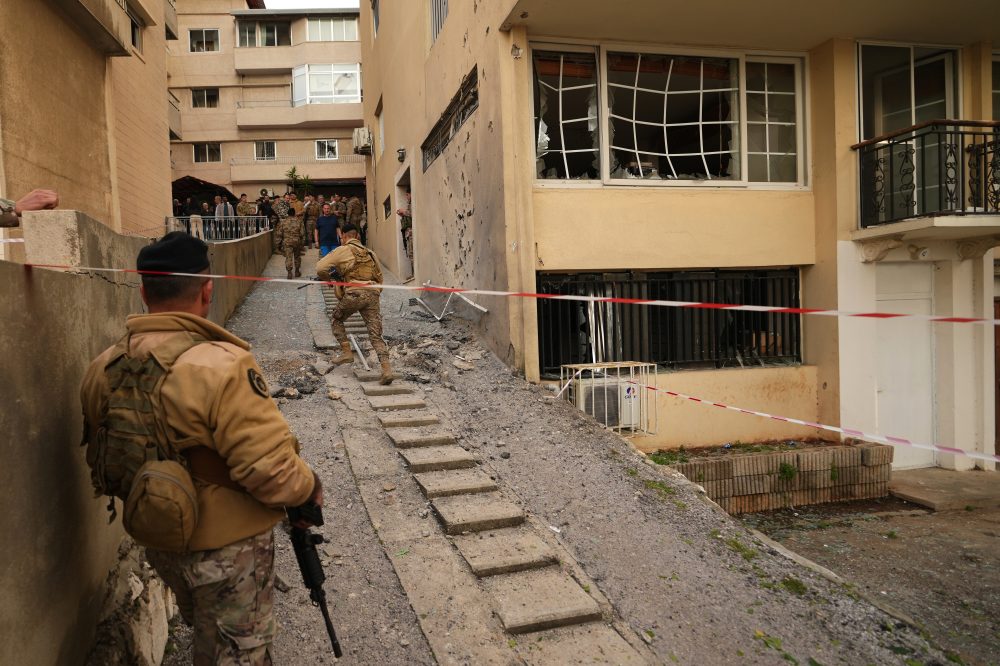
Throughout the recent war, Israel has targeted Iranian-connected commanders in attacks throughout Lebanon’s capital and surrounding areas.
An Israeli strike on March 8 hit a Beirut hotel in the Raouche seaside tourist district, killing four Iranian nationals. Another Israeli attack Monday in Beirut’s southeastern Hazmiyeh suburbs eliminated Mohammed Ali Kourani, a Lebanese Revolutionary Guard Quds Force official. Kourani had previously survived a strike on a nearby hotel earlier this month.
Iran’s paramilitary Revolutionary Guard has supported Hezbollah’s development since the early 1980s, helping it become Lebanon’s largest and most influential organization. Throughout the four decades since its establishment, Hezbollah has received billions in Iranian funding plus various weapon systems.
Following Lebanon’s 1975-90 civil war, Hezbollah remained the sole group permitted to maintain its weapons, recognized as a resistance movement opposing Israel’s occupation of southern Lebanese territory.
Since Israel’s 2000 withdrawal ending an 18-year occupation, Hezbollah has engaged in three major wars with Israel. The 14-month conflict concluding in November 2024 significantly damaged the organization, eliminating many political and military leaders.
During Israel’s September 17, 2024 pager attack that injured thousands of primarily Hezbollah members, Iran’s then-ambassador Mojtaba Amani sustained wounds while carrying a pager device.
When Israeli forces killed Hezbollah leader and founder Hassan Nasrallah in September 2024, an Iranian Revolutionary Guard general died alongside him.
Despite recent setbacks, Hezbollah continues serving as Iran’s most dependable regional partner.