
National Football League officials are developing backup plans for potential referee labor disputes in 2026, introducing proposed rule modifications that would grant New York’s replay center broader authority to fix “clear and obvious” officiating errors during any work stoppage.
League competition committee members announced their recommended rule adjustments on Tuesday, featuring minor modifications to kickoff regulations and expanded replay center powers to remove players for egregious conduct on unpunished plays.
Team owners will review these proposals during next week’s Arizona league meetings, requiring approval from a minimum of 24 out of 32 franchises for implementation.
The most significant recommendation addresses potential labor disputes with officials, as the current collective bargaining agreement between the NFL and NFL Referees Association concludes on May 31.
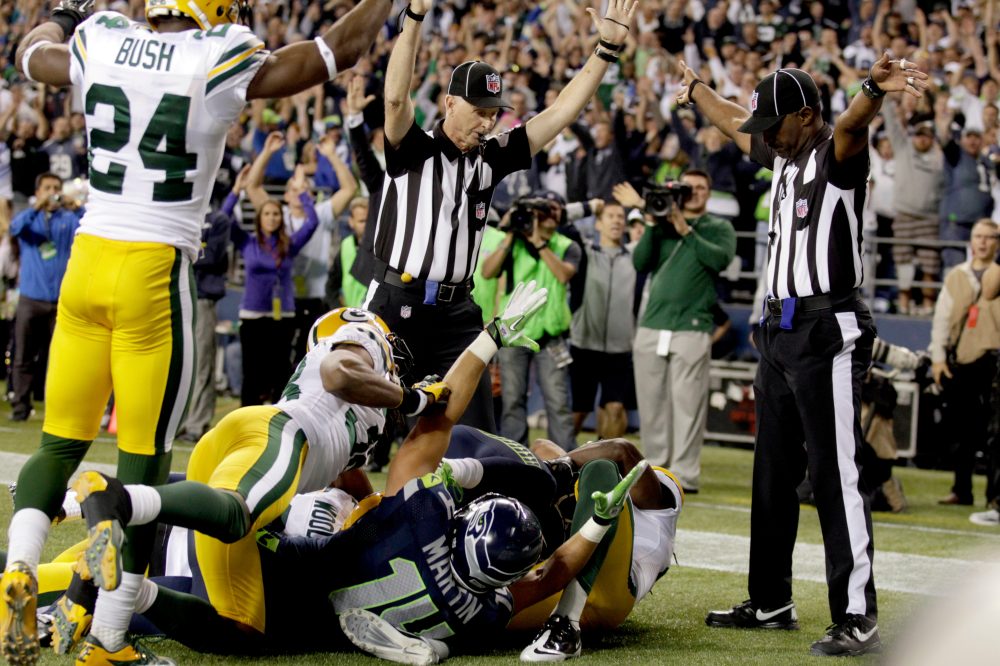
During 2012’s opening three weeks, the league employed substitute officials who made numerous errors and questionable decisions. The situation reached a breaking point during a Monday night matchup between Green Bay and Seattle in Week 3, when the Seahawks secured victory on a controversial touchdown reception dubbed the “Fail Mary.” League officials later acknowledged the score should have been nullified due to offensive pass interference.
Public criticism escalated to include President Barack Obama, who urged an end to the lockout. The dispute concluded days later, followed by an official fan apology from Commissioner Roger Goodell.
The competition committee’s new framework would empower New York’s replay center to guide field officials on overlooked roughing the passer or intentional grounding violations, plus any conduct warranting ejection had penalties been assessed.
Replay officials could also reverse calls involving illegal contact, face mask violations, roughing the passer, horse-collar tackles and intentional grounding. They would additionally assist in overturning pass interference calls when clear evidence shows “advertent tangling of feet when both players were playing the ball or neither player was playing the ball.”
During the final two minutes of each half or throughout overtime, replay centers would gain authority to reverse or assess flags for unnecessary roughness or unsportsmanlike conduct involving punches, forearms or kicks, along with leaping or leverage violations on special teams plays.
Replay officials could also address incorrect decisions regarding running into or roughing kickers.
Another committee recommendation would permit New York’s officiating center to eject players for flagrant or non-football conduct even without on-field penalty calls. Previous regulations only allowed replay center intervention when field officials had already thrown flags.
This change follows an incident involving Pittsburgh receiver DK Metcalf, who avoided ejection during a Detroit game last season after confronting a heckling fan. Since field officials missed the play when Metcalf struck at the fan, replay officials couldn’t remove him. The league later imposed a two-game suspension, but Metcalf continued playing at the time.
The committee also suggested several adjustments to kickoff rules entering their third season, including permitting teams to declare onside kicks regardless of game situation. The original 2024 rule restricted onside kicks to fourth quarter trailing situations. Last year’s modification allowed trailing teams to declare onside kicks anytime, while the new proposal removes all scoring restrictions.
Additional kickoff changes include minor adjustments to receiving team formations and modifications to touchback rules on kicks from the 50-yard line following personal foul penalties.
Under previous rules, kicking teams were encouraged to kick out of bounds from the 50 to give receiving teams the ball at the 25 rather than the 35 for touchbacks. The new proposal would spot touchbacks from 50-yard line kicks at the 20.
Several off-field bylaw changes were also proposed.
The committee recommended granting the league flexibility to modify roster cutdown dates, currently scheduled for Tuesday following final preseason games, to accommodate international regular season games. The Los Angeles Rams and San Francisco 49ers are scheduled to open the season in Australia, giving the league options to adjust dates based on travel schedules.
Another proposal would designate Labor Day weekend Saturday and Sunday as business days, allowing the 24-hour waiver period for players to take effect on those days instead of waiting until Monday.
The committee also suggested allowing players who began training camp on the physically unable to perform list and remained there after roster cuts to open their 21-day practice window after Week 2 of the regular season. These players still cannot join active rosters until missing four games but could practice earlier.
Owners will also consider two team-submitted proposals from last week, including Cleveland’s request to extend draft pick trading from three to five years in advance, and Pittsburgh’s proposal to make permanent the five video or phone calls with potential free agents during the negotiating window before the league year begins. The communication rule was tested on a trial basis this year.