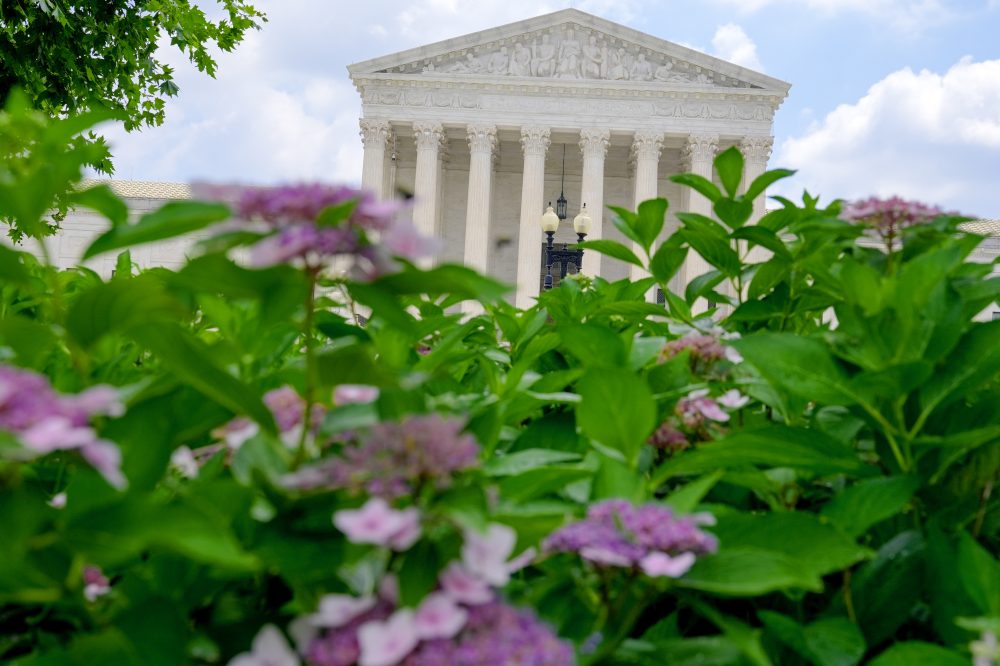

WASHINGTON — The United States Supreme Court has agreed to review the case of an Alaska bush pilot who says state authorities are unlawfully trying to take his airplane — valued at $95,000 — because a passenger carried a six-pack of beer on a flight to a village where alcohol is prohibited.
The pilot at the center of the dispute, Kenneth Jouppi, filed a lawsuit to stop the government from seizing his plane after he was found guilty of a misdemeanor alcohol-related charge. The Alaska Supreme Court sided with the state, determining that Jouppi’s aircraft could be subject to criminal forfeiture laws.
The nation’s highest court stepped in Monday, agreeing to take up Jouppi’s appeal. He contends that having his 1969 Cessna taken away would violate the Eighth Amendment’s protection against excessive fines. Oral arguments are scheduled for the fall.
Jouppi spoke out through a statement released by his legal team at the Institute for Justice. “I’m in my 80s now, and I’ve been fighting this for over a decade because I see it as my duty to ensure that the Bill of Rights actually means something in protecting against government overreach,” he said.
The incident traces back to April 2012, when Jouppi was getting ready to transport a passenger from Fairbanks to the remote village of Beaver, a community where alcohol was banned. Before the plane left the ground, state police troopers conducted a search and found a six-pack of Budweiser tucked inside a shopping bag in the passenger’s luggage.
Jouppi, his company, and the passenger were all charged with a misdemeanor for knowingly bringing alcohol into a dry community. The passenger admitted guilt through a plea. Jouppi and his company were convicted by a jury following a trial, and a judge handed Jouppi a three-day jail sentence.
His legal team argues the Alaska Supreme Court looked at his actions “purely in abstract terms” without considering whether they were part of a larger pattern of criminal behavior — and they say there was no such pattern.
In their appeal to the U.S. Supreme Court, Jouppi’s attorneys made a pointed argument: “Few excessive fines cases will present the issue so sharply; a decision upholding the forfeiture of an airplane for a six-pack is a self-recommending candidate for review.”
Attorneys from the Alaska Attorney General’s office pushed back, arguing that the state Supreme Court’s ruling was grounded in the facts of the case and should be left intact. They noted that courts nationwide use a multi-factor test to determine whether a fine or forfeiture is wildly out of proportion to the offense committed.
“Jouppi does not claim that the four-part standard applied by the Alaska Supreme Court is wrong, only that the court misapplied settled law by giving too much weight to some factors and not enough weight to others,” state attorneys wrote.
Jouppi’s legal team counters that the Alaska court’s ruling clashes with legal precedent set by other courts, including prior U.S. Supreme Court decisions. “The Excessive Fines Clause was built for cases like this,” they argued.
State attorneys maintained that Jouppi has not demonstrated how losing his plane is a punishment grossly out of proportion to what he did. They also pointed out that alcohol misuse is a serious concern in rural Alaska, and that aircraft are often the only practical way to bring alcohol illegally into remote communities.