
Currency markets steadied on Thursday as escalating tensions between the United States and Iran pushed investors toward the safety of the dollar, while Japan’s yen showed little sign of recovering from levels not seen since the mid-1980s.
The dollar index, which tracks the greenback against a group of major currencies including the yen and the euro, held flat at 101.11. The dollar has strengthened as the deepening standoff between Washington and Tehran sent oil prices climbing and raised fresh concerns about inflation.
Oil prices moved higher Thursday, with Brent crude futures jumping more than 1.3% to $95.31 per barrel. The increase came after the U.S. military announced a new wave of strikes on Iran, and Iranian-aligned Houthi forces claimed attacks on two Saudi oil tankers as part of a naval blockade targeting Saudi Arabia — a development that raised concerns about further disruptions to oil shipments through the Red Sea.
Two-year U.S. Treasury yields hit a 17-month high on Wednesday, driven by inflation worries that could raise the likelihood of additional interest rate increases by the Federal Reserve.
Joseph Capurso, head of international economics and foreign exchange at Commonwealth Bank of Australia, explained the current situation in a note: “What is different from the start of the conflict five months ago is inventories. Lower inventories mean shortages of oil and gas are more likely the longer the conflict continues, exacerbating the negative economic impact of high energy prices which favours the USD.”
The euro edged up 0.02% to $1.1412. The European Central Bank was scheduled to meet later Thursday and is widely expected to hold interest rates steady, though it is anticipated to leave the door open for a potential rate hike in September as renewed energy price increases threaten to push inflation higher.
Elsewhere, the Australian dollar slipped 0.1% against the greenback to $0.6989, while New Zealand’s currency softened nearly 0.1% to $0.5811. The British pound last changed hands at $1.3373.
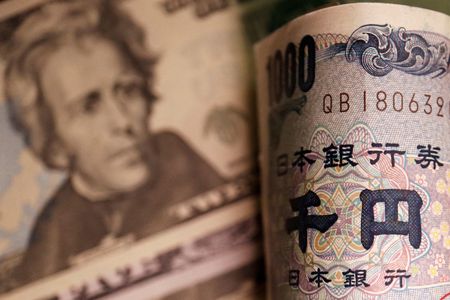
The Japanese yen edged just 0.02% higher against the dollar to 163.1 per dollar, giving back earlier gains after Bloomberg News reported Wednesday that Bank of Japan officials were open to raising interest rates more quickly than most economists had anticipated.
Reuters also reported, citing three sources with knowledge of the matter, that the Bank of Japan remains watchful of upside inflation risks that could prompt faster rate hikes than financial markets currently expect.
The yen had weakened to 163.23 on Tuesday — its lowest point since December 1986 — as investors adjusted to the policy environment under Japanese Prime Minister Sanae Takaichi. Her administration has struggled to shake off expectations that it might pressure the Bank of Japan to hold off on further rate increases.
Japan’s finance minister has issued repeated verbal warnings about the possibility of government intervention in the currency market, and Tokyo did carry out yen-buying operations in both April and May. However, the yen’s overall downward trend has remained intact, with analysts pointing to broad dollar strength and the Bank of Japan’s still-low interest rates as the primary drivers.
Tony Sycamore, a market analyst at IG Australia, noted in a written commentary: “Against the backdrop of rising energy prices and mounting expectations of a more hawkish Fed meeting next week, it appears very unlikely — despite continued threats — that Japanese authorities will intervene until after next week’s FOMC meeting.”