
Oil prices climbed sharply on Thursday, reaching their highest point in more than six weeks as military tensions between the United States and Iran continued to intensify.
Brent crude futures jumped $1.93, or 2%, to $96 per barrel by 0011 GMT — the highest price recorded since June 8. That came on the heels of a more than $3 gain in the previous trading session, which had already pushed prices close to a six-week peak.
U.S. West Texas Intermediate crude also gained ground, rising $1.44, or 1.7%, to $88.27 per barrel, following a nearly 3% increase on Wednesday.
The U.S. military confirmed it had carried out a 12th straight night of strikes against Iran. The attacks came hours after President Donald Trump threatened to destroy an Iranian bridge or power plant each time Iran fires on a vessel in the Strait of Hormuz, dramatically raising the stakes in the ongoing conflict.
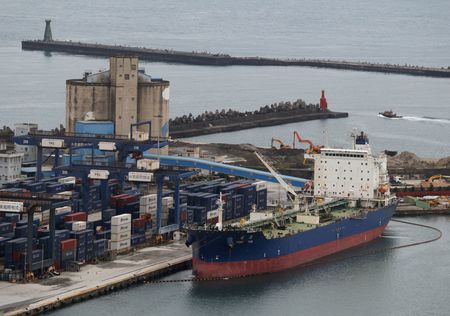
Iran’s Revolutionary Guards reported that an oil tanker caught fire following an explosion as it attempted to navigate what the Guards described as a mined route south of the Strait of Hormuz. Two additional tankers reportedly turned back rather than continue through the area.
The Guards announced that the strait was under their control and declared it “completely closed” as long as U.S. military operations continue in the region. They warned that no tanker would be permitted to enter or exit without first coordinating with Iran.
Adding to the regional turmoil, the Iran-aligned Houthi movement opened a new front in the conflict by threatening to go after vessels carrying Saudi oil through the Bab el-Mandeb Strait and announced a full naval blockade of Saudi Arabia.
The Houthis claimed responsibility for a military operation against two Saudi oil tankers. Maritime security reports indicated that one of the vessels named by the group — the Saudi-flagged tanker Encelia — had been struck in the Red Sea. The Houthis also claimed to have forced roughly 10 ships to turn back after warning them not to sail toward Saudi ports, though Reuters was unable to immediately confirm that account.
The dual threats — Iran’s blockade of the Strait of Hormuz and the Houthis’ naval blockade of Saudi Arabia in the Red Sea — are raising alarms about potential disruptions to global energy supplies well beyond the Gulf region. Iran’s Revolutionary Guards spokesperson also took to social media platform X to warn shipping companies that the southern route through the Strait of Hormuz had been mined.
On the domestic supply front, the U.S. Energy Information Administration reported that crude oil stockpiles increased by 2 million barrels last week, as refinery activity slowed, crude exports declined, and imports rose. Analysts surveyed in a Reuters poll had anticipated a draw of 1.1 million barrels.