
MANILA, Philippines — U.S. Secretary of State Marco Rubio is scheduled to sit down Thursday with Russian Foreign Minister Sergey Lavrov in Manila, Philippines, with the goal of putting American-led Ukraine peace efforts back on track.
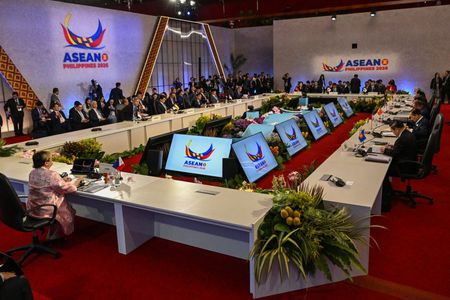
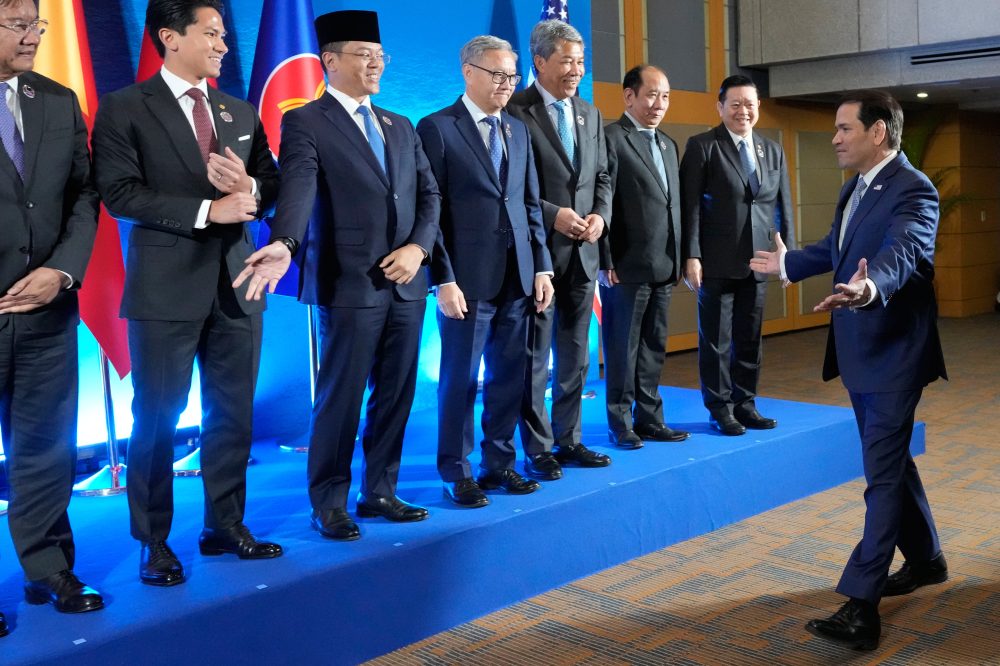
The face-to-face encounter is taking place on the sidelines of a gathering of Southeast Asian foreign ministers at the Association of Southeast Asian Nations event in Manila — one of the most significant side meetings to emerge from the summit.
American efforts to help bring an end to the Russia-Ukraine conflict had largely faded in recent months as indirect negotiations stalled and the war between Iran and Washington moved to the forefront. That conflict has been escalating following the collapse of a temporary ceasefire agreement.
Speaking to journalists in Manila on Wednesday, Rubio confirmed he intends to bring up Ukraine when he meets with Lavrov, saying the United States remains willing to play a role in resolving the conflict “if that opportunity presents itself.”
He admitted that those peace-brokering efforts have “kind of fallen off a little bit over the last few months,” but said Thursday’s meeting would help determine whether there is a path forward for renewed diplomacy.
“We have to have a relationship with the Russian government, even though we have areas of disagreement,” Rubio said, pointing out that the two nations are the world’s largest nuclear-armed powers.
Lavrov, speaking to reporters at the ASEAN event, said he planned to question Rubio about recent remarks by U.S. President Donald Trump suggesting a peace settlement may be drawing near.
“I will ask Marco Rubio about it tomorrow,” Lavrov said.
The renewed push for Ukraine peace talks comes at a complicated moment. Ukraine has made notable gains on the battlefield this year, but an internal dispute among its defense leadership has put those advances at risk. President Volodymyr Zelenskyy has carried out a sweeping reshuffling of his government, including changes to the country’s top military command.
Ukraine, however, is not the only issue Rubio plans to put on the table. He said he would also use the Lavrov meeting to explore other areas where the U.S. and Russia might find common ground — consistent with the broader agenda that has characterized diplomatic conversations at the ASEAN summit.
On Wednesday, Rubio also held a lengthy meeting with Chinese Foreign Minister Wang Yi and a separate session with Indian External Affairs Minister Subrahmanyam Jaishankar.
Rubio told reporters that he and Wang discussed a fresh confrontation this week between Chinese and Filipino forces at a disputed location in the South China Sea — a body of water that Beijing claims almost entirely as its own. Rubio described the incident as “escalatory.”
“Those need to be managed very carefully, because obviously, a conflict — be it economic or otherwise — between the U.S. and China would have a dramatic global impact,” Rubio said.
The Trump administration has consistently pushed back against China’s aggressive posture in the South China Sea, particularly as it affects smaller nations with competing claims, including the Philippines, which is Washington’s longest-standing treaty ally in Asia. Taiwan and the ASEAN members Vietnam, Malaysia, and Brunei have also been caught up in the frequently tense territorial disputes in the region.
Wang, according to China’s Foreign Ministry, raised objections to “recent negative words and actions by the U.S. side” during his meeting with Rubio. It was not immediately clear what specific actions he was referencing, though President Trump recently accused China of interfering in the 2020 election, and the U.S. administration has also moved to shorten visa durations for Chinese journalists.
Wang also referenced preparations for an upcoming visit by Chinese President Xi to the United States in September, describing it as part of planned “high-level exchanges” between the two countries, according to the official Xinhua News Agency.
Separately, ASEAN foreign ministers met Tuesday to address territorial disputes in the South China Sea, welcoming progress in long-running negotiations with China over a proposed non-aggression agreement that both sides hope to finalize this year, according to a draft of a joint statement reviewed by the Associated Press.
The proposed agreement, known as a code of conduct, is designed to reduce the risk of a major military confrontation in the disputed waters — a critical global shipping corridor — that could potentially draw in the United States.