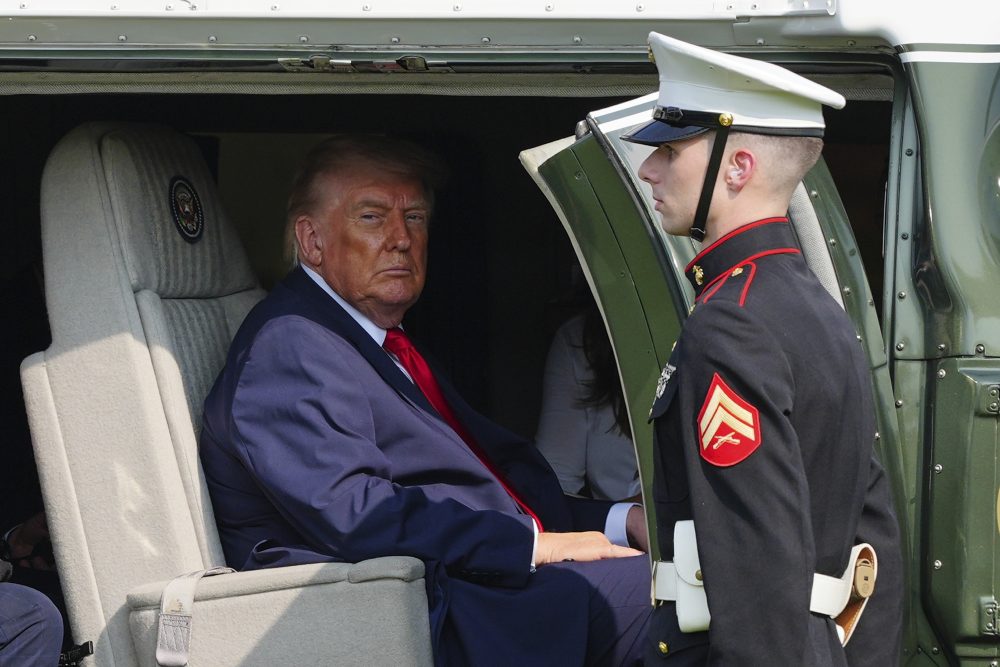

President Donald Trump suggested Friday he may be ready to reduce American military involvement in the Middle East, posting this message at the same time his administration is deploying three additional amphibious assault vessels and approximately 2,500 more Marines to the area.
The president’s Friday social media statement came after Iran issued warnings about targeting tourist and recreational locations globally, amid another day of aerial bombardments and missile exchanges across the region.
These contradictory signals from Washington emerged following another surge in petroleum costs that sent U.S. markets tumbling, prompting the Trump administration to announce it would temporarily suspend sanctions on Iranian crude oil already aboard vessels in an effort to control rising fuel costs.
The conflict, now in its third week, continues to escalate without any indication of resolution, as Israel reported Iran launched additional missiles early Saturday morning, while Saudi Arabia announced it intercepted 20 unmanned aircraft within just hours in its eastern provinces where critical oil infrastructure is located.
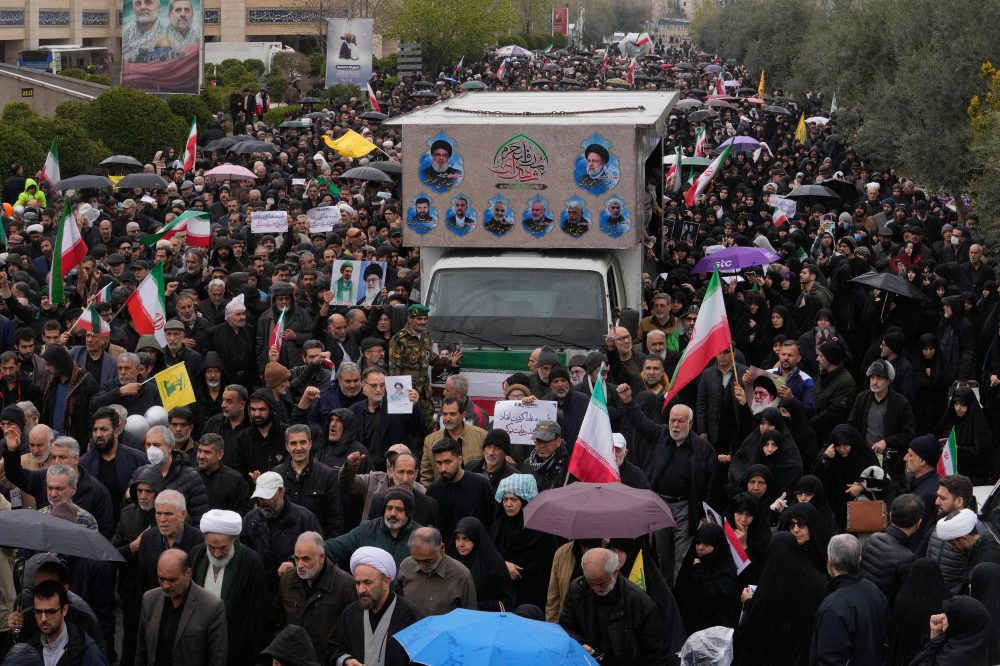
These latest strikes occurred one day after Israeli warplanes targeted locations in Tehran during Iran’s celebration of Nowruz, the Persian New Year, a traditionally joyous occasion now overshadowed by warfare.
American and Israeli officials have provided varying explanations for the military campaign, ranging from hopes of sparking internal rebellion against Iran’s government to destroying its nuclear and missile capabilities. No evidence of such an uprising has emerged publicly, and no conclusion to the hostilities appears imminent.
Trump wrote on social media: “We are getting very close to meeting our objectives as we consider winding down our great Military efforts in the Middle East.”
This statement appeared to contradict his administration’s decision to increase military assets in the region while requesting an additional $200 billion from Congress for war funding.
According to an official who spoke with The Associated Press, the United States is sending three more amphibious assault vessels along with roughly 2,500 additional Marines to the Middle East. Two other U.S. officials verified the ship deployments without specifying their destinations. All three sources requested anonymity when discussing classified military movements.
Earlier this week, the U.S. redirected another group of amphibious assault ships carrying an additional 2,500 Marines from Pacific operations to the Middle East. These forces will supplement more than 50,000 American troops already stationed in the region.
While Trump has stated he has no intention of deploying ground forces into Iran, he has also maintained that all military options remain available.
Iranian military spokesman Gen. Abolfazl Shekarchi issued a warning Friday that “parks, recreational areas and tourist destinations” worldwide would not be secure for the country’s adversaries. This threat has raised fresh concerns that Tehran might return to using militant attacks outside the Middle East as a strategy to apply pressure.
Supreme Leader Ayatollah Mojtaba Khamenei commended Iranians’ resilience during wartime in a written message broadcast on Iranian television for Nowruz. Khamenei has not appeared publicly since assuming the supreme leadership role after Israeli attacks killed his father, Ayatollah Ali Khamenei, and allegedly injured him.
With limited information emerging from Iran, the extent of damage to its weapons, nuclear, or energy infrastructure from intensive U.S. and Israeli bombardments that started February 28 remains unclear, as does the question of who is actually governing the country. However, Iran’s counterattacks continue to disrupt oil supplies and drive up food and fuel costs well beyond the Middle East.
Israeli military forces announced early Saturday they had begun a series of strikes against Iran-backed Hezbollah fighters in southern Beirut neighborhoods.
Residents observed smoke rising, fires erupting, and heard powerful explosions throughout parts of central Beirut, following renewed Israeli military evacuation orders for seven districts.
Israeli operations against Hezbollah forces in Lebanon have resulted in more than 1,000 deaths and displaced over 1 million people, according to Lebanese government statistics.
Casualties in Iran during the war have exceeded 1,300 people. In Israel, Iranian missiles have killed 15 individuals, with four additional deaths in the occupied West Bank. At least 13 U.S. service members have lost their lives.
Brent crude oil, the global benchmark, has climbed dramatically during the fighting and was trading around $106 per barrel, up from approximately $70 before the conflict began.
The recently announced U.S. sanctions suspension covers Iranian oil loaded onto ships as of Friday and will expire April 19.
This measure does not increase production output, which is a key driver of the price increases. Iran has successfully circumvented U.S. sanctions for years, indicating that much of its exported oil already reaches international buyers.
In seeking methods to increase global oil availability during the Iran conflict, the Trump administration previously suspended sanctions on specific Russian oil shipments for 30 days, which opponents criticized as benefiting Moscow while providing only minimal market relief.